NIV in Acute Settings
Gamal Rabie Agmy ,MD ,FCCP
Professor of Chest Diseases, Assiut University
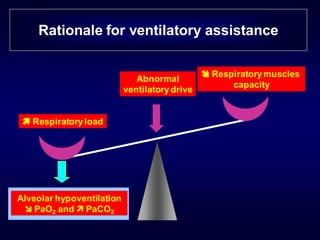
Rationale for ventilatory assistance
 Respiratoryload
 Respiratorymuscles
capacity
Alveolar hypoventilation
 PaO2 and  PaCO2
Abnormal
ventilatorydrive
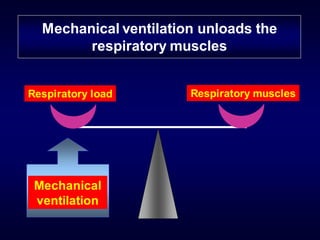
Mechanical ventilation unloads the
respiratory muscles
Respiratory load Respiratory muscles
Mechanical
ventilation
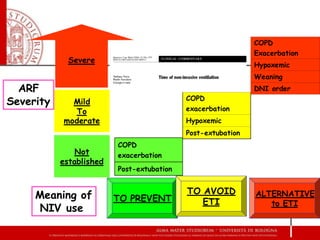
Severe
Mild
To
moderate
Not
established
COPD
exacerbation
Post-extubation
COPD
exacerbation
Hypoxemic
Post-extubation
COPD
Exacerbation
Hypoxemic
Weaning
DNI order
Meaning of
NIV use
ARF
Severity
TO PREVENT
TO AVOID
ETI
ALTERNATIVE
to ETI
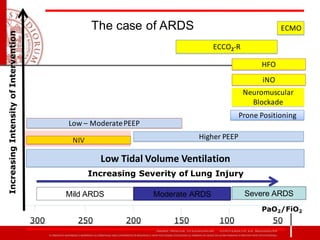
300 250 200 150 100 50
Low Tidal Volume Ventilation
Higher PEEP
HFO
Prone Positioning
ECMO
Low – ModeratePEEP
Neuromuscular
Blockade
PaO2/FiO2
Increasing Severity of Lung Injury
Mild ARDS Moderate ARDS Severe ARDS
IncreasingIntensityofIntervention
NIV
ECCO2-R
iNO
The case of ARDS
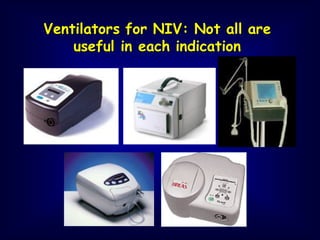
Ventilators for NIV: Not all are
useful in each indication
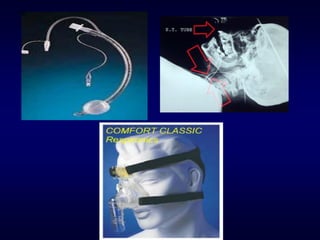
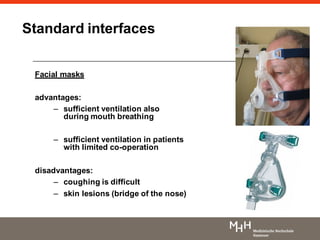
Standard interfaces
Facial masks
advantages:
– sufficient ventilation also
during mouth breathing
– sufficient ventilation in patients
with limited co-operation
disadvantages:
– coughing is difficult
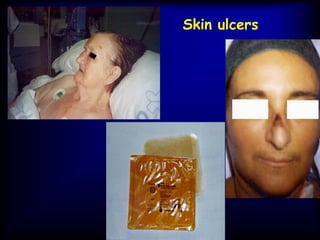
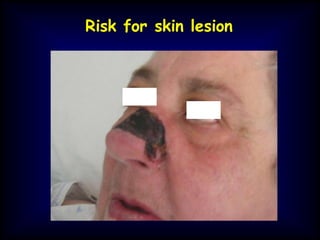
– skin lesions (bridge of the nose)
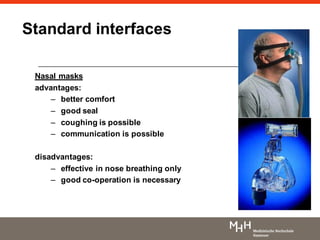
Nasal masks
advantages:
– better comfort
– good seal
– coughing is possible
– communication is possible
disadvantages:
– effective in nose breathing only
– good co-operation is necessary
Standard interfaces
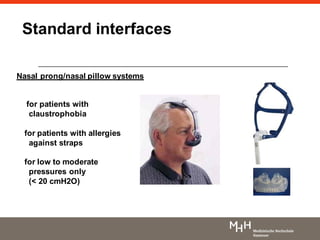
Nasal prong/nasal pillow systems
for patients with
claustrophobia
for patients with allergies
against straps
for low to moderate
pressures only
(< 20 cmH2O)
Standard interfaces
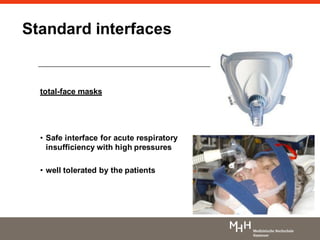
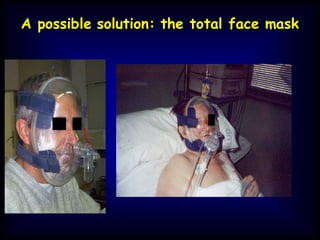
total-face masks
• Safe interface for acute respiratory
insufficiency with high pressures
• well tolerated by the patients
Standard interfaces
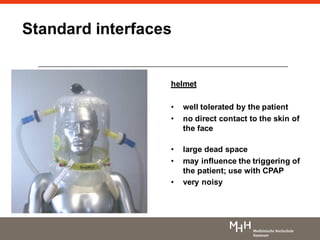
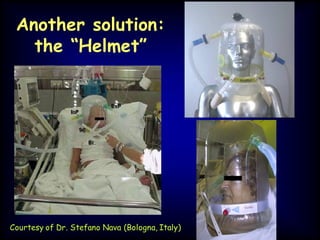
helmet
• well tolerated by the patient
• no direct contact to the skin of
the face
• large dead space
• may influence the triggering of
the patient; use with CPAP
• very noisy
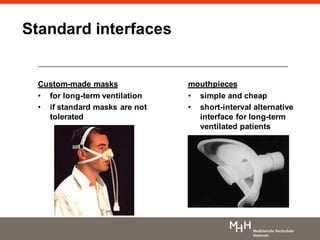
Standard interfaces
mouthpieces
• simple and cheap
• short-interval alternative
interface for long-term
ventilated patients
Custom-made masks
• for long-term ventilation
• if standard masks are not
tolerated
Standard interfaces
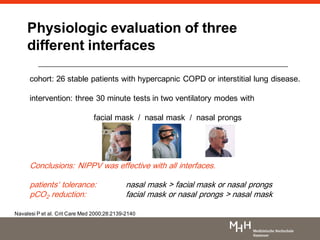
Physiologic evaluation of three
different interfaces
cohort: 26 stable patients with hypercapnic COPD or interstitial lung disease.
intervention: three 30 minute tests in two ventilatory modes with
facial mask / nasal mask / nasal prongs
Conclusions: NIPPV was effective with all interfaces.
patients„ tolerance: nasal mask > facial mask or nasal prongs
pCO2 reduction: facial mask or nasal prongs > nasal mask
Navalesi P et al. Crit Care Med 2000;28:2139-2140
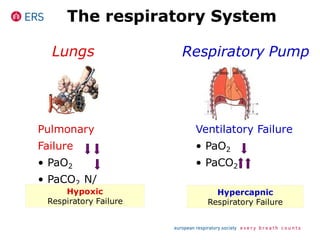
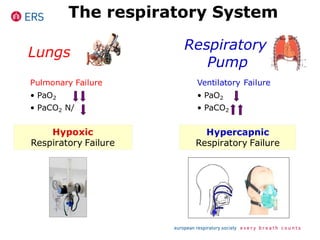
The respiratory System
Lungs Respiratory Pump
Pulmonary
Failure
• PaO2
• PaCO2 N/
Ventilatory Failure
• PaO2
• PaCO2
Hypoxic
Respiratory Failure
Hypercapnic
Respiratory Failure
Lungs
Respiratory
Pump
Pulmonary Failure
• PaO2
• PaCO2 N/
Ventilatory Failure
• PaO2
• PaCO2
Hypoxic
Respiratory Failure
Hypercapnic
Respiratory Failure
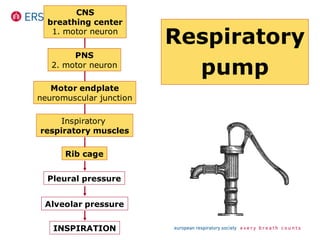
The respiratory System
CNS
breathing center
1. motor neuron
PNS
2. motor neuron
Motor endplate
neuromuscular junction
Inspiratory
respiratory muscles
Rib cage
Pleural pressure
Alveolar pressure
INSPIRATION
Respiratory
pump
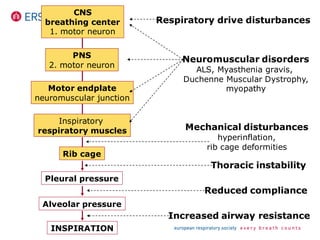
CNS
breathing center
1. motor neuron
PNS
2. motor neuron
Motor endplate
neuromuscular junction
Inspiratory
respiratory muscles
Rib cage
Pleural pressure
Alveolar pressure
INSPIRATION
Respiratory drive disturbances
Neuromuscular disorders
ALS, Myasthenia gravis,
Duchenne Muscular Dystrophy,
myopathy
Mechanical disturbances
hyperinflation,
rib cage deformities
Thoracic instability
Reduced compliance
Increased airway resistance
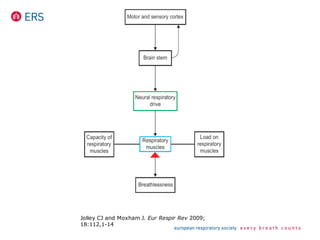
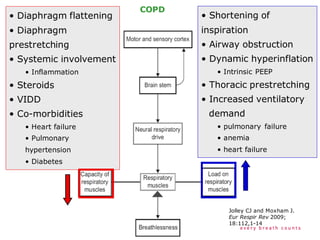
Jolley CJ and Moxham J. Eur Respir Rev 2009;
18:112,1-14
• Diaphragm flattening
• Diaphragm
prestretching
• Systemic involvement
• Inflammation
• Steroids
• VIDD
• Co-morbidities
• Heart failure
• Pulmonary
hypertension
• Diabetes
• Shortening of
inspiration
• Airway obstruction
• Dynamic hyperinflation
• Intrinsic PEEP
• Thoracic prestretching
• Increased ventilatory
demand
• pulmonary failure
• anemia
• heart failure
COPD
Jolley CJ and Moxham J.
Eur Respir Rev 2009;
18:112,1-14
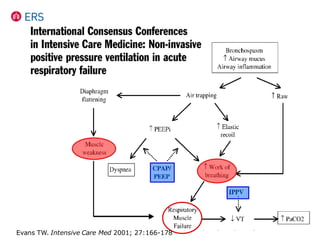
Evans TW. Intensive Care Med 2001; 27:166-178
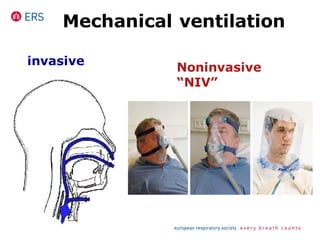
Mechanical ventilation
Noninvasive
“NIV”
invasive
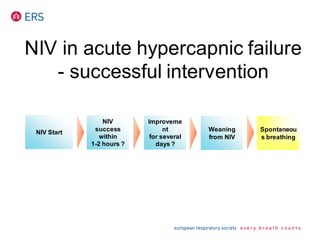
NIV
success
within
1-2 hours ?
Improveme
nt
for several
days ?
Weaning
from NIV
Spontaneou
s breathing
NIV Start
NIV in acute hypercapnic failure
- successful intervention
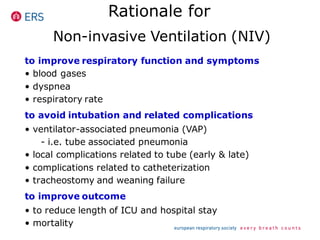
Rationale for
Non-invasive Ventilation (NIV)
to improve respiratory function and symptoms
• blood gases
• dyspnea
• respiratory rate
to avoid intubation and related complications
• ventilator-associated pneumonia (VAP)
- i.e. tube associated pneumonia
• local complications related to tube (early & late)
• complications related to catheterization
• tracheostomy and weaning failure
to improve outcome
• to reduce length of ICU and hospital stay
• mortality
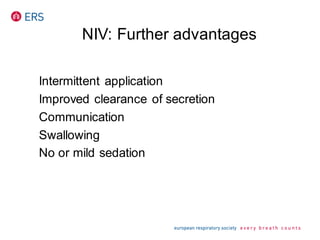
NIV: Further advantages
Intermittent application
Improved clearance of secretion
Communication
Swallowing
No or mild sedation
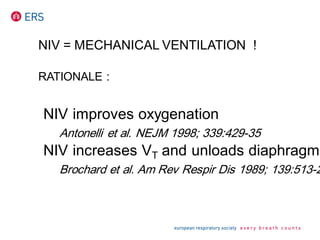
NIV = MECHANICAL VENTILATION !
RATIONALE :
NIV improves oxygenation
Antonelli et al. NEJM 1998; 339:429-35
NIV increases VT and unloads diaphragm
Brochard et al. Am Rev Respir Dis 1989; 139:513-2
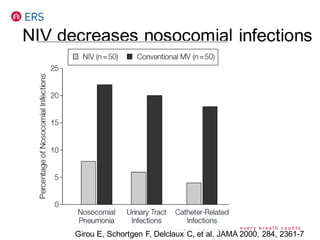
NIV decreases nosocomial infections
Girou E, Schortgen F, Delclaux C, et al. JAMA 2000, 284, 2361-7
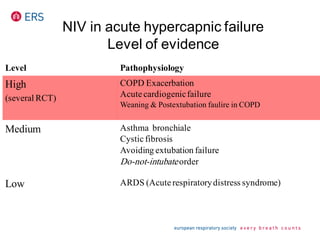
Level Pathophysiology
High
(several RCT)
COPD Exacerbation
Acutecardiogenicfailure
Weaning & Postextubation faulire in COPD
Medium Asthma bronchiale
Cysticfibrosis
Avoiding extubation failure
Do-not-intubateorder
Low ARDS (Acuterespiratorydistress syndrome)
NIV in acute hypercapnic failure
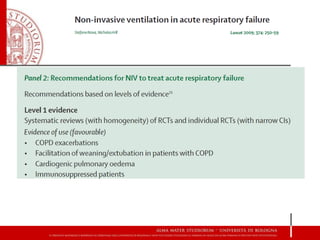
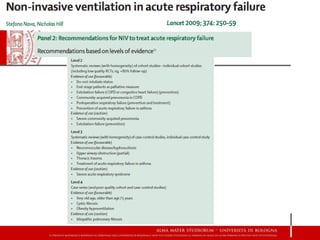
Level of evidence
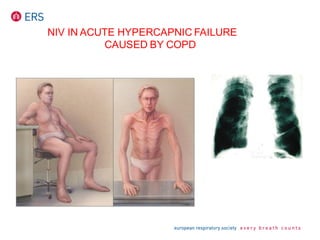
NIV IN ACUTE HYPERCAPNIC FAILURE
CAUSED BY COPD
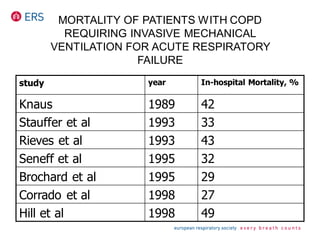
MORTALITY OF PATIENTS WITH COPD
REQUIRING INVASIVE MECHANICAL
VENTILATION FOR ACUTE RESPIRATORY
FAILURE
study year In-hospital Mortality, %
Knaus 1989 42
Stauffer et al 1993 33
Rieves et al 1993 43
Seneff et al 1995 32
Brochard et al 1995 29
Corrado et al 1998 27
Hill et al 1998 49
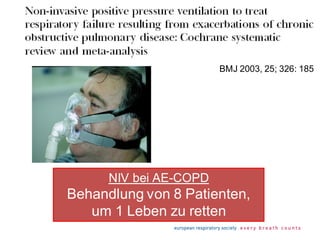
NIV bei AE-COPD
Behandlung von 8 Patienten,
um 1 Leben zu retten
BMJ 2003, 25; 326: 185
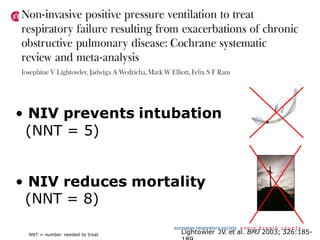
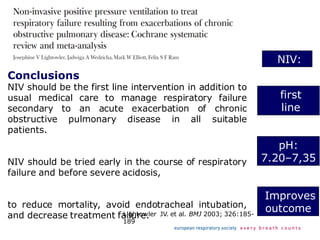
Lightowler JV. et al. BMJ 2003; 326:185-
• NIV prevents intubation
(NNT = 5)
• NIV reduces mortality
(NNT = 8)
NNT = number needed to treat
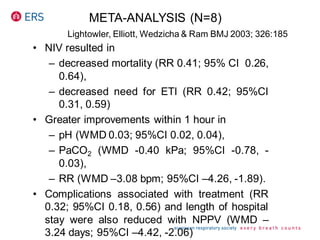
META-ANALYSIS (N=8)
• NIV resulted in
– decreased mortality (RR 0.41; 95% CI 0.26,
0.64),
– decreased need for ETI (RR 0.42; 95%CI
0.31, 0.59)
• Greater improvements within 1 hour in
– pH (WMD 0.03; 95%CI 0.02, 0.04),
– PaCO2 (WMD -0.40 kPa; 95%CI -0.78, -
0.03),
– RR (WMD –3.08 bpm; 95%CI –4.26, -1.89).
• Complications associated with treatment (RR
0.32; 95%CI 0.18, 0.56) and length of hospital
stay were also reduced with NPPV (WMD –
3.24 days; 95%CI –4.42, -2.06)
Lightowler, Elliott, Wedzicha & Ram BMJ 2003; 326:185
Lightowler JV. et al. BMJ 2003; 326:185-
189
Conclusions
NIV should be the first line intervention in addition to
usual medical care to manage respiratory failure
secondary to an acute exacerbation of chronic
obstructive pulmonary disease in all suitable
patients.
NIV should be tried early in the course of respiratory
failure and before severe acidosis,
to reduce mortality, avoid endotracheal intubation,
and decrease treatment failure.
first
line
pH:
7.20–7,35
Improves
outcome
NIV:
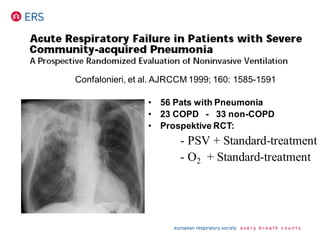
Confalonieri, et al. AJRCCM 1999; 160: 1585-1591
• 56 Pats with Pneumonia
• 23 COPD - 33 non-COPD
• Prospektive RCT:
- PSV + Standard-treatment
- O2 + Standard-treatment
Am J Respir Crit Care Med 1999;160:1585-15
*
PaCO2 [mmHg]
Intubation [%]
ICU – length of stay [d]
2-Mo-moratliy [%]
NIV Standard
73
0
<1
11
68
55
8
63
32
38
3
43
34
47
5
33
NIV Standard
*p < 0.05
COPD (n = 23) Non-COPD (n = 33)
* *
*
* *
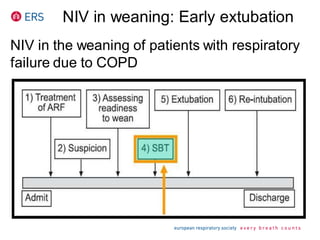
NIV in weaning: Early extubation
NIV in the weaning of patients with respiratory
failure due to COPD
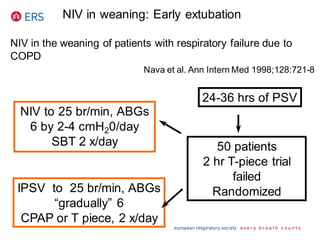
NIV in weaning: Early extubation
24-36 hrs of PSV
50 patients
2 hr T-piece trial
failed
Randomized
NIV to 25 br/min, ABGs
6 by 2-4 cmH20/day
SBT 2 x/day
IPSV to 25 br/min, ABGs
“gradually” 6
CPAP or T piece, 2 x/day
Nava et al. Ann Intern Med 1998;128:721-8
NIV in the weaning of patients with respiratory failure due to
COPD
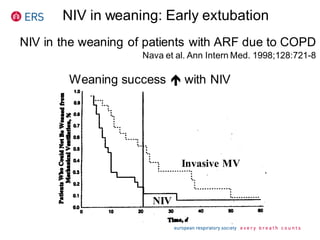
Invasive MV
NIV
Weaning success  with NIV
NIV in the weaning of patients with ARF due to COPD
Nava et al. Ann Intern Med. 1998;128:721-8
NIV in weaning: Early extubation
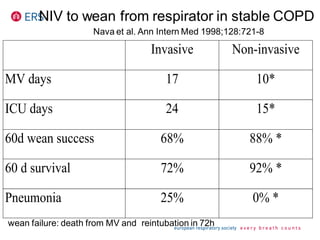
NIV to wean from respirator in stable COPD
Nava et al. Ann Intern Med 1998;128:721-8
Invasive Non-invasive
MV days 17 10*
ICU days 24 15*
60d wean success 68% 88% *
60 d survival 72% 92% *
Pneumonia 25% 0% *
wean failure: death from MV and reintubation in 72h
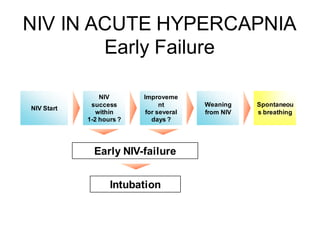
NIV
success
within
1-2 hours ?
Improveme
nt
for several
days ?
Weaning
from NIV
Spontaneou
s breathing
NIV Start
NIV IN ACUTE HYPERCAPNIA
Early Failure
Early NIV-failure
Intubation
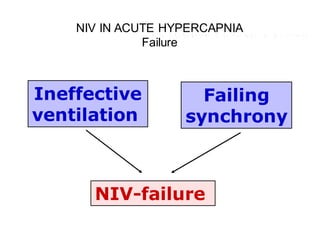
Ineffective
ventilation
Failing
synchrony
NIV-failure
NIV IN ACUTE HYPERCAPNIA
Failure
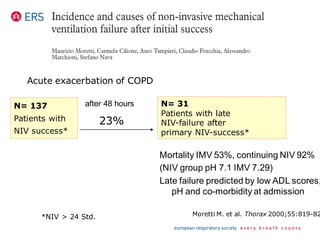
Moretti M. et al. Thorax 2000;55:819-82
N= 137
Patients with
NIV success*
*NIV > 24 Std.
N= 31
Patients with late
NIV-failure after
primary NIV-success*
23%
Acute exacerbation of COPD
after 48 hours
Mortality IMV 53%, continuing NIV 92%
(NIV group pH 7.1 IMV 7.29)
Late failure predicted by low ADL scores,
pH and co-morbidity at admission
Moretti M. et al. Thorax 2000;55:819-8
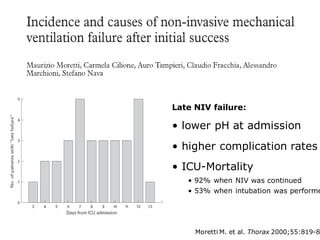
Late NIV failure:
• lower pH at admission
• higher complication rates
• ICU-Mortality
• 92% when NIV was continued
• 53% when intubation was performe
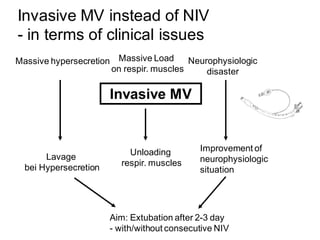
Invasive MV instead of NIV
- in terms of clinical issues
Invasive MV
Lavage
bei Hypersecretion
Unloading
respir. muscles
Improvement of
neurophysiologic
situation
Aim: Extubation after 2-3 day
- with/without consecutive NIV
Massive hypersecretion Massive Load
on respir. muscles
Neurophysiologic
disaster
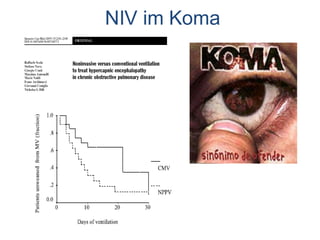
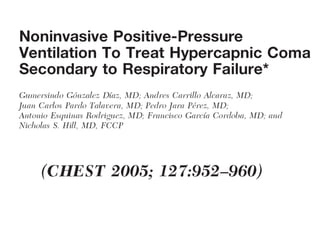
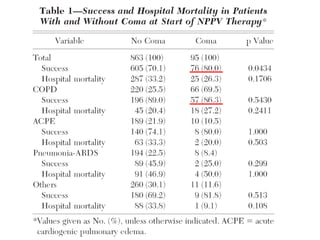
NIV im Koma
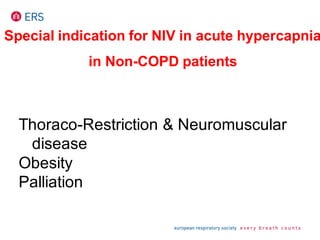
Thoraco-Restriction & Neuromuscular
disease
Obesity
Palliation
Special indication for NIV in acute hypercapnia
in Non-COPD patients
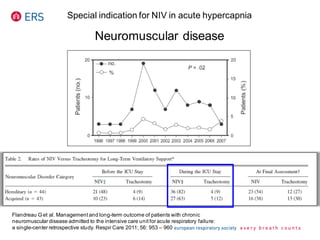
Flandreau G et al. Management and long-term outcome of patients with chronic
neuromuscular disease admitted to the intensive care unit for acute respiratory failure:
a single-center retrospective study. Respir Care 2011; 56: 953 – 960
Special indication for NIV in acute hypercapnia
Neuromuscular disease
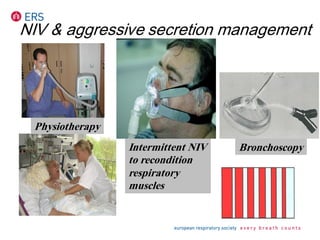
Intermittent NIV
to recondition
respiratory
muscles
Bronchoscopy
Physiotherapy
NIV & aggressive secretion management
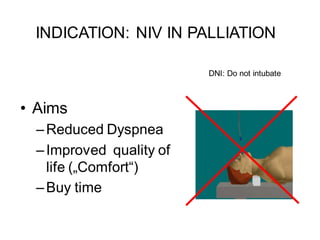
DNI: Do not intubate
• Aims
–Reduced Dyspnea
–Improved quality of
life („Comfort“)
–Buy time
INDICATION: NIV IN PALLIATION
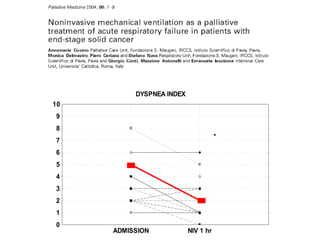
DYSPNEA INDEX
0
1
2
3
4
5
6
7
8
9
10
ADMISSION NIV 1 hr
*
THE RATIONALE
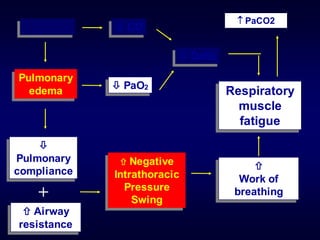
LV failure
Pulmonary
edema

Pulmonary
compliance
 Airway
resistance
 Negative
Intrathoracic
Pressure
Swing

Work of
breathing
 CO
 PaO2
Respiratory
muscle
fatigue
 DaO2
+
 PaCO2
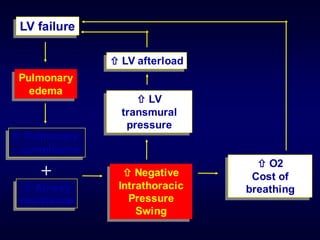
LV failure
Pulmonary
edema
 Pulmonary
compliance
 Airway
resistance
 Negative
Intrathoracic
Pressure
Swing
 LV
transmural
pressure
 O2
Cost of
breathing
 LV afterload
+
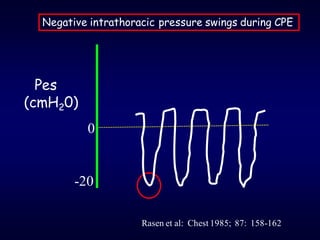
Rasen et al: Chest 1985; 87: 158-162
Negative intrathoracic pressure swings during CPE
Pes
(cmH20)
0
-20
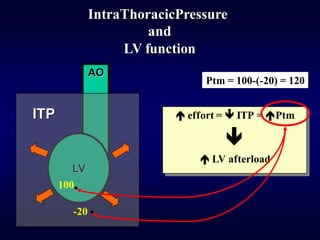
IntraThoracicPressure
and
LV function
AO
LV
ITP  effort =  ITP = Ptm

 LV afterload
100
-20
Ptm = 100-(-20) = 120
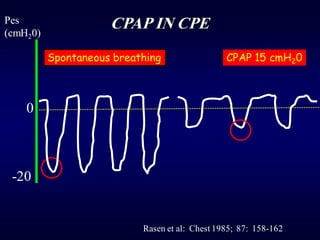
CPAP IN CPE
Rasen et al: Chest 1985; 87: 158-162
Pes
(cmH20)
0
-20
Spontaneous breathing CPAP 15 cmH20
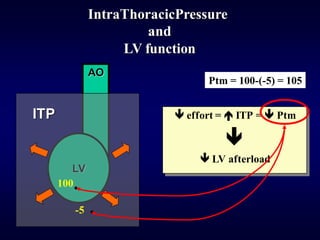
IntraThoracicPressure
and
LV function
AO
LV
ITP  effort =  ITP =  Ptm

 LV afterload
100
-5
Ptm = 100-(-5) = 105
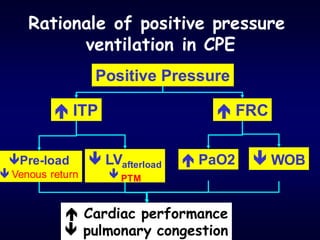
Rationale of positive pressure
ventilation in CPE
Positive Pressure
 ITP  FRC
Pre-load
 Venous return
 LVafterload
 PTM
 PaO2  WOB
 Cardiac performance
 pulmonary congestion
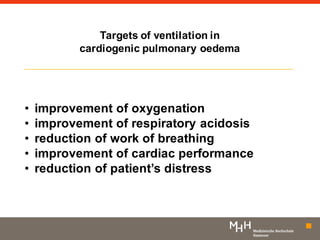
Targets of ventilation in
cardiogenic pulmonary oedema
• improvement of oxygenation
• improvement of respiratory acidosis
• reduction of work of breathing
• improvement of cardiac performance
• reduction of patient’s distress
NIV and obesity: in the acute
setting
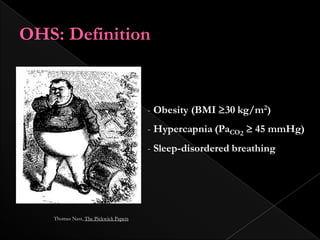
OHS: Definition
- Obesity (BMI 30 kg/m2)
- Hypercapnia (PaCO2  45 mmHg)
- Sleep-disordered breathing
Thomas Nast, The Pickwick Papers
OHS: Clinical Presentation
 Middle-aged
 2:1 male-to-female
 Extremely obese
 Significant sleep-disordered breathing
(fatigue, hypersomnolence, snoring, AM
headache)
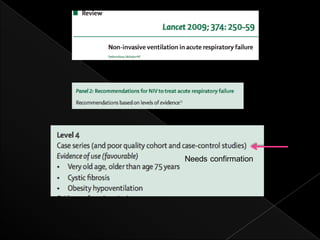
Needs confirmation
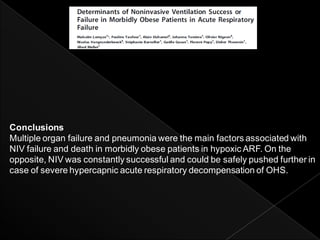
Conclusions
Multiple organ failure and pneumonia were the main factors associated with
NIV failure and death in morbidly obese patients in hypoxic ARF. On the
opposite, NIV was constantly successful and could be safely pushed further in
case of severe hypercapnic acute respiratory decompensation of OHS.
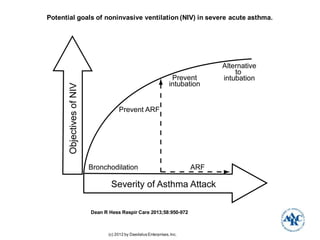
Potential goals of noninvasive ventilation (NIV) in severe acute asthma.
Dean R Hess Respir Care 2013;58:950-972
(c) 2012 by Daedalus Enterprises,Inc.
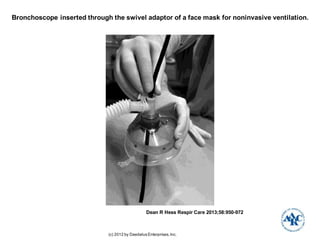
Bronchoscope inserted through the swivel adaptor of a face mask for noninvasive ventilation.
Dean R Hess Respir Care 2013;58:950-972
(c) 2012 by Daedalus Enterprises,Inc.
Monitoring of NIV in the acute setting
AIMS
Goals of monitoring
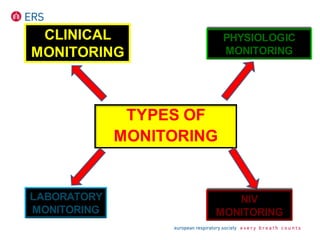
Types of monitoring
Setting for monitoring
Goals of monitoring
Types of monitoring
Setting for monitoring
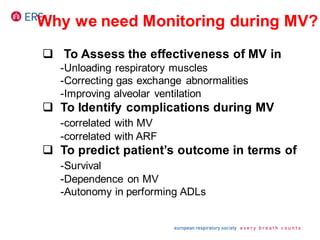
Why we need Monitoring during MV?
 To Assess the effectiveness of MV in
-Unloading respiratory muscles
-Correcting gas exchange abnormalities
-Improving alveolar ventilation
 To Identify complications during MV
-correlated with MV
-correlated with ARF
 To predict patient’s outcome in terms of
-Survival
-Dependence on MV
-Autonomy in performing ADLs
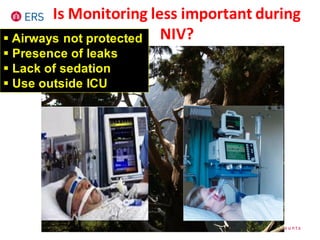
Is Monitoring less important during
NIV? Airways not protected
 Presence of leaks
 Lack of sedation
 Use outside ICU
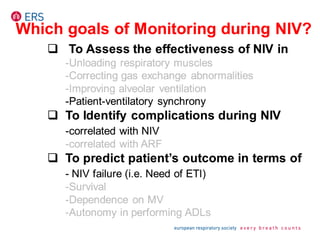
Which goals of Monitoring during NIV?
 To Assess the effectiveness of NIV in
-Unloading respiratory muscles
-Correcting gas exchange abnormalities
-Improving alveolar ventilation
-Patient-ventilatory synchrony
 To Identify complications during NIV
-correlated with NIV
-correlated with ARF
 To predict patient’s outcome in terms of
- NIV failure (i.e. Need of ETI)
-Survival
-Dependence on MV
-Autonomy in performing ADLs
 To Assess the effectiveness of NIV in
-Unloading respiratory muscles
-Correcting gas exchange abnormalities
-Improving alveolar ventilation
-Patient-ventilatory synchrony
 To Identify complications during NIV
-correlated with NIV
-correlated with ARF
 To predict patient’s outcome in terms of
- NIV failure (i.e. Need of ETI)
-Survival
-Dependence on MV
-Autonomy in performing ADLs
AIMS
Goals of monitoring
Types of monitoring
Setting for monitoring
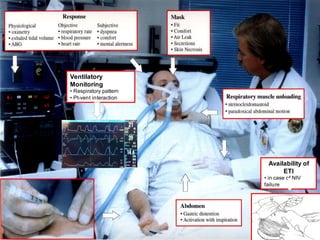
Availability of
ETI
• in case of NIV
failure
Ventilatory
Monitoring
• Respiratory pattern
• Pt-vent interaction
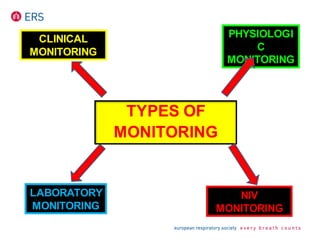
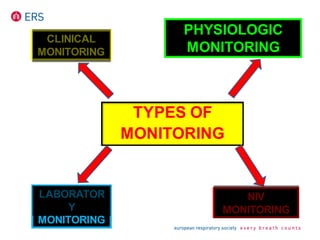
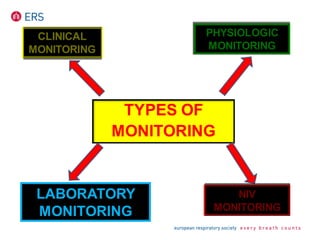
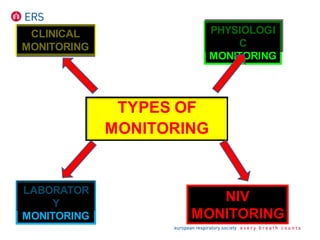
TYPES OF
MONITORING
CLINICAL
MONITORING
PHYSIOLOGI
C
MONITORING
LABORATORY
MONITORING
NIV
MONITORING
TYPES OF
MONITORING
CLINICAL
MONITORING
PHYSIOLOGIC
MONITORING
LABORATORY
MONITORING
NIV
MONITORING
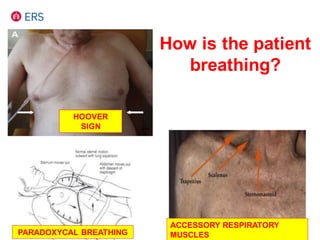
HOOVER
SIGN
ACCESSORY RESPIRATORY
MUSCLESPARADOXYCAL BREATHING
How is the patient
breathing?
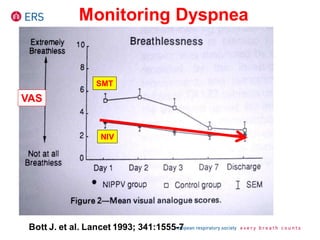
Bott J. et al. Lancet 1993; 341:1555-7
Monitoring Dyspnea
NIV
SMT
VAS
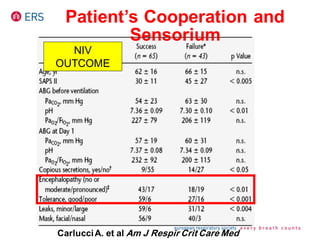
CarlucciA. et al Am J Respir Crit Care Med
Patient’s Cooperation and
Sensorium
NIV
OUTCOME
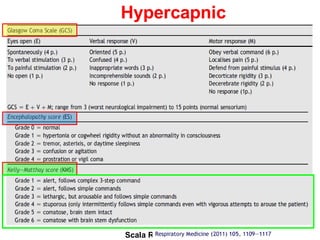
Hypercapnic
Encephalopathy
Scala R.
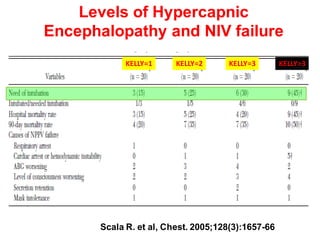
Levels of Hypercapnic
Encephalopathy and NIV failure
KELLY=1 KELLY=2 KELLY=3 KELLY>3
Scala R. et al, Chest. 2005;128(3):1657-66
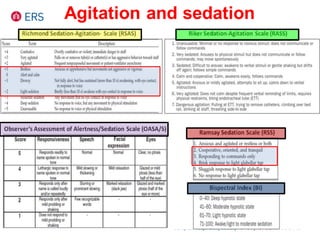
Agitation and sedation
Roche-Campo F et al., Crit Care Med 2010
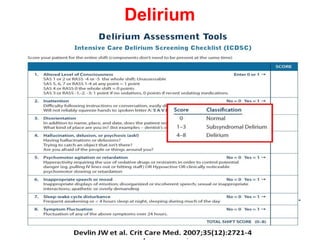
Delirium
TYPES OF
MONITORING
CLINICAL
MONITORING
PHYSIOLOGIC
MONITORING
LABORATOR
Y
MONITORING
NIV
MONITORING
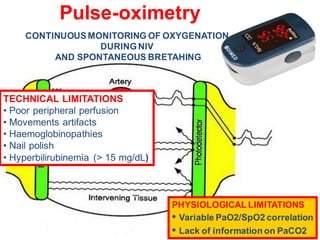
TECHNICAL LIMITATIONS
• Poor peripheral perfusion
• Movements artifacts
• Haemoglobinopathies
• Nail polish
• Hyperbilirubinemia (> 15 mg/dL)
Pulse-oximetry
CONTINUOUSMONITORING OF OXYGENATION
DURINGNIV
AND SPONTANEOUS BRETAHING
PHYSIOLOGICAL LIMITATIONS
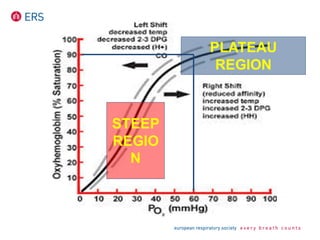
• Variable PaO2/SpO2 correlation
• Lack of information on PaCO2
PLATEAU
REGION
STEEP
REGIO
N
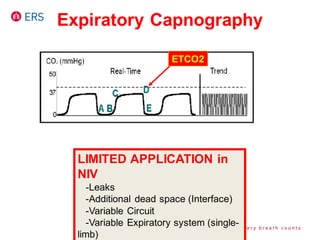
ETCO2
Expiratory Capnography
LIMITED APPLICATION in
NIV
-Leaks
-Additional dead space (Interface)
-Variable Circuit
-Variable Expiratory system (single-
limb)
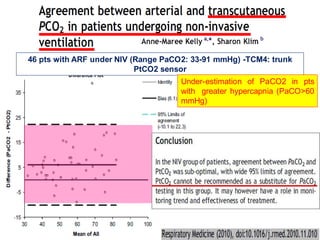
46 pts with ARF under NIV (Range PaCO2: 33-91 mmHg) -TCM4: trunk
PtCO2 sensor
Under-estimation of PaCO2 in pts
with greater hypercapnia (PaCO>60
mmHg)
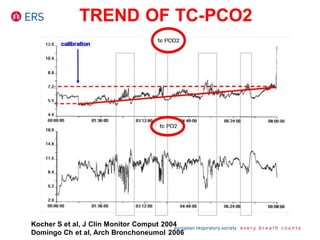
TREND OF TC-PCO2
Kocher S et al, J Clin Monitor Comput 2004
Domingo Ch et al, Arch Bronchoneumol 2006
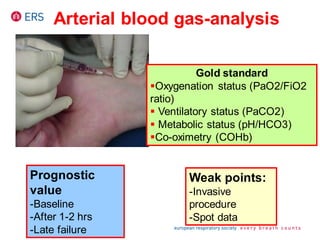
Arterial blood gas-analysis
Gold standard
Oxygenation status (PaO2/FiO2
ratio)
 Ventilatory status (PaCO2)
 Metabolic status (pH/HCO3)
Co-oximetry (COHb)
Weak points:
-Invasive
procedure
-Spot data
Prognostic
value
-Baseline
-After 1-2 hrs
-Late failure
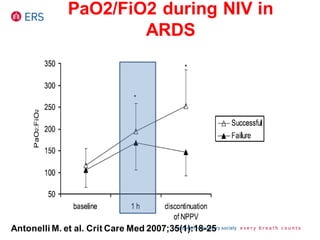
Antonelli M. et al. Crit Care Med 2007;35(1):18-25
PaO2/FiO2 during NIV in
ARDS
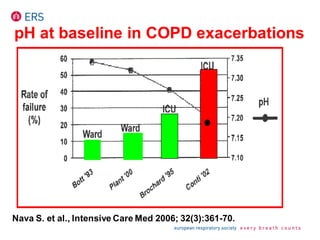
pH at baseline in COPD exacerbations
Nava S. et al., Intensive Care Med 2006; 32(3):361-70.

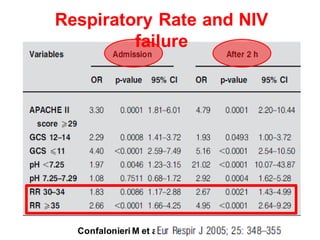
Respiratory Rate and NIV
failure
Confalonieri M et al.
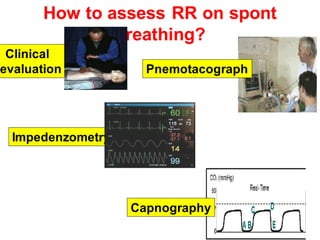
How to assess RR on spont
breathing?
Clinical
evaluation
Impedenzometry
Capnography
Pnemotacograph
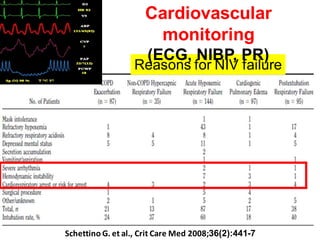
Schettino G. et al., Crit Care Med 2008;36(2):441-7
Reasons for NIV failure
Cardiovascular
monitoring
(ECG, NIBP, PR)
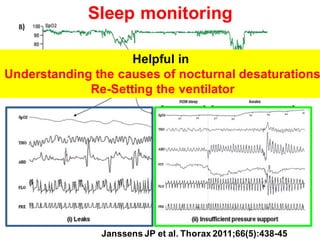
Helpful in
Understanding the causes of nocturnal desaturations
Re-Setting the ventilator
Janssens JP et al. Thorax 2011;66(5):438-45
Sleep monitoring
TYPES OF
MONITORING
CLINICAL
MONITORING
PHYSIOLOGIC
MONITORING
LABORATORY
MONITORING
NIV
MONITORING
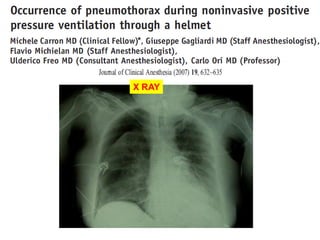
X RAY
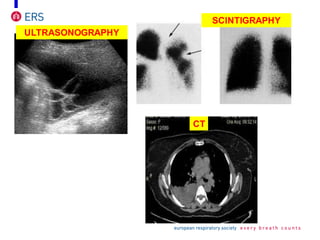
ULTRASONOGRAPHY
CT
SCINTIGRAPHY
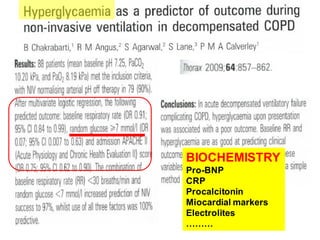
BIOCHEMISTRY
Pro-BNP
CRP
Procalcitonin
Miocardial markers
Electrolites
………
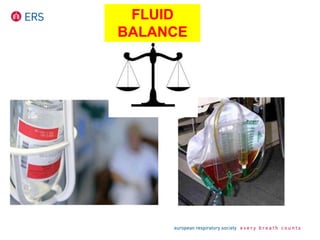
FLUID
BALANCE
TYPES OF
MONITORING
CLINICAL
MONITORING
PHYSIOLOGI
C
MONITORING
LABORATOR
Y
MONITORING
NIV
MONITORING
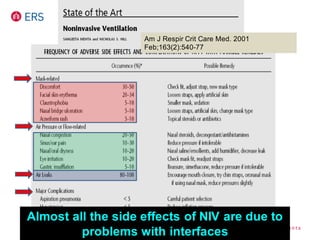
Am J Respir Crit Care Med. 2001
Feb;163(2):540-77
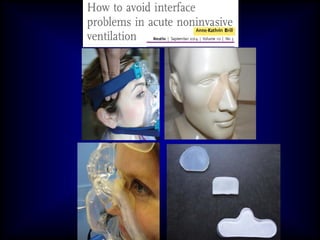
Almost all the side effects of NIV are due to
problems with interfaces
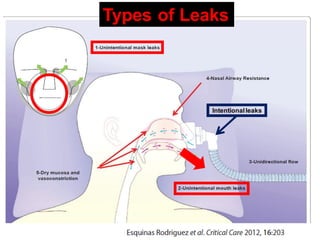
Types of Leaks
Intentionalleaks
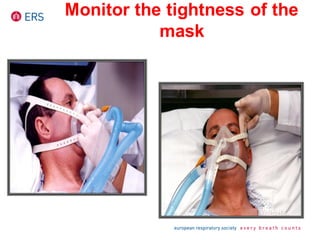
Monitor the tightness of the
mask
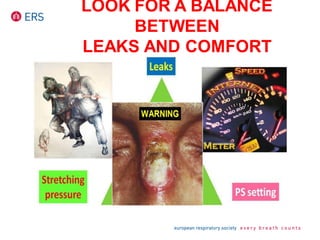
LOOK FOR A BALANCE
BETWEEN
LEAKS AND COMFORT
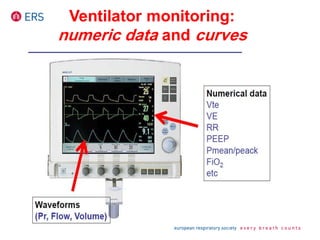
Ventilator monitoring:
numeric data and curves
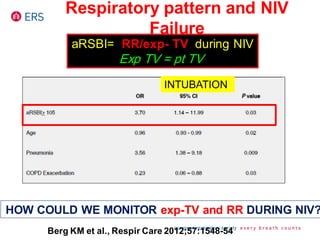
Berg KM et al., Respir Care 2012;57:1548-54
Respiratory pattern and NIV
Failure
INTUBATION
aRSBI= RR/exp- TV during NIV
Exp TV = pt TV
HOW COULD WE MONITOR exp-TV and RR DURING NIV?
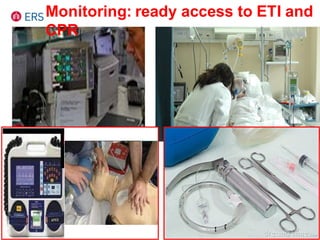
Monitoring: ready access to ETI and
CPR
Non-invasive ventilation
failure in the acute patient
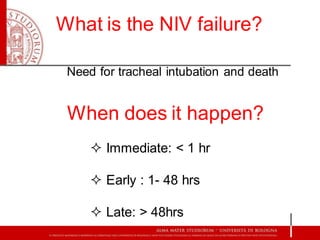
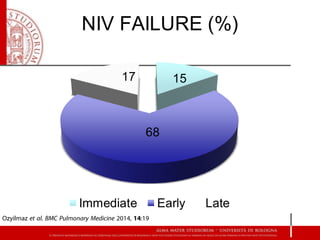
What is the NIV failure?
Need for tracheal intubation and death
When does it happen?
 Immediate: < 1 hr
 Early : 1- 48 hrs
 Late: > 48hrs
NIV FAILURE (%)
Immediate Early Late
17
68
15
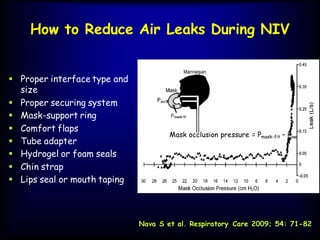
How to Reduce Air Leaks During NIV
 Proper interface type and
size
 Proper securing system
 Mask-support ring
 Comfort flaps
 Tube adapter
 Hydrogel or foam seals
 Chin strap
 Lips seal or mouth taping
Nava S et al. Respiratory Care 2009; 54: 71-82
Mask occlusion pressure = Pmask-fit – Paw
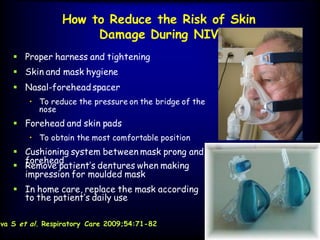
How to Reduce the Risk of Skin
Damage During NIV
 Proper harness and tightening
 Skin and mask hygiene
ava S et al. Respiratory Care 2009;54:71-82
 Nasal-forehead spacer
• To reduce the pressure on the bridge of the
nose
 Forehead and skin pads
• To obtain the most comfortable position
 Cushioning system between mask prong and
forehead
 Remove patient’s dentures when making
impression for moulded mask
 In home care, replace the mask according
to the patient’s daily use
Skin ulcers
Risk for skin lesion
A possible solution: the total face mask
Another solution:
the “Helmet”
Courtesy of Dr. Stefano Nava (Bologna, Italy)
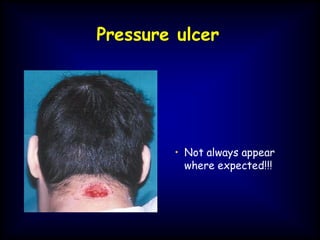
• Not always appear
where expected!!!
Pressure ulcer
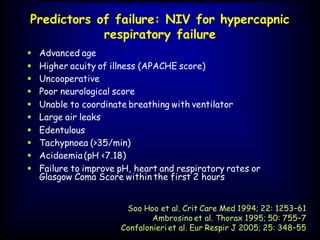
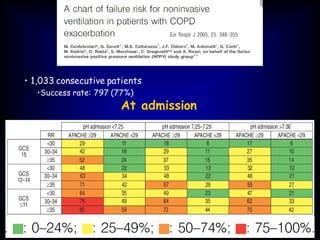
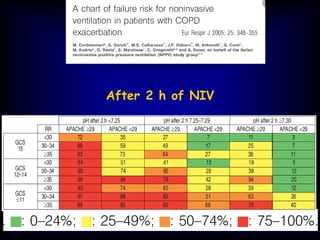
Predictors of failure: NIV for hypercapnic
respiratory failure
 Advanced age
 Higher acuity of illness (APACHE score)
 Uncooperative
 Poor neurological score
 Unable to coordinate breathing with ventilator
 Large air leaks
 Edentulous
 Tachypnoea (>35/min)
 Acidaemia (pH <7.18)
 Failure to improve pH, heart and respiratory rates or
Glasgow Coma Score within the first 2 hours
Soo Hoo et al. Crit Care Med 1994; 22: 1253–61
Ambrosino et al. Thorax 1995; 50: 755–7
Confalonieri et al. Eur Respir J 2005; 25: 348–55
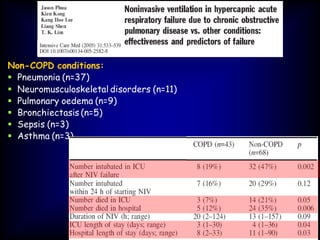
Non-COPD conditions:
 Pneumonia (n=37)
 Neuromusculoskeletal disorders (n=11)
 Pulmonary oedema (n=9)
 Bronchiectasis (n=5)
 Sepsis (n=3)
 Asthma (n=3)
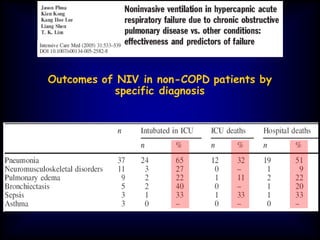
Outcomes of NIV in non-COPD patients by
specific diagnosis
At admission
• 1,033 consecutive patients
•Success rate: 797 (77%)
After 2 h of NIV
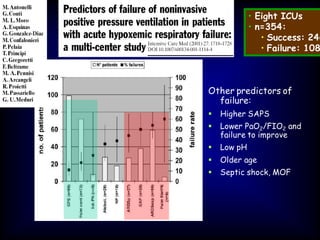
• Eight ICUs
• n=354:
• Success: 246
• Failure: 108
Other predictors of
failure:
 Higher SAPS
 Lower PaO2/FIO2 and
failure to improve
 Low pH
 Older age
 Septic shock, MOF
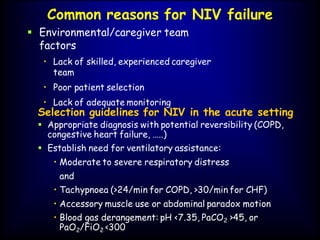
Common reasons for NIV failure
 Environmental/caregiver team
factors
• Lack of skilled, experienced caregiver
team
• Poor patient selection
• Lack of adequate monitoring
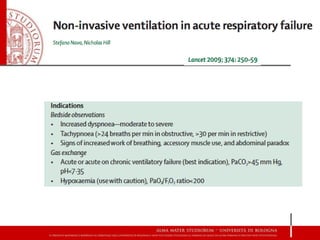
Selection guidelines for NIV in the acute setting
 Appropriate diagnosis with potential reversibility (COPD,
congestive heart failure, …..)
 Establish need for ventilatory assistance:
• Moderate to severe respiratory distress
and
• Tachypnoea (>24/min for COPD, >30/min for CHF)
• Accessory muscle use or abdominal paradox motion
• Blood gas derangement: pH <7.35, PaCO2 >45, or
PaO2/FiO2 <300
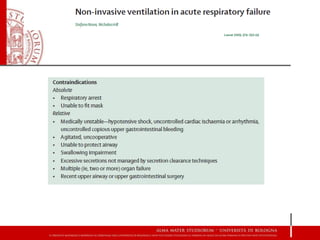
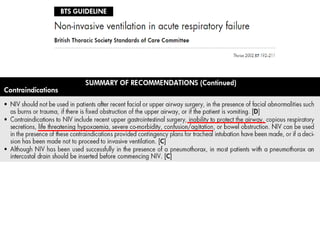
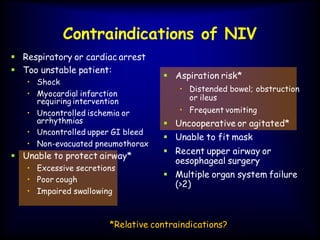
Contraindications of NIV
 Respiratory or cardiac arrest
 Too unstable patient:
• Shock
• Myocardial infarction
requiring intervention
• Uncontrolled ischemia or
arrhythmias
• Uncontrolled upper GI bleed
• Non-evacuated pneumothorax
 Unable to protect airway*
• Excessive secretions
• Poor cough
• Impaired swallowing
*Relative contraindications?
 Aspiration risk*
• Distended bowel; obstruction
or ileus
• Frequent vomiting
 Uncooperative or agitated*
 Unable to fit mask
 Recent upper airway or
oesophageal surgery
 Multiple organ system failure
(>2)
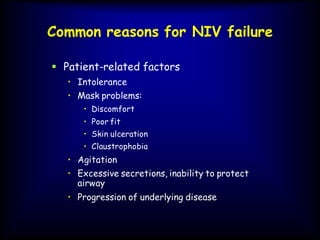
Common reasons for NIV failure
 Patient-related factors
• Intolerance
• Mask problems:
• Discomfort
• Poor fit
• Skin ulceration
• Claustrophobia
• Agitation
• Excessive secretions, inability to protect
airway
• Progression of underlying disease
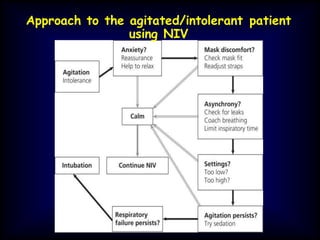
Approach to the agitated/intolerant patient
using NIV
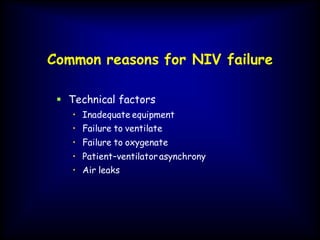
Common reasons for NIV failure
 Technical factors
• Inadequate equipment
• Failure to ventilate
• Failure to oxygenate
• Patient–ventilatorasynchrony
• Air leaks
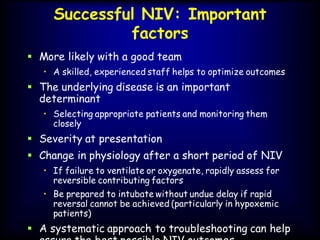
Successful NIV: Important
factors
 More likely with a good team
• A skilled, experienced staff helps to optimize outcomes
 The underlying disease is an important
determinant
• Selecting appropriate patients and monitoring them
closely
 Severity at presentation
 Change in physiology after a short period of NIV
• If failure to ventilate or oxygenate, rapidly assess for
reversible contributing factors
• Be prepared to intubate without undue delay if rapid
reversal cannot be achieved (particularly in hypoxemic
patients)
 A systematic approach to troubleshooting can help
NIV in Acute settings

NIV in Acute settings

  • 2.
    NIV in AcuteSettings Gamal Rabie Agmy ,MD ,FCCP Professor of Chest Diseases, Assiut University
  • 5.
    Rationale for ventilatoryassistance  Respiratoryload  Respiratorymuscles capacity Alveolar hypoventilation  PaO2 and  PaCO2 Abnormal ventilatorydrive
  • 6.
    Mechanical ventilation unloadsthe respiratory muscles Respiratory load Respiratory muscles Mechanical ventilation
  • 12.
  • 13.
    300 250 200150 100 50 Low Tidal Volume Ventilation Higher PEEP HFO Prone Positioning ECMO Low – ModeratePEEP Neuromuscular Blockade PaO2/FiO2 Increasing Severity of Lung Injury Mild ARDS Moderate ARDS Severe ARDS IncreasingIntensityofIntervention NIV ECCO2-R iNO The case of ARDS
  • 14.
    Ventilators for NIV:Not all are useful in each indication
  • 15.
    Standard interfaces Facial masks advantages: –sufficient ventilation also during mouth breathing – sufficient ventilation in patients with limited co-operation disadvantages: – coughing is difficult – skin lesions (bridge of the nose)
  • 16.
    Nasal masks advantages: – bettercomfort – good seal – coughing is possible – communication is possible disadvantages: – effective in nose breathing only – good co-operation is necessary Standard interfaces
  • 17.
    Nasal prong/nasal pillowsystems for patients with claustrophobia for patients with allergies against straps for low to moderate pressures only (< 20 cmH2O) Standard interfaces
  • 18.
    total-face masks • Safeinterface for acute respiratory insufficiency with high pressures • well tolerated by the patients Standard interfaces
  • 19.
    helmet • well toleratedby the patient • no direct contact to the skin of the face • large dead space • may influence the triggering of the patient; use with CPAP • very noisy Standard interfaces
  • 20.
    mouthpieces • simple andcheap • short-interval alternative interface for long-term ventilated patients Custom-made masks • for long-term ventilation • if standard masks are not tolerated Standard interfaces
  • 21.
    Physiologic evaluation ofthree different interfaces cohort: 26 stable patients with hypercapnic COPD or interstitial lung disease. intervention: three 30 minute tests in two ventilatory modes with facial mask / nasal mask / nasal prongs Conclusions: NIPPV was effective with all interfaces. patients„ tolerance: nasal mask > facial mask or nasal prongs pCO2 reduction: facial mask or nasal prongs > nasal mask Navalesi P et al. Crit Care Med 2000;28:2139-2140
  • 23.
    The respiratory System LungsRespiratory Pump Pulmonary Failure • PaO2 • PaCO2 N/ Ventilatory Failure • PaO2 • PaCO2 Hypoxic Respiratory Failure Hypercapnic Respiratory Failure
  • 24.
    Lungs Respiratory Pump Pulmonary Failure • PaO2 •PaCO2 N/ Ventilatory Failure • PaO2 • PaCO2 Hypoxic Respiratory Failure Hypercapnic Respiratory Failure The respiratory System
  • 25.
    CNS breathing center 1. motorneuron PNS 2. motor neuron Motor endplate neuromuscular junction Inspiratory respiratory muscles Rib cage Pleural pressure Alveolar pressure INSPIRATION Respiratory pump
  • 26.
    CNS breathing center 1. motorneuron PNS 2. motor neuron Motor endplate neuromuscular junction Inspiratory respiratory muscles Rib cage Pleural pressure Alveolar pressure INSPIRATION Respiratory drive disturbances Neuromuscular disorders ALS, Myasthenia gravis, Duchenne Muscular Dystrophy, myopathy Mechanical disturbances hyperinflation, rib cage deformities Thoracic instability Reduced compliance Increased airway resistance
  • 27.
    Jolley CJ andMoxham J. Eur Respir Rev 2009; 18:112,1-14
  • 28.
    • Diaphragm flattening •Diaphragm prestretching • Systemic involvement • Inflammation • Steroids • VIDD • Co-morbidities • Heart failure • Pulmonary hypertension • Diabetes • Shortening of inspiration • Airway obstruction • Dynamic hyperinflation • Intrinsic PEEP • Thoracic prestretching • Increased ventilatory demand • pulmonary failure • anemia • heart failure COPD Jolley CJ and Moxham J. Eur Respir Rev 2009; 18:112,1-14
  • 29.
    Evans TW. IntensiveCare Med 2001; 27:166-178
  • 30.
  • 31.
    NIV success within 1-2 hours ? Improveme nt forseveral days ? Weaning from NIV Spontaneou s breathing NIV Start NIV in acute hypercapnic failure - successful intervention
  • 32.
    Rationale for Non-invasive Ventilation(NIV) to improve respiratory function and symptoms • blood gases • dyspnea • respiratory rate to avoid intubation and related complications • ventilator-associated pneumonia (VAP) - i.e. tube associated pneumonia • local complications related to tube (early & late) • complications related to catheterization • tracheostomy and weaning failure to improve outcome • to reduce length of ICU and hospital stay • mortality
  • 33.
    NIV: Further advantages Intermittentapplication Improved clearance of secretion Communication Swallowing No or mild sedation
  • 34.
    NIV = MECHANICALVENTILATION ! RATIONALE : NIV improves oxygenation Antonelli et al. NEJM 1998; 339:429-35 NIV increases VT and unloads diaphragm Brochard et al. Am Rev Respir Dis 1989; 139:513-2
  • 35.
    NIV decreases nosocomialinfections Girou E, Schortgen F, Delclaux C, et al. JAMA 2000, 284, 2361-7
  • 37.
    Level Pathophysiology High (several RCT) COPDExacerbation Acutecardiogenicfailure Weaning & Postextubation faulire in COPD Medium Asthma bronchiale Cysticfibrosis Avoiding extubation failure Do-not-intubateorder Low ARDS (Acuterespiratorydistress syndrome) NIV in acute hypercapnic failure Level of evidence
  • 38.
    NIV IN ACUTEHYPERCAPNIC FAILURE CAUSED BY COPD
  • 39.
    MORTALITY OF PATIENTSWITH COPD REQUIRING INVASIVE MECHANICAL VENTILATION FOR ACUTE RESPIRATORY FAILURE study year In-hospital Mortality, % Knaus 1989 42 Stauffer et al 1993 33 Rieves et al 1993 43 Seneff et al 1995 32 Brochard et al 1995 29 Corrado et al 1998 27 Hill et al 1998 49
  • 40.
    NIV bei AE-COPD Behandlungvon 8 Patienten, um 1 Leben zu retten BMJ 2003, 25; 326: 185
  • 41.
    Lightowler JV. etal. BMJ 2003; 326:185- • NIV prevents intubation (NNT = 5) • NIV reduces mortality (NNT = 8) NNT = number needed to treat
  • 42.
    META-ANALYSIS (N=8) • NIVresulted in – decreased mortality (RR 0.41; 95% CI 0.26, 0.64), – decreased need for ETI (RR 0.42; 95%CI 0.31, 0.59) • Greater improvements within 1 hour in – pH (WMD 0.03; 95%CI 0.02, 0.04), – PaCO2 (WMD -0.40 kPa; 95%CI -0.78, - 0.03), – RR (WMD –3.08 bpm; 95%CI –4.26, -1.89). • Complications associated with treatment (RR 0.32; 95%CI 0.18, 0.56) and length of hospital stay were also reduced with NPPV (WMD – 3.24 days; 95%CI –4.42, -2.06) Lightowler, Elliott, Wedzicha & Ram BMJ 2003; 326:185
  • 43.
    Lightowler JV. etal. BMJ 2003; 326:185- 189 Conclusions NIV should be the first line intervention in addition to usual medical care to manage respiratory failure secondary to an acute exacerbation of chronic obstructive pulmonary disease in all suitable patients. NIV should be tried early in the course of respiratory failure and before severe acidosis, to reduce mortality, avoid endotracheal intubation, and decrease treatment failure. first line pH: 7.20–7,35 Improves outcome NIV:
  • 44.
    Confalonieri, et al.AJRCCM 1999; 160: 1585-1591 • 56 Pats with Pneumonia • 23 COPD - 33 non-COPD • Prospektive RCT: - PSV + Standard-treatment - O2 + Standard-treatment
  • 45.
    Am J RespirCrit Care Med 1999;160:1585-15 * PaCO2 [mmHg] Intubation [%] ICU – length of stay [d] 2-Mo-moratliy [%] NIV Standard 73 0 <1 11 68 55 8 63 32 38 3 43 34 47 5 33 NIV Standard *p < 0.05 COPD (n = 23) Non-COPD (n = 33) * * * * *
  • 46.
    NIV in weaning:Early extubation NIV in the weaning of patients with respiratory failure due to COPD
  • 47.
    NIV in weaning:Early extubation 24-36 hrs of PSV 50 patients 2 hr T-piece trial failed Randomized NIV to 25 br/min, ABGs 6 by 2-4 cmH20/day SBT 2 x/day IPSV to 25 br/min, ABGs “gradually” 6 CPAP or T piece, 2 x/day Nava et al. Ann Intern Med 1998;128:721-8 NIV in the weaning of patients with respiratory failure due to COPD
  • 48.
    Invasive MV NIV Weaning success with NIV NIV in the weaning of patients with ARF due to COPD Nava et al. Ann Intern Med. 1998;128:721-8 NIV in weaning: Early extubation
  • 49.
    NIV to weanfrom respirator in stable COPD Nava et al. Ann Intern Med 1998;128:721-8 Invasive Non-invasive MV days 17 10* ICU days 24 15* 60d wean success 68% 88% * 60 d survival 72% 92% * Pneumonia 25% 0% * wean failure: death from MV and reintubation in 72h
  • 50.
    NIV success within 1-2 hours ? Improveme nt forseveral days ? Weaning from NIV Spontaneou s breathing NIV Start NIV IN ACUTE HYPERCAPNIA Early Failure Early NIV-failure Intubation
  • 51.
  • 52.
    Moretti M. etal. Thorax 2000;55:819-82 N= 137 Patients with NIV success* *NIV > 24 Std. N= 31 Patients with late NIV-failure after primary NIV-success* 23% Acute exacerbation of COPD after 48 hours Mortality IMV 53%, continuing NIV 92% (NIV group pH 7.1 IMV 7.29) Late failure predicted by low ADL scores, pH and co-morbidity at admission
  • 53.
    Moretti M. etal. Thorax 2000;55:819-8 Late NIV failure: • lower pH at admission • higher complication rates • ICU-Mortality • 92% when NIV was continued • 53% when intubation was performe
  • 54.
    Invasive MV insteadof NIV - in terms of clinical issues Invasive MV Lavage bei Hypersecretion Unloading respir. muscles Improvement of neurophysiologic situation Aim: Extubation after 2-3 day - with/without consecutive NIV Massive hypersecretion Massive Load on respir. muscles Neurophysiologic disaster
  • 56.
  • 59.
    Thoraco-Restriction & Neuromuscular disease Obesity Palliation Specialindication for NIV in acute hypercapnia in Non-COPD patients
  • 60.
    Flandreau G etal. Management and long-term outcome of patients with chronic neuromuscular disease admitted to the intensive care unit for acute respiratory failure: a single-center retrospective study. Respir Care 2011; 56: 953 – 960 Special indication for NIV in acute hypercapnia Neuromuscular disease
  • 61.
  • 62.
    DNI: Do notintubate • Aims –Reduced Dyspnea –Improved quality of life („Comfort“) –Buy time INDICATION: NIV IN PALLIATION
  • 63.
  • 65.
  • 66.
    LV failure Pulmonary edema  Pulmonary compliance  Airway resistance Negative Intrathoracic Pressure Swing  Work of breathing  CO  PaO2 Respiratory muscle fatigue  DaO2 +  PaCO2
  • 67.
    LV failure Pulmonary edema  Pulmonary compliance Airway resistance  Negative Intrathoracic Pressure Swing  LV transmural pressure  O2 Cost of breathing  LV afterload +
  • 68.
    Rasen et al:Chest 1985; 87: 158-162 Negative intrathoracic pressure swings during CPE Pes (cmH20) 0 -20
  • 69.
    IntraThoracicPressure and LV function AO LV ITP effort =  ITP = Ptm   LV afterload 100 -20 Ptm = 100-(-20) = 120
  • 70.
    CPAP IN CPE Rasenet al: Chest 1985; 87: 158-162 Pes (cmH20) 0 -20 Spontaneous breathing CPAP 15 cmH20
  • 71.
    IntraThoracicPressure and LV function AO LV ITP effort =  ITP =  Ptm   LV afterload 100 -5 Ptm = 100-(-5) = 105
  • 72.
    Rationale of positivepressure ventilation in CPE Positive Pressure  ITP  FRC Pre-load  Venous return  LVafterload  PTM  PaO2  WOB  Cardiac performance  pulmonary congestion
  • 73.
    Targets of ventilationin cardiogenic pulmonary oedema • improvement of oxygenation • improvement of respiratory acidosis • reduction of work of breathing • improvement of cardiac performance • reduction of patient’s distress
  • 74.
    NIV and obesity:in the acute setting
  • 75.
    OHS: Definition - Obesity(BMI 30 kg/m2) - Hypercapnia (PaCO2  45 mmHg) - Sleep-disordered breathing Thomas Nast, The Pickwick Papers
  • 76.
    OHS: Clinical Presentation Middle-aged  2:1 male-to-female  Extremely obese  Significant sleep-disordered breathing (fatigue, hypersomnolence, snoring, AM headache)
  • 78.
  • 81.
    Conclusions Multiple organ failureand pneumonia were the main factors associated with NIV failure and death in morbidly obese patients in hypoxic ARF. On the opposite, NIV was constantly successful and could be safely pushed further in case of severe hypercapnic acute respiratory decompensation of OHS.
  • 82.
    Potential goals ofnoninvasive ventilation (NIV) in severe acute asthma. Dean R Hess Respir Care 2013;58:950-972 (c) 2012 by Daedalus Enterprises,Inc.
  • 83.
    Bronchoscope inserted throughthe swivel adaptor of a face mask for noninvasive ventilation. Dean R Hess Respir Care 2013;58:950-972 (c) 2012 by Daedalus Enterprises,Inc.
  • 84.
    Monitoring of NIVin the acute setting
  • 85.
    AIMS Goals of monitoring Typesof monitoring Setting for monitoring Goals of monitoring Types of monitoring Setting for monitoring
  • 86.
    Why we needMonitoring during MV?  To Assess the effectiveness of MV in -Unloading respiratory muscles -Correcting gas exchange abnormalities -Improving alveolar ventilation  To Identify complications during MV -correlated with MV -correlated with ARF  To predict patient’s outcome in terms of -Survival -Dependence on MV -Autonomy in performing ADLs
  • 87.
    Is Monitoring lessimportant during NIV? Airways not protected  Presence of leaks  Lack of sedation  Use outside ICU
  • 88.
    Which goals ofMonitoring during NIV?  To Assess the effectiveness of NIV in -Unloading respiratory muscles -Correcting gas exchange abnormalities -Improving alveolar ventilation -Patient-ventilatory synchrony  To Identify complications during NIV -correlated with NIV -correlated with ARF  To predict patient’s outcome in terms of - NIV failure (i.e. Need of ETI) -Survival -Dependence on MV -Autonomy in performing ADLs  To Assess the effectiveness of NIV in -Unloading respiratory muscles -Correcting gas exchange abnormalities -Improving alveolar ventilation -Patient-ventilatory synchrony  To Identify complications during NIV -correlated with NIV -correlated with ARF  To predict patient’s outcome in terms of - NIV failure (i.e. Need of ETI) -Survival -Dependence on MV -Autonomy in performing ADLs
  • 89.
    AIMS Goals of monitoring Typesof monitoring Setting for monitoring
  • 90.
    Availability of ETI • incase of NIV failure Ventilatory Monitoring • Respiratory pattern • Pt-vent interaction
  • 91.
  • 92.
  • 93.
  • 94.
    Bott J. etal. Lancet 1993; 341:1555-7 Monitoring Dyspnea NIV SMT VAS
  • 95.
    CarlucciA. et alAm J Respir Crit Care Med Patient’s Cooperation and Sensorium NIV OUTCOME
  • 96.
  • 97.
    Levels of Hypercapnic Encephalopathyand NIV failure KELLY=1 KELLY=2 KELLY=3 KELLY>3 Scala R. et al, Chest. 2005;128(3):1657-66
  • 98.
  • 99.
    Roche-Campo F etal., Crit Care Med 2010 Delirium
  • 100.
  • 101.
    TECHNICAL LIMITATIONS • Poorperipheral perfusion • Movements artifacts • Haemoglobinopathies • Nail polish • Hyperbilirubinemia (> 15 mg/dL) Pulse-oximetry CONTINUOUSMONITORING OF OXYGENATION DURINGNIV AND SPONTANEOUS BRETAHING PHYSIOLOGICAL LIMITATIONS • Variable PaO2/SpO2 correlation • Lack of information on PaCO2
  • 102.
  • 103.
    ETCO2 Expiratory Capnography LIMITED APPLICATIONin NIV -Leaks -Additional dead space (Interface) -Variable Circuit -Variable Expiratory system (single- limb)
  • 104.
    46 pts withARF under NIV (Range PaCO2: 33-91 mmHg) -TCM4: trunk PtCO2 sensor Under-estimation of PaCO2 in pts with greater hypercapnia (PaCO>60 mmHg)
  • 105.
    TREND OF TC-PCO2 KocherS et al, J Clin Monitor Comput 2004 Domingo Ch et al, Arch Bronchoneumol 2006
  • 106.
    Arterial blood gas-analysis Goldstandard Oxygenation status (PaO2/FiO2 ratio)  Ventilatory status (PaCO2)  Metabolic status (pH/HCO3) Co-oximetry (COHb) Weak points: -Invasive procedure -Spot data Prognostic value -Baseline -After 1-2 hrs -Late failure
  • 107.
    Antonelli M. etal. Crit Care Med 2007;35(1):18-25 PaO2/FiO2 during NIV in ARDS
  • 108.
    pH at baselinein COPD exacerbations Nava S. et al., Intensive Care Med 2006; 32(3):361-70. 
  • 109.
    Respiratory Rate andNIV failure Confalonieri M et al.
  • 110.
    How to assessRR on spont breathing? Clinical evaluation Impedenzometry Capnography Pnemotacograph
  • 111.
    Schettino G. etal., Crit Care Med 2008;36(2):441-7 Reasons for NIV failure Cardiovascular monitoring (ECG, NIBP, PR)
  • 112.
    Helpful in Understanding thecauses of nocturnal desaturations Re-Setting the ventilator Janssens JP et al. Thorax 2011;66(5):438-45 Sleep monitoring
  • 113.
  • 114.
  • 115.
  • 116.
  • 117.
  • 118.
  • 119.
    Am J RespirCrit Care Med. 2001 Feb;163(2):540-77 Almost all the side effects of NIV are due to problems with interfaces
  • 120.
  • 121.
  • 122.
    LOOK FOR ABALANCE BETWEEN LEAKS AND COMFORT
  • 123.
  • 124.
    Berg KM etal., Respir Care 2012;57:1548-54 Respiratory pattern and NIV Failure INTUBATION aRSBI= RR/exp- TV during NIV Exp TV = pt TV HOW COULD WE MONITOR exp-TV and RR DURING NIV?
  • 125.
  • 126.
  • 127.
    What is theNIV failure? Need for tracheal intubation and death When does it happen?  Immediate: < 1 hr  Early : 1- 48 hrs  Late: > 48hrs
  • 128.
    NIV FAILURE (%) ImmediateEarly Late 17 68 15
  • 129.
    How to ReduceAir Leaks During NIV  Proper interface type and size  Proper securing system  Mask-support ring  Comfort flaps  Tube adapter  Hydrogel or foam seals  Chin strap  Lips seal or mouth taping Nava S et al. Respiratory Care 2009; 54: 71-82 Mask occlusion pressure = Pmask-fit – Paw
  • 131.
    How to Reducethe Risk of Skin Damage During NIV  Proper harness and tightening  Skin and mask hygiene ava S et al. Respiratory Care 2009;54:71-82  Nasal-forehead spacer • To reduce the pressure on the bridge of the nose  Forehead and skin pads • To obtain the most comfortable position  Cushioning system between mask prong and forehead  Remove patient’s dentures when making impression for moulded mask  In home care, replace the mask according to the patient’s daily use
  • 132.
  • 133.
  • 134.
    A possible solution:the total face mask
  • 135.
    Another solution: the “Helmet” Courtesyof Dr. Stefano Nava (Bologna, Italy)
  • 136.
    • Not alwaysappear where expected!!! Pressure ulcer
  • 137.
    Predictors of failure:NIV for hypercapnic respiratory failure  Advanced age  Higher acuity of illness (APACHE score)  Uncooperative  Poor neurological score  Unable to coordinate breathing with ventilator  Large air leaks  Edentulous  Tachypnoea (>35/min)  Acidaemia (pH <7.18)  Failure to improve pH, heart and respiratory rates or Glasgow Coma Score within the first 2 hours Soo Hoo et al. Crit Care Med 1994; 22: 1253–61 Ambrosino et al. Thorax 1995; 50: 755–7 Confalonieri et al. Eur Respir J 2005; 25: 348–55
  • 138.
    Non-COPD conditions:  Pneumonia(n=37)  Neuromusculoskeletal disorders (n=11)  Pulmonary oedema (n=9)  Bronchiectasis (n=5)  Sepsis (n=3)  Asthma (n=3)
  • 139.
    Outcomes of NIVin non-COPD patients by specific diagnosis
  • 140.
    At admission • 1,033consecutive patients •Success rate: 797 (77%)
  • 141.
    After 2 hof NIV
  • 142.
    • Eight ICUs •n=354: • Success: 246 • Failure: 108 Other predictors of failure:  Higher SAPS  Lower PaO2/FIO2 and failure to improve  Low pH  Older age  Septic shock, MOF
  • 143.
    Common reasons forNIV failure  Environmental/caregiver team factors • Lack of skilled, experienced caregiver team • Poor patient selection • Lack of adequate monitoring Selection guidelines for NIV in the acute setting  Appropriate diagnosis with potential reversibility (COPD, congestive heart failure, …..)  Establish need for ventilatory assistance: • Moderate to severe respiratory distress and • Tachypnoea (>24/min for COPD, >30/min for CHF) • Accessory muscle use or abdominal paradox motion • Blood gas derangement: pH <7.35, PaCO2 >45, or PaO2/FiO2 <300
  • 144.
    Contraindications of NIV Respiratory or cardiac arrest  Too unstable patient: • Shock • Myocardial infarction requiring intervention • Uncontrolled ischemia or arrhythmias • Uncontrolled upper GI bleed • Non-evacuated pneumothorax  Unable to protect airway* • Excessive secretions • Poor cough • Impaired swallowing *Relative contraindications?  Aspiration risk* • Distended bowel; obstruction or ileus • Frequent vomiting  Uncooperative or agitated*  Unable to fit mask  Recent upper airway or oesophageal surgery  Multiple organ system failure (>2)
  • 145.
    Common reasons forNIV failure  Patient-related factors • Intolerance • Mask problems: • Discomfort • Poor fit • Skin ulceration • Claustrophobia • Agitation • Excessive secretions, inability to protect airway • Progression of underlying disease
  • 146.
    Approach to theagitated/intolerant patient using NIV
  • 147.
    Common reasons forNIV failure  Technical factors • Inadequate equipment • Failure to ventilate • Failure to oxygenate • Patient–ventilatorasynchrony • Air leaks
  • 148.
    Successful NIV: Important factors More likely with a good team • A skilled, experienced staff helps to optimize outcomes  The underlying disease is an important determinant • Selecting appropriate patients and monitoring them closely  Severity at presentation  Change in physiology after a short period of NIV • If failure to ventilate or oxygenate, rapidly assess for reversible contributing factors • Be prepared to intubate without undue delay if rapid reversal cannot be achieved (particularly in hypoxemic patients)  A systematic approach to troubleshooting can help