Radiological Presentation
of COVID 19
Gamal Agmy, MD, FCCP
Professor and Head of Chest Department , Assiut
University, Egypt
COVID-19 (coronavirus disease 2019) is
an infectious disease caused by severe
acute respiratory syndrome coronavirus
2 (SARS-CoV-2), previously known
as 2019 novel coronavirus (2019-nCoV),
a strain of Corona Virus
Introduction
Corona Virus (COVID-19)
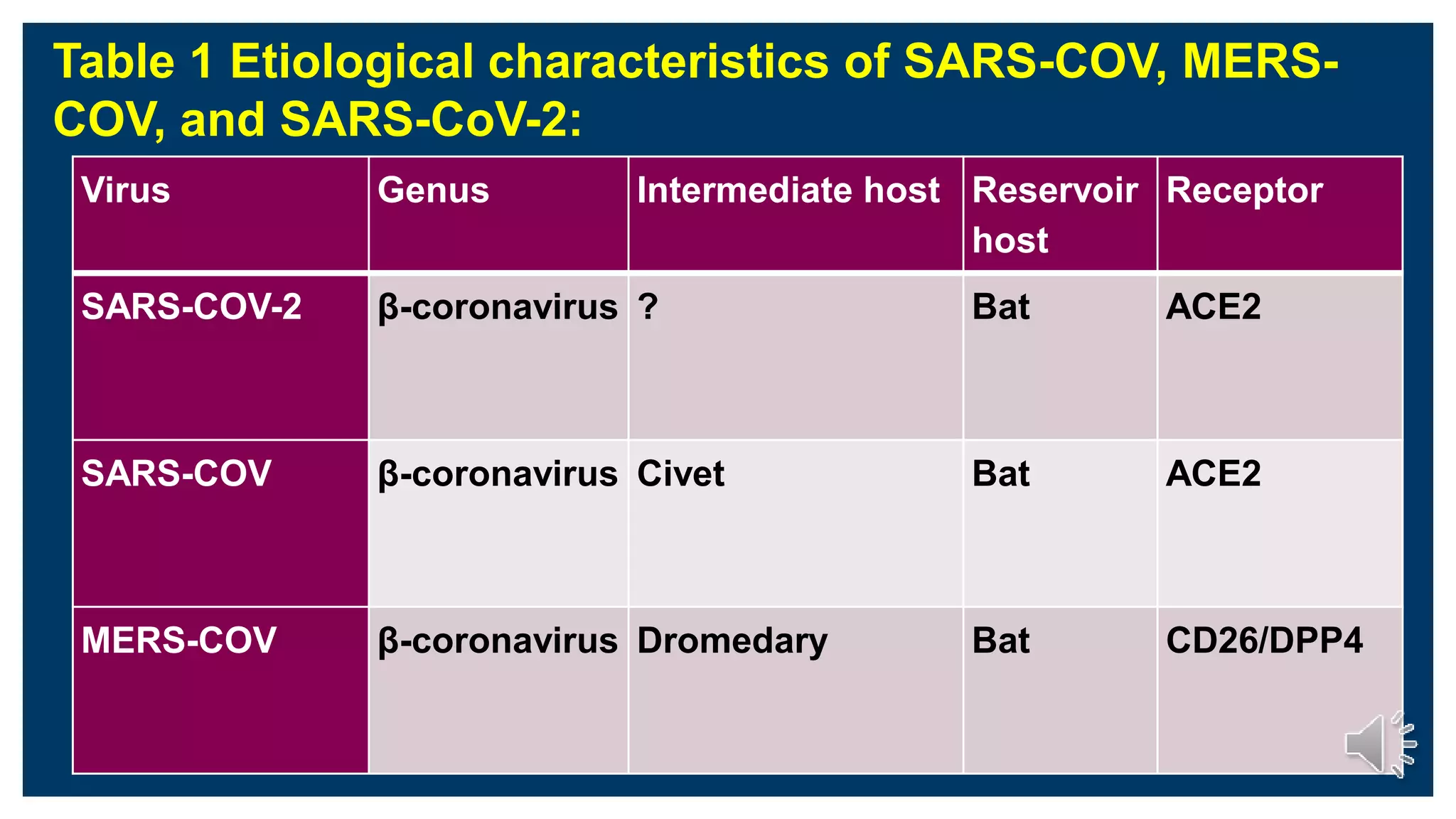
Table 1 Etiological characteristics of SARS-COV, MERS-
COV, and SARS-CoV-2:
Virus Genus Intermediate host Reservoir
host
Receptor
SARS-COV-2 β-coronavirus ? Bat ACE2
SARS-COV β-coronavirus Civet Bat ACE2
MERS-COV β-coronavirus Dromedary Bat CD26/DPP4
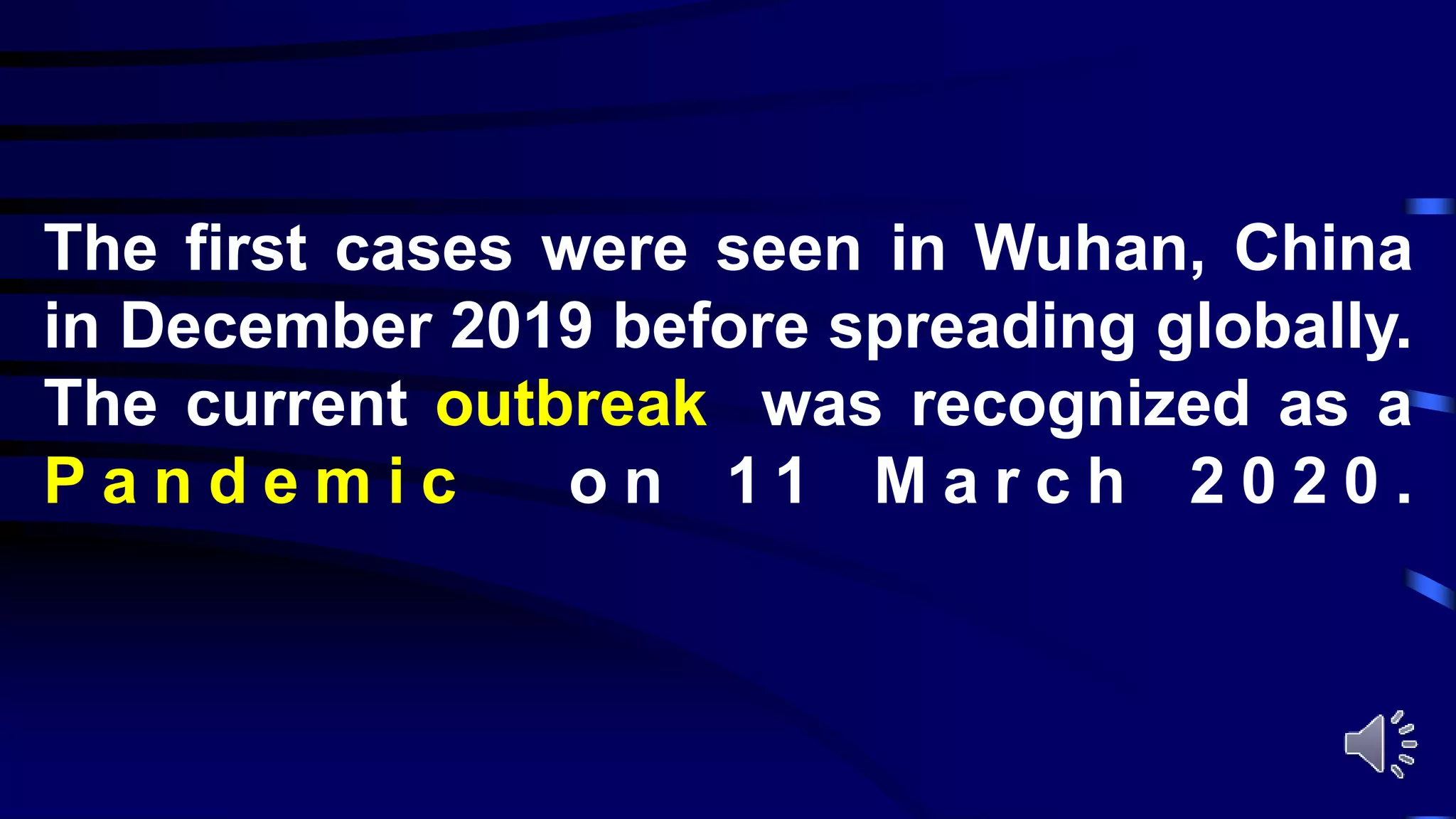
The first cases were seen in Wuhan, China
in December 2019 before spreading globally.
The current outbreak was recognized as a
P a n d e m i c o n 1 1 M a r c h 2 0 2 0 .
Most people infected with the COVID-19
virus will experience mild to moderate
respiratory illness and recover without
requiring special treatment. Older people,
and those with underlying medical
problems like cardiovascular disease,
diabetes, chronic respiratory disease, and
cancer are more likely to develop serious
illness.
Clinical presentation
COVID-19 typically presents with systemic
and/or respiratory manifestations . Some
individuals infected with SARS-CoV-2 are
asymptomatic and can act as
carriers . Some also experience mild
gastrointestinal or cardiovascular
symptoms, although these are much less
common 1
Clinical presentation
Common:
Fever (85-90%)
Cough(65-70%)
fatigue (35-40%)
sputum production (30-
35%)
shortness of breath (15-
20%)
Less common:
Mylagia/arthralgia (10-
15%)
headaches (10-15%)
sore throat (10-15%)
chills (10-12%)
pleuritic pain
Clinical presentation
Rare:
nausea, vomiting, nasal congestion (<10%),
diarrhoea (<5%)
Palpitation and chest tightness
Clinical presentation
Pediatric
In the main, the clinical presentation in children with
COVID-19 is milder than in adults. Symptoms are
similar to any acute chest infection, encompassing
most commonly pyrexia, dry cough, sore throat,
sneezing, myalgia and lethargy. Wheezing has also
been noted . Other less common (<10%) symptoms
in children included diarrhea, lethargy, rhinorrhea and
vomiting
Pathophysiology: Covid-19 induced Pneumonia
1. Kuba K, Imai Y, Rao S, Gao H, Guo F, Guan B, et al. (August 2005). Nature Medicine. 11 (8): 875–9. doi:10.1038/nm1267. 2. Turner AJ, Tipnis SR, Guy JL, Rice G, Hooper NM (April 2002). Canadian
Journal of Physiology and Pharmacology. 80 (4): 346–53. doi:10.1139/y02-021 3. Zhang H, Penninger JM, Li Y, Zhong N, Slutsky AS (March 2020). Intensive Care Medicine. Springer Science and
Business Media LLC. doi:10.1007/s00134-020-05985-9. 4. Fang L, Karakiulakis G, Roth M (March 2020).The Lancet. Respiratory Medicine. doi:10.1016/S2213-2600(20)30116-8 5.
https://mmrjournal.biomedcentral.com/articles/10.1186/s40779-020-0233-6
• SARS-CoV-2 enters cells via ACE21
• ACE2 is not sensitive to ACE-inhibitor drugs to treat hypertension2
• Unclear whether ACE-inhibitors are useful in SARS-CoV-2 treatment; Soluble
injected ACE2 could be beneficial3
• Patients under ACE-inhibitors and hypertension might be at higher risk for
Covid-194 (no recommendation to stop treatments)
• ACE2 is present on the intestinal epithelial cells and type 2 pneumocytes in the
pulmonary alveoli
 Destruction of epithelial tissue, reduced gas exchange
 Risk of acute respiratory distress syndrome
 Oxygen support and in rare cases mechanical ventilation necessary
Thin layer CT of a 50 year old female:
Multiple patchy and light consolidation in both
lungs and grid-like thickness of interlobular septa
Diagnosis
Diagnosis
The definitive test for SARS-CoV-2 is
the real-time reverse transcriptase-
polymerase chain reaction (RT-
PCR) test and is believed to be
highly specific but with sensitivity reported as
low as 60-70% and as high as 95-97% ..
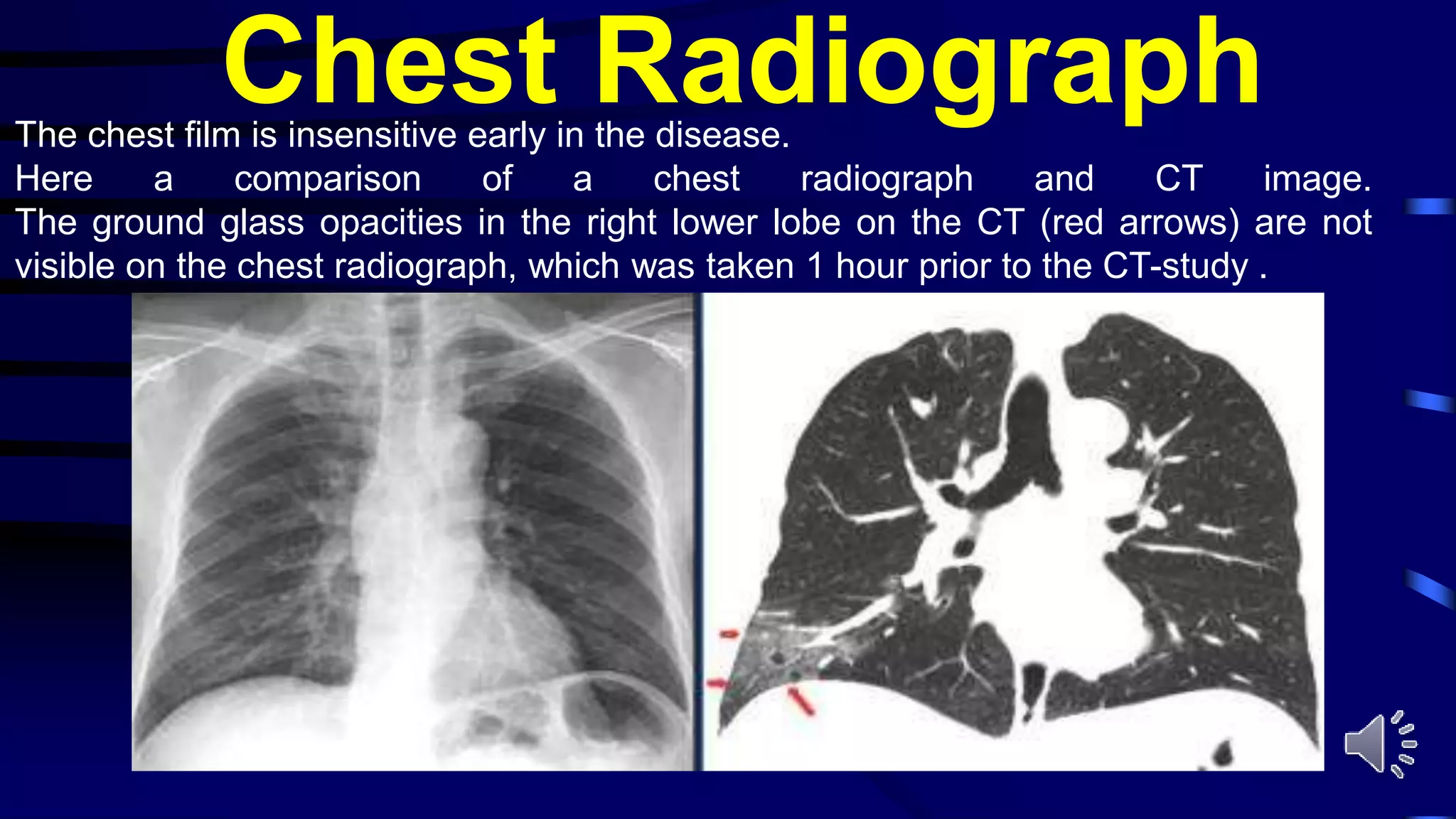
Chest RadiographThe chest film is insensitive early in the disease.
Here a comparison of a chest radiograph and CT image.
The ground glass opacities in the right lower lobe on the CT (red arrows) are not
visible on the chest radiograph, which was taken 1 hour prior to the CT-study .
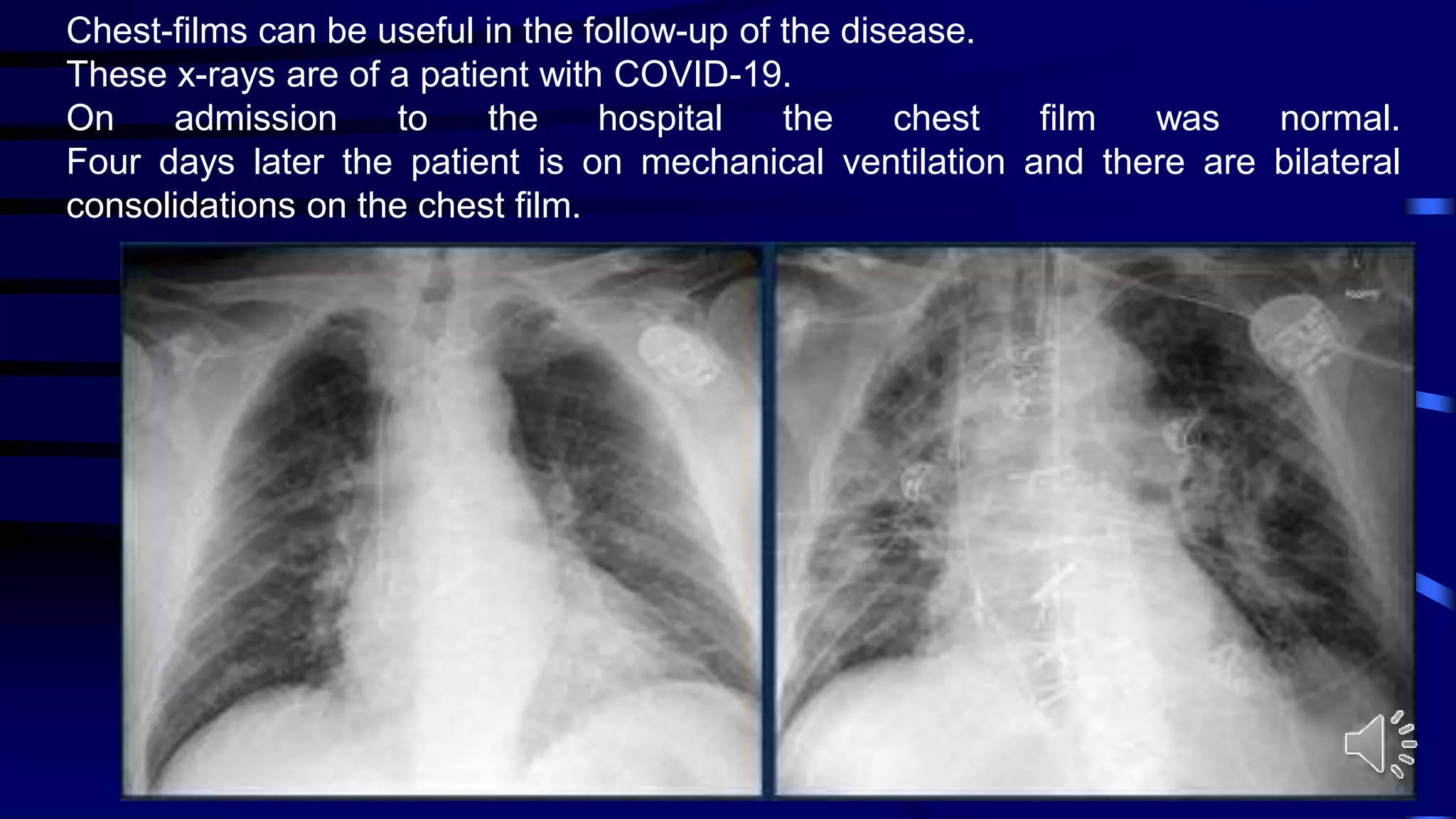
Chest-films can be useful in the follow-up of the disease.
These x-rays are of a patient with COVID-19.
On admission to the hospital the chest film was normal.
Four days later the patient is on mechanical ventilation and there are bilateral
consolidations on the chest film.
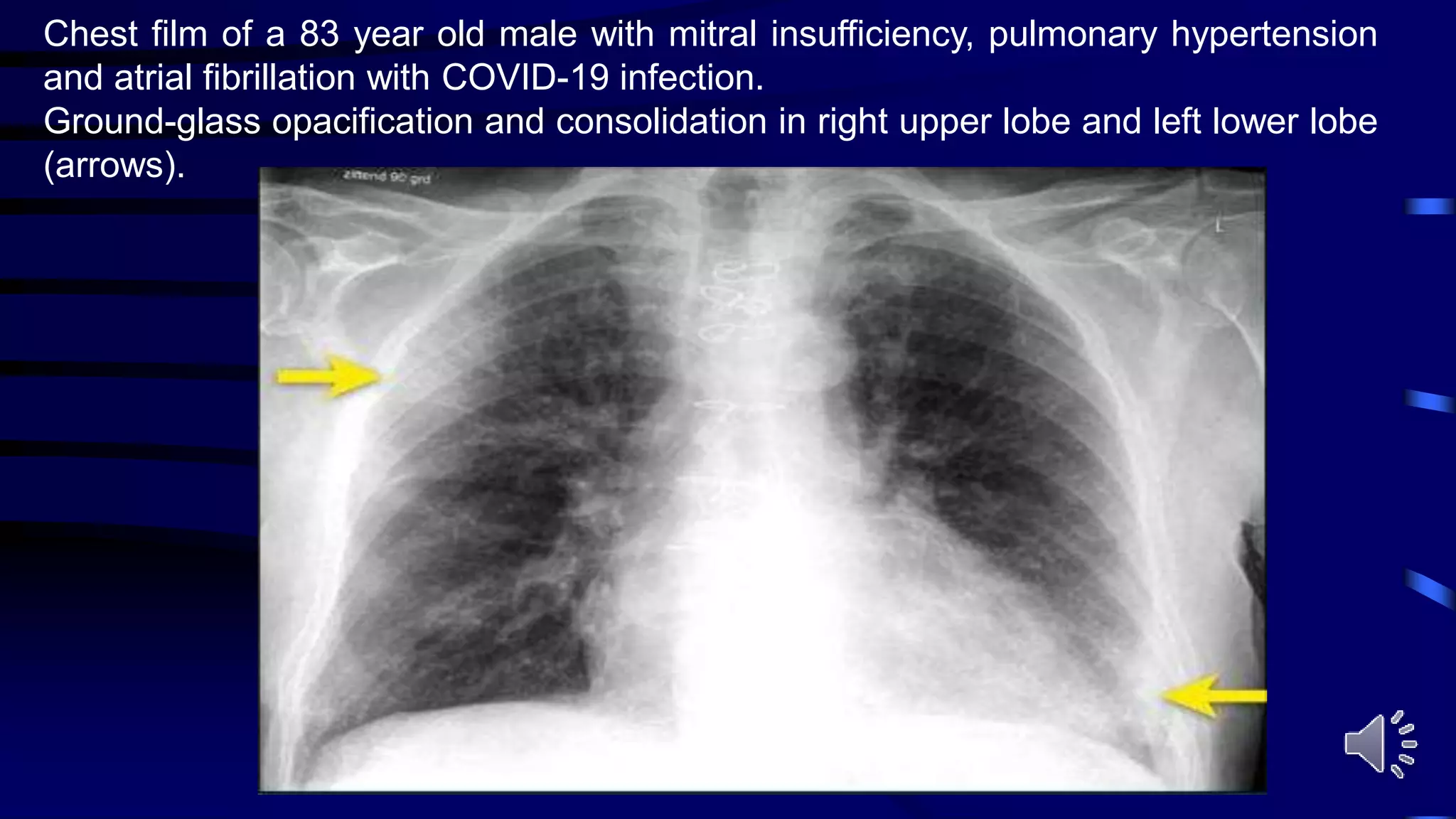
Chest film of a 83 year old male with mitral insufficiency, pulmonary hypertension
and atrial fibrillation with COVID-19 infection.
Ground-glass opacification and consolidation in right upper lobe and left lower lobe
(arrows).
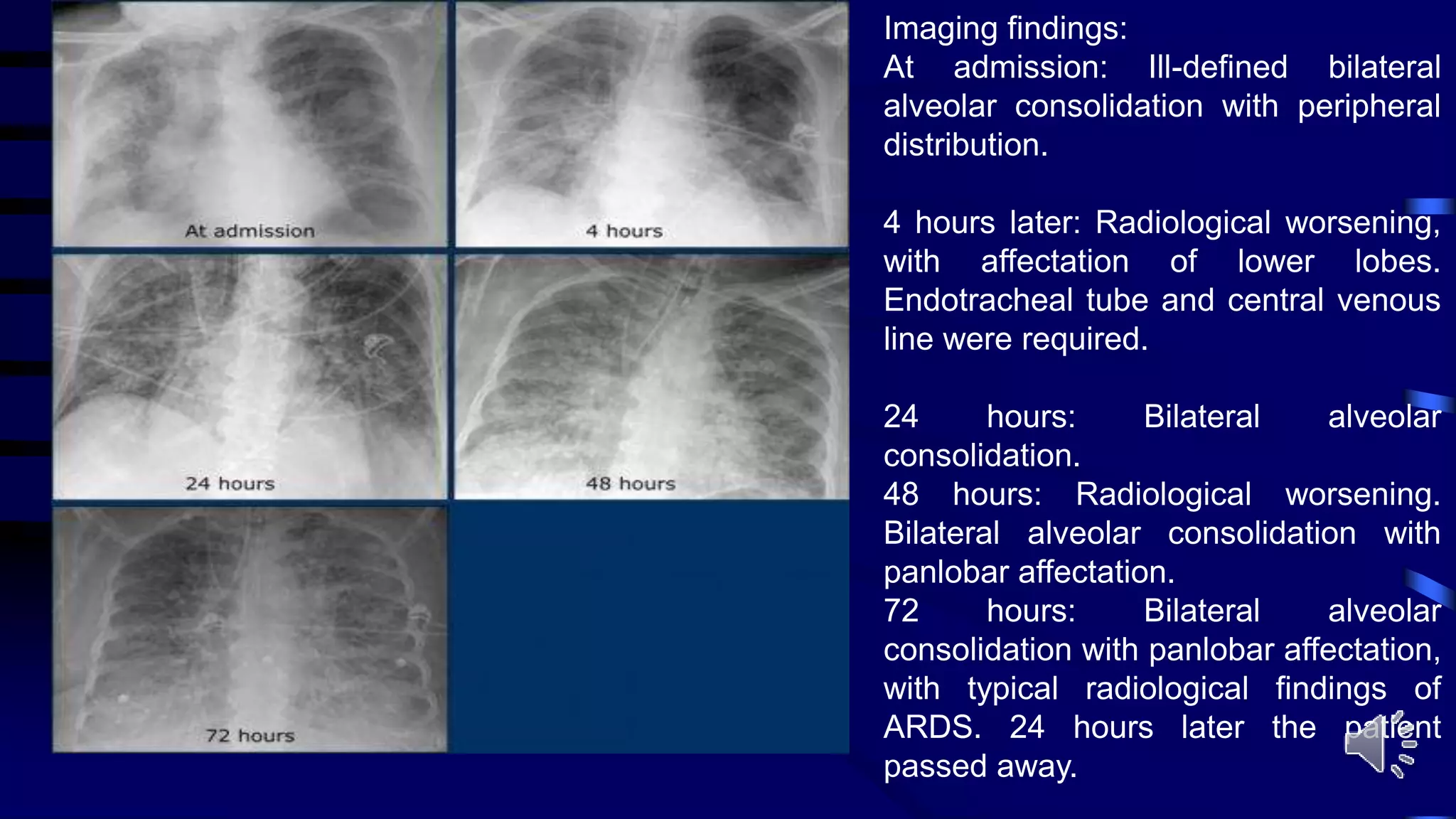
A series of chest films of a 72-year-old woman admitted with acute
respiratory failure, fever (38ºC) and dyspnoea.
She was tachypneic (30bpm), with lymphopenia and low oxygen
saturation (SpO2 85%).
Patient presented to the emergency department two days earlier
with fever (up to 38.6ºC), dry cough, odynophagia and general
malaise.
She was discharged from hospital because she did not present
alarm criteria at that time.
The patient required mechanical ventilation and was admitted to
intensive care.During her stay in ICU, poor evolution to respiratory
distress syndrome and to multi-organic failure. The patient died 24
hours later.
Imaging findings:
At admission: Ill-defined bilateral
alveolar consolidation with peripheral
distribution.
4 hours later: Radiological worsening,
with affectation of lower lobes.
Endotracheal tube and central venous
line were required.
24 hours: Bilateral alveolar
consolidation.
48 hours: Radiological worsening.
Bilateral alveolar consolidation with
panlobar affectation.
72 hours: Bilateral alveolar
consolidation with panlobar affectation,
with typical radiological findings of
ARDS. 24 hours later the patient
passed away.
Halo Sign
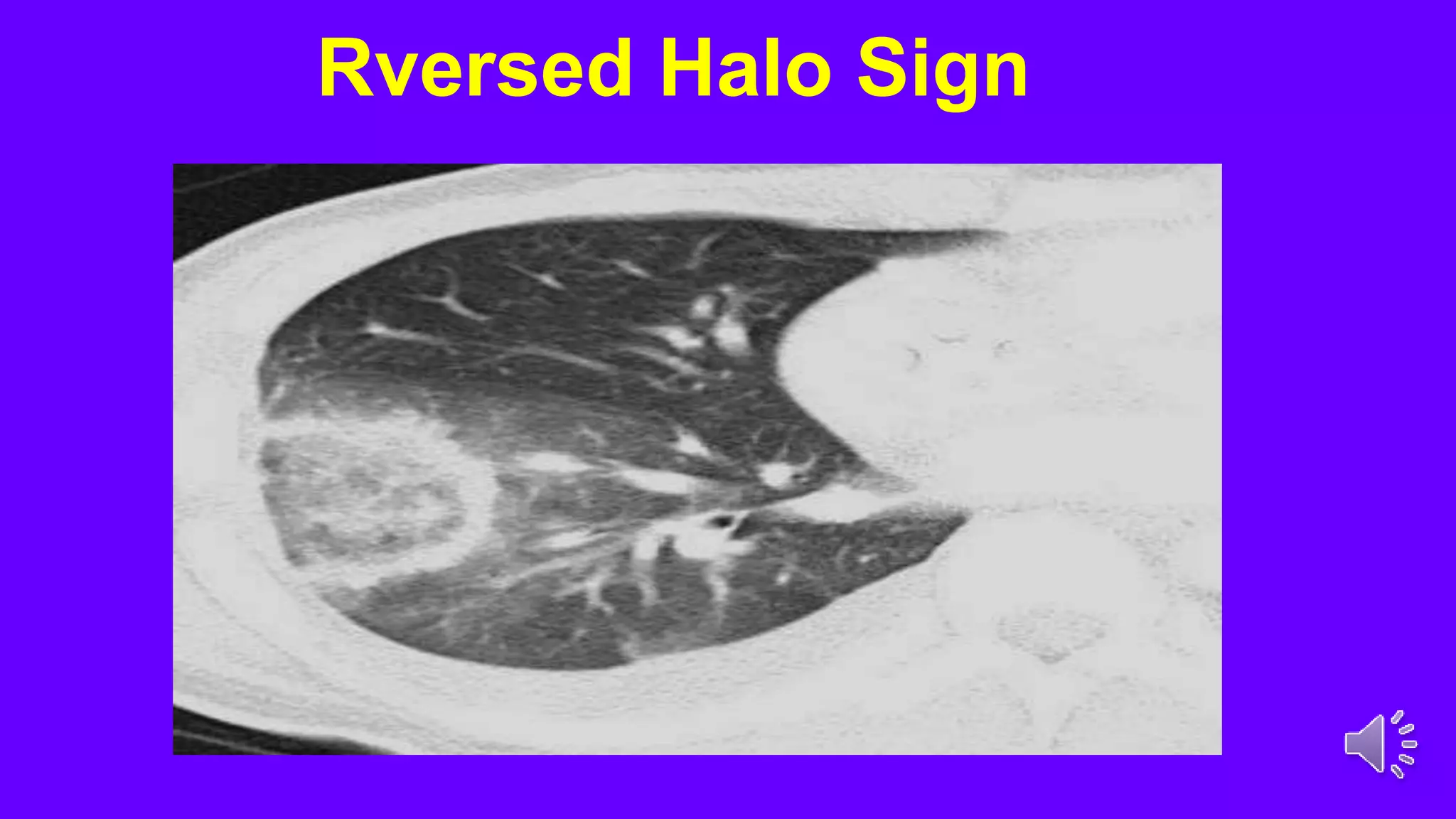
Rversed Halo Sign
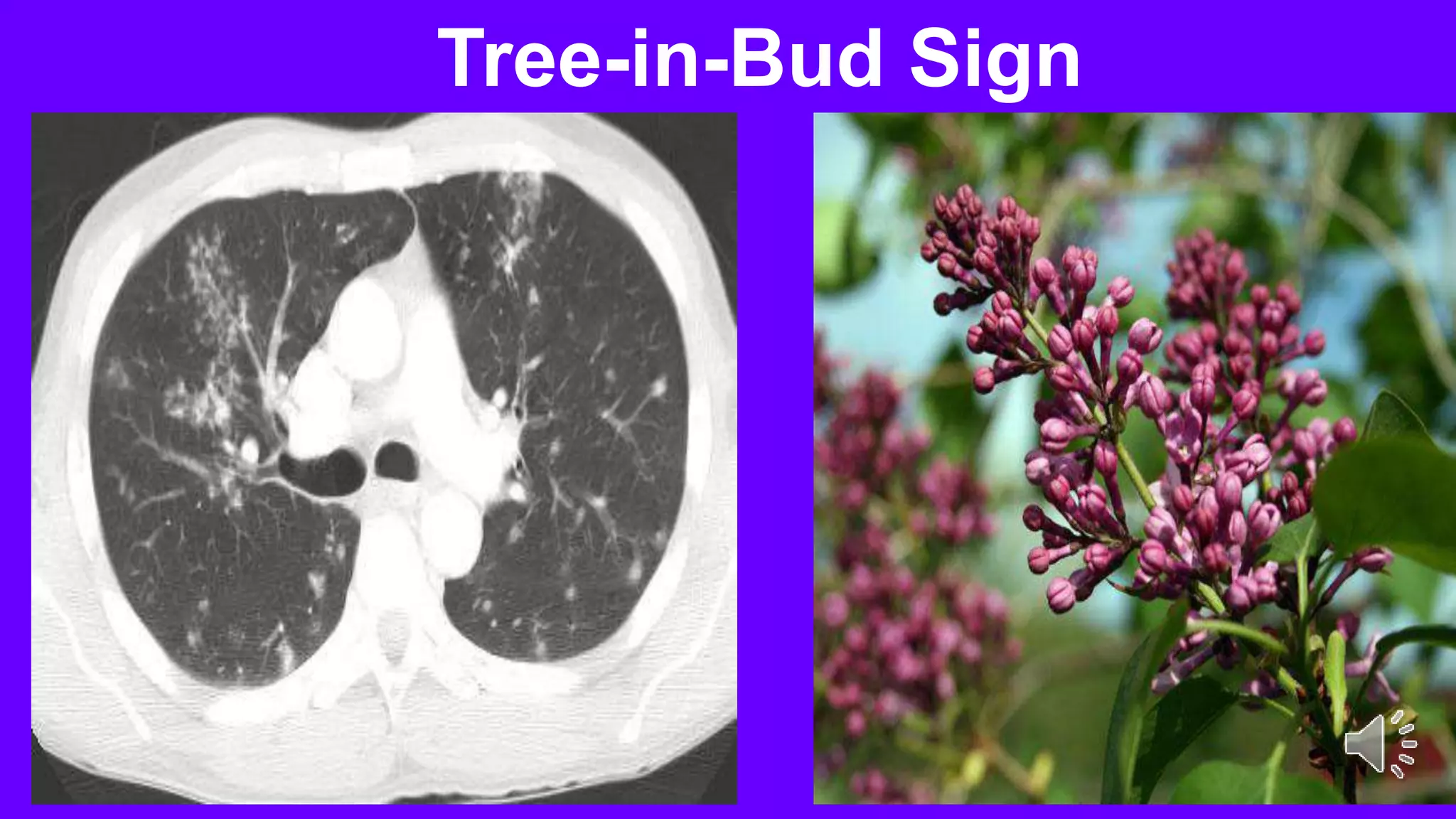
Tree-in-Bud Sign
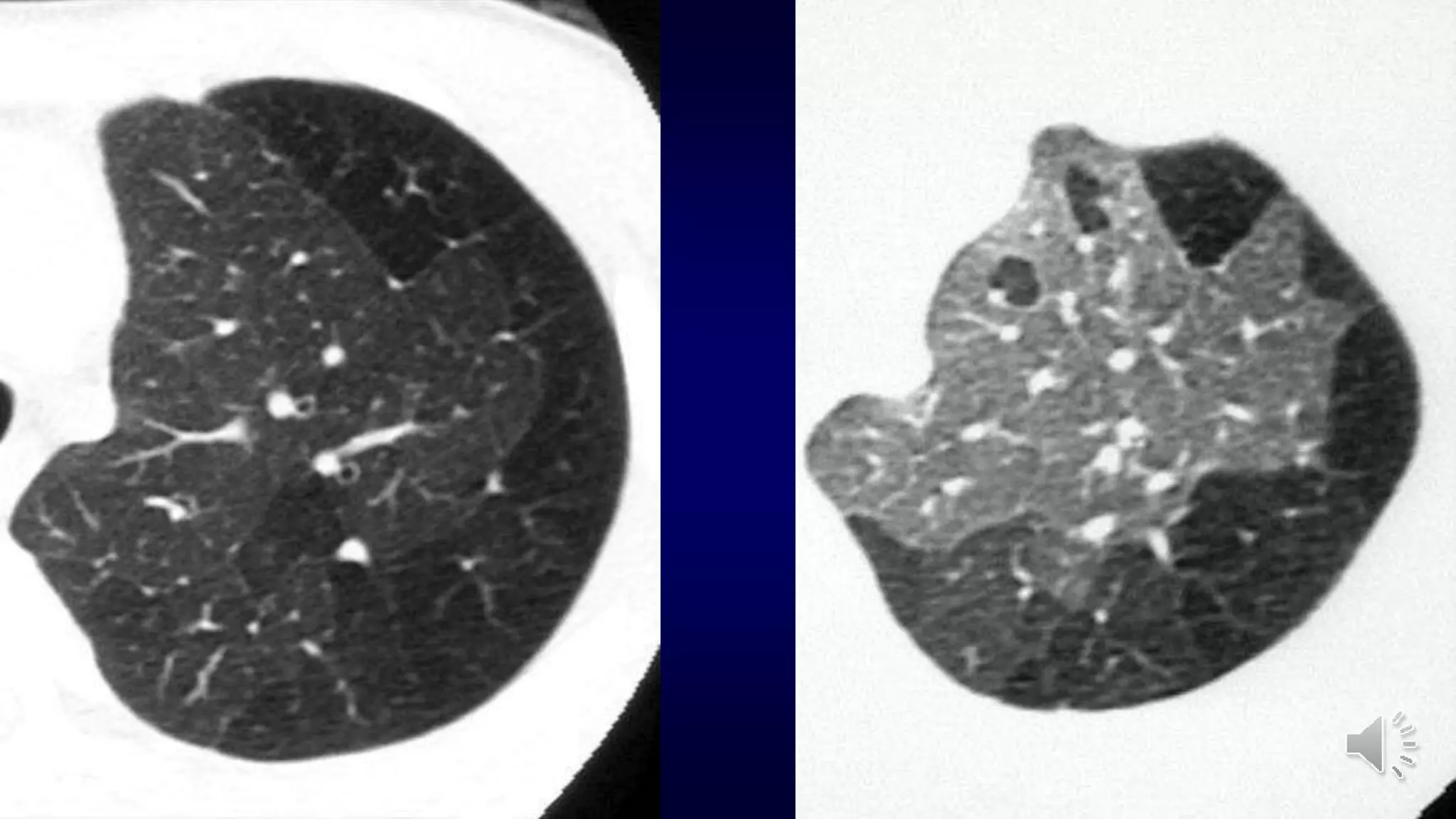
Paraseptal emphysema
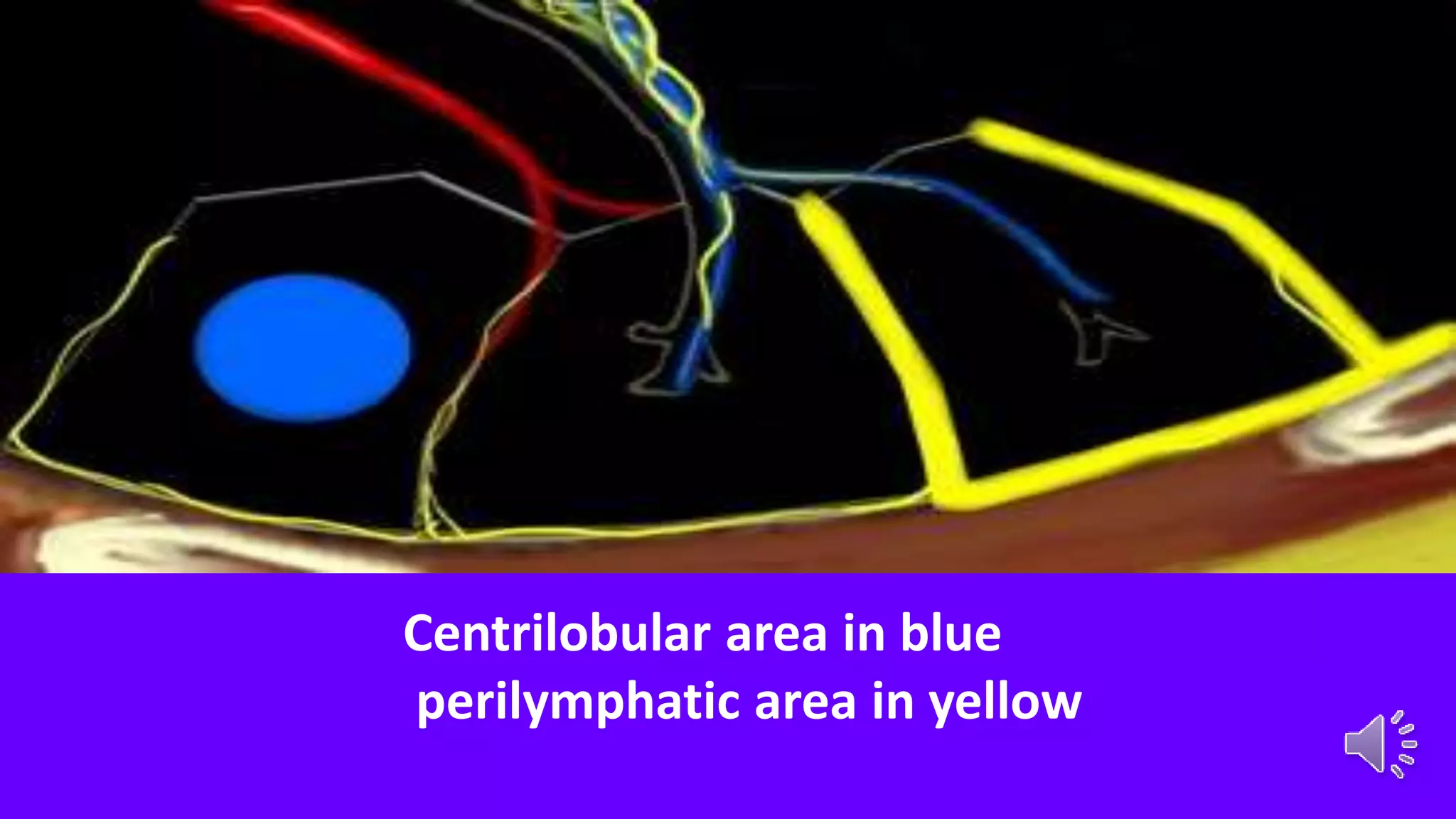
Centrilobular area in blue
perilymphatic area in yellow
Perilymphatic distribution
Centrilobular distribution
Random distribution
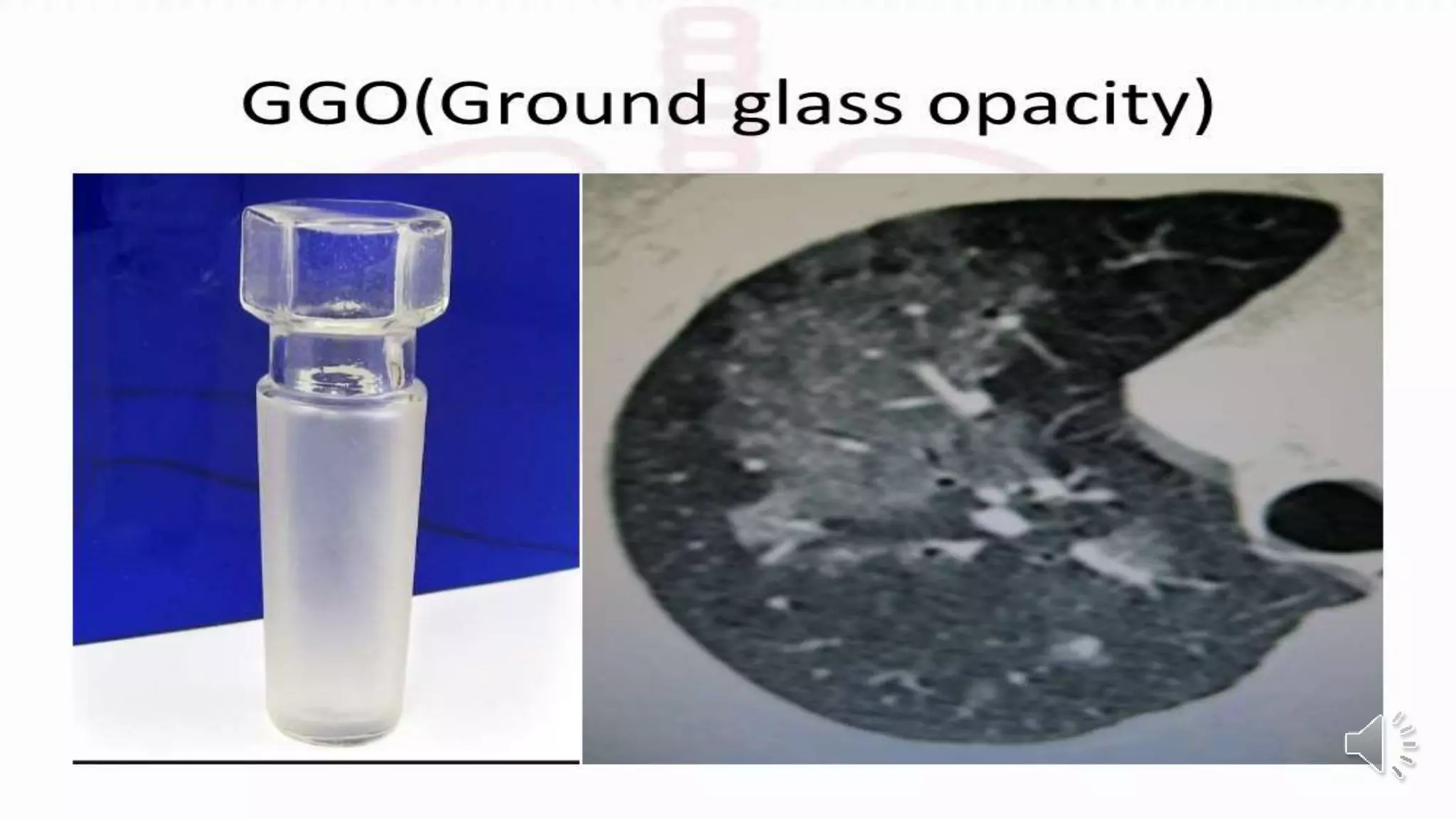
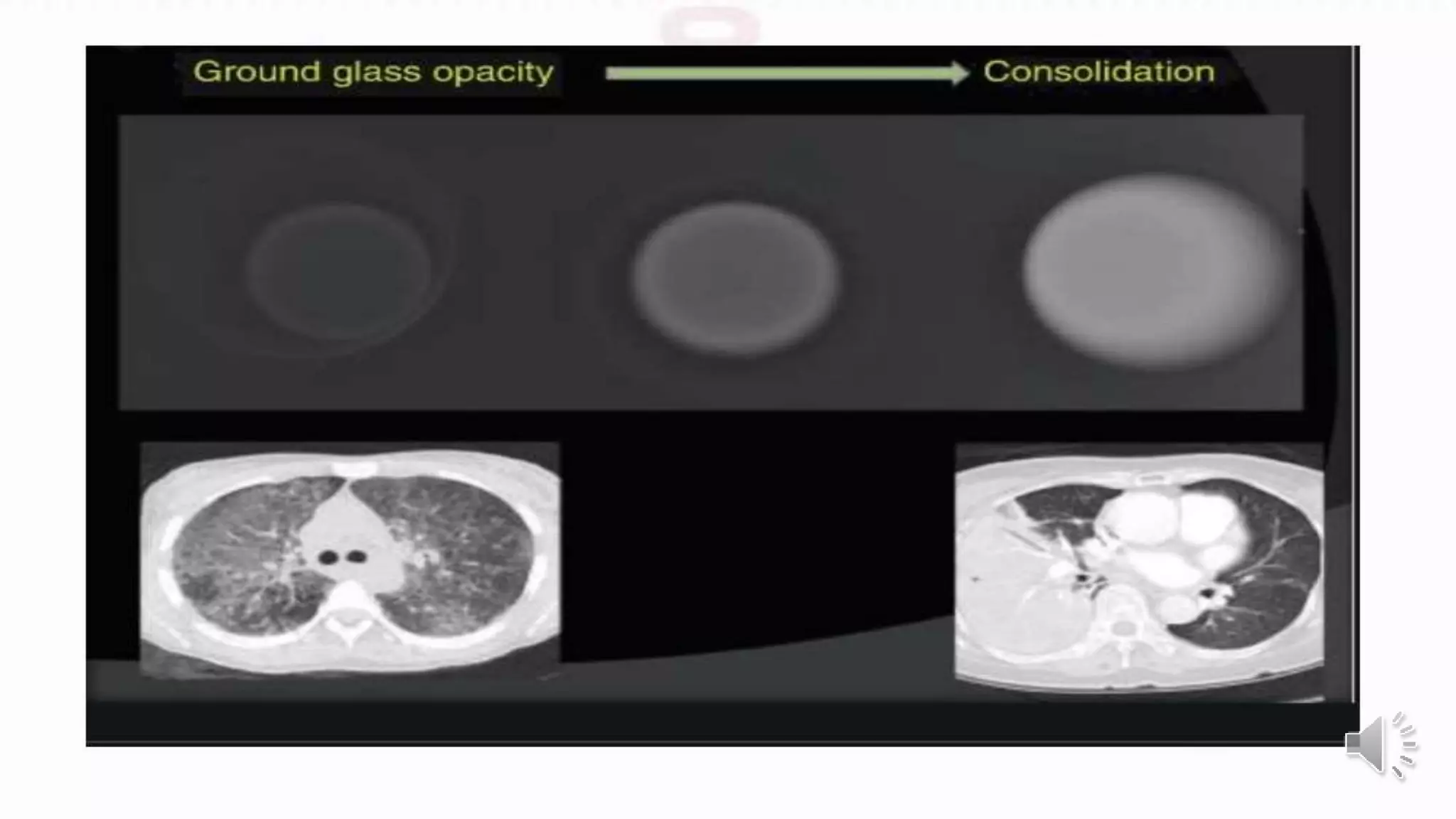
Ground glass
Ground glass (GGO) pattern is the most
common finding in COVID-19 infections.
They are usually multifocal, bilateral and
peripheral, but in the early phase of the
disease the GGO may present as a unifocal
lesion, most commonly located in the
inferior lobe of the right lung
CT Signs of COVID 19
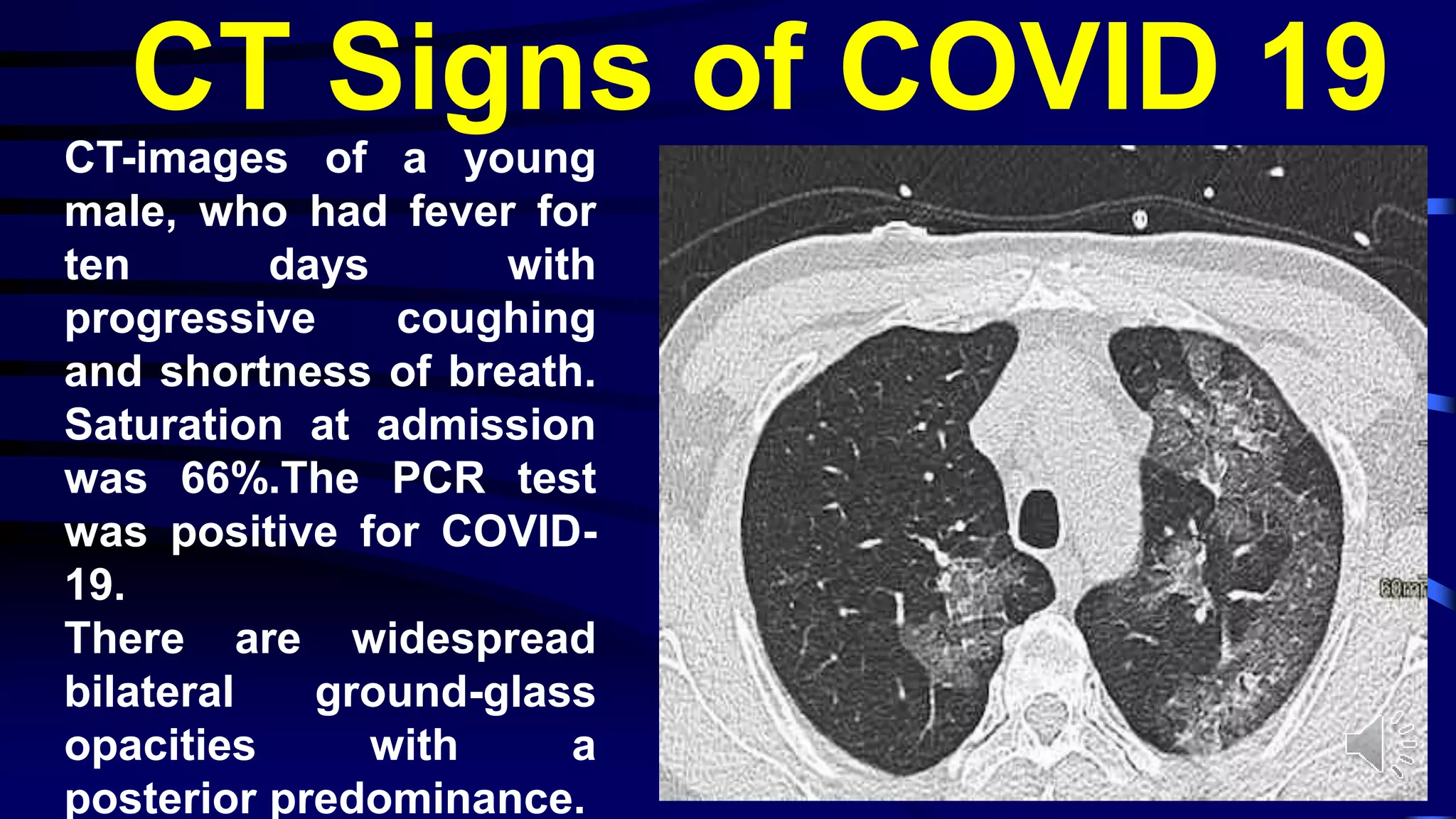
CT-images of a young
male, who had fever for
ten days with
progressive coughing
and shortness of breath.
Saturation at admission
was 66%.The PCR test
was positive for COVID-
19.
There are widespread
bilateral ground-glass
opacities with a
posterior predominance.
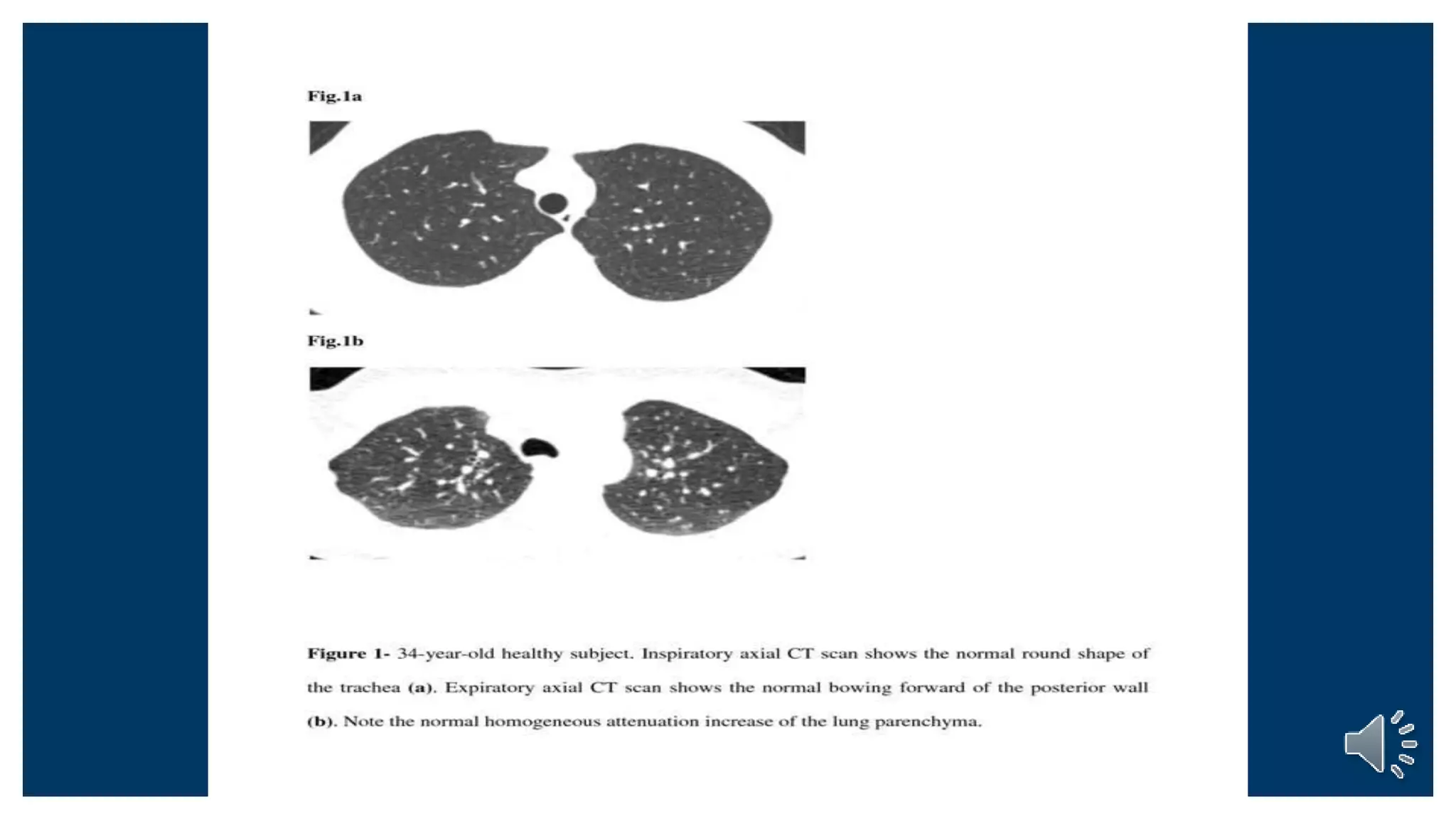
Crazy paving
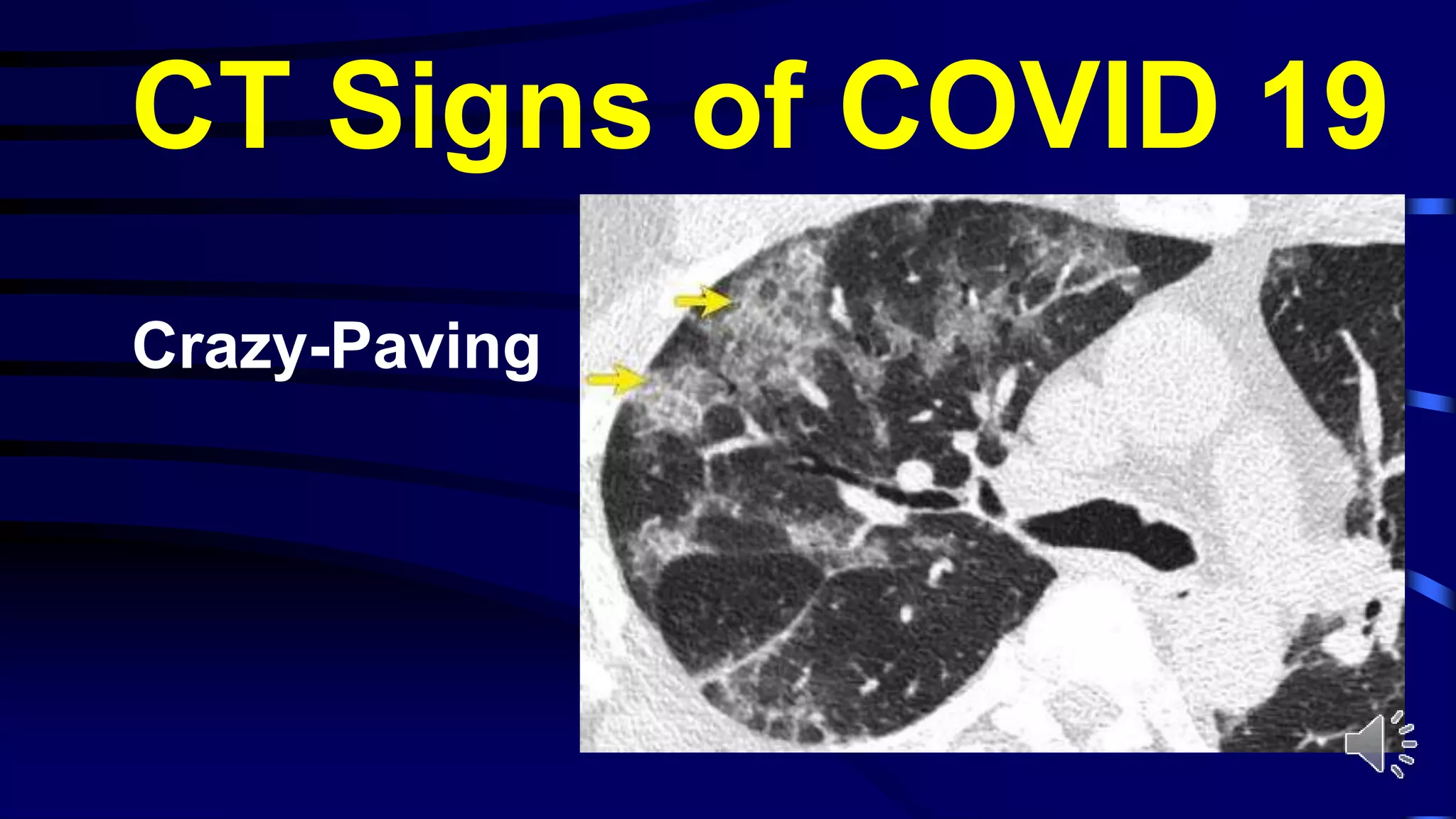
Sometimes there are thickened interlobular
and intralobular lines in combination with a
ground glass pattern. This is called crazy
paving.
It is believed that this pattern is seen in a
somewhat later stage.
CT Signs of COVID 19
Crazy-Paving
Vascular dilatation
A typical finding in the area of ground glass is widening of the vessels .
CT Signs of COVID 19
Traction Bronchiectasis
Another common finding in the areas of ground glass is traction
bronchiectasis .
CT Signs of COVID 19
Subpleural bands and Architectural
distortion
CT Signs of COVID 19
Visual assessment
The severity on CT can be estimated by
visual assessment. This is the easiest way
to score the severity. The CT images show a
25% involvement by visual assessment.
CT involvement score
Severity score
Another method is by scoring the percentages
of each of the five lobes that is involved:
< 5% involvement
5%-25% involvement
26%-49% involvement
50%-75% involvement
> 75% involvement.
CT involvement score
Severity score
The total CT score is the sum of the
individual lobar scores and can range from
0 (no involvement) to 25 (maximum
involvement), when all the five lobes show
more than 75% involvement.
CT involvement score
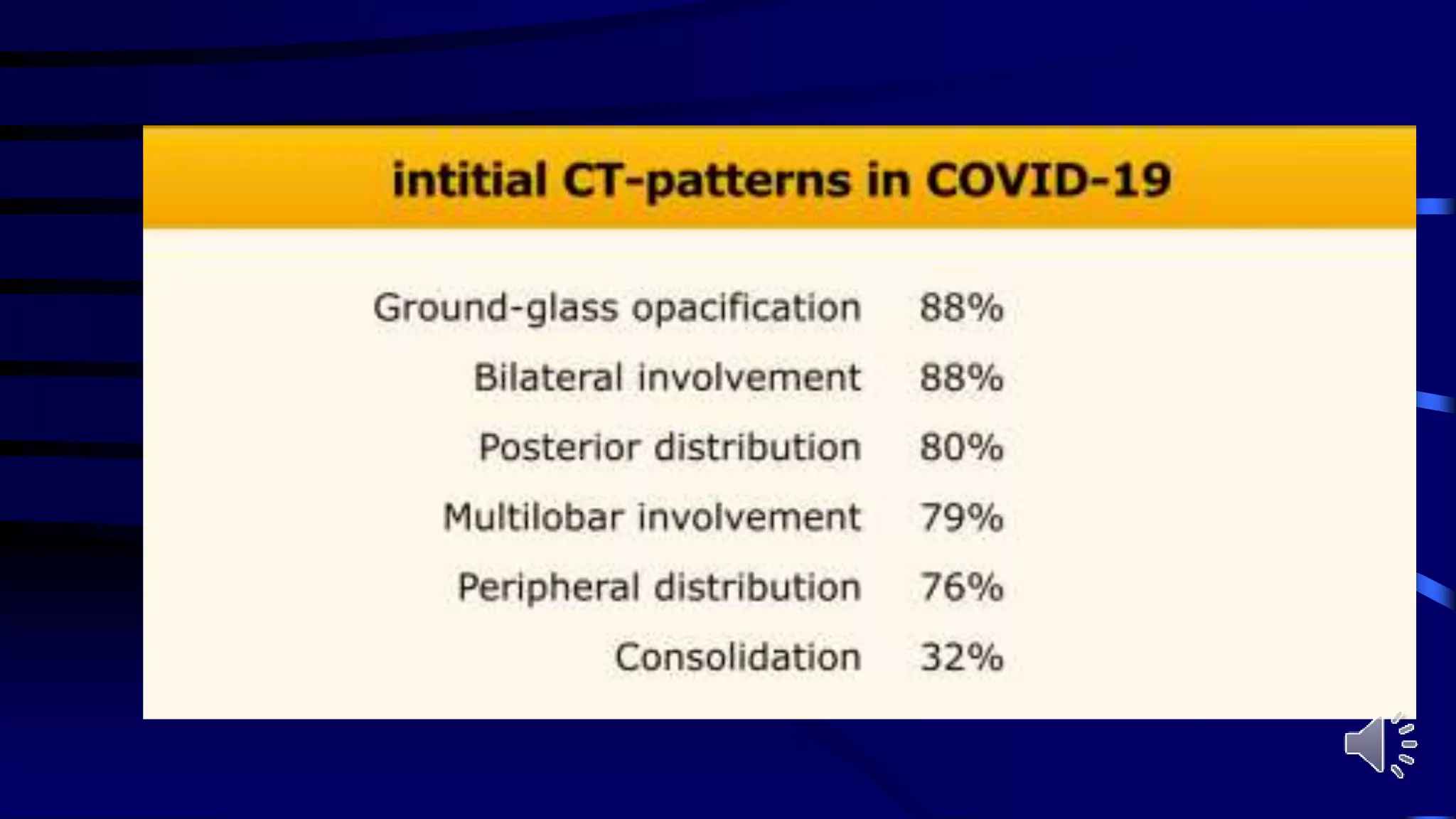
Initial CT-findings
Initial CT-findings in COVID-19 cases include bilateral,
multilobar ground glass opacification (GGO) with a peripheral
or posterior distribution, mainly in the lower lobes and less
frequently in the middle lobe .
Consolidation superimposed on GGO as the initial imaging
presentation is found in a smaller number of cases, mainly in
the elderly population.
Septal thickening, bronchiectasis, pleural thickening, and
subpleural involvement are some of the less common
findings, mainly in the later stages of the disease.
CT-images of a 78 year old male with coughing for 2
weeks and progressive shorteness of breath, who tested
positive for COVID-19.
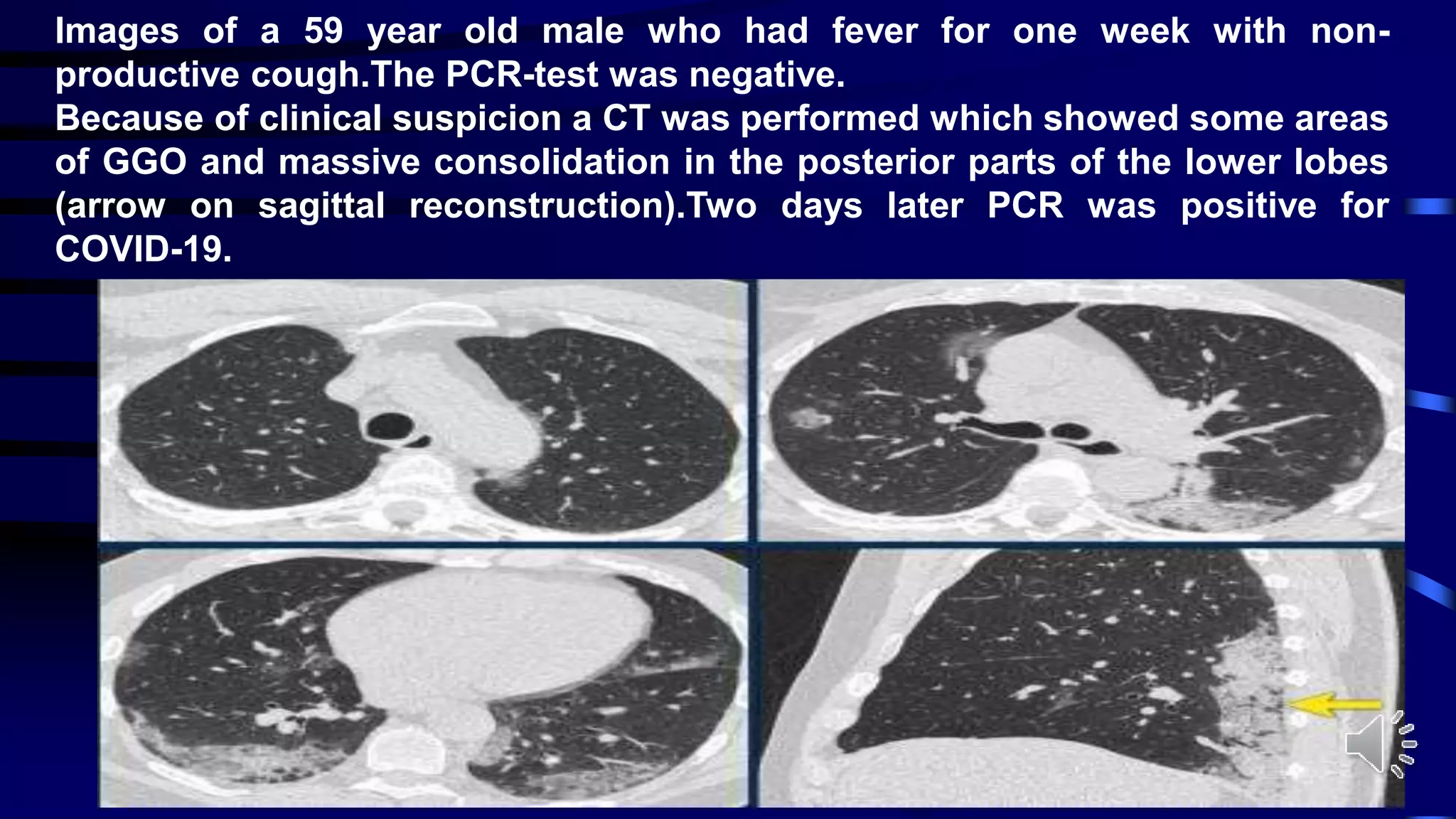
Images of a 59 year old male who had fever for one week with non-
productive cough.The PCR-test was negative.
Because of clinical suspicion a CT was performed which showed some areas
of GGO and massive consolidation in the posterior parts of the lower lobes
(arrow on sagittal reconstruction).Two days later PCR was positive for
COVID-19.
Changes over time
Advanced-phase disease is associated with a
significantly increased frequency of:
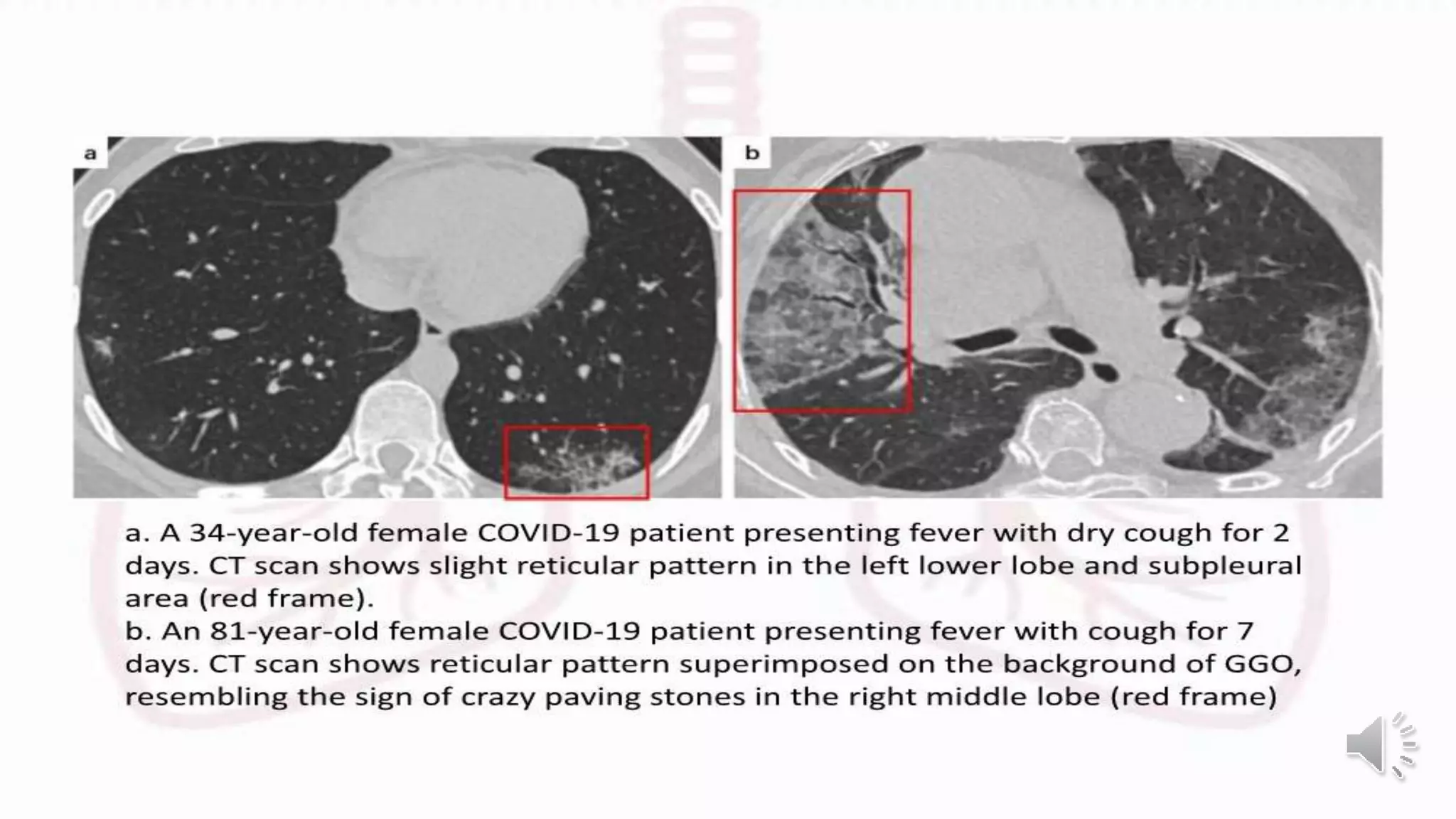
GGO plus a reticular pattern (crazy pavin)
Vacuolar sign
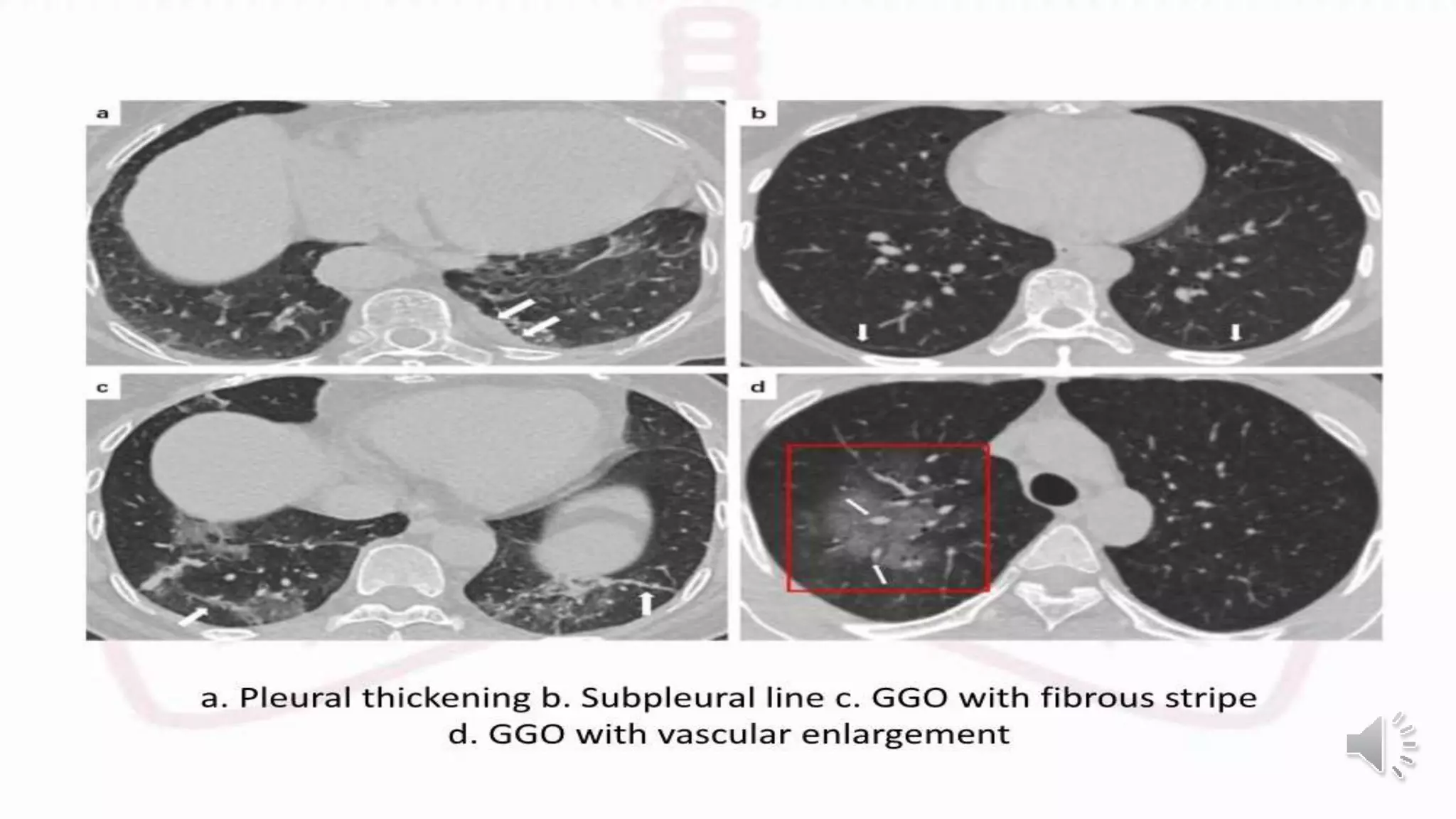
Fibrotic streaks
Air bronchogram
Bronchus distortion
Subpleural line or a subpleural transparent line
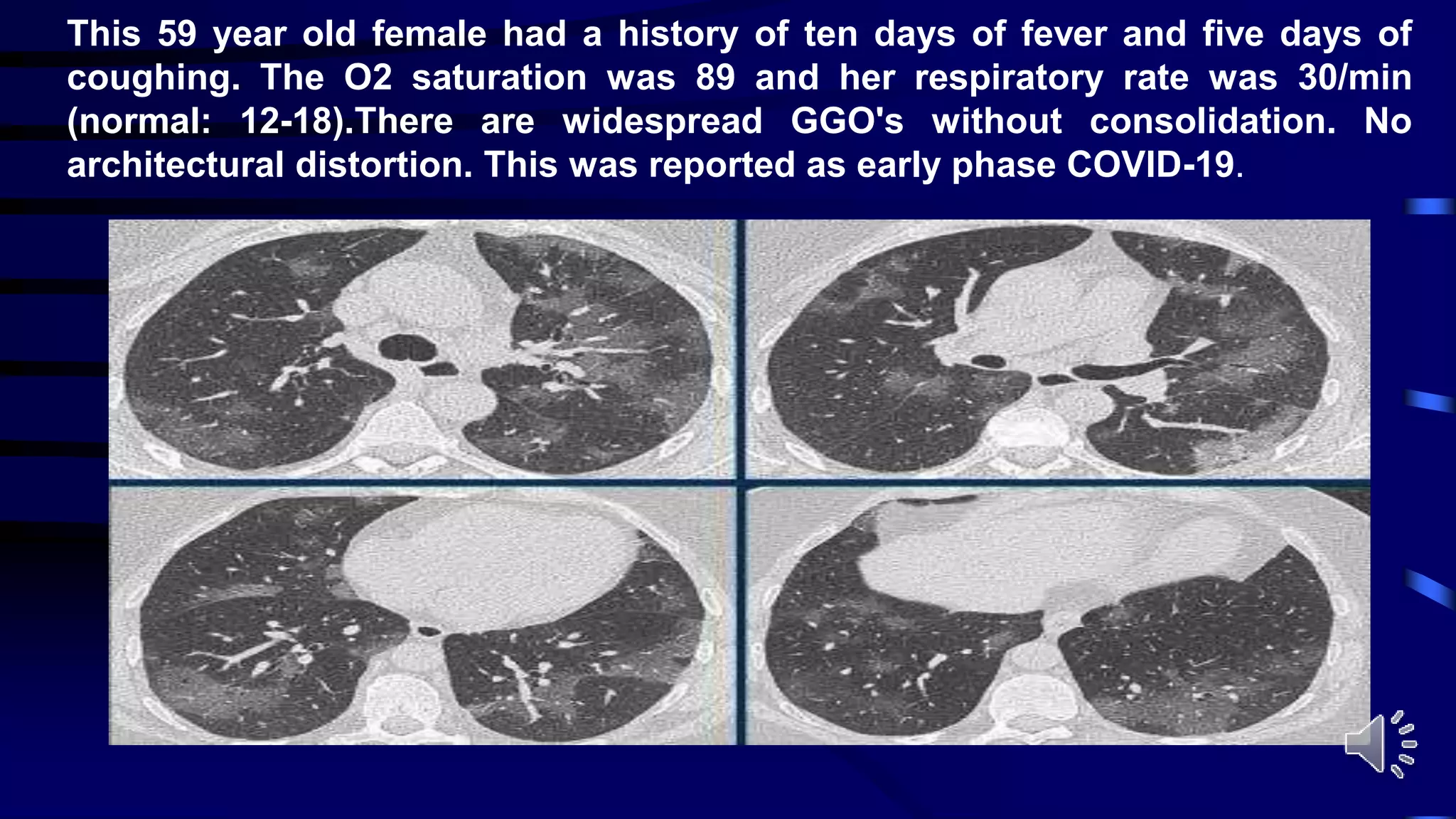
This 59 year old female had a history of ten days of fever and five days of
coughing. The O2 saturation was 89 and her respiratory rate was 30/min
(normal: 12-18).There are widespread GGO's without consolidation. No
architectural distortion. This was reported as early phase COVID-19.
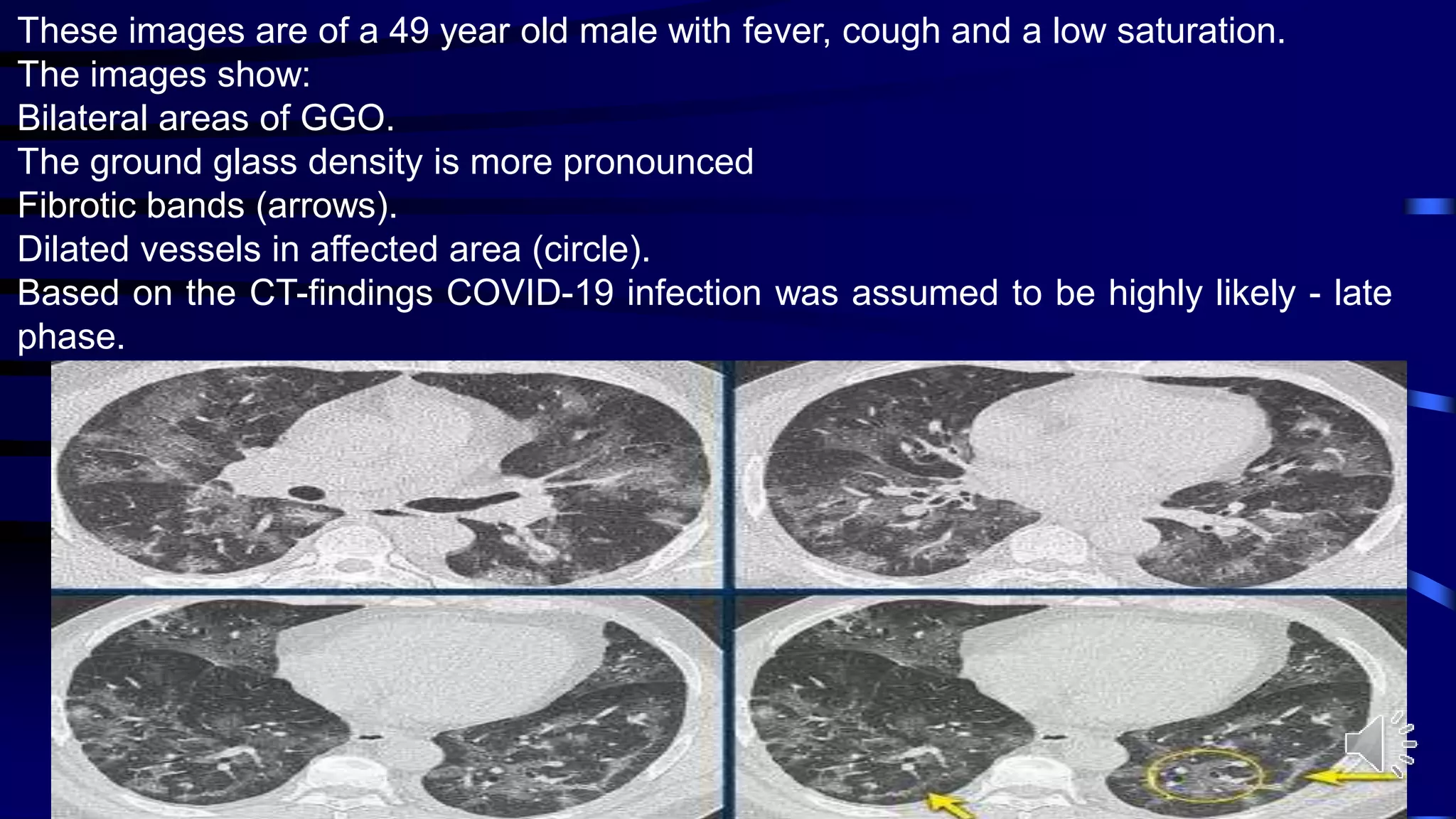
These images are of a 49 year old male with fever, cough and a low saturation.
The images show:
Bilateral areas of GGO.
The ground glass density is more pronounced
Fibrotic bands (arrows).
Dilated vessels in affected area (circle).
Based on the CT-findings COVID-19 infection was assumed to be highly likely - late
phase.
This patient had fever for one week with some abdominal pain and diarrhoea.
On the day of admission she had a dry cough and complained of dizziness.
The O2-saturation was low. The PCR-test was not known and a CT was performed
for triage. The images show: Bilateral subpleural GGO's Consolidation in
right lower lobe with traction bronchiectasis (green arrow). Fibrous bands (yellow
arrow). Based on the CT-findings COVID-19 infection was assumed to be highly
likely - late phase
Radiographic features
CT Typical findings (Radiopaedia)
The primary findings on CT in adults have been
reported :
◙Ground-glass opacities (GGO): bilateral,
subpleural, peripheral
◙ Crazy paving appearance (GGOs and inter
/intra-lobular septal thickening)
◙ Air space consolidation
◙ Bronchovascular thickening in the lesion
◙ Traction bronchiectasis
Radiographic features
(Radiopaedia) CT excluding findings
◙ Mediastinal lymphadenopathy
◙ Pleural effusions
◙ Multiple tiny pulmonary nodules (unlike
many other viral pneumonia )
◙ Tree-in-bud appearance
◙ Pneumothorax
◙ Cavitation
Radiographic features
Temporal CT
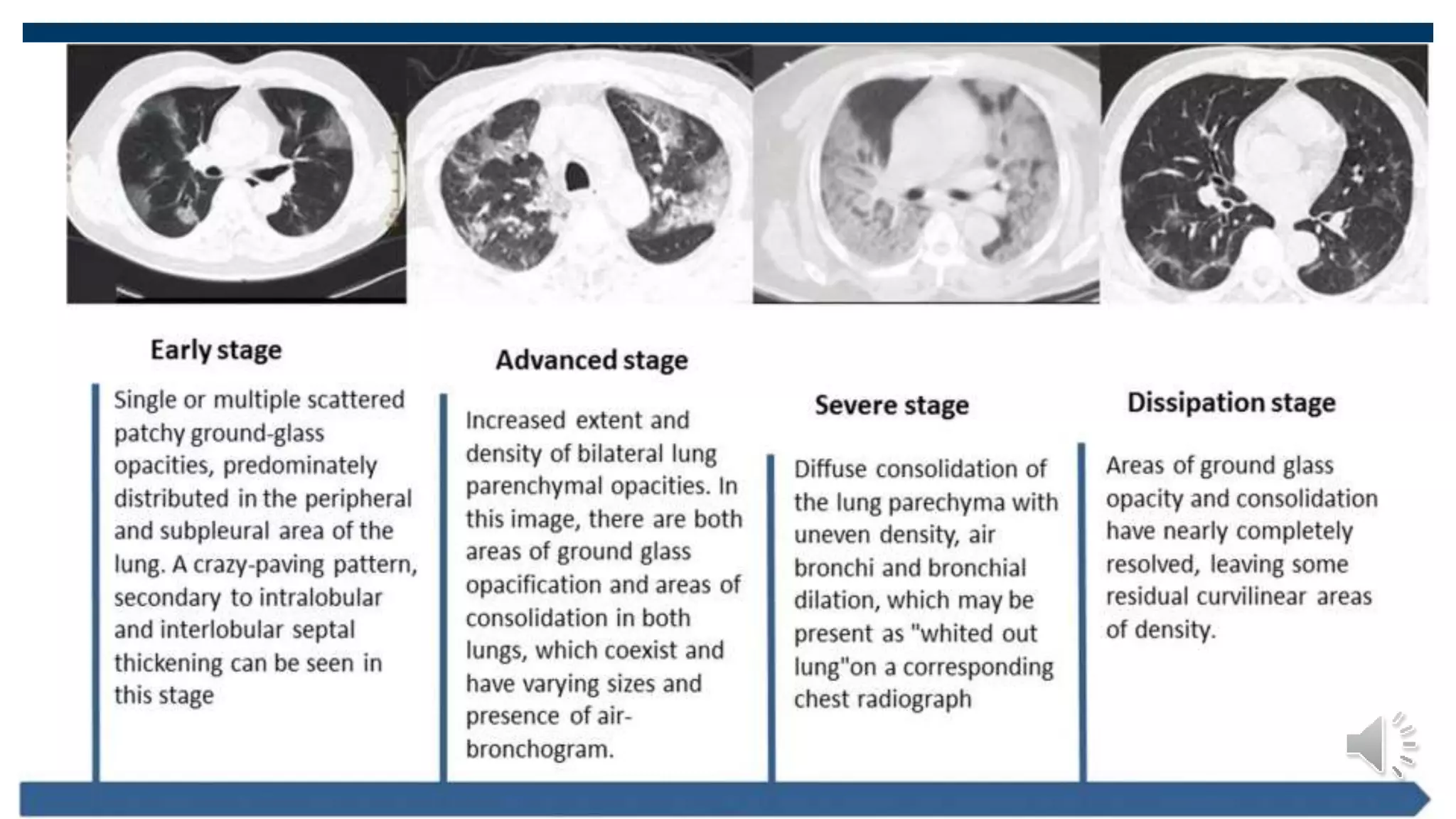
Four stages on CT have been described :
◙ Early/initial stage (0-4 days): normal CT or GGO only
up to half of patients have normal CT scans within 2 days of symptom
onset
◙ Progressive stage (5-8 days): increased GGO and crazy paving
appearance.
◙ Peak stage (9-13 days): consolidation
◙ Absorption stage (> 14 days): with an improvement in the disease
course, "fibrous stripes" appear and the abnormalities resolve at 1
month and beyond
Radiographic features
Paediatric CT
In a small study of five children that had been admitted
to hospital with positive COVID-19 RT-PCR tests and who
had CT chest performed, only three children had
abnormalities. The main abnormality was bilateral
patchy ground-glass opacities, similar to the
appearances in adults, but less florid, and in all three
cases the opacities resolved as they clinically
recovered .
Radiographic features
Paediatric CT
On 18 March 2020, the details of a much larger
cohort of 171 children with confirmed COVID-19, and
evaluated in a hospital setting was published as a
letter in the New England Journal of Medicine.
Ground-glass opacities were seen in one-third of
the total, whereas almost 16% of children had no
imaging features of pneumonia .
Table 2 The typical features on CT imaging of COVID-19
Parameter Characteristic manifestations on CT imaging
Density Ground glass opacity and consolidation, possible
interlobular septal thickening
Shape Patchy, sub-segmental, or segmental
Distribution Mid and lower lungs along the bronchovascular
bundles with bilateral involvement
Location Peripheral and subpleural areas of the lung
parenchyma
Concomitant signs
(variable)
Air bronchogram, rare pleural effusion, no
obvious lymphadenopathy
Table 3 Frequency of chest CT findings in COVID-19
CT signs Frequency Stage
Ground glass opacity ++++ E/A/S
Consolidation without ground glass opacity ++ S
Ground glass opacity and crazy paving ++ E/A/S
Ground glass opacity with consolidation +++ E/A/S
Patchy ground glass opacity +++ E
Bilateral distribution ++++ E/A/S/D
Peripheral distribution +++ E
Air bronchogram ++ E/A/S
Strip-like opacity + D
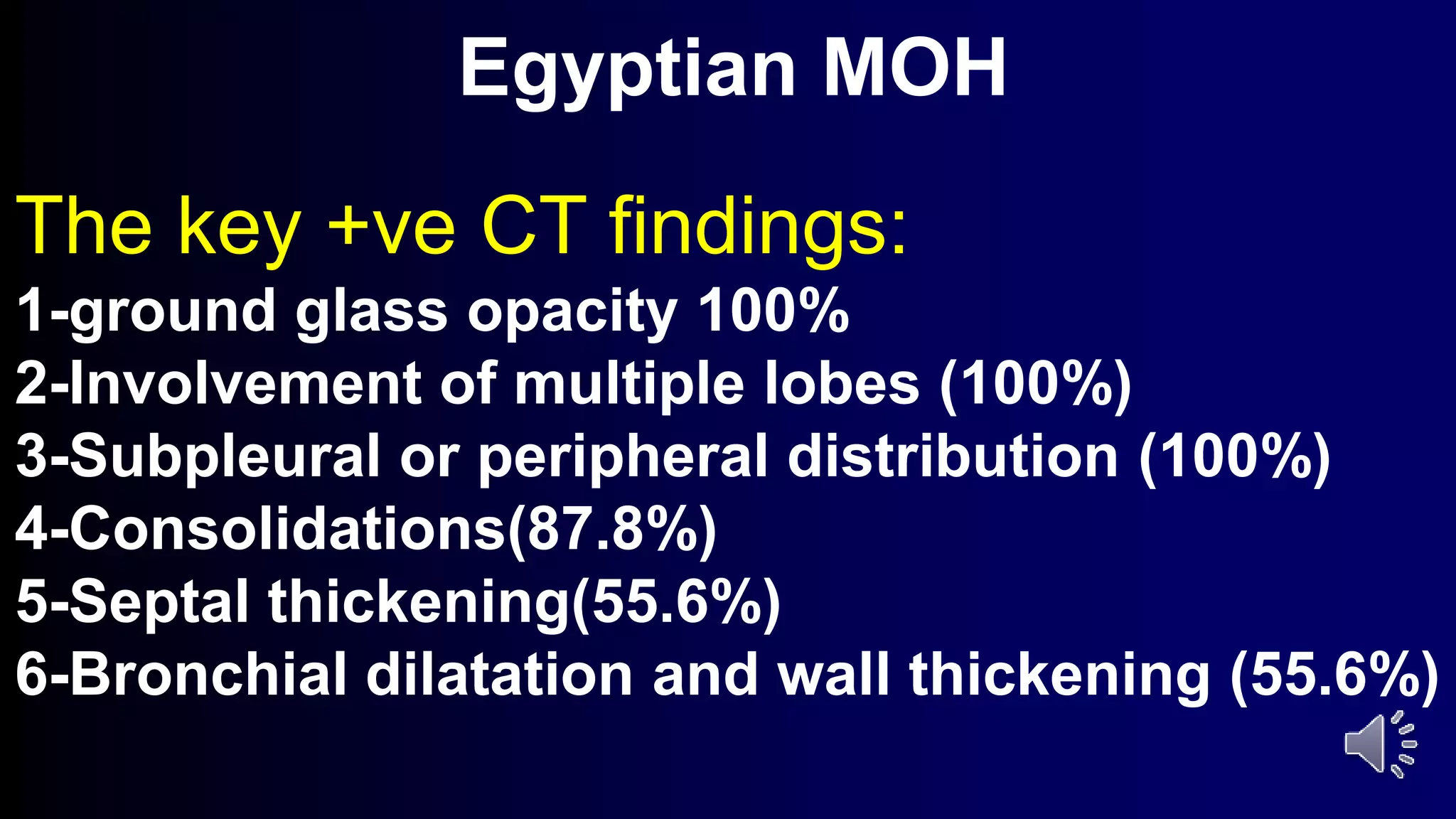
Egyptian MOH
The key +ve CT findings:
1-ground glass opacity 100%
2-Involvement of multiple lobes (100%)
3-Subpleural or peripheral distribution (100%)
4-Consolidations(87.8%)
5-Septal thickening(55.6%)
6-Bronchial dilatation and wall thickening (55.6%)
Egyptian MOH
The key -ve CT findings:
1-Pleural effusion 0%
2-Mediastinal lymphadenopathy 0%
3-Lung nodules 0%
4-specific Zonal predominance (variable)
Chest radiograph (a) in a 61-year-old
man shows bilateral patchy,
somewhat nodular opacities in the
mid to lower lungs .
Unenhanced computed tomography
(CT) images (b) in a 33-year-old
woman., Images show multiple
ground glass opacities in the
periphery of the bilateral lungs. The
bilateral, peripheral patterns of
opacities without subpleural sparing
are common and characteristic CT
findings of the 2019 novel
coronavirus pneumonia .
Chest CT image of a 71-year-old
male (c) shows consolidation in the
peripheral right upper lobe and a
patchy area of ground glass opacity
with some associated consolidation
intra- and interlobular septal
thickening within the left upper lobe
Typical CT findings of COVID-19. Chest
CT (a) in a 75-year-old male show
multiple patchy areas of pure ground
glass opacity (GGO) and GGO with
reticular and/or interlobular septal
thickening. Chest CT image of a 38-
year-old male (b) shows multiple
patches, grid-like lobule, and thickening
of interlobular septa, typical “paving
stone-like” signs .An axial CT image
obtained in 65-year-old female (c)
shows bilateral ground glass and
consolidative opacities with a striking
peripheral distribution .CT image of a
65-year-old male (d) shows large
consolidation in the right middle lobe,
patchy consolidation in the posterior and
basal segment of right lower lobe, with
air bronchogram inside
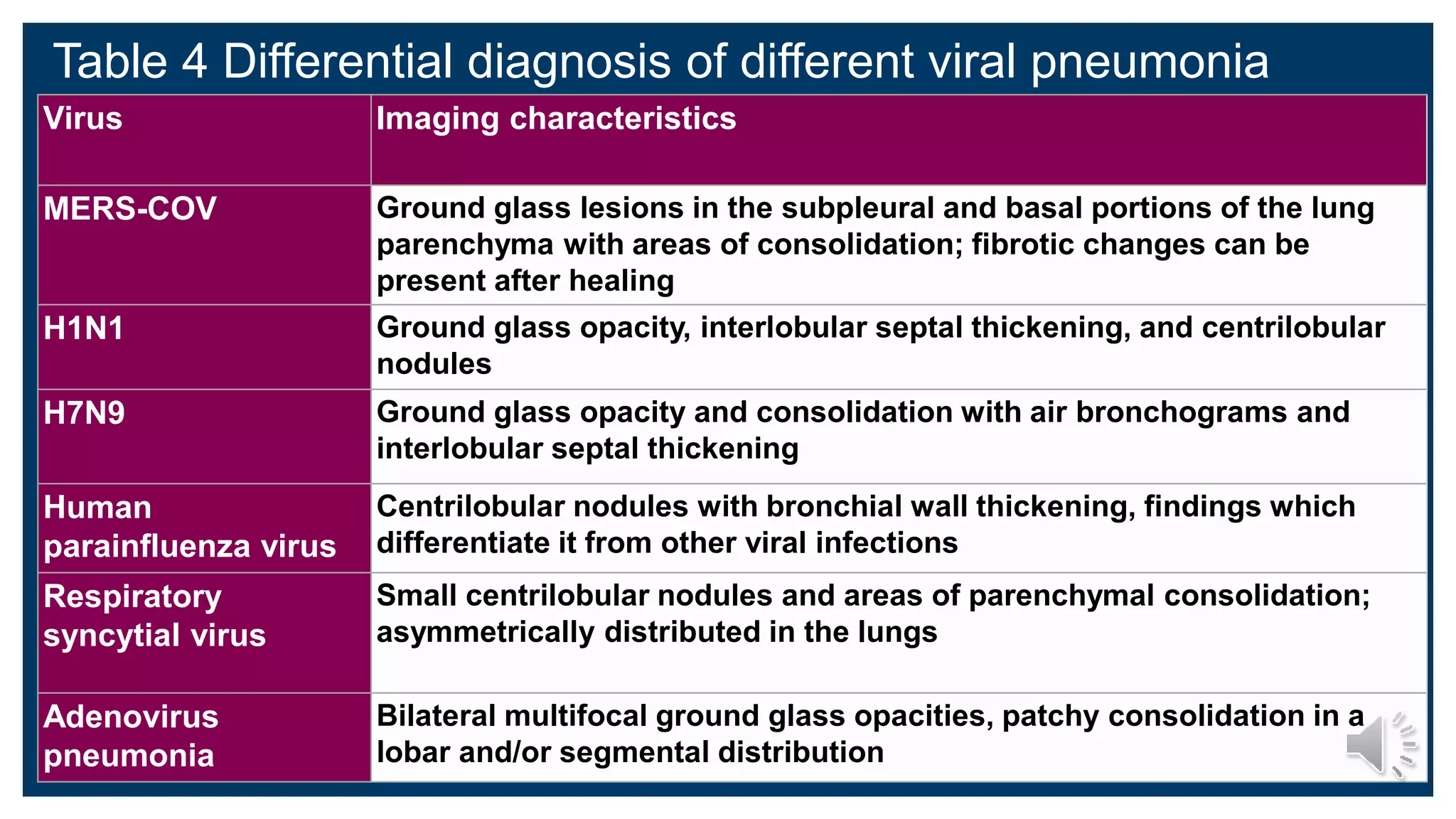
Table 4 Differential diagnosis of different viral pneumonia
Virus Imaging characteristics
MERS-COV Ground glass lesions in the subpleural and basal portions of the lung
parenchyma with areas of consolidation; fibrotic changes can be
present after healing
H1N1 Ground glass opacity, interlobular septal thickening, and centrilobular
nodules
H7N9 Ground glass opacity and consolidation with air bronchograms and
interlobular septal thickening
Human
parainfluenza virus
Centrilobular nodules with bronchial wall thickening, findings which
differentiate it from other viral infections
Respiratory
syncytial virus
Small centrilobular nodules and areas of parenchymal consolidation;
asymmetrically distributed in the lungs
Adenovirus
pneumonia
Bilateral multifocal ground glass opacities, patchy consolidation in a
lobar and/or segmental distribution
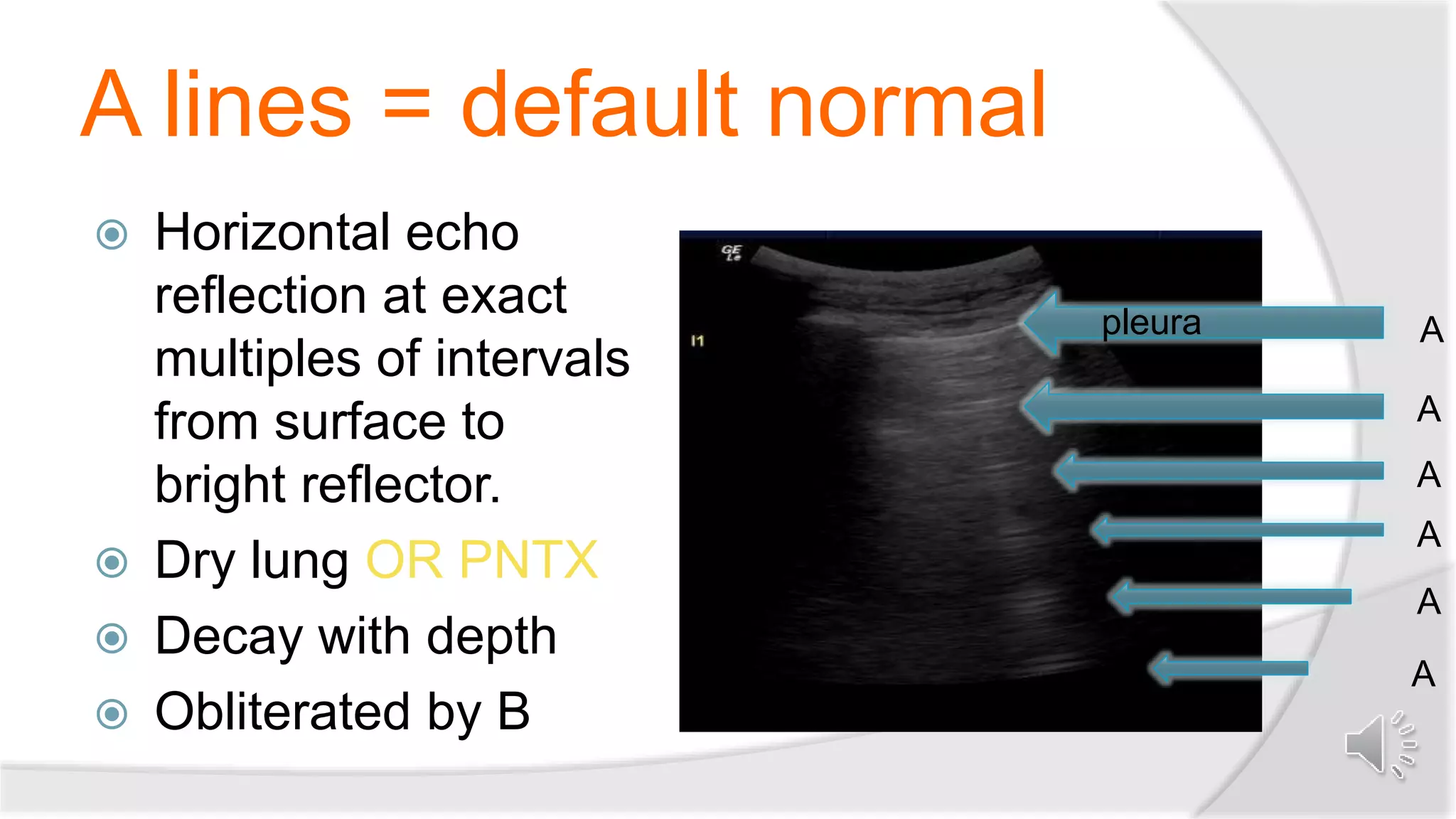
A lines = default normal
 Horizontal echo
reflection at exact
multiples of intervals
from surface to
bright reflector.
 Dry lung OR PNTX
 Decay with depth
 Obliterated by B
pleura A
A
A
A
A
A
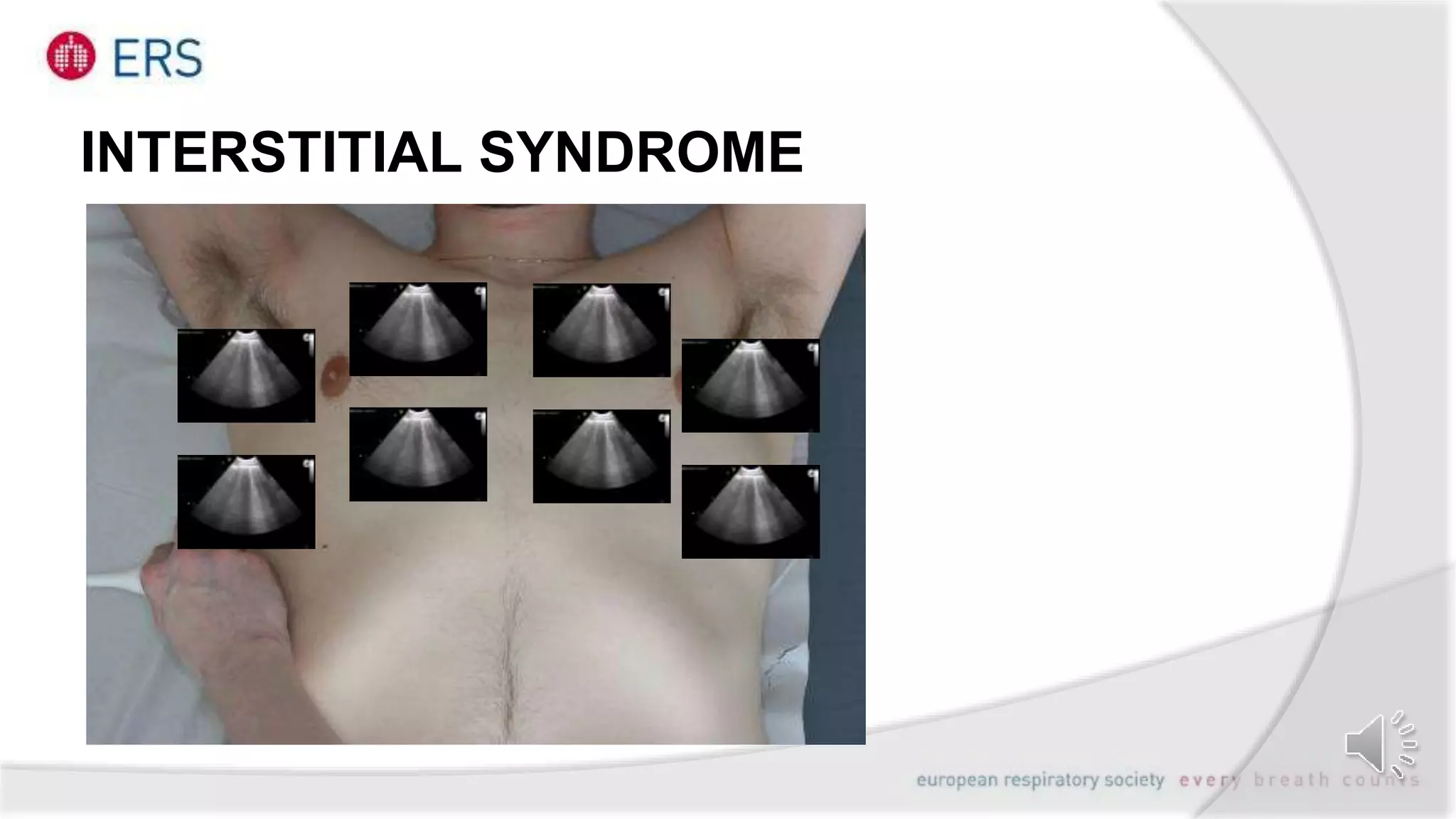
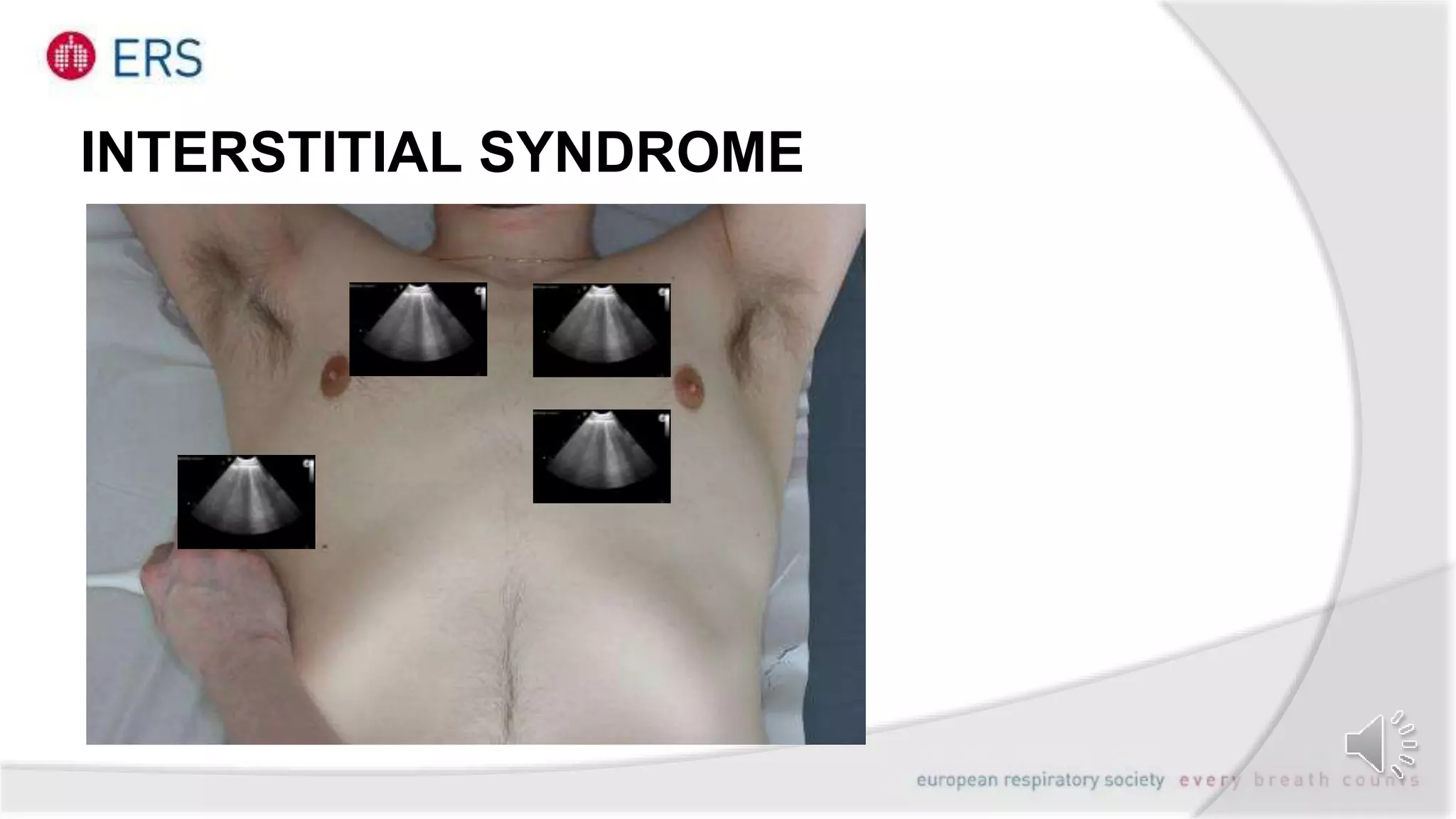
INTERSTITIAL SYNDROME
Ultrasound profiles.
Lichtenstein D A , Mezière G A Chest 2008;134:117-125
PULMONARY EMBOLISM
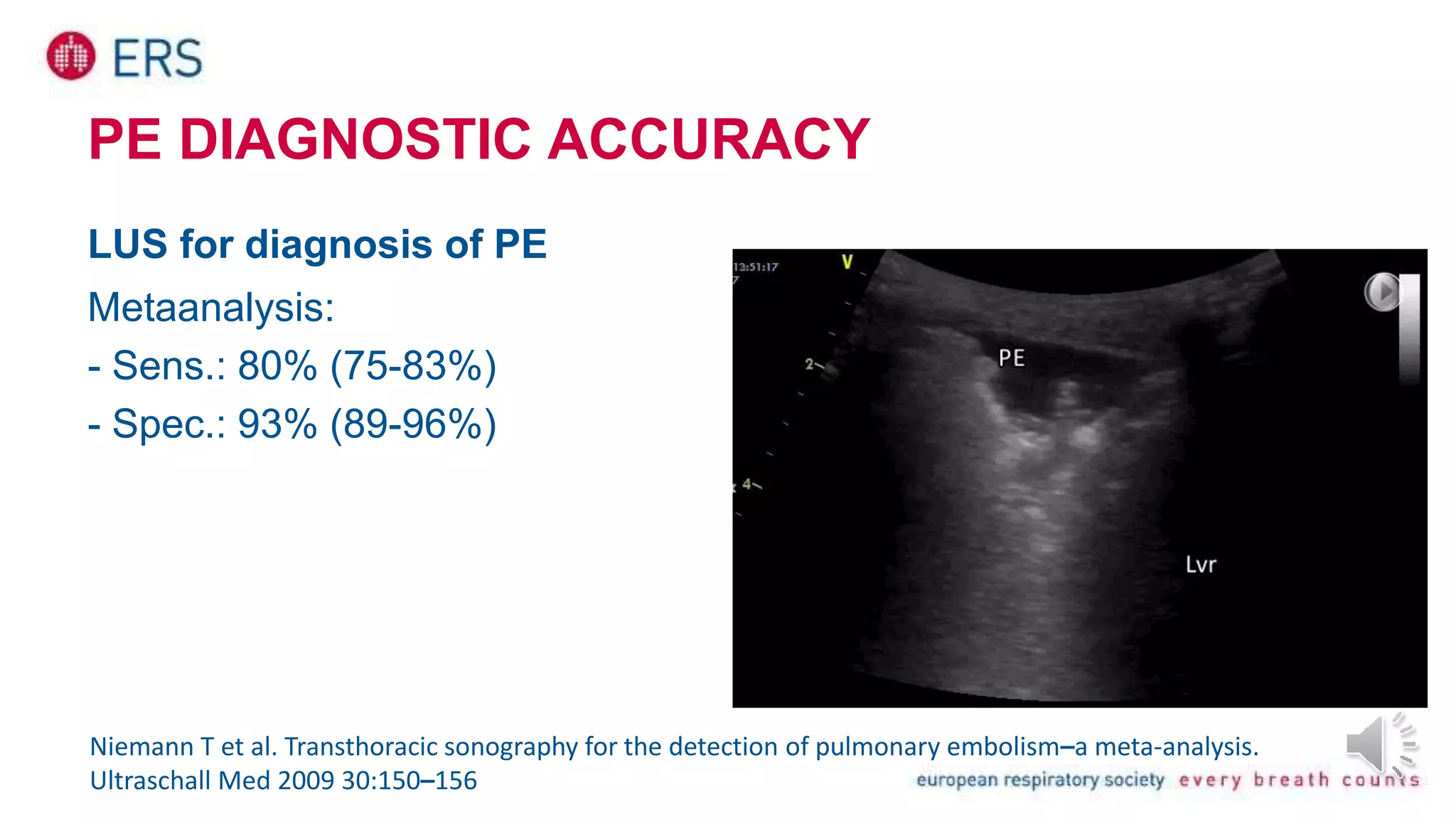
PE DIAGNOSTIC ACCURACY
LUS for diagnosis of PE
Metaanalysis:
- Sens.: 80% (75-83%)
- Spec.: 93% (89-96%)
Niemann T et al. Transthoracic sonography for the detection of pulmonary embolism–a meta-analysis.
Ultraschall Med 2009 30:150–156
IVC Sonography
IVC Longitudinal
CAVAL INDEX (CI)
CI =
minimal (inspiratory)
diameter
maximum (expiratory)
diameter
maximum (expiratory)
diameter
CAVAL INDEX (CI)
Volume
Depletion
Volume
Overload
0% 100%
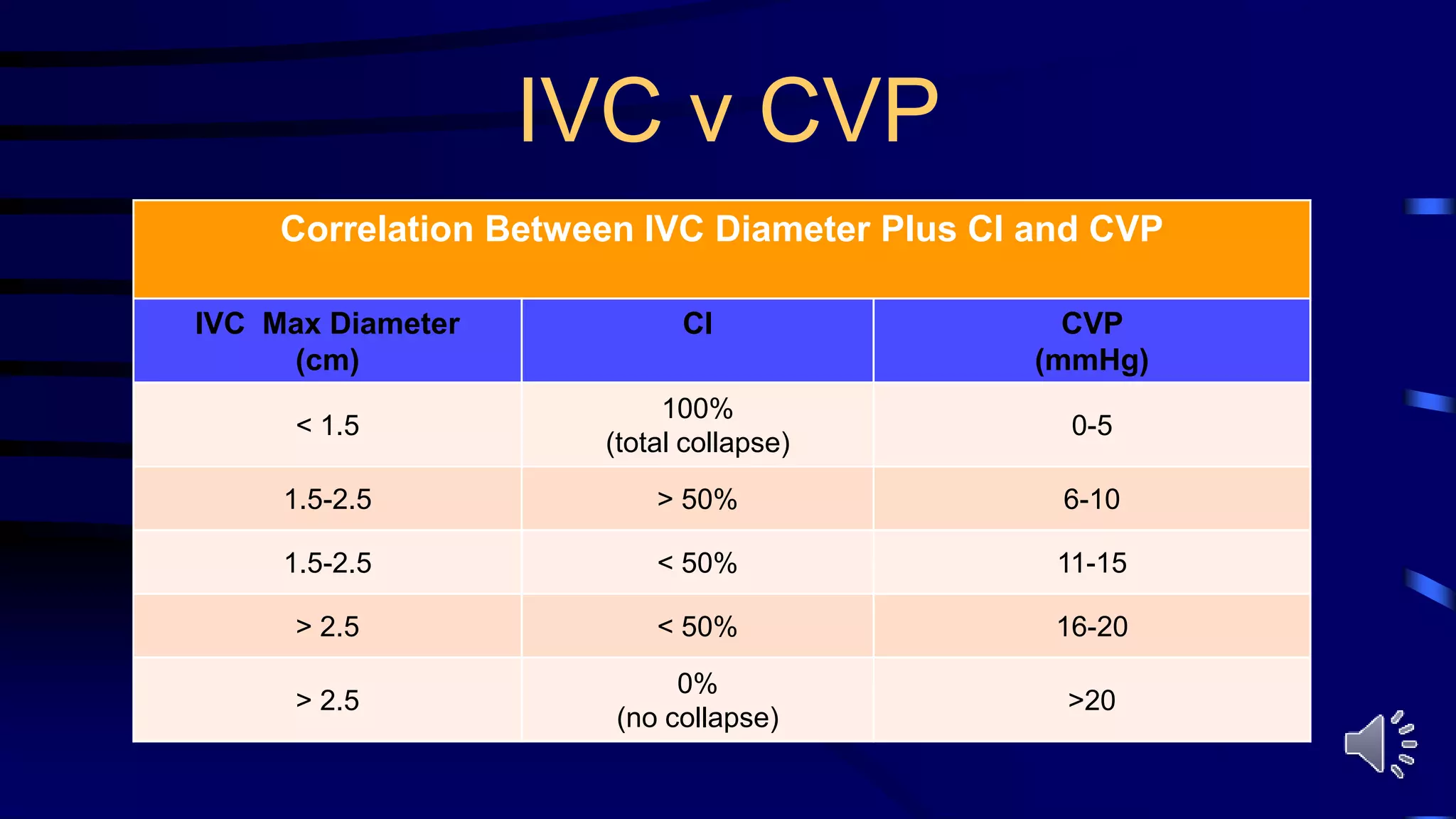
IVC v CVP
Correlation Between IVC Diameter Plus CI and CVP
IVC Max Diameter
(cm)
CI CVP
(mmHg)
< 1.5
100%
(total collapse)
0-5
1.5-2.5 > 50% 6-10
1.5-2.5 < 50% 11-15
> 2.5 < 50% 16-20
> 2.5
0%
(no collapse)
>20
Table 5 CT and ultrasonographic features of COVID-19 pneumonia
Lung CT Lung ultrasound
Thickened pleura Thickened pleural line
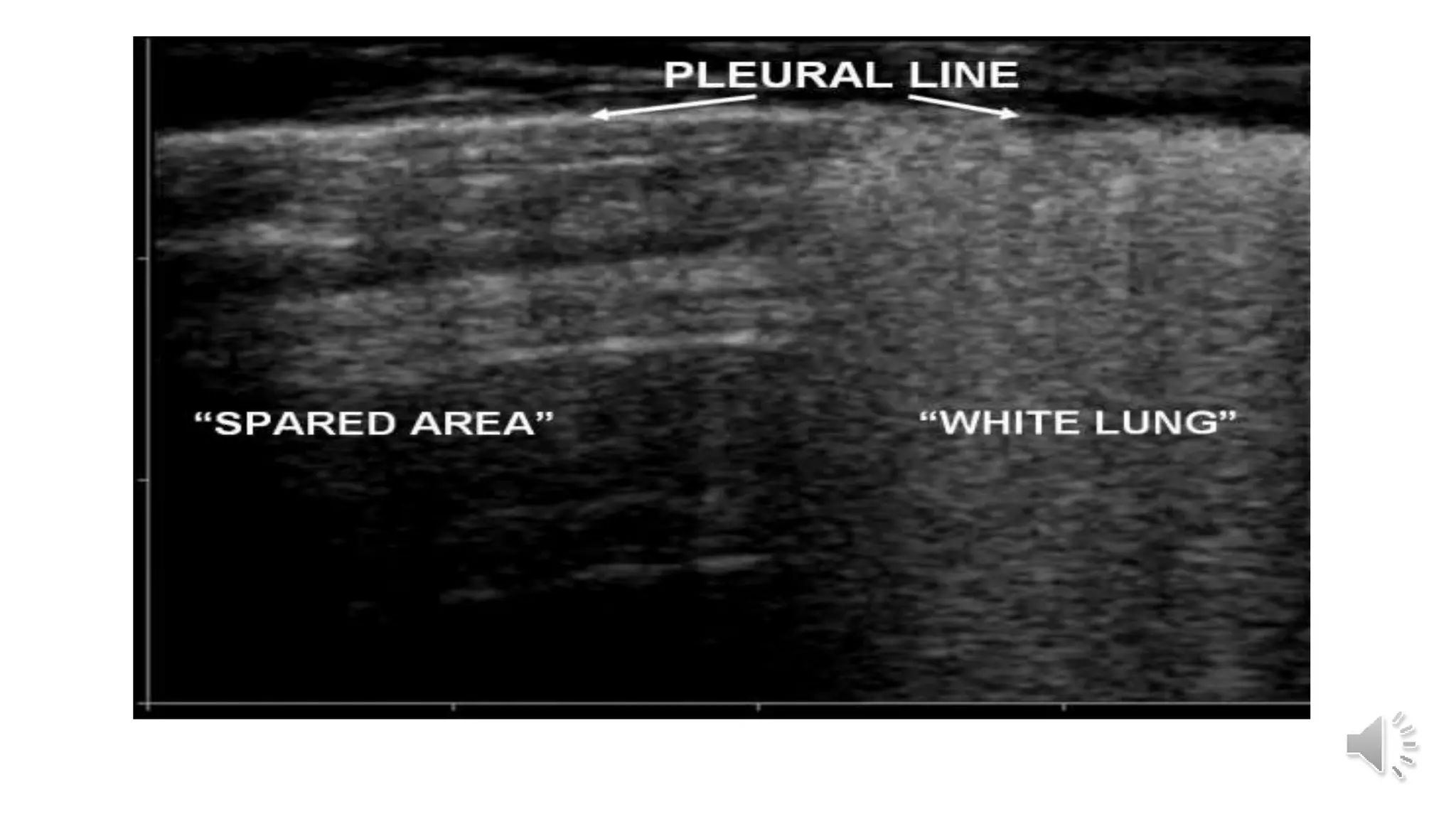
Ground glass shadow and effusion B lines (multifocal, discrete, or confluent)
Pulmonary infiltrating shadow Confluent B lines
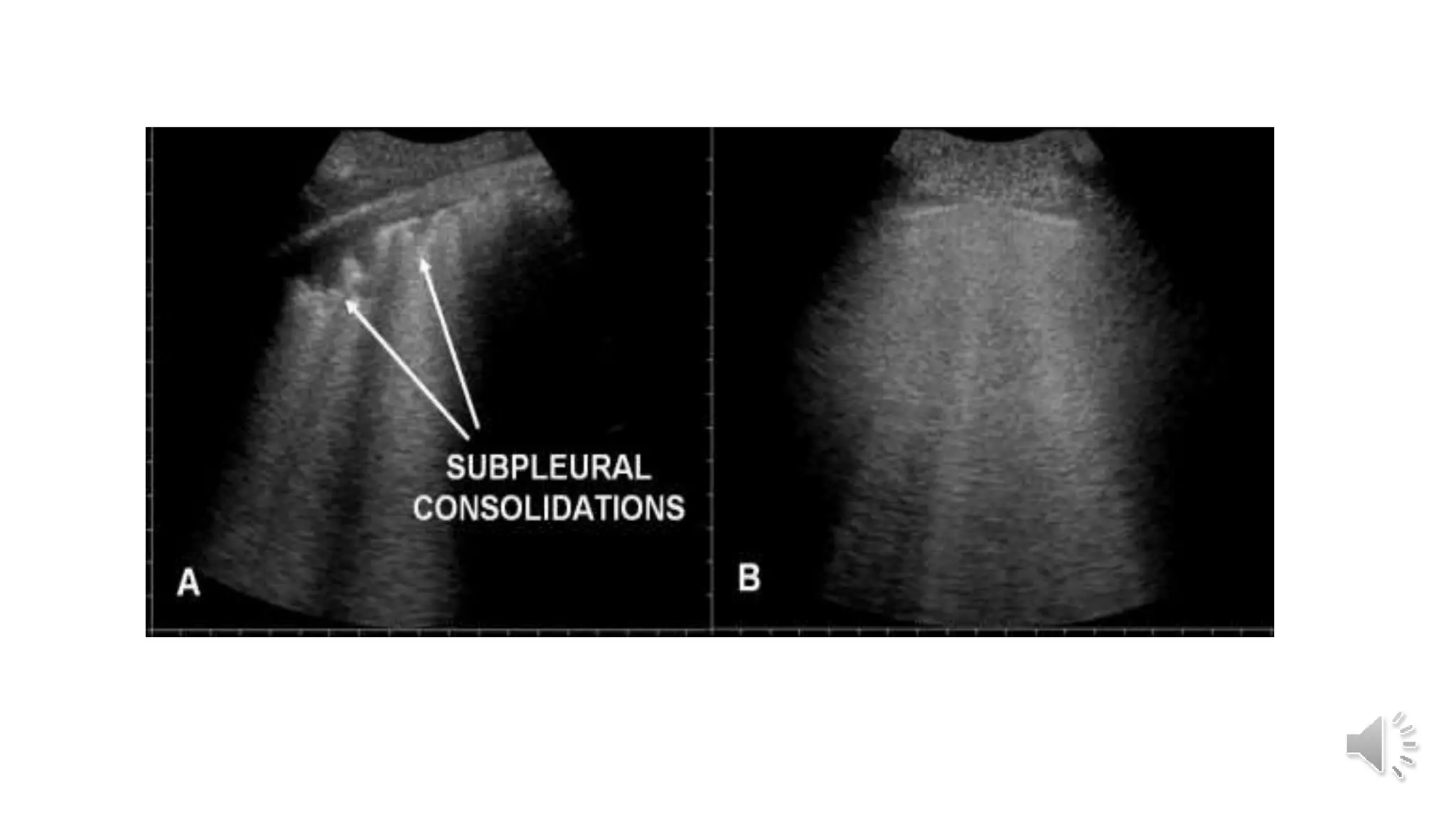
Subpleural consolidation Small (centomeric) consolidations)
Translobar consolidation Both non-translobar and translobar consolidation
No Pleural effusion No Pleural effusion
More than two lobes affected Multilobar distribution of abnormalities
Negative or atypical in lung CT images in
the super-early stage, then diffuse
scattered or ground glass shadow with
the progress of the disease, further lung
consolidation
Focal B lines is the main feature in the early stage and in
mild infection; alveolar interstitial syndrome is the main
feature in the progressive stage and in critically ill
patients; A lines can be found in the convalescence;
pleural line thickening with uneven B lines can be seen in
patients with pulmonary fibrosis
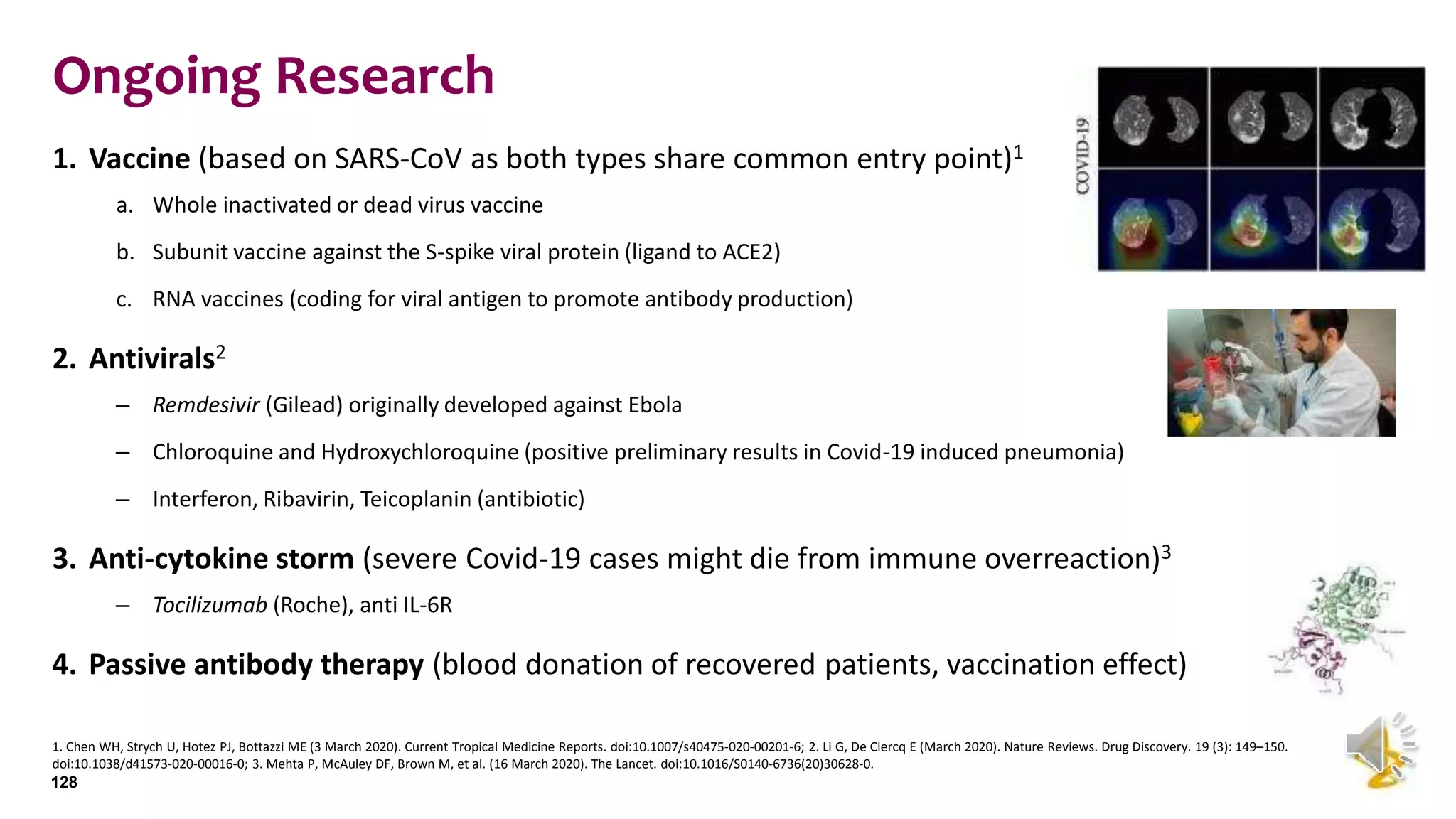
Ongoing Research
128
1. Chen WH, Strych U, Hotez PJ, Bottazzi ME (3 March 2020). Current Tropical Medicine Reports. doi:10.1007/s40475-020-00201-6; 2. Li G, De Clercq E (March 2020). Nature Reviews. Drug Discovery. 19 (3): 149–150.
doi:10.1038/d41573-020-00016-0; 3. Mehta P, McAuley DF, Brown M, et al. (16 March 2020). The Lancet. doi:10.1016/S0140-6736(20)30628-0.
1. Vaccine (based on SARS-CoV as both types share common entry point)1
a. Whole inactivated or dead virus vaccine
b. Subunit vaccine against the S-spike viral protein (ligand to ACE2)
c. RNA vaccines (coding for viral antigen to promote antibody production)
2. Antivirals2
– Remdesivir (Gilead) originally developed against Ebola
– Chloroquine and Hydroxychloroquine (positive preliminary results in Covid-19 induced pneumonia)
– Interferon, Ribavirin, Teicoplanin (antibiotic)
3. Anti-cytokine storm (severe Covid-19 cases might die from immune overreaction)3
– Tocilizumab (Roche), anti IL-6R
4. Passive antibody therapy (blood donation of recovered patients, vaccination effect)
Open Questions
129
• Source of infection: animal origin, animal-human interface
• Transmission dynamics: aerosol-, fecal-oral transmission; viral shedding during
clinical course of disease
• Sensitivity and specificity of different nucleic, antibody and antigen tests
• Post-infection antibody titers and the duration of protection
• Effectiveness of infection prevention and control (IPC) measures in various health care
settings
• Effectiveness of the public health control measures and their socio-economic impact
https://www.who.int/docs/default-source/coronaviruse/who-china-joint-mission-on-covid-19-final-report.pdf
Radiological Presentation of COVID 19

Radiological Presentation of COVID 19

  • 3.
    Radiological Presentation of COVID19 Gamal Agmy, MD, FCCP Professor and Head of Chest Department , Assiut University, Egypt
  • 4.
    COVID-19 (coronavirus disease2019) is an infectious disease caused by severe acute respiratory syndrome coronavirus 2 (SARS-CoV-2), previously known as 2019 novel coronavirus (2019-nCoV), a strain of Corona Virus Introduction
  • 5.
  • 6.
    Table 1 Etiologicalcharacteristics of SARS-COV, MERS- COV, and SARS-CoV-2: Virus Genus Intermediate host Reservoir host Receptor SARS-COV-2 β-coronavirus ? Bat ACE2 SARS-COV β-coronavirus Civet Bat ACE2 MERS-COV β-coronavirus Dromedary Bat CD26/DPP4
  • 7.
    The first caseswere seen in Wuhan, China in December 2019 before spreading globally. The current outbreak was recognized as a P a n d e m i c o n 1 1 M a r c h 2 0 2 0 .
  • 10.
    Most people infectedwith the COVID-19 virus will experience mild to moderate respiratory illness and recover without requiring special treatment. Older people, and those with underlying medical problems like cardiovascular disease, diabetes, chronic respiratory disease, and cancer are more likely to develop serious illness.
  • 11.
    Clinical presentation COVID-19 typicallypresents with systemic and/or respiratory manifestations . Some individuals infected with SARS-CoV-2 are asymptomatic and can act as carriers . Some also experience mild gastrointestinal or cardiovascular symptoms, although these are much less common 1
  • 12.
    Clinical presentation Common: Fever (85-90%) Cough(65-70%) fatigue(35-40%) sputum production (30- 35%) shortness of breath (15- 20%) Less common: Mylagia/arthralgia (10- 15%) headaches (10-15%) sore throat (10-15%) chills (10-12%) pleuritic pain
  • 13.
    Clinical presentation Rare: nausea, vomiting,nasal congestion (<10%), diarrhoea (<5%) Palpitation and chest tightness
  • 14.
    Clinical presentation Pediatric In themain, the clinical presentation in children with COVID-19 is milder than in adults. Symptoms are similar to any acute chest infection, encompassing most commonly pyrexia, dry cough, sore throat, sneezing, myalgia and lethargy. Wheezing has also been noted . Other less common (<10%) symptoms in children included diarrhea, lethargy, rhinorrhea and vomiting
  • 24.
    Pathophysiology: Covid-19 inducedPneumonia 1. Kuba K, Imai Y, Rao S, Gao H, Guo F, Guan B, et al. (August 2005). Nature Medicine. 11 (8): 875–9. doi:10.1038/nm1267. 2. Turner AJ, Tipnis SR, Guy JL, Rice G, Hooper NM (April 2002). Canadian Journal of Physiology and Pharmacology. 80 (4): 346–53. doi:10.1139/y02-021 3. Zhang H, Penninger JM, Li Y, Zhong N, Slutsky AS (March 2020). Intensive Care Medicine. Springer Science and Business Media LLC. doi:10.1007/s00134-020-05985-9. 4. Fang L, Karakiulakis G, Roth M (March 2020).The Lancet. Respiratory Medicine. doi:10.1016/S2213-2600(20)30116-8 5. https://mmrjournal.biomedcentral.com/articles/10.1186/s40779-020-0233-6 • SARS-CoV-2 enters cells via ACE21 • ACE2 is not sensitive to ACE-inhibitor drugs to treat hypertension2 • Unclear whether ACE-inhibitors are useful in SARS-CoV-2 treatment; Soluble injected ACE2 could be beneficial3 • Patients under ACE-inhibitors and hypertension might be at higher risk for Covid-194 (no recommendation to stop treatments) • ACE2 is present on the intestinal epithelial cells and type 2 pneumocytes in the pulmonary alveoli  Destruction of epithelial tissue, reduced gas exchange  Risk of acute respiratory distress syndrome  Oxygen support and in rare cases mechanical ventilation necessary Thin layer CT of a 50 year old female: Multiple patchy and light consolidation in both lungs and grid-like thickness of interlobular septa
  • 25.
  • 27.
    Diagnosis The definitive testfor SARS-CoV-2 is the real-time reverse transcriptase- polymerase chain reaction (RT- PCR) test and is believed to be highly specific but with sensitivity reported as low as 60-70% and as high as 95-97% ..
  • 30.
    Chest RadiographThe chestfilm is insensitive early in the disease. Here a comparison of a chest radiograph and CT image. The ground glass opacities in the right lower lobe on the CT (red arrows) are not visible on the chest radiograph, which was taken 1 hour prior to the CT-study .
  • 31.
    Chest-films can beuseful in the follow-up of the disease. These x-rays are of a patient with COVID-19. On admission to the hospital the chest film was normal. Four days later the patient is on mechanical ventilation and there are bilateral consolidations on the chest film.
  • 32.
    Chest film ofa 83 year old male with mitral insufficiency, pulmonary hypertension and atrial fibrillation with COVID-19 infection. Ground-glass opacification and consolidation in right upper lobe and left lower lobe (arrows).
  • 33.
    A series ofchest films of a 72-year-old woman admitted with acute respiratory failure, fever (38ºC) and dyspnoea. She was tachypneic (30bpm), with lymphopenia and low oxygen saturation (SpO2 85%). Patient presented to the emergency department two days earlier with fever (up to 38.6ºC), dry cough, odynophagia and general malaise. She was discharged from hospital because she did not present alarm criteria at that time. The patient required mechanical ventilation and was admitted to intensive care.During her stay in ICU, poor evolution to respiratory distress syndrome and to multi-organic failure. The patient died 24 hours later.
  • 34.
    Imaging findings: At admission:Ill-defined bilateral alveolar consolidation with peripheral distribution. 4 hours later: Radiological worsening, with affectation of lower lobes. Endotracheal tube and central venous line were required. 24 hours: Bilateral alveolar consolidation. 48 hours: Radiological worsening. Bilateral alveolar consolidation with panlobar affectation. 72 hours: Bilateral alveolar consolidation with panlobar affectation, with typical radiological findings of ARDS. 24 hours later the patient passed away.
  • 40.
  • 41.
  • 42.
  • 45.
  • 46.
    Centrilobular area inblue perilymphatic area in yellow
  • 47.
  • 50.
    Ground glass Ground glass(GGO) pattern is the most common finding in COVID-19 infections. They are usually multifocal, bilateral and peripheral, but in the early phase of the disease the GGO may present as a unifocal lesion, most commonly located in the inferior lobe of the right lung CT Signs of COVID 19
  • 51.
    CT Signs ofCOVID 19 CT-images of a young male, who had fever for ten days with progressive coughing and shortness of breath. Saturation at admission was 66%.The PCR test was positive for COVID- 19. There are widespread bilateral ground-glass opacities with a posterior predominance.
  • 52.
    Crazy paving Sometimes thereare thickened interlobular and intralobular lines in combination with a ground glass pattern. This is called crazy paving. It is believed that this pattern is seen in a somewhat later stage. CT Signs of COVID 19
  • 53.
    CT Signs ofCOVID 19 Crazy-Paving
  • 54.
    Vascular dilatation A typicalfinding in the area of ground glass is widening of the vessels . CT Signs of COVID 19
  • 55.
    Traction Bronchiectasis Another commonfinding in the areas of ground glass is traction bronchiectasis . CT Signs of COVID 19
  • 56.
    Subpleural bands andArchitectural distortion CT Signs of COVID 19
  • 57.
    Visual assessment The severityon CT can be estimated by visual assessment. This is the easiest way to score the severity. The CT images show a 25% involvement by visual assessment. CT involvement score
  • 58.
    Severity score Another methodis by scoring the percentages of each of the five lobes that is involved: < 5% involvement 5%-25% involvement 26%-49% involvement 50%-75% involvement > 75% involvement. CT involvement score
  • 59.
    Severity score The totalCT score is the sum of the individual lobar scores and can range from 0 (no involvement) to 25 (maximum involvement), when all the five lobes show more than 75% involvement. CT involvement score
  • 61.
    Initial CT-findings Initial CT-findingsin COVID-19 cases include bilateral, multilobar ground glass opacification (GGO) with a peripheral or posterior distribution, mainly in the lower lobes and less frequently in the middle lobe . Consolidation superimposed on GGO as the initial imaging presentation is found in a smaller number of cases, mainly in the elderly population. Septal thickening, bronchiectasis, pleural thickening, and subpleural involvement are some of the less common findings, mainly in the later stages of the disease.
  • 63.
    CT-images of a78 year old male with coughing for 2 weeks and progressive shorteness of breath, who tested positive for COVID-19.
  • 64.
    Images of a59 year old male who had fever for one week with non- productive cough.The PCR-test was negative. Because of clinical suspicion a CT was performed which showed some areas of GGO and massive consolidation in the posterior parts of the lower lobes (arrow on sagittal reconstruction).Two days later PCR was positive for COVID-19.
  • 65.
    Changes over time Advanced-phasedisease is associated with a significantly increased frequency of: GGO plus a reticular pattern (crazy pavin) Vacuolar sign Fibrotic streaks Air bronchogram Bronchus distortion Subpleural line or a subpleural transparent line
  • 70.
    This 59 yearold female had a history of ten days of fever and five days of coughing. The O2 saturation was 89 and her respiratory rate was 30/min (normal: 12-18).There are widespread GGO's without consolidation. No architectural distortion. This was reported as early phase COVID-19.
  • 71.
    These images areof a 49 year old male with fever, cough and a low saturation. The images show: Bilateral areas of GGO. The ground glass density is more pronounced Fibrotic bands (arrows). Dilated vessels in affected area (circle). Based on the CT-findings COVID-19 infection was assumed to be highly likely - late phase.
  • 72.
    This patient hadfever for one week with some abdominal pain and diarrhoea. On the day of admission she had a dry cough and complained of dizziness. The O2-saturation was low. The PCR-test was not known and a CT was performed for triage. The images show: Bilateral subpleural GGO's Consolidation in right lower lobe with traction bronchiectasis (green arrow). Fibrous bands (yellow arrow). Based on the CT-findings COVID-19 infection was assumed to be highly likely - late phase
  • 73.
  • 74.
    Radiographic features CT Typicalfindings (Radiopaedia) The primary findings on CT in adults have been reported : ◙Ground-glass opacities (GGO): bilateral, subpleural, peripheral ◙ Crazy paving appearance (GGOs and inter /intra-lobular septal thickening) ◙ Air space consolidation ◙ Bronchovascular thickening in the lesion ◙ Traction bronchiectasis
  • 75.
    Radiographic features (Radiopaedia) CTexcluding findings ◙ Mediastinal lymphadenopathy ◙ Pleural effusions ◙ Multiple tiny pulmonary nodules (unlike many other viral pneumonia ) ◙ Tree-in-bud appearance ◙ Pneumothorax ◙ Cavitation
  • 76.
    Radiographic features Temporal CT Fourstages on CT have been described : ◙ Early/initial stage (0-4 days): normal CT or GGO only up to half of patients have normal CT scans within 2 days of symptom onset ◙ Progressive stage (5-8 days): increased GGO and crazy paving appearance. ◙ Peak stage (9-13 days): consolidation ◙ Absorption stage (> 14 days): with an improvement in the disease course, "fibrous stripes" appear and the abnormalities resolve at 1 month and beyond
  • 77.
    Radiographic features Paediatric CT Ina small study of five children that had been admitted to hospital with positive COVID-19 RT-PCR tests and who had CT chest performed, only three children had abnormalities. The main abnormality was bilateral patchy ground-glass opacities, similar to the appearances in adults, but less florid, and in all three cases the opacities resolved as they clinically recovered .
  • 78.
    Radiographic features Paediatric CT On18 March 2020, the details of a much larger cohort of 171 children with confirmed COVID-19, and evaluated in a hospital setting was published as a letter in the New England Journal of Medicine. Ground-glass opacities were seen in one-third of the total, whereas almost 16% of children had no imaging features of pneumonia .
  • 80.
    Table 2 Thetypical features on CT imaging of COVID-19 Parameter Characteristic manifestations on CT imaging Density Ground glass opacity and consolidation, possible interlobular septal thickening Shape Patchy, sub-segmental, or segmental Distribution Mid and lower lungs along the bronchovascular bundles with bilateral involvement Location Peripheral and subpleural areas of the lung parenchyma Concomitant signs (variable) Air bronchogram, rare pleural effusion, no obvious lymphadenopathy
  • 81.
    Table 3 Frequencyof chest CT findings in COVID-19 CT signs Frequency Stage Ground glass opacity ++++ E/A/S Consolidation without ground glass opacity ++ S Ground glass opacity and crazy paving ++ E/A/S Ground glass opacity with consolidation +++ E/A/S Patchy ground glass opacity +++ E Bilateral distribution ++++ E/A/S/D Peripheral distribution +++ E Air bronchogram ++ E/A/S Strip-like opacity + D
  • 82.
    Egyptian MOH The key+ve CT findings: 1-ground glass opacity 100% 2-Involvement of multiple lobes (100%) 3-Subpleural or peripheral distribution (100%) 4-Consolidations(87.8%) 5-Septal thickening(55.6%) 6-Bronchial dilatation and wall thickening (55.6%)
  • 83.
    Egyptian MOH The key-ve CT findings: 1-Pleural effusion 0% 2-Mediastinal lymphadenopathy 0% 3-Lung nodules 0% 4-specific Zonal predominance (variable)
  • 84.
    Chest radiograph (a)in a 61-year-old man shows bilateral patchy, somewhat nodular opacities in the mid to lower lungs . Unenhanced computed tomography (CT) images (b) in a 33-year-old woman., Images show multiple ground glass opacities in the periphery of the bilateral lungs. The bilateral, peripheral patterns of opacities without subpleural sparing are common and characteristic CT findings of the 2019 novel coronavirus pneumonia . Chest CT image of a 71-year-old male (c) shows consolidation in the peripheral right upper lobe and a patchy area of ground glass opacity with some associated consolidation intra- and interlobular septal thickening within the left upper lobe
  • 85.
    Typical CT findingsof COVID-19. Chest CT (a) in a 75-year-old male show multiple patchy areas of pure ground glass opacity (GGO) and GGO with reticular and/or interlobular septal thickening. Chest CT image of a 38- year-old male (b) shows multiple patches, grid-like lobule, and thickening of interlobular septa, typical “paving stone-like” signs .An axial CT image obtained in 65-year-old female (c) shows bilateral ground glass and consolidative opacities with a striking peripheral distribution .CT image of a 65-year-old male (d) shows large consolidation in the right middle lobe, patchy consolidation in the posterior and basal segment of right lower lobe, with air bronchogram inside
  • 93.
    Table 4 Differentialdiagnosis of different viral pneumonia Virus Imaging characteristics MERS-COV Ground glass lesions in the subpleural and basal portions of the lung parenchyma with areas of consolidation; fibrotic changes can be present after healing H1N1 Ground glass opacity, interlobular septal thickening, and centrilobular nodules H7N9 Ground glass opacity and consolidation with air bronchograms and interlobular septal thickening Human parainfluenza virus Centrilobular nodules with bronchial wall thickening, findings which differentiate it from other viral infections Respiratory syncytial virus Small centrilobular nodules and areas of parenchymal consolidation; asymmetrically distributed in the lungs Adenovirus pneumonia Bilateral multifocal ground glass opacities, patchy consolidation in a lobar and/or segmental distribution
  • 104.
    A lines =default normal  Horizontal echo reflection at exact multiples of intervals from surface to bright reflector.  Dry lung OR PNTX  Decay with depth  Obliterated by B pleura A A A A A A
  • 105.
  • 106.
  • 107.
    Ultrasound profiles. Lichtenstein DA , Mezière G A Chest 2008;134:117-125
  • 112.
  • 113.
    PE DIAGNOSTIC ACCURACY LUSfor diagnosis of PE Metaanalysis: - Sens.: 80% (75-83%) - Spec.: 93% (89-96%) Niemann T et al. Transthoracic sonography for the detection of pulmonary embolism–a meta-analysis. Ultraschall Med 2009 30:150–156
  • 120.
  • 121.
  • 122.
    CAVAL INDEX (CI) CI= minimal (inspiratory) diameter maximum (expiratory) diameter maximum (expiratory) diameter
  • 123.
  • 124.
    IVC v CVP CorrelationBetween IVC Diameter Plus CI and CVP IVC Max Diameter (cm) CI CVP (mmHg) < 1.5 100% (total collapse) 0-5 1.5-2.5 > 50% 6-10 1.5-2.5 < 50% 11-15 > 2.5 < 50% 16-20 > 2.5 0% (no collapse) >20
  • 125.
    Table 5 CTand ultrasonographic features of COVID-19 pneumonia Lung CT Lung ultrasound Thickened pleura Thickened pleural line Ground glass shadow and effusion B lines (multifocal, discrete, or confluent) Pulmonary infiltrating shadow Confluent B lines Subpleural consolidation Small (centomeric) consolidations) Translobar consolidation Both non-translobar and translobar consolidation No Pleural effusion No Pleural effusion More than two lobes affected Multilobar distribution of abnormalities Negative or atypical in lung CT images in the super-early stage, then diffuse scattered or ground glass shadow with the progress of the disease, further lung consolidation Focal B lines is the main feature in the early stage and in mild infection; alveolar interstitial syndrome is the main feature in the progressive stage and in critically ill patients; A lines can be found in the convalescence; pleural line thickening with uneven B lines can be seen in patients with pulmonary fibrosis
  • 128.
    Ongoing Research 128 1. ChenWH, Strych U, Hotez PJ, Bottazzi ME (3 March 2020). Current Tropical Medicine Reports. doi:10.1007/s40475-020-00201-6; 2. Li G, De Clercq E (March 2020). Nature Reviews. Drug Discovery. 19 (3): 149–150. doi:10.1038/d41573-020-00016-0; 3. Mehta P, McAuley DF, Brown M, et al. (16 March 2020). The Lancet. doi:10.1016/S0140-6736(20)30628-0. 1. Vaccine (based on SARS-CoV as both types share common entry point)1 a. Whole inactivated or dead virus vaccine b. Subunit vaccine against the S-spike viral protein (ligand to ACE2) c. RNA vaccines (coding for viral antigen to promote antibody production) 2. Antivirals2 – Remdesivir (Gilead) originally developed against Ebola – Chloroquine and Hydroxychloroquine (positive preliminary results in Covid-19 induced pneumonia) – Interferon, Ribavirin, Teicoplanin (antibiotic) 3. Anti-cytokine storm (severe Covid-19 cases might die from immune overreaction)3 – Tocilizumab (Roche), anti IL-6R 4. Passive antibody therapy (blood donation of recovered patients, vaccination effect)
  • 129.
    Open Questions 129 • Sourceof infection: animal origin, animal-human interface • Transmission dynamics: aerosol-, fecal-oral transmission; viral shedding during clinical course of disease • Sensitivity and specificity of different nucleic, antibody and antigen tests • Post-infection antibody titers and the duration of protection • Effectiveness of infection prevention and control (IPC) measures in various health care settings • Effectiveness of the public health control measures and their socio-economic impact https://www.who.int/docs/default-source/coronaviruse/who-china-joint-mission-on-covid-19-final-report.pdf