








ARDS
Evidence based strategies
DR. AMITH SREEDHARAN MD DNB IDCCM EDIC
ASTER MIMS, KANNUR
History
 In 1967, Ashbaugh and colleagues reported the clinical
characteristics of 12 patients with sudden respiratory failure that
they called ARDS
 No underlying cardiac or pulmonary disease
 Rapidly developed acute hypoxemia, stiff lungs, and diffuse
bilateral alveolar infiltrates on chest x-ray a few days following
exposure to a precipitating factor.
 Autopsies revealed a characteristic histological pattern of diffuse
alveolar damage (DAD) including hyaline membrane formation,
oedema, cell necrosis, or fibrosis (Ashbaugh et al. 1967)
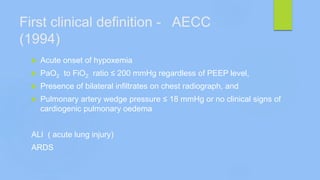
First clinical definition - AECC
(1994)
 Acute onset of hypoxemia
 PaO2 to FiO2 ratio ≤ 200 mmHg regardless of PEEP level,
 Presence of bilateral infiltrates on chest radiograph, and
 Pulmonary artery wedge pressure ≤ 18 mmHg or no clinical signs of
cardiogenic pulmonary oedema
ALI ( acute lung injury)
ARDS
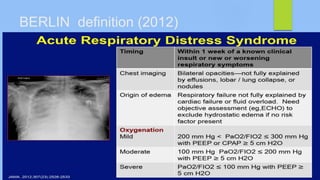
BERLIN definition (2012)
Timing of onset
 By definition, respiratory symptoms must commence within 7 days of a clinical insult
 Disease processes developing over several weeks like idiopathic pulmonary fibrosis,
nonspecific interstitial pneumonitis and granulomatosis with polyangiitis can be excluded
by accurately timing the respiratory symptoms
Diseases with acute onset that may
mimic ARDS

Alveolar hemorrhage due to vasculitis
Drug-induced pulmonary toxicity
Acute eosinophilic pneumonia
Organizing or diffuse interstitial pneumonia
A complete diagnostic workup should include
Echo,BAL and chest CT scan
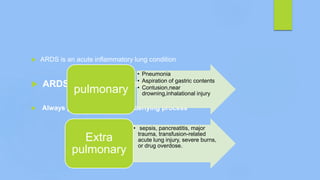
 ARDS is an acute inflammatory lung condition
 ARDS is not a disease
 Always precipitated by an underlying process
• Pneumonia
• Aspiration of gastric contents
• Contusion,near
drowning,inhalational injury
pulmonary
• sepsis, pancreatitis, major
trauma, transfusion-related
acute lung injury, severe burns,
or drug overdose.
Extra
pulmonary
Pathophysioogy
 ARDS is characterized by a marked reduction in lung compliance
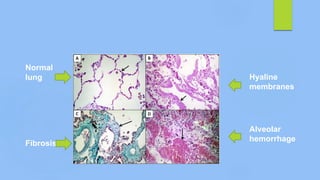
 DAD is the morphological hallmark of the lung in ARDS
 Diffuse alveolar damage is defined by the presence of hyaline
membranes associated with interstitial oedema, cell necrosis and
proliferation and then fibrosis at a later stage
Normal
lung Hyaline
membranes
Fibrosis
Alveolar
hemorrhage
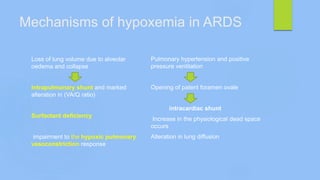
Mechanisms of hypoxemia in ARDS
Loss of lung volume due to alveolar
oedema and collapse
intrapulmonary shunt and marked
alteration in (VA/Q ratio)
Surfactant deficiency
impairment to the hypoxic pulmonary
vasoconstriction response
Pulmonary hypertension and positive
pressure ventilation
Opening of patent foramen ovale
intracardiac shunt
Increase in the physiological dead space
occurs
Alteration in lung diffusion
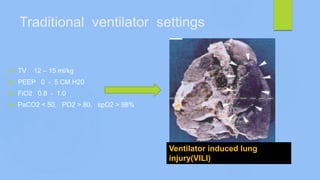
Traditional ventilator settings
 TV 12 – 15 ml/kg
 PEEP 0 - 5 CM H20
 FiO2 0.8 - 1.0
 PaCO2 < 50, PO2 > 80, spO2 > 98%
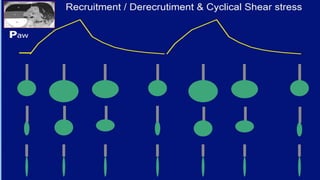
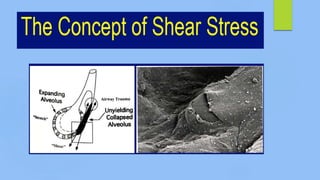
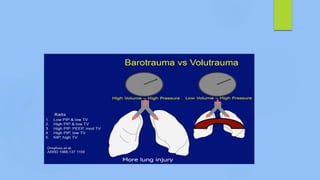
Ventilator induced lung
injury(VILI)
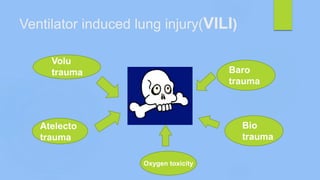
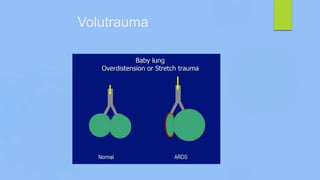
Volu
trauma
Ventilator induced lung injury(VILI)
Baro
trauma
Atelecto
trauma
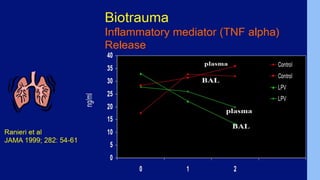
Bio
trauma
Oxygen toxicity
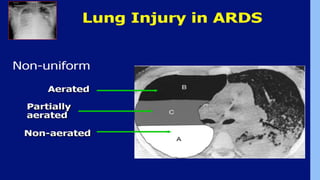
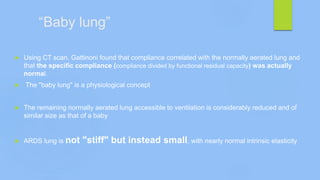
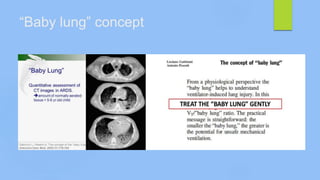
“Baby lung”
 Using CT scan, Gattinoni found that compliance correlated with the normally aerated lung and
that the specific compliance (compliance divided by functional residual capacity) was actually
normal.
 The "baby lung" is a physiological concept
 The remaining normally aerated lung accessible to ventilation is considerably reduced and of
similar size as that of a baby
 ARDS lung is not "stiff" but instead small, with nearly normal intrinsic elasticity
“Baby lung” concept
Volutrauma
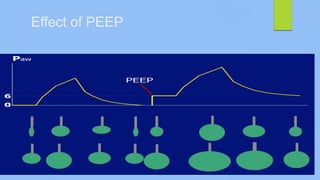
Effect of PEEP
TREATMENT STRATEGIES
Oxygenation strategies
 The first-line strategy in supporting hypoxemic patients is to provide oxygen
 oxygen mask
 oxygen mask plus reservoir
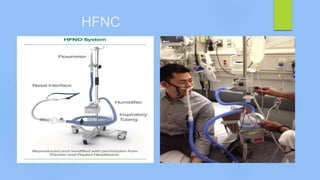
 High flow canula – 1st line strategy for oxygenation
HFNC
NIV
 No strong evidence for the use of noninvasive ventilation (NIV)
 Intubation rates of 40-50% in cases of moderate and severe ARDS
 Risk of delaying intubation by masking signs of respiratory distress
 Worsening VILI
 poor tolerance of the facemask is frequent
When to intubate?
 Whatever oxygenation strategy is used, intubation should not be delayed.
 RR > 35-40 breaths/min
 Clinical signs of respiratory distress
 Severe hypoxemia defined as PaO2 < 60 mm Hg or SpO2 < 90% despite high FiO2
 Respiratory acidosis, and copious secretions
 Non-respiratory indications for invasive ventilation are altered consciousness and the
occurrence of shock
Targets of mechanical ventilation
 To achieve adequate gas exchange whilst avoiding VILI
Lung protective ventilation
 Low VTs ( 4 - 6 ml/kg of ideal body weight)
 High PEEP levels ( 11- 16 cm h2O)
 Strict monitoring of plateau pressure to avoid exceeding 30 cm H2O
Mode of ventilation
 Worldwide assist-control in volume-controlled ventilation
(VCV) is the most commonly used mode
 No difference in outcomes between VCV and (PCV
 Whatever the ventilator mode used, VTs and end-inspiratory plateau
pressure should be limited and continuously monitored.
Gas exchange targets
 Target a PaO2 of at least 60 mm Hg and SaO2 of at least 90%
 No studies have shown that increasing PaO2 improves outcome
 Protective ventilation using low VTs may induce respiratory acidosis
 pH should usually be maintained above 7.2.
Driving pressure
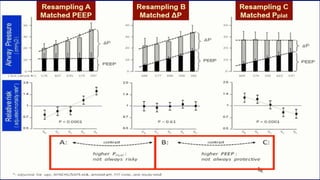
 Driving pressure (plateau pressure – PEEP) major determinant of outcome
 it has been suggested that the mechanical power transferred to the respiratory system from
the ventilator plays a key factor in VILI
 Not only the strain (change in lung volume) but both high flow and respiratory rate are
potentially harmful to the lungs
Rescue therapies to improve
oxygenation
Recruitment maneuvers
 Transient increases in trans-pulmonary pressure in an attempt to open collapsed alveoli.
 When performing a recruitment manoeuvre the pressure reached at the end of inspiration
surpasses the recommended safety thresholds for short time periods
 Sigh breaths, extended sigh breaths,
 Increased inspiratory pressures and PEEP,
 Sustained inflation
 Staircase Recruitment Manoeuvre. There is currently minimal evidence to recommend a
particular method of recruitment.
Recruitment maneuvers
 Oxygenation benefits may be short-lived and of uncertain signifiance,
 There are no studies showing patient outcome benefits,
 It is uncertain how to differentiate responders from non-responders
 There is no evidence for when, how often they should be performed
 There is no evidence of reducing VILI
 The ART trial found increased mortality with staircase recruitment manoeuvre. Experts
made recently a conditional recommendation for using recruitment maneuver (Fan et al.
2017
Recruitment maneuvers can be considered as rescue therapyin the most
severely hypoxemic patients
No single method can be recommended.
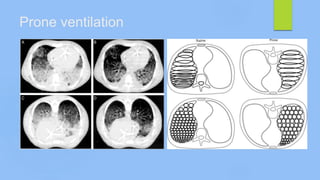
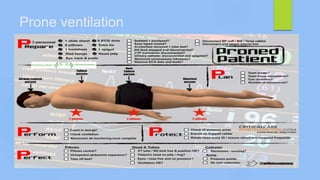
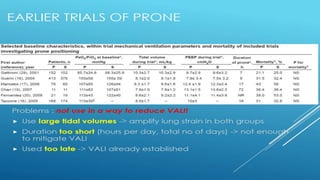
Proning
 Advocated for almost 40 years
 Oxygenation improves dramatically
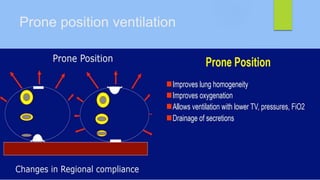
 The dorsum of the lung has a larger volume than the anterior and apical areas
 Better ventilating the dorsal regions of the lung in the prone position improves ventilation,
reduces intrapulmonary shunt leading to an improvement in V/Q matching.
Prone position ventilation
Prone ventilation
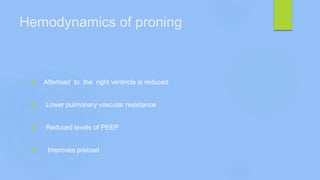
Hemodynamics of proning
 Afterload to the right ventricle is reduced
 Lower pulmonary vascular resistance
 Reduced levels of PEEP
 Improves preload
Prone ventilation
PROSEVA trial
 PROSEVA: Prone Positioning in Severe Acute Respiratory Distress
Syndrome
Guerin et al for the PROSEVA Study Group. NEJM 2013;368:2159-68.
 Proning in severe ARDS reduces mortality without an
increase in adverse outcomes. Further studies are required to confirm
these findings but in the mean time these results are difficult to ignore
ECMO
 CESAR
 EOLIA
 Early transfer to ecmo centre and VV ecmo improve survival
 Early application of airway pressure release ventilation may
reduce the duration of mechanical ventilation in
acute respiratory distress syndrome
 Zhou. Intensive Care Medicine 2017; 43:1648-1659.
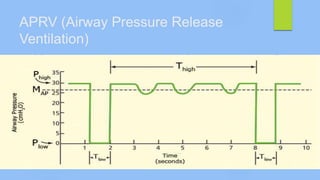
APRV (Airway Pressure Release
Ventilation)
Sedation
 The use of sedation improves patient tolerance of positive pressure
ventilation and allows resting of respiratory muscles and the reduction of
oxygen consumption by these muscles.
Neuro muscular blockers
 Neuromuscular blocking agent cisatracurium used for 48 hours in severe ARDS
patients Improved oxygenation ( ACURASYS trial)
 Reduced lung and systemic inflammation
 Improved patient survival after adjusting for confounding factors
steroids
 Clear indications for steroid therapy for diseases that may mimic ARDS
include
 Alveolar hemorrhage due to vasculitis,
 Drug-induced toxic pneumonia with a lymphocytic pattern
 Organized pneumonia
 Acute eosinophilic pneumonia
Steroids in ARDS
Use of steroids in ARDS is unresolved
Mortality was significantly higher when steroid therapy was started 2 weeks after the
onset
Studies showing beneficial outcomes started low dose steroids early in the course of the
disease
High doses of steroids has been associated with either worse outcomes
Other adjunct therapies
 HFOV - High frequency oscillatory ventilation - found harmful
 Inhaled nitric oxide - no proven benefit
 Restricted fluid regimen - beneficial
SUMMARY
 Bed side echo ,BAL and CT thorax for complete work up
 HFNC is first line oxygenation method in mild ARDS
 Do not delay intubation
 Lung protective ventilation strategy
 Recruitment during early disease as rescue oxygenation
 Early proning in case of poor response
 Consider early ecmo if poor response to proning
This Photo by Unknown Author is licensed under CC BY-NC-ND

ARDS

  • 1.
    ARDS Evidence based strategies DR.AMITH SREEDHARAN MD DNB IDCCM EDIC ASTER MIMS, KANNUR
  • 2.
    History  In 1967,Ashbaugh and colleagues reported the clinical characteristics of 12 patients with sudden respiratory failure that they called ARDS  No underlying cardiac or pulmonary disease  Rapidly developed acute hypoxemia, stiff lungs, and diffuse bilateral alveolar infiltrates on chest x-ray a few days following exposure to a precipitating factor.  Autopsies revealed a characteristic histological pattern of diffuse alveolar damage (DAD) including hyaline membrane formation, oedema, cell necrosis, or fibrosis (Ashbaugh et al. 1967)
  • 3.
    First clinical definition- AECC (1994)  Acute onset of hypoxemia  PaO2 to FiO2 ratio ≤ 200 mmHg regardless of PEEP level,  Presence of bilateral infiltrates on chest radiograph, and  Pulmonary artery wedge pressure ≤ 18 mmHg or no clinical signs of cardiogenic pulmonary oedema ALI ( acute lung injury) ARDS
  • 4.
  • 5.
    Timing of onset By definition, respiratory symptoms must commence within 7 days of a clinical insult  Disease processes developing over several weeks like idiopathic pulmonary fibrosis, nonspecific interstitial pneumonitis and granulomatosis with polyangiitis can be excluded by accurately timing the respiratory symptoms
  • 6.
    Diseases with acuteonset that may mimic ARDS  Alveolar hemorrhage due to vasculitis Drug-induced pulmonary toxicity Acute eosinophilic pneumonia Organizing or diffuse interstitial pneumonia A complete diagnostic workup should include Echo,BAL and chest CT scan
  • 7.
     ARDS isan acute inflammatory lung condition  ARDS is not a disease  Always precipitated by an underlying process • Pneumonia • Aspiration of gastric contents • Contusion,near drowning,inhalational injury pulmonary • sepsis, pancreatitis, major trauma, transfusion-related acute lung injury, severe burns, or drug overdose. Extra pulmonary
  • 8.
    Pathophysioogy  ARDS ischaracterized by a marked reduction in lung compliance  DAD is the morphological hallmark of the lung in ARDS  Diffuse alveolar damage is defined by the presence of hyaline membranes associated with interstitial oedema, cell necrosis and proliferation and then fibrosis at a later stage
  • 9.
  • 10.
    Mechanisms of hypoxemiain ARDS Loss of lung volume due to alveolar oedema and collapse intrapulmonary shunt and marked alteration in (VA/Q ratio) Surfactant deficiency impairment to the hypoxic pulmonary vasoconstriction response Pulmonary hypertension and positive pressure ventilation Opening of patent foramen ovale intracardiac shunt Increase in the physiological dead space occurs Alteration in lung diffusion
  • 11.
    Traditional ventilator settings TV 12 – 15 ml/kg  PEEP 0 - 5 CM H20  FiO2 0.8 - 1.0  PaCO2 < 50, PO2 > 80, spO2 > 98% Ventilator induced lung injury(VILI)
  • 12.
    Volu trauma Ventilator induced lunginjury(VILI) Baro trauma Atelecto trauma Bio trauma Oxygen toxicity
  • 14.
    “Baby lung”  UsingCT scan, Gattinoni found that compliance correlated with the normally aerated lung and that the specific compliance (compliance divided by functional residual capacity) was actually normal.  The "baby lung" is a physiological concept  The remaining normally aerated lung accessible to ventilation is considerably reduced and of similar size as that of a baby  ARDS lung is not "stiff" but instead small, with nearly normal intrinsic elasticity
  • 15.
  • 16.
  • 19.
  • 22.
  • 23.
    Oxygenation strategies  Thefirst-line strategy in supporting hypoxemic patients is to provide oxygen  oxygen mask  oxygen mask plus reservoir  High flow canula – 1st line strategy for oxygenation
  • 24.
  • 25.
    NIV  No strongevidence for the use of noninvasive ventilation (NIV)  Intubation rates of 40-50% in cases of moderate and severe ARDS  Risk of delaying intubation by masking signs of respiratory distress  Worsening VILI  poor tolerance of the facemask is frequent
  • 26.
    When to intubate? Whatever oxygenation strategy is used, intubation should not be delayed.  RR > 35-40 breaths/min  Clinical signs of respiratory distress  Severe hypoxemia defined as PaO2 < 60 mm Hg or SpO2 < 90% despite high FiO2  Respiratory acidosis, and copious secretions  Non-respiratory indications for invasive ventilation are altered consciousness and the occurrence of shock
  • 27.
    Targets of mechanicalventilation  To achieve adequate gas exchange whilst avoiding VILI
  • 28.
    Lung protective ventilation Low VTs ( 4 - 6 ml/kg of ideal body weight)  High PEEP levels ( 11- 16 cm h2O)  Strict monitoring of plateau pressure to avoid exceeding 30 cm H2O
  • 29.
    Mode of ventilation Worldwide assist-control in volume-controlled ventilation (VCV) is the most commonly used mode  No difference in outcomes between VCV and (PCV  Whatever the ventilator mode used, VTs and end-inspiratory plateau pressure should be limited and continuously monitored.
  • 30.
    Gas exchange targets Target a PaO2 of at least 60 mm Hg and SaO2 of at least 90%  No studies have shown that increasing PaO2 improves outcome  Protective ventilation using low VTs may induce respiratory acidosis  pH should usually be maintained above 7.2.
  • 31.
    Driving pressure  Drivingpressure (plateau pressure – PEEP) major determinant of outcome  it has been suggested that the mechanical power transferred to the respiratory system from the ventilator plays a key factor in VILI  Not only the strain (change in lung volume) but both high flow and respiratory rate are potentially harmful to the lungs
  • 33.
    Rescue therapies toimprove oxygenation
  • 34.
    Recruitment maneuvers  Transientincreases in trans-pulmonary pressure in an attempt to open collapsed alveoli.  When performing a recruitment manoeuvre the pressure reached at the end of inspiration surpasses the recommended safety thresholds for short time periods  Sigh breaths, extended sigh breaths,  Increased inspiratory pressures and PEEP,  Sustained inflation  Staircase Recruitment Manoeuvre. There is currently minimal evidence to recommend a particular method of recruitment.
  • 35.
    Recruitment maneuvers  Oxygenationbenefits may be short-lived and of uncertain signifiance,  There are no studies showing patient outcome benefits,  It is uncertain how to differentiate responders from non-responders  There is no evidence for when, how often they should be performed  There is no evidence of reducing VILI  The ART trial found increased mortality with staircase recruitment manoeuvre. Experts made recently a conditional recommendation for using recruitment maneuver (Fan et al. 2017 Recruitment maneuvers can be considered as rescue therapyin the most severely hypoxemic patients No single method can be recommended.
  • 36.
    Proning  Advocated foralmost 40 years  Oxygenation improves dramatically  The dorsum of the lung has a larger volume than the anterior and apical areas  Better ventilating the dorsal regions of the lung in the prone position improves ventilation, reduces intrapulmonary shunt leading to an improvement in V/Q matching.
  • 37.
  • 38.
  • 39.
    Hemodynamics of proning Afterload to the right ventricle is reduced  Lower pulmonary vascular resistance  Reduced levels of PEEP  Improves preload
  • 40.
  • 42.
    PROSEVA trial  PROSEVA:Prone Positioning in Severe Acute Respiratory Distress Syndrome Guerin et al for the PROSEVA Study Group. NEJM 2013;368:2159-68.  Proning in severe ARDS reduces mortality without an increase in adverse outcomes. Further studies are required to confirm these findings but in the mean time these results are difficult to ignore
  • 43.
    ECMO  CESAR  EOLIA Early transfer to ecmo centre and VV ecmo improve survival
  • 44.
     Early applicationof airway pressure release ventilation may reduce the duration of mechanical ventilation in acute respiratory distress syndrome  Zhou. Intensive Care Medicine 2017; 43:1648-1659.
  • 45.
    APRV (Airway PressureRelease Ventilation)
  • 46.
    Sedation  The useof sedation improves patient tolerance of positive pressure ventilation and allows resting of respiratory muscles and the reduction of oxygen consumption by these muscles.
  • 47.
    Neuro muscular blockers Neuromuscular blocking agent cisatracurium used for 48 hours in severe ARDS patients Improved oxygenation ( ACURASYS trial)  Reduced lung and systemic inflammation  Improved patient survival after adjusting for confounding factors
  • 48.
    steroids  Clear indicationsfor steroid therapy for diseases that may mimic ARDS include  Alveolar hemorrhage due to vasculitis,  Drug-induced toxic pneumonia with a lymphocytic pattern  Organized pneumonia  Acute eosinophilic pneumonia
  • 49.
    Steroids in ARDS Useof steroids in ARDS is unresolved Mortality was significantly higher when steroid therapy was started 2 weeks after the onset Studies showing beneficial outcomes started low dose steroids early in the course of the disease High doses of steroids has been associated with either worse outcomes
  • 50.
    Other adjunct therapies HFOV - High frequency oscillatory ventilation - found harmful  Inhaled nitric oxide - no proven benefit  Restricted fluid regimen - beneficial
  • 51.
    SUMMARY  Bed sideecho ,BAL and CT thorax for complete work up  HFNC is first line oxygenation method in mild ARDS  Do not delay intubation  Lung protective ventilation strategy  Recruitment during early disease as rescue oxygenation  Early proning in case of poor response  Consider early ecmo if poor response to proning
  • 52.
    This Photo byUnknown Author is licensed under CC BY-NC-ND