By
Gamal Agmy,MD,FCCP
Professor Of Chest Diseases
Assiut University
Introduction
* NIPPV is recent phenomenon, mainly because of
advances in noninvasive interfaces and ventilator
modes
* The efficacy of noninvasive positive-pressure
Ventilation has been demonstrated for acute
pulmonary edema, for respiratory failure in
immunocompromised patients, and to facilitate
extubation in COPD patients.
* Patients who develop respiratory failure or who
refuse intubation are potentially good candidates for
noninvasive positive-pressure ventilation
*Several factors are vital to the success of noninvasive
positive-pressure ventilation: careful patient selection;
properly timed initiation; comfortable, well-fitting
interface; coaching and encouragement; and careful
monitoring.
*Noninvasive ventilation should be used to avert
endotracheal intubation rather than as an alternative to
it.
Definition
The application of positive pressure ventilation
without using an endotracheal tube.
or
As the provision of ventilatory assistance to the
lungs without an invasive artificial airway
History
Until the early 1960s, negative-pressure ventilation in the
form of tank ventilators was the most common type of
mechanical ventilation outside the anesthesia suite
With the introduction of nasal CPAP to treat obstructive sleep
apnea in the early 1980s, NIPPV rapidly displaced negative-
pressure ventilation as the treatment of choice for chronic
respiratory failure in patients with neuromuscular and chest wall
deformities
The past 20 years, noninvasive ventilation has moved
from the outpatient to the inpatient setting, where it is
used to treat acute respiratory failure.
Non-invasiveVentialtion
1- Positive pressure
2-Negative Pressure
Advantage(NIPPV)
*Decreased direct upper airway trauma & bypass of
the upper airway defense mechanisms
*Allows patients to eat orally, vocalize normally, and
expectorate secretions.
* Noninvasive ventilation reduces infectious hospital
including pneumonia,sinusitis, and sepsis.
* lowers morbidity and mortality
* Shorten hospital length of stay, thus reducing costs.
Goals of NIV
 Relieve symptoms
 Reduce work of breathing
 Offset the effect of i PEEP
 Improve gas exchange
 Minimize risk of barotrauma
 Avoid intubation
Indication
Airway Obstruction
 COPD
 Asthma
 Cystic fibrosis
 Obstructive sleep apnea or obesity hypoventilation
 Upper airway obstruction
 Facilitation of weaning in COPD
 Extubation failure in COPD
Indication
Hypoxemic Respiratory Failure
 ARDS
 Pneumonia
 Trauma or burns
 Acute pulmonary edema (use of CPAP)
 Immuno compromised patients
 Restrictive thoracic disorders
 Post operative patients
 Do-not-intubate patients
 During bronchoscopy
Exclusion Criteria
1. Respiratory arrest
2. Medically unstable
3. Unconscious, unable to protect airways
4. Excessive secretions
5. Significant vomiting
6. Agitated or uncooperative
7. Facial trauma, burns, surgery or anatomic
abnormalities interfering with mask
application
PATIENT SELECTION
Primary-step
Identify patients in need of ventilatory assistance by using clinical
and blood gas criteria.
Good candidates are those with moderate to severe dyspnea,
tachypnea, and impending respiratory muscle fatigue( use of
accessory muscles of breathing or abdominal paradox).
The level of tachypnea ( COPD when the respiratory rate exceeds
24 breaths per minute & hypoxemic respiratory failure, higher
respiratory rates are used, in the range of 30 to 35 breaths per
minute.
second step
Exclude patients for whom noninvasive ventilation would
be unsafe.
Those with frank or imminent respiratory arrest
Patients who are medically unstable with hypotensive shock,
uncontrolled upper gastrointestinal bleeding, unstable arrhythmias,
or life-threatening ischemia .
who are uncooperative, unable to adequately protect their upper
airway or clear
PREDICTORS OF SUCCESS DURING
ACUTE APPLICATIONS OF NPPV
 Younger age
 Lower acuity of illness (APACHE score)
 Able to cooperate; better neurologic score
 Able to coordinate breathing with ventilator
 Less air leaking, intact dentition
 Hypercarbia, but not too severe (PaCO2 > 45 mm
Hg, < 92 mm Hg)
 Acidemia, but not too severe (pH < 7.35, > 7.10)
 Improvements in gas exchange and pulse and
respiratory rates within first 1-2 h
INITIATION OF NONINVASIVE VENTILATION
1-Appropriate candidate selected,
2-Ventilator and interface must be chosen,
3-Ventilator settings must be selected,
4-Location ( Icu or step-down unit that offers adequate
continuous monitoring until stabilized)
Comporison of Noninvasive mechanical ventilators with
standard critical care ventilators
NIMV offers a more portable technology due to the reduced size of the
air compressor.
Because of this reduction in size, these noninvasive ventilators do not
develop pressures as high as their critical care ventilator counterparts.
(>30 cm H20)
Noninvasive ventilators have a single-limb tubing circuit that delivers
oxygen to the patient and allows for exhalation.
lack oxygen blenders or sophisticated alarm or battery backup systems
Modes of Noninvasive Mechanical Ventilation
* volume ventilation, initial tidal volumes range from
10 to 15 mL.kg.
1-Pressure modes
2-volume modes
Pressure-cycled vents are better tolerated than volume-cycled vents
Pressure modes
**Continuous Positive Airway Pressure(CPAP)
Continuous positive airway pressure (CPAP) is not NIV
It provides positive airway pressure throughout the respiratory cycle.
This static, positive pressure is maintained constantly during inhalation
and exhalation
CPAP is not a stand-alone mode of assisted mechanical ventilation. It is
equivalent to positive end-expiratory pressure (PEEP) and facilitates
inhalation by reducing pressure thresholds to initiate airflow.
This mode should never be used in patients who may have apneic
episodes because of the lack of a backup rate.
Pressure modes
Spontaneous Modes
In spontaneous mode, the airway pressure cycles between an inspiratory
positive airway pressure (IPAP) and an expiratory positive airway
pressure (EPAP).
This is commonly referred to as bilevel or biphasic positive airway
pressure (BL-PAP or BiPAP). The patient's inspiratory effort triggers the
switch from EPAP to IPAP. The limit during inspiration is the set level of
IPAP.
The inspiratory phase cycles off, and the machine switches back to EPAP
when it detects a cessation of patient effort, indicated by a decrease in
inspiratory flow rate, or a maximum inspiratory time is reached, typically
2-3 seconds.
Tidal volume (Vt) varies breath to breath and is determined by degree of
IPAP, patient effort, and lung compliance.
Spontaneous mode depends on patient effort to trigger inhalation. A
patient breathing at a low rate can develop a respiratory acidosis.
Spontaneous/timed (ST) mode
The trigger in the ST mode can be the patient's effort or an elapsed time
interval, predetermined by a set respiratory backup rate.
If the patient does not initiate a breath in the prescribed interval, then
IPAP is triggered. For machine-generated breaths, the ventilator cycles
back to EPAP based on a set inspiratory time.
For patient-initiated breaths, the ventilator cycles as it would in the
spontaneous mode.
Pressure modes
Conceptually:
One can consider BiPAP as PEEP with pressure support (PS).
The pressure during the inspiratory phase is termed IPAP and
is analogous to PS.
The pressure during the expiratory phase is termed EPAP and
is analogous to PEEP.
The IPAP is necessarily set higher than EPAP by a minimum
of 5cm H2O, and the difference between the two settings is
equivalent to the amount of PS provided
Initiating Noninvasive Mechanical Ventilation
Either a face mask or a nasal mask can be used, but a nasal mask is
generally better tolerated.
A respiratory therapist must measure the patient to ensure a good fit and
seal.
Initially supply 3 to 5 cm H2O of CPAP with supplemental oxygen.
sequentially increase the CPAP pressure by 2 to 3 cm H2O increments
every 5 to 10 minutes (ABG-Pulse oximetry)
Recommended initial settings for BiPAP machines in the noninvasive
support of patients in respiratory distress or failure are IPAP of 8 cm H2O
and EPAP of 3 cm H2O, for a pressure support (IPAP minus EPAP) of 5
cm H2O.
The level of supplemental oxygen flowing into the circuit should be
governed by goal pulse oximetry and corroborated by ABG results as
necessary; it is appropriate to initiate therapy with 2 to 5 L/minute, but
this amount should be adjusted with each titration of IPAP or EPAP.
The intrinsic positive end-expiratory pressure
(PEEPi), or auto-PEEP, cannot be measured by
a noninvasive ventilator; therefore, EPAP
should generally be maintained below 8 to 10
cm H2O to be certain that it does not exceed
PEEPi in patients with obstructive lung disease.
The IPAP must always be set higher than EPAP
Conceptually:
Pressure pre-set
(PCV/PSV)
Varying inspiratory volume,
Constant inspiratory pressure
Advantage:
Compensation for leakage,
Best tolerated
Disadvantage:
Instability of tidal volume in
case of increased airway
resistance
Volume pre-set
(VCV)
Constant inspiratory volume,
Varying inspiratory pressure
Advantage:
Stability of tidal volume even in
case of increased airway
resistance
Disadvantage:
high inspiratory pressure,
No leak compensation
Volume versus pressure:
No differences in:
• Improvements in sleep quality
• Improvements in blood gases
But:
• More side effects during volume pre-set
Windisch W. et al. Respir Med 2005; 99: 52-59
Volume versus pressure:
No differences in:
• Sleep quality
• Blood gases
• Quality of life
• Physical activity
• Spontaneous breathing
Tuggey JM et al. Thorax 2005; 60: 859-864
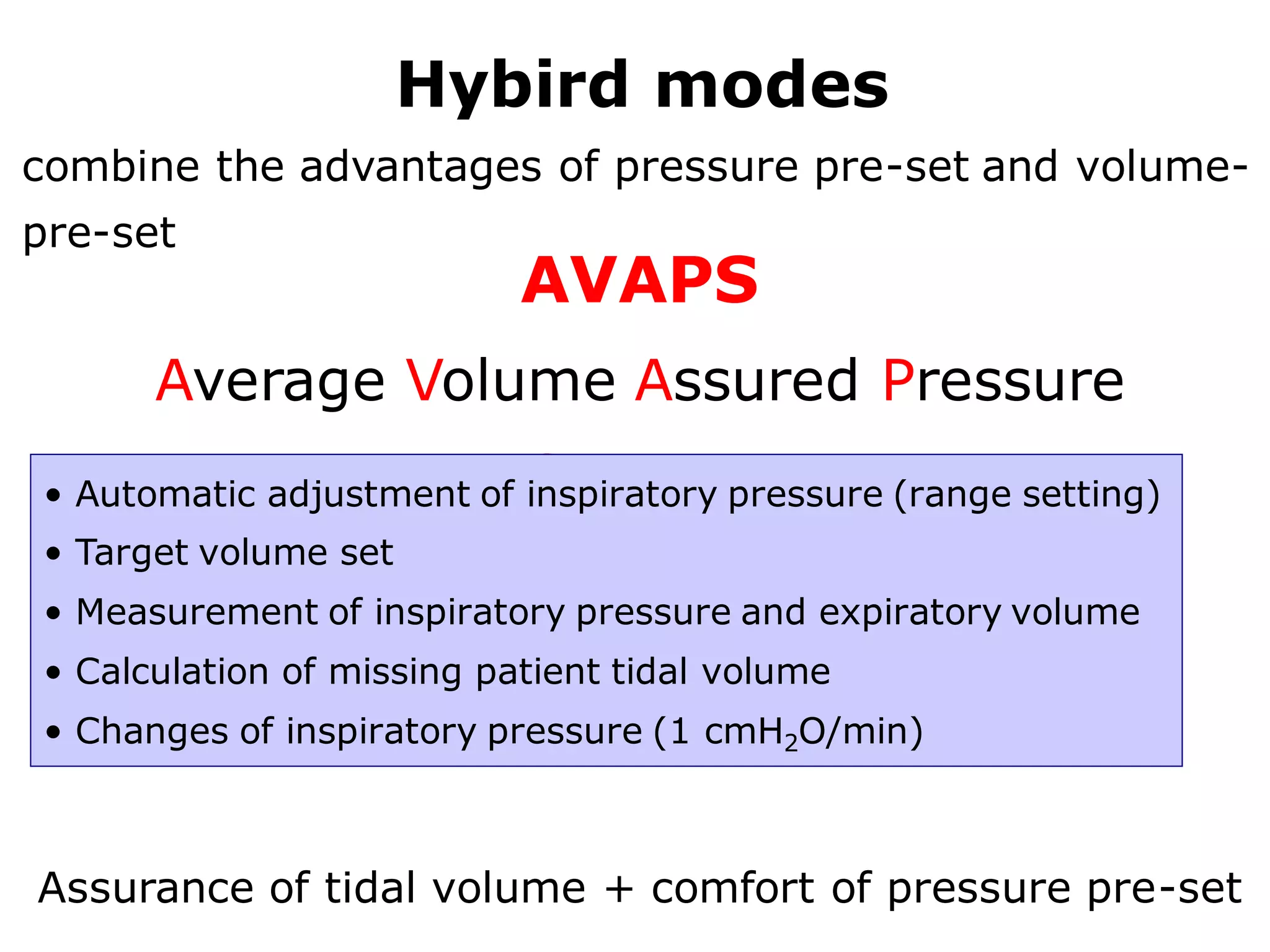
Hybird modes
combine the advantages of pressure pre-set and volume-
pre-set
AVAPS
Average Volume Assured Pressure
Support• Automatic adjustment of inspiratory pressure (range setting)
• Target volume set
• Measurement of inspiratory pressure and expiratory volume
• Calculation of missing patient tidal volume
• Changes of inspiratory pressure (1 cmH2O/min)
Assurance of tidal volume + comfort of pressure pre-set
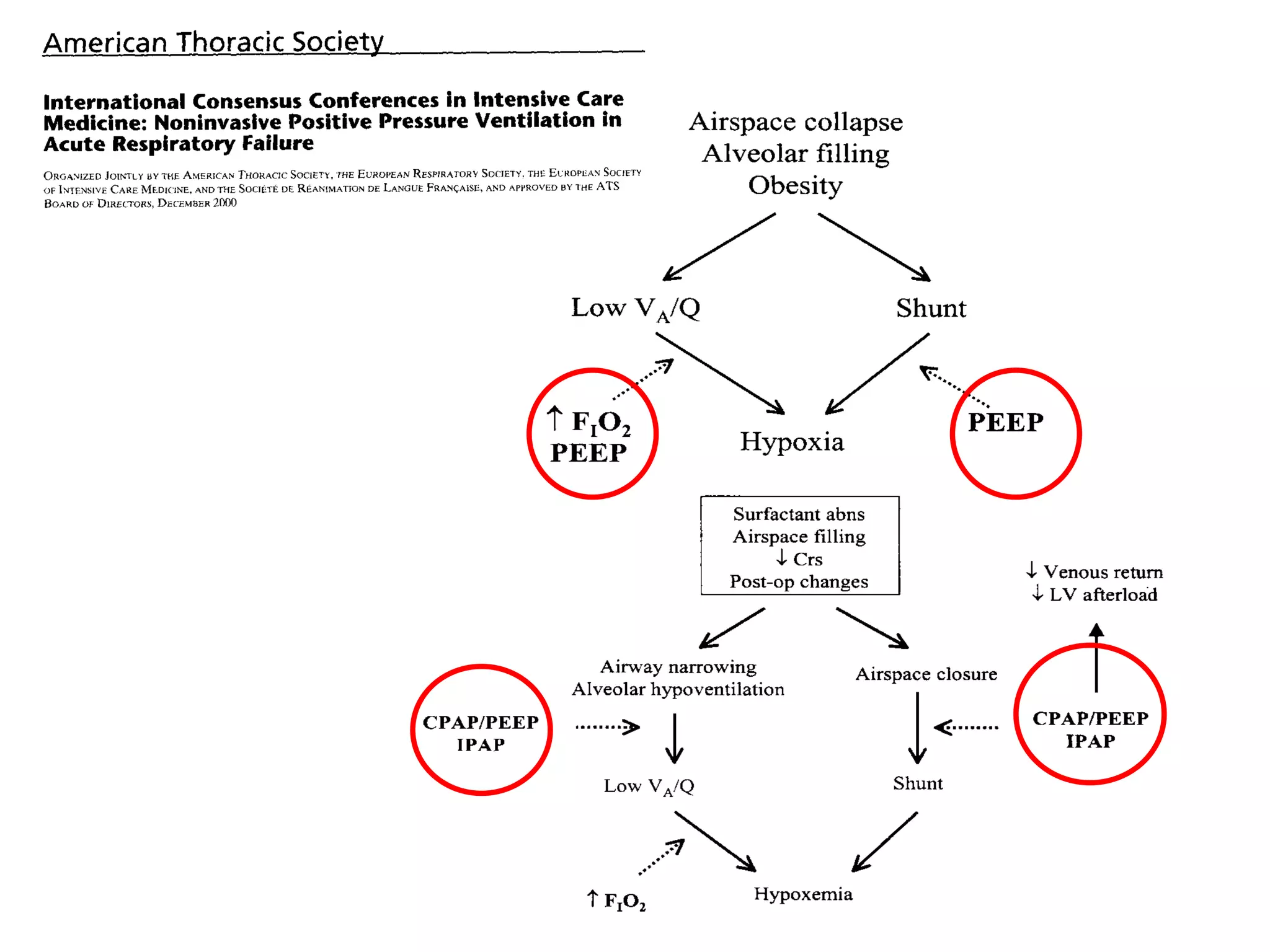
AJRCCM 2001;163:283-91
Rational of NPPV in COPD
Management Strategies
 COPD
– Main goal to decrease work of breathing (decreasing
V/Q mismatch) and provide adequate ventilation
– Relatively low EPAP: 5-8cm H2O (assuming no
obesity or sleep disordered breathing)
– Relatively moderate IPAP+EPAP: 10-14cm H2O
– Goal to have at least a 5cm H2O differential between
EPAP and IPAP+EPAP; may need to go higher
depending on ventilation requirements
» ie BiPAP 14/10or 8/5
From a Cochrane Review
 A meta-analysis of 14 studies of NIV in COPD
exacerb showed:
  mortality ( RR 0.52 )
  need for intubation ( RR 0.41 )
  pCO2, and resp rate faster
  length of stay by 3.24 days
  complications of treatments
Management Strategies
 CHF
– Goal is to decrease work of breathing, decrease
afterload and decrease overall static pressure
– Relatively moderate EPAP: 6-12 cm H2O
– Relatively low IPAP+EPAP: 12-18cm H2O
– Patient will benefit mostly with EPAP unless
other concurrent disease ( COPD, Obesity-
Hypoventilation)
» Typical starting point: BiPAP 10/6
Management Strategies
 Obesity-Hypoventilation Syndrome
– Goal of therapy is to decrease work of breathing and
increase ventilation
– Combined disease as >90% will also have concurrent
Obstraction sleep Apnea(OSA)
– EPAP: usually on the higher side; enough to overcome
OSA and cardiopulm disease: ~10cmH2O, more for
bigger individuals
– IPAP+EPAP: at least a 4cm H2O differential
– Need to adjust according to ventilation requirements;
may benefit from back up rate
Management Strategies
 Sleep Disordered Breathing
– Most often post-op with known OSA or as a
complication associated with admit (CHF or
Obesity-Hypoventilation)
– For elective admit with known OSA: usual
CPAP/BiPAP unless physiologic changes with
acute illness, surgery or narcotics.
Management Strategies
 Neuromuscular Disease
– Goal to decrease work of breathing, decrease
fatigue, assist ventilation
– EPAP: usually low; 4-5cm H2O
– IPAP+EPAP: at least 4cmH2O differential
– May benefit from backup rate
Management Strategies
 Other causes of respiratory failure
– Pneumonia/ARDS
– Cancer and respiratory failure
– Post-op management
» Settings depend on disease and other
cardiopulmonary disease
» Most often used as a bridge to mechanical
ventilation or for pts DNR/DNI
» Usually moderate settings: 12/8 or 14/8
The device that makes physical contact between the patient and the
ventilator is termed the interface.
Interfaces for NPPV come in a variety of shapes and sizes
Include:
Nasal mask,Nasal pillow, Oronasal mask (face mask) or the helmet.
Ideally, interfaces should be comfortable, offer a good seal, minimize
leak, and limit dead space.
Interface
*Definition:
Standard interfaces
Facial masks
advantages:
– sufficient ventilation also
during mouth breathing
– sufficient ventilation in patients
with limited co-operation
disadvantages:
– coughing is difficult
– skin lesions (bridge of the nose)
Nasal masks
advantages:
– better comfort
– good seal
– coughing is possible
– communication is possible
disadvantages:
– effective in nose breathing only
– good co-operation is necessary
Standard interfaces
Nasal prong/nasal pillow systems
for patients with
claustrophobia
for patients with allergies
against straps
for low to moderate
pressures only
(< 20 cmH2O)
Standard interfaces
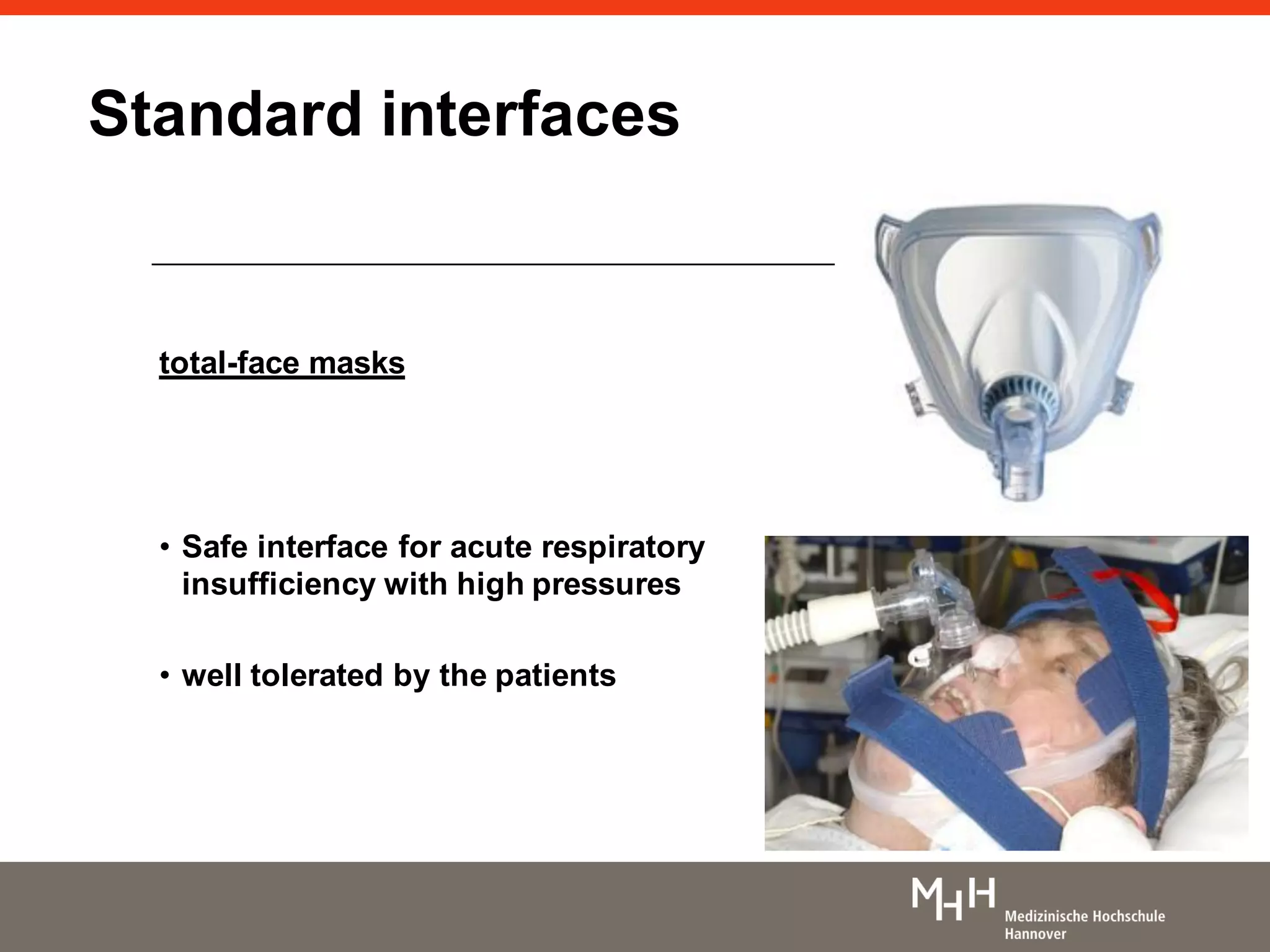
total-face masks
• Safe interface for acute respiratory
insufficiency with high pressures
• well tolerated by the patients
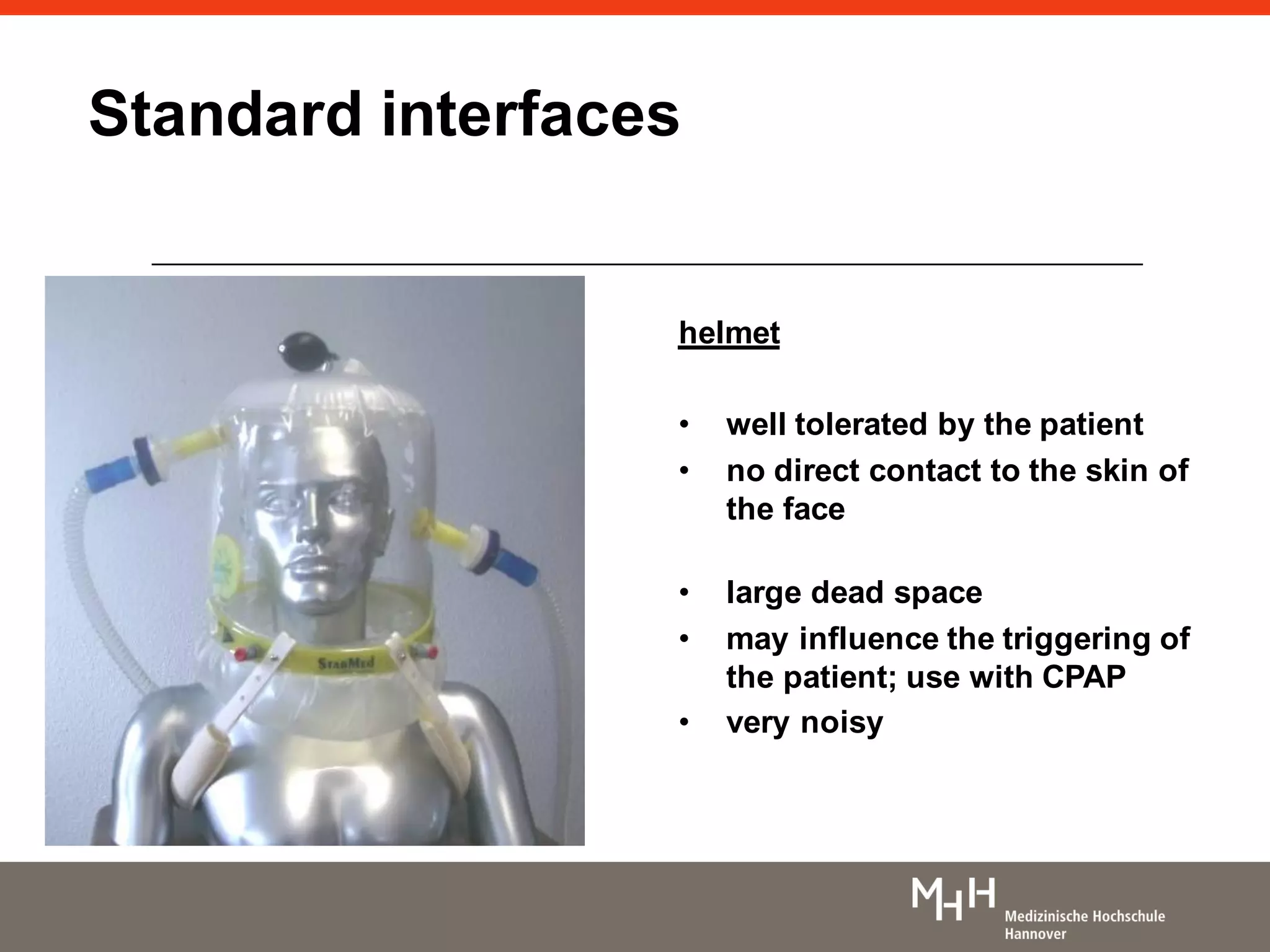
Standard interfaces
helmet
• well tolerated by the patient
• no direct contact to the skin of
the face
• large dead space
• may influence the triggering of
the patient; use with CPAP
• very noisy
Standard interfaces
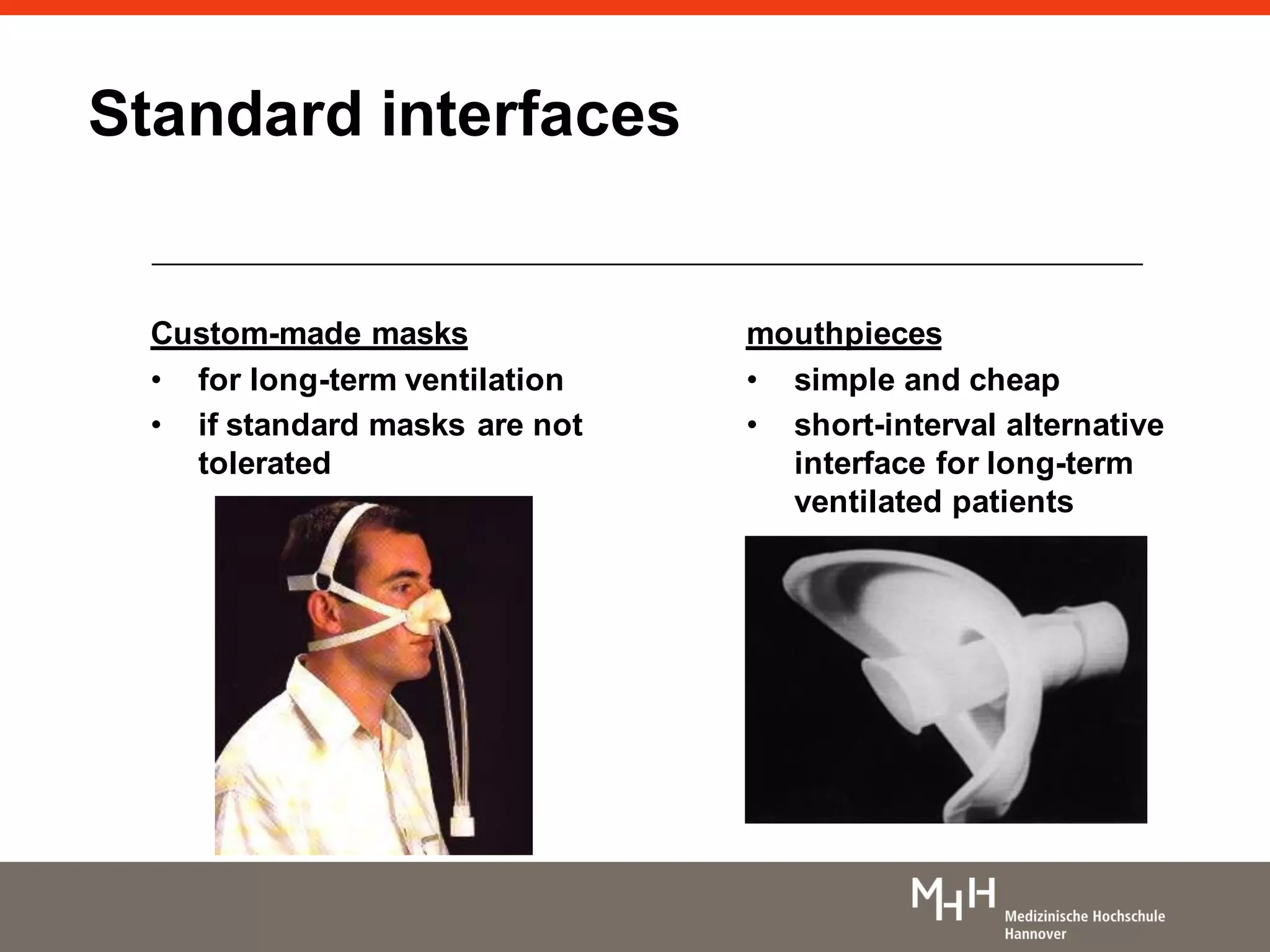
mouthpieces
• simple and cheap
• short-interval alternative
interface for long-term
ventilated patients
Custom-made masks
• for long-term ventilation
• if standard masks are not
tolerated
Standard interfaces
Physiologic evaluation of three
different interfaces
cohort: 26 stable patients with hypercapnic COPD or interstitial lung disease.
intervention: three 30 minute tests in two ventilatory modes with
facial mask / nasal mask / nasal prongs
Conclusions: NIPPV was effective with all interfaces.
patients‘ tolerance: nasal mask > facial mask or nasal prongs
pCO2 reduction: facial mask or nasal prongs > nasal mask
Navalesi P et al. Crit Care Med 2000;28:2139-2140
NIPPV machines
 BiPAP
NIPPV machines
 CPAP machine
Head straps hold the mask in place and are important for
patient comfort.
Straps attach at two to five points, depending
on the type of mask. More points of attachment add to
stability.
Head straps
OXYGENATION AND HUMIDIFICATION
Oxygenis titrated to achievea desired oxygensaturation,
usually greaterthan 90% to 92%
Eitherby usingoxygen
blenderson critical care and somebilevel ventilators or
By adjustingliterflow (up to 15 L/min)deliveredvia oxygentubingconnected
directlyto the mask or ventilatorcircuit.
Bilevel ventilators
have limitedoxygenationcapabilities(maximal inspiredoxygenfraction(%45 to
50)
so ventilatorswith oxygen blendersshouldbe used for patientswith hypoxemic
respiratoryfailure.
A heated humidifiershould be used to prevent dryingof the nasal passageand
oropharynx when the duration of applicationis anticipatedto be more than a
few hours.
MONITORING
Once noninvasive ventilation is initiated, patients should be
closely monitored in a critical care unit or a step-down unit
until they are sufficiently stable to be moved to a regular
medical floor.
The aim of monitoring is
Relief of symptoms, reduced work of breathing, improved or stable
gas exchange, good patient-ventilator synchrony, and patient comfort
A drop in the respiratory rate with improved oxygen saturation or
improving pH with a lower PaCO2, reduce heart rate, within the first
1 to 2 hours portends a successful outcome.
The absence of these propitious signs indicates a poor response to
noninvasive ventilation
MONITORING OF PATIENTS RECEIVING
NON-INVASIVE VENTILATION IN ACUTE CARE SETTINGS
Location
Critical care or step-down unit
Medical or surgical ward if able to breathe unassisted for >20-30 min
"Eyeball“ test
Dyspnea
Comfort (mask, air pressure)
Anxiety
Asynchrony
Leaks
Vital signs
Respiratory and heart rates
Blood pressure
Continuous electrocardiography
Gas exchange
Continuous oximetry
Arterial blood gases (baseline after 2 h ,and as clinically indicated)
ADVERSE EFFECTS AND COMPLICATIONS in
NIV
The mask,
Discomfort and erythema or skin ulcers.
Airflow or pressure,
Conjunctival irritation. Ear pain. nasal or oral dryness .
Nasal congestion and discharge. Gastric insufflation.
Patient-ventilator asynchrony
Caused by high airflow is usually indicative of air leaking
through the mouth.
How do I set the ventilator?
• Bilevel device
–IPAP
–EPAP
–Back up rate
• Adjust according to response /
comfort
• Try to improve SaO2 by  IPAP
First hour……..
*Titrate settings and FiO2.
*Aim to reduce work of breathing /RR.
*Assist patient comfort and tolerate mask.
*Minimal sedation may be used.
*Monitor mental status.
*Intubate if worsening.
*KEEP PATIENT NPO!
*Check ABGs in 1-2 hours.
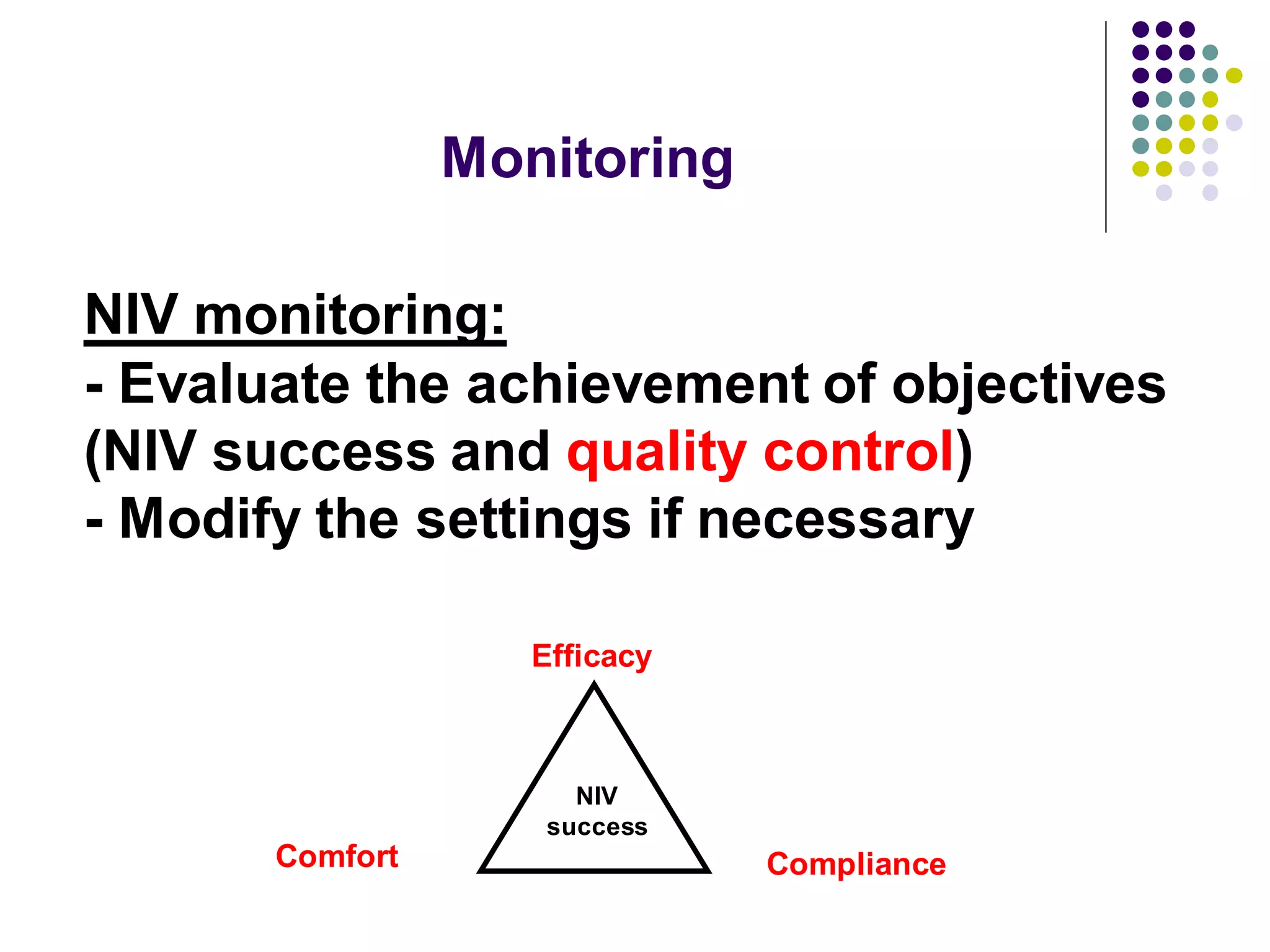
Monitoring
NIV monitoring:
- Evaluate the achievement of objectives
(NIV success and quality control)
- Modify the settings if necessary
Efficacy
Comfort Compliance
NIV
success
How can I monitor a patient with
domiciliary ventilation?
1. Clinical monitoring
2. Technical monitoring
• Nocturnal oximetry
• Expiratory capnography
• Transcutaneous capnography
• Ventilator software
• Polysomnography
Weaning Algorithm
Respir Care 2004. Vol. 49 (1):72-89
NO
Continue with
NPPV therapy
Does
patient meet
weaning guidelines?
 Clinically stable
 RR < 24
 HR < 110
 pH > 7.35
 SpO2 >90%
on< 50% If patient status does
not improved consider
intubation
NO
YES
Restart NPPV at
previous settings
YES
Trial off NPPV with
supplemental
oxygen
Slowly titrate IPAP
downward in decrements
of 2-3 cm H2O
Does
patient demonstrate
clinical evidence
of respiratory
distress?
Discontinue NPPV and place on
supplemental oxygen
NIV Failure: Decide Early
Worsening Encephalopathy or Agitation
Inability to Clear Secretion
Inability to Accept Any Interface
Hemodynamic Instability
Worsening Oxygenation
Progressive Hypercapnia, pH <7.20
Persistent tachypnea /tachycardia
Troubleshooting
pCO2 remained high:
Exclude inappropriately high FiO2
Check mask + circuit for leaks
Check Patient Ventilator Asynchrony Patient
Check expiration valve patent
Increase IPAP
Increase FiO2/EPAPpO2 remained low:
Clinical Deterioration: Consider complications
Optimize medical therapy Consider intubation
Gastric distension: Simethicone /Reduce IPAP.
Irritation or ulceration of nasal bridge:
Adjust strap tension, Try cushion dressing,
Change mask type.
Dry nose or mouth: Add humidifier
Check for leaks.
Dry sore eyes:Check mask fit
Nasal congestion: Decongestants
Hypotension: Reduce IPAP
Troubleshooting
Use of Nasogastric Tubes
Use of nasogastric tubes to take air from
the stomach is controversial
The tube increases leaking around the
mask
The tube itself blocks a nasal passage
Compression of tube against the skin by
the mask may increase risk of skin
breakdown
Criteria for Termination of
NPPV for Invasive Ventilation
Worsening pH and PaCO2
Tachynpnea (> 30 breaths/min)
Hemodynamic instability
SpO2 < 90%
Decreased level of consciousness
Inability to clear secretions
And inability to tolerate interfaces
Noninvasive ventilation as a weaning strategy for mechanical ventilation in
adults with respiratory failure: a Cochrane systematic review
Karen E.A. Burns MD MSc, Maureen O. Meade MD MSc, Azra Premji MSc RRT,
Neill K.J. Adhikari MDCM MSc
CMAJ 2014. DOI:10.1503
Noninvasive weaning reduces rates of death and pneumonia without increasing
the risk of weaning failure or reintubation.In subgroup analyses, mortality benefits
were significantly greater in patients with COPD.
NIV Weaning

NIV Weaning

  • 1.
    By Gamal Agmy,MD,FCCP Professor OfChest Diseases Assiut University
  • 2.
    Introduction * NIPPV isrecent phenomenon, mainly because of advances in noninvasive interfaces and ventilator modes * The efficacy of noninvasive positive-pressure Ventilation has been demonstrated for acute pulmonary edema, for respiratory failure in immunocompromised patients, and to facilitate extubation in COPD patients.
  • 3.
    * Patients whodevelop respiratory failure or who refuse intubation are potentially good candidates for noninvasive positive-pressure ventilation *Several factors are vital to the success of noninvasive positive-pressure ventilation: careful patient selection; properly timed initiation; comfortable, well-fitting interface; coaching and encouragement; and careful monitoring. *Noninvasive ventilation should be used to avert endotracheal intubation rather than as an alternative to it.
  • 4.
    Definition The application ofpositive pressure ventilation without using an endotracheal tube. or As the provision of ventilatory assistance to the lungs without an invasive artificial airway
  • 5.
    History Until the early1960s, negative-pressure ventilation in the form of tank ventilators was the most common type of mechanical ventilation outside the anesthesia suite With the introduction of nasal CPAP to treat obstructive sleep apnea in the early 1980s, NIPPV rapidly displaced negative- pressure ventilation as the treatment of choice for chronic respiratory failure in patients with neuromuscular and chest wall deformities The past 20 years, noninvasive ventilation has moved from the outpatient to the inpatient setting, where it is used to treat acute respiratory failure.
  • 6.
  • 7.
    Advantage(NIPPV) *Decreased direct upperairway trauma & bypass of the upper airway defense mechanisms *Allows patients to eat orally, vocalize normally, and expectorate secretions. * Noninvasive ventilation reduces infectious hospital including pneumonia,sinusitis, and sepsis. * lowers morbidity and mortality * Shorten hospital length of stay, thus reducing costs.
  • 8.
    Goals of NIV Relieve symptoms  Reduce work of breathing  Offset the effect of i PEEP  Improve gas exchange  Minimize risk of barotrauma  Avoid intubation
  • 9.
    Indication Airway Obstruction  COPD Asthma  Cystic fibrosis  Obstructive sleep apnea or obesity hypoventilation  Upper airway obstruction  Facilitation of weaning in COPD  Extubation failure in COPD
  • 10.
    Indication Hypoxemic Respiratory Failure ARDS  Pneumonia  Trauma or burns  Acute pulmonary edema (use of CPAP)  Immuno compromised patients  Restrictive thoracic disorders  Post operative patients  Do-not-intubate patients  During bronchoscopy
  • 11.
    Exclusion Criteria 1. Respiratoryarrest 2. Medically unstable 3. Unconscious, unable to protect airways 4. Excessive secretions 5. Significant vomiting 6. Agitated or uncooperative 7. Facial trauma, burns, surgery or anatomic abnormalities interfering with mask application
  • 12.
    PATIENT SELECTION Primary-step Identify patientsin need of ventilatory assistance by using clinical and blood gas criteria. Good candidates are those with moderate to severe dyspnea, tachypnea, and impending respiratory muscle fatigue( use of accessory muscles of breathing or abdominal paradox). The level of tachypnea ( COPD when the respiratory rate exceeds 24 breaths per minute & hypoxemic respiratory failure, higher respiratory rates are used, in the range of 30 to 35 breaths per minute.
  • 13.
    second step Exclude patientsfor whom noninvasive ventilation would be unsafe. Those with frank or imminent respiratory arrest Patients who are medically unstable with hypotensive shock, uncontrolled upper gastrointestinal bleeding, unstable arrhythmias, or life-threatening ischemia . who are uncooperative, unable to adequately protect their upper airway or clear
  • 14.
    PREDICTORS OF SUCCESSDURING ACUTE APPLICATIONS OF NPPV  Younger age  Lower acuity of illness (APACHE score)  Able to cooperate; better neurologic score  Able to coordinate breathing with ventilator  Less air leaking, intact dentition  Hypercarbia, but not too severe (PaCO2 > 45 mm Hg, < 92 mm Hg)  Acidemia, but not too severe (pH < 7.35, > 7.10)  Improvements in gas exchange and pulse and respiratory rates within first 1-2 h
  • 15.
    INITIATION OF NONINVASIVEVENTILATION 1-Appropriate candidate selected, 2-Ventilator and interface must be chosen, 3-Ventilator settings must be selected, 4-Location ( Icu or step-down unit that offers adequate continuous monitoring until stabilized)
  • 16.
    Comporison of Noninvasivemechanical ventilators with standard critical care ventilators NIMV offers a more portable technology due to the reduced size of the air compressor. Because of this reduction in size, these noninvasive ventilators do not develop pressures as high as their critical care ventilator counterparts. (>30 cm H20) Noninvasive ventilators have a single-limb tubing circuit that delivers oxygen to the patient and allows for exhalation. lack oxygen blenders or sophisticated alarm or battery backup systems
  • 17.
    Modes of NoninvasiveMechanical Ventilation * volume ventilation, initial tidal volumes range from 10 to 15 mL.kg. 1-Pressure modes 2-volume modes Pressure-cycled vents are better tolerated than volume-cycled vents
  • 18.
    Pressure modes **Continuous PositiveAirway Pressure(CPAP) Continuous positive airway pressure (CPAP) is not NIV It provides positive airway pressure throughout the respiratory cycle. This static, positive pressure is maintained constantly during inhalation and exhalation CPAP is not a stand-alone mode of assisted mechanical ventilation. It is equivalent to positive end-expiratory pressure (PEEP) and facilitates inhalation by reducing pressure thresholds to initiate airflow. This mode should never be used in patients who may have apneic episodes because of the lack of a backup rate.
  • 19.
    Pressure modes Spontaneous Modes Inspontaneous mode, the airway pressure cycles between an inspiratory positive airway pressure (IPAP) and an expiratory positive airway pressure (EPAP). This is commonly referred to as bilevel or biphasic positive airway pressure (BL-PAP or BiPAP). The patient's inspiratory effort triggers the switch from EPAP to IPAP. The limit during inspiration is the set level of IPAP. The inspiratory phase cycles off, and the machine switches back to EPAP when it detects a cessation of patient effort, indicated by a decrease in inspiratory flow rate, or a maximum inspiratory time is reached, typically 2-3 seconds. Tidal volume (Vt) varies breath to breath and is determined by degree of IPAP, patient effort, and lung compliance. Spontaneous mode depends on patient effort to trigger inhalation. A patient breathing at a low rate can develop a respiratory acidosis.
  • 20.
    Spontaneous/timed (ST) mode Thetrigger in the ST mode can be the patient's effort or an elapsed time interval, predetermined by a set respiratory backup rate. If the patient does not initiate a breath in the prescribed interval, then IPAP is triggered. For machine-generated breaths, the ventilator cycles back to EPAP based on a set inspiratory time. For patient-initiated breaths, the ventilator cycles as it would in the spontaneous mode. Pressure modes
  • 21.
    Conceptually: One can considerBiPAP as PEEP with pressure support (PS). The pressure during the inspiratory phase is termed IPAP and is analogous to PS. The pressure during the expiratory phase is termed EPAP and is analogous to PEEP. The IPAP is necessarily set higher than EPAP by a minimum of 5cm H2O, and the difference between the two settings is equivalent to the amount of PS provided
  • 22.
    Initiating Noninvasive MechanicalVentilation Either a face mask or a nasal mask can be used, but a nasal mask is generally better tolerated. A respiratory therapist must measure the patient to ensure a good fit and seal. Initially supply 3 to 5 cm H2O of CPAP with supplemental oxygen. sequentially increase the CPAP pressure by 2 to 3 cm H2O increments every 5 to 10 minutes (ABG-Pulse oximetry) Recommended initial settings for BiPAP machines in the noninvasive support of patients in respiratory distress or failure are IPAP of 8 cm H2O and EPAP of 3 cm H2O, for a pressure support (IPAP minus EPAP) of 5 cm H2O. The level of supplemental oxygen flowing into the circuit should be governed by goal pulse oximetry and corroborated by ABG results as necessary; it is appropriate to initiate therapy with 2 to 5 L/minute, but this amount should be adjusted with each titration of IPAP or EPAP.
  • 23.
    The intrinsic positiveend-expiratory pressure (PEEPi), or auto-PEEP, cannot be measured by a noninvasive ventilator; therefore, EPAP should generally be maintained below 8 to 10 cm H2O to be certain that it does not exceed PEEPi in patients with obstructive lung disease. The IPAP must always be set higher than EPAP Conceptually:
  • 24.
    Pressure pre-set (PCV/PSV) Varying inspiratoryvolume, Constant inspiratory pressure Advantage: Compensation for leakage, Best tolerated Disadvantage: Instability of tidal volume in case of increased airway resistance Volume pre-set (VCV) Constant inspiratory volume, Varying inspiratory pressure Advantage: Stability of tidal volume even in case of increased airway resistance Disadvantage: high inspiratory pressure, No leak compensation
  • 25.
    Volume versus pressure: Nodifferences in: • Improvements in sleep quality • Improvements in blood gases But: • More side effects during volume pre-set Windisch W. et al. Respir Med 2005; 99: 52-59
  • 26.
    Volume versus pressure: Nodifferences in: • Sleep quality • Blood gases • Quality of life • Physical activity • Spontaneous breathing Tuggey JM et al. Thorax 2005; 60: 859-864
  • 27.
    Hybird modes combine theadvantages of pressure pre-set and volume- pre-set AVAPS Average Volume Assured Pressure Support• Automatic adjustment of inspiratory pressure (range setting) • Target volume set • Measurement of inspiratory pressure and expiratory volume • Calculation of missing patient tidal volume • Changes of inspiratory pressure (1 cmH2O/min) Assurance of tidal volume + comfort of pressure pre-set
  • 28.
  • 29.
  • 30.
    Management Strategies  COPD –Main goal to decrease work of breathing (decreasing V/Q mismatch) and provide adequate ventilation – Relatively low EPAP: 5-8cm H2O (assuming no obesity or sleep disordered breathing) – Relatively moderate IPAP+EPAP: 10-14cm H2O – Goal to have at least a 5cm H2O differential between EPAP and IPAP+EPAP; may need to go higher depending on ventilation requirements » ie BiPAP 14/10or 8/5
  • 31.
    From a CochraneReview  A meta-analysis of 14 studies of NIV in COPD exacerb showed:   mortality ( RR 0.52 )   need for intubation ( RR 0.41 )   pCO2, and resp rate faster   length of stay by 3.24 days   complications of treatments
  • 32.
    Management Strategies  CHF –Goal is to decrease work of breathing, decrease afterload and decrease overall static pressure – Relatively moderate EPAP: 6-12 cm H2O – Relatively low IPAP+EPAP: 12-18cm H2O – Patient will benefit mostly with EPAP unless other concurrent disease ( COPD, Obesity- Hypoventilation) » Typical starting point: BiPAP 10/6
  • 33.
    Management Strategies  Obesity-HypoventilationSyndrome – Goal of therapy is to decrease work of breathing and increase ventilation – Combined disease as >90% will also have concurrent Obstraction sleep Apnea(OSA) – EPAP: usually on the higher side; enough to overcome OSA and cardiopulm disease: ~10cmH2O, more for bigger individuals – IPAP+EPAP: at least a 4cm H2O differential – Need to adjust according to ventilation requirements; may benefit from back up rate
  • 34.
    Management Strategies  SleepDisordered Breathing – Most often post-op with known OSA or as a complication associated with admit (CHF or Obesity-Hypoventilation) – For elective admit with known OSA: usual CPAP/BiPAP unless physiologic changes with acute illness, surgery or narcotics.
  • 35.
    Management Strategies  NeuromuscularDisease – Goal to decrease work of breathing, decrease fatigue, assist ventilation – EPAP: usually low; 4-5cm H2O – IPAP+EPAP: at least 4cmH2O differential – May benefit from backup rate
  • 36.
    Management Strategies  Othercauses of respiratory failure – Pneumonia/ARDS – Cancer and respiratory failure – Post-op management » Settings depend on disease and other cardiopulmonary disease » Most often used as a bridge to mechanical ventilation or for pts DNR/DNI » Usually moderate settings: 12/8 or 14/8
  • 37.
    The device thatmakes physical contact between the patient and the ventilator is termed the interface. Interfaces for NPPV come in a variety of shapes and sizes Include: Nasal mask,Nasal pillow, Oronasal mask (face mask) or the helmet. Ideally, interfaces should be comfortable, offer a good seal, minimize leak, and limit dead space. Interface *Definition:
  • 38.
    Standard interfaces Facial masks advantages: –sufficient ventilation also during mouth breathing – sufficient ventilation in patients with limited co-operation disadvantages: – coughing is difficult – skin lesions (bridge of the nose)
  • 39.
    Nasal masks advantages: – bettercomfort – good seal – coughing is possible – communication is possible disadvantages: – effective in nose breathing only – good co-operation is necessary Standard interfaces
  • 40.
    Nasal prong/nasal pillowsystems for patients with claustrophobia for patients with allergies against straps for low to moderate pressures only (< 20 cmH2O) Standard interfaces
  • 41.
    total-face masks • Safeinterface for acute respiratory insufficiency with high pressures • well tolerated by the patients Standard interfaces
  • 42.
    helmet • well toleratedby the patient • no direct contact to the skin of the face • large dead space • may influence the triggering of the patient; use with CPAP • very noisy Standard interfaces
  • 43.
    mouthpieces • simple andcheap • short-interval alternative interface for long-term ventilated patients Custom-made masks • for long-term ventilation • if standard masks are not tolerated Standard interfaces
  • 44.
    Physiologic evaluation ofthree different interfaces cohort: 26 stable patients with hypercapnic COPD or interstitial lung disease. intervention: three 30 minute tests in two ventilatory modes with facial mask / nasal mask / nasal prongs Conclusions: NIPPV was effective with all interfaces. patients‘ tolerance: nasal mask > facial mask or nasal prongs pCO2 reduction: facial mask or nasal prongs > nasal mask Navalesi P et al. Crit Care Med 2000;28:2139-2140
  • 45.
  • 46.
  • 47.
    Head straps holdthe mask in place and are important for patient comfort. Straps attach at two to five points, depending on the type of mask. More points of attachment add to stability. Head straps
  • 48.
    OXYGENATION AND HUMIDIFICATION Oxygenistitrated to achievea desired oxygensaturation, usually greaterthan 90% to 92% Eitherby usingoxygen blenderson critical care and somebilevel ventilators or By adjustingliterflow (up to 15 L/min)deliveredvia oxygentubingconnected directlyto the mask or ventilatorcircuit. Bilevel ventilators have limitedoxygenationcapabilities(maximal inspiredoxygenfraction(%45 to 50) so ventilatorswith oxygen blendersshouldbe used for patientswith hypoxemic respiratoryfailure. A heated humidifiershould be used to prevent dryingof the nasal passageand oropharynx when the duration of applicationis anticipatedto be more than a few hours.
  • 49.
    MONITORING Once noninvasive ventilationis initiated, patients should be closely monitored in a critical care unit or a step-down unit until they are sufficiently stable to be moved to a regular medical floor. The aim of monitoring is Relief of symptoms, reduced work of breathing, improved or stable gas exchange, good patient-ventilator synchrony, and patient comfort A drop in the respiratory rate with improved oxygen saturation or improving pH with a lower PaCO2, reduce heart rate, within the first 1 to 2 hours portends a successful outcome. The absence of these propitious signs indicates a poor response to noninvasive ventilation
  • 50.
    MONITORING OF PATIENTSRECEIVING NON-INVASIVE VENTILATION IN ACUTE CARE SETTINGS Location Critical care or step-down unit Medical or surgical ward if able to breathe unassisted for >20-30 min "Eyeball“ test Dyspnea Comfort (mask, air pressure) Anxiety Asynchrony Leaks Vital signs Respiratory and heart rates Blood pressure Continuous electrocardiography Gas exchange Continuous oximetry Arterial blood gases (baseline after 2 h ,and as clinically indicated)
  • 51.
    ADVERSE EFFECTS ANDCOMPLICATIONS in NIV The mask, Discomfort and erythema or skin ulcers. Airflow or pressure, Conjunctival irritation. Ear pain. nasal or oral dryness . Nasal congestion and discharge. Gastric insufflation. Patient-ventilator asynchrony Caused by high airflow is usually indicative of air leaking through the mouth.
  • 52.
    How do Iset the ventilator? • Bilevel device –IPAP –EPAP –Back up rate • Adjust according to response / comfort • Try to improve SaO2 by  IPAP
  • 53.
    First hour…….. *Titrate settingsand FiO2. *Aim to reduce work of breathing /RR. *Assist patient comfort and tolerate mask. *Minimal sedation may be used. *Monitor mental status. *Intubate if worsening. *KEEP PATIENT NPO! *Check ABGs in 1-2 hours.
  • 54.
    Monitoring NIV monitoring: - Evaluatethe achievement of objectives (NIV success and quality control) - Modify the settings if necessary Efficacy Comfort Compliance NIV success
  • 55.
    How can Imonitor a patient with domiciliary ventilation? 1. Clinical monitoring 2. Technical monitoring • Nocturnal oximetry • Expiratory capnography • Transcutaneous capnography • Ventilator software • Polysomnography
  • 56.
    Weaning Algorithm Respir Care2004. Vol. 49 (1):72-89 NO Continue with NPPV therapy Does patient meet weaning guidelines?  Clinically stable  RR < 24  HR < 110  pH > 7.35  SpO2 >90% on< 50% If patient status does not improved consider intubation NO YES Restart NPPV at previous settings YES Trial off NPPV with supplemental oxygen Slowly titrate IPAP downward in decrements of 2-3 cm H2O Does patient demonstrate clinical evidence of respiratory distress? Discontinue NPPV and place on supplemental oxygen
  • 57.
    NIV Failure: DecideEarly Worsening Encephalopathy or Agitation Inability to Clear Secretion Inability to Accept Any Interface Hemodynamic Instability Worsening Oxygenation Progressive Hypercapnia, pH <7.20 Persistent tachypnea /tachycardia
  • 58.
    Troubleshooting pCO2 remained high: Excludeinappropriately high FiO2 Check mask + circuit for leaks Check Patient Ventilator Asynchrony Patient Check expiration valve patent Increase IPAP Increase FiO2/EPAPpO2 remained low: Clinical Deterioration: Consider complications Optimize medical therapy Consider intubation
  • 59.
    Gastric distension: Simethicone/Reduce IPAP. Irritation or ulceration of nasal bridge: Adjust strap tension, Try cushion dressing, Change mask type. Dry nose or mouth: Add humidifier Check for leaks. Dry sore eyes:Check mask fit Nasal congestion: Decongestants Hypotension: Reduce IPAP Troubleshooting
  • 60.
    Use of NasogastricTubes Use of nasogastric tubes to take air from the stomach is controversial The tube increases leaking around the mask The tube itself blocks a nasal passage Compression of tube against the skin by the mask may increase risk of skin breakdown
  • 61.
    Criteria for Terminationof NPPV for Invasive Ventilation Worsening pH and PaCO2 Tachynpnea (> 30 breaths/min) Hemodynamic instability SpO2 < 90% Decreased level of consciousness Inability to clear secretions And inability to tolerate interfaces
  • 62.
    Noninvasive ventilation asa weaning strategy for mechanical ventilation in adults with respiratory failure: a Cochrane systematic review Karen E.A. Burns MD MSc, Maureen O. Meade MD MSc, Azra Premji MSc RRT, Neill K.J. Adhikari MDCM MSc CMAJ 2014. DOI:10.1503 Noninvasive weaning reduces rates of death and pneumonia without increasing the risk of weaning failure or reintubation.In subgroup analyses, mortality benefits were significantly greater in patients with COPD.