Antibiotic Strategy in
CAP &AECOPD
Gamal Rabie Agmy, MD, FCCP
Professor of Chest Diseases , Assiut University
ANTIMICROBIAL DRUGS
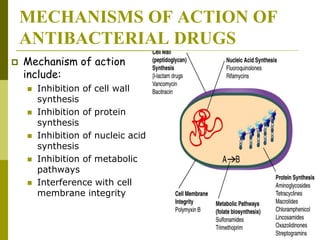
MECHANISMS OF ACTION OF
ANTIBACTERIAL DRUGS
 Mechanism of action
include:
 Inhibition of cell wall
synthesis
 Inhibition of protein
synthesis
 Inhibition of nucleic acid
synthesis
 Inhibition of metabolic
pathways
 Interference with cell
membrane integrity
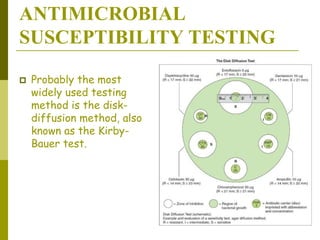
ANTIMICROBIAL
SUSCEPTIBILITY TESTING
 Probably the most
widely used testing
method is the disk-
diffusion method, also
known as the Kirby-
Bauer test.
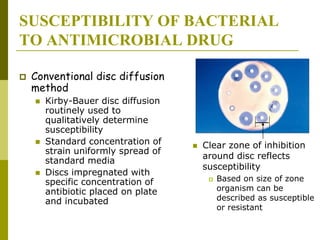
SUSCEPTIBILITY OF BACTERIAL
TO ANTIMICROBIAL DRUG
 Conventional disc diffusion
method
 Kirby-Bauer disc diffusion
routinely used to
qualitatively determine
susceptibility
 Standard concentration of
strain uniformly spread of
standard media
 Discs impregnated with
specific concentration of
antibiotic placed on plate
and incubated
 Clear zone of inhibition
around disc reflects
susceptibility
 Based on size of zone
organism can be
described as susceptible
or resistant
Antibacterial spectrum—Range of activity
of an antimicrobial against bacteria. A
broad-spectrum antibacterial drug can
inhibit a wide variety of gram-positive and
gram-negative bacteria, whereas a
narrow-spectrum drug is active only
against a limited variety of bacteria.
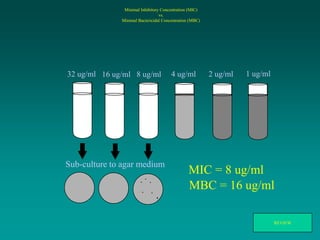
Bacteriostatic activity—-The level of
antimicro-bial activity that inhibits the
growth of an organism. This is determined
in vitro by testing a standardized
concentration of organisms against a
series of antimicrobial dilutions. The
lowest concentration that inhibits the
growth of the organism is referred to as
the minimum inhibitory concentration
(MIC).
Bactericidal activity—The level of
antimicrobial activity that kills the test
organism. This is determined in vitro by
exposing a standardized concentration of
organisms to a series of antimicrobial
dilutions. The lowest concentration that
kills 99.9% of the population is referred to
as the minimum bactericidal
concentration (MBC).
Antibiotic combinations—Combinations of
antibiotics that may be used (1) to broaden
the antibacterial spectrum for empiric
therapy or the treatment of polymicrobial
infections, (2) to prevent the emergence of
resistant organisms during therapy, and (3)
to achieve a synergistic killing effect.
Antibiotic synergism—Combinations of
two antibiotics that have enhanced
bactericidal activity when tested together
compared with the activity of each
antibiotic.
Antibiotic antagonism—Combination of
antibiotics in which the activity of one
antibiotic interferes With the activity of the
other (e.g., the sum of the activity is less
than the activity of the individual drugs).
Beta-lactamase—An enzyme that
hydrolyzes the beta-lactam ring in the
beta-lactam class of antibiotics, thus
inactivating the antibiotic. The enzymes
specific for penicillins and cephalosporins
aret he penicillinases and
cephalosporinases, respectively.
32 ug/ml 16 ug/ml 8 ug/ml 4 ug/ml 2 ug/ml 1 ug/ml
Sub-culture to agar medium
MIC = 8 ug/ml
MBC = 16 ug/ml
Minimal Inhibitory Concentration (MIC)
vs.
Minimal Bactericidal Concentration (MBC)
REVIEW
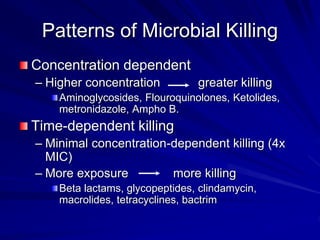
Patterns of Microbial Killing
Concentration dependent
– Higher concentration greater killing
Aminoglycosides, Flouroquinolones, Ketolides,
metronidazole, Ampho B.
Time-dependent killing
– Minimal concentration-dependent killing (4x
MIC)
– More exposure more killing
Beta lactams, glycopeptides, clindamycin,
macrolides, tetracyclines, bactrim
EFFECTS OF
COMBINATIONS OF DRUGS
 Sometimes the chemotherapeutic effects of
two drugs given simultaneously is greater than
the effect of either given alone.
 This is called synergism. For example,
penicillin and streptomycin in the treatment
of bacterial endocarditis. Damage to
bacterial cell walls by penicillin makes it
easier for streptomycin to enter.
EFFECTS OF
COMBINATIONS OF DRUGS
 Other combinations of drugs can be
antagonistic.
 For example, the simultaneous use of penicillin
and tetracycline is often less effective than
when wither drugs is used alone. By stopping
the growth of the bacteria, the
bacteriostatic drug tetracycline interferes
with the action of penicillin, which requires
bacterial growth.
EFFECTS OF
COMBINATIONS OF DRUGS
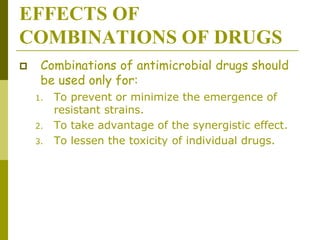
 Combinations of antimicrobial drugs should
be used only for:
1. To prevent or minimize the emergence of
resistant strains.
2. To take advantage of the synergistic effect.
3. To lessen the toxicity of individual drugs.
Resistance
Physiological Mechanisms
1. Lack of entry – tet, fosfomycin
2. Greater exit
 efflux pumps
 tet (R factors)
3. Enzymatic inactivation
 bla (penase) – hydrolysis
 CAT – chloramphenicol acetyl transferase
 Aminogylcosides & transferases
REVIEW
Resistance
Physiological Mechanisms
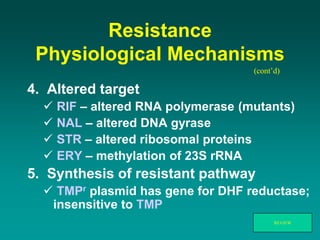
4. Altered target
 RIF – altered RNA polymerase (mutants)
 NAL – altered DNA gyrase
 STR – altered ribosomal proteins
 ERY – methylation of 23S rRNA
5. Synthesis of resistant pathway
 TMPr plasmid has gene for DHF reductase;
insensitive to TMP
(cont’d)
REVIEW
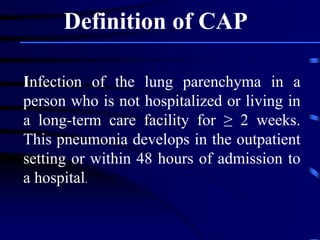
Infection of the lung parenchyma in a
person who is not hospitalized or living in
a long-term care facility for ≥ 2 weeks.
This pneumonia develops in the outpatient
setting or within 48 hours of admission to
a hospital.
Definition of CAP
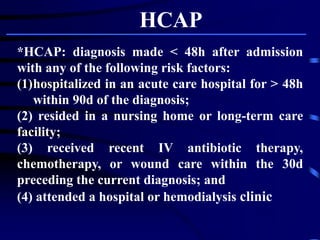
*HCAP: diagnosis made < 48h after admission
with any of the following risk factors:
(1)hospitalized in an acute care hospital for > 48h
within 90d of the diagnosis;
(2) resided in a nursing home or long-term care
facility;
(3) received recent IV antibiotic therapy,
chemotherapy, or wound care within the 30d
preceding the current diagnosis; and
(4) attended a hospital or hemodialysis clinic
HCAP
The clinical diagnosis of CAP
Symptoms:
May be preceded by URTI
• Respiratory: Cough dry or productive,
mucopurulent sputum , sometimes rusty, dyspnea,
sometimes pleuritic chest pain
• Non-respiratory: Fever, body aches, altered mental
state, vomiting or diarrhea.
The clinical diagnosis of CAP
Signs:
Generally: Fever, sometimes hypothermia,
tachycardia, tachypnea.
Local: signs of consolidation
Severity of CAP
22
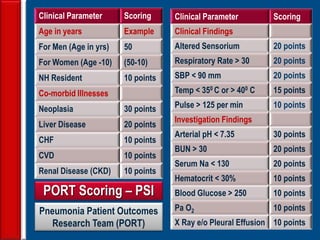
PORT Scoring – PSI
Clinical Parameter Scoring
Age in years Example
For Men (Age in yrs) 50
For Women (Age -10) (50-10)
NH Resident 10 points
Co-morbid Illnesses
Neoplasia 30 points
Liver Disease 20 points
CHF 10 points
CVD 10 points
Renal Disease (CKD) 10 points
Clinical Parameter Scoring
Clinical Findings
Altered Sensorium 20 points
Respiratory Rate > 30 20 points
SBP < 90 mm 20 points
Temp < 350 C or > 400 C 15 points
Pulse > 125 per min 10 points
Investigation Findings
Arterial pH < 7.35 30 points
BUN > 30 20 points
Serum Na < 130 20 points
Hematocrit < 30% 10 points
Blood Glucose > 250 10 points
Pa O2 10 points
X Ray e/o Pleural Effusion 10 points
Pneumonia Patient Outcomes
Research Team (PORT)
23
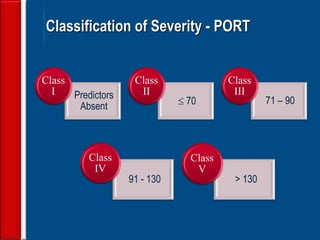
Classification of Severity - PORT
Predictors
Absent
Class
I
 70
Class
II
71 – 90
Class
III
91 - 130
Class
IV
> 130
Class
V
24
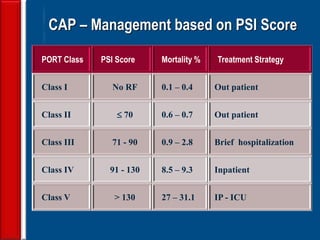
CAP – Management based on PSI Score
PORT Class PSI Score Mortality % Treatment Strategy
Class I No RF 0.1 – 0.4 Out patient
Class II  70 0.6 – 0.7 Out patient
Class III 71 - 90 0.9 – 2.8 Brief hospitalization
Class IV 91 - 130 8.5 – 9.3 Inpatient
Class V > 130 27 – 31.1 IP - ICU
25
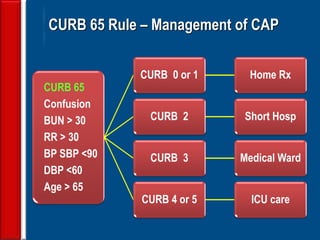
CURB 65 Rule – Management of CAP
CURB 65
Confusion
BUN > 30
RR > 30
BP SBP <90
DBP <60
Age > 65
CURB 0 or 1 Home Rx
CURB 2 Short Hosp
CURB 3 Medical Ward
CURB 4 or 5 ICU care
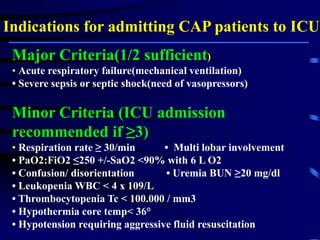
Indications for admitting CAP patients to ICU
Major Criteria(1/2 sufficient)
• Acute respiratory failure(mechanical ventilation)
• Severe sepsis or septic shock(need of vasopressors)
Minor Criteria (ICU admission
recommended if ≥3)
• Respiration rate ≥ 30/min • Multi lobar involvement
• PaO2:FiO2 ≤250 +/-SaO2 <90% with 6 L O2
• Confusion/ disorientation • Uremia BUN ≥20 mg/dl
• Leukopenia WBC < 4 x 10⁹/L
• Thrombocytopenia Tc < 100.000 / mm3
• Hypothermia core temp< 36°
• Hypotension requiring aggressive fluid resuscitation
27
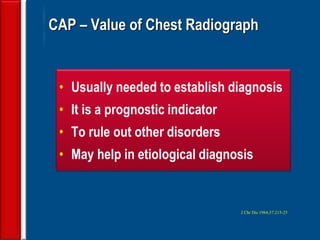
CAP – Value of Chest Radiograph
• Usually needed to establish diagnosis
• It is a prognostic indicator
• To rule out other disorders
• May help in etiological diagnosis
J Chr Dis 1984;37:215-25
28
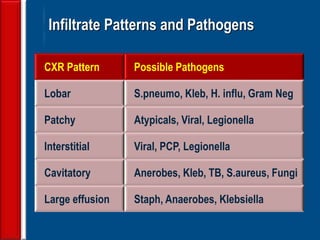
Infiltrate Patterns and Pathogens
CXR Pattern Possible Pathogens
Lobar S.pneumo, Kleb, H. influ, Gram Neg
Patchy Atypicals, Viral, Legionella
Interstitial Viral, PCP, Legionella
Cavitatory Anerobes, Kleb, TB, S.aureus, Fungi
Large effusion Staph, Anaerobes, Klebsiella
29
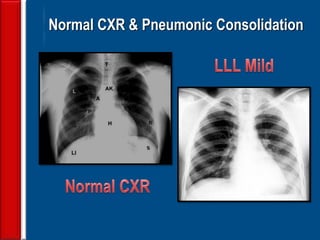
Normal CXR & Pneumonic Consolidation
30
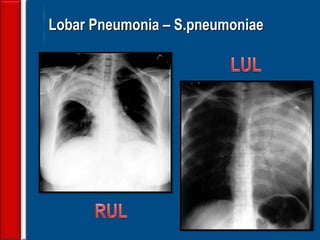
Lobar Pneumonia – S.pneumoniae
31
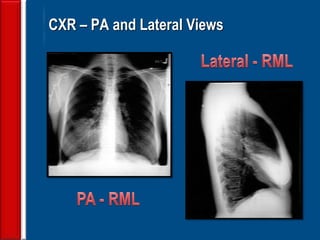
CXR – PA and Lateral Views
32
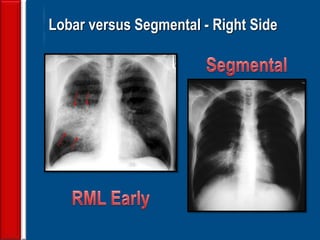
Lobar versus Segmental - Right Side
33
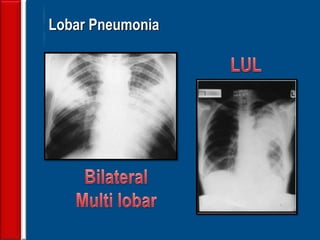
Lobar Pneumonia
34
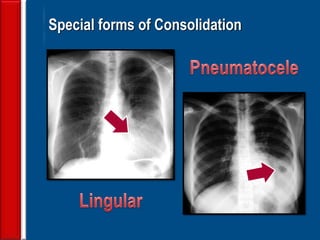
Special forms of Consolidation
35
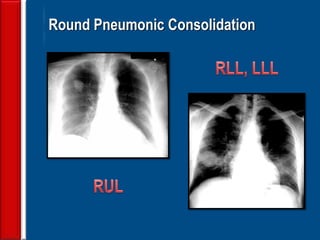
Round Pneumonic Consolidation
36
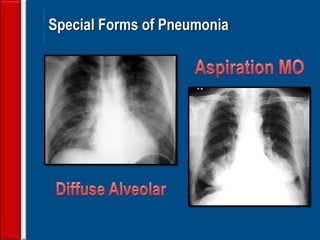
Special Forms of Pneumonia
37
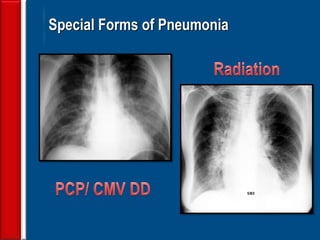
Special Forms of Pneumonia
38
Complications of Pneumonia
39
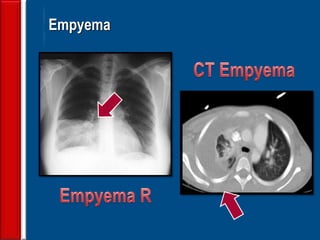
Empyema
40
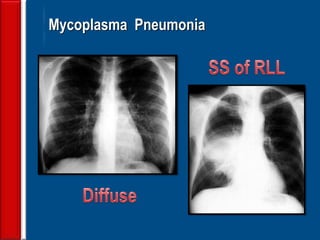
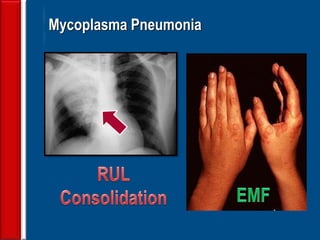
Mycoplasma Pneumonia
41
Mycoplasma Pneumonia
42
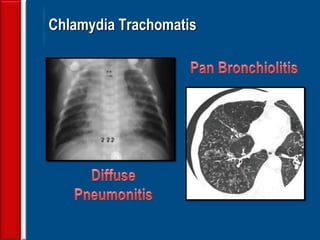
Chlamydia Trachomatis
43
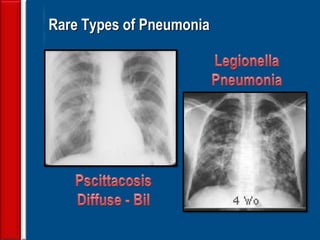
Rare Types of Pneumonia
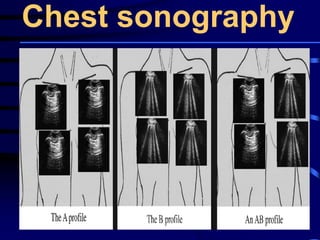
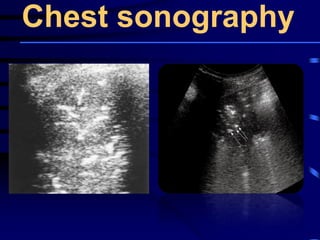
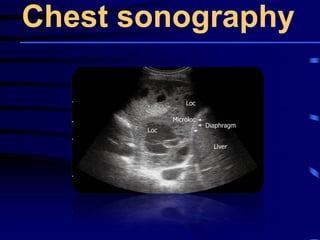
Chest sonography
Chest sonography
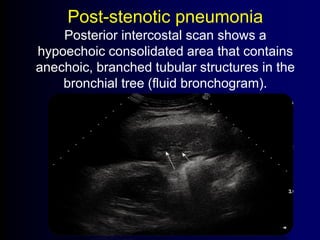
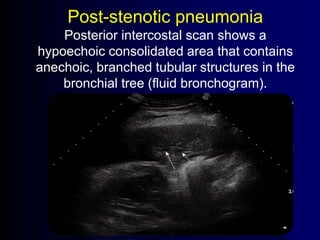
Post-stenotic pneumonia
Posterior intercostal scan shows a
hypoechoic consolidated area that contains
anechoic, branched tubular structures in the
bronchial tree (fluid bronchogram).
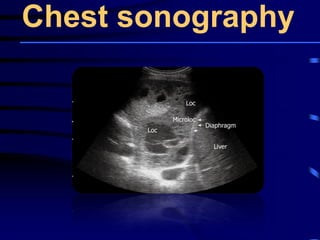
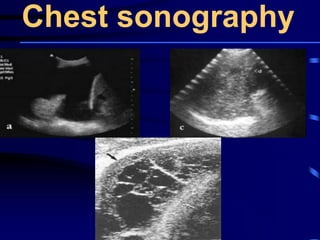
Chest sonography
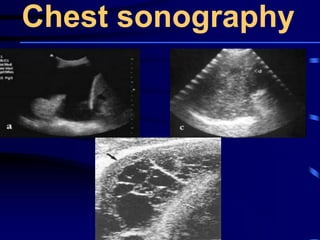
Chest sonography
49
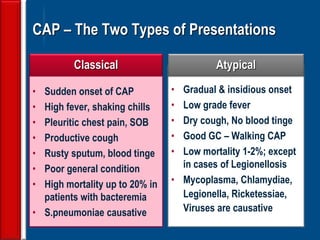
CAP – The Two Types of Presentations
Classical
• Sudden onset of CAP
• High fever, shaking chills
• Pleuritic chest pain, SOB
• Productive cough
• Rusty sputum, blood tinge
• Poor general condition
• High mortality up to 20% in
patients with bacteremia
• S.pneumoniae causative
• Gradual & insidious onset
• Low grade fever
• Dry cough, No blood tinge
• Good GC – Walking CAP
• Low mortality 1-2%; except
in cases of Legionellosis
• Mycoplasma, Chlamydiae,
Legionella, Ricketessiae,
Viruses are causative
Atypical
50
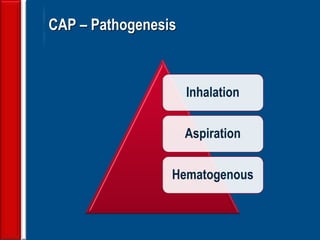
CAP – Pathogenesis
Inhalation
Aspiration
Hematogenous
51
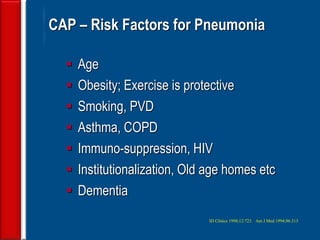
 Age
 Obesity; Exercise is protective
 Smoking, PVD
 Asthma, COPD
 Immuno-suppression, HIV
 Institutionalization, Old age homes etc
 Dementia
CAP – Risk Factors for Pneumonia
ID Clinics 1998;12:723. Am J Med 1994;96:313
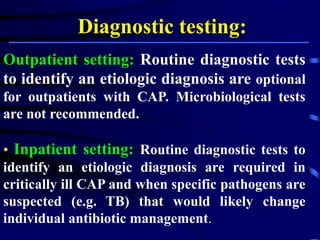
Diagnostic testing:
Outpatient setting: Routine diagnostic tests
to identify an etiologic diagnosis are optional
for outpatients with CAP. Microbiological tests
are not recommended.
• Inpatient setting: Routine diagnostic tests to
identify an etiologic diagnosis are required in
critically ill CAP and when specific pathogens are
suspected (e.g. TB) that would likely change
individual antibiotic management.
Cultures to identify the causative organism:
Sputum cultures are not recommended in
cases of CAP except in certain occasions:
• Patients admitted in hospital or ICU.
• Patients who do not respond to empirical
antibiotic therapy.
• Suspect of resistant strains of S.pneumoniae.
Sputum Gram stain
is a rapid and inexpensive test that can
help a lot:
• Differentiate Gm –ve from Gm +ve bacteria.
• Excess pus cells without organism suspect
atypical infection.
Blood Culture
:
Recommended for all patients with moderate and
high severity CAP, preferably before antibiotic
therapy is commenced.
Examination of sputum for Mycobacterium
Tuberculosis should be considered for patients
with a persistent productive cough, especially
if malaise, weight loss or night sweats, or risk
factors for tuberculosis (e.g., ethnic origin,
social deprivation, elderly) are present.
57
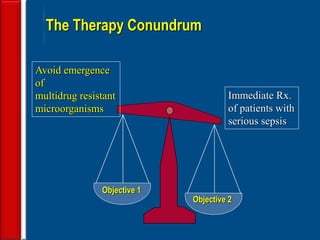
Objective 2
Objective 1
Avoid emergence
of
multidrug resistant
microorganisms
Immediate Rx.
of patients with
serious sepsis
The Therapy Conundrum
58
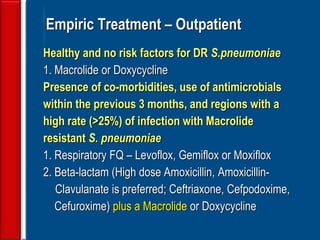
Empiric Treatment – Outpatient
Healthy and no risk factors for DR S.pneumoniae
1. Macrolide or Doxycycline
Presence of co-morbidities, use of antimicrobials
within the previous 3 months, and regions with a
high rate (>25%) of infection with Macrolide
resistant S. pneumoniae
1. Respiratory FQ – Levoflox, Gemiflox or Moxiflox
2. Beta-lactam (High dose Amoxicillin, Amoxicillin-
Clavulanate is preferred; Ceftriaxone, Cefpodoxime,
Cefuroxime) plus a Macrolide or Doxycycline
59
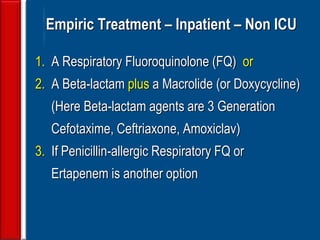
Empiric Treatment – Inpatient – Non ICU
1. A Respiratory Fluoroquinolone (FQ) or
2. A Beta-lactam plus a Macrolide (or Doxycycline)
(Here Beta-lactam agents are 3 Generation
Cefotaxime, Ceftriaxone, Amoxiclav)
3. If Penicillin-allergic Respiratory FQ or
Ertapenem is another option
60
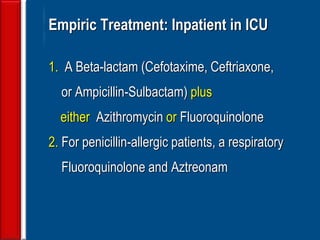
Empiric Treatment: Inpatient in ICU
1. A Beta-lactam (Cefotaxime, Ceftriaxone,
or Ampicillin-Sulbactam) plus
either Azithromycin or Fluoroquinolone
2. For penicillin-allergic patients, a respiratory
Fluoroquinolone and Aztreonam
61
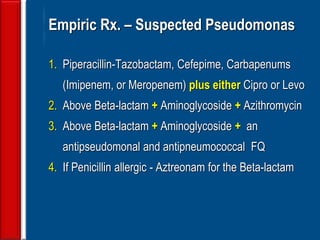
Empiric Rx. – Suspected Pseudomonas
1. Piperacillin-Tazobactam, Cefepime, Carbapenums
(Imipenem, or Meropenem) plus either Cipro or Levo
2. Above Beta-lactam + Aminoglycoside + Azithromycin
3. Above Beta-lactam + Aminoglycoside + an
antipseudomonal and antipneumococcal FQ
4. If Penicillin allergic - Aztreonam for the Beta-lactam
62
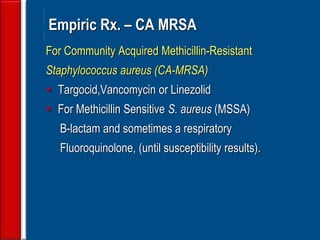
Empiric Rx. – CA MRSA
For Community Acquired Methicillin-Resistant
Staphylococcus aureus (CA-MRSA)
 Targocid,Vancomycin or Linezolid
 For Methicillin Sensitive S. aureus (MSSA)
B-lactam and sometimes a respiratory
Fluoroquinolone, (until susceptibility results).
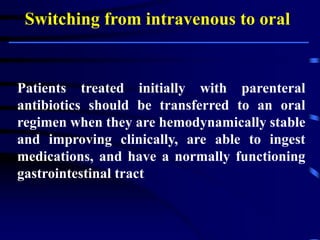
Switching from intravenous to oral
Patients treated initially with parenteral
antibiotics should be transferred to an oral
regimen when they are hemodynamically stable
and improving clinically, are able to ingest
medications, and have a normally functioning
gastrointestinal tract.
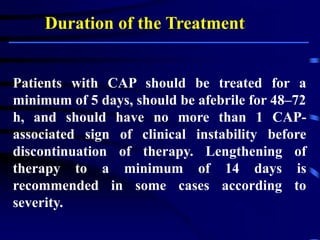
Duration of the Treatment:
Patients with CAP should be treated for a
minimum of 5 days, should be afebrile for 48–72
h, and should have no more than 1 CAP-
associated sign of clinical instability before
discontinuation of therapy. Lengthening of
therapy to a minimum of 14 days is
recommended in some cases according to
severity.
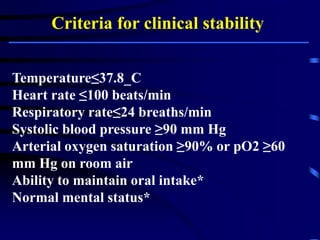
Criteria for clinical stability
Temperature≤37.8_C
Heart rate ≤100 beats/min
Respiratory rate≤24 breaths/min
Systolic blood pressure ≥90 mm Hg
Arterial oxygen saturation ≥90% or pO2 ≥60
mm Hg on room air
Ability to maintain oral intake*
Normal mental status*
What to Do When a
Patient with Community
Acquired Pneumonia
Fails to improve?
Treatment failure is a matter of
particular concern in the management of
CAP.
Treatment failure is associated with high
morbidity and mortality rates.
Its detection and management require
careful clinical assessment.
Definition
Lack of response or worsening of clinical
status (i.e., hemodynamic instability,
incidence of respiratory failure, need for
mechanical ventilation, radiographic
progression , or appearance of new
metastatic infectious foci)
Definition
Failure to respond to antimicrobial
treatment was classified as
nonresponding or progressive
pneumonia.
Definition
◙Nonresponding pneumonia was defined as
persistent fever > 38°C and/or clinical symptoms
(malaise, cough, expectoration, dyspnea) after at
least 72 hours of antimicrobial treatment.
◙Progressive pneumonia was defined as clinical
deterioration in terms of the development of either
or both septic shock and acute respiratory failure
requiring ventilator support after at least 72 hours
of treatment.
Types
1-Early Failure: within 72 hours
2-Late failure: after 72 hours
Incidence
2.4 to 31% for early failure and
 from 3.9 to 11% for late failure.
Factors associated with
treatment failure
◙ High-risk pneumonia
◙ Liver disease ,neurological, neoplasia and
aspiration
◙ Multilobar infiltrates
◙ Legionella pneumonia
◙ Gram-negative pneumonia
◙ Pleural effusion
◙ Cavitation
◙ Leucopenia, and
◙ Discordant antimicrobial therapy.
Lower risk of failure
◙ Influenza vaccination
◙Initial treatment with
fluoroquinolones, and
◙ Chronic obstructive pulmonary
disease
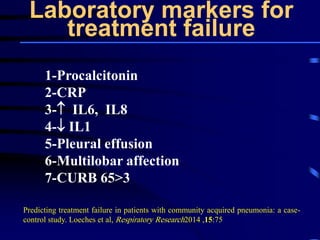
Laboratory markers for
treatment failure
1-Procalcitonin
2-CRP
3- IL6, IL8
4- IL1
5-Pleural effusion
6-Multilobar affection
7-CURB 65>3
Predicting treatment failure in patients with community acquired pneumonia: a case-
control study. Loeches et al, Respiratory Research2014 ,15:75
Evaluating a patient who is not
responding to therapy
◙Repeating the history (including travel and pet
exposures to look for unusual pathogens), chest
radiograph, and sputum cultures, blood cultures, and
urine antigen testing for Streptococcal pneumoniae and
Legionella if not previously done .
◙If this is unrevealing, then further diagnostic
procedures,, such as chest computed tomography [CT],
bronchoscopy, and lung biopsy can be performed.
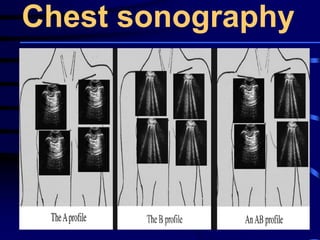
Chest sonography
Chest sonography
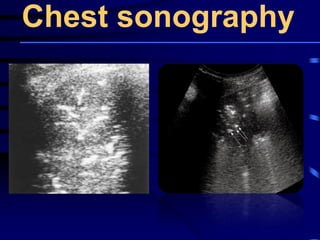
Post-stenotic pneumonia
Posterior intercostal scan shows a
hypoechoic consolidated area that contains
anechoic, branched tubular structures in the
bronchial tree (fluid bronchogram).
Chest sonography
Chest sonography
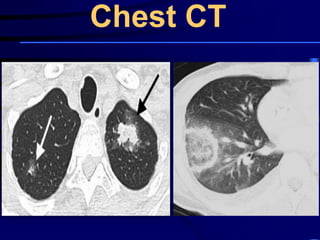
Chest CT
Chest CT can detect pleural effusion, lung abscess, or
central airway obstruction, all of which can cause
treatment failure.
It may also detect noninfectious causes such as
bronchiolitis obliterans organizing pneumonia .
Since empyema and parapneumonic effusion can
contribute to nonresponse, thoracentesis should be
performed in all nonresponding patients with
significant pleural fluid accumulation.
Chest CT
Bronchoscopy
Bronchoscopy can evaluate the airway for
obstruction due to a foreign body or
malignancy, which can cause a postobstructive
pneumonia.
Protected brushings and bronchoalveolar lavage
(BAL) may be obtained for microbiologic and
cytologic studies; in some cases, transbronchial
biopsy may be helpful.
Bronchoscopy
In addition, BAL may reveal evidence of
noninfectious disorders or, if there is a
lymphocytic rather than neutrophilic
alveolitis, viral or Chlamydia infection
Thoracoscopic lung biopsy
Thoracoscopic or open lung biopsy may be
performed if all of these procedures are
nondiagnostic and the patient continues to be ill.
The advent of thoracoscopic procedures has
significantly reduced the need for open lung
biopsy and its associated morbidity.
87
 Age > 65
 Bacteremia (for S. pneumoniae)
 S. aureus, MRSA , Pseudomonas
 Extent of radiographic changes
 Degree of immuno-suppression
 Amount of alcohol consumption
CAP – Risk Factors for Mortality
ID Clinics 1998;12:723. Am J Med 1994;96:313
AECOPD
Most exacerbations of COPD are caused by
viral or bacterial infection. Approximately 50%
of exacerbations are caused by bacterial
infection. Mild to moderate exacerbations is
often caused by Haemophilus influenzae,
Streptococcus pneumoniae, Moraxella
catarrhalis,
A severe exacerbation is often caused by
Pseudomonas aeruginosa and Enterobacteriacea
AECOPD
Sputum cultures should not be routinely performed
expect in patients with frequent exacerbations,
worsening clinical status or inadequate response
after 72 hours on initial empiric antibiotic, and /or
exacerbation requiring mechanical ventilation
Uncomplicated AECOPD
H. influenzae
S. pneumoniae
M. catarrhalis
• Floroquinolones
• Advanced macrolide
(azythromycin, clarithromycin)
• Cephalosporins 2nd or 3rd
generation
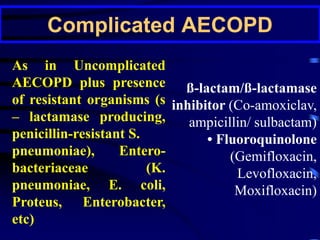
Complicated AECOPD
As in Uncomplicated
AECOPD plus presence
of resistant organisms (s
– lactamase producing,
penicillin-resistant S.
pneumoniae), Entero-
bacteriaceae (K.
pneumoniae, E. coli,
Proteus, Enterobacter,
etc)
ß-lactam/ß-lactamase
inhibitor (Co-amoxiclav,
ampicillin/ sulbactam)
• Fluoroquinolone
(Gemifloxacin,
Levofloxacin,
Moxifloxacin)
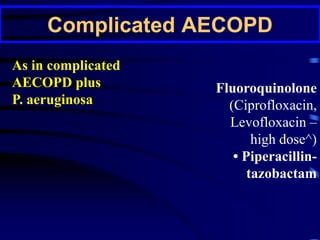
Complicated AECOPD
As in complicated
AECOPD plus
P. aeruginosa
Fluoroquinolone
(Ciprofloxacin,
Levofloxacin –
high dose^)
• Piperacillin-
tazobactam
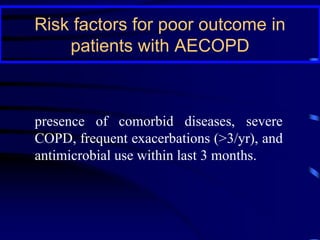
Risk factors for poor outcome in
patients with AECOPD
presence of comorbid diseases, severe
COPD, frequent exacerbations (>3/yr), and
antimicrobial use within last 3 months.
P. aeruginosa should be considered
in the presence of at least two of the
following [recent hospitalization, frequent
(>4 courses per year) or recent
administration of antibiotics (last 3 months),
severe disease (FEV1 < 30%), oral steroid
use (>10 mg of prednisolone daily in the last
2 weeks)].
Antibiotic strategy  in CAP & AECOPD

Antibiotic strategy in CAP & AECOPD

  • 2.
    Antibiotic Strategy in CAP&AECOPD Gamal Rabie Agmy, MD, FCCP Professor of Chest Diseases , Assiut University
  • 4.
  • 5.
    MECHANISMS OF ACTIONOF ANTIBACTERIAL DRUGS  Mechanism of action include:  Inhibition of cell wall synthesis  Inhibition of protein synthesis  Inhibition of nucleic acid synthesis  Inhibition of metabolic pathways  Interference with cell membrane integrity
  • 6.
    ANTIMICROBIAL SUSCEPTIBILITY TESTING  Probablythe most widely used testing method is the disk- diffusion method, also known as the Kirby- Bauer test.
  • 7.
    SUSCEPTIBILITY OF BACTERIAL TOANTIMICROBIAL DRUG  Conventional disc diffusion method  Kirby-Bauer disc diffusion routinely used to qualitatively determine susceptibility  Standard concentration of strain uniformly spread of standard media  Discs impregnated with specific concentration of antibiotic placed on plate and incubated  Clear zone of inhibition around disc reflects susceptibility  Based on size of zone organism can be described as susceptible or resistant
  • 8.
    Antibacterial spectrum—Range ofactivity of an antimicrobial against bacteria. A broad-spectrum antibacterial drug can inhibit a wide variety of gram-positive and gram-negative bacteria, whereas a narrow-spectrum drug is active only against a limited variety of bacteria. Bacteriostatic activity—-The level of antimicro-bial activity that inhibits the growth of an organism. This is determined in vitro by testing a standardized concentration of organisms against a series of antimicrobial dilutions. The lowest concentration that inhibits the growth of the organism is referred to as the minimum inhibitory concentration (MIC). Bactericidal activity—The level of antimicrobial activity that kills the test organism. This is determined in vitro by exposing a standardized concentration of organisms to a series of antimicrobial dilutions. The lowest concentration that kills 99.9% of the population is referred to as the minimum bactericidal concentration (MBC). Antibiotic combinations—Combinations of antibiotics that may be used (1) to broaden the antibacterial spectrum for empiric therapy or the treatment of polymicrobial infections, (2) to prevent the emergence of resistant organisms during therapy, and (3) to achieve a synergistic killing effect. Antibiotic synergism—Combinations of two antibiotics that have enhanced bactericidal activity when tested together compared with the activity of each antibiotic. Antibiotic antagonism—Combination of antibiotics in which the activity of one antibiotic interferes With the activity of the other (e.g., the sum of the activity is less than the activity of the individual drugs). Beta-lactamase—An enzyme that hydrolyzes the beta-lactam ring in the beta-lactam class of antibiotics, thus inactivating the antibiotic. The enzymes specific for penicillins and cephalosporins aret he penicillinases and cephalosporinases, respectively.
  • 9.
    32 ug/ml 16ug/ml 8 ug/ml 4 ug/ml 2 ug/ml 1 ug/ml Sub-culture to agar medium MIC = 8 ug/ml MBC = 16 ug/ml Minimal Inhibitory Concentration (MIC) vs. Minimal Bactericidal Concentration (MBC) REVIEW
  • 10.
    Patterns of MicrobialKilling Concentration dependent – Higher concentration greater killing Aminoglycosides, Flouroquinolones, Ketolides, metronidazole, Ampho B. Time-dependent killing – Minimal concentration-dependent killing (4x MIC) – More exposure more killing Beta lactams, glycopeptides, clindamycin, macrolides, tetracyclines, bactrim
  • 11.
    EFFECTS OF COMBINATIONS OFDRUGS  Sometimes the chemotherapeutic effects of two drugs given simultaneously is greater than the effect of either given alone.  This is called synergism. For example, penicillin and streptomycin in the treatment of bacterial endocarditis. Damage to bacterial cell walls by penicillin makes it easier for streptomycin to enter.
  • 12.
    EFFECTS OF COMBINATIONS OFDRUGS  Other combinations of drugs can be antagonistic.  For example, the simultaneous use of penicillin and tetracycline is often less effective than when wither drugs is used alone. By stopping the growth of the bacteria, the bacteriostatic drug tetracycline interferes with the action of penicillin, which requires bacterial growth.
  • 13.
    EFFECTS OF COMBINATIONS OFDRUGS  Combinations of antimicrobial drugs should be used only for: 1. To prevent or minimize the emergence of resistant strains. 2. To take advantage of the synergistic effect. 3. To lessen the toxicity of individual drugs.
  • 14.
    Resistance Physiological Mechanisms 1. Lackof entry – tet, fosfomycin 2. Greater exit  efflux pumps  tet (R factors) 3. Enzymatic inactivation  bla (penase) – hydrolysis  CAT – chloramphenicol acetyl transferase  Aminogylcosides & transferases REVIEW
  • 15.
    Resistance Physiological Mechanisms 4. Alteredtarget  RIF – altered RNA polymerase (mutants)  NAL – altered DNA gyrase  STR – altered ribosomal proteins  ERY – methylation of 23S rRNA 5. Synthesis of resistant pathway  TMPr plasmid has gene for DHF reductase; insensitive to TMP (cont’d) REVIEW
  • 17.
    Infection of thelung parenchyma in a person who is not hospitalized or living in a long-term care facility for ≥ 2 weeks. This pneumonia develops in the outpatient setting or within 48 hours of admission to a hospital. Definition of CAP
  • 18.
    *HCAP: diagnosis made< 48h after admission with any of the following risk factors: (1)hospitalized in an acute care hospital for > 48h within 90d of the diagnosis; (2) resided in a nursing home or long-term care facility; (3) received recent IV antibiotic therapy, chemotherapy, or wound care within the 30d preceding the current diagnosis; and (4) attended a hospital or hemodialysis clinic HCAP
  • 19.
    The clinical diagnosisof CAP Symptoms: May be preceded by URTI • Respiratory: Cough dry or productive, mucopurulent sputum , sometimes rusty, dyspnea, sometimes pleuritic chest pain • Non-respiratory: Fever, body aches, altered mental state, vomiting or diarrhea.
  • 20.
    The clinical diagnosisof CAP Signs: Generally: Fever, sometimes hypothermia, tachycardia, tachypnea. Local: signs of consolidation
  • 21.
  • 22.
    22 PORT Scoring –PSI Clinical Parameter Scoring Age in years Example For Men (Age in yrs) 50 For Women (Age -10) (50-10) NH Resident 10 points Co-morbid Illnesses Neoplasia 30 points Liver Disease 20 points CHF 10 points CVD 10 points Renal Disease (CKD) 10 points Clinical Parameter Scoring Clinical Findings Altered Sensorium 20 points Respiratory Rate > 30 20 points SBP < 90 mm 20 points Temp < 350 C or > 400 C 15 points Pulse > 125 per min 10 points Investigation Findings Arterial pH < 7.35 30 points BUN > 30 20 points Serum Na < 130 20 points Hematocrit < 30% 10 points Blood Glucose > 250 10 points Pa O2 10 points X Ray e/o Pleural Effusion 10 points Pneumonia Patient Outcomes Research Team (PORT)
  • 23.
    23 Classification of Severity- PORT Predictors Absent Class I  70 Class II 71 – 90 Class III 91 - 130 Class IV > 130 Class V
  • 24.
    24 CAP – Managementbased on PSI Score PORT Class PSI Score Mortality % Treatment Strategy Class I No RF 0.1 – 0.4 Out patient Class II  70 0.6 – 0.7 Out patient Class III 71 - 90 0.9 – 2.8 Brief hospitalization Class IV 91 - 130 8.5 – 9.3 Inpatient Class V > 130 27 – 31.1 IP - ICU
  • 25.
    25 CURB 65 Rule– Management of CAP CURB 65 Confusion BUN > 30 RR > 30 BP SBP <90 DBP <60 Age > 65 CURB 0 or 1 Home Rx CURB 2 Short Hosp CURB 3 Medical Ward CURB 4 or 5 ICU care
  • 26.
    Indications for admittingCAP patients to ICU Major Criteria(1/2 sufficient) • Acute respiratory failure(mechanical ventilation) • Severe sepsis or septic shock(need of vasopressors) Minor Criteria (ICU admission recommended if ≥3) • Respiration rate ≥ 30/min • Multi lobar involvement • PaO2:FiO2 ≤250 +/-SaO2 <90% with 6 L O2 • Confusion/ disorientation • Uremia BUN ≥20 mg/dl • Leukopenia WBC < 4 x 10⁹/L • Thrombocytopenia Tc < 100.000 / mm3 • Hypothermia core temp< 36° • Hypotension requiring aggressive fluid resuscitation
  • 27.
    27 CAP – Valueof Chest Radiograph • Usually needed to establish diagnosis • It is a prognostic indicator • To rule out other disorders • May help in etiological diagnosis J Chr Dis 1984;37:215-25
  • 28.
    28 Infiltrate Patterns andPathogens CXR Pattern Possible Pathogens Lobar S.pneumo, Kleb, H. influ, Gram Neg Patchy Atypicals, Viral, Legionella Interstitial Viral, PCP, Legionella Cavitatory Anerobes, Kleb, TB, S.aureus, Fungi Large effusion Staph, Anaerobes, Klebsiella
  • 29.
    29 Normal CXR &Pneumonic Consolidation
  • 30.
  • 31.
    31 CXR – PAand Lateral Views
  • 32.
  • 33.
  • 34.
    34 Special forms ofConsolidation
  • 35.
  • 36.
  • 37.
  • 38.
  • 39.
  • 40.
  • 41.
  • 42.
  • 43.
  • 44.
  • 45.
  • 46.
    Post-stenotic pneumonia Posterior intercostalscan shows a hypoechoic consolidated area that contains anechoic, branched tubular structures in the bronchial tree (fluid bronchogram).
  • 47.
  • 48.
  • 49.
    49 CAP – TheTwo Types of Presentations Classical • Sudden onset of CAP • High fever, shaking chills • Pleuritic chest pain, SOB • Productive cough • Rusty sputum, blood tinge • Poor general condition • High mortality up to 20% in patients with bacteremia • S.pneumoniae causative • Gradual & insidious onset • Low grade fever • Dry cough, No blood tinge • Good GC – Walking CAP • Low mortality 1-2%; except in cases of Legionellosis • Mycoplasma, Chlamydiae, Legionella, Ricketessiae, Viruses are causative Atypical
  • 50.
  • 51.
    51  Age  Obesity;Exercise is protective  Smoking, PVD  Asthma, COPD  Immuno-suppression, HIV  Institutionalization, Old age homes etc  Dementia CAP – Risk Factors for Pneumonia ID Clinics 1998;12:723. Am J Med 1994;96:313
  • 52.
    Diagnostic testing: Outpatient setting:Routine diagnostic tests to identify an etiologic diagnosis are optional for outpatients with CAP. Microbiological tests are not recommended. • Inpatient setting: Routine diagnostic tests to identify an etiologic diagnosis are required in critically ill CAP and when specific pathogens are suspected (e.g. TB) that would likely change individual antibiotic management.
  • 53.
    Cultures to identifythe causative organism: Sputum cultures are not recommended in cases of CAP except in certain occasions: • Patients admitted in hospital or ICU. • Patients who do not respond to empirical antibiotic therapy. • Suspect of resistant strains of S.pneumoniae.
  • 54.
    Sputum Gram stain isa rapid and inexpensive test that can help a lot: • Differentiate Gm –ve from Gm +ve bacteria. • Excess pus cells without organism suspect atypical infection.
  • 55.
    Blood Culture : Recommended forall patients with moderate and high severity CAP, preferably before antibiotic therapy is commenced.
  • 56.
    Examination of sputumfor Mycobacterium Tuberculosis should be considered for patients with a persistent productive cough, especially if malaise, weight loss or night sweats, or risk factors for tuberculosis (e.g., ethnic origin, social deprivation, elderly) are present.
  • 57.
    57 Objective 2 Objective 1 Avoidemergence of multidrug resistant microorganisms Immediate Rx. of patients with serious sepsis The Therapy Conundrum
  • 58.
    58 Empiric Treatment –Outpatient Healthy and no risk factors for DR S.pneumoniae 1. Macrolide or Doxycycline Presence of co-morbidities, use of antimicrobials within the previous 3 months, and regions with a high rate (>25%) of infection with Macrolide resistant S. pneumoniae 1. Respiratory FQ – Levoflox, Gemiflox or Moxiflox 2. Beta-lactam (High dose Amoxicillin, Amoxicillin- Clavulanate is preferred; Ceftriaxone, Cefpodoxime, Cefuroxime) plus a Macrolide or Doxycycline
  • 59.
    59 Empiric Treatment –Inpatient – Non ICU 1. A Respiratory Fluoroquinolone (FQ) or 2. A Beta-lactam plus a Macrolide (or Doxycycline) (Here Beta-lactam agents are 3 Generation Cefotaxime, Ceftriaxone, Amoxiclav) 3. If Penicillin-allergic Respiratory FQ or Ertapenem is another option
  • 60.
    60 Empiric Treatment: Inpatientin ICU 1. A Beta-lactam (Cefotaxime, Ceftriaxone, or Ampicillin-Sulbactam) plus either Azithromycin or Fluoroquinolone 2. For penicillin-allergic patients, a respiratory Fluoroquinolone and Aztreonam
  • 61.
    61 Empiric Rx. –Suspected Pseudomonas 1. Piperacillin-Tazobactam, Cefepime, Carbapenums (Imipenem, or Meropenem) plus either Cipro or Levo 2. Above Beta-lactam + Aminoglycoside + Azithromycin 3. Above Beta-lactam + Aminoglycoside + an antipseudomonal and antipneumococcal FQ 4. If Penicillin allergic - Aztreonam for the Beta-lactam
  • 62.
    62 Empiric Rx. –CA MRSA For Community Acquired Methicillin-Resistant Staphylococcus aureus (CA-MRSA)  Targocid,Vancomycin or Linezolid  For Methicillin Sensitive S. aureus (MSSA) B-lactam and sometimes a respiratory Fluoroquinolone, (until susceptibility results).
  • 63.
    Switching from intravenousto oral Patients treated initially with parenteral antibiotics should be transferred to an oral regimen when they are hemodynamically stable and improving clinically, are able to ingest medications, and have a normally functioning gastrointestinal tract.
  • 64.
    Duration of theTreatment: Patients with CAP should be treated for a minimum of 5 days, should be afebrile for 48–72 h, and should have no more than 1 CAP- associated sign of clinical instability before discontinuation of therapy. Lengthening of therapy to a minimum of 14 days is recommended in some cases according to severity.
  • 65.
    Criteria for clinicalstability Temperature≤37.8_C Heart rate ≤100 beats/min Respiratory rate≤24 breaths/min Systolic blood pressure ≥90 mm Hg Arterial oxygen saturation ≥90% or pO2 ≥60 mm Hg on room air Ability to maintain oral intake* Normal mental status*
  • 66.
    What to DoWhen a Patient with Community Acquired Pneumonia Fails to improve?
  • 67.
    Treatment failure isa matter of particular concern in the management of CAP. Treatment failure is associated with high morbidity and mortality rates. Its detection and management require careful clinical assessment.
  • 68.
    Definition Lack of responseor worsening of clinical status (i.e., hemodynamic instability, incidence of respiratory failure, need for mechanical ventilation, radiographic progression , or appearance of new metastatic infectious foci)
  • 69.
    Definition Failure to respondto antimicrobial treatment was classified as nonresponding or progressive pneumonia.
  • 70.
    Definition ◙Nonresponding pneumonia wasdefined as persistent fever > 38°C and/or clinical symptoms (malaise, cough, expectoration, dyspnea) after at least 72 hours of antimicrobial treatment. ◙Progressive pneumonia was defined as clinical deterioration in terms of the development of either or both septic shock and acute respiratory failure requiring ventilator support after at least 72 hours of treatment.
  • 71.
    Types 1-Early Failure: within72 hours 2-Late failure: after 72 hours
  • 72.
    Incidence 2.4 to 31%for early failure and  from 3.9 to 11% for late failure.
  • 73.
    Factors associated with treatmentfailure ◙ High-risk pneumonia ◙ Liver disease ,neurological, neoplasia and aspiration ◙ Multilobar infiltrates ◙ Legionella pneumonia ◙ Gram-negative pneumonia ◙ Pleural effusion ◙ Cavitation ◙ Leucopenia, and ◙ Discordant antimicrobial therapy.
  • 74.
    Lower risk offailure ◙ Influenza vaccination ◙Initial treatment with fluoroquinolones, and ◙ Chronic obstructive pulmonary disease
  • 75.
    Laboratory markers for treatmentfailure 1-Procalcitonin 2-CRP 3- IL6, IL8 4- IL1 5-Pleural effusion 6-Multilobar affection 7-CURB 65>3 Predicting treatment failure in patients with community acquired pneumonia: a case- control study. Loeches et al, Respiratory Research2014 ,15:75
  • 76.
    Evaluating a patientwho is not responding to therapy ◙Repeating the history (including travel and pet exposures to look for unusual pathogens), chest radiograph, and sputum cultures, blood cultures, and urine antigen testing for Streptococcal pneumoniae and Legionella if not previously done . ◙If this is unrevealing, then further diagnostic procedures,, such as chest computed tomography [CT], bronchoscopy, and lung biopsy can be performed.
  • 77.
  • 78.
  • 79.
    Post-stenotic pneumonia Posterior intercostalscan shows a hypoechoic consolidated area that contains anechoic, branched tubular structures in the bronchial tree (fluid bronchogram).
  • 80.
  • 81.
  • 82.
    Chest CT Chest CTcan detect pleural effusion, lung abscess, or central airway obstruction, all of which can cause treatment failure. It may also detect noninfectious causes such as bronchiolitis obliterans organizing pneumonia . Since empyema and parapneumonic effusion can contribute to nonresponse, thoracentesis should be performed in all nonresponding patients with significant pleural fluid accumulation.
  • 83.
  • 84.
    Bronchoscopy Bronchoscopy can evaluatethe airway for obstruction due to a foreign body or malignancy, which can cause a postobstructive pneumonia. Protected brushings and bronchoalveolar lavage (BAL) may be obtained for microbiologic and cytologic studies; in some cases, transbronchial biopsy may be helpful.
  • 85.
    Bronchoscopy In addition, BALmay reveal evidence of noninfectious disorders or, if there is a lymphocytic rather than neutrophilic alveolitis, viral or Chlamydia infection
  • 86.
    Thoracoscopic lung biopsy Thoracoscopicor open lung biopsy may be performed if all of these procedures are nondiagnostic and the patient continues to be ill. The advent of thoracoscopic procedures has significantly reduced the need for open lung biopsy and its associated morbidity.
  • 87.
    87  Age >65  Bacteremia (for S. pneumoniae)  S. aureus, MRSA , Pseudomonas  Extent of radiographic changes  Degree of immuno-suppression  Amount of alcohol consumption CAP – Risk Factors for Mortality ID Clinics 1998;12:723. Am J Med 1994;96:313
  • 89.
    AECOPD Most exacerbations ofCOPD are caused by viral or bacterial infection. Approximately 50% of exacerbations are caused by bacterial infection. Mild to moderate exacerbations is often caused by Haemophilus influenzae, Streptococcus pneumoniae, Moraxella catarrhalis, A severe exacerbation is often caused by Pseudomonas aeruginosa and Enterobacteriacea
  • 90.
    AECOPD Sputum cultures shouldnot be routinely performed expect in patients with frequent exacerbations, worsening clinical status or inadequate response after 72 hours on initial empiric antibiotic, and /or exacerbation requiring mechanical ventilation
  • 91.
    Uncomplicated AECOPD H. influenzae S.pneumoniae M. catarrhalis • Floroquinolones • Advanced macrolide (azythromycin, clarithromycin) • Cephalosporins 2nd or 3rd generation
  • 92.
    Complicated AECOPD As inUncomplicated AECOPD plus presence of resistant organisms (s – lactamase producing, penicillin-resistant S. pneumoniae), Entero- bacteriaceae (K. pneumoniae, E. coli, Proteus, Enterobacter, etc) ß-lactam/ß-lactamase inhibitor (Co-amoxiclav, ampicillin/ sulbactam) • Fluoroquinolone (Gemifloxacin, Levofloxacin, Moxifloxacin)
  • 93.
    Complicated AECOPD As incomplicated AECOPD plus P. aeruginosa Fluoroquinolone (Ciprofloxacin, Levofloxacin – high dose^) • Piperacillin- tazobactam
  • 94.
    Risk factors forpoor outcome in patients with AECOPD presence of comorbid diseases, severe COPD, frequent exacerbations (>3/yr), and antimicrobial use within last 3 months.
  • 95.
    P. aeruginosa shouldbe considered in the presence of at least two of the following [recent hospitalization, frequent (>4 courses per year) or recent administration of antibiotics (last 3 months), severe disease (FEV1 < 30%), oral steroid use (>10 mg of prednisolone daily in the last 2 weeks)].