Recent Advances in NIV
Gamal Rabie Agmy ,MD ,FCCP
Professor of Chest Diseases, Assiut University
ERS National Delegate of Egypt
NPPV: definition
Any form of ventilatory support applied without
the use of an endotracheal tube considered to
include:
*CPAP with or without pressure support
*Volume- and pressure- cycled systems
*Proportional assist ventilation (PAV).
AJRCCM 2001; 163:283-91
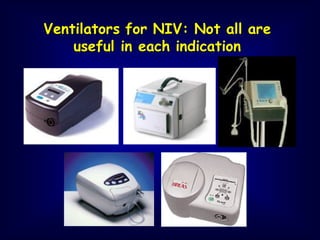
Ventilators for NIV: Not all are
useful in each indication
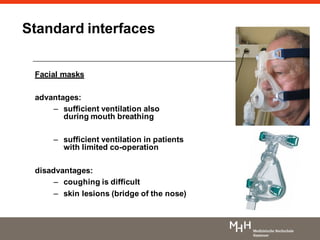
Standard interfaces
Facial masks
advantages:
– sufficient ventilation also
during mouth breathing
– sufficient ventilation in patients
with limited co-operation
disadvantages:
– coughing is difficult
– skin lesions (bridge of the nose)
Nasal masks
advantages:
– better comfort
– good seal
– coughing is possible
– communication is possible
disadvantages:
– effective in nose breathing only
– good co-operation is necessary
Standard interfaces
Nasal prong/nasal pillow systems
for patients with
claustrophobia
for patients with allergies
against straps
for low to moderate
pressures only
(< 20 cmH2O)
Standard interfaces
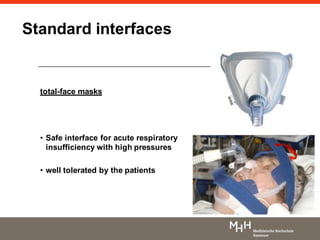
total-face masks
• Safe interface for acute respiratory
insufficiency with high pressures
• well tolerated by the patients
Standard interfaces
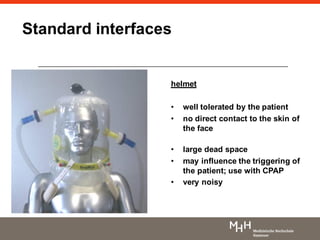
helmet
• well tolerated by the patient
• no direct contact to the skin of
the face
• large dead space
• may influence the triggering of
the patient; use with CPAP
• very noisy
Standard interfaces
mouthpieces
• simple and cheap
• short-interval alternative
interface for long-term
ventilated patients
Custom-made masks
• for long-term ventilation
• if standard masks are not
tolerated
Standard interfaces
Physiologic evaluation of three
different interfaces
cohort: 26 stable patients with hypercapnic COPD or interstitial lung disease.
intervention: three 30 minute tests in two ventilatory modes with
facial mask / nasal mask / nasal prongs
Conclusions: NIPPV was effective with all interfaces.
patients‘ tolerance: nasal mask > facial mask or nasal prongs
pCO2 reduction: facial mask or nasal prongs > nasal mask
Navalesi P et al. Crit Care Med 2000;28:2139-2140
*COPD
*Obesity
*Neuromuscular disease & chest
wall deformity
Rationale for ventilatory assistance
 Respiratoryload
 Respiratorymuscles
capacity
Alveolar hypoventilation
 PaO2 and  PaCO2
Abnormal
ventilatorydrive
Mechanical ventilation unloads the
respiratory muscles
Respiratory load Respiratory muscles
Mechanical
ventilation
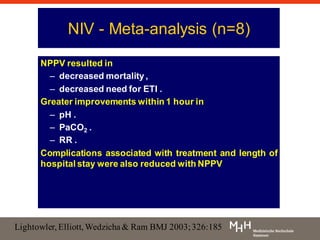
NIV - Meta-analysis (n=8)
NPPV resulted in
– decreased mortality ,
– decreased need for ETI .
Greater improvements within 1 hour in
– pH .
– PaCO2 .
– RR .
Complications associated with treatment and length of
hospital stay were also reduced with NPPV
Lightowler, Elliott, Wedzicha& Ram BMJ 2003;326:185
NIV v invasive ventilation
In the NPPV group, 48% patients avoided
intubation, survived, and had a shorter
duration of ICU stay than intubated patients
(p=0.02). One year following hospital
discharge, the NPPV group had fewer
patients readmitted to the hospital (65% vs.
100%; p = 0.016) or requiring de novo
permanent oxygen supplementation (0% vs.
36%; p < 0.01).
Conti et al Intensive Care Med 2002; 28:1701
YONIV Study - outcome by enrolment
pH
0
10
20
30
40
50
pH < 7.3 pH >= 7.3
Con fail
NIV fail
Con died
NIV died
Plant et al Lancet 2000; 355:1931-5
Change in practice over time
1992-1996 (mean pH = 7.25+/-0.07) 1997-1999
(7.20+/-0.08; P<0.001).
> 1997 - risk of failure pH <7.25 three fold
lower than in 1992-1996.
> 1997 ARF with a pH >7.28 were treated in
Medical Ward (20% vs 60%).
Daily cost per patient treated with NIV (€558+/-
8 vs €470+/-14,P<0.01)
Carlucci et al Intens Care Med 2003; 3:419-25
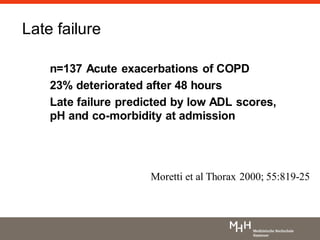
Late failure
n=137 Acute exacerbations of COPD
23% deteriorated after 48 hours
Late failure predicted by low ADL scores,
pH and co-morbidity at admission
Moretti et al Thorax 2000; 55:819-25
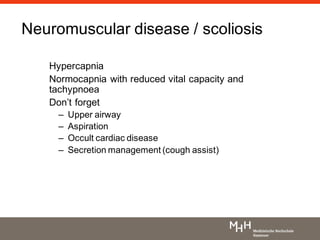
Neuromuscular disease / scoliosis
Hypercapnia
Normocapnia with reduced vital capacity and
tachypnoea
Don’t forget
– Upper airway
– Aspiration
– Occult cardiac disease
– Secretion management (cough assist)
NIV – when and where?
COPD – designated NIV service
– pH < 7.35
– pH < 7.30
Neuromuscular disease / chest wall deformity
– hypercapnia
– reduced VC with normal CO2
– Will usually require long term domiciliary NIV
Obesity
– Hypercapnia with acidosis (probably as for
COPD)
– NIV success - consider switch back to CPAP
(or no ventilatory support)
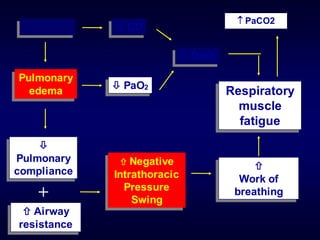
THE RATIONALE
LV failure
Pulmonary
edema

Pulmonary
compliance
 Airway
resistance
 Negative
Intrathoracic
Pressure
Swing

Work of
breathing
 CO
 PaO2
Respiratory
muscle
fatigue
 DaO2
+
 PaCO2
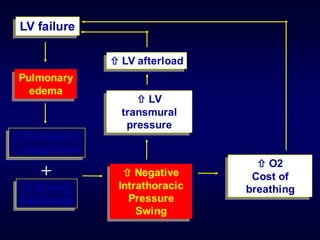
LV failure
Pulmonary
edema
 Pulmonary
compliance
 Airway
resistance
 Negative
Intrathoracic
Pressure
Swing
 LV
transmural
pressure
 O2
Cost of
breathing
 LV afterload
+
Rasen et al: Chest 1985; 87: 158-162
Negative intrathoracic pressure swings during CPE
Pes
(cmH20)
0
-20
IntraThoracicPressure
and
LV function
AO
LV
ITP  effort =  ITP = Ptm

 LV afterload
100
-20
Ptm = 100-(-20) = 120
CPAP IN CPE
Rasen et al: Chest 1985; 87: 158-162
Pes
(cmH20)
0
-20
Spontaneous breathing CPAP 15 cmH20
IntraThoracicPressure
and
LV function
AO
LV
ITP  effort =  ITP =  Ptm

 LV afterload
100
-5
Ptm = 100-(-5) = 105
Rationale of positive pressure
ventilation in CPE
Positive Pressure
 ITP  FRC
Pre-load
 Venous return
 LVafterload
 PTM
 PaO2  WOB
 Cardiac performance
 pulmonary congestion
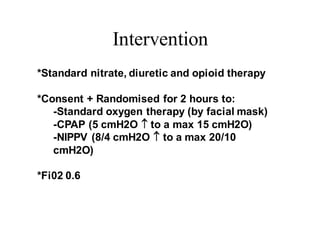
Intervention
*Standard nitrate, diuretic and opioid therapy
*Consent + Randomised for 2 hours to:
-Standard oxygen therapy (by facial mask)
-CPAP (5 cmH2O  to a max 15 cmH2O)
-NIPPV (8/4 cmH2O  to a max 20/10
cmH2O)
*Fi02 0.6
Randomised n = 1156
Treated
n = 367
7 day
n = 367
Treated
n = 346
7 day
n = 343
Treated
n = 356
30 day
n = 352
30 day
n = 348
30 day
n = 325
30 day
n = 344
Patient
Withdrawal
n = 0
Patient
Withdrawal
n = 3
Patient
Withdrawal
n = 4
Patient
Withdrawal
n = 1
Refused
Retrospective
consent
n = 18
Patient
Withdrawal
n = 4
Refused
Retrospective
consent
n = 14
Patient
Withdrawal
n = 1
Refused
Retrospective
consent
n = 17
Potentially eligible n = 1874
Refused initial consent n=68
Too sick to consent n=125
Unable to consent n=18
Clinician choice n=23
Known previous randomisation n=32
No equipment n=15
Randomisation service problem n=33
Other n=41
Screened n = 1511
Recruited n = 1069
Protocol Violations n=44
Duplicates n=43
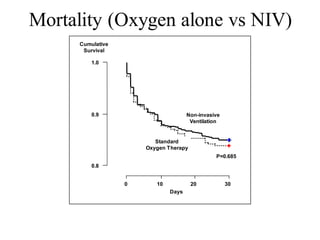
Mortality (Oxygen alone vs NIV)
1.0
0.9
0.8
0 10 20 30
Days
Cumulative
Survival
Standard
Oxygen Therapy
Non-invasive
Ventilation
P=0.685
Primary Outcome: Mortality
Standard
Therapy
Non-
Invasive
Ventilation
OR 95% CI P Value
7-Day 9.8% 9.5% 0.97 0.63 -
1.48
0.869
30-
Day
16.7% 15.4% 0.93 0.65 -
1.32
0.685
7-day mortality, non-recruited 9.9%
No interaction with disease severity
Standard NIV
Patients, n= 13 13
PaO2/FiO2 ratio
Baseline 155 143
Bronchoscopy 139 261
1 hour after 140 176
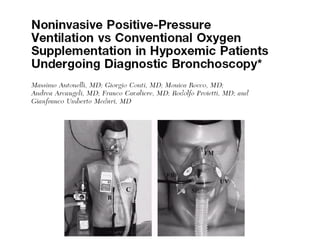
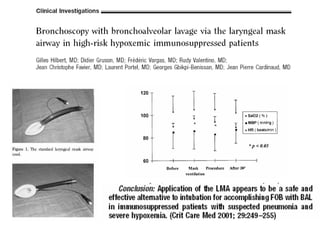
Antonelli et al, Chest 2002; 121: 1149
Indication: Pneumonia
Intensive Care Med 2003; 29:126-129
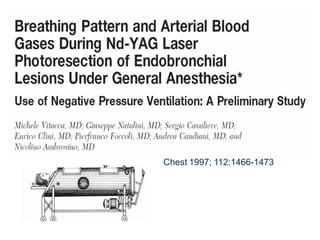
Chest 1997; 112:1466-1473
ACUTE AND CHRONIC NPPV
IN CHILDREN
Brigitte Fauroux
Pediatric Pulmonology & Research unit INSERM U 719
Armand Trousseau Hospital
Paris - France
Noninvasive Positive Pressure Ventilation
ERS School Courses
Pisa - Italy - 2005
Inserm
Institut national
de la santé et de la recherche médicale
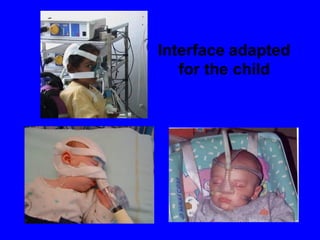
Interface adapted
for the child
Conclusion
 NPPV represents a logical therapeutic option in
disorders characterised by alveolar hypoventilation
– Neuromuscular disorders
– Dynamic upper airway obstruction
– Cystic fibrosis
– Hypoxic RF, cardiogenic pulmonary edema ?
 Future research
– Define the criteria for starting NPPV and the benefit
of NPPV in children
• in the acute and chronic setting
• according to the underlying disease
– Improve the ventilators and interfaces
– Evaluate the long term benefit of NPPV in childen
ERS School Course
“Noninvasive Positive Pressure Ventilation”
Hanover, Germany
13. Feb. 2009
NIV in weaning: based on and beyond studie
Prof. Dr. B. Schönhofer
Non-invasive ventilation in
acute hypoxic respiratory
failure: Pro
Hanover, 13th February, 2009
Miquel Ferrer, MD
RIICU, Dept. Pneumology, Hospital
Clínic, IDIBAPS, CibeRes,
Barcelona, Spain.
miferrer@clinic.ub.esmail:-E
Severe Community-Acquired Pneumonia
Clin Infect Dis. 2007;44 Suppl2:S27-S72
1 Major or 3 Minor Criteria
Pneumonia is associated with
poor outcome in patients
receiving NIV
*Mechanical ventilation
*Septic shock
Respiratory rate >30 min-1
PaO2/FiO2 <250
Bilateral or multilobar
SBP <90 mmHg *
BUN >25
Platelets <100,000
Leukocytes <4,000
Confusion
Hypothermia
Minor CriteriaMajor Criteria
NIV in acute COPD: correlates for
success
AmbrosinoN. Thorax1995;50:755-7
NIV failure
Other Pneumonia
%
0
20
40
60
n=8
p=0.019
n=5
Retrospective analysis
59 episodes of ARF in 47
COPD patients
NIV success: 46
NIV failure: 13
Predictors for NIV failure:
Higher PaCO2 at
admission
Worse functional
condition
Reduced treatment
compliance
Pneumonia
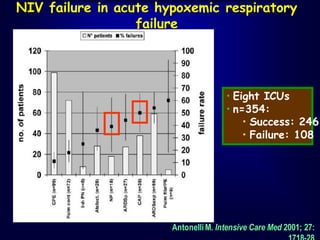
NIV failure in acute hypoxemic respiratory
failure
AntonelliM. Intensive Care Med 2001; 27:
• Eight ICUs
• n=354:
• Success: 246
• Failure: 108
Non-invasive ventilation and
pneumonia
but, …..
is NIV effective in patients with pneumonia?
???
Conclusion:
Patients with pneumonia causing ARF and
needing NIV are among those with worst
outcome
NIV in severe community-acquired
pneumonia
 Prospective, randomised, controlled
 Severe CAP (ATS criteria).
 Standard treatment vs ST + NPPV. n: 28 + 28 = 56
ConfalonieriM. Am J Respir Crit Care Med 1999;160:1585-91
Overall population
NIV Control
%
0
20
40
60
p=0.03
n=6
n=14
COPD +
Hypercapnia
NIV Control
%
0
20
40
60
Non-COPD +
Non-hypercapnia
NIV Control
0
20
40
60
n=0
n=6
n=6
n=8
p=0.005
p=0.73
Intubation rate
Improving
End-Of-Life Care
Decision-making
In the ICU
Palliation
of symptoms
Dyspnea
Management
NIV in Palliation and Oncology
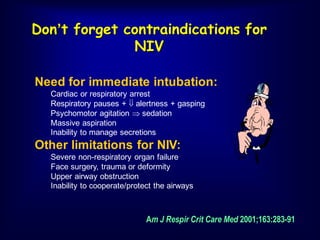
Don’t forget contraindications for
NIV
Am J Respir Crit Care Med 2001;163:283-91
Need for immediate intubation:
Cardiac or respiratory arrest
Respiratory pauses +  alertness + gasping
Psychomotor agitation  sedation
Massive aspiration
Inability to manage secretions
Other limitations for NIV:
Severe non-respiratory organ failure
Face surgery, trauma or deformity
Upper airway obstruction
Inability to cooperate/protect the airways
Recent advances in NIV

Recent advances in NIV

  • 2.
    Recent Advances inNIV Gamal Rabie Agmy ,MD ,FCCP Professor of Chest Diseases, Assiut University ERS National Delegate of Egypt
  • 6.
    NPPV: definition Any formof ventilatory support applied without the use of an endotracheal tube considered to include: *CPAP with or without pressure support *Volume- and pressure- cycled systems *Proportional assist ventilation (PAV). AJRCCM 2001; 163:283-91
  • 7.
    Ventilators for NIV:Not all are useful in each indication
  • 8.
    Standard interfaces Facial masks advantages: –sufficient ventilation also during mouth breathing – sufficient ventilation in patients with limited co-operation disadvantages: – coughing is difficult – skin lesions (bridge of the nose)
  • 9.
    Nasal masks advantages: – bettercomfort – good seal – coughing is possible – communication is possible disadvantages: – effective in nose breathing only – good co-operation is necessary Standard interfaces
  • 10.
    Nasal prong/nasal pillowsystems for patients with claustrophobia for patients with allergies against straps for low to moderate pressures only (< 20 cmH2O) Standard interfaces
  • 11.
    total-face masks • Safeinterface for acute respiratory insufficiency with high pressures • well tolerated by the patients Standard interfaces
  • 12.
    helmet • well toleratedby the patient • no direct contact to the skin of the face • large dead space • may influence the triggering of the patient; use with CPAP • very noisy Standard interfaces
  • 13.
    mouthpieces • simple andcheap • short-interval alternative interface for long-term ventilated patients Custom-made masks • for long-term ventilation • if standard masks are not tolerated Standard interfaces
  • 14.
    Physiologic evaluation ofthree different interfaces cohort: 26 stable patients with hypercapnic COPD or interstitial lung disease. intervention: three 30 minute tests in two ventilatory modes with facial mask / nasal mask / nasal prongs Conclusions: NIPPV was effective with all interfaces. patients‘ tolerance: nasal mask > facial mask or nasal prongs pCO2 reduction: facial mask or nasal prongs > nasal mask Navalesi P et al. Crit Care Med 2000;28:2139-2140
  • 16.
  • 17.
    Rationale for ventilatoryassistance  Respiratoryload  Respiratorymuscles capacity Alveolar hypoventilation  PaO2 and  PaCO2 Abnormal ventilatorydrive
  • 18.
    Mechanical ventilation unloadsthe respiratory muscles Respiratory load Respiratory muscles Mechanical ventilation
  • 19.
    NIV - Meta-analysis(n=8) NPPV resulted in – decreased mortality , – decreased need for ETI . Greater improvements within 1 hour in – pH . – PaCO2 . – RR . Complications associated with treatment and length of hospital stay were also reduced with NPPV Lightowler, Elliott, Wedzicha& Ram BMJ 2003;326:185
  • 21.
    NIV v invasiveventilation In the NPPV group, 48% patients avoided intubation, survived, and had a shorter duration of ICU stay than intubated patients (p=0.02). One year following hospital discharge, the NPPV group had fewer patients readmitted to the hospital (65% vs. 100%; p = 0.016) or requiring de novo permanent oxygen supplementation (0% vs. 36%; p < 0.01). Conti et al Intensive Care Med 2002; 28:1701
  • 22.
    YONIV Study -outcome by enrolment pH 0 10 20 30 40 50 pH < 7.3 pH >= 7.3 Con fail NIV fail Con died NIV died Plant et al Lancet 2000; 355:1931-5
  • 23.
    Change in practiceover time 1992-1996 (mean pH = 7.25+/-0.07) 1997-1999 (7.20+/-0.08; P<0.001). > 1997 - risk of failure pH <7.25 three fold lower than in 1992-1996. > 1997 ARF with a pH >7.28 were treated in Medical Ward (20% vs 60%). Daily cost per patient treated with NIV (€558+/- 8 vs €470+/-14,P<0.01) Carlucci et al Intens Care Med 2003; 3:419-25
  • 24.
    Late failure n=137 Acuteexacerbations of COPD 23% deteriorated after 48 hours Late failure predicted by low ADL scores, pH and co-morbidity at admission Moretti et al Thorax 2000; 55:819-25
  • 25.
    Neuromuscular disease /scoliosis Hypercapnia Normocapnia with reduced vital capacity and tachypnoea Don’t forget – Upper airway – Aspiration – Occult cardiac disease – Secretion management (cough assist)
  • 26.
    NIV – whenand where? COPD – designated NIV service – pH < 7.35 – pH < 7.30 Neuromuscular disease / chest wall deformity – hypercapnia – reduced VC with normal CO2 – Will usually require long term domiciliary NIV Obesity – Hypercapnia with acidosis (probably as for COPD) – NIV success - consider switch back to CPAP (or no ventilatory support)
  • 28.
  • 29.
    LV failure Pulmonary edema  Pulmonary compliance  Airway resistance Negative Intrathoracic Pressure Swing  Work of breathing  CO  PaO2 Respiratory muscle fatigue  DaO2 +  PaCO2
  • 30.
    LV failure Pulmonary edema  Pulmonary compliance Airway resistance  Negative Intrathoracic Pressure Swing  LV transmural pressure  O2 Cost of breathing  LV afterload +
  • 31.
    Rasen et al:Chest 1985; 87: 158-162 Negative intrathoracic pressure swings during CPE Pes (cmH20) 0 -20
  • 32.
    IntraThoracicPressure and LV function AO LV ITP effort =  ITP = Ptm   LV afterload 100 -20 Ptm = 100-(-20) = 120
  • 33.
    CPAP IN CPE Rasenet al: Chest 1985; 87: 158-162 Pes (cmH20) 0 -20 Spontaneous breathing CPAP 15 cmH20
  • 34.
    IntraThoracicPressure and LV function AO LV ITP effort =  ITP =  Ptm   LV afterload 100 -5 Ptm = 100-(-5) = 105
  • 35.
    Rationale of positivepressure ventilation in CPE Positive Pressure  ITP  FRC Pre-load  Venous return  LVafterload  PTM  PaO2  WOB  Cardiac performance  pulmonary congestion
  • 38.
    Intervention *Standard nitrate, diureticand opioid therapy *Consent + Randomised for 2 hours to: -Standard oxygen therapy (by facial mask) -CPAP (5 cmH2O  to a max 15 cmH2O) -NIPPV (8/4 cmH2O  to a max 20/10 cmH2O) *Fi02 0.6
  • 39.
    Randomised n =1156 Treated n = 367 7 day n = 367 Treated n = 346 7 day n = 343 Treated n = 356 30 day n = 352 30 day n = 348 30 day n = 325 30 day n = 344 Patient Withdrawal n = 0 Patient Withdrawal n = 3 Patient Withdrawal n = 4 Patient Withdrawal n = 1 Refused Retrospective consent n = 18 Patient Withdrawal n = 4 Refused Retrospective consent n = 14 Patient Withdrawal n = 1 Refused Retrospective consent n = 17 Potentially eligible n = 1874 Refused initial consent n=68 Too sick to consent n=125 Unable to consent n=18 Clinician choice n=23 Known previous randomisation n=32 No equipment n=15 Randomisation service problem n=33 Other n=41 Screened n = 1511 Recruited n = 1069 Protocol Violations n=44 Duplicates n=43
  • 40.
    Mortality (Oxygen alonevs NIV) 1.0 0.9 0.8 0 10 20 30 Days Cumulative Survival Standard Oxygen Therapy Non-invasive Ventilation P=0.685
  • 41.
    Primary Outcome: Mortality Standard Therapy Non- Invasive Ventilation OR95% CI P Value 7-Day 9.8% 9.5% 0.97 0.63 - 1.48 0.869 30- Day 16.7% 15.4% 0.93 0.65 - 1.32 0.685 7-day mortality, non-recruited 9.9% No interaction with disease severity
  • 44.
    Standard NIV Patients, n=13 13 PaO2/FiO2 ratio Baseline 155 143 Bronchoscopy 139 261 1 hour after 140 176 Antonelli et al, Chest 2002; 121: 1149 Indication: Pneumonia
  • 45.
    Intensive Care Med2003; 29:126-129
  • 46.
  • 48.
    ACUTE AND CHRONICNPPV IN CHILDREN Brigitte Fauroux Pediatric Pulmonology & Research unit INSERM U 719 Armand Trousseau Hospital Paris - France Noninvasive Positive Pressure Ventilation ERS School Courses Pisa - Italy - 2005 Inserm Institut national de la santé et de la recherche médicale
  • 49.
  • 50.
    Conclusion  NPPV representsa logical therapeutic option in disorders characterised by alveolar hypoventilation – Neuromuscular disorders – Dynamic upper airway obstruction – Cystic fibrosis – Hypoxic RF, cardiogenic pulmonary edema ?  Future research – Define the criteria for starting NPPV and the benefit of NPPV in children • in the acute and chronic setting • according to the underlying disease – Improve the ventilators and interfaces – Evaluate the long term benefit of NPPV in childen
  • 51.
    ERS School Course “NoninvasivePositive Pressure Ventilation” Hanover, Germany 13. Feb. 2009 NIV in weaning: based on and beyond studie Prof. Dr. B. Schönhofer
  • 54.
    Non-invasive ventilation in acutehypoxic respiratory failure: Pro Hanover, 13th February, 2009 Miquel Ferrer, MD RIICU, Dept. Pneumology, Hospital Clínic, IDIBAPS, CibeRes, Barcelona, Spain. miferrer@clinic.ub.esmail:-E
  • 55.
    Severe Community-Acquired Pneumonia ClinInfect Dis. 2007;44 Suppl2:S27-S72 1 Major or 3 Minor Criteria Pneumonia is associated with poor outcome in patients receiving NIV *Mechanical ventilation *Septic shock Respiratory rate >30 min-1 PaO2/FiO2 <250 Bilateral or multilobar SBP <90 mmHg * BUN >25 Platelets <100,000 Leukocytes <4,000 Confusion Hypothermia Minor CriteriaMajor Criteria
  • 56.
    NIV in acuteCOPD: correlates for success AmbrosinoN. Thorax1995;50:755-7 NIV failure Other Pneumonia % 0 20 40 60 n=8 p=0.019 n=5 Retrospective analysis 59 episodes of ARF in 47 COPD patients NIV success: 46 NIV failure: 13 Predictors for NIV failure: Higher PaCO2 at admission Worse functional condition Reduced treatment compliance Pneumonia
  • 57.
    NIV failure inacute hypoxemic respiratory failure AntonelliM. Intensive Care Med 2001; 27: • Eight ICUs • n=354: • Success: 246 • Failure: 108
  • 58.
    Non-invasive ventilation and pneumonia but,….. is NIV effective in patients with pneumonia? ??? Conclusion: Patients with pneumonia causing ARF and needing NIV are among those with worst outcome
  • 59.
    NIV in severecommunity-acquired pneumonia  Prospective, randomised, controlled  Severe CAP (ATS criteria).  Standard treatment vs ST + NPPV. n: 28 + 28 = 56 ConfalonieriM. Am J Respir Crit Care Med 1999;160:1585-91 Overall population NIV Control % 0 20 40 60 p=0.03 n=6 n=14 COPD + Hypercapnia NIV Control % 0 20 40 60 Non-COPD + Non-hypercapnia NIV Control 0 20 40 60 n=0 n=6 n=6 n=8 p=0.005 p=0.73 Intubation rate
  • 60.
    Improving End-Of-Life Care Decision-making In theICU Palliation of symptoms Dyspnea Management NIV in Palliation and Oncology
  • 62.
    Don’t forget contraindicationsfor NIV Am J Respir Crit Care Med 2001;163:283-91 Need for immediate intubation: Cardiac or respiratory arrest Respiratory pauses +  alertness + gasping Psychomotor agitation  sedation Massive aspiration Inability to manage secretions Other limitations for NIV: Severe non-respiratory organ failure Face surgery, trauma or deformity Upper airway obstruction Inability to cooperate/protect the airways