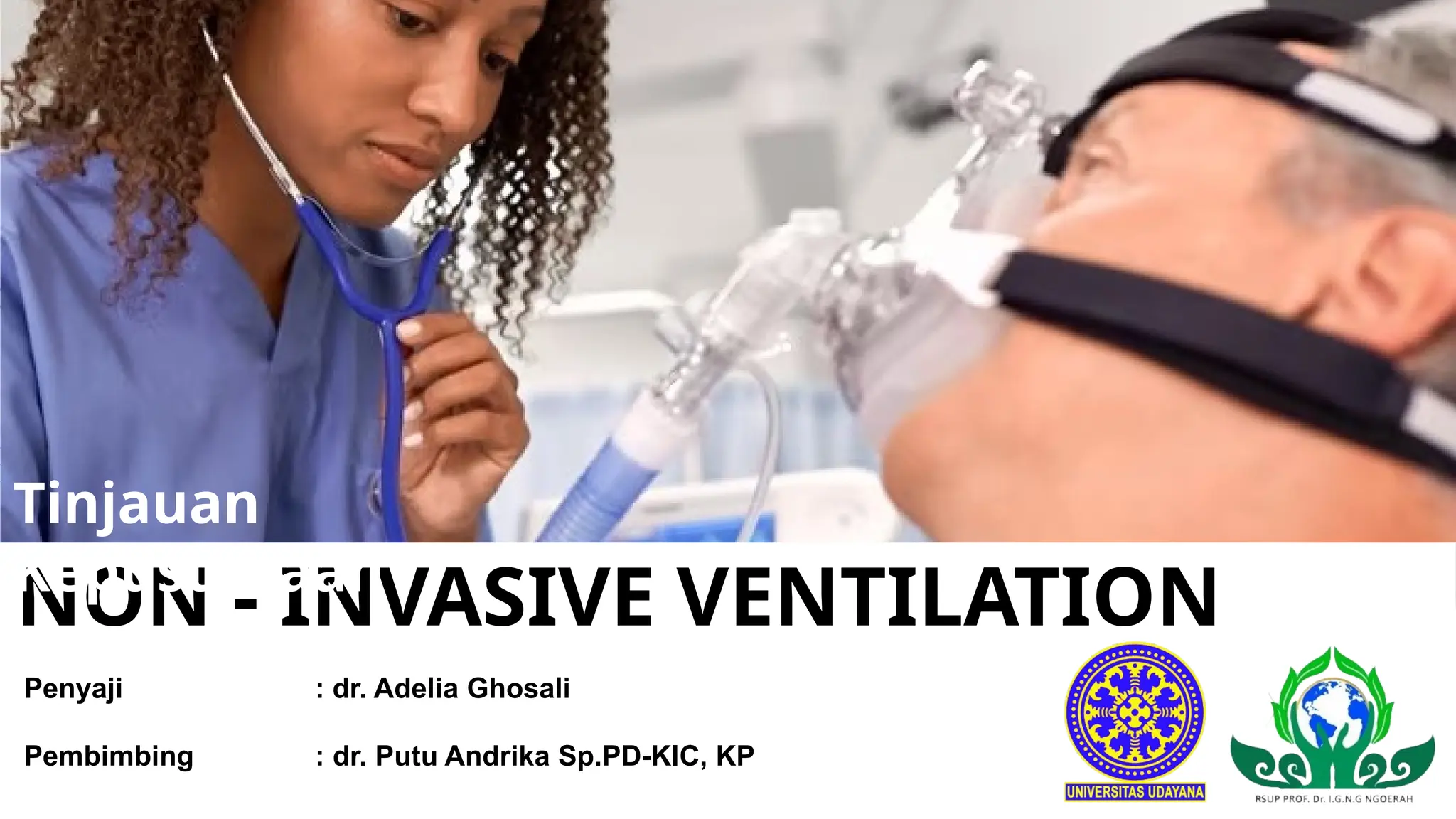
NON - INVASIVE VENTILATION
Penyaji : dr. Adelia Ghosali
Pembimbing : dr. Putu Andrika Sp.PD-KIC, KP
Tinjauan
Kepustakaan
OVERVIEW
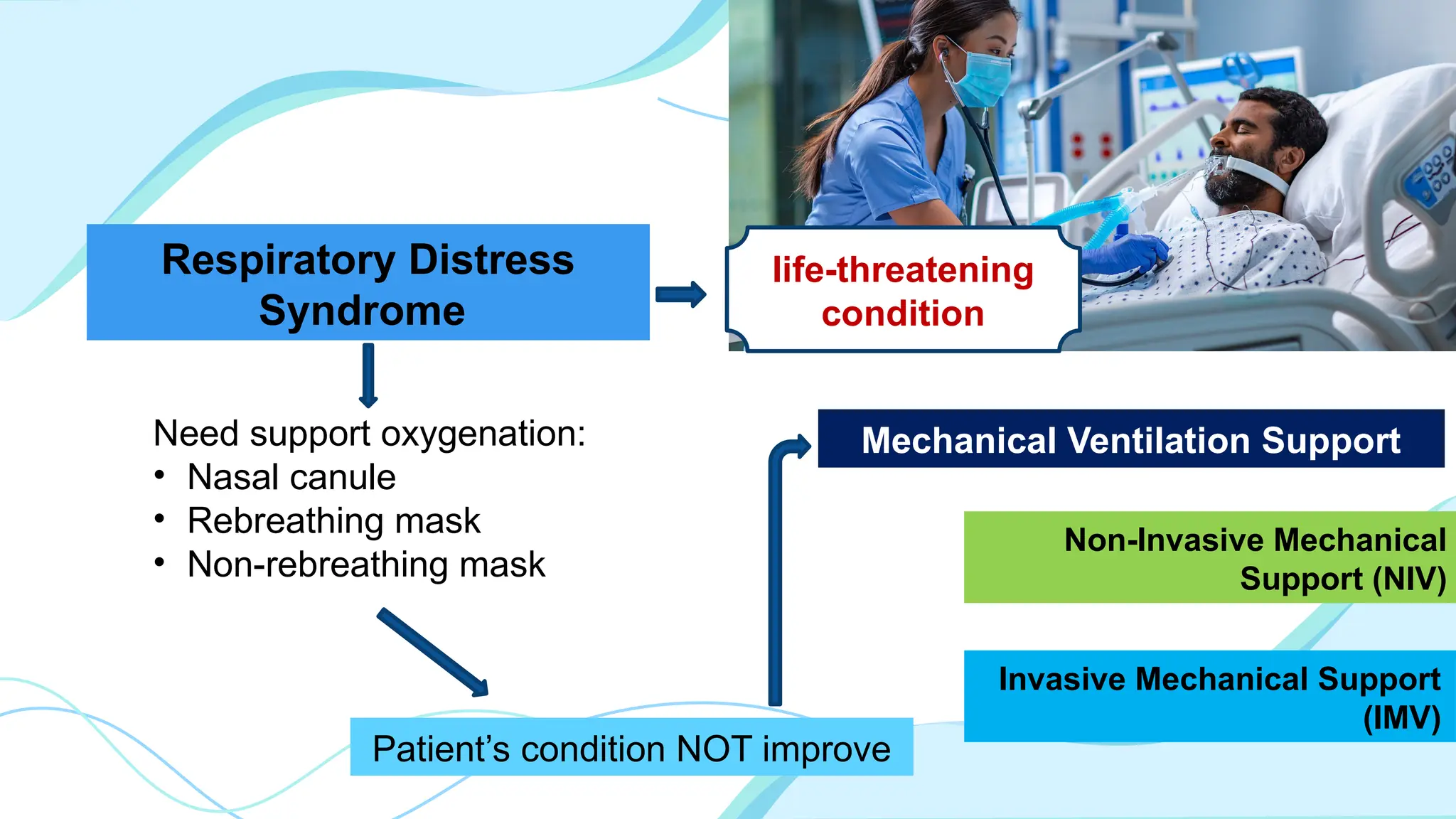
Respiratory Distress
Syndrome
life-threatening
condition
Need support oxygenation:
• Nasal canule
• Rebreathing mask
• Non-rebreathing mask
Patient’s condition NOT improve
Mechanical Ventilation Support
Invasive Mechanical Support
(IMV)
Non-Invasive Mechanical
Support (NIV)
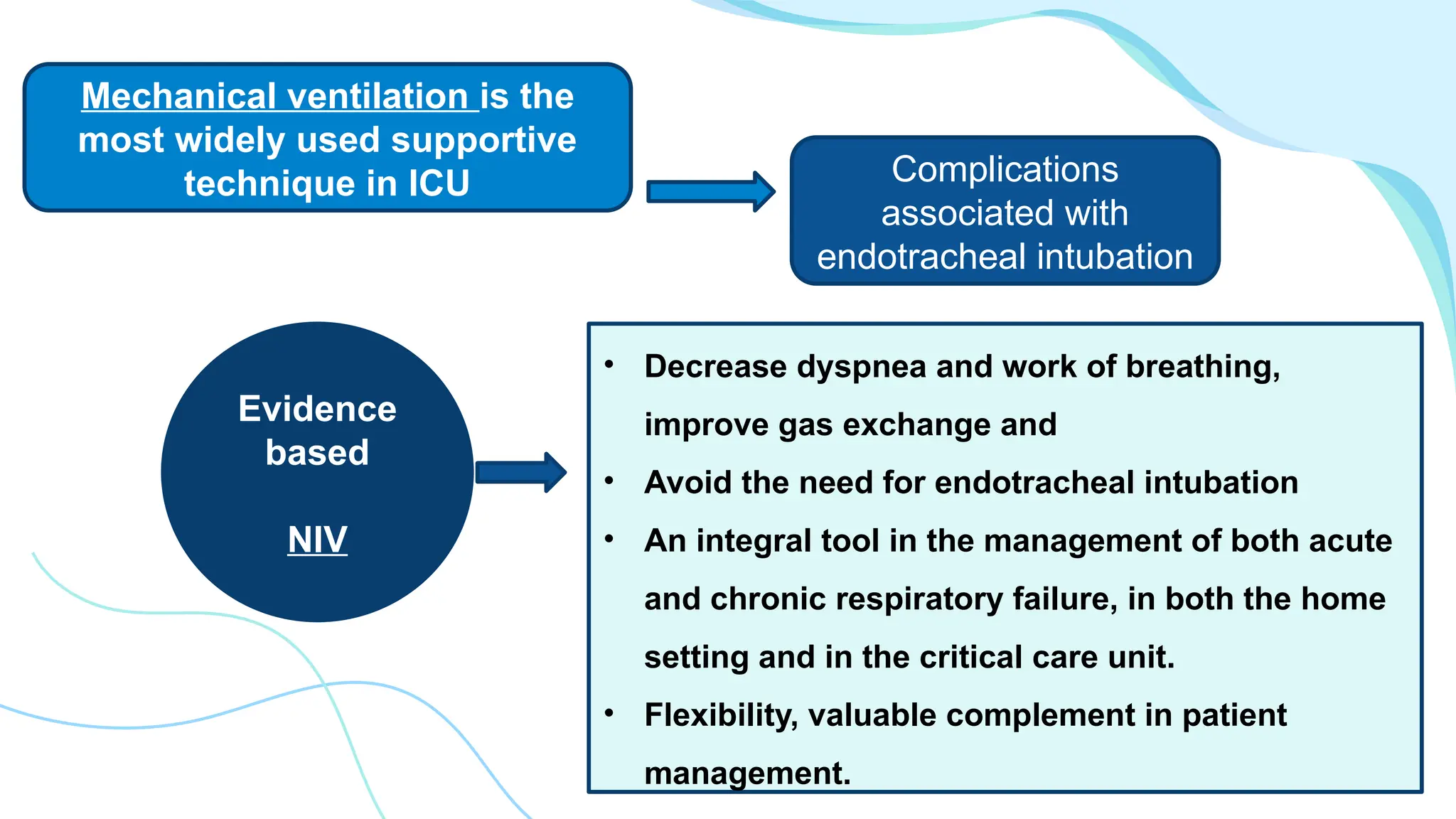
Mechanical ventilation is the
most widely used supportive
technique in ICU Complications
associated with
endotracheal intubation
Evidence
based
NIV
• Decrease dyspnea and work of breathing,
improve gas exchange and
• Avoid the need for endotracheal intubation
• An integral tool in the management of both acute
and chronic respiratory failure, in both the home
setting and in the critical care unit.
• Flexibility, valuable complement in patient
management.
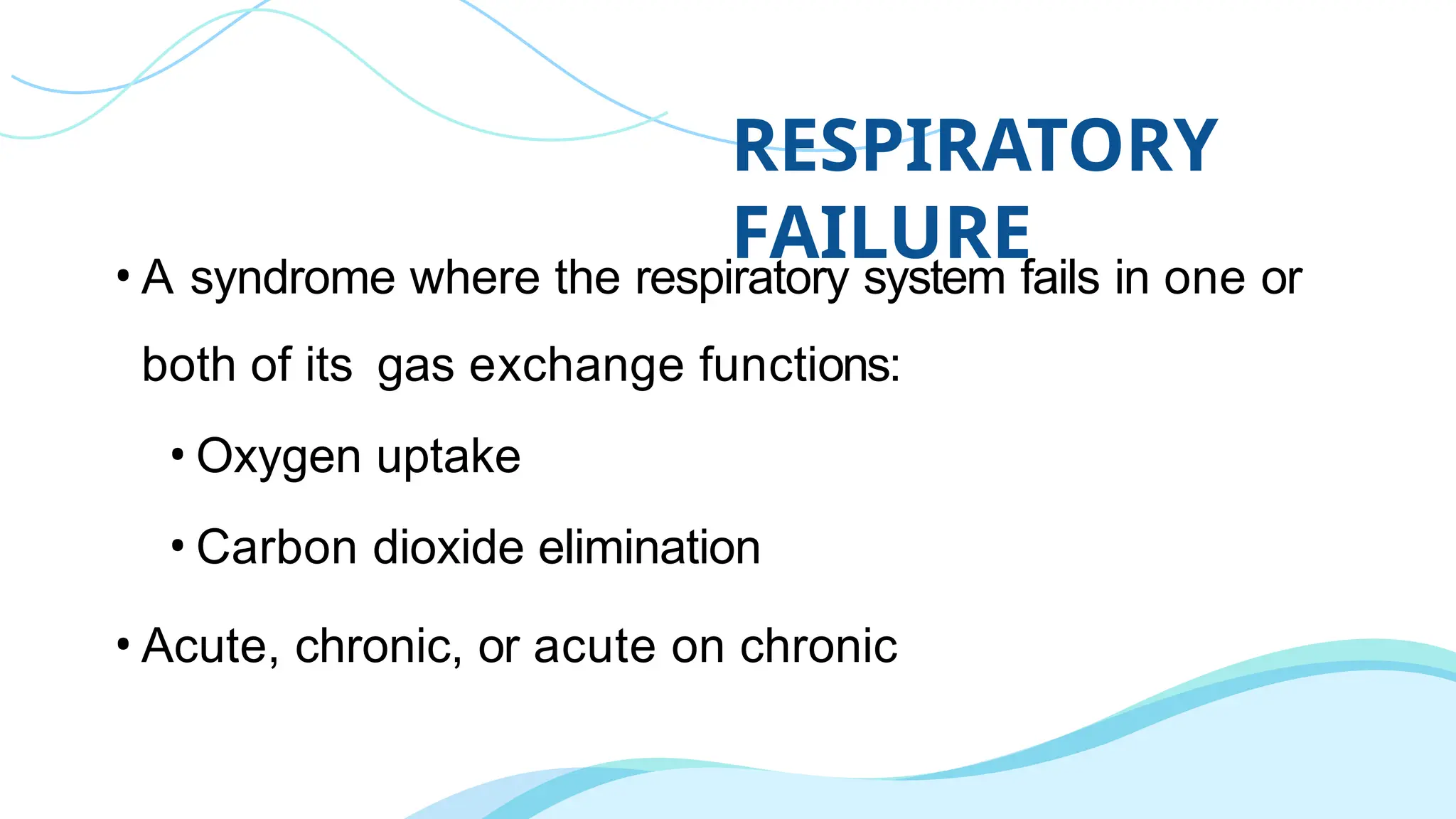
RESPIRATORY
FAILURE
• A syndrome where the respiratory system fails in one or
both of its gas exchange functions:
• Oxygen uptake
• Carbon dioxide elimination
• Acute, chronic, or acute on chronic
ARF
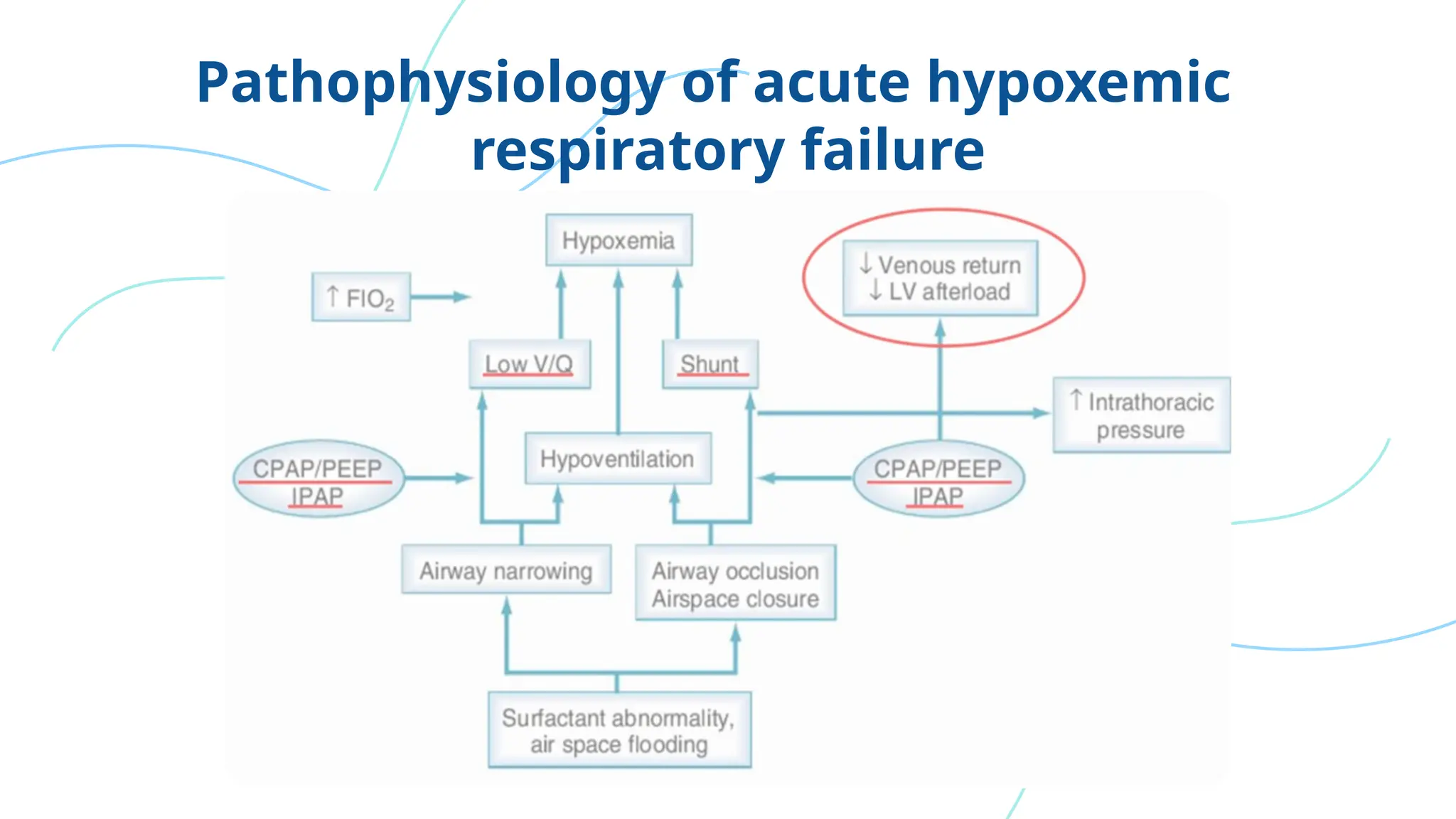
Pathophysiology of acute hypoxemic
respiratory failure
Pathophysiology of acute hypercapnia
respiratory failure
NIV
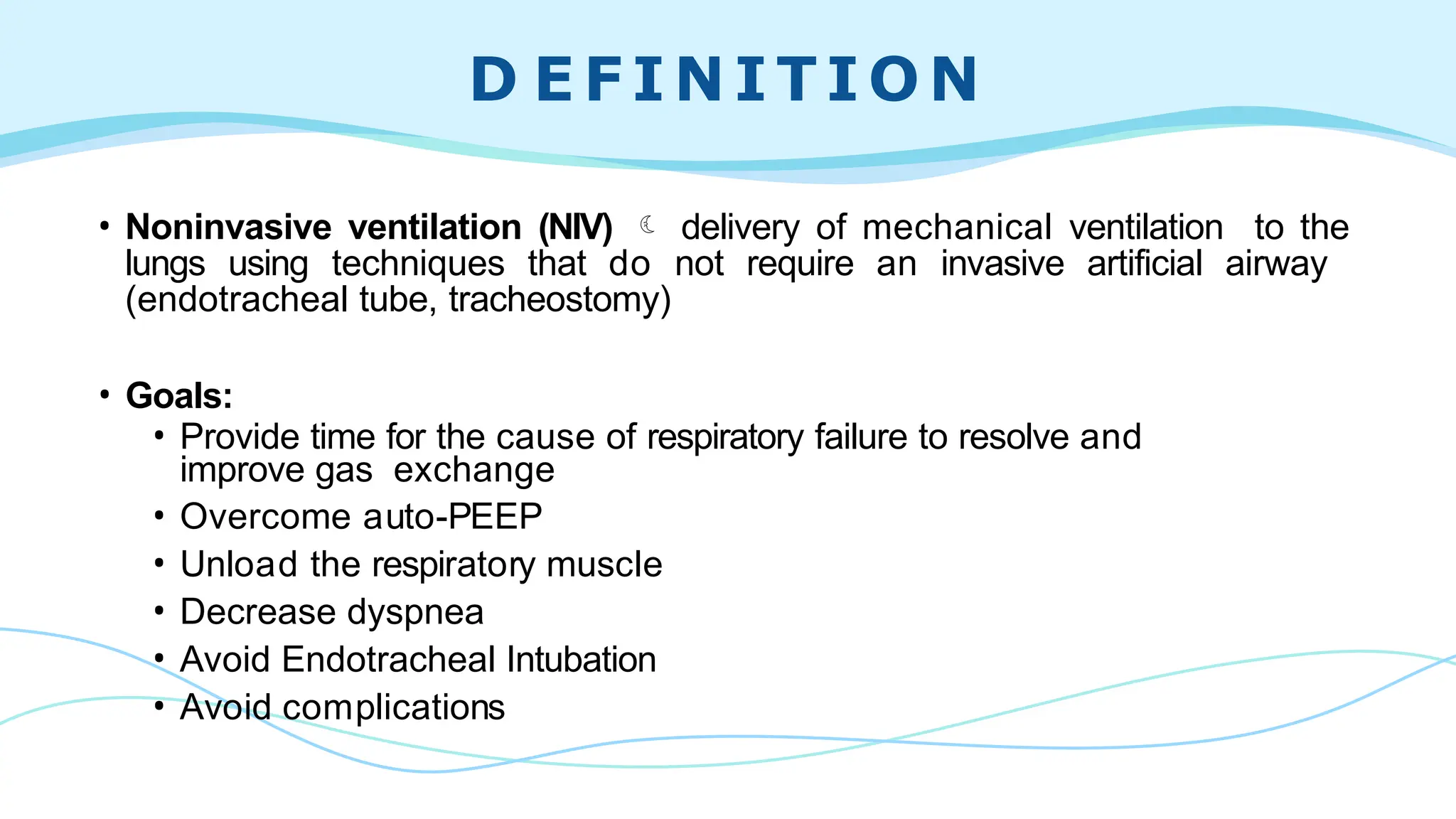
D EFINITION
• Noninvasive ventilation (NIV)  delivery of mechanical ventilation to the
lungs using techniques that do not require an invasive artificial airway
(endotracheal tube, tracheostomy)
• Goals:
• Provide time for the cause of respiratory failure to resolve and
improve gas exchange
• Overcome auto-PEEP
• Unload the respiratory muscle
• Decrease dyspnea
• Avoid Endotracheal Intubation
• Avoid complications
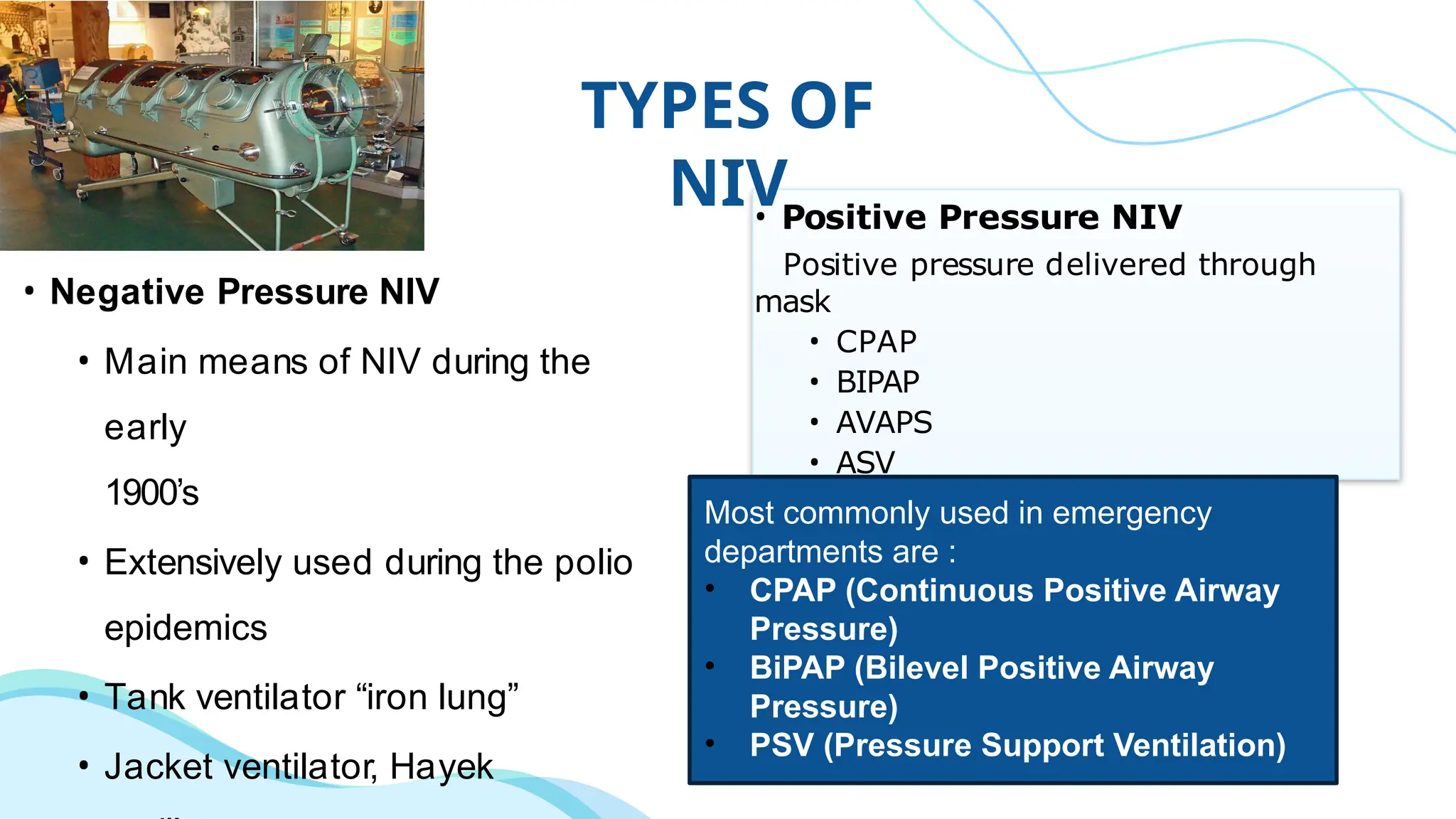
• Negative Pressure NIV
• Main means of NIV during the
early
1900’s
• Extensively used during the polio
epidemics
• Tank ventilator “iron lung”
• Jacket ventilator, Hayek
• Positive Pressure NIV
Positive pressure delivered through
mask
• CPAP
• BIPAP
• AVAPS
• ASV
TYPES OF
NIV
Most commonly used in emergency
departments are :
• CPAP (Continuous Positive Airway
Pressure)
• BiPAP (Bilevel Positive Airway
Pressure)
• PSV (Pressure Support Ventilation)
INTERFACES
Full Face
Mask
• Nutrition and hydration
• Lower air leaks
• No facial skin lessions and eye
irritation
• Independent of the patient’s
anatomy
• Decreased inspiratory effort but
less
efficient
Helmet
Interface
HOW DOES NIV WORK?
• Reduction in inspiratory muscle work and avoidance of respiratory muscle fatigue
• Augments Tidal Volume
• Improves compliance by reversing microatelectasis
• Overcome intrinsic PEEP
• Enhanced cardiovascular function (afterload reduction)
• Stent the airway
• Reduce CO2 production
MODES Of NIV
Pressure Modes
• Better tolerated than volume-
cycled mode
• Continuous positive airway pressure
(CPAP)
• Bilevel or biphasic positive airway pressure
(BiPAP)
• Pressure Support Ventilation (PSV)
Volume Modes
• Initial TV range 10-15 ml/kg
• Control
• Assist Control
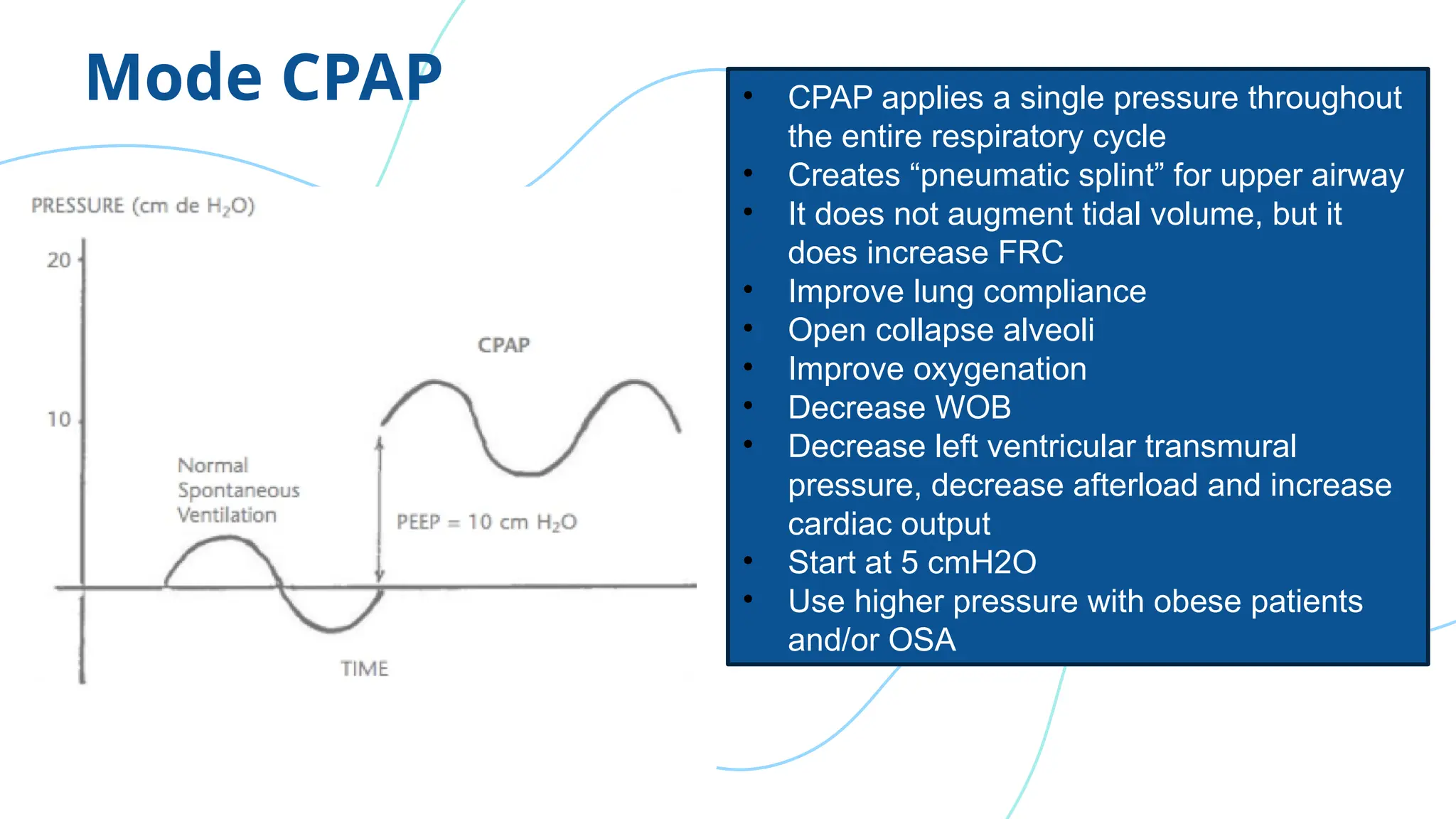
Mode CPAP • CPAP applies a single pressure throughout
the entire respiratory cycle
• Creates “pneumatic splint” for upper airway
• It does not augment tidal volume, but it
does increase FRC
• Improve lung compliance
• Open collapse alveoli
• Improve oxygenation
• Decrease WOB
• Decrease left ventricular transmural
pressure, decrease afterload and increase
cardiac output
• Start at 5 cmH2O
• Use higher pressure with obese patients
and/or OSA
Mode BiPAP
BiPAP
• Bi-level Positive Airway Pressure is a type of non-
invasive ventilation to provide positive pressure
ventilation supporting patient’s spontaneous breathing.
• A higher pressure (IPAP) for breath in & a lower pressure
(EPAP) for breath out in order to:
• ↓work of breathing
• Improve oxygenation and ventilation
British Thoracic Society Standards of Care Committee. Non-invasive ventilation in acute respiratory failure. 2002
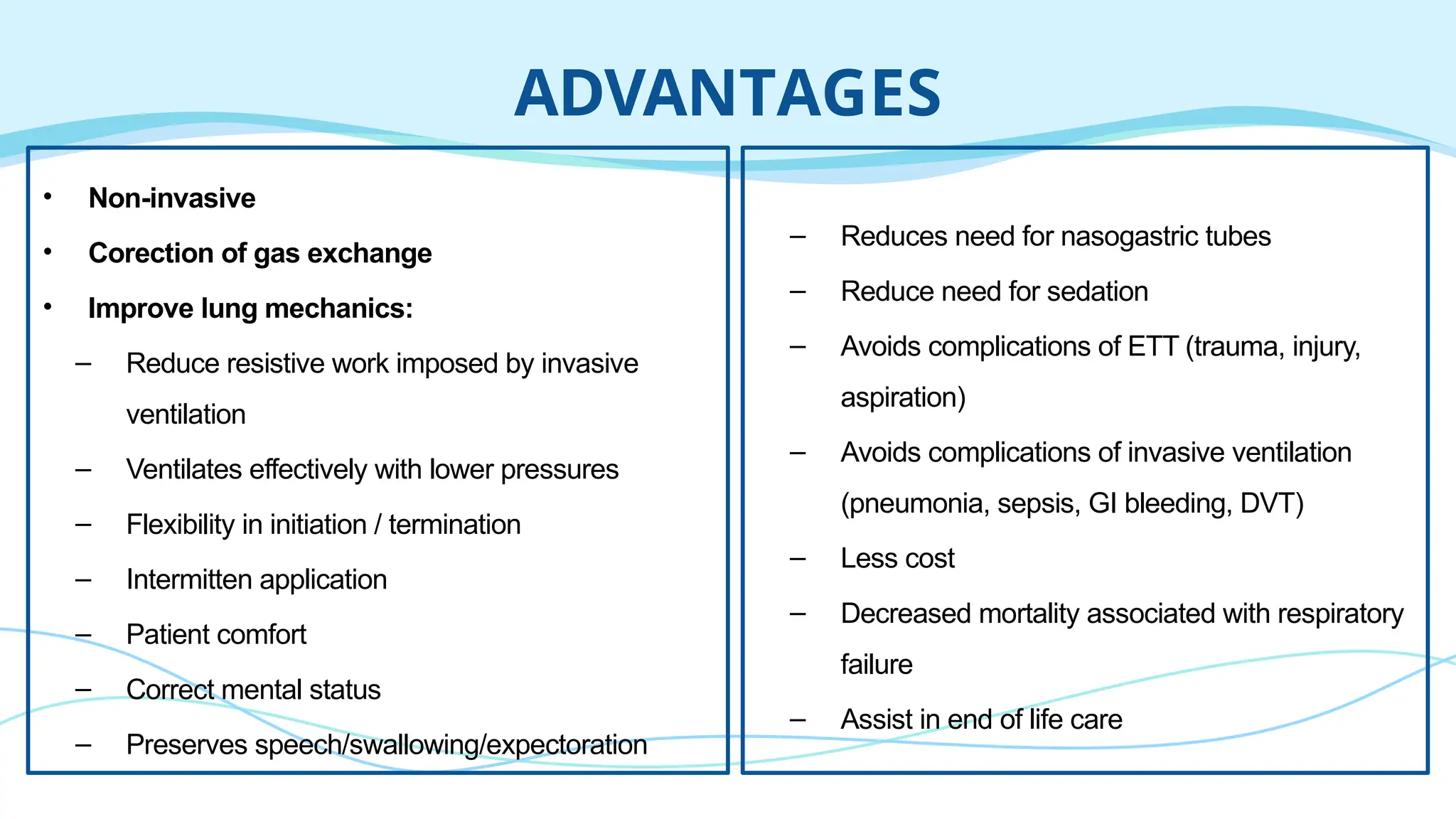
ADVANTAGES
• Non-invasive
• Corection of gas exchange
• Improve lung mechanics:
‒ Reduce resistive work imposed by invasive
ventilation
‒ Ventilates effectively with lower pressures
‒ Flexibility in initiation / termination
‒ Intermitten application
‒ Patient comfort
‒ Correct mental status
‒ Preserves speech/swallowing/expectoration
‒ Reduces need for nasogastric tubes
‒ Reduce need for sedation
‒ Avoids complications of ETT (trauma, injury,
aspiration)
‒ Avoids complications of invasive ventilation
(pneumonia, sepsis, GI bleeding, DVT)
‒ Less cost
‒ Decreased mortality associated with respiratory
failure
‒ Assist in end of life care
Airway
• Aspiration
• Limited secretion
clearance
DISADVANTAGES
System
• Slower correction of
gas exchange
abnormalities
• Time
commitment/attentio
n
• Gastric distention
Interface
• Leaks
• Skin necrosis/rash
• Eye/ear irritation
• Sinus pressure
CANDIDATES For NIV
• Absence of contraindications for NIV application.
• Presence of spontaneous breathing.
• Patient collaboration.
• Patient with sufficient level of consciousness to expectorate andcough.
• Patient with established ARF initially unresponsive to conventional treatment:
tachypnoea with RR≥24breaths/minute, SaO2 <90% after application of FiO2
greater than 0.5, use of accessory muscles and thoracoabdominal
asynchrony.
• If gasometric data are available, we should include patients with ARF who, in
addition to the above clinical signs, also presentPaCO, > 45 mmHg pH < 7.35
and PaO,/FiO, < 200.
CONTRAINDICATIONS
1. Respiratory arrest or gasping.
2. Hemodynamic instability (SBP below 90 mmHg despite adequatefluid
replacement or inotropics) with signs of hypoperfusion.
3. Myocardial ischemia.
4. Heart rhythm disorder.
5. Low level of consciousness that makes protection of the airway
impossible.
6. Excessive respiratory secretions.
7. Status asthmaticus.
8. Pneumothorax.
9. Severe chest trauma.
CONTRAINDICATIONS
10. Agitated or non-collaborative patient who does not tolerate
thetechnique.
11. Persistent emetic picture.
12. Facial trauma.
13. Facial burns or airway.
14. Maxillofacial surgery.
15. Anatomical facial defect that interferes with the adjustment of the
interface.
16. Tracheostomy.
17. Recent esophageal or gastric surgery.
18. Patient with indications for intubation.
19. No possibility of thorough control or monitoring of the patient.
OUTCOMES Of NIV For ACUTE EXACERBATIONS
Of COPD
In THE UNITED STATES 1998-2008
Chandra et al. Am. J. Respir
. Crit. Care Med. 2012; 185:
T rends in the use of noninvasive
positive pressure ventilation
(NIPPV)
& invasive mechanical
ventilation (IMV) as the initial
form of respiratory support in
patients hospitalized with acute
exacerbations of chronic
obstructive pulmonary
disease (COPD) in the United
States, 1998–2008.
• Multiple RCTs support a success rate of 80-85%
• Shown to improve respiratory acidosis
• Decrease work of breathing, dyspnea, and complications
including VAP, LOS hospital
• Reduce mortality and intubation rates
GOLD Guidelines 2021
NIV in COPD
EXACERBATION
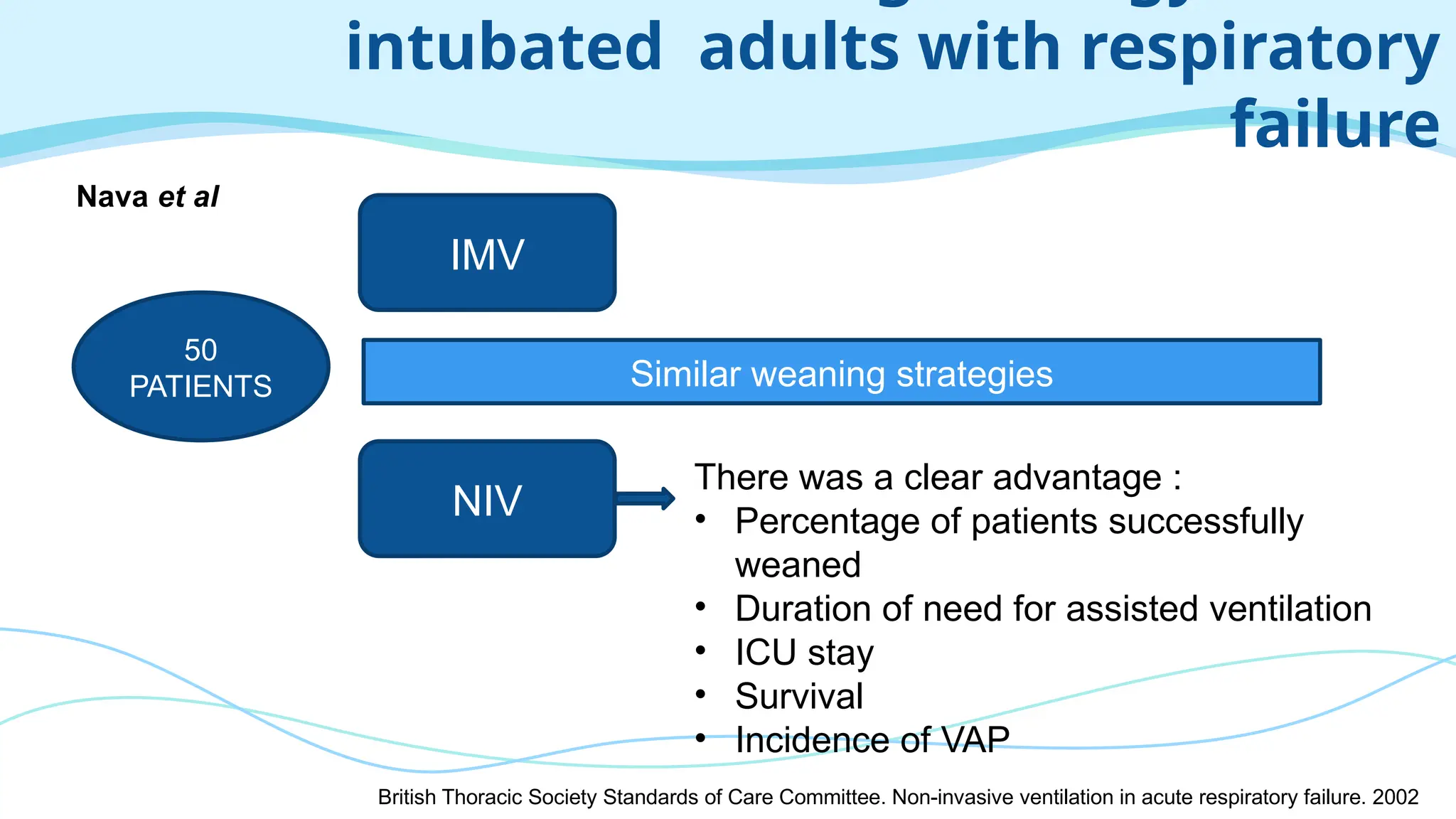
There was a clear advantage :
• Percentage of patients successfully
weaned
• Duration of need for assisted ventilation
• ICU stay
• Survival
• Incidence of VAP
intubated adults with respiratory
failure
NIV
IMV
50
PATIENTS Similar weaning strategies
Nava et al
British Thoracic Society Standards of Care Committee. Non-invasive ventilation in acute respiratory failure. 2002
intubated adults with respiratory
failure
But there was no difference in the number who could be weaned,
the length of ICU stay, or survival at 3 months.
33 patients
(Who failed a T-
piece trial)
Girault et al IMV
NIV
Compared in a randomised study
extubated earlier
British Thoracic Society Standards of Care Committee. Non-invasive ventilation in acute respiratory failure. 2002
Cardiogenic
Pulmonary edema
(Evidence to date on the potential benefit of NIV in reducing mortality is
entirely derived from small trials and further large scale trials are needed)
Vital, et al. Cochrane Database Syst Rev 2013; 5: CD005351
CPAP / BIPAP
For CARDIOGENIC PULMONARY EDEMA
Included 32 studies
NIV
Safe & effective intervention
Vital, et al
• Role for NIV in asthma not well defined
• Alternative to IMV in patients who have failed standard
treatment
• Prevent need for invasive mechanical ventilation in patients
who do not have substantial impairment in gas
exchange
NIV IN ASTHMA
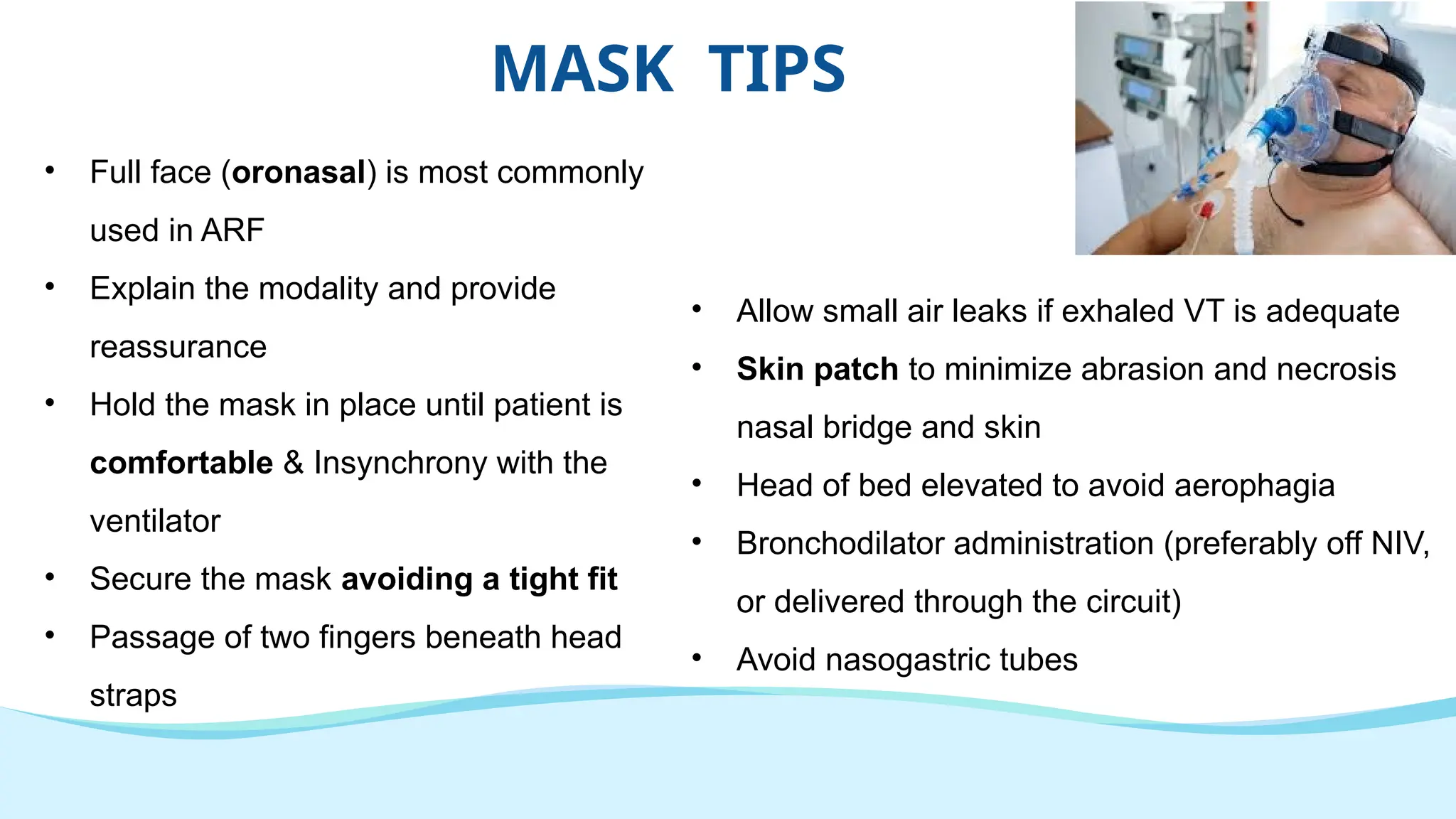
MASK TIPS
• Allow small air leaks if exhaled VT is adequate
• Skin patch to minimize abrasion and necrosis
nasal bridge and skin
• Head of bed elevated to avoid aerophagia
• Bronchodilator administration (preferably off NIV,
or delivered through the circuit)
• Avoid nasogastric tubes
• Full face (oronasal) is most commonly
used in ARF
• Explain the modality and provide
reassurance
• Hold the mask in place until patient is
comfortable & Insynchrony with the
ventilator
• Secure the mask avoiding a tight fit
• Passage of two fingers beneath head
straps
• Subjective response
• Bedside observation
• Physiologic response
• Improved hemodynamics (RR, HR, BP)
• Patient in synchrony with NIV device
• Decreased WOB
• Improved TV
• Objective response
• Improved gas exchange (ABG)
• Check ABG 1 h after initiation and 1 h after every change in
settings
• Clinical judgement
• Continuous ECG and pulse oximetry monitoring
CLINICAL MONITORING
Predictors of success
• pH 7.25-7.35
• Improvement of pH, PaCO,
and respiratory rate after 1
hour of NIV
• Adequate level of
consciousness
Predictors of failure
• High APACHE II
• Pneumonia on chest x-ray
• Excessive respiratory secretions
• Patients without teeth
• Poor nutritional status
• Low level of awareness
Predictors of success & failure
of NIV
COMPLICATIO
NS
AIR LEAK
• Ensure that the mask is the correct size and has been fitted
correctly.
• Use a mask of a a different size of type.
• Tighten the straps.
• Reduce airway pressures, if possible.
SKIN IRRITATION/
ABRASION
• Loosen the straps.
• Use a mask of a different size of type.
• Apply artificial skin or a dressing over the affected area.
CLAUSTROPHOBIA
• Redirect the patient by having the patient watch TV, talking to
the patient, or having a family member talk to the patient
• Use a less obtrusive mask (e.g., nasal pillows)
• Consider inducing light sedation in the patient
NASAL
CONGESTION,
SINUS PAIN/ EAR
PAIN
• Provide topical decongestants / antihistamines if there are no
contraindications.
• Humidify the inspired air
• Reduce airway pressure, if possible.
COMPLICATIO
NS
MUCOSAL
DRYNESS
• Humidify the inspired air.
• If a nasal mask is being used, apply a chin strap to reduce
air flow through the mouth.
MUCUS
PLUGGING
• Humidify the inspired air.
• Give the patient brief breaks from ventilation, if possible,
and perform maneuvers that will help clear the airway,
such as chest percussion.
• Reduce airway pressures, if possible.
PULMONARY
BAROTRAUMA /
PNEUMOTHORAX
• Stop ventilation or, at minimum, reduce airway pressures.
Insert chest tube, if appropriate.
Kelly, C et al. NEJM 2015;
CONCLUSI
ONS
• NIV stabilize patients with acute and chronic
respiratory failure.
• Avoids the need and complications of invasive
ventilation, also more comfortable for the
patients.
• Useful in the management of patients with ARF,
exacerbations of obstructive pulmonary
disease, pulmonary oedema, and ventilator
weaning.
• The determinants of the success of NIV 
appropriate indication & patient selection for
candidates of NIV, clinician skills & aware of
contraindicated situations
THANK

Non-invasive Ventilation in lung disease

  • 1.
    NON - INVASIVEVENTILATION Penyaji : dr. Adelia Ghosali Pembimbing : dr. Putu Andrika Sp.PD-KIC, KP Tinjauan Kepustakaan
  • 2.
  • 3.
    Respiratory Distress Syndrome life-threatening condition Need supportoxygenation: • Nasal canule • Rebreathing mask • Non-rebreathing mask Patient’s condition NOT improve Mechanical Ventilation Support Invasive Mechanical Support (IMV) Non-Invasive Mechanical Support (NIV)
  • 4.
    Mechanical ventilation isthe most widely used supportive technique in ICU Complications associated with endotracheal intubation Evidence based NIV • Decrease dyspnea and work of breathing, improve gas exchange and • Avoid the need for endotracheal intubation • An integral tool in the management of both acute and chronic respiratory failure, in both the home setting and in the critical care unit. • Flexibility, valuable complement in patient management.
  • 5.
    RESPIRATORY FAILURE • A syndromewhere the respiratory system fails in one or both of its gas exchange functions: • Oxygen uptake • Carbon dioxide elimination • Acute, chronic, or acute on chronic
  • 6.
  • 7.
    Pathophysiology of acutehypoxemic respiratory failure
  • 8.
    Pathophysiology of acutehypercapnia respiratory failure
  • 9.
  • 10.
    D EFINITION • Noninvasiveventilation (NIV)  delivery of mechanical ventilation to the lungs using techniques that do not require an invasive artificial airway (endotracheal tube, tracheostomy) • Goals: • Provide time for the cause of respiratory failure to resolve and improve gas exchange • Overcome auto-PEEP • Unload the respiratory muscle • Decrease dyspnea • Avoid Endotracheal Intubation • Avoid complications
  • 11.
    • Negative PressureNIV • Main means of NIV during the early 1900’s • Extensively used during the polio epidemics • Tank ventilator “iron lung” • Jacket ventilator, Hayek • Positive Pressure NIV Positive pressure delivered through mask • CPAP • BIPAP • AVAPS • ASV TYPES OF NIV Most commonly used in emergency departments are : • CPAP (Continuous Positive Airway Pressure) • BiPAP (Bilevel Positive Airway Pressure) • PSV (Pressure Support Ventilation)
  • 12.
  • 13.
  • 14.
    • Nutrition andhydration • Lower air leaks • No facial skin lessions and eye irritation • Independent of the patient’s anatomy • Decreased inspiratory effort but less efficient Helmet Interface
  • 16.
    HOW DOES NIVWORK? • Reduction in inspiratory muscle work and avoidance of respiratory muscle fatigue • Augments Tidal Volume • Improves compliance by reversing microatelectasis • Overcome intrinsic PEEP • Enhanced cardiovascular function (afterload reduction) • Stent the airway • Reduce CO2 production
  • 17.
    MODES Of NIV PressureModes • Better tolerated than volume- cycled mode • Continuous positive airway pressure (CPAP) • Bilevel or biphasic positive airway pressure (BiPAP) • Pressure Support Ventilation (PSV) Volume Modes • Initial TV range 10-15 ml/kg • Control • Assist Control
  • 18.
    Mode CPAP •CPAP applies a single pressure throughout the entire respiratory cycle • Creates “pneumatic splint” for upper airway • It does not augment tidal volume, but it does increase FRC • Improve lung compliance • Open collapse alveoli • Improve oxygenation • Decrease WOB • Decrease left ventricular transmural pressure, decrease afterload and increase cardiac output • Start at 5 cmH2O • Use higher pressure with obese patients and/or OSA
  • 19.
  • 20.
    BiPAP • Bi-level PositiveAirway Pressure is a type of non- invasive ventilation to provide positive pressure ventilation supporting patient’s spontaneous breathing. • A higher pressure (IPAP) for breath in & a lower pressure (EPAP) for breath out in order to: • ↓work of breathing • Improve oxygenation and ventilation
  • 21.
    British Thoracic SocietyStandards of Care Committee. Non-invasive ventilation in acute respiratory failure. 2002
  • 22.
    ADVANTAGES • Non-invasive • Corectionof gas exchange • Improve lung mechanics: ‒ Reduce resistive work imposed by invasive ventilation ‒ Ventilates effectively with lower pressures ‒ Flexibility in initiation / termination ‒ Intermitten application ‒ Patient comfort ‒ Correct mental status ‒ Preserves speech/swallowing/expectoration ‒ Reduces need for nasogastric tubes ‒ Reduce need for sedation ‒ Avoids complications of ETT (trauma, injury, aspiration) ‒ Avoids complications of invasive ventilation (pneumonia, sepsis, GI bleeding, DVT) ‒ Less cost ‒ Decreased mortality associated with respiratory failure ‒ Assist in end of life care
  • 23.
    Airway • Aspiration • Limitedsecretion clearance DISADVANTAGES System • Slower correction of gas exchange abnormalities • Time commitment/attentio n • Gastric distention Interface • Leaks • Skin necrosis/rash • Eye/ear irritation • Sinus pressure
  • 24.
    CANDIDATES For NIV •Absence of contraindications for NIV application. • Presence of spontaneous breathing. • Patient collaboration. • Patient with sufficient level of consciousness to expectorate andcough. • Patient with established ARF initially unresponsive to conventional treatment: tachypnoea with RR≥24breaths/minute, SaO2 <90% after application of FiO2 greater than 0.5, use of accessory muscles and thoracoabdominal asynchrony. • If gasometric data are available, we should include patients with ARF who, in addition to the above clinical signs, also presentPaCO, > 45 mmHg pH < 7.35 and PaO,/FiO, < 200.
  • 25.
    CONTRAINDICATIONS 1. Respiratory arrestor gasping. 2. Hemodynamic instability (SBP below 90 mmHg despite adequatefluid replacement or inotropics) with signs of hypoperfusion. 3. Myocardial ischemia. 4. Heart rhythm disorder. 5. Low level of consciousness that makes protection of the airway impossible. 6. Excessive respiratory secretions. 7. Status asthmaticus. 8. Pneumothorax. 9. Severe chest trauma.
  • 26.
    CONTRAINDICATIONS 10. Agitated ornon-collaborative patient who does not tolerate thetechnique. 11. Persistent emetic picture. 12. Facial trauma. 13. Facial burns or airway. 14. Maxillofacial surgery. 15. Anatomical facial defect that interferes with the adjustment of the interface. 16. Tracheostomy. 17. Recent esophageal or gastric surgery. 18. Patient with indications for intubation. 19. No possibility of thorough control or monitoring of the patient.
  • 27.
    OUTCOMES Of NIVFor ACUTE EXACERBATIONS Of COPD In THE UNITED STATES 1998-2008 Chandra et al. Am. J. Respir . Crit. Care Med. 2012; 185: T rends in the use of noninvasive positive pressure ventilation (NIPPV) & invasive mechanical ventilation (IMV) as the initial form of respiratory support in patients hospitalized with acute exacerbations of chronic obstructive pulmonary disease (COPD) in the United States, 1998–2008.
  • 28.
    • Multiple RCTssupport a success rate of 80-85% • Shown to improve respiratory acidosis • Decrease work of breathing, dyspnea, and complications including VAP, LOS hospital • Reduce mortality and intubation rates GOLD Guidelines 2021 NIV in COPD EXACERBATION
  • 29.
    There was aclear advantage : • Percentage of patients successfully weaned • Duration of need for assisted ventilation • ICU stay • Survival • Incidence of VAP intubated adults with respiratory failure NIV IMV 50 PATIENTS Similar weaning strategies Nava et al British Thoracic Society Standards of Care Committee. Non-invasive ventilation in acute respiratory failure. 2002
  • 30.
    intubated adults withrespiratory failure But there was no difference in the number who could be weaned, the length of ICU stay, or survival at 3 months. 33 patients (Who failed a T- piece trial) Girault et al IMV NIV Compared in a randomised study extubated earlier British Thoracic Society Standards of Care Committee. Non-invasive ventilation in acute respiratory failure. 2002
  • 31.
  • 32.
    (Evidence to dateon the potential benefit of NIV in reducing mortality is entirely derived from small trials and further large scale trials are needed) Vital, et al. Cochrane Database Syst Rev 2013; 5: CD005351 CPAP / BIPAP For CARDIOGENIC PULMONARY EDEMA Included 32 studies NIV Safe & effective intervention Vital, et al
  • 33.
    • Role forNIV in asthma not well defined • Alternative to IMV in patients who have failed standard treatment • Prevent need for invasive mechanical ventilation in patients who do not have substantial impairment in gas exchange NIV IN ASTHMA
  • 34.
    MASK TIPS • Allowsmall air leaks if exhaled VT is adequate • Skin patch to minimize abrasion and necrosis nasal bridge and skin • Head of bed elevated to avoid aerophagia • Bronchodilator administration (preferably off NIV, or delivered through the circuit) • Avoid nasogastric tubes • Full face (oronasal) is most commonly used in ARF • Explain the modality and provide reassurance • Hold the mask in place until patient is comfortable & Insynchrony with the ventilator • Secure the mask avoiding a tight fit • Passage of two fingers beneath head straps
  • 35.
    • Subjective response •Bedside observation • Physiologic response • Improved hemodynamics (RR, HR, BP) • Patient in synchrony with NIV device • Decreased WOB • Improved TV • Objective response • Improved gas exchange (ABG) • Check ABG 1 h after initiation and 1 h after every change in settings • Clinical judgement • Continuous ECG and pulse oximetry monitoring CLINICAL MONITORING
  • 36.
    Predictors of success •pH 7.25-7.35 • Improvement of pH, PaCO, and respiratory rate after 1 hour of NIV • Adequate level of consciousness Predictors of failure • High APACHE II • Pneumonia on chest x-ray • Excessive respiratory secretions • Patients without teeth • Poor nutritional status • Low level of awareness Predictors of success & failure of NIV
  • 37.
    COMPLICATIO NS AIR LEAK • Ensurethat the mask is the correct size and has been fitted correctly. • Use a mask of a a different size of type. • Tighten the straps. • Reduce airway pressures, if possible. SKIN IRRITATION/ ABRASION • Loosen the straps. • Use a mask of a different size of type. • Apply artificial skin or a dressing over the affected area. CLAUSTROPHOBIA • Redirect the patient by having the patient watch TV, talking to the patient, or having a family member talk to the patient • Use a less obtrusive mask (e.g., nasal pillows) • Consider inducing light sedation in the patient NASAL CONGESTION, SINUS PAIN/ EAR PAIN • Provide topical decongestants / antihistamines if there are no contraindications. • Humidify the inspired air • Reduce airway pressure, if possible.
  • 38.
    COMPLICATIO NS MUCOSAL DRYNESS • Humidify theinspired air. • If a nasal mask is being used, apply a chin strap to reduce air flow through the mouth. MUCUS PLUGGING • Humidify the inspired air. • Give the patient brief breaks from ventilation, if possible, and perform maneuvers that will help clear the airway, such as chest percussion. • Reduce airway pressures, if possible. PULMONARY BAROTRAUMA / PNEUMOTHORAX • Stop ventilation or, at minimum, reduce airway pressures. Insert chest tube, if appropriate. Kelly, C et al. NEJM 2015;
  • 39.
    CONCLUSI ONS • NIV stabilizepatients with acute and chronic respiratory failure. • Avoids the need and complications of invasive ventilation, also more comfortable for the patients. • Useful in the management of patients with ARF, exacerbations of obstructive pulmonary disease, pulmonary oedema, and ventilator weaning. • The determinants of the success of NIV  appropriate indication & patient selection for candidates of NIV, clinician skills & aware of contraindicated situations
  • 40.