Mumps
Dr. Shubhangi S. Kshirsagar
Assistant professor
Department of Swasthavritta & Yoga
Mumps
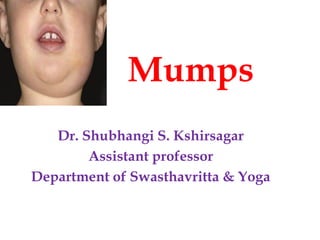
An acute infectious disease
caused by an RNA virus.
 Clinically, the disease is
recognized by non-
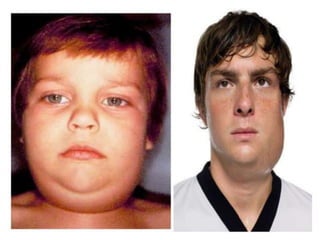
suppurative enlargement
and tenderness of one or
both the parotid glands.
Other organs may also be
involved.
Agent factors
a. Agent - Myxovirus parotiditis is a RNA virus
of the myxovirus family.
b. Source of infection
 Clinical and subclinical cases.
 Subclinical cases - 30-40 per cent of all cases
and responsible for maintaining the cycle of
infection.
c. Period of communicability - 4-6 days before the
onset of symptoms and a week or more
thereafter.
d. Secondary attack rate - 86 per cent.
Host factors
a. Age – 5-9 years of age.
b. Immunity
 One attack, clinical or subclinical, is assumed
to induce lifelong immunity.
 Most infants below the age of 6 months are
immune because of maternal antibodies.
Environmental factors
 Cases occur throughout the year, but the peak
incidence is in winter and spring.
 Epidemics are often associated with
overcrowding.
Mode of transmission
1. Droplet infection
2. Direct contact with an infected person.
Incubation period
Varies from 2 to 4 weeks, usually 14-18 days
Clinical features
Mumps is a generalized virus infection.
 30-40 per cent of cases mumps infection is
clinically non-apparent.
In clinically apparent cases,
 Pain and swelling in either one or both the parotid
glands
 It may also involve the sublingual and
submandibular glands.
 The child complains of ear ache on the affected
side prior to the onset of swelling.
 There may be pain and stiffness on opening
the mouth.
 Mumps may also affect the testes, pancreas,
CNS, ovaries, prostate, etc.
 In severe cases, there may be fever, headache
and other constitutional symptoms which may
last from 3-5 days.
 The swelling subsides slowly over 1-2 weeks.
Complications
Orchitis
Ovaritis
Pancreatitis
Meningoencephalitis
Thyroiditis
Neuritis
Hepatitis
 Myocarditis
Sensorineural deafness
Prevention
Live attenuated vaccine
Widely-used live attenuated mumps vaccine
strains include the JerylLynn, RIT 4385,
Leningrad-3, L-Zagreb and Urabe strains.
Single dose (0.5 ml) intramuscularly produces
detectable antibodies in 95 per cent of vaccines.
First dose – over 1 year of age children, either
alone or in combination(MMR)
Second dose – at 4-6 years of age
Control
 The control of mumps is difficult because the
disease is infectious before a diagnosis can be
made.
 The long and variable incubation period and the
occurrence of subclinical cases make the control
of spread difficult.
 Isolation - Cases should be isolated till the
clinical manifestations subside.
 Disinfection of the articles used by the patient.
 Surveillance - Contacts should be kept under
surveillance.
Thank You !

Mumps

  • 1.
    Mumps Dr. Shubhangi S.Kshirsagar Assistant professor Department of Swasthavritta & Yoga
  • 2.
    Mumps An acute infectiousdisease caused by an RNA virus.  Clinically, the disease is recognized by non- suppurative enlargement and tenderness of one or both the parotid glands. Other organs may also be involved.
  • 4.
    Agent factors a. Agent- Myxovirus parotiditis is a RNA virus of the myxovirus family. b. Source of infection  Clinical and subclinical cases.  Subclinical cases - 30-40 per cent of all cases and responsible for maintaining the cycle of infection. c. Period of communicability - 4-6 days before the onset of symptoms and a week or more thereafter. d. Secondary attack rate - 86 per cent.
  • 5.
    Host factors a. Age– 5-9 years of age. b. Immunity  One attack, clinical or subclinical, is assumed to induce lifelong immunity.  Most infants below the age of 6 months are immune because of maternal antibodies.
  • 6.
    Environmental factors  Casesoccur throughout the year, but the peak incidence is in winter and spring.  Epidemics are often associated with overcrowding.
  • 7.
    Mode of transmission 1.Droplet infection 2. Direct contact with an infected person.
  • 8.
    Incubation period Varies from2 to 4 weeks, usually 14-18 days
  • 9.
    Clinical features Mumps isa generalized virus infection.  30-40 per cent of cases mumps infection is clinically non-apparent. In clinically apparent cases,  Pain and swelling in either one or both the parotid glands  It may also involve the sublingual and submandibular glands.  The child complains of ear ache on the affected side prior to the onset of swelling.
  • 10.
     There maybe pain and stiffness on opening the mouth.  Mumps may also affect the testes, pancreas, CNS, ovaries, prostate, etc.  In severe cases, there may be fever, headache and other constitutional symptoms which may last from 3-5 days.  The swelling subsides slowly over 1-2 weeks.
  • 11.
  • 12.
    Prevention Live attenuated vaccine Widely-usedlive attenuated mumps vaccine strains include the JerylLynn, RIT 4385, Leningrad-3, L-Zagreb and Urabe strains. Single dose (0.5 ml) intramuscularly produces detectable antibodies in 95 per cent of vaccines. First dose – over 1 year of age children, either alone or in combination(MMR) Second dose – at 4-6 years of age
  • 13.
    Control  The controlof mumps is difficult because the disease is infectious before a diagnosis can be made.  The long and variable incubation period and the occurrence of subclinical cases make the control of spread difficult.  Isolation - Cases should be isolated till the clinical manifestations subside.  Disinfection of the articles used by the patient.  Surveillance - Contacts should be kept under surveillance.
  • 14.