MEASLES
Lali Sharvadze
Associated Professor
Infectious Diseases, AIDS & Clinical Immunology Research Center
Viral Exanthems
Measles,
also known
as morbilli, rubeola, or red
measles
Infectious Diseases, AIDS & Clinical Immunology Research Center
MEASLES (RUBEOLA)
Measles is a highly contagious viral infection.
It is exanthematous disease with fewer, cough,
coryza (rhinitis) and conjunctivitis.
Before the widespread use of measles vaccines, it
was estimated that measles caused between 5
million and 8 million deaths worldwide each year.
Definition
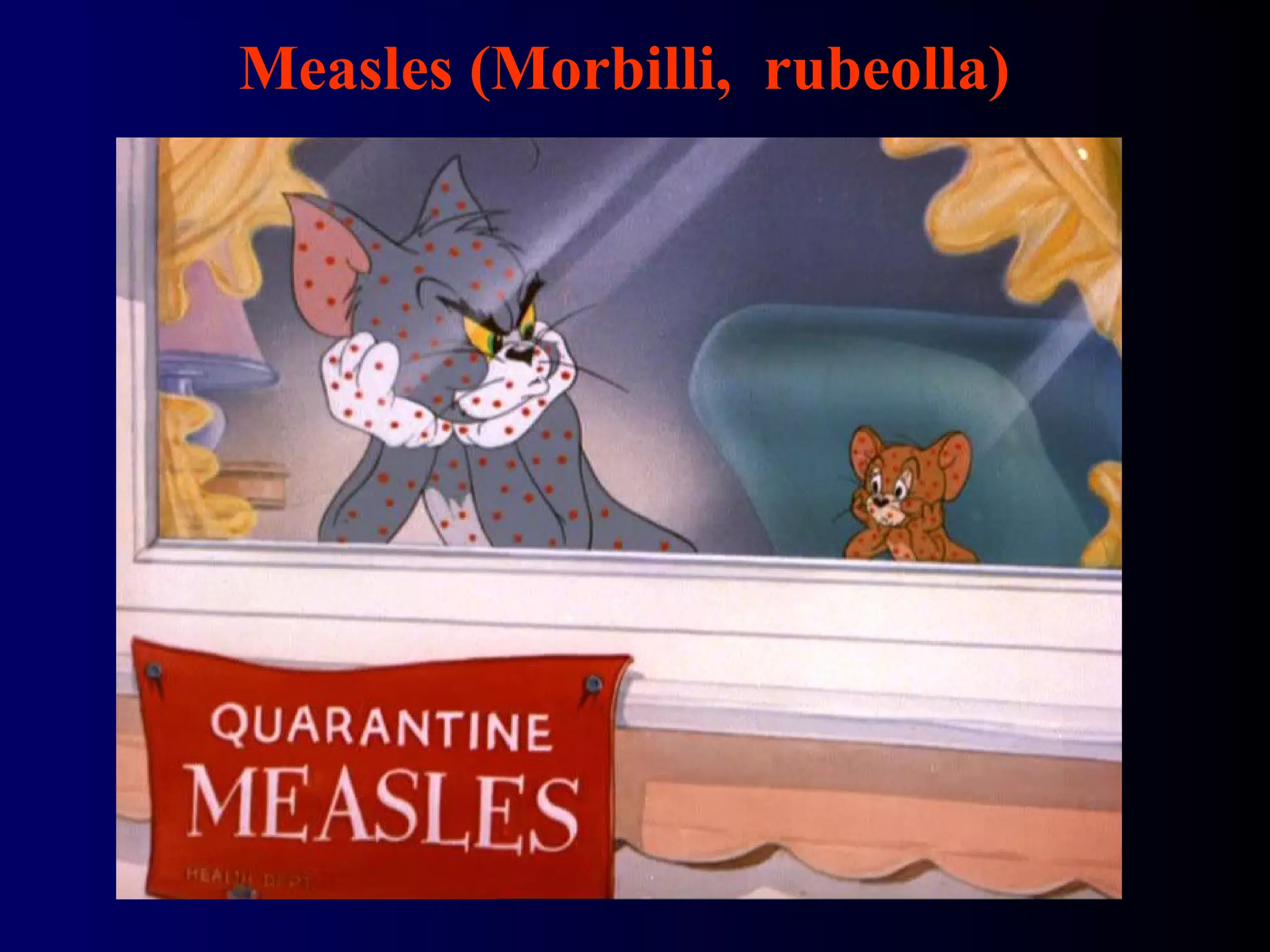
Measles (Morbilli, rubeolla)
History of measles
The first systematic description of measles, and its
distinction from other exanthematous diseases
(smallpox and chichenpox) is credited to
the Persian physician Rhazes (860–932),
who published
The Book of:
Smallpox and Measles
In 1529, a measles outbreak in Cuba killed two-
thirds of those natives who had previously survived
smallpox.
Two years later, measles was responsible for the
deaths of half the population of Honduras,
and it had ravaged (destroyed) Mexico, Central
America and Inca civilization
Measles killed 20 percent of Hawaii's
population in the 1850s. In 1875, measles killed
over 40,000 Fijians, approximately one-third of
the population
ETIOLOGY
Measles is caused by Measles virus.
Measles virus is a spherical, single-stranded RNA
virus with diameters of 100-250 nm.
The family of Paramyxoviridae.
The genus of Morbillivirus
Etiology
Measles virus
The virus was first isolated in 1954 by Nobel Laureate John
F. Enders and Thomas Peebles
Measles virus
Although RNA viruses typically have high
mutation rates, measles virus is considered to
be an antigenically monotypic virus;
Measles virus is killed by ultraviolet light and
heat.
Measles virus
The measles virus has two envelope
glycoproteins on the viral surface—
hemagglutinin (H) and membrane fusion
protein (F).
These proteins are responsible for host cell
binding and invasion.
EPIDEMIOLOGY
Measles virus is one of the most highly contagious
directly transmitted pathogens.
Outbreaks can occur in populations in which <10% of
persons are susceptible
Chains of transmission are common among household
contacts, school-age children, and health care workers.
There are no latent or persistent measles virus
infections that result in prolonged contagiousness, nor are
there animal reservoirs for the virus.
In temperate climates, annual measles
outbreaks typically occur in the late
winter and early spring.
Persons with measles are infectious (Measles Virus
is communicable) for several days before (3-5
days) the rash. It remains communicable up to 4
days after the appearance of rush, when levels of
measles virus in blood and body fluids are highest
Measles Virus is communicable ……..
Who are at risk?
• Unvaccinated young children are at highest risk of measles
• Unvaccinated pregnant women are also at risk
• Measles is still common in many developing countries –
particularly in parts of Africa and Asia
• Measles outbreaks can be particularly deadly in countries
experiencing or recovering from a natural disaster or
conflict.
• Damage to health infrastructure and health services, interrupts
routine immunization, and greatly increases the risk of infection.
PATHOGENESIS
The way of transmission
The Measles is an airborne disease.
The virus spreads easily through the coughs
and sneezes.
It may also be spread through contact with saliva
or nasal secretion.
• Infection is initiated when measles virus is deposited
on epithelial cells in the respiratory tract, oropharynx,
or conjunctivae.
• During the first 2–4 days after infection, measles virus
proliferates locally in the respiratory mucosa and
spreads to lymph nodes.
• Virus then enters to the bloodstream in infected
leukocytes (primarily monocytes), producing the
primary viremia that disseminates infection
throughout the reticuloendothelial system.
Further replication results in secondary
viremia that begins 5–7 days after infection and
disseminates measles virus throughout the body.
CLINICAL
MANIFESTATIONS
• Fever
• Dry cough
• Coriza
• Sore throat
• Inflamed eyes (conjunctivitis)
• Tiny white spots with bluish-white centers on a red
background called Koplik's spots
• A skin rash: maculopapular rush (flat blotches (spots)
that often flow into one another)
Main symptoms of measles
• Incubation period (Phase)
• Prodromal period (Phase)
• Exanthem period (Phase)
• Reconvalencence period (Phase)
The Disease has 4 Phases
Incubation period (Phase):
is 8-10 days after exposed to the virus.
During these period patient has no symptoms
Prodromal period (Phase):
lasts 2-4 days and is marked by fever (39-40 C),
malaise, cough, coryza, conjunctivitis and
pharyngitis
Disease has 4 Phases
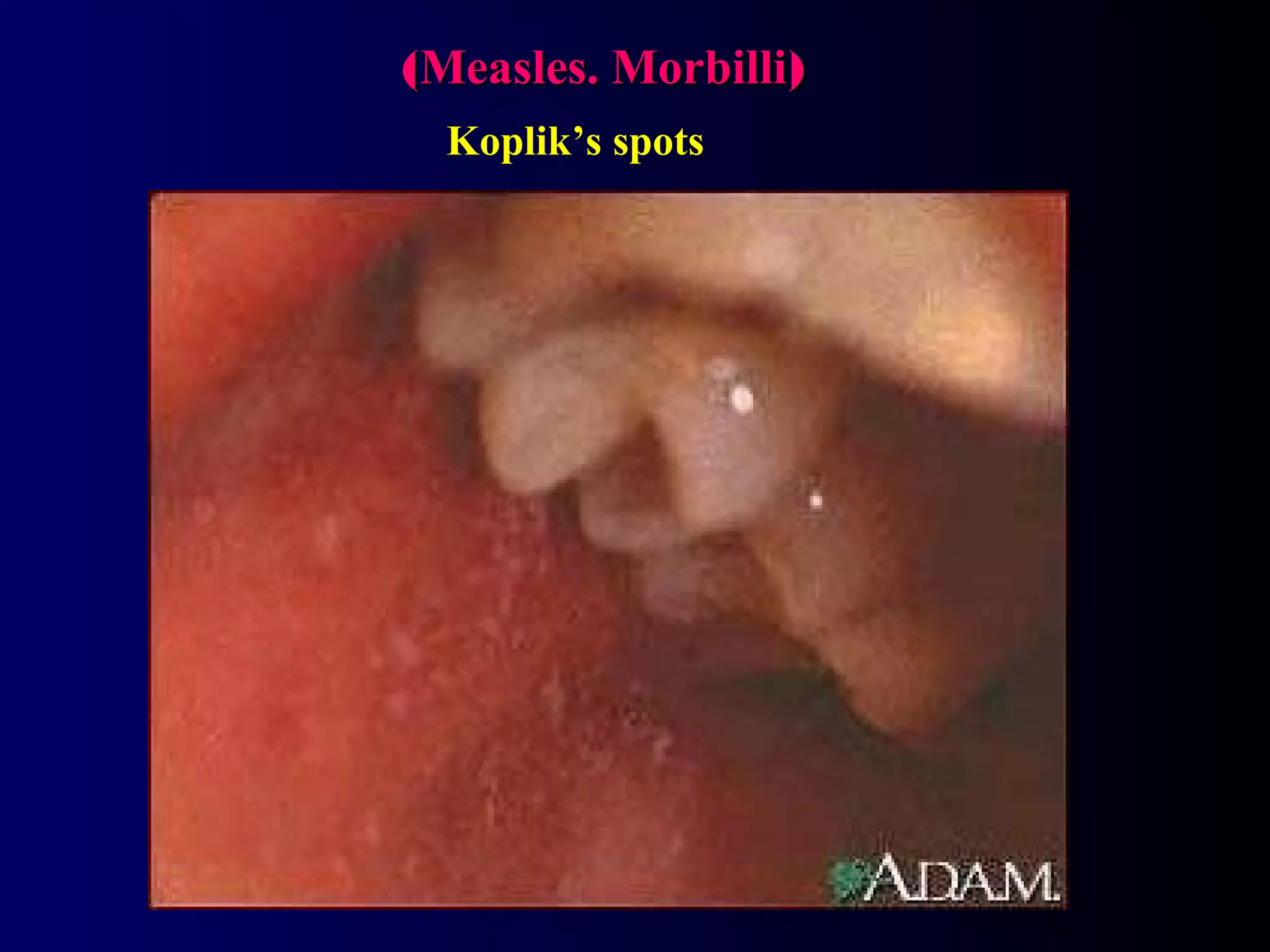
Koplik’s spots develop on the buccal mucosa
during this phase, 2 days before the rash appears.
Koplik’s spots seen inside the mouth
are pathognomic (diagnostic) for measles, but are
temporary and therefore rarely seen
Koplik’s spots
((Measles. MorbilliMeasles. Morbilli))
Koplik’s spots
Koplik’s spots are pathognomonic of measles
and consist of bluish white dots ~1 mm in
diameter surrounded by erythema.
The lesions appear first on the buccal mucosa
opposite the lower molars but rapidly increase in
number to involve the entire buccal mucosa.
They fade with the onset of rash.
Exanthem period (Phase)
The Disease has 4 Phases
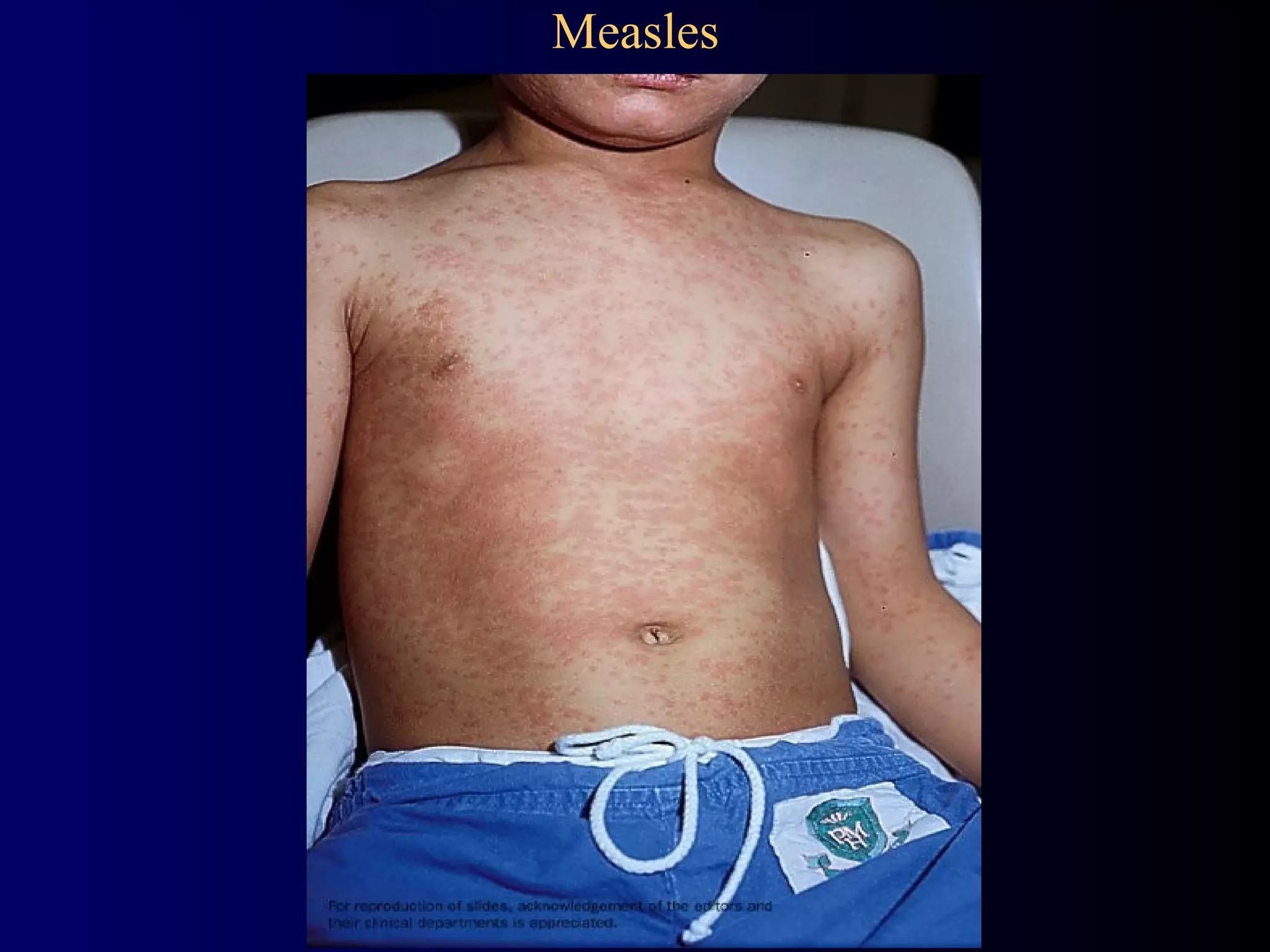
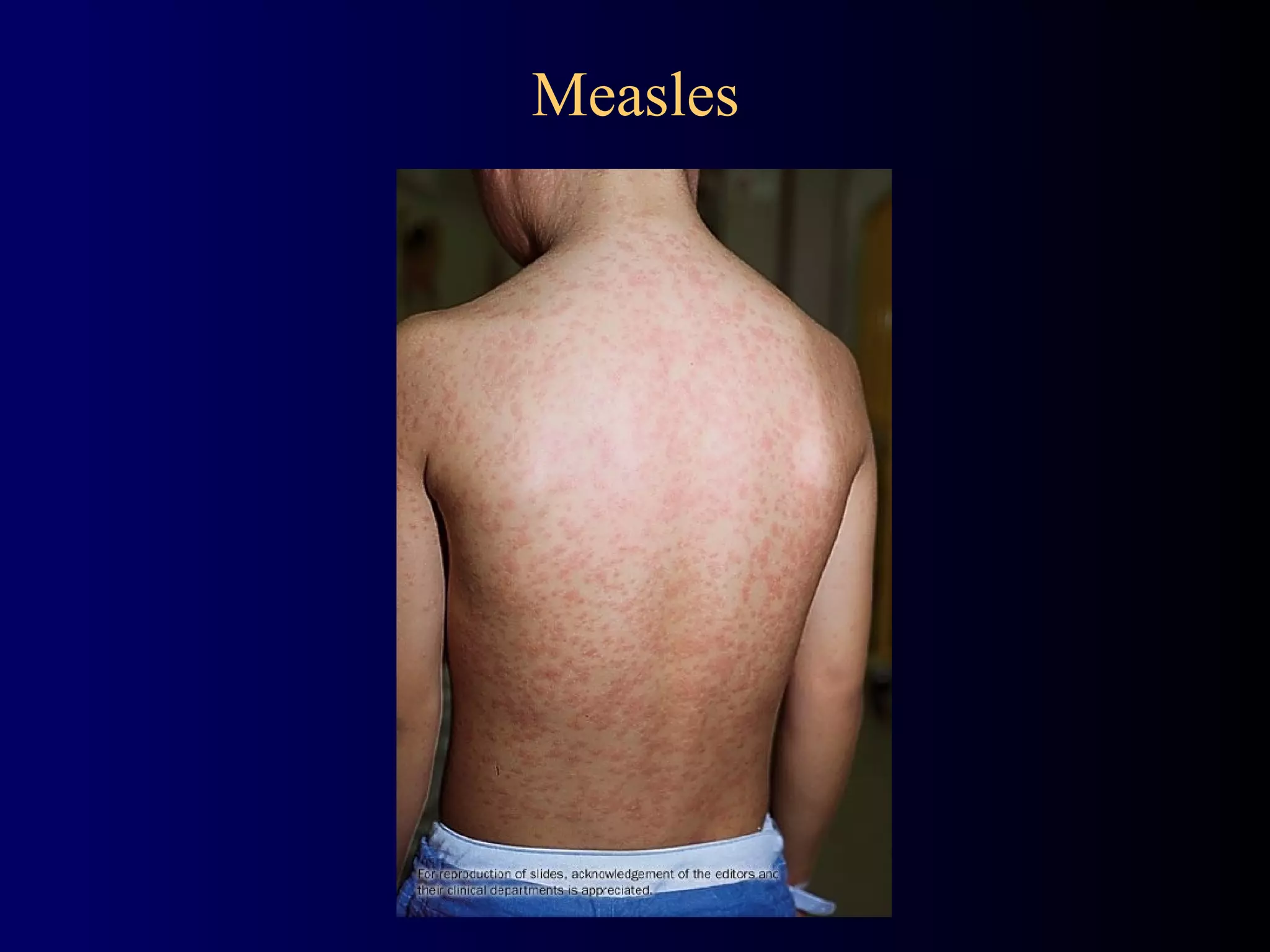
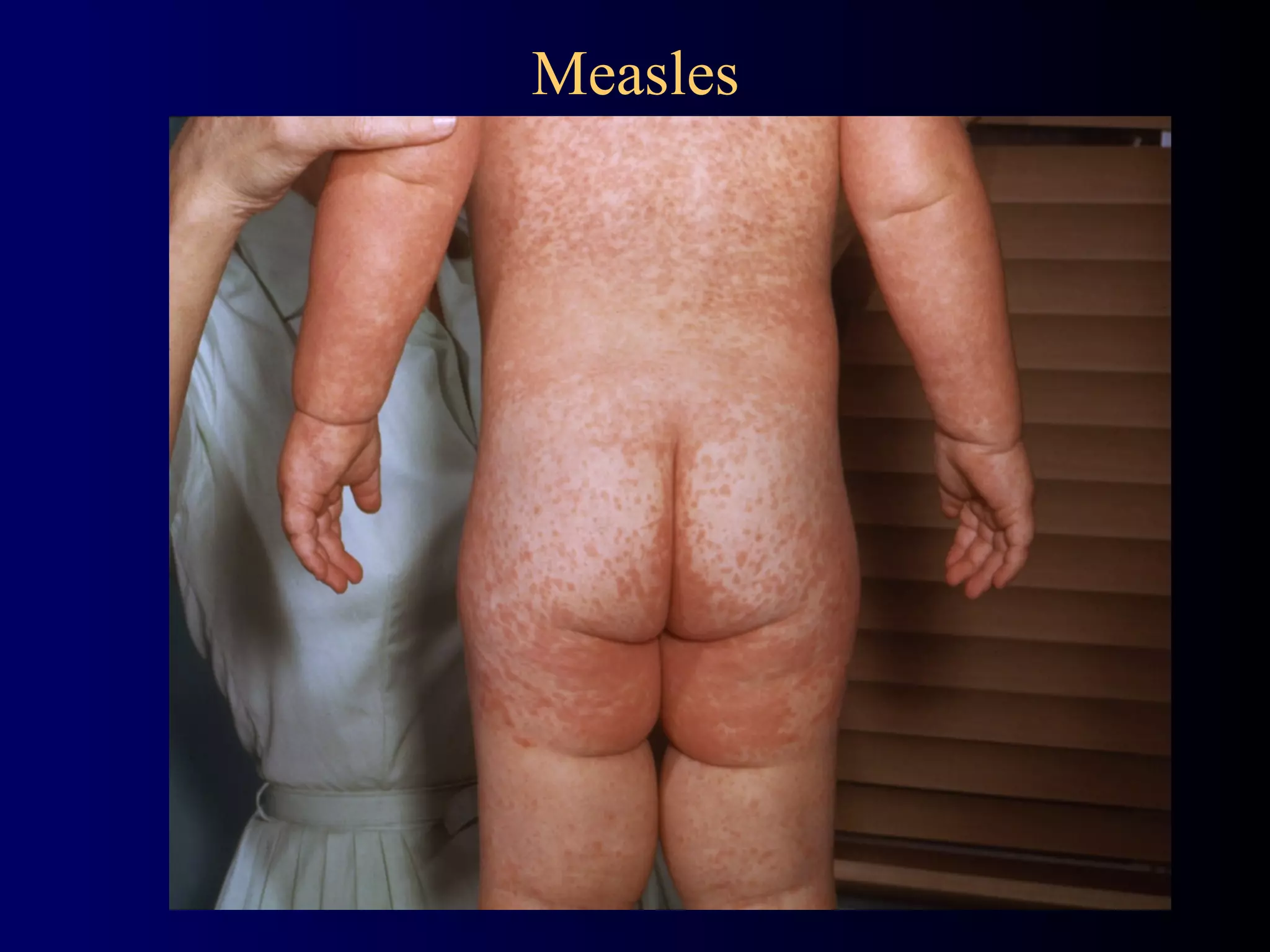
The erythematous maculopapular rash first appears behind
the ears and on the neck. The rash progresses to cover face,
trunk, arms, with involvement of the legs and feet within 72
h. The fever peaks on the 2nd
or 3rd
day of the rash.
The rash usually begins to clear in the same order of
progression as it appeared, usually beginning on the third or
fourth day after onset.
Exanthem period (Phase) begins after prodromal phase:
2 weeks after exposure
Head and shoulders of boy with measles
Measles
Measles
Measles
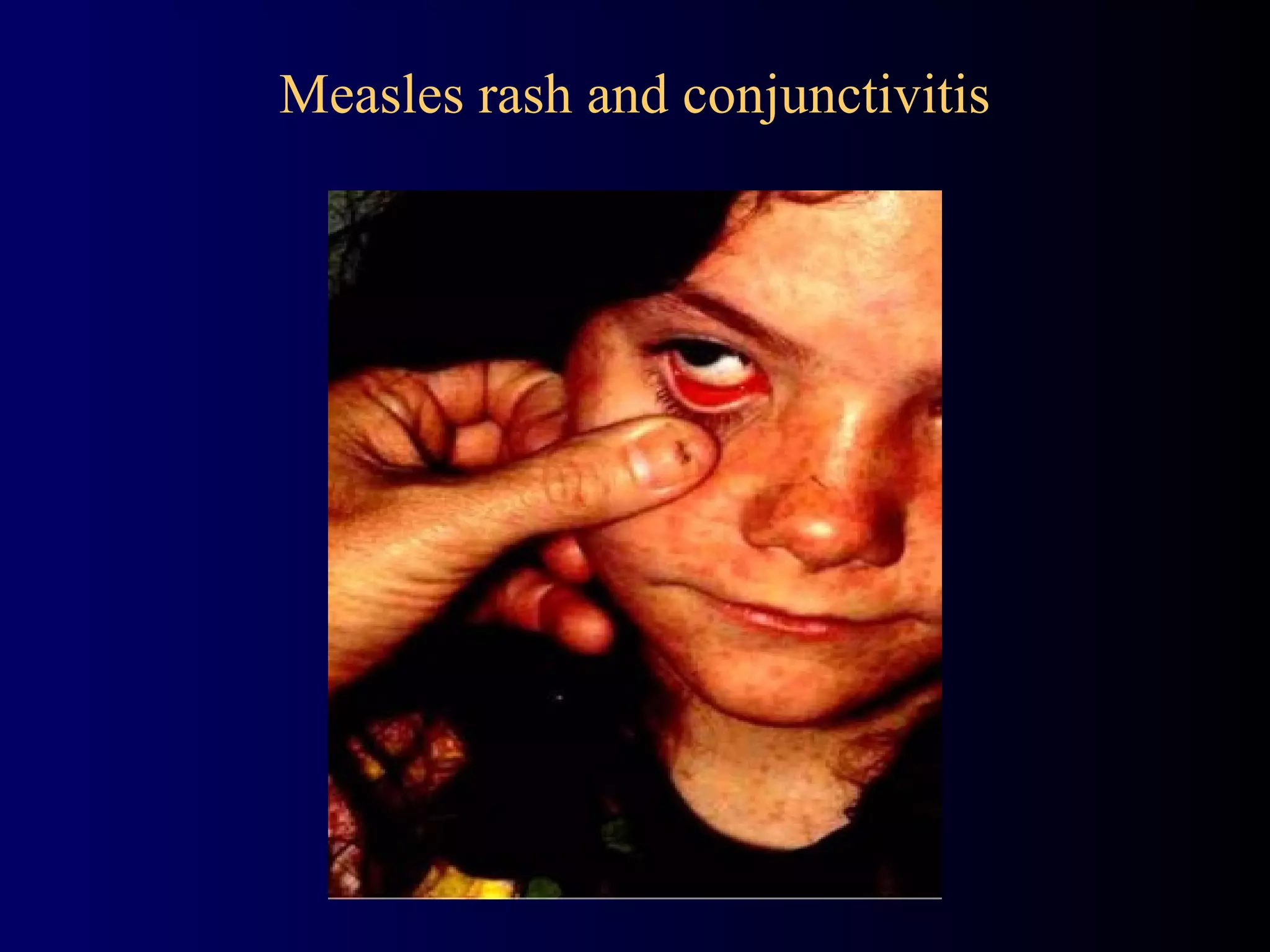
Measles rash and conjunctivitis
Reconvalencence period (Phase)
The Disease has 4 Phases
After 10-12 days Resolution of the rash may
be followed by desquamation leaving transient
hyperpigmented areas .
DIFFERENTIAL DIAGNOSIS
• The differential diagnosis of measles includes
other causes of fever, rash, and conjunctivitis,
including:
• rubella,
• Kawasaki disease,
• infectious mononucleosis,
• scarlet fever,
• Rocky Mountain spotted fever,
• enterovirus or adenovirus infection,
• drug sensitivity
DIAGNOSIS
Measles is easily diagnosed based on clinical
symptoms by clinicians familiar with the
disease, particularly during outbreaks
Koplik’s spots are especially helpful because
they appear early and are pathognomonic.
The Centers for Disease Control and Prevention case definition
for measles requires
(1) a generalized maculopapular rash of at
least 3 days’ duration;
(2) fever of at least 38.3 o C, and
(3) cough, coryza, or conjunctivitis.
Serology is the most common method of
laboratory diagnosis.
The detection of measles virus–specific IgM in a single specimen of
serum or oral fluid is considered diagnostic of acute infection.
Also, a fourfold or greater increase in measles virus–specific IgG
antibody levels between acute- and convalescent-phase serum
specimens.
Measles virus–specific IgM antibodies may not be detectable
until 4–5 days or more after rash onset and usually fall to
undetectable levels within 4–8 weeks of rash onset.
We should remember that
Measles also can be diagnosed by detection of
measles virus RNA
by reverse-transcriptase polymerase chain reaction
(RT-PCR) from clinical specimens
TREATMENT
There is no specific antiviral therapy for
measles
Treatment consists of general supportive measures,
such as:
• hydration
• Bed rest
• administration of antipyretic agents.
Secondary bacterial infections are a major cause of
morbidity and death following measles.
Prompted antibiotic treatment is necessary for patients who
have clinical evidence of bacterial infection, including
pneumonia and otitis media.
Streptococcus pneumoniae and Haemophilus influenzae
type b are common causes of bacterial pneumonia
following measles;
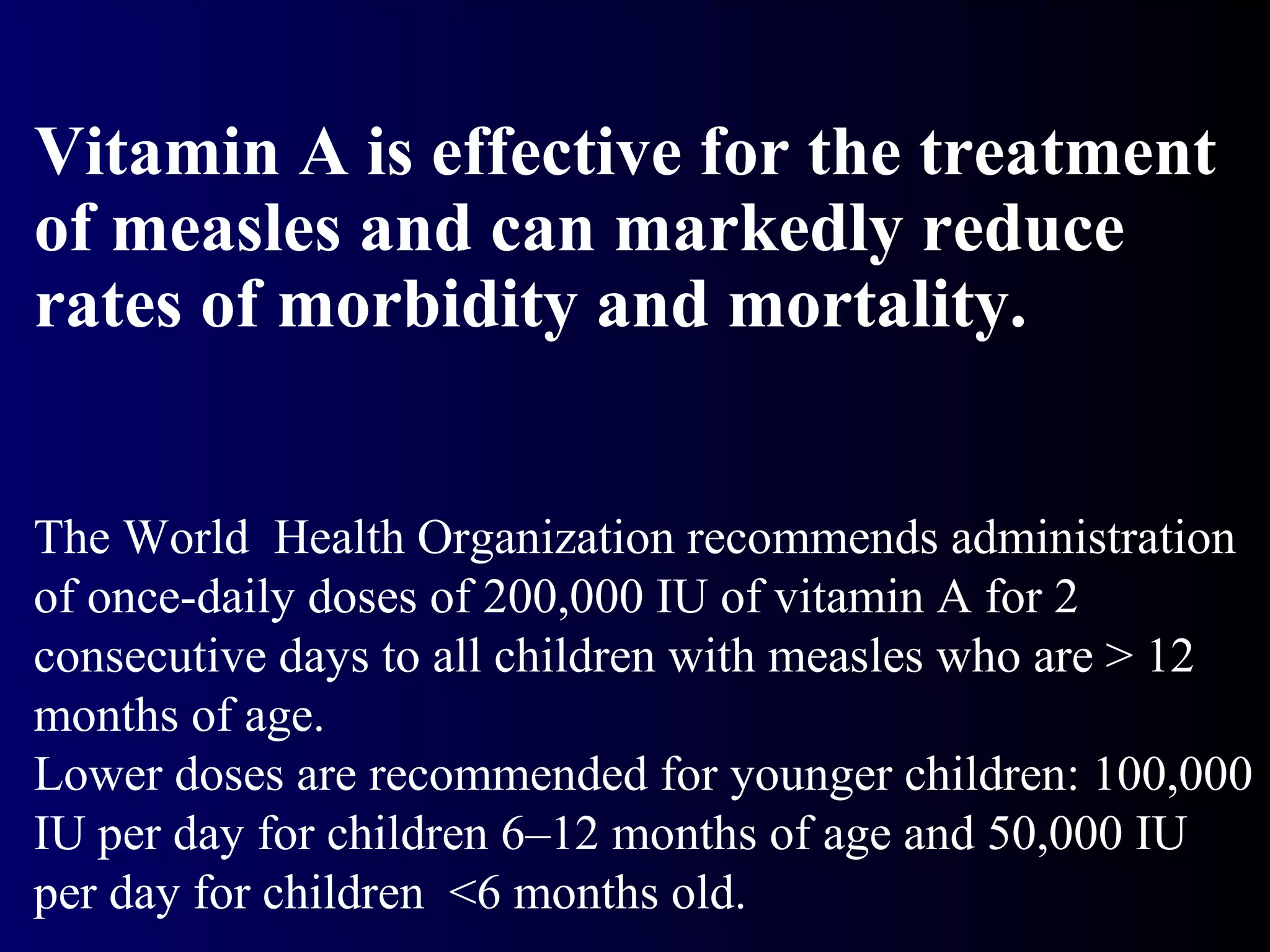
Vitamin A is effective for the treatment
of measles and can markedly reduce
rates of morbidity and mortality.
The World Health Organization recommends administration
of once-daily doses of 200,000 IU of vitamin A for 2
consecutive days to all children with measles who are > 12
months of age.
Lower doses are recommended for younger children: 100,000
IU per day for children 6–12 months of age and 50,000 IU
per day for children <6 months old.
COMPLICATIONS
• Acute laryngotracheobronchitis (croup)
• Giant-cell pneumonitis
• secondary bacterial infections: Otitis media and
bronchopneumonia
• Central nervous system (SNS) complications:
encephalomyelitis
• subacute sclerosing panencephalitis (SSPE) (very rare)
Complications of Measles
PREVENTION
• Passive Immunization by specific
Measles immunoglobulin
• Active Immunization by Vaccine
Prophylaxis
Prophylaxis
Passive Immunization by specific Measles immunoglobulin
immunoglobulin given shortly after exposure can attenuate (reduce)
the clinical course of measles. In immunocompetent persons,
administration of immunoglobulin within 72 h of exposure usually
prevents measles infection.
Administered up to 6 days after exposure, immunoglobulin
will still prevent or modify the disease.
Prophylaxis with immunoglobulin is recommended for
susceptible household and nosocomial contacts who are at risk of
developing severe measles, particularly children <1 year of age,
immunocompromised persons (including HIV-infected persons) and
pregnant women.
Prophylaxis
Active Immunization by Vaccine
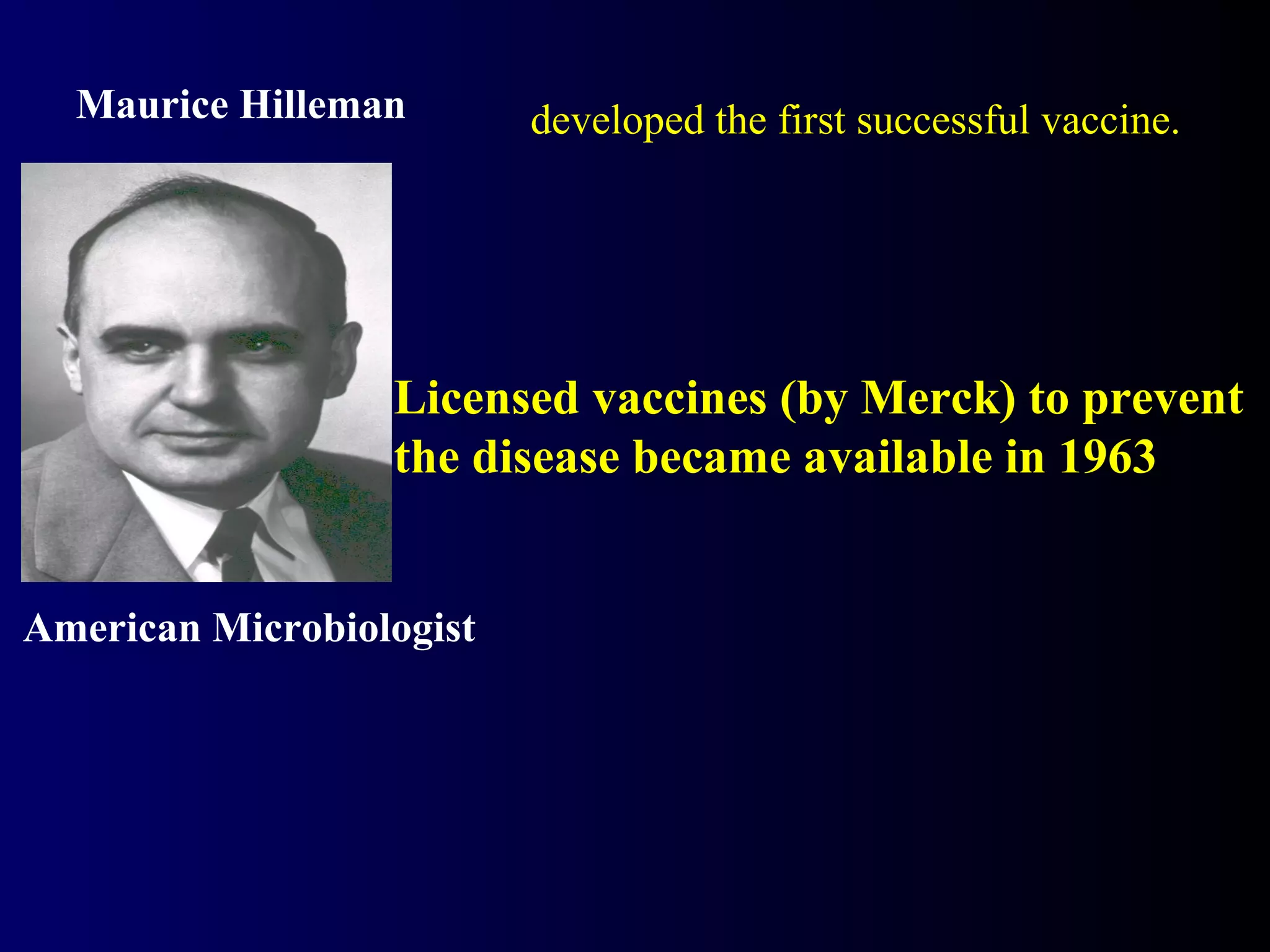
Licensed vaccines (by Merck) to prevent
the disease became available in 1963
American Microbiologist
Maurice Hilleman developed the first successful vaccine.
Measles vaccine is life attenuated vaccine
The Moraten (“more attenuated”) strain, was licensed in 1968 and is
used in the United States,
Measles vaccines are often combined with other live attenuated virus
vaccines, such as:
• for mumps and rubella (MMR)
• for mumps, rubella, and varicella (MMR-V).
Active Immunization by Vaccine
The recommended age of first vaccination varies from 6
to 15 months
Antibodies first appear 12–15 days after vaccination
and peak at 1–3 months.
The duration of vaccine-induced immunity is at least
several decades if not longer.
In developing countries where measles is
highly endemic, WHO doctors recommend two
doses of vaccine be given at six and nine months of
age
In developed countries, children are immunized
against measles at 12 months, generally as part of a
three-part MMR vaccine.
WHO recommendations:
THENKS
FOR ATTENTION

MEASLES

  • 1.
    MEASLES Lali Sharvadze Associated Professor InfectiousDiseases, AIDS & Clinical Immunology Research Center Viral Exanthems
  • 2.
    Measles, also known as morbilli, rubeola, or red measles InfectiousDiseases, AIDS & Clinical Immunology Research Center
  • 3.
    MEASLES (RUBEOLA) Measles isa highly contagious viral infection. It is exanthematous disease with fewer, cough, coryza (rhinitis) and conjunctivitis. Before the widespread use of measles vaccines, it was estimated that measles caused between 5 million and 8 million deaths worldwide each year. Definition
  • 4.
  • 5.
  • 6.
    The first systematicdescription of measles, and its distinction from other exanthematous diseases (smallpox and chichenpox) is credited to the Persian physician Rhazes (860–932), who published The Book of: Smallpox and Measles
  • 7.
    In 1529, ameasles outbreak in Cuba killed two- thirds of those natives who had previously survived smallpox. Two years later, measles was responsible for the deaths of half the population of Honduras, and it had ravaged (destroyed) Mexico, Central America and Inca civilization
  • 8.
    Measles killed 20percent of Hawaii's population in the 1850s. In 1875, measles killed over 40,000 Fijians, approximately one-third of the population
  • 9.
  • 10.
    Measles is causedby Measles virus. Measles virus is a spherical, single-stranded RNA virus with diameters of 100-250 nm. The family of Paramyxoviridae. The genus of Morbillivirus Etiology
  • 11.
    Measles virus The viruswas first isolated in 1954 by Nobel Laureate John F. Enders and Thomas Peebles
  • 12.
    Measles virus Although RNAviruses typically have high mutation rates, measles virus is considered to be an antigenically monotypic virus; Measles virus is killed by ultraviolet light and heat.
  • 13.
    Measles virus The measlesvirus has two envelope glycoproteins on the viral surface— hemagglutinin (H) and membrane fusion protein (F). These proteins are responsible for host cell binding and invasion.
  • 14.
  • 15.
    Measles virus isone of the most highly contagious directly transmitted pathogens. Outbreaks can occur in populations in which <10% of persons are susceptible Chains of transmission are common among household contacts, school-age children, and health care workers. There are no latent or persistent measles virus infections that result in prolonged contagiousness, nor are there animal reservoirs for the virus.
  • 16.
    In temperate climates,annual measles outbreaks typically occur in the late winter and early spring.
  • 17.
    Persons with measlesare infectious (Measles Virus is communicable) for several days before (3-5 days) the rash. It remains communicable up to 4 days after the appearance of rush, when levels of measles virus in blood and body fluids are highest Measles Virus is communicable ……..
  • 18.
    Who are atrisk? • Unvaccinated young children are at highest risk of measles • Unvaccinated pregnant women are also at risk • Measles is still common in many developing countries – particularly in parts of Africa and Asia • Measles outbreaks can be particularly deadly in countries experiencing or recovering from a natural disaster or conflict. • Damage to health infrastructure and health services, interrupts routine immunization, and greatly increases the risk of infection.
  • 19.
  • 20.
    The way oftransmission The Measles is an airborne disease. The virus spreads easily through the coughs and sneezes. It may also be spread through contact with saliva or nasal secretion.
  • 21.
    • Infection isinitiated when measles virus is deposited on epithelial cells in the respiratory tract, oropharynx, or conjunctivae. • During the first 2–4 days after infection, measles virus proliferates locally in the respiratory mucosa and spreads to lymph nodes. • Virus then enters to the bloodstream in infected leukocytes (primarily monocytes), producing the primary viremia that disseminates infection throughout the reticuloendothelial system.
  • 22.
    Further replication resultsin secondary viremia that begins 5–7 days after infection and disseminates measles virus throughout the body.
  • 23.
  • 24.
    • Fever • Drycough • Coriza • Sore throat • Inflamed eyes (conjunctivitis) • Tiny white spots with bluish-white centers on a red background called Koplik's spots • A skin rash: maculopapular rush (flat blotches (spots) that often flow into one another) Main symptoms of measles
  • 25.
    • Incubation period(Phase) • Prodromal period (Phase) • Exanthem period (Phase) • Reconvalencence period (Phase) The Disease has 4 Phases
  • 26.
    Incubation period (Phase): is8-10 days after exposed to the virus. During these period patient has no symptoms
  • 27.
    Prodromal period (Phase): lasts2-4 days and is marked by fever (39-40 C), malaise, cough, coryza, conjunctivitis and pharyngitis Disease has 4 Phases Koplik’s spots develop on the buccal mucosa during this phase, 2 days before the rash appears. Koplik’s spots seen inside the mouth are pathognomic (diagnostic) for measles, but are temporary and therefore rarely seen
  • 28.
  • 29.
  • 30.
    Koplik’s spots arepathognomonic of measles and consist of bluish white dots ~1 mm in diameter surrounded by erythema. The lesions appear first on the buccal mucosa opposite the lower molars but rapidly increase in number to involve the entire buccal mucosa. They fade with the onset of rash.
  • 31.
    Exanthem period (Phase) TheDisease has 4 Phases The erythematous maculopapular rash first appears behind the ears and on the neck. The rash progresses to cover face, trunk, arms, with involvement of the legs and feet within 72 h. The fever peaks on the 2nd or 3rd day of the rash. The rash usually begins to clear in the same order of progression as it appeared, usually beginning on the third or fourth day after onset. Exanthem period (Phase) begins after prodromal phase: 2 weeks after exposure
  • 32.
    Head and shouldersof boy with measles
  • 33.
  • 34.
  • 35.
  • 36.
    Measles rash andconjunctivitis
  • 37.
    Reconvalencence period (Phase) TheDisease has 4 Phases After 10-12 days Resolution of the rash may be followed by desquamation leaving transient hyperpigmented areas .
  • 38.
  • 39.
    • The differentialdiagnosis of measles includes other causes of fever, rash, and conjunctivitis, including: • rubella, • Kawasaki disease, • infectious mononucleosis, • scarlet fever, • Rocky Mountain spotted fever, • enterovirus or adenovirus infection, • drug sensitivity
  • 40.
  • 41.
    Measles is easilydiagnosed based on clinical symptoms by clinicians familiar with the disease, particularly during outbreaks Koplik’s spots are especially helpful because they appear early and are pathognomonic. The Centers for Disease Control and Prevention case definition for measles requires (1) a generalized maculopapular rash of at least 3 days’ duration; (2) fever of at least 38.3 o C, and (3) cough, coryza, or conjunctivitis.
  • 42.
    Serology is themost common method of laboratory diagnosis. The detection of measles virus–specific IgM in a single specimen of serum or oral fluid is considered diagnostic of acute infection. Also, a fourfold or greater increase in measles virus–specific IgG antibody levels between acute- and convalescent-phase serum specimens. Measles virus–specific IgM antibodies may not be detectable until 4–5 days or more after rash onset and usually fall to undetectable levels within 4–8 weeks of rash onset. We should remember that
  • 43.
    Measles also canbe diagnosed by detection of measles virus RNA by reverse-transcriptase polymerase chain reaction (RT-PCR) from clinical specimens
  • 44.
  • 45.
    There is nospecific antiviral therapy for measles Treatment consists of general supportive measures, such as: • hydration • Bed rest • administration of antipyretic agents.
  • 46.
    Secondary bacterial infectionsare a major cause of morbidity and death following measles. Prompted antibiotic treatment is necessary for patients who have clinical evidence of bacterial infection, including pneumonia and otitis media. Streptococcus pneumoniae and Haemophilus influenzae type b are common causes of bacterial pneumonia following measles;
  • 47.
    Vitamin A iseffective for the treatment of measles and can markedly reduce rates of morbidity and mortality. The World Health Organization recommends administration of once-daily doses of 200,000 IU of vitamin A for 2 consecutive days to all children with measles who are > 12 months of age. Lower doses are recommended for younger children: 100,000 IU per day for children 6–12 months of age and 50,000 IU per day for children <6 months old.
  • 48.
  • 49.
    • Acute laryngotracheobronchitis(croup) • Giant-cell pneumonitis • secondary bacterial infections: Otitis media and bronchopneumonia • Central nervous system (SNS) complications: encephalomyelitis • subacute sclerosing panencephalitis (SSPE) (very rare) Complications of Measles
  • 50.
  • 51.
    • Passive Immunizationby specific Measles immunoglobulin • Active Immunization by Vaccine Prophylaxis
  • 52.
    Prophylaxis Passive Immunization byspecific Measles immunoglobulin immunoglobulin given shortly after exposure can attenuate (reduce) the clinical course of measles. In immunocompetent persons, administration of immunoglobulin within 72 h of exposure usually prevents measles infection. Administered up to 6 days after exposure, immunoglobulin will still prevent or modify the disease. Prophylaxis with immunoglobulin is recommended for susceptible household and nosocomial contacts who are at risk of developing severe measles, particularly children <1 year of age, immunocompromised persons (including HIV-infected persons) and pregnant women.
  • 53.
  • 54.
    Licensed vaccines (byMerck) to prevent the disease became available in 1963 American Microbiologist Maurice Hilleman developed the first successful vaccine.
  • 55.
    Measles vaccine islife attenuated vaccine The Moraten (“more attenuated”) strain, was licensed in 1968 and is used in the United States, Measles vaccines are often combined with other live attenuated virus vaccines, such as: • for mumps and rubella (MMR) • for mumps, rubella, and varicella (MMR-V).
  • 56.
    Active Immunization byVaccine The recommended age of first vaccination varies from 6 to 15 months Antibodies first appear 12–15 days after vaccination and peak at 1–3 months. The duration of vaccine-induced immunity is at least several decades if not longer.
  • 57.
    In developing countrieswhere measles is highly endemic, WHO doctors recommend two doses of vaccine be given at six and nine months of age In developed countries, children are immunized against measles at 12 months, generally as part of a three-part MMR vaccine. WHO recommendations:
  • 58.