NUR IZZATUL NAJWA BINTI
SHARUPUDDIN
082015100036
YELLOW FEVER
OBJECTIVES
At the end of the seminar, we are able to :
 Define yellow fever
 Know the transmission
 Know the epidemiology
 Relate the clinical features
 Know the diagnosis and treatment
 Understand the control
Of yellow fever
INTRODUCTION
 Yellow fever is an acute viral haemorrhagic disease
transmitted by infected female mosquitoes
 Caused by :
Yellow fever virus which is an arbovirus of the
flavivirus gene
 Also named yellow as it causes jaundice at later stage
TRANSMISSION
 Transmitted by female
mosquitoes, belonging to the
Aedes and Haemogogus species.
 3 types of transmission cycle :
 Sylvatic ( jungle) yellow fever
 Intermediate yellow fever
 Urban yellow fever
TRANSMISSION
 The jungle (sylvatic) cycle involves :
 Reservoir : non-human primates
(monkeys)
Vector : forest mosquito
(Haemogogus spegazzinni in South
America, Aedes africanus and
A.simpsoni in Africa )
 Probably when humans are visiting
or working in the jungle.
 In Africa, an intermediate (savannah)
cycle:
 Reservoir : human working in forest
Vector : forest mosquito
(Aedes africanus and A.simpsoni in
Africa)
 virus can be transmitted from monkey
to human or from human to human via
mosquitoes.
 The urban cycle involves :
 Reservoir : human
Vector : urban mosquito (Aedes
aegypti)
 Virus brought to the urban setting
by a viremic human who was
infected in the jungle or
savannah.
EPIDEMIOLOGY
CLINICAL FEATURES
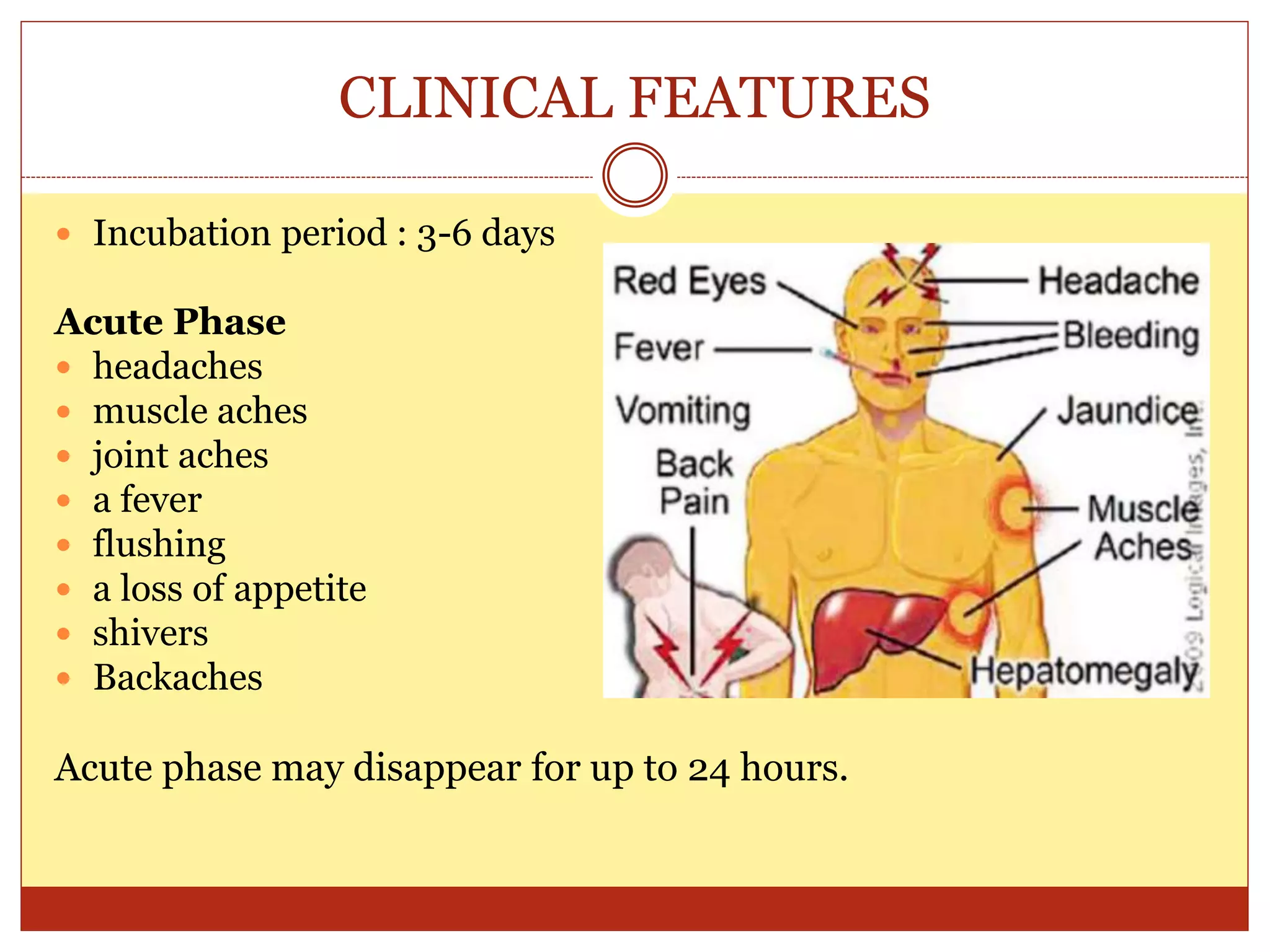
 Incubation period : 3-6 days
Acute Phase
 headaches
 muscle aches
 joint aches
 a fever
 flushing
 a loss of appetite
 shivers
 Backaches
Acute phase may disappear for up to 24 hours.
Toxic Phase
Acute phase may disappear for up to 24 hours.
 decreased urination
 abdominal pain
 vomiting (sometimes with blood)
 heart rhythm problems
 seizures
 delirium
 bleeding from the nose, mouth, and
eyes
DIAGNOSIS
 BLOOD TEST
 SEROLOGY
 ELISA : detect virus-specific IgM and neutralizing antibodies
TREATMENT
 Symptomatic.
 Rest, fluids, and use of pain relievers and medication
to reduce fever may relieve symptoms of aching and
fever.
 Avoid certain medications, such as aspirin or other
nonsteroidal anti-inflammatory drugs (e.g.
ibuprofen, naproxen), which may increase the risk of
bleeding.
CONTROL
 Mosquito control
 Vaccination
 17D VACCINE
 Thermolabile and subcutaneous inoculation
 Mandatory to travel to endemic areas
 Valid for 10years beginning 10days after vaccination
People who are usually excluded from vaccination :
 infants aged less than 9 months, except during an epidemic when
infants aged 6-9 months, in areas where the risk of infection is high
 pregnant women – except during a yellow fever outbreak when the risk
of infection is high
 people with severe allergies to egg protein
 people with severe immunodeficiency due to symptomatic HIV/AIDS
or other causes, or who have a thymus disorder.
SUMMARY
REFERENCES
 TEXTBOOK OF MICROBIOLOGY,
ANANTHANARAYAN & PANIKER’S, 9TH EDITION
 http://www.who.int/mediacentre/factsheets/fs100/
en/
 http://www.healthline.com/health/yellow-
fever#Symptoms2
Yellow fever

Yellow fever

  • 1.
    NUR IZZATUL NAJWABINTI SHARUPUDDIN 082015100036 YELLOW FEVER
  • 2.
    OBJECTIVES At the endof the seminar, we are able to :  Define yellow fever  Know the transmission  Know the epidemiology  Relate the clinical features  Know the diagnosis and treatment  Understand the control Of yellow fever
  • 3.
    INTRODUCTION  Yellow feveris an acute viral haemorrhagic disease transmitted by infected female mosquitoes  Caused by : Yellow fever virus which is an arbovirus of the flavivirus gene  Also named yellow as it causes jaundice at later stage
  • 4.
    TRANSMISSION  Transmitted byfemale mosquitoes, belonging to the Aedes and Haemogogus species.  3 types of transmission cycle :  Sylvatic ( jungle) yellow fever  Intermediate yellow fever  Urban yellow fever
  • 5.
    TRANSMISSION  The jungle(sylvatic) cycle involves :  Reservoir : non-human primates (monkeys) Vector : forest mosquito (Haemogogus spegazzinni in South America, Aedes africanus and A.simpsoni in Africa )  Probably when humans are visiting or working in the jungle.
  • 6.
     In Africa,an intermediate (savannah) cycle:  Reservoir : human working in forest Vector : forest mosquito (Aedes africanus and A.simpsoni in Africa)  virus can be transmitted from monkey to human or from human to human via mosquitoes.
  • 7.
     The urbancycle involves :  Reservoir : human Vector : urban mosquito (Aedes aegypti)  Virus brought to the urban setting by a viremic human who was infected in the jungle or savannah.
  • 9.
  • 10.
    CLINICAL FEATURES  Incubationperiod : 3-6 days Acute Phase  headaches  muscle aches  joint aches  a fever  flushing  a loss of appetite  shivers  Backaches Acute phase may disappear for up to 24 hours.
  • 11.
    Toxic Phase Acute phasemay disappear for up to 24 hours.  decreased urination  abdominal pain  vomiting (sometimes with blood)  heart rhythm problems  seizures  delirium  bleeding from the nose, mouth, and eyes
  • 13.
    DIAGNOSIS  BLOOD TEST SEROLOGY  ELISA : detect virus-specific IgM and neutralizing antibodies
  • 14.
    TREATMENT  Symptomatic.  Rest,fluids, and use of pain relievers and medication to reduce fever may relieve symptoms of aching and fever.  Avoid certain medications, such as aspirin or other nonsteroidal anti-inflammatory drugs (e.g. ibuprofen, naproxen), which may increase the risk of bleeding.
  • 15.
    CONTROL  Mosquito control Vaccination  17D VACCINE  Thermolabile and subcutaneous inoculation  Mandatory to travel to endemic areas  Valid for 10years beginning 10days after vaccination
  • 16.
    People who areusually excluded from vaccination :  infants aged less than 9 months, except during an epidemic when infants aged 6-9 months, in areas where the risk of infection is high  pregnant women – except during a yellow fever outbreak when the risk of infection is high  people with severe allergies to egg protein  people with severe immunodeficiency due to symptomatic HIV/AIDS or other causes, or who have a thymus disorder.
  • 17.
  • 18.
    REFERENCES  TEXTBOOK OFMICROBIOLOGY, ANANTHANARAYAN & PANIKER’S, 9TH EDITION  http://www.who.int/mediacentre/factsheets/fs100/ en/  http://www.healthline.com/health/yellow- fever#Symptoms2