
MODULE III
TEAM AND GROUP
Prepared By.
Mohammed Jasir PV
Asst. Professor
MIIMS, Puthanangadi
9605 69 32 66
SYLLABUS
▪ Group Dynamics techniques,
Group vs Team, Team
Dynamics, Teams for
enhancing productivity,
Building & Managing
Successful Virtual Teams.
Managing Team
Performance & Managing
Conflict in Teams.
▪ Working Together in Teams,
Team Decision-Making,
Team Culture & Power, Team
Leader Development.
▪ Introduction to Groups and
Teams, Team Composition,
Managing Team Performance,
Importance of Group, Stages
of Group, Group Cycle, Group
thinking, getting acquainted,
Clarifying expectations.
▪ Group Problem Solving,
Achieving Group Consensus.
2
Group
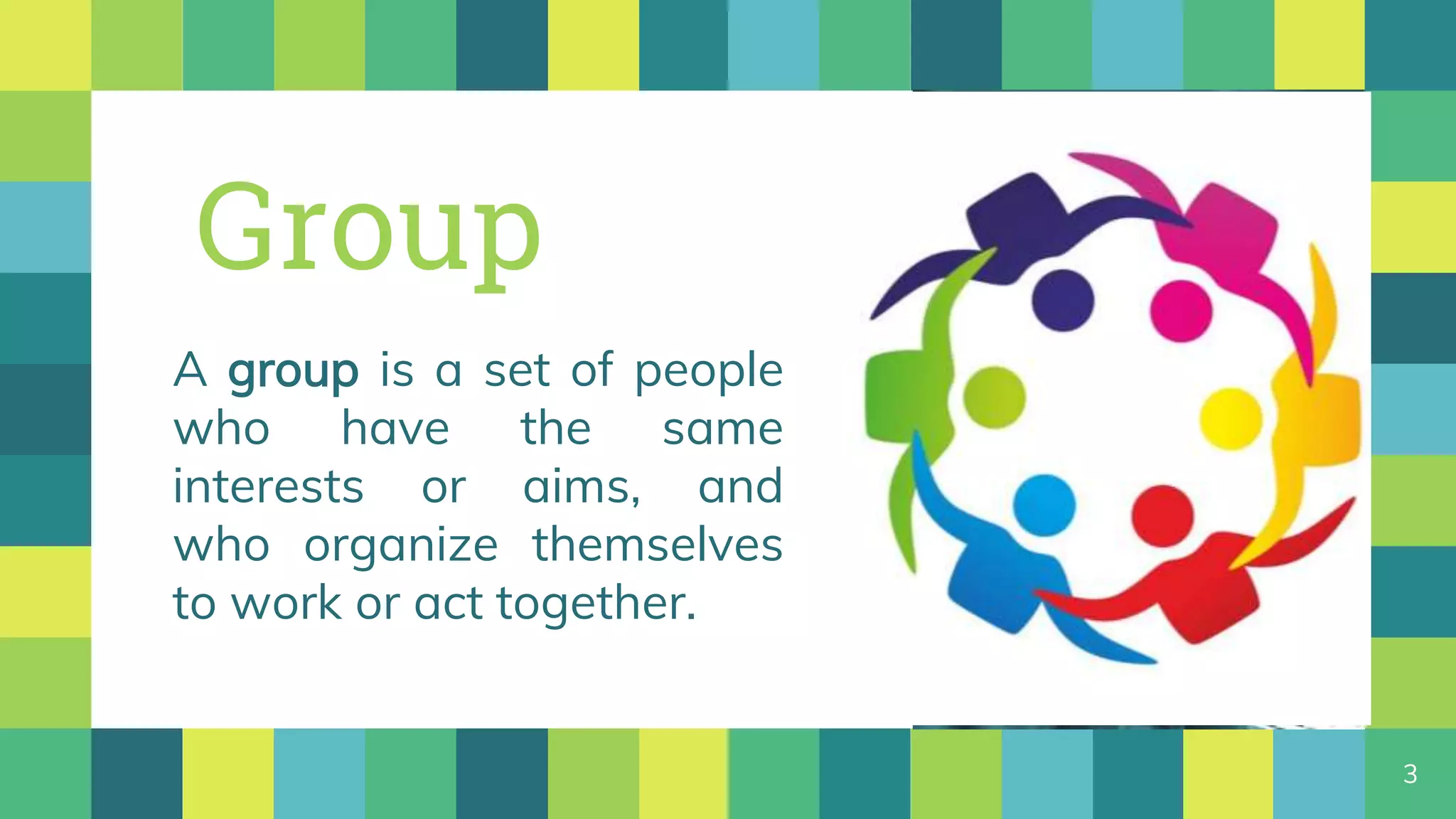
A group is a set of people
who have the same
interests or aims, and
who organize themselves
to work or act together.
3
4
What is a Group?
5
Two or more people
Shared goals
People see themselves
As members
There is interaction
Among members
Group
Types of
Groups
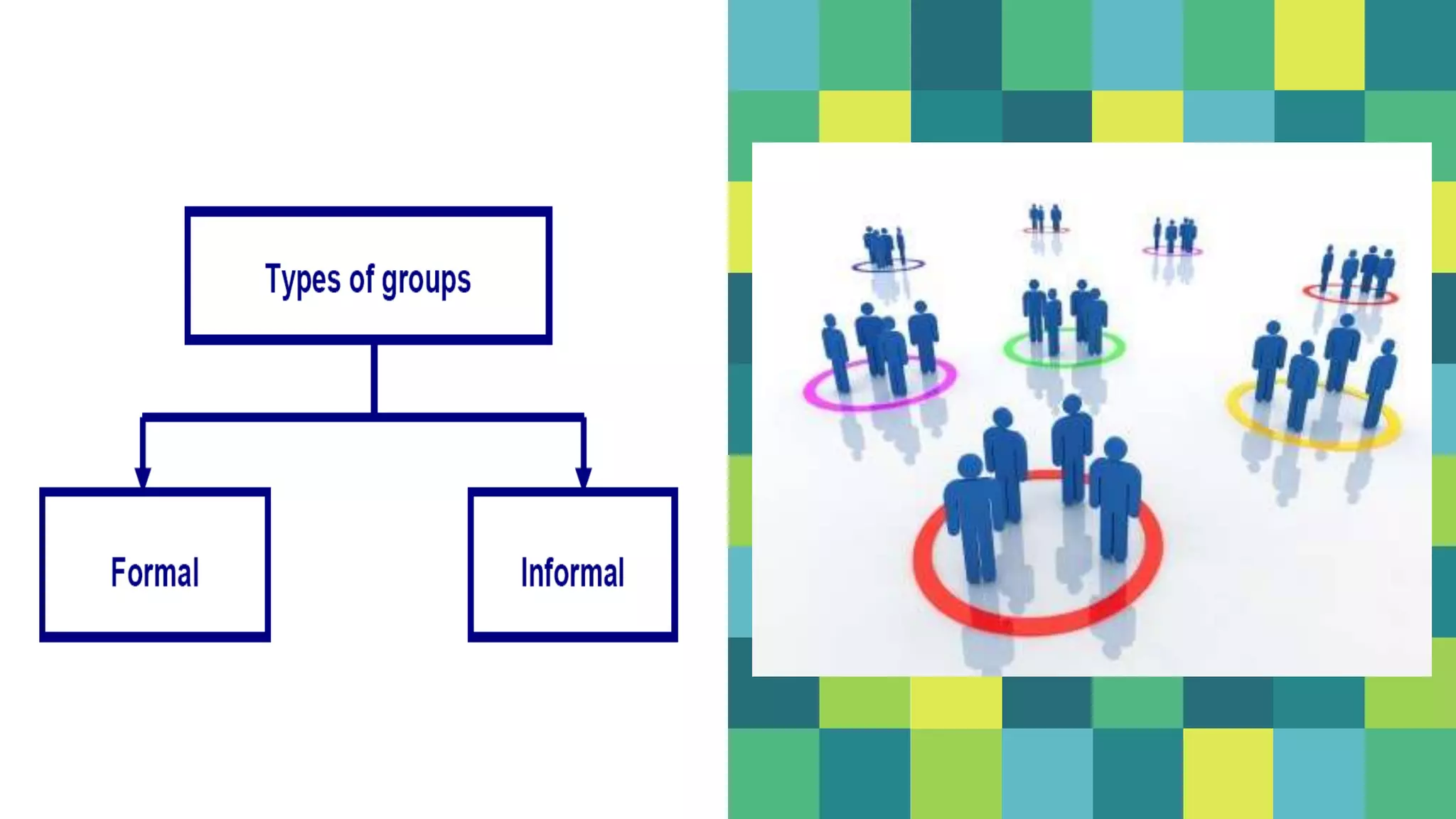
Types of Groups
Formal :-
 Command ,
 Task and
 Functional
Informal :-
 Interest,
 Reference and
 Friendship
“
Why Do People Join
In Group??
11
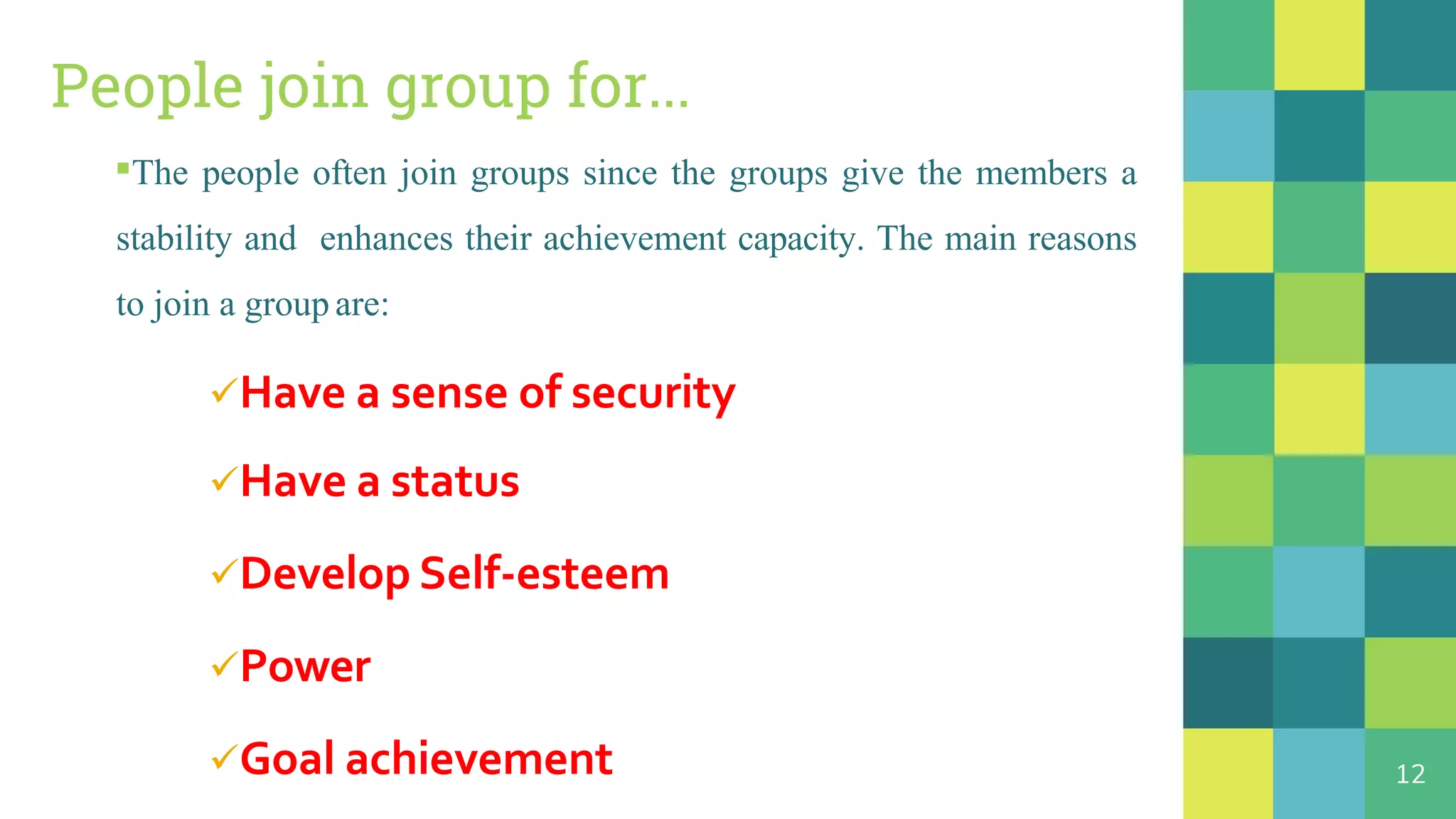
People join group for...
▪The people often join groups since the groups give the members a
stability and enhances their achievement capacity. The main reasons
to join a group are:
Have a sense of security
Have a status
Develop Self-esteem
Power
Goal achievement 12
GROUP
STRUCTURE
Group structure is defined as the layout of a group. It is a
combination of group roles, norms, conformity, workplace behavior,
status, reference groups, status, social loafing, cohorts, group
demography and cohesiveness.
13
14
Four different aspects of group structure are
 Norms
 Roles
 Status
 Cohesiveness
 Size
Group Norms:-
▪Set of beleifs, feelings, and attitudes
commonly shared by group members.
▪These are also referred to as rules or
standards of behaviour that apply to group
members. Norms serve three functions
namely
15
16
Role :-
▪ various parts played by group members.
▪ There are two elements that define this role
identity-
 Role Perception -An individual is expected to
behave, according to his own perception in the
group.
 Role Expectation -It is defined as how others
believe one should behave in a given situation.
 Status is “ a socially defined position or rank given to
groups or group members by others.”
 Group members get high status or low status in the
Group based on their authority and performance.
 High status members of the group have more
freedom to deviate from the norms.
17
Status
 This facility enables them to have the
discriminatory powers in decision making.
 Low status members of the group should not
have freedom to deviate from the norms as it leads to
status inequality.
18
▪ Cohesiveness: The degree to which members
are attracted to each other and are motivated
to stay in the group
19
Cohesiveness:
20
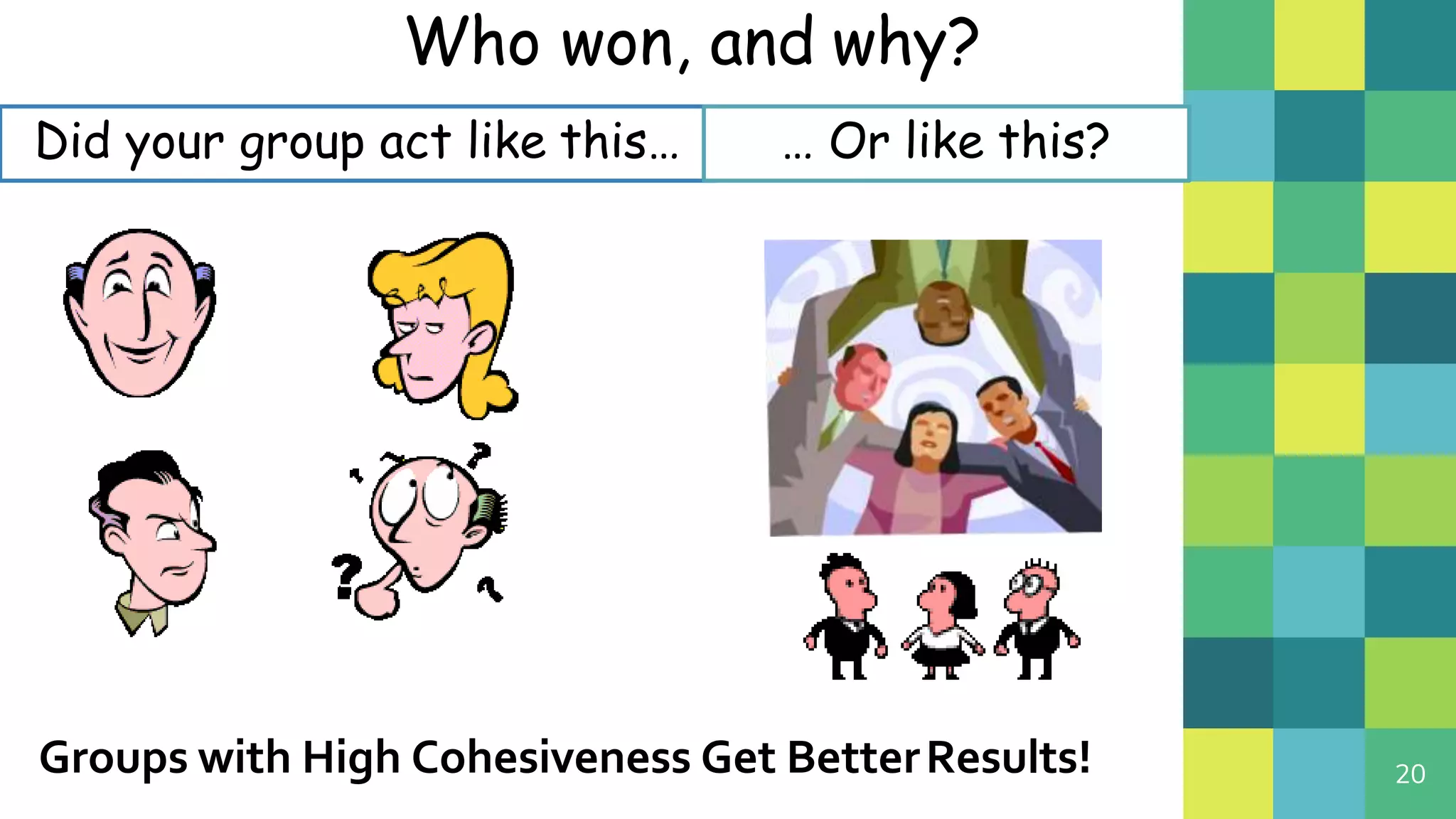
Who won, and why?
Did your group act like this… … Or like this?
Groups with High Cohesiveness Get BetterResults!
21
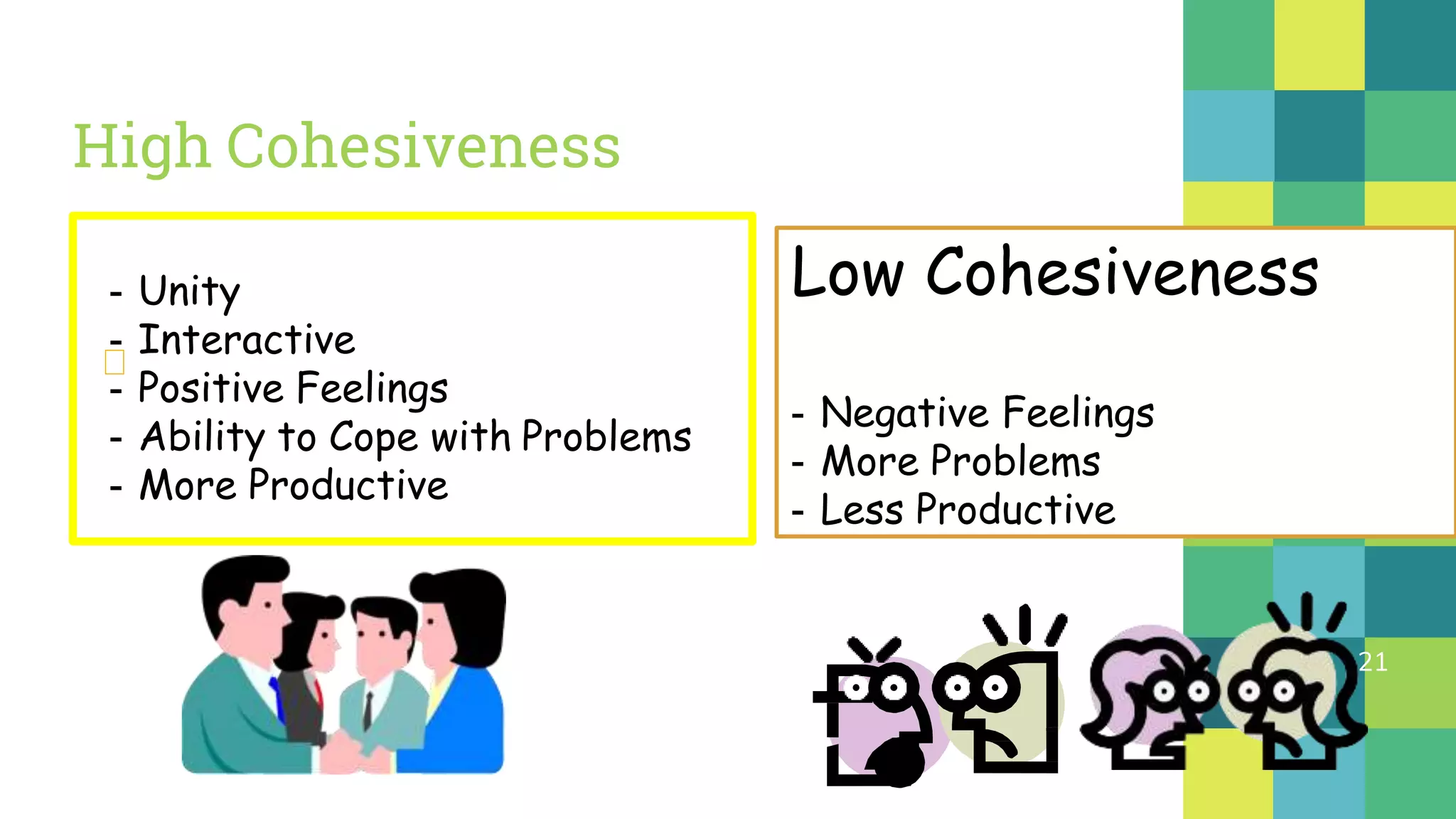
Low Cohesiveness
- Negative Feelings
- More Problems
- Less Productive
High Cohesiveness
- Unity
- Interactive
- Positive Feelings
- Ability to Cope with Problems
- More Productive
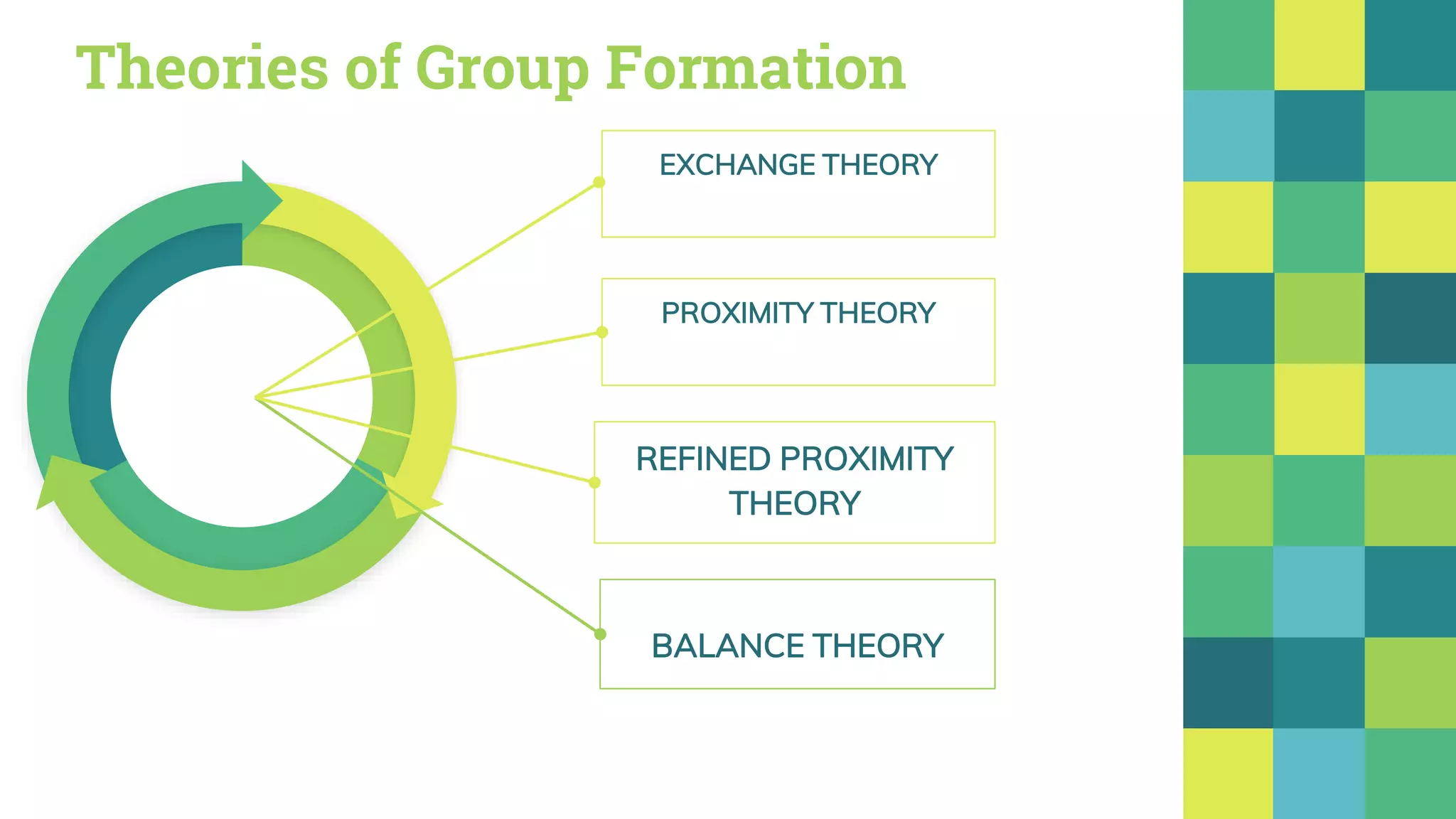
Theories of Group Formation
22
EXCHANGE THEORY
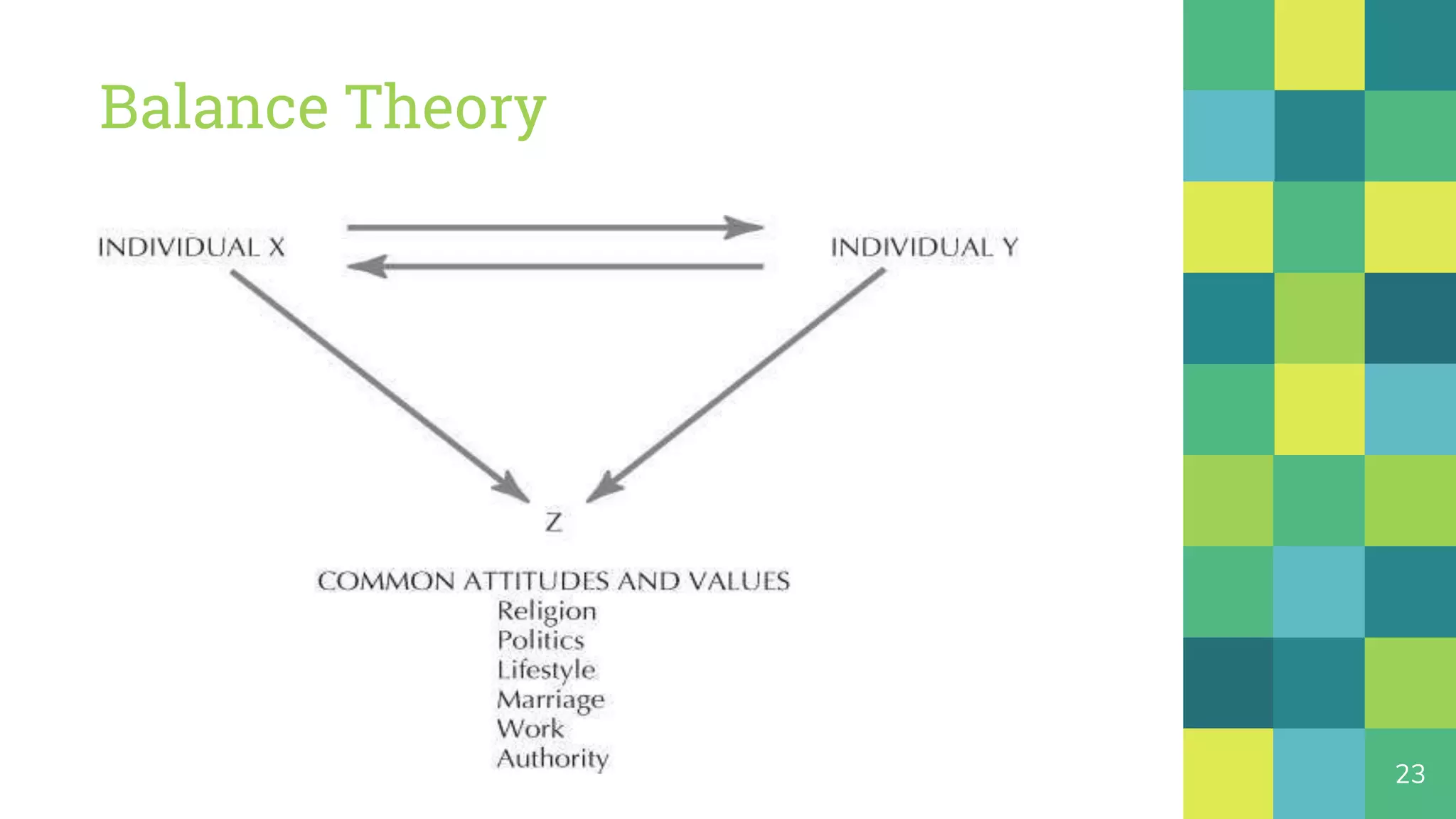
BALANCE THEORY
REFINED PROXIMITY
THEORY
PROXIMITY THEORY
Balance Theory
23
Exchange Theory
24
 Exchange Theory: Groups are formed out of
cost benefit analysis.
 Propounded by “ Thaibaunt and Kelly”.
 This theory is based on reward-cost outcomes
of interaction between employees.
 The intraction between people is reward.
Propinquity/Proximity Theory:
25
People form groups because others are near to
you.
Refined Propinquity Theory:
26
Proximity is not the only factor, like
mindedness/ identity of mind/common goals
or interests, etc will lead to formation of
groups.
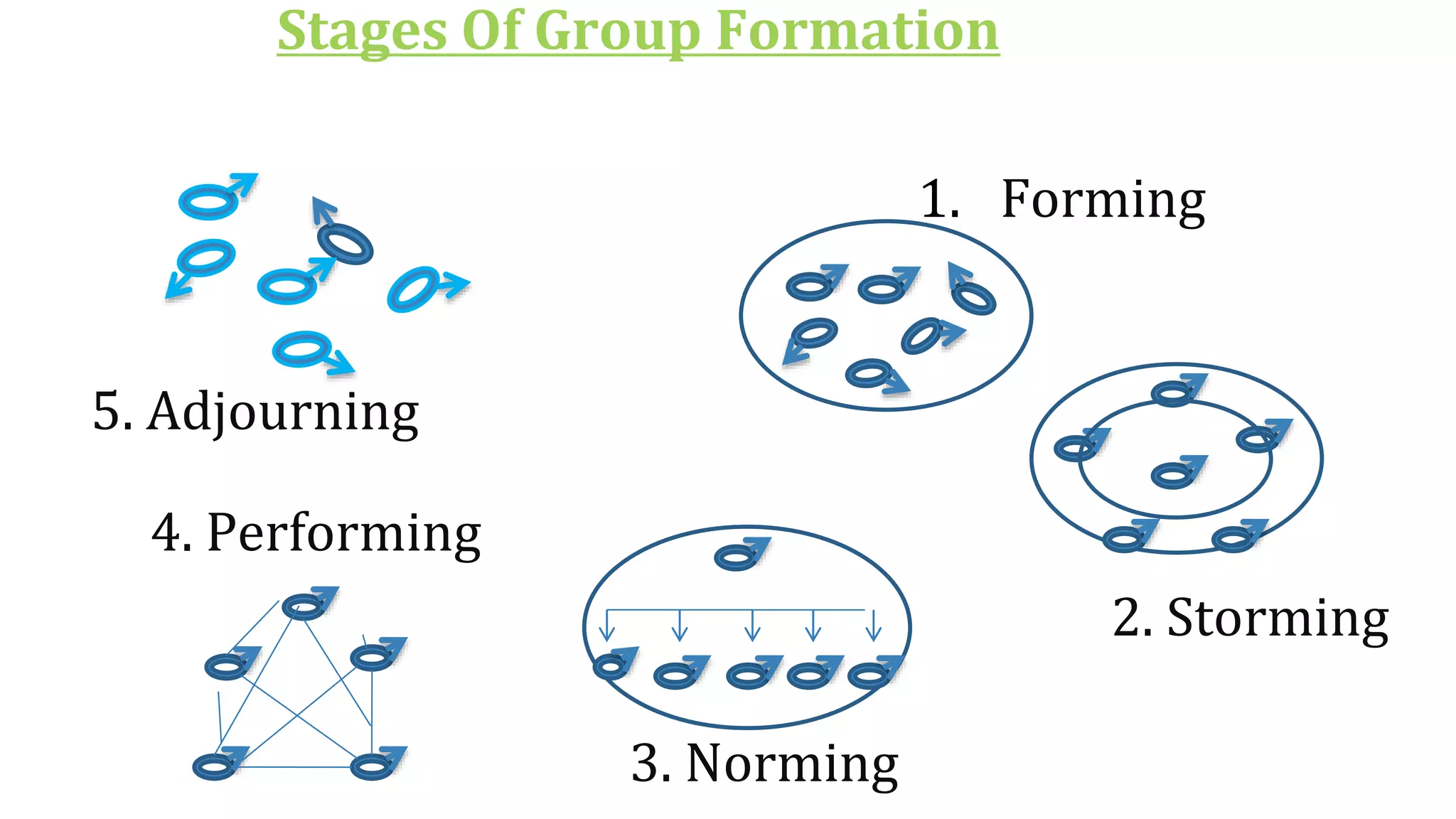
Stages Of Group Formation
▪ Forming
▪ Storming
▪ Norming
▪ Performing
▪ Adjourning
1.Forming
• Stage of uncertainty regarding groups purpose, structure etc
• Members concerned about exploring friendship and task
potentials.
• As awareness increase this stage of group development is
completed when members accept themselves as a group and
commit the group goals.
2. Storming
• Members accept the existence of the group,
but there is resistance to the constraints
that the group imposes on individuality.
• This is a stage of intra group conflicts.
• Members think ,who will be their leader….
• This stage is complete when there is
relatively clear hierarchy of leadership
within the group.
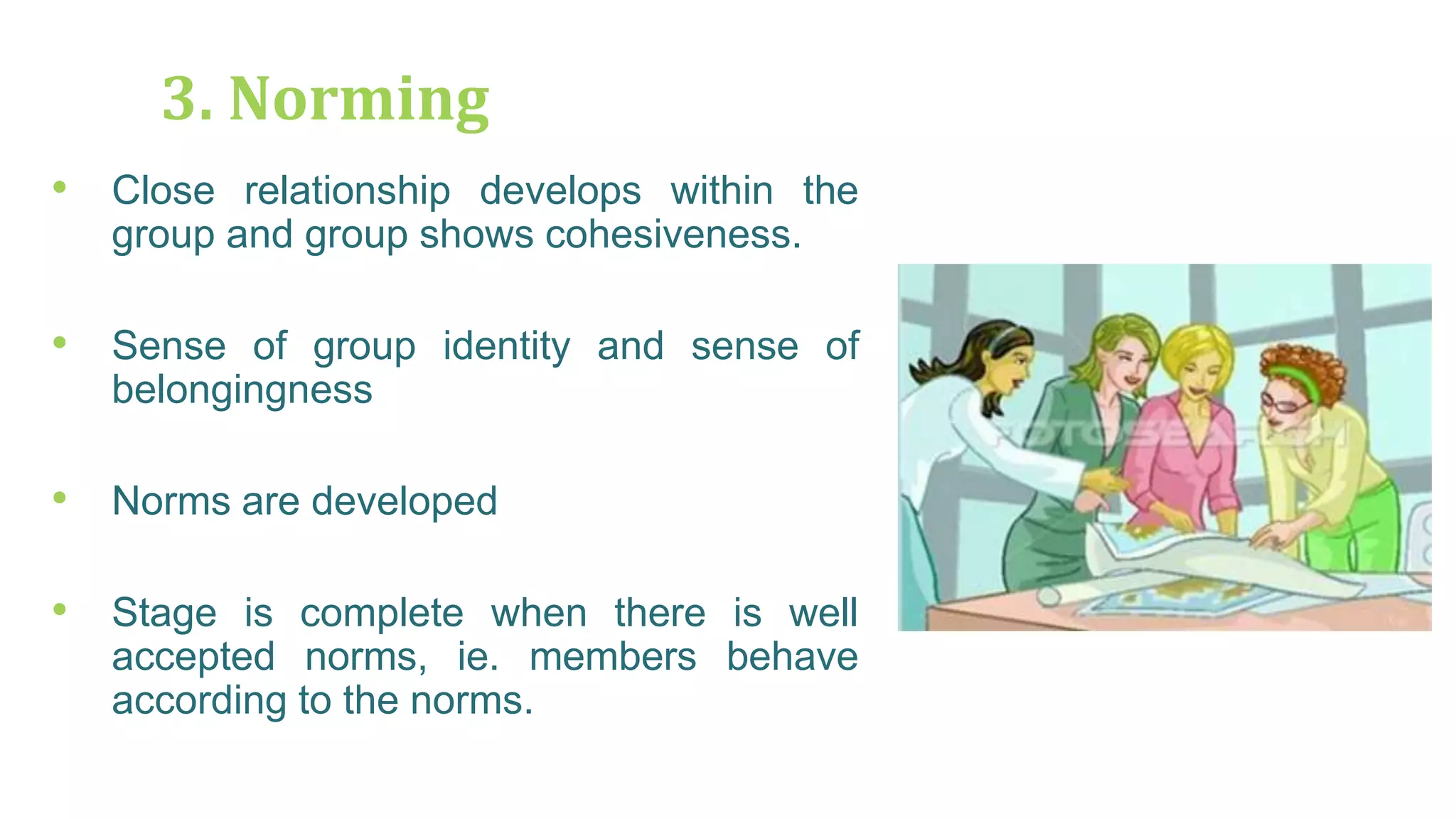
3. Norming
• Close relationship develops within the
group and group shows cohesiveness.
• Sense of group identity and sense of
belongingness
• Norms are developed
• Stage is complete when there is well
accepted norms, ie. members behave
according to the norms.
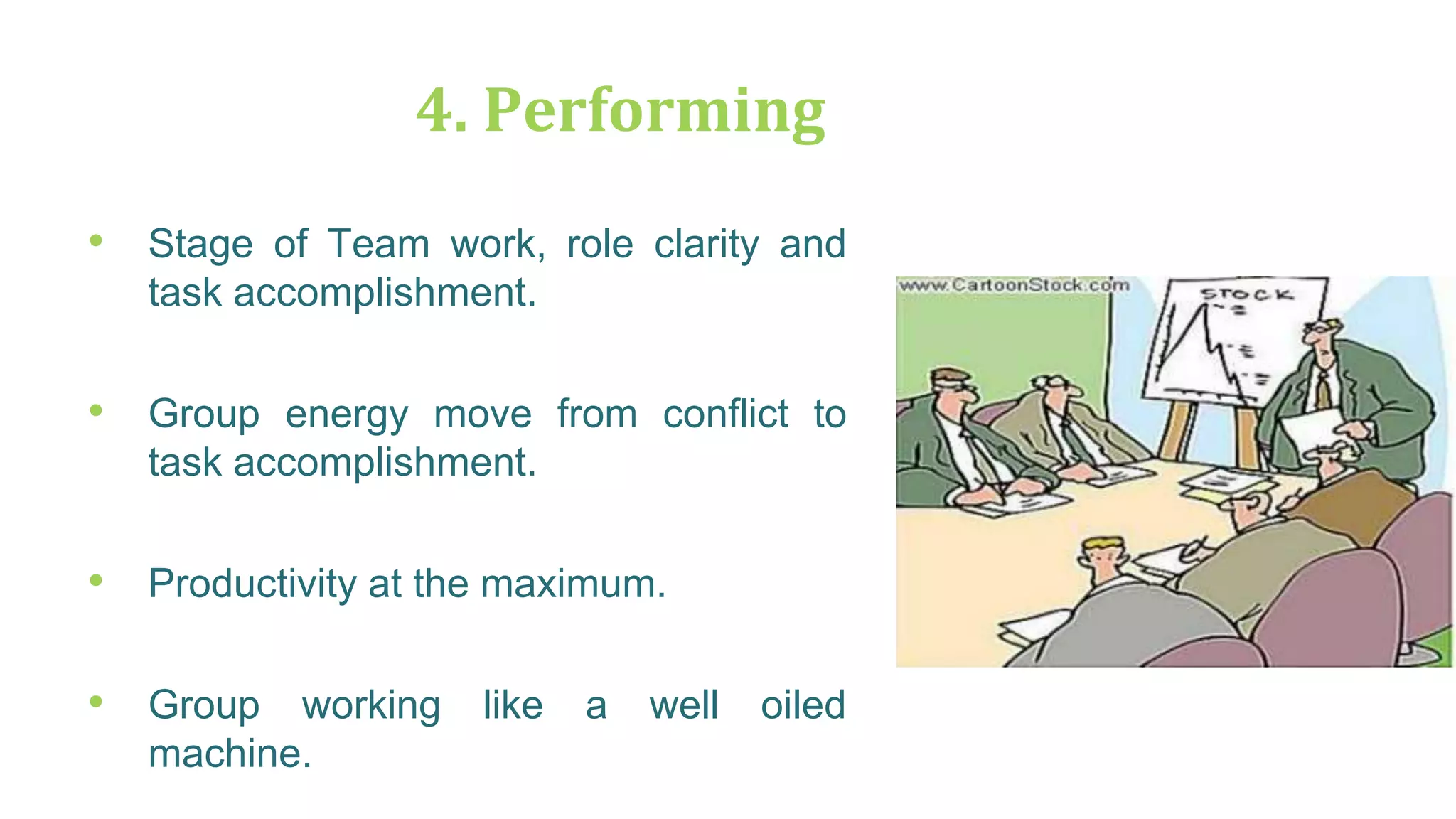
4. Performing
• Stage of Team work, role clarity and
task accomplishment.
• Group energy move from conflict to
task accomplishment.
• Productivity at the maximum.
• Group working like a well oiled
machine.
5. Adjourning
• Last stage for temporary task
forces.
• Group get separated –
causes sadness, depression
at loss of friendship,
happiness and fulfillment at
task performance.
Stages Of Group Formation
5. Adjourning
1. Forming
4. Performing
3. Norming
2. Storming
Thank You..
34

Group and Team

  • 1.
    MODULE III TEAM ANDGROUP Prepared By. Mohammed Jasir PV Asst. Professor MIIMS, Puthanangadi 9605 69 32 66
  • 2.
    SYLLABUS ▪ Group Dynamicstechniques, Group vs Team, Team Dynamics, Teams for enhancing productivity, Building & Managing Successful Virtual Teams. Managing Team Performance & Managing Conflict in Teams. ▪ Working Together in Teams, Team Decision-Making, Team Culture & Power, Team Leader Development. ▪ Introduction to Groups and Teams, Team Composition, Managing Team Performance, Importance of Group, Stages of Group, Group Cycle, Group thinking, getting acquainted, Clarifying expectations. ▪ Group Problem Solving, Achieving Group Consensus. 2
  • 3.
    Group A group isa set of people who have the same interests or aims, and who organize themselves to work or act together. 3
  • 4.
  • 5.
    What is aGroup? 5 Two or more people Shared goals People see themselves As members There is interaction Among members Group
  • 6.
  • 9.
    Types of Groups Formal:-  Command ,  Task and  Functional Informal :-  Interest,  Reference and  Friendship
  • 11.
    “ Why Do PeopleJoin In Group?? 11
  • 12.
    People join groupfor... ▪The people often join groups since the groups give the members a stability and enhances their achievement capacity. The main reasons to join a group are: Have a sense of security Have a status Develop Self-esteem Power Goal achievement 12
  • 13.
    GROUP STRUCTURE Group structure isdefined as the layout of a group. It is a combination of group roles, norms, conformity, workplace behavior, status, reference groups, status, social loafing, cohorts, group demography and cohesiveness. 13
  • 14.
    14 Four different aspectsof group structure are  Norms  Roles  Status  Cohesiveness  Size
  • 15.
    Group Norms:- ▪Set ofbeleifs, feelings, and attitudes commonly shared by group members. ▪These are also referred to as rules or standards of behaviour that apply to group members. Norms serve three functions namely 15
  • 16.
    16 Role :- ▪ variousparts played by group members. ▪ There are two elements that define this role identity-  Role Perception -An individual is expected to behave, according to his own perception in the group.  Role Expectation -It is defined as how others believe one should behave in a given situation.
  • 17.
     Status is“ a socially defined position or rank given to groups or group members by others.”  Group members get high status or low status in the Group based on their authority and performance.  High status members of the group have more freedom to deviate from the norms. 17 Status
  • 18.
     This facilityenables them to have the discriminatory powers in decision making.  Low status members of the group should not have freedom to deviate from the norms as it leads to status inequality. 18
  • 19.
    ▪ Cohesiveness: Thedegree to which members are attracted to each other and are motivated to stay in the group 19 Cohesiveness:
  • 20.
    20 Who won, andwhy? Did your group act like this… … Or like this? Groups with High Cohesiveness Get BetterResults!
  • 21.
    21 Low Cohesiveness - NegativeFeelings - More Problems - Less Productive High Cohesiveness - Unity - Interactive - Positive Feelings - Ability to Cope with Problems - More Productive
  • 22.
    Theories of GroupFormation 22 EXCHANGE THEORY BALANCE THEORY REFINED PROXIMITY THEORY PROXIMITY THEORY
  • 23.
  • 24.
    Exchange Theory 24  ExchangeTheory: Groups are formed out of cost benefit analysis.  Propounded by “ Thaibaunt and Kelly”.  This theory is based on reward-cost outcomes of interaction between employees.  The intraction between people is reward.
  • 25.
    Propinquity/Proximity Theory: 25 People formgroups because others are near to you.
  • 26.
    Refined Propinquity Theory: 26 Proximityis not the only factor, like mindedness/ identity of mind/common goals or interests, etc will lead to formation of groups.
  • 27.
    Stages Of GroupFormation ▪ Forming ▪ Storming ▪ Norming ▪ Performing ▪ Adjourning
  • 28.
    1.Forming • Stage ofuncertainty regarding groups purpose, structure etc • Members concerned about exploring friendship and task potentials. • As awareness increase this stage of group development is completed when members accept themselves as a group and commit the group goals.
  • 29.
    2. Storming • Membersaccept the existence of the group, but there is resistance to the constraints that the group imposes on individuality. • This is a stage of intra group conflicts. • Members think ,who will be their leader…. • This stage is complete when there is relatively clear hierarchy of leadership within the group.
  • 30.
    3. Norming • Closerelationship develops within the group and group shows cohesiveness. • Sense of group identity and sense of belongingness • Norms are developed • Stage is complete when there is well accepted norms, ie. members behave according to the norms.
  • 31.
    4. Performing • Stageof Team work, role clarity and task accomplishment. • Group energy move from conflict to task accomplishment. • Productivity at the maximum. • Group working like a well oiled machine.
  • 32.
    5. Adjourning • Laststage for temporary task forces. • Group get separated – causes sadness, depression at loss of friendship, happiness and fulfillment at task performance.
  • 33.
    Stages Of GroupFormation 5. Adjourning 1. Forming 4. Performing 3. Norming 2. Storming
  • 34.