

Ethics and Values
Prepared By:
Mr. Mohammed Jasir PV
Asst. Professor
MIIMS, Puthanangadi
Contact: 9605693266
Right or Wrong,
How we deciding ?
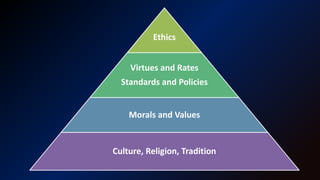
Ethics
Virtues and Rates
Standards and Policies
Morals and Values
Culture, Religion, Tradition
Ethics and Values
Ethics
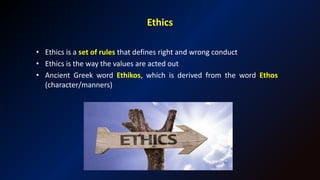
• Ethics is a set of rules that defines right and wrong conduct
• Ethics is the way the values are acted out
• Ancient Greek word Ethikos, which is derived from the word Ethos
(character/manners)
• Ethics is a branch of philosophy that deals with the principles of
conduct of an individual or group
• Ethics has to do with fundamental questions such as
– “What is fair?”
– “What is just?”
– “What is the right thing to do in this situation?”
• It works as a guiding principle as to decide what is good or bad
• They are the standards which govern the life of a person
• Ethics is also known as moral philosophy
Ethics
Morals
• Morals are the social, cultural and religious beliefs or values of an
individual or group which tells us what is right or wrong
• They are the rules and standards made by the society or culture which is
to be followed by us while deciding what is right
Examples
• Do not cheat
• Be loyal
• Be patient
• Always tell the truth
• Be generous
A moral person generally acts ethically
Values
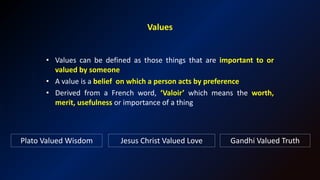
• Values can be defined as those things that are important to or
valued by someone
• A value is a belief on which a person acts by preference
• Derived from a French word, ‘Valoir’ which means the worth,
merit, usefulness or importance of a thing
Jesus Christ Valued Love Gandhi Valued TruthPlato Valued Wisdom
Types of Values
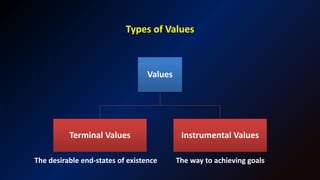
Values
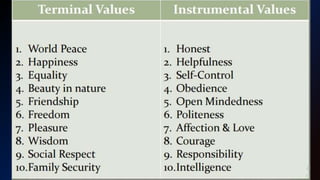
Terminal Values Instrumental Values
The desirable end-states of existence The way to achieving goals
Types of Values
• Terminal Values
• The desirable end-states of existence
– The goals an individual would like to achieve during his/her life time
• Instrumental Values
• The way to achieving goals
– The preferable modes of behaviour or means of achieving one’s
terminal values.
Sources of Values
Sources of Values
• Parents and Family
Sources of Values
Teachers and Class mates
Sources of Values
• Peer groups and friends
Sources of Values
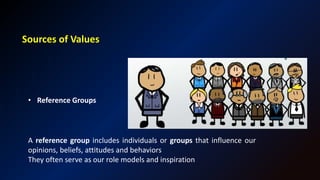
• Reference Groups
A reference group includes individuals or groups that influence our
opinions, beliefs, attitudes and behaviors
They often serve as our role models and inspiration
Sources of Values
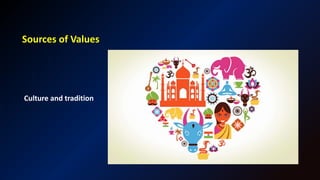
Culture and tradition
Sources of Values
• Parents and Family
• Teachers and Class mates
• Peer groups and friends
• Reference Groups
• Culture and tradition
Ethical Dilemma
• One of the most common ethical problems
• An ethical dilemma is one in which a person has to choose between two
options, both of which are morally correct but in conflict
• An ethical dilemma is a problem, situation, or opportunity that requires an
individual or group to choose among several wrong or unethical actions
Thank You

Ethics and Values

  • 1.
    Ethics and Values PreparedBy: Mr. Mohammed Jasir PV Asst. Professor MIIMS, Puthanangadi Contact: 9605693266
  • 2.
    Right or Wrong, Howwe deciding ?
  • 3.
    Ethics Virtues and Rates Standardsand Policies Morals and Values Culture, Religion, Tradition
  • 4.
  • 5.
    Ethics • Ethics isa set of rules that defines right and wrong conduct • Ethics is the way the values are acted out • Ancient Greek word Ethikos, which is derived from the word Ethos (character/manners)
  • 6.
    • Ethics isa branch of philosophy that deals with the principles of conduct of an individual or group • Ethics has to do with fundamental questions such as – “What is fair?” – “What is just?” – “What is the right thing to do in this situation?” • It works as a guiding principle as to decide what is good or bad • They are the standards which govern the life of a person • Ethics is also known as moral philosophy Ethics
  • 7.
    Morals • Morals arethe social, cultural and religious beliefs or values of an individual or group which tells us what is right or wrong • They are the rules and standards made by the society or culture which is to be followed by us while deciding what is right Examples • Do not cheat • Be loyal • Be patient • Always tell the truth • Be generous A moral person generally acts ethically
  • 8.
    Values • Values canbe defined as those things that are important to or valued by someone • A value is a belief on which a person acts by preference • Derived from a French word, ‘Valoir’ which means the worth, merit, usefulness or importance of a thing Jesus Christ Valued Love Gandhi Valued TruthPlato Valued Wisdom
  • 9.
    Types of Values Values TerminalValues Instrumental Values The desirable end-states of existence The way to achieving goals
  • 10.
    Types of Values •Terminal Values • The desirable end-states of existence – The goals an individual would like to achieve during his/her life time • Instrumental Values • The way to achieving goals – The preferable modes of behaviour or means of achieving one’s terminal values.
  • 12.
  • 13.
    Sources of Values •Parents and Family
  • 14.
  • 15.
    Sources of Values •Peer groups and friends
  • 16.
    Sources of Values •Reference Groups A reference group includes individuals or groups that influence our opinions, beliefs, attitudes and behaviors They often serve as our role models and inspiration
  • 17.
  • 18.
    Sources of Values •Parents and Family • Teachers and Class mates • Peer groups and friends • Reference Groups • Culture and tradition
  • 19.
    Ethical Dilemma • Oneof the most common ethical problems • An ethical dilemma is one in which a person has to choose between two options, both of which are morally correct but in conflict • An ethical dilemma is a problem, situation, or opportunity that requires an individual or group to choose among several wrong or unethical actions
  • 20.