Downloaded 6,249 times
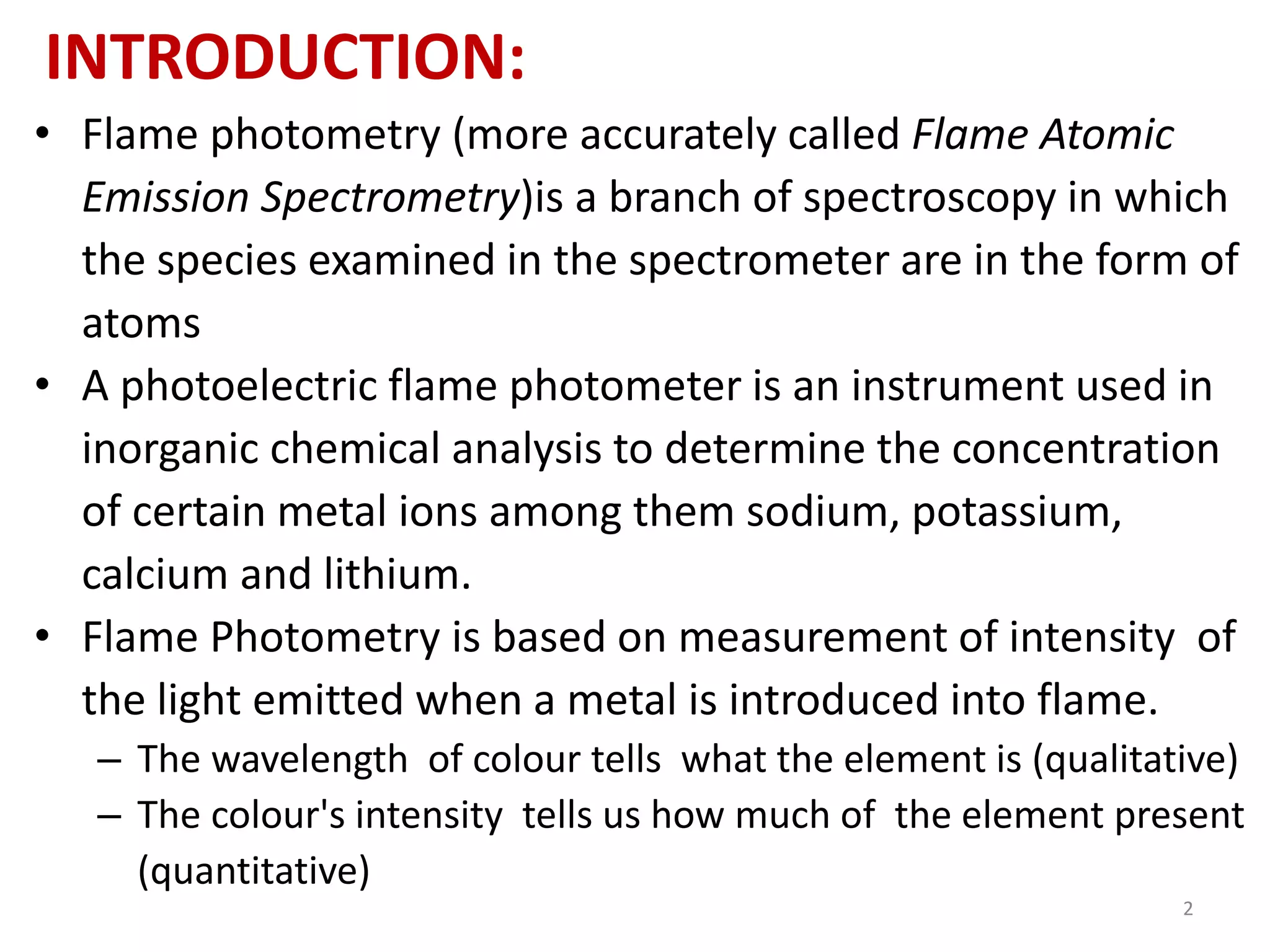

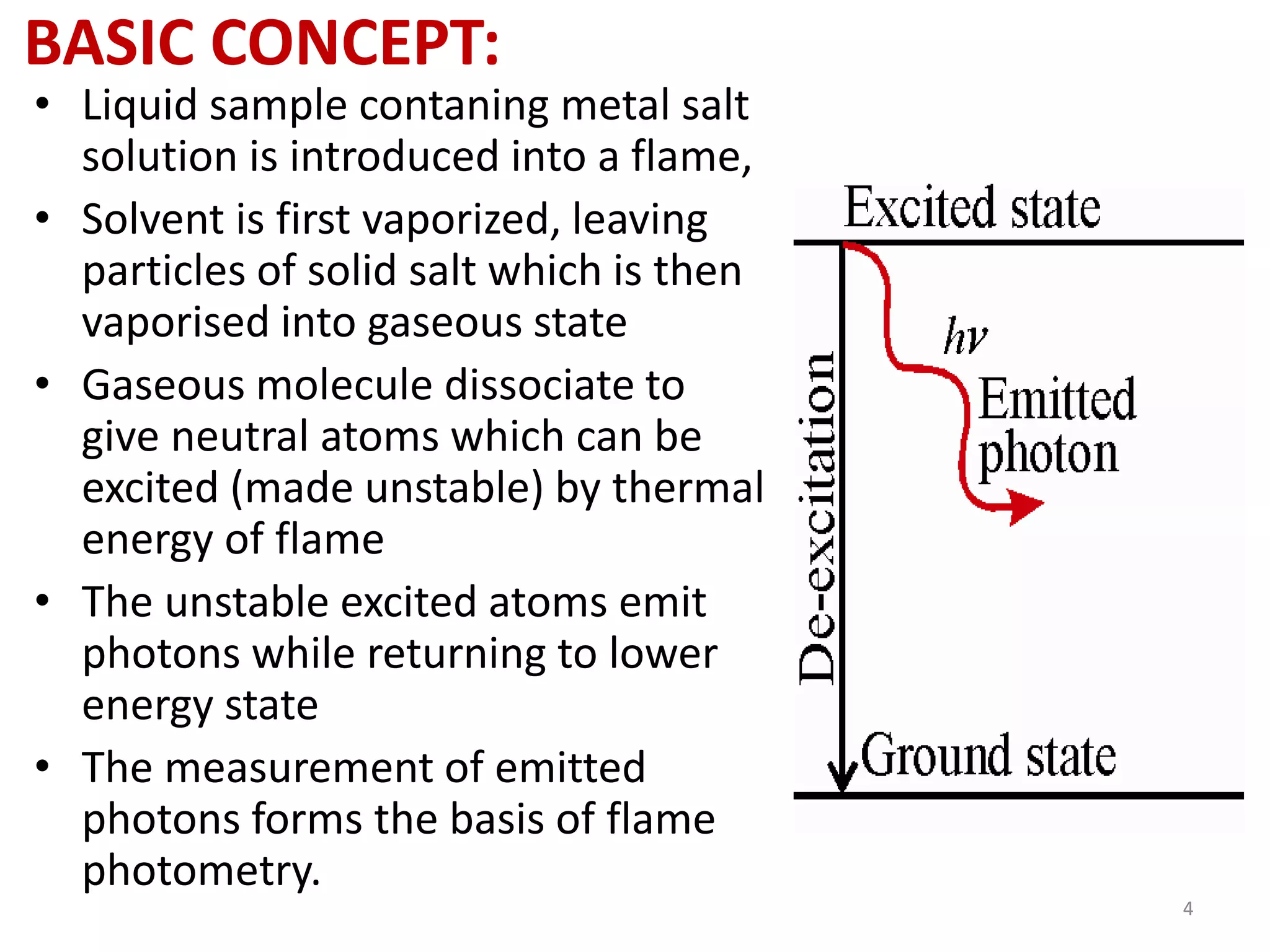


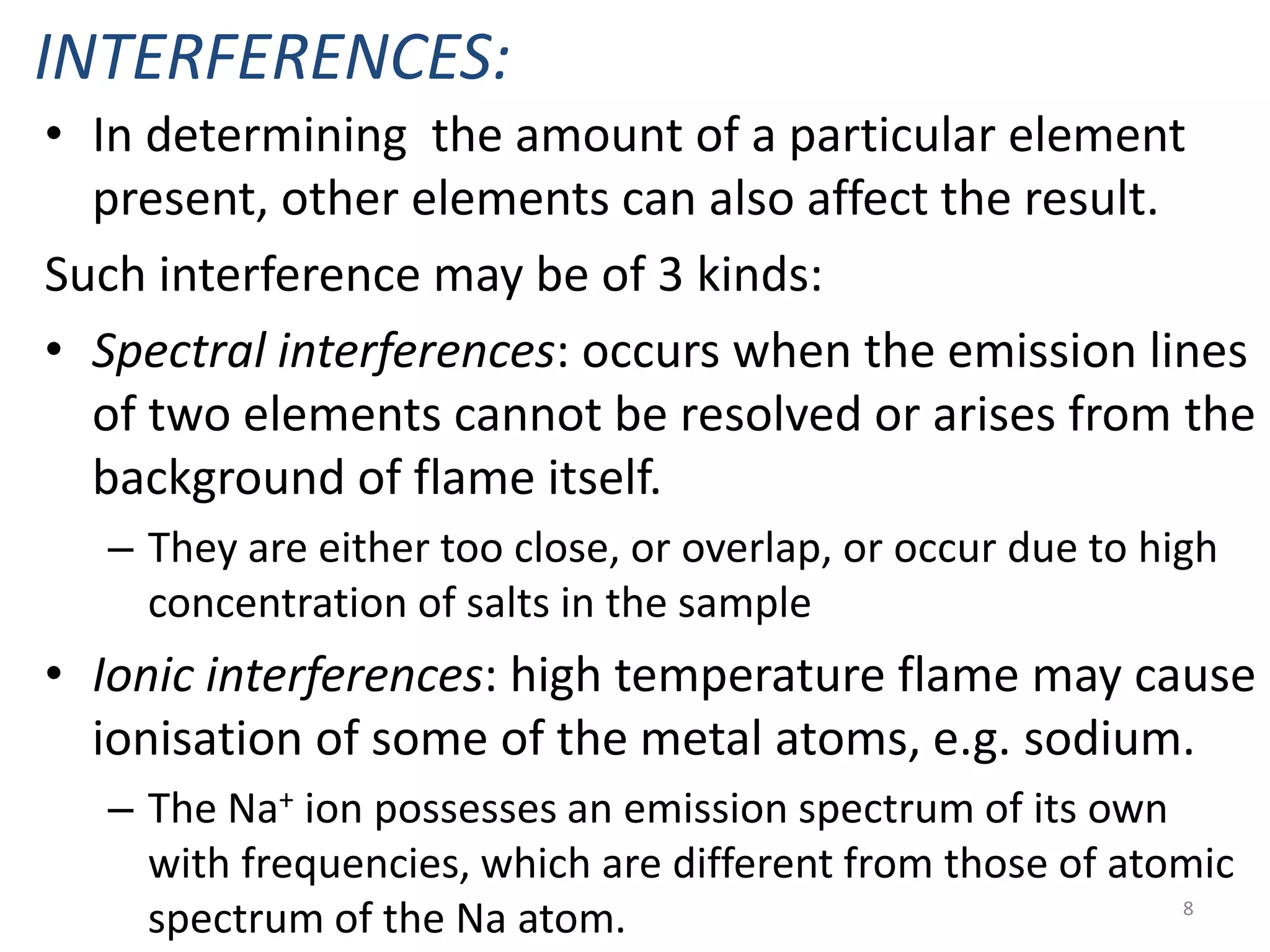
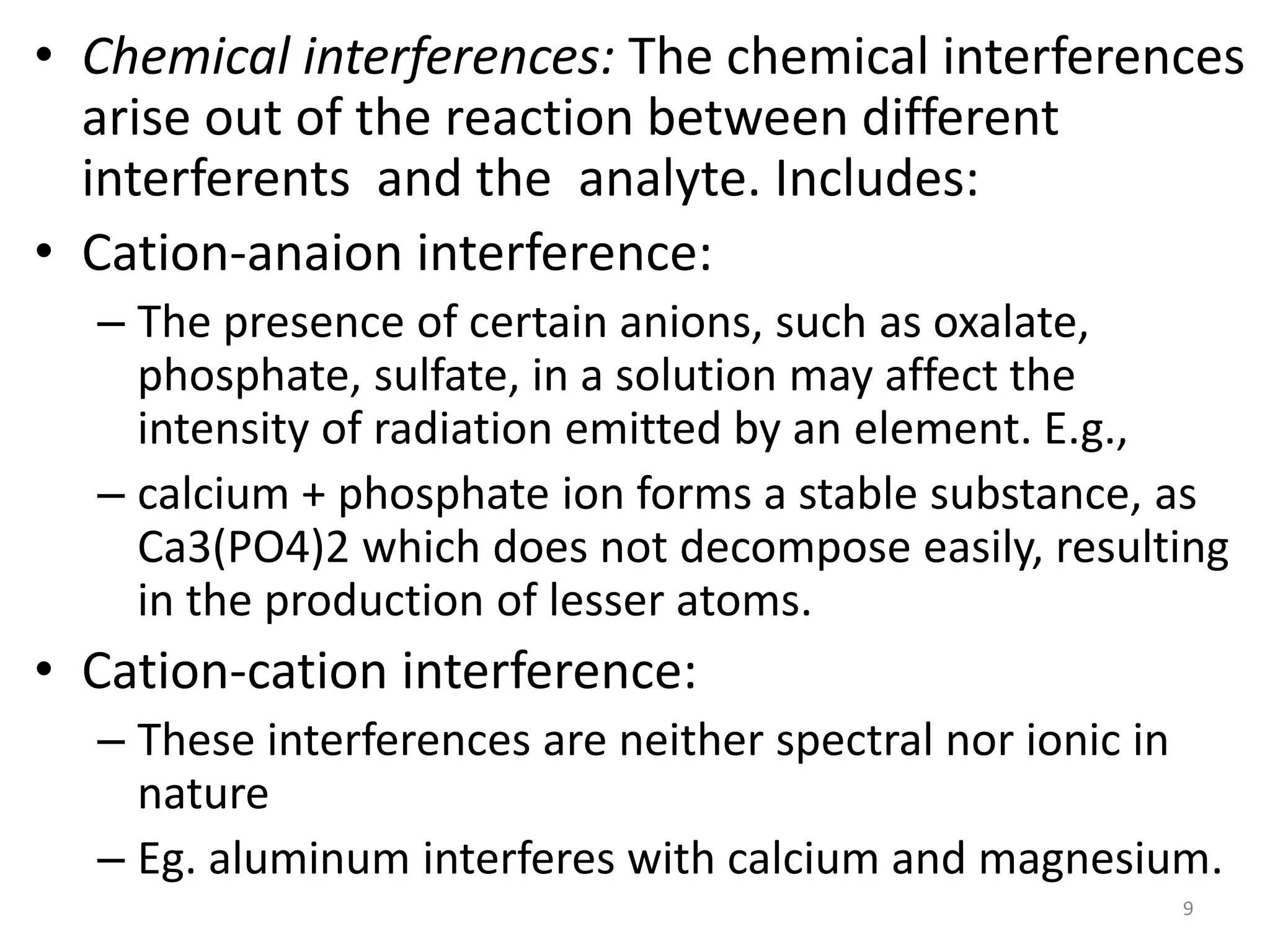


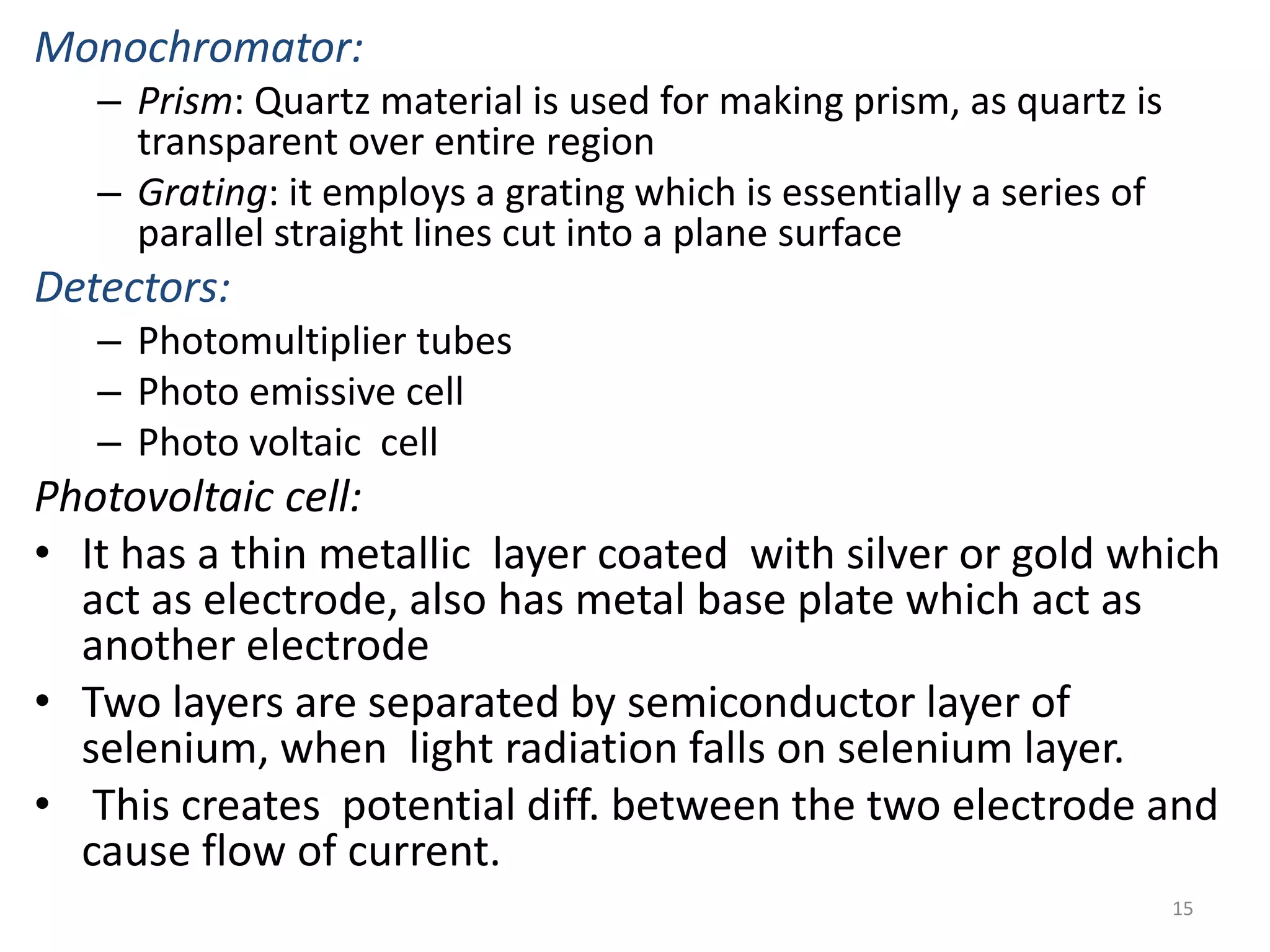

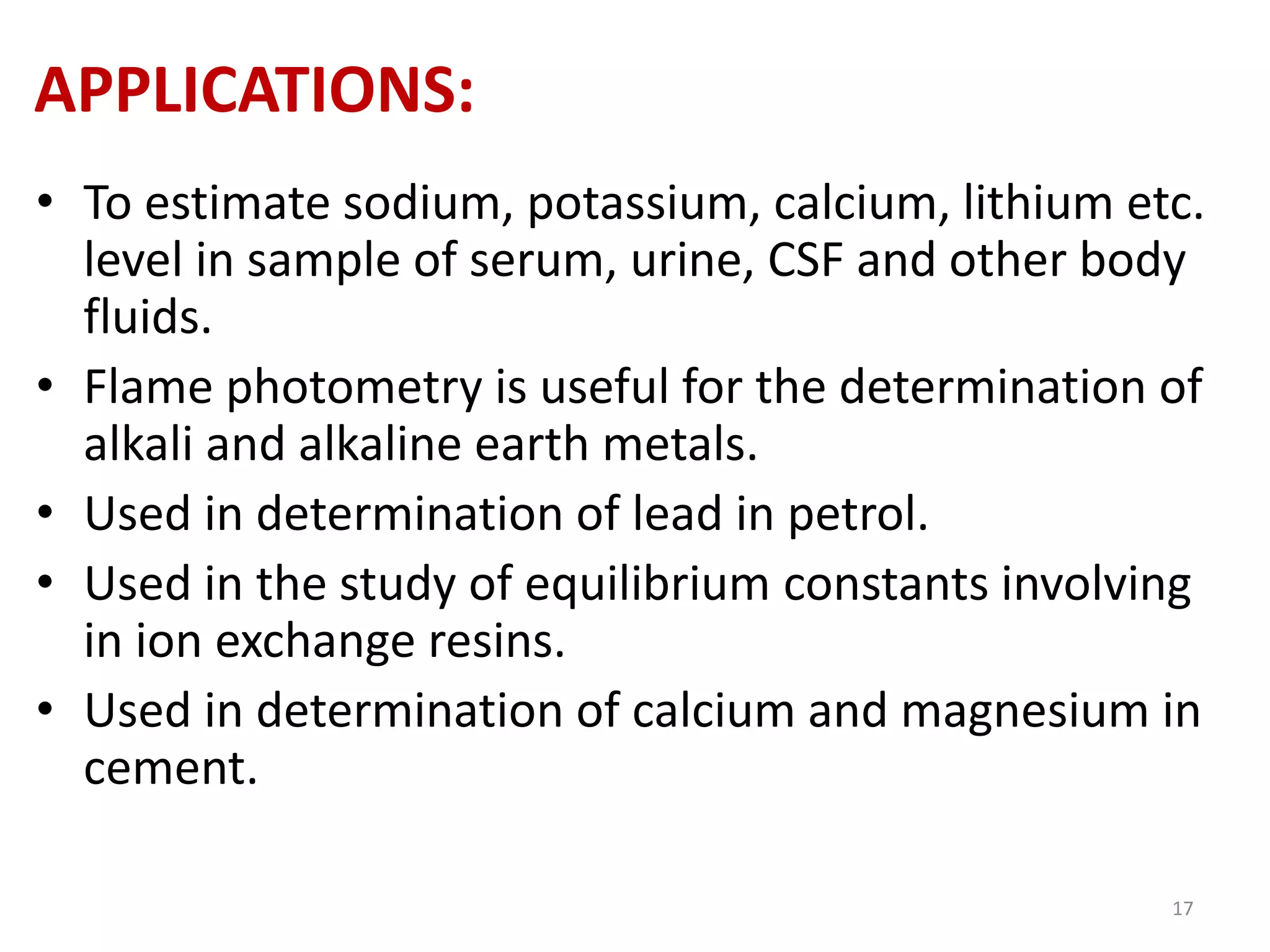


Flame photometry is a technique that uses the characteristic wavelengths of light emitted from atoms excited in a flame to determine the concentration of certain metal ions in solutions. When a sample containing metal ions is introduced into a flame, the ions are atomized and excited to emit light of distinct wavelengths. The intensity of light emitted is directly proportional to the concentration of the metal ion in the sample. Common metal ions that can be analyzed using this technique include sodium, potassium, lithium, and calcium. Interferences from other ions may affect the results. Modern flame photometers use nebulizers to atomize samples, monochromators to select wavelengths, and detectors to measure light intensities.


