CSF IN CLINICO-LABORATORY
DIAGNOSES
PHYSIOLOGY
• Total volume of 150ml and daily production of
550 ml gives a daily turnover of 3.7 times
• The cerebrospinal fluid is formed mainly in the
choroid plexuses of the lateral, third, and fourth
ventricles; some originates from the ependymal cells
lining the ventricles and from the brain substance
• Mechanism of formation:
– Selective ultrafiltration of plasma, and
– Active secretion by epithelial membranes
• It is in direct communication with, and
actually the same as brain ECF.
• The function of CSF is to;
– provide mechanical support and cushioning for the
brain and spinal cord and
– transport biological compounds, waste removal and to
provide a chemical environment.
• Does not vary within a wide range of blood
pressure fluctuations.
• Normal CSF is crystal clear with a low protein
content, osmolality equal to plasma and glucose
60% that of plasma.
BBB:
• The tight junctions between the epithelial cells of the
capillaries and those of the choroid plexus form the
blood-brain barrier:
– prevents the free movement of large and/or hydrophilic
molecules from plasma to CSF and
– facilitates movement of essential molecules like glucose (via
GLUT 1 transporter) into the CSF.
• Fat soluble molecules cross easily, as do O2 and CO2 .
• In contrast HCO3- and H+ do not cross easily and rely
on Carbonic Anhydrase in the choroid plexus to
regenerate them from CO2 & H2O, the [H+] in CSF
being essential in regulating respiration.
Chemistry of normal CSF vs plasma
CSF Plasma CSF/Plasma %
• Na (mmol/l) 140 140 100
• K (mmol/l) 3 4.5 65%
• Cl (mmol/l) 118 99 114%
• Protein (g/l) 0.2 60 0.3% (CSF is 1/200 of serum)
• Glu(mmol/L) 3 5 60% (2/3 of plasma)
• CSF [Calcium], [Potassium] & [Phosphates] are lower than their levels in
the blood
• CSF [Chloride] & [Magnesium] are higher than their levels in the blood
OTHERS:
• BICARBONATE: 23.6MMOL/L
• IMMUOGLOBULINS: IgG,A,M
• PRESSURE: 80-180mmH2O
• R.B.C: 0
• W.B.C: Total w.b.c count<5
Neutrophils 0-1
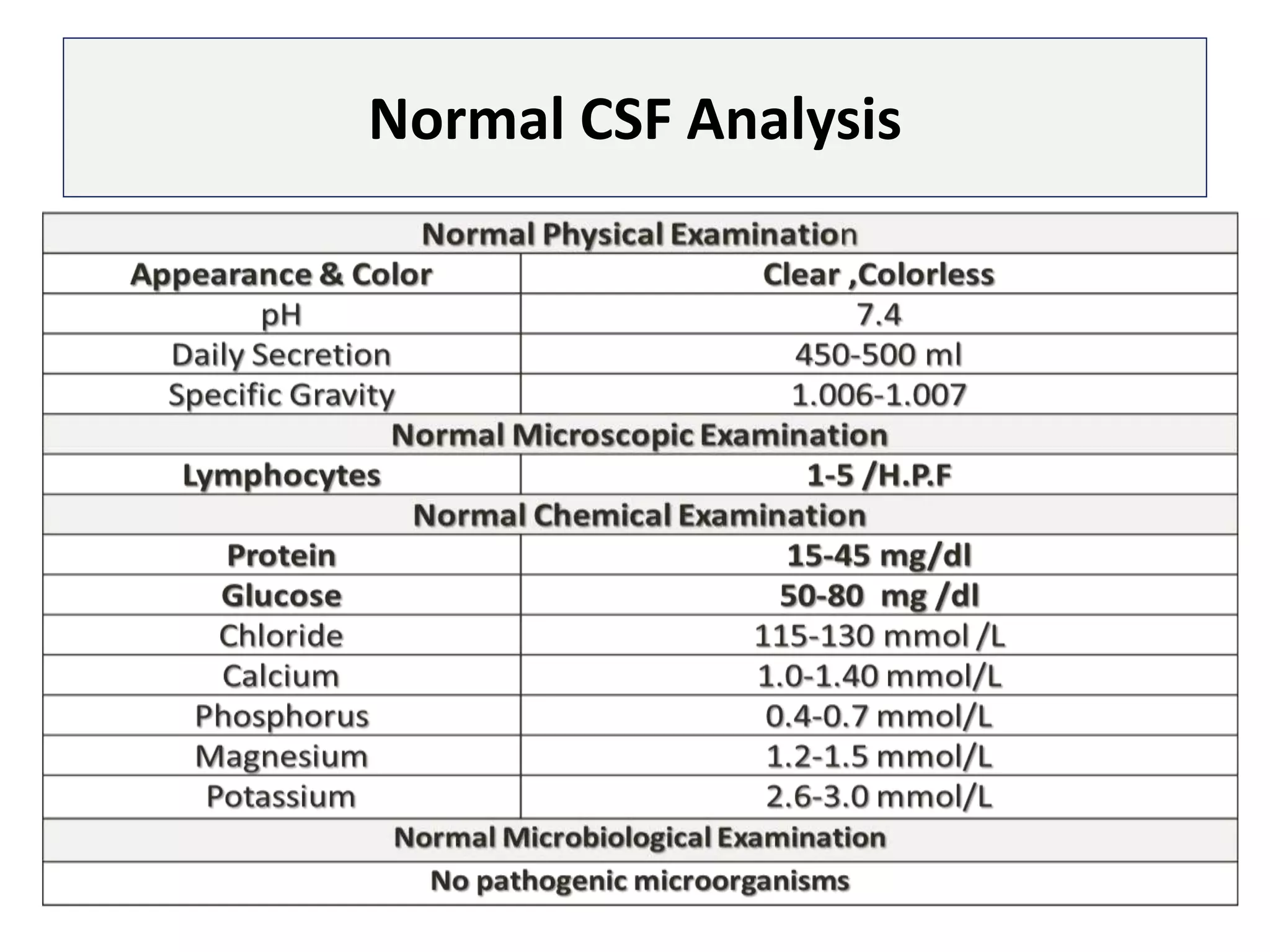
Normal CSF Analysis
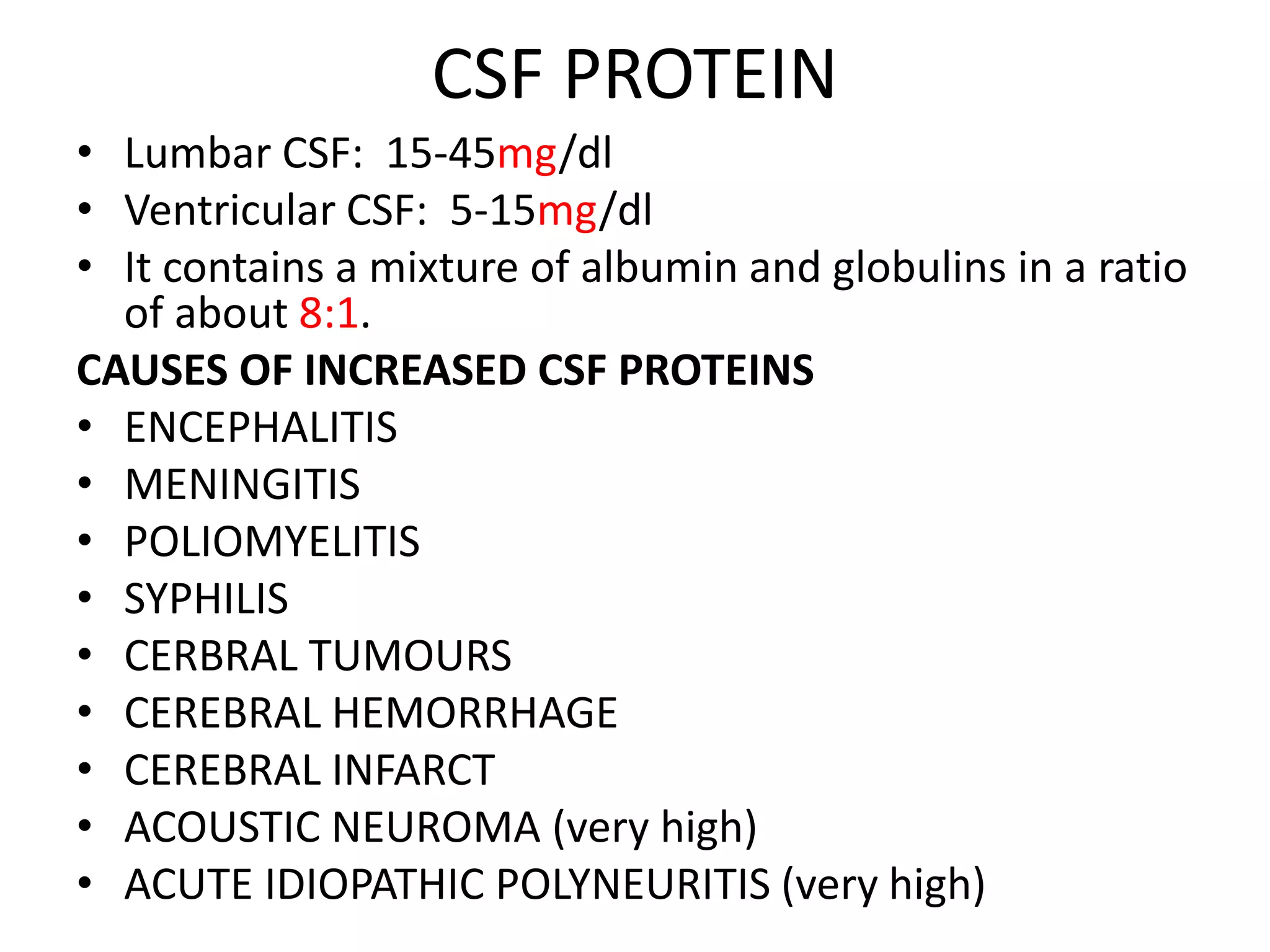
CSF PROTEIN
• Lumbar CSF: 15-45mg/dl
• Ventricular CSF: 5-15mg/dl
• It contains a mixture of albumin and globulins in a ratio
of about 8:1.
CAUSES OF INCREASED CSF PROTEINS
• ENCEPHALITIS
• MENINGITIS
• POLIOMYELITIS
• SYPHILIS
• CERBRAL TUMOURS
• CEREBRAL HEMORRHAGE
• CEREBRAL INFARCT
• ACOUSTIC NEUROMA (very high)
• ACUTE IDIOPATHIC POLYNEURITIS (very high)
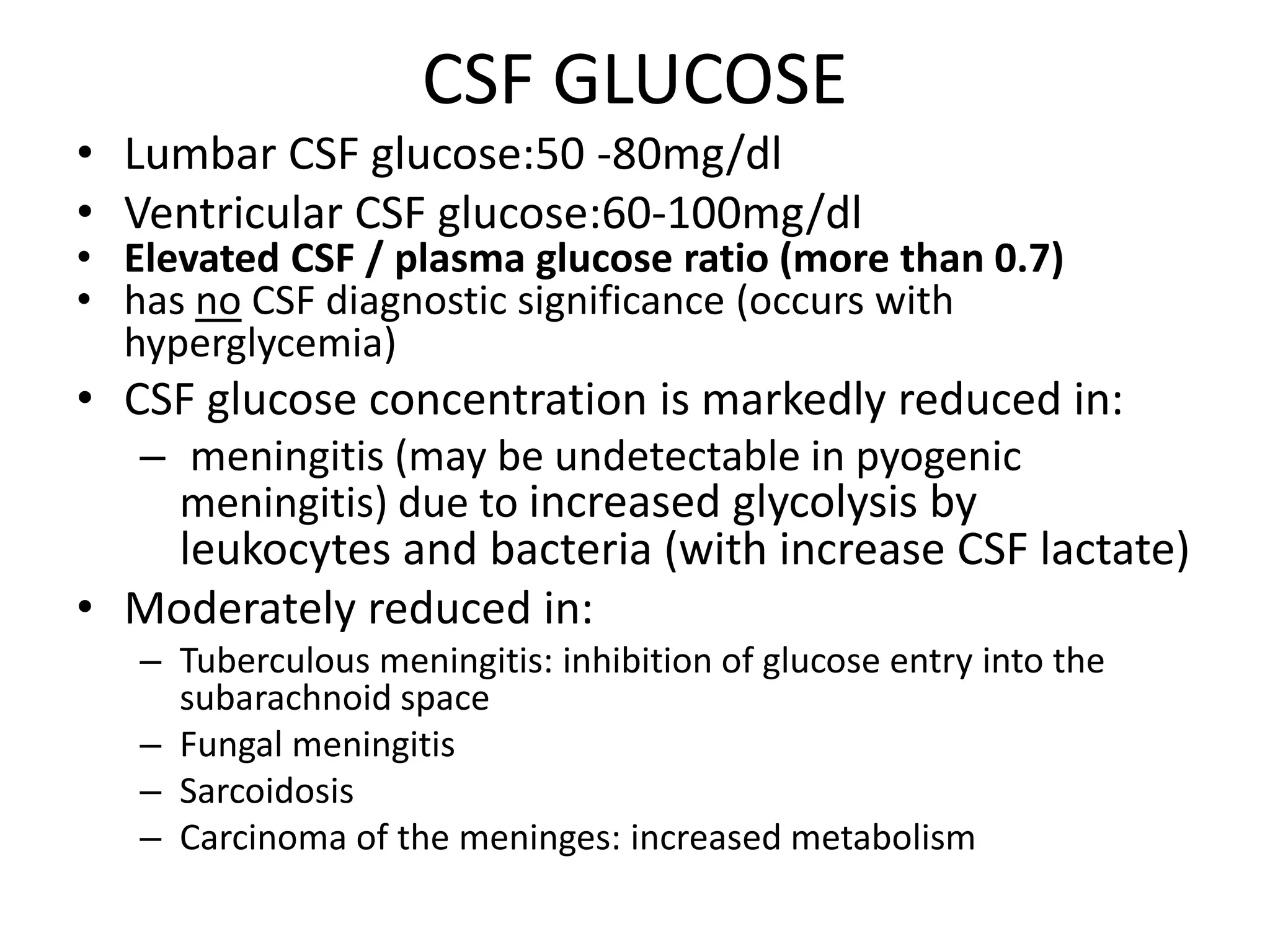
CSF GLUCOSE
• Lumbar CSF glucose:50 -80mg/dl
• Ventricular CSF glucose:60-100mg/dl
• Elevated CSF / plasma glucose ratio (more than 0.7)
• has no CSF diagnostic significance (occurs with
hyperglycemia)
• CSF glucose concentration is markedly reduced in:
– meningitis (may be undetectable in pyogenic
meningitis) due to increased glycolysis by
leukocytes and bacteria (with increase CSF lactate)
• Moderately reduced in:
– Tuberculous meningitis: inhibition of glucose entry into the
subarachnoid space
– Fungal meningitis
– Sarcoidosis
– Carcinoma of the meninges: increased metabolism
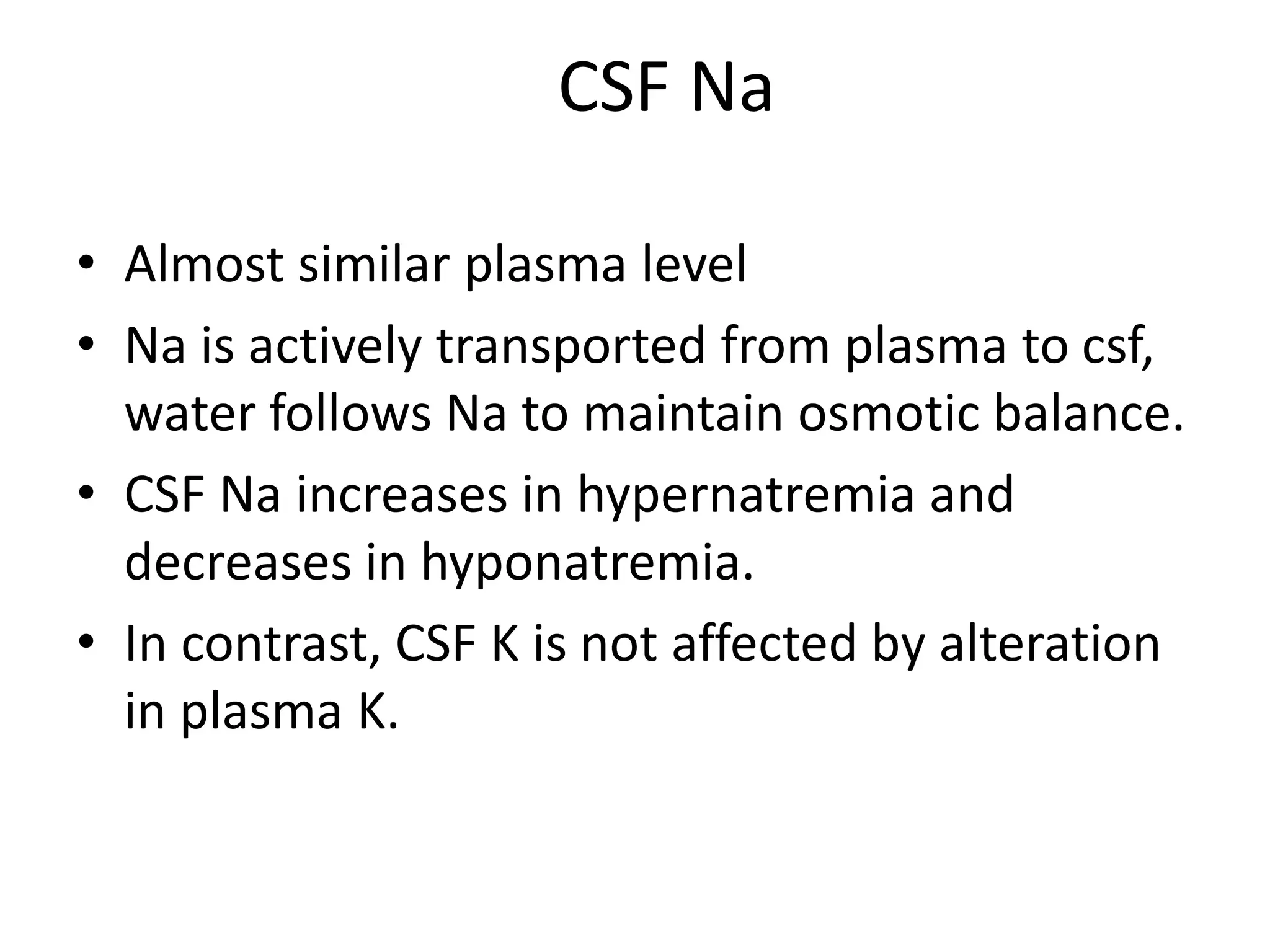
CSF Na
• Almost similar plasma level
• Na is actively transported from plasma to csf,
water follows Na to maintain osmotic balance.
• CSF Na increases in hypernatremia and
decreases in hyponatremia.
• In contrast, CSF K is not affected by alteration
in plasma K.
SAMPLE COLLECTION
• CSF is usually aspirated by Lumbar Puncture (LP) or direct aspiration
during open neurosurgery.
• Approximately 10-12 ml can be taken from an adult and less than 3
ml from a neonate.
• Care must be taken not to contaminate the sample with blood.
• The fluid is collected into 3 tubes via free passive flow through the
needle.
• Up to four tubes of CSF can be collected aseptically.
• Each tube should contain 2-4 mL of fluid.
– Chemistry
– Haematology
– Microbiology
• If the plan is to examine CSF Chloride, then no fluoride should be
used with CSF, so transport to the lab for glucose measurement
should be done IMMEDIATELY .
• CONTRAINDICATION: LP should never be performed
in the presence of raised intracranial pressure or
infection over the puncture site.
• NOTE CSF in the ventricles is different from CSF in
the lumbar region.
– Protein levels in the ventricles are 66% lower (mean
0.15g/L in ventricles versus 0.45g/L in lumbar area) and
– Glucose levels are 10% higher in ventricles.
– Clumps of choroidal cells are observed more commonly
in VP shunt fluid.
– Normal CSF from both regions should contain less than 5
WBCs/μl.
Physical examination of CSF
• Normal CSF: Clear & colorless
• Viscosity: equal to water (increased with increased
proteins)
• Color and/or turbidity of CSF: observed only in
pathological circumstances.
• Turbid CSF
• Bacteria
• WBCs cells or pus cells: suggestive of a CNS infection
(menigitis or encephalitis)
• Blood : suggestive of hemorrhage: subarachnoid or
artifactual traumatic tap
• Red & brown color :
• Blood
• Yellow colour
1- Jaundice (bilirubin in CSF)
2- Xanthochromia (hemoglobin breakdown pigments
in CSF)
• Xanthochromic CSF suggests that a
subarachnoid hemorrhage has recently
occurred (at least within two hours prior to
tapping).
• The yellow color is due to bilirubin generated
in the CNS by the breakdown of hemoglobin
released from RBC's (so jaundice should be
excluded).
INDICATIONS FOR CSF ANALYSIS
CSF is performed in cases of suspected:
1- CNS infections (infectious meningitis &
encephalitis)
2- CNS malignancy ( malignant infiltrates as in
leukemia ..etc)
3- CNS hemorrhages (as in subarachnoid
hemorrhage)
4- CNS demylineating diseases (as in multiple
sclerosis)
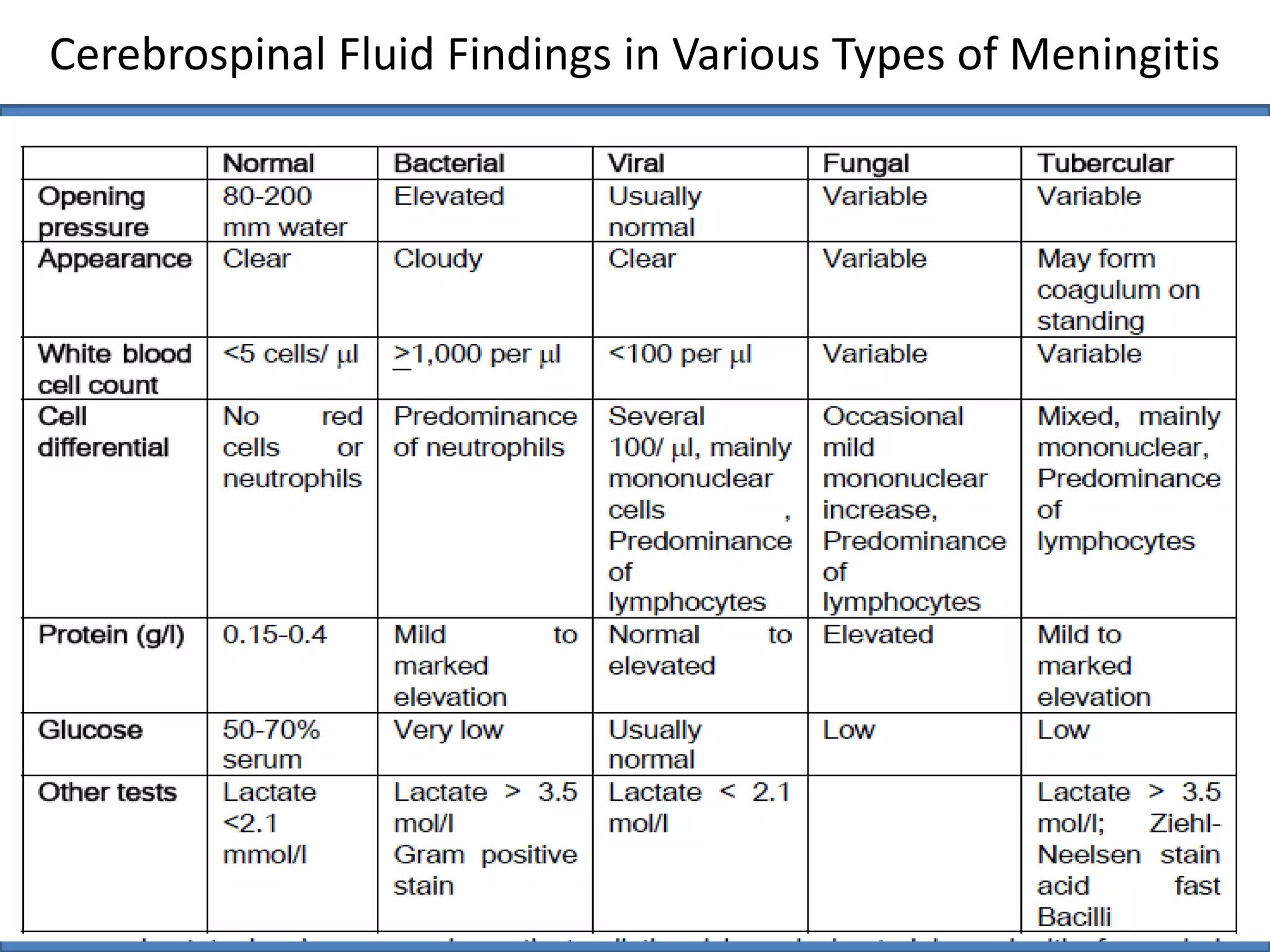
Cerebrospinal Fluid Findings in Various Types of Meningitis
CSF CHLORIDE
• Low CSF chloride (less than 110mmol/1) is
used to distinguish tuberculous from viral and
bacterial meningitis.
• A CSF chloride of less than 100mmol/l is
thought to be virtually diagnostic of TBM.
• The normal range of CSF chloride is 116 to 130
mmol/litre, compared to a normal range in
serum of 95 - 105 mmol/L
OTHER CHEMICAL COMPONENTS:
• Lactate levels are used mostly to distinguish early
bacterial meningitis from viral meningitis.
• LD activity is significantly higher in bacterial
meningitis than in aseptic meningitis.
• CSF [Calcium], [Potassium] & [Phosphates] are
lower than their levels in the blood
• CSF [Chloride] & [Magnesium] are higher than
their levels in the blood
• CSF PROTEIN
Spinal fluid lacks high molecular weight proteins such
as beta lipoprotein, alpha-2 macroglobulin, IgM, and
polymeric haptoglobins.
• Certain proteins arise within the intrathecal
compartment:
– Immunoglobulins produced by CNS lymphocytes
– Transthyretin (produced by choroid plexus)
– Various structural proteins found in brain tissue
• Unlike plasma, on electrophoresis CSF has a prominent
prealbumin peak and a split beta peak, which contains;
– transferrin (tau transferrin) and
– m2-transferrin, which is also called tau-protein
• The protein concentration of spinal fluid is less than 1%
of plasma proteins.
• The normal range for lumbar puncture CSF varies
with age.
• Infants have higher protein levels (0.6-1.5 g/L)
due to increased blood brain barrier permeability.
• Protein-cytologic dissociation – increased total
protein, normal number of elements;
– present in tumours and blockade of CSF circulation
– compressive syndrome, late phase of chronic
neuroinfections, Froin´s syndrome
• Cyto-protein dissociation – in early acute phase
of meningitides
• Protein-cytologic association – elevation of both
proteins and elements
Analysis of protein fractions: (Albumin & IgG)
• Albumin of CSF:
– obtained from blood by means of blood-brain
barrier (as it is produced solely by the liver)
– In cases of increased permeability of BBB, albumin
is increased in CSF
• IgG of CSF:
– can be obtained from blood (By BBB) and increased
in cases of increase permeab. of BBB and
– local synthesis from plasma cells within CSF
(increased in cases of MS)
• FIRST: CHECK INTEGRITY OF BLOOD BRAIN BARRIER (BBB) by
CSF/Serum albumin index calculation:
– CSF serum albumin index = CSF albumin (mg/dl) / serum albumin
(g/dl)
– Index less than 9 indicates intact BBB (no increased permeability of
BBB)
• SECOND: CSF IgG INDEX is calculated:
CSF IgG / Serum IgG
CSF IgG index = ---------------------------------------
CSF albumin / Serum albumin
Normal: less than 0.7
• CSF IgG can arise:
– from plasma cells within CSF and
– from the blood through BBB
• ↑CSF [IgG] without concomitant ↑ in CSF [Alb] suggests local production of IgG:
– multiple sclerosis (MS)
– subacute sclerosing panencephalitis (SSPE)
• Monoclonal IgG in both CSF and Serum – Paraproteins.
CSF glutamine
• The level of CSF glutamine reflects level of
ammonia that is normally removed in the CNS by
formation of glutamine (amino acid glutamate +
ammonia).
• Glutamine synthesis helps to protect the CNS from
the toxic effects of increased ammonia.
• Ammonia production is increase dramatically in
patients with liver failure.
• Accordingly, CSF glutamine production is increased
in cases of hepatic encephalopathy
Enzymes in the CSF
• CSF lactate dehydrogenase (LDH) may be
elevated in bacterial meningitis.
• CSF adenosine deaminase (ADA) elevations can
occur in tuberculous meningitis.
• LDH – LD1, LD2, LD3, LD4, LD5:
– Increase LD5 in metastatic brain tumor.
– Increase all fractions in primary brain tumor.
– Increase LD4,LD5 in bacterial meningitis.
• CK – BB Increase in:
– epileptic patient
– Brain tumor
– cerebral infarction
OTHER MARKERS
• Viral and bacterial antigens - Herpes simplex,
Mycobacterium tuberculosis, Borrelia burgdorferi
• Structural proteins – markers of damage:
– S100 protein,
– NSE (neuron specific enolase),
– MBP (myelin basic protein)
• Autoantibodies:
– anti MBP (myelin basic protein) IgG,
– anti MAG (myelin associated glycoprotein) IgM
• β2-microglobulin:
– hematological malignancies
CSF FINDINGS IN SOME CONDITIONS:
• Subarachnoid haemorrhage
• Head Injury
• Demyelinating disorders
• Depressive disorders
• Alzheimer's disease
• Gullian barre syndrome
• HIV encephalitis and AIDS Demetia complex
• Neurosyphilis
• Sarcoidosis
• Lymes Disease
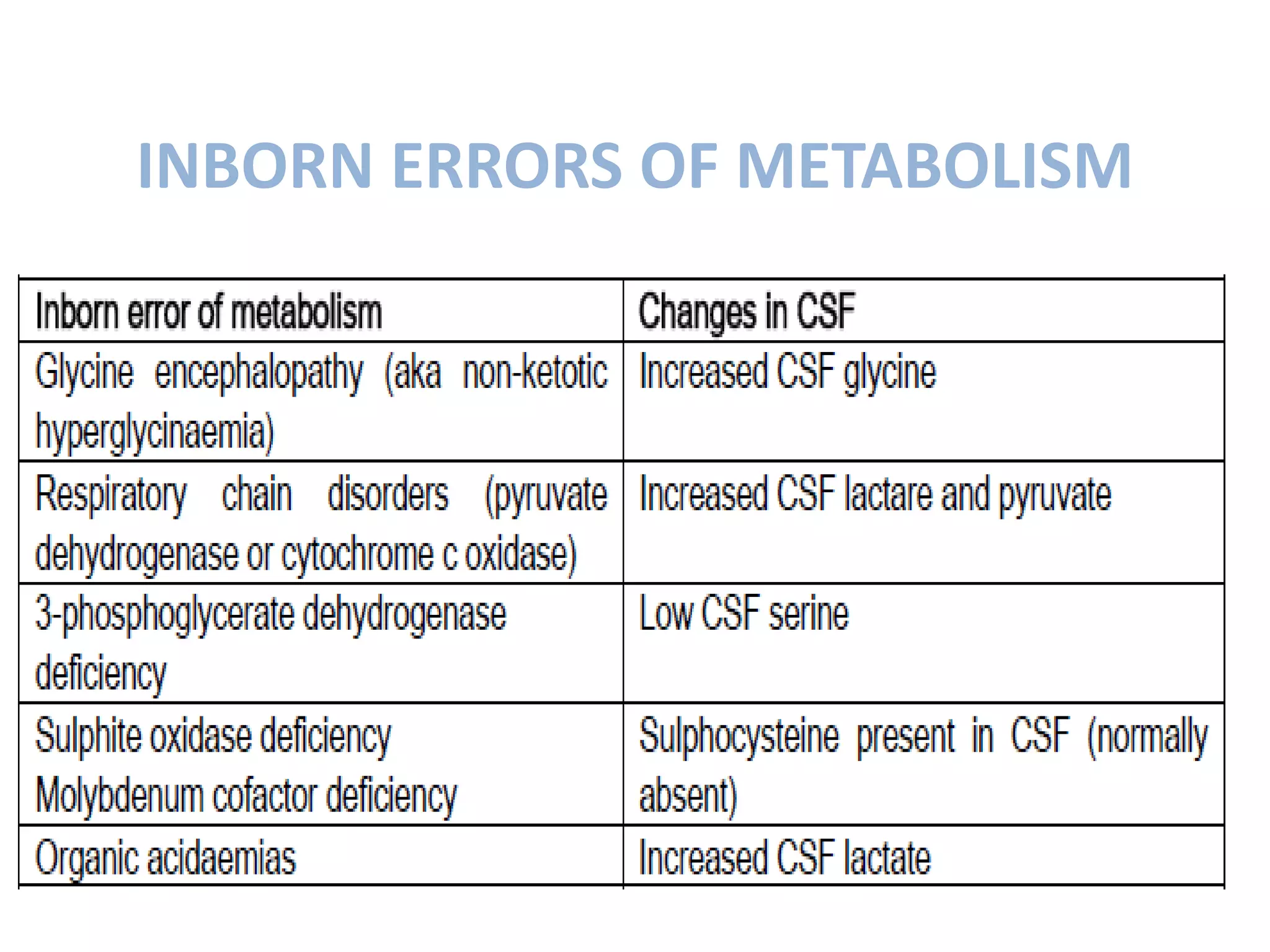
• Inborn Errors of Metabolism
SUBARACHNOID HAEMORRHAGE
• In subarachnoid haemorrhage red cells are a
diagnostic feature in the CSF so careful LP is
essential.
• Red cells that have been in the CSF for longer than 4
hours cause a yellow staining of the CSF called
xanthochromia.
• The presence of this in fresh CSF confirms bleeding
into the subarachnoid space from a source other
than contamination during the LP.
Other causes of Xanthochromia
o Very high CSF protein concentration/ Increased
protein (>1.50 g/L)
o Elevated serum bilirubin/Jaundice
o Meningeal melanoma
o Hypercarotenaemia
o Rifampicin therapy
o Previous traumatic tap
• NOTE: You must protect the CSF sample from light
to prevent decay of the bilirubin.
• Xanthochromia is a visual diagnosis and rather subjective.
A test referred to as the net bilirubin absorbance, is
sometimes requested by neurosurgeons.
• CT is positive in 98% of patients presenting within 12 h
but only positive in 50% presenting within 1 week BUT
this can be positive 2 weeks after the event.
• This test is designed to pick up minute quantities of CSF
bilirubin caused by small sub-arachnoid bleeds.
• Also, traumatic taps and SAH may co-exist confounding
the problem of distinguishing between the two.
• The determination of net bilirubin absorbance is
performed by scanning the sample at different
wavelengths to determine if there is bilirubin present or
whether there is haemoglobin.
• These can be distinguished by the wavelengths at which
they show maximal absorbance.
HEAD INJURY
• In patients with rhinorrhoea or otorrhoea, post
head injury or spontaneously, it is important to
ascertain whether CSF is present in the fluid, which
would confirm a CSF leak.
• This is done by identifying beta-2-transferrin (a
desialylated form of transferrin that only occurs in
CSF and not in plasma; often call tau-transferrrin
but this risks confusion with other tau proteins.
• The preferred term is Asialotransferrin in the fluid
leak sample, using electrophoresis and
immunofixation
DEMYELINATING DISORDERS
• In Multiple sclerosis, the presence of elevated levels of myelin
basic protein in the CSF derived from damaged myelin sheaths
with high CSF protein levels due to immunoglobulins (often with
an oligoclonal pattern) can help confirm the diagnosis, following
the usual MRI scan .
• DIAGNOSIS OF MULTIPLE SCLEROSIS
• Oligoclonal banding is visualized on electrophoresis of CSF. This
can be used to rule out suspected MS.
• However, this must be done in parallel with serum
electrophoresis to ensure that the banding seen is only present in
CSF.
• Oligoclonal bands may also be seen in the CSF of patients with:
– lymphoma,
– CLL,
– malignancies,
– chronic active hepatitis,
– rheumatoid factor, and
– viral illnesses.
• Demyelinating disorders release myelin basic protein into the
CSF. Levels can be used to follow the activity of
demyelination, diagnose early MS before oligoclonal bands
form, and assist in the diagnosis of the 10% of MS patients
who never form oligoclonal bands. The reference range is <
1.5 ng/Ml.
3. Protein index: This assesses the amount of intrathecal
protein synthesis that may occur in an inflammatory disease
and assesses the permeability of the blood-brain barrier in
relation to increased intrathecal synthesis (eg IgG).
– Albumin is used as a reference protein.
– The IgG/Albumin index or IgG synthesis rate can be calculated by
measuring the albumin and IgG concentration in both the serum
and CSF.
– This is because multiple sclerosis is associated with increased
synthesis of immunoglobulins within the CNS, reflecting a local
immune response.
A normal CSF Albumin/Serum Albumin ratio is
less than 9.
CSF IgG index = CSF IgG/Serum IgG ÷ CSF
Albumin/Serum Albumin Usually the CSF IgG
index will be 0.3-0.8.
If > 0.8, this indicates increased intrathecal
synthesis such as may be seen in multiple
sclerosis
DEPRESSIVE DISORDER
• In Major Depressive Disorder the morning CSF
levels of 5-Hydroxyindoleacetic acid ( 5-HIAA) can
be measured and if low indicate a deficiency in
serotonin.
• In addition, MHPG (3-methoxy-4-
hydroxyphenylglycol, a metabolite of
noradrenaline) can also be low in depression and
can predict responses to such antidepressants in
patients with depression
Alzheimer's disease.
• Recently two new markers have emerged that
contribute to the diagnosis of Alzheimer's
disease:
– Tau protein demonstrates significantly elevated
CSF levels, and
– B amyloid called amyloid precursor protein,
concentrations are significantly lower.
HIV ENCEPHALITIS/AIDS DEMENTIA
COMPLEX.
• CSF findings include a moderate increase in
mononuclear cells and oligoclonal banding.
• Viral DNA can be detected using PCR.
• In general, a wide variety of CSF abnormalities
may be seen including increased IgG indices,
oligoclonal banding and increased lymphocytes.
• Serious opportunistic fungal infections may exist
with minimal CSF changes.
Guillain-Barré syndrome:
• CSF can show a very high protein
concentration
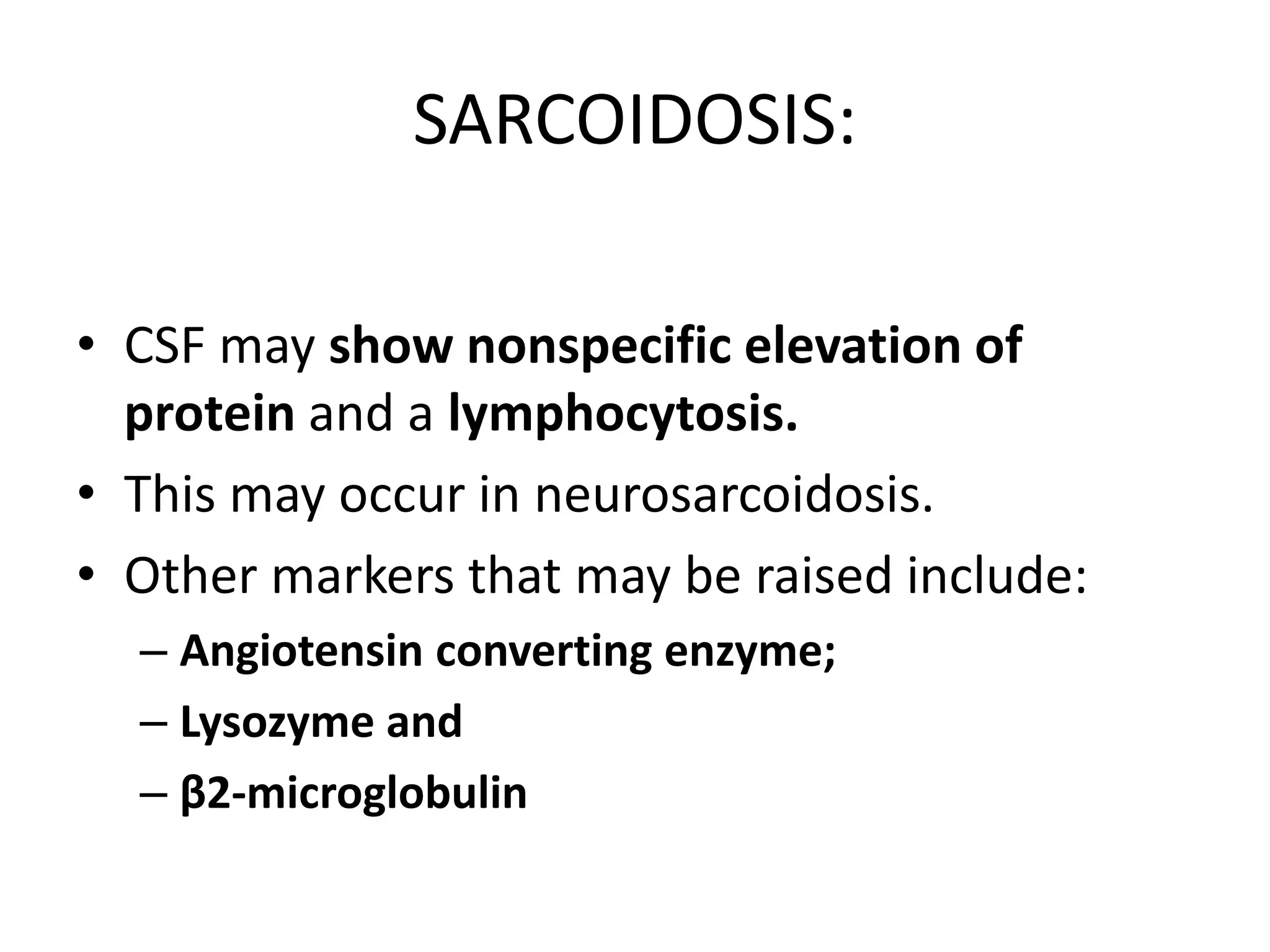
SARCOIDOSIS:
• CSF may show nonspecific elevation of
protein and a lymphocytosis.
• This may occur in neurosarcoidosis.
• Other markers that may be raised include:
– Angiotensin converting enzyme;
– Lysozyme and
– β2-microglobulin
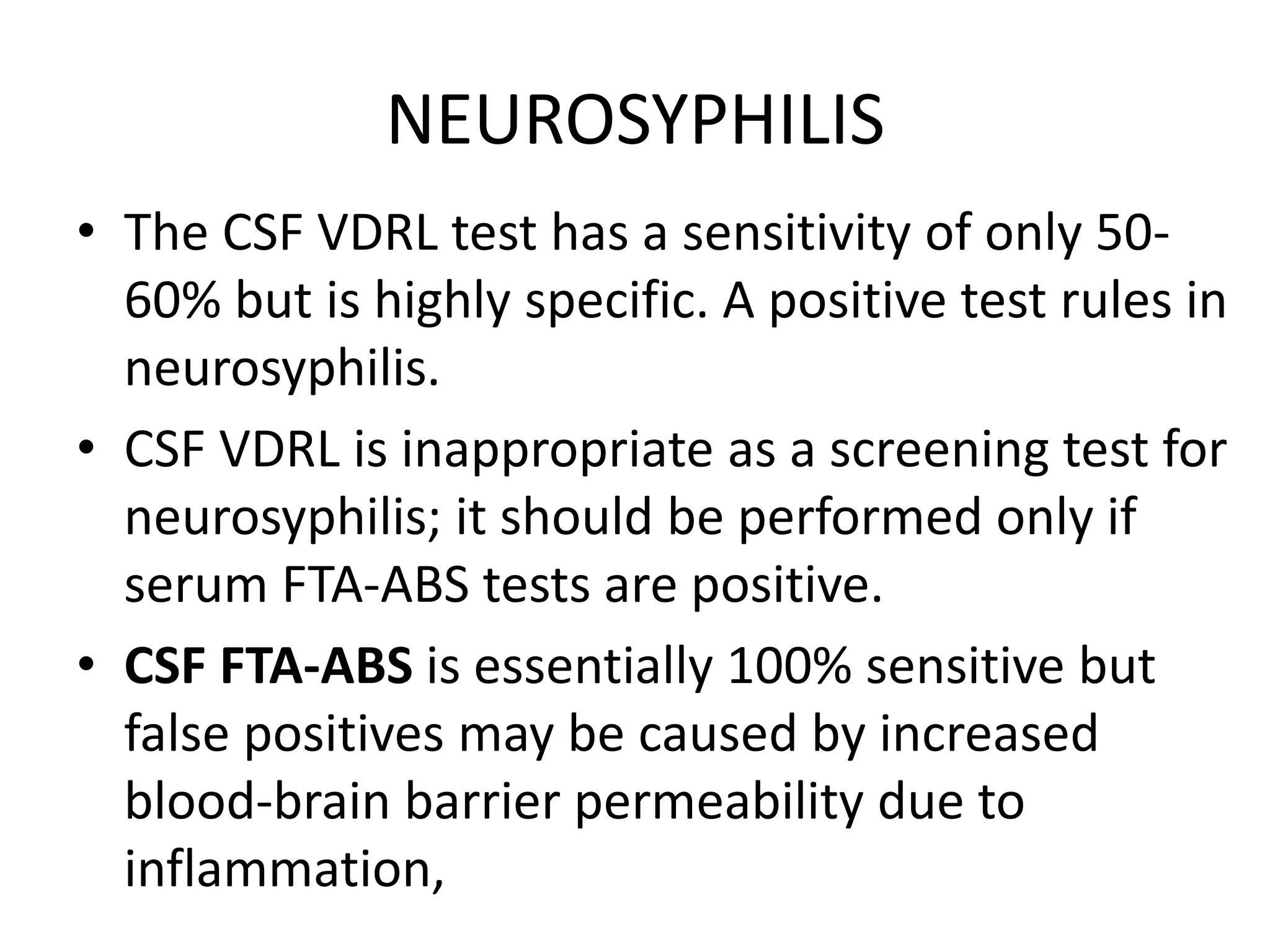
NEUROSYPHILIS
• The CSF VDRL test has a sensitivity of only 50-
60% but is highly specific. A positive test rules in
neurosyphilis.
• CSF VDRL is inappropriate as a screening test for
neurosyphilis; it should be performed only if
serum FTA-ABS tests are positive.
• CSF FTA-ABS is essentially 100% sensitive but
false positives may be caused by increased
blood-brain barrier permeability due to
inflammation,
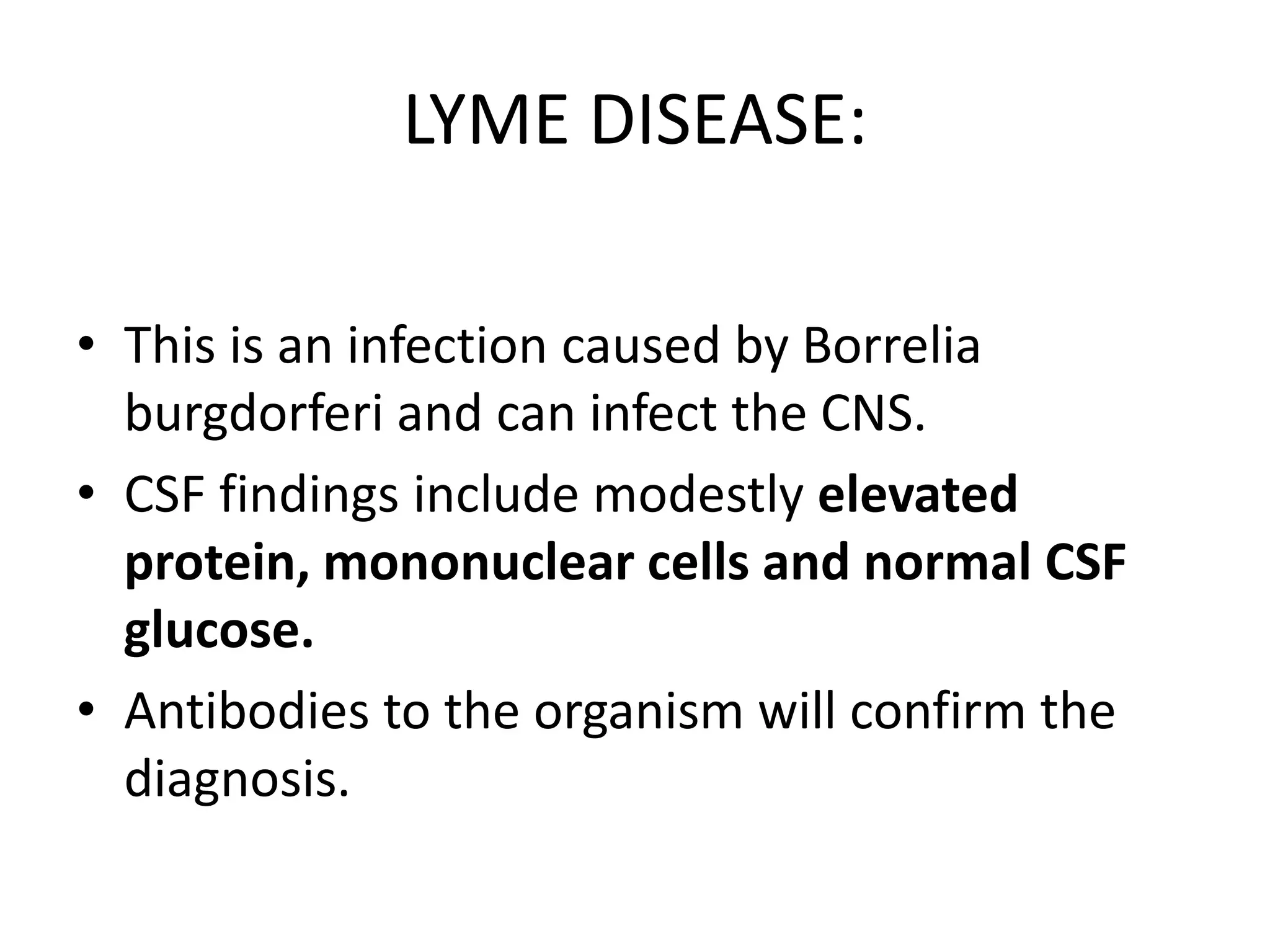
LYME DISEASE:
• This is an infection caused by Borrelia
burgdorferi and can infect the CNS.
• CSF findings include modestly elevated
protein, mononuclear cells and normal CSF
glucose.
• Antibodies to the organism will confirm the
diagnosis.
INBORN ERRORS OF METABOLISM
SUMMARY
1. Acute bacterial meningitis is associated with high CSF
neutrophil count, increase CSF total protein and a low
CSF glucose;
2. In a patient with suspected subarachnoid
haemmorrhage and negative CT scan, CSF
spectrophotometry may help determine the need for
angiography
3. CSF oligoclonal bands are seen in 90% of patients with
MS, but is not specific for this conditions. The absence
of oligoclonal banding can rule out MS.
4. Very high CSF protein concentrations can occur in non-
infectious conditions including Guillain-Barré syndrome
and blocked CSF flow (Froin’ s syndrome).
THANK YOU

Csf in clinico laboratory diagnoses

  • 1.
  • 2.
    PHYSIOLOGY • Total volumeof 150ml and daily production of 550 ml gives a daily turnover of 3.7 times • The cerebrospinal fluid is formed mainly in the choroid plexuses of the lateral, third, and fourth ventricles; some originates from the ependymal cells lining the ventricles and from the brain substance • Mechanism of formation: – Selective ultrafiltration of plasma, and – Active secretion by epithelial membranes • It is in direct communication with, and actually the same as brain ECF.
  • 3.
    • The functionof CSF is to; – provide mechanical support and cushioning for the brain and spinal cord and – transport biological compounds, waste removal and to provide a chemical environment. • Does not vary within a wide range of blood pressure fluctuations. • Normal CSF is crystal clear with a low protein content, osmolality equal to plasma and glucose 60% that of plasma.
  • 4.
    BBB: • The tightjunctions between the epithelial cells of the capillaries and those of the choroid plexus form the blood-brain barrier: – prevents the free movement of large and/or hydrophilic molecules from plasma to CSF and – facilitates movement of essential molecules like glucose (via GLUT 1 transporter) into the CSF. • Fat soluble molecules cross easily, as do O2 and CO2 . • In contrast HCO3- and H+ do not cross easily and rely on Carbonic Anhydrase in the choroid plexus to regenerate them from CO2 & H2O, the [H+] in CSF being essential in regulating respiration.
  • 5.
    Chemistry of normalCSF vs plasma CSF Plasma CSF/Plasma % • Na (mmol/l) 140 140 100 • K (mmol/l) 3 4.5 65% • Cl (mmol/l) 118 99 114% • Protein (g/l) 0.2 60 0.3% (CSF is 1/200 of serum) • Glu(mmol/L) 3 5 60% (2/3 of plasma) • CSF [Calcium], [Potassium] & [Phosphates] are lower than their levels in the blood • CSF [Chloride] & [Magnesium] are higher than their levels in the blood OTHERS: • BICARBONATE: 23.6MMOL/L • IMMUOGLOBULINS: IgG,A,M • PRESSURE: 80-180mmH2O • R.B.C: 0 • W.B.C: Total w.b.c count<5 Neutrophils 0-1
  • 6.
  • 7.
    CSF PROTEIN • LumbarCSF: 15-45mg/dl • Ventricular CSF: 5-15mg/dl • It contains a mixture of albumin and globulins in a ratio of about 8:1. CAUSES OF INCREASED CSF PROTEINS • ENCEPHALITIS • MENINGITIS • POLIOMYELITIS • SYPHILIS • CERBRAL TUMOURS • CEREBRAL HEMORRHAGE • CEREBRAL INFARCT • ACOUSTIC NEUROMA (very high) • ACUTE IDIOPATHIC POLYNEURITIS (very high)
  • 8.
    CSF GLUCOSE • LumbarCSF glucose:50 -80mg/dl • Ventricular CSF glucose:60-100mg/dl • Elevated CSF / plasma glucose ratio (more than 0.7) • has no CSF diagnostic significance (occurs with hyperglycemia) • CSF glucose concentration is markedly reduced in: – meningitis (may be undetectable in pyogenic meningitis) due to increased glycolysis by leukocytes and bacteria (with increase CSF lactate) • Moderately reduced in: – Tuberculous meningitis: inhibition of glucose entry into the subarachnoid space – Fungal meningitis – Sarcoidosis – Carcinoma of the meninges: increased metabolism
  • 9.
    CSF Na • Almostsimilar plasma level • Na is actively transported from plasma to csf, water follows Na to maintain osmotic balance. • CSF Na increases in hypernatremia and decreases in hyponatremia. • In contrast, CSF K is not affected by alteration in plasma K.
  • 10.
    SAMPLE COLLECTION • CSFis usually aspirated by Lumbar Puncture (LP) or direct aspiration during open neurosurgery. • Approximately 10-12 ml can be taken from an adult and less than 3 ml from a neonate. • Care must be taken not to contaminate the sample with blood. • The fluid is collected into 3 tubes via free passive flow through the needle. • Up to four tubes of CSF can be collected aseptically. • Each tube should contain 2-4 mL of fluid. – Chemistry – Haematology – Microbiology • If the plan is to examine CSF Chloride, then no fluoride should be used with CSF, so transport to the lab for glucose measurement should be done IMMEDIATELY .
  • 11.
    • CONTRAINDICATION: LPshould never be performed in the presence of raised intracranial pressure or infection over the puncture site. • NOTE CSF in the ventricles is different from CSF in the lumbar region. – Protein levels in the ventricles are 66% lower (mean 0.15g/L in ventricles versus 0.45g/L in lumbar area) and – Glucose levels are 10% higher in ventricles. – Clumps of choroidal cells are observed more commonly in VP shunt fluid. – Normal CSF from both regions should contain less than 5 WBCs/μl.
  • 12.
    Physical examination ofCSF • Normal CSF: Clear & colorless • Viscosity: equal to water (increased with increased proteins) • Color and/or turbidity of CSF: observed only in pathological circumstances. • Turbid CSF • Bacteria • WBCs cells or pus cells: suggestive of a CNS infection (menigitis or encephalitis) • Blood : suggestive of hemorrhage: subarachnoid or artifactual traumatic tap • Red & brown color : • Blood • Yellow colour 1- Jaundice (bilirubin in CSF) 2- Xanthochromia (hemoglobin breakdown pigments in CSF)
  • 13.
    • Xanthochromic CSFsuggests that a subarachnoid hemorrhage has recently occurred (at least within two hours prior to tapping). • The yellow color is due to bilirubin generated in the CNS by the breakdown of hemoglobin released from RBC's (so jaundice should be excluded).
  • 14.
    INDICATIONS FOR CSFANALYSIS CSF is performed in cases of suspected: 1- CNS infections (infectious meningitis & encephalitis) 2- CNS malignancy ( malignant infiltrates as in leukemia ..etc) 3- CNS hemorrhages (as in subarachnoid hemorrhage) 4- CNS demylineating diseases (as in multiple sclerosis)
  • 15.
    Cerebrospinal Fluid Findingsin Various Types of Meningitis
  • 16.
    CSF CHLORIDE • LowCSF chloride (less than 110mmol/1) is used to distinguish tuberculous from viral and bacterial meningitis. • A CSF chloride of less than 100mmol/l is thought to be virtually diagnostic of TBM. • The normal range of CSF chloride is 116 to 130 mmol/litre, compared to a normal range in serum of 95 - 105 mmol/L
  • 17.
    OTHER CHEMICAL COMPONENTS: •Lactate levels are used mostly to distinguish early bacterial meningitis from viral meningitis. • LD activity is significantly higher in bacterial meningitis than in aseptic meningitis. • CSF [Calcium], [Potassium] & [Phosphates] are lower than their levels in the blood • CSF [Chloride] & [Magnesium] are higher than their levels in the blood
  • 18.
    • CSF PROTEIN Spinalfluid lacks high molecular weight proteins such as beta lipoprotein, alpha-2 macroglobulin, IgM, and polymeric haptoglobins. • Certain proteins arise within the intrathecal compartment: – Immunoglobulins produced by CNS lymphocytes – Transthyretin (produced by choroid plexus) – Various structural proteins found in brain tissue • Unlike plasma, on electrophoresis CSF has a prominent prealbumin peak and a split beta peak, which contains; – transferrin (tau transferrin) and – m2-transferrin, which is also called tau-protein • The protein concentration of spinal fluid is less than 1% of plasma proteins.
  • 19.
    • The normalrange for lumbar puncture CSF varies with age. • Infants have higher protein levels (0.6-1.5 g/L) due to increased blood brain barrier permeability. • Protein-cytologic dissociation – increased total protein, normal number of elements; – present in tumours and blockade of CSF circulation – compressive syndrome, late phase of chronic neuroinfections, Froin´s syndrome • Cyto-protein dissociation – in early acute phase of meningitides • Protein-cytologic association – elevation of both proteins and elements
  • 20.
    Analysis of proteinfractions: (Albumin & IgG) • Albumin of CSF: – obtained from blood by means of blood-brain barrier (as it is produced solely by the liver) – In cases of increased permeability of BBB, albumin is increased in CSF • IgG of CSF: – can be obtained from blood (By BBB) and increased in cases of increase permeab. of BBB and – local synthesis from plasma cells within CSF (increased in cases of MS)
  • 21.
    • FIRST: CHECKINTEGRITY OF BLOOD BRAIN BARRIER (BBB) by CSF/Serum albumin index calculation: – CSF serum albumin index = CSF albumin (mg/dl) / serum albumin (g/dl) – Index less than 9 indicates intact BBB (no increased permeability of BBB) • SECOND: CSF IgG INDEX is calculated: CSF IgG / Serum IgG CSF IgG index = --------------------------------------- CSF albumin / Serum albumin Normal: less than 0.7 • CSF IgG can arise: – from plasma cells within CSF and – from the blood through BBB • ↑CSF [IgG] without concomitant ↑ in CSF [Alb] suggests local production of IgG: – multiple sclerosis (MS) – subacute sclerosing panencephalitis (SSPE) • Monoclonal IgG in both CSF and Serum – Paraproteins.
  • 23.
    CSF glutamine • Thelevel of CSF glutamine reflects level of ammonia that is normally removed in the CNS by formation of glutamine (amino acid glutamate + ammonia). • Glutamine synthesis helps to protect the CNS from the toxic effects of increased ammonia. • Ammonia production is increase dramatically in patients with liver failure. • Accordingly, CSF glutamine production is increased in cases of hepatic encephalopathy
  • 24.
    Enzymes in theCSF • CSF lactate dehydrogenase (LDH) may be elevated in bacterial meningitis. • CSF adenosine deaminase (ADA) elevations can occur in tuberculous meningitis. • LDH – LD1, LD2, LD3, LD4, LD5: – Increase LD5 in metastatic brain tumor. – Increase all fractions in primary brain tumor. – Increase LD4,LD5 in bacterial meningitis. • CK – BB Increase in: – epileptic patient – Brain tumor – cerebral infarction
  • 25.
    OTHER MARKERS • Viraland bacterial antigens - Herpes simplex, Mycobacterium tuberculosis, Borrelia burgdorferi • Structural proteins – markers of damage: – S100 protein, – NSE (neuron specific enolase), – MBP (myelin basic protein) • Autoantibodies: – anti MBP (myelin basic protein) IgG, – anti MAG (myelin associated glycoprotein) IgM • β2-microglobulin: – hematological malignancies
  • 26.
    CSF FINDINGS INSOME CONDITIONS: • Subarachnoid haemorrhage • Head Injury • Demyelinating disorders • Depressive disorders • Alzheimer's disease • Gullian barre syndrome • HIV encephalitis and AIDS Demetia complex • Neurosyphilis • Sarcoidosis • Lymes Disease • Inborn Errors of Metabolism
  • 27.
    SUBARACHNOID HAEMORRHAGE • Insubarachnoid haemorrhage red cells are a diagnostic feature in the CSF so careful LP is essential. • Red cells that have been in the CSF for longer than 4 hours cause a yellow staining of the CSF called xanthochromia. • The presence of this in fresh CSF confirms bleeding into the subarachnoid space from a source other than contamination during the LP.
  • 28.
    Other causes ofXanthochromia o Very high CSF protein concentration/ Increased protein (>1.50 g/L) o Elevated serum bilirubin/Jaundice o Meningeal melanoma o Hypercarotenaemia o Rifampicin therapy o Previous traumatic tap • NOTE: You must protect the CSF sample from light to prevent decay of the bilirubin.
  • 29.
    • Xanthochromia isa visual diagnosis and rather subjective. A test referred to as the net bilirubin absorbance, is sometimes requested by neurosurgeons. • CT is positive in 98% of patients presenting within 12 h but only positive in 50% presenting within 1 week BUT this can be positive 2 weeks after the event. • This test is designed to pick up minute quantities of CSF bilirubin caused by small sub-arachnoid bleeds. • Also, traumatic taps and SAH may co-exist confounding the problem of distinguishing between the two. • The determination of net bilirubin absorbance is performed by scanning the sample at different wavelengths to determine if there is bilirubin present or whether there is haemoglobin. • These can be distinguished by the wavelengths at which they show maximal absorbance.
  • 30.
    HEAD INJURY • Inpatients with rhinorrhoea or otorrhoea, post head injury or spontaneously, it is important to ascertain whether CSF is present in the fluid, which would confirm a CSF leak. • This is done by identifying beta-2-transferrin (a desialylated form of transferrin that only occurs in CSF and not in plasma; often call tau-transferrrin but this risks confusion with other tau proteins. • The preferred term is Asialotransferrin in the fluid leak sample, using electrophoresis and immunofixation
  • 31.
    DEMYELINATING DISORDERS • InMultiple sclerosis, the presence of elevated levels of myelin basic protein in the CSF derived from damaged myelin sheaths with high CSF protein levels due to immunoglobulins (often with an oligoclonal pattern) can help confirm the diagnosis, following the usual MRI scan . • DIAGNOSIS OF MULTIPLE SCLEROSIS • Oligoclonal banding is visualized on electrophoresis of CSF. This can be used to rule out suspected MS. • However, this must be done in parallel with serum electrophoresis to ensure that the banding seen is only present in CSF. • Oligoclonal bands may also be seen in the CSF of patients with: – lymphoma, – CLL, – malignancies, – chronic active hepatitis, – rheumatoid factor, and – viral illnesses.
  • 32.
    • Demyelinating disordersrelease myelin basic protein into the CSF. Levels can be used to follow the activity of demyelination, diagnose early MS before oligoclonal bands form, and assist in the diagnosis of the 10% of MS patients who never form oligoclonal bands. The reference range is < 1.5 ng/Ml. 3. Protein index: This assesses the amount of intrathecal protein synthesis that may occur in an inflammatory disease and assesses the permeability of the blood-brain barrier in relation to increased intrathecal synthesis (eg IgG). – Albumin is used as a reference protein. – The IgG/Albumin index or IgG synthesis rate can be calculated by measuring the albumin and IgG concentration in both the serum and CSF. – This is because multiple sclerosis is associated with increased synthesis of immunoglobulins within the CNS, reflecting a local immune response.
  • 33.
    A normal CSFAlbumin/Serum Albumin ratio is less than 9. CSF IgG index = CSF IgG/Serum IgG ÷ CSF Albumin/Serum Albumin Usually the CSF IgG index will be 0.3-0.8. If > 0.8, this indicates increased intrathecal synthesis such as may be seen in multiple sclerosis
  • 34.
    DEPRESSIVE DISORDER • InMajor Depressive Disorder the morning CSF levels of 5-Hydroxyindoleacetic acid ( 5-HIAA) can be measured and if low indicate a deficiency in serotonin. • In addition, MHPG (3-methoxy-4- hydroxyphenylglycol, a metabolite of noradrenaline) can also be low in depression and can predict responses to such antidepressants in patients with depression
  • 35.
    Alzheimer's disease. • Recentlytwo new markers have emerged that contribute to the diagnosis of Alzheimer's disease: – Tau protein demonstrates significantly elevated CSF levels, and – B amyloid called amyloid precursor protein, concentrations are significantly lower.
  • 36.
    HIV ENCEPHALITIS/AIDS DEMENTIA COMPLEX. •CSF findings include a moderate increase in mononuclear cells and oligoclonal banding. • Viral DNA can be detected using PCR. • In general, a wide variety of CSF abnormalities may be seen including increased IgG indices, oligoclonal banding and increased lymphocytes. • Serious opportunistic fungal infections may exist with minimal CSF changes.
  • 37.
    Guillain-Barré syndrome: • CSFcan show a very high protein concentration
  • 38.
    SARCOIDOSIS: • CSF mayshow nonspecific elevation of protein and a lymphocytosis. • This may occur in neurosarcoidosis. • Other markers that may be raised include: – Angiotensin converting enzyme; – Lysozyme and – β2-microglobulin
  • 39.
    NEUROSYPHILIS • The CSFVDRL test has a sensitivity of only 50- 60% but is highly specific. A positive test rules in neurosyphilis. • CSF VDRL is inappropriate as a screening test for neurosyphilis; it should be performed only if serum FTA-ABS tests are positive. • CSF FTA-ABS is essentially 100% sensitive but false positives may be caused by increased blood-brain barrier permeability due to inflammation,
  • 40.
    LYME DISEASE: • Thisis an infection caused by Borrelia burgdorferi and can infect the CNS. • CSF findings include modestly elevated protein, mononuclear cells and normal CSF glucose. • Antibodies to the organism will confirm the diagnosis.
  • 41.
    INBORN ERRORS OFMETABOLISM
  • 42.
    SUMMARY 1. Acute bacterialmeningitis is associated with high CSF neutrophil count, increase CSF total protein and a low CSF glucose; 2. In a patient with suspected subarachnoid haemmorrhage and negative CT scan, CSF spectrophotometry may help determine the need for angiography 3. CSF oligoclonal bands are seen in 90% of patients with MS, but is not specific for this conditions. The absence of oligoclonal banding can rule out MS. 4. Very high CSF protein concentrations can occur in non- infectious conditions including Guillain-Barré syndrome and blocked CSF flow (Froin’ s syndrome).
  • 43.