Downloaded 2,361 times

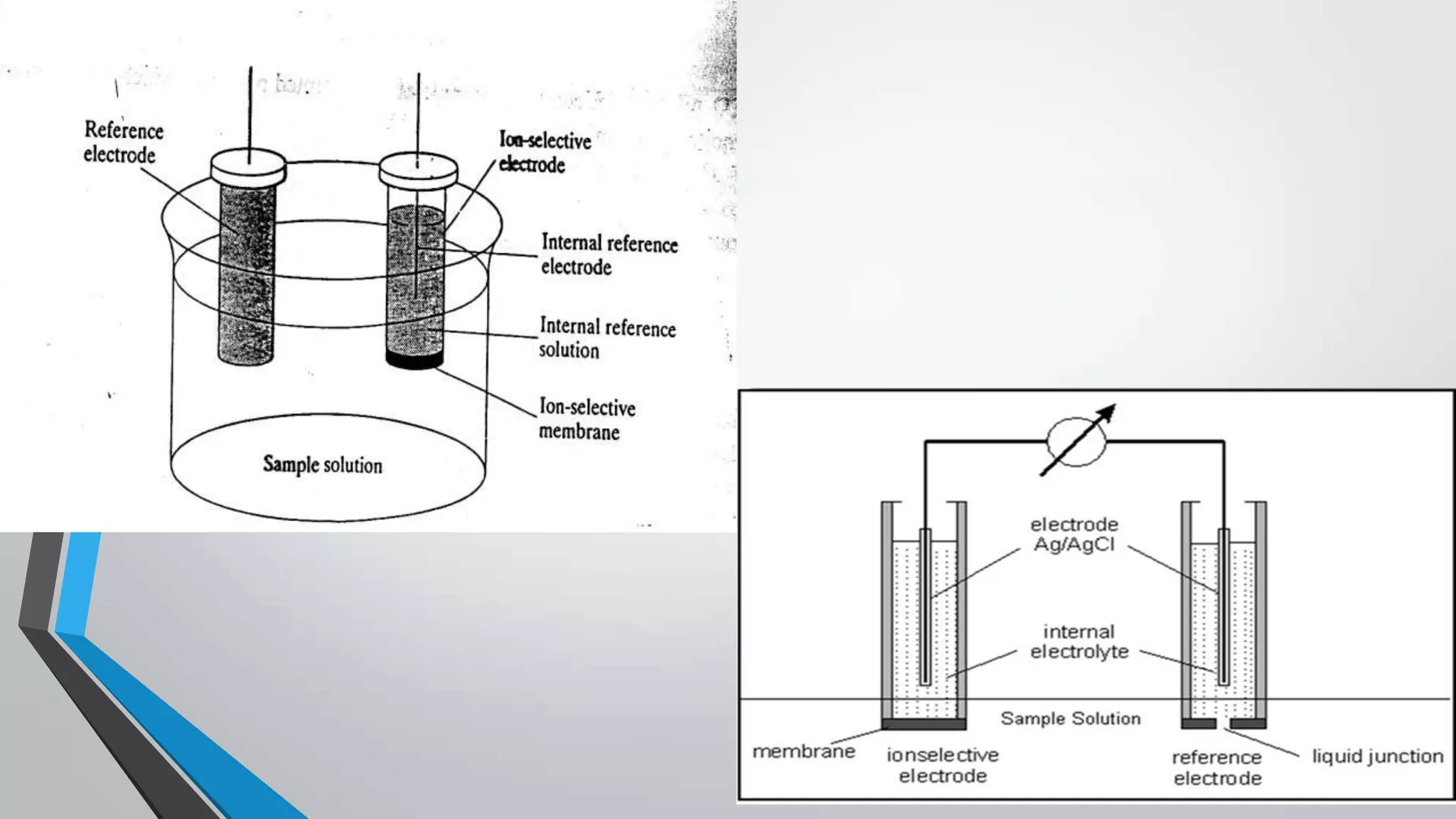

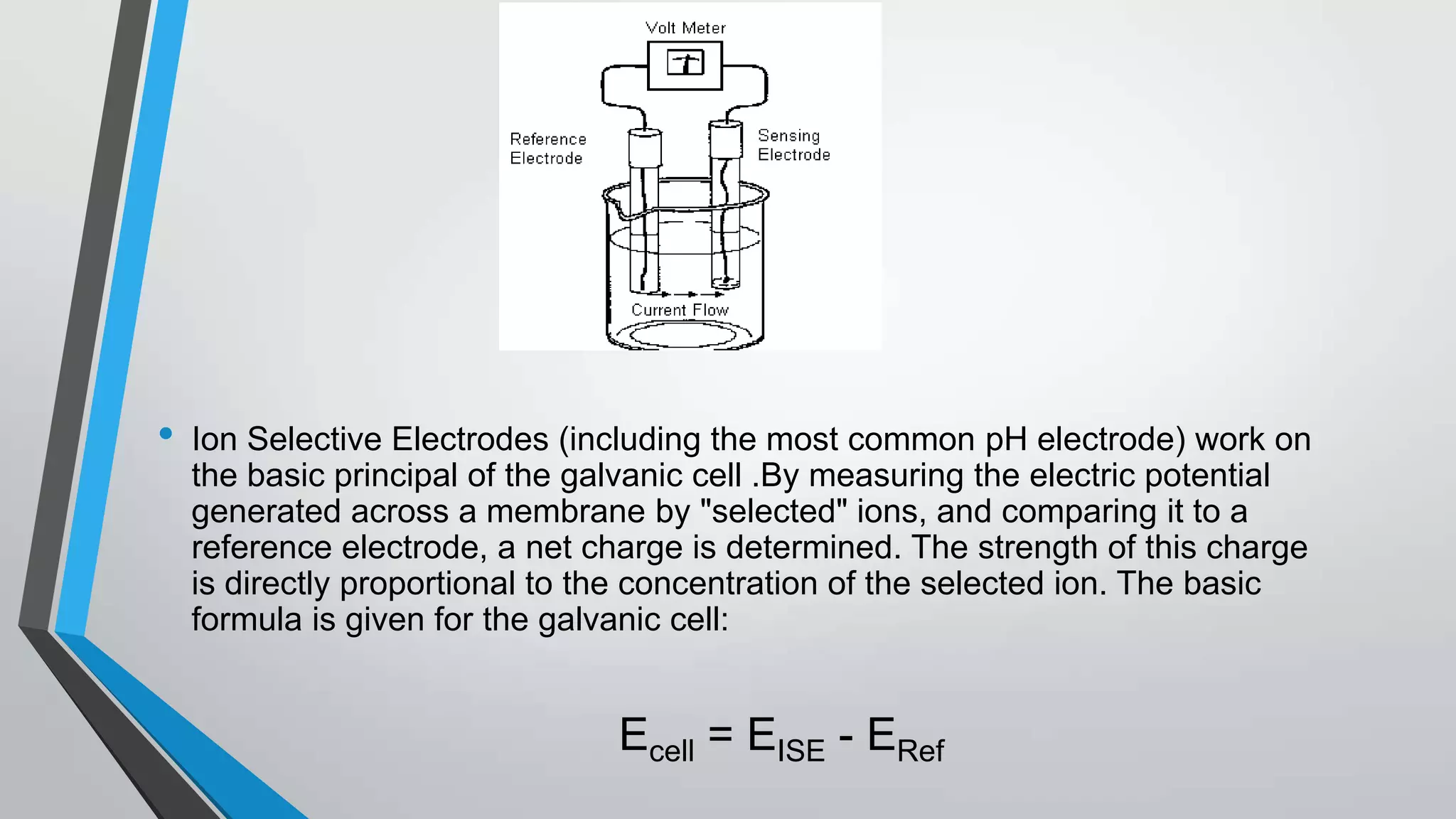
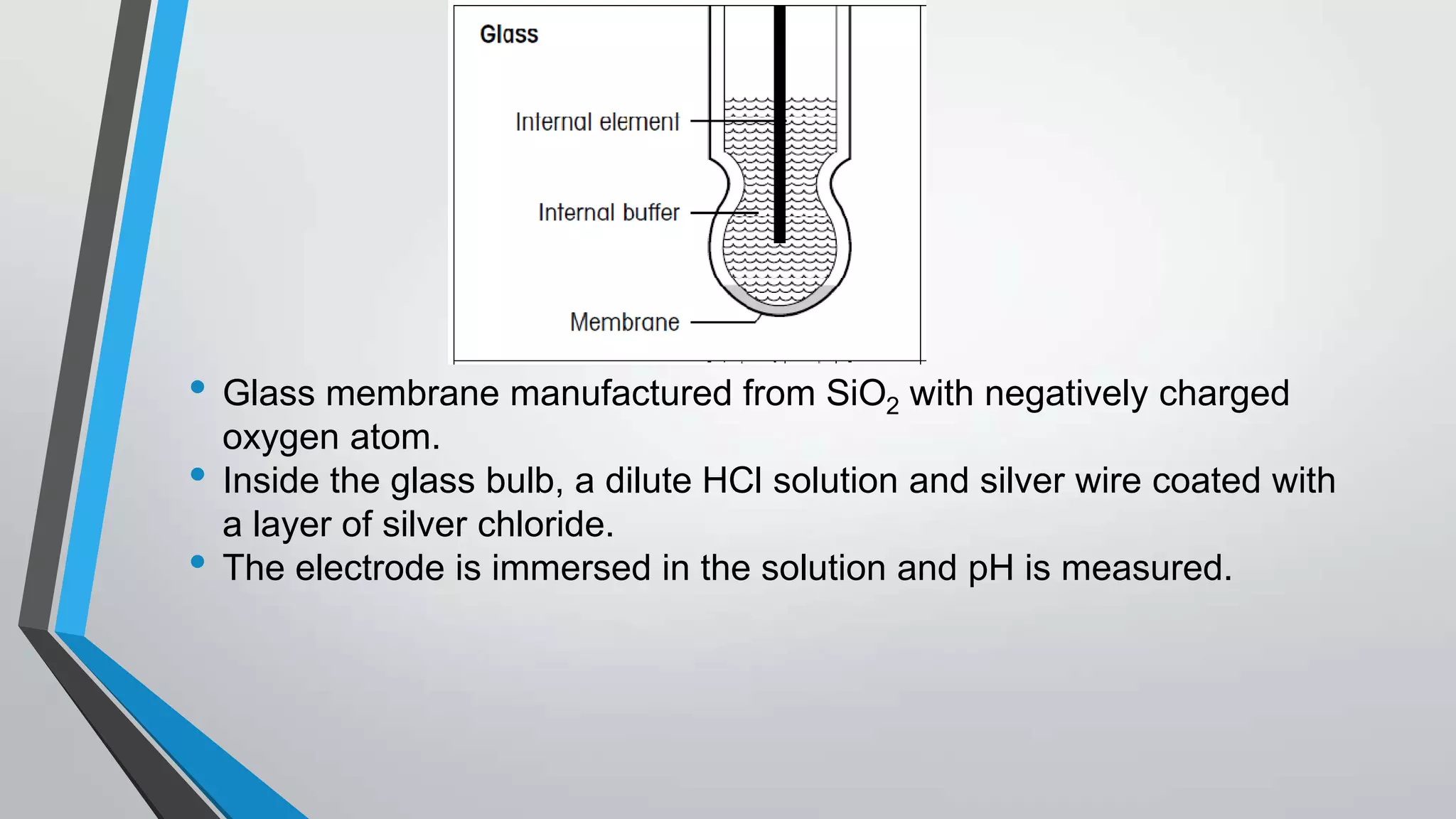
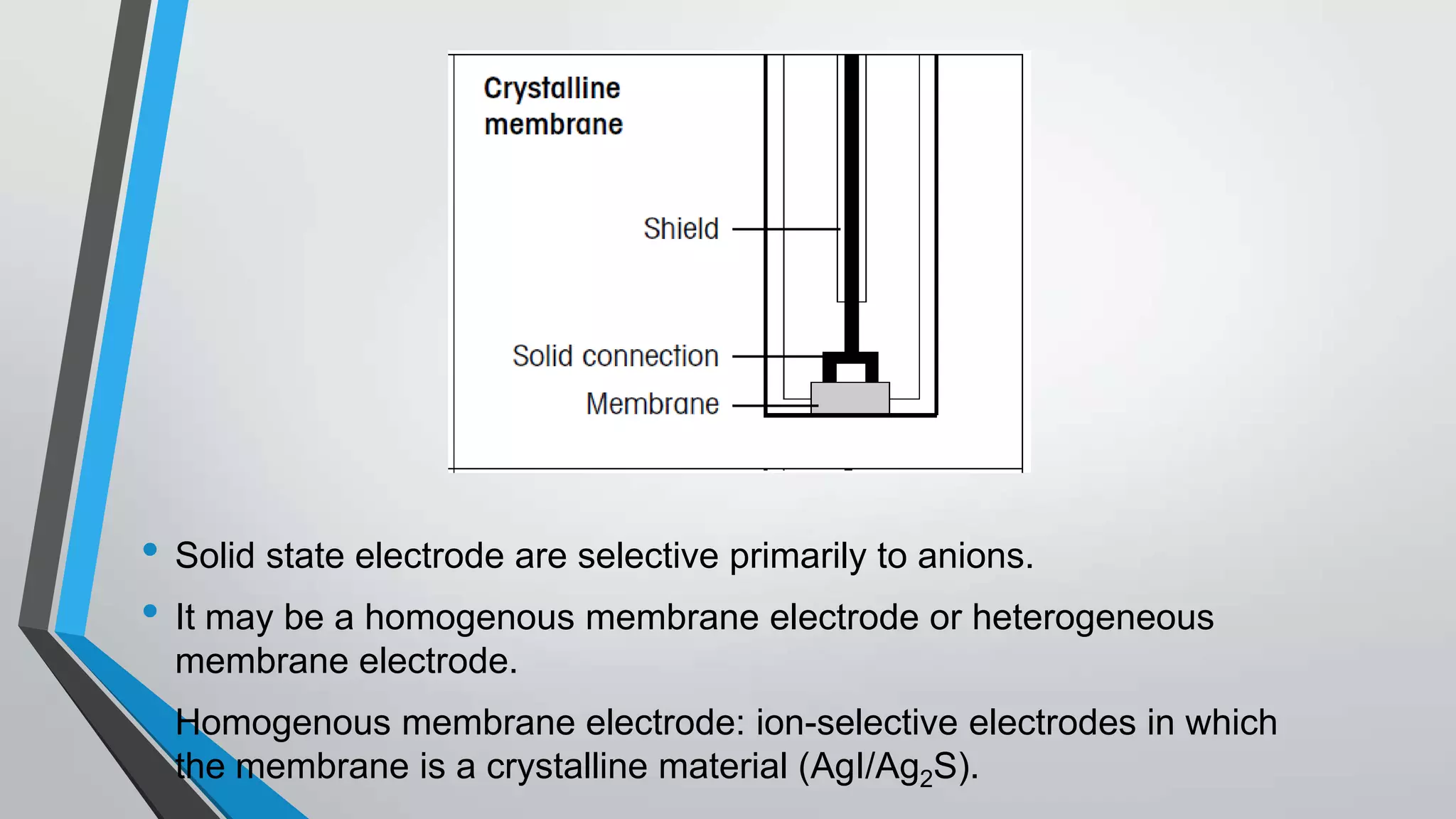


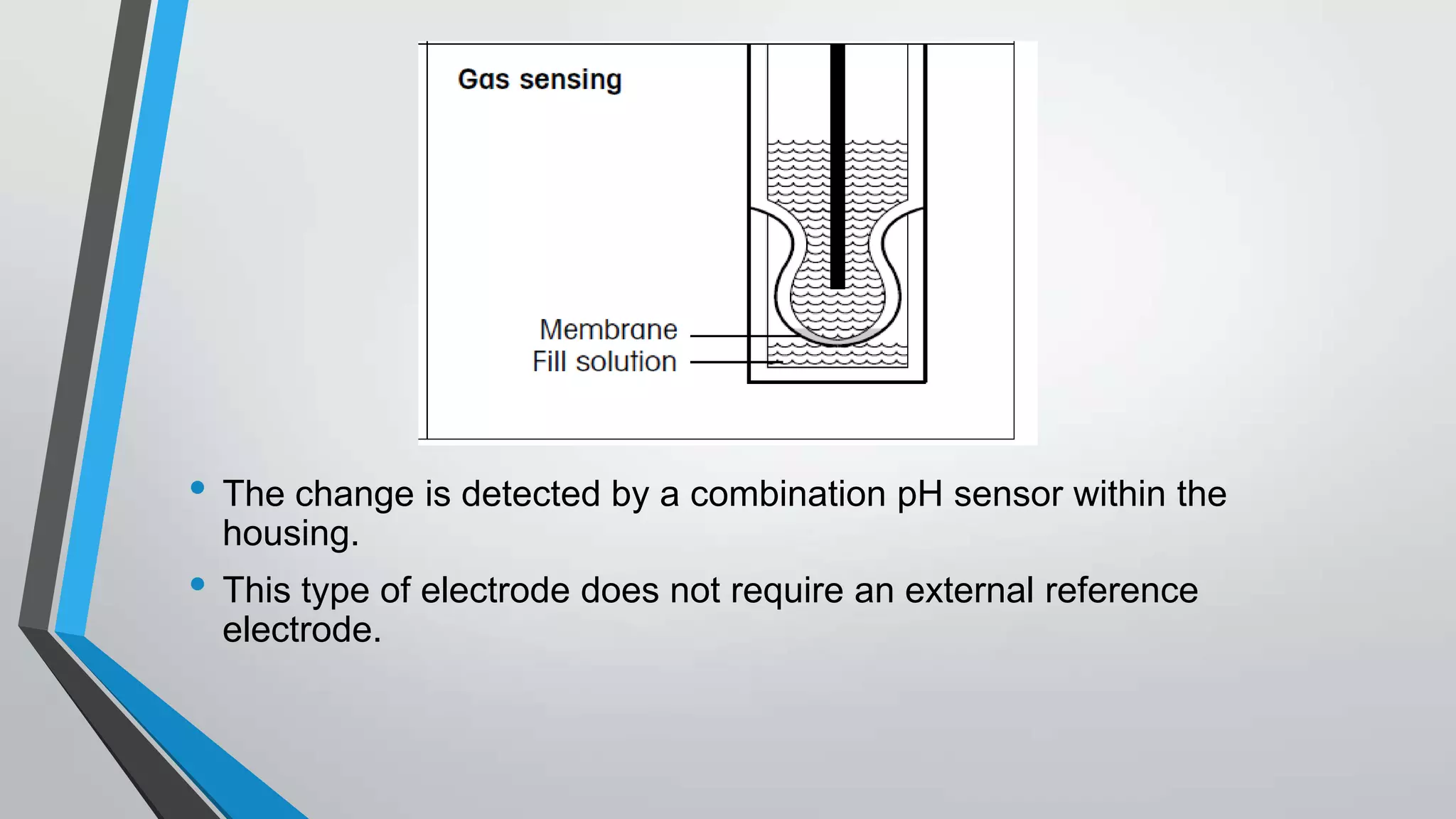





Ion selective electrodes (ISEs) selectively measure the activity of specific ions through a membrane without redox chemistry. Common ISEs include pH, calcium, and chloride electrodes. ISEs work by generating a potential difference as ions selectively bind and transport through membrane sites from high to low concentration, creating a measurable voltage. The voltage is proportional to ion activity and can identify ion concentrations. ISEs are useful for applications like pollution monitoring, agriculture, food processing, and biomedical analysis.


