Downloaded 286 times


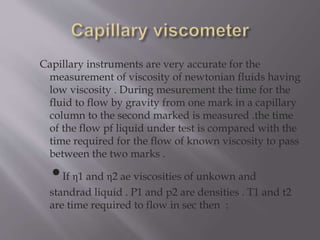
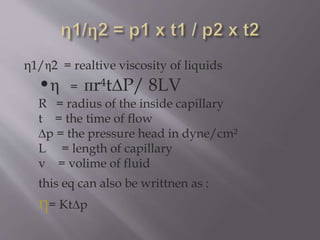
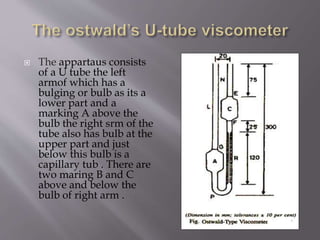
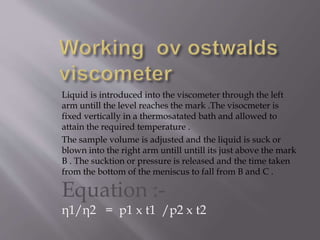
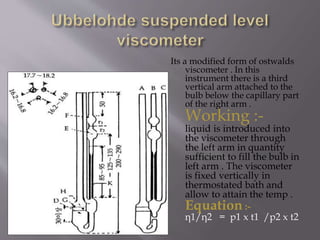
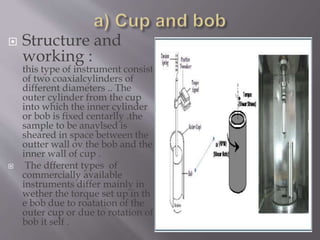
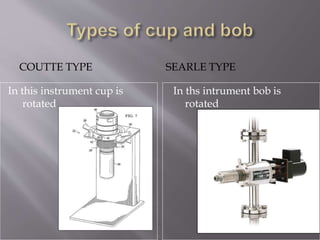
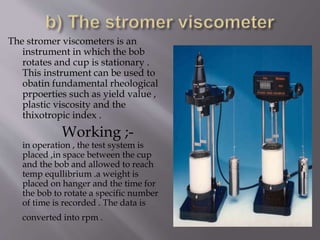
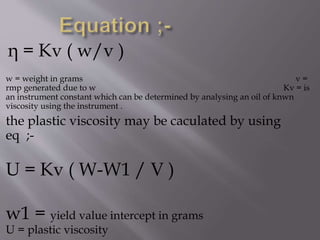


There are three main types of viscometers: capillary, falling, and rotational. Capillary viscometers are accurate for low viscosity newtonian fluids. They measure the time it takes a fluid to flow through a capillary tube under gravity. Rotational viscometers apply a torque to a cylinder or sphere in the fluid to determine viscosity based on shear stress. Common rotational viscometers include concentric cylinder, cone/plate, and coaxial cylinder designs which vary in whether the cup or bob rotates. Viscosity measurements depend on factors like fluid density, temperature, pressure, and rotational speed or flow time.


