Stems   Presented by : Geonyzl L. Alviola
Stem Function for  both  supportive organs and conductive organ It is a  shoot associated with other plant organs like leaves, flower, fruit It develops from the epicotyl of the embryo (in the seed)‏
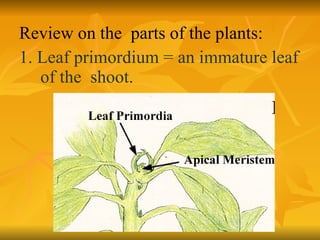
Review on the  parts of the plants: 1. Leaf primordium = an immature leaf of the  shoot.
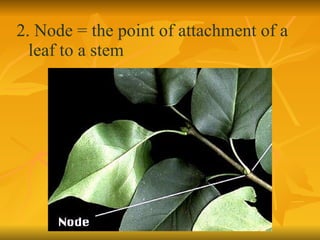
2. Node = the point of attachment of a leaf to a stem
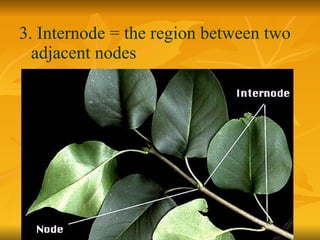
3. Internode = the region between two adjacent nodes

Stem types

Modification of the  stem would depend on the need of the plant to survive… …  like the  animals it learns how to adapt .
Stem modifications for  storage and protection a.  rootstock  = a general term for an underground stem or  shoot that later  will give rise to aerial shoot. = remain alive underground during harsh  condition
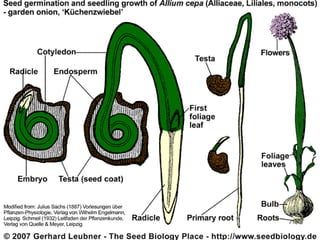
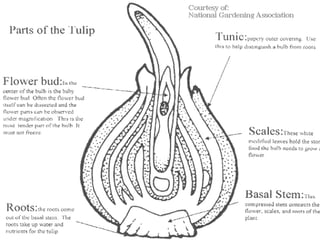
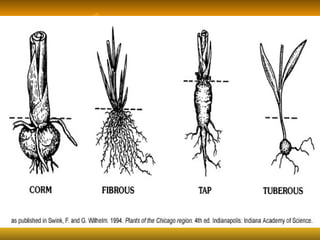
Different types of Rootstock Bulb  –  consist of small amount of vertical stem and a massive quantity of thick, fleshy storage leaves.   - most of them consist of concentric rings of scales attached to a basal   plate.
 
 
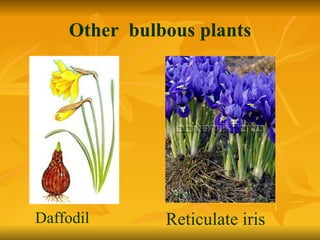
Other  bulbous plants Daffodil Reticulate iris
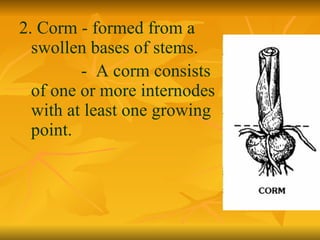
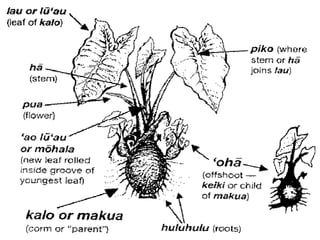
2. Corm - formed from a swollen bases of stems. -  A corm consists of one or more internodes with at least one growing point.
 
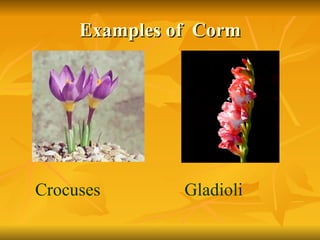
Examples of  Corm Crocuses Gladioli
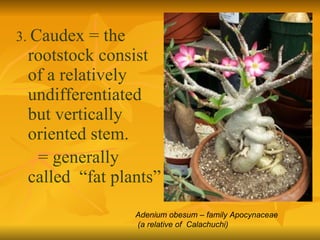
3.  Caudex = the rootstock consist of a relatively undifferentiated but vertically oriented stem. = generally called  “fat plants” Adenium obesum – family Apocynaceae  (a relative of  Calachuchi)‏
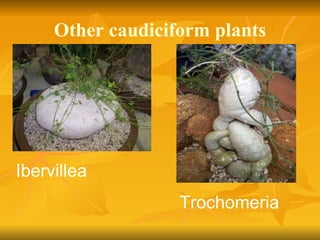
Other caudiciform plants Ibervillea Trochomeria
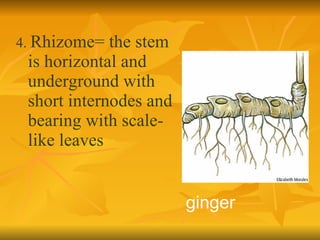
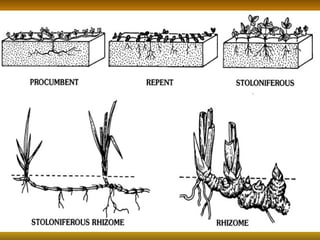
4.  Rhizome= the stem is horizontal and underground with short internodes and bearing with scale-like leaves ginger
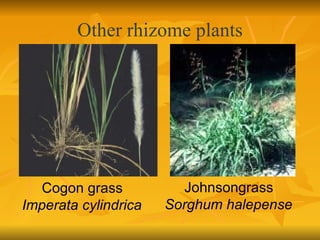
Other rhizome plants Johnsongrass  Sorghum halepense Cogon grass Imperata cylindrica
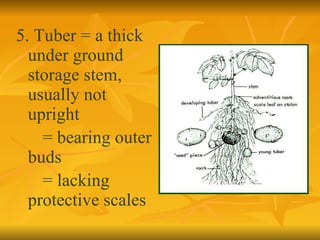
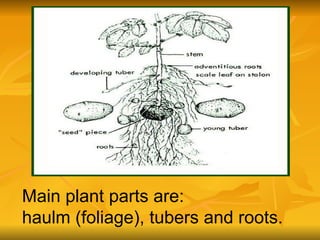
5. Tuber = a thick under ground storage stem, usually not  upright = bearing outer  buds = lacking protective scales
Main plant parts are: haulm (foliage), tubers and roots.
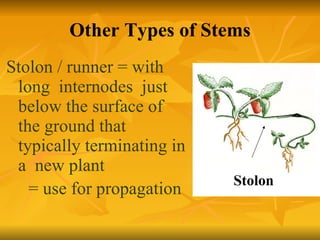
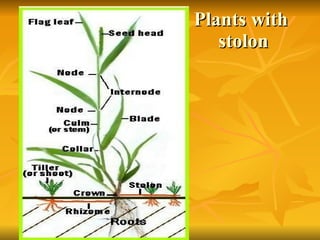
Other Types of Stems Stolon / runner = with long  internodes  just below the surface of the ground that  typically terminating in a  new plant  = use for propagation
Plants with  stolon
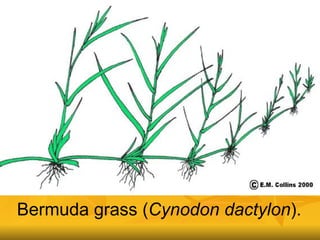
Bermuda grass ( Cynodon dactylon ).
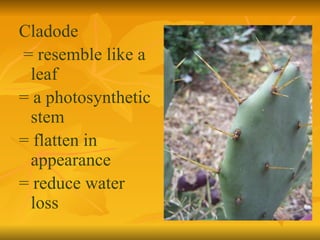
Cladode = resemble like a  leaf = a photosynthetic stem = flatten in appearance = reduce water loss
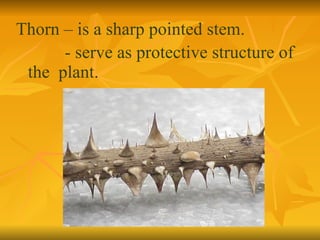
Thorn – is a sharp pointed stem. - serve as protective structure of the  plant.
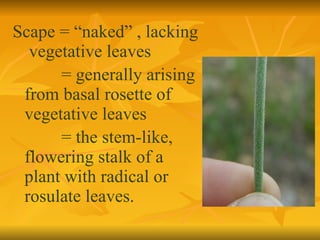
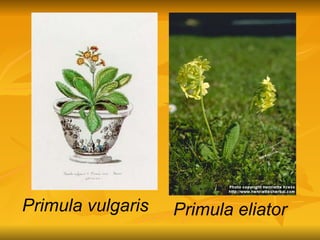
Scape = “naked” , lacking  vegetative leaves = generally arising  from basal rosette of  vegetative leaves = the stem-like, flowering stalk of a plant with radical or rosulate leaves.
Primula vulgaris Primula eliator
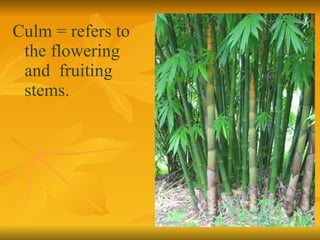
Culm = refers to the flowering  and  fruiting  stems.
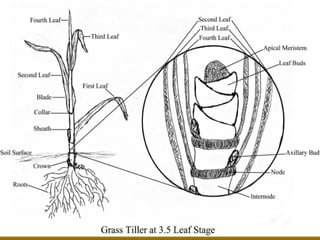
Tiller = are segmented, each possessing two part leaf = involve in vegetative propagation
 
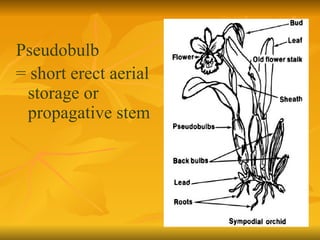
Pseudobulb = short erect aerial storage or propagative stem
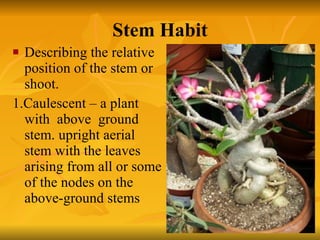
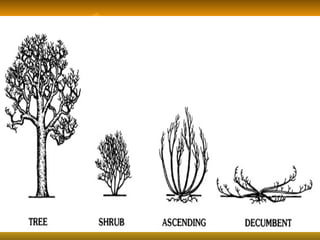
Stem Habit Describing the relative  position of the stem or shoot. 1.Caulescent – a plant  with  above  ground stem. upright aerial stem with the leaves arising from all or some of the nodes on the above-ground stems
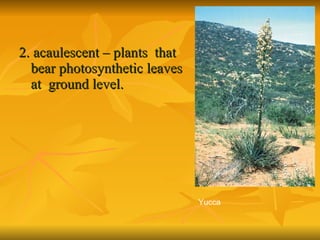
2. acaulescent – plants  that bear photosynthetic leaves at  ground level. Yucca
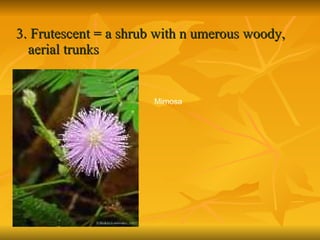
3. Frutescent = a shrub with n umerous woody, aerial trunks Mimosa
Arborescent- tree like in appearance and size.


Stems

  • 1.
    Stems Presented by : Geonyzl L. Alviola
  • 2.
    Stem Function for both supportive organs and conductive organ It is a shoot associated with other plant organs like leaves, flower, fruit It develops from the epicotyl of the embryo (in the seed)‏
  • 3.
    Review on the parts of the plants: 1. Leaf primordium = an immature leaf of the shoot.
  • 4.
    2. Node =the point of attachment of a leaf to a stem
  • 5.
    3. Internode =the region between two adjacent nodes
  • 6.
  • 7.
    Modification of the stem would depend on the need of the plant to survive… … like the animals it learns how to adapt .
  • 8.
    Stem modifications for storage and protection a. rootstock = a general term for an underground stem or shoot that later will give rise to aerial shoot. = remain alive underground during harsh condition
  • 9.
    Different types ofRootstock Bulb – consist of small amount of vertical stem and a massive quantity of thick, fleshy storage leaves. - most of them consist of concentric rings of scales attached to a basal plate.
  • 10.
  • 11.
  • 12.
    Other bulbousplants Daffodil Reticulate iris
  • 13.
    2. Corm -formed from a swollen bases of stems. - A corm consists of one or more internodes with at least one growing point.
  • 14.
  • 15.
    Examples of Corm Crocuses Gladioli
  • 16.
    3. Caudex= the rootstock consist of a relatively undifferentiated but vertically oriented stem. = generally called “fat plants” Adenium obesum – family Apocynaceae (a relative of Calachuchi)‏
  • 17.
    Other caudiciform plantsIbervillea Trochomeria
  • 18.
    4. Rhizome=the stem is horizontal and underground with short internodes and bearing with scale-like leaves ginger
  • 19.
    Other rhizome plantsJohnsongrass Sorghum halepense Cogon grass Imperata cylindrica
  • 20.
    5. Tuber =a thick under ground storage stem, usually not upright = bearing outer buds = lacking protective scales
  • 21.
    Main plant partsare: haulm (foliage), tubers and roots.
  • 22.
    Other Types ofStems Stolon / runner = with long internodes just below the surface of the ground that typically terminating in a new plant = use for propagation
  • 23.
  • 24.
    Bermuda grass (Cynodon dactylon ).
  • 25.
    Cladode = resemblelike a leaf = a photosynthetic stem = flatten in appearance = reduce water loss
  • 26.
    Thorn – isa sharp pointed stem. - serve as protective structure of the plant.
  • 27.
    Scape = “naked”, lacking vegetative leaves = generally arising from basal rosette of vegetative leaves = the stem-like, flowering stalk of a plant with radical or rosulate leaves.
  • 28.
  • 29.
    Culm = refersto the flowering and fruiting stems.
  • 30.
    Tiller = aresegmented, each possessing two part leaf = involve in vegetative propagation
  • 31.
  • 32.
    Pseudobulb = shorterect aerial storage or propagative stem
  • 33.
    Stem Habit Describingthe relative position of the stem or shoot. 1.Caulescent – a plant with above ground stem. upright aerial stem with the leaves arising from all or some of the nodes on the above-ground stems
  • 34.
    2. acaulescent –plants that bear photosynthetic leaves at ground level. Yucca
  • 35.
    3. Frutescent =a shrub with n umerous woody, aerial trunks Mimosa
  • 36.
    Arborescent- tree likein appearance and size.
  • 37.
  • 38.
  • 39.
  • 40.
  • 41.
  • 42.
  • 43.
  • 44.