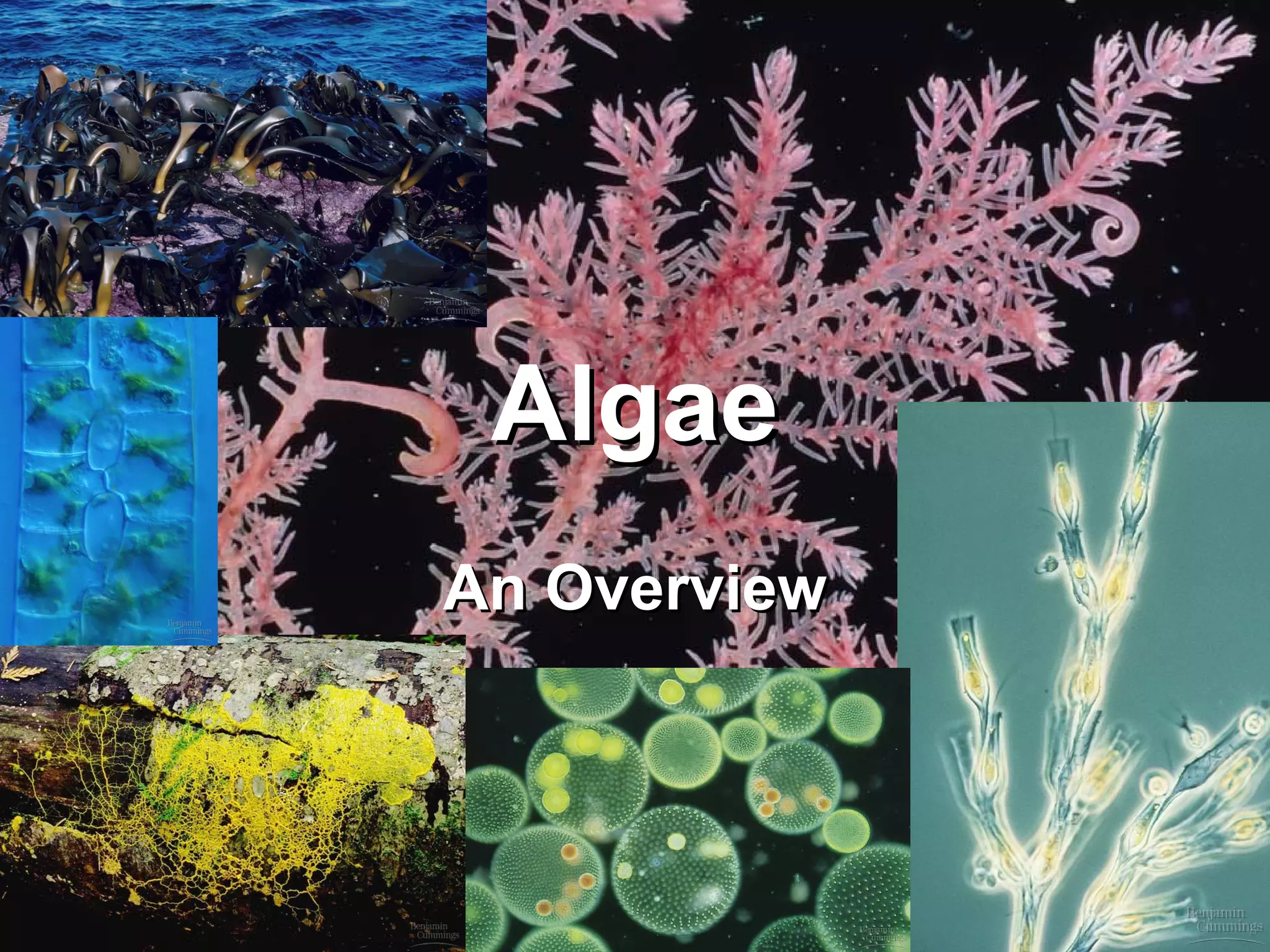
AAllggaaee 
AAnn OOvveerrvviieeww
Characteristics 
• Range in size from microscopic to single 
celled organisms to large seaweed 
• Autotrophic 
• Form the reproductive structures – 
gametangia or gamete chambers 
• Aquatic and have flagella at some point in 
life 
• Often contain pyrenoids, organelles that 
synthesis and store starch
STRUCTURE 
• Thallus (haploid) 
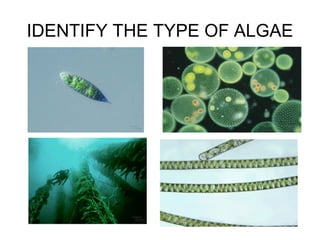
• Four types of algae 
–Unicellular 
–Colonial 
–Filamentous 
–multicellular
IDENTIFY THE TYPE OF ALGAE
CLASSIFICATION OF ALGAE 
• SEVEN PHYLUM BASED ON 
– COLOR 
– TYPE OF CHLOROPHYLL 
– FOOD-STORAGE SUBSTANCE 
– CELL WALL COMPOSITION
REPRODUCTION 
MOST REPRODUCE BOTH 
SEXUALLY AND ASEXUALLY 
– Most sexual reproduction is 
triggered by environmental stress 
– Asexual Reproduction 
• Mitosis 
– Sexual Reproduction 
• Meiosis 
• Zoospores 
• Plus and minus gametes 
• Zygospore
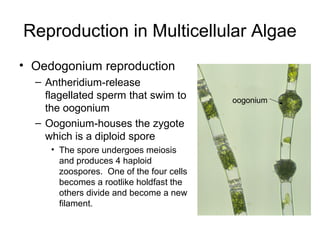
Reproduction in Multicellular Algae 
• Oedogonium reproduction 
– Antheridium-release 
flagellated sperm that swim to 
the oogonium 
– Oogonium-houses the zygote 
which is a diploid spore 
• The spore undergoes meiosis 
and produces 4 haploid 
zoospores. One of the four cells 
becomes a rootlike holdfast the 
others divide and become a new 
filament. 
oogonium
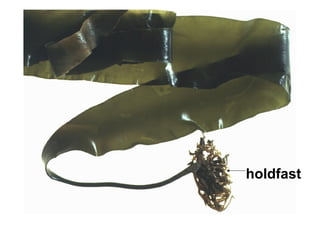
holdfast
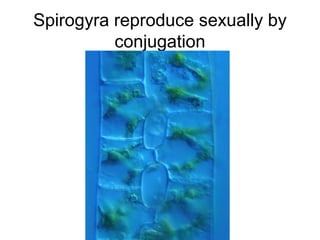
Spirogyra reproduce sexually by 
conjugation
Ulva Reproduces by Alternation of 
Generations 
• Two distinct 
multicellular phases-one 
is haploid and the 
other is diploid 
– Gametophyte is 
haploid 
– Sporophyte is diploid
Phylum Chlorophyta 
• GGrreeeenn aallggaaee 
• 7000 diverse species 
• Biologist reason that green algae give rise 
to land plants. 
• Both green algae and land plants have 
chlorophyll a and B as well as carotenoids 
and store food as starch 
• Both have walls made of cellulose
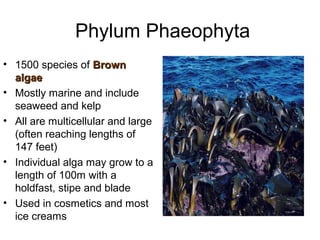
Phylum Phaeophyta 
• 1500 species of BBrroowwnn 
aallggaaee 
• Mostly marine and include 
seaweed and kelp 
• All are multicellular and large 
(often reaching lengths of 
147 feet) 
• Individual alga may grow to a 
length of 100m with a 
holdfast, stipe and blade 
• Used in cosmetics and most 
ice creams
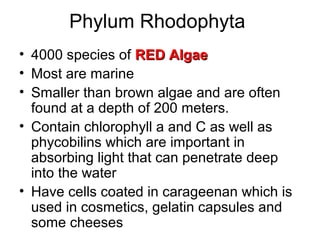
Phylum Rhodophyta 
• 4000 species of RREEDD AAllggaaee 
• Most are marine 
• Smaller than brown algae and are often 
found at a depth of 200 meters. 
• Contain chlorophyll a and C as well as 
phycobilins which are important in 
absorbing light that can penetrate deep 
into the water 
• Have cells coated in carageenan which is 
used in cosmetics, gelatin capsules and 
some cheeses
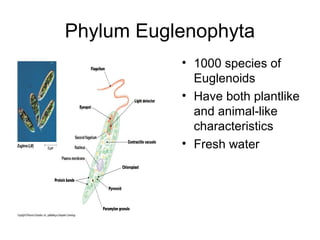
Phylum Euglenophyta 
• 1000 species of 
Euglenoids 
• Have both plantlike 
and animal-like 
characteristics 
• Fresh water
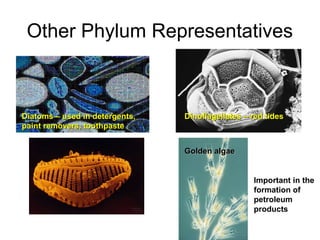
Other Phylum Representatives 
DDiiaattoommss –– uusseedd iinn ddeetteerrggeennttss,, 
ppaaiinntt rreemmoovveerrss,, ttooootthhppaassttee 
DDiinnooffllaaggeellllaatteess –– rreedd ttiiddeess 
Important in the 
formation of 
petroleum 
products 
GGoollddeenn aallggaaee
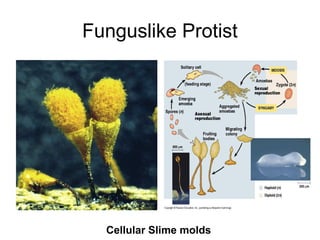
Funguslike Protist 
Cellular Slime molds
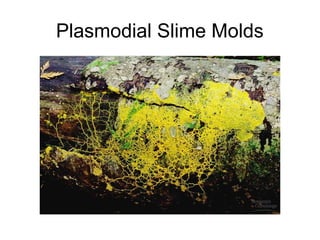
Plasmodial Slime Molds
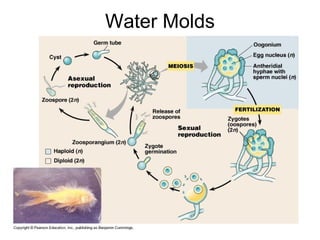
Water Molds

Algae

  • 1.
  • 2.
    Characteristics • Rangein size from microscopic to single celled organisms to large seaweed • Autotrophic • Form the reproductive structures – gametangia or gamete chambers • Aquatic and have flagella at some point in life • Often contain pyrenoids, organelles that synthesis and store starch
  • 3.
    STRUCTURE • Thallus(haploid) • Four types of algae –Unicellular –Colonial –Filamentous –multicellular
  • 4.
  • 5.
    CLASSIFICATION OF ALGAE • SEVEN PHYLUM BASED ON – COLOR – TYPE OF CHLOROPHYLL – FOOD-STORAGE SUBSTANCE – CELL WALL COMPOSITION
  • 6.
    REPRODUCTION MOST REPRODUCEBOTH SEXUALLY AND ASEXUALLY – Most sexual reproduction is triggered by environmental stress – Asexual Reproduction • Mitosis – Sexual Reproduction • Meiosis • Zoospores • Plus and minus gametes • Zygospore
  • 7.
    Reproduction in MulticellularAlgae • Oedogonium reproduction – Antheridium-release flagellated sperm that swim to the oogonium – Oogonium-houses the zygote which is a diploid spore • The spore undergoes meiosis and produces 4 haploid zoospores. One of the four cells becomes a rootlike holdfast the others divide and become a new filament. oogonium
  • 8.
  • 9.
  • 10.
    Ulva Reproduces byAlternation of Generations • Two distinct multicellular phases-one is haploid and the other is diploid – Gametophyte is haploid – Sporophyte is diploid
  • 11.
    Phylum Chlorophyta •GGrreeeenn aallggaaee • 7000 diverse species • Biologist reason that green algae give rise to land plants. • Both green algae and land plants have chlorophyll a and B as well as carotenoids and store food as starch • Both have walls made of cellulose
  • 12.
    Phylum Phaeophyta •1500 species of BBrroowwnn aallggaaee • Mostly marine and include seaweed and kelp • All are multicellular and large (often reaching lengths of 147 feet) • Individual alga may grow to a length of 100m with a holdfast, stipe and blade • Used in cosmetics and most ice creams
  • 13.
    Phylum Rhodophyta •4000 species of RREEDD AAllggaaee • Most are marine • Smaller than brown algae and are often found at a depth of 200 meters. • Contain chlorophyll a and C as well as phycobilins which are important in absorbing light that can penetrate deep into the water • Have cells coated in carageenan which is used in cosmetics, gelatin capsules and some cheeses
  • 14.
    Phylum Euglenophyta •1000 species of Euglenoids • Have both plantlike and animal-like characteristics • Fresh water
  • 15.
    Other Phylum Representatives DDiiaattoommss –– uusseedd iinn ddeetteerrggeennttss,, ppaaiinntt rreemmoovveerrss,, ttooootthhppaassttee DDiinnooffllaaggeellllaatteess –– rreedd ttiiddeess Important in the formation of petroleum products GGoollddeenn aallggaaee
  • 16.
  • 17.
  • 18.