
Flowers
Presented by:
Geonyzl L. Alviola
Intro on flowers



A diagnostic feature of the
angiosperm.



Modified reproductive shoot



The shoot is determinate
Flower parts


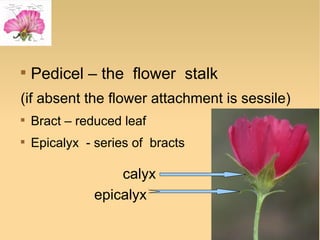
Pedicel – the flower stalk

(if absent the flower attachment is sessile)


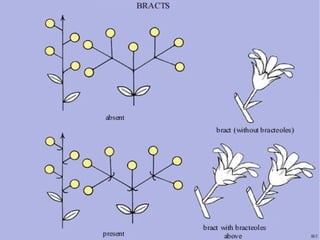
Bract – reduced leaf



Epicalyx - series of bracts

calyx
epicalyx




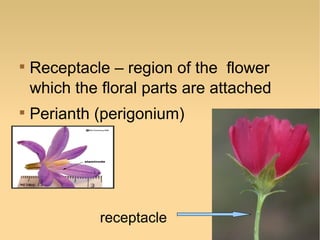
Receptacle – region of the flower
which the floral parts are attached
Perianth (perigonium)

receptacle


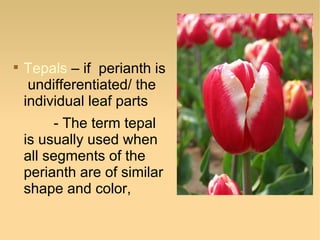
Tepals – if perianth is
undifferentiated/ the
individual leaf parts
- The term tepal
is usually used when
all segments of the
perianth are of similar
shape and color,
Perianth is differentiated into two
groups
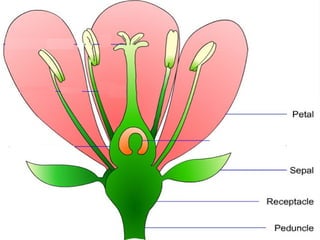
A. Calyx – the outermost series of the
whorl and consist of individual units
of modified leaves called SEPALS
B. Corolla – the inner most series that
consist a modified leaves called
PETALS


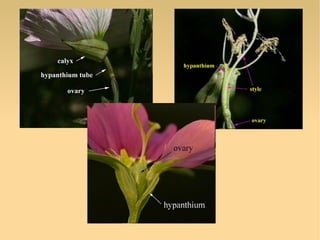
Hypanthium – Floral tube
- a cup like or tubular structure
- around or top of the ovary
- bearing along the margin the
sepals, petals and stamen


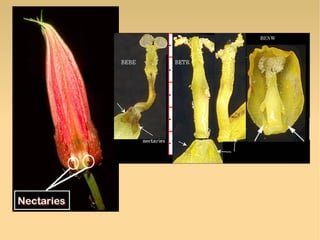
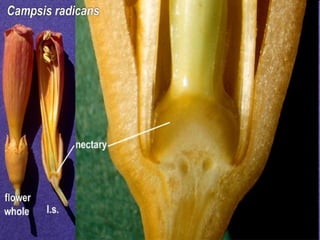
Nectary – a specialized structure that secretes
nectar
- found on parianth parts ,
- or within the receptacle
- or within the androecium or
gynoecium


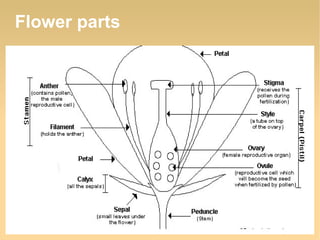
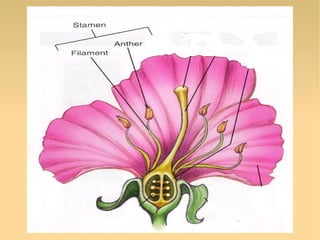
Androecium refers to all of the male
organs
- collectively called STAMENS
consist of the following parts:
a. filament (stalk-like)
b. anther (pollen bearing)


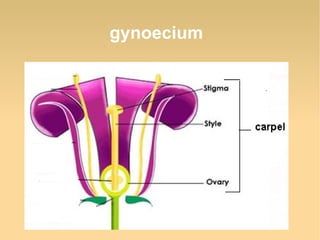
Gynoecium refers to all female
organs of a flower.
- collective called CARPEL(pistil)

consist of the following parts:
a. ovary
b. style
c. stigma
gynoecium


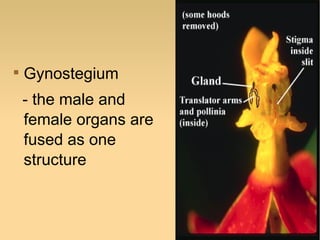
Gynostegium
- the male and
female organs are
fused as one
structure


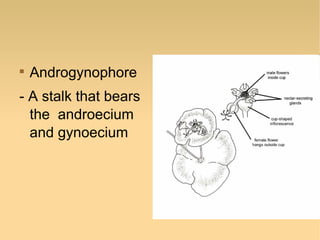
Androgynophore

- A stalk that bears
the androecium
and gynoecium
Flower Attachment
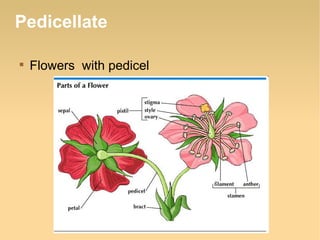
Pedicellate


Flowers with pedicel
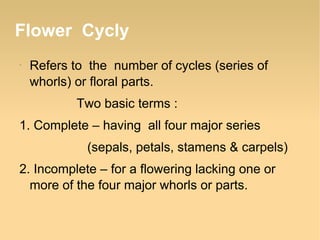
Flower cycly
Flower Cycly
-

Refers to the number of cycles (series of
whorls) or floral parts.
Two basic terms :

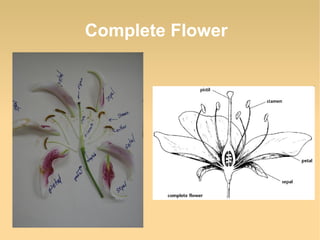
1. Complete – having all four major series
(sepals, petals, stamens & carpels)
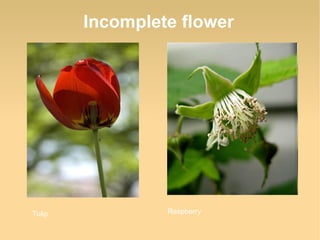
2. Incomplete – for a flowering lacking one or
more of the four major whorls or parts.
Complete Flower
Incomplete flower

Tulip

Raspberry
Flower Sex and Plant Sex
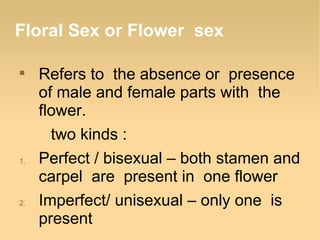
Floral Sex or Flower sex


1.

2.

Refers to the absence or presence
of male and female parts with the
flower.
two kinds :
Perfect / bisexual – both stamen and
carpel are present in one flower
Imperfect/ unisexual – only one is
present
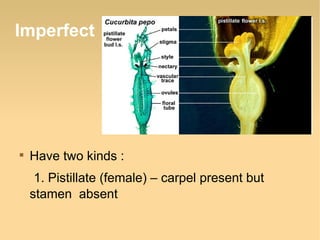
Imperfect



Have two kinds :
1. Pistillate (female) – carpel present but
stamen absent
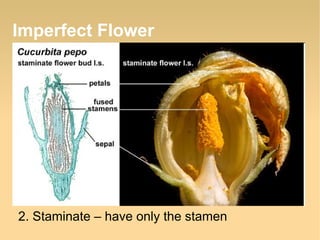
Imperfect Flower

2. Staminate – have only the stamen
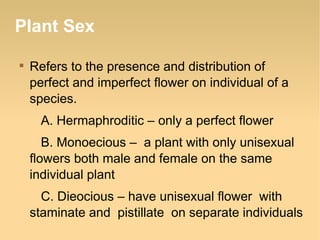
Plant Sex


Refers to the presence and distribution of
perfect and imperfect flower on individual of a
species.
A. Hermaphroditic – only a perfect flower
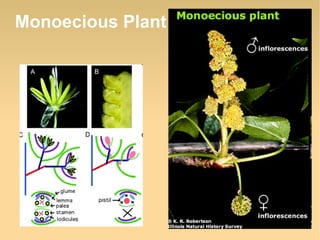
B. Monoecious – a plant with only unisexual
flowers both male and female on the same
individual plant
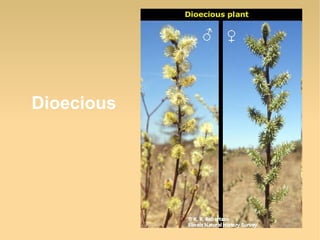
C. Dieocious – have unisexual flower with
staminate and pistillate on separate individuals
Monoecious Plant
Dioecious
Other variations






Polygamous plant – having both
bisexual and unisexual flowers
Andromonoecious plant - having both
staminate and perfect flowers on the
same individual
Gynomonoecious plant – both pistillate
and perfect flowers on the same
individual




Trimonoecious – refers to a plant
with pistillate, staminate and perfect
flowers on the same individual
Gynodiecious – refers to a plant with
female flowers on some individuals
and perfect flowers on the other




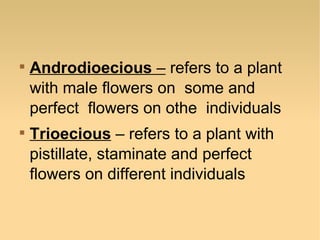
Androdioecious – refers to a plant
with male flowers on some and
perfect flowers on othe individuals
Trioecious – refers to a plant with
pistillate, staminate and perfect
flowers on different individuals
Flower Symmetry

Flowers 100131104452-phpapp01

  • 1.
  • 2.
    Intro on flowers  Adiagnostic feature of the angiosperm.  Modified reproductive shoot  The shoot is determinate
  • 3.
  • 4.
     Pedicel – theflower stalk (if absent the flower attachment is sessile)  Bract – reduced leaf  Epicalyx - series of bracts calyx epicalyx
  • 6.
      Receptacle – regionof the flower which the floral parts are attached Perianth (perigonium) receptacle
  • 7.
     Tepals – ifperianth is undifferentiated/ the individual leaf parts - The term tepal is usually used when all segments of the perianth are of similar shape and color,
  • 8.
    Perianth is differentiatedinto two groups A. Calyx – the outermost series of the whorl and consist of individual units of modified leaves called SEPALS B. Corolla – the inner most series that consist a modified leaves called PETALS
  • 10.
     Hypanthium – Floraltube - a cup like or tubular structure - around or top of the ovary - bearing along the margin the sepals, petals and stamen
  • 12.
     Nectary – aspecialized structure that secretes nectar - found on parianth parts , - or within the receptacle - or within the androecium or gynoecium
  • 15.
     Androecium refers toall of the male organs - collectively called STAMENS consist of the following parts: a. filament (stalk-like) b. anther (pollen bearing)
  • 17.
     Gynoecium refers toall female organs of a flower. - collective called CARPEL(pistil) consist of the following parts: a. ovary b. style c. stigma
  • 18.
  • 19.
     Gynostegium - the maleand female organs are fused as one structure
  • 20.
     Androgynophore - A stalkthat bears the androecium and gynoecium
  • 21.
  • 22.
  • 24.
  • 25.
    Flower Cycly - Refers tothe number of cycles (series of whorls) or floral parts. Two basic terms : 1. Complete – having all four major series (sepals, petals, stamens & carpels) 2. Incomplete – for a flowering lacking one or more of the four major whorls or parts.
  • 26.
  • 27.
  • 28.
    Flower Sex andPlant Sex
  • 29.
    Floral Sex orFlower sex  1. 2. Refers to the absence or presence of male and female parts with the flower. two kinds : Perfect / bisexual – both stamen and carpel are present in one flower Imperfect/ unisexual – only one is present
  • 30.
    Imperfect  Have two kinds: 1. Pistillate (female) – carpel present but stamen absent
  • 31.
    Imperfect Flower 2. Staminate– have only the stamen
  • 32.
    Plant Sex  Refers tothe presence and distribution of perfect and imperfect flower on individual of a species. A. Hermaphroditic – only a perfect flower B. Monoecious – a plant with only unisexual flowers both male and female on the same individual plant C. Dieocious – have unisexual flower with staminate and pistillate on separate individuals
  • 33.
  • 34.
  • 35.
    Other variations    Polygamous plant– having both bisexual and unisexual flowers Andromonoecious plant - having both staminate and perfect flowers on the same individual Gynomonoecious plant – both pistillate and perfect flowers on the same individual
  • 36.
      Trimonoecious – refersto a plant with pistillate, staminate and perfect flowers on the same individual Gynodiecious – refers to a plant with female flowers on some individuals and perfect flowers on the other
  • 37.
      Androdioecious – refersto a plant with male flowers on some and perfect flowers on othe individuals Trioecious – refers to a plant with pistillate, staminate and perfect flowers on different individuals
  • 38.