- 1 / 32

- 2 / 32
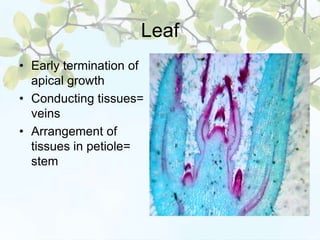
- 3 / 32
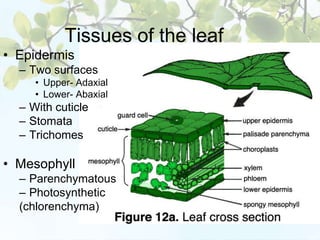 Most read
- 4 / 32
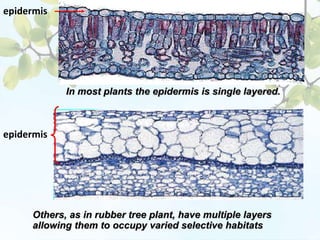
- 5 / 32
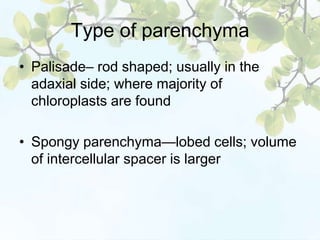 Most read
- 6 / 32
- 7 / 32
- 8 / 32
- 9 / 32
- 10 / 32
- 11 / 32
- 12 / 32
- 13 / 32
- 14 / 32
- 15 / 32
- 16 / 32
- 17 / 32
- 18 / 32
- 19 / 32
- 20 / 32
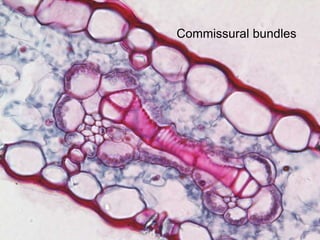
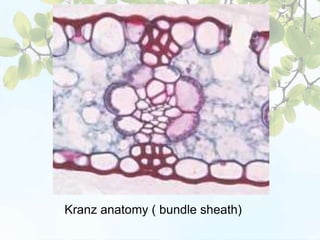

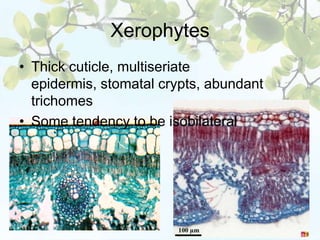
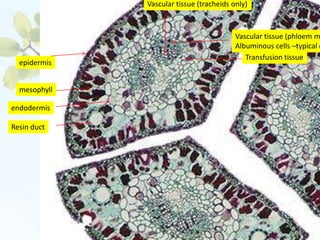
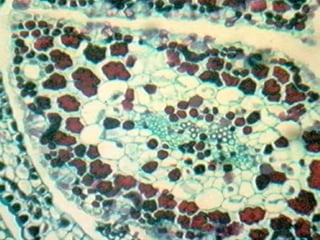
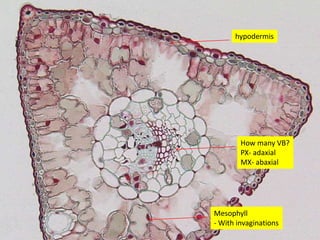
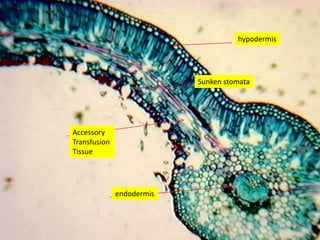
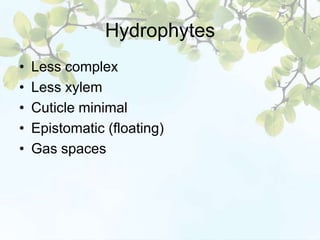
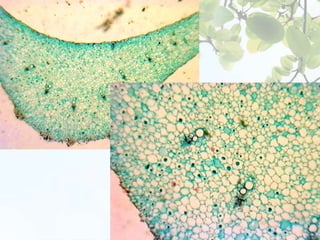

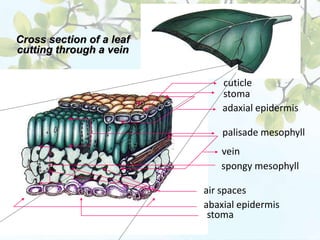
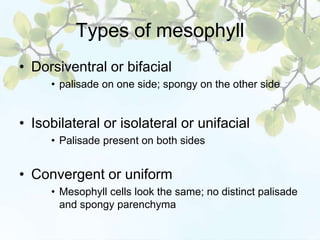
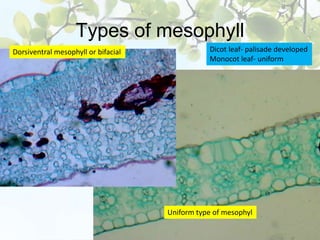
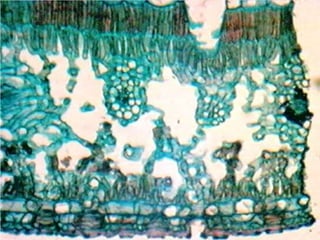
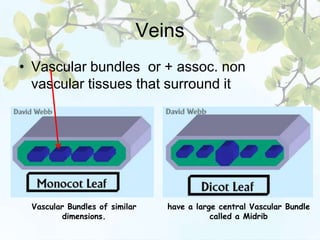
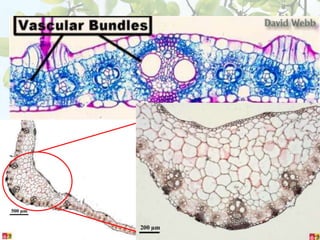
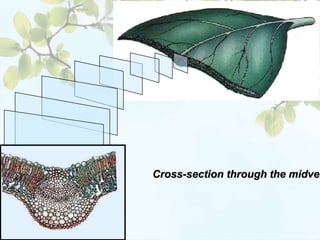
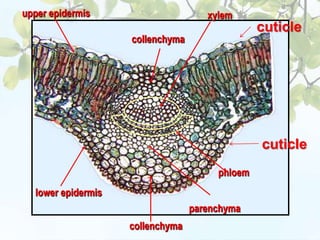
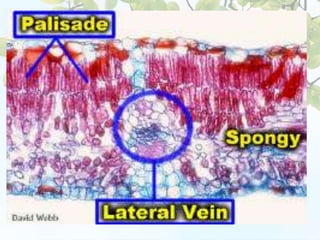
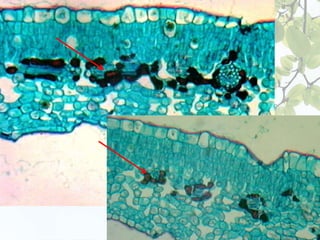
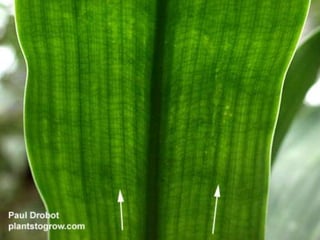
The leaf has two surfaces, an upper adaxial and lower abaxial side. Mesophyll tissue between the epidermis layers is made of parenchyma cells and can be palisade or spongy. Palisade cells are rod-shaped and located toward the adaxial side where most photosynthesis occurs, while spongy cells have larger air spaces and are located abaxially. Veins contain vascular bundles that transport water and nutrients throughout the leaf. Dicot leaves typically have a dorsiventral mesophyll structure with distinct palisade and spongy layers, while monocot leaves have a uniform mesophyll type. Adaptations like thick cuticles and sunken stomata help xer


