Pulmonary Function Test
DR S RAGHU M.D.,
ASST PROF
DEPT. T B & CD
GUNTUR MEDICAL
COLLEGE
GUNTUR
Dr s. raghu m.d.,
Associate professor
Department of TB & CD
R I M S medical college
ONGOLE
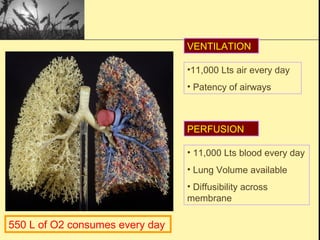
•11,000 Lts air every day
• Patency of airways
VENTILATION
PERFUSION
• 11,000 Lts blood every day
• Lung Volume available
• Diffusibility across
membrane
550 L of O2 consumes every day
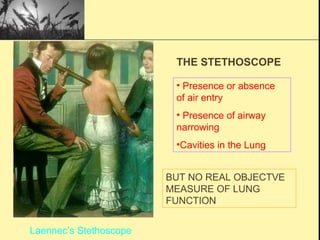
THE STETHOSCOPE
• Presence or absence
of air entry
• Presence of airway
narrowing
•Cavities in the Lung
BUT NO REAL OBJECTVE
MEASURE OF LUNG
FUNCTION
Laennec’s Stethoscope
EARLY MEASURES OF LUNG
FUNCTION
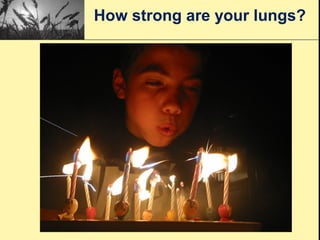
How strong are your lungs?
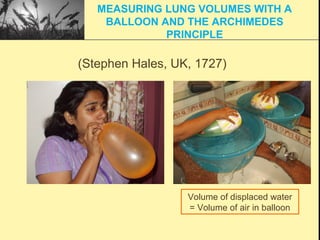
Volume of displaced water
= Volume of air in balloon
(Stephen Hales, UK, 1727)
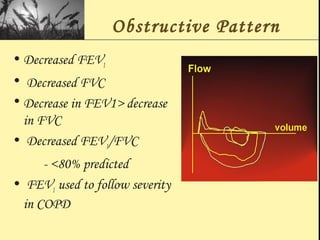
MEASURING LUNG VOLUMES WITH A
BALLOON AND THE ARCHIMEDES
PRINCIPLE
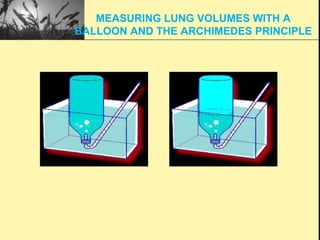
MEASURING LUNG VOLUMES WITH A
BALLOON AND THE ARCHIMEDES PRINCIPLE
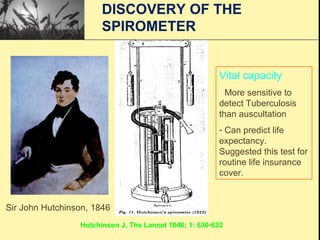
DISCOVERY OF THE
SPIROMETER
Sir John Hutchinson, 1846
Hutchinson J, The Lancet 1846; 1: 630-632
Vital capacity
- More sensitive to
detect Tuberculosis
than auscultation
- Can predict life
expectancy.
Suggested this test for
routine life insurance
cover.
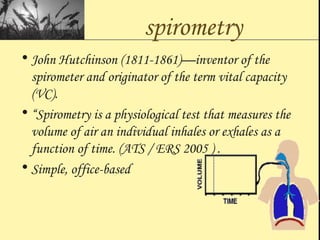
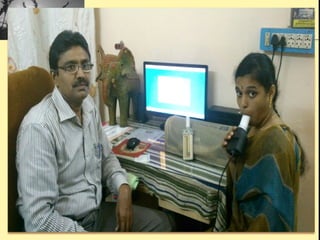
spirometry
• John Hutchinson (1811-1861)—inventor of the
spirometer and originator of the term vital capacity
(VC).
• “Spirometry is a physiological test that measures the
volume of air an individual inhales or exhales as a
function of time. (ATS / ERS 2005 ) .
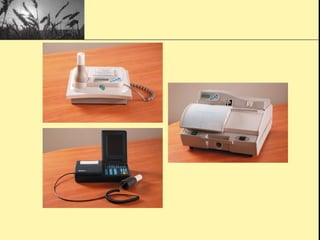
• Simple, office-based
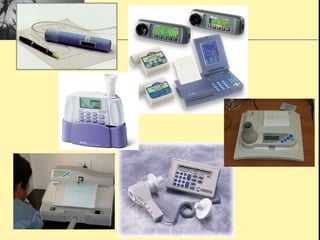
• Volume Displacement-based
• Flow sensor-based
TYPES OF SPIROMETERS
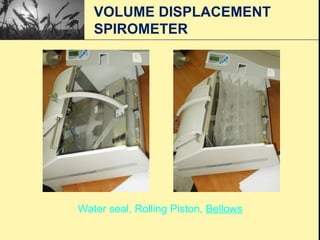
VOLUME DISPLACEMENT
SPIROMETER
Water seal, Rolling Piston, Bellows
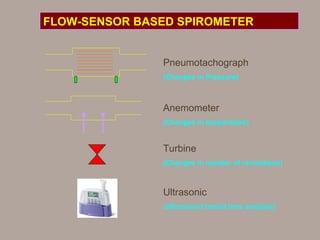
Pneumotachograph
(Changes in Pressure)
Anemometer
(Changes in temperature)
Turbine
(Changes in number of revolutions)
Ultrasonic
(Ultrasound transit time analysis)
FLOW-SENSOR BASED SPIROMETER
Introduction
• The term encompasses a wide variety of objective
methods to assess lung function. They Provide
quantifiable, reproducible measurement of lung
function .
• They do not act alone.
• They act only to support or exclude a diagnosis.
• A combination of a thorough history and physical
exam, as well as supporting laboratory data and
imaging will help establish a diagnosis.
The various components of
pulmonary function tests
• Tests for ventilation : spirometry with helium
dilution technique & body plethysmography.
• Tests for diffusion : diffusion capacity for CO
(DLCO) .
• Tests for ventilation / perfusion : V/Q scan ,
nitrogen wash out test.
• Exercise testing :
5. Arterial blood gas analysis
6. Bedside tests : Peak expiratory flow (PEF), trans-cutaneous O2
(SpO2) and CO2 (tCO2) monitoring
7.   Tests for respiratory muscle function: PI max and PE max
8.   Tests for respiratory center function: CO2 stimulation test
9.   Tests for sleep related respiratory disorders: poly-somnography (PSG)
However spirometry is the most basic and widely used method of
evaluating pulmonary functions
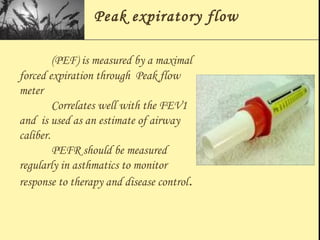
Peak expiratory flow
(PEF) is measured by a maximal
forced expiration through Peak flow
meter
Correlates well with the FEV1
and is used as an estimate of airway
caliber.
PEFR should be measured
regularly in asthmatics to monitor
response to therapy and disease control.
Indications of spirometry
• Diagnostic
• Monitoring
• Disability/impairment evaluations
Indications of
spirometry
• Diagnostic
• To evaluate symptoms, signs or abnormal laboratory tests
• To measure the effect of disease on pulmonary function
• To screen individuals at risk of having pulmonary disease
• To assess pre-operative risk
• To assess prognosis
• To assess health status before beginning strenuous physical
activity programmes.
• Monitoring
• To assess therapeutic intervention
• To describe the course of diseases that affect lung
function
• To monitor people exposed to injurious agents
• To monitor for adverse reactions to drugs with
known pulmonary toxicity.
• Disability/impairment evaluations
• To assess patients as part of a rehabilitation
programme
• To assess risks as part of an insurance evaluation
• To assess individuals for legal reasons
• Public health
• Epidemiological surveys
• Derivation of reference equations
• Clinical research
Acceptable & reproducible
criteria
(ATS / ERS 2005 guidelines)
• Acceptable criteria :
a. Free from artefacts ( cough , glottis closure )
b. Free from leaks
c. Good starts ( extrapolation back from the peak flow
– “new time zero” should occur with in 5% / with in
150 ml.)
d. Acceptable exhalation : (adults – 6 secs & a
plateau& in children < 10yrs – 3 secs )
• Repeatability criteria :
a. Three acceptable manoeuvers ( meeting above
criteria )
b. The two largest FVC measurements with in 150 ml
of each other
c. The two largest FEV 1 measurements with in 150
ml of each other
Upto 8 manoeuvers should be performed
until criteria met
Performance of FVC maneuver
• Check spirometer calibration.
• Explain test.
• Prepare patient.
– Ask about smoking, recent illness, medication use, etc.
(adapted from ATS/ ERS 2005 ) .
Performance of FVC maneuver
(continued)
• Give instructions and demonstrate:
– Show nose clip and mouthpiece.
– Demonstrate position of head with chin slightly
elevated and neck somewhat extended.
– Inhale as much as possible, put mouthpiece in
mouth (open circuit), exhale as hard and fast as
possible.
– Give simple instructions.
spirometry
Information we get from a
spirometer
• A spirometer can be used to measure the following:
– FVC and its derivatives (such as FEV1, FEF 25-
75%)
– Forced inspiratory vital capacity (FIVC)
– Peak expiratory flow rate
– Maximum voluntary ventilation (MVV)
– Slow VC
– IC, IRV, and ERV
– Pre and post bronchodilator studies
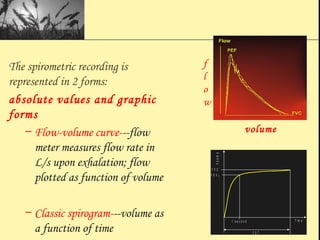
The spirometric recording is
represented in 2 forms:
absolute values and graphic
forms
– Flow-volume curve---flow
meter measures flow rate in
L/s upon exhalation; flow
plotted as function of volume
– Classic spirogram---volume as
a function of time
Volume
F V C
F E V 1
1 s e c o n d
F E T
T im e
volume
f
l
o
w
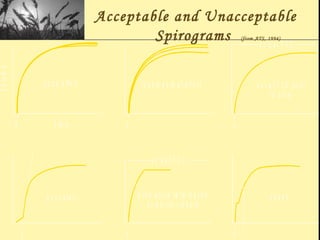
Acceptable and Unacceptable
Spirograms (from ATS, 1994)
c o u g h
0 1
p o o r s ta r t
0
a c tu a l F V C
n o t a t T L C p rio r
to b lo w
0
Volume
T im e
g o o d e ffo rt
0
S u b m a x im a l e ffo rt
0
a c tu a l F V C
p re m a tu re te rm in a tio n
o r g lo ttic c lo s u re
0
Spirometry Interpretation: So what
constitutes normal
•Normal values vary and depend on:
–Height
–Age
–Gender
Ethnicity
Spirometry can demonstrate two basic
patterns of disorders
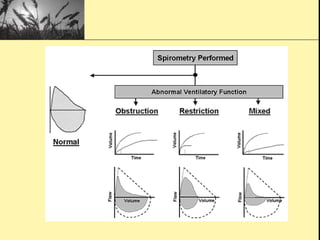
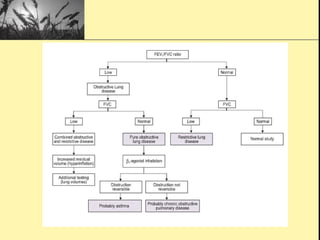
1) obstructive pattern
2) Restrictive pattern
Sometimes both patterns can be seen - mixed pattern
Obstructive Lung Disease —
Differential Diagnosis
 Asthma
 COPD
- chronic bronchitis
- emphysema
 Bronchiectasis
 Bronchiolitis ( small airway diseases)
 Upper airway obstruction
Obstructive Pattern
• Decreased FEV1
• Decreased FVC
• Decrease in FEV1> decrease
in FVC
• Decreased FEV1/FVC
- <80% predicted
• FEV1 used to follow severity
in COPD
• FEV1/FVC
• Interpretation of absolute value:
>80 : Normal
<79 : Abnormal
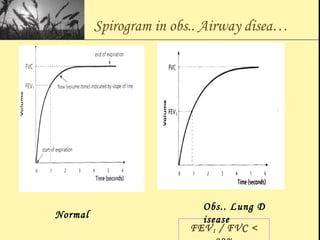
Spirogram in obs.. Airway disea…
FEV1 / FVC <
Normal
Obs.. Lung D
isease
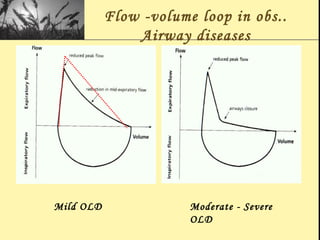
Flow -volume loop in obs..
Airway diseases
Mild OLD Moderate - Severe
OLD
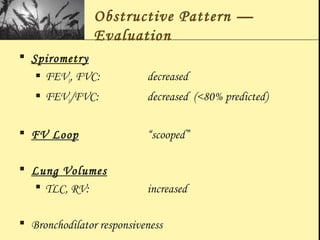
Obstructive Pattern —
Evaluation
 Spirometry
 FEV1, FVC: decreased
 FEV1/FVC: decreased (<80% predicted)
 FV Loop “scooped”
 Lung Volumes
 TLC, RV: increased
 Bronchodilator responsiveness
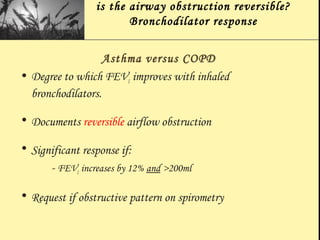
is the airway obstruction reversible?
Bronchodilator response
Asthma versus COPD
• Degree to which FEV1 improves with inhaled
bronchodilators.
• Documents reversible airflow obstruction
• Significant response if:
- FEV1 increases by 12% and >200ml
• Request if obstructive pattern on spirometry
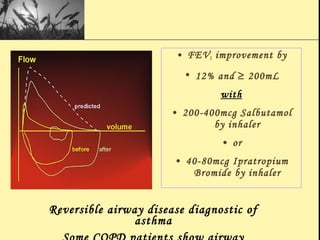
• FEV1 improvement by
• 12% and ≥ 200mL
with
• 200-400mcg Salbutamol
by inhaler
• or
• 40-80mcg Ipratropium
Bromide by inhaler
Reversible airway disease diagnostic of
asthma
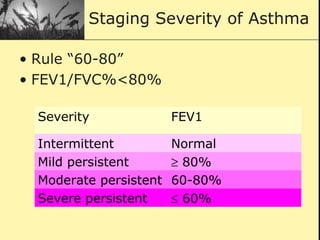
Staging Severity of Asthma
• Rule “60-80”
• FEV1/FVC%<80%
Severity FEV1
Intermittent Normal
Mild persistent ≥ 80%
Moderate persistent 60-80%
Severe persistent ≤ 60%
Bronchial provocation test
 Useful for diagnosis of asthma in the setting of
normal pulmonary function tests
 Common agents:
- Methacholine, Histamine, others
 Diagnostic if: ≥20% decrease in FEV1
Indications
• History suggestive of
bronchospasm induced by
environmental or occupational
agent in the setting of normal
PFT
• Cough Variant Asthma
Contraindications and
Precautions
• Baseline FEV1/FVC% <70
• Recent upper respiratory tract
infection
• Recent influenza vaccination
• Recent administration of
bronchodilator
• Ingestion of caffeine within 6
h before testing
• Cold-air breathing,
hyperventilation, exercise
within 6 h before testing
• Recent acute myocardial
infarction or cerebrovascular
accident, uncontrolled
hypertension, or known aortic
aneurysm
Restrictive Lung Disease —
Differential Diagnosis
 Pleural
 Parenchymal
 Chest wall
 Neuromuscular
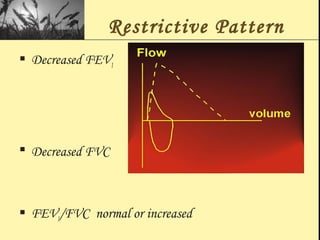
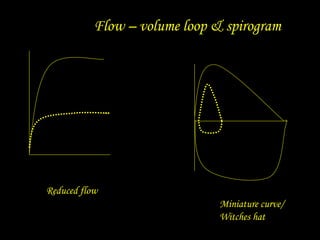
Restrictive Pattern
 Decreased FEV1
 Decreased FVC
 FEV1/FVC normal or increased
Flow – volume loop & spirogram
Reduced flow
Miniature curve/
Witches hat
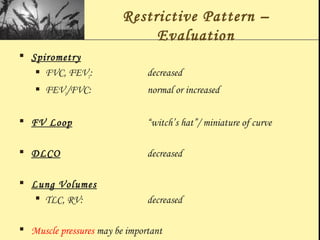
Restrictive Pattern –
Evaluation
 Spirometry
 FVC, FEV1: decreased
 FEV1/FVC: normal or increased
 FV Loop “witch’s hat”/ miniature of curve
 DLCO decreased
 Lung Volumes
 TLC, RV: decreased
 Muscle pressures may be important
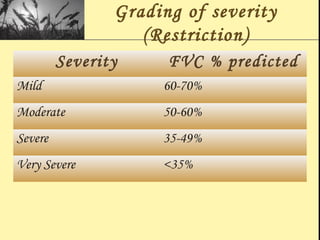
Grading of severity
(Restriction)
Severity FVC % predicted
Mild 60-70%
Moderate 50-60%
Severe 35-49%
Very Severe <35%
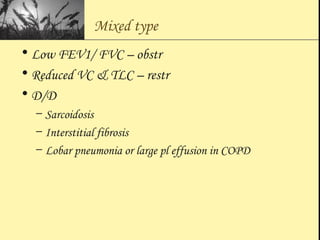
Mixed type
• Low FEV1/ FVC – obstr
• Reduced VC & TLC – restr
• D/D
– Sarcoidosis
– Interstitial fibrosis
– Lobar pneumonia or large pl effusion in COPD
Contraindications
• Hemoptysis of unknown origin,
• Pneumothorax,
• Unstable angina pectoris,
• Recent myocardial infarction
• Thoracic aneurysms,
• Abdominal aneurysms,
• Cerebral aneurysmsRecent abdominal or thoracic surgical
procedures
• History of syncope associated with forced exhalation.
• Recent eye surgery (increased intraocular pressure during
forced expiration)
Activities that should preferably be
avoided prior to lung function testing
• Smoking within at least 6 h of testing
• Consuming alcohol within 24 h of testing
• Performing vigorous exercise within 30 min of testing
• Wearing clothing that substantially restricts full chest
and abdominal expansion
• Eating a large meal within 2 h of testing
• Short acting B2 agonists & anticholinergics -4 hours
• Long acting B2 agonists – 12 hr
• Oral methylxanthine -12 hours
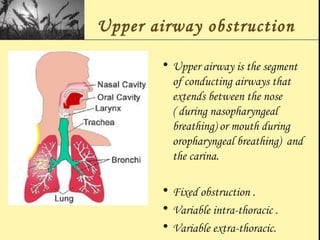
Upper airway obstruction
• Upper airway is the segment
of conducting airways that
extends between the nose
( during nasopharyngeal
breathing) or mouth during
oropharyngeal breathing) and
the carina.
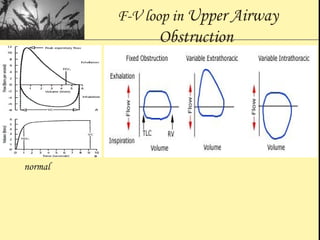
• Fixed obstruction .
• Variable intra-thoracic .
• Variable extra-thoracic.
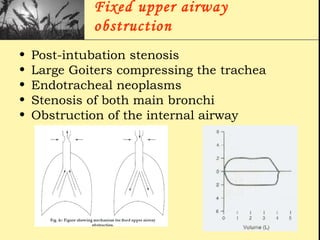
Fixed upper airway
obstruction
• Post-intubation stenosis
• Large Goiters compressing the trachea
• Endotracheal neoplasms
• Stenosis of both main bronchi
• Obstruction of the internal airway
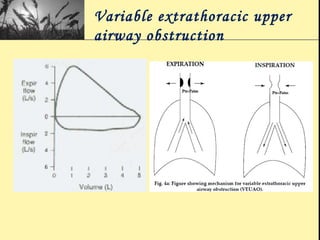
Variable extrathoracic upper
airway obstruction
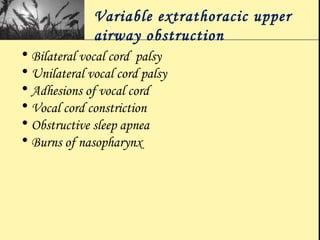
Variable extrathoracic upper
airway obstruction
• Bilateral vocal cord palsy
• Unilateral vocal cord palsy
• Adhesions of vocal cord
• Vocal cord constriction
• Obstructive sleep apnea
• Burns of nasopharynx
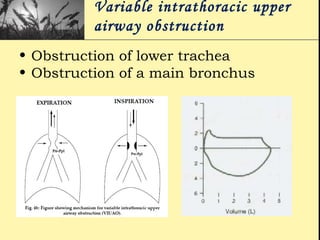
Variable intrathoracic upper
airway obstruction
• Obstruction of lower trachea
• Obstruction of a main bronchus
Indices that show UAO in
spirometry
• Fixed obstruction:
FEF50%/FIF50%=1
FEV1/FIV1=1
• Variable extra thoracic:
FEF50%/FIF50%>2
FEV1/FIV1>1
• Variable intra thoracic:
FEF50%/FIF50%<1 ( even 0.3)
FEV1/FIV1<1
F-V loop in Upper Airway
Obstruction
normal
EMPEY index
• It is the ratio of FEV1 to PEF
• The best indicator in large airways obstruction
• Significant value is greater than 8
• The higher the index the more severe the obstruction
• As a clinical screen in the absence of a flow-volume
loop it is a reasonable guide to the presence of UAO
Lung volumes
• Measurement:
- helium dilution method
- nitrogen washout
- body plethysmography
• Indications:
- Diagnose restrictive component
- Differentiate chronic bronchitis from
emphysema
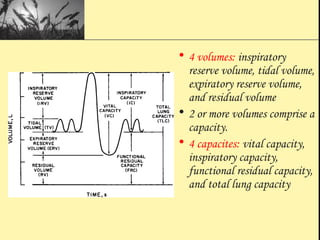
• 4 volumes: inspiratory
reserve volume, tidal volume,
expiratory reserve volume,
and residual volume
• 2 or more volumes comprise a
capacity.
• 4 capacites: vital capacity,
inspiratory capacity,
functional residual capacity,
and total lung capacity
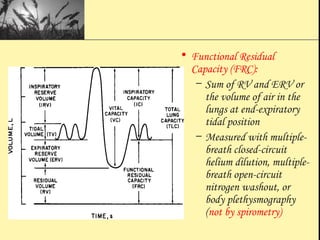
• Functional Residual
Capacity (FRC):
– Sum of RV and ERV or
the volume of air in the
lungs at end-expiratory
tidal position
– Measured with multiple-
breath closed-circuit
helium dilution, multiple-
breath open-circuit
nitrogen washout, or
body plethysmography
(not by spirometry)
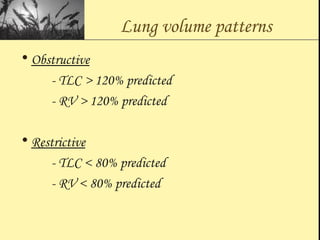
Lung volume patterns
• Obstructive
- TLC > 120% predicted
- RV > 120% predicted
• Restrictive
- TLC < 80% predicted
- RV < 80% predicted
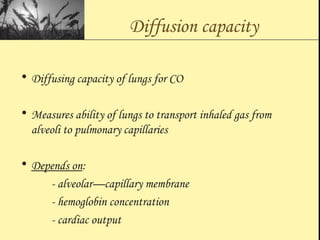
Diffusion capacity
• Diffusing capacity of lungs for CO
• Measures ability of lungs to transport inhaled gas from
alveoli to pulmonary capillaries
• Depends on:
- alveolar—capillary membrane
- hemoglobin concentration
- cardiac output
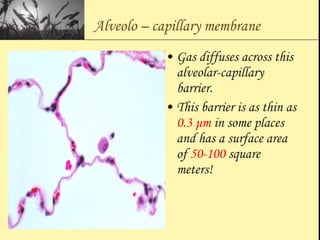
Alveolo – capillary membrane
• Gas diffuses across this
alveolar-capillary
barrier.
• This barrier is as thin as
0.3 μm in some places
and has a surface area
of 50-100 square
meters!
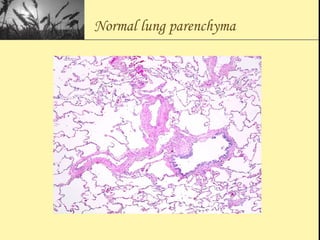
Normal lung parenchyma
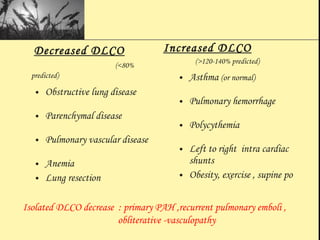
Decreased DLCO
(<80%
predicted)
• Obstructive lung disease
• Parenchymal disease
• Pulmonary vascular disease
• Anemia
• Lung resection
Increased DLCO
(>120-140% predicted)
• Asthma (or normal)
• Pulmonary hemorrhage
• Polycythemia
• Left to right intra cardiac
shunts
• Obesity, exercise , supine po
Isolated DLCO decrease : primary PAH ,recurrent pulmonary emboli ,
obliterative -vasculopathy
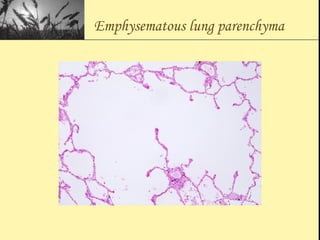
Emphysematous lung parenchyma
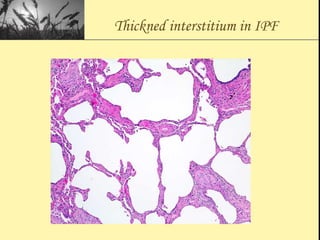
Thickned interstitium in IPF
DLCO - indications
 Differentiate asthma from emphysema
 Evaluation and severity of restrictive lung disease
 Early stages of pulmonary hypertension
• Expensive!
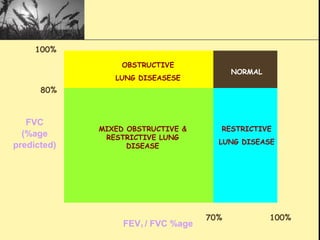
70%
80%
MIXED OBSTRUCTIVE &
RESTRICTIVE LUNG
DISEASE
RESTRICTIVE
LUNG DISEASE
OBSTRUCTIVE
LUNG DISEASESE
FEV1 / FVC %age
FVC
(%age
predicted)
100%
100%
NORMAL
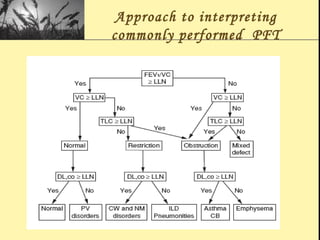
Approach to interpreting
commonly performed PFT
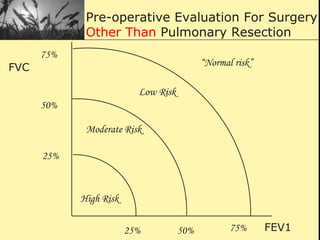
Pre-operative Evaluation For Surgery
Other Than Pulmonary Resection
High Risk
Moderate Risk
75%
FEV1
FVC
50%
25%
75%
Low Risk
“Normal risk”
25% 50%
Pre-operative Risk Assessment
For Pulmonary Resection Surgery
• Calculate predicted post operative (ppo) FEV1
• For pneumonectomy,
predicted P.O FEV1 = preoperative FEV1 X % perfusion to
remaining lung
(regional quantitative perfusion scans may be used)
• For lobectomy,
Predicted P.O. FEV1 =
preoperative FEV1 X no of lung segments remaing after resection
/total no segments in both lungs
• Using “Rule of Five”
• FEV1 > 1L makes patient suitable for any lung resection
surgery
Spirometry interpretation
?
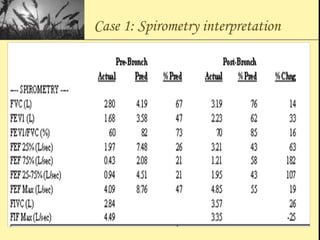
Case 1: Spirometry interpretation
Diagnosis?
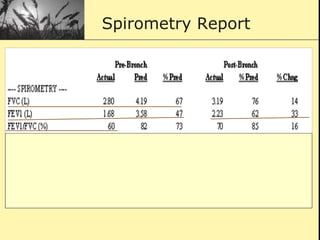
Spirometry Report
Severe obstruction with bronchodilator
test positive
1. Acceptable exhalation in
children <10
years in spirometry
a. 3 Secs
b. 6 Secs
c. 9 Secs
d. None
2. Flow volume curve shows
a. Poor effort b. bronchial asthma
c. Emphysema d. ILD
3.Conditions that cause isolated
decrease in DLCO
a. Pulmonary
thromboembolism
b. Pulmonary hypertension
c. Vasculitis
d. Scleroderma
e. Early ILD
f. all
Case 2
 49 y/o Female
Shortness of breath and
nonproductive cough
 FEV1/FVC: 85%
 FVC: 1.17 L (34%)
 FEV1: 1.00 L (37%)
 VC: 1.17 L (34%)
a.Pulmonary fibrosis b. Br.asthma
c.COPD C. None
Pulmonary function test

Pulmonary function test

  • 1.
  • 2.
    DR S RAGHUM.D., ASST PROF DEPT. T B & CD GUNTUR MEDICAL COLLEGE GUNTUR Dr s. raghu m.d., Associate professor Department of TB & CD R I M S medical college ONGOLE
  • 3.
    •11,000 Lts airevery day • Patency of airways VENTILATION PERFUSION • 11,000 Lts blood every day • Lung Volume available • Diffusibility across membrane 550 L of O2 consumes every day
  • 4.
    THE STETHOSCOPE • Presenceor absence of air entry • Presence of airway narrowing •Cavities in the Lung BUT NO REAL OBJECTVE MEASURE OF LUNG FUNCTION Laennec’s Stethoscope
  • 5.
    EARLY MEASURES OFLUNG FUNCTION
  • 6.
    How strong areyour lungs?
  • 7.
    Volume of displacedwater = Volume of air in balloon (Stephen Hales, UK, 1727) MEASURING LUNG VOLUMES WITH A BALLOON AND THE ARCHIMEDES PRINCIPLE
  • 8.
    MEASURING LUNG VOLUMESWITH A BALLOON AND THE ARCHIMEDES PRINCIPLE
  • 9.
    DISCOVERY OF THE SPIROMETER SirJohn Hutchinson, 1846 Hutchinson J, The Lancet 1846; 1: 630-632 Vital capacity - More sensitive to detect Tuberculosis than auscultation - Can predict life expectancy. Suggested this test for routine life insurance cover.
  • 10.
    spirometry • John Hutchinson(1811-1861)—inventor of the spirometer and originator of the term vital capacity (VC). • “Spirometry is a physiological test that measures the volume of air an individual inhales or exhales as a function of time. (ATS / ERS 2005 ) . • Simple, office-based
  • 12.
    • Volume Displacement-based •Flow sensor-based TYPES OF SPIROMETERS
  • 13.
  • 14.
    Pneumotachograph (Changes in Pressure) Anemometer (Changesin temperature) Turbine (Changes in number of revolutions) Ultrasonic (Ultrasound transit time analysis) FLOW-SENSOR BASED SPIROMETER
  • 16.
    Introduction • The termencompasses a wide variety of objective methods to assess lung function. They Provide quantifiable, reproducible measurement of lung function . • They do not act alone. • They act only to support or exclude a diagnosis. • A combination of a thorough history and physical exam, as well as supporting laboratory data and imaging will help establish a diagnosis.
  • 17.
    The various componentsof pulmonary function tests • Tests for ventilation : spirometry with helium dilution technique & body plethysmography. • Tests for diffusion : diffusion capacity for CO (DLCO) . • Tests for ventilation / perfusion : V/Q scan , nitrogen wash out test. • Exercise testing :
  • 18.
    5. Arterial bloodgas analysis 6. Bedside tests : Peak expiratory flow (PEF), trans-cutaneous O2 (SpO2) and CO2 (tCO2) monitoring 7.   Tests for respiratory muscle function: PI max and PE max 8.   Tests for respiratory center function: CO2 stimulation test 9.   Tests for sleep related respiratory disorders: poly-somnography (PSG) However spirometry is the most basic and widely used method of evaluating pulmonary functions
  • 19.
    Peak expiratory flow (PEF)is measured by a maximal forced expiration through Peak flow meter Correlates well with the FEV1 and is used as an estimate of airway caliber. PEFR should be measured regularly in asthmatics to monitor response to therapy and disease control.
  • 21.
    Indications of spirometry •Diagnostic • Monitoring • Disability/impairment evaluations
  • 22.
    Indications of spirometry • Diagnostic •To evaluate symptoms, signs or abnormal laboratory tests • To measure the effect of disease on pulmonary function • To screen individuals at risk of having pulmonary disease • To assess pre-operative risk • To assess prognosis • To assess health status before beginning strenuous physical activity programmes.
  • 23.
    • Monitoring • Toassess therapeutic intervention • To describe the course of diseases that affect lung function • To monitor people exposed to injurious agents • To monitor for adverse reactions to drugs with known pulmonary toxicity.
  • 24.
    • Disability/impairment evaluations •To assess patients as part of a rehabilitation programme • To assess risks as part of an insurance evaluation • To assess individuals for legal reasons • Public health • Epidemiological surveys • Derivation of reference equations • Clinical research
  • 25.
    Acceptable & reproducible criteria (ATS/ ERS 2005 guidelines) • Acceptable criteria : a. Free from artefacts ( cough , glottis closure ) b. Free from leaks c. Good starts ( extrapolation back from the peak flow – “new time zero” should occur with in 5% / with in 150 ml.) d. Acceptable exhalation : (adults – 6 secs & a plateau& in children < 10yrs – 3 secs )
  • 26.
    • Repeatability criteria: a. Three acceptable manoeuvers ( meeting above criteria ) b. The two largest FVC measurements with in 150 ml of each other c. The two largest FEV 1 measurements with in 150 ml of each other Upto 8 manoeuvers should be performed until criteria met
  • 27.
    Performance of FVCmaneuver • Check spirometer calibration. • Explain test. • Prepare patient. – Ask about smoking, recent illness, medication use, etc. (adapted from ATS/ ERS 2005 ) .
  • 28.
    Performance of FVCmaneuver (continued) • Give instructions and demonstrate: – Show nose clip and mouthpiece. – Demonstrate position of head with chin slightly elevated and neck somewhat extended. – Inhale as much as possible, put mouthpiece in mouth (open circuit), exhale as hard and fast as possible. – Give simple instructions.
  • 29.
  • 31.
    Information we getfrom a spirometer • A spirometer can be used to measure the following: – FVC and its derivatives (such as FEV1, FEF 25- 75%) – Forced inspiratory vital capacity (FIVC) – Peak expiratory flow rate – Maximum voluntary ventilation (MVV) – Slow VC – IC, IRV, and ERV – Pre and post bronchodilator studies
  • 32.
    The spirometric recordingis represented in 2 forms: absolute values and graphic forms – Flow-volume curve---flow meter measures flow rate in L/s upon exhalation; flow plotted as function of volume – Classic spirogram---volume as a function of time Volume F V C F E V 1 1 s e c o n d F E T T im e volume f l o w
  • 33.
    Acceptable and Unacceptable Spirograms(from ATS, 1994) c o u g h 0 1 p o o r s ta r t 0 a c tu a l F V C n o t a t T L C p rio r to b lo w 0 Volume T im e g o o d e ffo rt 0 S u b m a x im a l e ffo rt 0 a c tu a l F V C p re m a tu re te rm in a tio n o r g lo ttic c lo s u re 0
  • 34.
    Spirometry Interpretation: Sowhat constitutes normal •Normal values vary and depend on: –Height –Age –Gender Ethnicity Spirometry can demonstrate two basic patterns of disorders
  • 35.
    1) obstructive pattern 2)Restrictive pattern Sometimes both patterns can be seen - mixed pattern
  • 36.
    Obstructive Lung Disease— Differential Diagnosis  Asthma  COPD - chronic bronchitis - emphysema  Bronchiectasis  Bronchiolitis ( small airway diseases)  Upper airway obstruction
  • 37.
    Obstructive Pattern • DecreasedFEV1 • Decreased FVC • Decrease in FEV1> decrease in FVC • Decreased FEV1/FVC - <80% predicted • FEV1 used to follow severity in COPD
  • 38.
    • FEV1/FVC • Interpretationof absolute value: >80 : Normal <79 : Abnormal
  • 39.
    Spirogram in obs..Airway disea… FEV1 / FVC < Normal Obs.. Lung D isease
  • 40.
    Flow -volume loopin obs.. Airway diseases Mild OLD Moderate - Severe OLD
  • 41.
    Obstructive Pattern — Evaluation Spirometry  FEV1, FVC: decreased  FEV1/FVC: decreased (<80% predicted)  FV Loop “scooped”  Lung Volumes  TLC, RV: increased  Bronchodilator responsiveness
  • 42.
    is the airwayobstruction reversible? Bronchodilator response Asthma versus COPD • Degree to which FEV1 improves with inhaled bronchodilators. • Documents reversible airflow obstruction • Significant response if: - FEV1 increases by 12% and >200ml • Request if obstructive pattern on spirometry
  • 43.
    • FEV1 improvementby • 12% and ≥ 200mL with • 200-400mcg Salbutamol by inhaler • or • 40-80mcg Ipratropium Bromide by inhaler Reversible airway disease diagnostic of asthma
  • 44.
    Staging Severity ofAsthma • Rule “60-80” • FEV1/FVC%<80% Severity FEV1 Intermittent Normal Mild persistent ≥ 80% Moderate persistent 60-80% Severe persistent ≤ 60%
  • 46.
    Bronchial provocation test Useful for diagnosis of asthma in the setting of normal pulmonary function tests  Common agents: - Methacholine, Histamine, others  Diagnostic if: ≥20% decrease in FEV1
  • 47.
    Indications • History suggestiveof bronchospasm induced by environmental or occupational agent in the setting of normal PFT • Cough Variant Asthma Contraindications and Precautions • Baseline FEV1/FVC% <70 • Recent upper respiratory tract infection • Recent influenza vaccination • Recent administration of bronchodilator • Ingestion of caffeine within 6 h before testing • Cold-air breathing, hyperventilation, exercise within 6 h before testing • Recent acute myocardial infarction or cerebrovascular accident, uncontrolled hypertension, or known aortic aneurysm
  • 48.
    Restrictive Lung Disease— Differential Diagnosis  Pleural  Parenchymal  Chest wall  Neuromuscular
  • 49.
    Restrictive Pattern  DecreasedFEV1  Decreased FVC  FEV1/FVC normal or increased
  • 50.
    Flow – volumeloop & spirogram Reduced flow Miniature curve/ Witches hat
  • 51.
    Restrictive Pattern – Evaluation Spirometry  FVC, FEV1: decreased  FEV1/FVC: normal or increased  FV Loop “witch’s hat”/ miniature of curve  DLCO decreased  Lung Volumes  TLC, RV: decreased  Muscle pressures may be important
  • 52.
    Grading of severity (Restriction) SeverityFVC % predicted Mild 60-70% Moderate 50-60% Severe 35-49% Very Severe <35%
  • 53.
    Mixed type • LowFEV1/ FVC – obstr • Reduced VC & TLC – restr • D/D – Sarcoidosis – Interstitial fibrosis – Lobar pneumonia or large pl effusion in COPD
  • 55.
    Contraindications • Hemoptysis ofunknown origin, • Pneumothorax, • Unstable angina pectoris, • Recent myocardial infarction • Thoracic aneurysms, • Abdominal aneurysms, • Cerebral aneurysmsRecent abdominal or thoracic surgical procedures • History of syncope associated with forced exhalation. • Recent eye surgery (increased intraocular pressure during forced expiration)
  • 56.
    Activities that shouldpreferably be avoided prior to lung function testing • Smoking within at least 6 h of testing • Consuming alcohol within 24 h of testing • Performing vigorous exercise within 30 min of testing • Wearing clothing that substantially restricts full chest and abdominal expansion • Eating a large meal within 2 h of testing • Short acting B2 agonists & anticholinergics -4 hours • Long acting B2 agonists – 12 hr • Oral methylxanthine -12 hours
  • 57.
    Upper airway obstruction •Upper airway is the segment of conducting airways that extends between the nose ( during nasopharyngeal breathing) or mouth during oropharyngeal breathing) and the carina. • Fixed obstruction . • Variable intra-thoracic . • Variable extra-thoracic.
  • 58.
    Fixed upper airway obstruction •Post-intubation stenosis • Large Goiters compressing the trachea • Endotracheal neoplasms • Stenosis of both main bronchi • Obstruction of the internal airway
  • 59.
  • 60.
    Variable extrathoracic upper airwayobstruction • Bilateral vocal cord palsy • Unilateral vocal cord palsy • Adhesions of vocal cord • Vocal cord constriction • Obstructive sleep apnea • Burns of nasopharynx
  • 61.
    Variable intrathoracic upper airwayobstruction • Obstruction of lower trachea • Obstruction of a main bronchus
  • 62.
    Indices that showUAO in spirometry • Fixed obstruction: FEF50%/FIF50%=1 FEV1/FIV1=1 • Variable extra thoracic: FEF50%/FIF50%>2 FEV1/FIV1>1 • Variable intra thoracic: FEF50%/FIF50%<1 ( even 0.3) FEV1/FIV1<1
  • 63.
    F-V loop inUpper Airway Obstruction normal
  • 64.
    EMPEY index • Itis the ratio of FEV1 to PEF • The best indicator in large airways obstruction • Significant value is greater than 8 • The higher the index the more severe the obstruction • As a clinical screen in the absence of a flow-volume loop it is a reasonable guide to the presence of UAO
  • 65.
    Lung volumes • Measurement: -helium dilution method - nitrogen washout - body plethysmography • Indications: - Diagnose restrictive component - Differentiate chronic bronchitis from emphysema
  • 66.
    • 4 volumes:inspiratory reserve volume, tidal volume, expiratory reserve volume, and residual volume • 2 or more volumes comprise a capacity. • 4 capacites: vital capacity, inspiratory capacity, functional residual capacity, and total lung capacity
  • 67.
    • Functional Residual Capacity(FRC): – Sum of RV and ERV or the volume of air in the lungs at end-expiratory tidal position – Measured with multiple- breath closed-circuit helium dilution, multiple- breath open-circuit nitrogen washout, or body plethysmography (not by spirometry)
  • 68.
    Lung volume patterns •Obstructive - TLC > 120% predicted - RV > 120% predicted • Restrictive - TLC < 80% predicted - RV < 80% predicted
  • 69.
    Diffusion capacity • Diffusingcapacity of lungs for CO • Measures ability of lungs to transport inhaled gas from alveoli to pulmonary capillaries • Depends on: - alveolar—capillary membrane - hemoglobin concentration - cardiac output
  • 70.
    Alveolo – capillarymembrane • Gas diffuses across this alveolar-capillary barrier. • This barrier is as thin as 0.3 μm in some places and has a surface area of 50-100 square meters!
  • 71.
  • 72.
    Decreased DLCO (<80% predicted) • Obstructivelung disease • Parenchymal disease • Pulmonary vascular disease • Anemia • Lung resection Increased DLCO (>120-140% predicted) • Asthma (or normal) • Pulmonary hemorrhage • Polycythemia • Left to right intra cardiac shunts • Obesity, exercise , supine po Isolated DLCO decrease : primary PAH ,recurrent pulmonary emboli , obliterative -vasculopathy
  • 73.
  • 74.
  • 75.
    DLCO - indications Differentiate asthma from emphysema  Evaluation and severity of restrictive lung disease  Early stages of pulmonary hypertension • Expensive!
  • 77.
    70% 80% MIXED OBSTRUCTIVE & RESTRICTIVELUNG DISEASE RESTRICTIVE LUNG DISEASE OBSTRUCTIVE LUNG DISEASESE FEV1 / FVC %age FVC (%age predicted) 100% 100% NORMAL
  • 78.
  • 79.
    Pre-operative Evaluation ForSurgery Other Than Pulmonary Resection High Risk Moderate Risk 75% FEV1 FVC 50% 25% 75% Low Risk “Normal risk” 25% 50%
  • 80.
    Pre-operative Risk Assessment ForPulmonary Resection Surgery • Calculate predicted post operative (ppo) FEV1 • For pneumonectomy, predicted P.O FEV1 = preoperative FEV1 X % perfusion to remaining lung (regional quantitative perfusion scans may be used) • For lobectomy, Predicted P.O. FEV1 = preoperative FEV1 X no of lung segments remaing after resection /total no segments in both lungs • Using “Rule of Five” • FEV1 > 1L makes patient suitable for any lung resection surgery
  • 81.
  • 82.
    Case 1: Spirometryinterpretation
  • 83.
  • 84.
  • 85.
    Severe obstruction withbronchodilator test positive
  • 86.
    1. Acceptable exhalationin children <10 years in spirometry a. 3 Secs b. 6 Secs c. 9 Secs d. None
  • 87.
    2. Flow volumecurve shows a. Poor effort b. bronchial asthma c. Emphysema d. ILD
  • 88.
    3.Conditions that causeisolated decrease in DLCO a. Pulmonary thromboembolism b. Pulmonary hypertension c. Vasculitis d. Scleroderma e. Early ILD f. all
  • 89.
    Case 2  49y/o Female Shortness of breath and nonproductive cough  FEV1/FVC: 85%  FVC: 1.17 L (34%)  FEV1: 1.00 L (37%)  VC: 1.17 L (34%) a.Pulmonary fibrosis b. Br.asthma c.COPD C. None