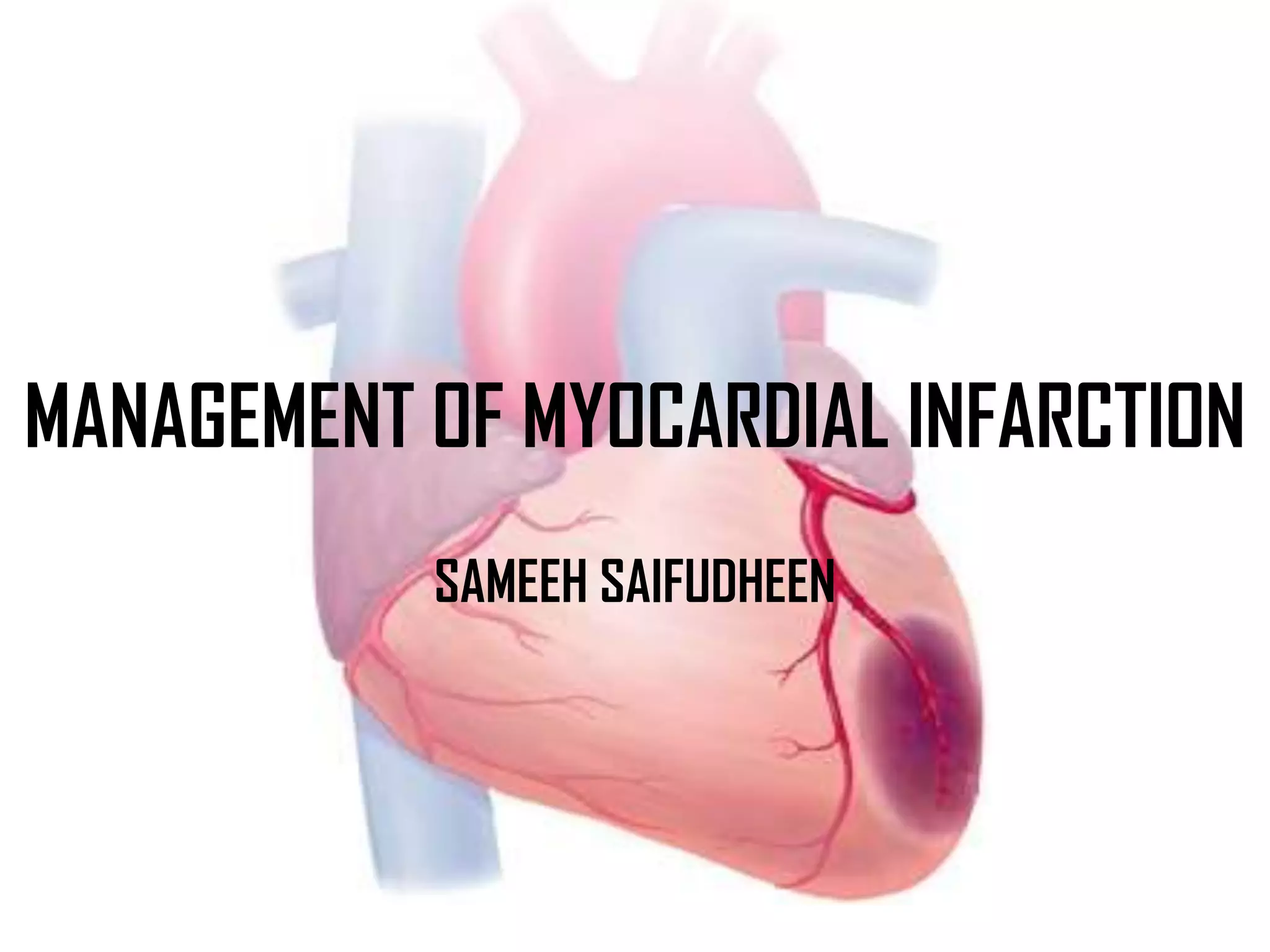
MANAGEMENT OF MYOCARDIAL INFARCTION
SAMEEH SAIFUDHEEN
INTRODUCTION
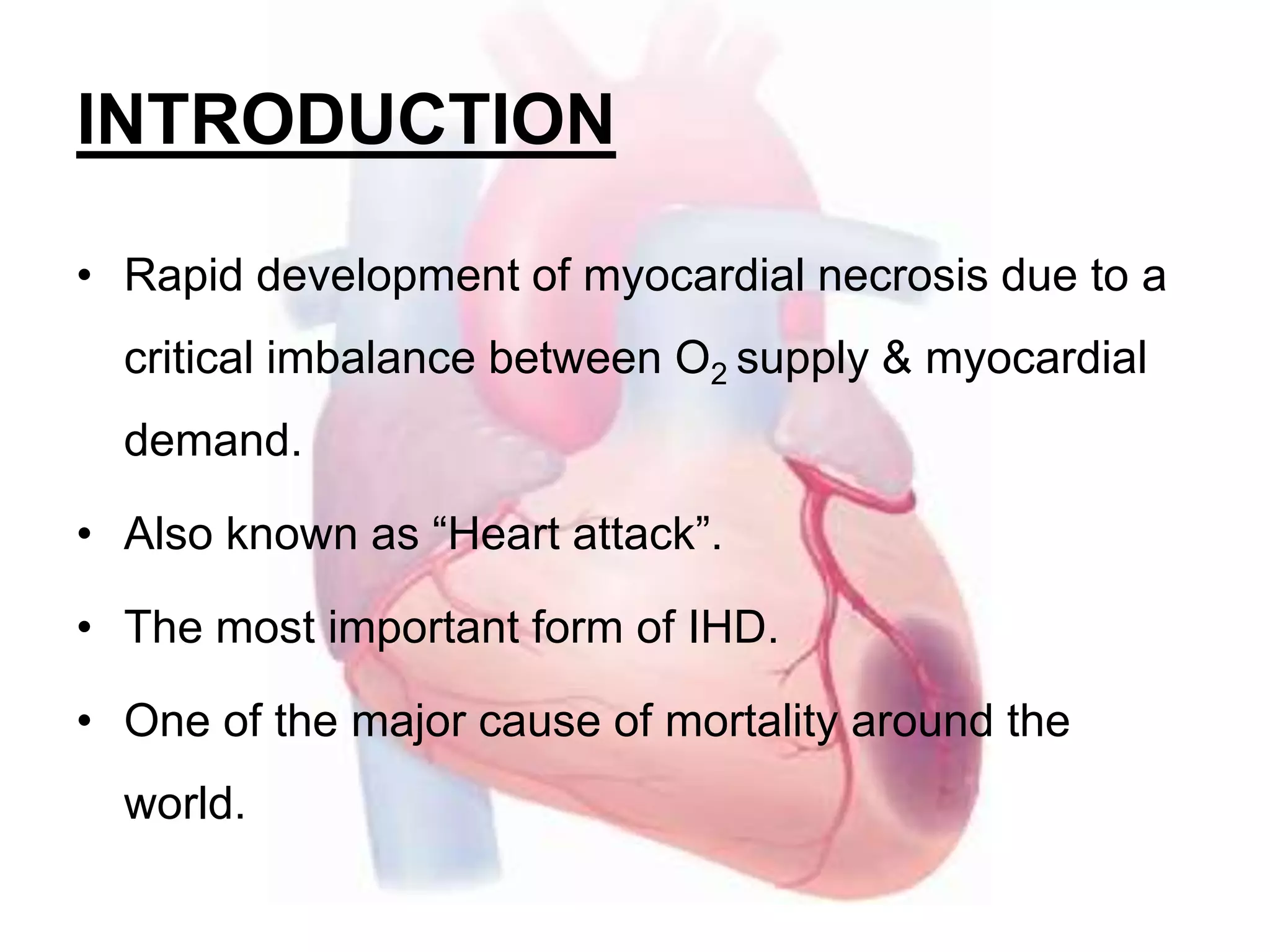
• Rapid development of myocardial necrosis due to a
critical imbalance between O2 supply & myocardial
demand.
• Also known as “Heart attack”.
• The most important form of IHD.
• One of the major cause of mortality around the
world.
CAUSES
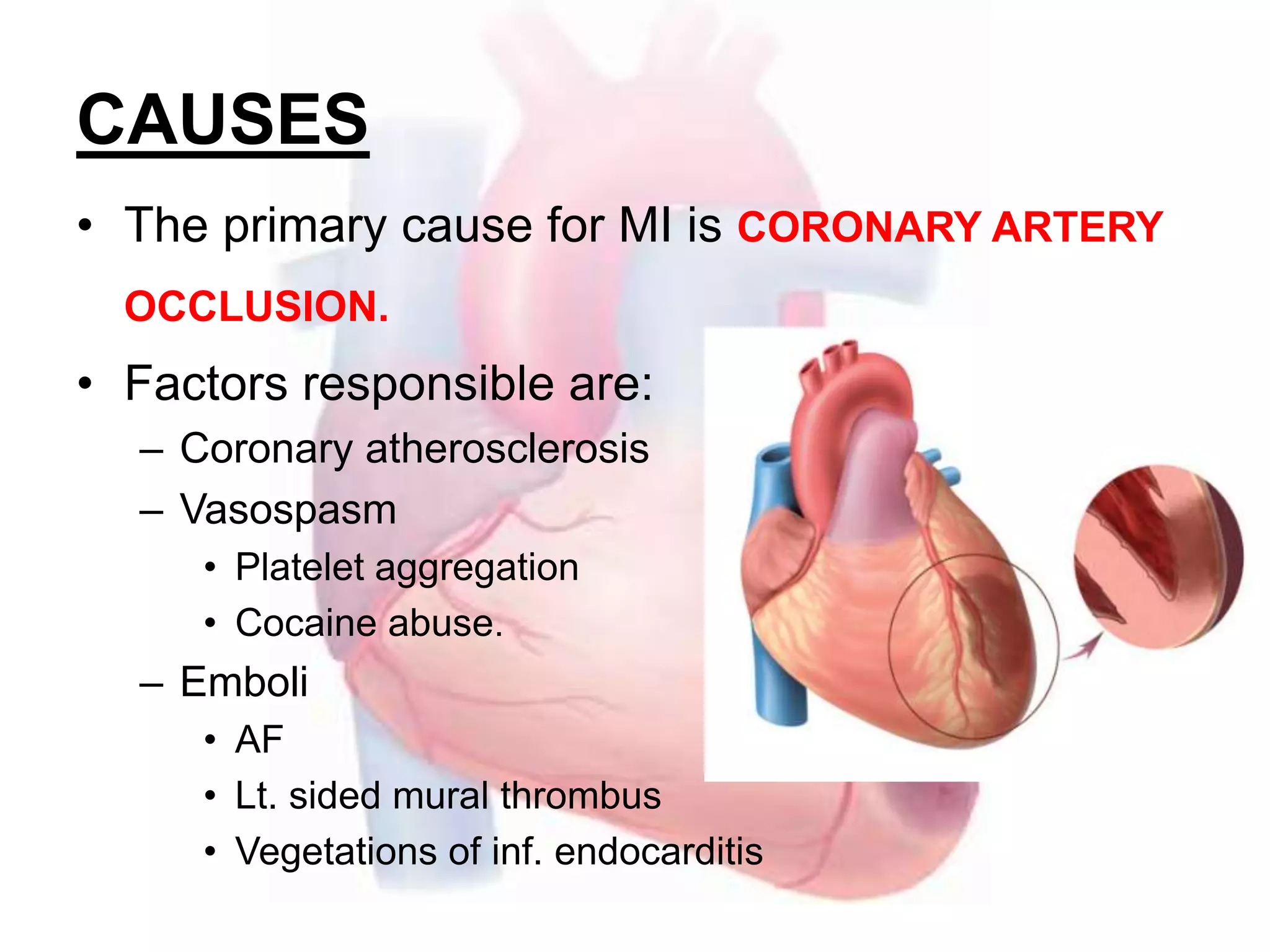
• The primary cause for MI is CORONARY ARTERY
OCCLUSION.
• Factors responsible are:
– Coronary atherosclerosis
– Vasospasm
• Platelet aggregation
• Cocaine abuse.
– Emboli
• AF
• Lt. sided mural thrombus
• Vegetations of inf. endocarditis
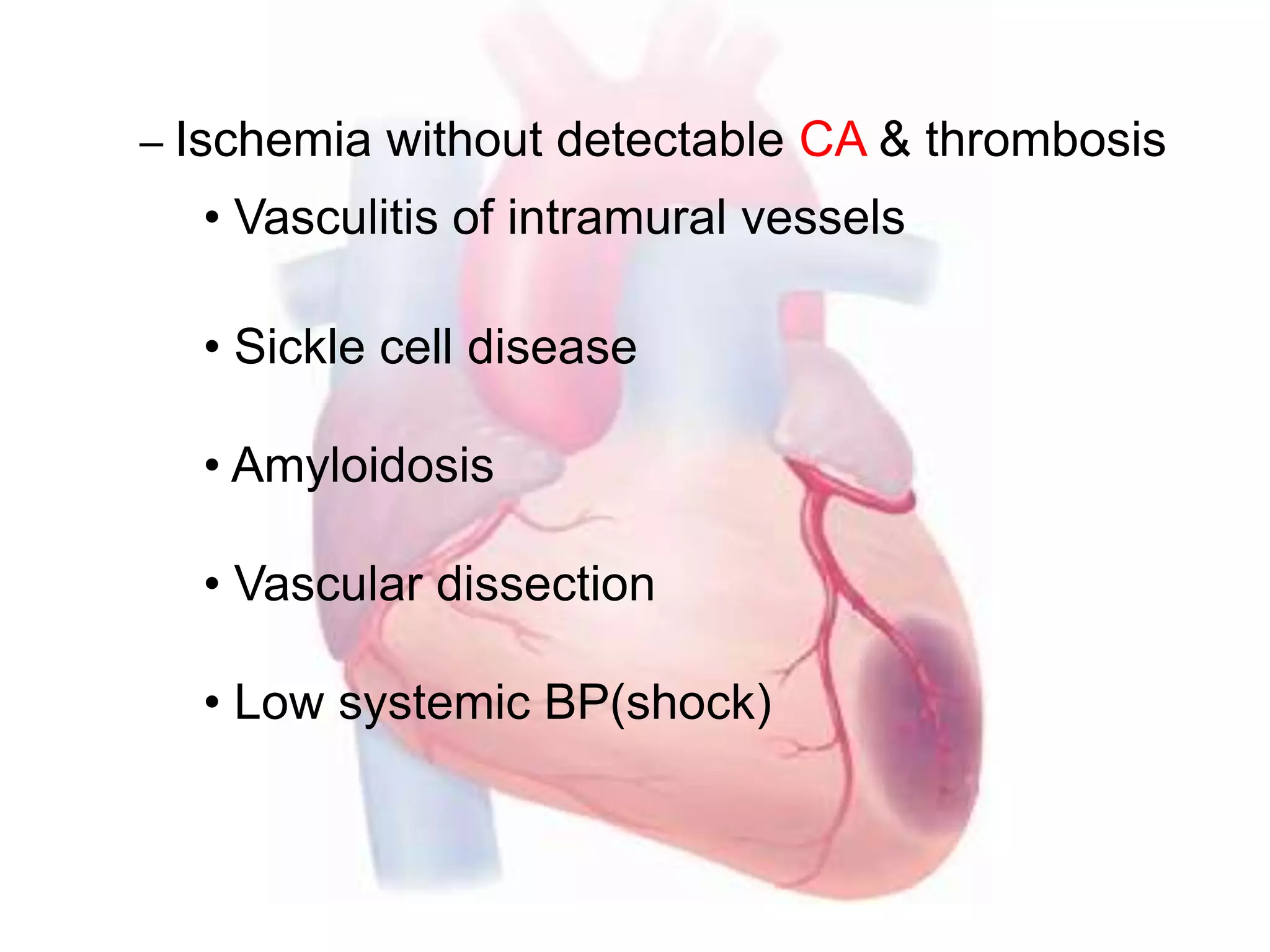
– Ischemia without detectable CA & thrombosis
• Vasculitis of intramural vessels
• Sickle cell disease
• Amyloidosis
• Vascular dissection
• Low systemic BP(shock)
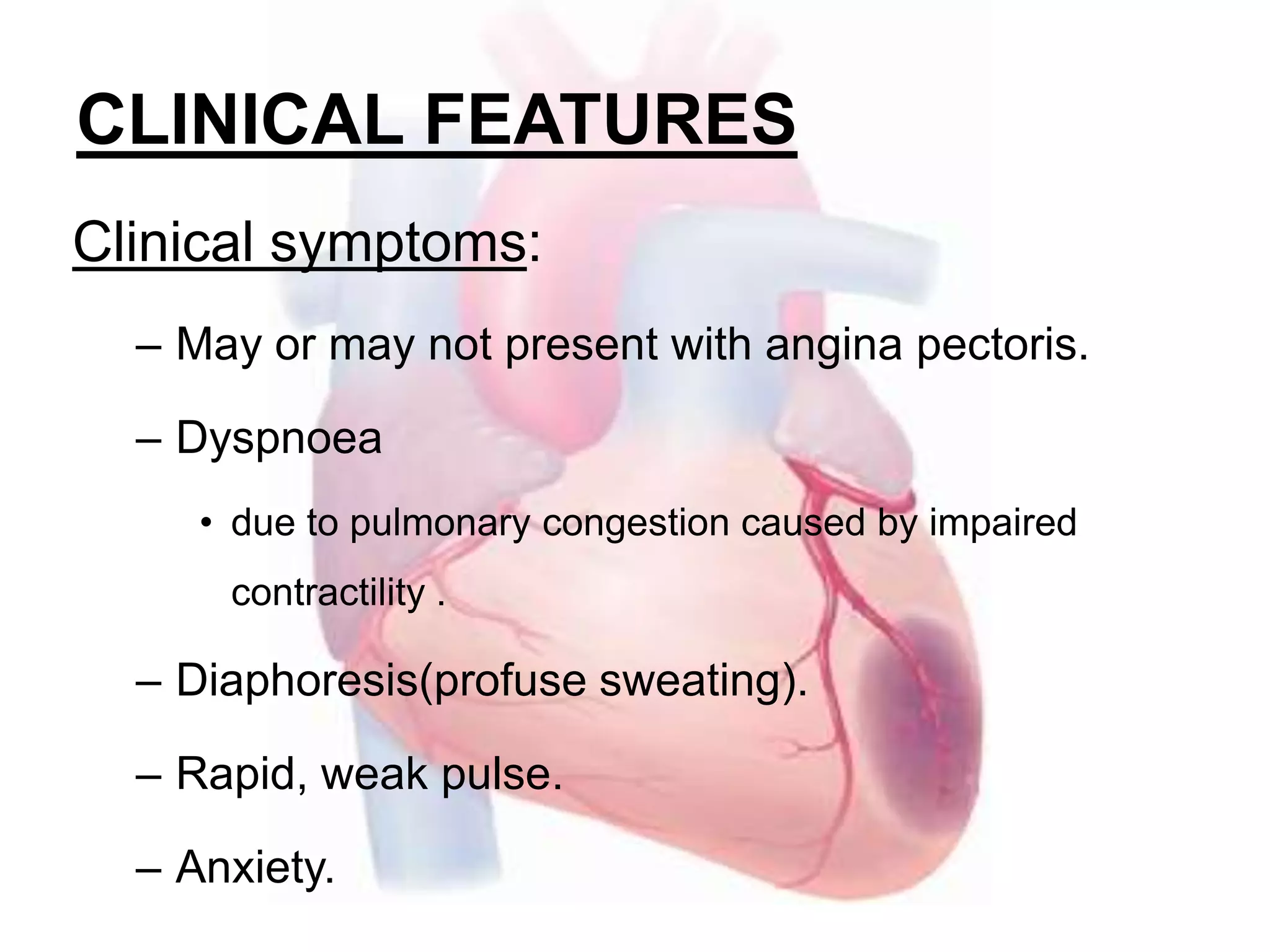
CLINICAL FEATURES
Clinical symptoms:
– May or may not present with angina pectoris.
– Dyspnoea
• due to pulmonary congestion caused by impaired
contractility .
– Diaphoresis(profuse sweating).
– Rapid, weak pulse.
– Anxiety.
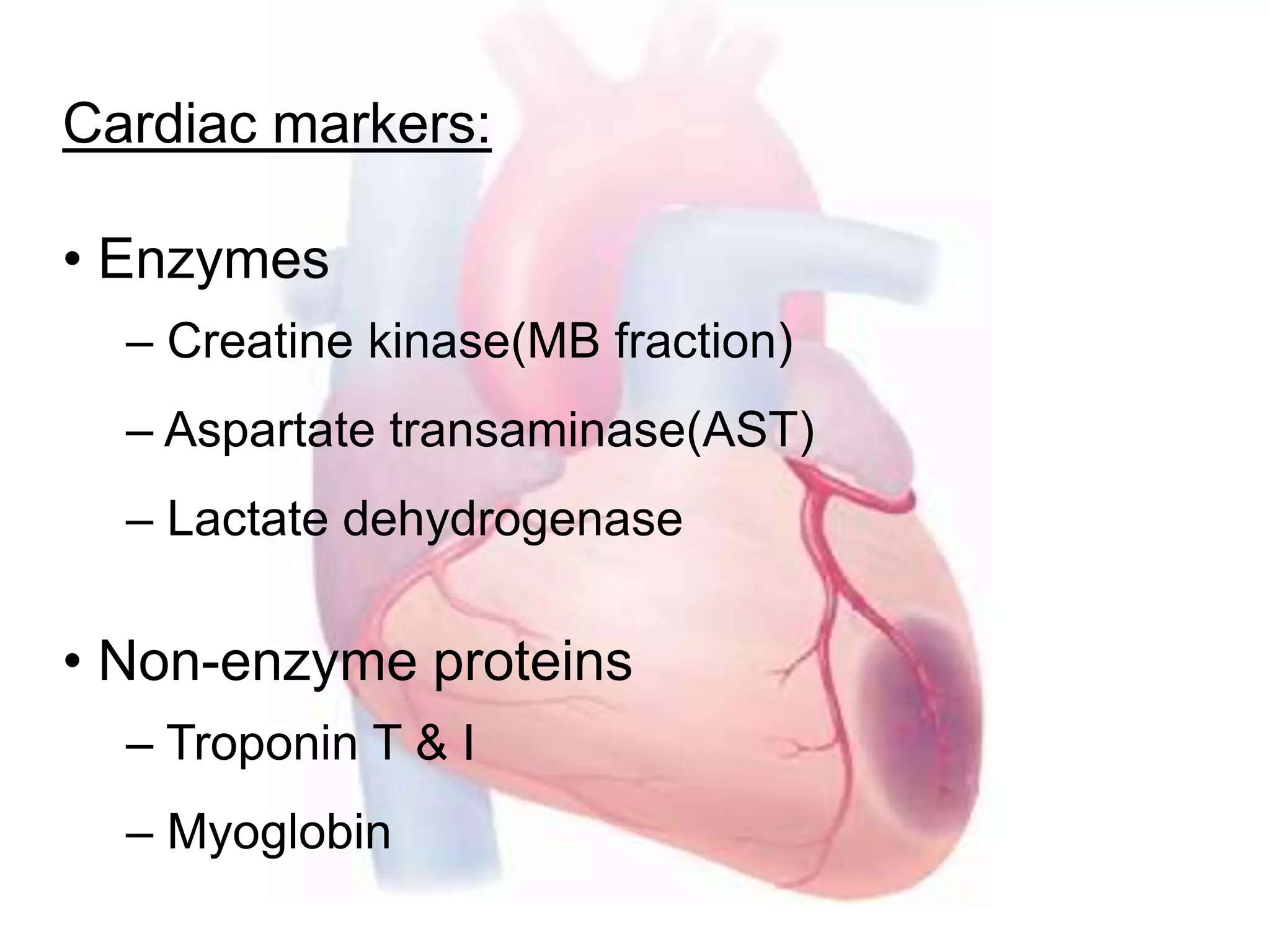
Cardiac markers:
• Enzymes
– Creatine kinase(MB fraction)
– Aspartate transaminase(AST)
– Lactate dehydrogenase
• Non-enzyme proteins
– Troponin T & I
– Myoglobin
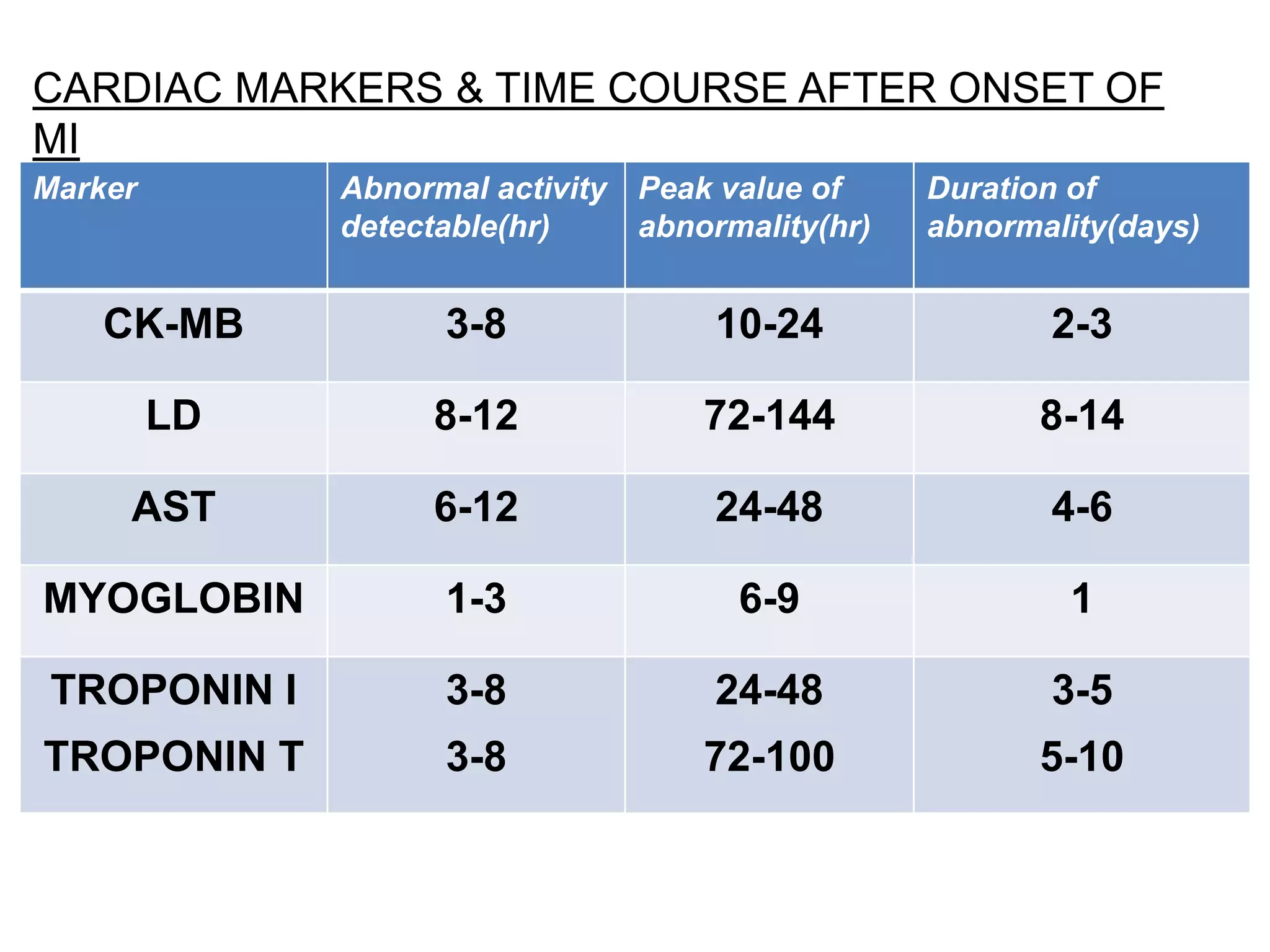
Marker Abnormal activity
detectable(hr)
Peak value of
abnormality(hr)
Duration of
abnormality(days)
CK-MB 3-8 10-24 2-3
LD 8-12 72-144 8-14
AST 6-12 24-48 4-6
MYOGLOBIN 1-3 6-9 1
TROPONIN I
TROPONIN T
3-8
3-8
24-48
72-100
3-5
5-10
CARDIAC MARKERS & TIME COURSE AFTER ONSET OF
MI
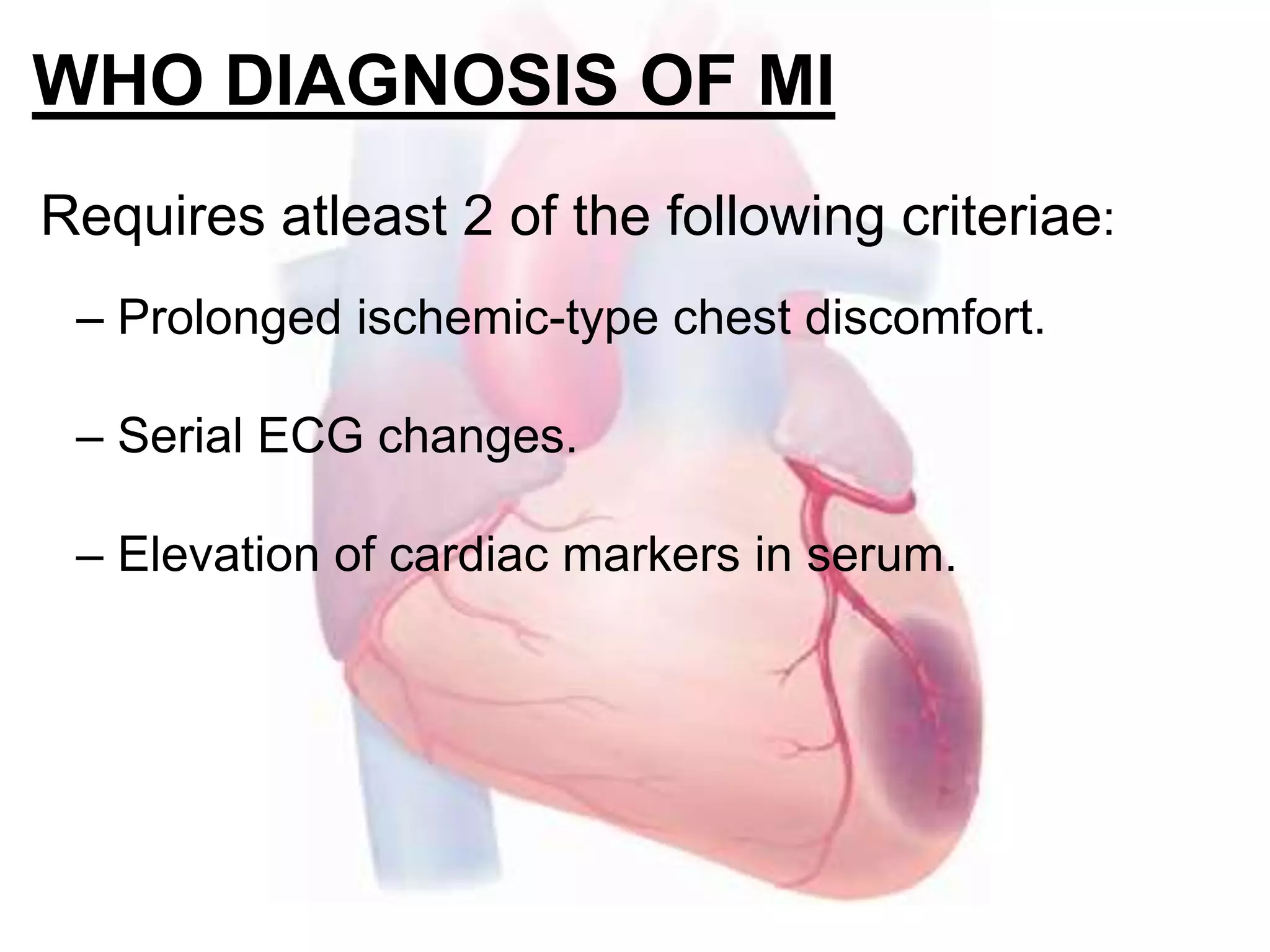
WHO DIAGNOSIS OF MI
Requires atleast 2 of the following criteriae:
– Prolonged ischemic-type chest discomfort.
– Serial ECG changes.
– Elevation of cardiac markers in serum.
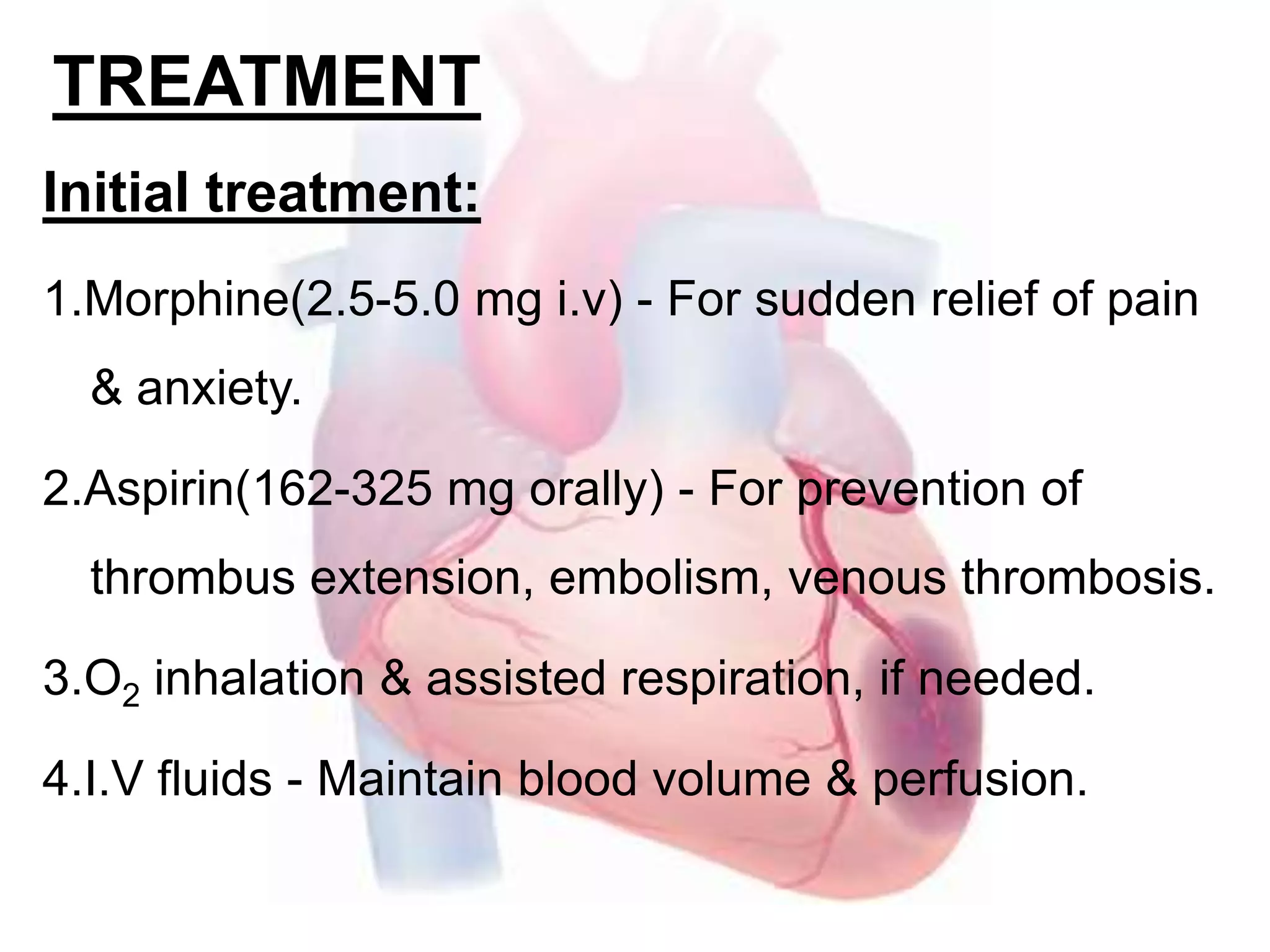
TREATMENT
Initial treatment:
1.Morphine(2.5-5.0 mg i.v) - For sudden relief of pain
& anxiety.
2.Aspirin(162-325 mg orally) - For prevention of
thrombus extension, embolism, venous thrombosis.
3.O2 inhalation & assisted respiration, if needed.
4.I.V fluids - Maintain blood volume & perfusion.
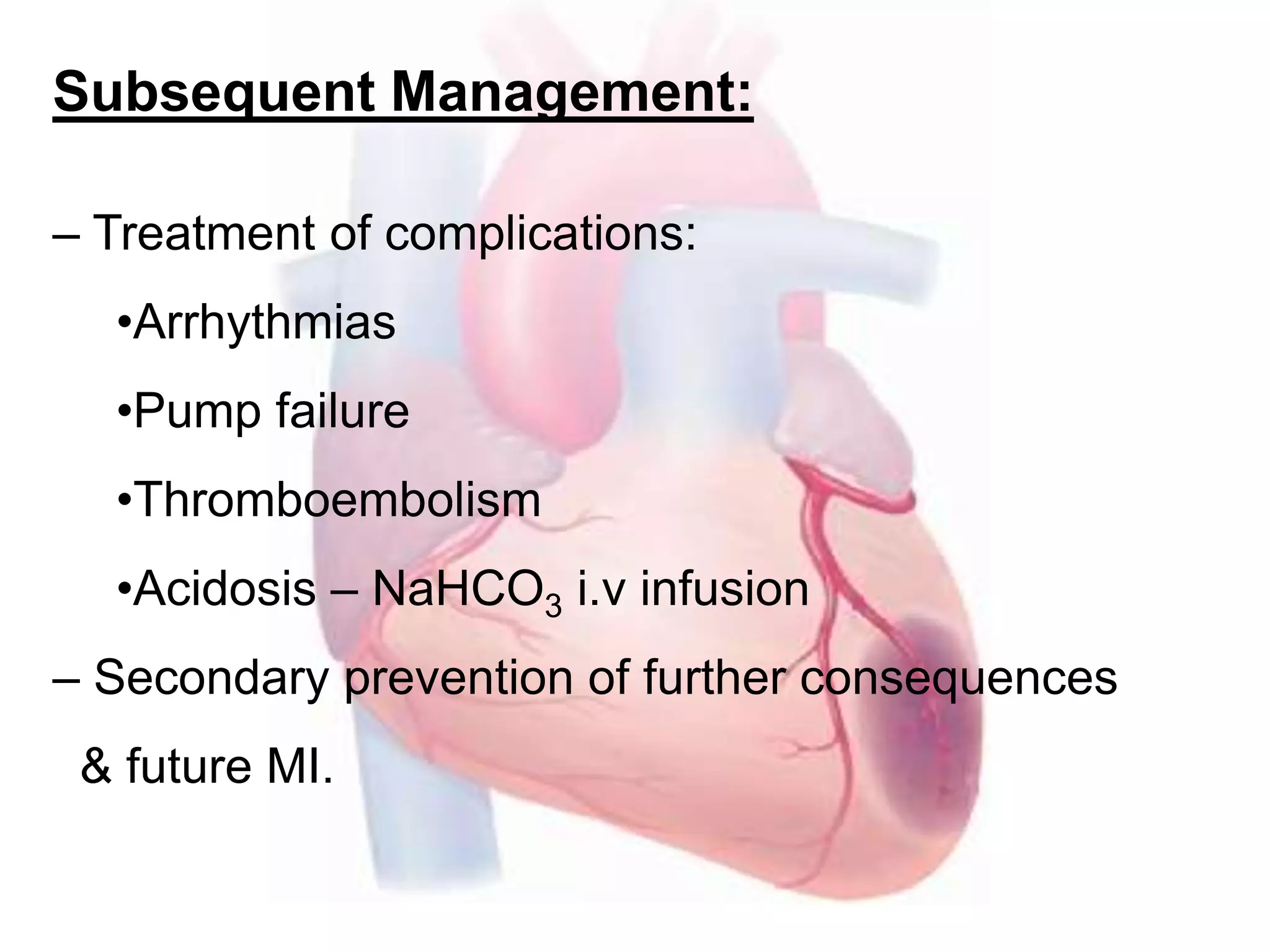
Subsequent Management:
– Treatment of complications:
•Arrhythmias
•Pump failure
•Thromboembolism
•Acidosis – NaHCO3 i.v infusion
– Secondary prevention of further consequences
& future MI.
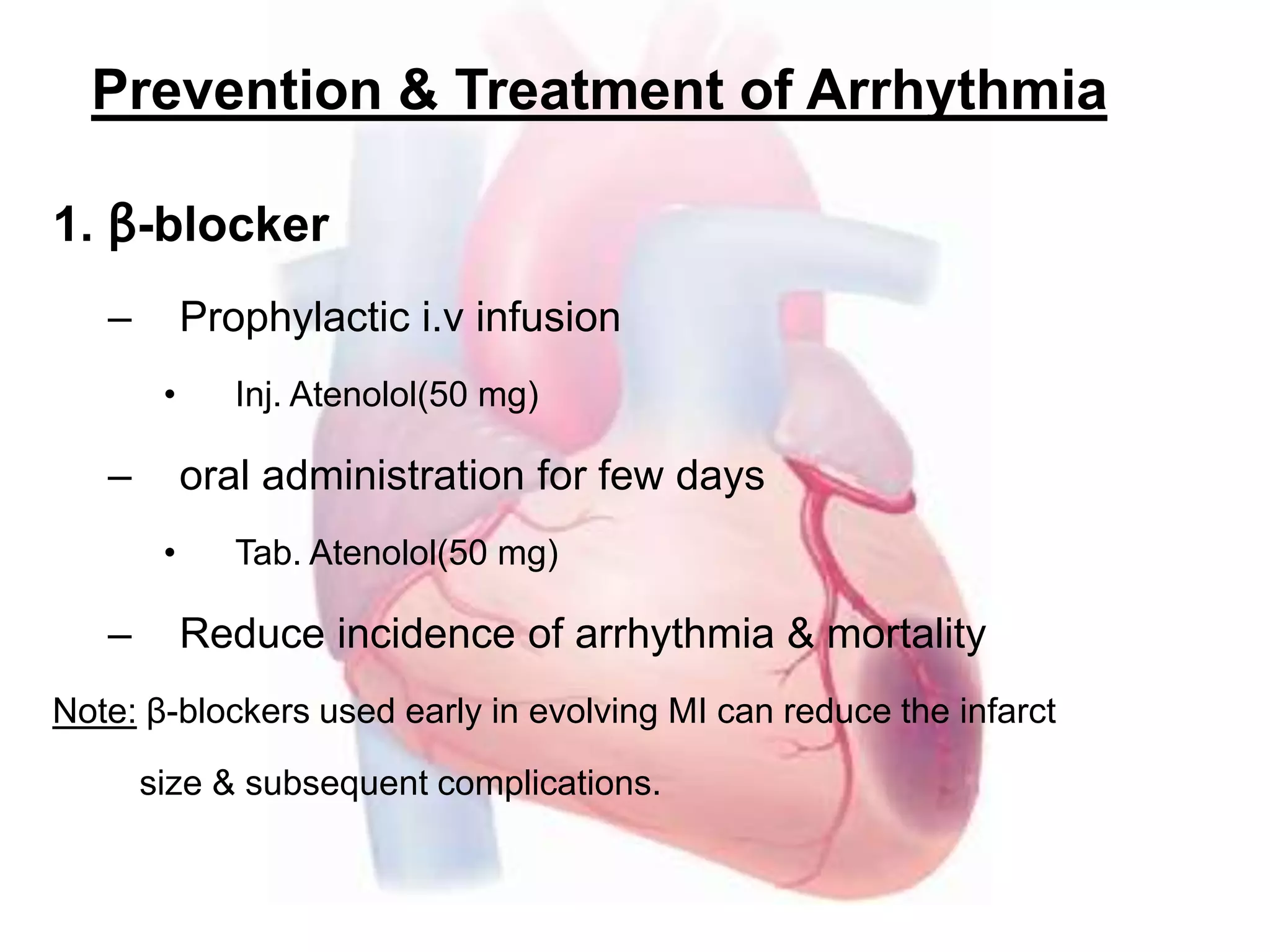
Prevention & Treatment of Arrhythmia
1. β-blocker
– Prophylactic i.v infusion
• Inj. Atenolol(50 mg)
– oral administration for few days
• Tab. Atenolol(50 mg)
– Reduce incidence of arrhythmia & mortality
Note: β-blockers used early in evolving MI can reduce the infarct
size & subsequent complications.
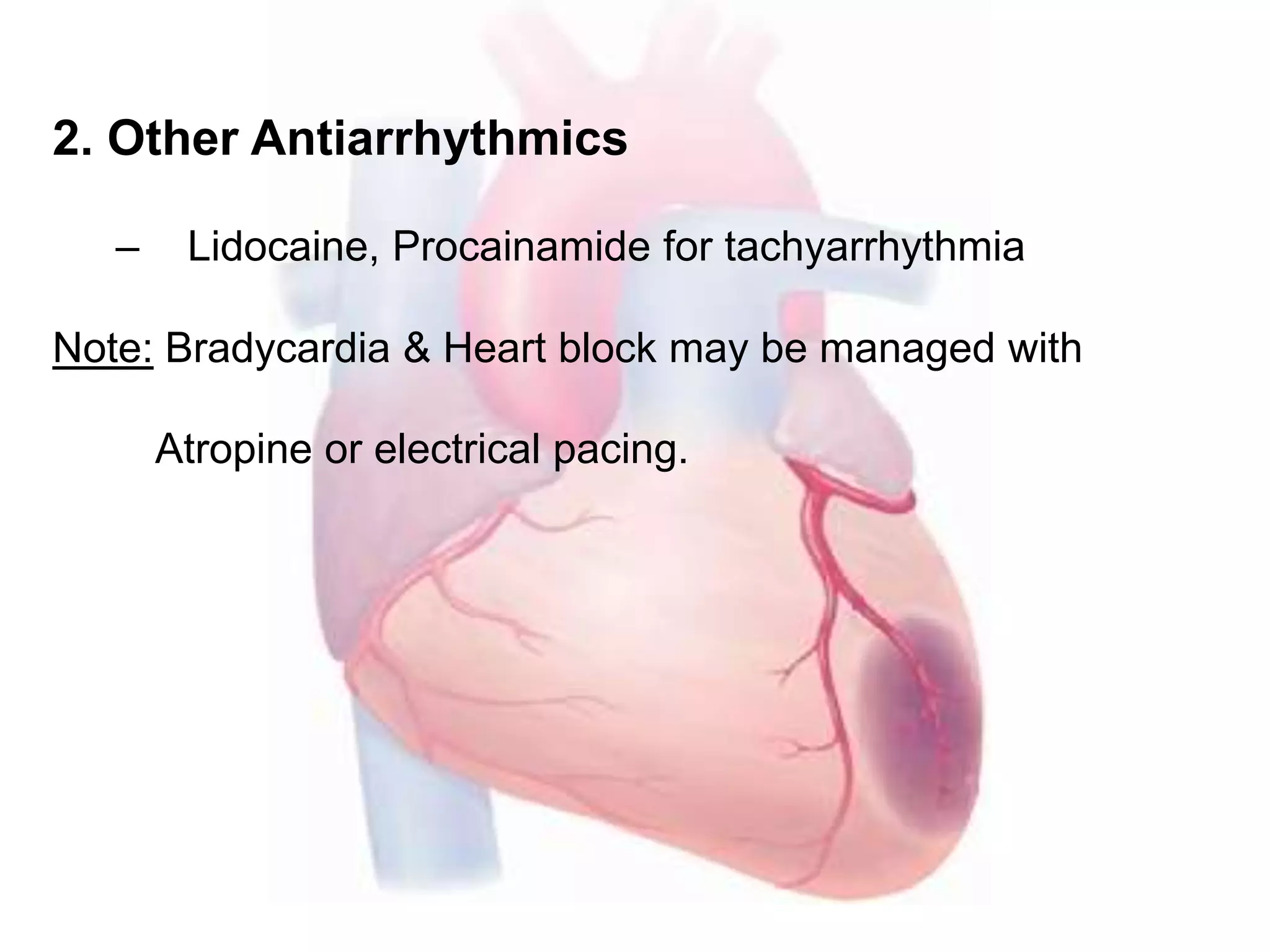
2. Other Antiarrhythmics
– Lidocaine, Procainamide for tachyarrhythmia
Note: Bradycardia & Heart block may be managed with
Atropine or electrical pacing.
Pump Failure
– The objective is to C.O and/or filling pressure without
unduly increasing cardiac work or reducing B.P.
– The drugs include:
• Furosemide: Reduce preload & pulm. edema.
• Vasodilators:
–GTN, Sod. Nitroprusside
– Reduce venous return, cardiac work load.
• Inotropic agents:
–Dopamine, Dobutamine
–Augment the pumping action of heart.
Thrombolysis & Reperfusion
– First infarct patient
• Inj. Streptokinase – 15,00,000 units i.v infusion over 1
hour.
– Subsequent infarcts
• Recombinant tissue plasminogen activator(Alteplase).
• Regimen for coronary thrombolysis is 15 mg i.v
followed by 0.75 mg/kg over 30 min. & 0.5mg/kg over
following hour.
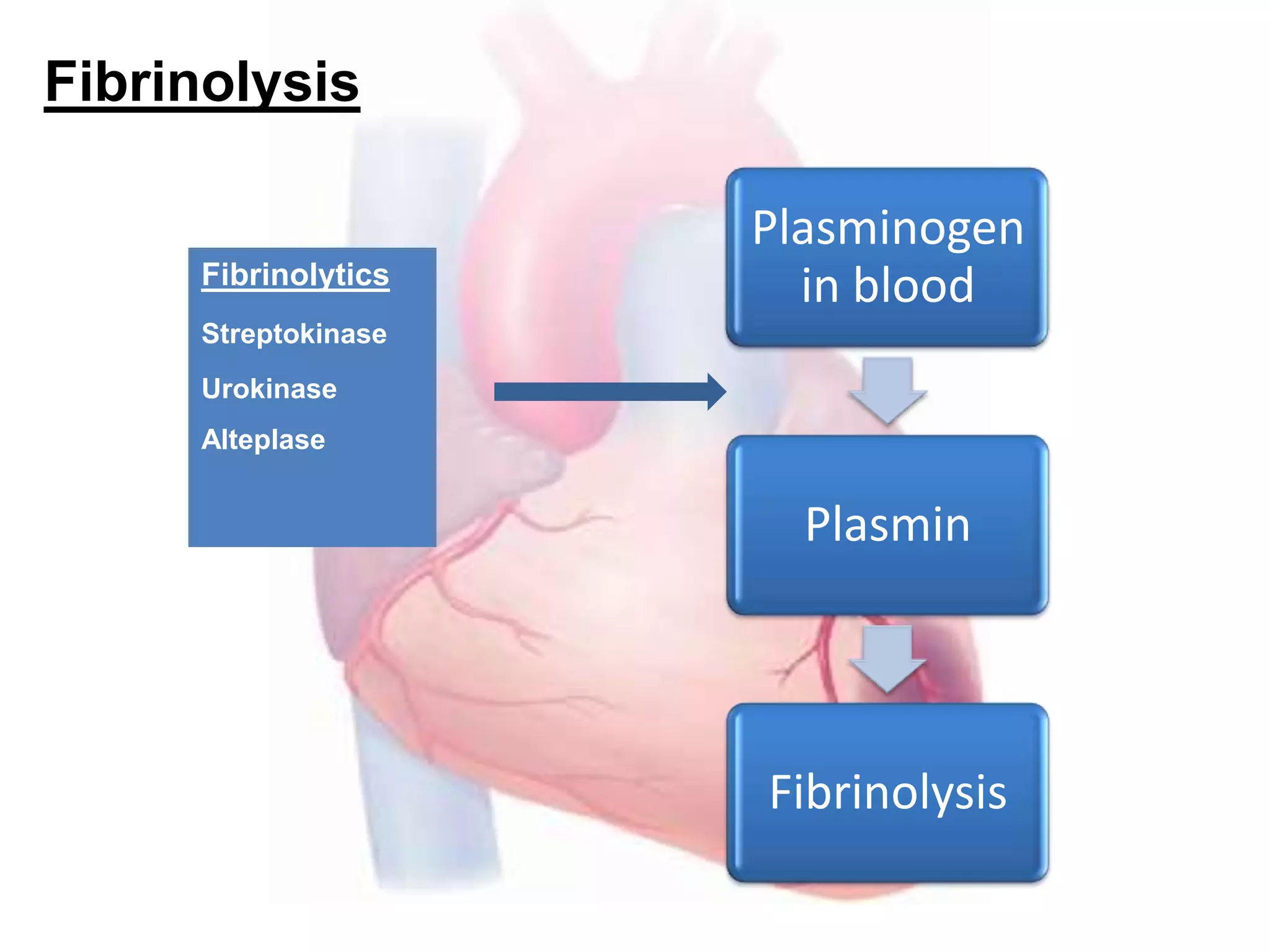
Fibrinolysis
Plasminogen
in blood
Plasmin
Fibrinolysis
Fibrinolytics
Streptokinase
Urokinase
Alteplase
Adverse reactions:
• Bleeding
• Nausea, vomiting
• Multiple micro emboli
• Allergic reactions – Streptokinase is
antigenic – cause anaphylaxis
Contraindications:
• Haemorrhagic diathesis
• Pregnancy
• Recent symptoms of peptic ulcer / GI
bleeding
• Recent stroke (Previous 3 mths)
• Recent surgery (Previous 10-14 days)
• Proliferative Diabetic retinopathy
• Severe uncontrolled hypertension
• Aortic dissection
• Acute pancreatitis
Long term Treatment
The objectives include:
• Prevention of remodeling & subsequent CHF.
– ACE inhibitors / ARBs are of proven efficacy & afford
long term survival benefit.
• Prevention of future attacks.
– Platelet inhibitors:
– Aspirin or Clopidogrel given on long term basis are
routinely prescribed.
– β blockers :
– Reduces risk of reinfarction, CHF & mortality
– Given for at least 2 years unless contraindicated.
– Control of hyperlipidemia
– Hypolipidemic drugs, especially statins.
– Dietary substitution with unsaturated fats.
MYOCARDIAL INFARCTION-MANAGEMENT

MYOCARDIAL INFARCTION-MANAGEMENT

  • 1.
    MANAGEMENT OF MYOCARDIALINFARCTION SAMEEH SAIFUDHEEN
  • 2.
    INTRODUCTION • Rapid developmentof myocardial necrosis due to a critical imbalance between O2 supply & myocardial demand. • Also known as “Heart attack”. • The most important form of IHD. • One of the major cause of mortality around the world.
  • 3.
    CAUSES • The primarycause for MI is CORONARY ARTERY OCCLUSION. • Factors responsible are: – Coronary atherosclerosis – Vasospasm • Platelet aggregation • Cocaine abuse. – Emboli • AF • Lt. sided mural thrombus • Vegetations of inf. endocarditis
  • 4.
    – Ischemia withoutdetectable CA & thrombosis • Vasculitis of intramural vessels • Sickle cell disease • Amyloidosis • Vascular dissection • Low systemic BP(shock)
  • 5.
    CLINICAL FEATURES Clinical symptoms: –May or may not present with angina pectoris. – Dyspnoea • due to pulmonary congestion caused by impaired contractility . – Diaphoresis(profuse sweating). – Rapid, weak pulse. – Anxiety.
  • 6.
    Cardiac markers: • Enzymes –Creatine kinase(MB fraction) – Aspartate transaminase(AST) – Lactate dehydrogenase • Non-enzyme proteins – Troponin T & I – Myoglobin
  • 7.
    Marker Abnormal activity detectable(hr) Peakvalue of abnormality(hr) Duration of abnormality(days) CK-MB 3-8 10-24 2-3 LD 8-12 72-144 8-14 AST 6-12 24-48 4-6 MYOGLOBIN 1-3 6-9 1 TROPONIN I TROPONIN T 3-8 3-8 24-48 72-100 3-5 5-10 CARDIAC MARKERS & TIME COURSE AFTER ONSET OF MI
  • 8.
    WHO DIAGNOSIS OFMI Requires atleast 2 of the following criteriae: – Prolonged ischemic-type chest discomfort. – Serial ECG changes. – Elevation of cardiac markers in serum.
  • 9.
    TREATMENT Initial treatment: 1.Morphine(2.5-5.0 mgi.v) - For sudden relief of pain & anxiety. 2.Aspirin(162-325 mg orally) - For prevention of thrombus extension, embolism, venous thrombosis. 3.O2 inhalation & assisted respiration, if needed. 4.I.V fluids - Maintain blood volume & perfusion.
  • 10.
    Subsequent Management: – Treatmentof complications: •Arrhythmias •Pump failure •Thromboembolism •Acidosis – NaHCO3 i.v infusion – Secondary prevention of further consequences & future MI.
  • 11.
    Prevention & Treatmentof Arrhythmia 1. β-blocker – Prophylactic i.v infusion • Inj. Atenolol(50 mg) – oral administration for few days • Tab. Atenolol(50 mg) – Reduce incidence of arrhythmia & mortality Note: β-blockers used early in evolving MI can reduce the infarct size & subsequent complications.
  • 12.
    2. Other Antiarrhythmics –Lidocaine, Procainamide for tachyarrhythmia Note: Bradycardia & Heart block may be managed with Atropine or electrical pacing.
  • 13.
    Pump Failure – Theobjective is to C.O and/or filling pressure without unduly increasing cardiac work or reducing B.P. – The drugs include: • Furosemide: Reduce preload & pulm. edema. • Vasodilators: –GTN, Sod. Nitroprusside – Reduce venous return, cardiac work load. • Inotropic agents: –Dopamine, Dobutamine –Augment the pumping action of heart.
  • 14.
    Thrombolysis & Reperfusion –First infarct patient • Inj. Streptokinase – 15,00,000 units i.v infusion over 1 hour. – Subsequent infarcts • Recombinant tissue plasminogen activator(Alteplase). • Regimen for coronary thrombolysis is 15 mg i.v followed by 0.75 mg/kg over 30 min. & 0.5mg/kg over following hour.
  • 15.
  • 16.
    Adverse reactions: • Bleeding •Nausea, vomiting • Multiple micro emboli • Allergic reactions – Streptokinase is antigenic – cause anaphylaxis
  • 17.
    Contraindications: • Haemorrhagic diathesis •Pregnancy • Recent symptoms of peptic ulcer / GI bleeding • Recent stroke (Previous 3 mths) • Recent surgery (Previous 10-14 days) • Proliferative Diabetic retinopathy • Severe uncontrolled hypertension • Aortic dissection • Acute pancreatitis
  • 18.
    Long term Treatment Theobjectives include: • Prevention of remodeling & subsequent CHF. – ACE inhibitors / ARBs are of proven efficacy & afford long term survival benefit. • Prevention of future attacks. – Platelet inhibitors: – Aspirin or Clopidogrel given on long term basis are routinely prescribed.
  • 19.
    – β blockers: – Reduces risk of reinfarction, CHF & mortality – Given for at least 2 years unless contraindicated. – Control of hyperlipidemia – Hypolipidemic drugs, especially statins. – Dietary substitution with unsaturated fats.