COR PULMONALE
Mrs. D. MelbaSahaya Sweety
M.Sc Nursing
GIMSAR
INTRODUTION
Cor pulmonale is a Latin wordthat means
"pulmonary heart," its definition varies, and
presently, there is no consensual. Cor
pulmonale is a condition that most commonly
arises out of complicationsfromhigh blood
pressure in the pulmonary arteries
(pulmonary hypertension). It’salso known as
right-sided heart failure because it occurs
within the right ventricle of your heart.
Cor pulmonale causes the right ventricle to
enlarge and pump blood less effectivelythan
it should. The ventricle is then pushed to its
limit andultimately fails.
• It is the hypertrophy of the right ventricle
resulting from diseases affecting the
function and/or structure of the lung, except
when these pulmonary alterations are the
result of diseases that primarily affect the
left side of the heart or congenital heart
disease (WHO, 1963)
DEFINITION
• Cor pulmonale is the
enlargement of the right
ventricle secondary to diseases
of the lung , thorax, or
pulmonary circulation.
Pulmonary hypertension is
usually a pre-existing condition
in the individual with cor
pulmonale. The most common
cause is COPD. (lewis)
DEFINITION
• The prevalence of COPD in the United States is
reported to be about 15 million, Cor pulmonale is
estimated to account for 6%to 7%percent of all
typesof adult heart disease in the United States.
• Chronic cor pulmonale accounted for 16.6
per cent of all cardiac cases in a five-year survey
in Delhi and the figure was the highest in the
world for a non-industrial population. 1
• Further, the incidence was variable in the 17
Indian states, being high in Northern and
Central Indiaand low in the South.
INCIDENCE
ETIOLOGY
Pulmonary hypertension is the most
common cause of cor pulmonale.
Lung conditions that cause a low blood oxygen level in the
blood over a long time can also lead to cor pulmonale.
Some of these are: 1. Autoimmune diseases that
damage the lungs, such
as scleroderma (Build-up of
collagen thickens lung tissue
and causes fibrosis or
scarring, making the
transport of oxygen into the
bloodstream more difficult.)
ETIOLOGY
Lung conditions that cause a low blood oxygen level in the
blood over a long time can also lead to cor pulmonale.
Some of these are:
ETIOLOGY
• 2. Chronic obstructive
pulmonary disease (COPD) : A
group of lung diseases that
block airflow and make it
difficult to breathe.
• Emphysema and chronic
bronchitis are the most
common conditions that make
up COPD.
Lung conditions that cause a low blood oxygen level in the
blood over a long time can also lead to cor pulmonale.
Some of these are:
ETIOLOGY
3.Acute respiratory distress
syndrome (ARDS) is a
type of respiratory failure
characterized by rapid
onset of widespread
inflammation in the lungs.
Lung conditions that cause a low blood oxygen level in the
blood over a long time can also lead to cor pulmonale.
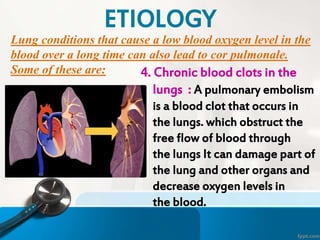
Some of these are: 4. Chronic blood clots in the
lungs : A pulmonary embolism
is a blood clot that occurs in
the lungs. which obstruct the
free flow of blood through
the lungs It can damage part of
the lung and other organs and
decrease oxygen levels in
the blood.
ETIOLOGY
Lung conditions that cause a low blood oxygen level in the
blood over a long time can also lead to cor pulmonale.
Some of these are: 5. Cystic fibrosis (CF) : Cystic
fibrosis affects the cells
that produce mucus,
sweat and digestive juices.
It causes these fluids to
become thick and sticky.
They then plug up tubes,
ducts and passageways.
ETIOLOGY
Lung conditions that cause a low blood oxygen level in the
blood over a long time can also lead to cor pulmonale.
Some of these are: 6. Severe bronchiectasis :
A condition in which
the lungs' airways
become damaged,
making it hard to clear
mucus or a persistent
cough that usually
brings up phlegm
(sputum)
ETIOLOGY
Lung conditions that cause a low blood oxygen level in the
blood over a long time can also lead to cor pulmonale.
Some of these are: 7. Scarring of the lung tissue
(interstitial lung disease):
Interstitial lung disease is another
term for pulmonary fibrosis, or
“scarring” and “inflammation” of
the interstitium (the tissue that
surrounds the lung’s air sacs, blood
vessels and airways). This scarring
makes the lung tissue stiff, which
can make breathing difficult.
ETIOLOGY
Lung conditions that cause a low blood oxygen level in the
blood over a long time can also lead to cor pulmonale.
Some of these are: 8. Severe curving of the upper
part of the spine
(kyphoscoliosis):
Kyphoscoliosis is
a thoracic cage deformity that
causes extrapulmonary
restriction of the lungs and
gives rise to impairment of
pulmonary functions
ETIOLOGY
Lung conditions that cause a low blood oxygen level in the
blood over a long time can also lead to cor pulmonale.
Some of these are: 9. Obstructive sleep apnea
It is a condition in which breathing
stops involuntarily for brief
periods of time during sleep.
Normally, air flows smoothly
from the mouth and nose into
the lungs at all times. Periods
when breathing stops are
called apnea or apneic episodes
because of airway inflammation
ETIOLOGY
Lung conditions that cause a low blood oxygen level in the blood
over a long time can also lead to cor pulmonale. Some of these are:
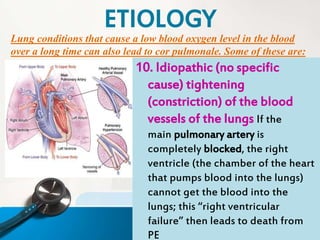
10. Idiopathic (no specific
cause) tightening
(constriction) of the blood
vessels of the lungs If the
main pulmonary artery is
completely blocked, the right
ventricle (the chamber of the heart
that pumps blood into the lungs)
cannot get the blood into the
lungs; this “right ventricular
failure” then leads to death from
PE
ETIOLOGY
Lung conditions that cause a low blood oxygen level in the
blood over a long time can also lead to cor pulmonale.
Some of these are: 11.Sickle Cell Anemia :
Sickle cell anemia is an
inherited red
blood cell disorder in
which there aren't
enough healthy red
blood cells to carry
oxygen throughout your
body.
ETIOLOGY
ACUTE COR PULMONALE
• Acute cor pulmonale is the
result of a sudden increase
in right ventricular
pressure, as seen in
massive pulmonary
embolismor acute
respiratory distress
syndrome
CHRONICCOR PULMONALE
• Chronic cor pulmonale can be
further characterizedby hypoxic or
vascular obliterans pathophysiology.
• The most common disease process
associatedwithhypoxic subtype is
chronic obstructive pulmonary
disease (COPD).
• The most common process
associatedwith obliterans subtype is
pulmonary thromboembolic disease.
SUB TYPE OF COR PULMONALE
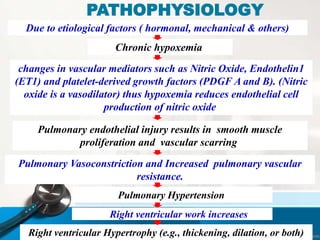
Due to etiological factors ( hormonal, mechanical & others)
Right ventricular work increases
PATHOPHYSIOLOGY
Pulmonary endothelial injury results in smooth muscle
proliferation and vascular scarring
Pulmonary Hypertension
Right ventricular Hypertrophy (e.g., thickening, dilation, or both)
Chronic hypoxemia
changes in vascular mediators such as Nitric Oxide, Endothelin1
(ET1) and platelet-derived growth factors (PDGF A and B). (Nitric
oxide is a vasodilator) thus hypoxemia reduces endothelial cell
production of nitric oxide
Pulmonary Vasoconstriction and Increased pulmonary vascular
resistance.
•Shortness of breath or lightheadedness
during activity is often the first symptom
of cor pulmonale.
•Palpitation like your heart is pounding.
Over time, symptoms occur with lighter
activity or even while you are at rest.
Symptoms are:
•Fainting spells during activity
•Chest discomfort, usually in the front of
the chest
CLINICAL MANIFESTATION
•Chest pain
• Swelling of the feet or ankles
• Symptoms of lung disorders, such as
wheezing or coughing or phlegm
production
• Bluish tinge on skin, nail bed, lips, or
gums (cyanosis)
• loud S2 (accentuation of the pulmona
component of the second heart sound)
narrow splitting of S2.
CLINICAL MANIFESTATION
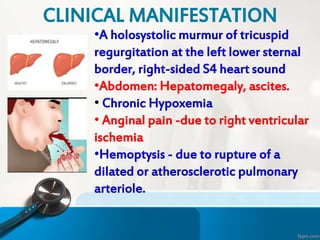
•A holosystolic murmur of tricuspid
regurgitation at the left lower sternal
border, right-sided S4 heart sound
•Abdomen: Hepatomegaly, ascites.
• Chronic Hypoxemia
• Anginal pain -due to right ventricular
ischemia
•Hemoptysis - due to rupture of a
dilated or atherosclerotic pulmonary
arteriole.
CLINICAL MANIFESTATION
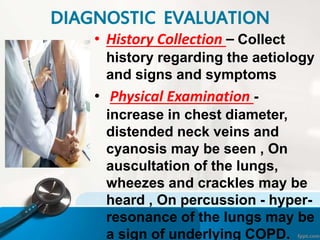
• History Collection – Collect
history regarding the aetiology
and signs and symptoms
• Physical Examination -
increase in chest diameter,
distended neck veins and
cyanosis may be seen , On
auscultation of the lungs,
wheezes and crackles may be
heard , On percussion - hyper-
resonance of the lungs may be
a sign of underlying COPD.
DIAGNOSTIC EVALUATION
• Blood Antibody Test – Antinuclear
antibody (ANA) level for collagen
vascular disease, anti-SCL-70
antibodies in scleroderma and
Coagulations studies to evaluate
hypercoagulability states (eg,
serum levels of proteins S and C,
antithrombin III, factor V Leyden,
anticardiolipin antibodies,
homocysteine) to detect chronic
venous thromboembolism
DIAGNOSTIC EVALUATION
• Arterial Blood Gas Analysis
Arterial blood gas measurements
may provide important
information about the level of
oxygenation and type of acid-
base disorder.
• Chest radiograph: Enlargement of
the pulmonary artery and Left
ventricle is seen.
• Electrocardiogram: Shows features
of right ventricular
DIAGNOSTIC EVALUATION
• Doppler Echocardiography It
usually demonstrates signs
of chronic right ventricular
(RV) pressure overload and
to estimate pulmonary
arterial pressure
• Chest CT angiography to rule
out pulmonary
thromboembolism
• Ventilation/perfusion (V/Q)
scanning can be particularly
useful in evaluating patients
with cor pulmonale,
DIAGNOSTIC EVALUATION
• Ultrafast, ECG-gated CT
scanning
It is used to study right
ventricular (RV) function. In
addition to estimating RV
ejection fraction (RVEF),
this imaging modality can
estimate RV wall mass.
Magnetic Resonance Imaging
To detect myocardial scar
and fibrosis, valve function,
patterns of blood flow and
DIAGNOSTIC EVALUATION
• Lung Biopsy Itmay occasionally
be indicated to determine the
etiology of underlying lung
disease. This is especially true
if interstitial lung disease (ILD)
is the suspected etiology for
pulmonary hypertension
resulting in cor pulmonale.
• Pulmonary Function Test (PFT) and
6-minute walk test for
assessment of the severity of
lung disease and exercise
capacity respectively
DIAGNOSTIC EVALUATION
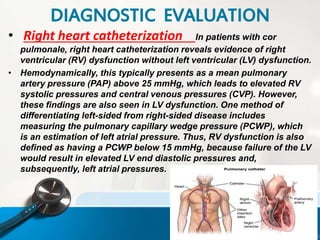
• Right heart catheterization In patients with cor
pulmonale, right heart catheterization reveals evidence of right
ventricular (RV) dysfunction without left ventricular (LV) dysfunction.
• Hemodynamically, this typically presents as a mean pulmonary
artery pressure (PAP) above 25 mmHg, which leads to elevated RV
systolic pressures and central venous pressures (CVP). However,
these findings are also seen in LV dysfunction. One method of
differentiating left-sided from right-sided disease includes
measuring the pulmonary capillary wedge pressure (PCWP), which
is an estimation of left atrial pressure. Thus, RV dysfunction is also
defined as having a PCWP below 15 mmHg, because failure of the LV
would result in elevated LV end diastolic pressures and,
subsequently, left atrial pressures.
DIAGNOSTIC EVALUATION
• AIM OF THE MANAGEMENT :
 Improving oxygenation and right ventricular (RV)
function by increasing RV contractility and
decreasing pulmonary vasoconstriction.
• MANAGEMENT
 Oxygen therapy relieves hypoxemic pulmonary
vasoconstriction, which then improves cardiac
output, lessens sympathetic vasoconstriction,
alleviates tissue hypoxemia, and improves renal
perfusion.
MEDICAL MANAGEMENT
Diuretics are used to decrease the
elevated right ventricular (RV) filling
volume in patients with chronic cor
pulmonale.
 Anticoagulation and thrombolytic
agents for massive pulmonary
embolism
Calcium channel blockers: vasodilate
the pulmonary arteries
Beta agonists (epoprostenl, iloprost):
bronchodilate
M
A
N
A
G
E
M
E
N
T
Pulmonary Vasodilators :
1. Prostaglandins decrease pulmonary
artery pressure and increase right
ventricular ejection fraction and cardiac
output.
2. Aerosolized prostacyclin causes
pulmonary artery vasodilatation and
improves cardiac output and arterial
oxyhemoglobin saturation in patients
with chronic pulmonary hypertension.
M
A
N
A
G
E
M
E
N
T
 Inotropes with vasodilatory properties :
1. Dobutamine is an inotropic agent with
vasodilatory effect which improves right
ventricular function and cardiac output, but
its effect on systemic blood pressure is
unpredictable.
2. Amrinone lowers pulmonary artery
pressure and rises cardiac output and
systemic blood pressure.
 Bronchodilators- Theophylline,
 Endothelin receptor antagonist : Bosentan is
an endothelin receptor antagonist that
produces pulmonary vasodilation and
attenuates ventricular remodeling and
improve survival on chronic use.
M
A
N
A
G
E
M
E
N
T
SURGICAL MANAGEMENT
• Phlebotomy : Phlebotomy
is indicated in patients with
chronic cor pulmonale and
chronic hypoxia causing
severe polycythemia, is the
process of making a
puncture in a vein, usually
in the arm, with a cannula
for the purpose of drawing
blood.
SURGICAL MANAGEMENT
• Uvulopalatopharyngoplasty
(UPPP) in selected patients with
sleep apnea and hypoventilation
may relieve cor pulmonale. It is
a surgical procedure or sleep
surgery used to remove tissue
and/or remodel tissue in the
throat.
SURGICAL MANAGEMENT
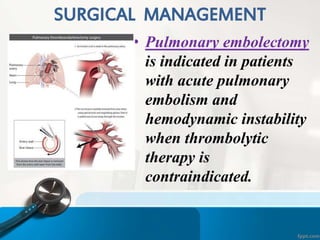
• Pulmonary embolectomy
is indicated in patients
with acute pulmonary
embolism and
hemodynamic instability
when thrombolytic
therapy is
contraindicated.
SURGICAL MANAGEMENT
• Lung
transplantation or pulm
onary transplantation,
is a surgical procedure
in which a patient's
diseased lungs are
partially or totally
replaced by lungs which
come from a donor.
COMPLICATION
 Syncope
 Hypoxia
 Pedal edema
 Passive hepatic congestion
Death.
• Ask the patient to describe any
history or cardiopulmonary disease.
• Determine if the patient has
experienced orthopnea, cough,
fatigue, epigastric distress, anorexia,
or weight gain or has a history of
previously diagnosed lung disorders.
• Ask if the patient smokes cigarettes,
noting the daily consumption and
duration.
• Check the color and quantity of the
mucus the patient expectorates.
• Determine the type of dyspnea if it is
NURSING MANAGEMENT
• Observe if the patient has difficulty in
maintaining breath while the history is
taken.
• Evaluate the rate, type, and quality of
respirations.
• Observe the patient for dependent
edema from the abdomen (ascites)
and buttocks and down both legs.
• Inspect the patient's chest and thorax
for the general appearance and
anteroposterior diameter.
• Look for the use of accessory
muscles in breathing.
NURSING MANAGEMENT
• Decreasedcardiac output relatedto an ineffective
ventricular pumpas evidencedby dyspnea at rest
and/or peripheral edema
• Impaired gas exchange related to expiratory
airflow obstruction as evidenced by decreased
oxygen saturation levels
• Impaired tissue perfusion related to decreased
cardiaccontractility andexpiratory airflow
obstruction as evidencedby increasedcapillary
refilling time >3 seconds
NURSING DIAGNOSIS
• Imbalanced nutrition status less than body
requirement related to breathlessness , Wheezing,
Haemoptysis as evidenced by weight loss
• Disturbed sleep pattern related to shortness of
breath and sleep apnea as evidenced by presence of
dark circles around the eyes, Redness of eyes and
Drowsiness
NURSING DIAGNOSIS
• Activity intolerance relatedto decreasedcardiac
activity andlabouredrespirations as evidenced
by difficulty in performing activities of daily
living
• Fatigue relatedto decreasedcardiac activity
andlabouredrespirations as evidencedby
difficulty in performing activities of daily living
• Anxiety relatedto sign and symptoms ,
diagnosticmeasures andtreatment process as
evidenced by patient`s verbalization and facial
expressions
N
U
R
S
I
N
G
D
I
A
G
N
O
S
I
S
• Avoid strenuous activities and heavy lifting.
• Avoid travelling to high altitudes.
• Get a yearly flu vaccine, as well as other
vaccines, such as the pneumonia vaccine.
• If you smoke, stop.
• Limit how much salt you eat. Your provider
also may ask you to limit how much fluid you
drink during the day.
• Use oxygen if your provider prescribes it.
• Women should not get pregnant.
LIFE STYLE MODIFICATION
• Advice patient to take protein rich diet.
• Educate patient regarding his disease
condition.
• Educate patient regarding modification in
lifestyle like cessation of smoking & alcohol
consumption.
• Advice patient to reduce spicy & fatty foods.
• Instruct patient to avoid caffeine intake which
can increase pulse rate & produce angina.
• Educate patient to minimize level of activities
to prevent strain.
• Advice patient for regular follow-up & care.
HEALTH EDUCATION
Corpulmonale

Corpulmonale

  • 1.
    COR PULMONALE Mrs. D.MelbaSahaya Sweety M.Sc Nursing GIMSAR
  • 2.
    INTRODUTION Cor pulmonale isa Latin wordthat means "pulmonary heart," its definition varies, and presently, there is no consensual. Cor pulmonale is a condition that most commonly arises out of complicationsfromhigh blood pressure in the pulmonary arteries (pulmonary hypertension). It’salso known as right-sided heart failure because it occurs within the right ventricle of your heart. Cor pulmonale causes the right ventricle to enlarge and pump blood less effectivelythan it should. The ventricle is then pushed to its limit andultimately fails.
  • 3.
    • It isthe hypertrophy of the right ventricle resulting from diseases affecting the function and/or structure of the lung, except when these pulmonary alterations are the result of diseases that primarily affect the left side of the heart or congenital heart disease (WHO, 1963) DEFINITION
  • 4.
    • Cor pulmonaleis the enlargement of the right ventricle secondary to diseases of the lung , thorax, or pulmonary circulation. Pulmonary hypertension is usually a pre-existing condition in the individual with cor pulmonale. The most common cause is COPD. (lewis) DEFINITION
  • 5.
    • The prevalenceof COPD in the United States is reported to be about 15 million, Cor pulmonale is estimated to account for 6%to 7%percent of all typesof adult heart disease in the United States. • Chronic cor pulmonale accounted for 16.6 per cent of all cardiac cases in a five-year survey in Delhi and the figure was the highest in the world for a non-industrial population. 1 • Further, the incidence was variable in the 17 Indian states, being high in Northern and Central Indiaand low in the South. INCIDENCE
  • 6.
    ETIOLOGY Pulmonary hypertension isthe most common cause of cor pulmonale.
  • 7.
    Lung conditions thatcause a low blood oxygen level in the blood over a long time can also lead to cor pulmonale. Some of these are: 1. Autoimmune diseases that damage the lungs, such as scleroderma (Build-up of collagen thickens lung tissue and causes fibrosis or scarring, making the transport of oxygen into the bloodstream more difficult.) ETIOLOGY
  • 8.
    Lung conditions thatcause a low blood oxygen level in the blood over a long time can also lead to cor pulmonale. Some of these are: ETIOLOGY • 2. Chronic obstructive pulmonary disease (COPD) : A group of lung diseases that block airflow and make it difficult to breathe. • Emphysema and chronic bronchitis are the most common conditions that make up COPD.
  • 9.
    Lung conditions thatcause a low blood oxygen level in the blood over a long time can also lead to cor pulmonale. Some of these are: ETIOLOGY 3.Acute respiratory distress syndrome (ARDS) is a type of respiratory failure characterized by rapid onset of widespread inflammation in the lungs.
  • 10.
    Lung conditions thatcause a low blood oxygen level in the blood over a long time can also lead to cor pulmonale. Some of these are: 4. Chronic blood clots in the lungs : A pulmonary embolism is a blood clot that occurs in the lungs. which obstruct the free flow of blood through the lungs It can damage part of the lung and other organs and decrease oxygen levels in the blood. ETIOLOGY
  • 11.
    Lung conditions thatcause a low blood oxygen level in the blood over a long time can also lead to cor pulmonale. Some of these are: 5. Cystic fibrosis (CF) : Cystic fibrosis affects the cells that produce mucus, sweat and digestive juices. It causes these fluids to become thick and sticky. They then plug up tubes, ducts and passageways. ETIOLOGY
  • 12.
    Lung conditions thatcause a low blood oxygen level in the blood over a long time can also lead to cor pulmonale. Some of these are: 6. Severe bronchiectasis : A condition in which the lungs' airways become damaged, making it hard to clear mucus or a persistent cough that usually brings up phlegm (sputum) ETIOLOGY
  • 13.
    Lung conditions thatcause a low blood oxygen level in the blood over a long time can also lead to cor pulmonale. Some of these are: 7. Scarring of the lung tissue (interstitial lung disease): Interstitial lung disease is another term for pulmonary fibrosis, or “scarring” and “inflammation” of the interstitium (the tissue that surrounds the lung’s air sacs, blood vessels and airways). This scarring makes the lung tissue stiff, which can make breathing difficult. ETIOLOGY
  • 14.
    Lung conditions thatcause a low blood oxygen level in the blood over a long time can also lead to cor pulmonale. Some of these are: 8. Severe curving of the upper part of the spine (kyphoscoliosis): Kyphoscoliosis is a thoracic cage deformity that causes extrapulmonary restriction of the lungs and gives rise to impairment of pulmonary functions ETIOLOGY
  • 15.
    Lung conditions thatcause a low blood oxygen level in the blood over a long time can also lead to cor pulmonale. Some of these are: 9. Obstructive sleep apnea It is a condition in which breathing stops involuntarily for brief periods of time during sleep. Normally, air flows smoothly from the mouth and nose into the lungs at all times. Periods when breathing stops are called apnea or apneic episodes because of airway inflammation ETIOLOGY
  • 16.
    Lung conditions thatcause a low blood oxygen level in the blood over a long time can also lead to cor pulmonale. Some of these are: 10. Idiopathic (no specific cause) tightening (constriction) of the blood vessels of the lungs If the main pulmonary artery is completely blocked, the right ventricle (the chamber of the heart that pumps blood into the lungs) cannot get the blood into the lungs; this “right ventricular failure” then leads to death from PE ETIOLOGY
  • 17.
    Lung conditions thatcause a low blood oxygen level in the blood over a long time can also lead to cor pulmonale. Some of these are: 11.Sickle Cell Anemia : Sickle cell anemia is an inherited red blood cell disorder in which there aren't enough healthy red blood cells to carry oxygen throughout your body. ETIOLOGY
  • 18.
    ACUTE COR PULMONALE •Acute cor pulmonale is the result of a sudden increase in right ventricular pressure, as seen in massive pulmonary embolismor acute respiratory distress syndrome CHRONICCOR PULMONALE • Chronic cor pulmonale can be further characterizedby hypoxic or vascular obliterans pathophysiology. • The most common disease process associatedwithhypoxic subtype is chronic obstructive pulmonary disease (COPD). • The most common process associatedwith obliterans subtype is pulmonary thromboembolic disease. SUB TYPE OF COR PULMONALE
  • 19.
    Due to etiologicalfactors ( hormonal, mechanical & others) Right ventricular work increases PATHOPHYSIOLOGY Pulmonary endothelial injury results in smooth muscle proliferation and vascular scarring Pulmonary Hypertension Right ventricular Hypertrophy (e.g., thickening, dilation, or both) Chronic hypoxemia changes in vascular mediators such as Nitric Oxide, Endothelin1 (ET1) and platelet-derived growth factors (PDGF A and B). (Nitric oxide is a vasodilator) thus hypoxemia reduces endothelial cell production of nitric oxide Pulmonary Vasoconstriction and Increased pulmonary vascular resistance.
  • 20.
    •Shortness of breathor lightheadedness during activity is often the first symptom of cor pulmonale. •Palpitation like your heart is pounding. Over time, symptoms occur with lighter activity or even while you are at rest. Symptoms are: •Fainting spells during activity •Chest discomfort, usually in the front of the chest CLINICAL MANIFESTATION
  • 21.
    •Chest pain • Swellingof the feet or ankles • Symptoms of lung disorders, such as wheezing or coughing or phlegm production • Bluish tinge on skin, nail bed, lips, or gums (cyanosis) • loud S2 (accentuation of the pulmona component of the second heart sound) narrow splitting of S2. CLINICAL MANIFESTATION
  • 22.
    •A holosystolic murmurof tricuspid regurgitation at the left lower sternal border, right-sided S4 heart sound •Abdomen: Hepatomegaly, ascites. • Chronic Hypoxemia • Anginal pain -due to right ventricular ischemia •Hemoptysis - due to rupture of a dilated or atherosclerotic pulmonary arteriole. CLINICAL MANIFESTATION
  • 23.
    • History Collection– Collect history regarding the aetiology and signs and symptoms • Physical Examination - increase in chest diameter, distended neck veins and cyanosis may be seen , On auscultation of the lungs, wheezes and crackles may be heard , On percussion - hyper- resonance of the lungs may be a sign of underlying COPD. DIAGNOSTIC EVALUATION
  • 24.
    • Blood AntibodyTest – Antinuclear antibody (ANA) level for collagen vascular disease, anti-SCL-70 antibodies in scleroderma and Coagulations studies to evaluate hypercoagulability states (eg, serum levels of proteins S and C, antithrombin III, factor V Leyden, anticardiolipin antibodies, homocysteine) to detect chronic venous thromboembolism DIAGNOSTIC EVALUATION
  • 25.
    • Arterial BloodGas Analysis Arterial blood gas measurements may provide important information about the level of oxygenation and type of acid- base disorder. • Chest radiograph: Enlargement of the pulmonary artery and Left ventricle is seen. • Electrocardiogram: Shows features of right ventricular DIAGNOSTIC EVALUATION
  • 26.
    • Doppler EchocardiographyIt usually demonstrates signs of chronic right ventricular (RV) pressure overload and to estimate pulmonary arterial pressure • Chest CT angiography to rule out pulmonary thromboembolism • Ventilation/perfusion (V/Q) scanning can be particularly useful in evaluating patients with cor pulmonale, DIAGNOSTIC EVALUATION
  • 27.
    • Ultrafast, ECG-gatedCT scanning It is used to study right ventricular (RV) function. In addition to estimating RV ejection fraction (RVEF), this imaging modality can estimate RV wall mass. Magnetic Resonance Imaging To detect myocardial scar and fibrosis, valve function, patterns of blood flow and DIAGNOSTIC EVALUATION
  • 28.
    • Lung BiopsyItmay occasionally be indicated to determine the etiology of underlying lung disease. This is especially true if interstitial lung disease (ILD) is the suspected etiology for pulmonary hypertension resulting in cor pulmonale. • Pulmonary Function Test (PFT) and 6-minute walk test for assessment of the severity of lung disease and exercise capacity respectively DIAGNOSTIC EVALUATION
  • 29.
    • Right heartcatheterization In patients with cor pulmonale, right heart catheterization reveals evidence of right ventricular (RV) dysfunction without left ventricular (LV) dysfunction. • Hemodynamically, this typically presents as a mean pulmonary artery pressure (PAP) above 25 mmHg, which leads to elevated RV systolic pressures and central venous pressures (CVP). However, these findings are also seen in LV dysfunction. One method of differentiating left-sided from right-sided disease includes measuring the pulmonary capillary wedge pressure (PCWP), which is an estimation of left atrial pressure. Thus, RV dysfunction is also defined as having a PCWP below 15 mmHg, because failure of the LV would result in elevated LV end diastolic pressures and, subsequently, left atrial pressures. DIAGNOSTIC EVALUATION
  • 30.
    • AIM OFTHE MANAGEMENT :  Improving oxygenation and right ventricular (RV) function by increasing RV contractility and decreasing pulmonary vasoconstriction. • MANAGEMENT  Oxygen therapy relieves hypoxemic pulmonary vasoconstriction, which then improves cardiac output, lessens sympathetic vasoconstriction, alleviates tissue hypoxemia, and improves renal perfusion. MEDICAL MANAGEMENT
  • 31.
    Diuretics are usedto decrease the elevated right ventricular (RV) filling volume in patients with chronic cor pulmonale.  Anticoagulation and thrombolytic agents for massive pulmonary embolism Calcium channel blockers: vasodilate the pulmonary arteries Beta agonists (epoprostenl, iloprost): bronchodilate M A N A G E M E N T
  • 32.
    Pulmonary Vasodilators : 1.Prostaglandins decrease pulmonary artery pressure and increase right ventricular ejection fraction and cardiac output. 2. Aerosolized prostacyclin causes pulmonary artery vasodilatation and improves cardiac output and arterial oxyhemoglobin saturation in patients with chronic pulmonary hypertension. M A N A G E M E N T
  • 33.
     Inotropes withvasodilatory properties : 1. Dobutamine is an inotropic agent with vasodilatory effect which improves right ventricular function and cardiac output, but its effect on systemic blood pressure is unpredictable. 2. Amrinone lowers pulmonary artery pressure and rises cardiac output and systemic blood pressure.  Bronchodilators- Theophylline,  Endothelin receptor antagonist : Bosentan is an endothelin receptor antagonist that produces pulmonary vasodilation and attenuates ventricular remodeling and improve survival on chronic use. M A N A G E M E N T
  • 34.
    SURGICAL MANAGEMENT • Phlebotomy: Phlebotomy is indicated in patients with chronic cor pulmonale and chronic hypoxia causing severe polycythemia, is the process of making a puncture in a vein, usually in the arm, with a cannula for the purpose of drawing blood.
  • 35.
    SURGICAL MANAGEMENT • Uvulopalatopharyngoplasty (UPPP)in selected patients with sleep apnea and hypoventilation may relieve cor pulmonale. It is a surgical procedure or sleep surgery used to remove tissue and/or remodel tissue in the throat.
  • 36.
    SURGICAL MANAGEMENT • Pulmonaryembolectomy is indicated in patients with acute pulmonary embolism and hemodynamic instability when thrombolytic therapy is contraindicated.
  • 37.
    SURGICAL MANAGEMENT • Lung transplantationor pulm onary transplantation, is a surgical procedure in which a patient's diseased lungs are partially or totally replaced by lungs which come from a donor.
  • 38.
    COMPLICATION  Syncope  Hypoxia Pedal edema  Passive hepatic congestion Death.
  • 39.
    • Ask thepatient to describe any history or cardiopulmonary disease. • Determine if the patient has experienced orthopnea, cough, fatigue, epigastric distress, anorexia, or weight gain or has a history of previously diagnosed lung disorders. • Ask if the patient smokes cigarettes, noting the daily consumption and duration. • Check the color and quantity of the mucus the patient expectorates. • Determine the type of dyspnea if it is NURSING MANAGEMENT
  • 40.
    • Observe ifthe patient has difficulty in maintaining breath while the history is taken. • Evaluate the rate, type, and quality of respirations. • Observe the patient for dependent edema from the abdomen (ascites) and buttocks and down both legs. • Inspect the patient's chest and thorax for the general appearance and anteroposterior diameter. • Look for the use of accessory muscles in breathing. NURSING MANAGEMENT
  • 41.
    • Decreasedcardiac outputrelatedto an ineffective ventricular pumpas evidencedby dyspnea at rest and/or peripheral edema • Impaired gas exchange related to expiratory airflow obstruction as evidenced by decreased oxygen saturation levels • Impaired tissue perfusion related to decreased cardiaccontractility andexpiratory airflow obstruction as evidencedby increasedcapillary refilling time >3 seconds NURSING DIAGNOSIS
  • 42.
    • Imbalanced nutritionstatus less than body requirement related to breathlessness , Wheezing, Haemoptysis as evidenced by weight loss • Disturbed sleep pattern related to shortness of breath and sleep apnea as evidenced by presence of dark circles around the eyes, Redness of eyes and Drowsiness NURSING DIAGNOSIS
  • 43.
    • Activity intolerancerelatedto decreasedcardiac activity andlabouredrespirations as evidenced by difficulty in performing activities of daily living • Fatigue relatedto decreasedcardiac activity andlabouredrespirations as evidencedby difficulty in performing activities of daily living • Anxiety relatedto sign and symptoms , diagnosticmeasures andtreatment process as evidenced by patient`s verbalization and facial expressions N U R S I N G D I A G N O S I S
  • 44.
    • Avoid strenuousactivities and heavy lifting. • Avoid travelling to high altitudes. • Get a yearly flu vaccine, as well as other vaccines, such as the pneumonia vaccine. • If you smoke, stop. • Limit how much salt you eat. Your provider also may ask you to limit how much fluid you drink during the day. • Use oxygen if your provider prescribes it. • Women should not get pregnant. LIFE STYLE MODIFICATION
  • 45.
    • Advice patientto take protein rich diet. • Educate patient regarding his disease condition. • Educate patient regarding modification in lifestyle like cessation of smoking & alcohol consumption. • Advice patient to reduce spicy & fatty foods. • Instruct patient to avoid caffeine intake which can increase pulse rate & produce angina. • Educate patient to minimize level of activities to prevent strain. • Advice patient for regular follow-up & care. HEALTH EDUCATION