SUBJECT- MEDICAL SURGICAL NURSING
TOPIC- CONGESTIVE HEART FAILURE
-MR. MIGRON RUBIN
INTRODUCTION
 Heart failure (HF) is a common cardiovascular condition with increasing
incidence and prevalence.
 Unlike western countries where heart failure is predominantly a disease of
elderly, in India it affects younger age group.
KEY WORDS
1. Heart Failure-It refers to a condition when heart fails to pump blood
through out the body.
2. Hemochromatosis- It refers to buildup of iron.
3. Amyloidosis - It refers to buildup of protein.
DEFINITION
 Heart failure is a chronic condition in which the heart cannot
pump enough blood and oxygen to support other organs in
your body. ( CDC- Centre of disease control &
prevention)
 Congestive heart failure (CHF) is a chronic progressive
condition that affects the pumping power of heart muscles.
While often referred to simply as “heart failure,”
TYPES OF HEART FAILURE
 Left-sided heart failure -Fluid may back up in your lungs, causing shortness of
breath.
 Right-sided heart failure- Fluid may back up into your abdomen, legs and
feet, causing swelling.
 Systolic heart failure- The left ventricle can't contract vigorously, indicating a
pumping problem.
 Diastolic heart failure- The left ventricle can't relax or fill fully, indicating a
filling problem.
(also called heart failure with preserved ejection fraction)
RISK FACTORS
CAUSES
 Coronary artery disease and heart attack
 High blood pressure (hypertension).
 Faulty heart valves.
 Damage to the heart muscle (cardiomyopathy).
 Myocarditis.
 Heart defects you're born with (congenital heart defects).
 Abnormal heart rhythms (heart arrhythmias).
 Other diseases- Chronic diseases such as diabetes, HIV, hyperthyroidism,
hypothyroidism, or a buildup of iron (hemochromatosis) or protein (amyloidosis)
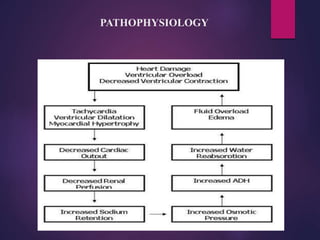
PATHOPHYSIOLOGY
CLINICAL MANIFESTATIONS
 Shortness of breath (dyspnea) when you exert yourself or
when you lie down
 Fatigue and weakness
 Swelling (edema) in your legs, ankles and feet
 Rapid or irregular heartbeat
 Reduced ability to exercise
 Persistent cough or wheezing with white or pink blood-
tinged phlegm
 Increased need to urinate at night
 Swelling of your abdomen (ascites)
 Sudden weight gain from fluid retention
 Lack of appetite and nausea
 Difficulty concentrating or decreased alertness
 Sudden, severe shortness of breath and coughing up pink,
foamy mucus
 Chest pain if your heart failure is caused by a heart attack.
DIAGNOSTIC EVALUATION
 History collection
 Physical Examination
 Blood tests- Like LFT, KFT & TSH
 A blood test to check for a chemical called N-terminal pro-B-type natriuretic peptide
(NT-proBNP) may help in diagnosing heart failure
 Chest X-ray- heart may appear enlarged and fluid buildup may be visible in your
lungs.
 Electrocardiogram (ECG)
 Echocardiogram
 Stress test- Stress tests measure how heart and blood vessels respond to
exertion.
 Cardiac computerized tomography (CT) scan or magnetic resonance
imaging (MRI).-
 Coronary angiogram
 Myocardial biopsy
MANAGEMENT
Medical management
Pharmacological Management
 Angiotensin-converting enzyme (ACE) inhibitors-
enalapril (Vasotec), lisinopril (Zestril) and captopril
(Capoten).
 Angiotensin II receptor blockers. losartan (Cozaar) and
valsartan (Diovan)
 Beta blockers.-carvedilol , metoprolol (Lopressor) and
bisoprolol
 Diuretics- furosemide (Lasix)
 Aldosterone antagonists- spironolactone (Aldactone)
 Inotropes- improve heart pumping function and maintain
blood pressure.
 Digoxin (Lanoxin).
Non- Pharmacological Management
 Maintain input & output of the patient
 Propped up position of the patients
 Oxygen support should be provided to the patient.
Surgical Management
 Coronary bypass surgery
 Heart valve repair or replacement.
 Implantable cardioverter-defibrillators
 Cardiac resynchronization therapy (CRT), or
biventricular pacing
 Ventricular assist devices (vads)
 Heart transplant
NURSING MANAGEMENT
 Decreased cardiac output related to changes in myocardial
contractility
 Ineffective breathing pattern related to insufficient supply of
oxygenated blood.
 Excess fluid volume related to decreased
glomerular filtration rate (GFR).
 Activity intolerance related to decrease CO.
 Anxiety related to breathlessness from inadequate oxygenation.
 Powerlessness related to chronic illness and hospitalizations.
 Ineffective therapeutic regimen management related to lack of
knowledge.
(DETAIL EXPLANATION OF NURSING MANAGEMENT)
COMPLICATIONS
 Kidney damage or failure.
 Heart valve problems.
 Heart rhythm problems.
 Liver damage.
HEALTH EDUCATION
 Smoking Cessation
 Discuss weight monitoring.
 Check legs, ankles and feet for swelling daily.
 Eat a healthy diet.
 Restrict salt in your diet & limit water
 Maintain a healthy weight.
 Limit fats and cholesterol.
 Limit alcohol and fluids.
 Active lifestyle
 Reduce stress & get proper sleep .
RELATED RESEARCH
 Sullivan MJ et. Al. (2009) Conducted a study on Support, Education, and Research in
Chronic Heart Failure Study (SEARCH): a mindfulness-based psychoeducational
intervention improves depression and clinical symptoms in patients with chronic heart
failure. A prospective cohort study of 208 adults with left ventricular ejection fraction < or
=40% and CHF was geographically assigned to treatment or control groups with follow-up
at 3, 6, and 12 months. Treatment groups met weekly for 8 consecutive weeks for training
in mindfulness meditation, coping skills, and support group discussion. Subjects had a
mean age of 61 years, left ventricular ejection fraction 26%, and median New York Heart
Association class II. The majority were treated with angiotensin-converting enzyme
inhibitors (80%) and beta-blockers (86%). There were no treatment effects on
death/rehospitalization at 1 year. An 8-week mindfulness-based psychoeducational
intervention reduced anxiety and depression; this effect was attenuated at 1 year.
Importantly, the intervention led to significantly better symptoms of CHF at 12 months
compared to control subjects. Our results suggest that interventions of this type might have
a role in optimal therapy for CHF.
PRESENTER’S VIEW
 Heart failure requires to pay close attention to
change in symptoms. Reducing chances of
hospital visits by understanding symptoms and
knowing when they signal trouble.
THANKYOU

Congestive heart failure

  • 1.
    SUBJECT- MEDICAL SURGICALNURSING TOPIC- CONGESTIVE HEART FAILURE -MR. MIGRON RUBIN
  • 2.
    INTRODUCTION  Heart failure(HF) is a common cardiovascular condition with increasing incidence and prevalence.  Unlike western countries where heart failure is predominantly a disease of elderly, in India it affects younger age group.
  • 3.
    KEY WORDS 1. HeartFailure-It refers to a condition when heart fails to pump blood through out the body. 2. Hemochromatosis- It refers to buildup of iron. 3. Amyloidosis - It refers to buildup of protein.
  • 4.
    DEFINITION  Heart failureis a chronic condition in which the heart cannot pump enough blood and oxygen to support other organs in your body. ( CDC- Centre of disease control & prevention)  Congestive heart failure (CHF) is a chronic progressive condition that affects the pumping power of heart muscles. While often referred to simply as “heart failure,”
  • 5.
    TYPES OF HEARTFAILURE  Left-sided heart failure -Fluid may back up in your lungs, causing shortness of breath.  Right-sided heart failure- Fluid may back up into your abdomen, legs and feet, causing swelling.  Systolic heart failure- The left ventricle can't contract vigorously, indicating a pumping problem.  Diastolic heart failure- The left ventricle can't relax or fill fully, indicating a filling problem. (also called heart failure with preserved ejection fraction)
  • 6.
  • 7.
    CAUSES  Coronary arterydisease and heart attack  High blood pressure (hypertension).  Faulty heart valves.  Damage to the heart muscle (cardiomyopathy).  Myocarditis.  Heart defects you're born with (congenital heart defects).  Abnormal heart rhythms (heart arrhythmias).  Other diseases- Chronic diseases such as diabetes, HIV, hyperthyroidism, hypothyroidism, or a buildup of iron (hemochromatosis) or protein (amyloidosis)
  • 8.
  • 9.
    CLINICAL MANIFESTATIONS  Shortnessof breath (dyspnea) when you exert yourself or when you lie down  Fatigue and weakness  Swelling (edema) in your legs, ankles and feet  Rapid or irregular heartbeat  Reduced ability to exercise  Persistent cough or wheezing with white or pink blood- tinged phlegm  Increased need to urinate at night
  • 10.
     Swelling ofyour abdomen (ascites)  Sudden weight gain from fluid retention  Lack of appetite and nausea  Difficulty concentrating or decreased alertness  Sudden, severe shortness of breath and coughing up pink, foamy mucus  Chest pain if your heart failure is caused by a heart attack.
  • 11.
    DIAGNOSTIC EVALUATION  Historycollection  Physical Examination  Blood tests- Like LFT, KFT & TSH  A blood test to check for a chemical called N-terminal pro-B-type natriuretic peptide (NT-proBNP) may help in diagnosing heart failure  Chest X-ray- heart may appear enlarged and fluid buildup may be visible in your lungs.  Electrocardiogram (ECG)
  • 12.
     Echocardiogram  Stresstest- Stress tests measure how heart and blood vessels respond to exertion.  Cardiac computerized tomography (CT) scan or magnetic resonance imaging (MRI).-  Coronary angiogram  Myocardial biopsy
  • 13.
    MANAGEMENT Medical management Pharmacological Management Angiotensin-converting enzyme (ACE) inhibitors- enalapril (Vasotec), lisinopril (Zestril) and captopril (Capoten).  Angiotensin II receptor blockers. losartan (Cozaar) and valsartan (Diovan)  Beta blockers.-carvedilol , metoprolol (Lopressor) and bisoprolol  Diuretics- furosemide (Lasix)  Aldosterone antagonists- spironolactone (Aldactone)
  • 14.
     Inotropes- improveheart pumping function and maintain blood pressure.  Digoxin (Lanoxin). Non- Pharmacological Management  Maintain input & output of the patient  Propped up position of the patients  Oxygen support should be provided to the patient.
  • 15.
    Surgical Management  Coronarybypass surgery  Heart valve repair or replacement.  Implantable cardioverter-defibrillators  Cardiac resynchronization therapy (CRT), or biventricular pacing  Ventricular assist devices (vads)  Heart transplant
  • 16.
    NURSING MANAGEMENT  Decreasedcardiac output related to changes in myocardial contractility  Ineffective breathing pattern related to insufficient supply of oxygenated blood.  Excess fluid volume related to decreased glomerular filtration rate (GFR).  Activity intolerance related to decrease CO.  Anxiety related to breathlessness from inadequate oxygenation.  Powerlessness related to chronic illness and hospitalizations.  Ineffective therapeutic regimen management related to lack of knowledge. (DETAIL EXPLANATION OF NURSING MANAGEMENT)
  • 17.
    COMPLICATIONS  Kidney damageor failure.  Heart valve problems.  Heart rhythm problems.  Liver damage.
  • 18.
    HEALTH EDUCATION  SmokingCessation  Discuss weight monitoring.  Check legs, ankles and feet for swelling daily.  Eat a healthy diet.  Restrict salt in your diet & limit water  Maintain a healthy weight.  Limit fats and cholesterol.  Limit alcohol and fluids.  Active lifestyle  Reduce stress & get proper sleep .
  • 19.
    RELATED RESEARCH  SullivanMJ et. Al. (2009) Conducted a study on Support, Education, and Research in Chronic Heart Failure Study (SEARCH): a mindfulness-based psychoeducational intervention improves depression and clinical symptoms in patients with chronic heart failure. A prospective cohort study of 208 adults with left ventricular ejection fraction < or =40% and CHF was geographically assigned to treatment or control groups with follow-up at 3, 6, and 12 months. Treatment groups met weekly for 8 consecutive weeks for training in mindfulness meditation, coping skills, and support group discussion. Subjects had a mean age of 61 years, left ventricular ejection fraction 26%, and median New York Heart Association class II. The majority were treated with angiotensin-converting enzyme inhibitors (80%) and beta-blockers (86%). There were no treatment effects on death/rehospitalization at 1 year. An 8-week mindfulness-based psychoeducational intervention reduced anxiety and depression; this effect was attenuated at 1 year. Importantly, the intervention led to significantly better symptoms of CHF at 12 months compared to control subjects. Our results suggest that interventions of this type might have a role in optimal therapy for CHF.
  • 20.
    PRESENTER’S VIEW  Heartfailure requires to pay close attention to change in symptoms. Reducing chances of hospital visits by understanding symptoms and knowing when they signal trouble.
  • 21.