Dr. Amna Akram
CMH, Multan
DEFINITION
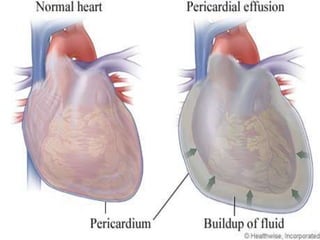
 Presence of an abnormal amount of fluid
and/or an abnormal character to fluid in the
pericardial space.
 The pericardial space normally contains 15-
50 mL of fluid
 Cardiac temponade is acute heart failure
due to compression of heart by a large or
rapidly developing effusion.
PATHOPHYSIOLOGY
Clinical manifestations are highly
dependent on the rate of accumulation
of fluid in the pericardial sac.
Pericardial effusion increased
pericardial pressure overcomes
ventricular filling pressure decreased
stroke volume reduced COP
ETIOLOGY
 Pericarditis (infectious and idiopathic)
 Neoplastic (Lung CA-37%, Breast CA-22%,
Leukemia/lymphoma-17%)
 Uremia
 Hypothyroidism
 Connective Tissue Diseases
 Post operative
 Others
 Myxedema
 Severe pulmonary Hypertension
 Trauma
 Autoimmune (SLE, RA, Sarcoidosis, Ankylosing spondylitis)
 Drugs (procainamide, Hydralazine, Isoniazid, Minoxidil,
Phenytoin, methylsergide, Anticoagulants)
CLINICAL PRESENTATION
 Chest pain – relieved by sitting up and
leaning forward, aggravated by lying supine
 Light-headedness, syncope
 Palpitations
 Cough, dyspnea, hoarseness
 Anxiety and confusion
 hiccoughs
Physical Examination
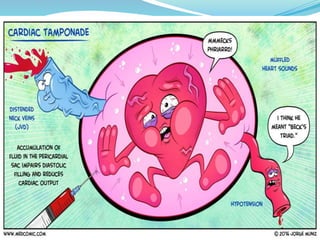
 Beck triad –3 Ds
- Decreased pulse pressure
(hypotension)
- Decreased/Muffled heart sounds
-Distended neck veins (Raised JVP)
 Pulsus paradoxus
 Pericardial friction rub
 Tachycardia, Tachypnea
 Weakened peripheral pulses, cyanosis and edema
 Ewart Sign- dullness to percussion beneath the
angle of left scapula from compression of left lung
by pericardial effusion
INVESTIGATIONS
 Baseline–CBC, Electrolytes, cardiac enzymes,
ESR, CRP
 Pericardiocentesis (diagnostic and therapeutic)
 Pericardial fluid Analysis (R/E, C/S, Adenosine
deaminase and Carcinoembryonic Antigen)
 Thyroid profile
 Rheumatoid Factor, Immunoglobulin
complexes, Antinuclear Ab test
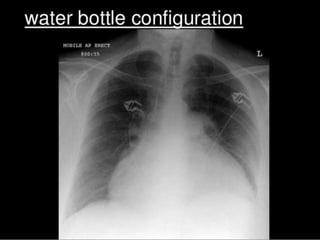
 Chest Radiography – enlarged cardiac silhouette
(water bottle heart) and pericardial fat stripe
 CT scan and MRI
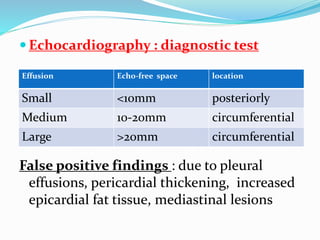
 Echocardiography : diagnostic test
False positive findings : due to pleural
effusions, pericardial thickening, increased
epicardial fat tissue, mediastinal lesions
Effusion Echo-free space location
Small <10mm posteriorly
Medium 10-20mm circumferential
Large >20mm circumferential
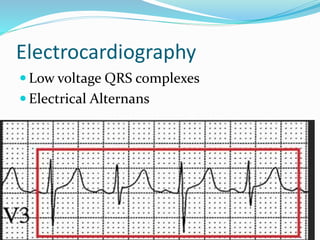
Electrocardiography
 Low voltage QRS complexes
 Electrical Alternans
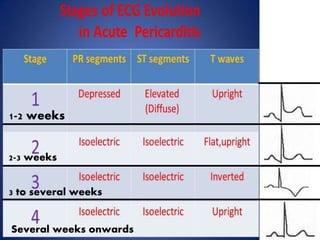
1-2 weeks
2-3 weeks
3 to several weeks
Several weeks onwards
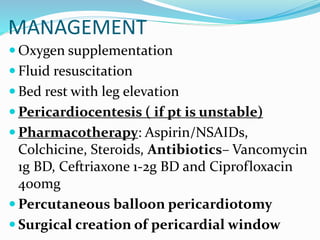
MANAGEMENT
 Oxygen supplementation
 Fluid resuscitation
 Bed rest with leg elevation
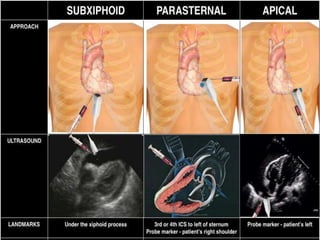
 Pericardiocentesis ( if pt is unstable)
 Pharmacotherapy: Aspirin/NSAIDs,
Colchicine, Steroids, Antibiotics– Vancomycin
1g BD, Ceftriaxone 1-2g BD and Ciprofloxacin
400mg
 Percutaneous balloon pericardiotomy
 Surgical creation of pericardial window
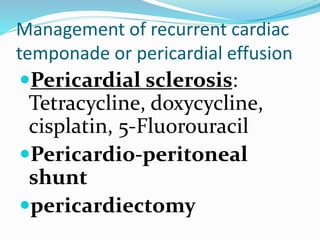
Management of recurrent cardiac
temponade or pericardial effusion
Pericardial sclerosis:
Tetracycline, doxycycline,
cisplatin, 5-Fluorouracil
Pericardio-peritoneal
shunt
pericardiectomy
Pericardial effusion

Pericardial effusion

  • 1.
  • 2.
    DEFINITION  Presence ofan abnormal amount of fluid and/or an abnormal character to fluid in the pericardial space.  The pericardial space normally contains 15- 50 mL of fluid  Cardiac temponade is acute heart failure due to compression of heart by a large or rapidly developing effusion.
  • 4.
    PATHOPHYSIOLOGY Clinical manifestations arehighly dependent on the rate of accumulation of fluid in the pericardial sac. Pericardial effusion increased pericardial pressure overcomes ventricular filling pressure decreased stroke volume reduced COP
  • 5.
    ETIOLOGY  Pericarditis (infectiousand idiopathic)  Neoplastic (Lung CA-37%, Breast CA-22%, Leukemia/lymphoma-17%)  Uremia  Hypothyroidism  Connective Tissue Diseases  Post operative  Others  Myxedema  Severe pulmonary Hypertension  Trauma  Autoimmune (SLE, RA, Sarcoidosis, Ankylosing spondylitis)  Drugs (procainamide, Hydralazine, Isoniazid, Minoxidil, Phenytoin, methylsergide, Anticoagulants)
  • 6.
    CLINICAL PRESENTATION  Chestpain – relieved by sitting up and leaning forward, aggravated by lying supine  Light-headedness, syncope  Palpitations  Cough, dyspnea, hoarseness  Anxiety and confusion  hiccoughs
  • 7.
    Physical Examination  Becktriad –3 Ds - Decreased pulse pressure (hypotension) - Decreased/Muffled heart sounds -Distended neck veins (Raised JVP)  Pulsus paradoxus  Pericardial friction rub  Tachycardia, Tachypnea  Weakened peripheral pulses, cyanosis and edema  Ewart Sign- dullness to percussion beneath the angle of left scapula from compression of left lung by pericardial effusion
  • 9.
    INVESTIGATIONS  Baseline–CBC, Electrolytes,cardiac enzymes, ESR, CRP  Pericardiocentesis (diagnostic and therapeutic)  Pericardial fluid Analysis (R/E, C/S, Adenosine deaminase and Carcinoembryonic Antigen)  Thyroid profile  Rheumatoid Factor, Immunoglobulin complexes, Antinuclear Ab test  Chest Radiography – enlarged cardiac silhouette (water bottle heart) and pericardial fat stripe  CT scan and MRI
  • 11.
     Echocardiography :diagnostic test False positive findings : due to pleural effusions, pericardial thickening, increased epicardial fat tissue, mediastinal lesions Effusion Echo-free space location Small <10mm posteriorly Medium 10-20mm circumferential Large >20mm circumferential
  • 12.
    Electrocardiography  Low voltageQRS complexes  Electrical Alternans
  • 13.
    1-2 weeks 2-3 weeks 3to several weeks Several weeks onwards
  • 14.
    MANAGEMENT  Oxygen supplementation Fluid resuscitation  Bed rest with leg elevation  Pericardiocentesis ( if pt is unstable)  Pharmacotherapy: Aspirin/NSAIDs, Colchicine, Steroids, Antibiotics– Vancomycin 1g BD, Ceftriaxone 1-2g BD and Ciprofloxacin 400mg  Percutaneous balloon pericardiotomy  Surgical creation of pericardial window
  • 16.
    Management of recurrentcardiac temponade or pericardial effusion Pericardial sclerosis: Tetracycline, doxycycline, cisplatin, 5-Fluorouracil Pericardio-peritoneal shunt pericardiectomy