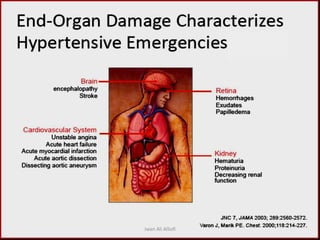
HYPERTENSIVE
CRISIS
JWAN ALI AHMED ALSOFI
Outline of this lecture:
 What is Heart Hypertensive Crisis?
 Epidemiology.
 Classification of Hypertensive Crisis.
 Causes of Hypertensive Crisis
 Clinical presentation of Hypertensive
Crisis
 Managment of Hypertensive Crisis
Jwan Ali AlSofi
What is Hypertensive Crisis?
•The term hypertensive crisis is defined as a
severe elevation in blood pressure (BP),
generally considered to be a diastolic
blood pressure greater than 120 mm Hg
Jwan Ali AlSofi
What is Hypertensive Crisis?
•This disorder can be further classified as
hypertensive urgency or hypertensive
emergency when there is evidence of
acutely progressive end-organ damage.
•If these disorders are not treated promptly,
a high rate of morbidity and mortality will
occur the 5-year mortality for patients with
a history of hypertensive crisis is 26%
Jwan Ali AlSofi
Epidemiology
• Approximately 1% of hypertensive pts. may develop
hypertensive crises during their lifetime.
• Annual incidence of hypertensive emergencies being
1-2 cases/1,00,000 pts.
• Higher rates have been reported in African Americans, low
socioeconomic people, in developing countries.
• Incidence in men 2 times higher than in women
Epidemiology
Jwan Ali AlSofi
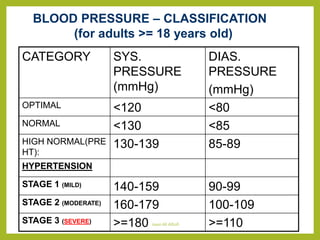
BLOOD PRESSURE – CLASSIFICATION
(for adults >= 18 years old)
DIAS.
PRESSURE
(mmHg)
SYS.
PRESSURE
(mmHg)
CATEGORY
<80
<120
OPTIMAL
<85
<130
NORMAL
85-89
130-139
HIGH NORMAL(PRE
HT):
HYPERTENSION
90-99
140-159
STAGE 1 (MILD)
100-109
160-179
STAGE 2 (MODERATE)
>=110
>=180
STAGE 3 (SEVERE) Jwan Ali AlSofi
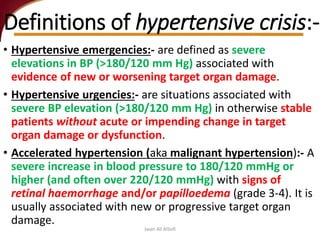
Definitions of hypertensive crisis:-
• Hypertensive emergencies:- are defined as severe
elevations in BP (>180/120 mm Hg) associated with
evidence of new or worsening target organ damage.
• Hypertensive urgencies:- are situations associated with
severe BP elevation (>180/120 mm Hg) in otherwise stable
patients without acute or impending change in target
organ damage or dysfunction.
• Accelerated hypertension (aka malignant hypertension):- A
severe increase in blood pressure to 180/120 mmHg or
higher (and often over 220/120 mmHg) with signs of
retinal haemorrhage and/or papilloedema (grade 3-4). It is
usually associated with new or progressive target organ
damage.
Jwan Ali AlSofi
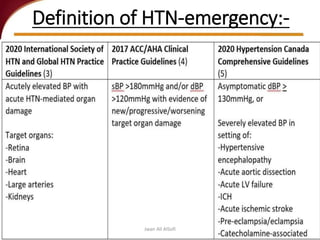
Definition of HTN-emergency:-
Jwan Ali AlSofi
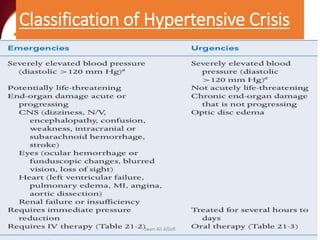
Classification of Hypertensive Crisis
Jwan Ali AlSofi
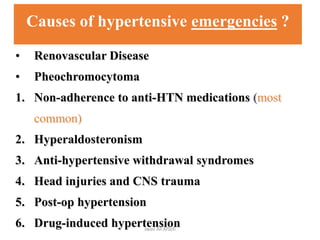
• Renovascular Disease
• Pheochromocytoma
1. Non-adherence to anti-HTN medications (most
common)
2. Hyperaldosteronism
3. Anti-hypertensive withdrawal syndromes
4. Head injuries and CNS trauma
5. Post-op hypertension
6. Drug-induced hypertension
Causes of hypertensive emergencies ?
Jwan Ali AlSofi
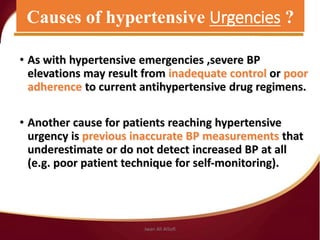
• As with hypertensive emergencies ,severe BP
elevations may result from inadequate control or poor
adherence to current antihypertensive drug regimens.
• Another cause for patients reaching hypertensive
urgency is previous inaccurate BP measurements that
underestimate or do not detect increased BP at all
(e.g. poor patient technique for self‐monitoring).
Causes of hypertensive Urgencies ?
Jwan Ali AlSofi
Causes Hypertensive Urgencies
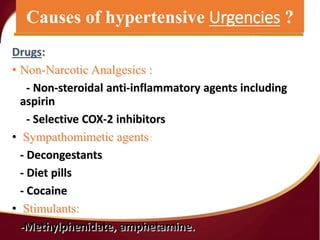
Drugs:
• Non-Narcotic Analgesics :
- Non-steroidal anti-inflammatory agents including
aspirin
- Selective COX-2 inhibitors
• Sympathomimetic agents:
- Decongestants
- Diet pills
- Cocaine
• Stimulants:
-Methylphenidate, amphetamine.
Causes of hypertensive Urgencies ?
Jwan Ali AlSofi
Causes Hypertensive Urgencies
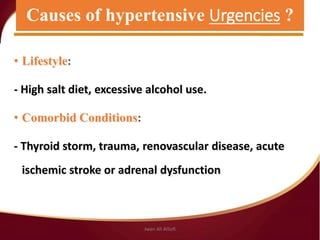
• Lifestyle:
- High salt diet, excessive alcohol use.
• Comorbid Conditions:
- Thyroid storm, trauma, renovascular disease, acute
ischemic stroke or adrenal dysfunction
Causes of hypertensive Urgencies ?
Jwan Ali AlSofi
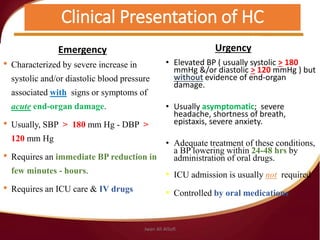
Clinical Presentation of HC
Emergency
• Characterized by severe increase in
systolic and/or diastolic blood pressure
associated with signs or symptoms of
acute end-organ damage.
• Usually, SBP > 180 mm Hg - DBP >
120 mm Hg
• Requires an immediate BP reduction in
few minutes - hours.
• Requires an ICU care & IV drugs
Urgency
• Elevated BP ( usually systolic > 180
mmHg &/or diastolic > 120 mmHg ) but
without evidence of end-organ
damage.
• Usually asymptomatic; severe
headache, shortness of breath,
epistaxis, severe anxiety.
• Adequate treatment of these conditions,
a BP lowering within 24-48 hrs by
administration of oral drugs.
• ICU admission is usually not required
• Controlled by oral medications.
Jwan Ali AlSofi
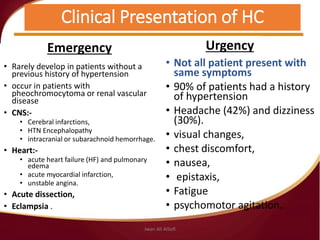
Clinical Presentation of HC
Emergency
• Rarely develop in patients without a
previous history of hypertension
• occur in patients with
pheochromocytoma or renal vascular
disease
• CNS:-
• Cerebral infarctions,
• HTN Encephalopathy
• intracranial or subarachnoid hemorrhage.
• Heart:-
• acute heart failure (HF) and pulmonary
edema
• acute myocardial infarction,
• unstable angina.
• Acute dissection,
• Eclampsia .
Urgency
• Not all patient present with
same symptoms
• 90% of patients had a history
of hypertension
• Headache (42%) and dizziness
(30%).
• visual changes,
• chest discomfort,
• nausea,
• epistaxis,
• Fatigue
• psychomotor agitation.
Jwan Ali AlSofi
ACUTE PROGRESSIVE
END-ORGAN DAMAGE
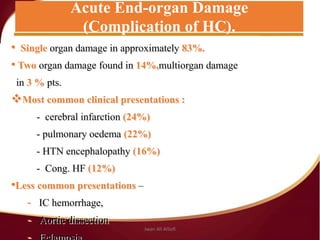
• Single organ damage in approximately 83%.
• Two organ damage found in 14%,multiorgan damage
in 3 % pts.
Most common clinical presentations :
- cerebral infarction (24%)
- pulmonary oedema (22%)
- HTN encephalopathy (16%)
- Cong. HF (12%)
•Less common presentations –
- IC hemorrhage,
- Aortic dissection
Acute End-organ Damage
(Complication of HC).
Jwan Ali AlSofi
Jwan Ali AlSofi
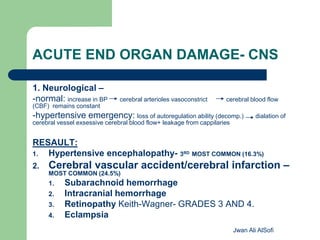
ACUTE END ORGAN DAMAGE- CNS
1. Neurological –
-normal: increase in BP cerebral arterioles vasoconstrict cerebral blood flow
(CBF) remains constant
-hypertensive emergency: loss of autoregulation ability (decomp.) dialation of
cerebral vessel exsessive cerebral blood flow+ leakage from cappilaries
RESAULT:
1. Hypertensive encephalopathy- 3RD MOST COMMON (16.3%)
2. Cerebral vascular accident/cerebral infarction –
MOST COMMON (24.5%)
1. Subarachnoid hemorrhage
2. Intracranial hemorrhage
3. Retinopathy Keith-Wagner- GRADES 3 AND 4.
4. Eclampsia
Jwan Ali AlSofi
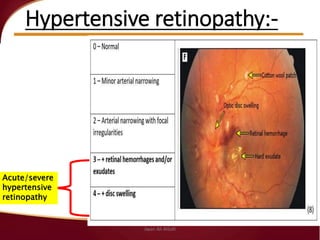
Hypertensive retinopathy:-
Acute/severe
hypertensive
retinopathy
Jwan Ali AlSofi
HYPERTENSION CRISIS- RETINA
Retinal hemmorhages (grade 3)-
ACCELERATED HT
Pappiledema (grade 4)-
MALIGNANT HT
Jwan Ali AlSofi
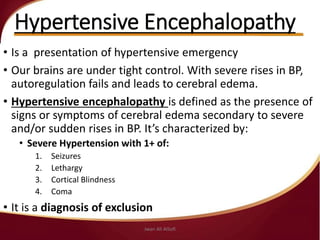
Hypertensive Encephalopathy
• Is a presentation of hypertensive emergency
• Our brains are under tight control. With severe rises in BP,
autoregulation fails and leads to cerebral edema.
• Hypertensive encephalopathy is defined as the presence of
signs or symptoms of cerebral edema secondary to severe
and/or sudden rises in BP. It’s characterized by:
• Severe Hypertension with 1+ of:
1. Seizures
2. Lethargy
3. Cortical Blindness
4. Coma
• It is a diagnosis of exclusion
Jwan Ali AlSofi
Of note, there is little evidence to
suggest that headache alone is a sign
of a hypertensive emergency, however,
in combination with visual changes,
lethargy, seizures or altered mental
status it may be an indication of
hypertensive encephalopathy.
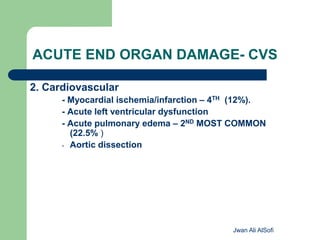
ACUTE END ORGAN DAMAGE- CVS
2. Cardiovascular
- Myocardial ischemia/infarction – 4TH (12%).
- Acute left ventricular dysfunction
- Acute pulmonary edema – 2ND MOST COMMON
(22.5% )
- Aortic dissection
Jwan Ali AlSofi
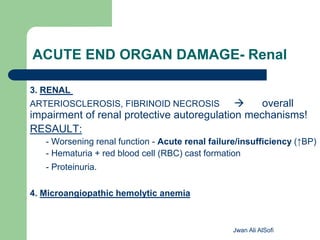
ACUTE END ORGAN DAMAGE- Renal
3. RENAL
ARTERIOSCLEROSIS, FIBRINOID NECROSIS  overall
impairment of renal protective autoregulation mechanisms!
RESAULT:
- Worsening renal function - Acute renal failure/insufficiency (↑BP)
- Hematuria + red blood cell (RBC) cast formation
- Proteinuria.
4. Microangiopathic hemolytic anemia
Jwan Ali AlSofi
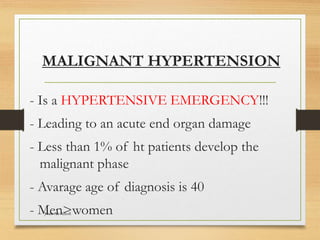
MALIGNANT HYPERTENSION
- Is a HYPERTENSIVE EMERGENCY!!!
- Leading to an acute end organ damage
- Less than 1% of ht patients develop the
malignant phase
- Avarage age of diagnosis is 40
- Men>women
Jwan Ali AlSofi
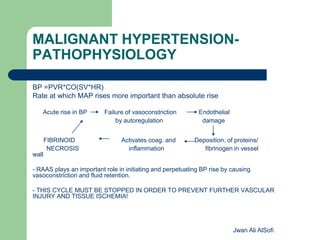
MALIGNANT HYPERTENSION-
PATHOPHYSIOLOGY
BP =PVR*CO(SV*HR)
Rate at which MAP rises more important than absolute rise
Acute rise in BP Failure of vasoconstriction Endothelial
by autoregulation damage
FIBRINOID Activates coag. and Deposition. of proteins/
NECROSIS inflammation fibrinogen in vessel
wall
- RAAS plays an important role in initiating and perpetuating BP rise by causing
vasoconstriction and fluid retention.
- THIS CYCLE MUST BE STOPPED IN ORDER TO PREVENT FURTHER VASCULAR
INJURY AND TISSUE ISCHEMIA!
Jwan Ali AlSofi
MANAGEMENT OF HC
Jwan Ali AlSofi
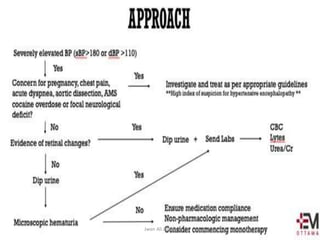
• The treatment of hypertensive crises must balance
preventing further end-organ damage while
maintaining tissue perfusion.
• The initial goal for blood pressure reduction is not to
obtain a normal blood pressure.
• Rapid and aggressive reductions in blood pressure can
actually induce cerebral, myocardial, or renal
ischemia or infarction if the blood pressure falls below
the range at which tissue perfusion can be maintained
by autoregulation.
MANAGEMENT
History Examination Assessment Treatment
Jwan Ali AlSofi
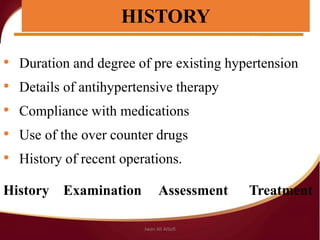
• Duration and degree of pre existing hypertension
• Details of antihypertensive therapy
• Compliance with medications
• Use of the over counter drugs
• History of recent operations.
History Examination Assessment Treatment
HISTORY
Jwan Ali AlSofi
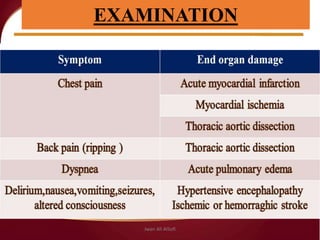
EXAMINATION
Jwan Ali AlSofi
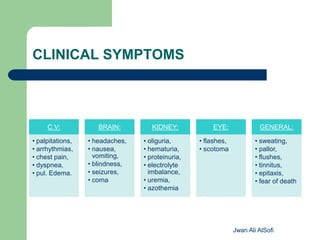
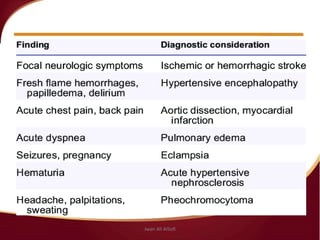
CLINICAL SYMPTOMS
C.V:
• palpitations,
• arrhythmias,
• chest pain,
• dyspnea,
• pul. Edema.
BRAIN:
• headaches,
• nausea,
vomiting,
• blindness,
• seizures,
• coma
KIDNEY:
• oliguria,
• hematuria,
• proteinuria,
• electrolyte
imbalance,
• uremia,
• azothemia
EYE:
• flashes,
• scotoma
GENERAL:
• sweating,
• pallor,
• flushes,
• tinnitus,
• epitaxis,
• fear of death
Jwan Ali AlSofi
Jwan Ali AlSofi
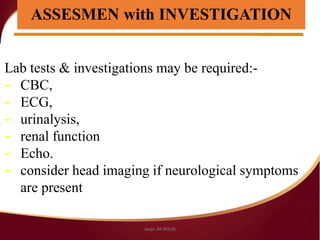
Lab tests & investigations may be required:-
- CBC,
- ECG,
- urinalysis,
- renal function
- Echo.
- consider head imaging if neurological symptoms
are present
ASSESMEN with INVESTIGATION
Jwan Ali AlSofi
Jwan Ali AlSofi
Jwan Ali AlSofi
Clinical Presentation of HC
Emergency
• rarely develop in patients
without a previous history of
hypertension
• occur in patients with
pheochromocytoma or renal
vascular disease
• Cerebral infarctions,
encephalopathy and
intracranial or subarachnoid
hemorrhage.
• acute heart failure (HF) and
pulmonary edema and acute
myocardial infarction, unstable
angina. Acute dissection,
eclampsia.
Urgency
• headache (42%) and
dizziness (30%). Other
symptoms include visual
changes, chest discomfort,
nausea, epistaxis, fatigue,
and psychomotor agitation.
• Not all patient present with
same symptoms
• 90% of patients had a
history of hypertension
Jwan Ali AlSofi
TREATMENT OF HYPERTENSIVE
EMERGENCY
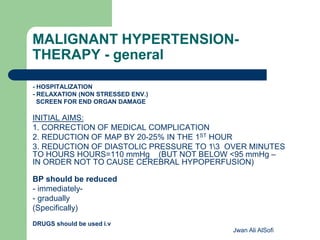
MALIGNANT HYPERTENSION-
THERAPY - general
- HOSPITALIZATION
- RELAXATION (NON STRESSED ENV.)
SCREEN FOR END ORGAN DAMAGE
INITIAL AIMS:
1. CORRECTION OF MEDICAL COMPLICATION
2. REDUCTION OF MAP BY 20-25% IN THE 1ST HOUR
3. REDUCTION OF DIASTOLIC PRESSURE TO 13 OVER MINUTES
TO HOURS HOURS=110 mmHg (BUT NOT BELOW <95 mmHg –
IN ORDER NOT TO CAUSE CEREBRAL HYPOPERFUSION)
BP should be reduced
- immediately-
- gradually
(Specifically)
DRUGS should be used i.v
Jwan Ali AlSofi
Jwan Ali AlSofi
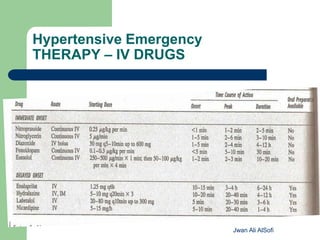
Hypertensive Emergency
THERAPY – IV DRUGS
Jwan Ali AlSofi
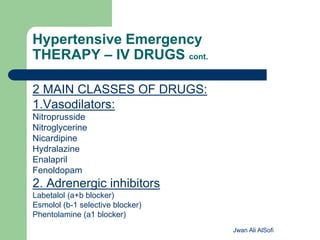
Hypertensive Emergency
THERAPY – IV DRUGS cont.
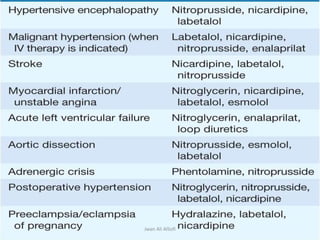
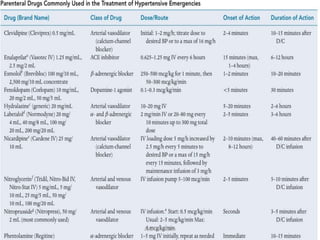
2 MAIN CLASSES OF DRUGS:
1.Vasodilators:
Nitroprusside
Nitroglycerine
Nicardipine
Hydralazine
Enalapril
Fenoldopam
2. Adrenergic inhibitors
Labetalol (a+b blocker)
Esmolol (b-1 selective blocker)
Phentolamine (a1 blocker)
Jwan Ali AlSofi
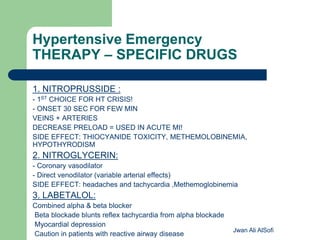
Hypertensive Emergency
THERAPY – SPECIFIC DRUGS
1. NITROPRUSSIDE :
- 1ST CHOICE FOR HT CRISIS!
- ONSET 30 SEC FOR FEW MIN
VEINS + ARTERIES
DECREASE PRELOAD = USED IN ACUTE MI!
SIDE EFFECT: THIOCYANIDE TOXICITY, METHEMOLOBINEMIA,
HYPOTHYRODISM
2. NITROGLYCERIN:
- Coronary vasodilator
- Direct venodilator (variable arterial effects)
SIDE EFFECT: headaches and tachycardia ,Methemoglobinemia
3. LABETALOL:
Combined alpha & beta blocker
Beta blockade blunts reflex tachycardia from alpha blockade
Myocardial depression
Caution in patients with reactive airway disease
Jwan Ali AlSofi
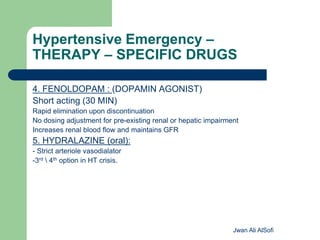
Hypertensive Emergency –
THERAPY – SPECIFIC DRUGS
4. FENOLDOPAM : (DOPAMIN AGONIST)
Short acting (30 MIN)
Rapid elimination upon discontinuation
No dosing adjustment for pre-existing renal or hepatic impairment
Increases renal blood flow and maintains GFR
5. HYDRALAZINE (oral):
- Strict arteriole vasodialator
-3rd  4th option in HT crisis.
Jwan Ali AlSofi
Hypertensive Emergency THERAPY:
SPECIFIC RECOMMENDATION FOR DIFFERENT
CLINICAL FORMS (exmamples)
1. Hypertensive encephalopathy
Preferred medications :
Labetalol
Nicardipine
Esmolol
Medications to avoid :
Nitroprusside (was used in the past- caused ICP )
Hydralazine
Treatment guidelines: Reduce mean arterial pressure (MAP) 25% over 8
hours.
Jwan Ali AlSofi
Hypertensive EmergencyTHERAPY:
SPECIFIC RECOMMENDATION FOR DIFFERENT
CLINICAL FORMS (exmamples)
2. Aortic dissection –
Immediate redn. In BP and mainly shear stress (change in BP with change in time)
is essential to limit the extension of damage as surgery is being considered.
Preferred medications
Labetalol
Nicardipine
Nitroprusside (with beta-blocker)
Esmolol
Morphine sulfate
Medications to avoid
Avoid beta-blockers if there is aortic valvular regurgitation or suspected
cardiac tamponade, HYDRALAZINE (increase shear stress)
Treatment guidelines: Maintain SBP <110 mm Hg, unless signs of end-organ
hypoperfusion are present.
+Narcotic analgesics
TIME TO ACHIEVE: 20 MINUTES!!!!!
Jwan Ali AlSofi
Hypertensive Emergency THERAPY:
SPECIFIC RECOMMENDATION FOR DIFFERENT
CLINICAL FORMS (exmamples)
3. Preeclampsia/eclampsia
Preferred medications
Hydralazine
Labetalol
Nifedipine
Medications to avoid
Nitroprusside
Angiotensin-converting enzyme inhibitors
Esmolol
Treatment guidelines: In women with eclampsia or preeclampsia, SBP should
be <160 mm Hg and DBP <110 mm Hg in the prepartum and intrapartum
periods. If the platelet count is <100,000 cells mm3 BP should be
maintained below 150/100 mm Hg. Patients with eclampsia or
preeclampsia should also be treated with IV magnesium sulfate to
avoid seizures
Jwan Ali AlSofi
Hypertensive Emergency THERAPY:
SPECIFIC RECOMMENDATION FOR DIFFERENT
CLINICAL FORMS (exmamples)
4. CARDIAC CRISIS
L.V FAILURE AND PUL. EDEMA
Preferred medications
Nitroglycerin
Enalaprilat
Nitroprusside
Treatment guidelines: Treatment with vasodilators (in addition to diuretics) for SBP
≥140 mm Hg. IV or sublingual nitroglycerin is the preferred agent
BP CONTROL IS SECONDARY to the primary problem - open the infarct
related artery and treat pain, diurese and oxygenate those in pulmonary
edema
Jwan Ali AlSofi
Hypertensive Emergency THERAPY:
SPECIFIC RECOMMENDATION FOR DIFFERENT
CLINICAL FORMS (exmamples)
4. RENAL INSUFFICENCY:
Goal is to prevent further renal damage by
maintaining adequate blood flow.
Preferred medications:
Nitroprusside
Jwan Ali AlSofi
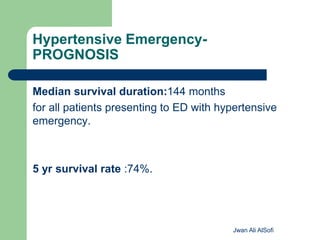
Hypertensive Emergency-
PROGNOSIS
Median survival duration:144 months
for all patients presenting to ED with hypertensive
emergency.
5 yr survival rate :74%.
Jwan Ali AlSofi
Jwan Ali AlSofi
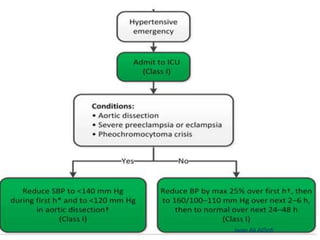
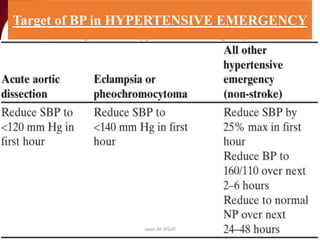
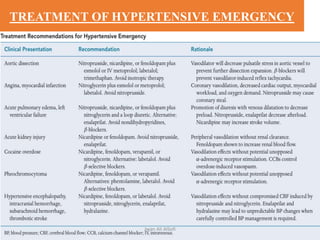
TREATMENT OF HYPERTENSIVE EMERGENCY
GOAL
• reduce MAP by no more than 20-25%, DBP to 100-
110mm Hg within few minutes to 2 hours.
• More aggressive and rapid BP reduction (Acute
Pulmonary edema ,Aortic dissection)
• More slowly for acute cerebrovascular damages with
monitoring of neurological status.
• Constant infusion of intravenous agents required
MANAGEMENT
Jwan Ali AlSofi
Target of BP in HYPERTENSIVE EMERGENCY
Jwan Ali AlSofi
TREATMENT OF HYPERTENSIVE EMERGENCY
GOAL
• reduce MAP by no more than 20-25%, DBP to 100-
110mm Hg within few minutes to 2 hours.
• More aggressive and rapid BP reduction (Acute
Pulmonary edema ,Aortic dissection)
• More slowly for acute cerebrovascular damages with
monitoring of neurological status.
• Constant infusion of intravenous agents required
TREATMENT OF HYPERTENSIVE EMERGENCY
Jwan Ali AlSofi
TREATMENT OF HYPERTENSIVE EMERGENCY
GOAL
• reduce MAP by no more than 20-25%, DBP to 100-
110mm Hg within few minutes to 2 hours.
• More aggressive and rapid BP reduction (Acute
Pulmonary edema ,Aortic dissection)
• More slowly for acute cerebrovascular damages with
monitoring of neurological status.
• Constant infusion of intravenous agents required
TREATMENT OF HYPERTENSIVE EMERGENCY
Jwan Ali AlSofi
Jwan Ali AlSofi
Jwan Ali AlSofi
TREATMENT OF HYPERTENSIVE
URGENCY
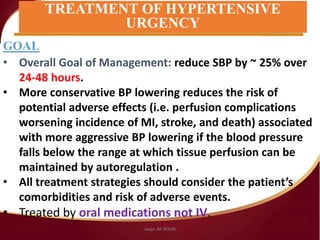
GOAL
• Overall Goal of Management: reduce SBP by ~ 25% over
24‐48 hours.
• More conservative BP lowering reduces the risk of
potential adverse effects (i.e. perfusion complications
worsening incidence of MI, stroke, and death) associated
with more aggressive BP lowering if the blood pressure
falls below the range at which tissue perfusion can be
maintained by autoregulation .
• All treatment strategies should consider the patient’s
comorbidities and risk of adverse events.
• Treated by oral medications not IV.
TREATMENT OF HYPERTENSIVE
URGENCY
Jwan Ali AlSofi
TREATMENT OF HYPERTENSIVE URGENCY
GOAL
• Overall Goal of Management: reduce SBP by ~ 25% over
24‐48 hours.
• More conservative BP lowering reduces the risk of
potential adverse effects (i.e. perfusion complications
worsening incidence of MI, stroke, and death) associated
with more aggressive BP lowering if the blood pressure
falls below the range at which tissue perfusion can be
maintained by autoregulation .
• All treatment strategies should consider the patient’s
comorbidities and risk of adverse events.
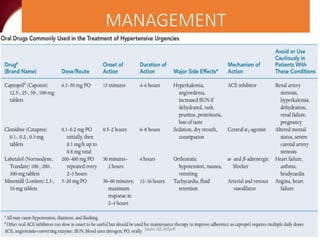
MANAGEMENT
Jwan Ali AlSofi
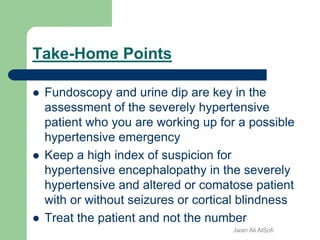
Take-Home Points
 Fundoscopy and urine dip are key in the
assessment of the severely hypertensive
patient who you are working up for a possible
hypertensive emergency
 Keep a high index of suspicion for
hypertensive encephalopathy in the severely
hypertensive and altered or comatose patient
with or without seizures or cortical blindness
 Treat the patient and not the number
Jwan Ali AlSofi
Jwan Ali AlSofi

Hypertensive Crisis.ppt

  • 1.
  • 2.
    Outline of thislecture:  What is Heart Hypertensive Crisis?  Epidemiology.  Classification of Hypertensive Crisis.  Causes of Hypertensive Crisis  Clinical presentation of Hypertensive Crisis  Managment of Hypertensive Crisis Jwan Ali AlSofi
  • 3.
    What is HypertensiveCrisis? •The term hypertensive crisis is defined as a severe elevation in blood pressure (BP), generally considered to be a diastolic blood pressure greater than 120 mm Hg Jwan Ali AlSofi
  • 4.
    What is HypertensiveCrisis? •This disorder can be further classified as hypertensive urgency or hypertensive emergency when there is evidence of acutely progressive end-organ damage. •If these disorders are not treated promptly, a high rate of morbidity and mortality will occur the 5-year mortality for patients with a history of hypertensive crisis is 26% Jwan Ali AlSofi
  • 5.
    Epidemiology • Approximately 1%of hypertensive pts. may develop hypertensive crises during their lifetime. • Annual incidence of hypertensive emergencies being 1-2 cases/1,00,000 pts. • Higher rates have been reported in African Americans, low socioeconomic people, in developing countries. • Incidence in men 2 times higher than in women Epidemiology Jwan Ali AlSofi
  • 6.
    BLOOD PRESSURE –CLASSIFICATION (for adults >= 18 years old) DIAS. PRESSURE (mmHg) SYS. PRESSURE (mmHg) CATEGORY <80 <120 OPTIMAL <85 <130 NORMAL 85-89 130-139 HIGH NORMAL(PRE HT): HYPERTENSION 90-99 140-159 STAGE 1 (MILD) 100-109 160-179 STAGE 2 (MODERATE) >=110 >=180 STAGE 3 (SEVERE) Jwan Ali AlSofi
  • 7.
    Definitions of hypertensivecrisis:- • Hypertensive emergencies:- are defined as severe elevations in BP (>180/120 mm Hg) associated with evidence of new or worsening target organ damage. • Hypertensive urgencies:- are situations associated with severe BP elevation (>180/120 mm Hg) in otherwise stable patients without acute or impending change in target organ damage or dysfunction. • Accelerated hypertension (aka malignant hypertension):- A severe increase in blood pressure to 180/120 mmHg or higher (and often over 220/120 mmHg) with signs of retinal haemorrhage and/or papilloedema (grade 3-4). It is usually associated with new or progressive target organ damage. Jwan Ali AlSofi
  • 8.
  • 9.
    Classification of HypertensiveCrisis Jwan Ali AlSofi
  • 10.
    • Renovascular Disease •Pheochromocytoma 1. Non-adherence to anti-HTN medications (most common) 2. Hyperaldosteronism 3. Anti-hypertensive withdrawal syndromes 4. Head injuries and CNS trauma 5. Post-op hypertension 6. Drug-induced hypertension Causes of hypertensive emergencies ? Jwan Ali AlSofi
  • 11.
    • As withhypertensive emergencies ,severe BP elevations may result from inadequate control or poor adherence to current antihypertensive drug regimens. • Another cause for patients reaching hypertensive urgency is previous inaccurate BP measurements that underestimate or do not detect increased BP at all (e.g. poor patient technique for self‐monitoring). Causes of hypertensive Urgencies ? Jwan Ali AlSofi
  • 12.
    Causes Hypertensive Urgencies Drugs: •Non-Narcotic Analgesics : - Non-steroidal anti-inflammatory agents including aspirin - Selective COX-2 inhibitors • Sympathomimetic agents: - Decongestants - Diet pills - Cocaine • Stimulants: -Methylphenidate, amphetamine. Causes of hypertensive Urgencies ? Jwan Ali AlSofi
  • 13.
    Causes Hypertensive Urgencies •Lifestyle: - High salt diet, excessive alcohol use. • Comorbid Conditions: - Thyroid storm, trauma, renovascular disease, acute ischemic stroke or adrenal dysfunction Causes of hypertensive Urgencies ? Jwan Ali AlSofi
  • 14.
    Clinical Presentation ofHC Emergency • Characterized by severe increase in systolic and/or diastolic blood pressure associated with signs or symptoms of acute end-organ damage. • Usually, SBP > 180 mm Hg - DBP > 120 mm Hg • Requires an immediate BP reduction in few minutes - hours. • Requires an ICU care & IV drugs Urgency • Elevated BP ( usually systolic > 180 mmHg &/or diastolic > 120 mmHg ) but without evidence of end-organ damage. • Usually asymptomatic; severe headache, shortness of breath, epistaxis, severe anxiety. • Adequate treatment of these conditions, a BP lowering within 24-48 hrs by administration of oral drugs. • ICU admission is usually not required • Controlled by oral medications. Jwan Ali AlSofi
  • 15.
    Clinical Presentation ofHC Emergency • Rarely develop in patients without a previous history of hypertension • occur in patients with pheochromocytoma or renal vascular disease • CNS:- • Cerebral infarctions, • HTN Encephalopathy • intracranial or subarachnoid hemorrhage. • Heart:- • acute heart failure (HF) and pulmonary edema • acute myocardial infarction, • unstable angina. • Acute dissection, • Eclampsia . Urgency • Not all patient present with same symptoms • 90% of patients had a history of hypertension • Headache (42%) and dizziness (30%). • visual changes, • chest discomfort, • nausea, • epistaxis, • Fatigue • psychomotor agitation. Jwan Ali AlSofi
  • 16.
  • 17.
    • Single organdamage in approximately 83%. • Two organ damage found in 14%,multiorgan damage in 3 % pts. Most common clinical presentations : - cerebral infarction (24%) - pulmonary oedema (22%) - HTN encephalopathy (16%) - Cong. HF (12%) •Less common presentations – - IC hemorrhage, - Aortic dissection Acute End-organ Damage (Complication of HC). Jwan Ali AlSofi
  • 18.
  • 19.
    ACUTE END ORGANDAMAGE- CNS 1. Neurological – -normal: increase in BP cerebral arterioles vasoconstrict cerebral blood flow (CBF) remains constant -hypertensive emergency: loss of autoregulation ability (decomp.) dialation of cerebral vessel exsessive cerebral blood flow+ leakage from cappilaries RESAULT: 1. Hypertensive encephalopathy- 3RD MOST COMMON (16.3%) 2. Cerebral vascular accident/cerebral infarction – MOST COMMON (24.5%) 1. Subarachnoid hemorrhage 2. Intracranial hemorrhage 3. Retinopathy Keith-Wagner- GRADES 3 AND 4. 4. Eclampsia Jwan Ali AlSofi
  • 20.
  • 21.
    HYPERTENSION CRISIS- RETINA Retinalhemmorhages (grade 3)- ACCELERATED HT Pappiledema (grade 4)- MALIGNANT HT Jwan Ali AlSofi
  • 22.
    Hypertensive Encephalopathy • Isa presentation of hypertensive emergency • Our brains are under tight control. With severe rises in BP, autoregulation fails and leads to cerebral edema. • Hypertensive encephalopathy is defined as the presence of signs or symptoms of cerebral edema secondary to severe and/or sudden rises in BP. It’s characterized by: • Severe Hypertension with 1+ of: 1. Seizures 2. Lethargy 3. Cortical Blindness 4. Coma • It is a diagnosis of exclusion Jwan Ali AlSofi
  • 23.
    Of note, thereis little evidence to suggest that headache alone is a sign of a hypertensive emergency, however, in combination with visual changes, lethargy, seizures or altered mental status it may be an indication of hypertensive encephalopathy.
  • 24.
    ACUTE END ORGANDAMAGE- CVS 2. Cardiovascular - Myocardial ischemia/infarction – 4TH (12%). - Acute left ventricular dysfunction - Acute pulmonary edema – 2ND MOST COMMON (22.5% ) - Aortic dissection Jwan Ali AlSofi
  • 25.
    ACUTE END ORGANDAMAGE- Renal 3. RENAL ARTERIOSCLEROSIS, FIBRINOID NECROSIS  overall impairment of renal protective autoregulation mechanisms! RESAULT: - Worsening renal function - Acute renal failure/insufficiency (↑BP) - Hematuria + red blood cell (RBC) cast formation - Proteinuria. 4. Microangiopathic hemolytic anemia Jwan Ali AlSofi
  • 26.
    MALIGNANT HYPERTENSION - Isa HYPERTENSIVE EMERGENCY!!! - Leading to an acute end organ damage - Less than 1% of ht patients develop the malignant phase - Avarage age of diagnosis is 40 - Men>women Jwan Ali AlSofi
  • 27.
    MALIGNANT HYPERTENSION- PATHOPHYSIOLOGY BP =PVR*CO(SV*HR) Rateat which MAP rises more important than absolute rise Acute rise in BP Failure of vasoconstriction Endothelial by autoregulation damage FIBRINOID Activates coag. and Deposition. of proteins/ NECROSIS inflammation fibrinogen in vessel wall - RAAS plays an important role in initiating and perpetuating BP rise by causing vasoconstriction and fluid retention. - THIS CYCLE MUST BE STOPPED IN ORDER TO PREVENT FURTHER VASCULAR INJURY AND TISSUE ISCHEMIA! Jwan Ali AlSofi
  • 28.
  • 29.
    • The treatmentof hypertensive crises must balance preventing further end-organ damage while maintaining tissue perfusion. • The initial goal for blood pressure reduction is not to obtain a normal blood pressure. • Rapid and aggressive reductions in blood pressure can actually induce cerebral, myocardial, or renal ischemia or infarction if the blood pressure falls below the range at which tissue perfusion can be maintained by autoregulation. MANAGEMENT History Examination Assessment Treatment Jwan Ali AlSofi
  • 30.
    • Duration anddegree of pre existing hypertension • Details of antihypertensive therapy • Compliance with medications • Use of the over counter drugs • History of recent operations. History Examination Assessment Treatment HISTORY Jwan Ali AlSofi
  • 31.
  • 32.
    CLINICAL SYMPTOMS C.V: • palpitations, •arrhythmias, • chest pain, • dyspnea, • pul. Edema. BRAIN: • headaches, • nausea, vomiting, • blindness, • seizures, • coma KIDNEY: • oliguria, • hematuria, • proteinuria, • electrolyte imbalance, • uremia, • azothemia EYE: • flashes, • scotoma GENERAL: • sweating, • pallor, • flushes, • tinnitus, • epitaxis, • fear of death Jwan Ali AlSofi
  • 33.
  • 34.
    Lab tests &investigations may be required:- - CBC, - ECG, - urinalysis, - renal function - Echo. - consider head imaging if neurological symptoms are present ASSESMEN with INVESTIGATION Jwan Ali AlSofi
  • 35.
  • 36.
  • 37.
    Clinical Presentation ofHC Emergency • rarely develop in patients without a previous history of hypertension • occur in patients with pheochromocytoma or renal vascular disease • Cerebral infarctions, encephalopathy and intracranial or subarachnoid hemorrhage. • acute heart failure (HF) and pulmonary edema and acute myocardial infarction, unstable angina. Acute dissection, eclampsia. Urgency • headache (42%) and dizziness (30%). Other symptoms include visual changes, chest discomfort, nausea, epistaxis, fatigue, and psychomotor agitation. • Not all patient present with same symptoms • 90% of patients had a history of hypertension Jwan Ali AlSofi
  • 38.
  • 39.
    MALIGNANT HYPERTENSION- THERAPY -general - HOSPITALIZATION - RELAXATION (NON STRESSED ENV.) SCREEN FOR END ORGAN DAMAGE INITIAL AIMS: 1. CORRECTION OF MEDICAL COMPLICATION 2. REDUCTION OF MAP BY 20-25% IN THE 1ST HOUR 3. REDUCTION OF DIASTOLIC PRESSURE TO 13 OVER MINUTES TO HOURS HOURS=110 mmHg (BUT NOT BELOW <95 mmHg – IN ORDER NOT TO CAUSE CEREBRAL HYPOPERFUSION) BP should be reduced - immediately- - gradually (Specifically) DRUGS should be used i.v Jwan Ali AlSofi
  • 40.
  • 41.
    Hypertensive Emergency THERAPY –IV DRUGS Jwan Ali AlSofi
  • 42.
    Hypertensive Emergency THERAPY –IV DRUGS cont. 2 MAIN CLASSES OF DRUGS: 1.Vasodilators: Nitroprusside Nitroglycerine Nicardipine Hydralazine Enalapril Fenoldopam 2. Adrenergic inhibitors Labetalol (a+b blocker) Esmolol (b-1 selective blocker) Phentolamine (a1 blocker) Jwan Ali AlSofi
  • 43.
    Hypertensive Emergency THERAPY –SPECIFIC DRUGS 1. NITROPRUSSIDE : - 1ST CHOICE FOR HT CRISIS! - ONSET 30 SEC FOR FEW MIN VEINS + ARTERIES DECREASE PRELOAD = USED IN ACUTE MI! SIDE EFFECT: THIOCYANIDE TOXICITY, METHEMOLOBINEMIA, HYPOTHYRODISM 2. NITROGLYCERIN: - Coronary vasodilator - Direct venodilator (variable arterial effects) SIDE EFFECT: headaches and tachycardia ,Methemoglobinemia 3. LABETALOL: Combined alpha & beta blocker Beta blockade blunts reflex tachycardia from alpha blockade Myocardial depression Caution in patients with reactive airway disease Jwan Ali AlSofi
  • 44.
    Hypertensive Emergency – THERAPY– SPECIFIC DRUGS 4. FENOLDOPAM : (DOPAMIN AGONIST) Short acting (30 MIN) Rapid elimination upon discontinuation No dosing adjustment for pre-existing renal or hepatic impairment Increases renal blood flow and maintains GFR 5. HYDRALAZINE (oral): - Strict arteriole vasodialator -3rd 4th option in HT crisis. Jwan Ali AlSofi
  • 45.
    Hypertensive Emergency THERAPY: SPECIFICRECOMMENDATION FOR DIFFERENT CLINICAL FORMS (exmamples) 1. Hypertensive encephalopathy Preferred medications : Labetalol Nicardipine Esmolol Medications to avoid : Nitroprusside (was used in the past- caused ICP ) Hydralazine Treatment guidelines: Reduce mean arterial pressure (MAP) 25% over 8 hours. Jwan Ali AlSofi
  • 46.
    Hypertensive EmergencyTHERAPY: SPECIFIC RECOMMENDATIONFOR DIFFERENT CLINICAL FORMS (exmamples) 2. Aortic dissection – Immediate redn. In BP and mainly shear stress (change in BP with change in time) is essential to limit the extension of damage as surgery is being considered. Preferred medications Labetalol Nicardipine Nitroprusside (with beta-blocker) Esmolol Morphine sulfate Medications to avoid Avoid beta-blockers if there is aortic valvular regurgitation or suspected cardiac tamponade, HYDRALAZINE (increase shear stress) Treatment guidelines: Maintain SBP <110 mm Hg, unless signs of end-organ hypoperfusion are present. +Narcotic analgesics TIME TO ACHIEVE: 20 MINUTES!!!!! Jwan Ali AlSofi
  • 47.
    Hypertensive Emergency THERAPY: SPECIFICRECOMMENDATION FOR DIFFERENT CLINICAL FORMS (exmamples) 3. Preeclampsia/eclampsia Preferred medications Hydralazine Labetalol Nifedipine Medications to avoid Nitroprusside Angiotensin-converting enzyme inhibitors Esmolol Treatment guidelines: In women with eclampsia or preeclampsia, SBP should be <160 mm Hg and DBP <110 mm Hg in the prepartum and intrapartum periods. If the platelet count is <100,000 cells mm3 BP should be maintained below 150/100 mm Hg. Patients with eclampsia or preeclampsia should also be treated with IV magnesium sulfate to avoid seizures Jwan Ali AlSofi
  • 48.
    Hypertensive Emergency THERAPY: SPECIFICRECOMMENDATION FOR DIFFERENT CLINICAL FORMS (exmamples) 4. CARDIAC CRISIS L.V FAILURE AND PUL. EDEMA Preferred medications Nitroglycerin Enalaprilat Nitroprusside Treatment guidelines: Treatment with vasodilators (in addition to diuretics) for SBP ≥140 mm Hg. IV or sublingual nitroglycerin is the preferred agent BP CONTROL IS SECONDARY to the primary problem - open the infarct related artery and treat pain, diurese and oxygenate those in pulmonary edema Jwan Ali AlSofi
  • 49.
    Hypertensive Emergency THERAPY: SPECIFICRECOMMENDATION FOR DIFFERENT CLINICAL FORMS (exmamples) 4. RENAL INSUFFICENCY: Goal is to prevent further renal damage by maintaining adequate blood flow. Preferred medications: Nitroprusside Jwan Ali AlSofi
  • 50.
    Hypertensive Emergency- PROGNOSIS Median survivalduration:144 months for all patients presenting to ED with hypertensive emergency. 5 yr survival rate :74%. Jwan Ali AlSofi
  • 51.
  • 52.
    TREATMENT OF HYPERTENSIVEEMERGENCY GOAL • reduce MAP by no more than 20-25%, DBP to 100- 110mm Hg within few minutes to 2 hours. • More aggressive and rapid BP reduction (Acute Pulmonary edema ,Aortic dissection) • More slowly for acute cerebrovascular damages with monitoring of neurological status. • Constant infusion of intravenous agents required MANAGEMENT Jwan Ali AlSofi
  • 53.
    Target of BPin HYPERTENSIVE EMERGENCY Jwan Ali AlSofi
  • 54.
    TREATMENT OF HYPERTENSIVEEMERGENCY GOAL • reduce MAP by no more than 20-25%, DBP to 100- 110mm Hg within few minutes to 2 hours. • More aggressive and rapid BP reduction (Acute Pulmonary edema ,Aortic dissection) • More slowly for acute cerebrovascular damages with monitoring of neurological status. • Constant infusion of intravenous agents required TREATMENT OF HYPERTENSIVE EMERGENCY Jwan Ali AlSofi
  • 55.
    TREATMENT OF HYPERTENSIVEEMERGENCY GOAL • reduce MAP by no more than 20-25%, DBP to 100- 110mm Hg within few minutes to 2 hours. • More aggressive and rapid BP reduction (Acute Pulmonary edema ,Aortic dissection) • More slowly for acute cerebrovascular damages with monitoring of neurological status. • Constant infusion of intravenous agents required TREATMENT OF HYPERTENSIVE EMERGENCY Jwan Ali AlSofi
  • 56.
  • 57.
  • 58.
  • 59.
    GOAL • Overall Goalof Management: reduce SBP by ~ 25% over 24‐48 hours. • More conservative BP lowering reduces the risk of potential adverse effects (i.e. perfusion complications worsening incidence of MI, stroke, and death) associated with more aggressive BP lowering if the blood pressure falls below the range at which tissue perfusion can be maintained by autoregulation . • All treatment strategies should consider the patient’s comorbidities and risk of adverse events. • Treated by oral medications not IV. TREATMENT OF HYPERTENSIVE URGENCY Jwan Ali AlSofi
  • 60.
    TREATMENT OF HYPERTENSIVEURGENCY GOAL • Overall Goal of Management: reduce SBP by ~ 25% over 24‐48 hours. • More conservative BP lowering reduces the risk of potential adverse effects (i.e. perfusion complications worsening incidence of MI, stroke, and death) associated with more aggressive BP lowering if the blood pressure falls below the range at which tissue perfusion can be maintained by autoregulation . • All treatment strategies should consider the patient’s comorbidities and risk of adverse events. MANAGEMENT Jwan Ali AlSofi
  • 61.
    Take-Home Points  Fundoscopyand urine dip are key in the assessment of the severely hypertensive patient who you are working up for a possible hypertensive emergency  Keep a high index of suspicion for hypertensive encephalopathy in the severely hypertensive and altered or comatose patient with or without seizures or cortical blindness  Treat the patient and not the number Jwan Ali AlSofi
  • 62.

Editor's Notes

  • #29 Hypertensive crisis
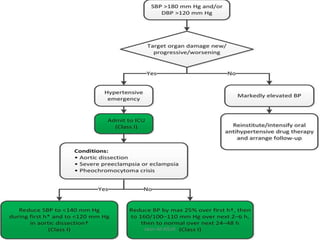
  • #37 Diagnosis and management of a hypertensive crisis. Colors correspond to Class of Recommendation in Table 1. *Use drug(s) specified in Table 19. †If other comorbidities are present, select a drug specified in Table 20. BP indicates blood pressure; DBP, diastolic blood pressure; ICU, intensive care unit; and SBP, systolic blood pressure.
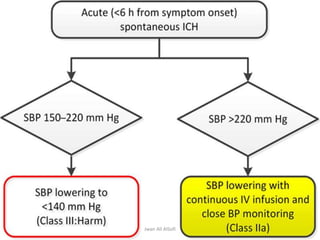
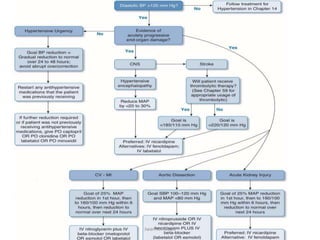
  • #57 Management of hypertension in patients with acute ICH. Colors correspond to Class of Recommendation in Table 1. BP indicates blood pressure; ICH, intracerebral hemorrhage; IV, intravenous; and SBP, systolic blood pressure.
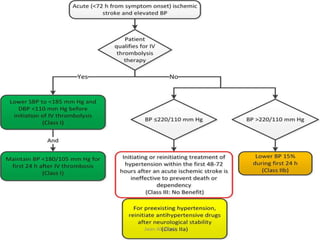
  • #58  Management of hypertension in patients with acute ischemic stroke. Colors correspond to Class of Recommendation in Table 1. BP indicates blood pressure; DBP, diastolic blood pressure; IV, intravenous; and SBP, systolic blood pressure.