Unstable Angina
BRAJESH LAHRI
FINAL PROFESSIONAL MBBS
ALL INDIA INSTITUTE OF MEDICAL
SCIENCES(AIIMS),BHOPAL
Introduction
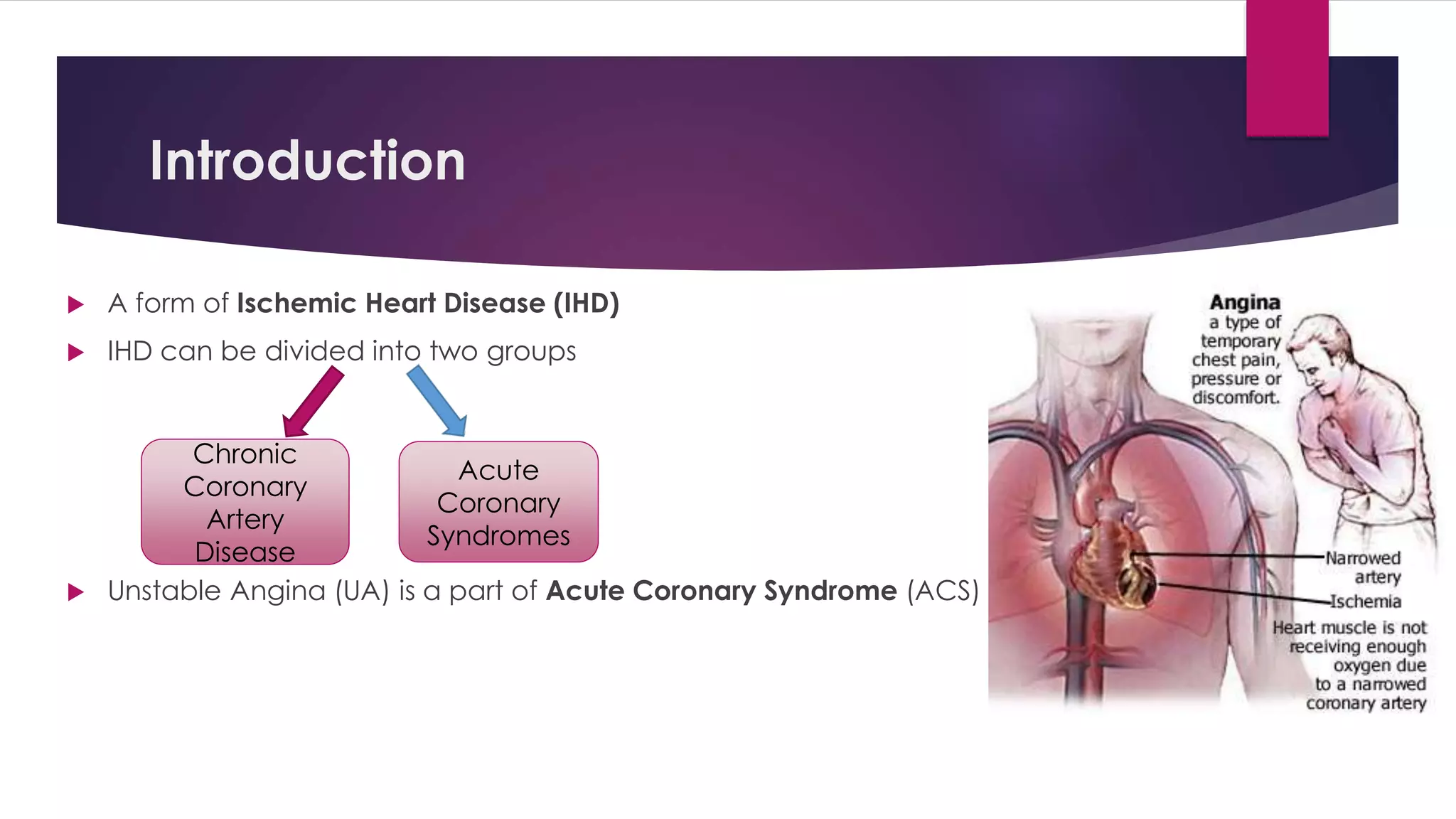
 A form of Ischemic Heart Disease (IHD)
 IHD can be divided into two groups
 Unstable Angina (UA) is a part of Acute Coronary Syndrome (ACS)
Chronic
Coronary
Artery
Disease
Acute
Coronary
Syndromes
Definition
 Unstable Angina (UA) can be defined as angina pectoris or equivalent
ischemic discomfort with presence of any one of the following features :
 It occurs at rest or with minimal exertion and lasts more than 10 minutes
 It is severe in nature and acute in onset
 Attacks are more severe ,prolonged and frequent than previous attacks
(Also known as Crescendo Pattern)
Etiopathogenesis
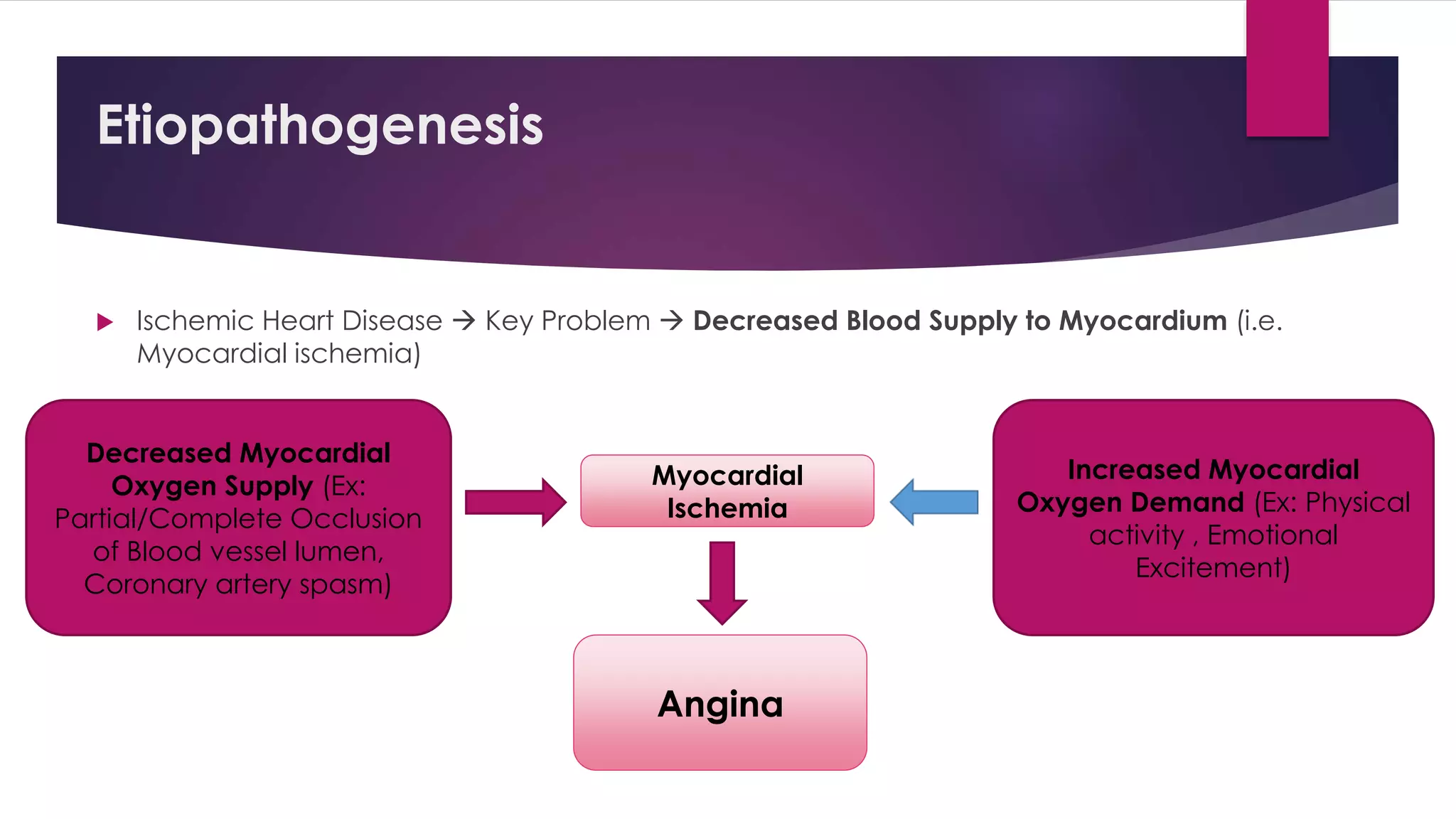
 Ischemic Heart Disease  Key Problem  Decreased Blood Supply to Myocardium (i.e.
Myocardial ischemia)
Decreased Myocardial
Oxygen Supply (Ex:
Partial/Complete Occlusion
of Blood vessel lumen,
Coronary artery spasm)
Increased Myocardial
Oxygen Demand (Ex: Physical
activity , Emotional
Excitement)
Myocardial
Ischemia
Angina
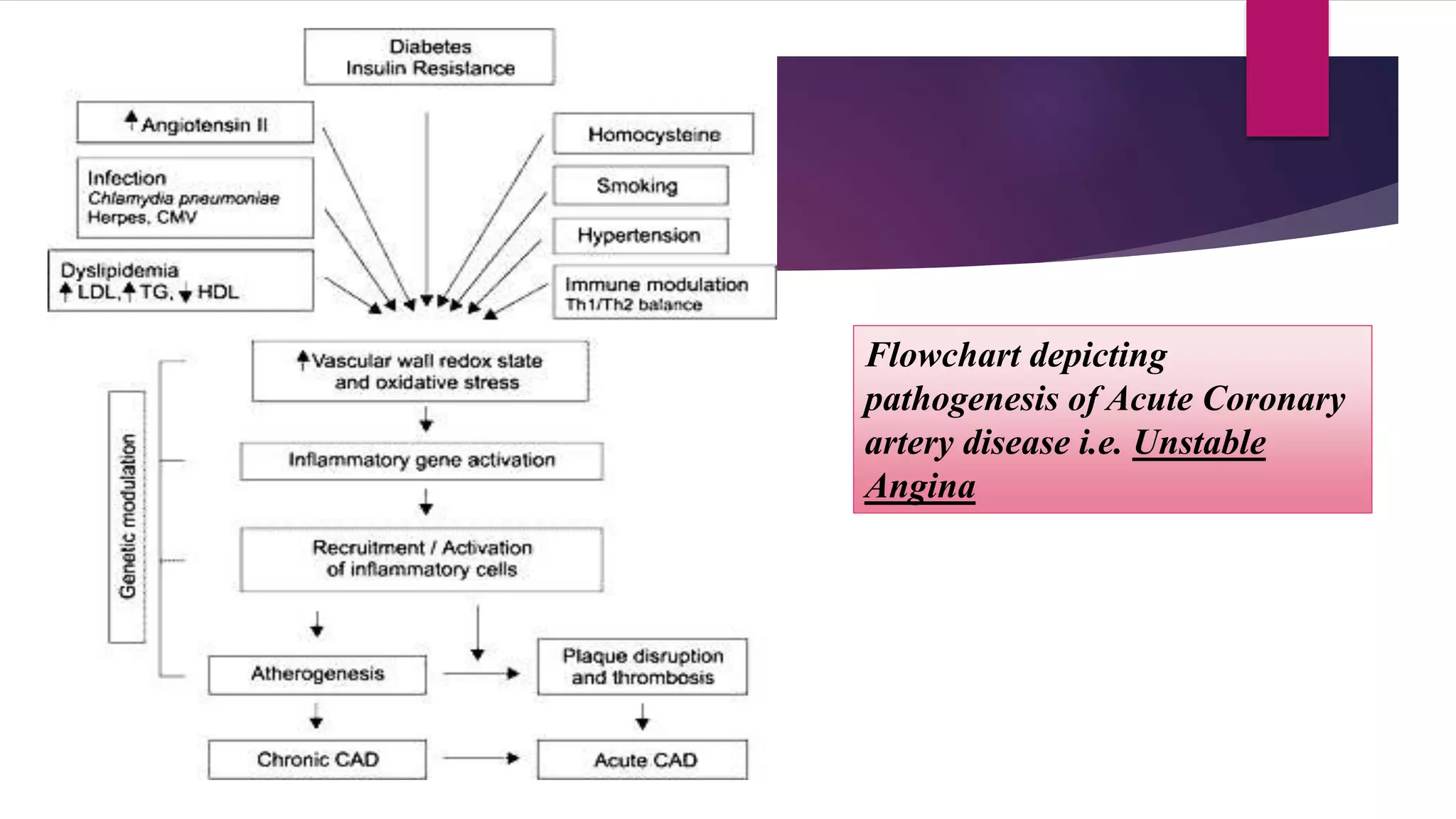
Flowchart depicting
pathogenesis of Acute Coronary
artery disease i.e. Unstable
Angina
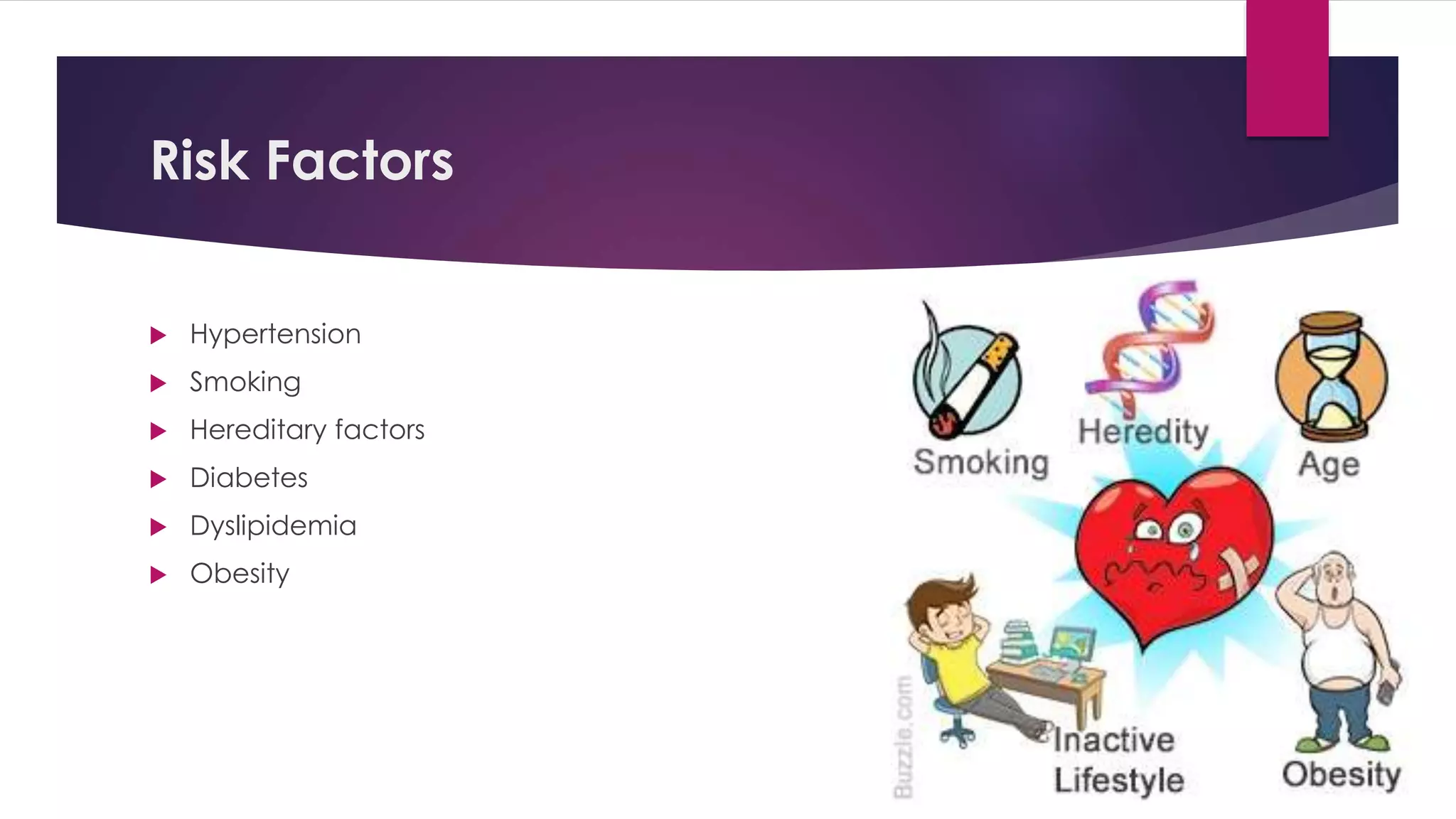
Risk Factors
 Hypertension
 Smoking
 Hereditary factors
 Diabetes
 Dyslipidemia
 Obesity
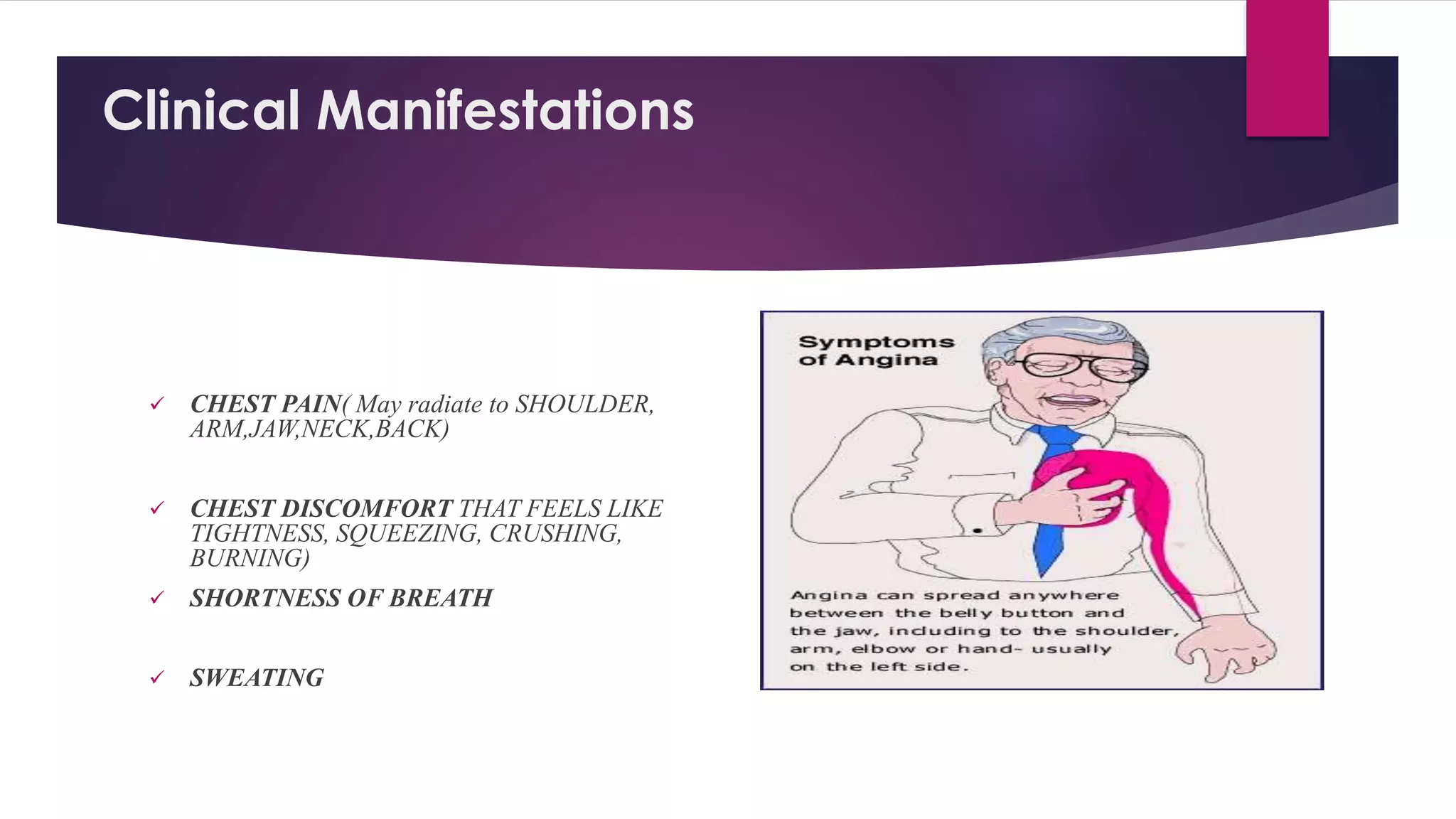
Clinical Manifestations
 CHEST PAIN( May radiate to SHOULDER,
ARM,JAW,NECK,BACK)
 CHEST DISCOMFORT THAT FEELS LIKE
TIGHTNESS, SQUEEZING, CRUSHING,
BURNING)
 SHORTNESS OF BREATH
 SWEATING
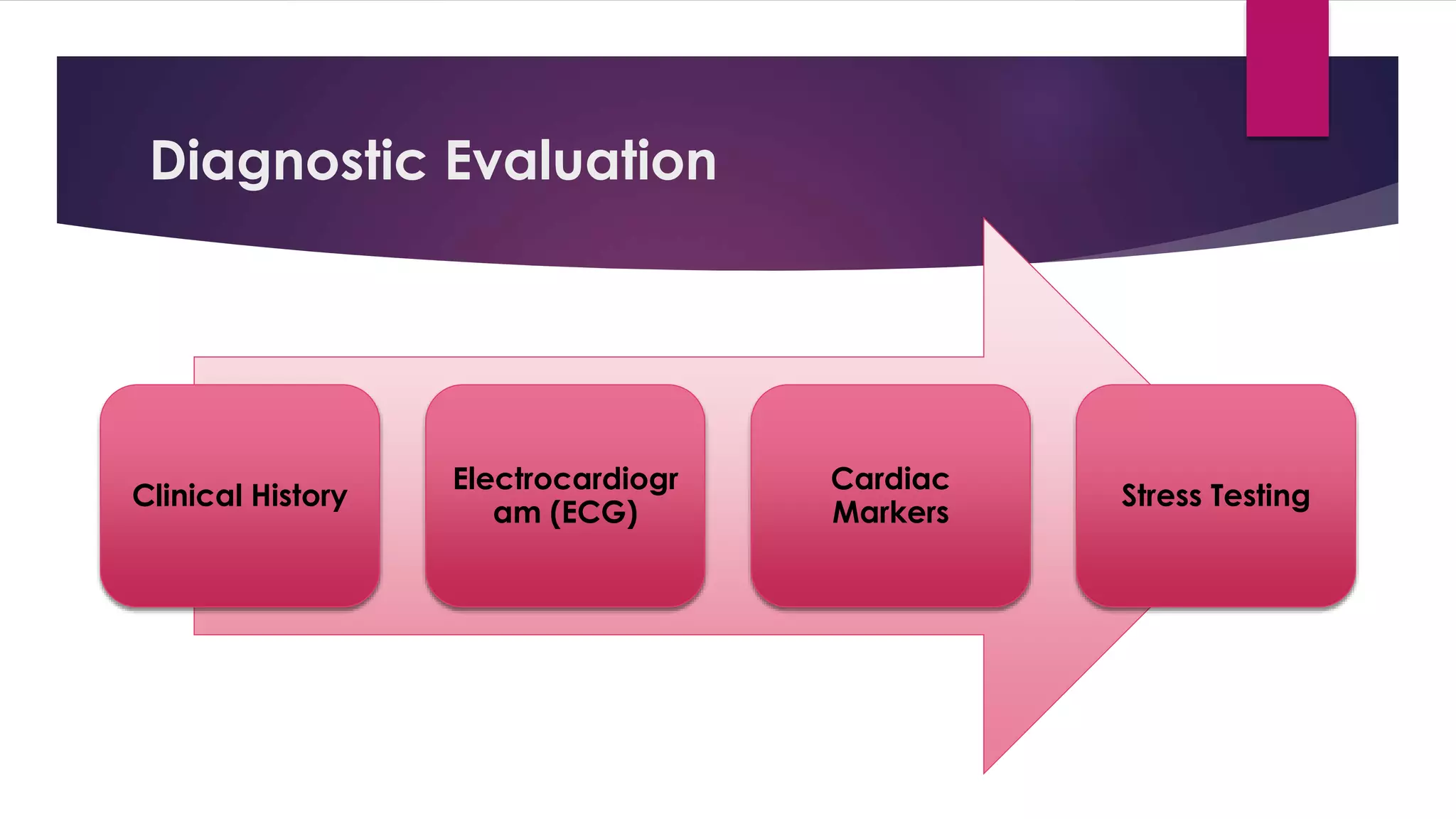
Diagnostic Evaluation
Clinical History
Electrocardiogr
am (ECG)
Cardiac
Markers
Stress Testing
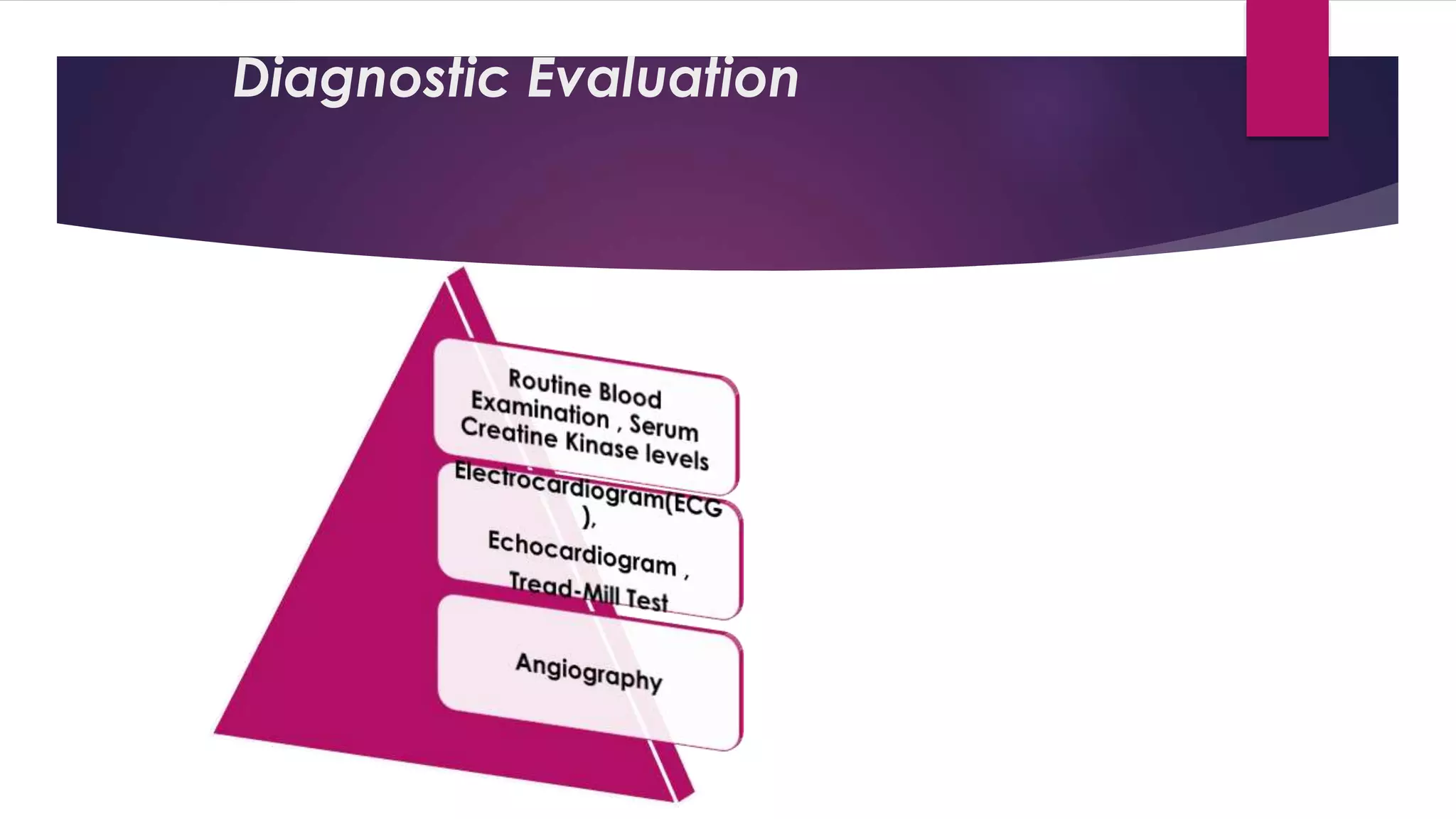
Diagnostic Evaluation
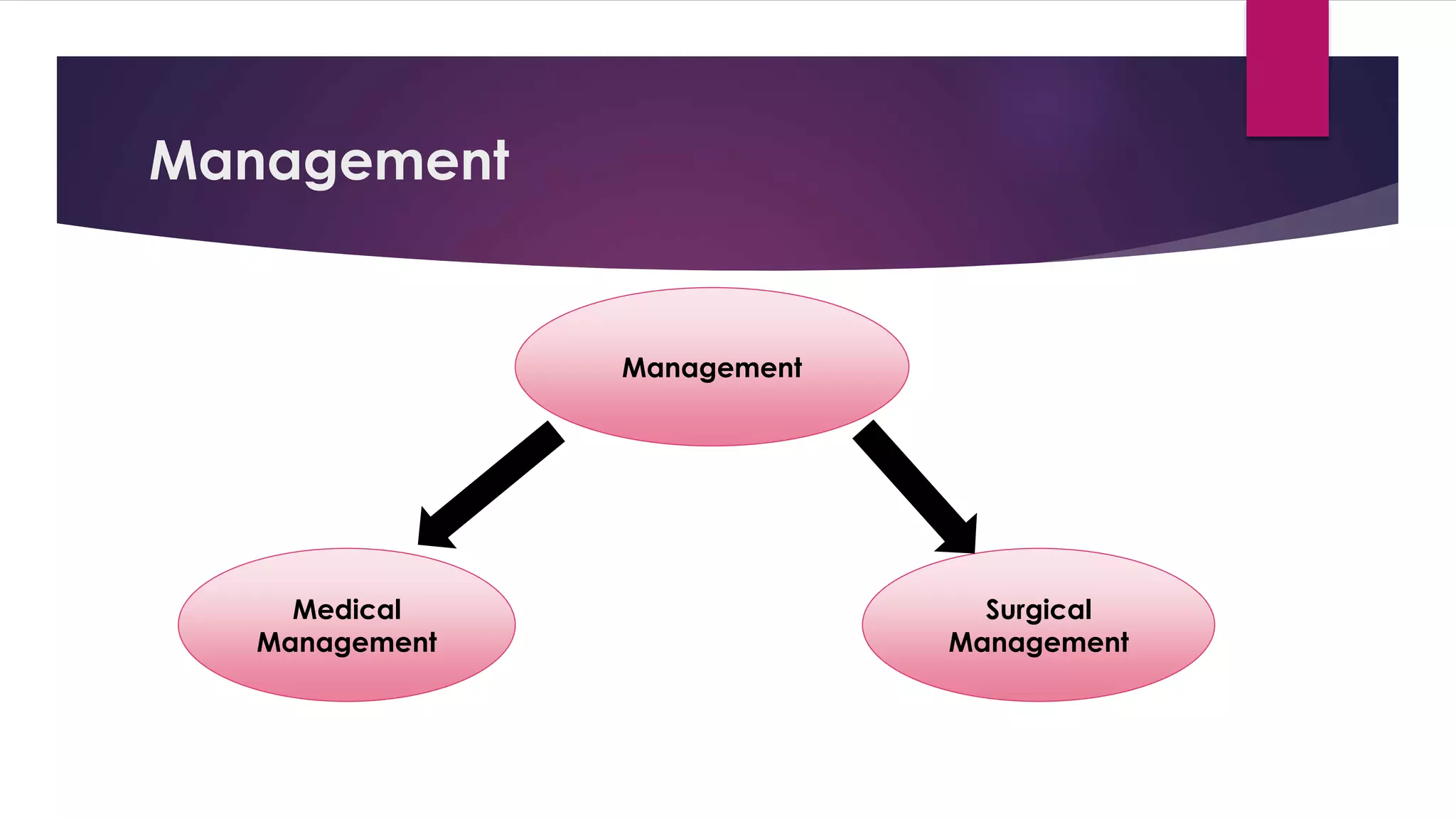
Management
Management
Medical
Management
Surgical
Management
MEDICAL MANAGEMENT
 Blood thinners (antiplatelet drugs) are used to treat and prevent unstable angina.
 These medicines may be able to reduce the chance of a heart attack or the
severity of a heart attack that occurs.
 During an unstable angina event:
 Patient is given heparin (or another blood thinner) and nitroglycerin (under the
tongue or through an IV)
 Other treatments may include medicines to control blood pressure,
anxiety, abnormal heart rhythms, and cholesterol (such as a statin drug)
SURGICAL MANAGEMENT
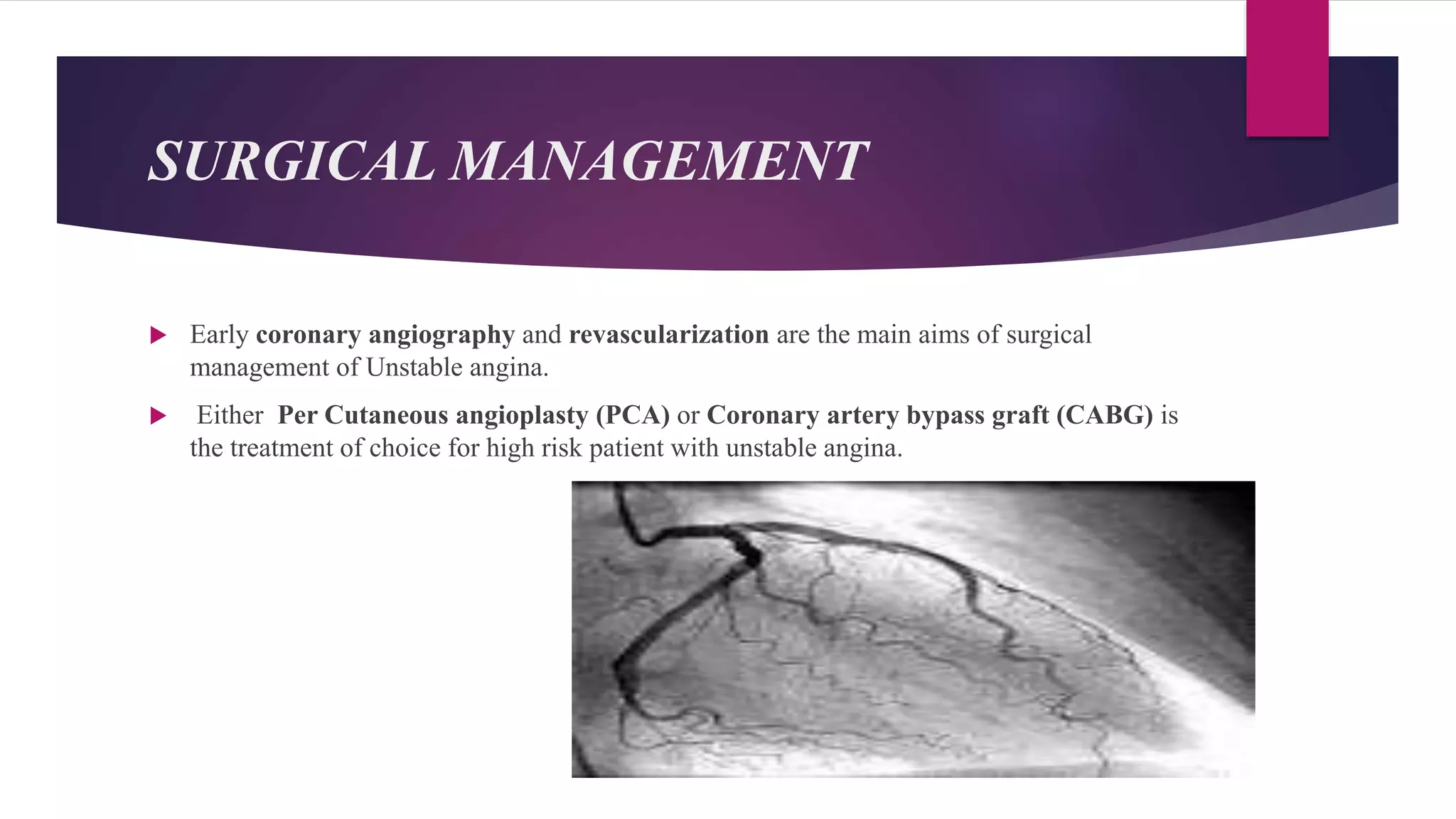
 Early coronary angiography and revascularization are the main aims of surgical
management of Unstable angina.
 Either Per Cutaneous angioplasty (PCA) or Coronary artery bypass graft (CABG) is
the treatment of choice for high risk patient with unstable angina.
An Overview of Unstable angina

An Overview of Unstable angina

  • 1.
    Unstable Angina BRAJESH LAHRI FINALPROFESSIONAL MBBS ALL INDIA INSTITUTE OF MEDICAL SCIENCES(AIIMS),BHOPAL
  • 2.
    Introduction  A formof Ischemic Heart Disease (IHD)  IHD can be divided into two groups  Unstable Angina (UA) is a part of Acute Coronary Syndrome (ACS) Chronic Coronary Artery Disease Acute Coronary Syndromes
  • 3.
    Definition  Unstable Angina(UA) can be defined as angina pectoris or equivalent ischemic discomfort with presence of any one of the following features :  It occurs at rest or with minimal exertion and lasts more than 10 minutes  It is severe in nature and acute in onset  Attacks are more severe ,prolonged and frequent than previous attacks (Also known as Crescendo Pattern)
  • 4.
    Etiopathogenesis  Ischemic HeartDisease  Key Problem  Decreased Blood Supply to Myocardium (i.e. Myocardial ischemia) Decreased Myocardial Oxygen Supply (Ex: Partial/Complete Occlusion of Blood vessel lumen, Coronary artery spasm) Increased Myocardial Oxygen Demand (Ex: Physical activity , Emotional Excitement) Myocardial Ischemia Angina
  • 5.
    Flowchart depicting pathogenesis ofAcute Coronary artery disease i.e. Unstable Angina
  • 6.
    Risk Factors  Hypertension Smoking  Hereditary factors  Diabetes  Dyslipidemia  Obesity
  • 7.
    Clinical Manifestations  CHESTPAIN( May radiate to SHOULDER, ARM,JAW,NECK,BACK)  CHEST DISCOMFORT THAT FEELS LIKE TIGHTNESS, SQUEEZING, CRUSHING, BURNING)  SHORTNESS OF BREATH  SWEATING
  • 8.
  • 9.
  • 10.
  • 11.
    MEDICAL MANAGEMENT  Bloodthinners (antiplatelet drugs) are used to treat and prevent unstable angina.  These medicines may be able to reduce the chance of a heart attack or the severity of a heart attack that occurs.  During an unstable angina event:  Patient is given heparin (or another blood thinner) and nitroglycerin (under the tongue or through an IV)  Other treatments may include medicines to control blood pressure, anxiety, abnormal heart rhythms, and cholesterol (such as a statin drug)
  • 12.
    SURGICAL MANAGEMENT  Earlycoronary angiography and revascularization are the main aims of surgical management of Unstable angina.  Either Per Cutaneous angioplasty (PCA) or Coronary artery bypass graft (CABG) is the treatment of choice for high risk patient with unstable angina.