Raynaud’s Disease
(Raynaud’s
Phenomenon)
• It is a recurrent vasospasm of the fingers
and toes and usually occurs in response to
stress or cold exposure
• It is named after Maurice Raynaud, who,
was a medical student, defined the first
case in 1862
• The Raynaud’s phenomenon is used
to refer to localized, intermittent
episodes of vasoconstriction of small
arteries of the feet and hands that
cause color and temperature changes
• The disease is most common in women
between 16 and 40 years of age,
• it occurs more frequently in cold climates
and during the winter
Classification
• Primary
occurrence of the vasospasm alone, with no association
with another illness
• Secondary
secondary to other conditions, most commonly an
autoimmune disease
eg- SLE, rhematoid arthrits
Predisposing and
precipitating Factors
The risk factors include:
o Working with vibrating machinery - the fingers
may go into spasm. This is due to an
intermittent lack of blood supply to the fingers.
o Emotional distress
o Exposure to the cold
o Womens affected more often than men
• Exposure to chemicals such as PVC, Silica.
• Smoking
• Autoimmune disease
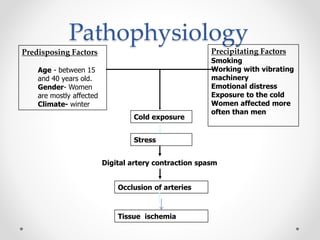
Pathophysiology
Precipitating Factors
Smoking
Working with vibrating
machinery
Emotional distress
Exposure to the cold
Women affected more
often than men
Stress
Digital artery contraction spasm
Occlusion of arteries
Predisposing Factors
Age - between 15
and 40 years old.
Gender- Women
are mostly affected
Climate- winter
Cold exposure
Tissue ischemia
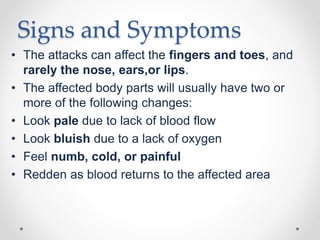
Signs and Symptoms
• The attacks can affect the fingers and toes, and
rarely the nose, ears,or lips.
• The affected body parts will usually have two or
more of the following changes:
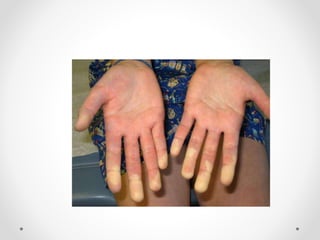
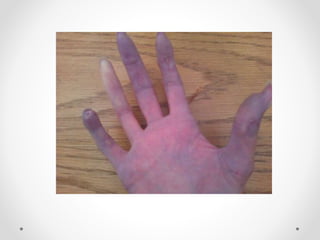
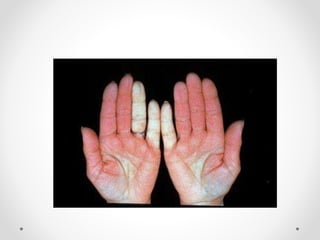
• Look pale due to lack of blood flow
• Look bluish due to a lack of oxygen
• Feel numb, cold, or painful
• Redden as blood returns to the affected area
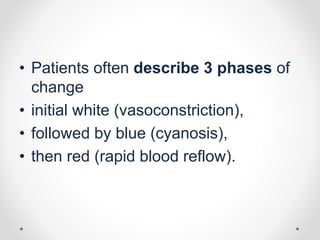
• Patients often describe 3 phases of
change
• initial white (vasoconstriction),
• followed by blue (cyanosis),
• then red (rapid blood reflow).
Diagnosis• History collection
Obtain a history of injury or frostbite
occupational history eg- jackhammers
Industrial exposure to polyvinyl chloride
Autoimmune disorders
• Physical examination
observe the colur of digits, ulcers
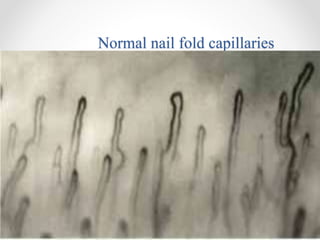
Examine nailfold capillaries under magnification help
diagnose underlying autoimmune disorders
Normal nail fold capillaries
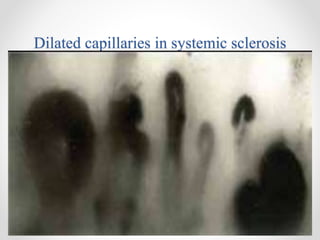
Dilated capillaries in systemic sclerosis
Laboratory investigation
Complete blood count
ESR
Antinuclear antibody - May be positive in
autoimmune disorders and should be obtained in
patients with features of these disorders
Rheumatoid factor - May be elevated in
rheumatoid arthritis, other autoimmune disorders
Medical Management
• Avoiding the particular stimuli (eg, cold, tobacco)
that provoke vasoconstriction
• Calcium channel blockers
eg- Nifidipine
30-120 mg of the extended-release
formulation taken once daily
• Topical nitroglycerin (1% or 2%)
Nursing Management
• The client is encouraged to avoid exposure to cold.
• Avoid repetitive hand movements and stressful
situations.
• Quit smoking and avoids secondary smoke as
nicotine is potent vasoconstrictor.
• Stress management techniques ex. biofeedback
• Assist in alleviating some distress from the condition.

Raynaud’s disease

  • 1.
  • 2.
    • It isa recurrent vasospasm of the fingers and toes and usually occurs in response to stress or cold exposure • It is named after Maurice Raynaud, who, was a medical student, defined the first case in 1862
  • 3.
    • The Raynaud’sphenomenon is used to refer to localized, intermittent episodes of vasoconstriction of small arteries of the feet and hands that cause color and temperature changes
  • 4.
    • The diseaseis most common in women between 16 and 40 years of age, • it occurs more frequently in cold climates and during the winter
  • 5.
    Classification • Primary occurrence ofthe vasospasm alone, with no association with another illness • Secondary secondary to other conditions, most commonly an autoimmune disease eg- SLE, rhematoid arthrits
  • 6.
    Predisposing and precipitating Factors Therisk factors include: o Working with vibrating machinery - the fingers may go into spasm. This is due to an intermittent lack of blood supply to the fingers. o Emotional distress o Exposure to the cold o Womens affected more often than men
  • 7.
    • Exposure tochemicals such as PVC, Silica. • Smoking • Autoimmune disease
  • 8.
    Pathophysiology Precipitating Factors Smoking Working withvibrating machinery Emotional distress Exposure to the cold Women affected more often than men Stress Digital artery contraction spasm Occlusion of arteries Predisposing Factors Age - between 15 and 40 years old. Gender- Women are mostly affected Climate- winter Cold exposure Tissue ischemia
  • 9.
    Signs and Symptoms •The attacks can affect the fingers and toes, and rarely the nose, ears,or lips. • The affected body parts will usually have two or more of the following changes: • Look pale due to lack of blood flow • Look bluish due to a lack of oxygen • Feel numb, cold, or painful • Redden as blood returns to the affected area
  • 10.
    • Patients oftendescribe 3 phases of change • initial white (vasoconstriction), • followed by blue (cyanosis), • then red (rapid blood reflow).
  • 14.
    Diagnosis• History collection Obtaina history of injury or frostbite occupational history eg- jackhammers Industrial exposure to polyvinyl chloride Autoimmune disorders • Physical examination observe the colur of digits, ulcers Examine nailfold capillaries under magnification help diagnose underlying autoimmune disorders
  • 15.
    Normal nail foldcapillaries
  • 16.
    Dilated capillaries insystemic sclerosis
  • 17.
    Laboratory investigation Complete bloodcount ESR Antinuclear antibody - May be positive in autoimmune disorders and should be obtained in patients with features of these disorders Rheumatoid factor - May be elevated in rheumatoid arthritis, other autoimmune disorders
  • 18.
    Medical Management • Avoidingthe particular stimuli (eg, cold, tobacco) that provoke vasoconstriction • Calcium channel blockers eg- Nifidipine 30-120 mg of the extended-release formulation taken once daily • Topical nitroglycerin (1% or 2%)
  • 19.
    Nursing Management • Theclient is encouraged to avoid exposure to cold. • Avoid repetitive hand movements and stressful situations. • Quit smoking and avoids secondary smoke as nicotine is potent vasoconstrictor. • Stress management techniques ex. biofeedback • Assist in alleviating some distress from the condition.