Acute Coronary Syndrome
MohmmadRjab Seder
Acute Coronary Syndrome
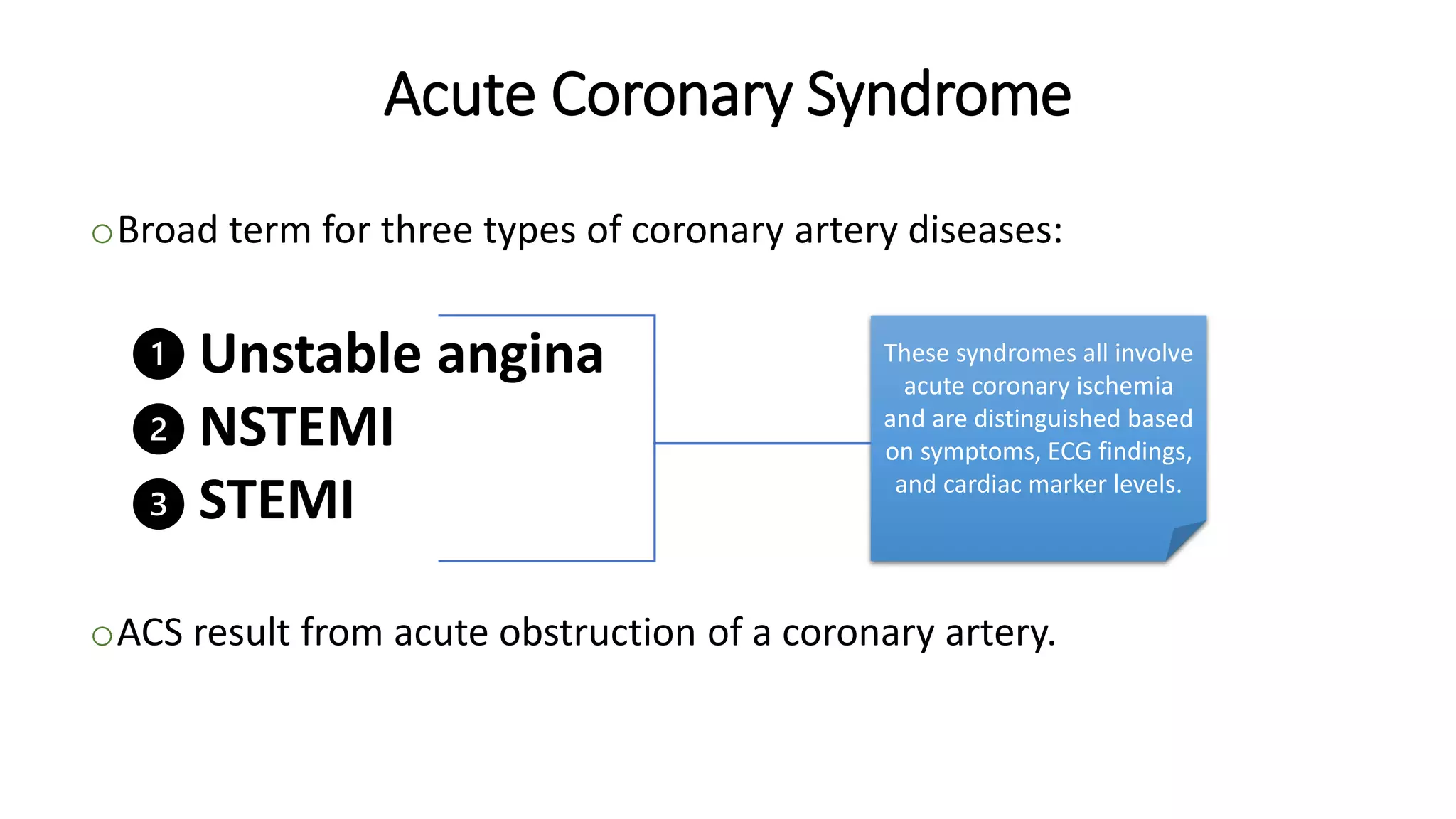
oBroad term for three types of coronary artery diseases:
Unstable angina
NSTEMI
STEMI
oACS result from acute obstruction of a coronary artery.
These syndromes all involve
acute coronary ischemia
and are distinguished based
on symptoms, ECG findings,
and cardiac marker levels.
ACS = crescendo angina + MI (STEMI/NSTEMI)
ACS may present as:
o New phenomenon
o Chronic stable angina
12% die within 1 month.
20% die within 6 months.
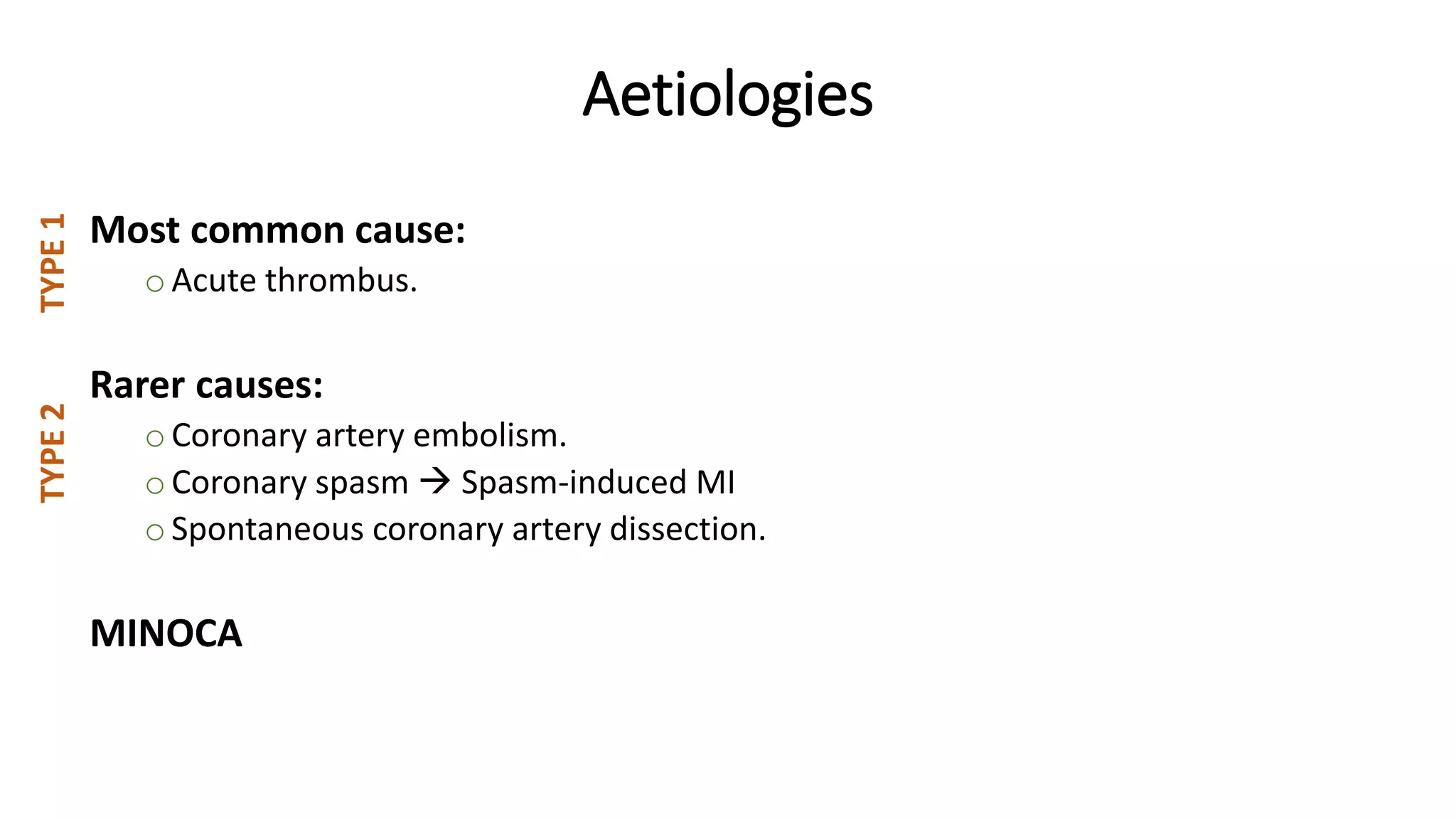
Aetiologies
Most common cause:
o Acute thrombus.
Rarer causes:
o Coronary artery embolism.
oCoronary spasm → Spasm-induced MI
o Spontaneous coronary artery dissection.
MINOCA
TYPE
1
TYPE
2
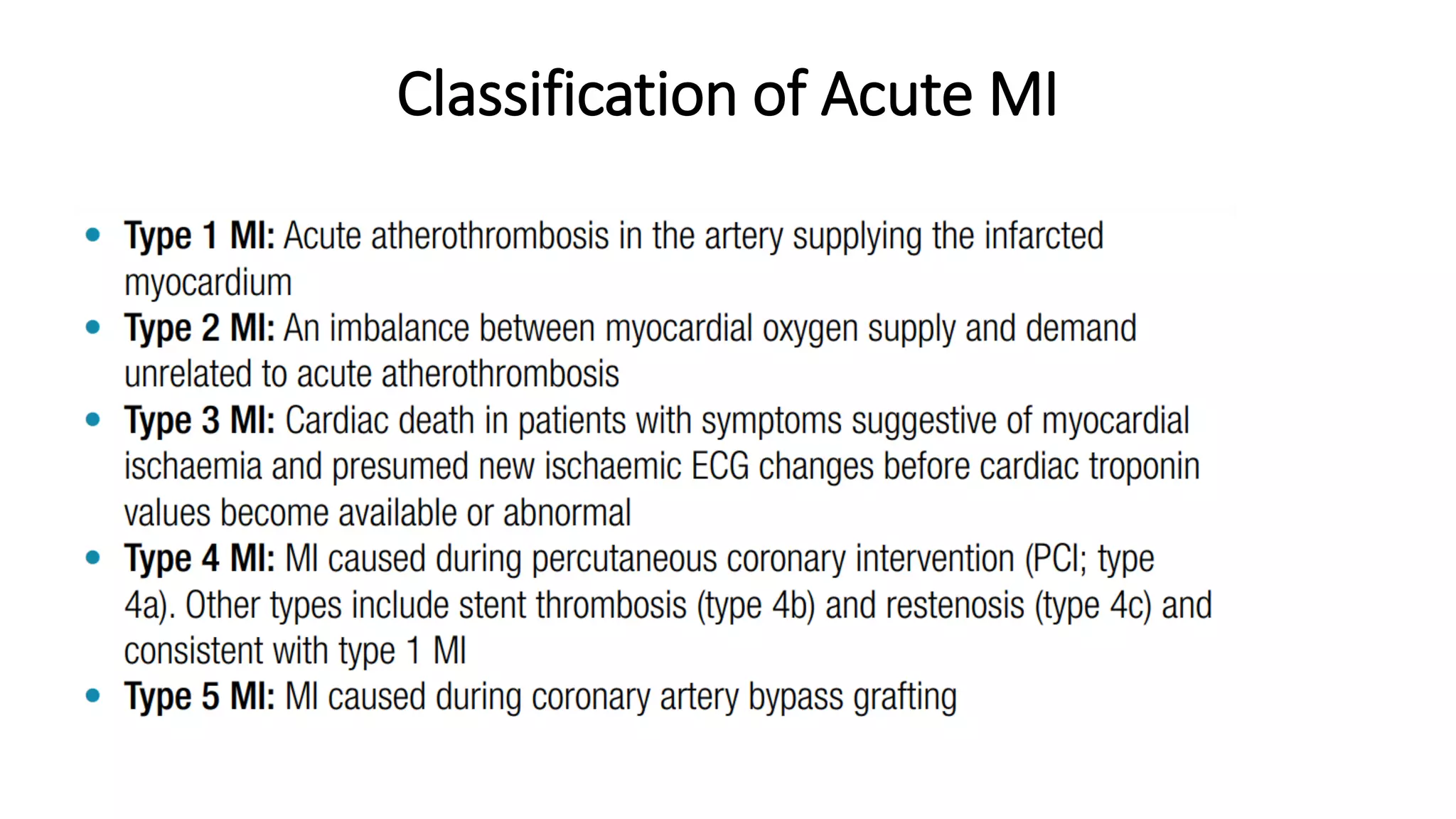
Classification of Acute MI
Commonly occluded coronary arteries:
LAD → RCA → circumflex
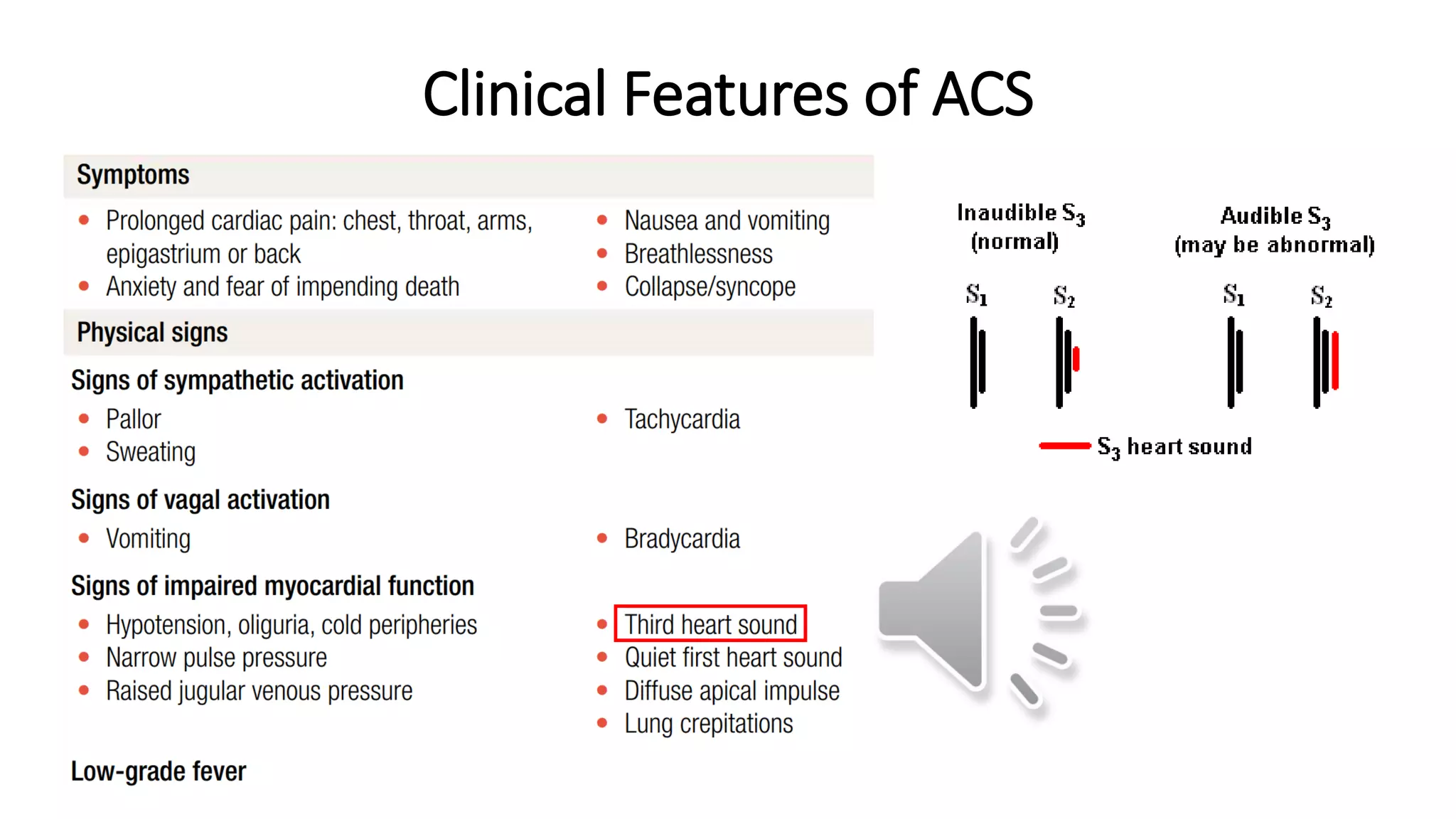
Clinical Features of ACS
(common in patients with inferior MI)
Clinical Features of ACS
Painless or ‘silent’ MI may also occur and is
particularly common in older patients or those
with diabetes mellitus.
Clinical Features of ACS
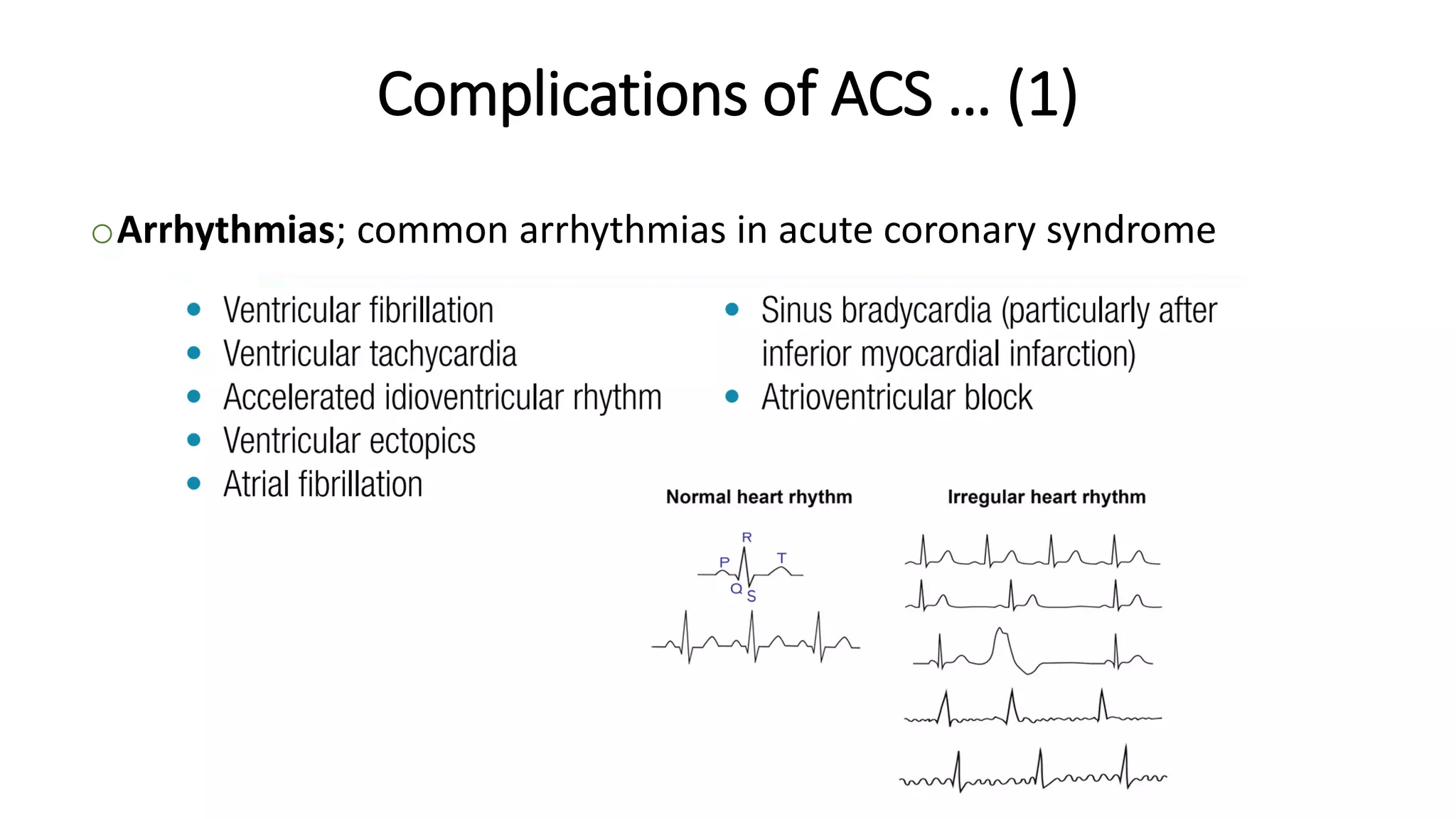
Complications of ACS … (1)
oArrhythmias; common arrhythmias in acute coronary syndrome
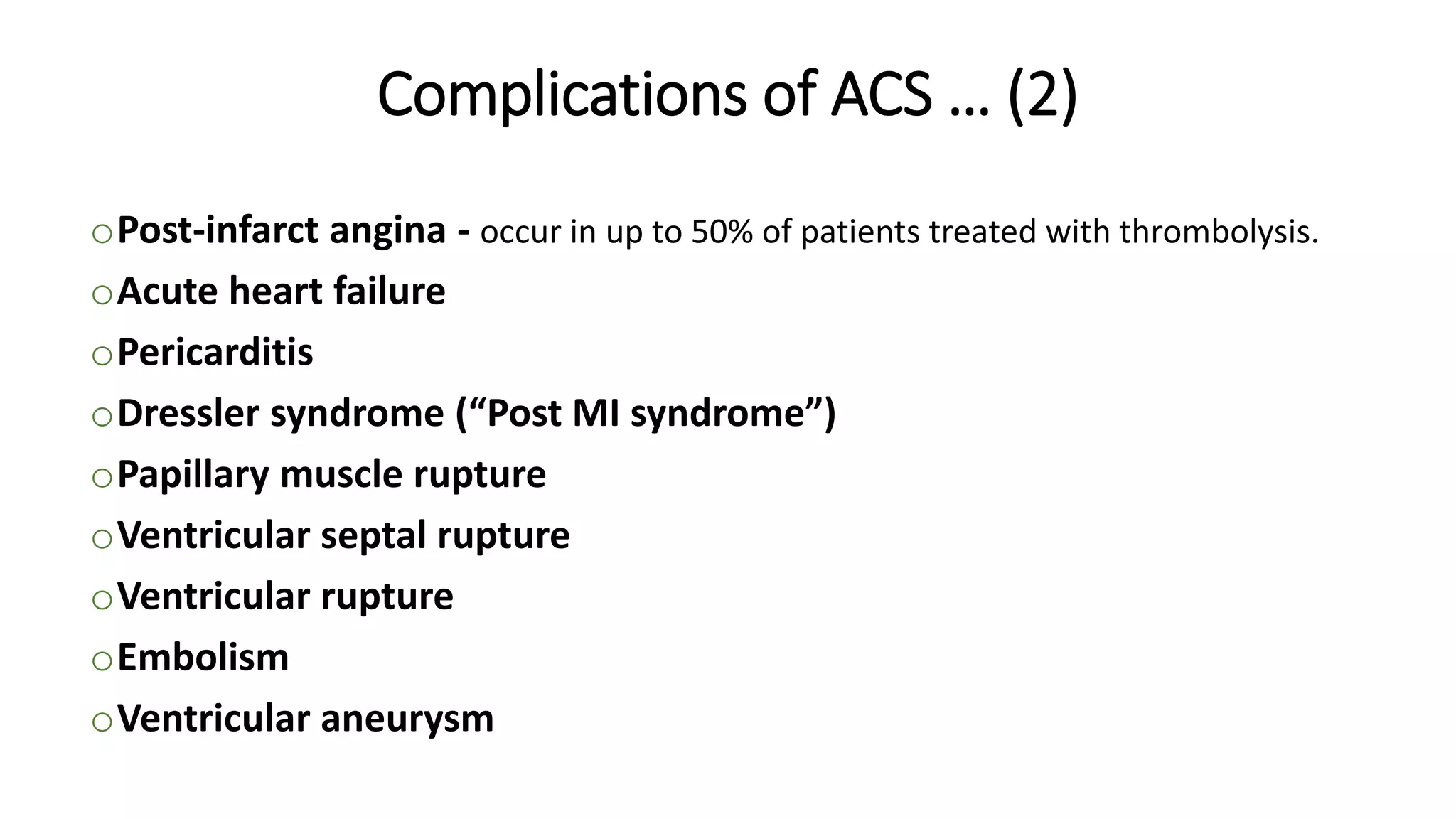
oPost-infarct angina - occur in up to 50% of patients treated with thrombolysis.
oAcute heart failure
oPericarditis
oDressler syndrome (“Post MI syndrome”)
oPapillary muscle rupture
oVentricular septal rupture
oVentricular rupture
oEmbolism
oVentricular aneurysm
Complications of ACS … (2)
Complications of ACS … (3)
oVentricular remodelling
o Potential complication of an acute transmural MI.
o Full-thickness MI → infarct expansion →
progressive dilatation and hypertrophy → HF
Investigations
oECG
oCardiac biomarkers
oRadiography
oEchocardiography
oCoronary angiography
Investigations
oECG
oCardiac biomarkers
oRadiography
oEchocardiography
oCoronary angiography
However
20% of ECGs may be normal initially.
Investigations
oECG
oCardiac biomarkers
oRadiography
oEchocardiography
oCoronary angiography
Investigations
oECG
oCardiac biomarkers
oRadiography
oEchocardiography
oCoronary angiography
Investigations
oECG
oCardiac biomarkers
oRadiography
oEchocardiography
oCoronary angiography
Investigations
oECG
oCardiac biomarkers
oRadiography
oEchocardiography
oCoronary angiography
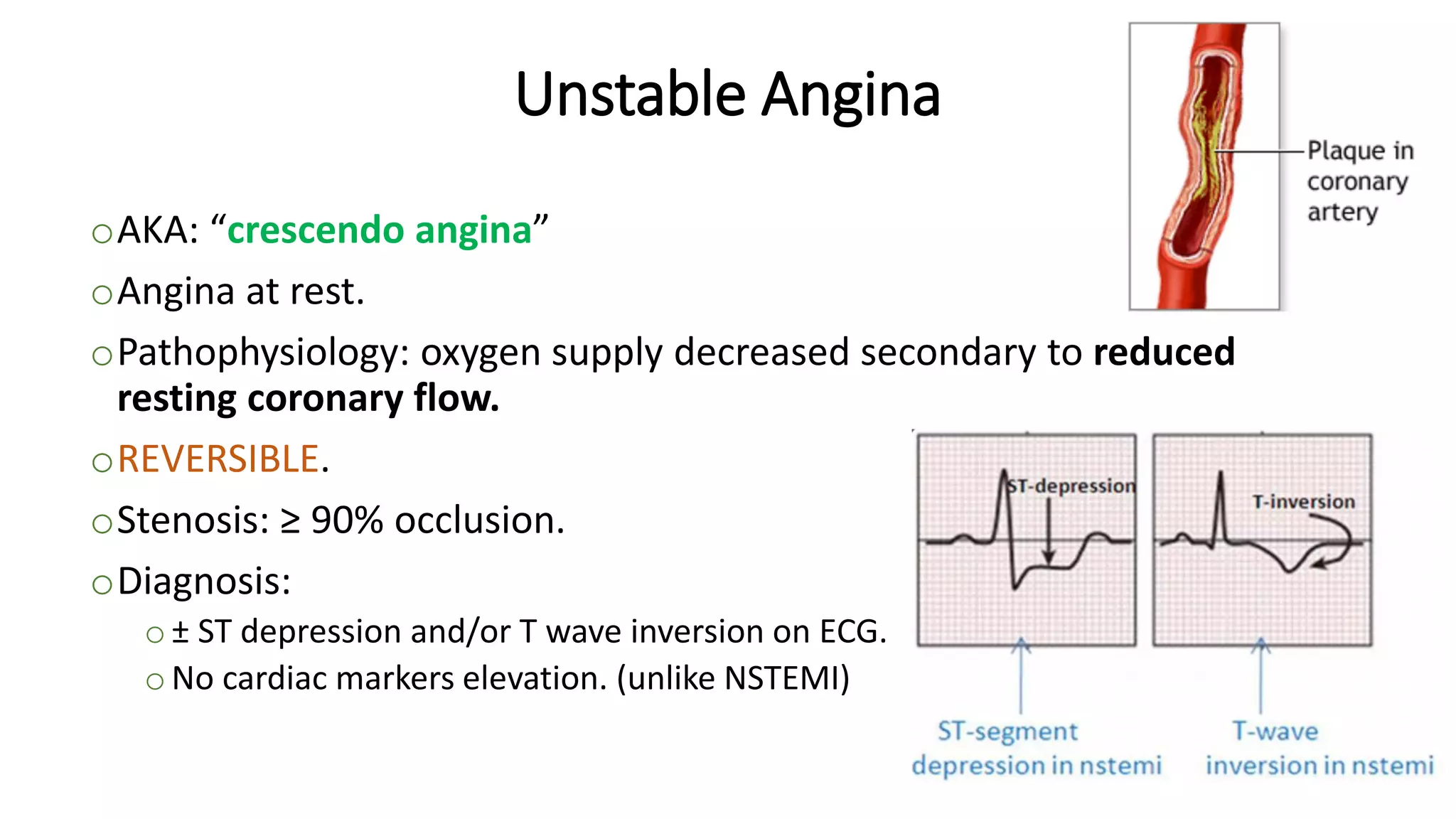
Unstable Angina
oAKA: “crescendo angina”
oAngina at rest.
oPathophysiology: oxygen supply decreased secondary to reduced
resting coronary flow.
oREVERSIBLE.
oStenosis: ≥ 90% occlusion.
oDiagnosis:
o ± ST depression and/or T wave inversion on ECG.
oNo cardiac markers elevation. (unlike NSTEMI)
MI
…→ interruption of blood supply → ischaemia → cardiac necrosis → MI
o30% mortality rate.
oSymptoms:
o Discussed previously
o 1/3 asymptomatic. (painless infarcts/ atypical presentation)
oIRREVERSIBLE
oTypes:
oSubendocardial infarcts → NSTEMI
o Transmural infarcts → STEMI
↑ cardiac biomarkers
CK-MB, troponin
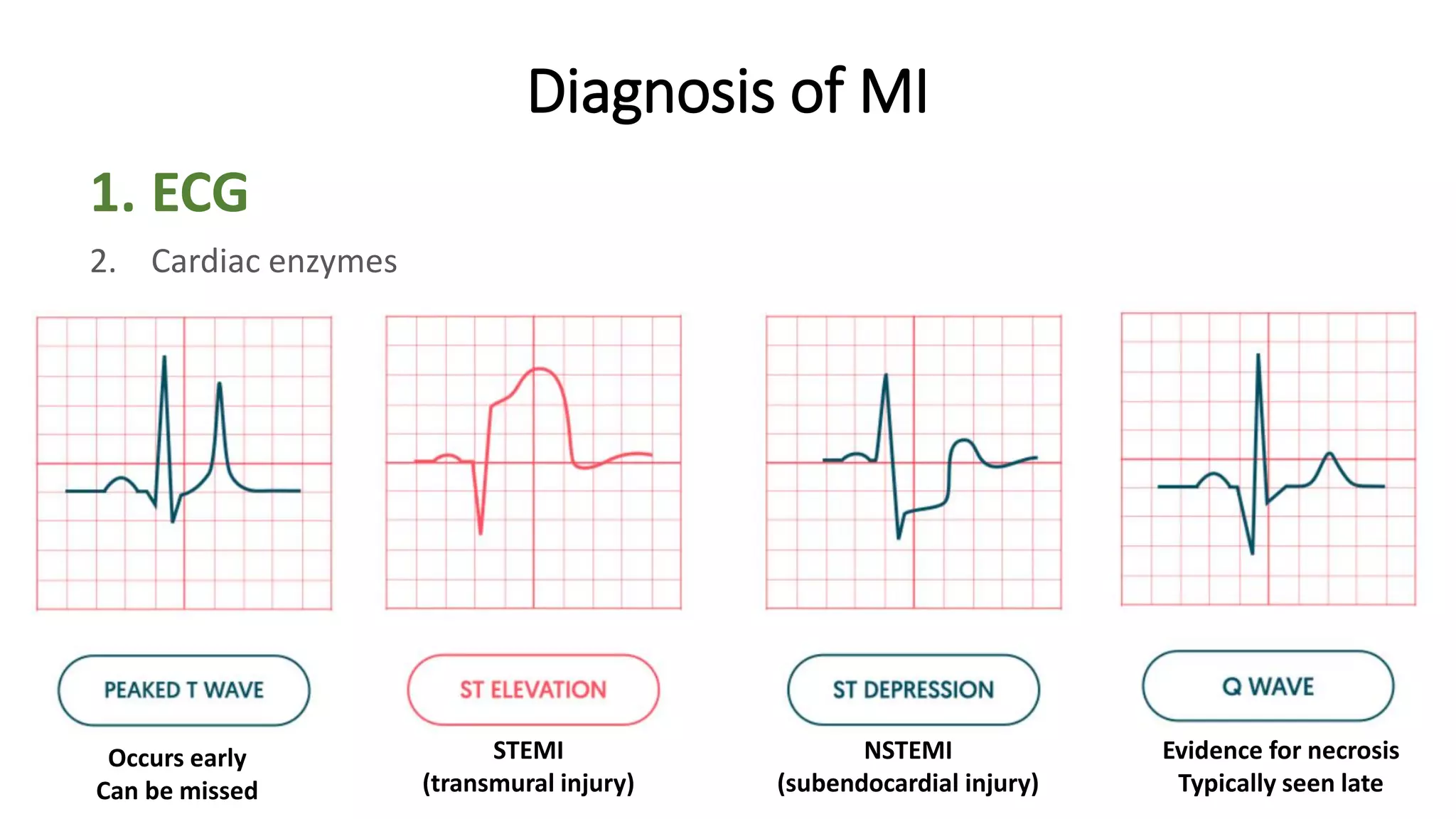
Diagnosis of MI
1. ECG
2. Cardiac enzymes
NSTEMI
(subendocardial injury)
STEMI
(transmural injury)
Occurs early
Can be missed
Evidence for necrosis
Typically seen late
T wave inversion is sensitive but not specific.
Diagnosis of MI
1. ECG
2. Cardiac enzymes
Troponin I and T
o Rise after 3-5 h.
o Peak at 24-48 h.
o Return to normal in 5-14 d.
CK-MB
o Rise after 4-8 h.
oPeak at 24-36 h.
o Return to normal at 2 d.
Acute Management
o Hospital admission with continuous cardiac monitoring.
o Initial: MONAH
M: Morphine
O: Oxygen (if SO2 < 94)
N: Nitrates (nitroglycerin) --- first line therapy for chest pain
A: Aspirin + Clopidogrel
H: Heparin (LMWH)
o Definitive:
o UA: PCI
o STEMI: 1st choice: PCI → 2nd choice: fibrinolytic therapy
o NSTEMI
o High-risk patients: antiplatelets, anticoagulants, B-blockers.
Consider: Glycoprotein IIb/IIIa inhibitors and revascularization (angioplasty + stenting)
o Low-risk patients: monitor ECG and cardiac markers.
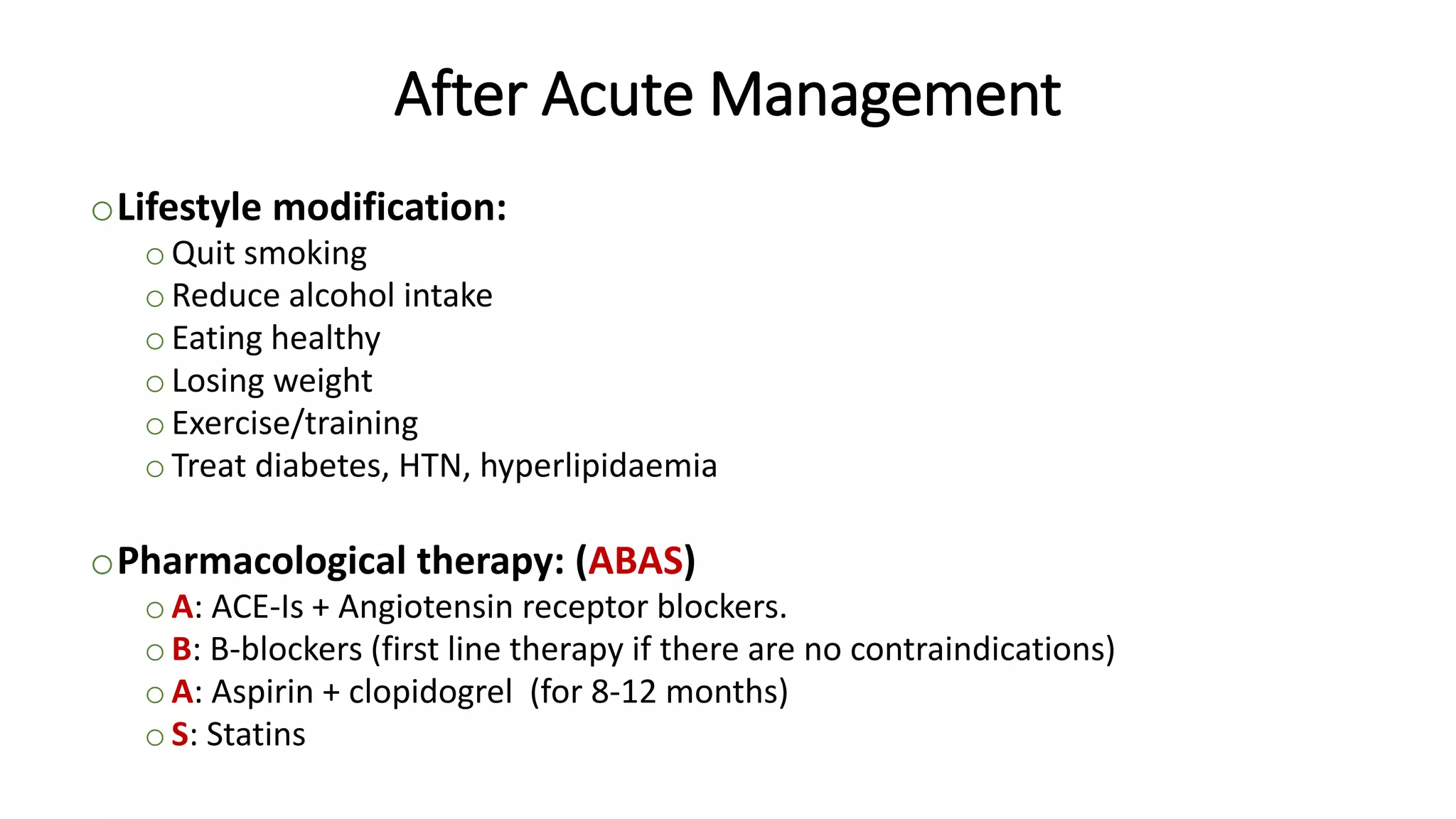
After Acute Management
oLifestyle modification:
o Quit smoking
o Reduce alcohol intake
oEating healthy
o Losing weight
o Exercise/training
o Treat diabetes, HTN, hyperlipidaemia
oPharmacological therapy: (ABAS)
o A: ACE-Is + Angiotensin receptor blockers.
o B: B-blockers (first line therapy if there are no contraindications)
o A: Aspirin + clopidogrel (for 8-12 months)
o S: Statins
Summary
oACS result from acute obstruction of a coronary artery.
oConsequences range from unstable angina to NSTEMI, STEMI, and
sudden cardiac death.
oSymptoms include chest discomfort with or without dyspnea, nausea,
and diaphoresis.
oDiagnosis is by ECG and serologic markers.
MohmmadRjab Seder
College of Medicine & Health Sciences
Palestine Polytechnic University
Hebron - Palestine
Email: mohmmadrjabs@gmail.com
WhatsApp: +972595950676
LinkedIn: MohmmadRjab Seder

Acute Coronary Syndrome