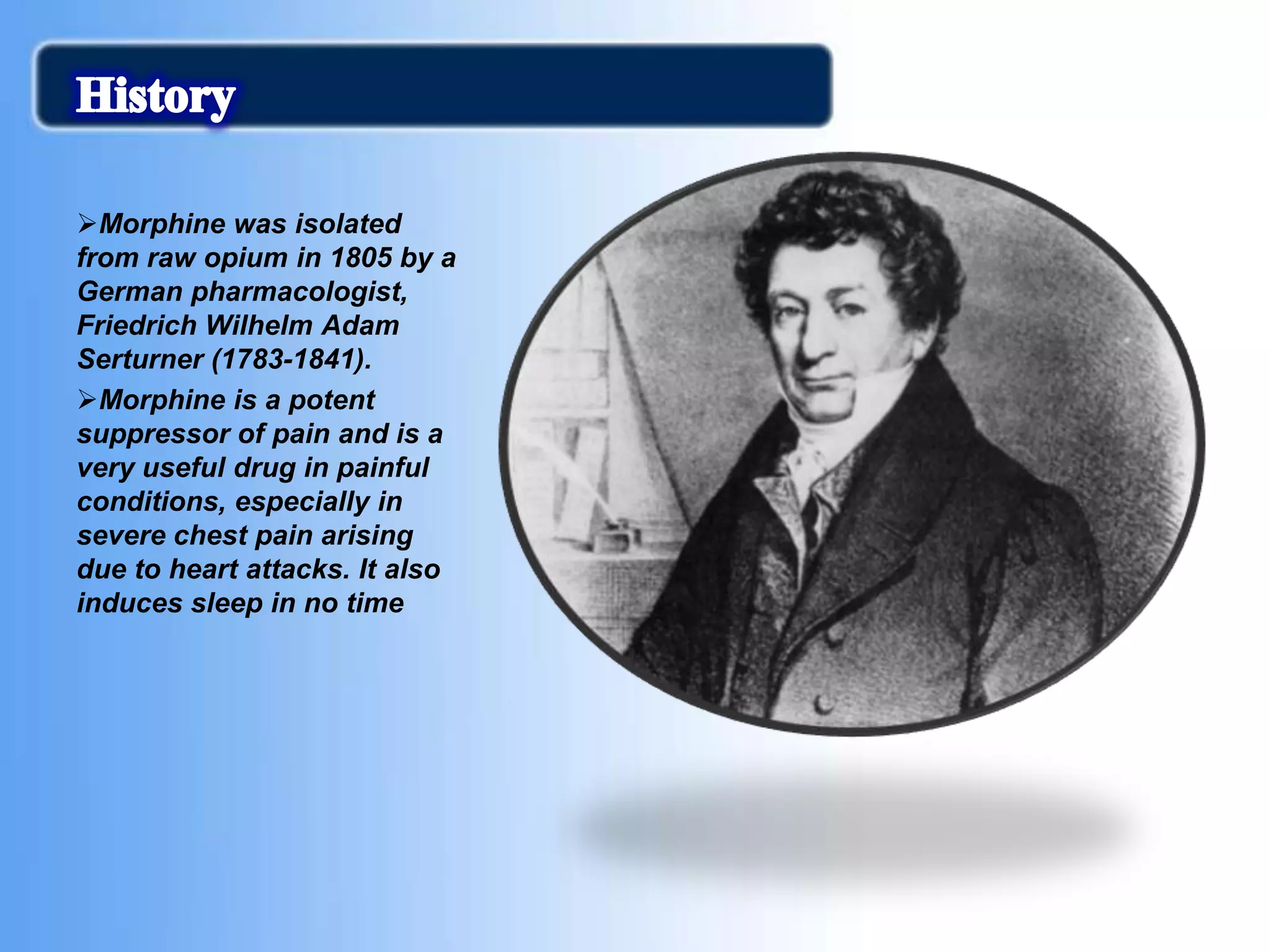
Morphine was isolated
from raw opium in 1805 by a
German pharmacologist,
Friedrich Wilhelm Adam
Serturner (1783-1841).
Morphine is a potent
suppressor of pain and is a
very useful drug in painful
conditions, especially in
severe chest pain arising
due to heart attacks. It also
induces sleep in no time
Barely eighteen years
after morphine was
discovered, it was used
for homicide. In 1823, a
twenty-seven year old
French doctor, Edme
Castaing, mixed
morphine in the wine
given to his friend,
Auguste Ballet, to kill him
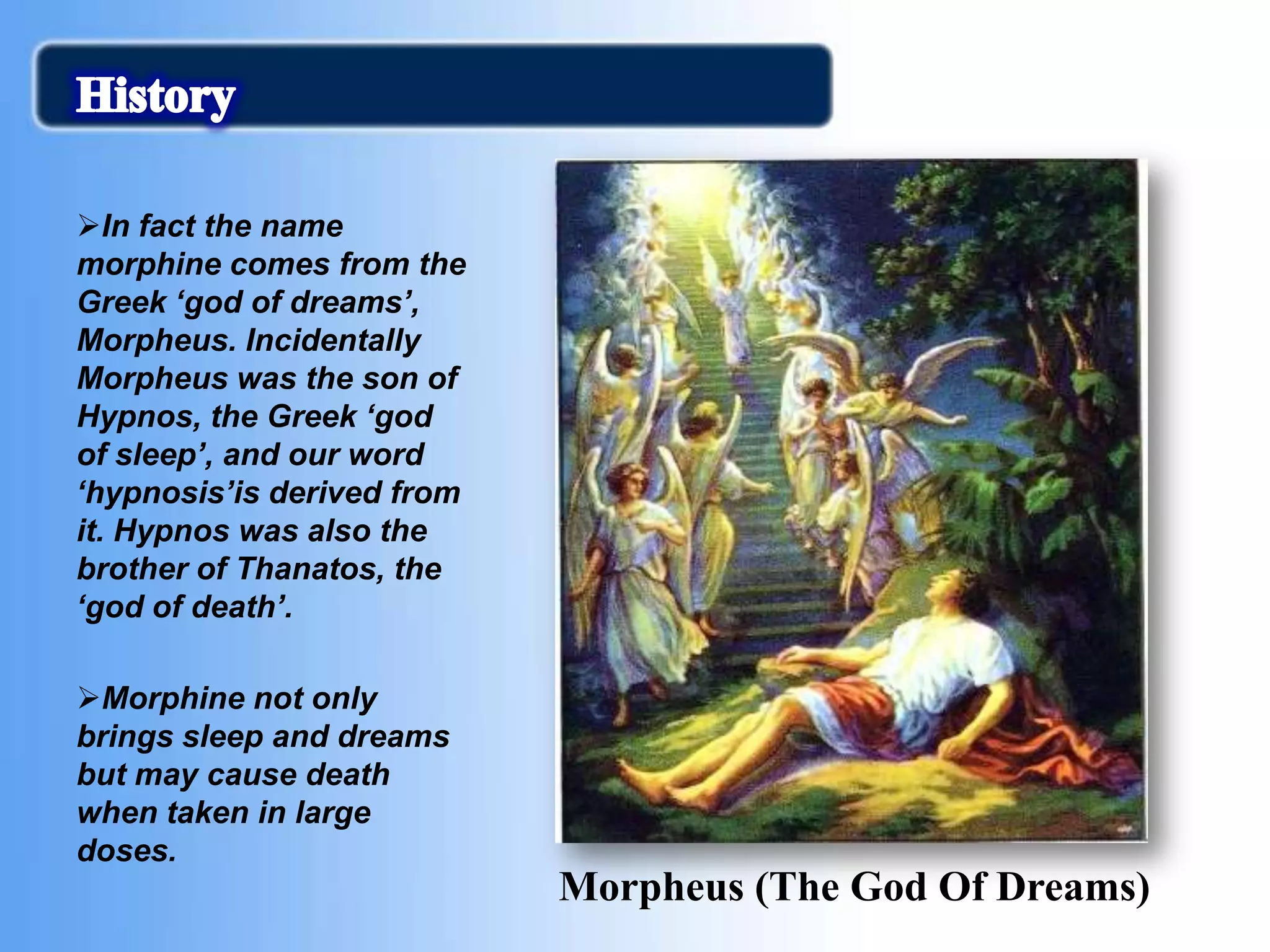
In fact the name
morphine comes from the
Greek ‘god of dreams’,
Morpheus. Incidentally
Morpheus was the son of
Hypnos, the Greek ‘god
of sleep’, and our word
‘hypnosis’is derived from
it. Hypnos was also the
brother of Thanatos, the
‘god of death’.
Morphine not only
brings sleep and dreams
but may cause death
when taken in large
doses.
Morpheus (The God Of Dreams)
Morphine is a natural opium alkaloid
It is a dried extract obtained from the capsules of the poppy
plant known as papaver somniferum
It requires approximately 10 kg of raw opium to produce 1 kg
of morphine
• Morphine
• Thebaine
• Codeine
Phenanthrene
derivatives
• Papaverine
• Noscapine
Benzo-
isoquinoline
derivatives
1. According to ring structure
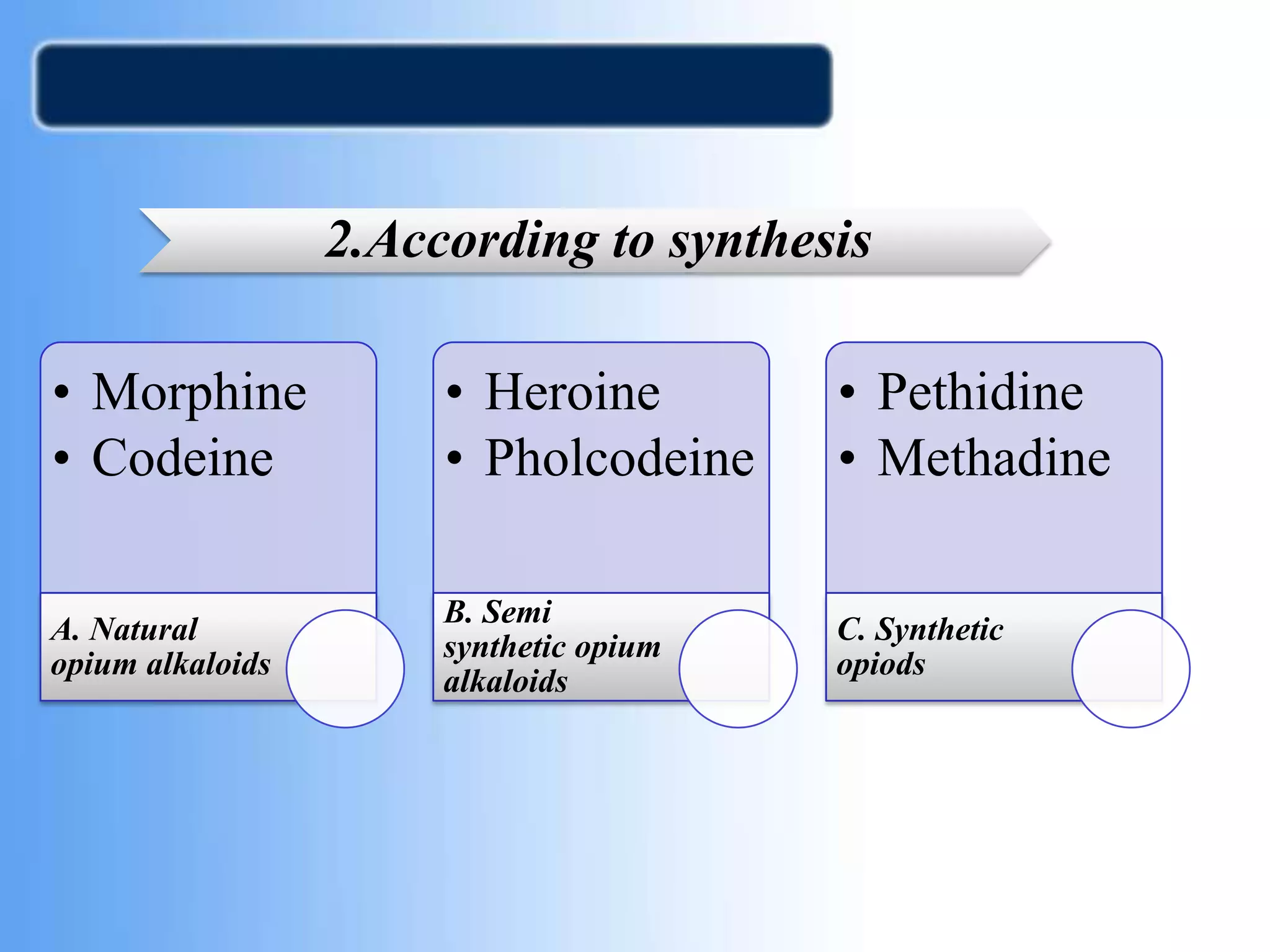
• Morphine
• Codeine
A. Natural
opium alkaloids
• Heroine
• Pholcodeine
B. Semi
synthetic opium
alkaloids
• Pethidine
• Methadine
C. Synthetic
opiods
2.According to synthesis
 Opioids exert their major effects by interacting with opioid
receptors in the CNS
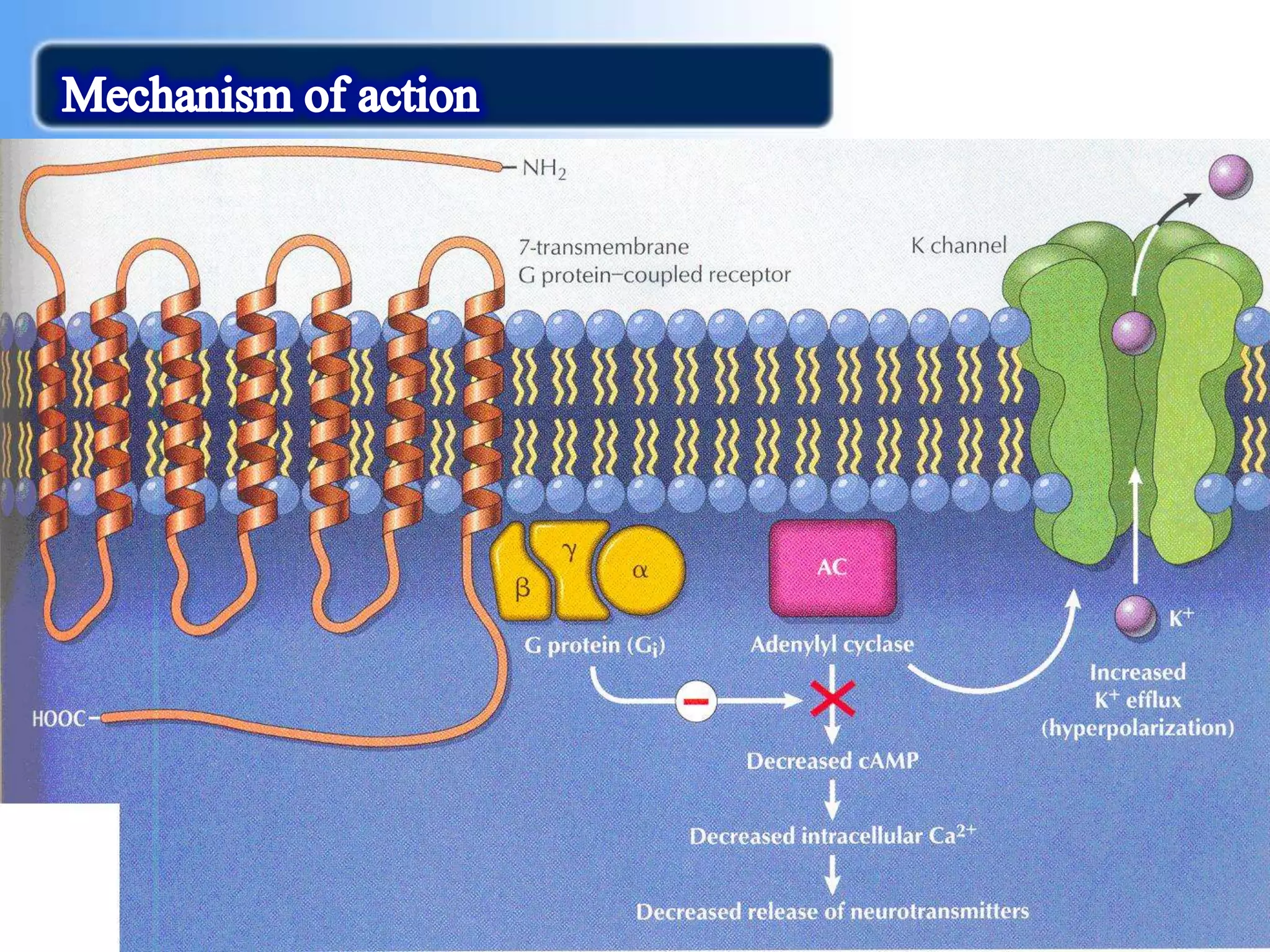
 Opioids activate 7- transmembrane GPCRs located
presynaptically and postsynaptically along pain transmission
pathways
 High densities of opioid receptors known as mu, delta and
kappa are found in the dorsal horn of the spinal cord and higher
CNS centers
 Most currently used opioid analgesics act mainly at mu- opioid
receptors
 Morphine acts at kappa receptors in lamina 1 and 11 of the
substantia Granulose of the spinal cord and decreases the
release of substance p, which is modulates pain perception in
the spinal cord
Mechanism of action
 Opioids have an onset of action that depends on the route of
administration
 Opioids causes hyper polarization of nerve cells , inhibition of
nerve firing and presynaptic inhibition of transmitter release
 Cellular effects of these drugs involve enhancement of neuronal
potassium efflux( hyperpolarizes neurons and makes them less
likely to respond to a pain stimulus ) and inhibition of calcium
influx ( decreases neuro- transmitter release from neurons located
along the pain transmission pathway )
 Brainstem opioid receptors mediate respiratory depression
produced by opioid analgesics
 Constipation results from activation of opoioid receptors in the
CNS and in the GIT
Mechanism of action
 Absorption of morphine from GI T is slow and incomplete
Quick effect is produced on subcutaneous injection
It is partly bound to plasma proteins
It is metabolized by conjugation with glucuronic acid
It is almost completely excreted in urine within 24 hours
Bioavailability is 20 to 40 per cent
Given sc , onset of action is in 15 – 20 min, peak effect in 1
hrs
Duration of action is 3 – 5 hrs
• Morphine causes analgesia
• Morphine relieves severe deep seated pain like visceral pain and
pain of trauma
• Opioids relieve pain both by raising the pain threshold at the
spinal cord level and more importantly by altering the brains
perception of pain
• It alters the emotional reaction to pain
• The analgesic action morphine is primarily due to its effect on
endogenous opioid receptors in midbrain and brain stem areas
• Inhibitory impulses from these areas to the dorsal horn constitute
the gating system
• The morphine also acts directly on the dorsal horn where it
inhibits the release of substance P
• Morphine produces euphoria in presence of pain
• But in the absence of pain , it produces dysphoria & restlessness
• With an increased dose, it produces sleep
• Tolerance is noted to both euphoria (mu receptor ) and
dysphoria (kappa receptors)
• Morphine induces sedation in analgesic doses and is useful when
pain is accompanied by insomnia
• Morphine has anti-tussive property
• Morphine depress the medularly cough centre , an effect not
blocked by naloxone
• It is not used clinically and related drugs like codeine, with less
respiratory depressant and addictive liability are used
• Nausea and vomiting are common features with analgesic doses
and induced by stimulation of the chemoreceptor tiger zone (CTZ)
• Tolerance develops to vomiting on prolonged use
• Higher doses of morphine inhibit the vomiting centre
• Morphine produces constriction of pupil ( miosis)
• Miosis is induced by mu and kappa mediated stimulation of the
oculomotor nucleus
• The effect is blocked by atropine
• Morphine addicts have constricted pupil
• Tolerance to papillary constriction is not seen in addicts and pinpoint
pupils are indicative of morphine abuse and diagnostic in morphine
poisoning ( other respiratory depressants induce papillary dilatation)
• The action of morphine on the respiration is dose dependent
• Analgesic doses of morphine induce depression of the respiratory
centre resulting in increase in plasma carbon dioxide
concentrations
• Respiratory center depression is mediated by mu receptors and is
the cause of death in morphine poisoning
• At higher doses it produces respiratory depression
• Respiratory depression is the most common cause of death in
acute overdose
• Opioids shift the equilibrium point of heat – regulating centre so
that body temperature falls slightly
• Morphine decreases peristaltic propulsive movements
• It produces spasm of intestinal smooth muscles and sphincters
• Gastric emptying is delayed
• It also increases absorption of water , So the feces get dried
• All these effects leads t o constipation
• Morphine increase billiary tract pressure due to contraction of the
gallbladder and constrictor of the biliary sphincter
• This produces increase in intrabiliary pressure
• Atropine antagonizes this effect
• Normal dose of morphine produces no effect on heart rate ,
blood pressure or circulation
• But hypo tension and bradycardia may be produced at toxic
dose
• Hypotension is due to dilation of peripheral veins and arterioles,
histamine release and reduced sympathetic activity and in large
doses due to depression of medularly vasomotor center’
• Bradycardia is due to stimulation of the vagal nucleus
• Because of respiratory depression and carbon dioxide retention,
cerebral vessels dilate and increase the cerebrospinal fluid
pressure
• Morphine is usually contraindicated in individuals with severe
brain injury
• Morphine releases histamine from mast cells, causing urticaria,
sweating and vasodilatation
• Morphine can cause the bronco-constriction , asthmatics should
not receive the drug
• Morphine inhibits release of GRH and corticotrophic releasing
hormone and it decreases the concentration of luteinizing
hormone, FSH & ACTH
• It increases prolactin and growth hormone release by diminishing
dopaminergic inhibition
• It increases antidiuretic hormone and leads to urinary retention
• No significant effect . May prolong labor in high doses
• Tone and amplitude of contractions of the urters is increased ,
tone of external sphincter and volume of the bladder are increased
• Opioids inhibit urinary voiding reflex
• All these result in urinary retention especially in orderly male with
prostate hypertrophy
• In high doses it produce convulsions. T hey may increases t he
excitability of the spinal cord
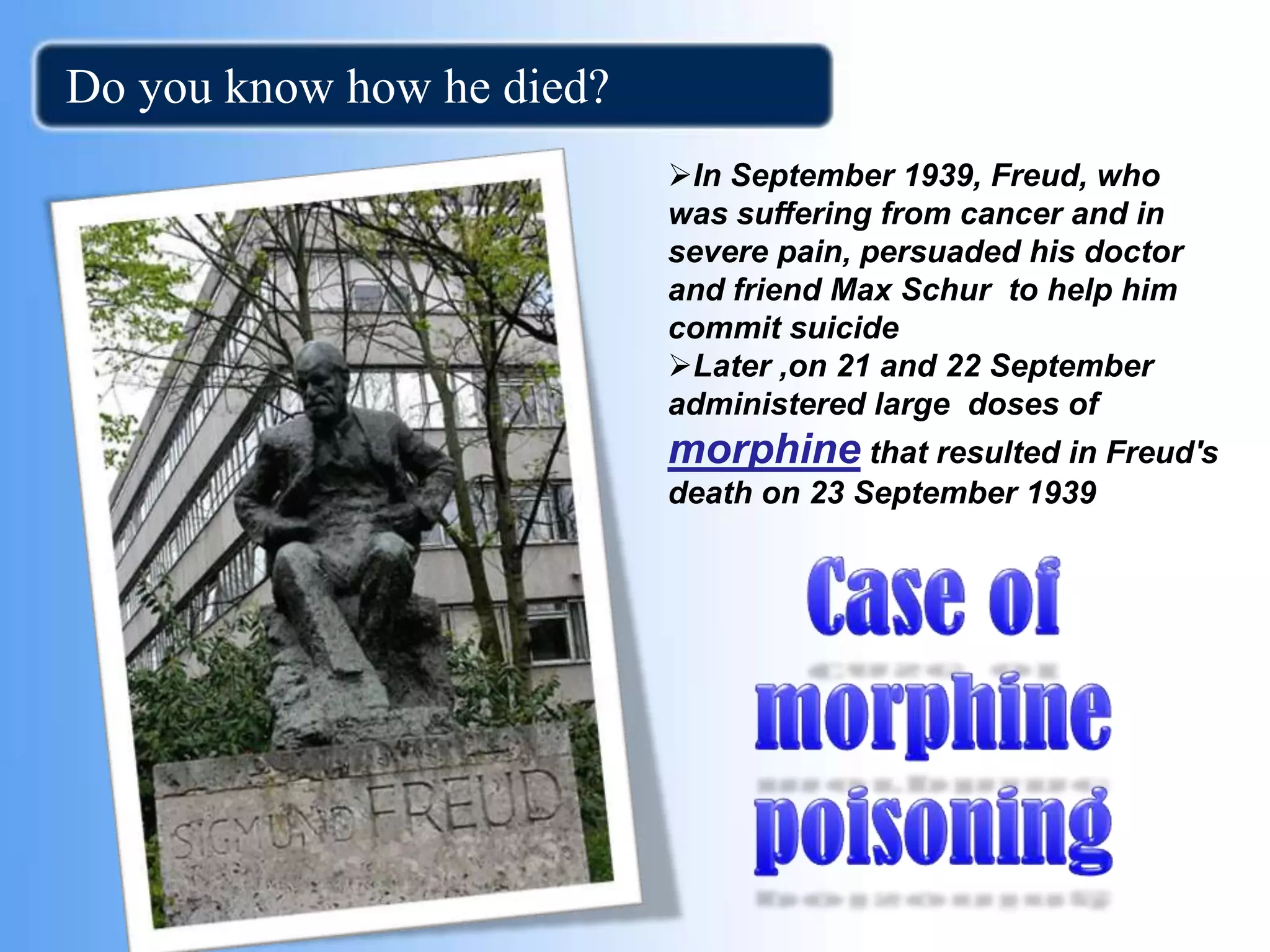
Do you know who is this?
was an Austrian
neurologist who founder of
psychoanalysis
was a physiologist,
medical doctor, psychologist
Do you know how he died?
In September 1939, Freud, who
was suffering from cancer and in
severe pain, persuaded his doctor
and friend Max Schur to help him
commit suicide
Later ,on 21 and 22 September
administered large doses of
morphine that resulted in Freud's
death on 23 September 1939
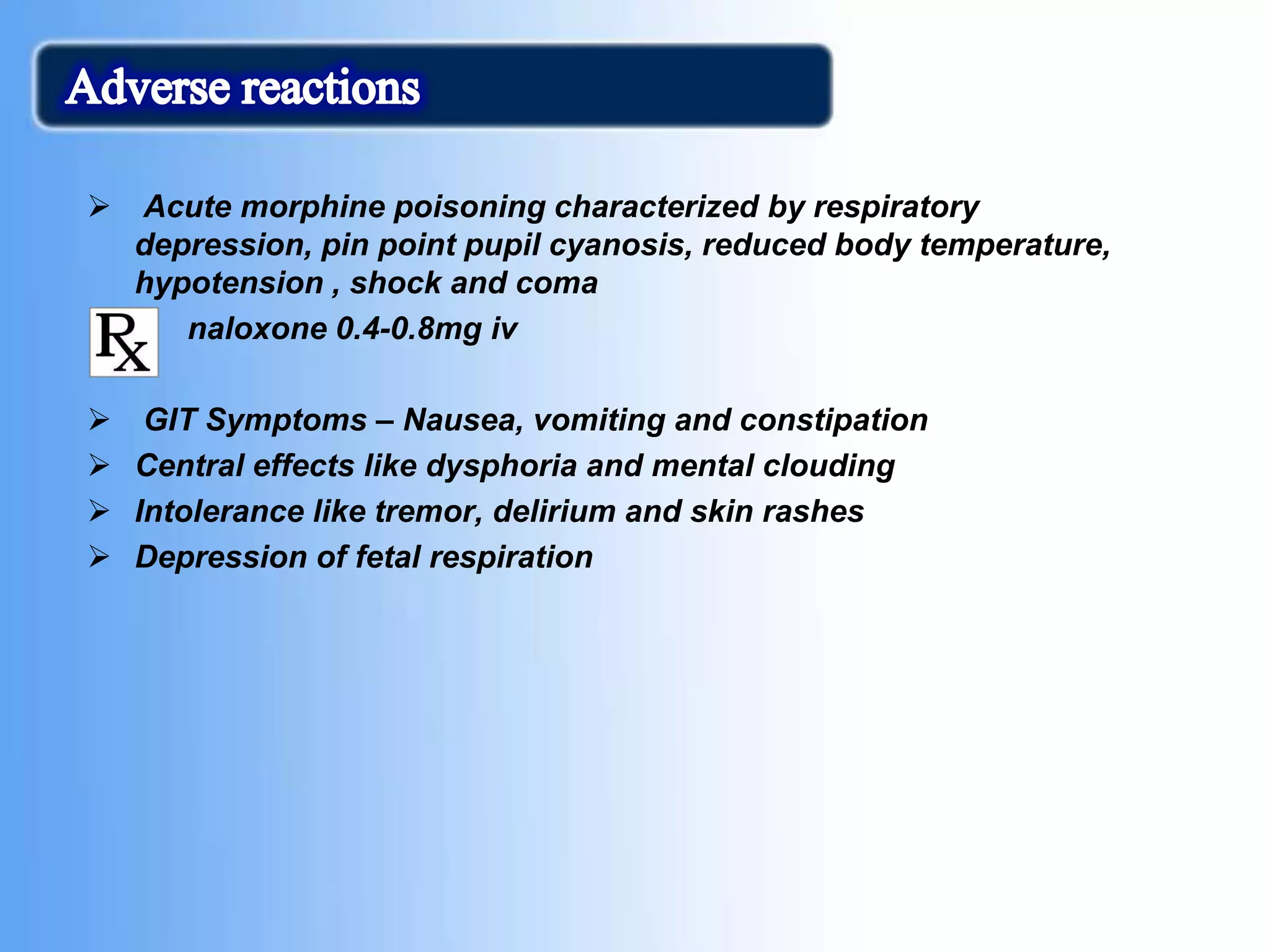
 Acute morphine poisoning characterized by respiratory
depression, pin point pupil cyanosis, reduced body temperature,
hypotension , shock and coma
 naloxone 0.4-0.8mg iv
 GIT Symptoms – Nausea, vomiting and constipation
 Central effects like dysphoria and mental clouding
 Intolerance like tremor, delirium and skin rashes
 Depression of fetal respiration
The depressant actions of morphine are enhanced
by phenothiazines, monoamine oxidase inhibitors and tricycle
antidepressants
Repeated use of drug produces tolerance to the respiratory
depressant, analgesic, euphoric and sedative effects of morphine
Physical and psychological dependence readily occur with
morphine
Withdrawal produce a series of autonomic , motor and
psychological responses that incapacitate the individual and cause
serious - unbearable symptoms
Treatment of withdrawal syndrome is oral methadone
 Infants and elder people
 Respiratory conditions such as bronchial asthma
 Head injury
 Acute abdominal pain
 Hypothyroidism
Preparation Dose
Tincture opium - 0.3 to 2 ml by mouth
Morphine sulphate - 8 – 20 mg by mouth or by injection
Morphine hydrochloride - 8 – 20 mg by mouth or by injection
1. It is an analgesic for the relief of severe
pain
2. Used as pre-anesthetic medication
3. For producing sleep and sedation
4. Used as anti-tussive
5. For the treatment of diarrhea
6. In the treatment of acute left ventricular
failure
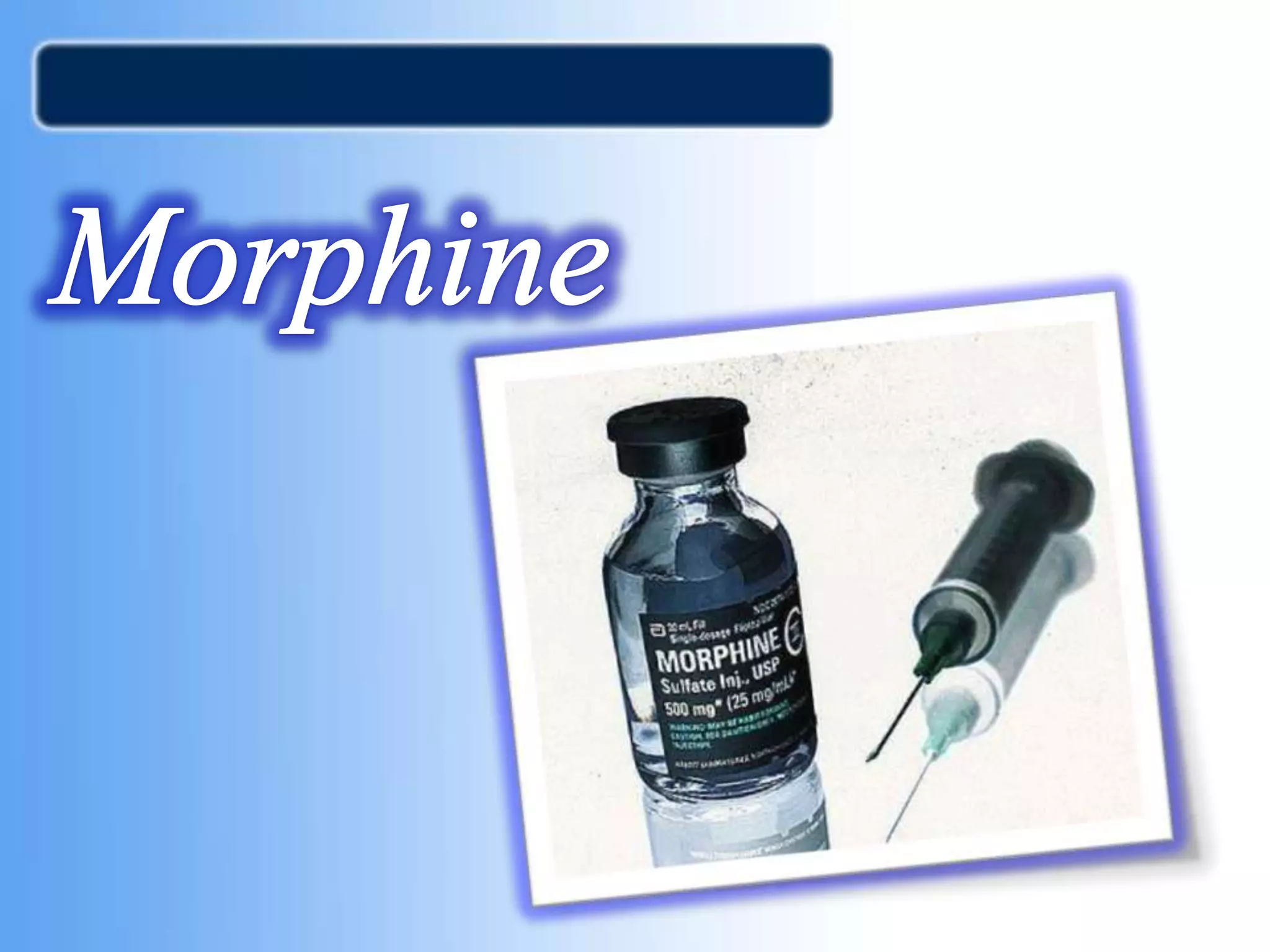
MORPHINE

MORPHINE

  • 2.
    Morphine was isolated fromraw opium in 1805 by a German pharmacologist, Friedrich Wilhelm Adam Serturner (1783-1841). Morphine is a potent suppressor of pain and is a very useful drug in painful conditions, especially in severe chest pain arising due to heart attacks. It also induces sleep in no time
  • 3.
    Barely eighteen years aftermorphine was discovered, it was used for homicide. In 1823, a twenty-seven year old French doctor, Edme Castaing, mixed morphine in the wine given to his friend, Auguste Ballet, to kill him
  • 4.
    In fact thename morphine comes from the Greek ‘god of dreams’, Morpheus. Incidentally Morpheus was the son of Hypnos, the Greek ‘god of sleep’, and our word ‘hypnosis’is derived from it. Hypnos was also the brother of Thanatos, the ‘god of death’. Morphine not only brings sleep and dreams but may cause death when taken in large doses. Morpheus (The God Of Dreams)
  • 5.
    Morphine is anatural opium alkaloid It is a dried extract obtained from the capsules of the poppy plant known as papaver somniferum It requires approximately 10 kg of raw opium to produce 1 kg of morphine
  • 6.
    • Morphine • Thebaine •Codeine Phenanthrene derivatives • Papaverine • Noscapine Benzo- isoquinoline derivatives 1. According to ring structure
  • 7.
    • Morphine • Codeine A.Natural opium alkaloids • Heroine • Pholcodeine B. Semi synthetic opium alkaloids • Pethidine • Methadine C. Synthetic opiods 2.According to synthesis
  • 8.
     Opioids exerttheir major effects by interacting with opioid receptors in the CNS  Opioids activate 7- transmembrane GPCRs located presynaptically and postsynaptically along pain transmission pathways  High densities of opioid receptors known as mu, delta and kappa are found in the dorsal horn of the spinal cord and higher CNS centers  Most currently used opioid analgesics act mainly at mu- opioid receptors  Morphine acts at kappa receptors in lamina 1 and 11 of the substantia Granulose of the spinal cord and decreases the release of substance p, which is modulates pain perception in the spinal cord Mechanism of action
  • 9.
     Opioids havean onset of action that depends on the route of administration  Opioids causes hyper polarization of nerve cells , inhibition of nerve firing and presynaptic inhibition of transmitter release  Cellular effects of these drugs involve enhancement of neuronal potassium efflux( hyperpolarizes neurons and makes them less likely to respond to a pain stimulus ) and inhibition of calcium influx ( decreases neuro- transmitter release from neurons located along the pain transmission pathway )  Brainstem opioid receptors mediate respiratory depression produced by opioid analgesics  Constipation results from activation of opoioid receptors in the CNS and in the GIT Mechanism of action
  • 11.
     Absorption ofmorphine from GI T is slow and incomplete Quick effect is produced on subcutaneous injection It is partly bound to plasma proteins It is metabolized by conjugation with glucuronic acid It is almost completely excreted in urine within 24 hours Bioavailability is 20 to 40 per cent Given sc , onset of action is in 15 – 20 min, peak effect in 1 hrs Duration of action is 3 – 5 hrs
  • 12.
    • Morphine causesanalgesia • Morphine relieves severe deep seated pain like visceral pain and pain of trauma • Opioids relieve pain both by raising the pain threshold at the spinal cord level and more importantly by altering the brains perception of pain • It alters the emotional reaction to pain • The analgesic action morphine is primarily due to its effect on endogenous opioid receptors in midbrain and brain stem areas • Inhibitory impulses from these areas to the dorsal horn constitute the gating system • The morphine also acts directly on the dorsal horn where it inhibits the release of substance P
  • 13.
    • Morphine produceseuphoria in presence of pain • But in the absence of pain , it produces dysphoria & restlessness • With an increased dose, it produces sleep • Tolerance is noted to both euphoria (mu receptor ) and dysphoria (kappa receptors) • Morphine induces sedation in analgesic doses and is useful when pain is accompanied by insomnia
  • 14.
    • Morphine hasanti-tussive property • Morphine depress the medularly cough centre , an effect not blocked by naloxone • It is not used clinically and related drugs like codeine, with less respiratory depressant and addictive liability are used • Nausea and vomiting are common features with analgesic doses and induced by stimulation of the chemoreceptor tiger zone (CTZ) • Tolerance develops to vomiting on prolonged use • Higher doses of morphine inhibit the vomiting centre
  • 15.
    • Morphine producesconstriction of pupil ( miosis) • Miosis is induced by mu and kappa mediated stimulation of the oculomotor nucleus • The effect is blocked by atropine • Morphine addicts have constricted pupil • Tolerance to papillary constriction is not seen in addicts and pinpoint pupils are indicative of morphine abuse and diagnostic in morphine poisoning ( other respiratory depressants induce papillary dilatation)
  • 16.
    • The actionof morphine on the respiration is dose dependent • Analgesic doses of morphine induce depression of the respiratory centre resulting in increase in plasma carbon dioxide concentrations • Respiratory center depression is mediated by mu receptors and is the cause of death in morphine poisoning • At higher doses it produces respiratory depression • Respiratory depression is the most common cause of death in acute overdose • Opioids shift the equilibrium point of heat – regulating centre so that body temperature falls slightly
  • 17.
    • Morphine decreasesperistaltic propulsive movements • It produces spasm of intestinal smooth muscles and sphincters • Gastric emptying is delayed • It also increases absorption of water , So the feces get dried • All these effects leads t o constipation • Morphine increase billiary tract pressure due to contraction of the gallbladder and constrictor of the biliary sphincter • This produces increase in intrabiliary pressure • Atropine antagonizes this effect
  • 18.
    • Normal doseof morphine produces no effect on heart rate , blood pressure or circulation • But hypo tension and bradycardia may be produced at toxic dose • Hypotension is due to dilation of peripheral veins and arterioles, histamine release and reduced sympathetic activity and in large doses due to depression of medularly vasomotor center’ • Bradycardia is due to stimulation of the vagal nucleus • Because of respiratory depression and carbon dioxide retention, cerebral vessels dilate and increase the cerebrospinal fluid pressure • Morphine is usually contraindicated in individuals with severe brain injury
  • 19.
    • Morphine releaseshistamine from mast cells, causing urticaria, sweating and vasodilatation • Morphine can cause the bronco-constriction , asthmatics should not receive the drug • Morphine inhibits release of GRH and corticotrophic releasing hormone and it decreases the concentration of luteinizing hormone, FSH & ACTH • It increases prolactin and growth hormone release by diminishing dopaminergic inhibition • It increases antidiuretic hormone and leads to urinary retention
  • 20.
    • No significanteffect . May prolong labor in high doses • Tone and amplitude of contractions of the urters is increased , tone of external sphincter and volume of the bladder are increased • Opioids inhibit urinary voiding reflex • All these result in urinary retention especially in orderly male with prostate hypertrophy • In high doses it produce convulsions. T hey may increases t he excitability of the spinal cord
  • 21.
    Do you knowwho is this? was an Austrian neurologist who founder of psychoanalysis was a physiologist, medical doctor, psychologist
  • 22.
    Do you knowhow he died? In September 1939, Freud, who was suffering from cancer and in severe pain, persuaded his doctor and friend Max Schur to help him commit suicide Later ,on 21 and 22 September administered large doses of morphine that resulted in Freud's death on 23 September 1939
  • 23.
     Acute morphinepoisoning characterized by respiratory depression, pin point pupil cyanosis, reduced body temperature, hypotension , shock and coma  naloxone 0.4-0.8mg iv  GIT Symptoms – Nausea, vomiting and constipation  Central effects like dysphoria and mental clouding  Intolerance like tremor, delirium and skin rashes  Depression of fetal respiration
  • 24.
    The depressant actionsof morphine are enhanced by phenothiazines, monoamine oxidase inhibitors and tricycle antidepressants Repeated use of drug produces tolerance to the respiratory depressant, analgesic, euphoric and sedative effects of morphine Physical and psychological dependence readily occur with morphine Withdrawal produce a series of autonomic , motor and psychological responses that incapacitate the individual and cause serious - unbearable symptoms Treatment of withdrawal syndrome is oral methadone
  • 25.
     Infants andelder people  Respiratory conditions such as bronchial asthma  Head injury  Acute abdominal pain  Hypothyroidism
  • 26.
    Preparation Dose Tincture opium- 0.3 to 2 ml by mouth Morphine sulphate - 8 – 20 mg by mouth or by injection Morphine hydrochloride - 8 – 20 mg by mouth or by injection
  • 27.
    1. It isan analgesic for the relief of severe pain 2. Used as pre-anesthetic medication 3. For producing sleep and sedation 4. Used as anti-tussive 5. For the treatment of diarrhea 6. In the treatment of acute left ventricular failure