CONGESTIVE CARDIAC FAILURE
 Definition 
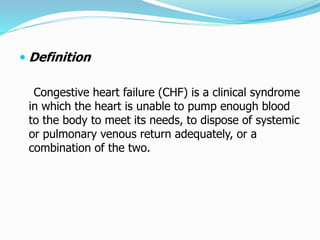
Congestive heart failure (CHF) is a clinical syndrome 
in which the heart is unable to pump enough blood 
to the body to meet its needs, to dispose of systemic 
or pulmonary venous return adequately, or a 
combination of the two.
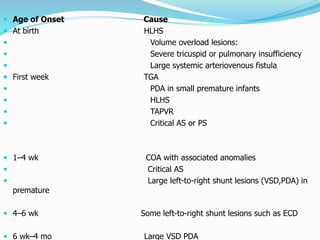
 Age of Onset Cause 
 At birth HLHS 
 Volume overload lesions: 
 Severe tricuspid or pulmonary insufficiency 
 Large systemic arteriovenous fistula 
 First week TGA 
 PDA in small premature infants 
 HLHS 
 TAPVR 
 Critical AS or PS 
 1–4 wk COA with associated anomalies 
 Critical AS 
 Large left-to-right shunt lesions (VSD,PDA) in 
premature 
 4–6 wk Some left-to-right shunt lesions such as ECD 
 6 wk–4 mo Large VSD PDA
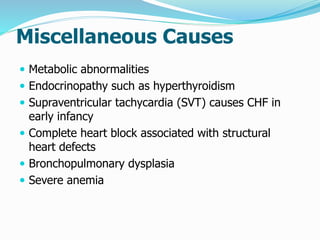
Miscellaneous Causes 
 Metabolic abnormalities 
 Endocrinopathy such as hyperthyroidism 
 Supraventricular tachycardia (SVT) causes CHF in 
early infancy 
 Complete heart block associated with structural 
heart defects 
 Bronchopulmonary dysplasia 
 Severe anemia
Acquired Heart Disease 
 Dilated cardiomyopathy 
 Myocarditis associated with Kawasaki’s disease 
 Patients who received surgery for some types of 
CHDs 
 Viral myocarditis 
 Acute rheumatic carditis 
 Rheumatic valvular heart diseases,
Pathophysiology 
 Cardiac output is determined by preload, afterload, 
myocardial contractility, and heart rate 
1. Increase in preload 
2. Increase in after load 
3. Decrease contractility 
4. Increase HR
Compensatory Mechanisms 
 Activation of 
1. Sympathetic nervous system 
 increase in sympathetic tone secondary to increased 
adrenal secretion of circulating epinephrine. 
 increased neural release of norepinephrine. 
2. Renin–angiotensin–aldosterone system 
 Angiotensin II may cause a trophic response in 
vascular smooth muscle (with vasoconstriction) and 
myocardial hypertrophy, attempting to restore 
wallstress to normal
Symptoms 
 Poor weight gain 
 Feeding difficulties 
 Fast breathing 
 Cough and wheezing 
 Irritability 
 Excessive sweating 
 Puffiness of face 
 Pedal edema
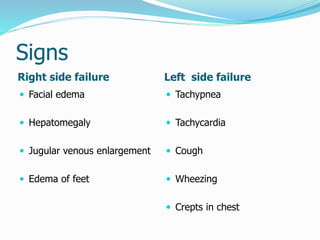
Signs 
Right side failure Left side failure 
 Facial edema 
 Hepatomegaly 
 Jugular venous enlargement 
 Edema of feet 
 Tachypnea 
 Tachycardia 
 Cough 
 Wheezing 
 Crepts in chest
INVESTIGATIONS 
 CXR 
 ECG 
 2D ECHO 
 CARDIAC CATHETERIZATION- Biopsy to diagnose 
inflammatory disease, infections, metabolic disorder
Treatment 
1. Elimination of the underlying causes. 
2. Treatment of the precipitating or contributing 
causes (e.g., infection, anemia, arrhythmias, fever) 
3. Control of heart failure state.
GENERAL MEASURES 
 Restrict activity 
 Propped up position 
 Humidified Oxygen 
 Sedation 
 Diet
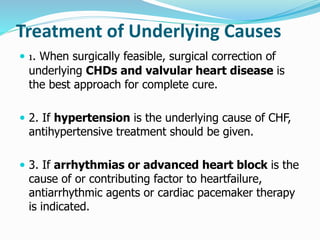
Treatment of Underlying Causes 
 1. When surgically feasible, surgical correction of 
underlying CHDs and valvular heart disease is 
the best approach for complete cure. 
 2. If hypertension is the underlying cause of CHF, 
antihypertensive treatment should be given. 
 3. If arrhythmias or advanced heart block is the 
cause of or contributing factor to heartfailure, 
antiarrhythmic agents or cardiac pacemaker therapy 
is indicated.
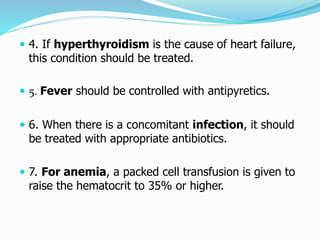
 4. If hyperthyroidism is the cause of heart failure, 
this condition should be treated. 
 5. Fever should be controlled with antipyretics. 
 6. When there is a concomitant infection, it should 
be treated with appropriate antibiotics. 
 7. For anemia, a packed cell transfusion is given to 
raise the hematocrit to 35% or higher.
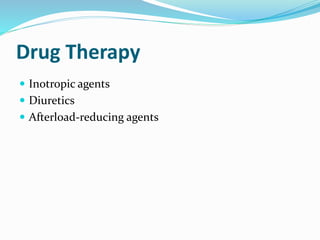
Drug Therapy 
 Inotropic agents 
 Diuretics 
 Afterload-reducing agents
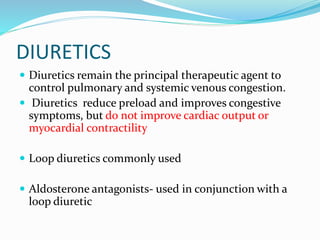
DIURETICS 
 Diuretics remain the principal therapeutic agent to 
control pulmonary and systemic venous congestion. 
 Diuretics reduce preload and improves congestive 
symptoms, but do not improve cardiac output or 
myocardial contractility 
 Loop diuretics commonly used 
 Aldosterone antagonists- used in conjunction with a 
loop diuretic
 Side effects of diuretic therapy. 
1. Hypokalemia 
2. Hypochloremic alkalosis may result because the loss 
of chloride ions is greater than the loss of sodium 
ions through the kidneys
Rapidly Acting Inotropic Agents 
 In critically ill infants with CHF, in those with renal 
dysfunction (e.g., infants with coarctation of the 
aorta), or in postoperative cardiac patients with heart 
failure, rapidly acting catecholamines with a short 
duration of action are preferable to digoxin 
 dopamine, 
 dobutamine 
 epinephrine
Digoxin 
 Increases CO 
 Diuretic effect 
 Parasympathetic action- slows HR & inhibits AV 
conduction 
 The pediatric dosage of digoxin is much larger than 
the adult dosage- larger volume of distribution
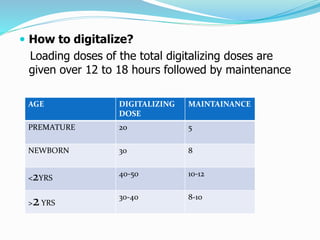
 How to digitalize? 
Loading doses of the total digitalizing doses are 
given over 12 to 18 hours followed by maintenance 
AGE DIGITALIZING 
DOSE 
MAINTAINANCE 
PREMATURE 20 5 
NEWBORN 30 8 
<2YRS 
40-50 10-12 
>2 YRS 
30-40 8-10
Step-by-step method of digitalization: 
 1. Obtain a baseline ECG and baseline levels of serum 
electrolytes. 
 2. Calculate the total digitalizing dose 
 3. Give half the total digitalizing dose immediately 
followed by one fourth and then the final fourth of the 
total digitalizing dose at 6- to 8-hour intervals. 
 4. Start the maintenance dose 12 hours after the final 
total digitalizing dose. 
 Obtaining an ECG before starting the maintenance dose 
is advised
Afterload-Reducing Agents 
 Arteriolar vasodilators - hydralazine 
 Venodilators -nitroglycerin, isosorbide dinitrate 
 Mixed vasodilators include ACE inhibitors captopril, 
enalapril, nitroprusside, and prazosin
CARNITINE 
 Carnitine, which is an essential cofactor for 
transport of long-chain fatty acid into mitochondria 
for oxidation, has been shown to be beneficial in 
some cases of cardiomyopathy 
Most of these patients had dilated cardiomyopathy 
 DOSE- 50 to 100 mg/kg/day, given twice a day or 
three times a day orally (maximum daily dose, 3 g). 
 It improved myocardial function, reduced 
cardiomegaly, and improved muscle weakness.
THANKYOU

Congestive cardiac failure

  • 1.
  • 2.
     Definition Congestiveheart failure (CHF) is a clinical syndrome in which the heart is unable to pump enough blood to the body to meet its needs, to dispose of systemic or pulmonary venous return adequately, or a combination of the two.
  • 3.
     Age ofOnset Cause  At birth HLHS  Volume overload lesions:  Severe tricuspid or pulmonary insufficiency  Large systemic arteriovenous fistula  First week TGA  PDA in small premature infants  HLHS  TAPVR  Critical AS or PS  1–4 wk COA with associated anomalies  Critical AS  Large left-to-right shunt lesions (VSD,PDA) in premature  4–6 wk Some left-to-right shunt lesions such as ECD  6 wk–4 mo Large VSD PDA
  • 4.
    Miscellaneous Causes Metabolic abnormalities  Endocrinopathy such as hyperthyroidism  Supraventricular tachycardia (SVT) causes CHF in early infancy  Complete heart block associated with structural heart defects  Bronchopulmonary dysplasia  Severe anemia
  • 5.
    Acquired Heart Disease  Dilated cardiomyopathy  Myocarditis associated with Kawasaki’s disease  Patients who received surgery for some types of CHDs  Viral myocarditis  Acute rheumatic carditis  Rheumatic valvular heart diseases,
  • 6.
    Pathophysiology  Cardiacoutput is determined by preload, afterload, myocardial contractility, and heart rate 1. Increase in preload 2. Increase in after load 3. Decrease contractility 4. Increase HR
  • 7.
    Compensatory Mechanisms Activation of 1. Sympathetic nervous system  increase in sympathetic tone secondary to increased adrenal secretion of circulating epinephrine.  increased neural release of norepinephrine. 2. Renin–angiotensin–aldosterone system  Angiotensin II may cause a trophic response in vascular smooth muscle (with vasoconstriction) and myocardial hypertrophy, attempting to restore wallstress to normal
  • 8.
    Symptoms  Poorweight gain  Feeding difficulties  Fast breathing  Cough and wheezing  Irritability  Excessive sweating  Puffiness of face  Pedal edema
  • 9.
    Signs Right sidefailure Left side failure  Facial edema  Hepatomegaly  Jugular venous enlargement  Edema of feet  Tachypnea  Tachycardia  Cough  Wheezing  Crepts in chest
  • 10.
    INVESTIGATIONS  CXR  ECG  2D ECHO  CARDIAC CATHETERIZATION- Biopsy to diagnose inflammatory disease, infections, metabolic disorder
  • 11.
    Treatment 1. Eliminationof the underlying causes. 2. Treatment of the precipitating or contributing causes (e.g., infection, anemia, arrhythmias, fever) 3. Control of heart failure state.
  • 12.
    GENERAL MEASURES Restrict activity  Propped up position  Humidified Oxygen  Sedation  Diet
  • 13.
    Treatment of UnderlyingCauses  1. When surgically feasible, surgical correction of underlying CHDs and valvular heart disease is the best approach for complete cure.  2. If hypertension is the underlying cause of CHF, antihypertensive treatment should be given.  3. If arrhythmias or advanced heart block is the cause of or contributing factor to heartfailure, antiarrhythmic agents or cardiac pacemaker therapy is indicated.
  • 14.
     4. Ifhyperthyroidism is the cause of heart failure, this condition should be treated.  5. Fever should be controlled with antipyretics.  6. When there is a concomitant infection, it should be treated with appropriate antibiotics.  7. For anemia, a packed cell transfusion is given to raise the hematocrit to 35% or higher.
  • 15.
    Drug Therapy Inotropic agents  Diuretics  Afterload-reducing agents
  • 16.
    DIURETICS  Diureticsremain the principal therapeutic agent to control pulmonary and systemic venous congestion.  Diuretics reduce preload and improves congestive symptoms, but do not improve cardiac output or myocardial contractility  Loop diuretics commonly used  Aldosterone antagonists- used in conjunction with a loop diuretic
  • 17.
     Side effectsof diuretic therapy. 1. Hypokalemia 2. Hypochloremic alkalosis may result because the loss of chloride ions is greater than the loss of sodium ions through the kidneys
  • 18.
    Rapidly Acting InotropicAgents  In critically ill infants with CHF, in those with renal dysfunction (e.g., infants with coarctation of the aorta), or in postoperative cardiac patients with heart failure, rapidly acting catecholamines with a short duration of action are preferable to digoxin  dopamine,  dobutamine  epinephrine
  • 19.
    Digoxin  IncreasesCO  Diuretic effect  Parasympathetic action- slows HR & inhibits AV conduction  The pediatric dosage of digoxin is much larger than the adult dosage- larger volume of distribution
  • 20.
     How todigitalize? Loading doses of the total digitalizing doses are given over 12 to 18 hours followed by maintenance AGE DIGITALIZING DOSE MAINTAINANCE PREMATURE 20 5 NEWBORN 30 8 <2YRS 40-50 10-12 >2 YRS 30-40 8-10
  • 21.
    Step-by-step method ofdigitalization:  1. Obtain a baseline ECG and baseline levels of serum electrolytes.  2. Calculate the total digitalizing dose  3. Give half the total digitalizing dose immediately followed by one fourth and then the final fourth of the total digitalizing dose at 6- to 8-hour intervals.  4. Start the maintenance dose 12 hours after the final total digitalizing dose.  Obtaining an ECG before starting the maintenance dose is advised
  • 22.
    Afterload-Reducing Agents Arteriolar vasodilators - hydralazine  Venodilators -nitroglycerin, isosorbide dinitrate  Mixed vasodilators include ACE inhibitors captopril, enalapril, nitroprusside, and prazosin
  • 23.
    CARNITINE  Carnitine,which is an essential cofactor for transport of long-chain fatty acid into mitochondria for oxidation, has been shown to be beneficial in some cases of cardiomyopathy Most of these patients had dilated cardiomyopathy  DOSE- 50 to 100 mg/kg/day, given twice a day or three times a day orally (maximum daily dose, 3 g).  It improved myocardial function, reduced cardiomegaly, and improved muscle weakness.
  • 24.