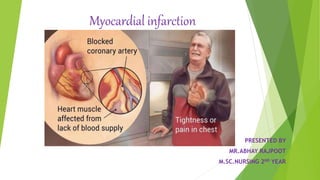



Myocardial infarction
PRESENTED BY
MR.ABHAY RAJPOOT
M.SC.NURSING 2ND YEAR
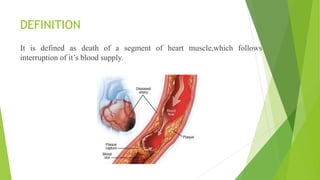
DEFINITION
It is defined as death of a segment of heart muscle,which follows
interruption of it’s blood supply.
INCIDENCE:
According to a Spanish study, the crude coronary heart disease (CHD)
incidence rate was 300.6/100,000 person-years for men
and 47.9/100,000 person-years for women. The incidence of MI in India is
64.37/1000 people in men aged 29-69 years, alcohol intake led to 30%
lower CHD incidence.
RISK FACTORS:
MODIFIABLE RISK FACTORS:
 Tobacco use
 High blood cholesterol or triglyceride levels
 Lack of exercise
 Obesity
 Stress
NONMODIFIABLE RISK FACTORS:
 Family history of heart disease
 Older age
 Diabetes
 High blood pressure
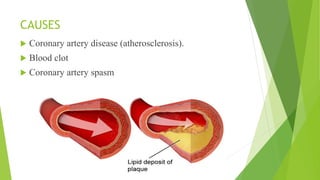
CAUSES
 Coronary artery disease (atherosclerosis).
 Blood clot
 Coronary artery spasm
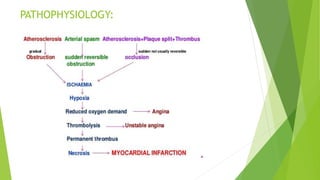
PATHOPHYSIOLOGY:
SYMPTOMS:
CARDIOVASCULAR-
 Ischemia-
 Low cardiac output-
 Chest pain –chest pain occurs suddenly , severe immobilizing chest pain that not relieved by
rest , position change and medications.
 Severity – more than angina pectoris
 Duration –more than 15 minutes and not relieved by nitroglycerine
 Radiation - pain radiated to nose, jaw, shoulder and upper left arm and downward 4th and 5th
fingers
 Decrease pulse rate.
 Bradycardia (Decrease pulse rate)
 Hypertension
 Myocardial infarction-
 Diaphoresis –excessive sweating
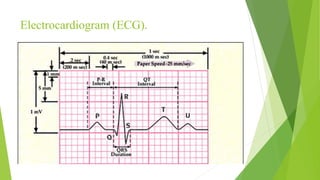
 ECG changes – ST segment and T wave changes, also show tachycardia, bradcardia, or
dysrhythimas.
 Dysarrithmias
CONTI…
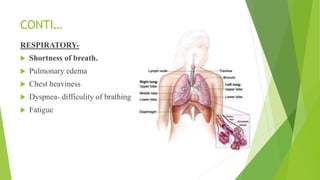
RESPIRATORY-
 Shortness of breath.
 Pulmonary edema
 Chest heaviness
 Dyspnea- difficulity of brathing
 Fatigue
CONTI….
 Genitourinary-Decreased Urinary Output May Indicate Cardiogenic
Shock.
 Gastrointestinal- Nausea And Vomiting
 Skin- Cool, Clammy ,Diaphoretic , And Pale Appearance On Skin
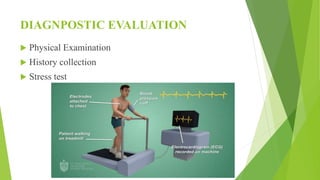
DIAGNPOSTIC EVALUATION
 Physical Examination
 History collection
 Stress test
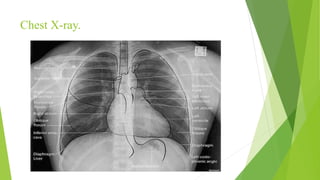
Chest X-ray.
Electrocardiogram (ECG).
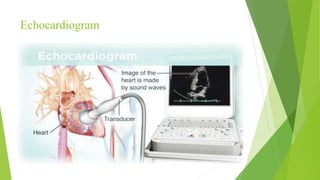
Echocardiogram
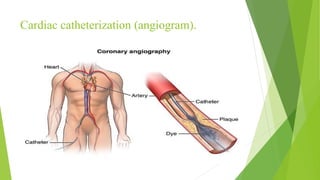
Cardiac catheterization (angiogram).
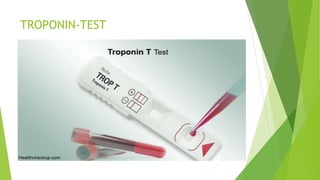
TROPONIN-TEST
COMPLICATIONS:
 Heart attack
 Heart failure
 Abnormal heart rhythm (arrhythmia)
PREVENTION:
 Quit smoking
 Control conditions such as high blood pressure, high cholesterol and diabetes
 Stay physically active
 Eat a low-fat, low-salt diet that's rich in fruits, vegetables and whole grains
 Maintain a healthy weight
 Reduce and manage stress
MEDICAL MANAGEMENT:
Various drugs can be used to treat coronary artery disease, including:
 Vasodilators (These drugs acts as blood vessel dilator):
• Nitrates
 Beta-Blockers (Decrease work load in heart):
• Propranolol 20-40 mg
 Calcium channel blocker (They improve coronary blood flow):
• Nifedipine
• Verapamil
CONTI….
 Anticoagulant Drugs:
 Heparin
 Opiate Analgesic (For reduce pain)
 Morphine sulphate
 Thrombolytic Drugs:
 Streptokinase,Urokinase
ANTIHYPERTENSIVE MEDICINES-
 Methydopa - This medication is used alone or with other medications
to treat high blood pressure (hypertension). Lowering high blood
pressure helps prevent strokes, heart attacks, and kidney problems.
Methyldopa works by relaxing blood vessels so blood can flow more
easily.
 Sodium nitroprusside- It is used for lowering the blood pressure.
 Amlodipine- Amlodipine is used with or without other medications to
treat high blood pressure. Lowering high blood pressure helps prevent
strokes, heart attacks, and kidney problems. Dose-10 mg,20 mg.
SURGICAL MANAGEMENT
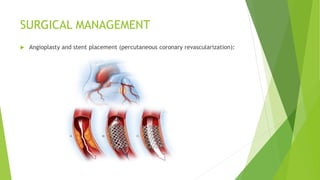
 Angioplasty and stent placement (percutaneous coronary revascularization):
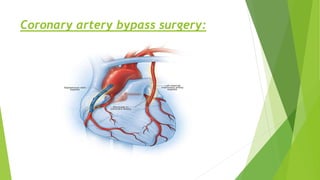
Coronary artery bypass surgery:
NURSING MANAGEMENT
 Instruct the client regarding the purpose of diagnostic medical &
surgical procedures and the pre- & post procedure expectations.
 Assist the client to identify risk factors that can be modified, and set
goals that will promote change in lifestyle to reduce the impact of risk
factors.
 Instruct client regarding a low-calorie, low-sodium, low-cholesterol,
low-fat diet with a increase in dietary fiber. Stress that dietary changes
are not temporary and must be maintained for life.
 Provide community resources to client regarding exercise, smoking
cessation and stress reduction.
NURSING DIAGNOSIS
 Impaired gas exchange related to decreased blood flow as evidenced by
breathlessness
 Acute pain related to disease condition as evidenced by patient verbalization
 Impaired physical mobility related to weakness as evidenced by patient is
unable to perform daily activity.
 Imbalanced nutrition less than body requirement related to less intake of food
as evidenced by weight loss
 Disturbed sleep pattern related to hospitalization as evidenced by patient
verbalization
 Anxiety related to hospitalization as evidenced by patient asking too many
question.
 Knowledge deficit related to disease process and treatment as evidenced by
patient is having many doubts
RESEARCH STUDY
 For years chest pain (angina) has been considered symptomatic almost
synonymous with heart attacks (myocardial infarction). A recent study
suggests this might not be the case. Many patients taken to the hospital
have virtually no discernible chest pain which leads to them being treated
on a less urgent basis which leads to higher casualties.
 According to estimates 42% of women never experienced chest pain,
while the figure was 30.7% in the case of men. This puts women as a
higher risk group when it comes to painless heart attacks. According to a
leading cardiologist, 3 out of 10 people in India have a painless heart
attack mostly people who have hypertension and diabetes. The signals of
discomfort are usually too vague to cause alarm. Therefore people who
suffer from diabetes and hypertension should be rushed to the hospital
even if the.
SUMMARY
CONCLUSION
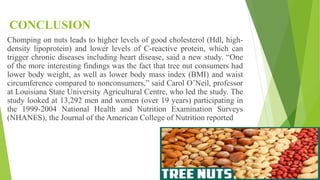
Chomping on nuts leads to higher levels of good cholesterol (Hdl, high-
density lipoprotein) and lower levels of C-reactive protein, which can
trigger chronic diseases including heart disease, said a new study. “One
of the more interesting findings was the fact that tree nut consumers had
lower body weight, as well as lower body mass index (BMI) and waist
circumference compared to nonconsumers,” said Carol O’Neil, professor
at Louisiana State University Agricultural Centre, who led the study. The
study looked at 13,292 men and women (over 19 years) participating in
the 1999-2004 National Health and Nutrition Examination Surveys
(NHANES), the Journal of the American College of Nutrition reported
ASSIGNMENT:
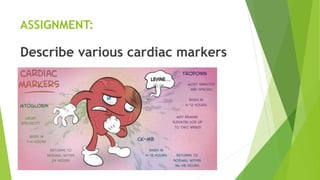
Describe various cardiac markers
BIBLIOGRAPHY:
 Black M. joyce, Hwks hokanson jane,medical surgical nursing.8th edition.
volume 2. New delhi ;Reed elsevier india private limited:2009.p1411-1426.
 Suddarth’s and brunner, Hinkle L.Janice, Cheever H.Kerry. text book of medical
surgical nursing.13th edition . volume 1.New delhi: wolters kluwer india Pvt ltd
;2014.p729-759.
 Chugh N S . text book of medical surgical nursing .volume 1.delhi;avichal
publisher company:2013.p303-310.
 https://www.mayoclinic.org/diseases-conditions/myocardial-ischemia/diagnosis-
treatment/drc-20375422
 https://en.wikipedia.org/wiki/Myocardial_infarction
 https://www.drugs.com/health-guide/heart-attack-myocardial-infarction.html
 https://my.clevelandclinic.org/health/diseases/16818-heart-attack-myocardial-
infarction/symptoms
MYOCARDIAL INFARCTION

MYOCARDIAL INFARCTION

  • 1.
    Myocardial infarction PRESENTED BY MR.ABHAYRAJPOOT M.SC.NURSING 2ND YEAR
  • 2.
    DEFINITION It is definedas death of a segment of heart muscle,which follows interruption of it’s blood supply.
  • 3.
    INCIDENCE: According to aSpanish study, the crude coronary heart disease (CHD) incidence rate was 300.6/100,000 person-years for men and 47.9/100,000 person-years for women. The incidence of MI in India is 64.37/1000 people in men aged 29-69 years, alcohol intake led to 30% lower CHD incidence.
  • 4.
    RISK FACTORS: MODIFIABLE RISKFACTORS:  Tobacco use  High blood cholesterol or triglyceride levels  Lack of exercise  Obesity  Stress NONMODIFIABLE RISK FACTORS:  Family history of heart disease  Older age  Diabetes  High blood pressure
  • 5.
    CAUSES  Coronary arterydisease (atherosclerosis).  Blood clot  Coronary artery spasm
  • 6.
  • 7.
    SYMPTOMS: CARDIOVASCULAR-  Ischemia-  Lowcardiac output-  Chest pain –chest pain occurs suddenly , severe immobilizing chest pain that not relieved by rest , position change and medications.  Severity – more than angina pectoris  Duration –more than 15 minutes and not relieved by nitroglycerine  Radiation - pain radiated to nose, jaw, shoulder and upper left arm and downward 4th and 5th fingers  Decrease pulse rate.  Bradycardia (Decrease pulse rate)  Hypertension  Myocardial infarction-  Diaphoresis –excessive sweating  ECG changes – ST segment and T wave changes, also show tachycardia, bradcardia, or dysrhythimas.  Dysarrithmias
  • 8.
    CONTI… RESPIRATORY-  Shortness ofbreath.  Pulmonary edema  Chest heaviness  Dyspnea- difficulity of brathing  Fatigue
  • 9.
    CONTI….  Genitourinary-Decreased UrinaryOutput May Indicate Cardiogenic Shock.  Gastrointestinal- Nausea And Vomiting  Skin- Cool, Clammy ,Diaphoretic , And Pale Appearance On Skin
  • 10.
    DIAGNPOSTIC EVALUATION  PhysicalExamination  History collection  Stress test
  • 11.
  • 12.
  • 13.
  • 14.
  • 16.
  • 17.
    COMPLICATIONS:  Heart attack Heart failure  Abnormal heart rhythm (arrhythmia)
  • 18.
    PREVENTION:  Quit smoking Control conditions such as high blood pressure, high cholesterol and diabetes  Stay physically active  Eat a low-fat, low-salt diet that's rich in fruits, vegetables and whole grains  Maintain a healthy weight  Reduce and manage stress
  • 19.
    MEDICAL MANAGEMENT: Various drugscan be used to treat coronary artery disease, including:  Vasodilators (These drugs acts as blood vessel dilator): • Nitrates  Beta-Blockers (Decrease work load in heart): • Propranolol 20-40 mg  Calcium channel blocker (They improve coronary blood flow): • Nifedipine • Verapamil
  • 20.
    CONTI….  Anticoagulant Drugs: Heparin  Opiate Analgesic (For reduce pain)  Morphine sulphate  Thrombolytic Drugs:  Streptokinase,Urokinase
  • 21.
    ANTIHYPERTENSIVE MEDICINES-  Methydopa- This medication is used alone or with other medications to treat high blood pressure (hypertension). Lowering high blood pressure helps prevent strokes, heart attacks, and kidney problems. Methyldopa works by relaxing blood vessels so blood can flow more easily.  Sodium nitroprusside- It is used for lowering the blood pressure.  Amlodipine- Amlodipine is used with or without other medications to treat high blood pressure. Lowering high blood pressure helps prevent strokes, heart attacks, and kidney problems. Dose-10 mg,20 mg.
  • 22.
    SURGICAL MANAGEMENT  Angioplastyand stent placement (percutaneous coronary revascularization):
  • 23.
  • 24.
    NURSING MANAGEMENT  Instructthe client regarding the purpose of diagnostic medical & surgical procedures and the pre- & post procedure expectations.  Assist the client to identify risk factors that can be modified, and set goals that will promote change in lifestyle to reduce the impact of risk factors.  Instruct client regarding a low-calorie, low-sodium, low-cholesterol, low-fat diet with a increase in dietary fiber. Stress that dietary changes are not temporary and must be maintained for life.  Provide community resources to client regarding exercise, smoking cessation and stress reduction.
  • 25.
    NURSING DIAGNOSIS  Impairedgas exchange related to decreased blood flow as evidenced by breathlessness  Acute pain related to disease condition as evidenced by patient verbalization  Impaired physical mobility related to weakness as evidenced by patient is unable to perform daily activity.  Imbalanced nutrition less than body requirement related to less intake of food as evidenced by weight loss  Disturbed sleep pattern related to hospitalization as evidenced by patient verbalization  Anxiety related to hospitalization as evidenced by patient asking too many question.  Knowledge deficit related to disease process and treatment as evidenced by patient is having many doubts
  • 26.
    RESEARCH STUDY  Foryears chest pain (angina) has been considered symptomatic almost synonymous with heart attacks (myocardial infarction). A recent study suggests this might not be the case. Many patients taken to the hospital have virtually no discernible chest pain which leads to them being treated on a less urgent basis which leads to higher casualties.  According to estimates 42% of women never experienced chest pain, while the figure was 30.7% in the case of men. This puts women as a higher risk group when it comes to painless heart attacks. According to a leading cardiologist, 3 out of 10 people in India have a painless heart attack mostly people who have hypertension and diabetes. The signals of discomfort are usually too vague to cause alarm. Therefore people who suffer from diabetes and hypertension should be rushed to the hospital even if the.
  • 27.
  • 28.
    CONCLUSION Chomping on nutsleads to higher levels of good cholesterol (Hdl, high- density lipoprotein) and lower levels of C-reactive protein, which can trigger chronic diseases including heart disease, said a new study. “One of the more interesting findings was the fact that tree nut consumers had lower body weight, as well as lower body mass index (BMI) and waist circumference compared to nonconsumers,” said Carol O’Neil, professor at Louisiana State University Agricultural Centre, who led the study. The study looked at 13,292 men and women (over 19 years) participating in the 1999-2004 National Health and Nutrition Examination Surveys (NHANES), the Journal of the American College of Nutrition reported
  • 29.
  • 30.
    BIBLIOGRAPHY:  Black M.joyce, Hwks hokanson jane,medical surgical nursing.8th edition. volume 2. New delhi ;Reed elsevier india private limited:2009.p1411-1426.  Suddarth’s and brunner, Hinkle L.Janice, Cheever H.Kerry. text book of medical surgical nursing.13th edition . volume 1.New delhi: wolters kluwer india Pvt ltd ;2014.p729-759.  Chugh N S . text book of medical surgical nursing .volume 1.delhi;avichal publisher company:2013.p303-310.  https://www.mayoclinic.org/diseases-conditions/myocardial-ischemia/diagnosis- treatment/drc-20375422  https://en.wikipedia.org/wiki/Myocardial_infarction  https://www.drugs.com/health-guide/heart-attack-myocardial-infarction.html  https://my.clevelandclinic.org/health/diseases/16818-heart-attack-myocardial- infarction/symptoms