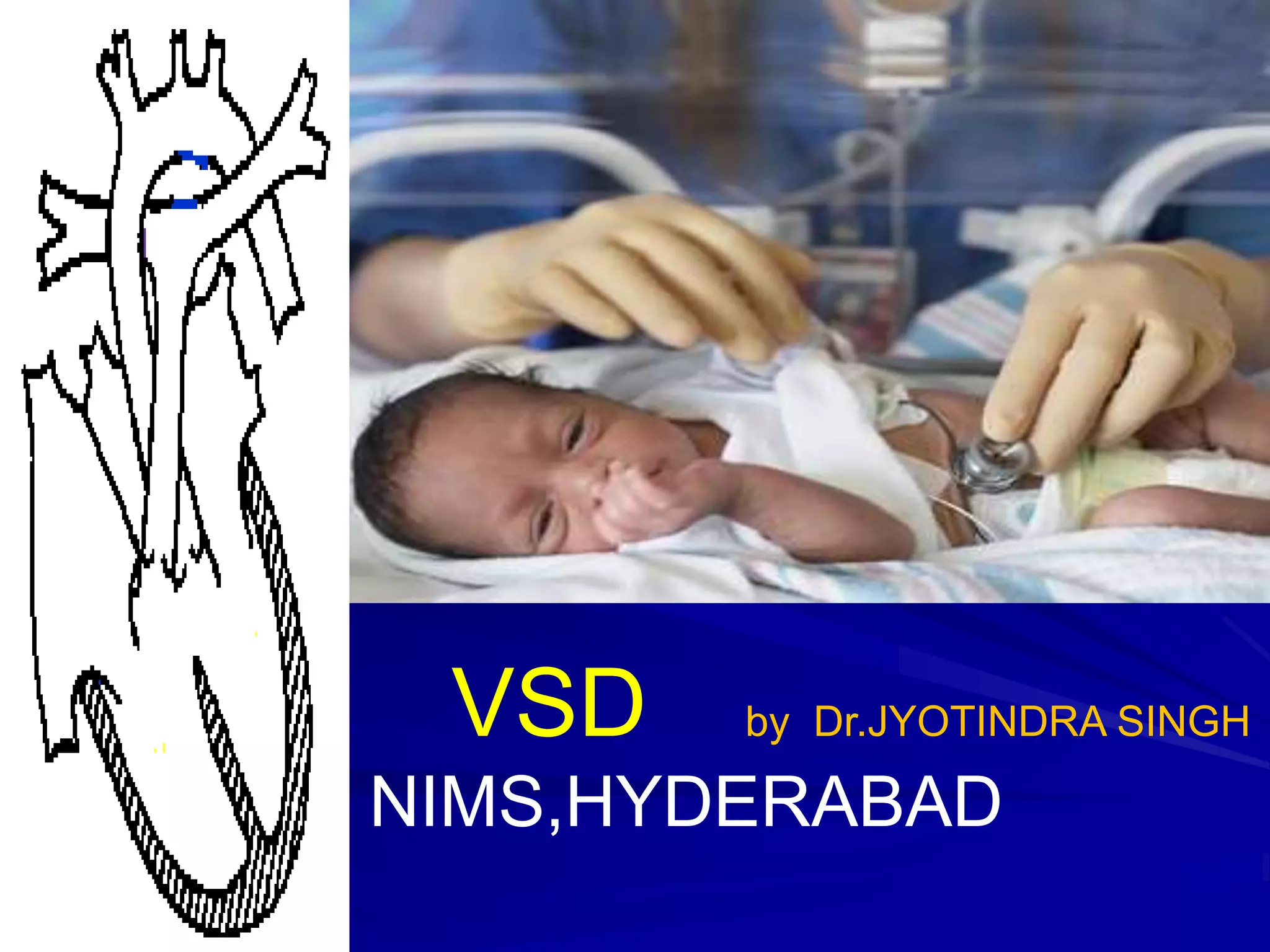
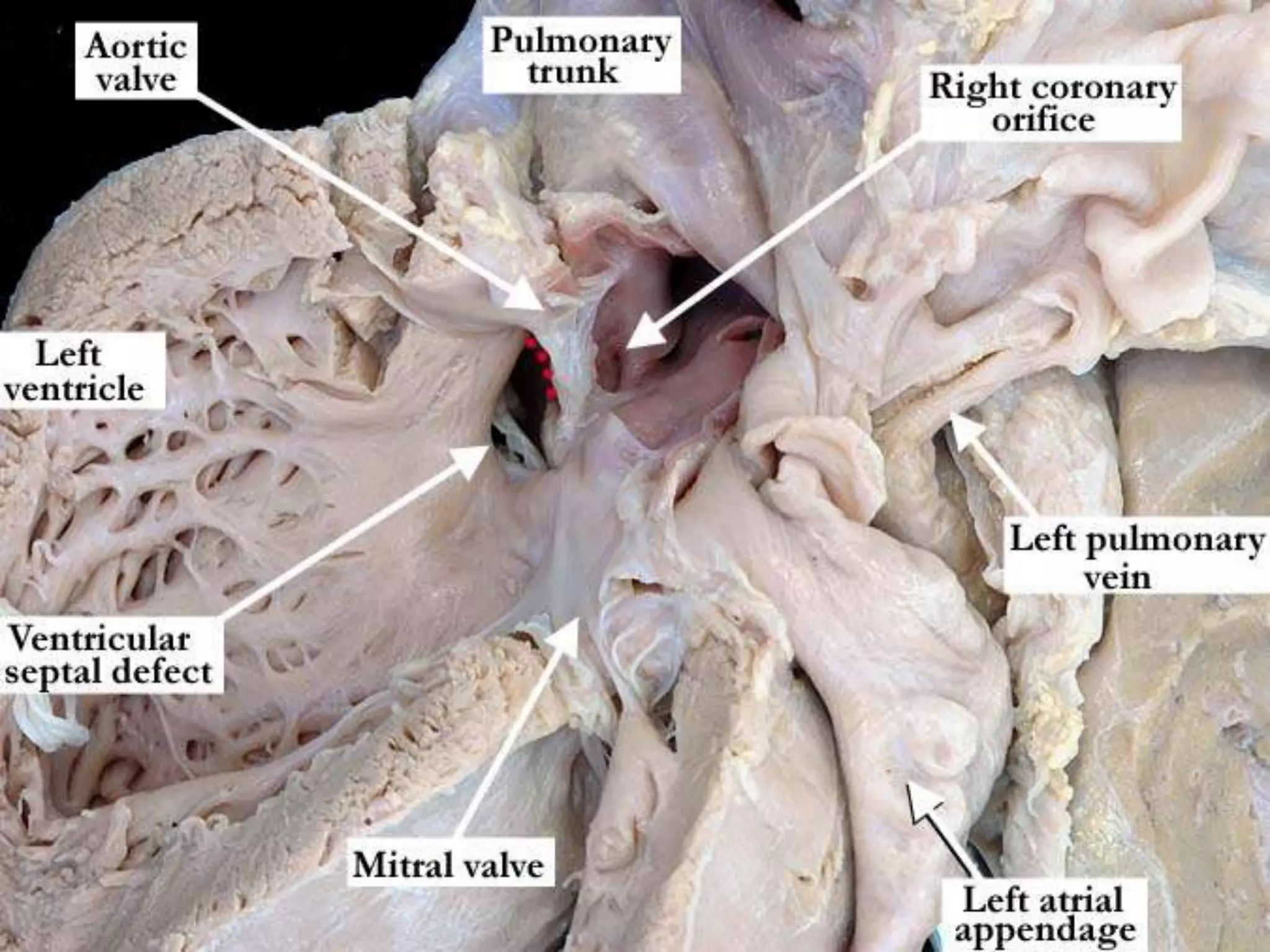
VSD

by Dr.JYOTINDRA SINGH

NIMS,HYDERABAD
Ventricular Septal Defect
Henri Roger was the first man to
describe a ventricular septal
defect, in 1879 he wrote:
“A developmental defect of the heart occurs

from which cyanosis does not ensue in spite
of the fact that a communication exists
between the cavities of the two ventricles
and in spite of the fact that the admixture of
venous blood and arterial blood occurs. This
congenital defect, which is even compatible
with long life, is a simple one. It comprises a
defect in the interventricular septum”
INTRODUCTION
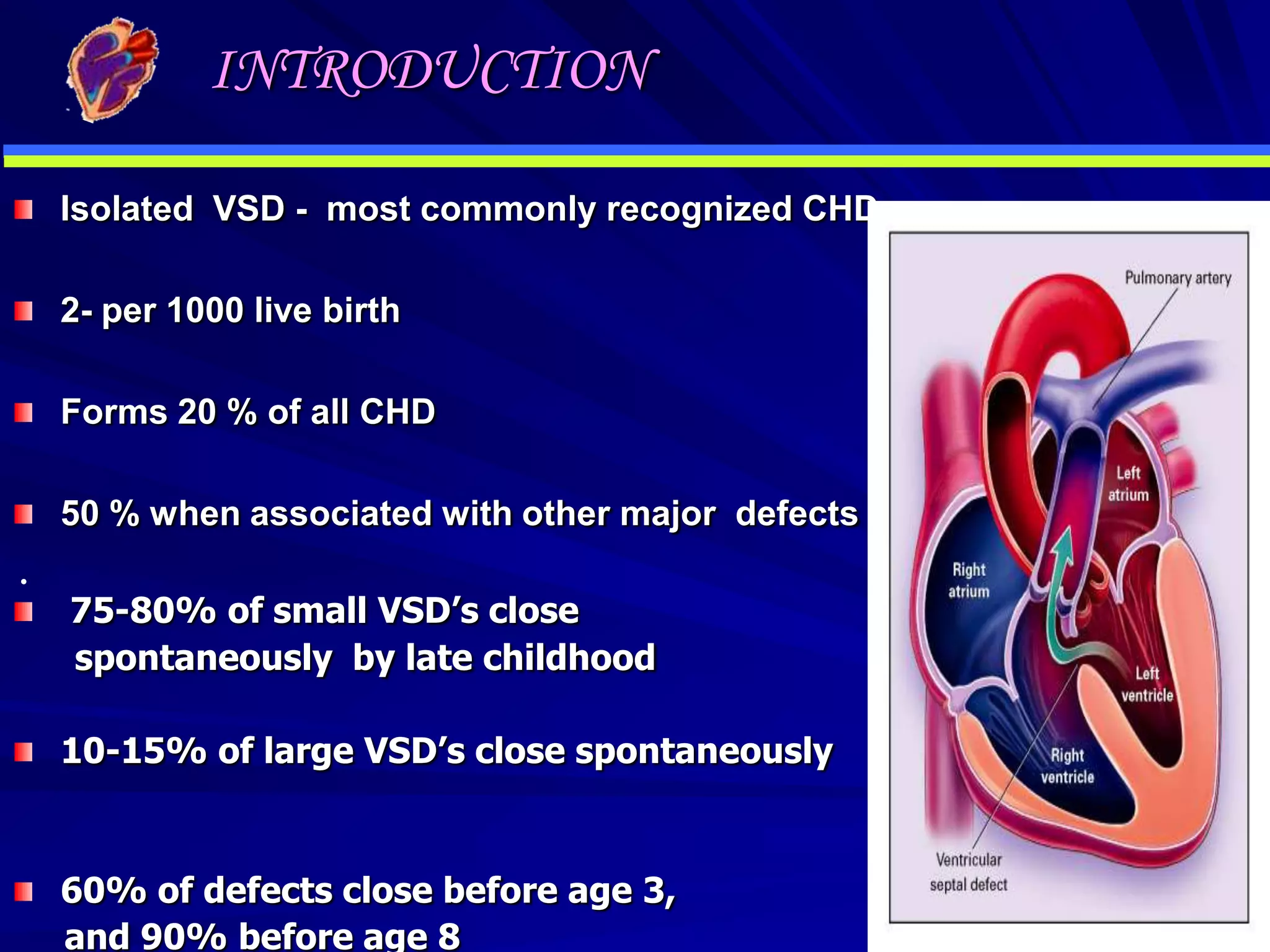
Isolated VSD - most commonly recognized CHD
2- per 1000 live birth
Forms 20 % of all CHD
50 % when associated with other major defects

.

75-80% of small VSD’s close
spontaneously by late childhood

10-15% of large VSD’s close spontaneously

60% of defects close before age 3,
and 90% before age 8
HISTORICAL ASPECT
Roger in 1879 - first described

Eisenmenger – 1897 - autopsy finding
Pathophysiology by Abbott (1936) & Selzer (1949)

. 1952 – Muller and Danman- pulmonary artery band
1954 - Lillehei and associates – First vsd repair
1956 – Dushane – Transventricular / Stirling – Transatrial
1961 – Kirklin- Repair of VSD in infants
1976 - Baratt-Boyes – deep hypothermia & circulatory arrest
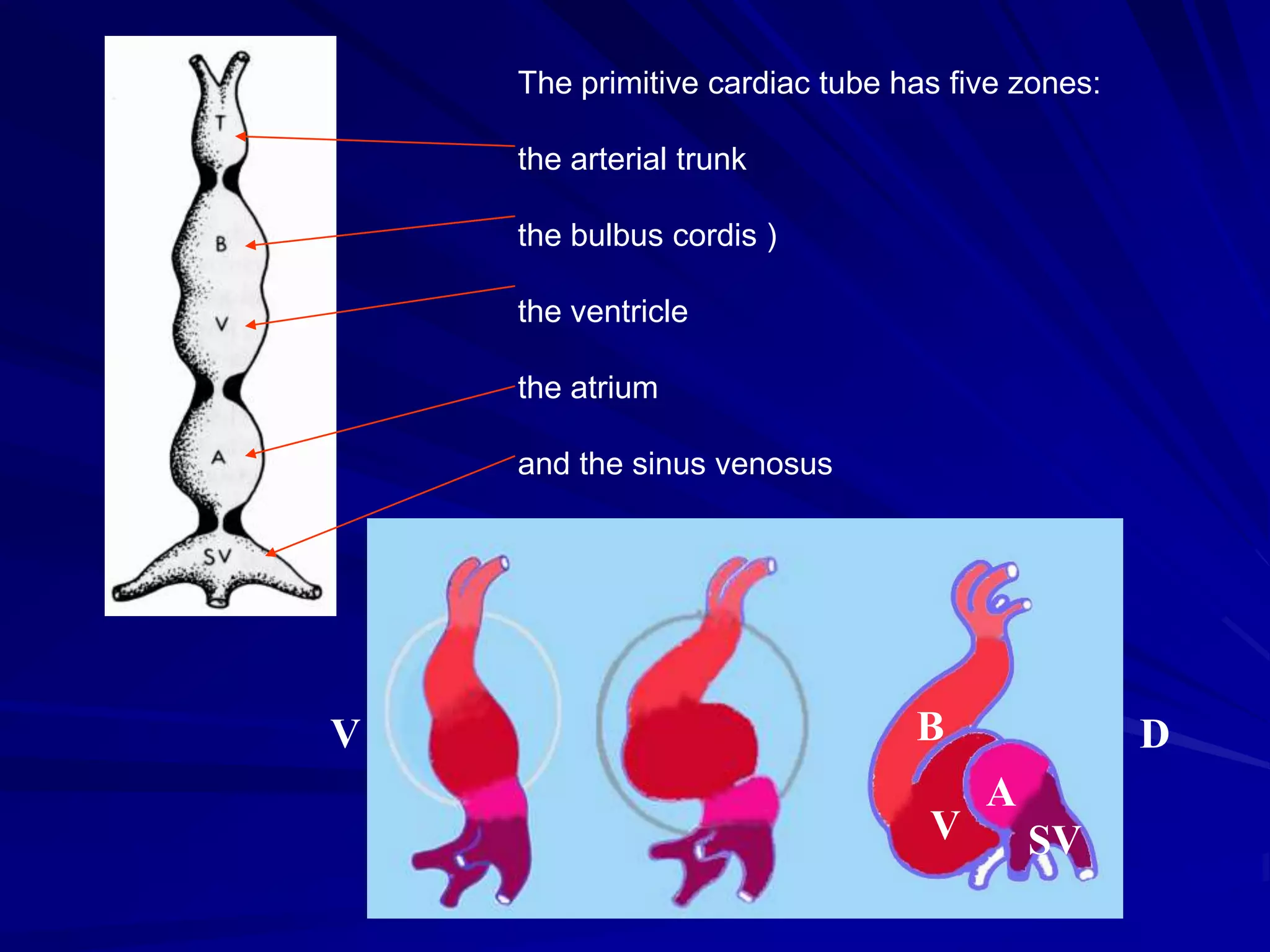
The primitive cardiac tube has five zones:
the arterial trunk
the bulbus cordis )
the ventricle
the atrium
and the sinus venosus

V

B
V

D

A
SV
A
V
EMBRYOLOGY
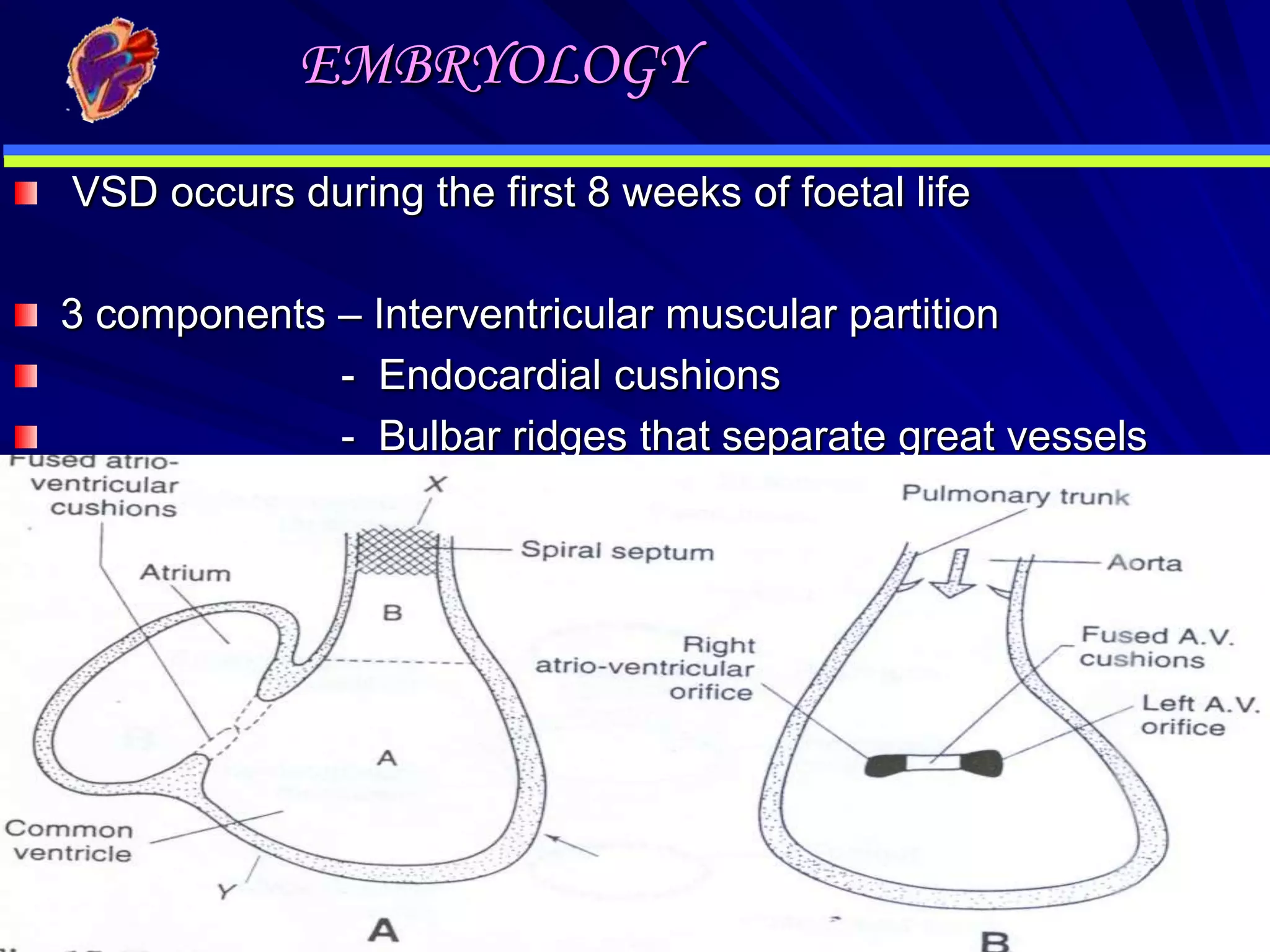
VSD occurs during the first 8 weeks of foetal life

3 components – Interventricular muscular partition
- Endocardial cushions
- Bulbar ridges that separate great vessels

.
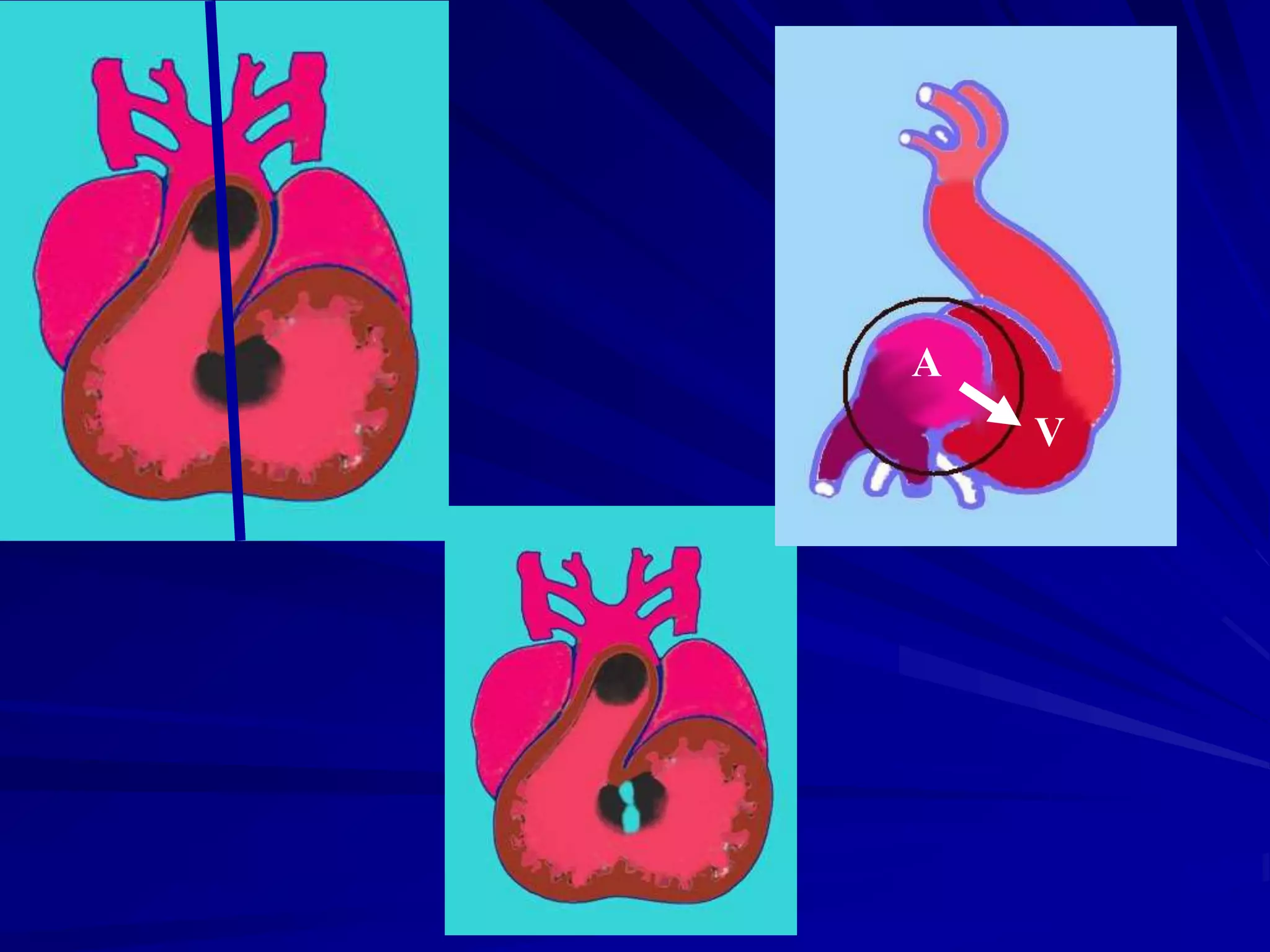
Four cushions (AVC) have
developed at the A/V junction; the
superior and inferior cushions will
meet to divide the AV orifice (AVO)
into the tricuspid and mitral valves.
The inferior septal crest (VS)
will aim to meet the divided valve
where the cushions fuse.
Formation of IV septum
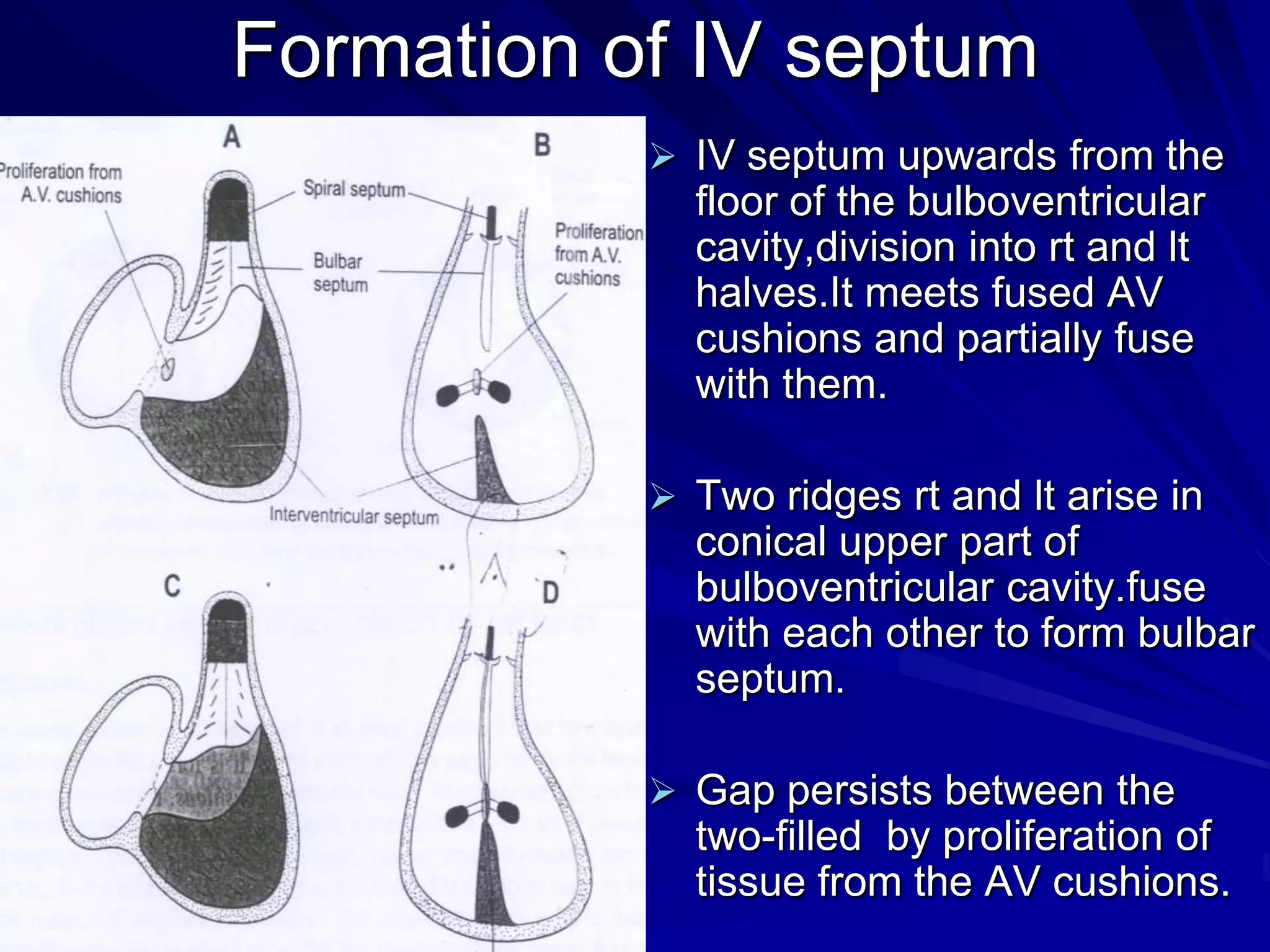
 IV septum upwards from the

floor of the bulboventricular
cavity,division into rt and lt
halves.It meets fused AV
cushions and partially fuse
with them.
 Two ridges rt and lt arise in

conical upper part of
bulboventricular cavity.fuse
with each other to form bulbar
septum.
 Gap persists between the

two-filled by proliferation of
tissue from the AV cushions.
Membranous IV septum
Ant part separates
rt and left ventricles.

Post part separates
rt atrium and left
ventricle.
This is because the
interatrial and
interventricular
septum don’t meet
in the midline.
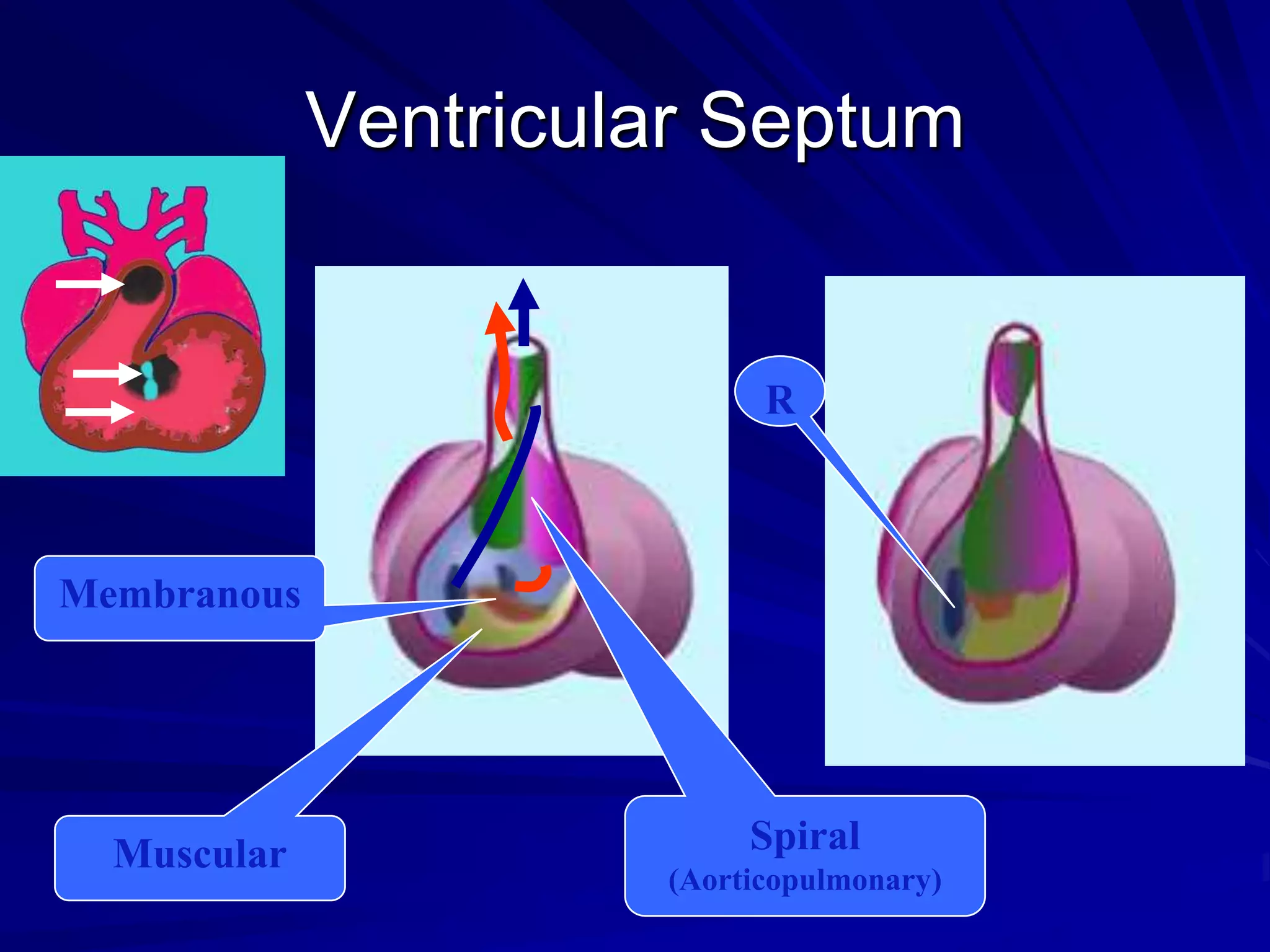
Ventricular Septum

R

Membranous

Muscular

Spiral
(Aorticopulmonary)
What if?..............
- then you get
the truncal septum fails to fuse with the septal crest?
- perimembraneous VSD
the truncal septum is deviated to the PA side?
- tetralogy of Fallot
the truncal septum fails to develop?
- truncus arteriosus
the ventricular septum fails to reach the AV valve?
- AV septal defects
the arterial trunk stays over the RV but does divide?
- double outlet RV
the aortic valve pushes up and right instead of the pulmonary?
- transposition of the great vessels
the ventricles fail to centralise over the AV valve
- double inlet left ventricle (commonest form of single ventricle)
the loop is to the left?
- ventricular inversion (RV on the left, LV on the right)
Associated Defects
Left Heart Defects
– Aortic stenosis
– Coarctation of the aorta
Right Heart Defects
– Tetrology of Fallot
– Double Outlet Right Ventricle
Truncus Arteriosus
Some single ventricle (e.g. Tricuspid atresia, double
inlet left ventricle)
Chromosomal Disorders
associated with VSD
Trisomy 21: 40% of T21 will have VSD
Trisomy 13, 18: 18% of T13, 31% of T18 will have VSD
22q11 deletion:
– Tetrology of Fallot is most common anomaly
– VSD with or without aortic arch anomaly is second most
common

Holt-Oram (Hand-heart syndrome): TBX5 gene found on
Chromosome 12
Recurrence risk for VSD based on parental VSD

– Paternal 2%
– Maternal 6-10%
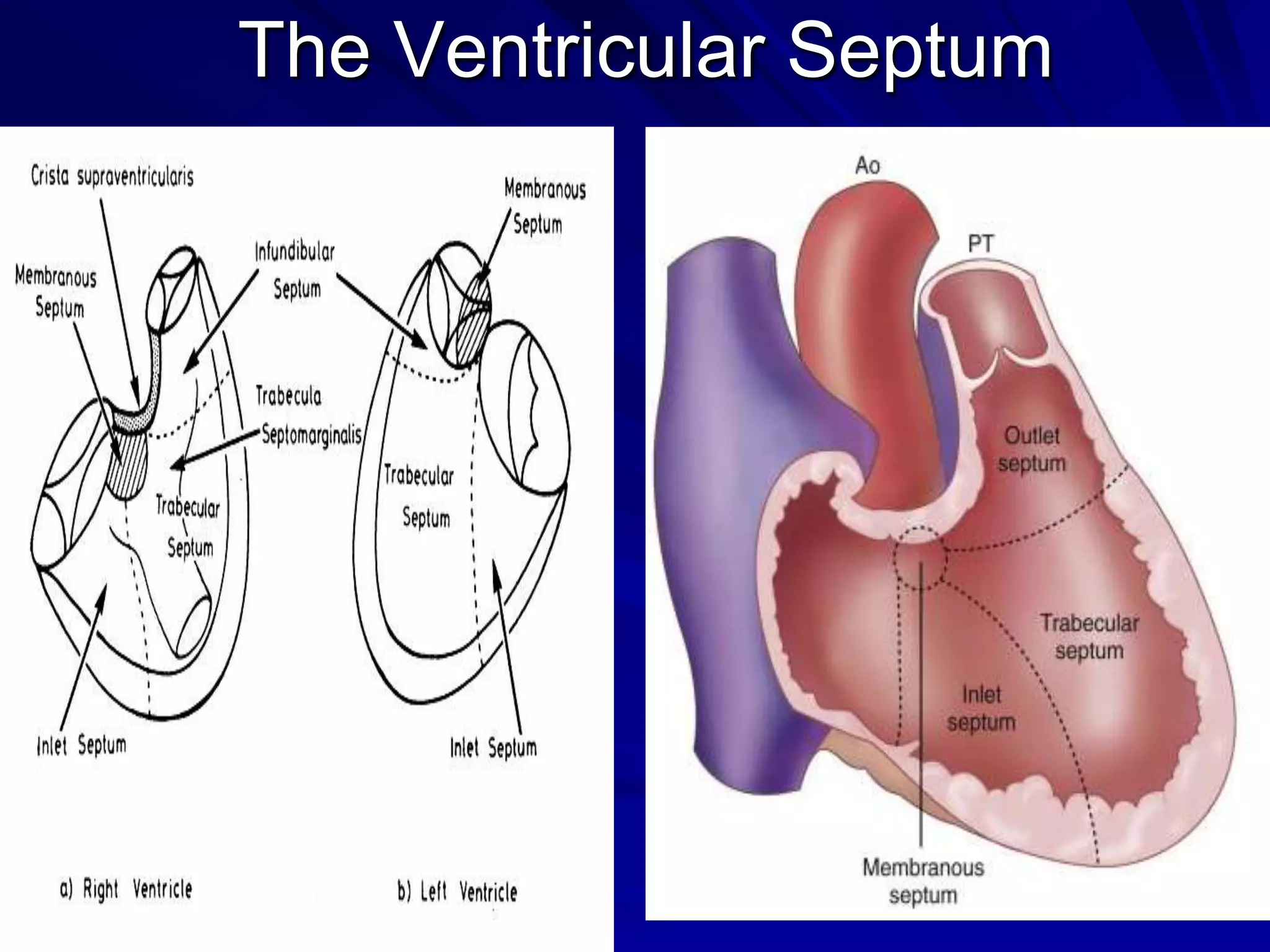
The Ventricular Septum
1. Membranous

2. Outflow

3. Trabecular septum

4. Inflow

5. Subarterial /
Supracristal
The Ventricular Septum
Ventricular Septum

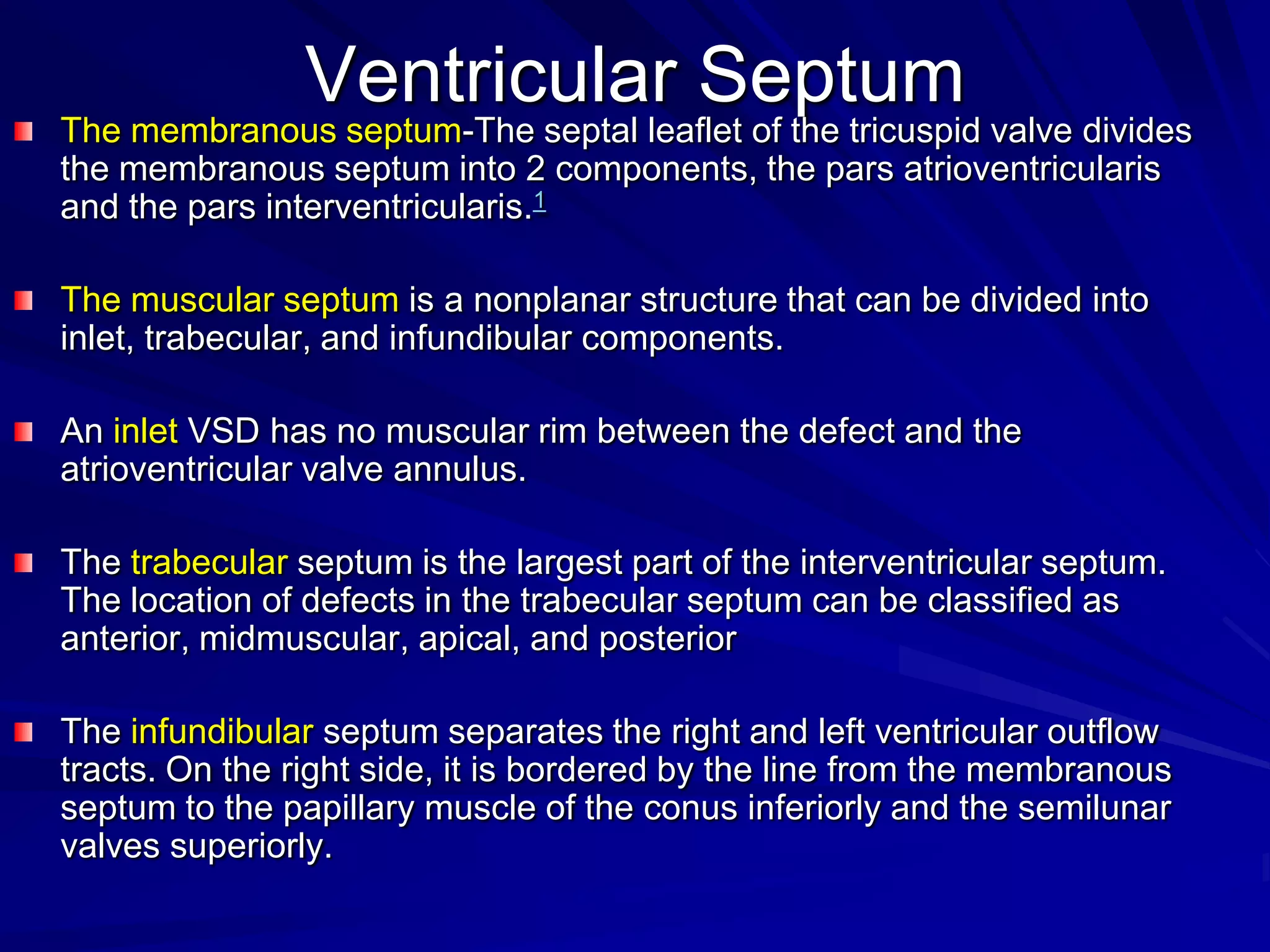
The membranous septum-The septal leaflet of the tricuspid valve divides
the membranous septum into 2 components, the pars atrioventricularis
and the pars interventricularis.1
The muscular septum is a nonplanar structure that can be divided into
inlet, trabecular, and infundibular components.
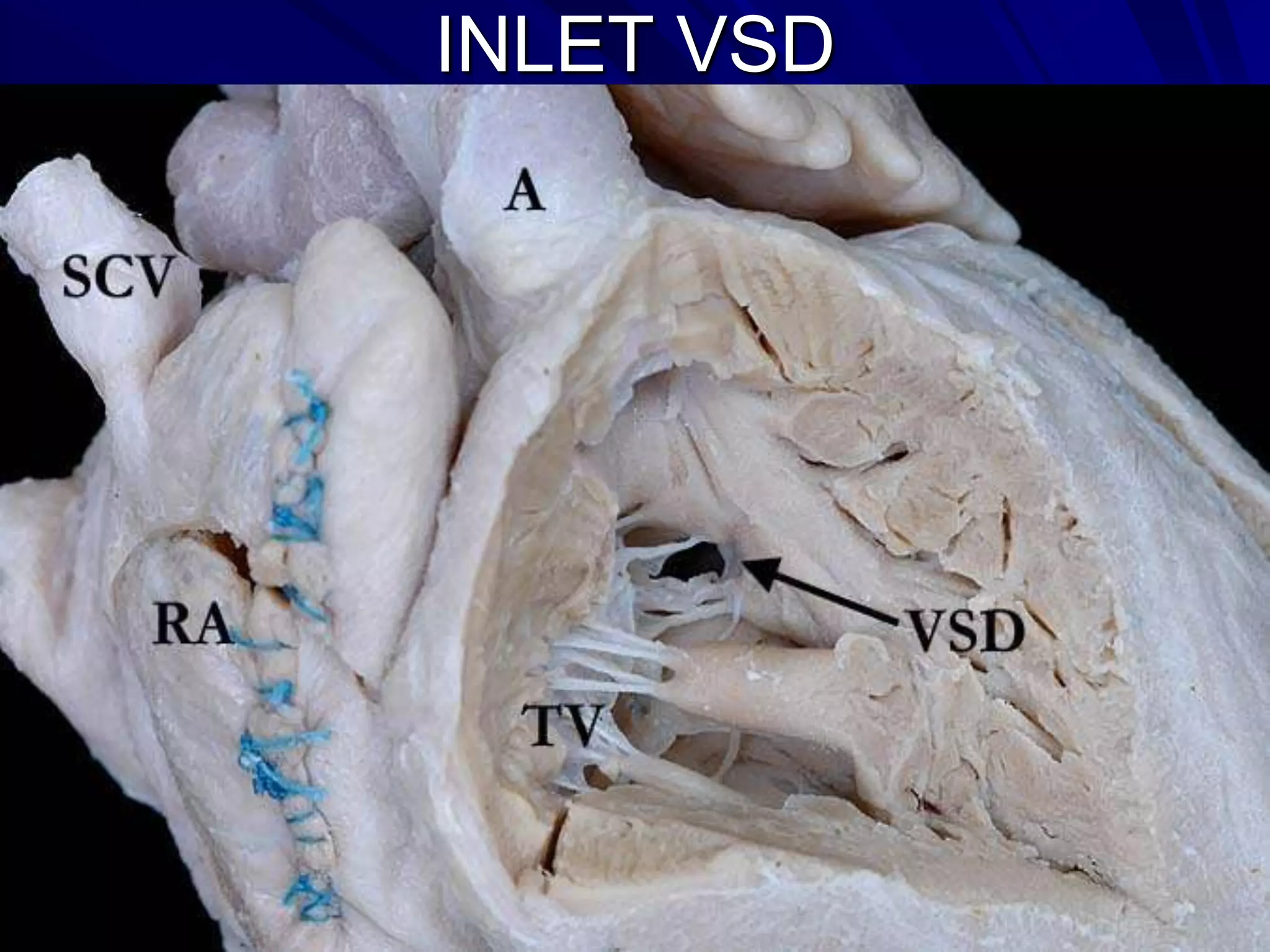
An inlet VSD has no muscular rim between the defect and the
atrioventricular valve annulus.
The trabecular septum is the largest part of the interventricular septum.
The location of defects in the trabecular septum can be classified as
anterior, midmuscular, apical, and posterior
The infundibular septum separates the right and left ventricular outflow
tracts. On the right side, it is bordered by the line from the membranous
septum to the papillary muscle of the conus inferiorly and the semilunar
valves superiorly.
Nomenclature / Classification
TYPE IConal,Supracristal,
Infundibular,Subarterial
TYPE II –
Paramembranous
TYPE IIIInlet/ AV canal type
Type IV –
Muscular
CLASSIFICATION
ROBERT ANDERSON
Perimembranous

Muscular
Doubly committed
Juxta arterial defects

Van Pragh
AV canal type

Muscular VSDs
Conoventricular
Conal
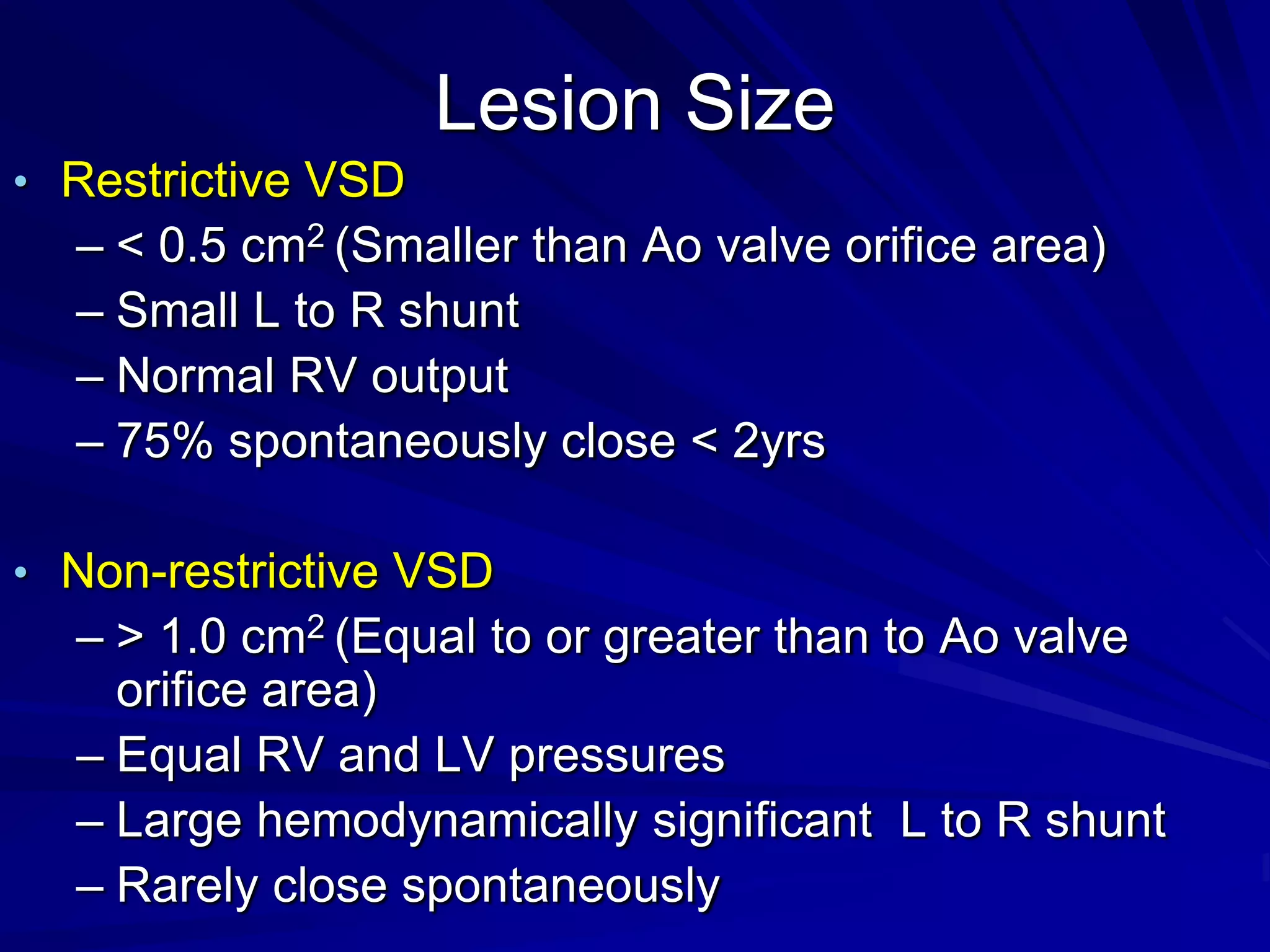
Lesion Size
• Restrictive VSD

– < 0.5 cm2 (Smaller than Ao valve orifice area)
– Small L to R shunt
– Normal RV output
– 75% spontaneously close < 2yrs
• Non-restrictive VSD

– > 1.0 cm2 (Equal to or greater than to Ao valve
orifice area)
– Equal RV and LV pressures
– Large hemodynamically significant L to R shunt
– Rarely close spontaneously
Based on size
1. Size
1) Large

: 2/3rd of aortic annular size or > 15mm
or > 1cm/sq.m of BSA
Peak RV sys = LV sys pressure

2) Moderate : half of aortic annular size 5 to 15mm
RV pressure to ½ of LV
Qp/Os>2.0

3) Small

: One third of aortic annular size
insufficient size to raise RV pressure &
Qp/Qs < 1.75
TYPE I VSD
Conal,Supracristal,Infundibular,
Subarterial
Maldevelopment of bulbotruncal system
Located within infundibular portion of
RVOT
Superior margin – no muscular tissue
Inferior margin – defect is muscular
Can extend upto right or sometimes
non-coronary cusps of the aortic valve
Conduction system is not in surgical
proximity
Doubly committed subarterial VSD
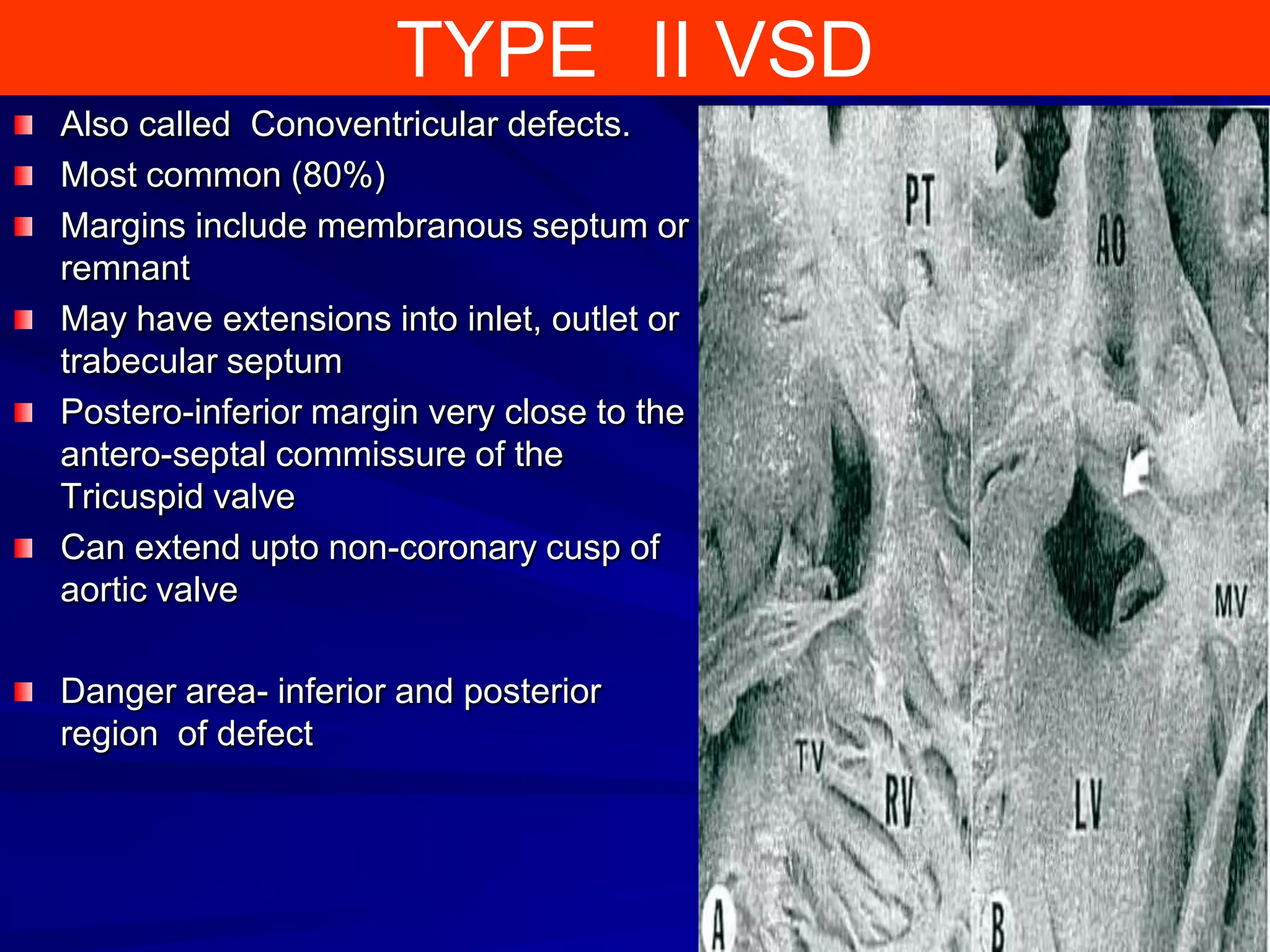
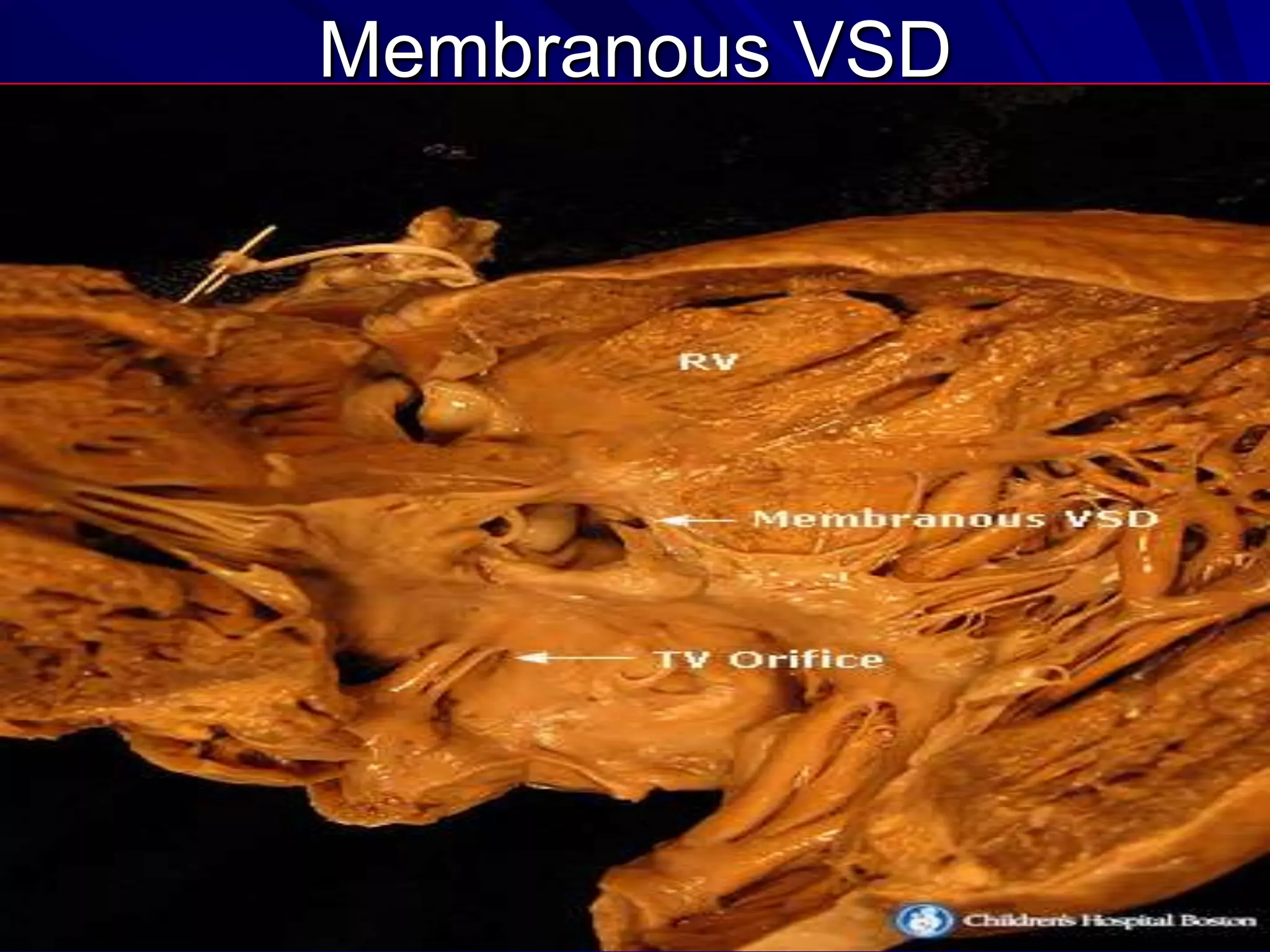
TYPE II VSD
Also called Conoventricular defects.
Most common (80%)
Margins include membranous septum or
remnant
May have extensions into inlet, outlet or
trabecular septum
Postero-inferior margin very close to the
antero-septal commissure of the
Tricuspid valve
Can extend upto non-coronary cusp of
aortic valve
Danger area- inferior and posterior
region of defect
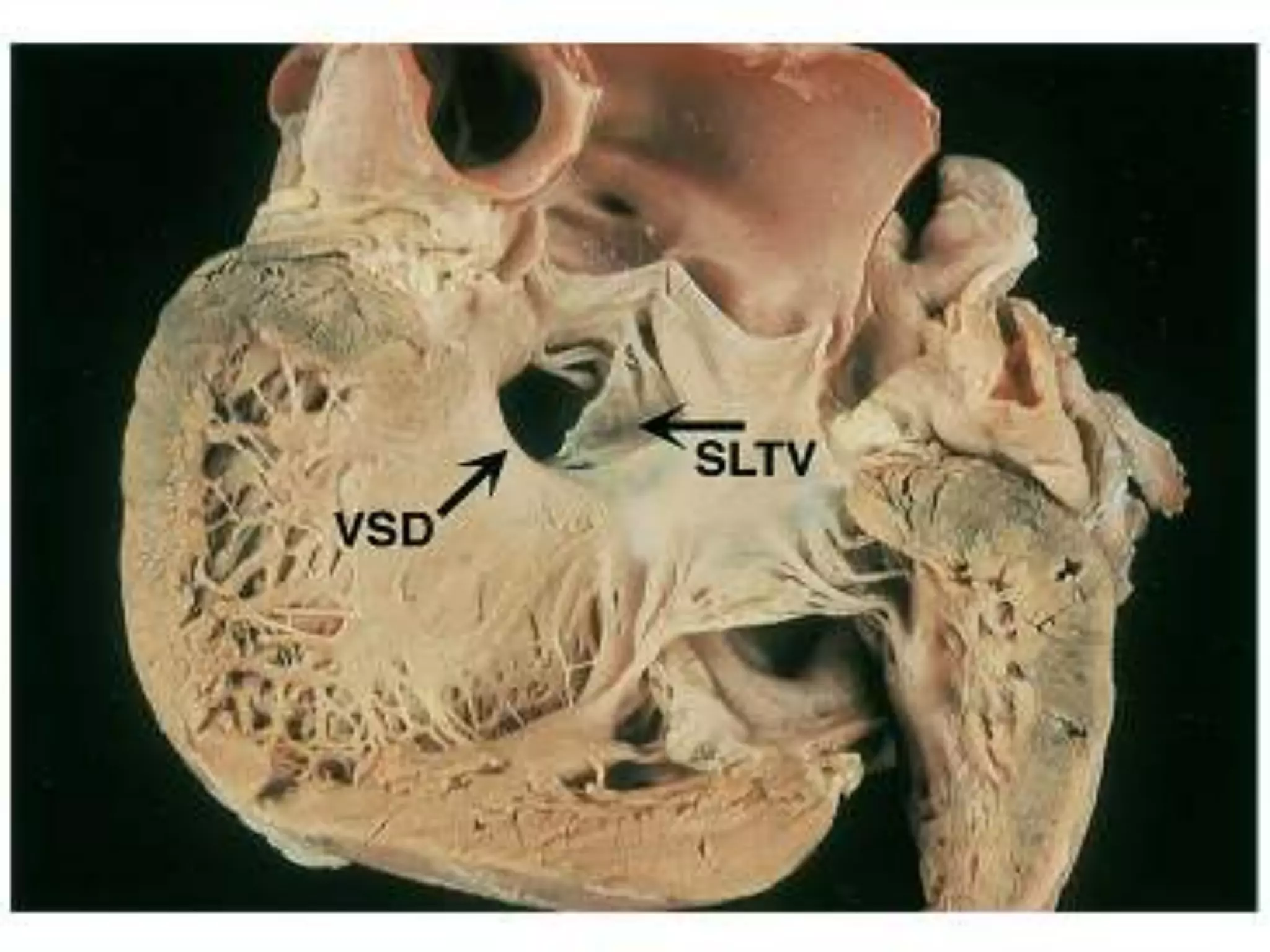
Membranous VSD
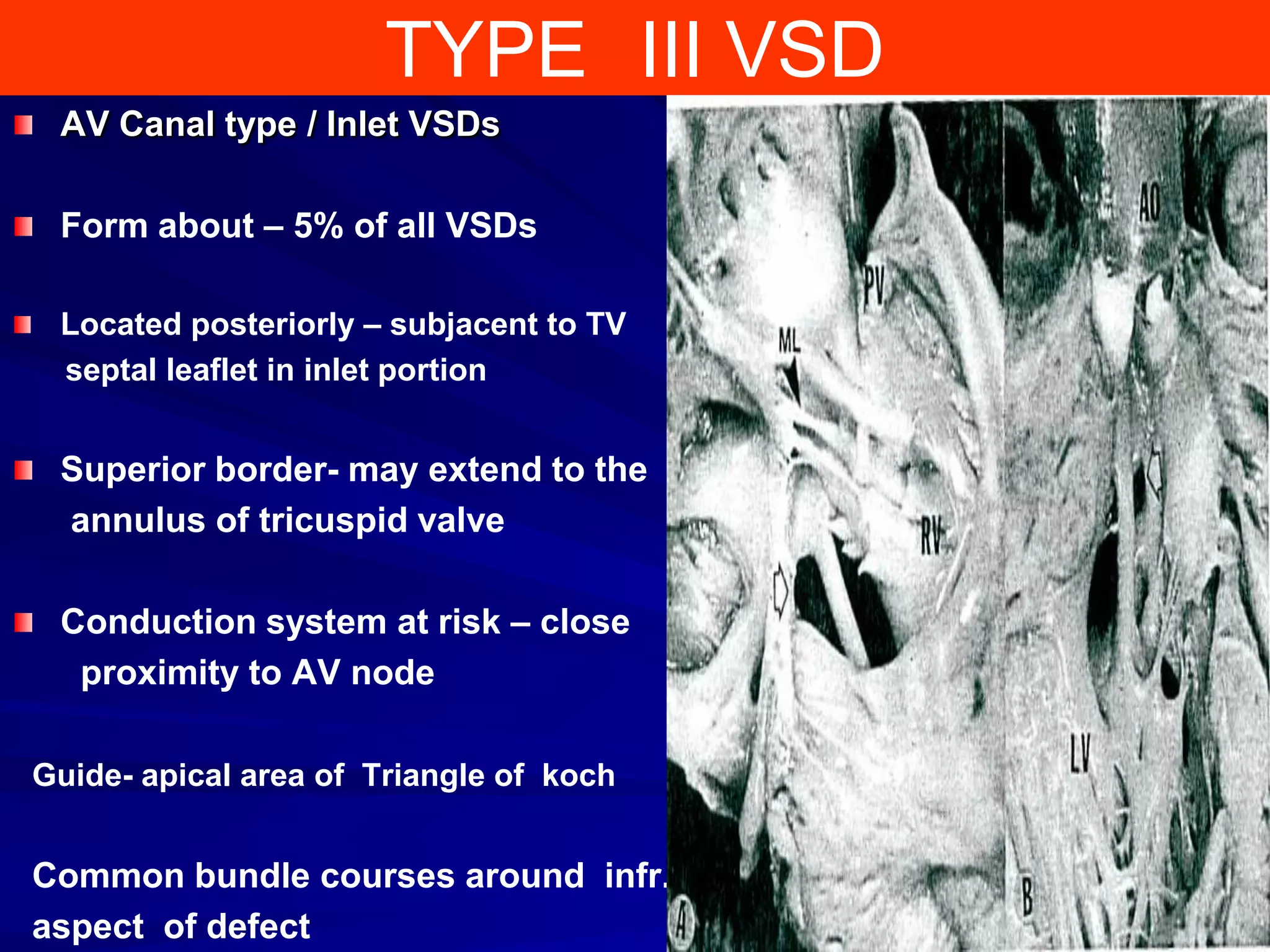
TYPE III VSD
AV Canal type / Inlet VSDs
Form about – 5% of all VSDs
Located posteriorly – subjacent to TV
septal leaflet in inlet portion

Superior border- may extend to the
annulus of tricuspid valve
Conduction system at risk – close
proximity to AV node
Guide- apical area of Triangle of koch

Common bundle courses around infr.
aspect of defect
Endocardial Cushion (Inlet VSD)
INLET VSD
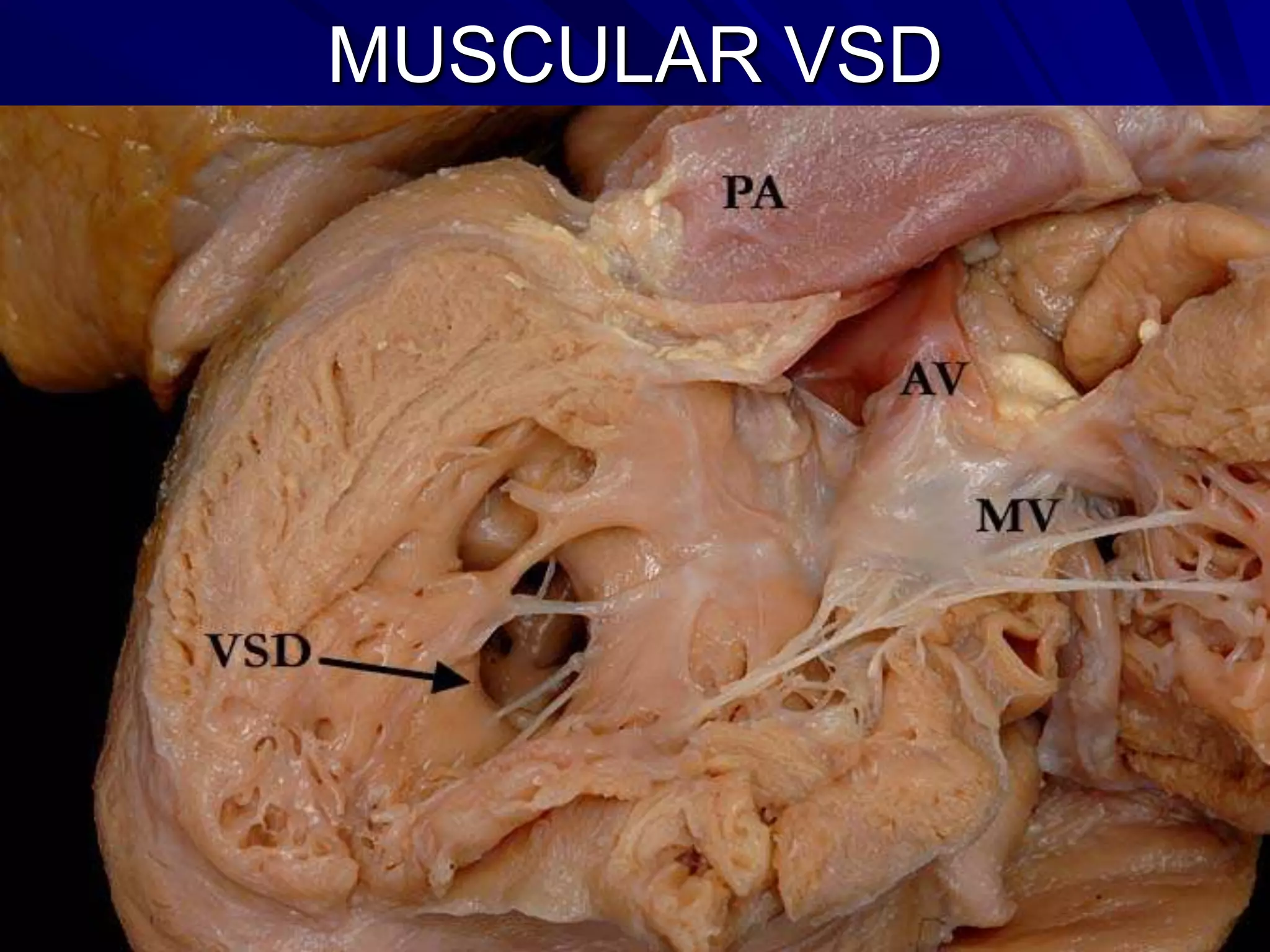
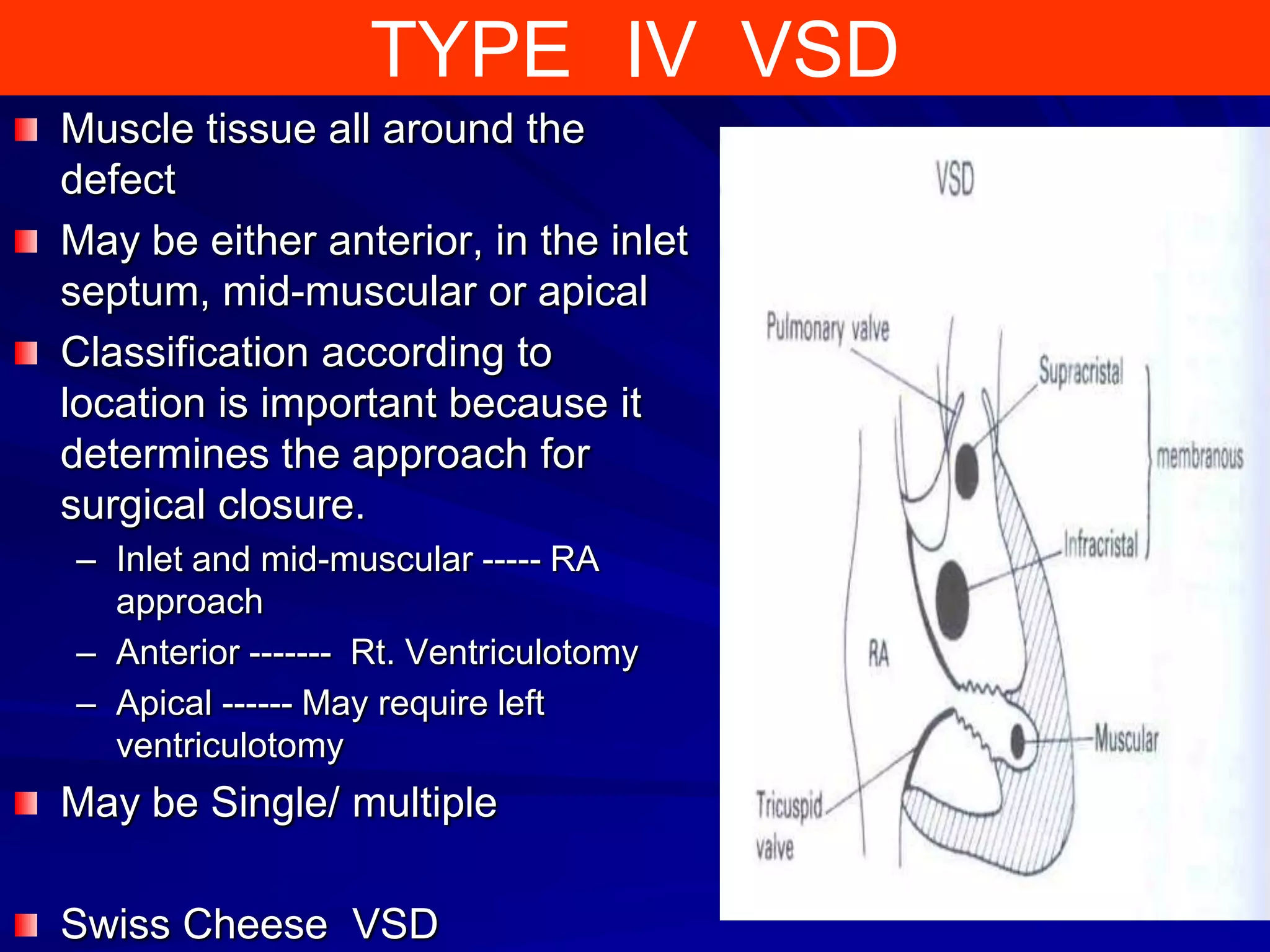
TYPE IV VSD
Muscle tissue all around the
defect
May be either anterior, in the inlet
septum, mid-muscular or apical
Classification according to
location is important because it
determines the approach for
surgical closure.
– Inlet and mid-muscular ----- RA
approach
– Anterior ------- Rt. Ventriculotomy
– Apical ------ May require left
ventriculotomy

May be Single/ multiple
Swiss Cheese VSD
MUSCULAR VSD
Pathophysiology
Two determinants
– Size of defect
– Pulmonary vascular resistance

These determine
– Pressure gradient across VSD
– Shunt volume across VSD

After birth PVR falls ------ Large
flow across shunt if large VSD
Causes increased PA pressure
(initially flow related), increased
PV return, hence LA
enlargement and LV overload
PH initially flow related and
reversible
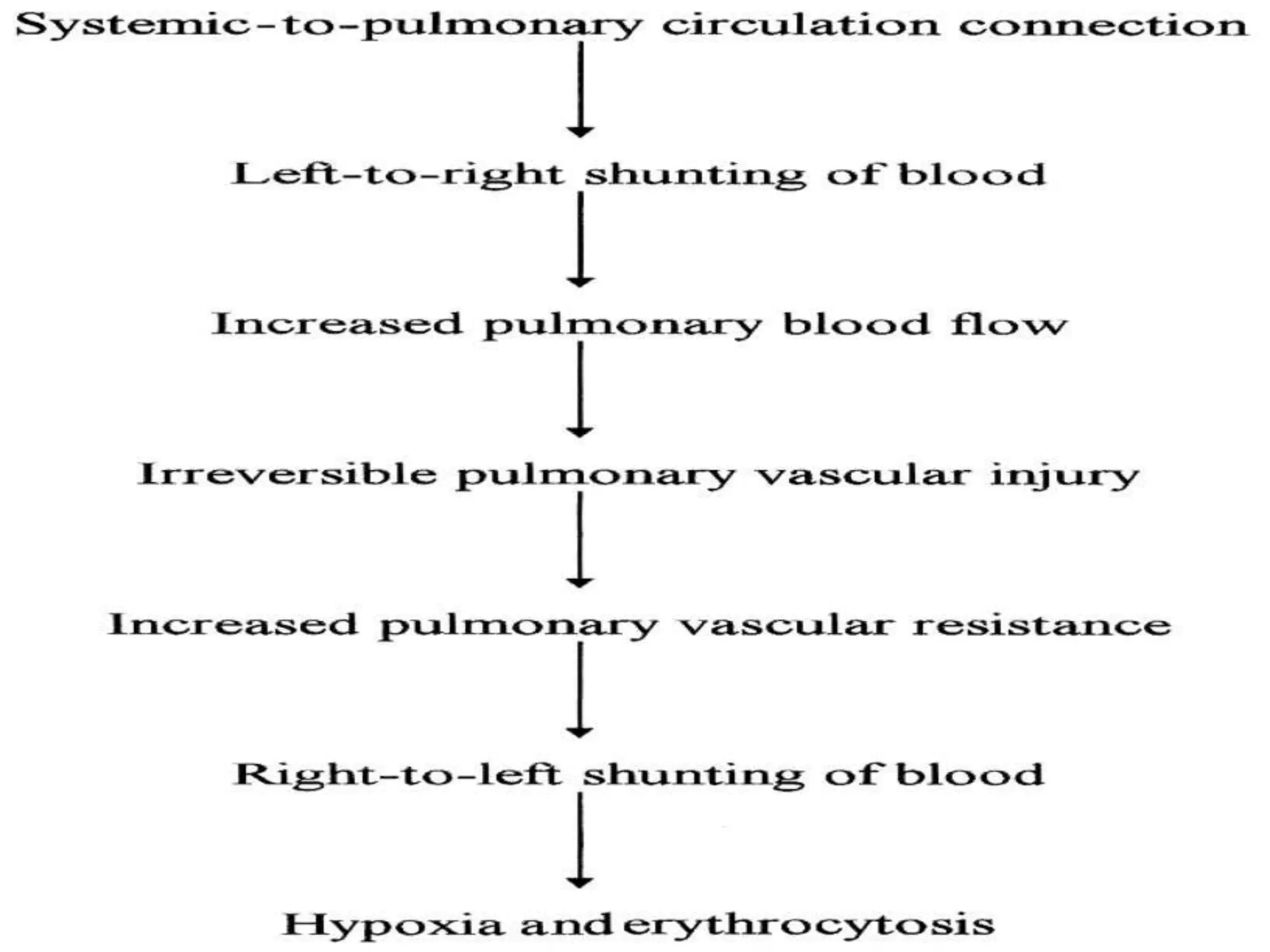
Pathophysiology
Later ----- Intimal proliferation and medial hypertrophy leads to
fixed irreversible PH
Flow through the lungs decreases as PVR increases, hence
shunt volume decreases
Eventually PVR > SVR, hence R  L shunt across VSD
Cyanosis  Eisenmengerised VSD
Shunt calculated by Fick’s principle Qp/Qs
Aortic O2 % sat - Central Venous O2 % sat
Pulm. Vein O2 % sat – Pulm. Art O2 % sat

With small VSDs, there is resistance to flow across the VSD
hence Qp/Qs is rarely > 1.5
With moderate VSDs, Qp/Qs is between 1.5 and 2.5, and is
less likely to cause pulm vasc disease
VUENTURI EFFECT
HEATH- EDWARD CLASSIFICATION
Grade I - hypertrophy of the media of small muscular arteries and arterioles.
Grade II - intimal cellular proliferation in addition to medial hypertrophy.
Grade III - progressive intimal proliferation and concentric fibrosis.
Grade IV - "plexiform lesions"
Grade V - angiomatous and cavernous lesions and hyalinization of intimal
fibrosis.
Grade VI - necrotizing arteritis.
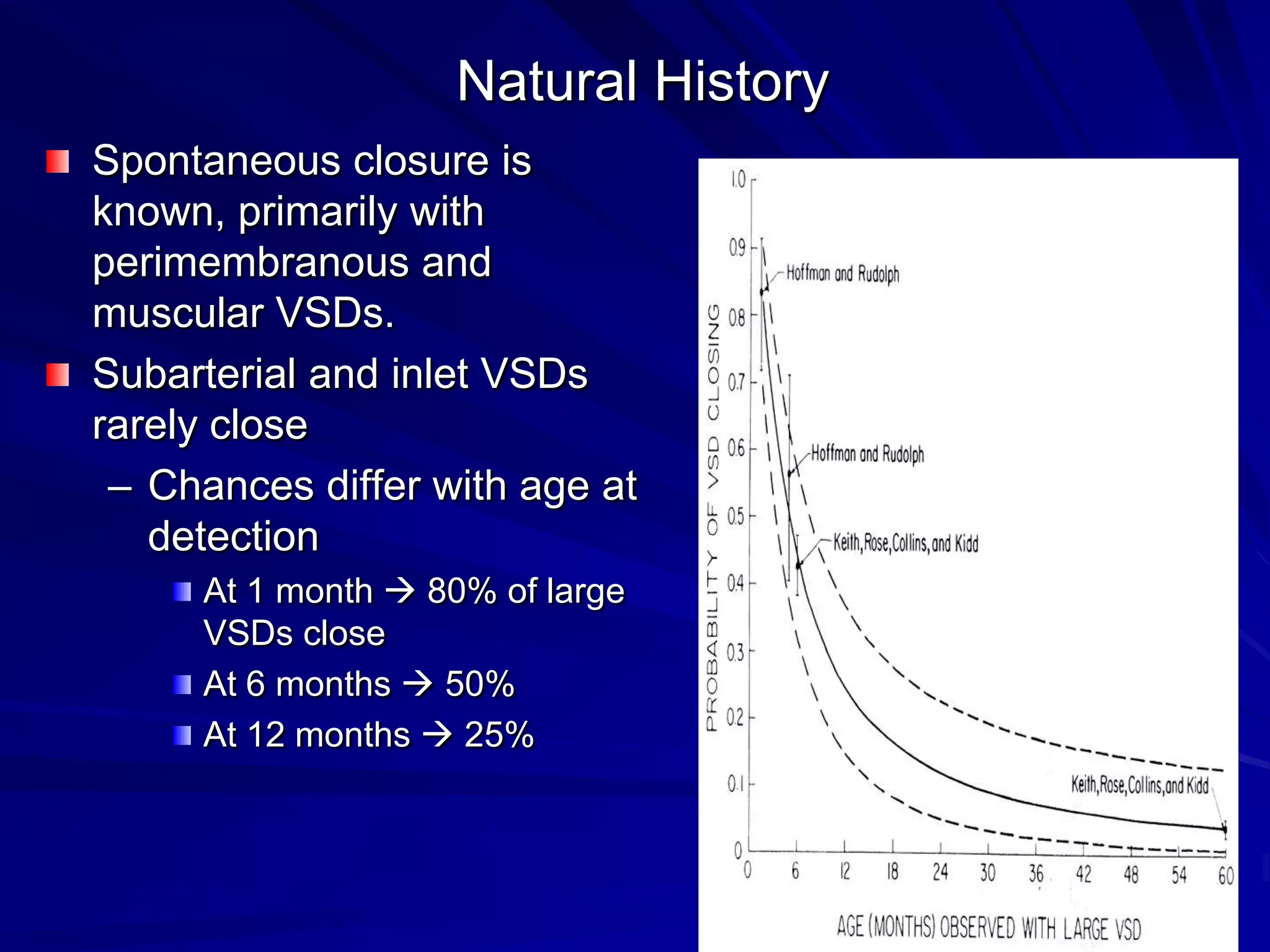
Natural History
Spontaneous closure is
known, primarily with
perimembranous and
muscular VSDs.
Subarterial and inlet VSDs
rarely close
– Chances differ with age at
detection
At 1 month  80% of large
VSDs close
At 6 months  50%
At 12 months  25%
Natural History
Patients with large vsd- symptom develop soon after
birth.
CHF manifested by- dyspnea/rptd.pulmonary
infn/hepatomegaly/sweating/failure to thrive.

Irreversible pulmonary vascular disease after 1-2 yrs
of age.
Some children with isolated vsd develop Subpulmonic
stenosis- pt. not at risk of pulmonary vascular disease
VSD IN ADULT

SVT – AF prevalent with increasing age.
VSD+ AR – High risk of bacterial endocarditis
Right sided failure- due to pulmonary stenosis
Left sided failure- in pts. of aortic valve prolapse.

Eisenmenger complex- 2nd & 3rd decade of life
Pregnancy- spontaneous abortion/small-for-date babies
Mortality- 27% by 20 years & 69% by 60 years.
CLINICAL FEATURES
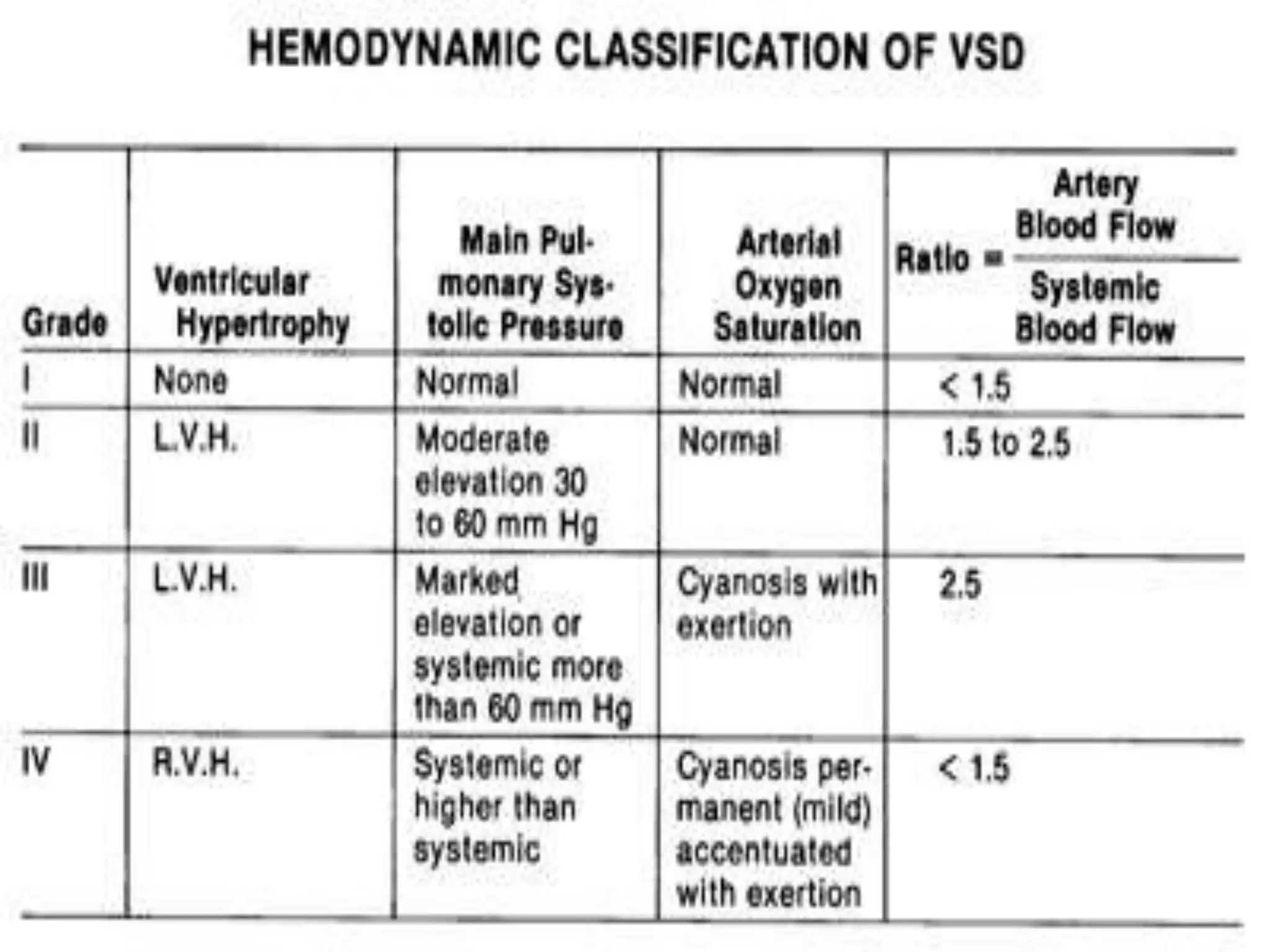
Grade I
Small ventricular septal defect (less than 1.5 cm2) Patient is asymptomatic. Murmur can be
present since a few days after birth.

Grade II
Frequent respiratory tract infections. CHF (rare). Cyanosis is absent even during exercise.
Functional aerobic capacity is usually moderately reduced with early fatigability but unusual
CHF.

Grade III
More frequent respiratory tract infections. Defective growth. Moderate cyanosis at times with
exertion Congestive heart failure frequent in the first years of life (one of the most frequent
causes of CHF during the first year of life). Functional capacity markedly reduced.

Grade IV or Eisenmenger Complex
EISENMENGER COMPLEX
• Infants with Eisenmenger may become easily fatigued,
especially during crying spells and at feeding time
• Low tolerance for extra exertion
• Shortness of Breath (dyspnea) and/or rapid breathing
• Fainting (syncope)
• Difficulty eating, breathing or sucking
• Poor weight gain
• Slow growth or other physical retardation
CLINICAL FINDINGS
•

Pulse pressure is relatively wide

•

Precordium is hyperkinetic with a systolic thrill at LSB

•

S1&S2 are masked by a PSM at Lt.sternal border ,max. intensity of the
murmur is best heard at 3rd,4th&5th Lt interspace.Also well heard at the
2nd space but not conducted beyond apex

•

Lt. 2nd space –widely split &variable accentuated P2

•

Delayed diastolic murmur at the apex &S3

•

Presence of mid-diastolic ,low pitched rumble at the apex is caused by
increased flow across the mitral valve &indicates Qp:Qs=2:1/greater

•

Maladie de Roger –small VSD presenting in older children as a loud
PSM w/o other significant hemodynamic changes
ECG
Size of Defect

Results

Small restrictive VSDs

Normal tracing

Medium-sized VSDs

Broad, notched P wave characteristic of left
atrial overload
• Signs of LV volume overload — deep Q
and tall R waves with tall T waves in leads
V5 and V6
• Signs of atrial fibrillation are often
present

Large VSDs

Right ventricular hypertrophy with right-axis
deviation.
With further progression, the ECG shows
biventricular hypertrophy; P waves may be
notched or peaked.
ECG
May show right/left or combined ventricular
hypertrophy
Presence of RAD represents elevated RVP
and PAP
Postoperative RBBB is common

CHEST X-RAY
Cardiomegaly :
proportional to the
volume overload.

Mainly LV, LA and RV
enlargement.
Increased pulmonary
blood flow, PAH.
Unless LA is significantly
enlarged its difficult to
differentiate from ASD.

RV may not be as
enlarged as anticipated
as it receives the shunt
into its outflow tract.
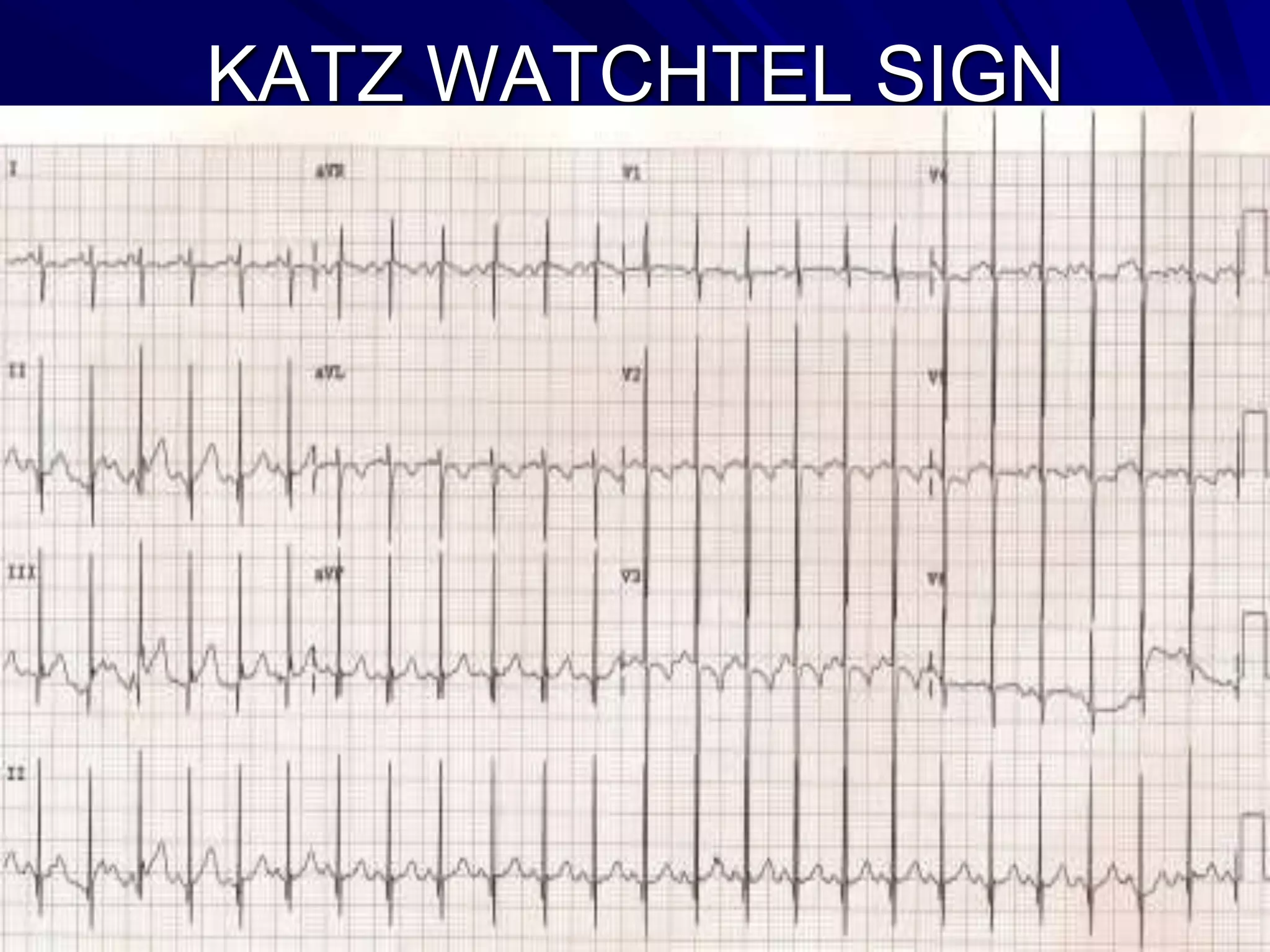
KATZ WATCHTEL SIGN
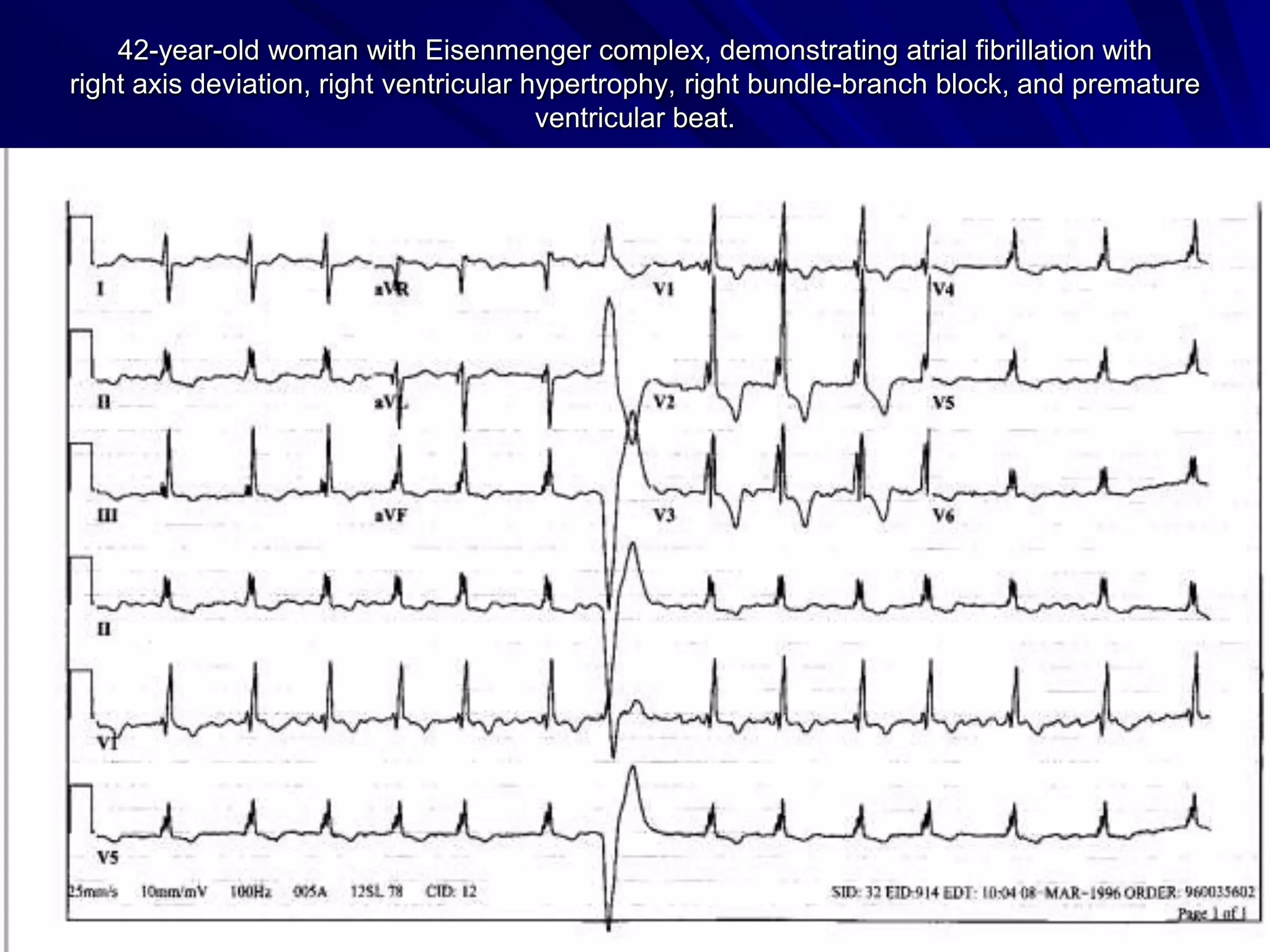
42-year-old woman with Eisenmenger complex, demonstrating atrial fibrillation with
right axis deviation, right ventricular hypertrophy, right bundle-branch block, and premature
ventricular beat.
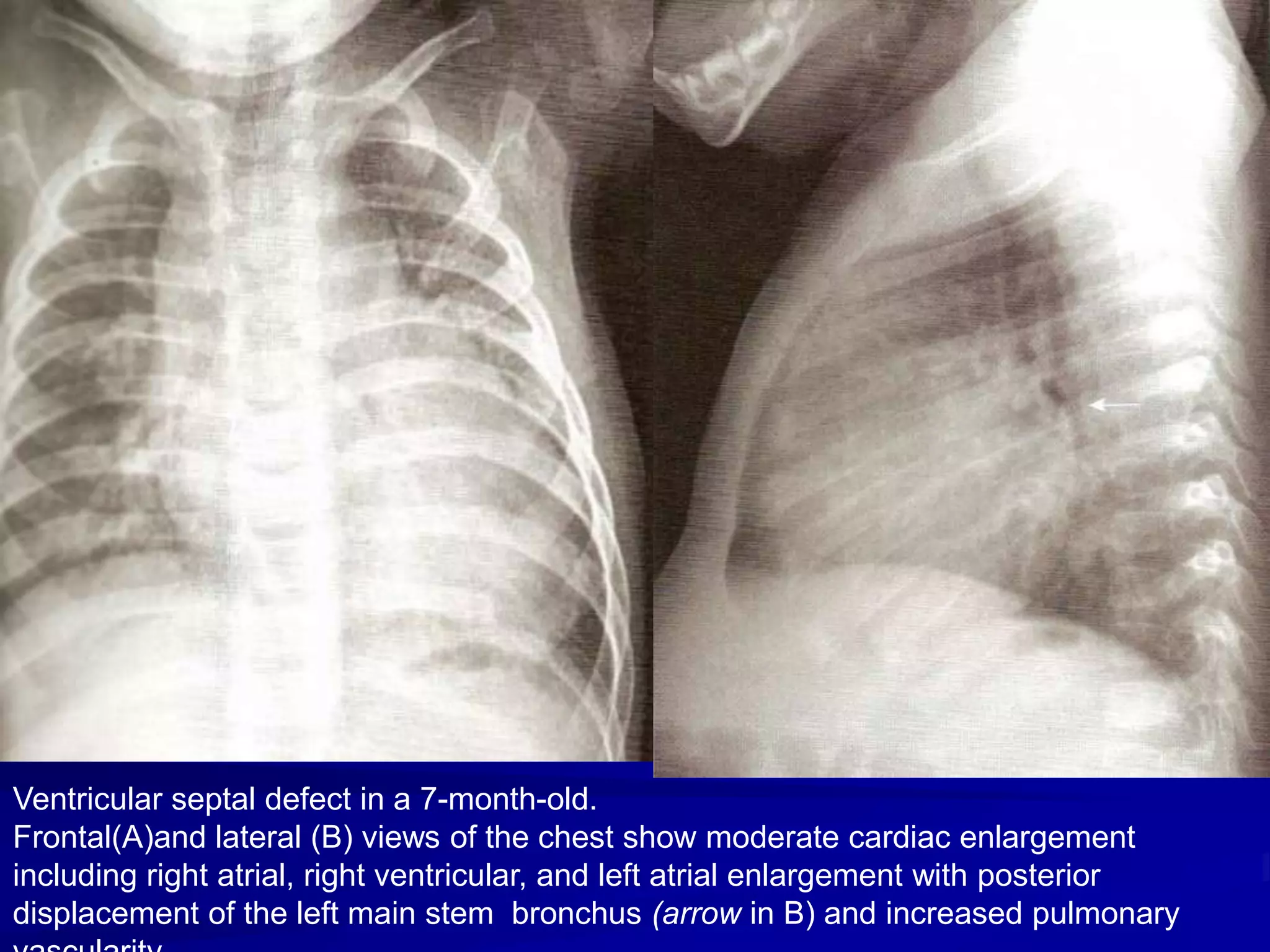
Ventricular septal defect in a 7-month-old.
Frontal(A)and lateral (B) views of the chest show moderate cardiac enlargement
including right atrial, right ventricular, and left atrial enlargement with posterior
displacement of the left main stem bronchus (arrow in B) and increased pulmonary
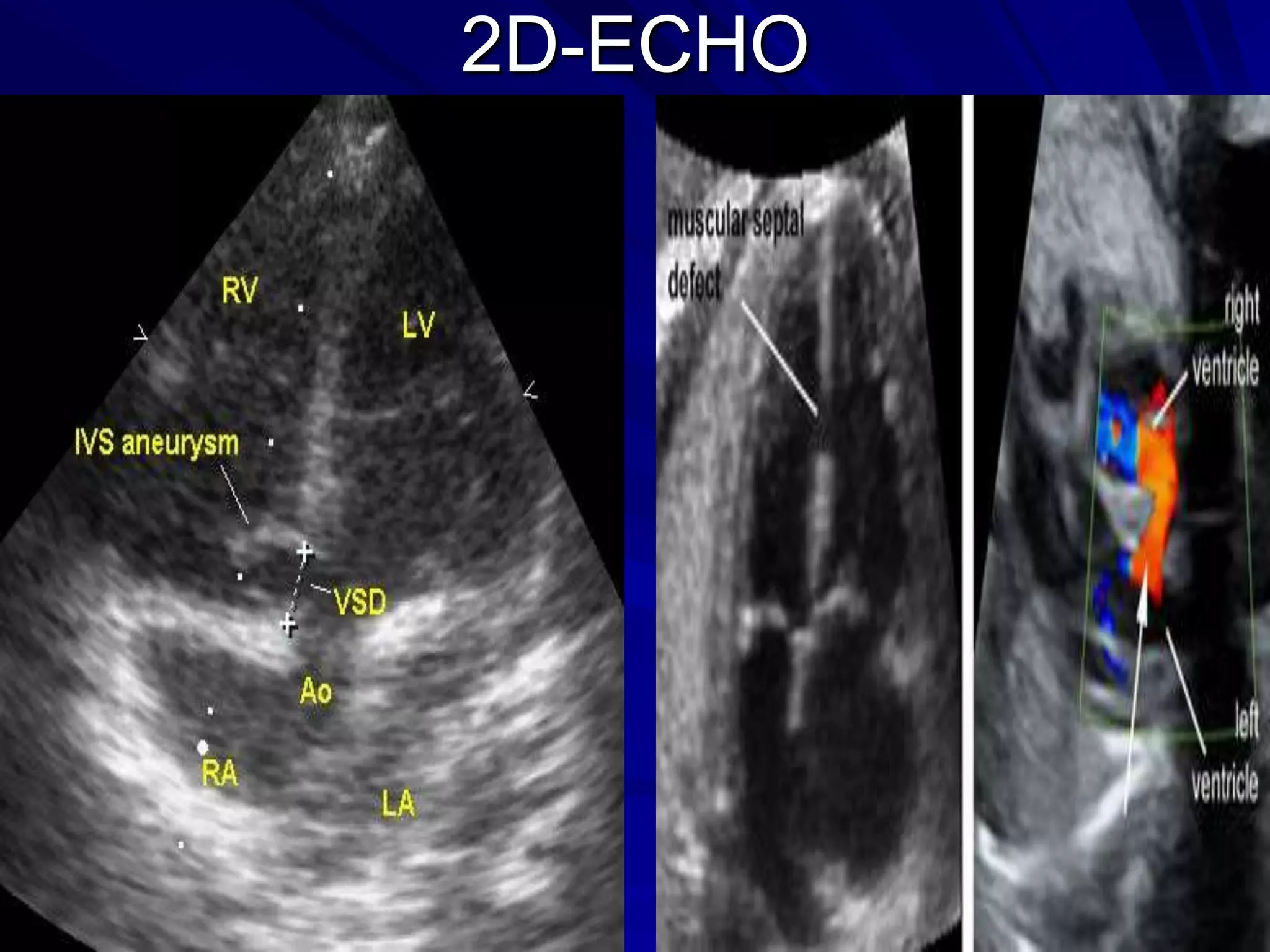
2D -ECHO
Determine vsd location
LV outflow morphology
Aortic valve
involvement
AV valve chordal attachment

Septal trabeculations
may cause multiple
reflections and obscure
small defects
Prominent bulging of
tissue into the RV :
aneurysmal
perimembranous VSD
2D-ECHO
Supracristal VSD, with pulm outflow tract obstruction
Cardiac catheterization
Identification of Multiple VSDs

Cardiac catheterization can quantify shunt volume
and pulmonary arterial resistance.
Step-up in oxygen saturation may be detected in
the pulmonary artery rather than in the right
ventricular cavity because of streaming of the
shunted blood into the pulmonic trunk.
If aortic valve prolapse is significant, left-to-right
shunting by oximetry may be fairly unremarkable,
because the ventricular septal defect (VSD) in
such cases is partially obstructed.
CATH GRADING
Grade I
Right atrium and right ventricular pressures are normal, due to the low volume shunt. Oxymetry can be
misleading, showing only a mild step up in oxygen saturation at ventricular level.
The passage to the left ventricle with the catheter is often possible.
Grade II
Elevation of right ventricular pressure and pulmonary hyperdynamics hypertension (moderate) due to large
pulmonary flow.
Blood oxygen measurements will show typical right ventricular oxygen step up.
If the defect is located over the Crista Supraventricularis the step up can only be seen at the pulmonary
artery level. (The maximal normal step up between vena cava and atrium is 2 Vol % and between RV and
MPA 0.5 Vol %; any difference over such figures must be considered abnormal.)
.
Grade III
The pressure tends to equalize between right and left ventricles but with a still predominant left to right
shunt. Significant blood oxygen step up is noted.
With exertion, the normal peripheral arterial oxygen saturation is reduced. Significant pulmonary
hypertension exists (close to systemic). There is marked R.V.H.
Grade IV: Eisenmenger Complex
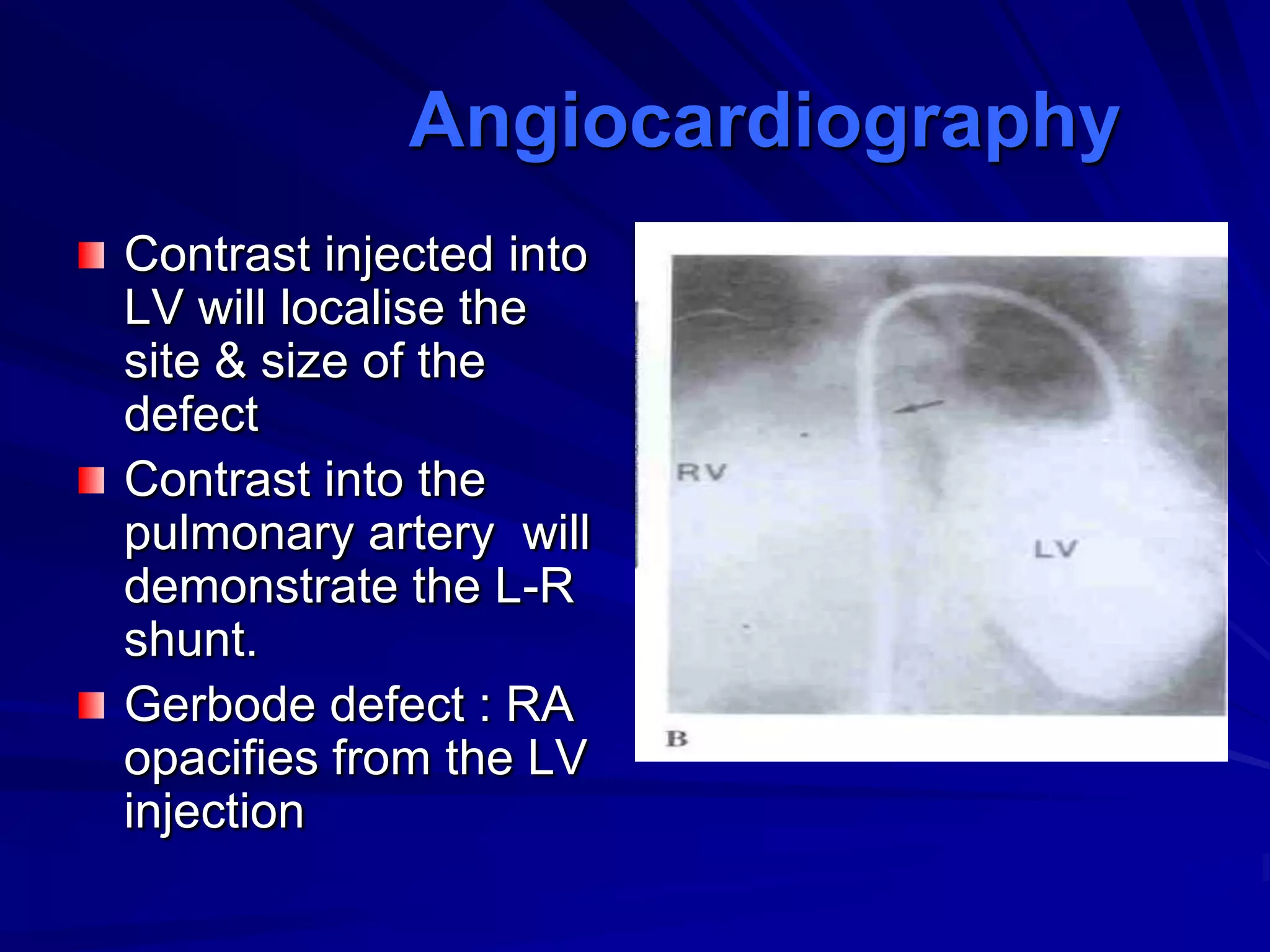
Angiocardiography
Contrast injected into
LV will localise the
site & size of the
defect
Contrast into the
pulmonary artery will
demonstrate the L-R
shunt.
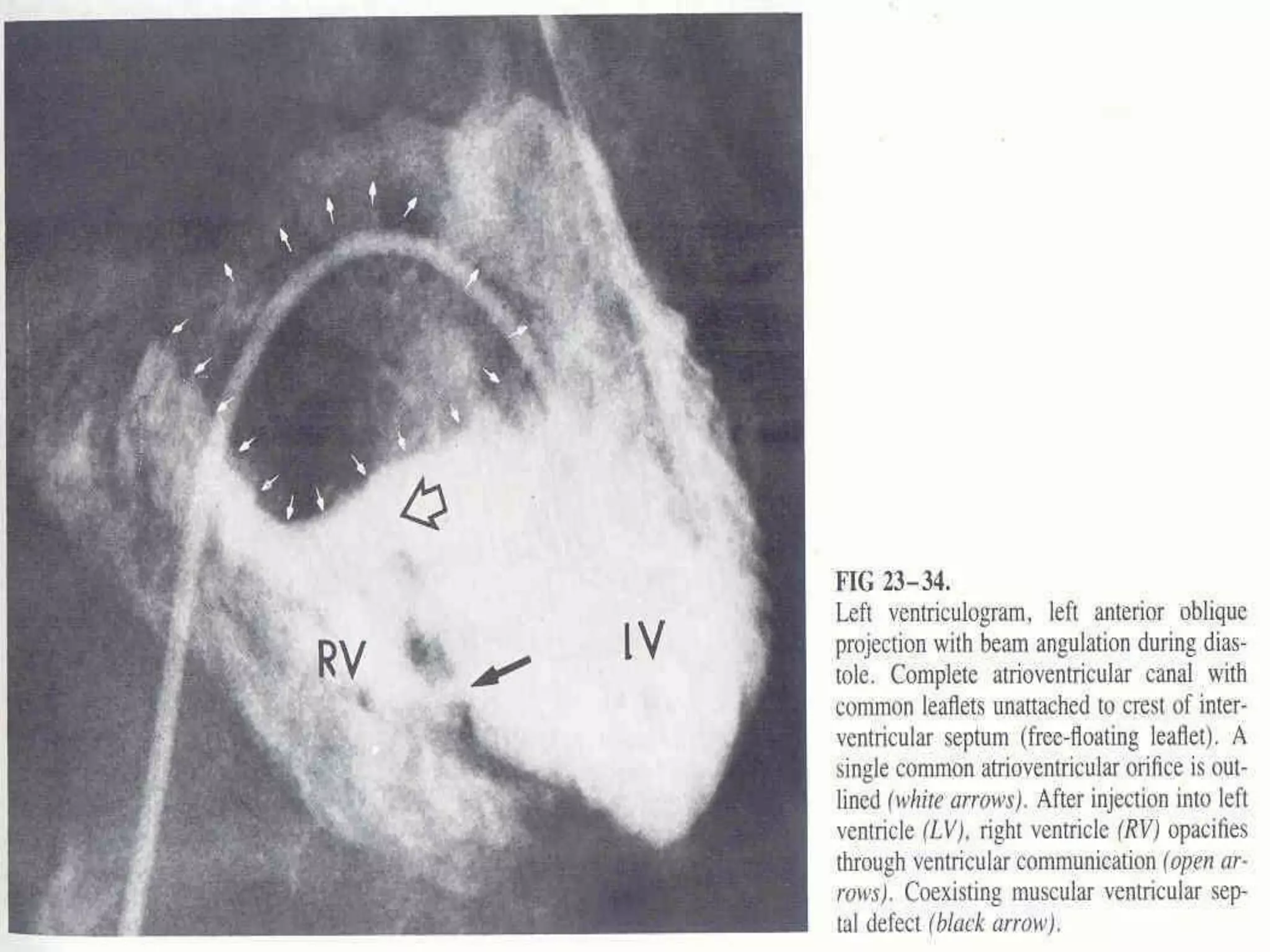
Gerbode defect : RA
opacifies from the LV
injection
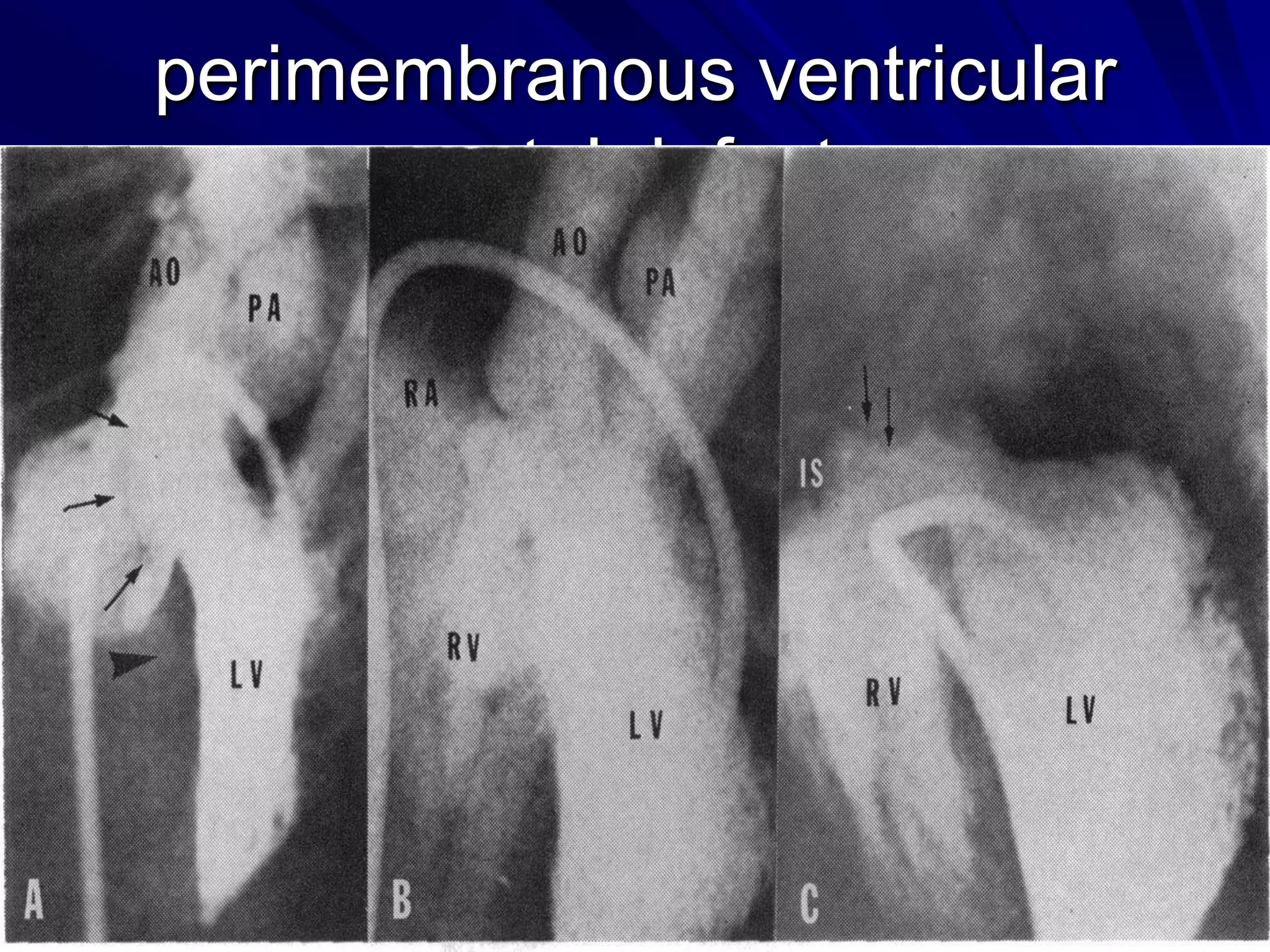
perimembranous ventricular
septal defects
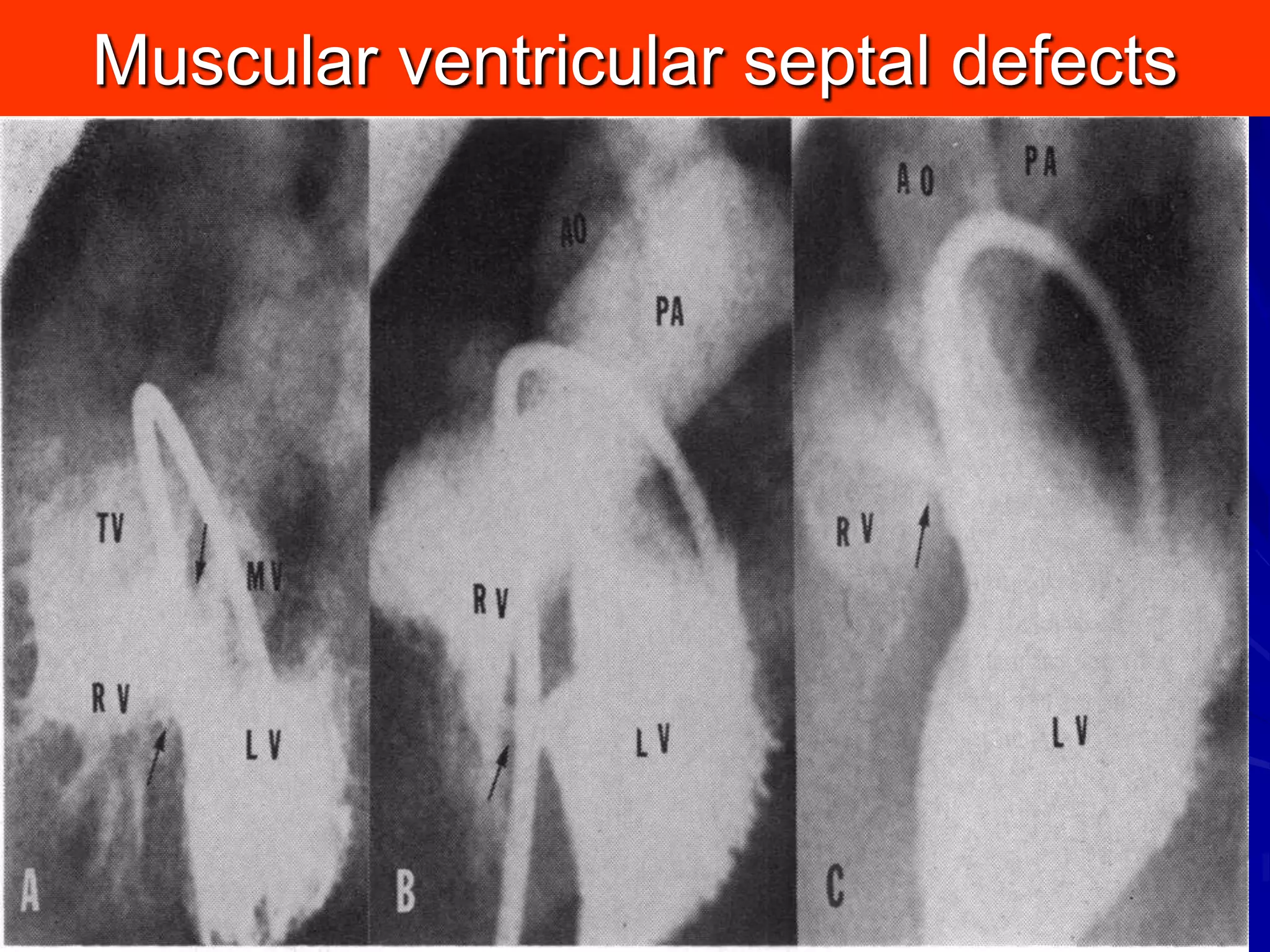
Muscular ventricular septal defects
Subarterial VSD
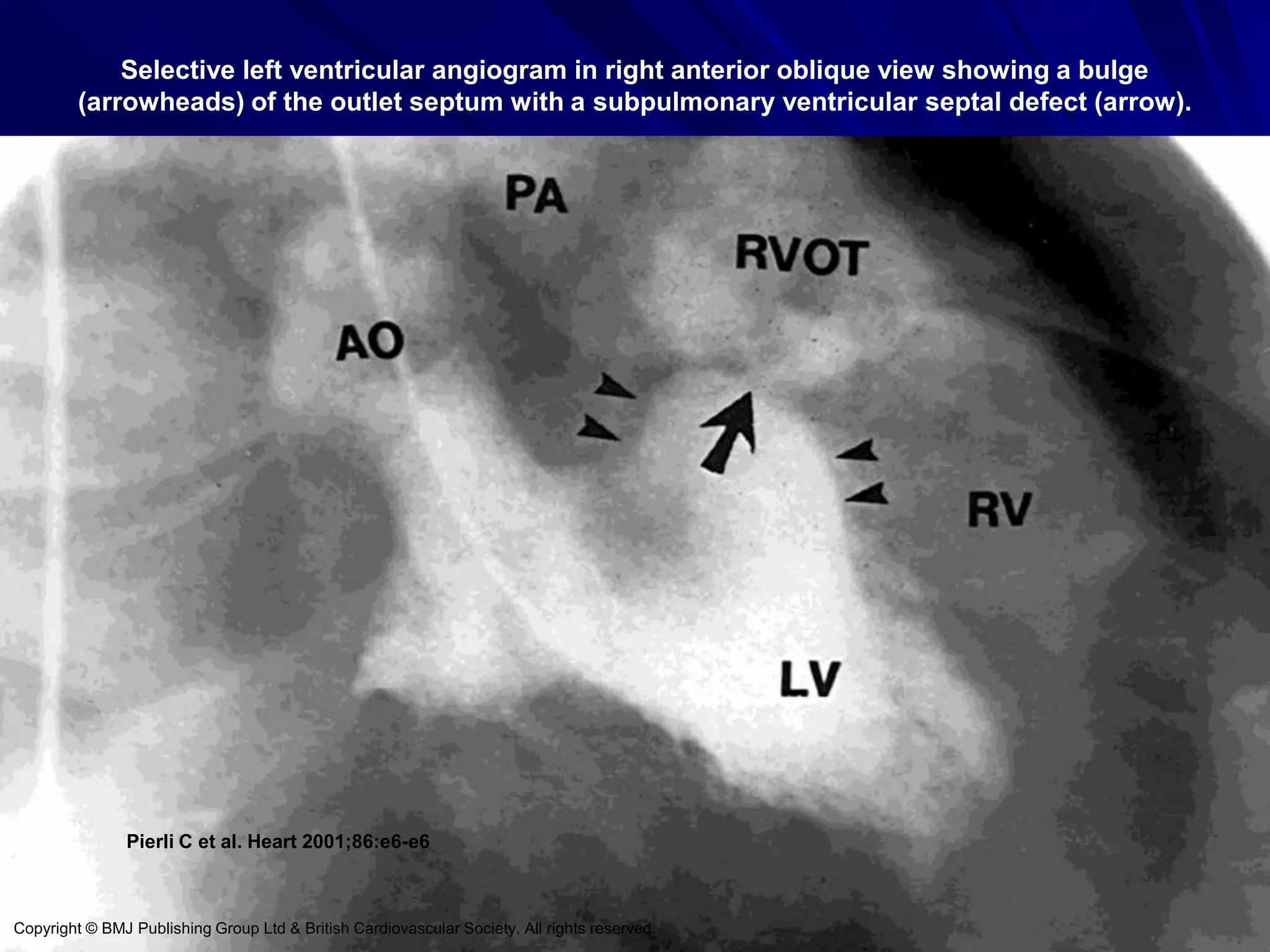
Selective left ventricular angiogram in right anterior oblique view showing a bulge
(arrowheads) of the outlet septum with a subpulmonary ventricular septal defect (arrow).

Pierli C et al. Heart 2001;86:e6-e6

Copyright © BMJ Publishing Group Ltd & British Cardiovascular Society. All rights reserved.
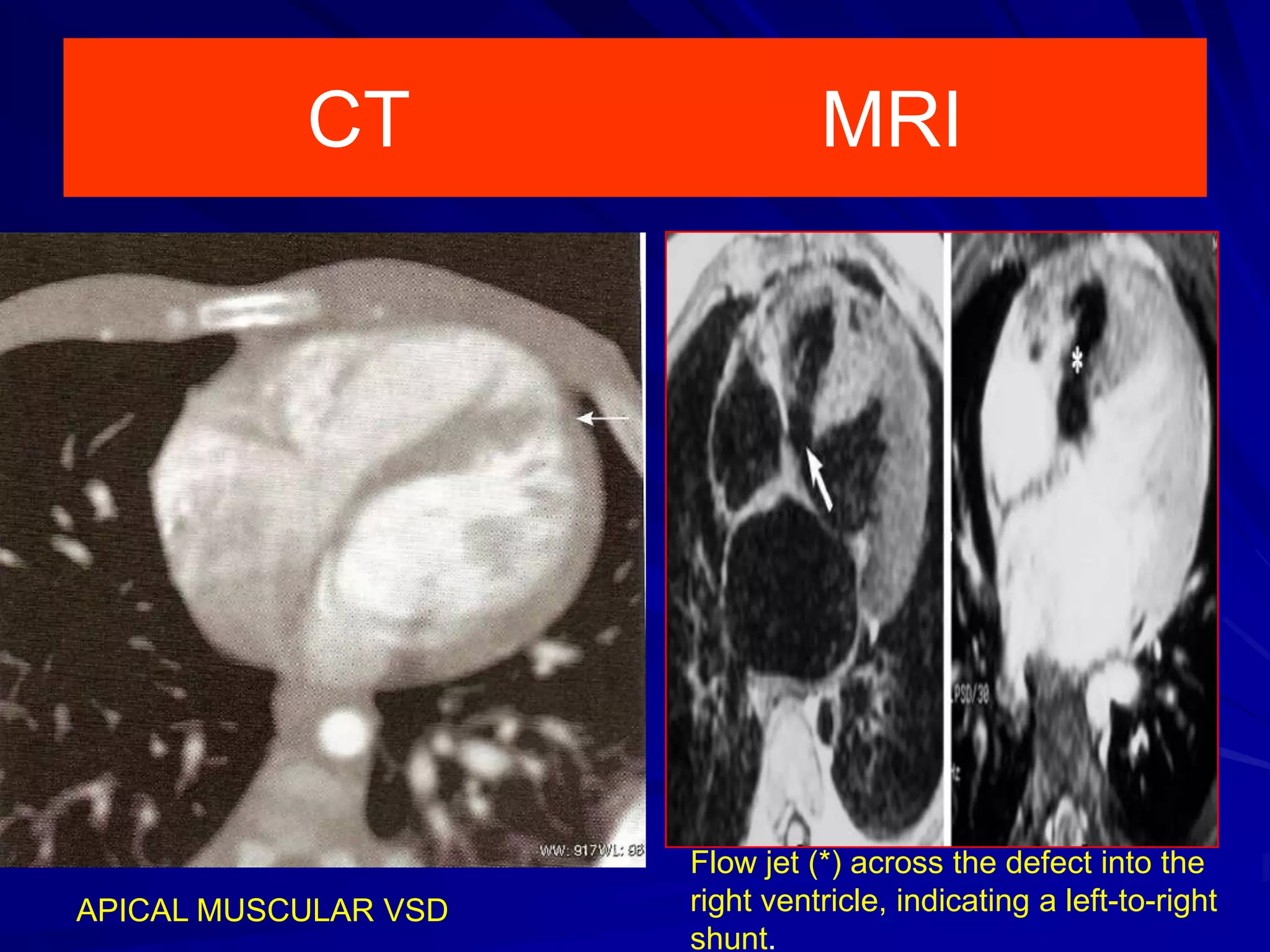
CT

APICAL MUSCULAR VSD

MRI

Flow jet (*) across the defect into the
right ventricle, indicating a left-to-right
shunt.
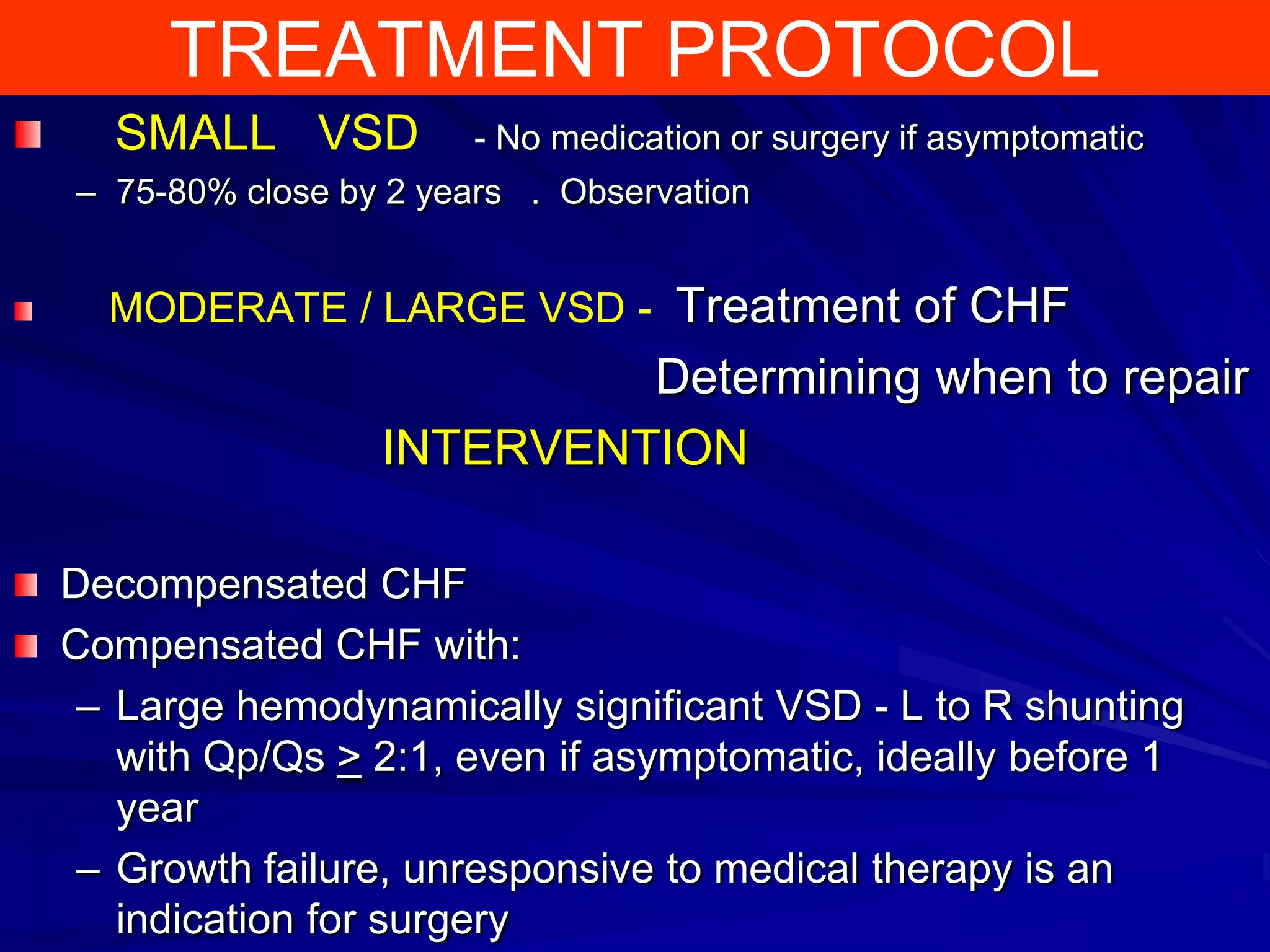
TREATMENT PROTOCOL
SMALL VSD

- No medication or surgery if asymptomatic

– 75-80% close by 2 years . Observation

MODERATE / LARGE VSD - Treatment of CHF

Determining when to repair
INTERVENTION
Decompensated CHF
Compensated CHF with:
– Large hemodynamically significant VSD - L to R shunting
with Qp/Qs > 2:1, even if asymptomatic, ideally before 1
year
– Growth failure, unresponsive to medical therapy is an
indication for surgery
Surgical
correction
has to be
done before
irreversible
damage to
pulmonary
vasculature
occurs.
Indications for intervention
Significant VSD: symptomatic without irreversible pulmonary HTN
* Qp/Qs > 1.5
* PA systolic pressure > 50 mm Hg
* Increased LV and LA size
* Deteriorating LV function
Perimembranous VSD with more than mild AR + recurrent
endocarditis.

Subarterial VSD - High incidence of aortic valve prolapse/ AI
Children without irreversible pulmonary HTN
* significant symptoms failing to respond to medication
* elective surgery (performed between 3 ~ 9 m/o)
Pulmonary HTN
* PA resistance < 7 Wood units
* Net left-to-right shunt of at least 1.5
* Irreversible
SURGICAL CONSIDERATION
Preoperative VSD location
Avoidance of injury to conduction pathways.
Operative technique needed to secure the closure

5 operative approaches -

RIGHT ATRIAL
TRANSPULMONARY
TRANSAORTIC
RIGHT VENTRICULAR
LEFT VENTRICULAR
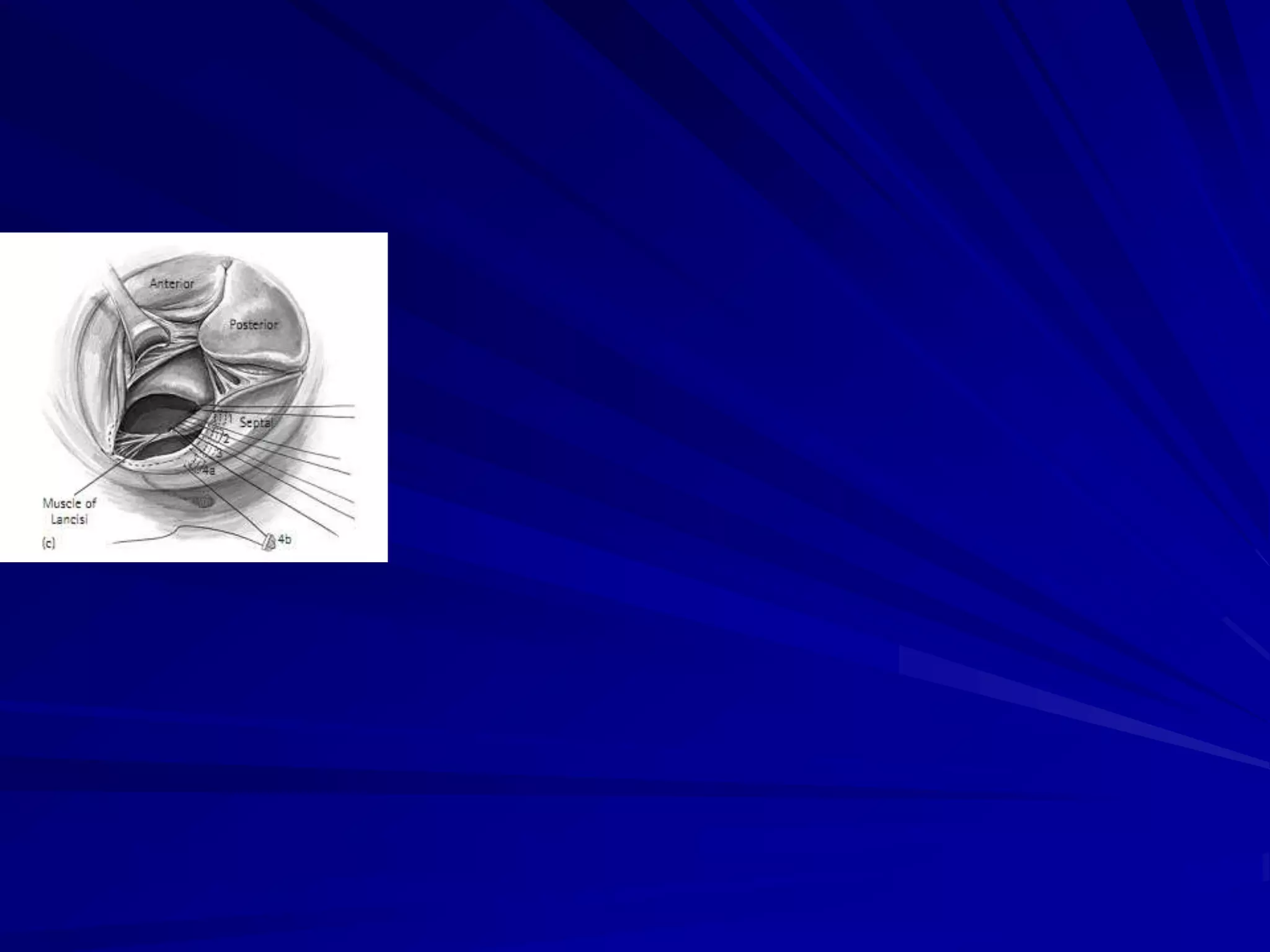
RIGHT ATRIAL APPROACH
Most frequently used
Used for – Paramembranous/ Inlet /Muscular/LV & RA types
APICAL & SWISS Cheese defect – limited left apical ventricular
incision may be required
Shallow Stitching Close to the Rim of the Ventricular
Septal Defect Eliminates Injury to the Right Bundle Branch
VSD
TRANSPULMONARY ARTERY
Used for repair of Conal ( Supracristal vsd)
Conal Vsd – importance of patch closure
Treacherous situation- Prolapsed aortic valve leaflet
partially occlude the defect.
Avoiding injury to Aortic valve leaflet .
Repairing superior aspect of VSD
Combined approach for AI

may
TRANSAORTIC APPROACH
Need for concomitant correction – aortic valvuloplasty / valvar
or subvalvar stenosis.
Incision- curved incision over Aortic valve commisure
Absence of superior muscular or fibrous rim of the defect.

Used for DORV with subaortic VSD
RV APPROACH
2 types- TRANSVERSE/ VERTICAL
Important to examine epicardial coronary artery distribution
Indications- inaccesibility from rt .atrium /pulmonary artery
- defect extending into infundibular septum
- presence of obstructive infundibular muscle bundles
- difficulty exposing inferior margin of conal defect

Patch closure by
RV approach
Apical Muscular VSD
Patch Closure via RVtomy

(A) Trabeculations overlying the VSD are taken down.
(B) Interrupted pledgetted sutures are placed full thickness at the superior margin of
the defect, maintaining the pledgets on the left ventricular side
(C) Closure of the VSD with a Dacron patch
LV APPROACH
Rarely used
Vertical / Transverse incision
Limited to certain type of trabecular VSDs- multiple
apical,swiss cheese
Easier to patch from LV side because of smooth septum
LV incision avoided to prevent long term ventricular
dysfunction.
Interventional Options
Percutaneous Device Closure
– Muscular VSDs can typically be closed
percutaneously
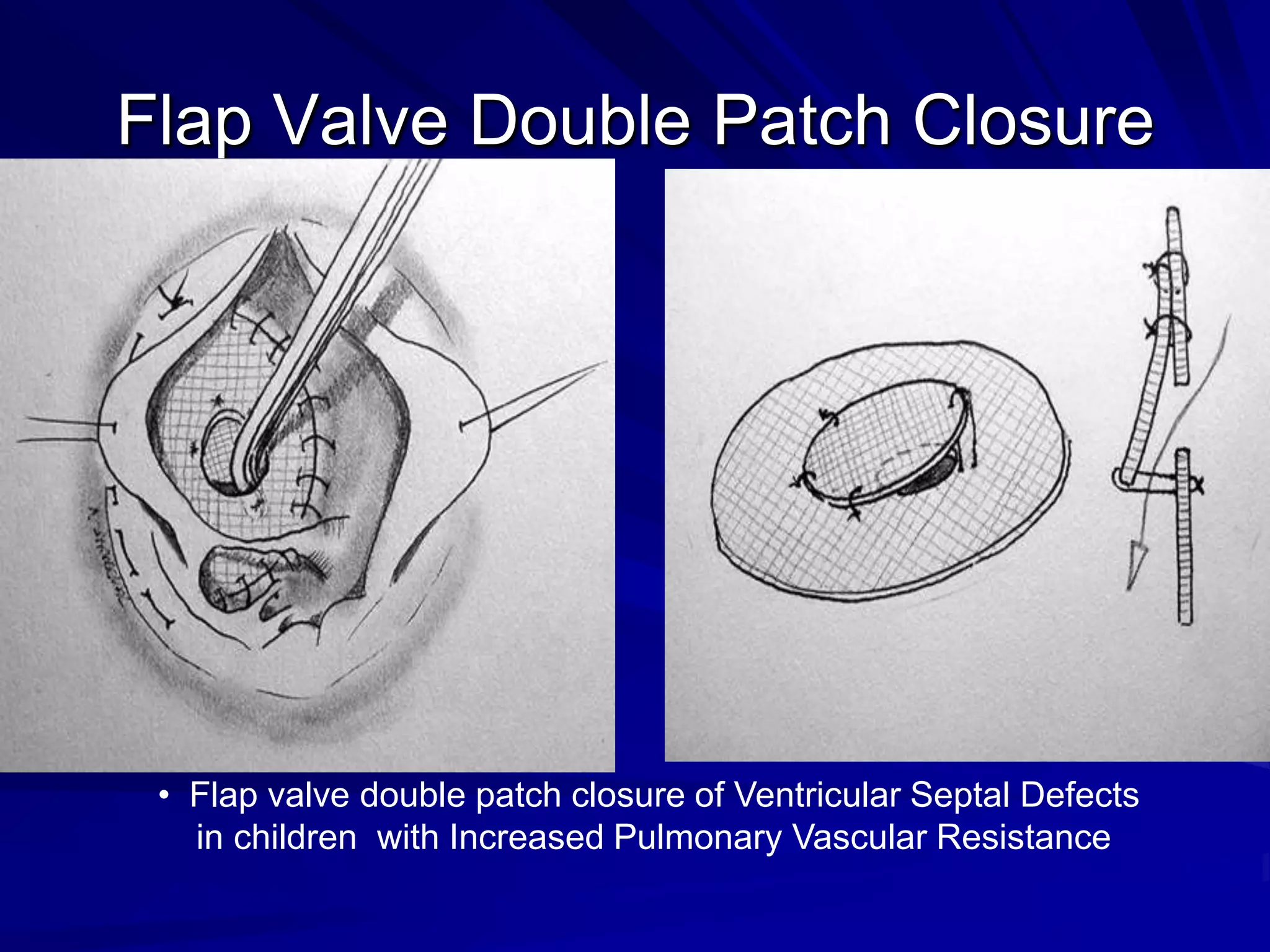
Flap Valve Double Patch Closure

• Flap valve double patch closure of Ventricular Septal Defects
in children with Increased Pulmonary Vascular Resistance
Much more to come
Are we
all still
awake?
QUESTIONS?
Thank You

Vsd

  • 1.
  • 2.
    Ventricular Septal Defect HenriRoger was the first man to describe a ventricular septal defect, in 1879 he wrote: “A developmental defect of the heart occurs from which cyanosis does not ensue in spite of the fact that a communication exists between the cavities of the two ventricles and in spite of the fact that the admixture of venous blood and arterial blood occurs. This congenital defect, which is even compatible with long life, is a simple one. It comprises a defect in the interventricular septum”
  • 3.
    INTRODUCTION Isolated VSD -most commonly recognized CHD 2- per 1000 live birth Forms 20 % of all CHD 50 % when associated with other major defects . 75-80% of small VSD’s close spontaneously by late childhood 10-15% of large VSD’s close spontaneously 60% of defects close before age 3, and 90% before age 8
  • 4.
    HISTORICAL ASPECT Roger in1879 - first described Eisenmenger – 1897 - autopsy finding Pathophysiology by Abbott (1936) & Selzer (1949) . 1952 – Muller and Danman- pulmonary artery band 1954 - Lillehei and associates – First vsd repair 1956 – Dushane – Transventricular / Stirling – Transatrial 1961 – Kirklin- Repair of VSD in infants 1976 - Baratt-Boyes – deep hypothermia & circulatory arrest
  • 5.
    The primitive cardiactube has five zones: the arterial trunk the bulbus cordis ) the ventricle the atrium and the sinus venosus V B V D A SV
  • 7.
  • 8.
    EMBRYOLOGY VSD occurs duringthe first 8 weeks of foetal life 3 components – Interventricular muscular partition - Endocardial cushions - Bulbar ridges that separate great vessels .
  • 9.
    Four cushions (AVC)have developed at the A/V junction; the superior and inferior cushions will meet to divide the AV orifice (AVO) into the tricuspid and mitral valves. The inferior septal crest (VS) will aim to meet the divided valve where the cushions fuse.
  • 10.
    Formation of IVseptum  IV septum upwards from the floor of the bulboventricular cavity,division into rt and lt halves.It meets fused AV cushions and partially fuse with them.  Two ridges rt and lt arise in conical upper part of bulboventricular cavity.fuse with each other to form bulbar septum.  Gap persists between the two-filled by proliferation of tissue from the AV cushions.
  • 11.
    Membranous IV septum Antpart separates rt and left ventricles. Post part separates rt atrium and left ventricle. This is because the interatrial and interventricular septum don’t meet in the midline.
  • 12.
  • 14.
    What if?.............. - thenyou get the truncal septum fails to fuse with the septal crest? - perimembraneous VSD the truncal septum is deviated to the PA side? - tetralogy of Fallot the truncal septum fails to develop? - truncus arteriosus the ventricular septum fails to reach the AV valve? - AV septal defects the arterial trunk stays over the RV but does divide? - double outlet RV the aortic valve pushes up and right instead of the pulmonary? - transposition of the great vessels the ventricles fail to centralise over the AV valve - double inlet left ventricle (commonest form of single ventricle) the loop is to the left? - ventricular inversion (RV on the left, LV on the right)
  • 15.
    Associated Defects Left HeartDefects – Aortic stenosis – Coarctation of the aorta Right Heart Defects – Tetrology of Fallot – Double Outlet Right Ventricle Truncus Arteriosus Some single ventricle (e.g. Tricuspid atresia, double inlet left ventricle)
  • 16.
    Chromosomal Disorders associated withVSD Trisomy 21: 40% of T21 will have VSD Trisomy 13, 18: 18% of T13, 31% of T18 will have VSD 22q11 deletion: – Tetrology of Fallot is most common anomaly – VSD with or without aortic arch anomaly is second most common Holt-Oram (Hand-heart syndrome): TBX5 gene found on Chromosome 12 Recurrence risk for VSD based on parental VSD – Paternal 2% – Maternal 6-10%
  • 17.
    The Ventricular Septum 1.Membranous 2. Outflow 3. Trabecular septum 4. Inflow 5. Subarterial / Supracristal
  • 18.
  • 19.
    Ventricular Septum The membranousseptum-The septal leaflet of the tricuspid valve divides the membranous septum into 2 components, the pars atrioventricularis and the pars interventricularis.1 The muscular septum is a nonplanar structure that can be divided into inlet, trabecular, and infundibular components. An inlet VSD has no muscular rim between the defect and the atrioventricular valve annulus. The trabecular septum is the largest part of the interventricular septum. The location of defects in the trabecular septum can be classified as anterior, midmuscular, apical, and posterior The infundibular septum separates the right and left ventricular outflow tracts. On the right side, it is bordered by the line from the membranous septum to the papillary muscle of the conus inferiorly and the semilunar valves superiorly.
  • 20.
    Nomenclature / Classification TYPEIConal,Supracristal, Infundibular,Subarterial TYPE II – Paramembranous TYPE IIIInlet/ AV canal type Type IV – Muscular
  • 21.
    CLASSIFICATION ROBERT ANDERSON Perimembranous Muscular Doubly committed Juxtaarterial defects Van Pragh AV canal type Muscular VSDs Conoventricular Conal
  • 23.
    Lesion Size • RestrictiveVSD – < 0.5 cm2 (Smaller than Ao valve orifice area) – Small L to R shunt – Normal RV output – 75% spontaneously close < 2yrs • Non-restrictive VSD – > 1.0 cm2 (Equal to or greater than to Ao valve orifice area) – Equal RV and LV pressures – Large hemodynamically significant L to R shunt – Rarely close spontaneously
  • 24.
    Based on size 1.Size 1) Large : 2/3rd of aortic annular size or > 15mm or > 1cm/sq.m of BSA Peak RV sys = LV sys pressure 2) Moderate : half of aortic annular size 5 to 15mm RV pressure to ½ of LV Qp/Os>2.0 3) Small : One third of aortic annular size insufficient size to raise RV pressure & Qp/Qs < 1.75
  • 25.
    TYPE I VSD Conal,Supracristal,Infundibular, Subarterial Maldevelopmentof bulbotruncal system Located within infundibular portion of RVOT Superior margin – no muscular tissue Inferior margin – defect is muscular Can extend upto right or sometimes non-coronary cusps of the aortic valve Conduction system is not in surgical proximity
  • 26.
  • 28.
    TYPE II VSD Alsocalled Conoventricular defects. Most common (80%) Margins include membranous septum or remnant May have extensions into inlet, outlet or trabecular septum Postero-inferior margin very close to the antero-septal commissure of the Tricuspid valve Can extend upto non-coronary cusp of aortic valve Danger area- inferior and posterior region of defect
  • 30.
  • 32.
    TYPE III VSD AVCanal type / Inlet VSDs Form about – 5% of all VSDs Located posteriorly – subjacent to TV septal leaflet in inlet portion Superior border- may extend to the annulus of tricuspid valve Conduction system at risk – close proximity to AV node Guide- apical area of Triangle of koch Common bundle courses around infr. aspect of defect
  • 33.
  • 34.
  • 35.
    TYPE IV VSD Muscletissue all around the defect May be either anterior, in the inlet septum, mid-muscular or apical Classification according to location is important because it determines the approach for surgical closure. – Inlet and mid-muscular ----- RA approach – Anterior ------- Rt. Ventriculotomy – Apical ------ May require left ventriculotomy May be Single/ multiple Swiss Cheese VSD
  • 37.
  • 38.
    Pathophysiology Two determinants – Sizeof defect – Pulmonary vascular resistance These determine – Pressure gradient across VSD – Shunt volume across VSD After birth PVR falls ------ Large flow across shunt if large VSD Causes increased PA pressure (initially flow related), increased PV return, hence LA enlargement and LV overload PH initially flow related and reversible
  • 39.
    Pathophysiology Later ----- Intimalproliferation and medial hypertrophy leads to fixed irreversible PH Flow through the lungs decreases as PVR increases, hence shunt volume decreases Eventually PVR > SVR, hence R  L shunt across VSD Cyanosis  Eisenmengerised VSD Shunt calculated by Fick’s principle Qp/Qs Aortic O2 % sat - Central Venous O2 % sat Pulm. Vein O2 % sat – Pulm. Art O2 % sat With small VSDs, there is resistance to flow across the VSD hence Qp/Qs is rarely > 1.5 With moderate VSDs, Qp/Qs is between 1.5 and 2.5, and is less likely to cause pulm vasc disease
  • 40.
  • 42.
    HEATH- EDWARD CLASSIFICATION GradeI - hypertrophy of the media of small muscular arteries and arterioles. Grade II - intimal cellular proliferation in addition to medial hypertrophy. Grade III - progressive intimal proliferation and concentric fibrosis. Grade IV - "plexiform lesions" Grade V - angiomatous and cavernous lesions and hyalinization of intimal fibrosis. Grade VI - necrotizing arteritis.
  • 43.
    Natural History Spontaneous closureis known, primarily with perimembranous and muscular VSDs. Subarterial and inlet VSDs rarely close – Chances differ with age at detection At 1 month  80% of large VSDs close At 6 months  50% At 12 months  25%
  • 44.
    Natural History Patients withlarge vsd- symptom develop soon after birth. CHF manifested by- dyspnea/rptd.pulmonary infn/hepatomegaly/sweating/failure to thrive. Irreversible pulmonary vascular disease after 1-2 yrs of age. Some children with isolated vsd develop Subpulmonic stenosis- pt. not at risk of pulmonary vascular disease
  • 45.
    VSD IN ADULT SVT– AF prevalent with increasing age. VSD+ AR – High risk of bacterial endocarditis Right sided failure- due to pulmonary stenosis Left sided failure- in pts. of aortic valve prolapse. Eisenmenger complex- 2nd & 3rd decade of life Pregnancy- spontaneous abortion/small-for-date babies Mortality- 27% by 20 years & 69% by 60 years.
  • 47.
    CLINICAL FEATURES Grade I Smallventricular septal defect (less than 1.5 cm2) Patient is asymptomatic. Murmur can be present since a few days after birth. Grade II Frequent respiratory tract infections. CHF (rare). Cyanosis is absent even during exercise. Functional aerobic capacity is usually moderately reduced with early fatigability but unusual CHF. Grade III More frequent respiratory tract infections. Defective growth. Moderate cyanosis at times with exertion Congestive heart failure frequent in the first years of life (one of the most frequent causes of CHF during the first year of life). Functional capacity markedly reduced. Grade IV or Eisenmenger Complex
  • 49.
    EISENMENGER COMPLEX • Infantswith Eisenmenger may become easily fatigued, especially during crying spells and at feeding time • Low tolerance for extra exertion • Shortness of Breath (dyspnea) and/or rapid breathing • Fainting (syncope) • Difficulty eating, breathing or sucking • Poor weight gain • Slow growth or other physical retardation
  • 52.
    CLINICAL FINDINGS • Pulse pressureis relatively wide • Precordium is hyperkinetic with a systolic thrill at LSB • S1&S2 are masked by a PSM at Lt.sternal border ,max. intensity of the murmur is best heard at 3rd,4th&5th Lt interspace.Also well heard at the 2nd space but not conducted beyond apex • Lt. 2nd space –widely split &variable accentuated P2 • Delayed diastolic murmur at the apex &S3 • Presence of mid-diastolic ,low pitched rumble at the apex is caused by increased flow across the mitral valve &indicates Qp:Qs=2:1/greater • Maladie de Roger –small VSD presenting in older children as a loud PSM w/o other significant hemodynamic changes
  • 53.
    ECG Size of Defect Results Smallrestrictive VSDs Normal tracing Medium-sized VSDs Broad, notched P wave characteristic of left atrial overload • Signs of LV volume overload — deep Q and tall R waves with tall T waves in leads V5 and V6 • Signs of atrial fibrillation are often present Large VSDs Right ventricular hypertrophy with right-axis deviation. With further progression, the ECG shows biventricular hypertrophy; P waves may be notched or peaked.
  • 54.
    ECG May show right/leftor combined ventricular hypertrophy Presence of RAD represents elevated RVP and PAP Postoperative RBBB is common CHEST X-RAY Cardiomegaly : proportional to the volume overload. Mainly LV, LA and RV enlargement. Increased pulmonary blood flow, PAH. Unless LA is significantly enlarged its difficult to differentiate from ASD. RV may not be as enlarged as anticipated as it receives the shunt into its outflow tract.
  • 55.
  • 56.
    42-year-old woman withEisenmenger complex, demonstrating atrial fibrillation with right axis deviation, right ventricular hypertrophy, right bundle-branch block, and premature ventricular beat.
  • 57.
    Ventricular septal defectin a 7-month-old. Frontal(A)and lateral (B) views of the chest show moderate cardiac enlargement including right atrial, right ventricular, and left atrial enlargement with posterior displacement of the left main stem bronchus (arrow in B) and increased pulmonary
  • 59.
    2D -ECHO Determine vsdlocation LV outflow morphology Aortic valve involvement AV valve chordal attachment Septal trabeculations may cause multiple reflections and obscure small defects Prominent bulging of tissue into the RV : aneurysmal perimembranous VSD
  • 60.
  • 61.
    Supracristal VSD, withpulm outflow tract obstruction
  • 63.
    Cardiac catheterization Identification ofMultiple VSDs Cardiac catheterization can quantify shunt volume and pulmonary arterial resistance. Step-up in oxygen saturation may be detected in the pulmonary artery rather than in the right ventricular cavity because of streaming of the shunted blood into the pulmonic trunk. If aortic valve prolapse is significant, left-to-right shunting by oximetry may be fairly unremarkable, because the ventricular septal defect (VSD) in such cases is partially obstructed.
  • 64.
    CATH GRADING Grade I Rightatrium and right ventricular pressures are normal, due to the low volume shunt. Oxymetry can be misleading, showing only a mild step up in oxygen saturation at ventricular level. The passage to the left ventricle with the catheter is often possible. Grade II Elevation of right ventricular pressure and pulmonary hyperdynamics hypertension (moderate) due to large pulmonary flow. Blood oxygen measurements will show typical right ventricular oxygen step up. If the defect is located over the Crista Supraventricularis the step up can only be seen at the pulmonary artery level. (The maximal normal step up between vena cava and atrium is 2 Vol % and between RV and MPA 0.5 Vol %; any difference over such figures must be considered abnormal.) . Grade III The pressure tends to equalize between right and left ventricles but with a still predominant left to right shunt. Significant blood oxygen step up is noted. With exertion, the normal peripheral arterial oxygen saturation is reduced. Significant pulmonary hypertension exists (close to systemic). There is marked R.V.H. Grade IV: Eisenmenger Complex
  • 65.
    Angiocardiography Contrast injected into LVwill localise the site & size of the defect Contrast into the pulmonary artery will demonstrate the L-R shunt. Gerbode defect : RA opacifies from the LV injection
  • 66.
  • 67.
  • 68.
  • 70.
    Selective left ventricularangiogram in right anterior oblique view showing a bulge (arrowheads) of the outlet septum with a subpulmonary ventricular septal defect (arrow). Pierli C et al. Heart 2001;86:e6-e6 Copyright © BMJ Publishing Group Ltd & British Cardiovascular Society. All rights reserved.
  • 71.
    CT APICAL MUSCULAR VSD MRI Flowjet (*) across the defect into the right ventricle, indicating a left-to-right shunt.
  • 72.
    TREATMENT PROTOCOL SMALL VSD -No medication or surgery if asymptomatic – 75-80% close by 2 years . Observation MODERATE / LARGE VSD - Treatment of CHF Determining when to repair INTERVENTION Decompensated CHF Compensated CHF with: – Large hemodynamically significant VSD - L to R shunting with Qp/Qs > 2:1, even if asymptomatic, ideally before 1 year – Growth failure, unresponsive to medical therapy is an indication for surgery
  • 73.
    Surgical correction has to be donebefore irreversible damage to pulmonary vasculature occurs.
  • 74.
    Indications for intervention SignificantVSD: symptomatic without irreversible pulmonary HTN * Qp/Qs > 1.5 * PA systolic pressure > 50 mm Hg * Increased LV and LA size * Deteriorating LV function Perimembranous VSD with more than mild AR + recurrent endocarditis. Subarterial VSD - High incidence of aortic valve prolapse/ AI Children without irreversible pulmonary HTN * significant symptoms failing to respond to medication * elective surgery (performed between 3 ~ 9 m/o) Pulmonary HTN * PA resistance < 7 Wood units * Net left-to-right shunt of at least 1.5 * Irreversible
  • 75.
    SURGICAL CONSIDERATION Preoperative VSDlocation Avoidance of injury to conduction pathways. Operative technique needed to secure the closure 5 operative approaches - RIGHT ATRIAL TRANSPULMONARY TRANSAORTIC RIGHT VENTRICULAR LEFT VENTRICULAR
  • 76.
    RIGHT ATRIAL APPROACH Mostfrequently used Used for – Paramembranous/ Inlet /Muscular/LV & RA types APICAL & SWISS Cheese defect – limited left apical ventricular incision may be required
  • 78.
    Shallow Stitching Closeto the Rim of the Ventricular Septal Defect Eliminates Injury to the Right Bundle Branch
  • 79.
  • 81.
    TRANSPULMONARY ARTERY Used forrepair of Conal ( Supracristal vsd) Conal Vsd – importance of patch closure Treacherous situation- Prolapsed aortic valve leaflet partially occlude the defect. Avoiding injury to Aortic valve leaflet . Repairing superior aspect of VSD Combined approach for AI may
  • 83.
    TRANSAORTIC APPROACH Need forconcomitant correction – aortic valvuloplasty / valvar or subvalvar stenosis. Incision- curved incision over Aortic valve commisure Absence of superior muscular or fibrous rim of the defect. Used for DORV with subaortic VSD
  • 84.
    RV APPROACH 2 types-TRANSVERSE/ VERTICAL Important to examine epicardial coronary artery distribution Indications- inaccesibility from rt .atrium /pulmonary artery - defect extending into infundibular septum - presence of obstructive infundibular muscle bundles - difficulty exposing inferior margin of conal defect Patch closure by RV approach
  • 85.
    Apical Muscular VSD PatchClosure via RVtomy (A) Trabeculations overlying the VSD are taken down. (B) Interrupted pledgetted sutures are placed full thickness at the superior margin of the defect, maintaining the pledgets on the left ventricular side (C) Closure of the VSD with a Dacron patch
  • 86.
    LV APPROACH Rarely used Vertical/ Transverse incision Limited to certain type of trabecular VSDs- multiple apical,swiss cheese Easier to patch from LV side because of smooth septum LV incision avoided to prevent long term ventricular dysfunction.
  • 87.
    Interventional Options Percutaneous DeviceClosure – Muscular VSDs can typically be closed percutaneously
  • 88.
    Flap Valve DoublePatch Closure • Flap valve double patch closure of Ventricular Septal Defects in children with Increased Pulmonary Vascular Resistance
  • 89.
    Much more tocome Are we all still awake?
  • 90.
  • 92.

Editor's Notes

  • #17 Holt-Oram- can have absent radius or thumb, triphalangeal thumb or more severe limb defects. 95% not associated with any chromosomal defect