Lymphatic System
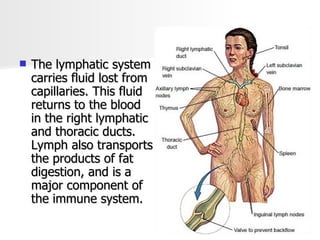
The lymphatic system carries fluid lost from capillaries. This fluid returns to the blood in the right lymphatic and thoracic ducts. Lymph also transports the products of fat digestion, and is a major component of the immune system.
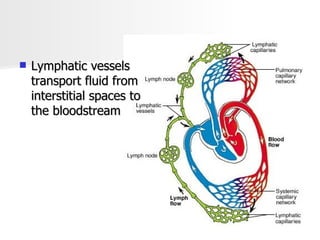
Lymphatic vessels transport fluid from interstitial spaces to the bloodstream
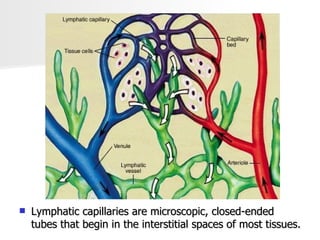
Lymphatic capillaries are microscopic, closed-ended tubes that begin in the interstitial spaces of most tissues.
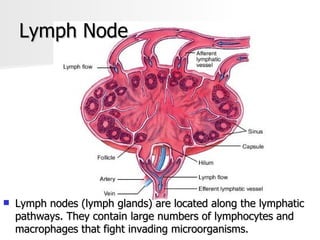
Lymph Node Lymph nodes (lymph glands) are located along the lymphatic pathways. They contain large numbers of lymphocytes and macrophages that fight invading microorganisms.
Lymph Organs Tonsils Spleen Thymus
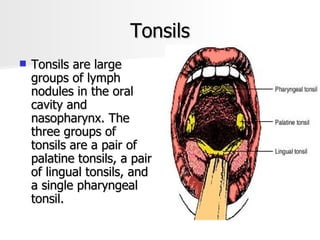
Tonsils Tonsils are large groups of lymph nodules in the oral cavity and nasopharynx. The three groups of tonsils are a pair of palatine tonsils, a pair of lingual tonsils, and a single pharyngeal tonsil.
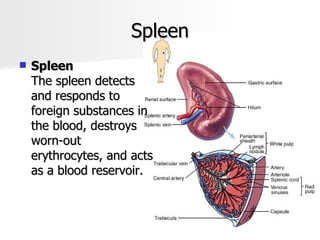
Spleen Spleen The spleen detects and responds to foreign substances in the blood, destroys worn-out erythrocytes, and acts as a blood reservoir.
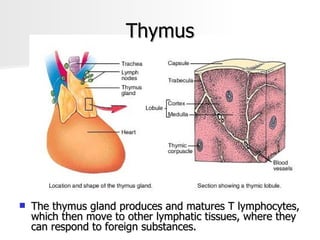
Thymus The thymus gland produces and matures T lymphocytes, which then move to other lymphatic tissues, where they can respond to foreign substances.

Lymphatic System

  • 1.
  • 2.
    The lymphatic systemcarries fluid lost from capillaries. This fluid returns to the blood in the right lymphatic and thoracic ducts. Lymph also transports the products of fat digestion, and is a major component of the immune system.
  • 3.
    Lymphatic vessels transportfluid from interstitial spaces to the bloodstream
  • 4.
    Lymphatic capillaries aremicroscopic, closed-ended tubes that begin in the interstitial spaces of most tissues.
  • 5.
    Lymph Node Lymphnodes (lymph glands) are located along the lymphatic pathways. They contain large numbers of lymphocytes and macrophages that fight invading microorganisms.
  • 6.
    Lymph Organs TonsilsSpleen Thymus
  • 7.
    Tonsils Tonsils arelarge groups of lymph nodules in the oral cavity and nasopharynx. The three groups of tonsils are a pair of palatine tonsils, a pair of lingual tonsils, and a single pharyngeal tonsil.
  • 8.
    Spleen Spleen Thespleen detects and responds to foreign substances in the blood, destroys worn-out erythrocytes, and acts as a blood reservoir.
  • 9.
    Thymus The thymusgland produces and matures T lymphocytes, which then move to other lymphatic tissues, where they can respond to foreign substances.