Lymphatic system
About Lymphatic System
• This system consist of a Fluid called lymph, Vessels called
Lymphatic vessels that transport the lymph, a number of structure
and organs containing lymphatic tissue
• The lymphatic system contributes to homeostasis by draining
interstitial fluid as well as providing the mechanism for defense
against disease.
• This system is closely related to cardiovascular system, and it is
also function with the digestive system in the absorption of fatty
foods.
Component of Lymphatic System
• Lymph
• Lymphatic vessels
• Lymphatic node
• Lymph organ ( spleen and thymus)
• Lymphoid tissue ( tonsils)
• Bone marrow
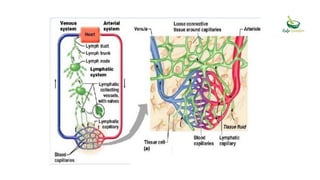
• lymphatic vessels- begin as lymphatic capillaries.
• tiny vessels located in the space between cells and are closed at one
end.
• lymphatic capillaries- slightly larger in diameter than blood capillaries.
• unique oneway structure.
• when pressure is greater in IF than in lymph, cells seperate slightly and
opening of one way door, IF inters in lymphatic capillaries.
• in the small intestine, specillaised lymphatic capillaries called Lacteals
carry diatery lipid into lymphatic vessels and ultimately into the blood.
• presence of lipid in the lymph draining from small intestine apperar
creamy white such lymph referred as chyle.
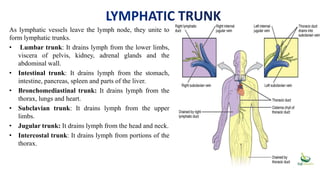
As lymphatic vessels leave the lymph node, they unite to
form lymphatic trunks.
• Lumbar trunk: It drains lymph from the lower limbs,
viscera of pelvis, kidney, adrenal glands and the
abdominal wall.
• Intestinal trunk: It drains lymph from the stomach,
intestine, pancreas, spleen and parts of the liver.
• Bronchomediastinal trunk: It drains lymph from the
thorax, lungs and heart.
• Subclavian trunk: It drains lymph from the upper
limbs.
• Jugular trunk: It drains lymph from the head and neck.
• Intercostal trunk: It drains lymph from portions of the
thorax.
• The principal lymphatic trunks then pass their lymph into two main ducts: the
thoracic duct (also known as the left lymphatic duct) and the right lymphatic duct.
• The thoracic duct is about 40 cm long and begins as a dilation called cistern chyli
anterior to the second lumbar vertebra. The thoracic duct receives lymph from all
parts of the body inferior to the ribs and on the left side of the body (left upper
limbs and left side of the head, neck and chest) and empties into the left
subclavian vein.
• The lymphatic vessels of the intestine (lacteals) appear milky white and empty
chyle (absorbed fats) into the thoracic duct.
• The right lymphatic duct is about 1 cm long and receives lymph from the upper
right side of the body (right head and neck, right area of the thorax) and empties
the lymph into the right subclavian veins
What is lymph?
• The excess filtered fluid about 3 liter per day drain into lymphatic
vessels and become lymph.
• A lymph is a clear watery fluid, similar in composition to plasma
(except plasma protein).
• It also carries away larger particles like bacteria and cell debris
from damaged tissue and transfer into lymph node.
• It contains lymphocytes, which circulate into lymphatic system.
Composition
• 94% water contain – Interstitial fluid
• 6% solid particles such as:-
Protein 2-6%
Lipid 5-15%
 Cells – Lymphocytes
Cell debris
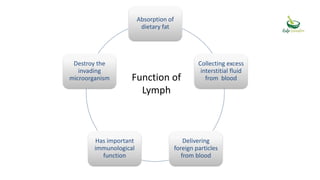
Absorption of
dietary fat
Collecting excess
interstitial fluid
from blood
Delivering
foreign particles
from blood
Has important
immunological
function
Destroy the
invading
microorganism Function of
Lymph
Lymphatic Organs and Tissues
Primary lymphatic
organ
• Red bone marrow
• Thymus gland
Secondary
lymphatic organ
• Spleen
• Tonsils
• Lymph node
Primary Lymphatic Organ
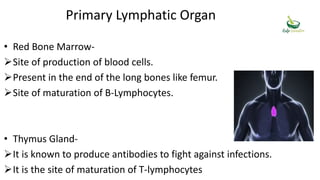
• Red Bone Marrow-
Site of production of blood cells.
Present in the end of the long bones like femur.
Site of maturation of B-Lymphocytes.
• Thymus Gland-
It is known to produce antibodies to fight against infections.
It is the site of maturation of T-lymphocytes
Secondary Lymphatic Organ
• Tonsils –
Tonsil have a rich supply of blood and lymphatic
vessels, and present in three pair around the
pharynx.
• Spleen-
The spleen detects and responds to foreign
substance in the blood and destroy them.
It is also a reservoir of blood.
Lymph Node
• Destruction of worn-out blood cells: The old and abnormal red blood
corpuscles, lymphocytes and thrombocytes are phagocytized by the
macrophages present in spleen. When the RBCs become old (120 days),
their cell wall becomes fragile and gets damaged while squeezing through
capillaries. It mostly occurs in spleen as splenic capillaries have a thin
lumen. On this account, spleen is often referred to as the graveyard of red
blood cells.
• Reservoir for RBCs: In animals, the spleen stores RBCs when the animal
is at rest and needs less oxygen. The RBCs are released into the blood
stream during times of emergency like hypoxia and haemorrhage. However,
this function is not significant in humans.
• Storage of iron: Spleen stores the iron released from the haemoglobin of
worn-out RBCs and sends it to the liver for reutilization.
• Immune response and defence of body: The spleen contains T and B
lymphocytes, which are activated by the presence of antigens, for example,
in infection. The macrophages present in the spleen phagocytize the
microorganisms and other foreign bodies.
• Erythropoiesis: The spleen and liver are important sites of fetal blood cells
production, and the spleen can perform this function when required.
THANKS FOR WATCHING…..
Join with us……..
kalpeducation01@gmail.com

lymphatic system.pptx

  • 1.
  • 2.
    About Lymphatic System •This system consist of a Fluid called lymph, Vessels called Lymphatic vessels that transport the lymph, a number of structure and organs containing lymphatic tissue • The lymphatic system contributes to homeostasis by draining interstitial fluid as well as providing the mechanism for defense against disease. • This system is closely related to cardiovascular system, and it is also function with the digestive system in the absorption of fatty foods.
  • 3.
    Component of LymphaticSystem • Lymph • Lymphatic vessels • Lymphatic node • Lymph organ ( spleen and thymus) • Lymphoid tissue ( tonsils) • Bone marrow
  • 4.
    • lymphatic vessels-begin as lymphatic capillaries. • tiny vessels located in the space between cells and are closed at one end. • lymphatic capillaries- slightly larger in diameter than blood capillaries. • unique oneway structure. • when pressure is greater in IF than in lymph, cells seperate slightly and opening of one way door, IF inters in lymphatic capillaries. • in the small intestine, specillaised lymphatic capillaries called Lacteals carry diatery lipid into lymphatic vessels and ultimately into the blood. • presence of lipid in the lymph draining from small intestine apperar creamy white such lymph referred as chyle.
  • 5.
    As lymphatic vesselsleave the lymph node, they unite to form lymphatic trunks. • Lumbar trunk: It drains lymph from the lower limbs, viscera of pelvis, kidney, adrenal glands and the abdominal wall. • Intestinal trunk: It drains lymph from the stomach, intestine, pancreas, spleen and parts of the liver. • Bronchomediastinal trunk: It drains lymph from the thorax, lungs and heart. • Subclavian trunk: It drains lymph from the upper limbs. • Jugular trunk: It drains lymph from the head and neck. • Intercostal trunk: It drains lymph from portions of the thorax.
  • 6.
    • The principallymphatic trunks then pass their lymph into two main ducts: the thoracic duct (also known as the left lymphatic duct) and the right lymphatic duct. • The thoracic duct is about 40 cm long and begins as a dilation called cistern chyli anterior to the second lumbar vertebra. The thoracic duct receives lymph from all parts of the body inferior to the ribs and on the left side of the body (left upper limbs and left side of the head, neck and chest) and empties into the left subclavian vein. • The lymphatic vessels of the intestine (lacteals) appear milky white and empty chyle (absorbed fats) into the thoracic duct. • The right lymphatic duct is about 1 cm long and receives lymph from the upper right side of the body (right head and neck, right area of the thorax) and empties the lymph into the right subclavian veins
  • 10.
    What is lymph? •The excess filtered fluid about 3 liter per day drain into lymphatic vessels and become lymph. • A lymph is a clear watery fluid, similar in composition to plasma (except plasma protein). • It also carries away larger particles like bacteria and cell debris from damaged tissue and transfer into lymph node. • It contains lymphocytes, which circulate into lymphatic system.
  • 11.
    Composition • 94% watercontain – Interstitial fluid • 6% solid particles such as:- Protein 2-6% Lipid 5-15%  Cells – Lymphocytes Cell debris
  • 14.
    Absorption of dietary fat Collectingexcess interstitial fluid from blood Delivering foreign particles from blood Has important immunological function Destroy the invading microorganism Function of Lymph
  • 15.
    Lymphatic Organs andTissues Primary lymphatic organ • Red bone marrow • Thymus gland Secondary lymphatic organ • Spleen • Tonsils • Lymph node
  • 16.
    Primary Lymphatic Organ •Red Bone Marrow- Site of production of blood cells. Present in the end of the long bones like femur. Site of maturation of B-Lymphocytes. • Thymus Gland- It is known to produce antibodies to fight against infections. It is the site of maturation of T-lymphocytes
  • 17.
    Secondary Lymphatic Organ •Tonsils – Tonsil have a rich supply of blood and lymphatic vessels, and present in three pair around the pharynx. • Spleen- The spleen detects and responds to foreign substance in the blood and destroy them. It is also a reservoir of blood.
  • 18.
  • 19.
    • Destruction ofworn-out blood cells: The old and abnormal red blood corpuscles, lymphocytes and thrombocytes are phagocytized by the macrophages present in spleen. When the RBCs become old (120 days), their cell wall becomes fragile and gets damaged while squeezing through capillaries. It mostly occurs in spleen as splenic capillaries have a thin lumen. On this account, spleen is often referred to as the graveyard of red blood cells. • Reservoir for RBCs: In animals, the spleen stores RBCs when the animal is at rest and needs less oxygen. The RBCs are released into the blood stream during times of emergency like hypoxia and haemorrhage. However, this function is not significant in humans. • Storage of iron: Spleen stores the iron released from the haemoglobin of worn-out RBCs and sends it to the liver for reutilization. • Immune response and defence of body: The spleen contains T and B lymphocytes, which are activated by the presence of antigens, for example, in infection. The macrophages present in the spleen phagocytize the microorganisms and other foreign bodies. • Erythropoiesis: The spleen and liver are important sites of fetal blood cells production, and the spleen can perform this function when required.
  • 21.
    THANKS FOR WATCHING….. Joinwith us…….. kalpeducation01@gmail.com