How web 2.0 is changing medicine* Dean Giustini UBC Biomedical Branch Librarian Vancouver General Hospital April 12 th , 2007 *A presentation at the 2007 Emerging Trends in Scholarly Publishing seminar, National Press Club, Washington, D.C.
Outline Discuss types of social software use in medicine How do doctors communicate?  Evidence-based medicine Trends to watch  Open access (OA)‏ Medical publishing 2.0  Web 2.0 & medicine, Giustini – April 2007
Talking  medicine How do physicians communicate? Formally Journal articles, print and e-books, conferences  Informally Conversation, ‘on the wards’, online, with residents Community of practice (Lave & Wenger)‏ Web 2.0 & medicine, Giustini – April 2007
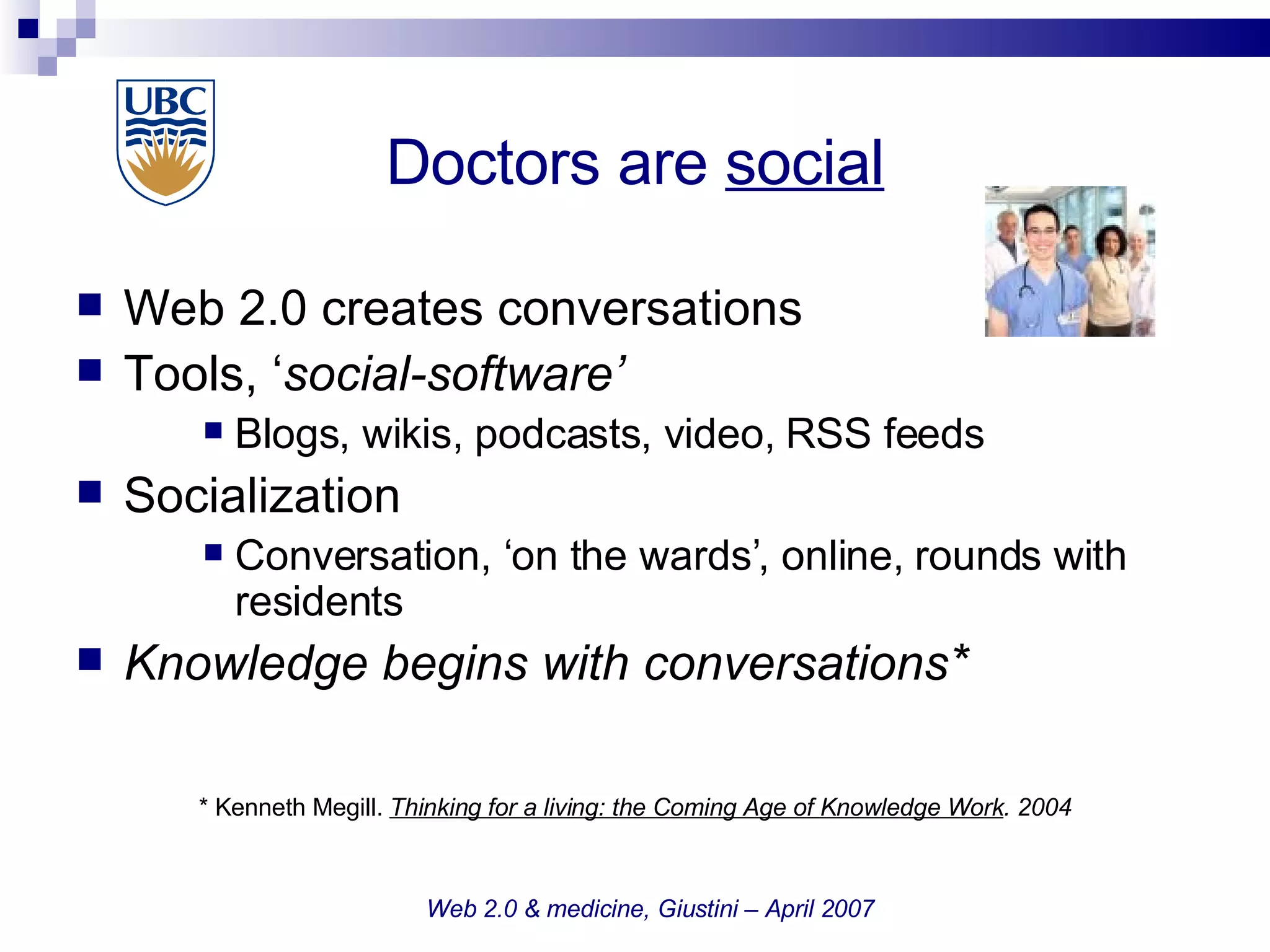
Doctors are  social Web 2.0 creates conversations Tools, ‘ social-software’ Blogs, wikis, podcasts, video, RSS feeds  Socialization Conversation, ‘on the wards’, online, rounds with residents Knowledge begins with conversations* * Kenneth Megill.  Thinking for a living: the Coming Age of Knowledge Work . 2004 Web 2.0 & medicine, Giustini – April 2007
Key  tools in the  knowledge economy   Blogs, wikis… Is a medical wikipedia the next step? Podcasts & vodcasts Do physicians listen and/ or watch? RSS feeds “push” content Other  tagging, photo & slide sharing Web 2.0 & medicine, Giustini – April 2007
Blog  discourse in     medicine Blogs stimulate discussion, self-directed learning &  reflective practice Useful educational tools Clinical Cases & Images, Ves Dimov, M.D. Kidney Notes blog, Joshua Schwimmer, M.D.  Over!My!Med!Body!,  Graham Walker, Stanford medical student  Medical librarian search blogs  To help find medical information,  rapidly Web 2.0 & medicine, Giustini – April 2007
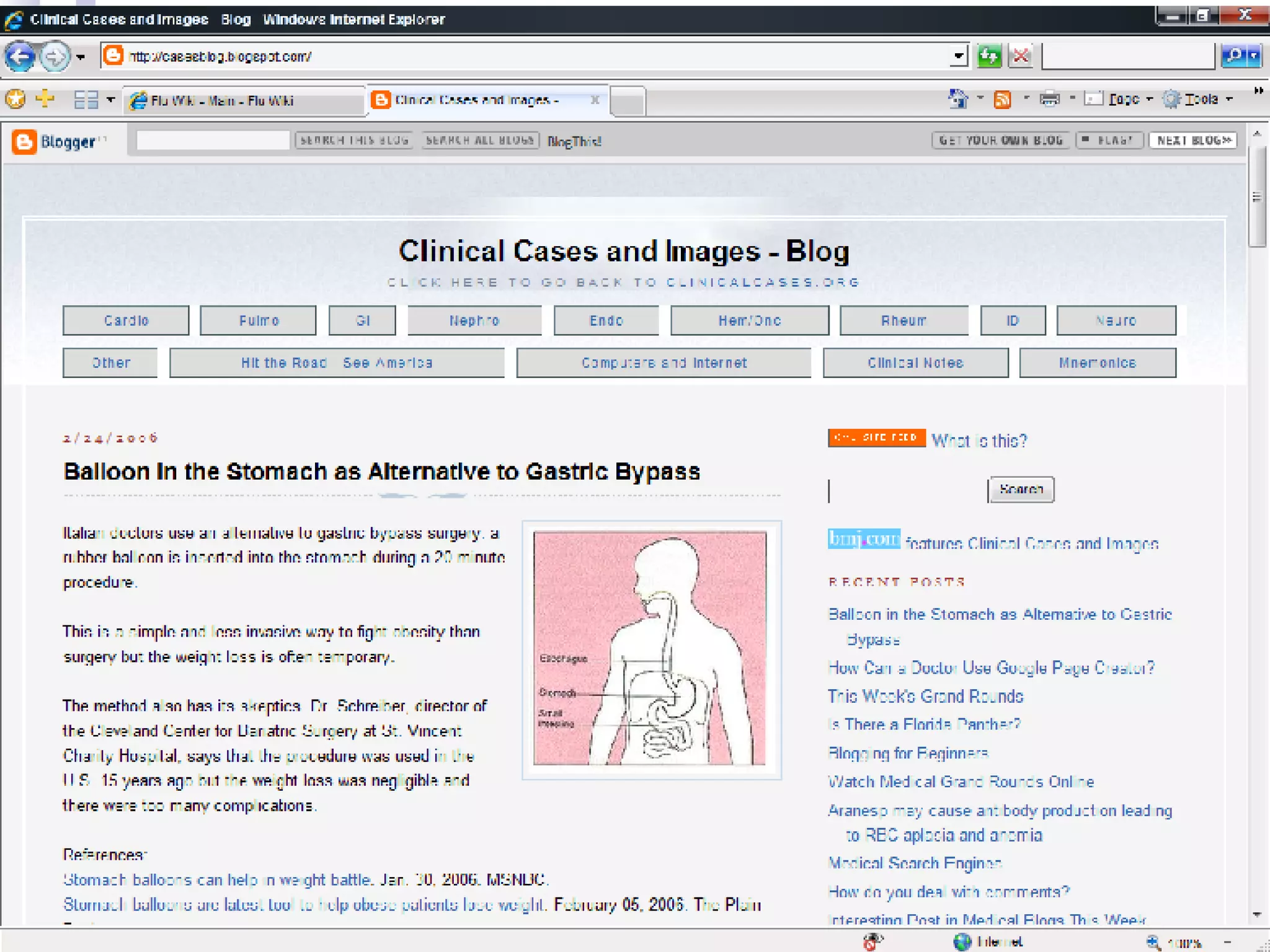
Clinical Cases & Images blog Web 2.0 & medicine, Giustini – April 2007
Good medical wikis AskDrWiki.com FluWikie.com Ganfyd.org Just The Facts PubDrug Wikisurgery.com Web 2.0 & medicine, Giustini – April 2007
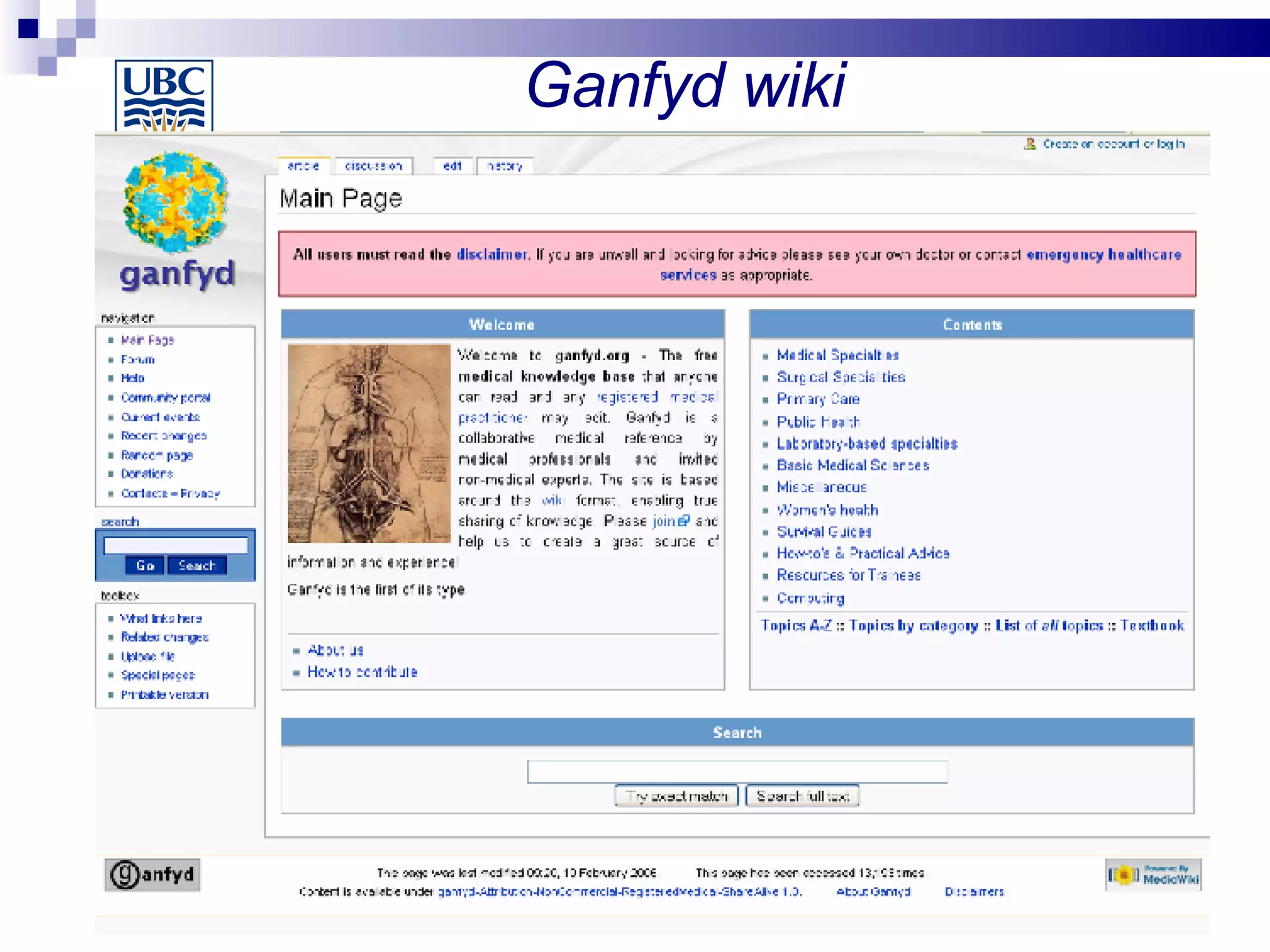
Ganfyd wiki AskDrWiki Web 2.0 & medicine, Giustini – April 2007
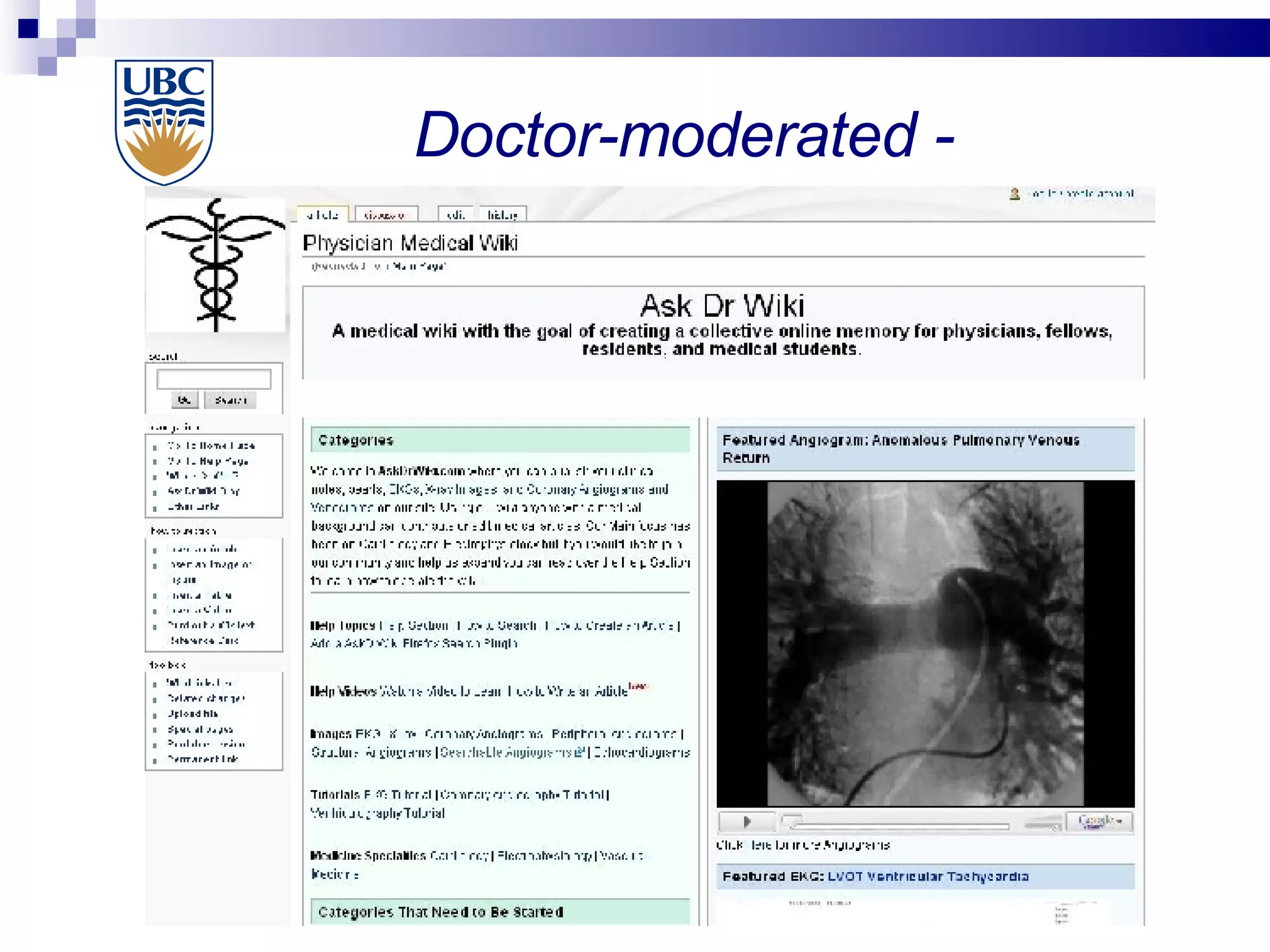
Doctor-moderated - AskDrWiki Web 2.0 & medicine, Giustini – April 2007
Content development @ AskDrWiki  Credentials needed to become an editor or contributor Transparent editorial policy with contributors and credentials listed (Name, degree, location)‏ RSS feeds to notify editors of content changes/ additions.  New clinical domains:  General Surgery, ENT, Vascular Surgery, Hospital Administration, Bio Informatics, Dermatology, Emergency Medicine, Orthopaedics and Basic Science Editors.  ‘ Lock down’  of some content pertaining to medical/ drug dosing.  Additions can be made, but not until approved by editors. Web 2.0 & medicine, Giustini – April 2007
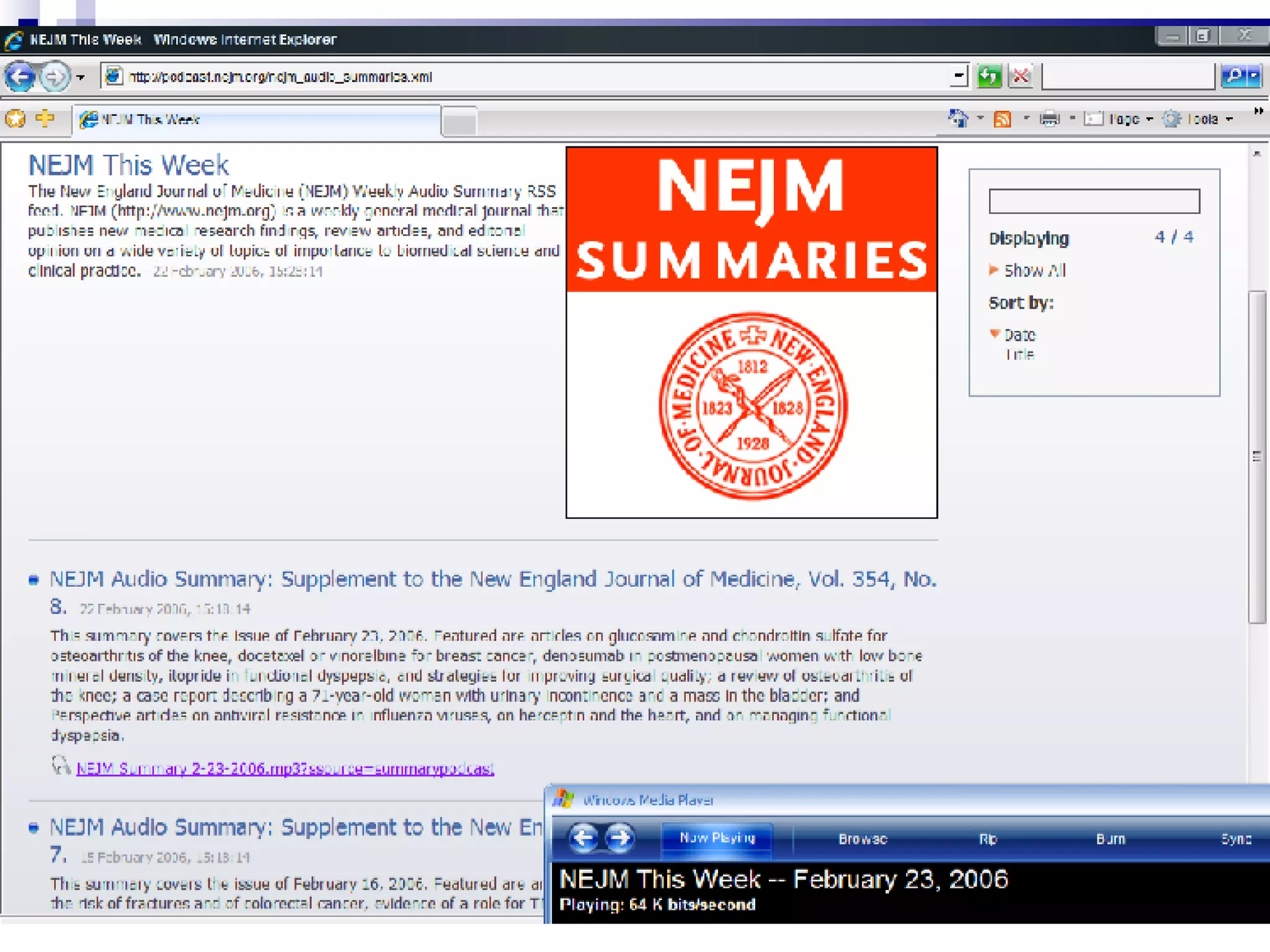
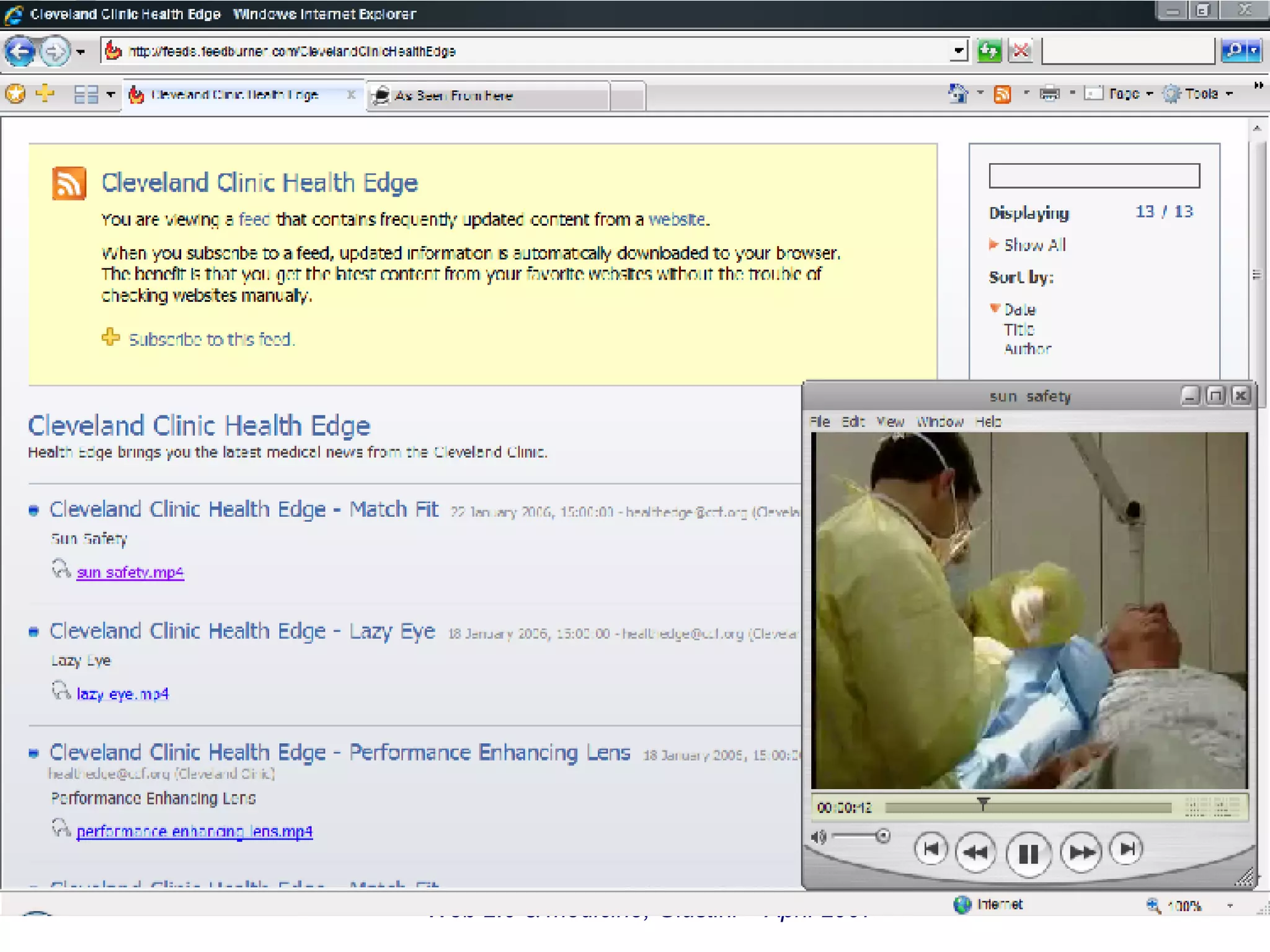
Post-textual web  Podcasts, vodcasts New England Journal of Medicine MEDLINE/PubMed indexing Trend is toward integration; ‘mash ups’  Web 2.0 & medicine, Giustini – April 2007
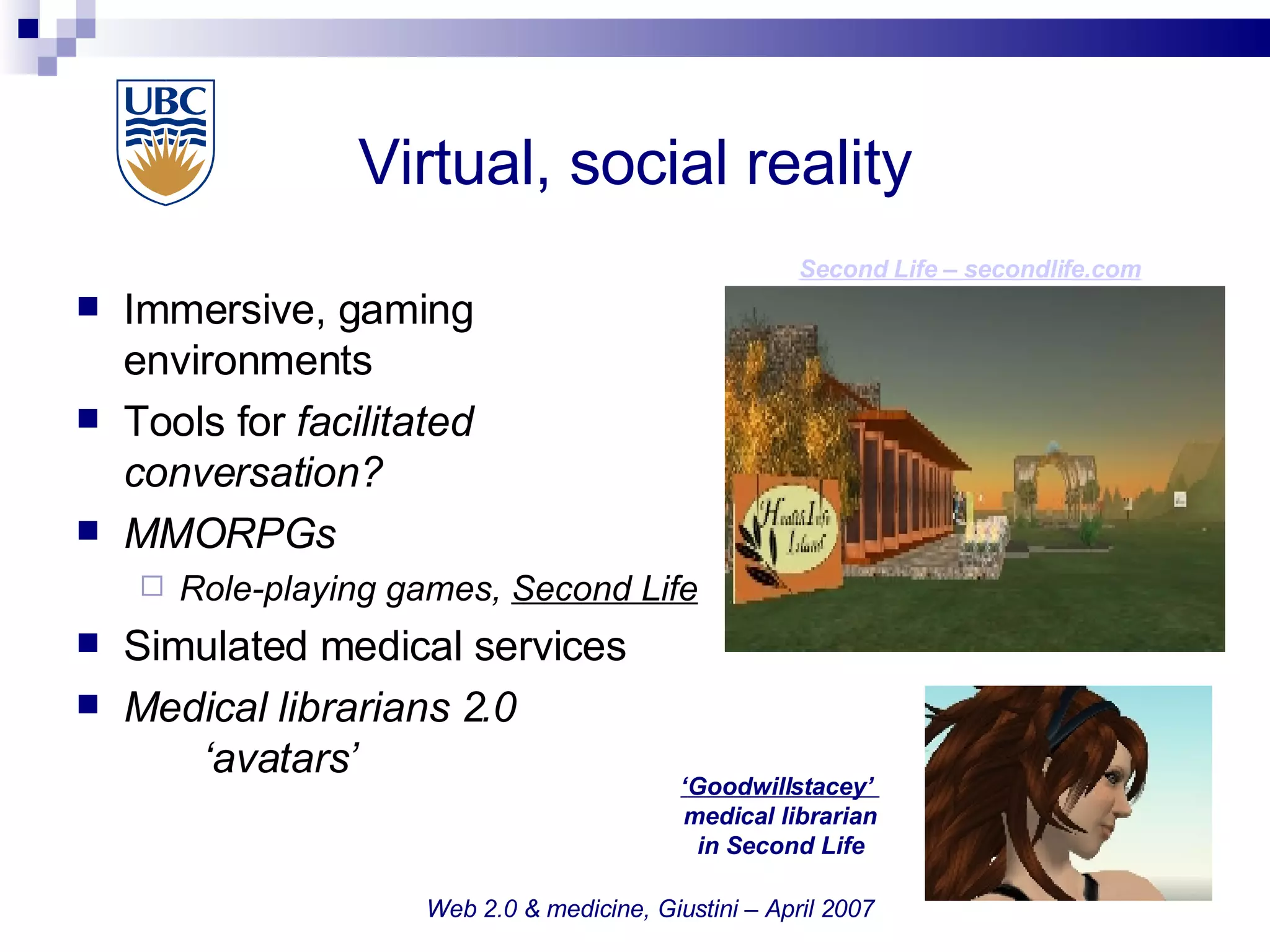
Virtual, social reality  Immersive, gaming  environments Tools for  facilitated  conversation? MMORPGs Role-playing games,  Second Life Simulated medical services Medical librarians 2.0 ‘avatars’ Web 2.0 & medicine, Giustini – April 2007 Second Life –  secondlife.com ‘ Goodwillstacey’  medical librarian in Second Life
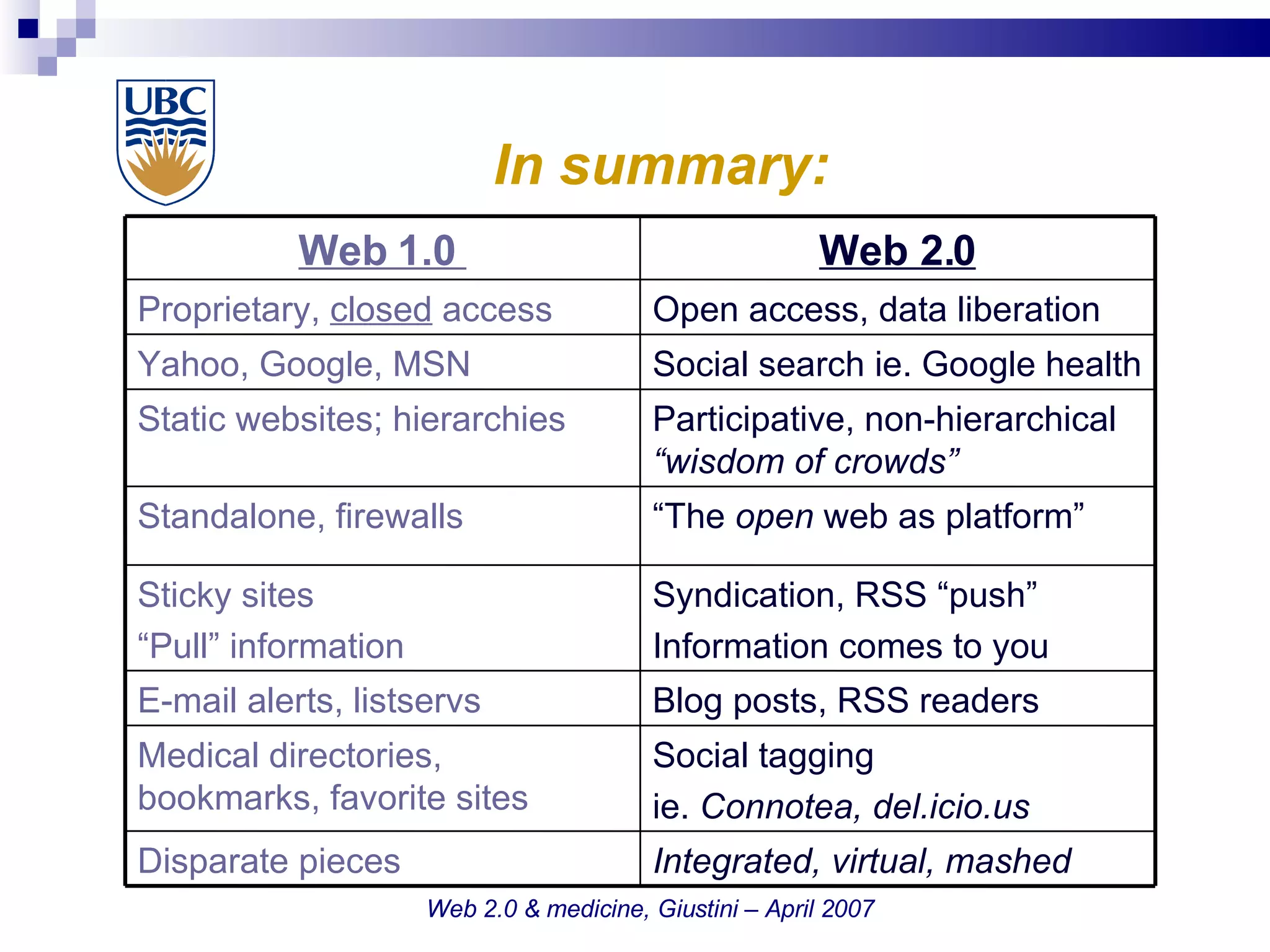
In summary:   Web 2.0 & medicine, Giustini – April 2007 Open access, data liberation Proprietary,  closed  access Integrated, virtual, mashed Disparate pieces Social tagging  ie.  Connotea, del.icio.us   Medical directories, bookmarks, favorite sites  Blog posts, RSS readers E-mail alerts, listservs Syndication, RSS “push” Information comes to you Sticky sites “ Pull” information  “ The  open  web as platform”  Standalone, firewalls  Participative, non-hierarchical  “wisdom of crowds” Static websites; hierarchies Social search ie. Google health Yahoo, Google, MSN Web 2.0 Web 1.0
A new medical journal   Web 2.0 & medicine, Giustini – April 2007 Open Medicine www.openmedicine.ca *  a new peer-reviewed, independent,    open-access journal launch is imminent (next few weeks)‏ physician-created, many former CMAJ editors editorial independence, scientific integrity as  core values Open Medicine blog
In conclusion   Web 2.0 & medicine, Giustini – April 2007 Physicians should learn about the vast ecosystem of the web Web 2.0  is not a fad, but is changing the way patients and physicians interact Wikis and blogs help doctors to communicate, collaborate and participate  more Software   tools help physicians to form  digital  communities of practice In the future, physicians will publish in the absence of associations or affiliations.

How web 2.0 is changing medicine

  • 1.
    How web 2.0is changing medicine* Dean Giustini UBC Biomedical Branch Librarian Vancouver General Hospital April 12 th , 2007 *A presentation at the 2007 Emerging Trends in Scholarly Publishing seminar, National Press Club, Washington, D.C.
  • 2.
    Outline Discuss typesof social software use in medicine How do doctors communicate? Evidence-based medicine Trends to watch Open access (OA)‏ Medical publishing 2.0 Web 2.0 & medicine, Giustini – April 2007
  • 3.
    Talking medicineHow do physicians communicate? Formally Journal articles, print and e-books, conferences Informally Conversation, ‘on the wards’, online, with residents Community of practice (Lave & Wenger)‏ Web 2.0 & medicine, Giustini – April 2007
  • 4.
    Doctors are social Web 2.0 creates conversations Tools, ‘ social-software’ Blogs, wikis, podcasts, video, RSS feeds Socialization Conversation, ‘on the wards’, online, rounds with residents Knowledge begins with conversations* * Kenneth Megill. Thinking for a living: the Coming Age of Knowledge Work . 2004 Web 2.0 & medicine, Giustini – April 2007
  • 5.
    Key toolsin the knowledge economy Blogs, wikis… Is a medical wikipedia the next step? Podcasts & vodcasts Do physicians listen and/ or watch? RSS feeds “push” content Other tagging, photo & slide sharing Web 2.0 & medicine, Giustini – April 2007
  • 6.
    Blog discoursein medicine Blogs stimulate discussion, self-directed learning & reflective practice Useful educational tools Clinical Cases & Images, Ves Dimov, M.D. Kidney Notes blog, Joshua Schwimmer, M.D. Over!My!Med!Body!, Graham Walker, Stanford medical student Medical librarian search blogs To help find medical information, rapidly Web 2.0 & medicine, Giustini – April 2007
  • 7.
    Clinical Cases &Images blog Web 2.0 & medicine, Giustini – April 2007
  • 8.
    Good medical wikisAskDrWiki.com FluWikie.com Ganfyd.org Just The Facts PubDrug Wikisurgery.com Web 2.0 & medicine, Giustini – April 2007
  • 9.
    Ganfyd wiki AskDrWikiWeb 2.0 & medicine, Giustini – April 2007
  • 10.
    Doctor-moderated - AskDrWikiWeb 2.0 & medicine, Giustini – April 2007
  • 11.
    Content development @AskDrWiki Credentials needed to become an editor or contributor Transparent editorial policy with contributors and credentials listed (Name, degree, location)‏ RSS feeds to notify editors of content changes/ additions. New clinical domains: General Surgery, ENT, Vascular Surgery, Hospital Administration, Bio Informatics, Dermatology, Emergency Medicine, Orthopaedics and Basic Science Editors. ‘ Lock down’ of some content pertaining to medical/ drug dosing. Additions can be made, but not until approved by editors. Web 2.0 & medicine, Giustini – April 2007
  • 12.
    Post-textual web Podcasts, vodcasts New England Journal of Medicine MEDLINE/PubMed indexing Trend is toward integration; ‘mash ups’ Web 2.0 & medicine, Giustini – April 2007
  • 13.
    Post-textual web Podcasts, vodcasts New England Journal of Medicine MEDLINE/PubMed indexing Trend is toward integration; ‘mash ups’ Web 2.0 & medicine, Giustini – April 2007
  • 14.
    Post-textual web Podcasts, vodcasts New England Journal of Medicine MEDLINE/PubMed indexing Trend is toward integration; ‘mash ups’ Web 2.0 & medicine, Giustini – April 2007
  • 15.
    Virtual, social reality Immersive, gaming environments Tools for facilitated conversation? MMORPGs Role-playing games, Second Life Simulated medical services Medical librarians 2.0 ‘avatars’ Web 2.0 & medicine, Giustini – April 2007 Second Life – secondlife.com ‘ Goodwillstacey’ medical librarian in Second Life
  • 16.
    In summary: Web 2.0 & medicine, Giustini – April 2007 Open access, data liberation Proprietary, closed access Integrated, virtual, mashed Disparate pieces Social tagging ie. Connotea, del.icio.us Medical directories, bookmarks, favorite sites Blog posts, RSS readers E-mail alerts, listservs Syndication, RSS “push” Information comes to you Sticky sites “ Pull” information “ The open web as platform” Standalone, firewalls Participative, non-hierarchical “wisdom of crowds” Static websites; hierarchies Social search ie. Google health Yahoo, Google, MSN Web 2.0 Web 1.0
  • 17.
    A new medicaljournal Web 2.0 & medicine, Giustini – April 2007 Open Medicine www.openmedicine.ca * a new peer-reviewed, independent, open-access journal launch is imminent (next few weeks)‏ physician-created, many former CMAJ editors editorial independence, scientific integrity as core values Open Medicine blog
  • 18.
    In conclusion Web 2.0 & medicine, Giustini – April 2007 Physicians should learn about the vast ecosystem of the web Web 2.0 is not a fad, but is changing the way patients and physicians interact Wikis and blogs help doctors to communicate, collaborate and participate more Software tools help physicians to form digital communities of practice In the future, physicians will publish in the absence of associations or affiliations.

Editor's Notes

  • #2 Thank you for that introduction. It’s a great pleasure to be here in the capitol, and I look forward to hearing the papers presented today. My talk is entitled “How Web 2.0 is changing medicine” which is an update of an article I published in the Christmas issue of the British Medical Journal.