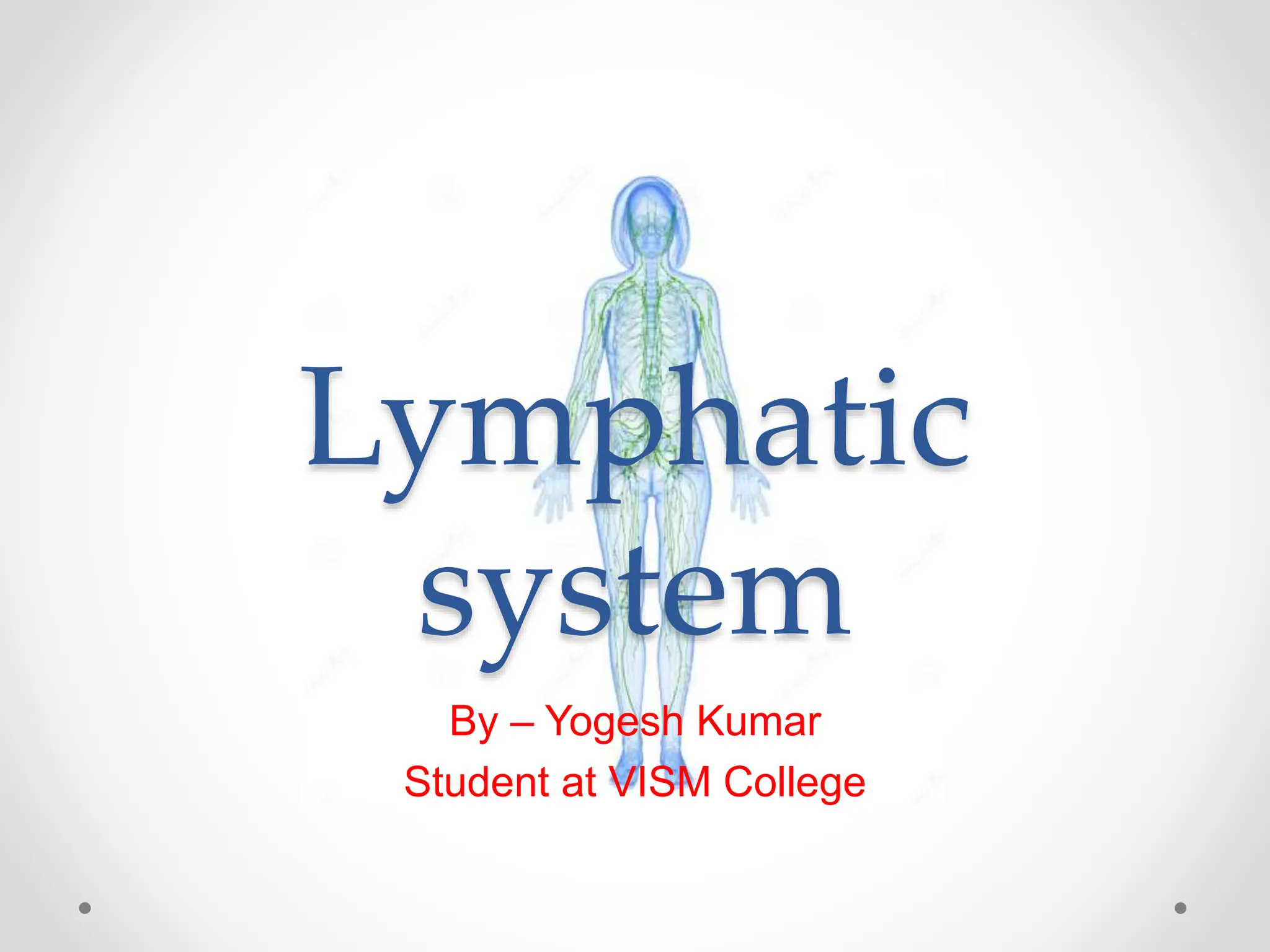
Lymphatic
system
By – Yogesh Kumar
Student at VISM College
Introduction
• The lymphatic system is a network of vessels, nodes,
and ducts that pass through almost all bodily tissues. It
allows the circulation of a fluid called lymph through the
body in a similar way to blood. It is part of the immune
system.
Definitions
• The lymphatic system is a network of vessels, nodes,
and ducts that collect and circulate excess fluid in the
body.
o There are 500–600 lymph nodes throughout the body.
These nodes swell in response to infection due to a
buildup of lymph fluid, bacteria, or other organisms and
immune system cells.
o The lymphatic system is part of the immune system. It
also maintains fluid balance and plays a role in
absorbing fats and fat-soluble nutrients.
Functions
• The lymph system has three main functions, which are
as follow-
• Fluid balance
• Absorption
• The immune system
• Fluid balance
• The lymphatic system returns excess fluid and proteins
from the tissues that cannot return through the blood
vessels. The fluid often collects in the tiny spaces
surrounding cells, known as the interstitial spaces. Small
lymph capillaries connect these spaces to the lymphatic
system.
• Around 90% of the plasma that reaches tissues from the
arterial blood capillaries returns through the venous
capillaries and veins. The remaining 10% travels through
the lymphatic system.
• A disruption of fluid processing can result in localized
swelling, known as lymphedema.
• Absorption
• The lymphatic system plays a key role in intestinal function. It
assists in transporting fat, fighting infections, and removing
excess fluid.
• Part of the gut membrane in the small intestine contains tiny
finger-like protrusions called villi. Each villus contains tiny
lymph capillaries, known as lacteals. These absorb fats and
fat-soluble vitamins to form a milky white fluid called chyle.
• This fluid contains lymph and emulsified fats, or free fatty
acids. It delivers nutrients indirectly when it reaches the
venous blood circulation. Blood capillaries take up other
nutrients.
• The immune system
• The third function of lymph nodes is to defend the
body from exposure to potentially hazardous
microorganisms, such as infections.
• The body’s first line of defense involves:-
 physical barriers, such as the skin
 toxic barriers, such as the acidic contents of the stomach
 “friendly” bacteria in the body
• However, pathogens often do succeed in entering the
body despite these defenses. In this case, the lymphatic
system enables the immune system to respond
appropriately.
How does the lymphatic
system fight infection?
• The lymphatic system produces white blood cells
called lymphocytes. There are two types of lymphocytes: T cells and
B cells. They both travel through the lymphatic system.
• As they reach the lymph nodes, they come into contact with viruses,
bacteria, and foreign particles in the lymph fluid.
• Following contact, lymphocytes form antibodies and start to defend
the body. They can also produce antibodies from memory if they
have already encountered the specific pathogen in the past.
• The lymphatic system and the action of lymphocytes form part of the
body’s adaptive immune response. These are highly specific and
long lasting responses to particular pathogens.
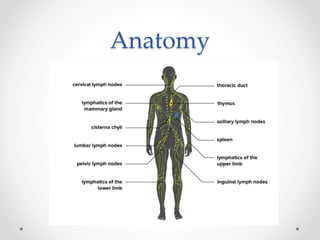
Anatomy
Anatomy
• The lymphatic system consists of lymph vessels, ducts,
nodes, and other tissues throughout the body.
• Lymphatic vessels collect interstitial fluid and transport it
to lymph nodes. These nodes filter out damaged cells,
bacteria, and other foreign bodies.
• Once this fluid passes out of the lymph nodes, it travels
to larger vessels and eventually lymph ducts, which
converge in the thoracic duct at the base of the neck.
• The thoracic duct returns filtered lymph into the
bloodstream.
Other lymphatic tissues
• Thymus gland: The thymus gland is a lymphatic organ and
an endocrine gland behind the sternum. It secretes hormones
and is crucial to the production, maturation, and differentiation
of immune T cells.
• Tonsils: The tonsils produce lymphocytes and antibodies.
They can help protect against inhaled and swallowed foreign
bodies.
• Spleen: The spleen is not part of the connected lymphatic
system, but it is lymphoid tissue. It produces white blood cells
and filters the blood to remove microbes as well as old and
damaged red blood cells and platelets.
• Bone marrow: Bone marrow is not lymphatic tissue but is
part of the lymphatic system because it is here that the B cell
lymphocytes of the immune system mature.
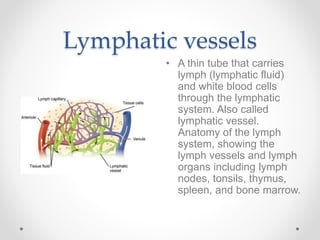
Lymphatic vessels
• A thin tube that carries
lymph (lymphatic fluid)
and white blood cells
through the lymphatic
system. Also called
lymphatic vessel.
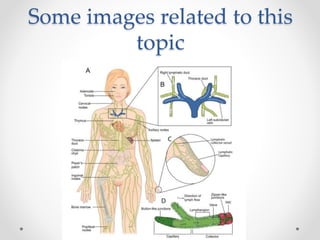
Anatomy of the lymph
system, showing the
lymph vessels and lymph
organs including lymph
nodes, tonsils, thymus,
spleen, and bone marrow.
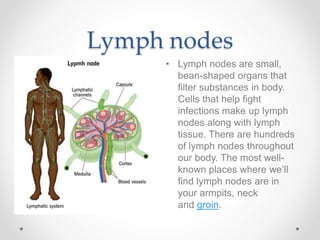
Lymph nodes
• Lymph nodes are small,
bean-shaped organs that
filter substances in body.
Cells that help fight
infections make up lymph
nodes along with lymph
tissue. There are hundreds
of lymph nodes throughout
our body. The most well-
known places where we’ll
find lymph nodes are in
your armpits, neck
and groin.
Lymph
• Lymph is a clear-to-white fluid made of: White blood
cells, especially lymphocytes, the cells that attack
bacteria in the blood and body tissues. Fluid from the
intestines called chyle.
• Lymph contains a variety of substances,
including proteins, salts, glucose, fats, water, and white
blood cells. Unlike our blood, lymph does not normally
contain any red blood cells. The composition of lymph
varies a great deal, depending on where in our body it
originated.
Some images related to this
topic

Lymphatic system by Yogesh Kumar................

  • 1.
    Lymphatic system By – YogeshKumar Student at VISM College
  • 2.
    Introduction • The lymphaticsystem is a network of vessels, nodes, and ducts that pass through almost all bodily tissues. It allows the circulation of a fluid called lymph through the body in a similar way to blood. It is part of the immune system.
  • 3.
    Definitions • The lymphaticsystem is a network of vessels, nodes, and ducts that collect and circulate excess fluid in the body. o There are 500–600 lymph nodes throughout the body. These nodes swell in response to infection due to a buildup of lymph fluid, bacteria, or other organisms and immune system cells. o The lymphatic system is part of the immune system. It also maintains fluid balance and plays a role in absorbing fats and fat-soluble nutrients.
  • 4.
    Functions • The lymphsystem has three main functions, which are as follow- • Fluid balance • Absorption • The immune system
  • 5.
    • Fluid balance •The lymphatic system returns excess fluid and proteins from the tissues that cannot return through the blood vessels. The fluid often collects in the tiny spaces surrounding cells, known as the interstitial spaces. Small lymph capillaries connect these spaces to the lymphatic system. • Around 90% of the plasma that reaches tissues from the arterial blood capillaries returns through the venous capillaries and veins. The remaining 10% travels through the lymphatic system. • A disruption of fluid processing can result in localized swelling, known as lymphedema.
  • 6.
    • Absorption • Thelymphatic system plays a key role in intestinal function. It assists in transporting fat, fighting infections, and removing excess fluid. • Part of the gut membrane in the small intestine contains tiny finger-like protrusions called villi. Each villus contains tiny lymph capillaries, known as lacteals. These absorb fats and fat-soluble vitamins to form a milky white fluid called chyle. • This fluid contains lymph and emulsified fats, or free fatty acids. It delivers nutrients indirectly when it reaches the venous blood circulation. Blood capillaries take up other nutrients.
  • 7.
    • The immunesystem • The third function of lymph nodes is to defend the body from exposure to potentially hazardous microorganisms, such as infections. • The body’s first line of defense involves:-  physical barriers, such as the skin  toxic barriers, such as the acidic contents of the stomach  “friendly” bacteria in the body • However, pathogens often do succeed in entering the body despite these defenses. In this case, the lymphatic system enables the immune system to respond appropriately.
  • 8.
    How does thelymphatic system fight infection? • The lymphatic system produces white blood cells called lymphocytes. There are two types of lymphocytes: T cells and B cells. They both travel through the lymphatic system. • As they reach the lymph nodes, they come into contact with viruses, bacteria, and foreign particles in the lymph fluid. • Following contact, lymphocytes form antibodies and start to defend the body. They can also produce antibodies from memory if they have already encountered the specific pathogen in the past. • The lymphatic system and the action of lymphocytes form part of the body’s adaptive immune response. These are highly specific and long lasting responses to particular pathogens.
  • 9.
  • 10.
    Anatomy • The lymphaticsystem consists of lymph vessels, ducts, nodes, and other tissues throughout the body. • Lymphatic vessels collect interstitial fluid and transport it to lymph nodes. These nodes filter out damaged cells, bacteria, and other foreign bodies. • Once this fluid passes out of the lymph nodes, it travels to larger vessels and eventually lymph ducts, which converge in the thoracic duct at the base of the neck. • The thoracic duct returns filtered lymph into the bloodstream.
  • 11.
    Other lymphatic tissues •Thymus gland: The thymus gland is a lymphatic organ and an endocrine gland behind the sternum. It secretes hormones and is crucial to the production, maturation, and differentiation of immune T cells. • Tonsils: The tonsils produce lymphocytes and antibodies. They can help protect against inhaled and swallowed foreign bodies. • Spleen: The spleen is not part of the connected lymphatic system, but it is lymphoid tissue. It produces white blood cells and filters the blood to remove microbes as well as old and damaged red blood cells and platelets. • Bone marrow: Bone marrow is not lymphatic tissue but is part of the lymphatic system because it is here that the B cell lymphocytes of the immune system mature.
  • 12.
    Lymphatic vessels • Athin tube that carries lymph (lymphatic fluid) and white blood cells through the lymphatic system. Also called lymphatic vessel. Anatomy of the lymph system, showing the lymph vessels and lymph organs including lymph nodes, tonsils, thymus, spleen, and bone marrow.
  • 13.
    Lymph nodes • Lymphnodes are small, bean-shaped organs that filter substances in body. Cells that help fight infections make up lymph nodes along with lymph tissue. There are hundreds of lymph nodes throughout our body. The most well- known places where we’ll find lymph nodes are in your armpits, neck and groin.
  • 14.
    Lymph • Lymph isa clear-to-white fluid made of: White blood cells, especially lymphocytes, the cells that attack bacteria in the blood and body tissues. Fluid from the intestines called chyle. • Lymph contains a variety of substances, including proteins, salts, glucose, fats, water, and white blood cells. Unlike our blood, lymph does not normally contain any red blood cells. The composition of lymph varies a great deal, depending on where in our body it originated.
  • 15.
    Some images relatedto this topic