Lymphatic
System
Lymphatic System
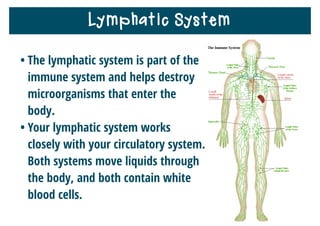
• The lymphatic system is part of the
immune system and helps destroy
microorganisms that enter the
body.
• Your lymphatic system works
closely with your circulatory system.
Both systems move liquids through
the body, and both contain white
blood cells.
FUNCTIONS of the Lymphatic System
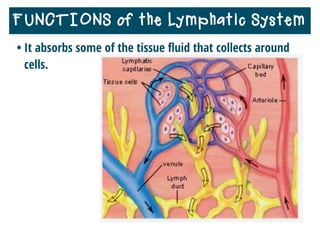
• It absorbs some of the tissue fluid that collects around
cells.
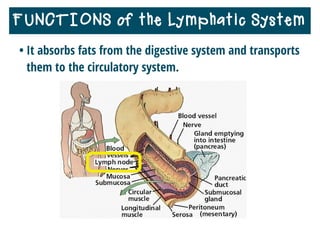
• It absorbs fats from the digestive system and transports
them to the circulatory system.
FUNCTIONS of the Lymphatic System
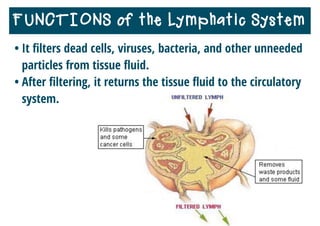
• It filters dead cells, viruses, bacteria, and other unneeded
particles from tissue fluid.
• After filtering, it returns the tissue fluid to the circulatory
system.
FUNCTIONS of the Lymphatic System
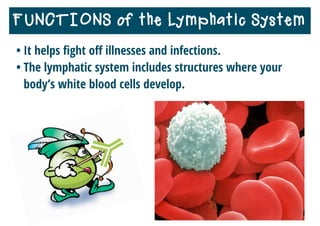
• It helps fight off illnesses and infections.
• The lymphatic system includes structures where your
body’s white blood cells develop.
FUNCTIONS of the Lymphatic System
PARTS of the Lymphatic System
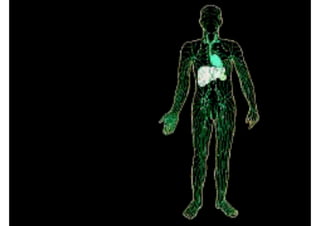
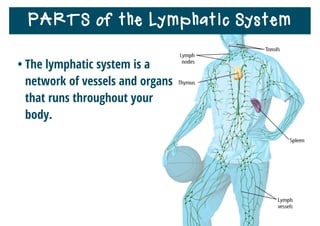
• The lymphatic system is a
network of vessels and organs
that runs throughout your
body.
PARTS of the Lymphatic System
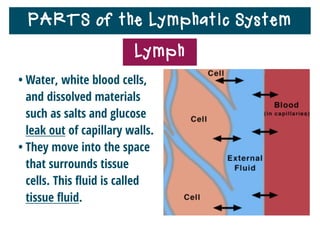
• Water, white blood cells,
and dissolved materials
such as salts and glucose
leak out of capillary walls.
• They move into the space
that surrounds tissue
cells. This fluid is called
tissue fluid.
Lymph
PARTS of the Lymphatic System
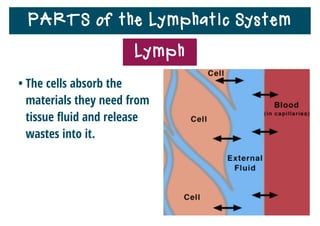
• The cells absorb the
materials they need from
tissue fluid and release
wastes into it.
Lymph
PARTS of the Lymphatic System
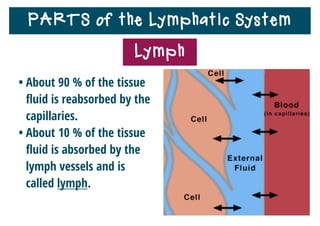
• About 90 % of the tissue
fluid is reabsorbed by the
capillaries.
• About 10 % of the tissue
fluid is absorbed by the
lymph vessels and is
called lymph.
Lymph
PARTS of the Lymphatic System
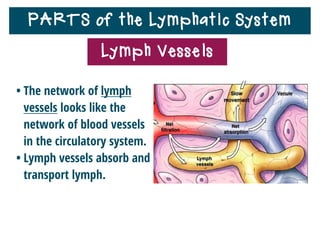
• The network of lymph
vessels looks like the
network of blood vessels
in the circulatory system.
• Lymph vessels absorb and
transport lymph.
Lymph Vessels
PARTS of the Lymphatic System
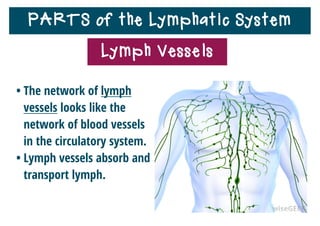
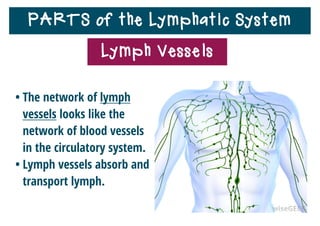
• The network of lymph
vessels looks like the
network of blood vessels
in the circulatory system.
• Lymph vessels absorb and
transport lymph.
Lymph Vessels
PARTS of the Lymphatic System
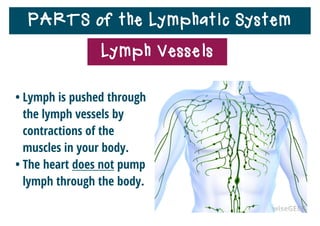
• Lymph is pushed through
the lymph vessels by
contractions of the
muscles in your body.
• The heart does not pump
lymph through the body.
Lymph Vessels
PARTS of the Lymphatic System
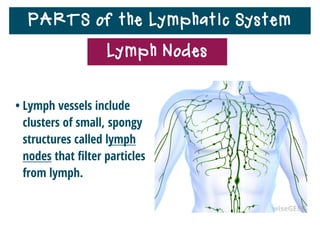
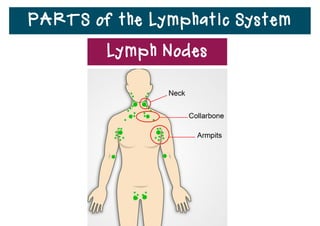
• Lymph vessels include
clusters of small, spongy
structures called lymph
nodes that filter particles
from lymph.
Lymph Nodes
PARTS of the Lymphatic System
Lymph Nodes
PARTS of the Lymphatic System
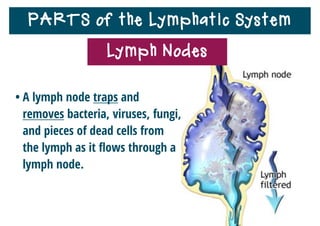
• A lymph node traps and
removes bacteria, viruses, fungi,
and pieces of dead cells from
the lymph as it flows through a
lymph node.
Lymph Nodes
PARTS of the Lymphatic System
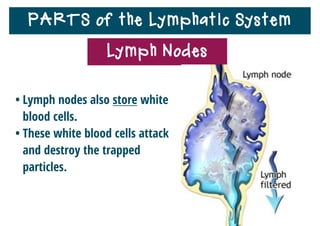
• Lymph nodes also store white
blood cells.
• These white blood cells attack
and destroy the trapped
particles.
Lymph Nodes
PARTS of the Lymphatic System
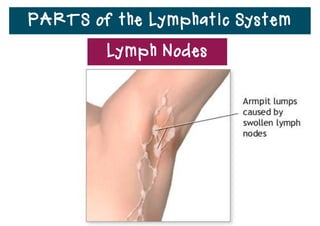
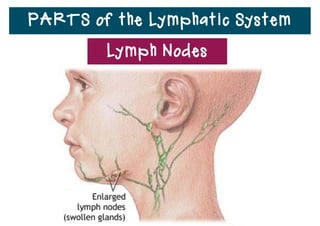
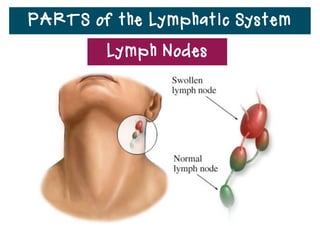
• When you have an infection, your body produces more
white blood cells that fight the infection.
• Many of these white blood cells gather in your lymph
nodes.
• This causes the lymph nodes to swell.
• The swelling goes away when the infection is gone.
Lymph Nodes
PARTS of the Lymphatic System
Lymph Nodes
PARTS of the Lymphatic System
Lymph Nodes
PARTS of the Lymphatic System
Lymph Nodes
PARTS of the Lymphatic System
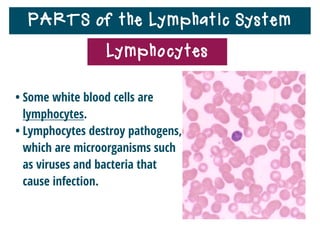
• Some white blood cells are
lymphocytes.
• Lymphocytes destroy pathogens,
which are microorganisms such
as viruses and bacteria that
cause infection.
Lymphocytes
PARTS of the Lymphatic System
Lymphocytes
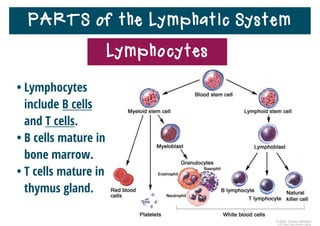
• Lymphocytes
include B cells
and T cells.
• B cells mature in
bone marrow.
• T cells mature in
thymus gland.
PARTS of the Lymphatic System
Lymphocytes
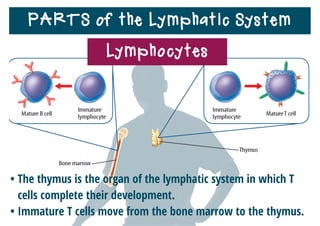
• The thymus is the organ of the lymphatic system in which T
cells complete their development.
• Immature T cells move from the bone marrow to the thymus.
PARTS of the Lymphatic System
Lymphocytes
• T cells in the thymus develop the ability to recognize and
destroy body cells that have been infected by
microorganisms.
• Mature B cells and T cells move into the lymph and blood
where they help fight infection.
PARTS of the Lymphatic System
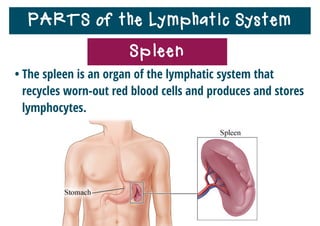
• The spleen is an organ of the lymphatic system that
recycles worn-out red blood cells and produces and stores
lymphocytes.
Spleen
PARTS of the Lymphatic System
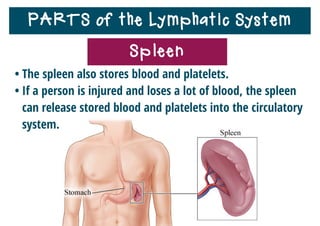
• The spleen also stores blood and platelets.
• If a person is injured and loses a lot of blood, the spleen
can release stored blood and platelets into the circulatory
system.
Spleen
PARTS of the Lymphatic System
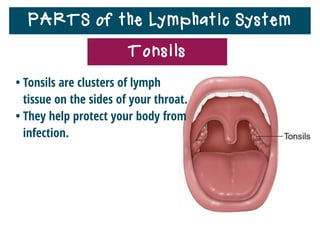
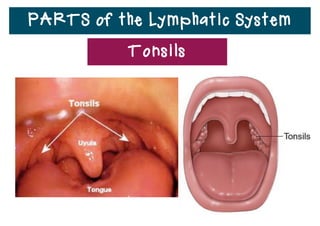
• Tonsils are clusters of lymph
tissue on the sides of your throat.
• They help protect your body from
infection.
Tonsils
PARTS of the Lymphatic System
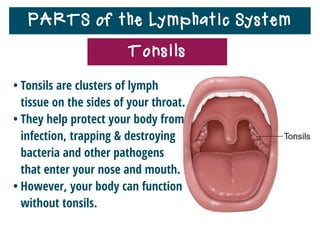
• Tonsils are clusters of lymph
tissue on the sides of your throat.
• They help protect your body from
infection, trapping & destroying
bacteria and other pathogens
that enter your nose and mouth.
• However, your body can function
without tonsils.
Tonsils
PARTS of the Lymphatic System
Tonsils
Lymph Diseases and Disorders
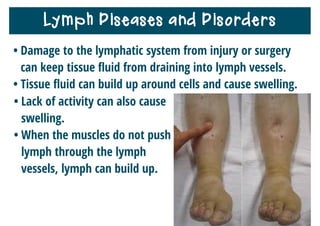
• Damage to the lymphatic system from injury or surgery
can keep tissue fluid from draining into lymph vessels.
• Tissue fluid can build up around cells and cause swelling.
• Lack of activity can also cause
swelling.
• When the muscles do not push
lymph through the lymph
vessels, lymph can build up.
Lymph Diseases and Disorders
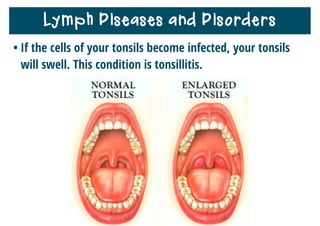
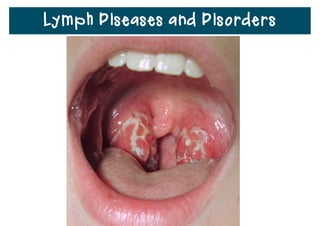
• If the cells of your tonsils become infected, your tonsils
will swell. This condition is tonsillitis.
Lymph Diseases and Disorders
• The uncontrolled production of white blood cells is a
type of cancer called lymphoma.
• Cancer of the lymph nodes is a related disease called
Hodgkin’s lymphoma.
Lymphatic System and Homeostasis
• The lymphatic system helps your body maintain
homeostasis by keeping tissue fluids from building up
around cells.
• It supports your circulatory system by cleaning fluids
and replacing them in the bloodstream.
• It also helps you stay healthy by fighting infection.

Lymphatic System

  • 1.
  • 3.
    Lymphatic System • Thelymphatic system is part of the immune system and helps destroy microorganisms that enter the body. • Your lymphatic system works closely with your circulatory system. Both systems move liquids through the body, and both contain white blood cells.
  • 4.
    FUNCTIONS of theLymphatic System • It absorbs some of the tissue fluid that collects around cells.
  • 5.
    • It absorbsfats from the digestive system and transports them to the circulatory system. FUNCTIONS of the Lymphatic System
  • 6.
    • It filtersdead cells, viruses, bacteria, and other unneeded particles from tissue fluid. • After filtering, it returns the tissue fluid to the circulatory system. FUNCTIONS of the Lymphatic System
  • 7.
    • It helpsfight off illnesses and infections. • The lymphatic system includes structures where your body’s white blood cells develop. FUNCTIONS of the Lymphatic System
  • 8.
    PARTS of theLymphatic System • The lymphatic system is a network of vessels and organs that runs throughout your body.
  • 9.
    PARTS of theLymphatic System • Water, white blood cells, and dissolved materials such as salts and glucose leak out of capillary walls. • They move into the space that surrounds tissue cells. This fluid is called tissue fluid. Lymph
  • 10.
    PARTS of theLymphatic System • The cells absorb the materials they need from tissue fluid and release wastes into it. Lymph
  • 11.
    PARTS of theLymphatic System • About 90 % of the tissue fluid is reabsorbed by the capillaries. • About 10 % of the tissue fluid is absorbed by the lymph vessels and is called lymph. Lymph
  • 12.
    PARTS of theLymphatic System • The network of lymph vessels looks like the network of blood vessels in the circulatory system. • Lymph vessels absorb and transport lymph. Lymph Vessels
  • 13.
    PARTS of theLymphatic System • The network of lymph vessels looks like the network of blood vessels in the circulatory system. • Lymph vessels absorb and transport lymph. Lymph Vessels
  • 14.
    PARTS of theLymphatic System • Lymph is pushed through the lymph vessels by contractions of the muscles in your body. • The heart does not pump lymph through the body. Lymph Vessels
  • 15.
    PARTS of theLymphatic System • Lymph vessels include clusters of small, spongy structures called lymph nodes that filter particles from lymph. Lymph Nodes
  • 16.
    PARTS of theLymphatic System Lymph Nodes
  • 17.
    PARTS of theLymphatic System • A lymph node traps and removes bacteria, viruses, fungi, and pieces of dead cells from the lymph as it flows through a lymph node. Lymph Nodes
  • 18.
    PARTS of theLymphatic System • Lymph nodes also store white blood cells. • These white blood cells attack and destroy the trapped particles. Lymph Nodes
  • 19.
    PARTS of theLymphatic System • When you have an infection, your body produces more white blood cells that fight the infection. • Many of these white blood cells gather in your lymph nodes. • This causes the lymph nodes to swell. • The swelling goes away when the infection is gone. Lymph Nodes
  • 20.
    PARTS of theLymphatic System Lymph Nodes
  • 21.
    PARTS of theLymphatic System Lymph Nodes
  • 22.
    PARTS of theLymphatic System Lymph Nodes
  • 23.
    PARTS of theLymphatic System • Some white blood cells are lymphocytes. • Lymphocytes destroy pathogens, which are microorganisms such as viruses and bacteria that cause infection. Lymphocytes
  • 24.
    PARTS of theLymphatic System Lymphocytes • Lymphocytes include B cells and T cells. • B cells mature in bone marrow. • T cells mature in thymus gland.
  • 25.
    PARTS of theLymphatic System Lymphocytes • The thymus is the organ of the lymphatic system in which T cells complete their development. • Immature T cells move from the bone marrow to the thymus.
  • 26.
    PARTS of theLymphatic System Lymphocytes • T cells in the thymus develop the ability to recognize and destroy body cells that have been infected by microorganisms. • Mature B cells and T cells move into the lymph and blood where they help fight infection.
  • 27.
    PARTS of theLymphatic System • The spleen is an organ of the lymphatic system that recycles worn-out red blood cells and produces and stores lymphocytes. Spleen
  • 28.
    PARTS of theLymphatic System • The spleen also stores blood and platelets. • If a person is injured and loses a lot of blood, the spleen can release stored blood and platelets into the circulatory system. Spleen
  • 29.
    PARTS of theLymphatic System • Tonsils are clusters of lymph tissue on the sides of your throat. • They help protect your body from infection. Tonsils
  • 30.
    PARTS of theLymphatic System • Tonsils are clusters of lymph tissue on the sides of your throat. • They help protect your body from infection, trapping & destroying bacteria and other pathogens that enter your nose and mouth. • However, your body can function without tonsils. Tonsils
  • 31.
    PARTS of theLymphatic System Tonsils
  • 32.
    Lymph Diseases andDisorders • Damage to the lymphatic system from injury or surgery can keep tissue fluid from draining into lymph vessels. • Tissue fluid can build up around cells and cause swelling. • Lack of activity can also cause swelling. • When the muscles do not push lymph through the lymph vessels, lymph can build up.
  • 33.
    Lymph Diseases andDisorders • If the cells of your tonsils become infected, your tonsils will swell. This condition is tonsillitis.
  • 34.
  • 35.
    Lymph Diseases andDisorders • The uncontrolled production of white blood cells is a type of cancer called lymphoma. • Cancer of the lymph nodes is a related disease called Hodgkin’s lymphoma.
  • 36.
    Lymphatic System andHomeostasis • The lymphatic system helps your body maintain homeostasis by keeping tissue fluids from building up around cells. • It supports your circulatory system by cleaning fluids and replacing them in the bloodstream. • It also helps you stay healthy by fighting infection.