DR NILESH KATE
MBBS,MD
ASSOCIATE PROF
DEPT. OF PHYSIOLOGY
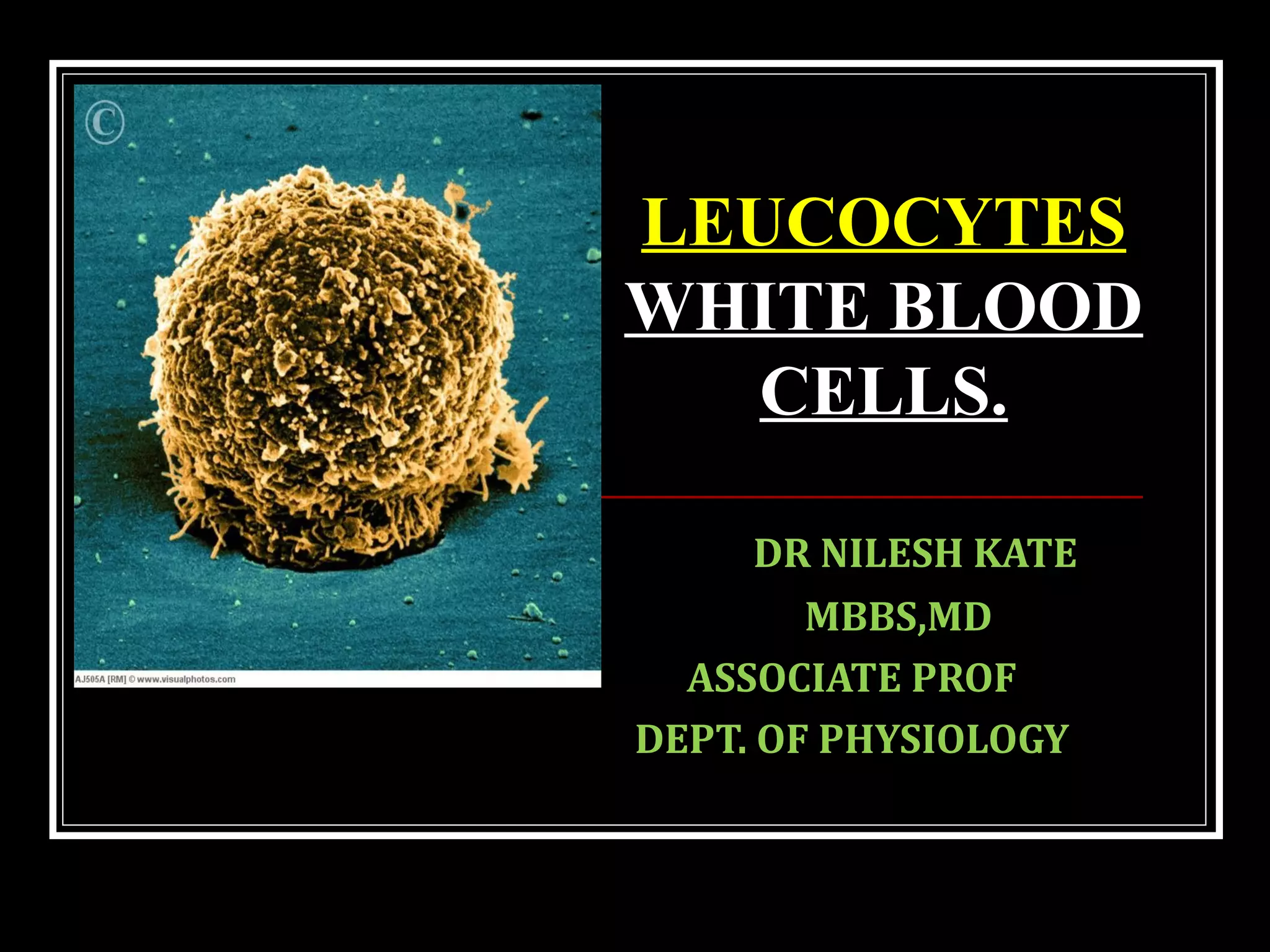
LEUCOCYTES
WHITE BLOOD
CELLS.
OBJECTIVES.
 Types of WBC and their counts
 Formation of WBC
 Morphology, life span, functions and
variations in count of WBC
 Applied aspects.
Sunday, June 19, 2016
INTRODUCTION
• Crucial in the body’s defense against pathogens
• These are complete cells, with a nucleus and organelles
• They lack Hb so they are colorless (i.e. white)
• Able to move into and out of blood vessels (Diapedesis)
• Can respond to chemicals released by damaged tissues
(Chemotaxis)
• Some are capable of Phagocytosis
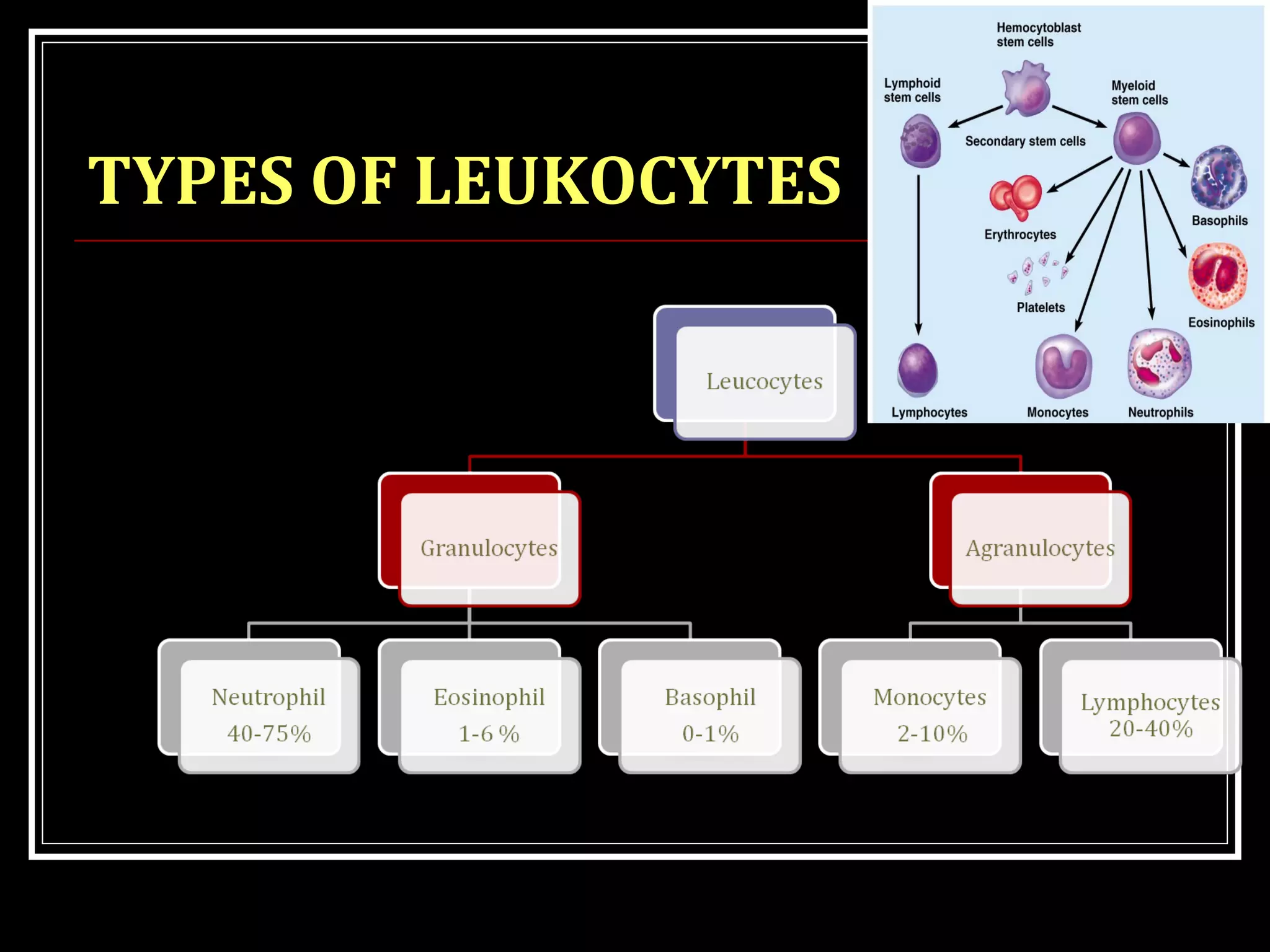
TYPES OF LEUKOCYTES
• Granulocytes
• Granules in their cytoplasm
can be stained
• Biologically active
substances involved in
inflammatory and allergic
reactions.
• Neutrophils, Eosinophil,
and Basophils
TYPES OF LEUKOCYTES
• Agranulocytes
• Lack visible
cytoplasmic
granules
• Lymphocytes and
Monocytes
TYPES OF LEUKOCYTES
LEUKOCYTE LEVELS IN THE
BLOOD
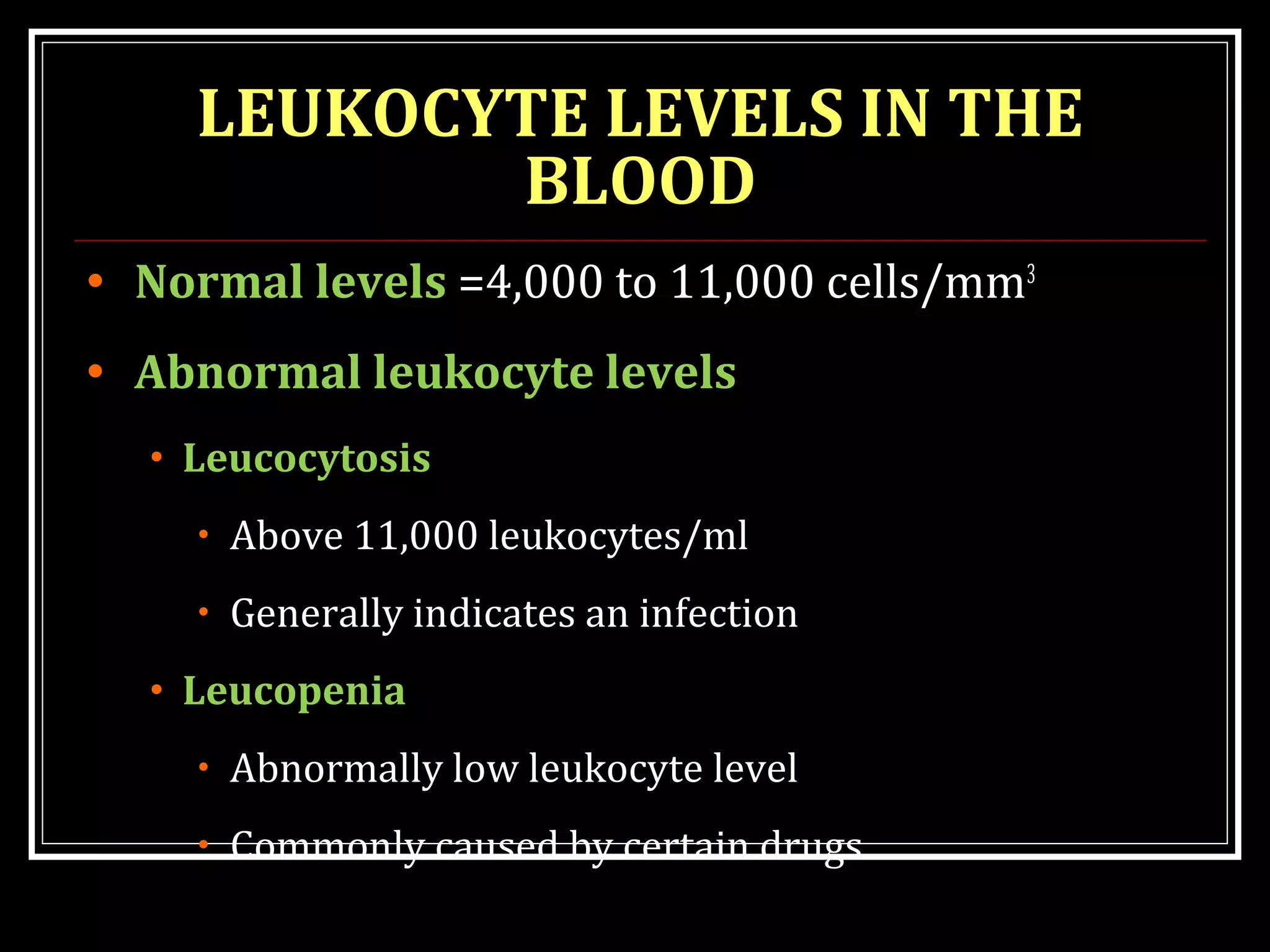
• Normal levels =4,000 to 11,000 cells/mm3
• Abnormal leukocyte levels
• Leucocytosis
• Above 11,000 leukocytes/ml
• Generally indicates an infection
• Leucopenia
• Abnormally low leukocyte level
• Commonly caused by certain drugs
Figure 19.11
WHITE BLOOD CELLS
CONCEPT OF POOL
 There are 3 different areas in our body where different
WBCs reside
1. Marrow pool: 90% neutrophils
2. Blood pool: 3%
3. Tissue pool: 7%
 Genesis of WBCs: Leucopoiesis
 In bone marrow PHSC (Pluripotential hemopoietic→
stem cells) differentiates committed stem cells→ →
CFU-GM
 Granulocytes & monocytes are formed only in bone marrow
 lymphocytes & plasma cells are produced in various
lymphogenous tissues
GENESIS OF WBCS
(LEUKOPOIESIS):
REGULATION OF
LEUCOPOIESIS
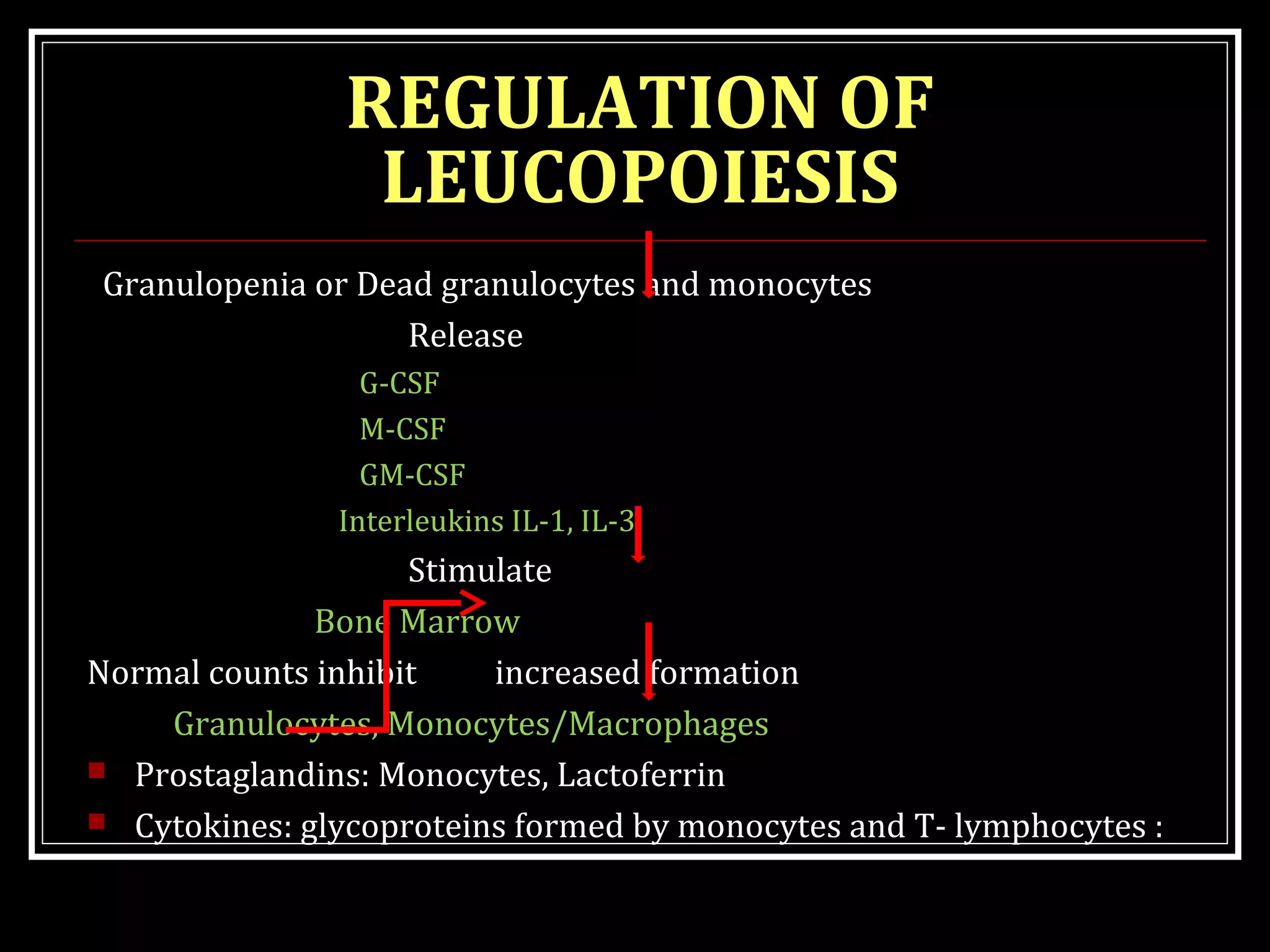
Granulopenia or Dead granulocytes and monocytes
Release
G-CSF
M-CSF
GM-CSF
Interleukins IL-1, IL-3
Stimulate
Bone Marrow
Normal counts inhibit increased formation
Granulocytes, Monocytes/Macrophages
 Prostaglandins: Monocytes, Lactoferrin
 Cytokines: glycoproteins formed by monocytes and T- lymphocytes :
NEUTROPHILS:
 Size:10-14 µm in diam.
 Nucleus:
1. Multilobed (1-6 lobes) therefore
called polymorphnuclear
leucocytes.
2. Young cell have single horse shoe
shaped nucleus.
3. As the cells grow older nucleus
becomes multilobed. Lobes are
connected with one another by
chromatin threads.
4. Arneth count:
 Cytoplasm: contains neutrally stained
granules
 average half-life in the circulation is 6
hours
NEUTROPHILS:
4 types of granules are present
1. Primary/ Azurophilic granules: less in
no. enzymes like
i. myeloperoxidase, (produces HOCl for
killing bacteria).
ii. lysosomal granules containing acid
hydrolases, which can digest bacteria,
elastase, proteinase, α-1 antitrypsin
iii. Antimicrobial proteins like
cathepsin-G, Defensins- α, β
iv. Tissue destruction during
inflammation
2. Secondary /Specific/peroxidase
negative granules: more numerous.
Contain
i. Lactoferrin-antibacterial
ii. Gelatinase, lysozyme- microbicidal,
Vit B12binding protein &
iii. Components of enzyme system that
produce free radicals like H2O2,
which kills the microbes.
iv. Substances that facilitates
chemotaxis.
Sunday, June 19, 2016
NEUTROPHILS:
3. Tertiary granules: Gelatinase, alkaline phosphatase and
cytochrome-b
4. Secretory Granules: secretory vesicles contain CD3, phospholipase
and tyrosine kinase
Toxic granules: During severe infections toxic coarse granules are
seen.
 Functions:
1. Phagocytosis:
2. Reaction of inflammation: release leukotrienes, prostaglandins,
thromboxanes
3. Febrile Response: They contain fever producing substance,
endogenous pyrogen which is an important mediator of febrile
response to bacterial pyrogens.
NEUTROPHILS:
 These enzymes act
 in a cooperative fashion with the O2
 –, H2O2, and HOCl formed by the action of
the NADPH oxidase and
 myeloperoxidase to produce a killing zone
around the activated neutrophil.
PROCESS OF PHAGOCYTOSIS
(CELL EATING)
Phagocytes engulf and kill microorganisms
Steps of Phagocytosis:
1. Margination
2. Emigration and Diapedesis
3. Chemotaxis
4. Recognition and attachment(Opsonization)
5. Engulfment and creation of phagosome
6. Fusion of phagosome with lysosome
7. Destruction and digestion
8. Residual body → Exocytosis
NEUTROPHIL RECRUITMENT
Selectins/Addressins ß2 –Integrin / ICAM-1
flow rolling adhesion transmigration
inflammatory
mediators
Tissue Injury
(e.g. Bacterial infection)
chemoattractant
(e.g. IL-8, C5a),
leukotrienes
• phagocytosis
• oxidant production
• lysosomal granules
endothelium
OPSONIZATION AND PHAGOCYTOSIS
 IgG and C3b opsonin proteins
 Fc receptors for antibody
 Complement receptors: (e.g. C3b)
 Other
 receptors for collectins (eg. mannose-binding
protein)
 G protein-mediated responses, increased
motor activity of the cell, exocytosis,
respiratory burst
OPSONIZATION
RESPIRATORY BURST: NADPH
OXIDASE
NADPH oxidase activation
Superoxide anion: O2-
Hydrogen peroxide: H2O2
Hydroxyl radical: OH .
Hypochlorous acid: HOCl
Myeloperoxidase = MPO
O2 + e-
2O2- + 2H+
H2O2 + Fe2+
H2O2
O2-
H2O2 + O2
OH + OH- + Fe3+
HOCl + OH-MPO
REACTIVE OXYGENREACTIVE OXYGEN
METABOLITESMETABOLITES
VARIATION IN NEUTROPHIL
COUNT:
 Neutrophilia: in↑
neutrophils>10000/mm3
 A. Physiological
1)After Exercise,
2)After injection of epinephrine,
3)Pregnancy, menstruation,
parturition & lactation,
4)Newborn,
5)After meals,
6)Mental or emotional stress
 B. Pathological
1)Acute pyogenic (pus forming)
bacterial infections,
2) Acute Rheumatic fever, Gout
2)Following tissue destruction,
i) Burns
ii) After hemorrhage,
iii) myocardial infarction, iv)
After surgery
v) poisoning by lead, mercury,
NEUTROPENIA: IN NEUTROPHILS↓ :
< 2500/mm3
 In children
 Typhoid, paratyphoid fever
 Viral infection
 Malaria
 Aplasia of bone marrow
 Bone marrow depression due to
 Chloromycetin, cytotoxic drugs
 X-rays & radiations
 Chemical poisons like arsenic
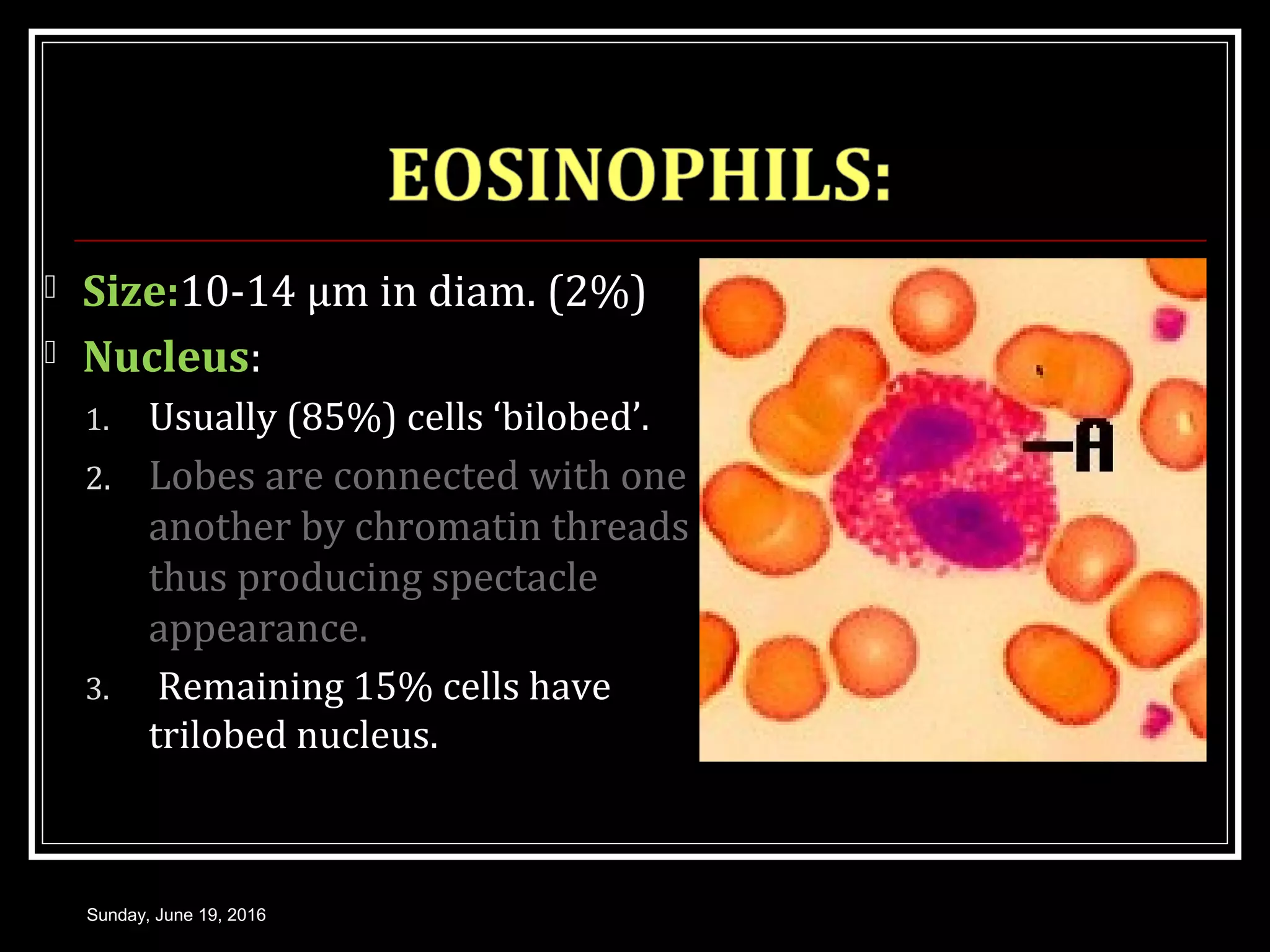
 Size:10-14 µm in diam. (2%)
 Nucleus:
1. Usually (85%) cells ‘bilobed’.
2. Lobes are connected with one
another by chromatin threads
thus producing spectacle
appearance.
3. Remaining 15% cells have
trilobed nucleus.
Sunday, June 19, 2016
 Cytoplasm:
 i. Acidophilic, appears light pink in
colour after staining Granular
 ii. Granules
1. Coarse, stain bright brick red with
acidic (eosin) dye.
2. Granules do not cover the nucleus.
3. They contain very high peroxidase
content (histaminase), lysozymes,
ECF-A & Major Basic Protein (MBP)
Sunday, June 19, 2016
FUNCTIONS:
1. Mild Phagocytosis: less
motile than
neutrophils
2. Parasitic infestations:
 Major Basic Protein- Larvicidal
 Eosinophil Cationic Protein-
bactericidal & major destroyer of
helminths.
 Eosinophil Peroxidase –
destruction of helminths,
bacteria & tumour cells
FUNCTIONS:
3. Allergic reaction:
bronchial asthma & hay
fever
 Detoxifying inflammation
inducing subs like bradykinin,
histamine
 inhibit mast cell degranulation
 phagocytose & destroy Ag-Ab
complexes
4. Immunity:
specially abundant
in the mucosa of
respiratory tracts,
GIT, urinary tract,
where they
provide mucosal
immunity
Sunday, June 19, 2016
VARIATION IN EOSINOPHIL
COUNT
 Eosinophilia: in↑
eosinophils
 Causes are:-
1)Allergic conditions e.g.
bronchial asthma, hay
fever, filariasis
2) Parasitic infestation,
trichinosis &
schistosomiasis e.g.
worms (hookworm,
roundworm & tapeworm),
3) Skin disease like utricaria.
 Eosinopenia: in↓
eosinophils
 Causes are:-
1) ACTH & steroid therapy
2) Stressful conditions, &
3) Acute pyogenic infections
BASOPHILS:
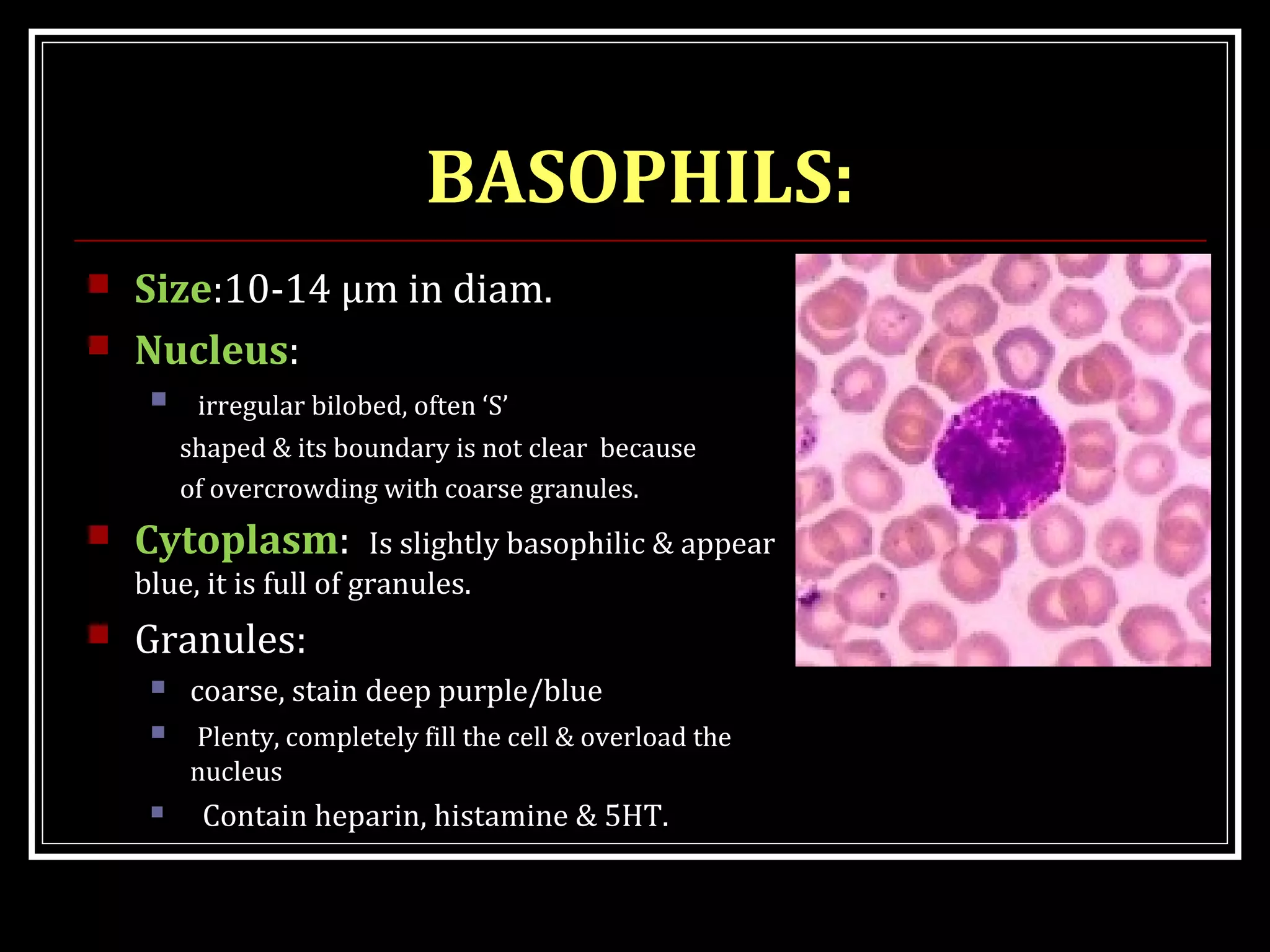
 Size:10-14 µm in diam.
 Nucleus:
 irregular bilobed, often ‘S’
shaped & its boundary is not clear because
of overcrowding with coarse granules.
 Cytoplasm: Is slightly basophilic & appear
blue, it is full of granules.
 Granules:
 coarse, stain deep purple/blue
 Plenty, completely fill the cell & overload the
nucleus
 Contain heparin, histamine & 5HT.
FUNCTIONS
1. Mild phagocytosis
2. Role in allergic reaction:
Basophils release histamine,
bradykinin, slow reacting substance of anaphylaxis
(SRS-A) & serotonin (5HT). These substances
cause local vascular & tissue reactions that
cause many allergic manifestations.
3. Prevents spread of Allergic inflammatory process
4. Liberates heparin which
i. Acts as anticoagulant & keeps blood in fluid
state.
ii. Activates the enzyme lipoprotein lipase which
removes fat particles from the blood after fatty
meal.
VARIATION IN BASOPHIL COUNT:
 Basophilia: in basophil↑
count >100/mm3
 Causes are:-
1) Viral infections, e.g.
influenza, small pox &
chicken pox
2) Allergic diseases
3) Chronic myeloid
leukemia.
 Basopenia: in basophil↓
count
 Causes are:-
1) Corticosteroid therapy,
2) Drug induced reactions &
3) Acute pyogenic infections
 2nd
line of defence.
 Size: Largest WBC 18-20 µm.
 Nucleus:
1. Is large single, eccentric in
position (present on one side of
the cell).
2. It is notched/ indented (kidney shaped)
3. It has reticulated chromatin network.
 Cytoplasm:
i. Is abundant, pale blue & usually clear with no
granules.
Granules:
i. Sometimes contain fine purple dust like
granules called Azur granules
FUNCTIONS
1. Role in phagocytosis:
These are powerful phagocytes & capable
of phagocytosis as many as 100 bacteria. They also have
ability to engulf large particles such as RBCs & malarial
parasites.
2. Role in tumor immunity: kill tumor cells after sensitization by
lymphocytes, play a key role in the lymphocyte – mediated
immunity.
3. Synthesis of Biological Substances:
 synthesis complement, prostaglandin E & clot promoting factors
 Interleukin1 ii) Hemopoietic factors iii) TNF-α,
 iv)Binding proteins like transferrin,v) lysosomes,
 Proteases vii) Acid hydrolases
VARIATION IN COUNT
 Monocytosis: in m↑ onocyte
count
 Causes are:-
1) Certain bacterial infections,
e.g. tuberculosis, syphilis &
subacute bacterial
endocarditis
2) Viral infections
3) Protozoal & rickettsial
infections, e.g. malaria, kala
azar
 Monocytopenia: in↓
monocyte count
 Causes are:-
It is rare, may be seen in
hypoplastic bone marrow.
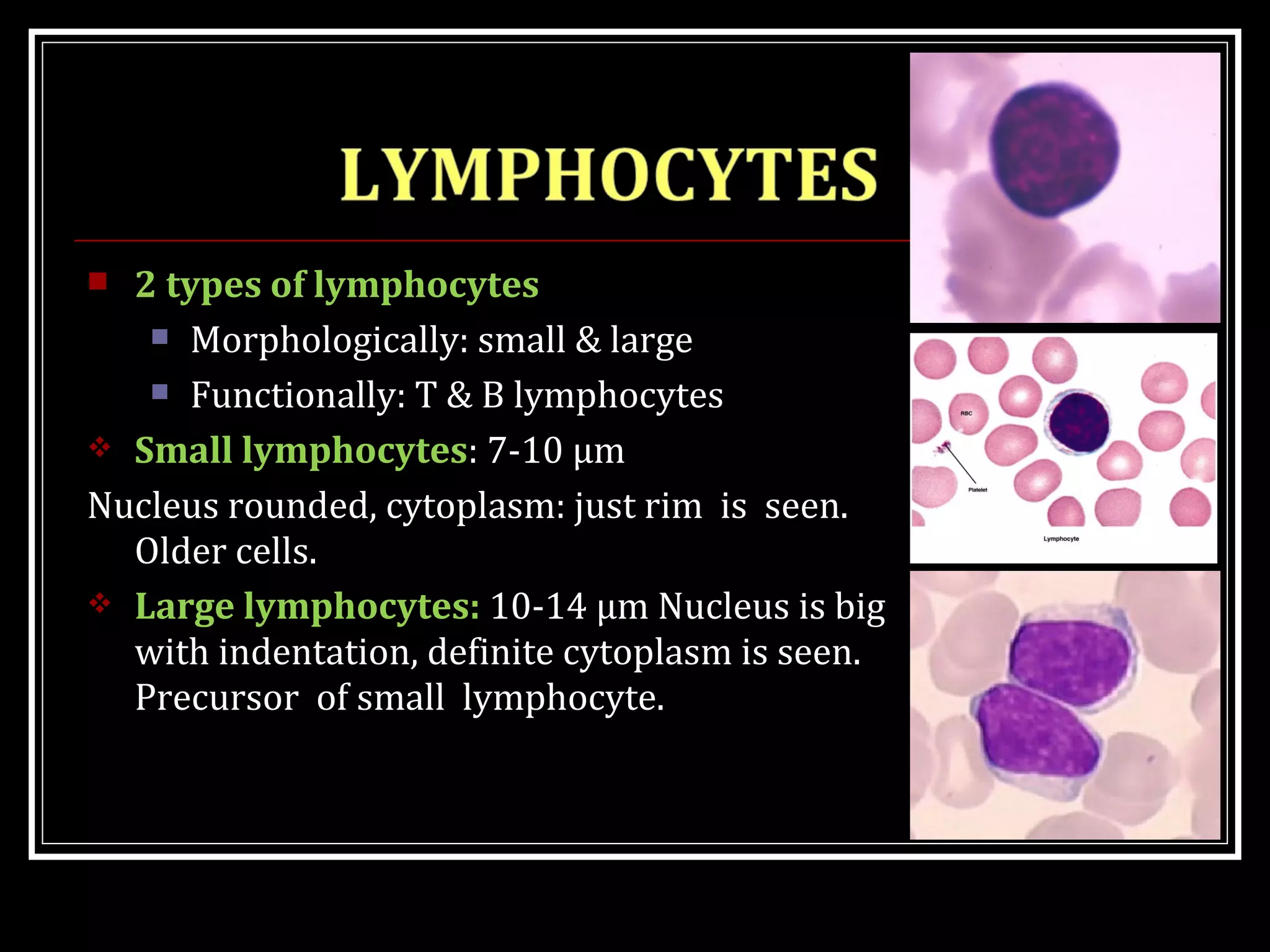
 2 types of lymphocytes
 Morphologically: small & large
 Functionally: T & B lymphocytes
 Small lymphocytes: 7-10 µm
Nucleus rounded, cytoplasm: just rim is seen.
Older cells.
 Large lymphocytes: 10-14 µm Nucleus is big
with indentation, definite cytoplasm is seen.
Precursor of small lymphocyte.
Functional subtypes: small lymphocytes are broadly
classified into
1. B lymphocyte: processed in the bone marrow, concerned
with the humoral immunity.
2. T lymphocyte: processed in thymus, concerned with the
cellular immunity
Functions of B lymphocytes: B lymphocytes & their
derivatives, plasma cells are responsible for humoral
(antigen mediated) immunity. They produce antibodies
(gamma globulins).This is major mechanism against the
invading organisms
 by direct action
 by making them inactive by agglutination, precipitation,
neutralization or lysis and
 through complement system
Functions of T lymphocytes:
T lymphocytes are responsible for cellular (Cell mediated/ T
cell) immunity. T cell immunity play imp defensive role against:
 viral & bacterial infections
 tumor cells
Provide a specific immune response to
infectious diseases.
VARIATION IN LYMPHOCYTE COUNT
 Lymphocytosis: in↑
lymphocyte count
Physiological
1. healthy & young children
2. female during
menstruation
Pathological:
1. Chronic infections like tuberculosis,
hepatitis & whooping cough
2. Lymphatic leukemia
3. Viral infections like chicken pox
4. Autoimmune disease like
thyrotoxicosis
 Lymphocytopenia: ↓
in lymphocyte count
1. Patients on
corticosteroid &
immunosuppressive
therapy
2. Hypoplastic bone
marrow
3. Widespread irradiation
4. Acquired Immuno
Deficiency syndrome
(AIDS)
LIFE SPAN OF WBCS
 Granulocytes:
 after released from bone marrow, 4-8 hours circulate in
blood
 & another 4-5 days in the tissues.
 Survive only for few hours in serious infection
 Monocytes:
 72 hrs in blood.
 Once in tissue they swell up to much larger size to become
tissue macrophage in this form they can live for month.(3)→
 Lymphocytes:
 Life span for week or months depending on body’s need.
 They continually circulate in blood & move from blood to
tissues & from tissues to blood and again blood to tissues.
LEUKAEMIAS
 Malignant diseases
 Increase in total WBC count->50,000/mm3
 Presence of immature wbcs in peripheral
blood
Types of LeukaemiasTypes of Leukaemias
1. Acute myeloblastic leukaemia (AML)
2. Acute lymphoblastic leukaemia (ALL)
3. Chronic myeloid leukaemia (CML)
4. Chronic Lymphoid leukaemia (CLL)
Thank
You

LEUCOCYTES

  • 1.
    DR NILESH KATE MBBS,MD ASSOCIATEPROF DEPT. OF PHYSIOLOGY LEUCOCYTES WHITE BLOOD CELLS.
  • 2.
    OBJECTIVES.  Types ofWBC and their counts  Formation of WBC  Morphology, life span, functions and variations in count of WBC  Applied aspects. Sunday, June 19, 2016
  • 3.
    INTRODUCTION • Crucial inthe body’s defense against pathogens • These are complete cells, with a nucleus and organelles • They lack Hb so they are colorless (i.e. white) • Able to move into and out of blood vessels (Diapedesis) • Can respond to chemicals released by damaged tissues (Chemotaxis) • Some are capable of Phagocytosis
  • 4.
    TYPES OF LEUKOCYTES •Granulocytes • Granules in their cytoplasm can be stained • Biologically active substances involved in inflammatory and allergic reactions. • Neutrophils, Eosinophil, and Basophils
  • 5.
    TYPES OF LEUKOCYTES •Agranulocytes • Lack visible cytoplasmic granules • Lymphocytes and Monocytes
  • 6.
  • 7.
    LEUKOCYTE LEVELS INTHE BLOOD • Normal levels =4,000 to 11,000 cells/mm3 • Abnormal leukocyte levels • Leucocytosis • Above 11,000 leukocytes/ml • Generally indicates an infection • Leucopenia • Abnormally low leukocyte level • Commonly caused by certain drugs
  • 8.
  • 9.
    CONCEPT OF POOL There are 3 different areas in our body where different WBCs reside 1. Marrow pool: 90% neutrophils 2. Blood pool: 3% 3. Tissue pool: 7%  Genesis of WBCs: Leucopoiesis  In bone marrow PHSC (Pluripotential hemopoietic→ stem cells) differentiates committed stem cells→ → CFU-GM  Granulocytes & monocytes are formed only in bone marrow  lymphocytes & plasma cells are produced in various lymphogenous tissues
  • 10.
  • 11.
    REGULATION OF LEUCOPOIESIS Granulopenia orDead granulocytes and monocytes Release G-CSF M-CSF GM-CSF Interleukins IL-1, IL-3 Stimulate Bone Marrow Normal counts inhibit increased formation Granulocytes, Monocytes/Macrophages  Prostaglandins: Monocytes, Lactoferrin  Cytokines: glycoproteins formed by monocytes and T- lymphocytes :
  • 12.
    NEUTROPHILS:  Size:10-14 µmin diam.  Nucleus: 1. Multilobed (1-6 lobes) therefore called polymorphnuclear leucocytes. 2. Young cell have single horse shoe shaped nucleus. 3. As the cells grow older nucleus becomes multilobed. Lobes are connected with one another by chromatin threads. 4. Arneth count:  Cytoplasm: contains neutrally stained granules  average half-life in the circulation is 6 hours
  • 13.
    NEUTROPHILS: 4 types ofgranules are present 1. Primary/ Azurophilic granules: less in no. enzymes like i. myeloperoxidase, (produces HOCl for killing bacteria). ii. lysosomal granules containing acid hydrolases, which can digest bacteria, elastase, proteinase, α-1 antitrypsin iii. Antimicrobial proteins like cathepsin-G, Defensins- α, β iv. Tissue destruction during inflammation
  • 14.
    2. Secondary /Specific/peroxidase negativegranules: more numerous. Contain i. Lactoferrin-antibacterial ii. Gelatinase, lysozyme- microbicidal, Vit B12binding protein & iii. Components of enzyme system that produce free radicals like H2O2, which kills the microbes. iv. Substances that facilitates chemotaxis. Sunday, June 19, 2016
  • 15.
    NEUTROPHILS: 3. Tertiary granules:Gelatinase, alkaline phosphatase and cytochrome-b 4. Secretory Granules: secretory vesicles contain CD3, phospholipase and tyrosine kinase Toxic granules: During severe infections toxic coarse granules are seen.  Functions: 1. Phagocytosis: 2. Reaction of inflammation: release leukotrienes, prostaglandins, thromboxanes 3. Febrile Response: They contain fever producing substance, endogenous pyrogen which is an important mediator of febrile response to bacterial pyrogens.
  • 16.
    NEUTROPHILS:  These enzymesact  in a cooperative fashion with the O2  –, H2O2, and HOCl formed by the action of the NADPH oxidase and  myeloperoxidase to produce a killing zone around the activated neutrophil.
  • 17.
    PROCESS OF PHAGOCYTOSIS (CELLEATING) Phagocytes engulf and kill microorganisms Steps of Phagocytosis: 1. Margination 2. Emigration and Diapedesis 3. Chemotaxis 4. Recognition and attachment(Opsonization) 5. Engulfment and creation of phagosome 6. Fusion of phagosome with lysosome 7. Destruction and digestion 8. Residual body → Exocytosis
  • 18.
    NEUTROPHIL RECRUITMENT Selectins/Addressins ß2–Integrin / ICAM-1 flow rolling adhesion transmigration inflammatory mediators Tissue Injury (e.g. Bacterial infection) chemoattractant (e.g. IL-8, C5a), leukotrienes • phagocytosis • oxidant production • lysosomal granules endothelium
  • 19.
    OPSONIZATION AND PHAGOCYTOSIS IgG and C3b opsonin proteins  Fc receptors for antibody  Complement receptors: (e.g. C3b)  Other  receptors for collectins (eg. mannose-binding protein)  G protein-mediated responses, increased motor activity of the cell, exocytosis, respiratory burst
  • 20.
  • 22.
  • 23.
    Superoxide anion: O2- Hydrogenperoxide: H2O2 Hydroxyl radical: OH . Hypochlorous acid: HOCl Myeloperoxidase = MPO O2 + e- 2O2- + 2H+ H2O2 + Fe2+ H2O2 O2- H2O2 + O2 OH + OH- + Fe3+ HOCl + OH-MPO REACTIVE OXYGENREACTIVE OXYGEN METABOLITESMETABOLITES
  • 24.
    VARIATION IN NEUTROPHIL COUNT: Neutrophilia: in↑ neutrophils>10000/mm3  A. Physiological 1)After Exercise, 2)After injection of epinephrine, 3)Pregnancy, menstruation, parturition & lactation, 4)Newborn, 5)After meals, 6)Mental or emotional stress  B. Pathological 1)Acute pyogenic (pus forming) bacterial infections, 2) Acute Rheumatic fever, Gout 2)Following tissue destruction, i) Burns ii) After hemorrhage, iii) myocardial infarction, iv) After surgery v) poisoning by lead, mercury,
  • 25.
    NEUTROPENIA: IN NEUTROPHILS↓: < 2500/mm3  In children  Typhoid, paratyphoid fever  Viral infection  Malaria  Aplasia of bone marrow  Bone marrow depression due to  Chloromycetin, cytotoxic drugs  X-rays & radiations  Chemical poisons like arsenic
  • 26.
     Size:10-14 µmin diam. (2%)  Nucleus: 1. Usually (85%) cells ‘bilobed’. 2. Lobes are connected with one another by chromatin threads thus producing spectacle appearance. 3. Remaining 15% cells have trilobed nucleus. Sunday, June 19, 2016
  • 27.
     Cytoplasm:  i.Acidophilic, appears light pink in colour after staining Granular  ii. Granules 1. Coarse, stain bright brick red with acidic (eosin) dye. 2. Granules do not cover the nucleus. 3. They contain very high peroxidase content (histaminase), lysozymes, ECF-A & Major Basic Protein (MBP) Sunday, June 19, 2016
  • 28.
    FUNCTIONS: 1. Mild Phagocytosis:less motile than neutrophils 2. Parasitic infestations:  Major Basic Protein- Larvicidal  Eosinophil Cationic Protein- bactericidal & major destroyer of helminths.  Eosinophil Peroxidase – destruction of helminths, bacteria & tumour cells
  • 29.
    FUNCTIONS: 3. Allergic reaction: bronchialasthma & hay fever  Detoxifying inflammation inducing subs like bradykinin, histamine  inhibit mast cell degranulation  phagocytose & destroy Ag-Ab complexes 4. Immunity: specially abundant in the mucosa of respiratory tracts, GIT, urinary tract, where they provide mucosal immunity Sunday, June 19, 2016
  • 30.
    VARIATION IN EOSINOPHIL COUNT Eosinophilia: in↑ eosinophils  Causes are:- 1)Allergic conditions e.g. bronchial asthma, hay fever, filariasis 2) Parasitic infestation, trichinosis & schistosomiasis e.g. worms (hookworm, roundworm & tapeworm), 3) Skin disease like utricaria.  Eosinopenia: in↓ eosinophils  Causes are:- 1) ACTH & steroid therapy 2) Stressful conditions, & 3) Acute pyogenic infections
  • 31.
    BASOPHILS:  Size:10-14 µmin diam.  Nucleus:  irregular bilobed, often ‘S’ shaped & its boundary is not clear because of overcrowding with coarse granules.  Cytoplasm: Is slightly basophilic & appear blue, it is full of granules.  Granules:  coarse, stain deep purple/blue  Plenty, completely fill the cell & overload the nucleus  Contain heparin, histamine & 5HT.
  • 32.
    FUNCTIONS 1. Mild phagocytosis 2.Role in allergic reaction: Basophils release histamine, bradykinin, slow reacting substance of anaphylaxis (SRS-A) & serotonin (5HT). These substances cause local vascular & tissue reactions that cause many allergic manifestations. 3. Prevents spread of Allergic inflammatory process 4. Liberates heparin which i. Acts as anticoagulant & keeps blood in fluid state. ii. Activates the enzyme lipoprotein lipase which removes fat particles from the blood after fatty meal.
  • 33.
    VARIATION IN BASOPHILCOUNT:  Basophilia: in basophil↑ count >100/mm3  Causes are:- 1) Viral infections, e.g. influenza, small pox & chicken pox 2) Allergic diseases 3) Chronic myeloid leukemia.  Basopenia: in basophil↓ count  Causes are:- 1) Corticosteroid therapy, 2) Drug induced reactions & 3) Acute pyogenic infections
  • 35.
     2nd line ofdefence.  Size: Largest WBC 18-20 µm.  Nucleus: 1. Is large single, eccentric in position (present on one side of the cell). 2. It is notched/ indented (kidney shaped) 3. It has reticulated chromatin network.  Cytoplasm: i. Is abundant, pale blue & usually clear with no granules. Granules: i. Sometimes contain fine purple dust like granules called Azur granules
  • 36.
    FUNCTIONS 1. Role inphagocytosis: These are powerful phagocytes & capable of phagocytosis as many as 100 bacteria. They also have ability to engulf large particles such as RBCs & malarial parasites. 2. Role in tumor immunity: kill tumor cells after sensitization by lymphocytes, play a key role in the lymphocyte – mediated immunity. 3. Synthesis of Biological Substances:  synthesis complement, prostaglandin E & clot promoting factors  Interleukin1 ii) Hemopoietic factors iii) TNF-α,  iv)Binding proteins like transferrin,v) lysosomes,  Proteases vii) Acid hydrolases
  • 37.
    VARIATION IN COUNT Monocytosis: in m↑ onocyte count  Causes are:- 1) Certain bacterial infections, e.g. tuberculosis, syphilis & subacute bacterial endocarditis 2) Viral infections 3) Protozoal & rickettsial infections, e.g. malaria, kala azar  Monocytopenia: in↓ monocyte count  Causes are:- It is rare, may be seen in hypoplastic bone marrow.
  • 38.
     2 typesof lymphocytes  Morphologically: small & large  Functionally: T & B lymphocytes  Small lymphocytes: 7-10 µm Nucleus rounded, cytoplasm: just rim is seen. Older cells.  Large lymphocytes: 10-14 µm Nucleus is big with indentation, definite cytoplasm is seen. Precursor of small lymphocyte.
  • 39.
    Functional subtypes: smalllymphocytes are broadly classified into 1. B lymphocyte: processed in the bone marrow, concerned with the humoral immunity. 2. T lymphocyte: processed in thymus, concerned with the cellular immunity Functions of B lymphocytes: B lymphocytes & their derivatives, plasma cells are responsible for humoral (antigen mediated) immunity. They produce antibodies (gamma globulins).This is major mechanism against the invading organisms
  • 40.
     by directaction  by making them inactive by agglutination, precipitation, neutralization or lysis and  through complement system Functions of T lymphocytes: T lymphocytes are responsible for cellular (Cell mediated/ T cell) immunity. T cell immunity play imp defensive role against:  viral & bacterial infections  tumor cells Provide a specific immune response to infectious diseases.
  • 41.
    VARIATION IN LYMPHOCYTECOUNT  Lymphocytosis: in↑ lymphocyte count Physiological 1. healthy & young children 2. female during menstruation Pathological: 1. Chronic infections like tuberculosis, hepatitis & whooping cough 2. Lymphatic leukemia 3. Viral infections like chicken pox 4. Autoimmune disease like thyrotoxicosis  Lymphocytopenia: ↓ in lymphocyte count 1. Patients on corticosteroid & immunosuppressive therapy 2. Hypoplastic bone marrow 3. Widespread irradiation 4. Acquired Immuno Deficiency syndrome (AIDS)
  • 42.
    LIFE SPAN OFWBCS  Granulocytes:  after released from bone marrow, 4-8 hours circulate in blood  & another 4-5 days in the tissues.  Survive only for few hours in serious infection  Monocytes:  72 hrs in blood.  Once in tissue they swell up to much larger size to become tissue macrophage in this form they can live for month.(3)→  Lymphocytes:  Life span for week or months depending on body’s need.  They continually circulate in blood & move from blood to tissues & from tissues to blood and again blood to tissues.
  • 43.
    LEUKAEMIAS  Malignant diseases Increase in total WBC count->50,000/mm3  Presence of immature wbcs in peripheral blood Types of LeukaemiasTypes of Leukaemias 1. Acute myeloblastic leukaemia (AML) 2. Acute lymphoblastic leukaemia (ALL) 3. Chronic myeloid leukaemia (CML) 4. Chronic Lymphoid leukaemia (CLL)
  • 44.