 platelets = small plate; thrombo=clot; cytes =
cells
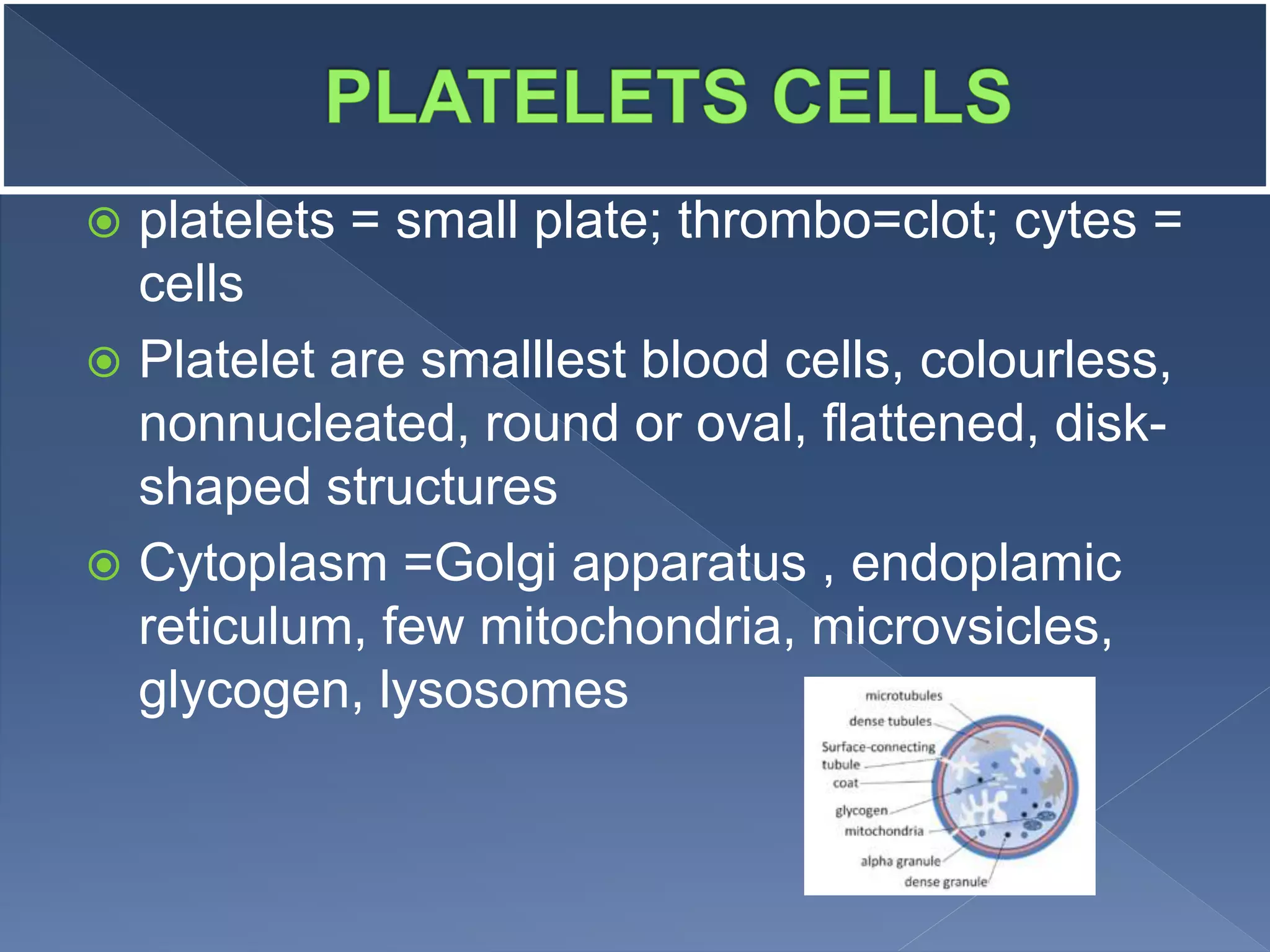
 Platelet are smalllest blood cells, colourless,
nonnucleated, round or oval, flattened, disk-
shaped structures
 Cytoplasm =Golgi apparatus , endoplamic
reticulum, few mitochondria, microvsicles,
glycogen, lysosomes
 Platelets, also called thrombocytes (thromb- + -cyte,
"blood clot cell")Platelets are produced in the bone
marrow.
 Platelets are produced from very large bone marrow cells
called megakaryocytes.
 As megakaryocytes develop into giant cells, that results in
the release of over 1,000 to 3000 platelets per
megakaryocyte.
 Platelets have no cell nucleus.
 2–3 µm in greatest diameter.
 Megakaryocyte and platelet production is regulated by
thrombopoietin, a hormone in the kidneys and liver.
 Each megakaryocyte produces between
1,000 and 3,000 platelets during its lifetime.
 An average of 1011 platelets are produced
daily in a healthy adult.
 average life span of circulating platelets is 8
to 9 days
 In adults 1.5 -4 lakhs/mm3 of blood.
 On a stained blood smear, platelets appear as dark purple
spots.
 First, platelets attach to substances outside endothelium
 Second, they change shape, turn on receptors and secrete
chemical messengers
 Third, they connect to each other through receptor bridges.
 platelet granules. Alpha granules contain clotting mediators such
as factor V, factor VIII, fibrinogen, fibronectin, platelet-derived
growth factor, and chemotactic agents. Delta granules, or dense
bodies, contain ADP, calcium, serotonin, which are platelet-
activating mediators. -
 Platelets have d-granules that contain serotonin, adenosine
diphosphate (ADP), and Ca2

 The main function of platelets is to contribute to hemostasis: the
process of stopping (arrest) bleeding endothelium
 Phagocytosis of small particles (carbon)and (viruses)
organisms.
 Storage and transport (Serotonin )of chmicals. (Heparin)
 platelet provided factor 3 (platelet phospholipids ) process of
clotting blood.
 Serotonin released by platelet observed immediately after
vascular injury.
 Hemostatic plug is formed by platelet and is their primary
function.(stops bleeding).
 Platelet have growth factor repair of the damaged vassel wall.
 Platelet activation causes its membrane surface
to become negatively charged that negatively
charged phospholipids from the inner to the
outer platelet membrane surface.
 These phospholipids then bind the tenase and
prothrombinase complexes, two of the sites of
interplay between platelets and the coagulation.
 Calcium ions are essential for the binding of
these coagulation factors.
 Symptoms of a Low Platelet Count
 red, purple
 a rash with small red or purple dots
 nosebleeds
 bleeding gums
 bleeding from wounds that lasts for a prolonged period or
doesn’t stop.
 heavy menstrual bleeding
 blood in the stools or Gastrointestinal bleeding
 blood in the urine
 In more serious cases
 blood in the urine
 blood in the stool
 bloody or very dark vomit
 Increased Numbers Of Platelets
thaThrombocytosis
 Decreased Numbers Of Platelets
Thrombocytopenia
 aplastic anemia
 a vitamin B-12 deficiency
 an iron deficiency
 viral infections, including HIV, Epstein-Barr virus, and
chickenpox
 exposure to chemotherapy, radiation, or toxic chemicals
 consuming too much alcohol or Alcohol toxicity, ethanol abuse
 Leukemia
 an autoimmune disorder
 Pregnancy
 Viral, bacterial, and rickettsial infections
 Antiplatelet antibodies
 Idiopathic thrombocytopenia (ITP), also known as immune
thrombocytopenic is the result of antibody production
against platelets.
 Viral infections such as mononucleosis, hepatitis, HIV or
measles
 Heparin-induced thrombocytopenia (HIT) results in low
platelets when a person who is on or received heparin
therapy develops an antibody.
 Leukemia, lymphoma, or another cancer that has spread
(metastasized) to the bone marrow—people with cancers
after significantly decreased number of platelets.
 Aplastic anemia—a condition in which the production of all
blood cells is significantly reduced
 Long-term bleeding problems (e.g., chronic bleeding from
stomach ulcers)
 Sepsis, especially that caused by a serious bacterial
infection with Gram-negative bacteria.
 Cancer, most commonly lung, gastrointestinal, ovarian, breast or lymphoma
 Anemia, in particular iron-deficiency anemia and hemolytic anemia
 Inflammatory conditions such as inflammatory bowel disease (IBD) or
rheumatoid arthritis
 Infectious diseases such as tuberculosis
 Recovery from significant blood loss such as from trauma or major surgery
 After physical activity or exertion
 Recovery from excess alcohol consumption and vitamin B12 and folate
deficiency
 diabetes mellitus, increased blood lipids or cholesterol levels, increased
platelet levels, and smoking.
 Rheumatoid arthritis
 Renal failure
 Chronic pancreatitis
 1. Platelet counts normally increase at high
altitudes; exercise, trauma, or excitement;
and in winter.
 2. Platelet counts normally decrease before
menstruation and during pregnancy.
 avoiding contact sports
 avoiding activities with a high risk of bleeding.
 limiting alcohol consumption
 stopping or switching medications that affect
platelets, including aspirin and ibuprofen
 blood or platelet transfusions
 changing medications that are causing a low
platelet count
 corticosteroids to block platelet antibodies
 drugs that suppress your immune system
 a splenectomy, or the surgical removal of the
spleen

Platelet cell

  • 2.
     platelets =small plate; thrombo=clot; cytes = cells  Platelet are smalllest blood cells, colourless, nonnucleated, round or oval, flattened, disk- shaped structures  Cytoplasm =Golgi apparatus , endoplamic reticulum, few mitochondria, microvsicles, glycogen, lysosomes
  • 4.
     Platelets, alsocalled thrombocytes (thromb- + -cyte, "blood clot cell")Platelets are produced in the bone marrow.  Platelets are produced from very large bone marrow cells called megakaryocytes.  As megakaryocytes develop into giant cells, that results in the release of over 1,000 to 3000 platelets per megakaryocyte.  Platelets have no cell nucleus.  2–3 µm in greatest diameter.  Megakaryocyte and platelet production is regulated by thrombopoietin, a hormone in the kidneys and liver.
  • 5.
     Each megakaryocyteproduces between 1,000 and 3,000 platelets during its lifetime.  An average of 1011 platelets are produced daily in a healthy adult.  average life span of circulating platelets is 8 to 9 days  In adults 1.5 -4 lakhs/mm3 of blood.
  • 6.
     On astained blood smear, platelets appear as dark purple spots.  First, platelets attach to substances outside endothelium  Second, they change shape, turn on receptors and secrete chemical messengers  Third, they connect to each other through receptor bridges.  platelet granules. Alpha granules contain clotting mediators such as factor V, factor VIII, fibrinogen, fibronectin, platelet-derived growth factor, and chemotactic agents. Delta granules, or dense bodies, contain ADP, calcium, serotonin, which are platelet- activating mediators. -  Platelets have d-granules that contain serotonin, adenosine diphosphate (ADP), and Ca2 
  • 7.
     The mainfunction of platelets is to contribute to hemostasis: the process of stopping (arrest) bleeding endothelium  Phagocytosis of small particles (carbon)and (viruses) organisms.  Storage and transport (Serotonin )of chmicals. (Heparin)  platelet provided factor 3 (platelet phospholipids ) process of clotting blood.  Serotonin released by platelet observed immediately after vascular injury.  Hemostatic plug is formed by platelet and is their primary function.(stops bleeding).  Platelet have growth factor repair of the damaged vassel wall.
  • 8.
     Platelet activationcauses its membrane surface to become negatively charged that negatively charged phospholipids from the inner to the outer platelet membrane surface.  These phospholipids then bind the tenase and prothrombinase complexes, two of the sites of interplay between platelets and the coagulation.  Calcium ions are essential for the binding of these coagulation factors.
  • 9.
     Symptoms ofa Low Platelet Count  red, purple  a rash with small red or purple dots  nosebleeds  bleeding gums  bleeding from wounds that lasts for a prolonged period or doesn’t stop.  heavy menstrual bleeding  blood in the stools or Gastrointestinal bleeding  blood in the urine  In more serious cases  blood in the urine  blood in the stool  bloody or very dark vomit
  • 10.
     Increased NumbersOf Platelets thaThrombocytosis  Decreased Numbers Of Platelets Thrombocytopenia
  • 11.
     aplastic anemia a vitamin B-12 deficiency  an iron deficiency  viral infections, including HIV, Epstein-Barr virus, and chickenpox  exposure to chemotherapy, radiation, or toxic chemicals  consuming too much alcohol or Alcohol toxicity, ethanol abuse  Leukemia  an autoimmune disorder  Pregnancy  Viral, bacterial, and rickettsial infections  Antiplatelet antibodies
  • 12.
     Idiopathic thrombocytopenia(ITP), also known as immune thrombocytopenic is the result of antibody production against platelets.  Viral infections such as mononucleosis, hepatitis, HIV or measles  Heparin-induced thrombocytopenia (HIT) results in low platelets when a person who is on or received heparin therapy develops an antibody.  Leukemia, lymphoma, or another cancer that has spread (metastasized) to the bone marrow—people with cancers after significantly decreased number of platelets.  Aplastic anemia—a condition in which the production of all blood cells is significantly reduced  Long-term bleeding problems (e.g., chronic bleeding from stomach ulcers)  Sepsis, especially that caused by a serious bacterial infection with Gram-negative bacteria.
  • 13.
     Cancer, mostcommonly lung, gastrointestinal, ovarian, breast or lymphoma  Anemia, in particular iron-deficiency anemia and hemolytic anemia  Inflammatory conditions such as inflammatory bowel disease (IBD) or rheumatoid arthritis  Infectious diseases such as tuberculosis  Recovery from significant blood loss such as from trauma or major surgery  After physical activity or exertion  Recovery from excess alcohol consumption and vitamin B12 and folate deficiency  diabetes mellitus, increased blood lipids or cholesterol levels, increased platelet levels, and smoking.  Rheumatoid arthritis  Renal failure  Chronic pancreatitis
  • 14.
     1. Plateletcounts normally increase at high altitudes; exercise, trauma, or excitement; and in winter.  2. Platelet counts normally decrease before menstruation and during pregnancy.
  • 15.
     avoiding contactsports  avoiding activities with a high risk of bleeding.  limiting alcohol consumption  stopping or switching medications that affect platelets, including aspirin and ibuprofen  blood or platelet transfusions  changing medications that are causing a low platelet count  corticosteroids to block platelet antibodies  drugs that suppress your immune system  a splenectomy, or the surgical removal of the spleen