Downloaded 1,958 times

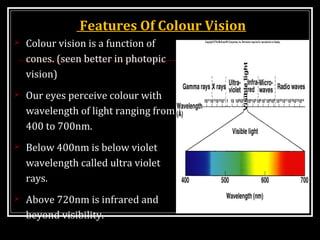
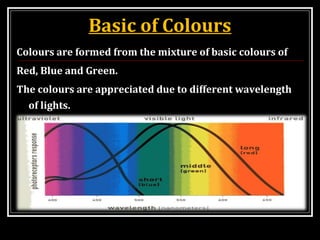
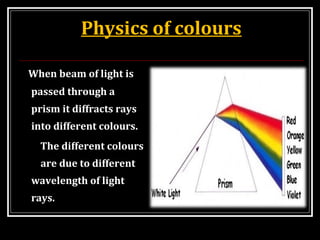
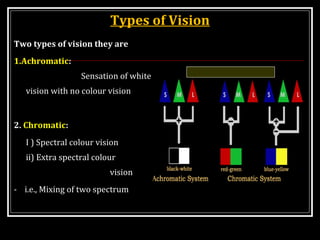
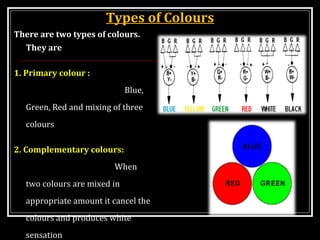
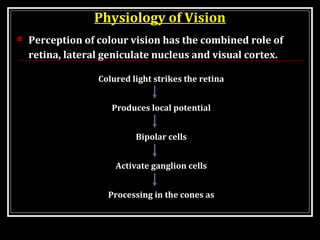
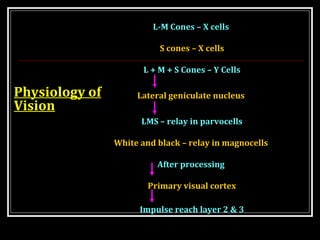
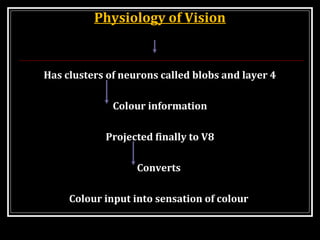
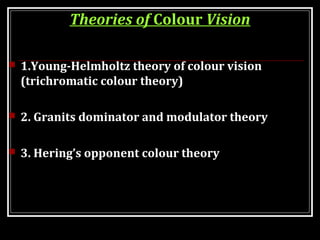
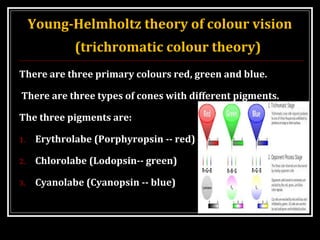
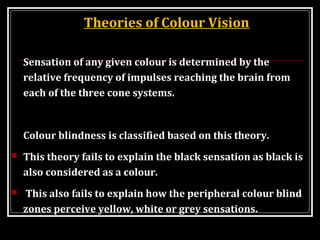
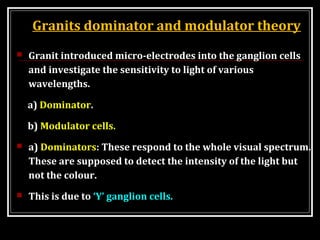
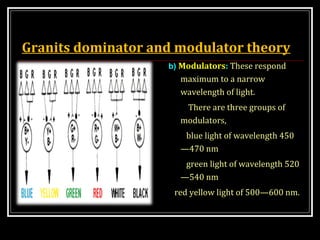
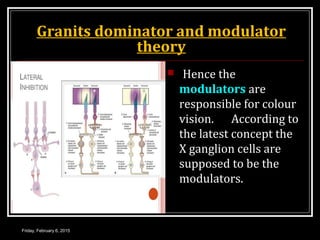
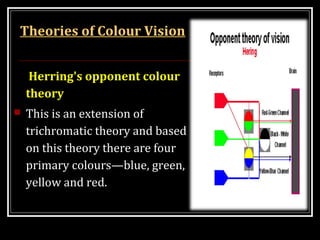
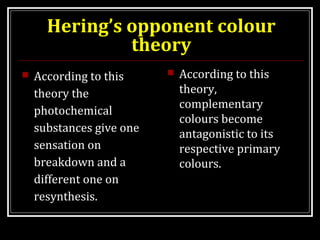
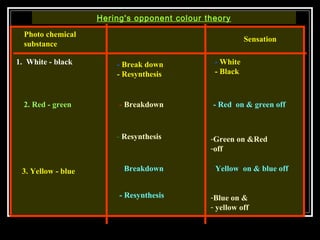

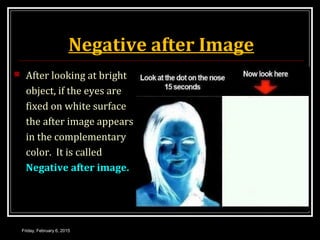
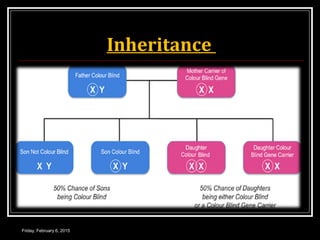
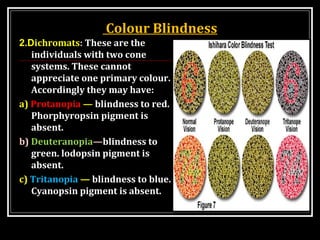
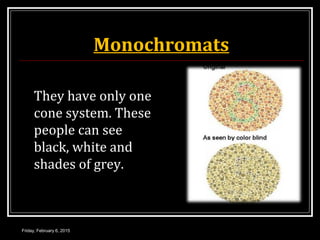
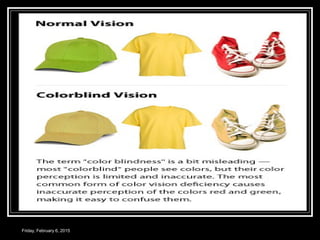
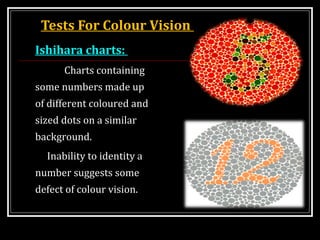
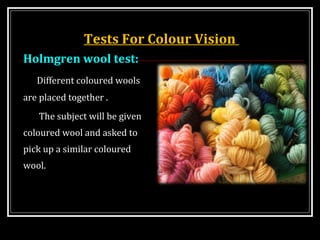



This document provides an overview of color vision, including: - The mechanisms of color vision are based on cones in the retina that detect different wavelengths of light. - Theories of color vision include Young-Helmholtz trichromatic theory involving red, green and blue cones, and Hering's opponent process theory involving blue-yellow and red-green opponent pairs. - Color blindness is classified according to which cone is deficient, and can be tested using Ishihara plates or wool tests. Normal color vision is important for occupations like piloting that rely on color coding.


