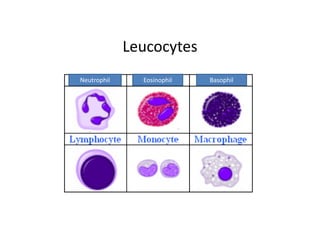
Leucocytes
Neutrophil Eosinophil Basophil
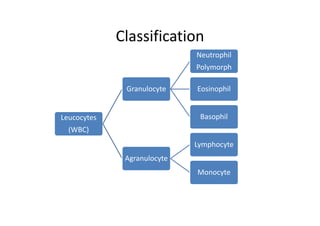
Classification
Leucocytes
(WBC)
Granulocyte
Neutrophil
Polymorph
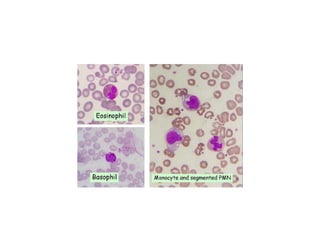
Eosinophil
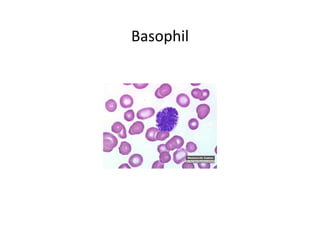
Basophil
Agranulocyte
Lymphocyte
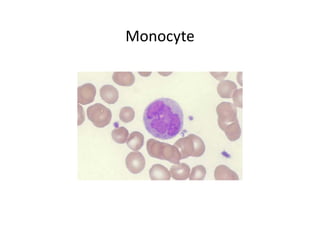
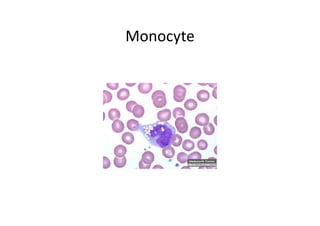
Monocyte
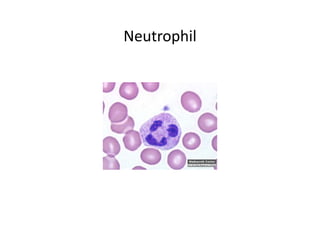
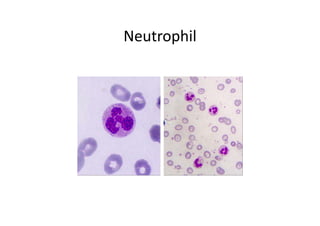
Neutrophil
Neutrophil
Neutrophil
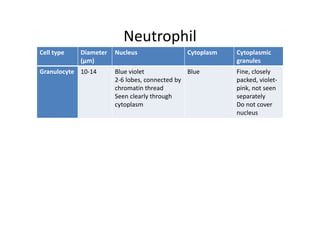
Cell type Diameter Nucleus Cytoplasm Cytoplasmic
(µm) granules
Granulocyte 10‐14 Blue violet Blue Fine, closely
2‐6 lobes, connected by packed, violet‐
chromatin thread pink, not seen
Seen clearly through separately
cytoplasm Do not cover
nucleus
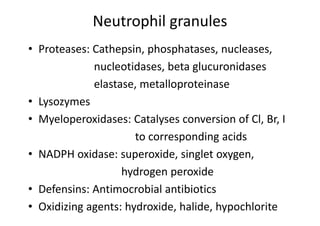
Neutrophil granules
• Proteases: Cathepsin, phosphatases, nucleases,
nucleotidases, beta glucuronidases
elastase, metalloproteinase
• Lysozymes
• Myeloperoxidases: Catalyses conversion of Cl, Br, I
to corresponding acids
• NADPH oxidase: superoxide, singlet oxygen,
hydrogen peroxide
• Defensins: Antimocrobial antibiotics
• Oxidizing agents: hydroxide, halide, hypochlorite
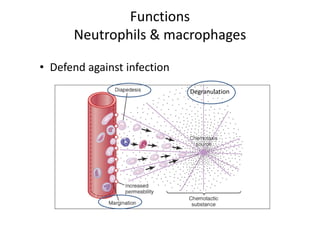
Functions
Neutrophils & macrophages
• Defend against infection
Degranulation
Chemotactic substances
• Bacterial or viral toxins
• Degenerative products of inflammed tissues
• Reaction products of the complement
complex
Phagocytosis
Selection of a substance for phagocytosis
• Rough surface
• Absence of protein coat
• Opsonization
Steps in phagocytosis
• Attachment to the particle
• Projecting pseudopodia all around it
• Pseudopodia on opposite side fuse
• Phagocytic vesicle / phagosome formed
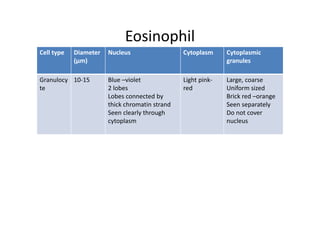
Eosinophil
Cell type Diameter Nucleus Cytoplasm Cytoplasmic
(µm) granules
Granulocy 10‐15 Blue –violet Light pink‐ Large, coarse
te 2 lobes red Uniform sized
Lobes connected by Brick red –orange
thick chromatin strand Seen separately
Seen clearly through Do not cover
cytoplasm nucleus
Composition of Eosinophil granules
• MBP: Major basic protein: Disrupts the membrane of
parasites&
• induces histamine release from
• Basophils& mast cells
• ECP: Eosinophilic cationic protein: Binds to heparin &
neutralises its
• anticoagulant activity
• EDN: Eosinophil derived neurotoxin: Neurotoxin acting
on myelinated nerves
• EPO: Eosinophil peroxidase: A sticky protein : adheres
to host cells & mast cells
Functions of Eosinophils
• Specialise in dealing with parasites which are too
large to be phagocytosed
• Chemicals released by degranulation are toxic to
larvae of parasites
• Also degrade histamine & inhibit mast cell
degranulation. Thus they decrease the intensity
of allergic reactions
• Show phagocytosis but are less efficient than
neutrophils
• Especially abundant in the mucosa of GIT,
respiratory & urinary tracts
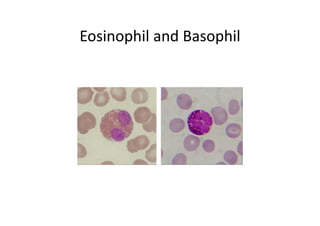
Eosinophil and Basophil
Basophil
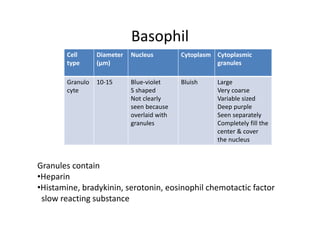
Cell Diameter Nucleus Cytoplasm Cytoplasmic
type (µm) granules
Granulo 10‐15 Blue‐violet Bluish Large
cyte S shaped Very coarse
Not clearly Variable sized
seen because Deep purple
overlaid with Seen separately
granules Completely fill the
center & cover
the nucleus
Granules contain
•Heparin
•Histamine, bradykinin, serotonin, eosinophil chemotactic factor
slow reacting substance
Functions of Basophils
• Essential for immediate type hypersensitivity reactions
eg. Urticaria, rhinitis, anaphylactic shock
• IgE mediated allergies.
They have receptors for the constant region of IgE
molecules
The allergen & the IgE molecule possibly form a
complex with basophil which leads to allergic
manifestations
• Protection from some parasitic infections eg Scabies
• Heparin release by basophils after a meal may facilitate
post absorptive metabolism of dietary triglycerides by
activating lipoprotein lipase
Basophil
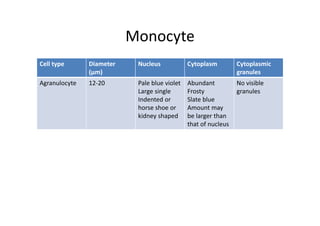
Monocyte
Cell type Diameter Nucleus Cytoplasm Cytoplasmic
(µm) granules
Agranulocyte 12‐20 Pale blue violet Abundant No visible
Large single Frosty granules
Indented or Slate blue
horse shoe or Amount may
kidney shaped be larger than
that of nucleus
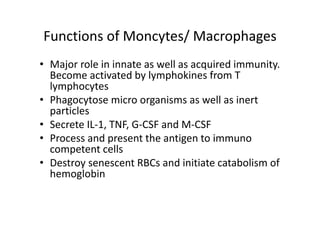
Functions of Moncytes/ Macrophages
• Major role in innate as well as acquired immunity.
Become activated by lymphokines from T
lymphocytes
• Phagocytose micro organisms as well as inert
particles
• Secrete IL‐1, TNF, G‐CSF and M‐CSF
• Process and present the antigen to immuno
competent cells
• Destroy senescent RBCs and initiate catabolism of
hemoglobin
Monocyte
Monocyte
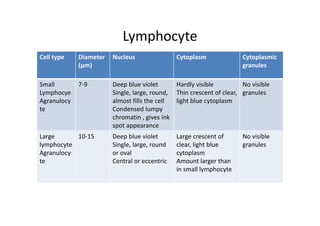
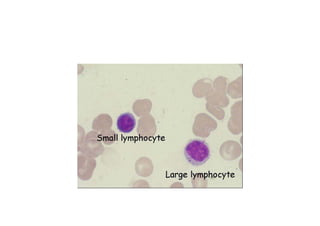
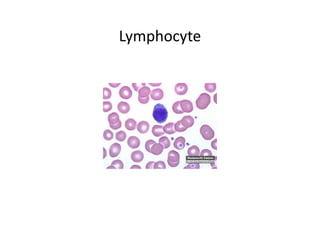
Lymphocyte
Cell type Diameter Nucleus Cytoplasm Cytoplasmic
(µm) granules
Small 7‐9 Deep blue violet Hardly visible No visible
Lymphocye Single, large, round, Thin crescent of clear, granules
Agranulocy almost fills the cell light blue cytoplasm
te Condensed lumpy
chromatin , gives ink
spot appearance
Large 10‐15 Deep blue violet Large crescent of No visible
lymphocyte Single, large, round clear, light blue granules
Agranulocy or oval cytoplasm
te Central or eccentric Amount larger than
in small lymphocyte
Functions of Lymphocytes
• Directly involved in specific acquired immunity
• T‐lymphocytes: Cell mediated immunity
• B‐lymphocytes: Humoral immunity
Lymphocyte
Normal counts
Leucocytes
(WBC)
Granulocyte
Neutrophil
Polymorph
Eosinophil
Basophil
Agranulocyte
Lymphocyte
Monocyte
DLC Absolute counts
50‐70% 3000‐6000
1‐4% 150‐300
0‐1% 0‐100
20‐40% 1500‐4000
2‐8% 300‐600
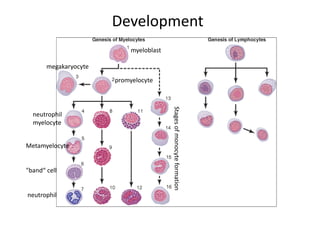
myeloblast
Stages
of
monocyte
formation
promyelocyte
megakaryocyte
Development
neutrophil
myelocyte
Metamyelocyte
"band“ cell
neutrophil
Factors affecting granulopoiesis
• Interleukin‐1(IL‐1): Produced by Macrophages.
Acts on early progenitor cells to stimulate
their proliferation, & also enhances the
effector function of all types of leukocytes.
• Tumour necrosis factor: Produced by
macrophages & has same function as IL‐1
• Granulocyte‐macrophage colony stimulating
factor(GM‐CSF): Produced by fibroblasts,
vascular endothelial cells & T‐lymphocytes
Factors affecting granulopoiesis
• Interleukin‐3(IL‐3)/ Multi‐CSF: Produced by T
lymphocytes. Stimulates the proliferation of all
peripheral blood cells
• Granulocyte‐Colony stimulating factor(G‐CSF):
Produced by monocytes, fibroblasts & endothelial cells.
Stimulates proliferation of precursor cells of only
ganulocyte series
• Macrophage‐Colony stimulating factor(M‐CSF):
Produced by macrophages, fibroblasts & endothelial
cells. Specifically stimulates the proliferation of
precursors of macrophages.
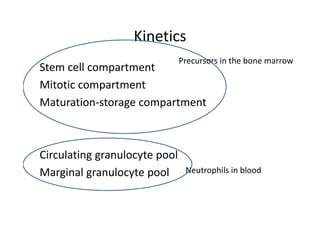
Kinetics
Precursors in the bone marrow
Stem cell compartment
Mitotic compartment
Maturation‐storage compartment
Neutrophils in blood
Circulating granulocyte pool
Marginal granulocyte pool
Life span
• Granulocytes: 4‐8 hours in circulation
Another 4‐5 d in tissues where they are
needed
• Monocytes: 10‐20 hours in blood
Months –years in tissues as macrophages
• Lymphocytes: weeks‐months
Recirculate from the lymph nodes & other
lymphoid areas to blood and back again
Reticulo endothelial system/
Monocyte‐macrophage cell system
• Tissue macrophages in the skin &
subcutaneous tissue(Histiocytes)
• Macrophages in lymph nodes
• Alveolar macrophages in the Lung
• Macrophages in the Liver sinusoids(Kupffer
cells)
• Macrophages of the Spleen & Bone
marrow(Littoral cells)
Function of RES
The RES acts as a physiological unity
• Ingest & destroy RBCs and form & release
blilrubin
• Also destroy leukocytes & platelets
• Ingest bacteria
• Ingest & process antigen which then
stimulates antibody formation in the plasma
cells
Inflammation: Role of Neutrophil &
Macrophages
• First line of defence: Tissue macrophage,
within first hour or so
• Second line of defence: Neutrophil invasion,
within few hours & increase in the number of
neutrophils in blood
• Third line of defence:Secondary macrophage
invasion, within days
• Fourth line of defence: Increased production
of granulocytes & monocytes
Feedback control of Macrophage &
Neutrophil response
• TNF α
• IL‐1
• GM‐CSF
• G‐CSF
• M‐CSF
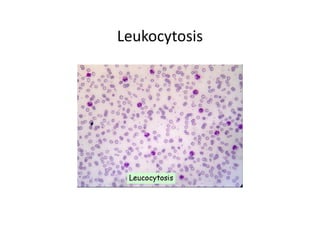
Leukocytosis
Physiological causes of Leukocytosis
• Newborn infants
• Food intake
• Exercise
• Pregnancy
• Sun exposure
Neutrophilia
• Acute infections: Especially localised infections
due to Cocci(Streptococci, Staphylococci)
• Burns, acute hemorrhage, hemolysis, trauma,
surgery
• Tissue necrosis: Myocardial infarction, pulmonary
infarction
• Drugs: glucocorticoids
• Physiological causes: Muscular exercise, stress,
after meals, pregnancy
Eosinophilia
• Allergic conditions: Asthma, urticaria, eczema,
hay fever, food sensitivity
• Parasitic infections: hook worm, tape worm
• Drugs: Aspirin
• Tropical pulmonary eosinophilia
Basophilia
• Viral infections: Influenza
• Alllergic diseases
Monocytosis
• Malaria, kala azar, Rheumatoid arthritis,
Leukemia
Lymphocytosis
• Infants &children, whooping cough, viral
infections, autoimmune diseases
• Chronic infections: TB, Hepatitis, chronic
cholecystitis, chronic pancreatitis
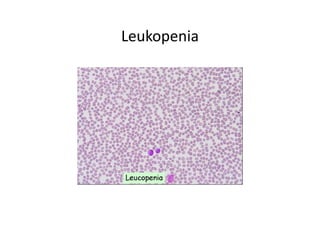
Leukopenia
Physiological causes of leukopenia
• Exposure to extreme cold
Neutropenia
• Typhoid & Paratyphoid infections
• Viral: Influenza
• AIDS
• Kala azar
• Bone marrow depression: Chloremphenicol,
aspirin & radiations
• Autoimmune disease
Eosinopenia
• Acute stressful illness
• ACTH & glucocorticoid treatment
• Acute pyogenic conditions
Basopenia
• Acute pyogenic infections
• Glucocorticoid treatment
Monocytopenia
• Bone marrow depression
Lymphocytopenia
• Steroid treatment
Leukemia
Uncontrolled production of WBCs caused by
cancerous mutation of a myelogenous or
lymphogenous cell
Types
• Lymphocytic
• Myelogenous
Effects of leukemia on the body
• Metastatic growth of leukemic cells in
abnormal areas of the body
Eg bone invasion leading to pain, easy fractures
• Spread to spleen, lymph nodes, liver & other
vascular regions
• Infections
• Severe anemia
• Bleeding tendency
Host defense system
• Immune mechanisms
Antigen specific response
Generally takes several days
Key feature is memory for the antigen and a
subsequent fulminant response
• Non immune mechanisms(Inflammation)
Not antigen specific
Immediate response beginning within minutes of
an insult
No memory
Immunity
• Innate immunity
• Acquired( adaptive) immunity
B cell mediated (Humoral)immunity
T cell mediated(Cellular) immunity
Innate immunity
• Barriers
• Phagocytosis
• Activation of complement system
• Release of interferons
• Production of antibacterial peptides
• Other proteolytic cascades
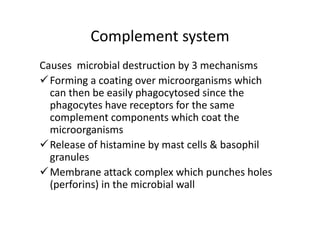
Complement system
• Consists of about 20 proteins
• Activation via 3 different pathways
• Classical pathway: Triggered by immune
complexes
• Mannose binding lectin pathway: Triggered
when lectin binds mannose group in the
bacteria
• Alternative/ Properdin pathway: Triggered by
various viruses, bacteria, fungi & tumour cells
Complement system
Causes microbial destruction by 3 mechanisms
Forming a coating over microorganisms which
can then be easily phagocytosed since the
phagocytes have receptors for the same
complement components which coat the
microorganisms
Release of histamine by mast cells & basophil
granules
Membrane attack complex which punches holes
(perforins) in the microbial wall

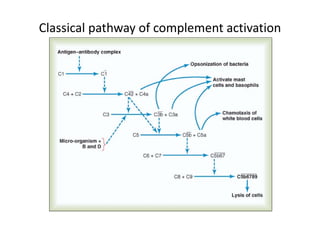
Classical pathway of complement activation
Interferons
• Released by virally infected cells
Functions
Form a protective ring of uninfected cells
thereby limiting the spread of infection
Inhibit protein synthesis by interfering with
translation and degradation of mRNA
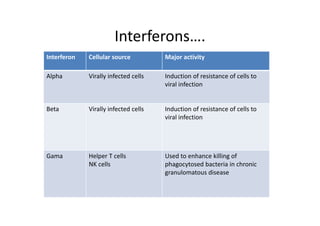
Interferons….
Interferon Cellular source Major activity
Alpha Virally infected cells Induction of resistance of cells to
viral infection
Beta Virally infected cells Induction of resistance of cells to
viral infection
Gama Helper T cells Used to enhance killing of
NK cells phagocytosed bacteria in chronic
granulomatous disease
Cells mediating innate immunity
• Neutrophils
• Macrophages
• Natural killer cells(NK cells): Large
lymphocytes that are not T cells but are
cytotoxic
Natural killer cells
• Kill virally infected and tumour cells
• They have receptors for certain glycoproteins
which appear on the surface of some virally
infected cells
• Surface receptor KIR (Killer Inhibitory Receptor)
interacts with HLA class I molecules on the
surface of normal cells.
• Cancerous cells have modified ligands which do
not bind properly with the receptor therefore the
NK cells kill them
Major histocomptibility complex(MHC)
MHC gene is situated in a cluster of loci on
chromosome 6
Its products the cell surface molecules are of 2
classes I &II
Term MHC is given because antigenic
determinants on these 2 classes determine
whether the organ or tissue transplants are
recognised as self or foreign and thus are
accepted or rejected
Human leukocyte antigen(HLA)
• In humans the MHC is referred to as HLA because
it was first recognized by analyzing patterns of
reactions of peripheral blood lymphocytes with
sera containing antibodies to leukocytes
• HLA class I: Comprises A, B, C loci
• HLA class II: Comprises DR, DQ, DP loci
• HLA class III: Comprises complement region
containing genes for complement components C2
& C4 of classical pathway, properdin factor B of
alternate pathway & TNF alpha & beta
Acquired immunity
• Cytokines released from the cells mediating
innate immunity activate cells of the acquired
immune system
• Cellular immunity
Mediated by T lymphocytes
Responsible for delayed allergic reactions and
rejection of transplants of foreign tissue
• Humoral immunity
Mediated by circulating immuglobulin antibodies
in the gamma globulin fraction of plasma proteins
Major defense against bacterial infections
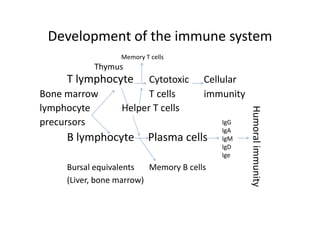
Development of the immune system
B lymphocyte Plasma cells IgM
Memory T cells
Thymus
T lymphocyte Cytotoxic Cellular
Bone marrow
Helper T cells
T cells immunity
lymphocyte
precursors IgG
IgA
IgD
Ige
Humoral
immunity
Bursal equivalents Memory B cells
(Liver, bone marrow)
“Self recognition process” ‐ Burnet
• All potentially antigenic material encountered
in fetal life whether ‘self’ or ‘not self’ elicits no
response either then or subsequently.
Clonal selection theory‐ Burnet
• It proposes that certain lymphocytes known as
immunologically competent are genetically
endowed with the capacity to respond to one
or very few molecules of specific antigenic
pattern by making antibodies against that
pattern
• Antigenic stimulation thus produces a “clone”
of cells , all of similar specific reactivity
Immune tolerance
• Ehrlich: First to emphasize that animals do not
usually make any immunological response to
their own plasma proteins or tissue cells although
they are excellent antigens in other species
• Burnet & Fenner: Proposed an explanation
In utero during the period of immunological
immaturity all the potential antigens that the
lymphocytes come in contact are recognized as
“self”
T lymphocyte : Ontogeny & functions
T cell precursors(Bone marrow)
Extreme high rate of division(Thymic Cortex)
Early thymocyte (Majority die within thymic
cortex)
Minority migrate to medulla of thymus & undergo
differentiation
Possess a T cell surface antigen receptor which
has following recognition properties
T lymphocyte : Ontogeny & functions…
Properties of T cell surface antigen
• Distinguishes between foreign MHC proteins & self
MHC proteins reacting with the former and tolerating
the latter
• The receptor does not react with a self MHC protein in
the absence of antigen but it recognizes & reacts with a
complex made up of an antigen derived peptide bound
to a self MHC protein
• The receptor of each T cell will be clonotypic, i.e. will
recognize only a single specific immunological
determinant (epitope) of an antigen derived peptide
bound to an MHC protein
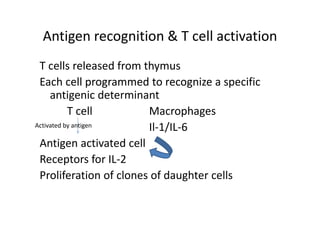
Antigen recognition & T cell activation
T cells released from thymus
Each cell programmed to recognize a specific
antigenic determinant
T cell Macrophages
Activated by antigen Il‐1/IL‐6
Antigen activated cell
Receptors for IL‐2
Proliferation of clones of daughter cells
T lymphocyte : Ontogeny & functions…
Effector functions
• Helper T cells help B cells to secrete antibody
• Helper T cells mediate delayed
hypersensitivity reactions
• Suppressor T cells keep immune responses
from escaping control by damping the
proliferation & differentiation of antibody
producing B cells & cytotoxic T cells
• Activated T cells secrete lymphokines
Types and functions of T lymphocytes
• Cytotoxic T cells: Destroy transplanted & other foreign
cells
• Helper T cells: Help in the development of the former
 TH1 cells: secrete IL‐2 & gamma interferon, concerned
primarily with cellular immunity
 TH2 cells: Secrete IL‐4 & IL‐5, interact primarily with B
cells in relation to humoral immunity
• Memory T cells: Produce an accelerated response to a
second exposure of antigen
• Suppressor T cells: Help in immune tolerance
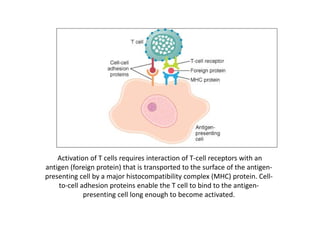
Activation of T cells requires interaction of T‐cell receptors with an
antigen (foreign protein) that is transported to the surface of the antigen‐
presenting cell by a major histocompatibility complex (MHC) protein. Cell‐
to‐cell adhesion proteins enable the T cell to bind to the antigen‐
presenting cell long enough to become activated.
MHC restriction
• T cells respond to antigen on the macrophages
& other cells only when they are presented
along with the self MHC antigen
• CD4 positive lymphocyte(Helper T cells)
recognize class II antigen
• CD 8 positive lymphocytes(Cytotoxic T cells)
recognize class I antigen
HLA antigens and their role
• HLA class I
Found on the surface of virtually all nucleated cells
Principal antigens responsible for graft rejection & cell
mediated cytolysis
• HLA class II
Found only on cells of immune system‐ macrophages,
dendritic cells, activated T cells & B cells
Responsible for graft vs host response & immediate
leukocyte reactions
• HLA class III
Heterogenous
HLA antigens and their role…
• The MHC system was originally identified in the
context of transplantation which is an artificial
event
• In the natural state they serve as
Cell surface markers: that help infected cells to
signal cytotoxic & helper T cells
Enormous polymorphism of MHC gene helps
maximize protection against mirobial infections
Increase the specificity of the self antigen thus it
prevents microbes with similar genetic makeup to
sneak past by molecular mimicry
B cell ontogeny & functions
B cell differentiation from precursor to plasma cell occurs
in 2 phases
 Non antigen driven phase: Occurs within central
lymphoid tissue
Very rapid cell division & rapid cell death also
• Rearranement of a functional gene for the heavy
chain(IgM)
• Synthesis of a heavy chain of IgM
• Rearrangement of a gene for light chain synthesis
• Synthesis of light chain
• Next a second class of heavy chain (IgG) is also made
B cell ontogeny & functions…
Antigen dependent phase
Occurs in peripheral lymphoid tissue
Programmed to recognize antigen in the presence
of cytokines from activated T cells and
macrophages
This leads to formation of
• IgM secreting cell
• Another B cell whose surface IgM &IgD are
replaced with surface IgG, IgA or IgE
• B cell memory pool
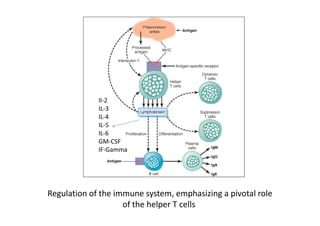
Regulation of the immune system, emphasizing a pivotal role
of the helper T cells
Il‐2
IL‐3
IL‐4
IL‐5
IL‐6
GM‐CSF
IF‐Gamma
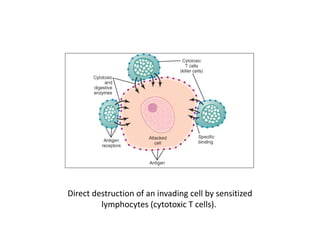
Direct destruction of an invading cell by sensitized
lymphocytes (cytotoxic T cells).
Types and functions of B lymphocytes
• Plasma cells which form antibodies
• Memory B cells
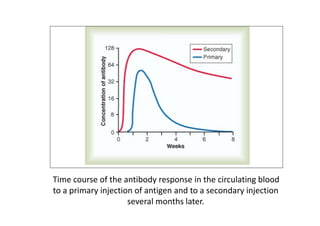
Time course of the antibody response in the circulating blood
to a primary injection of antigen and to a secondary injection
several months later.
Nature of antibodies
• Gamma globulins
• Molecular weight: 160,000 – 970,000
• Constitute 20% of all plasma proteins
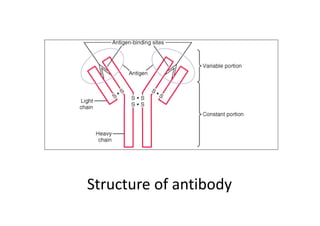
Structure of antibody
Structure of immunoglobulins
• Monomer:Basic unit : 2light+2 heavy chains
• Polymers: 2‐5 basic units + J chain that holds
the units together
• Amino acids of L and H chains form loops known
as domains
• Variable region : NH2 terminal
• Hypervariable region: amino acid sequences
unique to that polypeptide chain
• Constant portion: carboxy terminal
Structure of immunoglobulins….
• Two types of light chains: kappa and lambda
• Five types of heavy chains
• Ig G: Subtypes γ 1, γ2, γ3, γ4
• Ig A: Subtypes α1, α2
• Ig M: Subtypes µ1, µ2
• Ig D: δ
• Ig E: ε
Structure of antibody
Constant portion determines:
• Diffusivity of the antibody
• Adherence to specific structures within tissues
• Attachment to complement complex
• Passage through membranes
Variable portion determines:
• Specificity to a particular type of antigen
Specificity of antibodies
• Due to unique structural organization of amino acids in
the variable portion of both the light & heavy chain
• The amino acid organization has a different stearic
shape for each antigen
• A highly specific antibody is strongly held to the
antigen by several bonds
 Hydrophobic bond
 Hydrogen bond
 Ionic bond
 Van der Waals forces
Cytokines
• Hormone like molecules
• Secreted by: Lymphocytes, macrophages,
endothelial cells, neurons, glial cells
• Eg. IL1, IL2, IL4, IL5, IL6, Il8, IL11, IL12, TNF‐alpha
• Actions
Autocrine
Paracrine
Endocrine
Emperical categorization
• Immunoregulatory cytokines: Involved in activation
growth & differentiation of Lymphocytes & Monocytes
Eg. IL‐2, IL‐4, TGF‐beta
• Proinflammatory cytokines: Produced predominantly
by mononuclear phagocytes in response to infectious
agents
Eg. IL‐1, TNF alpha, IL‐6, IL‐8
• Regulating immature leukocyte growth &
differentiation
Eg. IL‐3, IL‐7, GM‐CSF
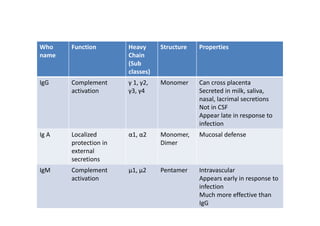
Who
name
Function Heavy
Chain
Structure Properties
(Sub
classes)
IgG Complement
activation
γ 1, γ2,
γ3, γ4
Monomer Can cross placenta
Secreted in milk, saliva,
nasal, lacrimal secretions
Not in CSF
Appear late in response to
infection
Ig A Localized
protection in
external
α1, α2 Monomer,
Dimer
Mucosal defense
secretions
IgM Complement
activation
µ1, µ2 Pentamer Intravascular
Appears early in response to
infection
Much more effective than
IgG
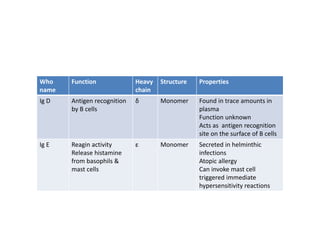
Who
name
Function Heavy
chain
Structure Properties
Ig D Antigen recognition
by B cells
δ Monomer Found in trace amounts in
plasma
Function unknown
Acts as antigen recognition
site on the surface of B cells
Ig E Reagin activity
Release histamine
ε Monomer Secreted in helminthic
infections
from basophils &
mast cells
Atopic allergy
Can invoke mast cell
triggered immediate
hypersensitivity reactions
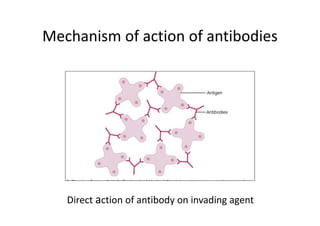
Mechanism of action of antibodies
Direct action of antibody on invading agent
Direct action
• Agglutination: Multiple large particles with
antigen on their surface are bound together in a
clump
• Precipitation: Complexes of antigen & antibody
become so large that they become insoluble
• Neutralization: The antibody covers the toxic site
of antigen
• Lysis: Potent antibodies are capable of directly
attacking membranes of pathogens and thus
causing rupture of the organism
Complement system for antibody
action
Classical pathway effects
• Opsonization & phagocytosis
• Lysis
• Agglutination
• Neutralization
• Chemotaxis
• Activation of mast cells & basophils
• Inflammatory effects
Antigen presenting cells(APC)
• Specialized cells in the lymph nodes, spleen &
Langerhan’s cells in the skin
• In APC the products of antigen digestion are complexed
to products of MHC (Major Histocompatibility Gene)
and presented on the surface of the cell
• MHC gene – chromosome 6
• Its product is a glycoprotein
• Class I antigen is found in all nucleated cells
• Class II antigen is found on APC, B & T lymphocytes
Lymphoid tissue
Embryological development
Lymphopoiesis first appears at 3 months of IUL in the fetal
liver & thymus
At birth
Thymus weighs 10‐12 g
Cell mediated immunity is well developed so that graft
rejection can occur
Peripheral lymphoid tissue( lymph nodes, spleen, gut
associated lymphoid tissue) is very slightly developed
IgA & IgE: Traces
IgM: Formed before birth & present in significant amounts
IgG: High amount but is maternally derived
Lymphoid tissue…
Central lymphoid tissue: Thymus & bone marrow
Peripheral lymphoid tissue
• Lymph nodes
• Spleen
• Ring of tonsillar tissue in oropharynx
• Submucosal accumulation of lymphocytes in the
respiratory tract, urinary tract & gut(Peyer’s
patches)
Small lymphocytes: Quiescent lymphocytes of
the peripheral lymphoid tissue
Large lymphocytes: After exposure to antigen
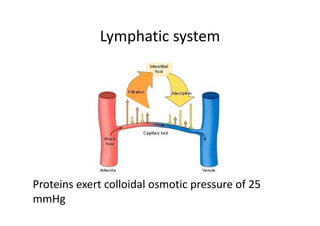
Lymphatic system
Proteins exert colloidal osmotic pressure of 25
mmHg
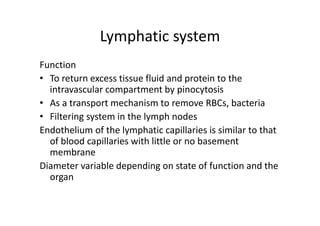
Lymphatic system
Function
• To return excess tissue fluid and protein to the
intravascular compartment by pinocytosis
• As a transport mechanism to remove RBCs, bacteria
• Filtering system in the lymph nodes
Endothelium of the lymphatic capillaries is similar to that
of blood capillaries with little or no basement
membrane
Diameter variable depending on state of function and the
organ
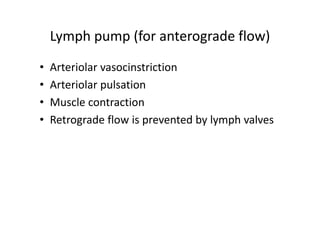
Lymph pump (for anterograde flow)
• Arteriolar vasocinstriction
• Arteriolar pulsation
• Muscle contraction
• Retrograde flow is prevented by lymph valves
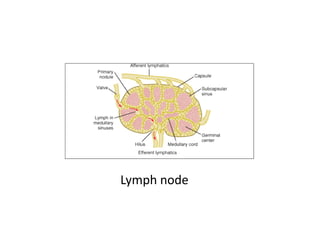
Lymph node
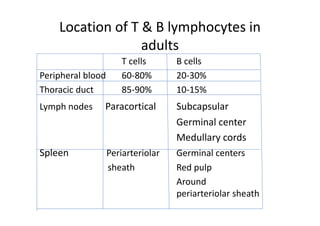
Location of T & B lymphocytes in
adults
T cells B cells
Peripheral blood 60‐80% 20‐30%
Thoracic duct 85‐90% 10‐15%
Lymph nodes Paracortical Subcapsular
Germinal center
Medullary cords
Spleen Periarteriolar
sheath
Germinal centers
Red pulp
Around
periarteriolar sheath
• Lymphatics are most abundant on the
undersurface of the diaphragm
• Lymphatic system exists in all organd except
CNS
Cornea
Composition of lymph
• Protein concentration lower than plasma
• All clotting factors present , some synthesised by the
liver are in higher concentration in the Hepatic lymph
• Antibodies
• Electrolyte concentration : Positive ions are slightly less
and negative ions are slightly more
• Lipids: Chylomicrons will be higher after a fatty meal
• Cells: Lymphocytes, monoctye/macrophage,
granulocyte
• Clonal anergy/ immunological silence:
When B and T lymphocytes in fetal life are
exposed to potentially antigenic materials in
the tissues, they are subsequently unable to
make a specific immune response to these
material i.e. B and T lymphocytes enter a
prolonged hyporesponsive phase
• Clonal abortion/ negative selection
Many of the not/anti self lymphocytes are
eliminated in the thymus during their early
development. Suppressor T cells keep the
development of such not self antibodies in
check
Autoimmunization
• It can occur when new antigenic material are formed
after the period of immunological immaturity
Eg spermatozoa
• Breakdown of the barrier which anatomically
segregates the potential antigen from the immuno
competent cell
Eg Brain constituents, heart, pancreas, thyroglobulin
• Breakdown of acquired tolerance and appearance of
immune reactive cells “forbidden clones” in the blood
• Deficiency of suppressor T cells
Criteria for the presence of
autoimmune disease
• Mere presence of auto antibodies or even of
sensitization does not establish the
autoimmune nature of disease
• It is necessary to show in addition that the
administration of serum antibodies or
immunologically potent cells from the lymph
node to normal animals can reproduce the
disease
Autoimmune diseases
They can be B/ T cell mediated and organ specific/
tissue specific
Eg
• Acquired hemolytic anemia: Antibody against
RBC
• Diabetes mellitus(Type I): Pancreatic B cell
antibody
• Myasthenia gravis: Antibody against nicotinic
cholinergic receptor
• Grave’s disease: Antibody against TSH receptor
Autoimmune diseases…
• Molecular mimicry
Rheumatic fever following Streptococcal throat
infection
A portion of the cardiac myosin resembles
Streptococcal M protein
Active vs passive immunity
• Active immunity: Ones own body develops
either antibodies or activated T cells in
response to invasion of the body by foreign
antigen
• Passive immunity: Develops by infusing
preformed antibodies or activated T cells or
both
Immunization by injections
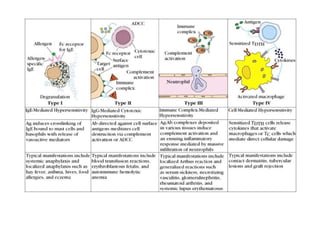
Hypersensitivity reactions
• Anaphylactic type (Immediate)
• Cytotoxic type
• Complex mediated
• Cell mediated (delayed type)
TYPE I Hypersensitivity
Classic allergy
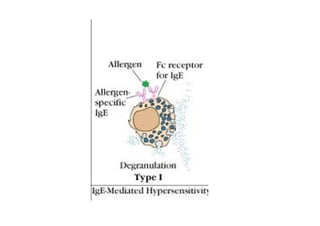
• Mediated by IgE attached to Mast cells.
• The symptoms resulting from allergic responses
are known as anaphylaxis.
• Includes: Hay fever, asthma, eczema, bee stings, food
allergies.
Allergens
• Allergens are nonparasite antigens that can
stimulate a type I hypersensitivity response.
• Allergens bind to IgE and trigger
degranulation of chemical mediators.
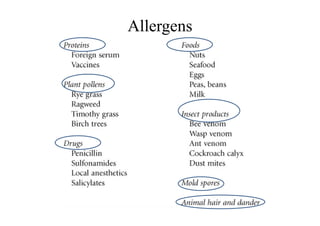
Allergens
Characteristics of allergens
• Small 15-40,000 MW proteins.
• Specific protein components
– Often enzymes.
• Low dose of allergen
• Mucosal exposure
Mechanisms of allergic response
Sensitization
• The IgE can attach to Mast cells by Fc
receptor, which increases the life span of the
IgE.
• Half-life of IgE in serum is days whereas
attached to FcR it is increased to months.
Immediate hypersensitivity
Anaphylactic type
• Introduction of specific antigens in previously
sensitized persons can produce immediate
reactions in skin and mucous membranes
• Skin: wheal & flare
• Nasal mucosa: swelling & irritation leading to
sneezing(Hay fever, allergic rhinitis)
• Bronchi & bronchioles: mucosal swelling &
increased smooth muscle tone producing
bronchial asthma characterized by great difficulty
in breathing & signs of hypoxia
Immediate hypersensitivity
Anaphylactic type
• IgE immunoglobulins strongly attach to mast
cells/ basophils
• On combining with antigen the mast cells/
basophils rupture and release
Histamine
Proteases
Slow reacting substance of anaphylaxis
Eosinophil chemotactic factor
Heparin
Platelet activating factor
Immediate hypersensitivity: Anaphylactic type…
Influence of cAMP
• Increased cAMP reduces all chemical
mediators of immediate hypersensitivity
reaction
• Drugs which raise cAMP levels antagonize
effects of antigen‐IgE interactions eg.
Isoprenaline, salbutamol, theophylline
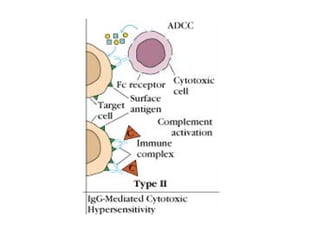
Cytotoxic type hypersensitivity
In this type antibodies bind to antigen on a cell
surface
This promote contact with phagocyte by
Reducing electrical charge on the surface
Opsonic adherence
Immune adherence in which C3 component of
complement promotes phagocytosis
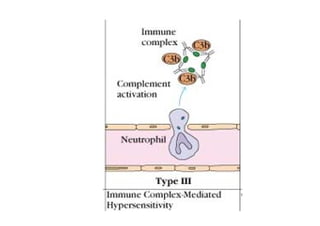
TYPE III
Antigen antibody immune complexes.
IgG mediated
Immune Complex Disease
• Large amount of antigen and antibodies form
complexes in blood.
• If not eliminated can deposit in capillaries or
joints and trigger inflammation.
TYPE III
Immune Complexes
• PMNs and macrophages bind to immune complexes via
FcR and phagocytize the complexes.
BUT
• If unable to phagocytize the immune complexes can
cause inflammation via C’ activation ---> C3a C4a, C5a
and "frustrated phagocytes".
TYPE III
Immune Complex Disease
"Frustrated Phagocytes"
• If neutrophils and macrophages are unable to
phagocytize the immune complexes these cells
will degranulate in the area of immune complex
deposition and trigger inflammation.
• Unable to eat -------try to digest outside cell.
TYPE III
Immune Complex Disease
Localized disease
• Deposited in joints causing local inflammation =
arthritis.
• Deposited in kidneys = glomerulonephritis.
•
TYPE III
Immune Complex Disease
• Serum sickness from large amounts of antigen
such as injection of foreign serum.
Serum sickness is usually transient immune complex disease
with removal of antigen source.
Delayed type hypersensitivity
Th1 cells and macrophages
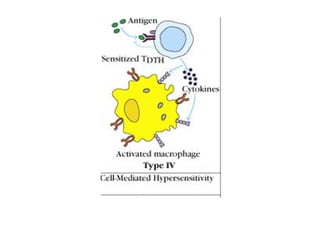
• DTH response is from:
– Th1 cells release cytokines to activate macrophages
causing inflammation and tissue damage.
– Continued macrophage activation can cause chronic
inflammation resulting in tissue lesions, scarring, and
granuloma formation.
• Delayed is relative because DTH response arise 24-72
hours after exposure rather than within minutes.
Stages of Type IV DTH
Sensitization stage
• Memory Th1 cells against DTH antigens are
generated by dendritic cells during the
sensitization stage.
• These Th1 cells can activate macrophages and
trigger inflammatory response.
Stages of Type IV DTH
Effector stage
• Secondary contact yields what we call DTH.
• Th1 memory cells are activated and produce
cytokines.
– IFN-, TNF-and TNF- which cause tissue
destruction, inflammation.
– IL-2 that activates T cells and CTLs.
– Chemokines- for macrophage recruitment.
– IL-3, GM-CSF for increased monocyte/macrophage
Stages of Type IV DTH
Effector stage
Secondary exposure to antigen
• Inflamed area becomes red and fluid filled can
form lesion.
– From tissue damage there is activation of clotting
cascades and tissue repair.
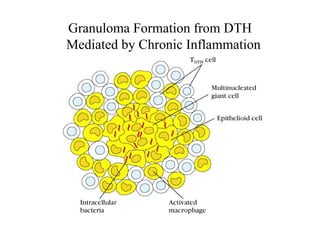
• Continued exposure to antigen can cause chronic
inflammation and result in granuloma formation.
Type IV DTH
Contact dermatitis
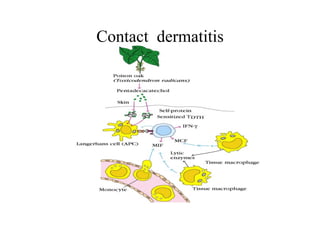
• The response to poison oak is a classic Type IV.
– Small molecules act as haptens and complex with skin
proteins to be taken up by APCs and presented to Th1
cells to get sensitization.
– During secondary exposure Th1 memory cells become
activated to cause DTH.
Contact dermatitis
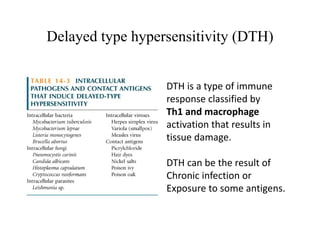
Delayed type hypersensitivity (DTH)
DTH is a type of immune
response classified by
Th1 and macrophage
activation that results in
tissue damage.
DTH can be the result of
Chronic infection or
Exposure to some antigens.
Granuloma Formation from DTH
Mediated by Chronic Inflammation
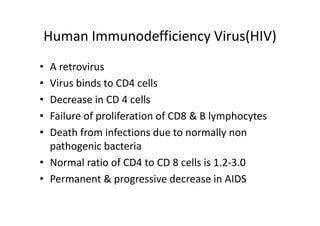
Human Immunodefficiency Virus(HIV)
• A retrovirus
• Virus binds to CD4 cells
• Decrease in CD 4 cells
• Failure of proliferation of CD8 & B lymphocytes
• Death from infections due to normally non
pathogenic bacteria
• Normal ratio of CD4 to CD 8 cells is 1.2‐3.0
• Permanent & progressive decrease in AIDS
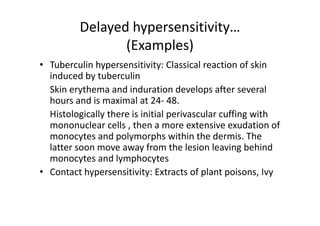
Delayed hypersensitivity…
(Examples)
• Tuberculin hypersensitivity: Classical reaction of skin
induced by tuberculin
Skin erythema and induration develops after several
hours and is maximal at 24‐ 48.
Histologically there is initial perivascular cuffing with
mononuclear cells , then a more extensive exudation of
monocytes and polymorphs within the dermis. The
latter soon move away from the lesion leaving behind
monocytes and lymphocytes
• Contact hypersensitivity: Extracts of plant poisons, Ivy
Tissue transplantation
• Allograft: Graft from one person to another
• Autograft: Skin from one part of a person to
other
• Xenograft: An organ/ tissue transplant from
one animal species to other
• Syngenic: Same genetic constitution
• Allogenic: Different genetic constitution
Allograft rejection
3 stages
Stimulus: Passenger leukocytes derived from the
donor that leave the graft & reach regional
lymph nodes
Afferent stage: Release of antigen from graft
Central stage: Activation of immune response
Efferent stage: Generation & release of humoral
& CMI effectors that bring about destruction
of graft
Allograft reaction
• An immunological response produced by the
recipient against the transplant antigen of the
graft
• For a few days: Allo & auto graft are normal
• After a week: Circulation to allograft decreases
• 2‐3 weeks: Necrosis & sloughing off
Biological significance: Ability to reject occasional
mutant cells formed during the normal course of
cell division

hematology ppt.pdf

  • 1.
  • 3.
  • 4.
  • 5.
  • 6.
    Neutrophil Cell type DiameterNucleus Cytoplasm Cytoplasmic (µm) granules Granulocyte 10‐14 Blue violet Blue Fine, closely 2‐6 lobes, connected by packed, violet‐ chromatin thread pink, not seen Seen clearly through separately cytoplasm Do not cover nucleus
  • 7.
    Neutrophil granules • Proteases:Cathepsin, phosphatases, nucleases, nucleotidases, beta glucuronidases elastase, metalloproteinase • Lysozymes • Myeloperoxidases: Catalyses conversion of Cl, Br, I to corresponding acids • NADPH oxidase: superoxide, singlet oxygen, hydrogen peroxide • Defensins: Antimocrobial antibiotics • Oxidizing agents: hydroxide, halide, hypochlorite
  • 8.
    Functions Neutrophils & macrophages •Defend against infection Degranulation
  • 9.
    Chemotactic substances • Bacterialor viral toxins • Degenerative products of inflammed tissues • Reaction products of the complement complex
  • 10.
    Phagocytosis Selection of asubstance for phagocytosis • Rough surface • Absence of protein coat • Opsonization Steps in phagocytosis • Attachment to the particle • Projecting pseudopodia all around it • Pseudopodia on opposite side fuse • Phagocytic vesicle / phagosome formed
  • 11.
    Eosinophil Cell type DiameterNucleus Cytoplasm Cytoplasmic (µm) granules Granulocy 10‐15 Blue –violet Light pink‐ Large, coarse te 2 lobes red Uniform sized Lobes connected by Brick red –orange thick chromatin strand Seen separately Seen clearly through Do not cover cytoplasm nucleus
  • 12.
    Composition of Eosinophilgranules • MBP: Major basic protein: Disrupts the membrane of parasites& • induces histamine release from • Basophils& mast cells • ECP: Eosinophilic cationic protein: Binds to heparin & neutralises its • anticoagulant activity • EDN: Eosinophil derived neurotoxin: Neurotoxin acting on myelinated nerves • EPO: Eosinophil peroxidase: A sticky protein : adheres to host cells & mast cells
  • 13.
    Functions of Eosinophils •Specialise in dealing with parasites which are too large to be phagocytosed • Chemicals released by degranulation are toxic to larvae of parasites • Also degrade histamine & inhibit mast cell degranulation. Thus they decrease the intensity of allergic reactions • Show phagocytosis but are less efficient than neutrophils • Especially abundant in the mucosa of GIT, respiratory & urinary tracts
  • 14.
  • 15.
    Basophil Cell Diameter NucleusCytoplasm Cytoplasmic type (µm) granules Granulo 10‐15 Blue‐violet Bluish Large cyte S shaped Very coarse Not clearly Variable sized seen because Deep purple overlaid with Seen separately granules Completely fill the center & cover the nucleus Granules contain •Heparin •Histamine, bradykinin, serotonin, eosinophil chemotactic factor slow reacting substance
  • 16.
    Functions of Basophils •Essential for immediate type hypersensitivity reactions eg. Urticaria, rhinitis, anaphylactic shock • IgE mediated allergies. They have receptors for the constant region of IgE molecules The allergen & the IgE molecule possibly form a complex with basophil which leads to allergic manifestations • Protection from some parasitic infections eg Scabies • Heparin release by basophils after a meal may facilitate post absorptive metabolism of dietary triglycerides by activating lipoprotein lipase
  • 17.
  • 18.
    Monocyte Cell type DiameterNucleus Cytoplasm Cytoplasmic (µm) granules Agranulocyte 12‐20 Pale blue violet Abundant No visible Large single Frosty granules Indented or Slate blue horse shoe or Amount may kidney shaped be larger than that of nucleus
  • 19.
    Functions of Moncytes/Macrophages • Major role in innate as well as acquired immunity. Become activated by lymphokines from T lymphocytes • Phagocytose micro organisms as well as inert particles • Secrete IL‐1, TNF, G‐CSF and M‐CSF • Process and present the antigen to immuno competent cells • Destroy senescent RBCs and initiate catabolism of hemoglobin
  • 20.
  • 21.
  • 22.
    Lymphocyte Cell type DiameterNucleus Cytoplasm Cytoplasmic (µm) granules Small 7‐9 Deep blue violet Hardly visible No visible Lymphocye Single, large, round, Thin crescent of clear, granules Agranulocy almost fills the cell light blue cytoplasm te Condensed lumpy chromatin , gives ink spot appearance Large 10‐15 Deep blue violet Large crescent of No visible lymphocyte Single, large, round clear, light blue granules Agranulocy or oval cytoplasm te Central or eccentric Amount larger than in small lymphocyte
  • 23.
    Functions of Lymphocytes •Directly involved in specific acquired immunity • T‐lymphocytes: Cell mediated immunity • B‐lymphocytes: Humoral immunity
  • 25.
  • 27.
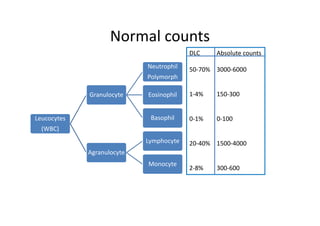
    Normal counts Leucocytes (WBC) Granulocyte Neutrophil Polymorph Eosinophil Basophil Agranulocyte Lymphocyte Monocyte DLC Absolutecounts 50‐70% 3000‐6000 1‐4% 150‐300 0‐1% 0‐100 20‐40% 1500‐4000 2‐8% 300‐600
  • 28.
  • 29.
    Factors affecting granulopoiesis •Interleukin‐1(IL‐1): Produced by Macrophages. Acts on early progenitor cells to stimulate their proliferation, & also enhances the effector function of all types of leukocytes. • Tumour necrosis factor: Produced by macrophages & has same function as IL‐1 • Granulocyte‐macrophage colony stimulating factor(GM‐CSF): Produced by fibroblasts, vascular endothelial cells & T‐lymphocytes
  • 30.
    Factors affecting granulopoiesis •Interleukin‐3(IL‐3)/ Multi‐CSF: Produced by T lymphocytes. Stimulates the proliferation of all peripheral blood cells • Granulocyte‐Colony stimulating factor(G‐CSF): Produced by monocytes, fibroblasts & endothelial cells. Stimulates proliferation of precursor cells of only ganulocyte series • Macrophage‐Colony stimulating factor(M‐CSF): Produced by macrophages, fibroblasts & endothelial cells. Specifically stimulates the proliferation of precursors of macrophages.
  • 31.
    Kinetics Precursors in thebone marrow Stem cell compartment Mitotic compartment Maturation‐storage compartment Neutrophils in blood Circulating granulocyte pool Marginal granulocyte pool
  • 32.
    Life span • Granulocytes:4‐8 hours in circulation Another 4‐5 d in tissues where they are needed • Monocytes: 10‐20 hours in blood Months –years in tissues as macrophages • Lymphocytes: weeks‐months Recirculate from the lymph nodes & other lymphoid areas to blood and back again
  • 33.
    Reticulo endothelial system/ Monocyte‐macrophagecell system • Tissue macrophages in the skin & subcutaneous tissue(Histiocytes) • Macrophages in lymph nodes • Alveolar macrophages in the Lung • Macrophages in the Liver sinusoids(Kupffer cells) • Macrophages of the Spleen & Bone marrow(Littoral cells)
  • 34.
    Function of RES TheRES acts as a physiological unity • Ingest & destroy RBCs and form & release blilrubin • Also destroy leukocytes & platelets • Ingest bacteria • Ingest & process antigen which then stimulates antibody formation in the plasma cells
  • 35.
    Inflammation: Role ofNeutrophil & Macrophages • First line of defence: Tissue macrophage, within first hour or so • Second line of defence: Neutrophil invasion, within few hours & increase in the number of neutrophils in blood • Third line of defence:Secondary macrophage invasion, within days • Fourth line of defence: Increased production of granulocytes & monocytes
  • 36.
    Feedback control ofMacrophage & Neutrophil response • TNF α • IL‐1 • GM‐CSF • G‐CSF • M‐CSF
  • 37.
  • 38.
    Physiological causes ofLeukocytosis • Newborn infants • Food intake • Exercise • Pregnancy • Sun exposure
  • 39.
    Neutrophilia • Acute infections:Especially localised infections due to Cocci(Streptococci, Staphylococci) • Burns, acute hemorrhage, hemolysis, trauma, surgery • Tissue necrosis: Myocardial infarction, pulmonary infarction • Drugs: glucocorticoids • Physiological causes: Muscular exercise, stress, after meals, pregnancy
  • 40.
    Eosinophilia • Allergic conditions:Asthma, urticaria, eczema, hay fever, food sensitivity • Parasitic infections: hook worm, tape worm • Drugs: Aspirin • Tropical pulmonary eosinophilia Basophilia • Viral infections: Influenza • Alllergic diseases
  • 41.
    Monocytosis • Malaria, kalaazar, Rheumatoid arthritis, Leukemia Lymphocytosis • Infants &children, whooping cough, viral infections, autoimmune diseases • Chronic infections: TB, Hepatitis, chronic cholecystitis, chronic pancreatitis
  • 42.
  • 43.
    Physiological causes ofleukopenia • Exposure to extreme cold
  • 44.
    Neutropenia • Typhoid &Paratyphoid infections • Viral: Influenza • AIDS • Kala azar • Bone marrow depression: Chloremphenicol, aspirin & radiations • Autoimmune disease
  • 45.
    Eosinopenia • Acute stressfulillness • ACTH & glucocorticoid treatment • Acute pyogenic conditions Basopenia • Acute pyogenic infections • Glucocorticoid treatment
  • 46.
    Monocytopenia • Bone marrowdepression Lymphocytopenia • Steroid treatment
  • 47.
    Leukemia Uncontrolled production ofWBCs caused by cancerous mutation of a myelogenous or lymphogenous cell Types • Lymphocytic • Myelogenous
  • 48.
    Effects of leukemiaon the body • Metastatic growth of leukemic cells in abnormal areas of the body Eg bone invasion leading to pain, easy fractures • Spread to spleen, lymph nodes, liver & other vascular regions • Infections • Severe anemia • Bleeding tendency
  • 49.
    Host defense system •Immune mechanisms Antigen specific response Generally takes several days Key feature is memory for the antigen and a subsequent fulminant response • Non immune mechanisms(Inflammation) Not antigen specific Immediate response beginning within minutes of an insult No memory
  • 50.
    Immunity • Innate immunity •Acquired( adaptive) immunity B cell mediated (Humoral)immunity T cell mediated(Cellular) immunity
  • 51.
    Innate immunity • Barriers •Phagocytosis • Activation of complement system • Release of interferons • Production of antibacterial peptides • Other proteolytic cascades
  • 52.
    Complement system • Consistsof about 20 proteins • Activation via 3 different pathways • Classical pathway: Triggered by immune complexes • Mannose binding lectin pathway: Triggered when lectin binds mannose group in the bacteria • Alternative/ Properdin pathway: Triggered by various viruses, bacteria, fungi & tumour cells
  • 53.
    Complement system Causes microbialdestruction by 3 mechanisms Forming a coating over microorganisms which can then be easily phagocytosed since the phagocytes have receptors for the same complement components which coat the microorganisms Release of histamine by mast cells & basophil granules Membrane attack complex which punches holes (perforins) in the microbial wall
  • 54.
    Classical pathway ofcomplement activation
  • 55.
    Interferons • Released byvirally infected cells Functions Form a protective ring of uninfected cells thereby limiting the spread of infection Inhibit protein synthesis by interfering with translation and degradation of mRNA
  • 56.
    Interferons…. Interferon Cellular sourceMajor activity Alpha Virally infected cells Induction of resistance of cells to viral infection Beta Virally infected cells Induction of resistance of cells to viral infection Gama Helper T cells Used to enhance killing of NK cells phagocytosed bacteria in chronic granulomatous disease
  • 57.
    Cells mediating innateimmunity • Neutrophils • Macrophages • Natural killer cells(NK cells): Large lymphocytes that are not T cells but are cytotoxic
  • 58.
    Natural killer cells •Kill virally infected and tumour cells • They have receptors for certain glycoproteins which appear on the surface of some virally infected cells • Surface receptor KIR (Killer Inhibitory Receptor) interacts with HLA class I molecules on the surface of normal cells. • Cancerous cells have modified ligands which do not bind properly with the receptor therefore the NK cells kill them
  • 59.
    Major histocomptibility complex(MHC) MHCgene is situated in a cluster of loci on chromosome 6 Its products the cell surface molecules are of 2 classes I &II Term MHC is given because antigenic determinants on these 2 classes determine whether the organ or tissue transplants are recognised as self or foreign and thus are accepted or rejected
  • 60.
    Human leukocyte antigen(HLA) •In humans the MHC is referred to as HLA because it was first recognized by analyzing patterns of reactions of peripheral blood lymphocytes with sera containing antibodies to leukocytes • HLA class I: Comprises A, B, C loci • HLA class II: Comprises DR, DQ, DP loci • HLA class III: Comprises complement region containing genes for complement components C2 & C4 of classical pathway, properdin factor B of alternate pathway & TNF alpha & beta
  • 61.
    Acquired immunity • Cytokinesreleased from the cells mediating innate immunity activate cells of the acquired immune system
  • 62.
    • Cellular immunity Mediatedby T lymphocytes Responsible for delayed allergic reactions and rejection of transplants of foreign tissue • Humoral immunity Mediated by circulating immuglobulin antibodies in the gamma globulin fraction of plasma proteins Major defense against bacterial infections
  • 63.
    Development of theimmune system B lymphocyte Plasma cells IgM Memory T cells Thymus T lymphocyte Cytotoxic Cellular Bone marrow Helper T cells T cells immunity lymphocyte precursors IgG IgA IgD Ige Humoral immunity Bursal equivalents Memory B cells (Liver, bone marrow)
  • 64.
    “Self recognition process”‐ Burnet • All potentially antigenic material encountered in fetal life whether ‘self’ or ‘not self’ elicits no response either then or subsequently.
  • 65.
    Clonal selection theory‐Burnet • It proposes that certain lymphocytes known as immunologically competent are genetically endowed with the capacity to respond to one or very few molecules of specific antigenic pattern by making antibodies against that pattern • Antigenic stimulation thus produces a “clone” of cells , all of similar specific reactivity
  • 66.
    Immune tolerance • Ehrlich:First to emphasize that animals do not usually make any immunological response to their own plasma proteins or tissue cells although they are excellent antigens in other species • Burnet & Fenner: Proposed an explanation In utero during the period of immunological immaturity all the potential antigens that the lymphocytes come in contact are recognized as “self”
  • 67.
    T lymphocyte :Ontogeny & functions T cell precursors(Bone marrow) Extreme high rate of division(Thymic Cortex) Early thymocyte (Majority die within thymic cortex) Minority migrate to medulla of thymus & undergo differentiation Possess a T cell surface antigen receptor which has following recognition properties
  • 68.
    T lymphocyte :Ontogeny & functions… Properties of T cell surface antigen • Distinguishes between foreign MHC proteins & self MHC proteins reacting with the former and tolerating the latter • The receptor does not react with a self MHC protein in the absence of antigen but it recognizes & reacts with a complex made up of an antigen derived peptide bound to a self MHC protein • The receptor of each T cell will be clonotypic, i.e. will recognize only a single specific immunological determinant (epitope) of an antigen derived peptide bound to an MHC protein
  • 69.
    Antigen recognition &T cell activation T cells released from thymus Each cell programmed to recognize a specific antigenic determinant T cell Macrophages Activated by antigen Il‐1/IL‐6 Antigen activated cell Receptors for IL‐2 Proliferation of clones of daughter cells
  • 70.
    T lymphocyte :Ontogeny & functions… Effector functions • Helper T cells help B cells to secrete antibody • Helper T cells mediate delayed hypersensitivity reactions • Suppressor T cells keep immune responses from escaping control by damping the proliferation & differentiation of antibody producing B cells & cytotoxic T cells • Activated T cells secrete lymphokines
  • 71.
    Types and functionsof T lymphocytes • Cytotoxic T cells: Destroy transplanted & other foreign cells • Helper T cells: Help in the development of the former  TH1 cells: secrete IL‐2 & gamma interferon, concerned primarily with cellular immunity  TH2 cells: Secrete IL‐4 & IL‐5, interact primarily with B cells in relation to humoral immunity • Memory T cells: Produce an accelerated response to a second exposure of antigen • Suppressor T cells: Help in immune tolerance
  • 72.
    Activation of Tcells requires interaction of T‐cell receptors with an antigen (foreign protein) that is transported to the surface of the antigen‐ presenting cell by a major histocompatibility complex (MHC) protein. Cell‐ to‐cell adhesion proteins enable the T cell to bind to the antigen‐ presenting cell long enough to become activated.
  • 73.
    MHC restriction • Tcells respond to antigen on the macrophages & other cells only when they are presented along with the self MHC antigen • CD4 positive lymphocyte(Helper T cells) recognize class II antigen • CD 8 positive lymphocytes(Cytotoxic T cells) recognize class I antigen
  • 74.
    HLA antigens andtheir role • HLA class I Found on the surface of virtually all nucleated cells Principal antigens responsible for graft rejection & cell mediated cytolysis • HLA class II Found only on cells of immune system‐ macrophages, dendritic cells, activated T cells & B cells Responsible for graft vs host response & immediate leukocyte reactions • HLA class III Heterogenous
  • 75.
    HLA antigens andtheir role… • The MHC system was originally identified in the context of transplantation which is an artificial event • In the natural state they serve as Cell surface markers: that help infected cells to signal cytotoxic & helper T cells Enormous polymorphism of MHC gene helps maximize protection against mirobial infections Increase the specificity of the self antigen thus it prevents microbes with similar genetic makeup to sneak past by molecular mimicry
  • 76.
    B cell ontogeny& functions B cell differentiation from precursor to plasma cell occurs in 2 phases  Non antigen driven phase: Occurs within central lymphoid tissue Very rapid cell division & rapid cell death also • Rearranement of a functional gene for the heavy chain(IgM) • Synthesis of a heavy chain of IgM • Rearrangement of a gene for light chain synthesis • Synthesis of light chain • Next a second class of heavy chain (IgG) is also made
  • 77.
    B cell ontogeny& functions… Antigen dependent phase Occurs in peripheral lymphoid tissue Programmed to recognize antigen in the presence of cytokines from activated T cells and macrophages This leads to formation of • IgM secreting cell • Another B cell whose surface IgM &IgD are replaced with surface IgG, IgA or IgE • B cell memory pool
  • 78.
    Regulation of theimmune system, emphasizing a pivotal role of the helper T cells Il‐2 IL‐3 IL‐4 IL‐5 IL‐6 GM‐CSF IF‐Gamma
  • 79.
    Direct destruction ofan invading cell by sensitized lymphocytes (cytotoxic T cells).
  • 80.
    Types and functionsof B lymphocytes • Plasma cells which form antibodies • Memory B cells
  • 81.
    Time course ofthe antibody response in the circulating blood to a primary injection of antigen and to a secondary injection several months later.
  • 82.
    Nature of antibodies •Gamma globulins • Molecular weight: 160,000 – 970,000 • Constitute 20% of all plasma proteins
  • 83.
  • 84.
    Structure of immunoglobulins •Monomer:Basic unit : 2light+2 heavy chains • Polymers: 2‐5 basic units + J chain that holds the units together • Amino acids of L and H chains form loops known as domains • Variable region : NH2 terminal • Hypervariable region: amino acid sequences unique to that polypeptide chain • Constant portion: carboxy terminal
  • 85.
    Structure of immunoglobulins…. •Two types of light chains: kappa and lambda • Five types of heavy chains • Ig G: Subtypes γ 1, γ2, γ3, γ4 • Ig A: Subtypes α1, α2 • Ig M: Subtypes µ1, µ2 • Ig D: δ • Ig E: ε
  • 86.
    Structure of antibody Constantportion determines: • Diffusivity of the antibody • Adherence to specific structures within tissues • Attachment to complement complex • Passage through membranes Variable portion determines: • Specificity to a particular type of antigen
  • 87.
    Specificity of antibodies •Due to unique structural organization of amino acids in the variable portion of both the light & heavy chain • The amino acid organization has a different stearic shape for each antigen • A highly specific antibody is strongly held to the antigen by several bonds  Hydrophobic bond  Hydrogen bond  Ionic bond  Van der Waals forces
  • 88.
    Cytokines • Hormone likemolecules • Secreted by: Lymphocytes, macrophages, endothelial cells, neurons, glial cells • Eg. IL1, IL2, IL4, IL5, IL6, Il8, IL11, IL12, TNF‐alpha • Actions Autocrine Paracrine Endocrine Emperical categorization
  • 89.
    Emperical categorization • Immunoregulatorycytokines: Involved in activation growth & differentiation of Lymphocytes & Monocytes Eg. IL‐2, IL‐4, TGF‐beta • Proinflammatory cytokines: Produced predominantly by mononuclear phagocytes in response to infectious agents Eg. IL‐1, TNF alpha, IL‐6, IL‐8 • Regulating immature leukocyte growth & differentiation Eg. IL‐3, IL‐7, GM‐CSF
  • 90.
    Who name Function Heavy Chain Structure Properties (Sub classes) IgGComplement activation γ 1, γ2, γ3, γ4 Monomer Can cross placenta Secreted in milk, saliva, nasal, lacrimal secretions Not in CSF Appear late in response to infection Ig A Localized protection in external α1, α2 Monomer, Dimer Mucosal defense secretions IgM Complement activation µ1, µ2 Pentamer Intravascular Appears early in response to infection Much more effective than IgG
  • 91.
    Who name Function Heavy chain Structure Properties IgD Antigen recognition by B cells δ Monomer Found in trace amounts in plasma Function unknown Acts as antigen recognition site on the surface of B cells Ig E Reagin activity Release histamine ε Monomer Secreted in helminthic infections from basophils & mast cells Atopic allergy Can invoke mast cell triggered immediate hypersensitivity reactions
  • 92.
    Mechanism of actionof antibodies Direct action of antibody on invading agent
  • 93.
    Direct action • Agglutination:Multiple large particles with antigen on their surface are bound together in a clump • Precipitation: Complexes of antigen & antibody become so large that they become insoluble • Neutralization: The antibody covers the toxic site of antigen • Lysis: Potent antibodies are capable of directly attacking membranes of pathogens and thus causing rupture of the organism
  • 94.
    Complement system forantibody action Classical pathway effects • Opsonization & phagocytosis • Lysis • Agglutination • Neutralization • Chemotaxis • Activation of mast cells & basophils • Inflammatory effects
  • 95.
    Antigen presenting cells(APC) •Specialized cells in the lymph nodes, spleen & Langerhan’s cells in the skin • In APC the products of antigen digestion are complexed to products of MHC (Major Histocompatibility Gene) and presented on the surface of the cell • MHC gene – chromosome 6 • Its product is a glycoprotein • Class I antigen is found in all nucleated cells • Class II antigen is found on APC, B & T lymphocytes
  • 96.
    Lymphoid tissue Embryological development Lymphopoiesisfirst appears at 3 months of IUL in the fetal liver & thymus At birth Thymus weighs 10‐12 g Cell mediated immunity is well developed so that graft rejection can occur Peripheral lymphoid tissue( lymph nodes, spleen, gut associated lymphoid tissue) is very slightly developed IgA & IgE: Traces IgM: Formed before birth & present in significant amounts IgG: High amount but is maternally derived
  • 97.
    Lymphoid tissue… Central lymphoidtissue: Thymus & bone marrow Peripheral lymphoid tissue • Lymph nodes • Spleen • Ring of tonsillar tissue in oropharynx • Submucosal accumulation of lymphocytes in the respiratory tract, urinary tract & gut(Peyer’s patches)
  • 98.
    Small lymphocytes: Quiescentlymphocytes of the peripheral lymphoid tissue Large lymphocytes: After exposure to antigen
  • 100.
    Lymphatic system Proteins exertcolloidal osmotic pressure of 25 mmHg
  • 101.
    Lymphatic system Function • Toreturn excess tissue fluid and protein to the intravascular compartment by pinocytosis • As a transport mechanism to remove RBCs, bacteria • Filtering system in the lymph nodes Endothelium of the lymphatic capillaries is similar to that of blood capillaries with little or no basement membrane Diameter variable depending on state of function and the organ
  • 102.
    Lymph pump (foranterograde flow) • Arteriolar vasocinstriction • Arteriolar pulsation • Muscle contraction • Retrograde flow is prevented by lymph valves
  • 103.
  • 104.
    Location of T& B lymphocytes in adults T cells B cells Peripheral blood 60‐80% 20‐30% Thoracic duct 85‐90% 10‐15% Lymph nodes Paracortical Subcapsular Germinal center Medullary cords Spleen Periarteriolar sheath Germinal centers Red pulp Around periarteriolar sheath
  • 105.
    • Lymphatics aremost abundant on the undersurface of the diaphragm • Lymphatic system exists in all organd except CNS Cornea
  • 106.
    Composition of lymph •Protein concentration lower than plasma • All clotting factors present , some synthesised by the liver are in higher concentration in the Hepatic lymph • Antibodies • Electrolyte concentration : Positive ions are slightly less and negative ions are slightly more • Lipids: Chylomicrons will be higher after a fatty meal • Cells: Lymphocytes, monoctye/macrophage, granulocyte
  • 107.
    • Clonal anergy/immunological silence: When B and T lymphocytes in fetal life are exposed to potentially antigenic materials in the tissues, they are subsequently unable to make a specific immune response to these material i.e. B and T lymphocytes enter a prolonged hyporesponsive phase
  • 108.
    • Clonal abortion/negative selection Many of the not/anti self lymphocytes are eliminated in the thymus during their early development. Suppressor T cells keep the development of such not self antibodies in check
  • 109.
    Autoimmunization • It canoccur when new antigenic material are formed after the period of immunological immaturity Eg spermatozoa • Breakdown of the barrier which anatomically segregates the potential antigen from the immuno competent cell Eg Brain constituents, heart, pancreas, thyroglobulin • Breakdown of acquired tolerance and appearance of immune reactive cells “forbidden clones” in the blood • Deficiency of suppressor T cells
  • 110.
    Criteria for thepresence of autoimmune disease • Mere presence of auto antibodies or even of sensitization does not establish the autoimmune nature of disease • It is necessary to show in addition that the administration of serum antibodies or immunologically potent cells from the lymph node to normal animals can reproduce the disease
  • 111.
    Autoimmune diseases They canbe B/ T cell mediated and organ specific/ tissue specific Eg • Acquired hemolytic anemia: Antibody against RBC • Diabetes mellitus(Type I): Pancreatic B cell antibody • Myasthenia gravis: Antibody against nicotinic cholinergic receptor • Grave’s disease: Antibody against TSH receptor
  • 112.
    Autoimmune diseases… • Molecularmimicry Rheumatic fever following Streptococcal throat infection A portion of the cardiac myosin resembles Streptococcal M protein
  • 113.
    Active vs passiveimmunity • Active immunity: Ones own body develops either antibodies or activated T cells in response to invasion of the body by foreign antigen • Passive immunity: Develops by infusing preformed antibodies or activated T cells or both
  • 114.
  • 115.
    Hypersensitivity reactions • Anaphylactictype (Immediate) • Cytotoxic type • Complex mediated • Cell mediated (delayed type)
  • 117.
    TYPE I Hypersensitivity Classicallergy • Mediated by IgE attached to Mast cells. • The symptoms resulting from allergic responses are known as anaphylaxis. • Includes: Hay fever, asthma, eczema, bee stings, food allergies.
  • 118.
    Allergens • Allergens arenonparasite antigens that can stimulate a type I hypersensitivity response. • Allergens bind to IgE and trigger degranulation of chemical mediators.
  • 119.
  • 120.
    Characteristics of allergens •Small 15-40,000 MW proteins. • Specific protein components – Often enzymes. • Low dose of allergen • Mucosal exposure
  • 122.
    Mechanisms of allergicresponse Sensitization • The IgE can attach to Mast cells by Fc receptor, which increases the life span of the IgE. • Half-life of IgE in serum is days whereas attached to FcR it is increased to months.
  • 123.
    Immediate hypersensitivity Anaphylactic type •Introduction of specific antigens in previously sensitized persons can produce immediate reactions in skin and mucous membranes • Skin: wheal & flare • Nasal mucosa: swelling & irritation leading to sneezing(Hay fever, allergic rhinitis) • Bronchi & bronchioles: mucosal swelling & increased smooth muscle tone producing bronchial asthma characterized by great difficulty in breathing & signs of hypoxia
  • 124.
    Immediate hypersensitivity Anaphylactic type •IgE immunoglobulins strongly attach to mast cells/ basophils • On combining with antigen the mast cells/ basophils rupture and release Histamine Proteases Slow reacting substance of anaphylaxis Eosinophil chemotactic factor Heparin Platelet activating factor
  • 125.
    Immediate hypersensitivity: Anaphylactictype… Influence of cAMP • Increased cAMP reduces all chemical mediators of immediate hypersensitivity reaction • Drugs which raise cAMP levels antagonize effects of antigen‐IgE interactions eg. Isoprenaline, salbutamol, theophylline
  • 127.
    Cytotoxic type hypersensitivity Inthis type antibodies bind to antigen on a cell surface This promote contact with phagocyte by Reducing electrical charge on the surface Opsonic adherence Immune adherence in which C3 component of complement promotes phagocytosis
  • 129.
    TYPE III Antigen antibodyimmune complexes. IgG mediated Immune Complex Disease • Large amount of antigen and antibodies form complexes in blood. • If not eliminated can deposit in capillaries or joints and trigger inflammation.
  • 130.
    TYPE III Immune Complexes •PMNs and macrophages bind to immune complexes via FcR and phagocytize the complexes. BUT • If unable to phagocytize the immune complexes can cause inflammation via C’ activation ---> C3a C4a, C5a and "frustrated phagocytes".
  • 131.
    TYPE III Immune ComplexDisease "Frustrated Phagocytes" • If neutrophils and macrophages are unable to phagocytize the immune complexes these cells will degranulate in the area of immune complex deposition and trigger inflammation. • Unable to eat -------try to digest outside cell.
  • 132.
    TYPE III Immune ComplexDisease Localized disease • Deposited in joints causing local inflammation = arthritis. • Deposited in kidneys = glomerulonephritis.
  • 133.
    • TYPE III Immune ComplexDisease • Serum sickness from large amounts of antigen such as injection of foreign serum. Serum sickness is usually transient immune complex disease with removal of antigen source.
  • 135.
    Delayed type hypersensitivity Th1cells and macrophages • DTH response is from: – Th1 cells release cytokines to activate macrophages causing inflammation and tissue damage. – Continued macrophage activation can cause chronic inflammation resulting in tissue lesions, scarring, and granuloma formation. • Delayed is relative because DTH response arise 24-72 hours after exposure rather than within minutes.
  • 136.
    Stages of TypeIV DTH Sensitization stage • Memory Th1 cells against DTH antigens are generated by dendritic cells during the sensitization stage. • These Th1 cells can activate macrophages and trigger inflammatory response.
  • 137.
    Stages of TypeIV DTH Effector stage • Secondary contact yields what we call DTH. • Th1 memory cells are activated and produce cytokines. – IFN-, TNF-and TNF- which cause tissue destruction, inflammation. – IL-2 that activates T cells and CTLs. – Chemokines- for macrophage recruitment. – IL-3, GM-CSF for increased monocyte/macrophage
  • 138.
    Stages of TypeIV DTH Effector stage Secondary exposure to antigen • Inflamed area becomes red and fluid filled can form lesion. – From tissue damage there is activation of clotting cascades and tissue repair. • Continued exposure to antigen can cause chronic inflammation and result in granuloma formation.
  • 139.
    Type IV DTH Contactdermatitis • The response to poison oak is a classic Type IV. – Small molecules act as haptens and complex with skin proteins to be taken up by APCs and presented to Th1 cells to get sensitization. – During secondary exposure Th1 memory cells become activated to cause DTH.
  • 140.
  • 141.
    Delayed type hypersensitivity(DTH) DTH is a type of immune response classified by Th1 and macrophage activation that results in tissue damage. DTH can be the result of Chronic infection or Exposure to some antigens.
  • 142.
    Granuloma Formation fromDTH Mediated by Chronic Inflammation
  • 143.
    Human Immunodefficiency Virus(HIV) •A retrovirus • Virus binds to CD4 cells • Decrease in CD 4 cells • Failure of proliferation of CD8 & B lymphocytes • Death from infections due to normally non pathogenic bacteria • Normal ratio of CD4 to CD 8 cells is 1.2‐3.0 • Permanent & progressive decrease in AIDS
  • 144.
    Delayed hypersensitivity… (Examples) • Tuberculinhypersensitivity: Classical reaction of skin induced by tuberculin Skin erythema and induration develops after several hours and is maximal at 24‐ 48. Histologically there is initial perivascular cuffing with mononuclear cells , then a more extensive exudation of monocytes and polymorphs within the dermis. The latter soon move away from the lesion leaving behind monocytes and lymphocytes • Contact hypersensitivity: Extracts of plant poisons, Ivy
  • 145.
    Tissue transplantation • Allograft:Graft from one person to another • Autograft: Skin from one part of a person to other • Xenograft: An organ/ tissue transplant from one animal species to other • Syngenic: Same genetic constitution • Allogenic: Different genetic constitution
  • 146.
    Allograft rejection 3 stages Stimulus:Passenger leukocytes derived from the donor that leave the graft & reach regional lymph nodes Afferent stage: Release of antigen from graft Central stage: Activation of immune response Efferent stage: Generation & release of humoral & CMI effectors that bring about destruction of graft
  • 147.
    Allograft reaction • Animmunological response produced by the recipient against the transplant antigen of the graft • For a few days: Allo & auto graft are normal • After a week: Circulation to allograft decreases • 2‐3 weeks: Necrosis & sloughing off Biological significance: Ability to reject occasional mutant cells formed during the normal course of cell division