Functional Components
of an Ecosystem
By Prof. Liwayway Memije-Cruz
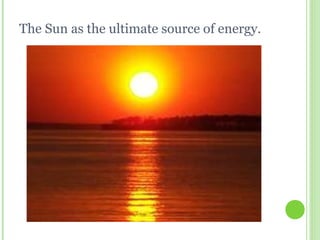
The Sun as the ultimate source of energy.
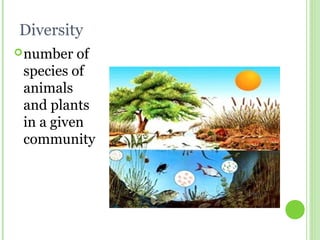
Diversity
number of
species of
animals
and plants
in a given
community
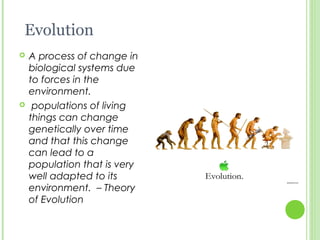
Evolution
 A process of change in
biological systems due
to forces in the
environment.
 populations of living
things can change
genetically over time
and that this change
can lead to a
population that is very
well adapted to its
environment. – Theory
of Evolution
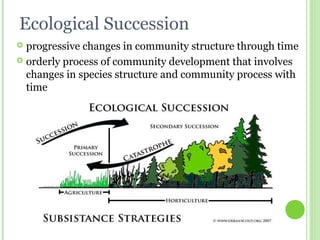
Ecological Succession
 progressive changes in community structure through time
 orderly process of community development that involves
changes in species structure and community process with
time
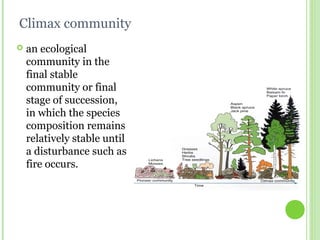
Climax community
 an ecological
community in the
final stable
community or final
stage of succession,
in which the species
composition remains
relatively stable until
a disturbance such as
fire occurs.
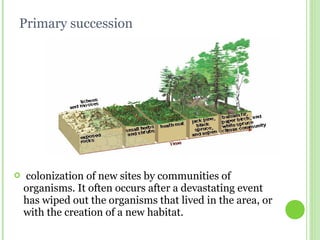
Primary succession
 colonization of new sites by communities of
organisms. It often occurs after a devastating event
has wiped out the organisms that lived in the area, or
with the creation of a new habitat.
Secondary succession
 process of regrowth that an ecosystem undergoes after
a destructive event such as a fire, avalanche,
agricultural clearing, deforestation, or disease
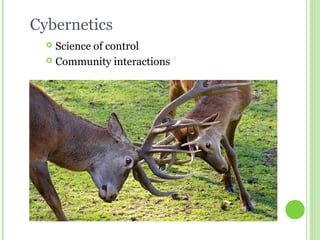
Cybernetics
 Science of control
 Community interactions
Competition
 results when a needed resource is in short supply
relative to the number of organism seeking it.
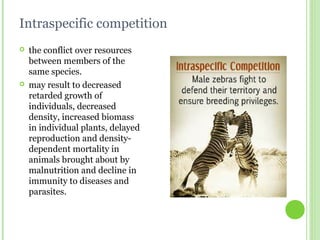
Intraspecific competition
 the conflict over resources
between members of the
same species.
 may result to decreased
retarded growth of
individuals, decreased
density, increased biomass
in individual plants, delayed
reproduction and density-
dependent mortality in
animals brought about by
malnutrition and decline in
immunity to diseases and
parasites.
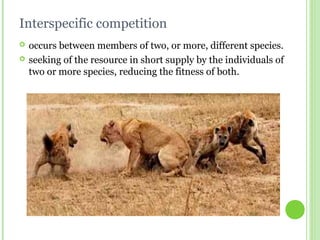
Interspecific competition
 occurs between members of two, or more, different species.
 seeking of the resource in short supply by the individuals of
two or more species, reducing the fitness of both.
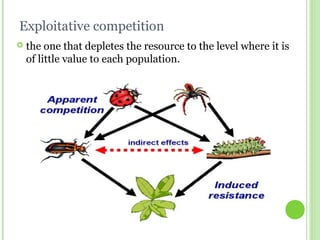
Exploitative competition
 the one that depletes the resource to the level where it is
of little value to each population.
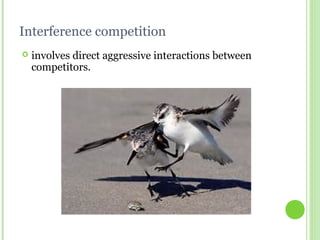
Interference competition
 involves direct aggressive interactions between
competitors.
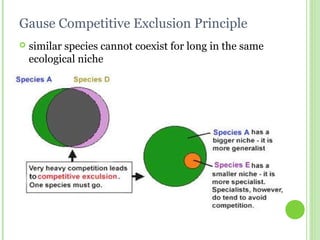
Gause Competitive Exclusion Principle
 similar species cannot coexist for long in the same
ecological niche

Functional Components of an Ecosystem

  • 1.
    Functional Components of anEcosystem By Prof. Liwayway Memije-Cruz
  • 2.
    The Sun asthe ultimate source of energy.
  • 4.
  • 5.
    Evolution  A processof change in biological systems due to forces in the environment.  populations of living things can change genetically over time and that this change can lead to a population that is very well adapted to its environment. – Theory of Evolution
  • 6.
    Ecological Succession  progressivechanges in community structure through time  orderly process of community development that involves changes in species structure and community process with time
  • 7.
    Climax community  anecological community in the final stable community or final stage of succession, in which the species composition remains relatively stable until a disturbance such as fire occurs.
  • 8.
    Primary succession  colonizationof new sites by communities of organisms. It often occurs after a devastating event has wiped out the organisms that lived in the area, or with the creation of a new habitat.
  • 9.
    Secondary succession  processof regrowth that an ecosystem undergoes after a destructive event such as a fire, avalanche, agricultural clearing, deforestation, or disease
  • 10.
    Cybernetics  Science ofcontrol  Community interactions
  • 11.
    Competition  results whena needed resource is in short supply relative to the number of organism seeking it.
  • 12.
    Intraspecific competition  theconflict over resources between members of the same species.  may result to decreased retarded growth of individuals, decreased density, increased biomass in individual plants, delayed reproduction and density- dependent mortality in animals brought about by malnutrition and decline in immunity to diseases and parasites.
  • 13.
    Interspecific competition  occursbetween members of two, or more, different species.  seeking of the resource in short supply by the individuals of two or more species, reducing the fitness of both.
  • 14.
    Exploitative competition  theone that depletes the resource to the level where it is of little value to each population.
  • 15.
    Interference competition  involvesdirect aggressive interactions between competitors.
  • 16.
    Gause Competitive ExclusionPrinciple  similar species cannot coexist for long in the same ecological niche