Apportionment
and Voting
By Prof. Liwayway Memije-Cruz
 a method of dividing a whole into various
parts.
 This mathematical analysis has its roots in the
US Constitution specifically in 1790 when the
House of Representatives attempted to
apportion themselves.
 The first method adopted in 1790 was the
Jefferson Plan suggested by Thomas
Jefferson.
Apportionment
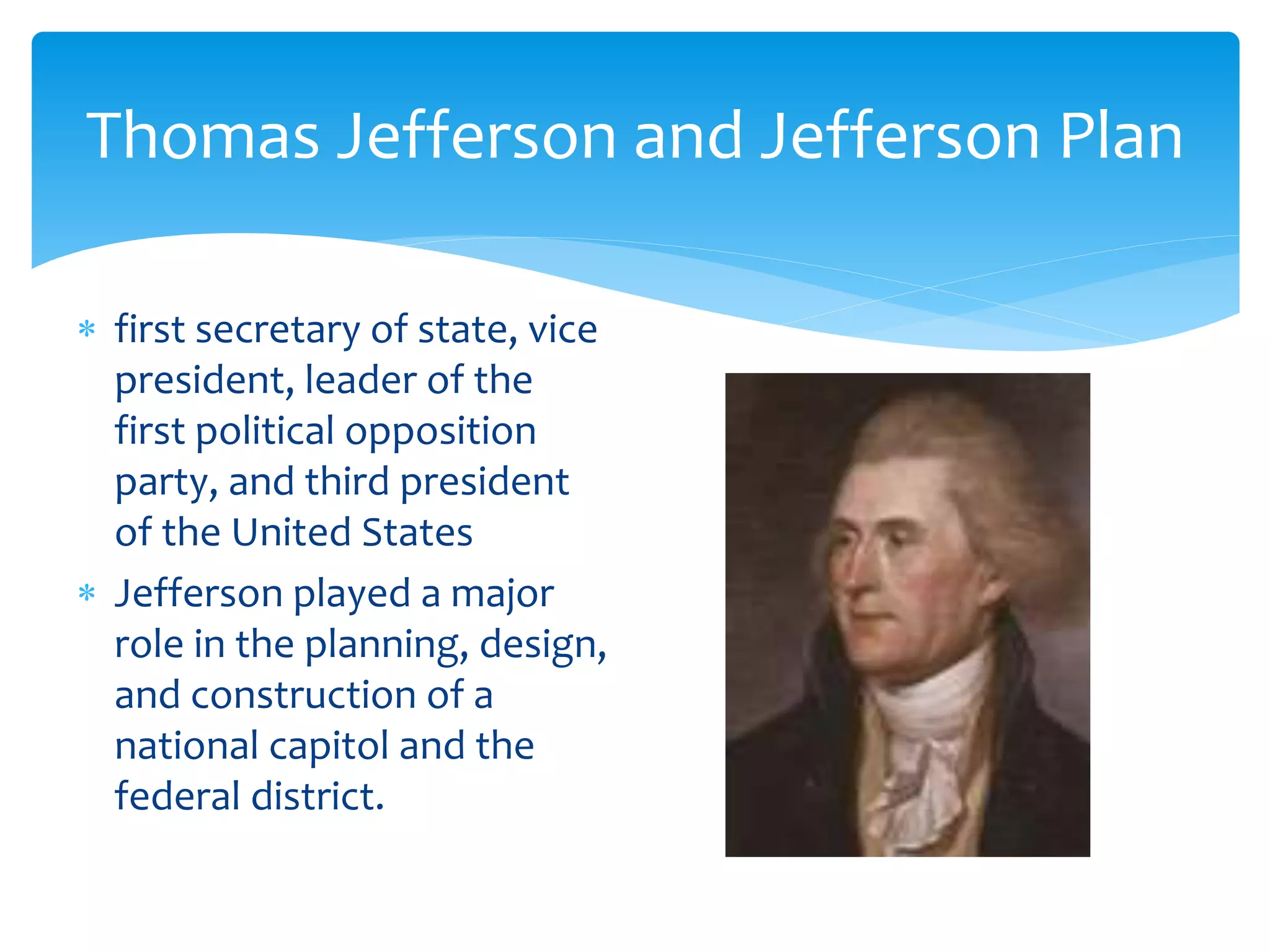
Thomas Jefferson and Jefferson Plan
 first secretary of state, vice
president, leader of the
first political opposition
party, and third president
of the United States
 Jefferson played a major
role in the planning, design,
and construction of a
national capitol and the
federal district.
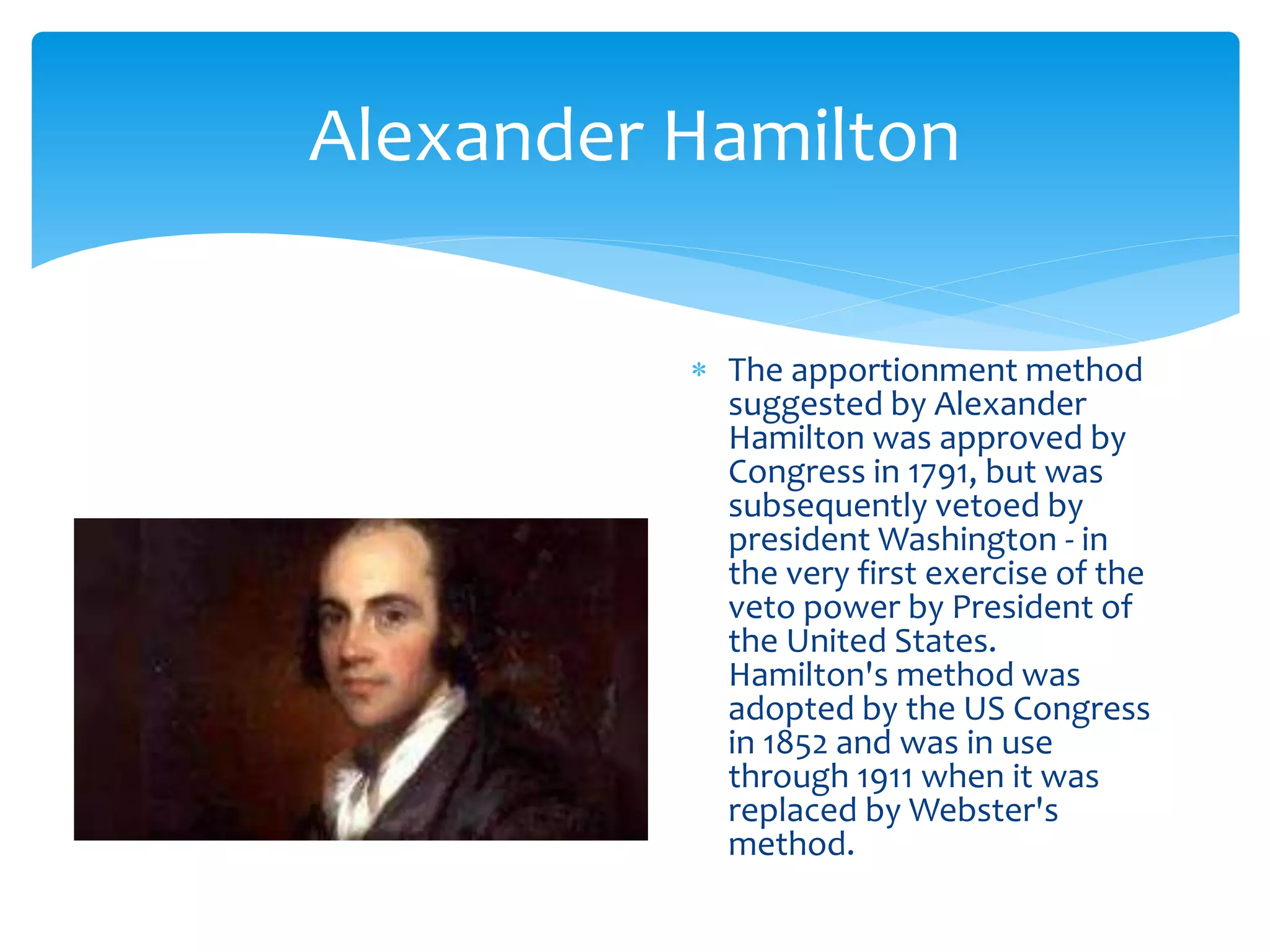
Alexander Hamilton
 The apportionment method
suggested by Alexander
Hamilton was approved by
Congress in 1791, but was
subsequently vetoed by
president Washington - in
the very first exercise of the
veto power by President of
the United States.
Hamilton's method was
adopted by the US Congress
in 1852 and was in use
through 1911 when it was
replaced by Webster's
method.
 https://study.com/academy/lesson/hamiltons-method-
of-apportionment-in-politics.html
Hamilton’s Method of Apportionment
Hamilton Plan
The given total number of seats is to be apportioned between
several states proportionally to their populations. To accomplish
that task according to Hamilton,
 Compute the divisor D = (Total population)/(Number of seats)
 Find and round down state quotas {(State population)/D}.
The leftover fractional parts add up to a whole number of
seats.
 Distribute the surplus seats, one per state, starting with the
largest leftover fractional part, then proceeding to the next
largest, and so on, until all the surplus seats have been dealt
with.
Consider a fictitious country called Kolob with a population
of 33,000 and having twelve states. The population of each
state is given below:
Hamilton Plan
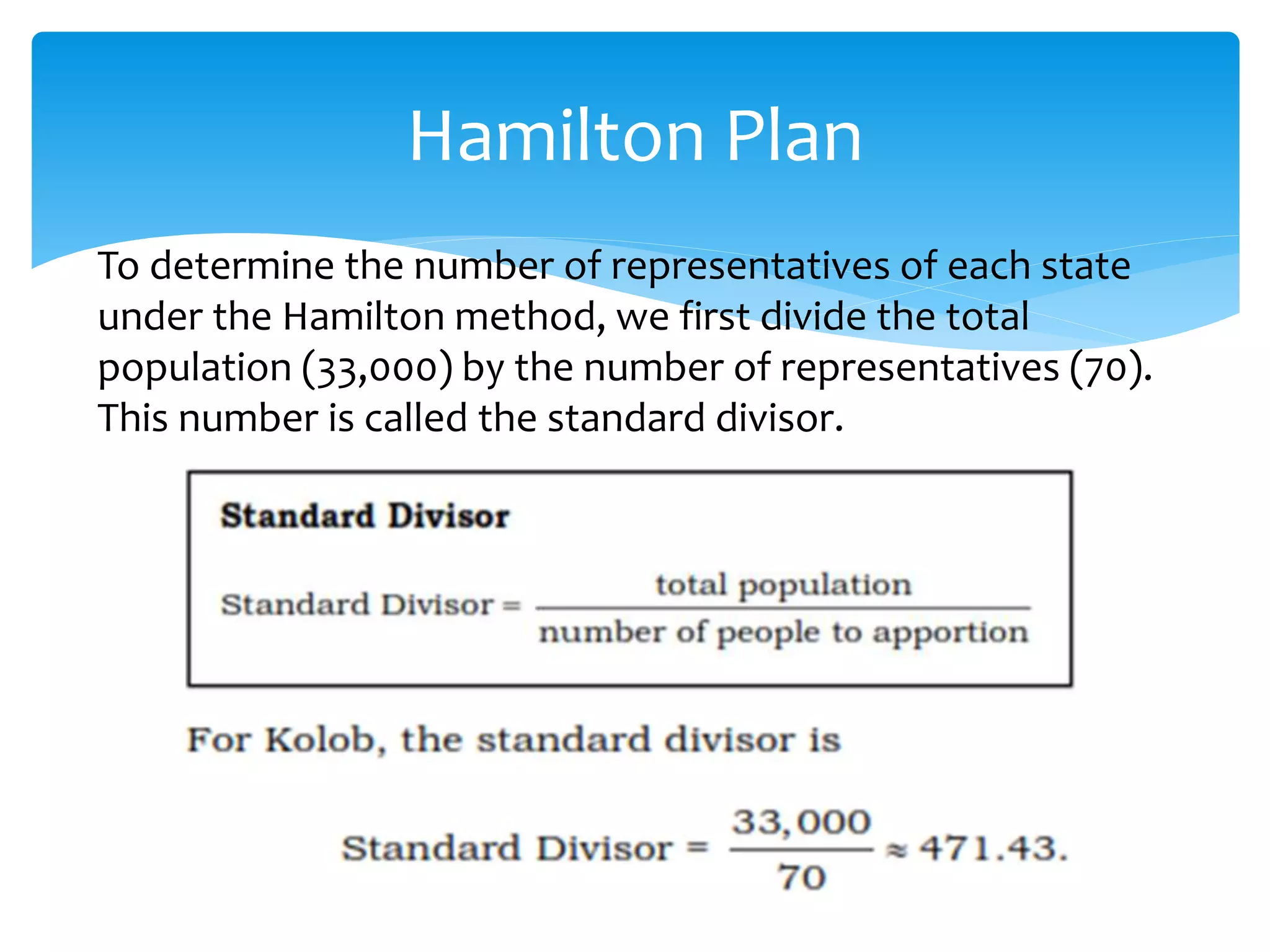
To determine the number of representatives of each state
under the Hamilton method, we first divide the total
population (33,000) by the number of representatives (70).
This number is called the standard divisor.
Hamilton Plan
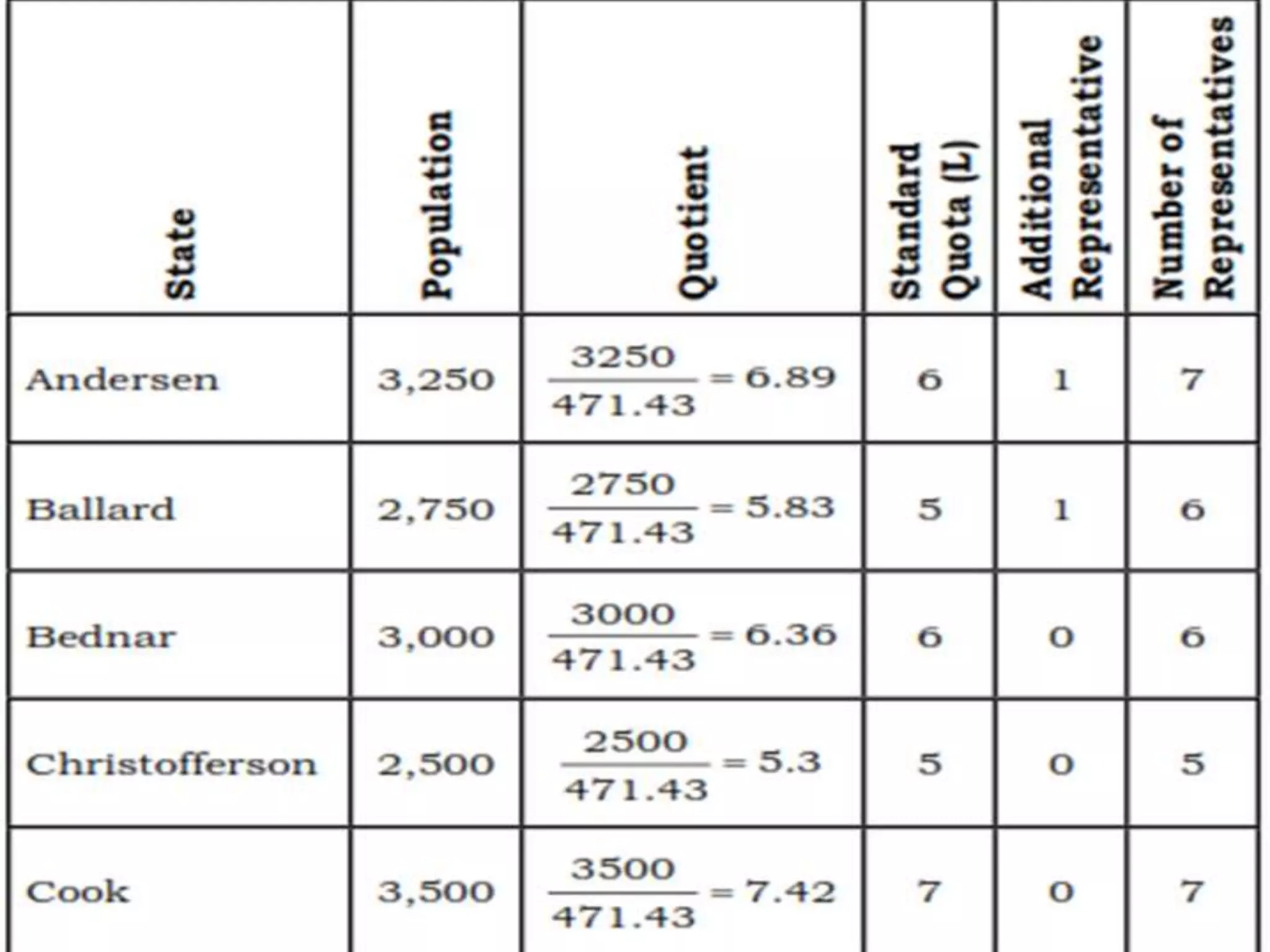
Table 6.2
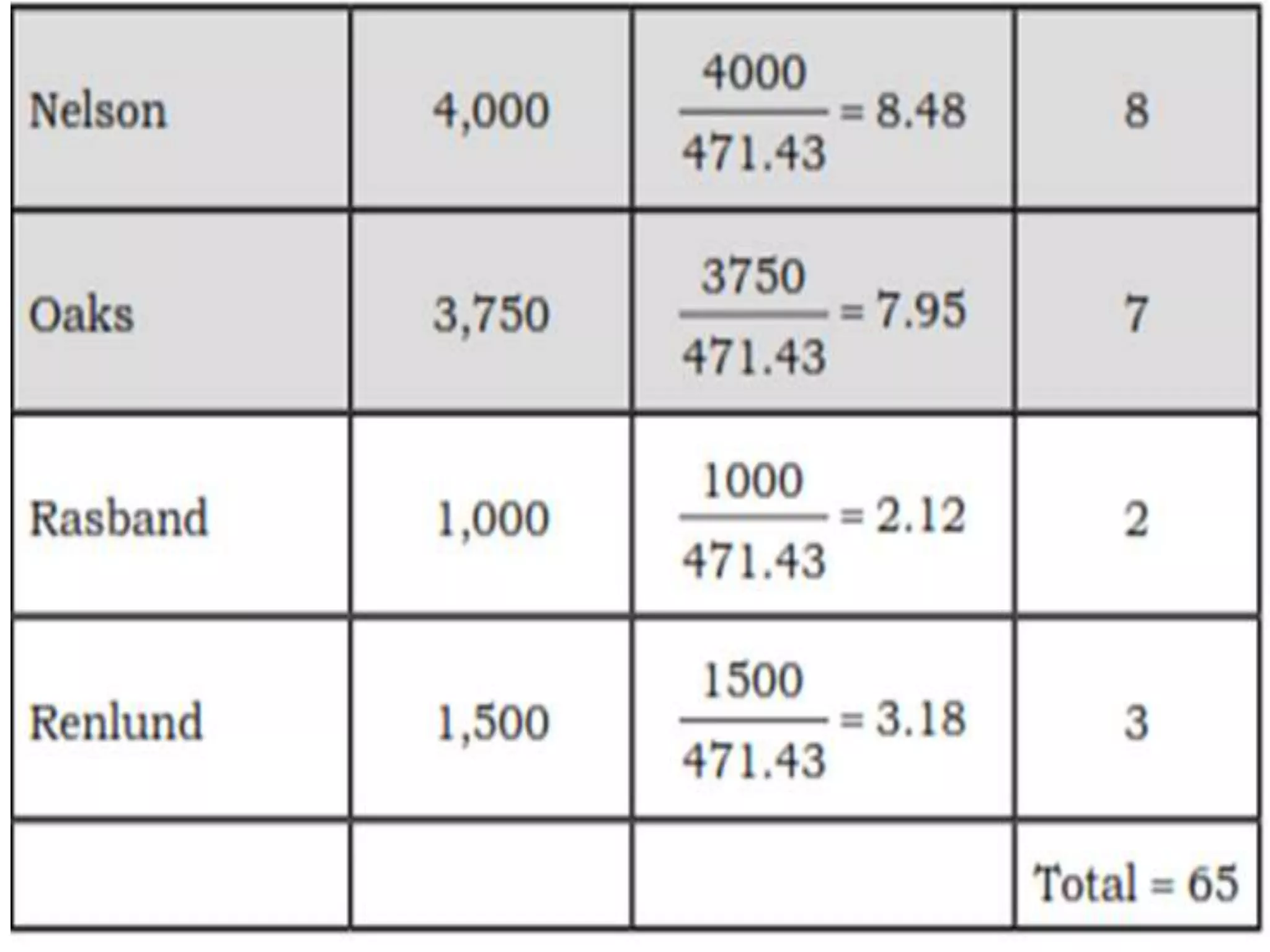
 From the results in the table,
the standard sub-quotas
totalled to 65, five
representatives short as
required by the Kolob’s
Constitution. When this
happens the Hamiltonian
Plan remediates by assigning
one representative to the
state with the largest
decimal remainder. This is
repeated until the required
number of representative is
attained
 https://study.com/academy/lesson/jeffersons-method-
of-apportionment-in-politics.html
Jefferson’s Method of Apportionment
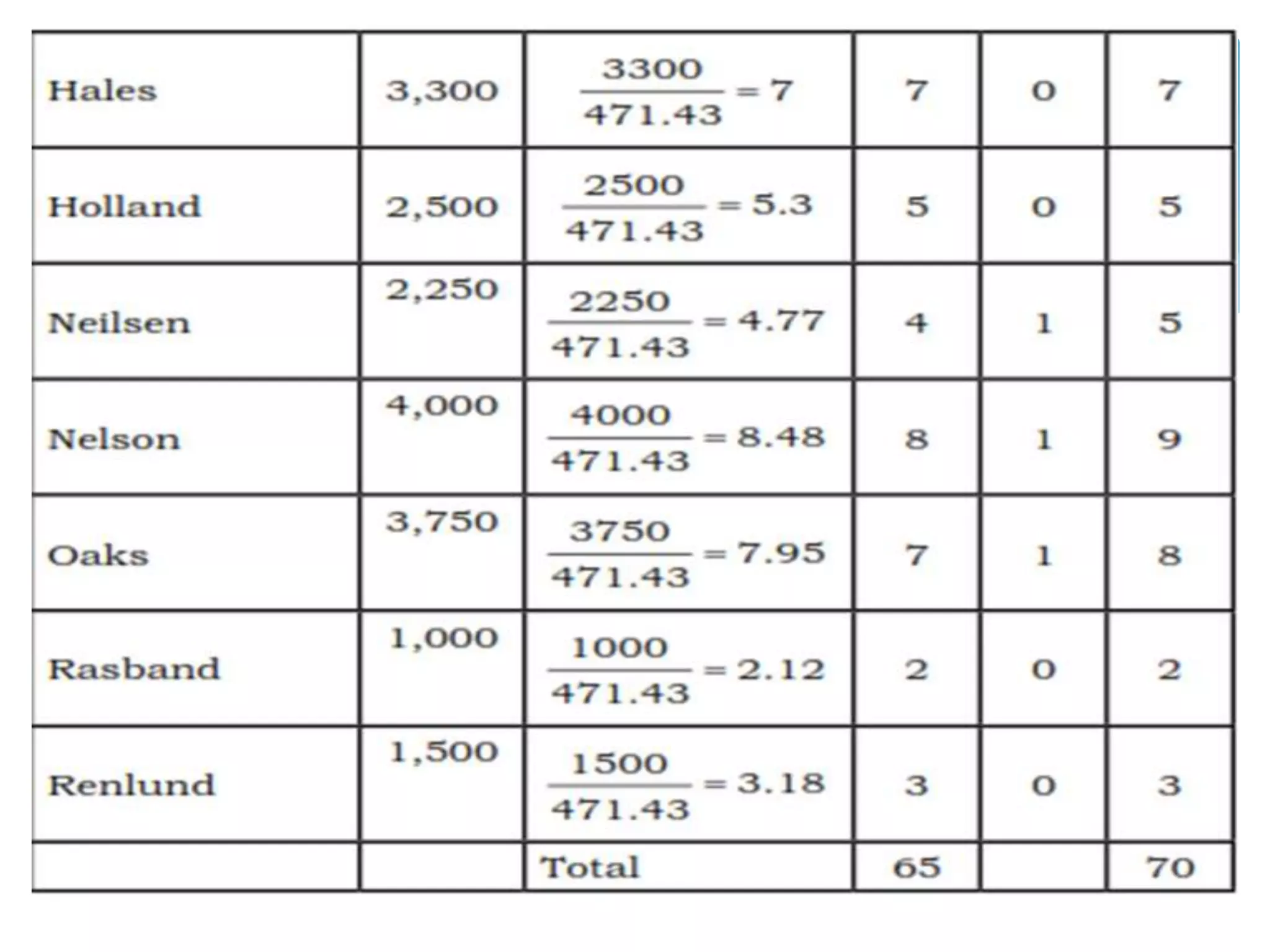
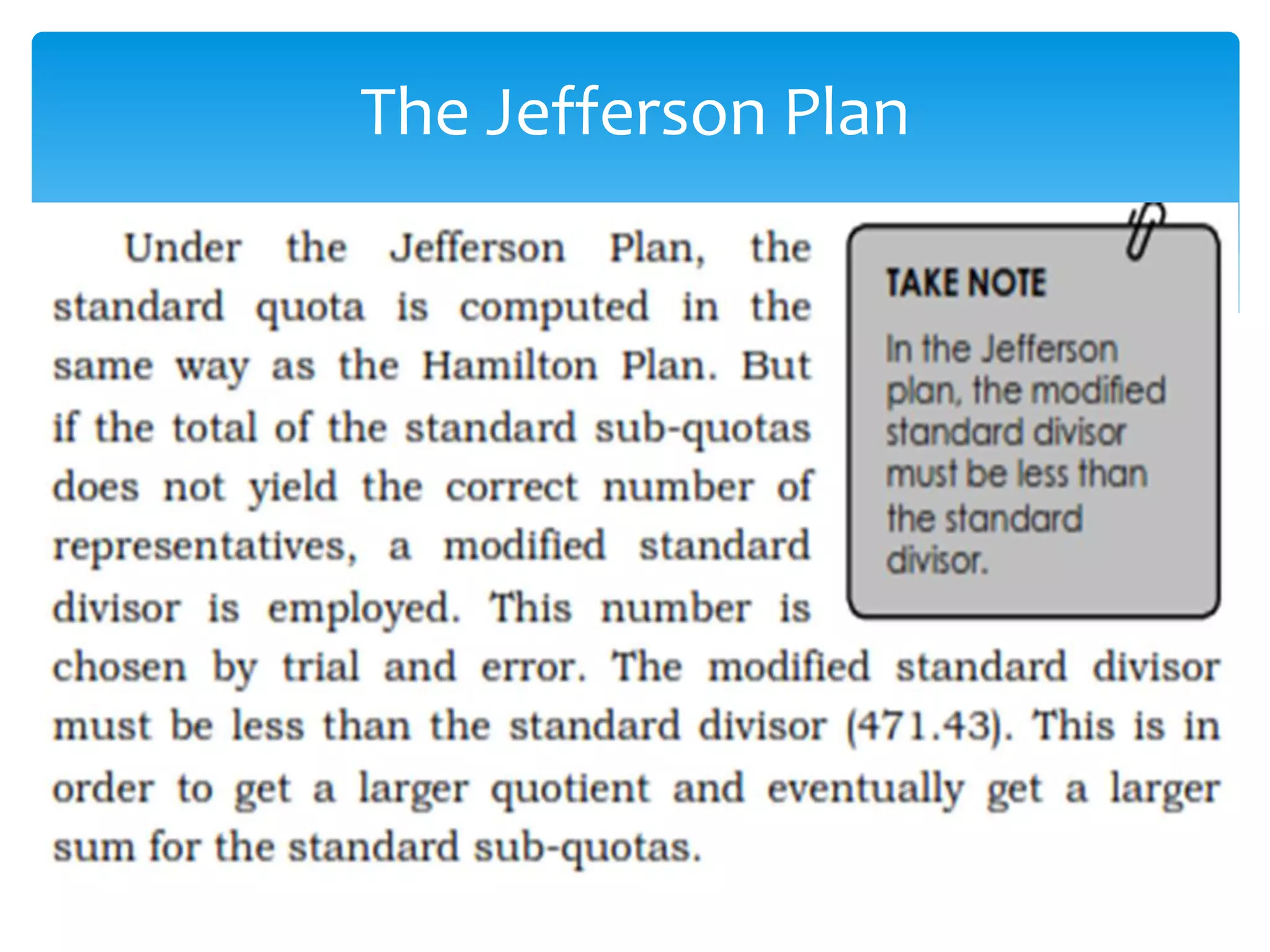
The Jefferson Plan
Table 6.4:
When the
modified
standard
divisor
(MSD) is
equal to
450450.
Table 6.5 :
When the
modified
standard
divisor
(MSD) is
equal to
400.
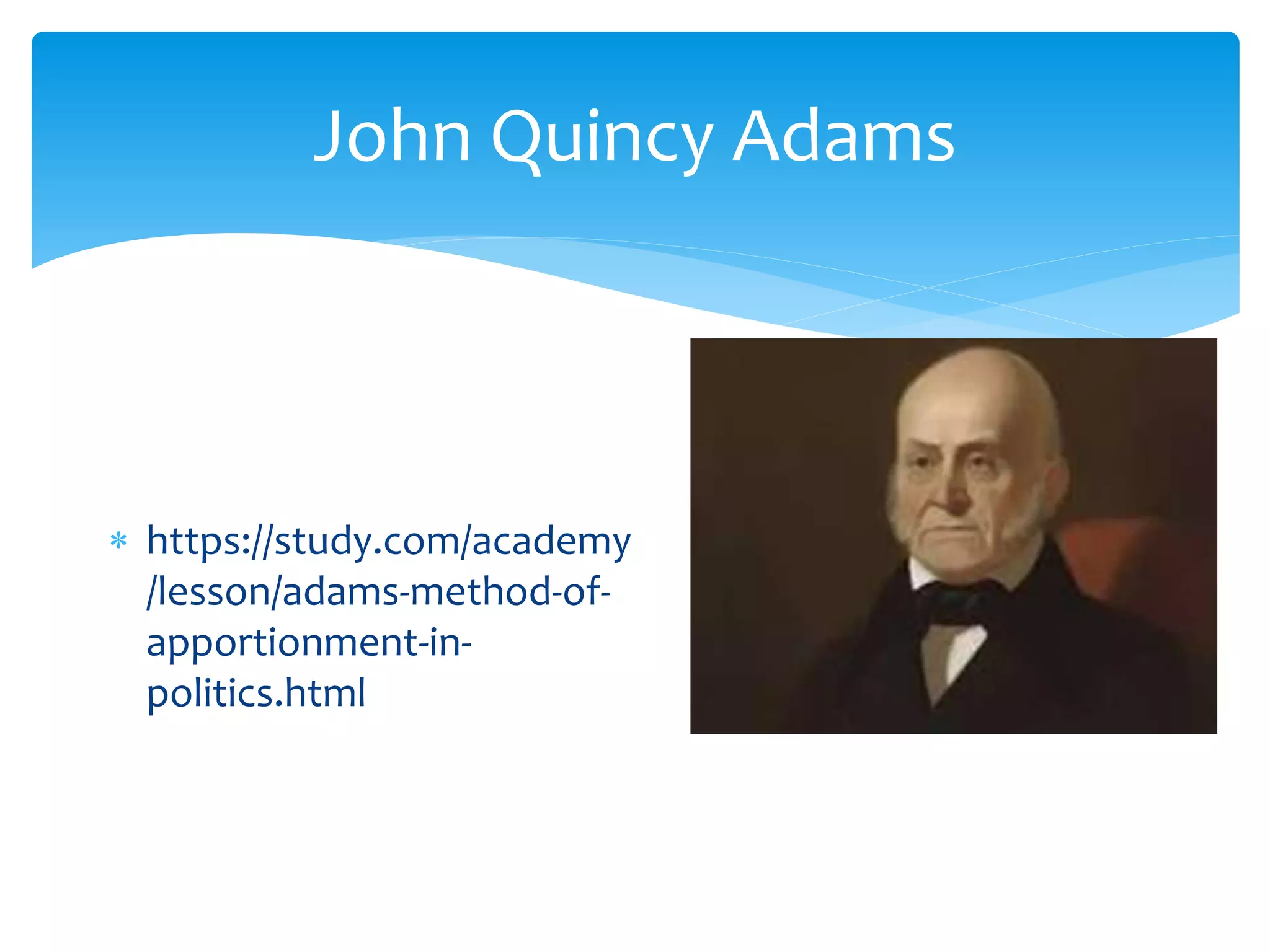
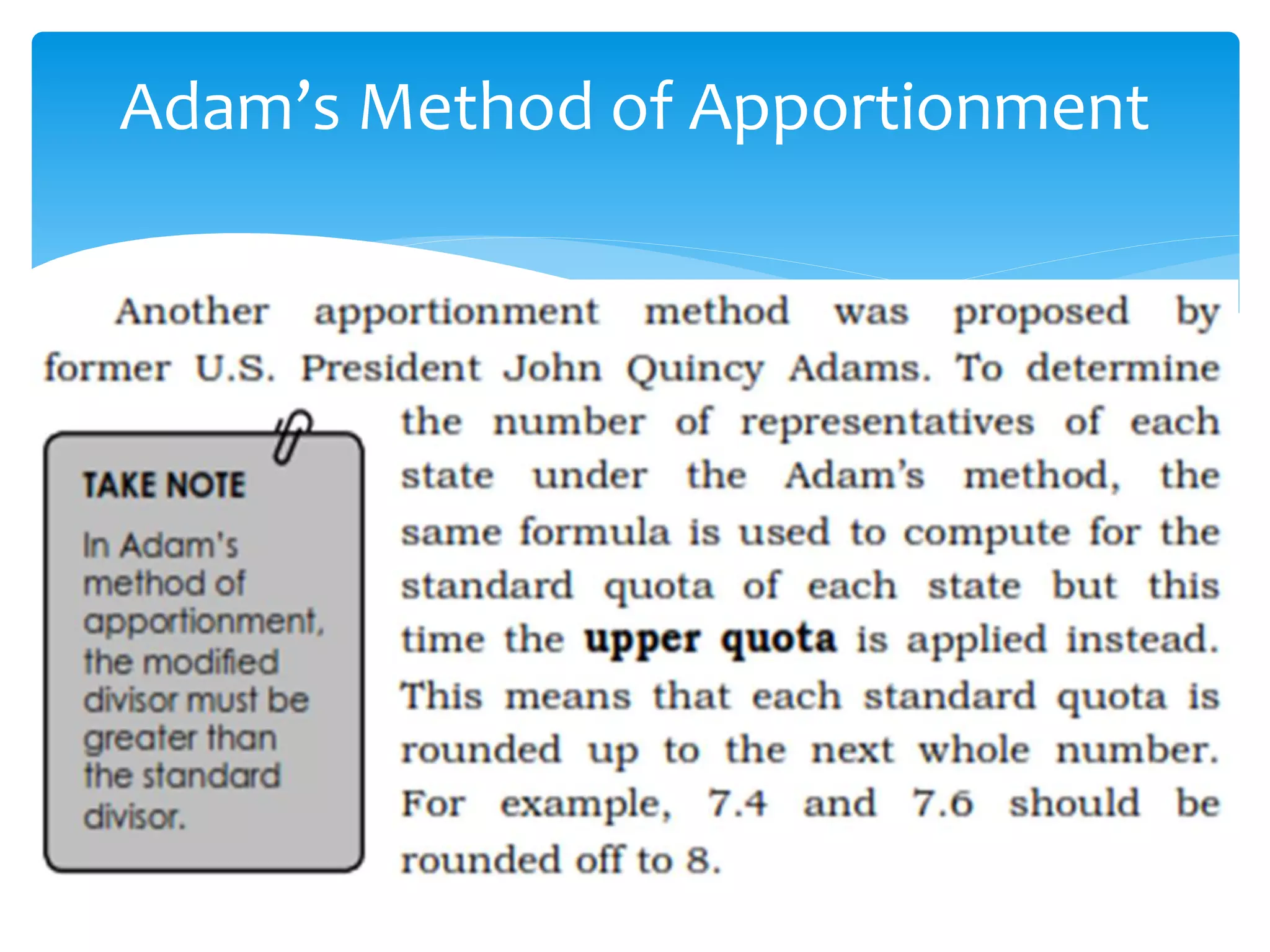
 Back in the 1830s, John Quincy Adams had an issue with the
method of apportionment used in the House of
Representatives. Apportionment means the method used to
assign voting seats on a governing board to entities with
voting rights.
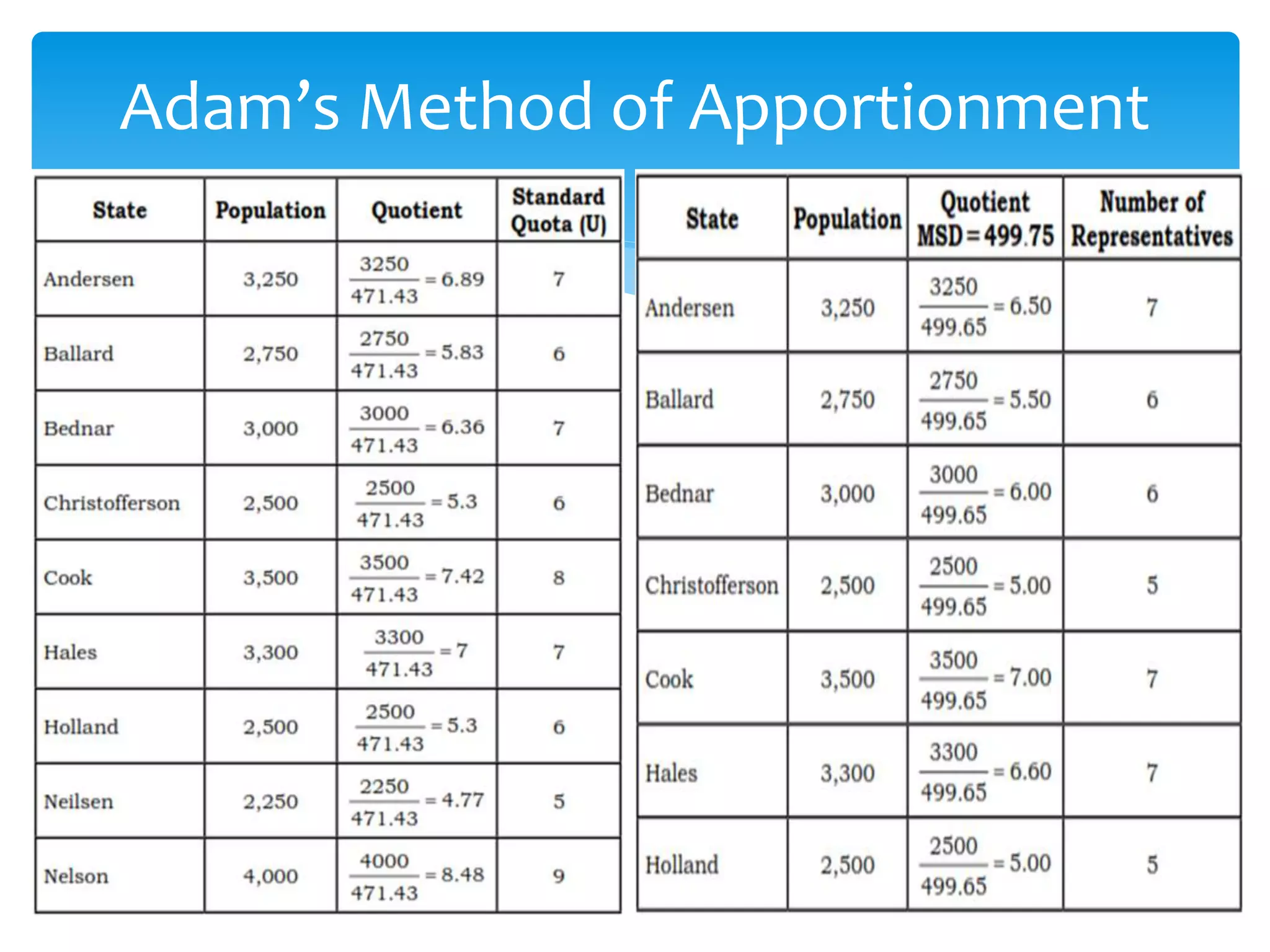
 He felt that the method of apportioning votes at that time
was biased and favored large states. So, he proposed his
own method, the Adams Method of Apportionment, which
proposed that a modified divisor should be selected such
that when the sum of the Upper Quotas is tallied, it equals
the exact number of seats to be apportioned.
Adam’s Method of Apportionment
John Quincy Adams
 https://study.com/academy
/lesson/adams-method-of-
apportionment-in-
politics.html
Adam’s Method of Apportionment
Apportionment: Webster’s Method
 https://www.youtube.com/
watch?v=ZNybGTvz_hQ Daniel Webster
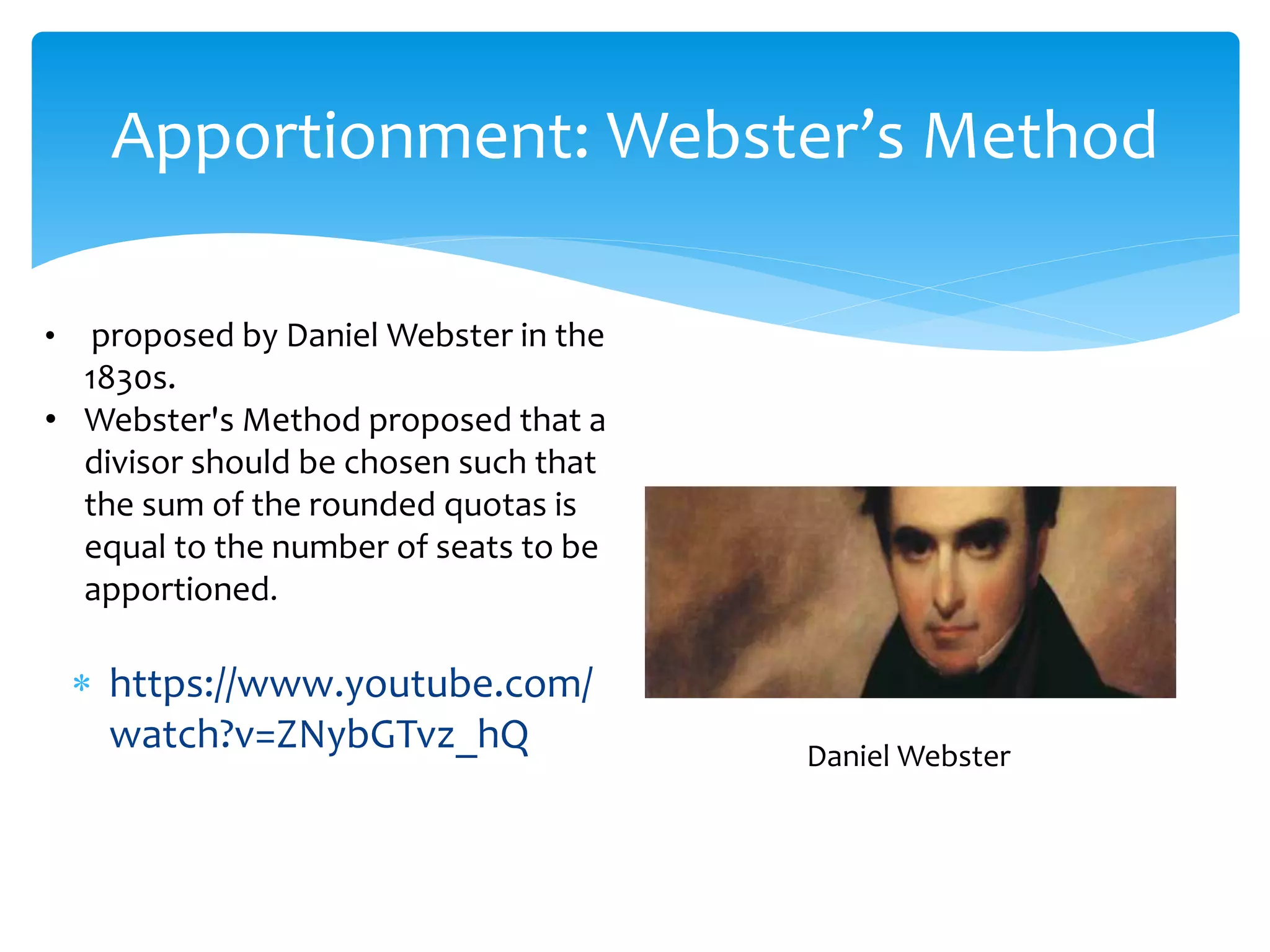
• proposed by Daniel Webster in the
1830s.
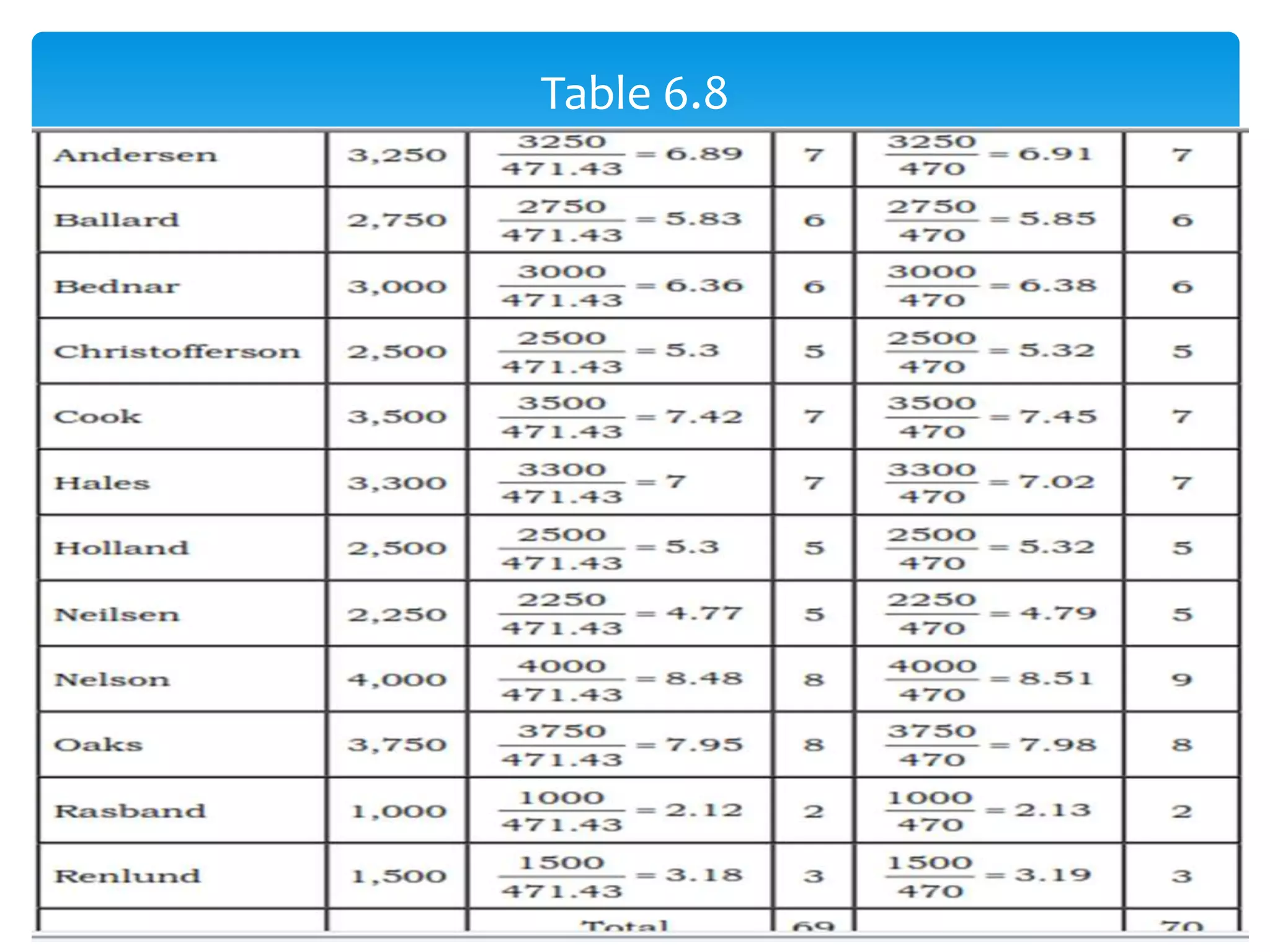
• Webster's Method proposed that a
divisor should be chosen such that
the sum of the rounded quotas is
equal to the number of seats to be
apportioned.
Webster Method of Apportionment
Table 6.8
Huntington-Hill Method of
Apportionment
 https://study.com/academy/lesson/huntington-hill-
method-of-apportionment-in-politics.html
 In the early 1900s, Congress began using its current
method of apportionment, the Huntington-Hill
Method of Apportionment. In this method, geometric
means are used to round modified state quotas until
the sum of the modified quotas equals the exact
number of seats to be apportioned in the House of
Representatives.
Huntington-Hill Method of
Apportionment
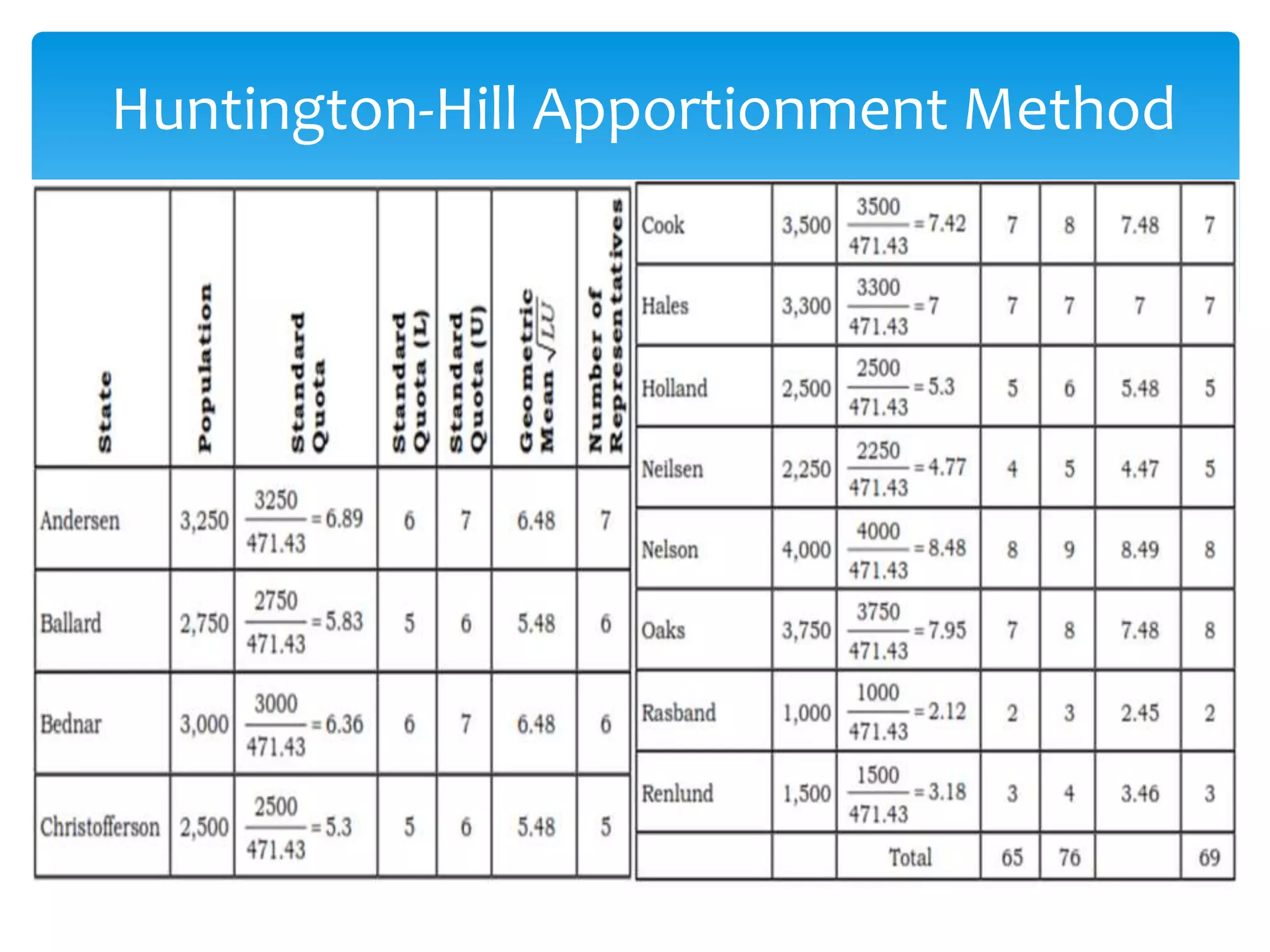
Huntington-Hill Apportionment Method
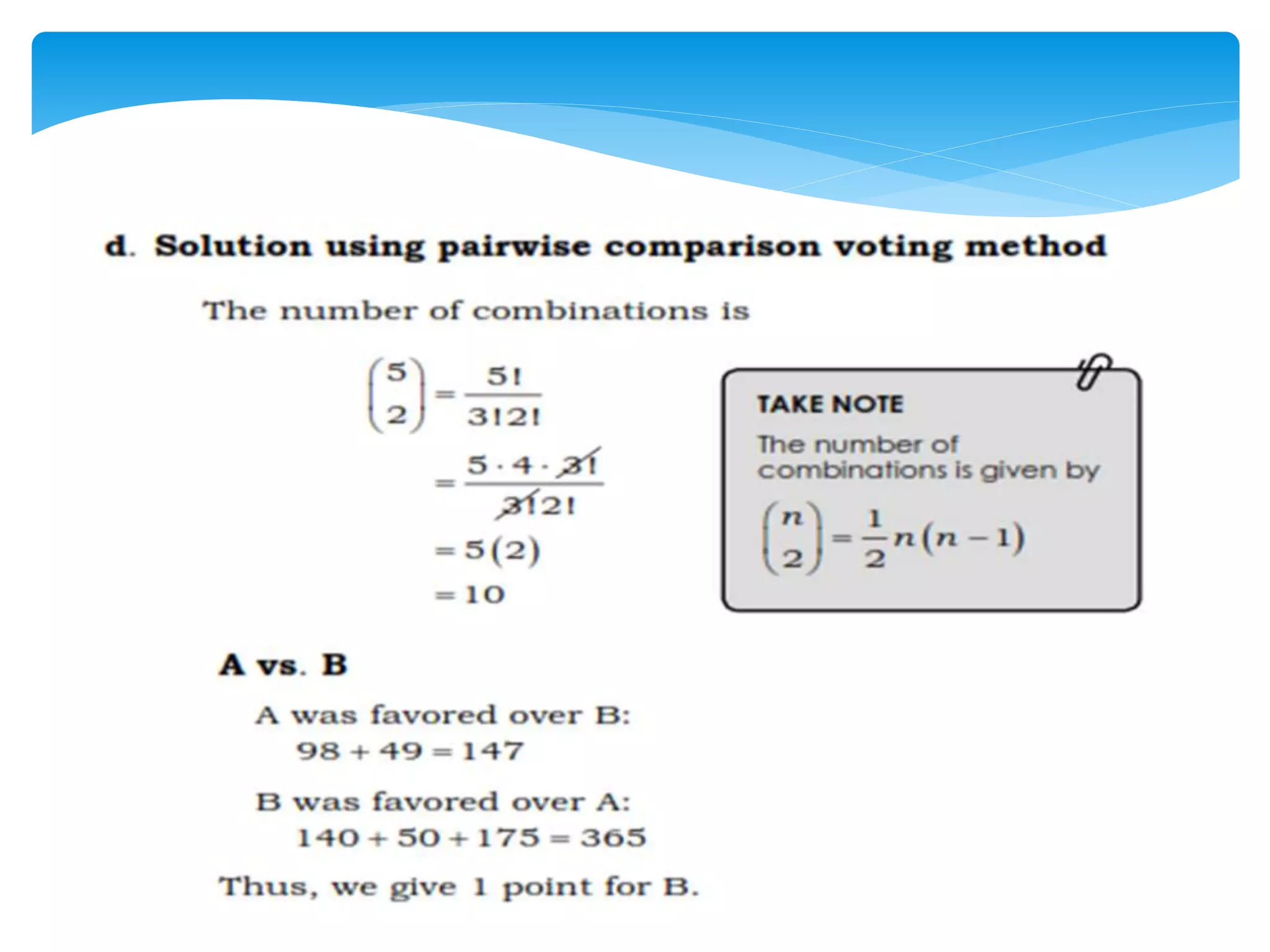
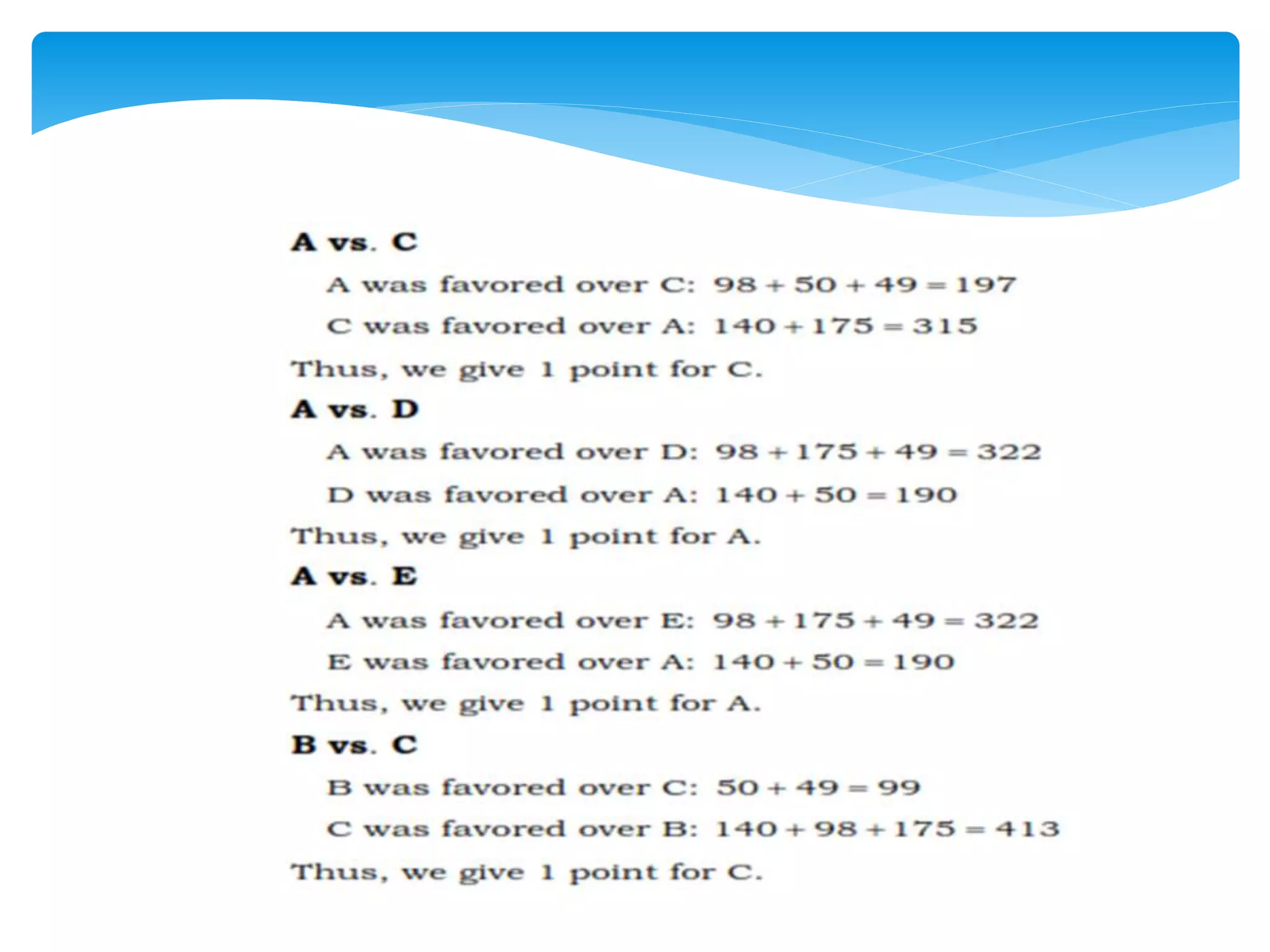
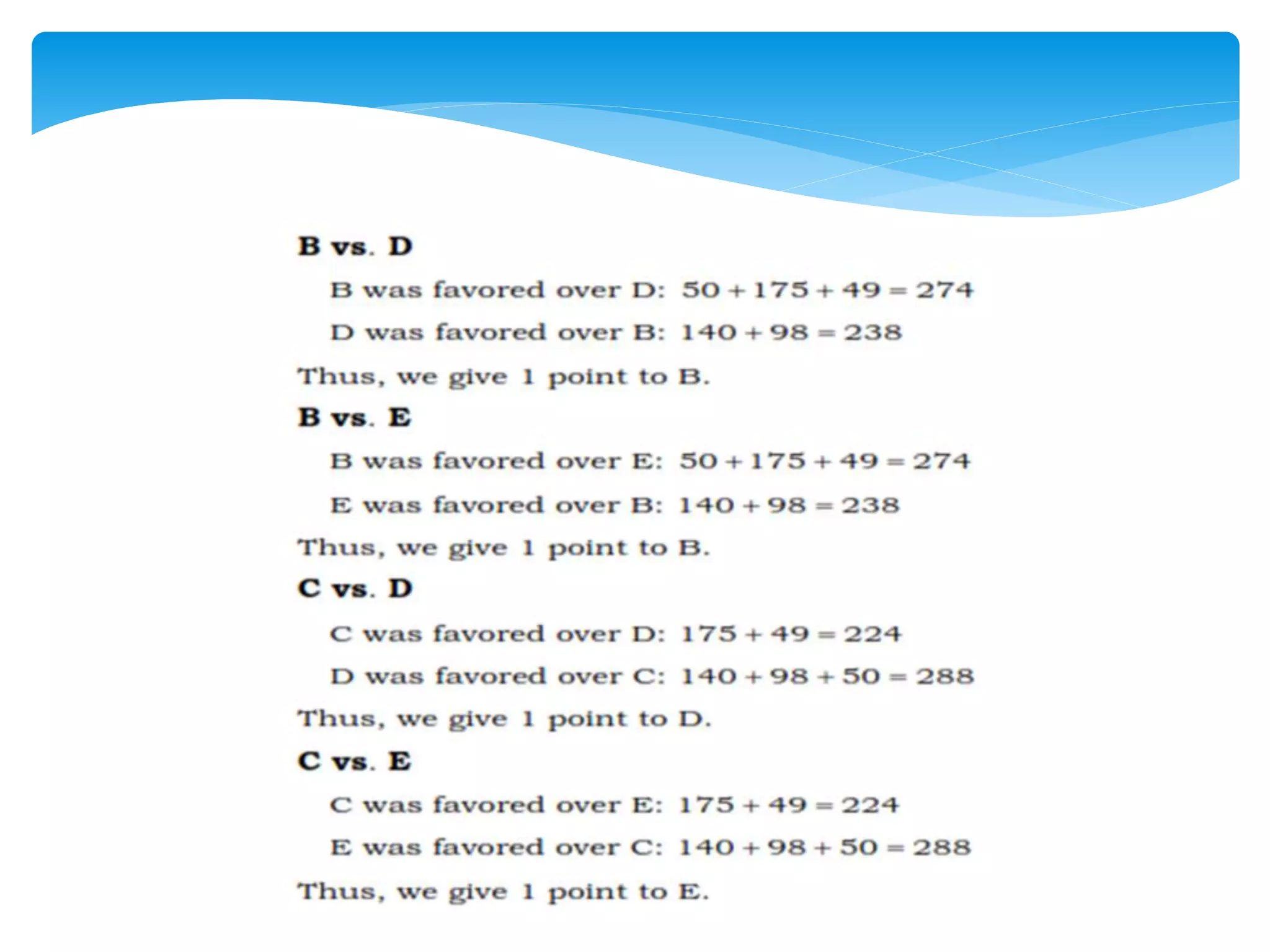
Voting
References:
 Aufmann et al, Mathematical Excursions (2013)
 Baltazar, Ethel Cecille M. Mathematics in the Modern World.
C & E Publishing Inc. 2018
 https://www.enotes.com/homework-help/why-thomas-
jefferson-opposed-hamiltons-financial-81407
 http://forquignon.com/history/government/constitutional_co
nvention/hamilton.html
 http://consource.org/document/the-hamilton-plan-1787/
 http://www.loc.gov/exhibits/jefferson/jefffed.html
 https://study.com/academy/lesson/hamiltons-method-
of-apportionment-in-politics.html
 https://study.com/academy/lesson/jeffersons-method-
of-apportionment-in-politics.html
 https://study.com/academy/lesson/adams-method-of-
apportionment-in-politics.html
 https://www.youtube.com/watch?v=ZNybGTvz_hQ
 https://study.com/academy/lesson/huntington-hill-
method-of-apportionment-in-politics.html
Videos