



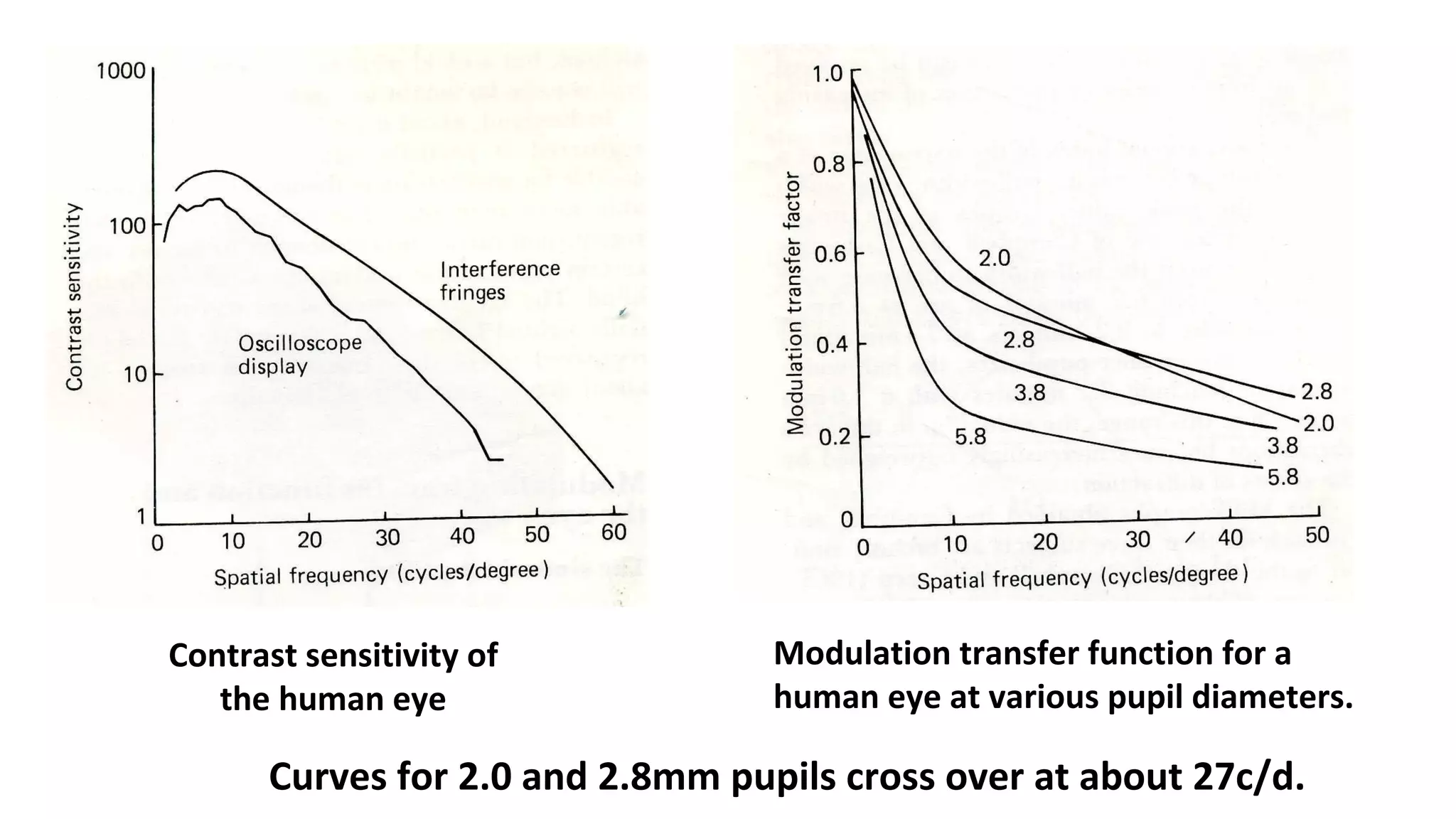

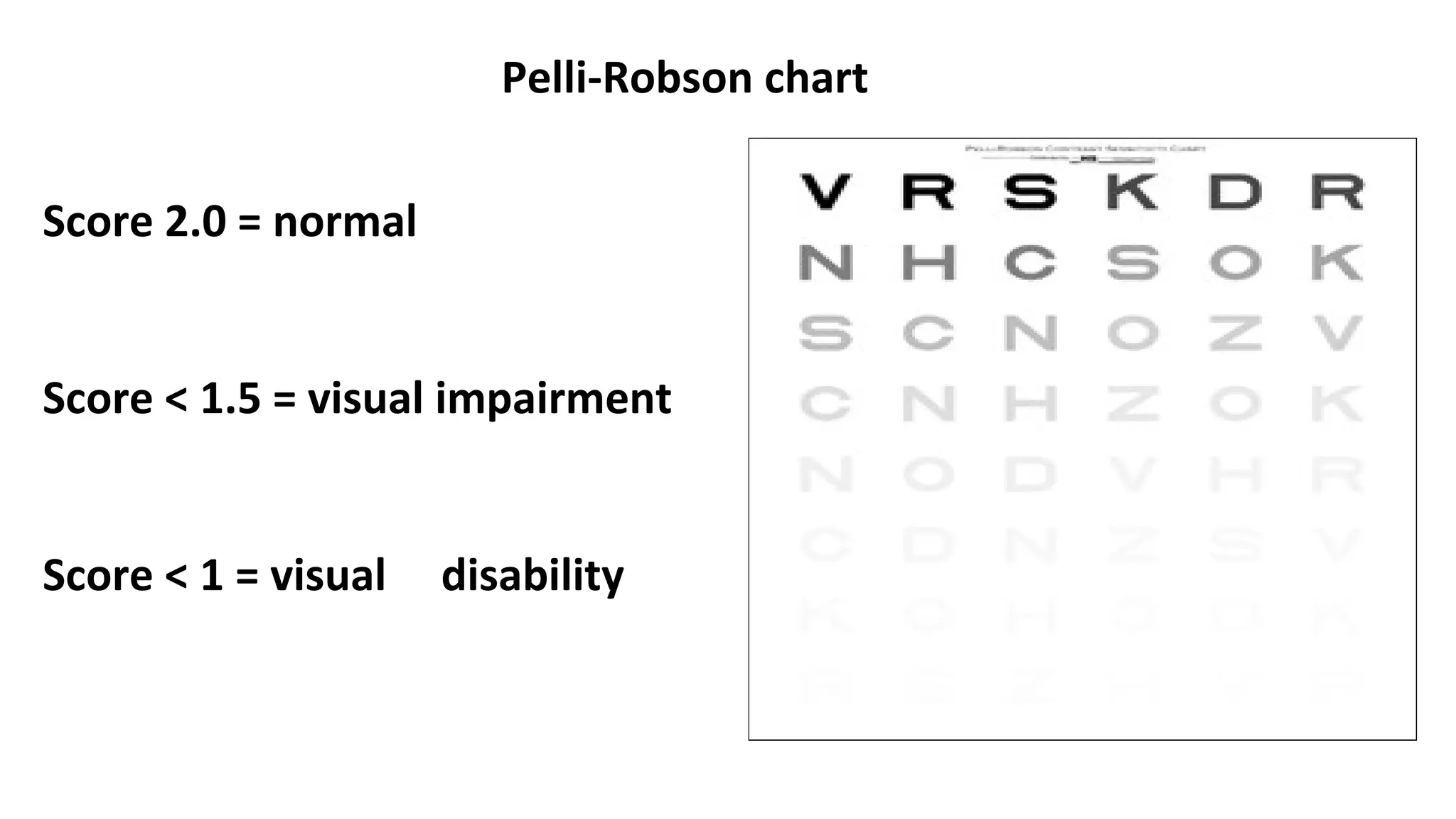


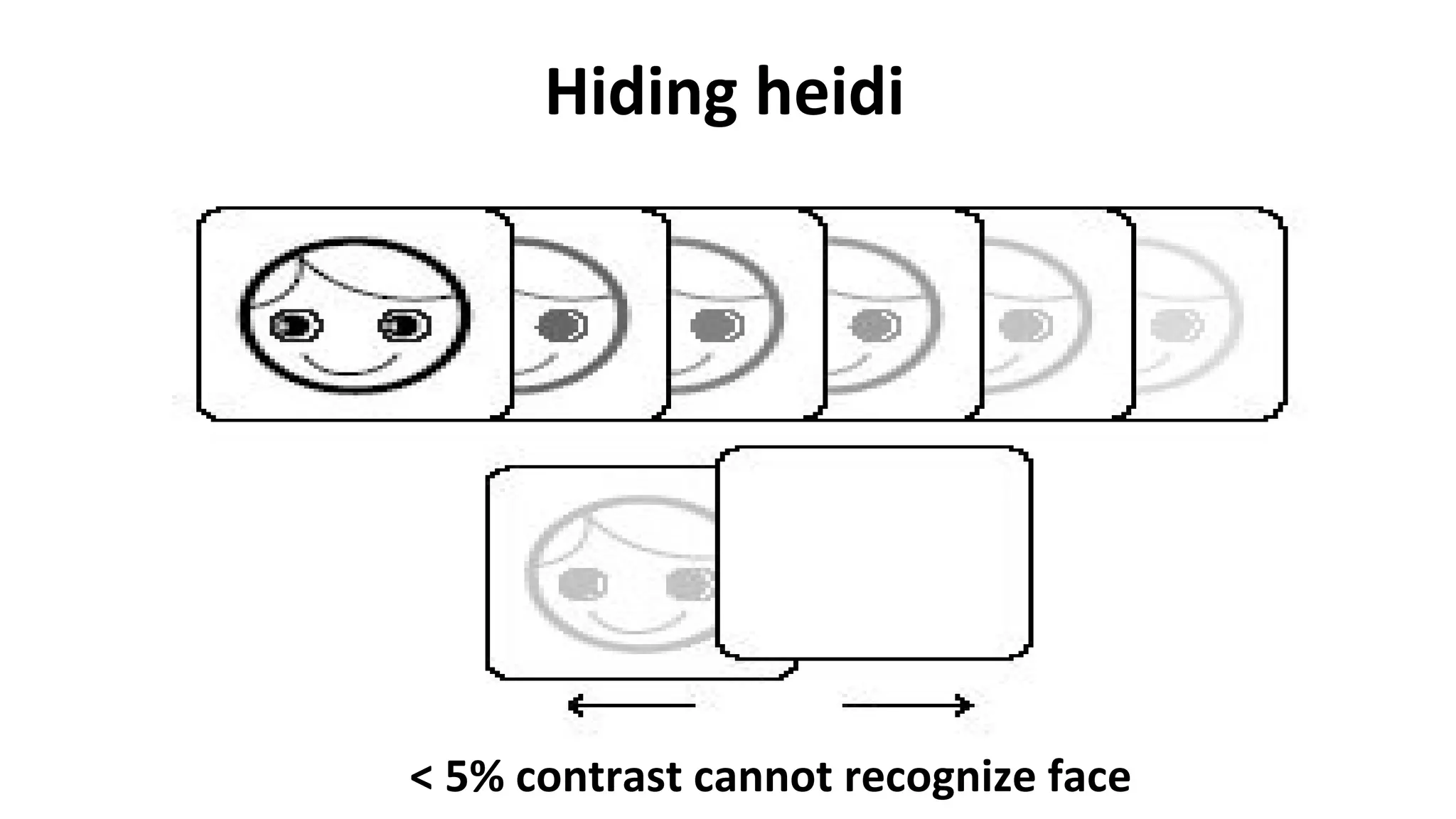


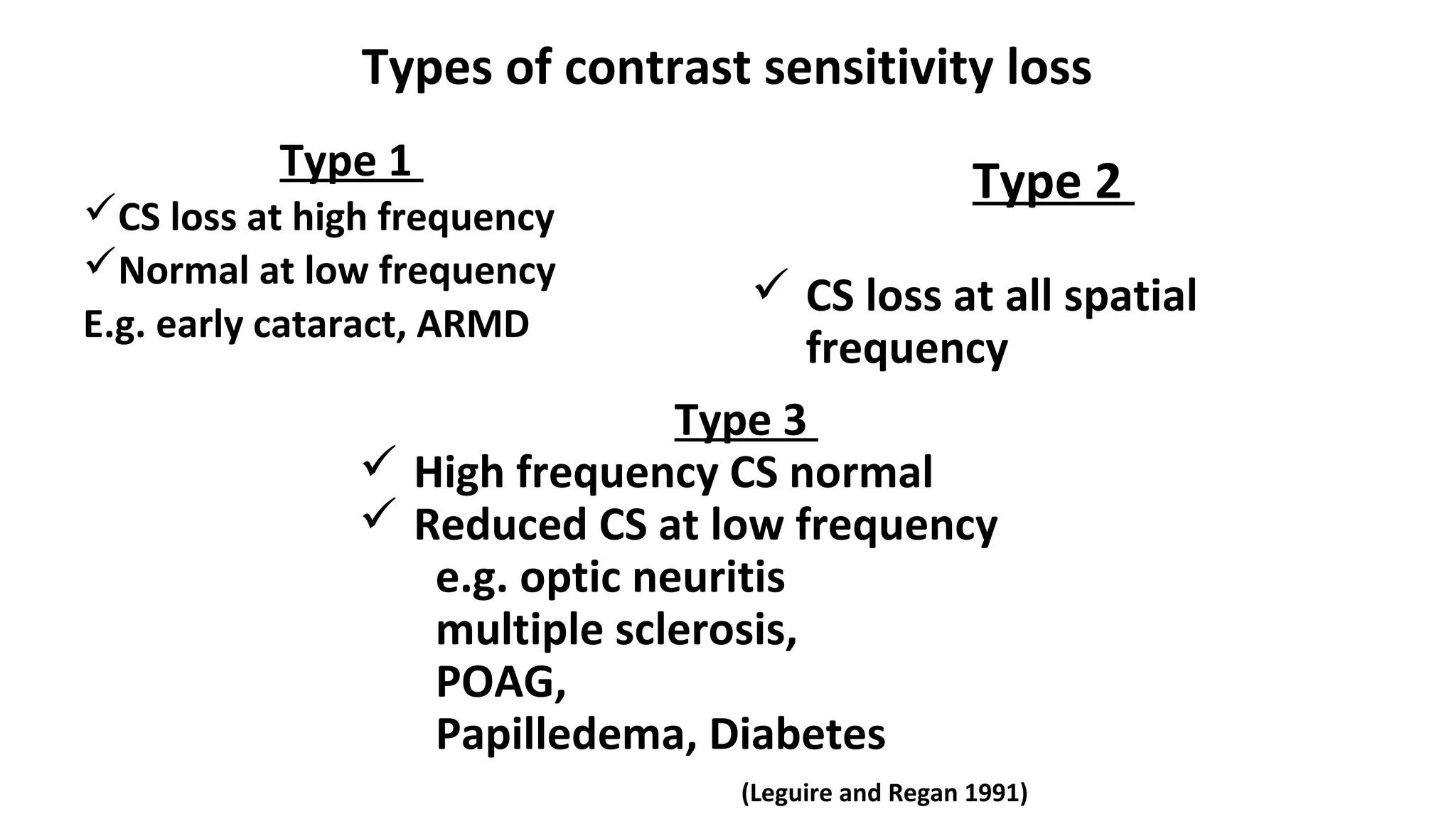

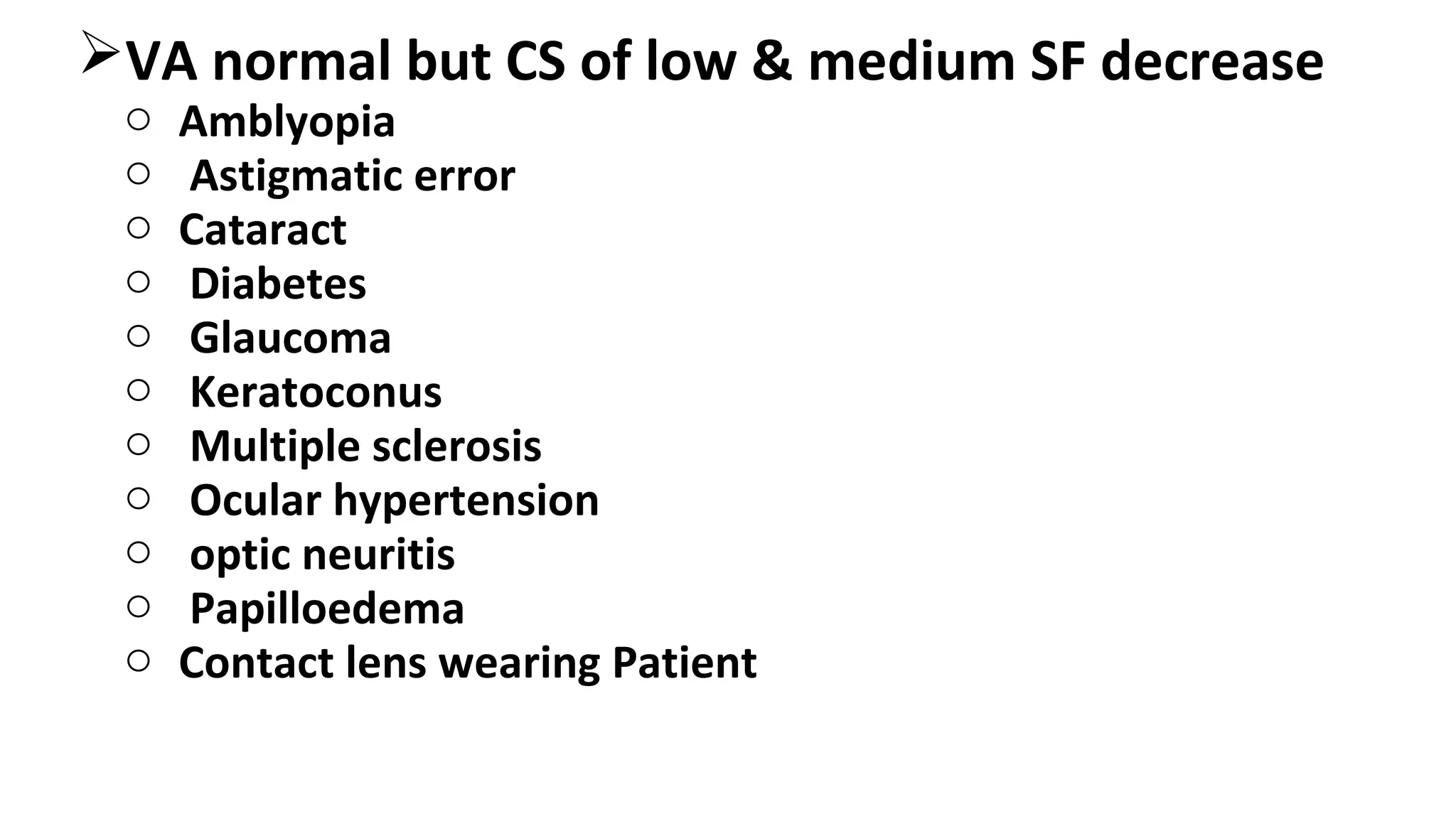
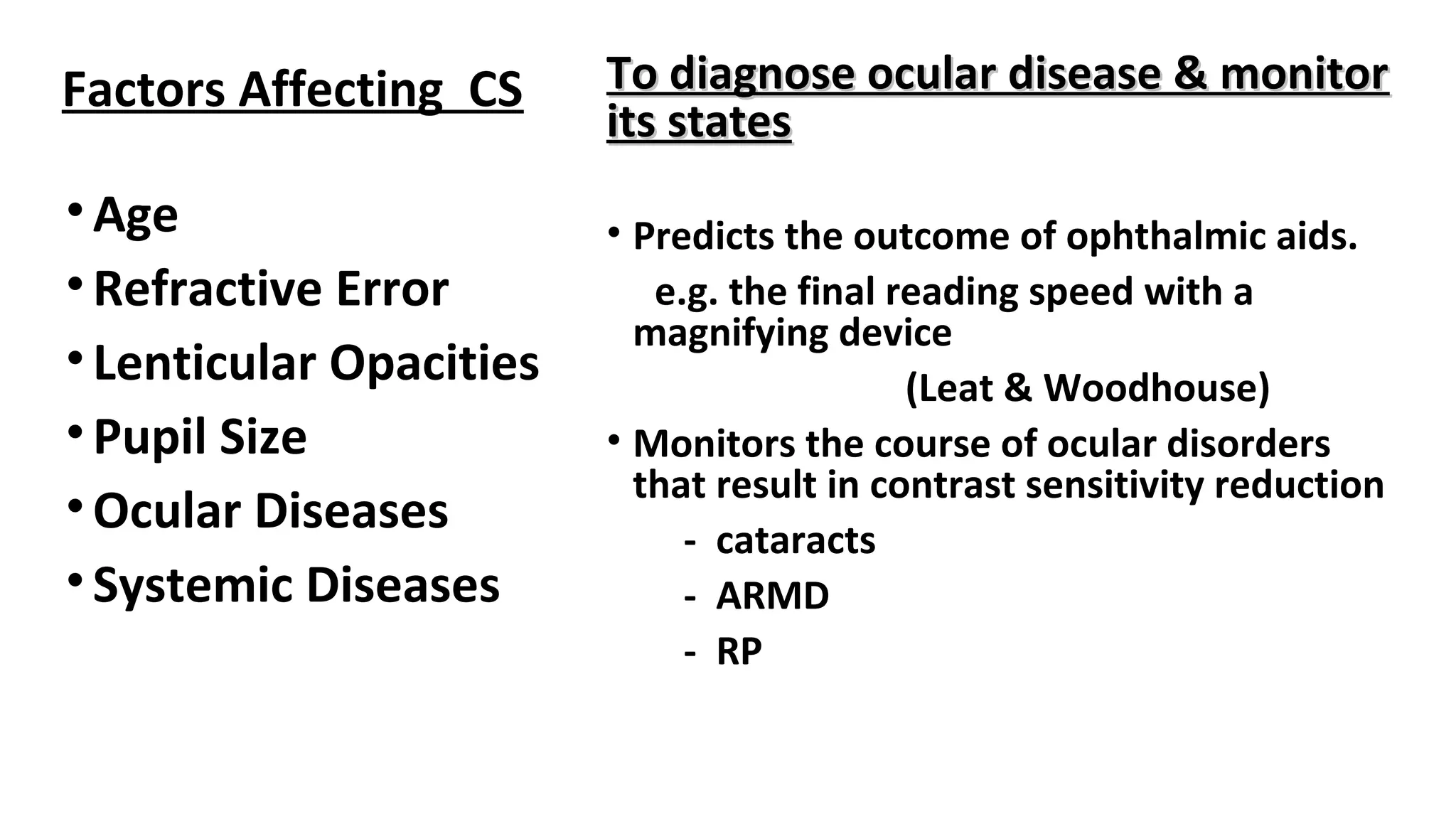
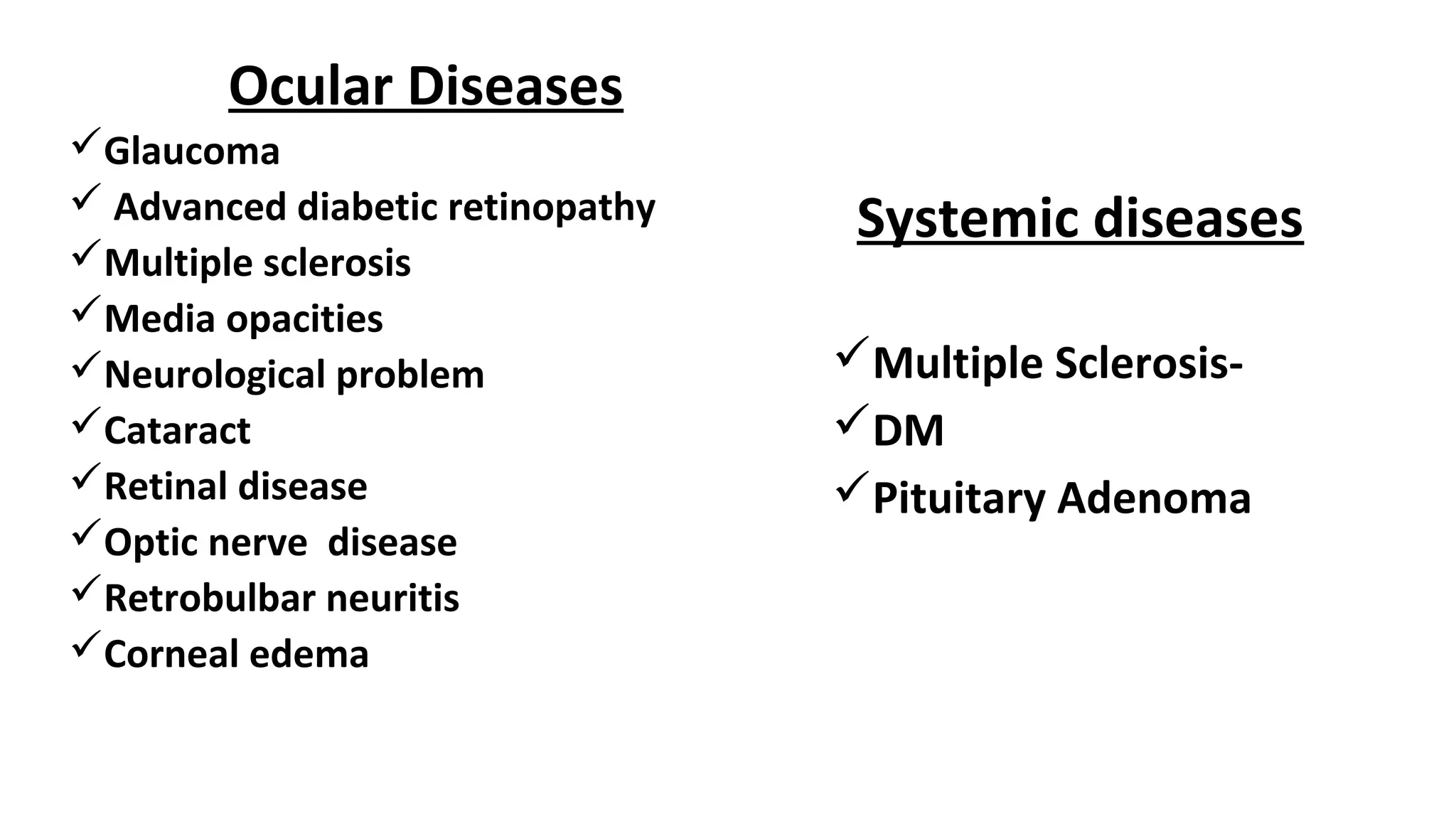


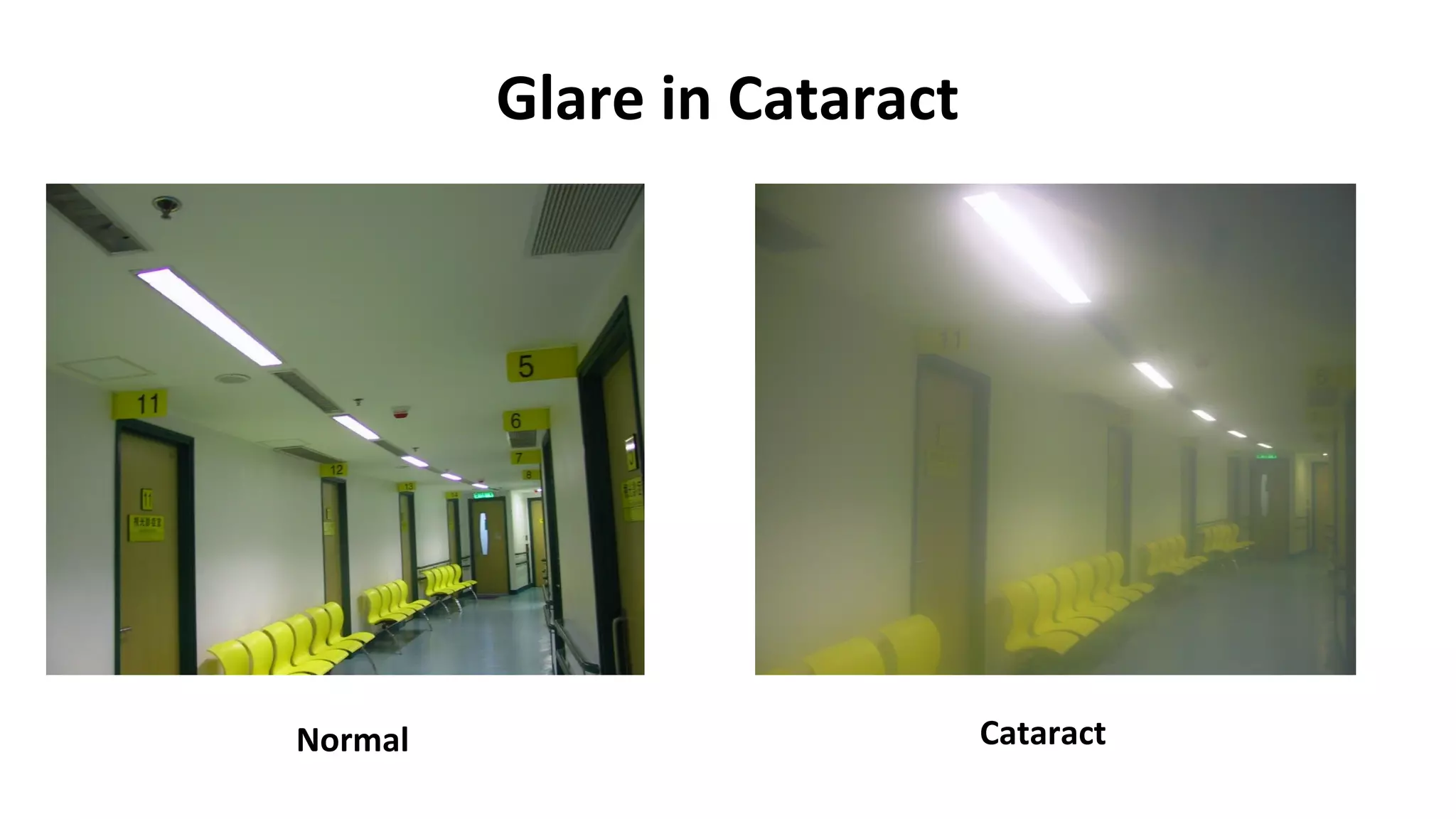

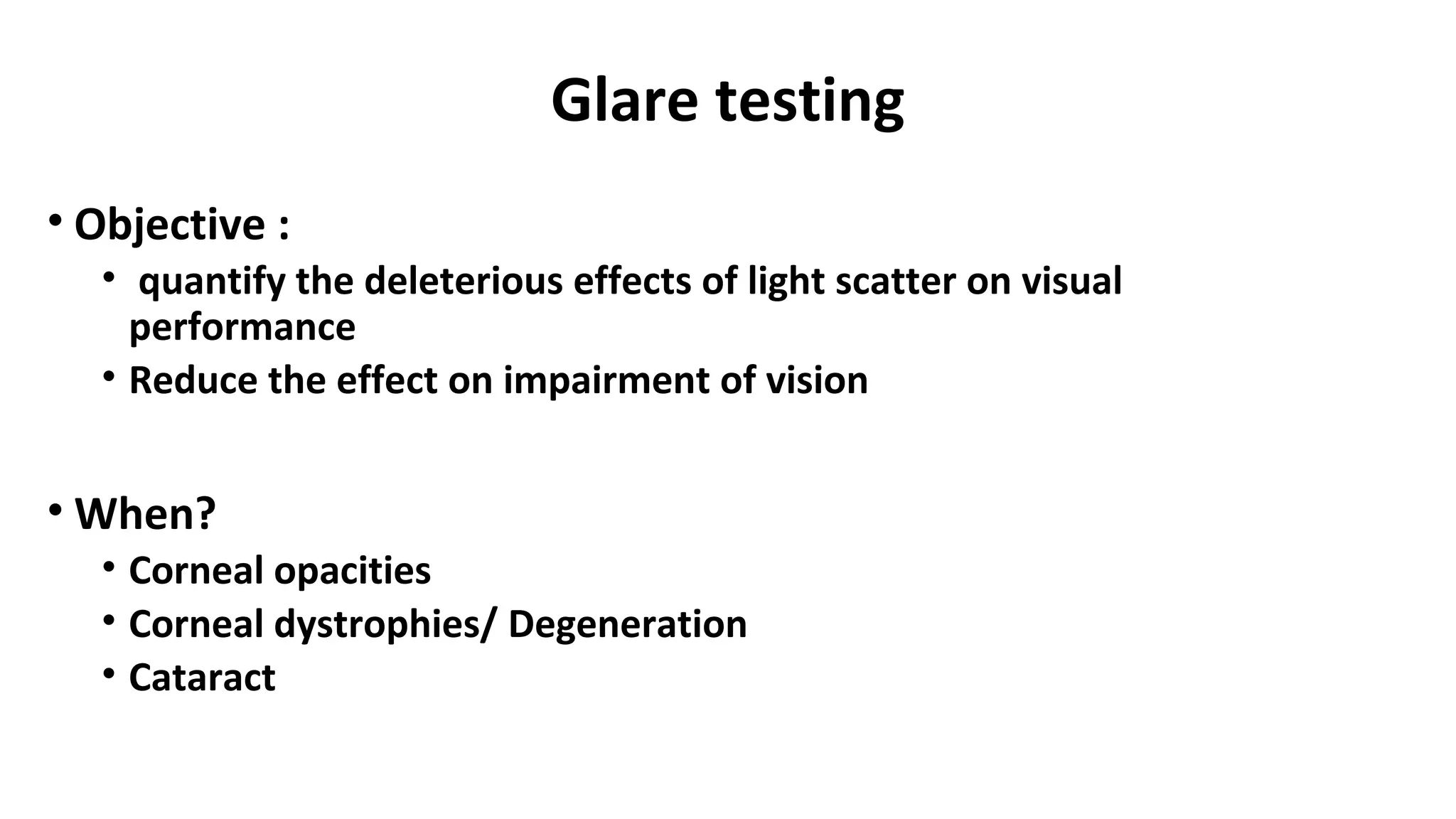
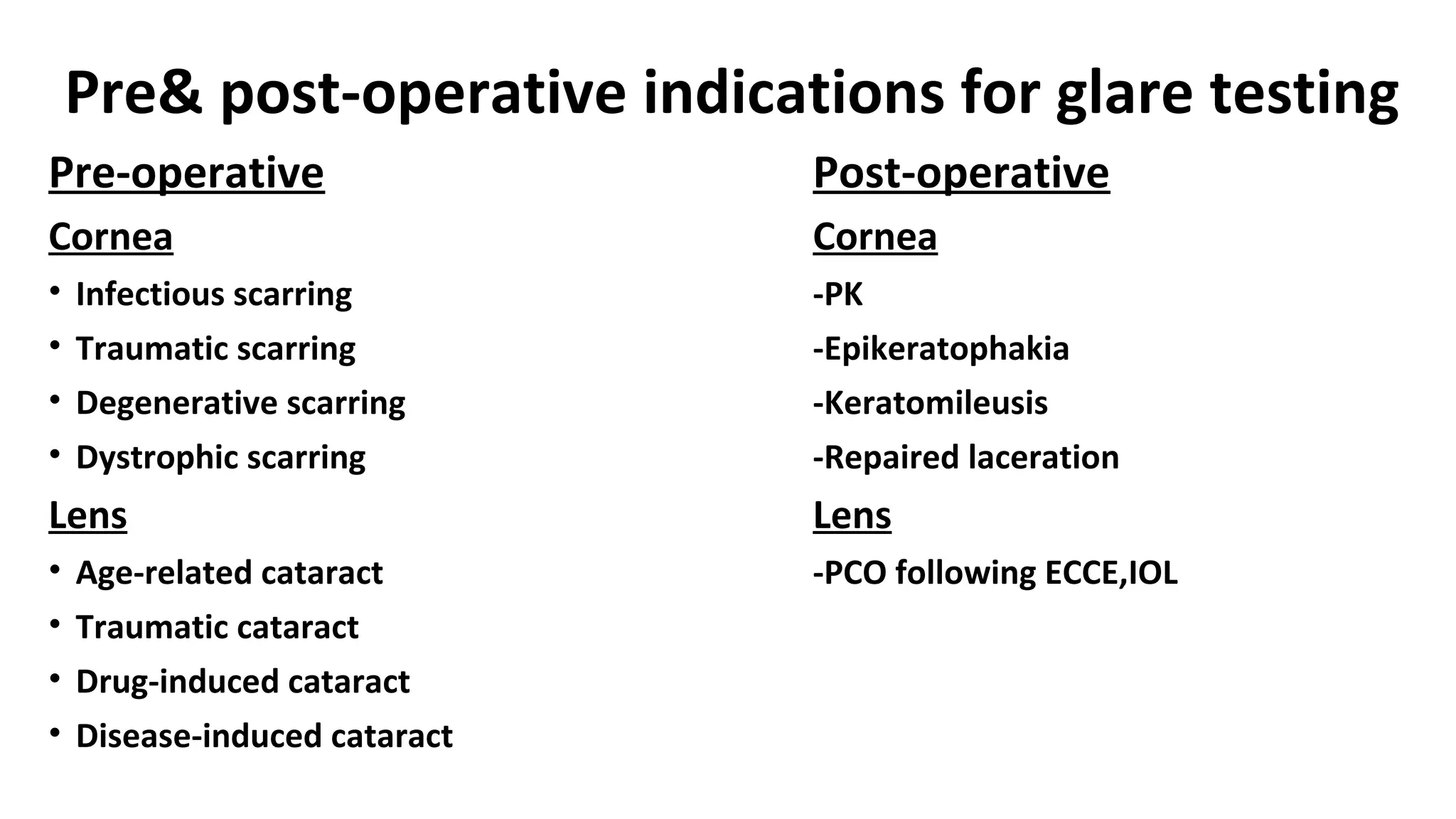



1. The document discusses various clinical tests used to assess contrast sensitivity and glare, including contrast threshold, contrast sensitivity function, and different contrast sensitivity charts. 2. It explains the significance of measuring contrast sensitivity to detect abnormal visual performance, diagnose ocular diseases, and monitor disease states. Reduced contrast sensitivity can occur in conditions like amblyopia, cataracts, and glaucoma even when visual acuity is normal. 3. Methods for testing glare are described, along with their use in assessing conditions involving the cornea and lens, both before and after surgery. Various glare testing devices quantify the effects of light scatter on vision.


![Contrast sensitivity and glare discomfort [Autosaved].pptx](https://cdn.slidesharecdn.com/ss_thumbnails/contrastsensitivityandglarediscomfortautosaved-250419142217-06d6a009-thumbnail.jpg?width=640&height=640&fit=bounds)


