Communication and Interaction
B.Ed. Unit III
M.Vijayalakshmi
Assistant Professor
Unit III
Communication and Interaction
Communication – Concept, Elements,
Process, Barriers and Nature – Types
of classroom communication – verbal,
non – verbal classroom
communication – its barriers and
solutions
Meaning
• ‘Communis’ – Latin Word – ‘to make
common’
• Having common experiences with
others
• Edgar Dale –
Communication is the sharing of ideas
and feelings in a mood of mutuality
• Communication Media
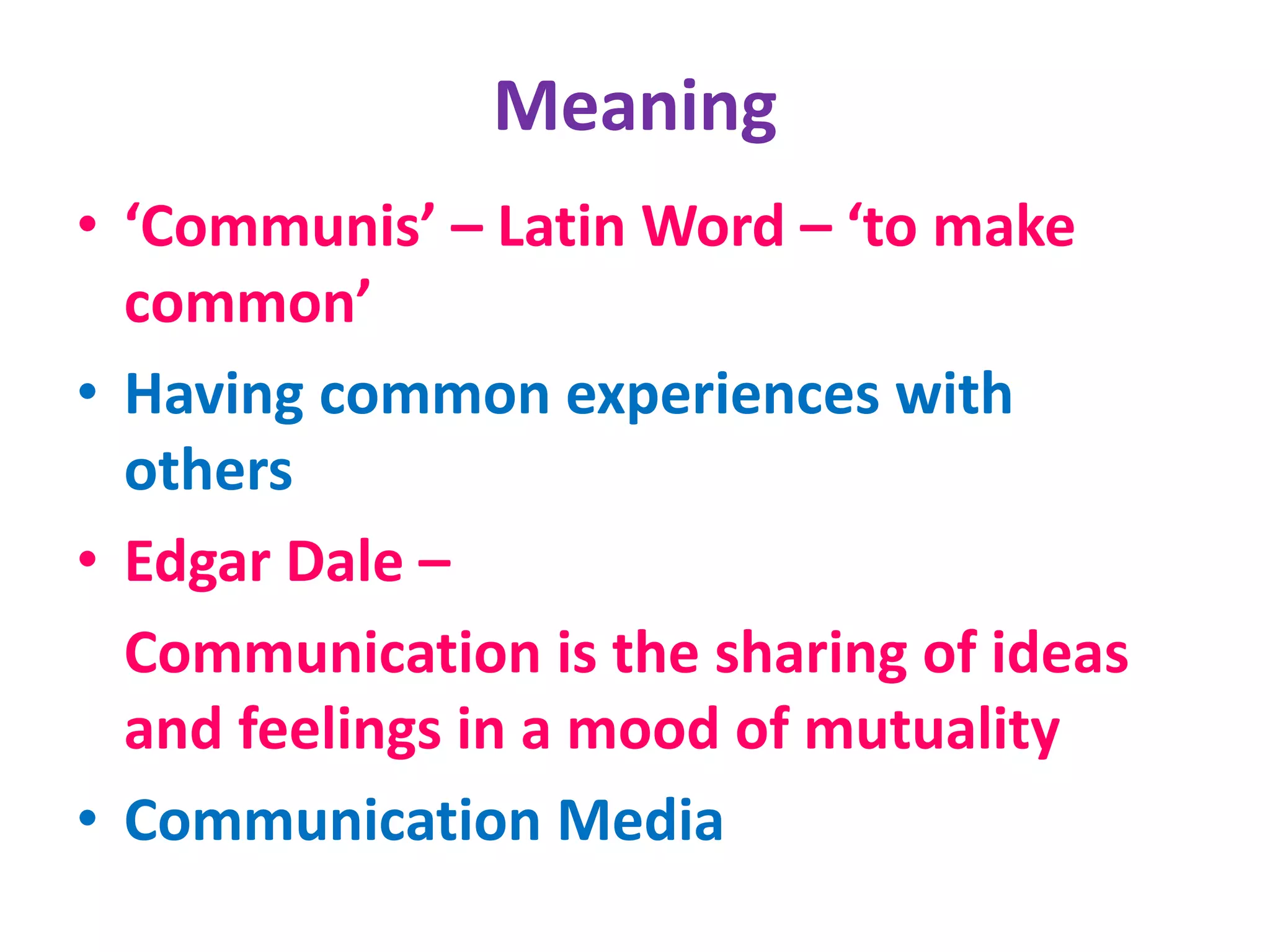
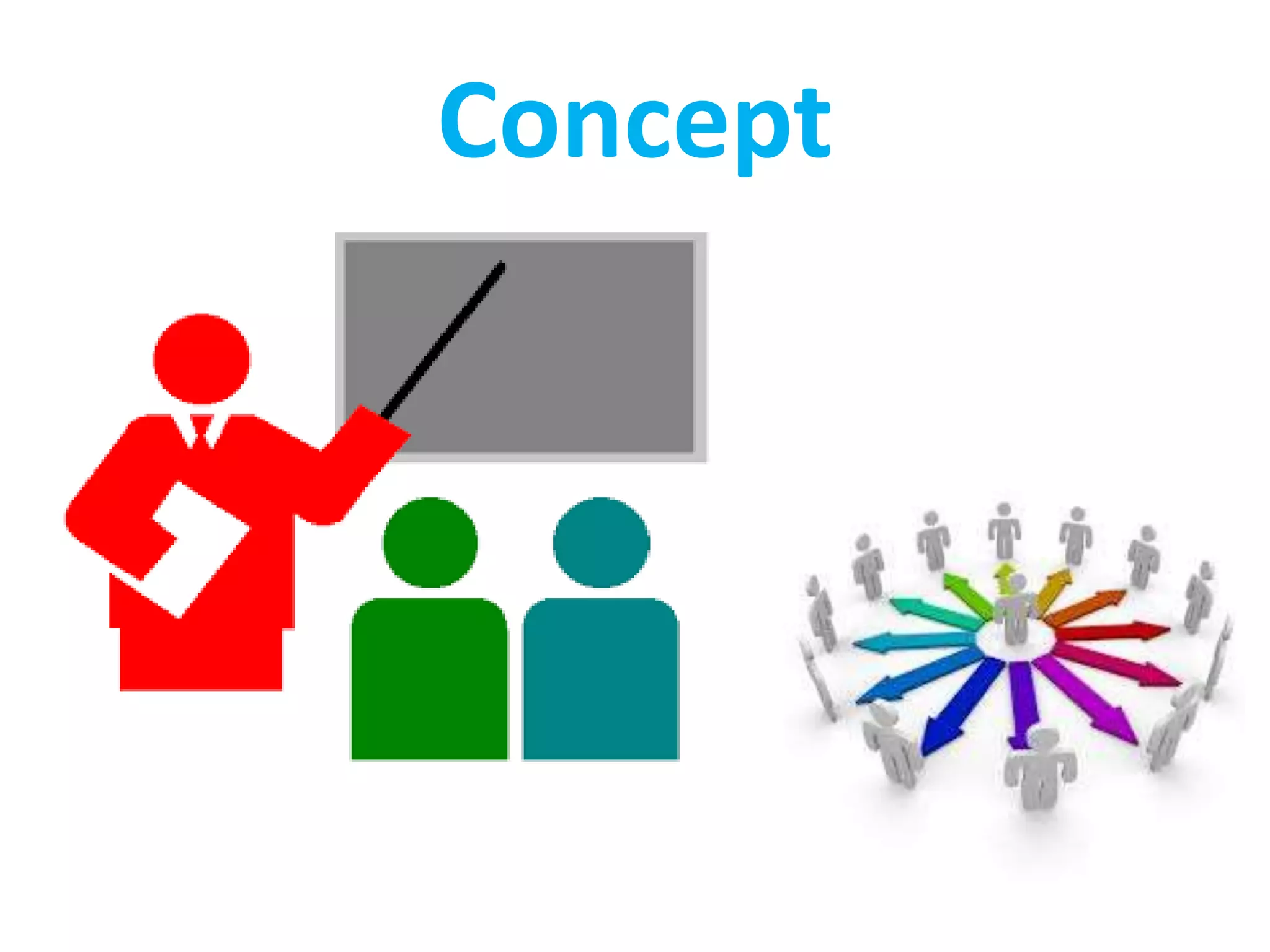
Concept
• Act of communicating
• Ideas, thoughts, feelings, etc. or transfer any
type of information and knowledge to others
• Instruments, appliances, devices
• Telephone, teleprinter, telegram, fax, e –
mail, radio broadcasting and telecasting
• Two-sided affair
• Sharing process
• Verbal or non-verbal
Characteristics of Communication
• It involves at least two persons
• In it message is a must
• It is written, oral or gestural
• It is a two way process
• Its primary purpose is to motivate a response
• It is formal or informal
• It flows up and down and also from side to
side
• It is an integral part of the process of
exchange
Objectives of Communication
• To convey the right message
• To serve coordination
• To create industrial relations
• To develop managerial skill
• To create effectiveness of polices
• To boost morale
Elements of Communication
The Source
The Message
The Channel
The Destination
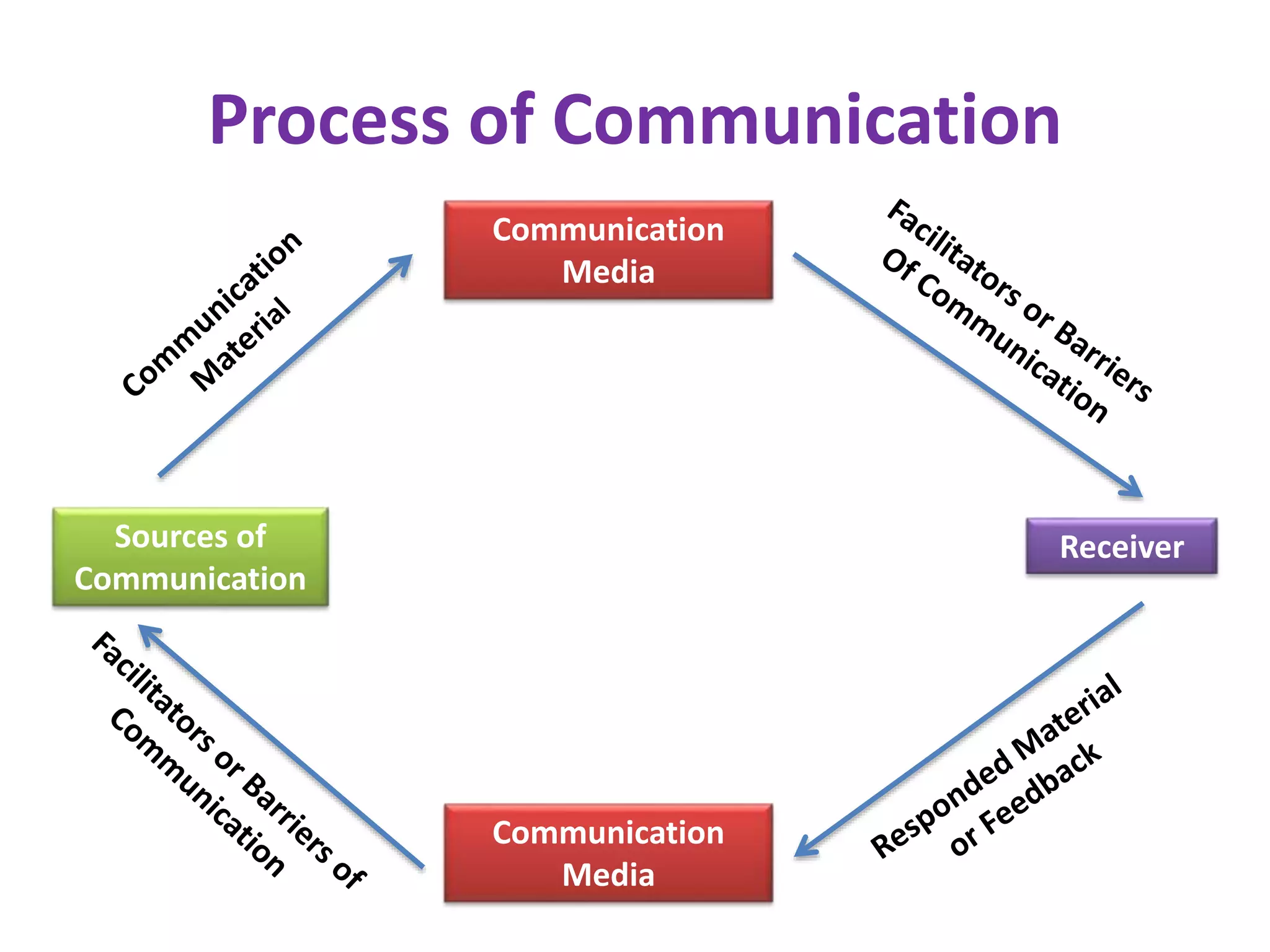
Process of Communication
Communication
Media
Receiver
Communication
Media
Sources of
Communication
Process of Communication
• The source of communication or sender of
the message
• Contents of communication or message
• Media or channel of communication
• The Receiver of the communication
• Response material or Feed back
• Facilitators or Barriers of communication
- Internal barriers of Communication
- External barriers of Communication
Internal barriers of Communication
• Poor physical health or illness
• Poor previous knowledge and general
knowledge
• Poor mental health and improper
psychological make up
• Handicapped in understanding the symbolic
expression, verbalism and graphical
representation etc
External barriers of Communication
• Noise and other similar distracters
• Polluted environment
• Invisibility
• Environmental and physical discomfort
• Improper functioning of the communication
channels
• The non-cooperation or rivalries and
competitions among the participants
• Lack of proper motivation , incentives, zeal
and enthusiasm – sender and receiver
Teaching as a
Process of Communication
• Who – teacher, text-book, writer, T.V.,
presenter, radio broadcast etc.
• Says What – content of the lessons and text-
books etc
• By What means – face-to-face speech,
pictures, films, slides, radio, T.V. etc
• To Whom – learners
• With What effect – reaction and feedback
Forms of Communication
Oral
Spoken Heard
Symbolic
Signs Gestures Pantomime
Graphic
Written Art
Communication in Education
Teaching
Content
Methods Instruction
Communication
Media &
Communication or
Instruction
No
Projected
Media
Software
Approach
Projected
Media
Hardware
Approach
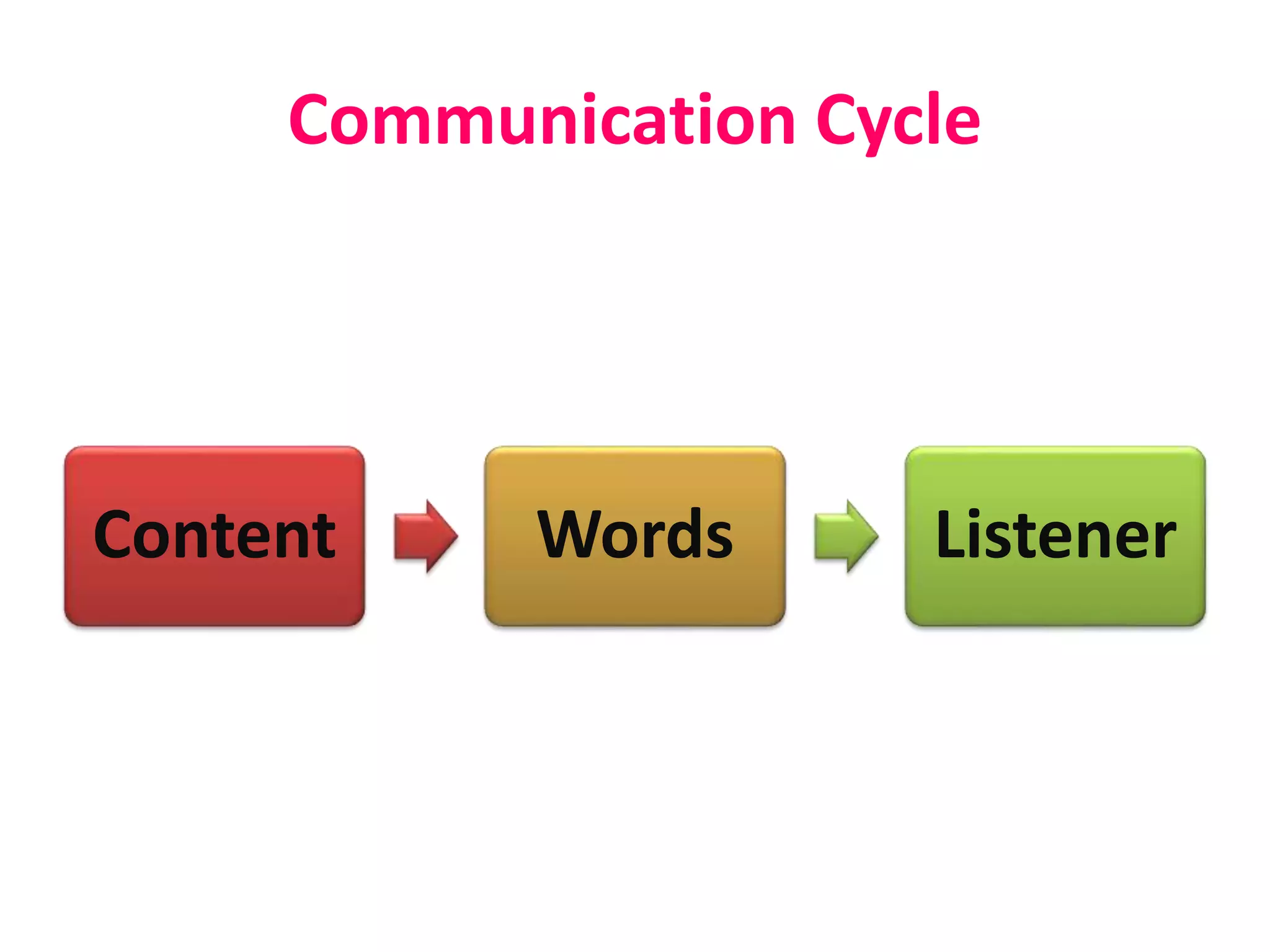
Communication Cycle
Content Words Listener
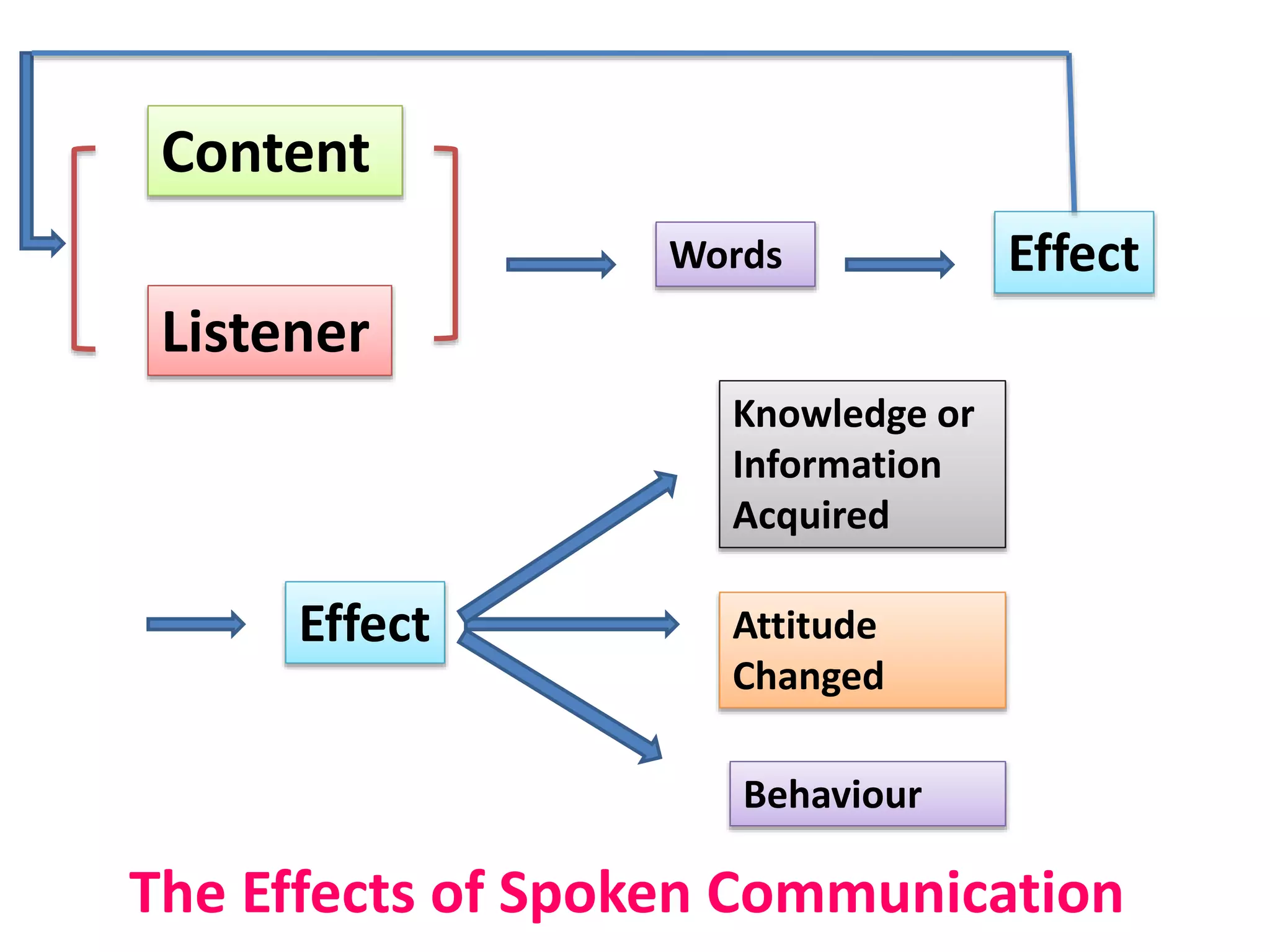
Content
Listener
Words Effect
Effect Attitude
Changed
Knowledge or
Information
Acquired
Behaviour
The Effects of Spoken Communication
Communication
Cycle
Sender
Or
Source
Message
Or
Signal
Medium
Or
Channel of
Communication
Receiver
Or
Decoder
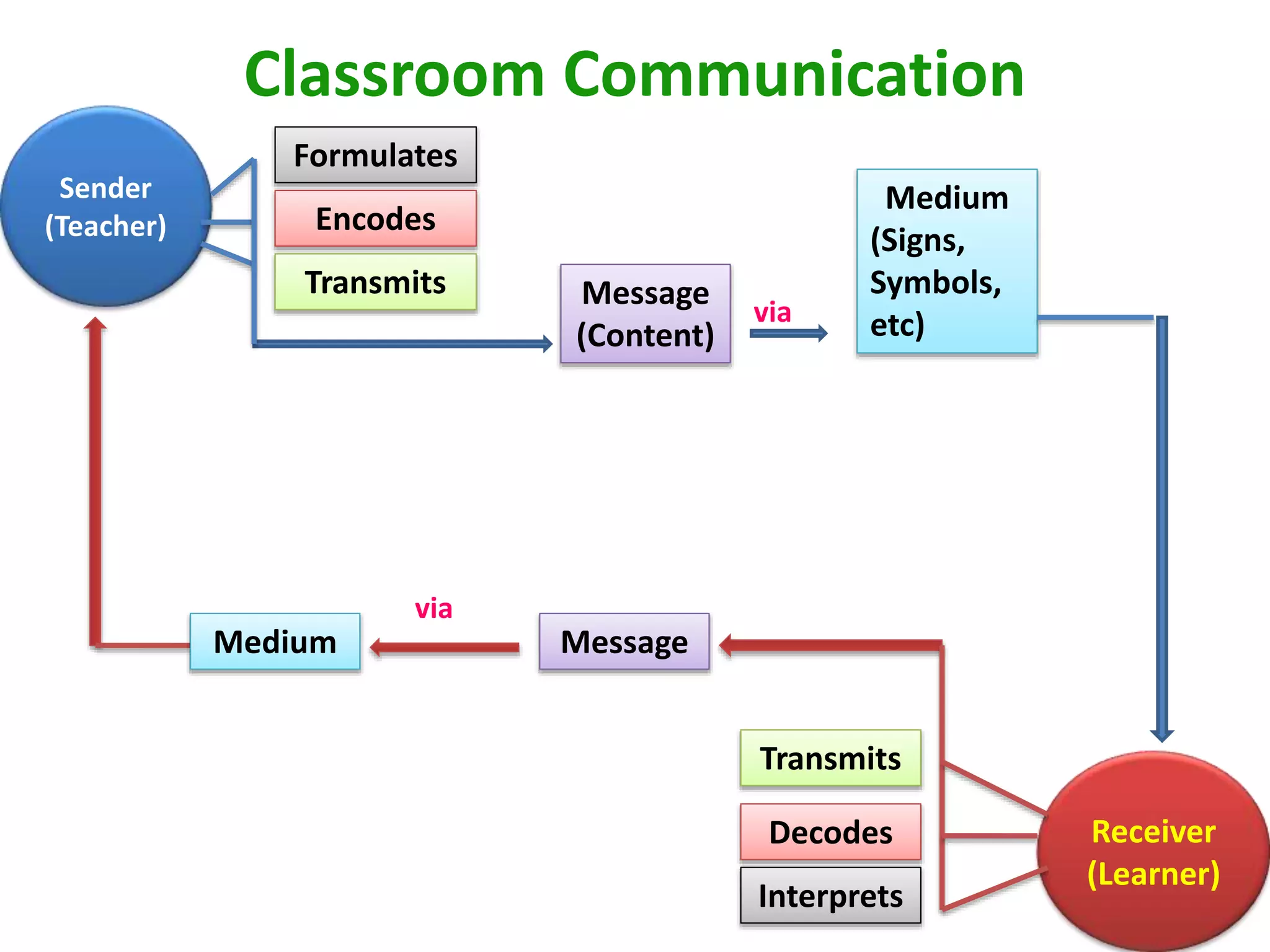
Classroom Communication
Sender
(Teacher)
Receiver
(Learner)
Formulates
Encodes
Transmits Message
(Content)
Medium
(Signs,
Symbols,
etc)
Message
via
Transmits
Decodes
Interprets
Medium
via
Types of Communication
•Verbal and non –verbal
communication
•Natural and Mechanical
communication
Non –Verbal Communication
• Facial Expression
• Language of the Eye
• Body Language
• Sound Symbols
• Symbolic Code Language
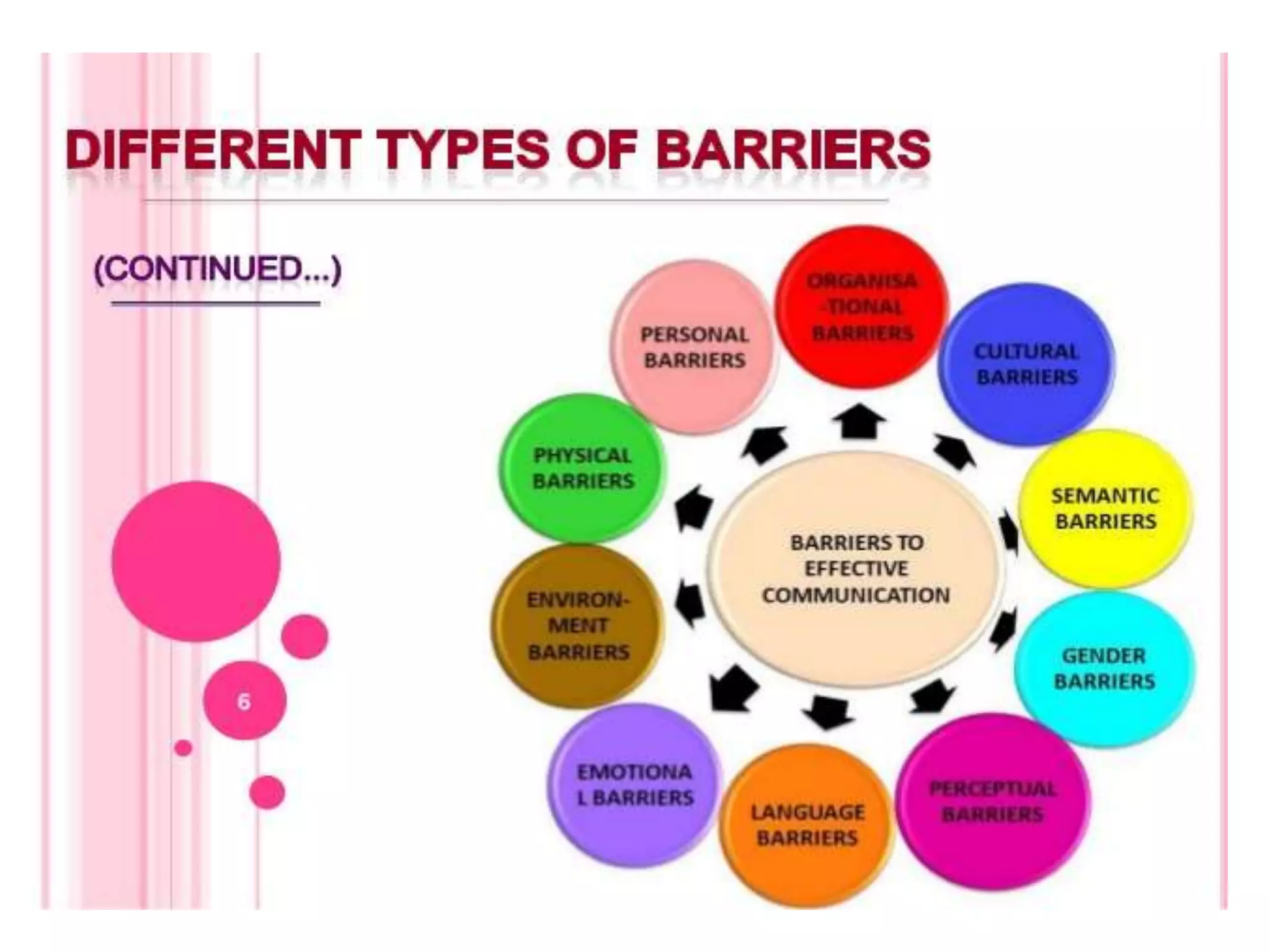
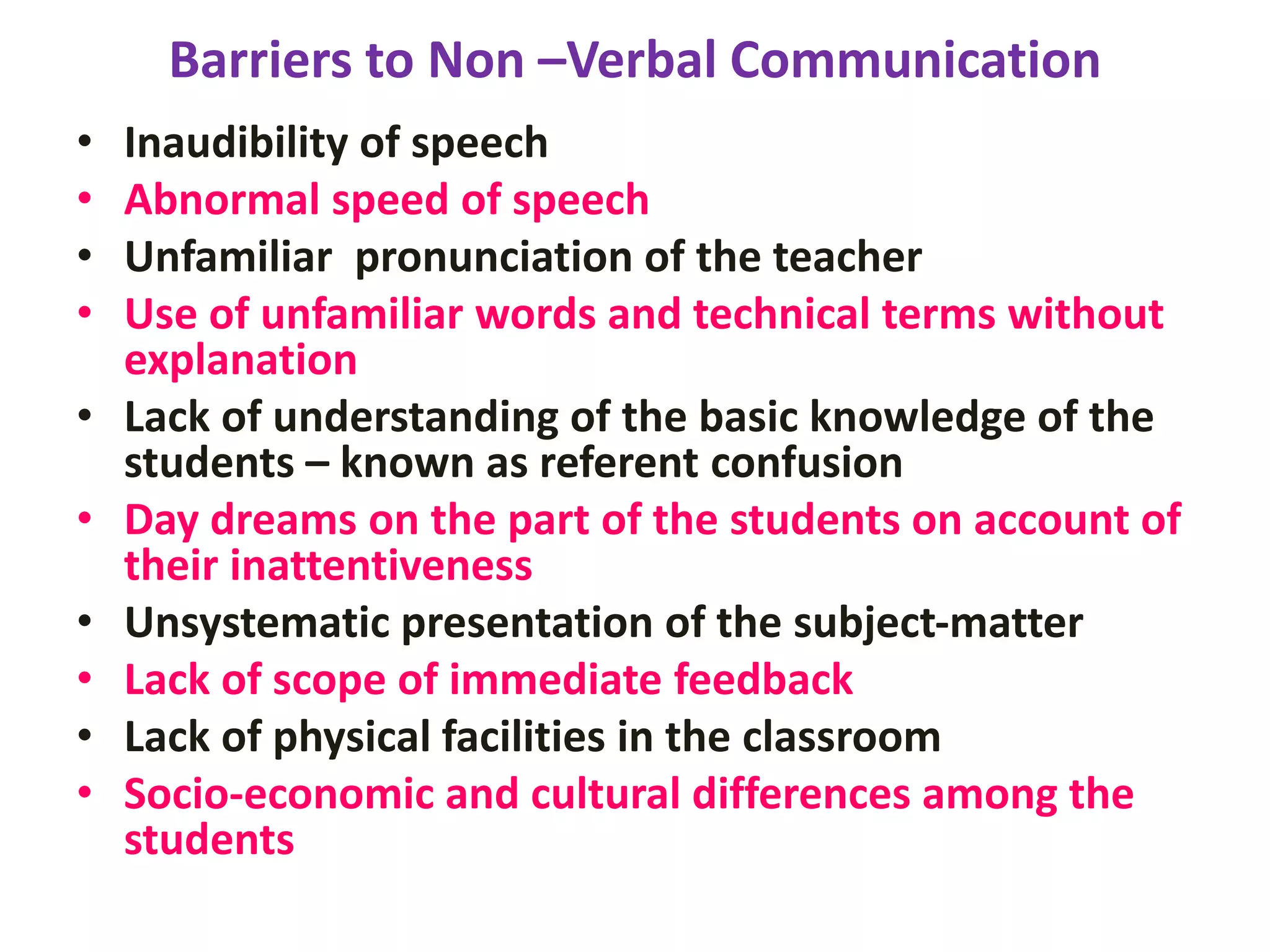
Barriers to Non –Verbal Communication
• Inaudibility of speech
• Abnormal speed of speech
• Unfamiliar pronunciation of the teacher
• Use of unfamiliar words and technical terms without
explanation
• Lack of understanding of the basic knowledge of the
students – known as referent confusion
• Day dreams on the part of the students on account of
their inattentiveness
• Unsystematic presentation of the subject-matter
• Lack of scope of immediate feedback
• Lack of physical facilities in the classroom
• Socio-economic and cultural differences among the
students
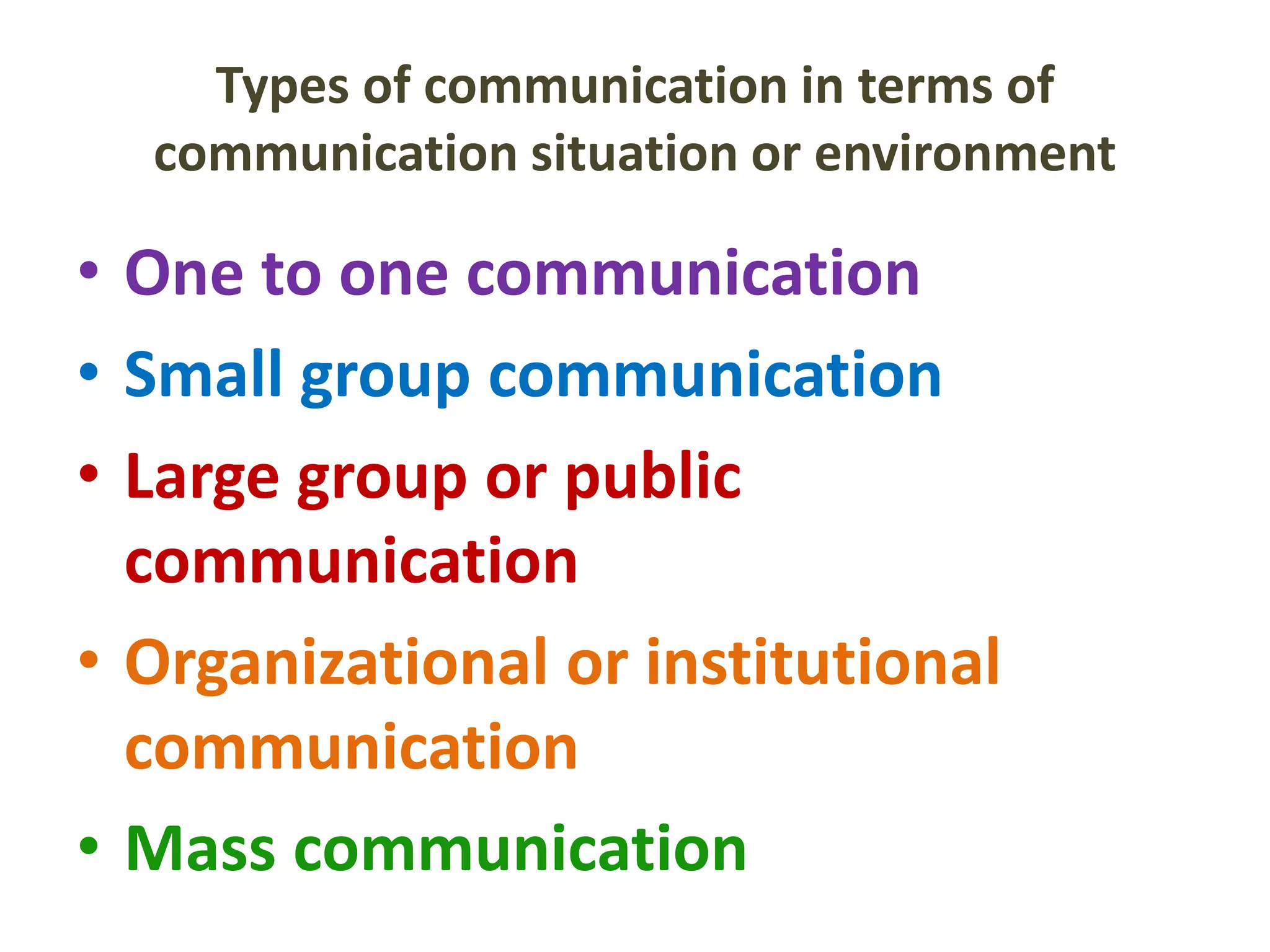
Types of communication in terms of
communication situation or environment
• One to one communication
• Small group communication
• Large group or public
communication
• Organizational or institutional
communication
• Mass communication
Types of Communication
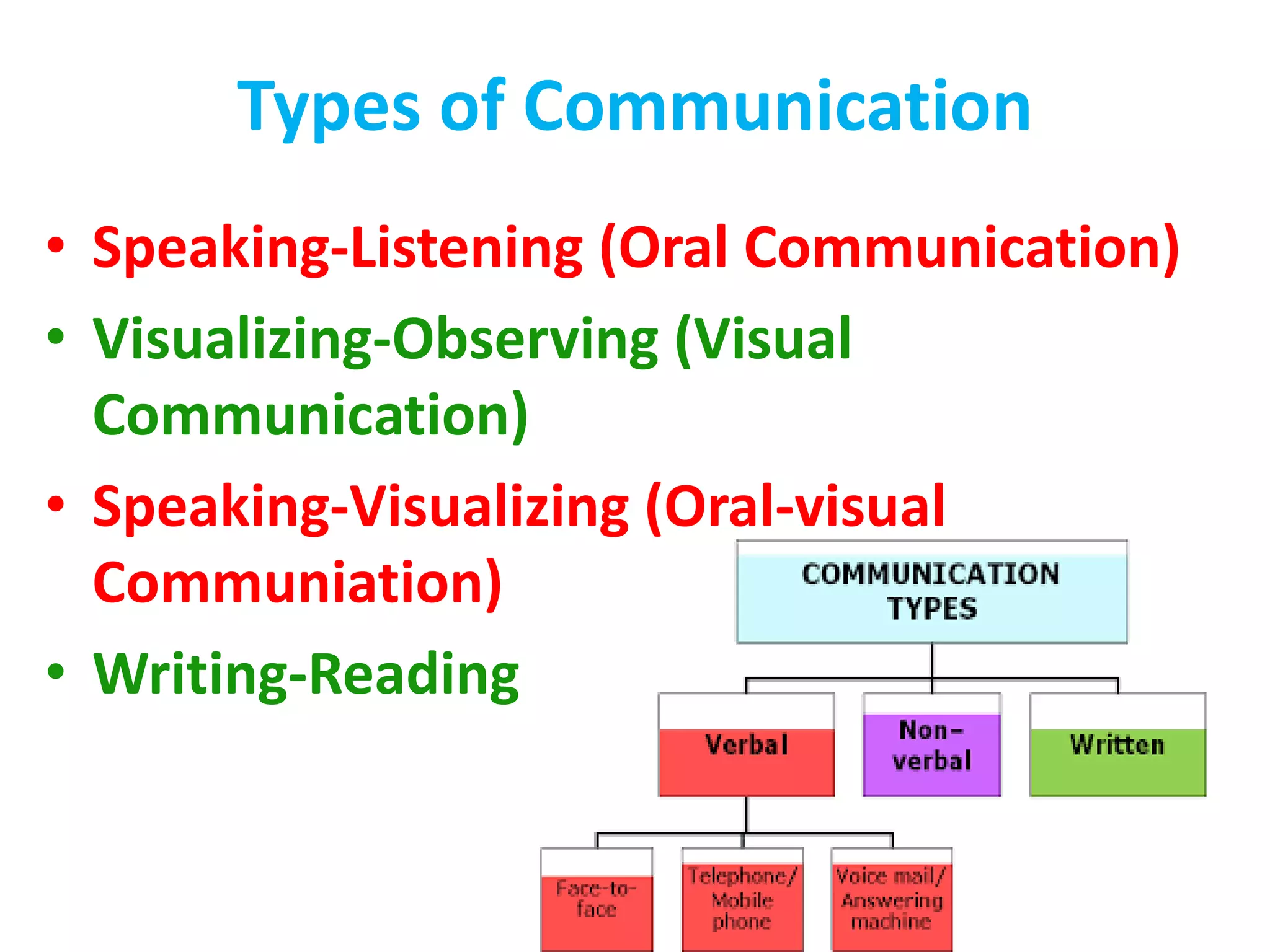
• Speaking-Listening (Oral Communication)
• Visualizing-Observing (Visual
Communication)
• Speaking-Visualizing (Oral-visual
Communiation)
• Writing-Reading
Oral Communiation (Speaking and
listening channels)
i. Prose Communication
ii. Heuristic Communication
Written Communication (Writing and
reading channels)
i. Algorithms Device of Communication
ii. Decision Table Device of
Communication
Oral communication
Content
Method
Aid
Students
Listening
Speaking
Teacher
Speaking
Listening
Teacher and Student Interaction
(Audio Linguistic Method)
Oral communication
1. Continuous Prose
 The structure of the prose - simple and
easy
 Complied concepts and facts –
presented in small and simple
sentences
 Students - Active voice only. No
compound sentences
 No negative sentences
Heuristics
Polio and Dunker
• Several expected outcome
• Several expected interaction
• Structure of content - not define
• Involves risk
Algorithms
Wason and Jones
• Develop chain learning
• Develop reasoning abilities
• Diagnose and rendition is provided
• Realize effectively teaching
objectives
Decision Table
Grad (1961)
• Possible only to commit minimum errors
• Defined by assistance – cause-effect
relationship is explained
• Used in CAI and teaching process. Improved
and changed
• Sources of errors - considered
Barriers in Classroom Communication
• Out of school interference in the form of
commercial and entertainment media
• Excessive verbalism
• Referent confusion
• Day dreaming
• Limited perception
• Physical discomfort
Achieving Effectiveness in
Classroom Communication
• Two-way communication
• Effective Feedback for Efficient Teaching
• Communication and Principle of Clarity
• Development of Motivation
• Use of Technology/Instructional
• Teaching Strategies and Skills
Two-way communication
• Feedback
• Clarity
• Motivation
• Use of audio-visual aids
• Teaching Skills
CONE OF EXPERIENCXES
ABSTRACT WORDS
CHALKBOARD
DISPLAY BOARDS
RADIO, AUDIO CASSETTES
PICTURES, MAPS, PHOTOGRAPHS
SLIDES, FILMSTRIPS
FILMS
TV, CCTV, VCR
DEMONSTRSTION
CASE STUDIES
FIELD VISITS, OBSERVATIONS, EXCURSION
REAL OBJECTS,SPECIMENS
ABSTRACT EXPERIENCE
INDIRECT VICARIOUS
EXPERIENCE
DIRECT
PURPOSEFUL
EXPERIENCE
CONE OF EXPERIENCES
Credit to the Sources
Images are taken from
INTERNET Sources
Communication and Interaction

Communication and Interaction

  • 1.
    Communication and Interaction B.Ed.Unit III M.Vijayalakshmi Assistant Professor
  • 2.
    Unit III Communication andInteraction Communication – Concept, Elements, Process, Barriers and Nature – Types of classroom communication – verbal, non – verbal classroom communication – its barriers and solutions
  • 3.
    Meaning • ‘Communis’ –Latin Word – ‘to make common’ • Having common experiences with others • Edgar Dale – Communication is the sharing of ideas and feelings in a mood of mutuality • Communication Media
  • 4.
  • 5.
    • Act ofcommunicating • Ideas, thoughts, feelings, etc. or transfer any type of information and knowledge to others • Instruments, appliances, devices • Telephone, teleprinter, telegram, fax, e – mail, radio broadcasting and telecasting • Two-sided affair • Sharing process • Verbal or non-verbal
  • 6.
    Characteristics of Communication •It involves at least two persons • In it message is a must • It is written, oral or gestural • It is a two way process • Its primary purpose is to motivate a response • It is formal or informal • It flows up and down and also from side to side • It is an integral part of the process of exchange
  • 7.
    Objectives of Communication •To convey the right message • To serve coordination • To create industrial relations • To develop managerial skill • To create effectiveness of polices • To boost morale
  • 8.
    Elements of Communication TheSource The Message The Channel The Destination
  • 10.
  • 11.
    Process of Communication •The source of communication or sender of the message • Contents of communication or message • Media or channel of communication • The Receiver of the communication • Response material or Feed back • Facilitators or Barriers of communication - Internal barriers of Communication - External barriers of Communication
  • 12.
    Internal barriers ofCommunication • Poor physical health or illness • Poor previous knowledge and general knowledge • Poor mental health and improper psychological make up • Handicapped in understanding the symbolic expression, verbalism and graphical representation etc
  • 13.
    External barriers ofCommunication • Noise and other similar distracters • Polluted environment • Invisibility • Environmental and physical discomfort • Improper functioning of the communication channels • The non-cooperation or rivalries and competitions among the participants • Lack of proper motivation , incentives, zeal and enthusiasm – sender and receiver
  • 14.
    Teaching as a Processof Communication • Who – teacher, text-book, writer, T.V., presenter, radio broadcast etc. • Says What – content of the lessons and text- books etc • By What means – face-to-face speech, pictures, films, slides, radio, T.V. etc • To Whom – learners • With What effect – reaction and feedback
  • 15.
    Forms of Communication Oral SpokenHeard Symbolic Signs Gestures Pantomime Graphic Written Art
  • 16.
    Communication in Education Teaching Content MethodsInstruction Communication Media & Communication or Instruction No Projected Media Software Approach Projected Media Hardware Approach
  • 17.
  • 18.
    Content Listener Words Effect Effect Attitude Changed Knowledgeor Information Acquired Behaviour The Effects of Spoken Communication
  • 19.
  • 26.
  • 27.
    Types of Communication •Verbaland non –verbal communication •Natural and Mechanical communication
  • 28.
    Non –Verbal Communication •Facial Expression • Language of the Eye • Body Language • Sound Symbols • Symbolic Code Language
  • 31.
    Barriers to Non–Verbal Communication • Inaudibility of speech • Abnormal speed of speech • Unfamiliar pronunciation of the teacher • Use of unfamiliar words and technical terms without explanation • Lack of understanding of the basic knowledge of the students – known as referent confusion • Day dreams on the part of the students on account of their inattentiveness • Unsystematic presentation of the subject-matter • Lack of scope of immediate feedback • Lack of physical facilities in the classroom • Socio-economic and cultural differences among the students
  • 32.
    Types of communicationin terms of communication situation or environment • One to one communication • Small group communication • Large group or public communication • Organizational or institutional communication • Mass communication
  • 33.
    Types of Communication •Speaking-Listening (Oral Communication) • Visualizing-Observing (Visual Communication) • Speaking-Visualizing (Oral-visual Communiation) • Writing-Reading
  • 37.
    Oral Communiation (Speakingand listening channels) i. Prose Communication ii. Heuristic Communication Written Communication (Writing and reading channels) i. Algorithms Device of Communication ii. Decision Table Device of Communication
  • 38.
  • 39.
    Oral communication 1. ContinuousProse  The structure of the prose - simple and easy  Complied concepts and facts – presented in small and simple sentences  Students - Active voice only. No compound sentences  No negative sentences
  • 40.
    Heuristics Polio and Dunker •Several expected outcome • Several expected interaction • Structure of content - not define • Involves risk
  • 41.
    Algorithms Wason and Jones •Develop chain learning • Develop reasoning abilities • Diagnose and rendition is provided • Realize effectively teaching objectives
  • 42.
    Decision Table Grad (1961) •Possible only to commit minimum errors • Defined by assistance – cause-effect relationship is explained • Used in CAI and teaching process. Improved and changed • Sources of errors - considered
  • 44.
    Barriers in ClassroomCommunication • Out of school interference in the form of commercial and entertainment media • Excessive verbalism • Referent confusion • Day dreaming • Limited perception • Physical discomfort
  • 45.
    Achieving Effectiveness in ClassroomCommunication • Two-way communication • Effective Feedback for Efficient Teaching • Communication and Principle of Clarity • Development of Motivation • Use of Technology/Instructional • Teaching Strategies and Skills
  • 46.
    Two-way communication • Feedback •Clarity • Motivation • Use of audio-visual aids • Teaching Skills
  • 48.
    CONE OF EXPERIENCXES ABSTRACTWORDS CHALKBOARD DISPLAY BOARDS RADIO, AUDIO CASSETTES PICTURES, MAPS, PHOTOGRAPHS SLIDES, FILMSTRIPS FILMS TV, CCTV, VCR DEMONSTRSTION CASE STUDIES FIELD VISITS, OBSERVATIONS, EXCURSION REAL OBJECTS,SPECIMENS ABSTRACT EXPERIENCE INDIRECT VICARIOUS EXPERIENCE DIRECT PURPOSEFUL EXPERIENCE
  • 49.
  • 50.
    Credit to theSources Images are taken from INTERNET Sources