TEACHING AIDS 
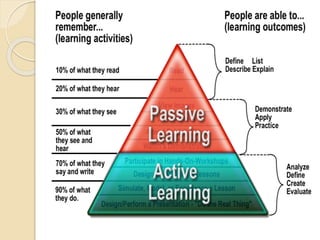
” “We remember 20% of what we HEAR 
We remember 30% of what we SEE 
We remember 50% of what we SEE & HEAR 
We remember 90% of what we SAY & DO” 
“I hear, I forget 
I see, I remember 
I do, I understand
TEACHING AIDS 
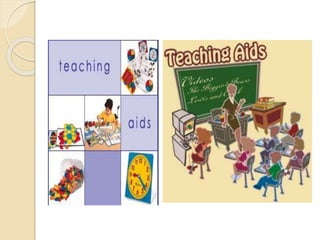
 Teaching aids are the tools that 
teachers use them in the classroom 
such as flash cards,maps,cassette 
and blackboard. 
 A teaching aid is a tool used by 
teachers to help learners improve 
reading and other skills, illustrate or 
reinforce a skill, fact, or idea, and 
relieve anxiety, fears, or boredom, 
since many teaching aids are like 
games.
Categories of Teaching Aids 
 3 categories 
1) Audio Aids 
2) Visual Aid 
3) Audio – Visual Aid 
 A-V aid imply, “anything by means of 
which learning process may be 
encouraged or carried on through the 
sense of hearing or the sense of 
sight.”
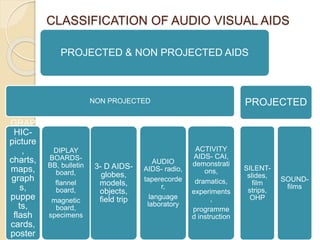
CLASSIFICATION OF AUDIO VISUAL AIDS 
PROJECTED & NON PROJECTED AIDS 
NON PROJECTED 
GRAP 
HIC-picture 
, 
charts, 
maps, 
graph 
s, 
puppe 
ts, 
flash 
cards, 
poster 
s 
DIPLAY 
BOARDS-BB, 
bulletin 
board, 
flannel 
board, 
magnetic 
board, 
specimens 
3- D AIDS-globes, 
models, 
objects, 
field trip 
AUDIO 
AIDS- radio, 
taperecorde 
r, 
language 
laboratory 
ACTIVITY 
AIDS- CAI, 
demonstrati 
ons, 
dramatics, 
experiments 
, 
programme 
d instruction 
PROJECTED 
SILENT-slides, 
film 
strips, 
OHP 
SOUND-films
EDGAR DALE’S 
CLASSIFICATION OF AUDIO 
VISUAL AIDS
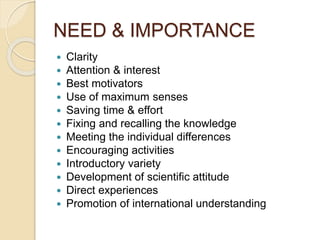
NEED & IMPORTANCE 
 Clarity 
 Attention & interest 
 Best motivators 
 Use of maximum senses 
 Saving time & effort 
 Fixing and recalling the knowledge 
 Meeting the individual differences 
 Encouraging activities 
 Introductory variety 
 Development of scientific attitude 
 Direct experiences 
 Promotion of international understanding
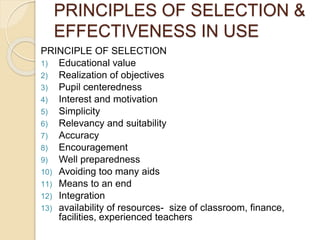
PRINCIPLES OF SELECTION & 
EFFECTIVENESS IN USE 
PRINCIPLE OF SELECTION 
1) Educational value 
2) Realization of objectives 
3) Pupil centeredness 
4) Interest and motivation 
5) Simplicity 
6) Relevancy and suitability 
7) Accuracy 
8) Encouragement 
9) Well preparedness 
10) Avoiding too many aids 
11) Means to an end 
12) Integration 
13) availability of resources- size of classroom, finance, 
facilities, experienced teachers
PRINCIPLE OF USE 
1) preparation- awareness, teacher's 
preparation, students participation 
2) Proper presentation- handling, 
checking, timely presentation, 
avoiding distraction 
3) Protection and preservation 
4) Action 
5) Follow up 
6) Evaluation
CHARTS
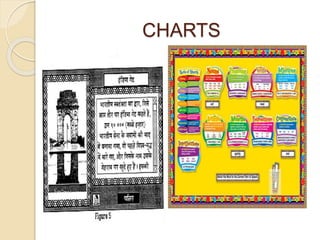
CHART 
 A chart is a useful way to present and 
display information or instructions, 
especially in a classroom or other 
educational situation. It can range in 
size from a large wall chart to a single 
piece of paper. 
 Acc to Edgar Dale , “a chart is a visual 
symbol summarising or comparing or 
contrasting or performing other helpful 
services in explaning subject matter”
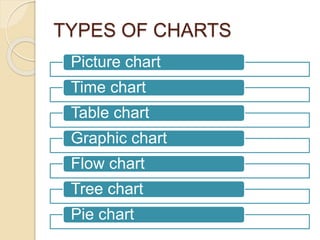
TYPES OF CHARTS 
Picture chart 
Time chart 
Table chart 
Graphic chart 
Flow chart 
Tree chart 
Pie chart
FLASH CARDS
FLASH CARDS 
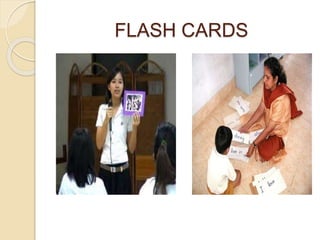
 Flash cards are useful for drilling new 
letters, words, and other information. 
They are normally used in a 
classroom, but can also be used more 
informally. 
 A flash card is part of a set of cards on 
which are written items to be studied. 
They are “flashed” (shown quickly) 
one by one to a learner to elicit a quick 
response.
 Flash cards are sets of cards printed with 
information to be studied, such as 
 definitions 
 formulas 
 letters 
 multiplication tables 
 prefixes 
 words. 
 If there is an answer or solution to what 
appears on the front of the card, it is 
printed on the back so that the person 
showing the cards can see if the 
learner's answer is correct
FLIP CHARTS
FLIP CHARTS 
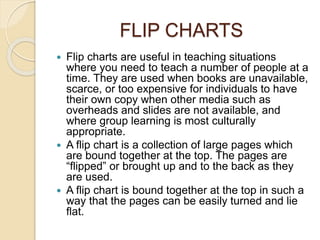
 Flip charts are useful in teaching situations 
where you need to teach a number of people at a 
time. They are used when books are unavailable, 
scarce, or too expensive for individuals to have 
their own copy when other media such as 
overheads and slides are not available, and 
where group learning is most culturally 
appropriate. 
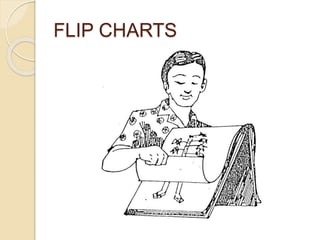
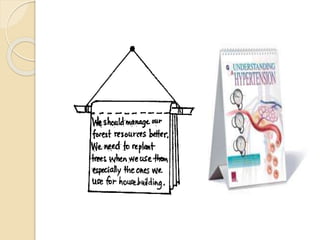
 A flip chart is a collection of large pages which 
are bound together at the top. The pages are 
“flipped” or brought up and to the back as they 
are used. 
 A flip chart is bound together at the top in such a 
way that the pages can be easily turned and lie 
flat.
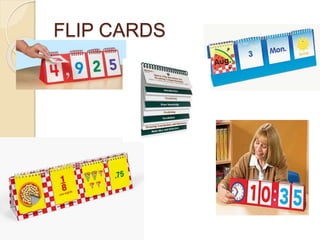
FLIP CARDS
FLANNEL BOARD
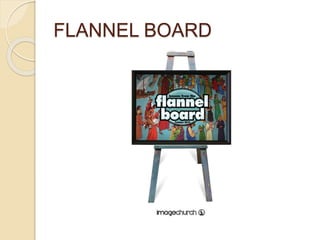
FLANNEL BOARD 
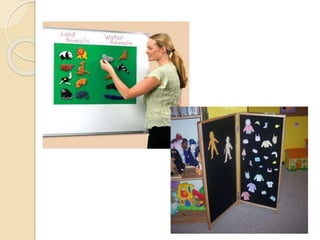
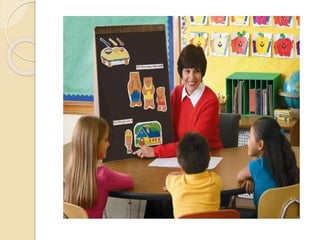
 It consists of a piece of flannel or felt 
made from wool, stretched tightly over 
a strong backing of plywood. Pictures, 
cards and similar material can be 
made stick on it.
MODELS
MODEL 
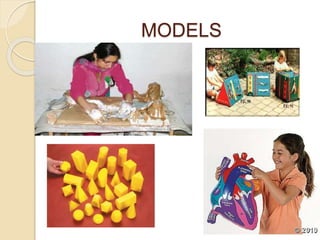
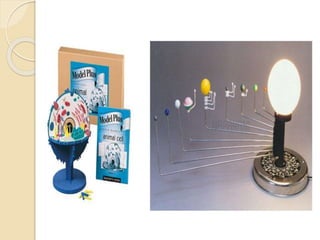
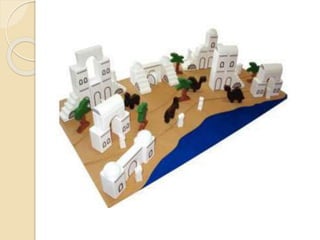
 Models are replicas or copies of real 
objects with suitable change in size, 
complexity, timing, safety and cost 
factors. 
 CLASSIFICATION- 
1) Simplified 
2) Scale 
3) Working 
4) Cross-sectional 
5) Mock-ups
GLOBE 
a globe is a spherical model of 
earth
GRAPHS
GRAPHS 
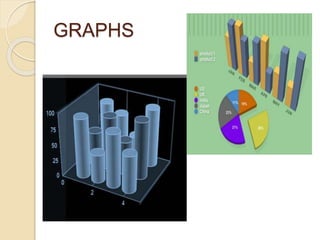
 Flat pictures which employ dots, lines 
or pictures to visualize numerical and 
statistical data to show statistics or 
relationships. 
 Graphs are by nature a summarizing 
device. 
 Effective tools for comparisons and 
contrast.
KINDS 
Line 
Bar 
Flann 
el 
Circle 
or pie 
Pictorial
CARTOONS
CARTOONS 
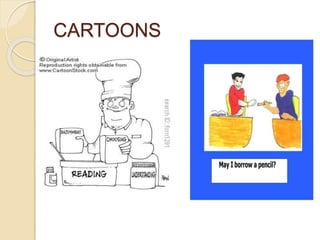
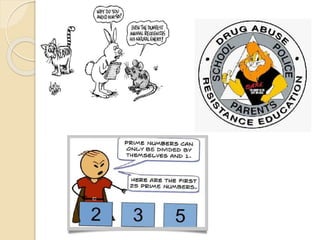
 A cartoon is an interpretive picture, 
usually a drawing, intended to convey 
a message or point of view about 
things, events or situation; may make 
free use of exaggeration and 
symbolism.
PUPPETS
SLIDES( 
TRANSPARENCIES) 
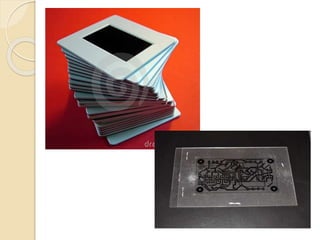
 Any positive transparency mounted 
individually for use in a projector or 
viewing transmitted light.
MOBILE TECHNOLOGY
 Internet and Wi Fi 
 Touch screen 
 Games and quizzes 
 Mobile applications 
 Any time & anywhere
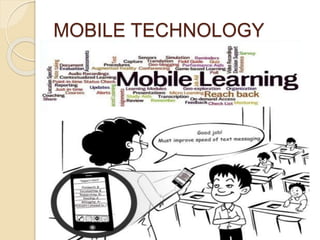
The value of mobile 
learning 
 It is important to bring new technology into the 
classroom. 
 Devices used are more lightweight than books and 
PCs. 
 Mobile learning can be used to diversify the types 
of learning activities students (or a blended 
learning approach). 
 Mobile learning supports the learning process 
rather than being integral to it. 
 Mobile learning can be a useful add-on tool for 
students with special needs. However, for SMS and 
MMS this might be dependent on the students’ 
specific disabilities or difficulties involved. 
 Mobile learning can be used as a ‘hook’ to re-engage 
disaffected youth.
Benefits 
 Relatively inexpensive opportunities, 
as the cost of mobile devices are 
significantly less than PCs and laptops 
 Multimedia content delivery and 
creation options 
 Continuous and situated learning 
support 
 Decrease in training costs 
 Potentially a more rewarding learning 
experience
Technical challenges include 
 Connectivity and battery life 
 Screen size and key size 
 Meeting required bandwidth for 
nonstop/fast streaming 
 Number of file/asset formats supported by 
a specific device 
 Content security or copyright issue from 
authoring group 
 Multiple standards, multiple screen sizes, 
multiple operating systems 
 Limited memory 
 Risk of sudden obsolescence
Social and educational 
challenges include 
 Accessibility and cost barriers for end users 
 How to assess learning outside the classroom 
 Content's security or pirating issues 
 Frequent changes in device 
models/technologies/functionality etc. 
 Developing an appropriate theory of learning for the 
mobile age 
 Design of technology to support a lifetime of learning 
 No restriction on learning timetable 
 Personal and private information and content 
 No demographic boundary 
 Disruption of students' personal and academic lives 
 Access to and use of the technology in developing 
countries 
 Risk of distraction
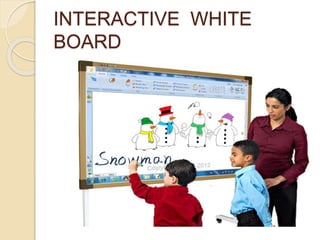
INTERACTIVE WHITE 
BOARD
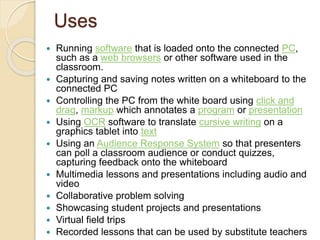
 an interactive whiteboard is a large 
display that connects to a computer 
and a projector 
 use of graphics and other visuals to 
represent information
Uses 
 Running software that is loaded onto the connected PC, 
such as a web browsers or other software used in the 
classroom. 
 Capturing and saving notes written on a whiteboard to the 
connected PC 
 Controlling the PC from the white board using click and 
drag, markup which annotates a program or presentation 
 Using OCR software to translate cursive writing on a 
graphics tablet into text 
 Using an Audience Response System so that presenters 
can poll a classroom audience or conduct quizzes, 
capturing feedback onto the whiteboard 
 Multimedia lessons and presentations including audio and 
video 
 Collaborative problem solving 
 Showcasing student projects and presentations 
 Virtual field trips 
 Recorded lessons that can be used by substitute teachers

Teaching Aids

  • 1.
    TEACHING AIDS ”“We remember 20% of what we HEAR We remember 30% of what we SEE We remember 50% of what we SEE & HEAR We remember 90% of what we SAY & DO” “I hear, I forget I see, I remember I do, I understand
  • 3.
    TEACHING AIDS Teaching aids are the tools that teachers use them in the classroom such as flash cards,maps,cassette and blackboard.  A teaching aid is a tool used by teachers to help learners improve reading and other skills, illustrate or reinforce a skill, fact, or idea, and relieve anxiety, fears, or boredom, since many teaching aids are like games.
  • 4.
    Categories of TeachingAids  3 categories 1) Audio Aids 2) Visual Aid 3) Audio – Visual Aid  A-V aid imply, “anything by means of which learning process may be encouraged or carried on through the sense of hearing or the sense of sight.”
  • 5.
    CLASSIFICATION OF AUDIOVISUAL AIDS PROJECTED & NON PROJECTED AIDS NON PROJECTED GRAP HIC-picture , charts, maps, graph s, puppe ts, flash cards, poster s DIPLAY BOARDS-BB, bulletin board, flannel board, magnetic board, specimens 3- D AIDS-globes, models, objects, field trip AUDIO AIDS- radio, taperecorde r, language laboratory ACTIVITY AIDS- CAI, demonstrati ons, dramatics, experiments , programme d instruction PROJECTED SILENT-slides, film strips, OHP SOUND-films
  • 7.
    EDGAR DALE’S CLASSIFICATIONOF AUDIO VISUAL AIDS
  • 8.
    NEED & IMPORTANCE  Clarity  Attention & interest  Best motivators  Use of maximum senses  Saving time & effort  Fixing and recalling the knowledge  Meeting the individual differences  Encouraging activities  Introductory variety  Development of scientific attitude  Direct experiences  Promotion of international understanding
  • 9.
    PRINCIPLES OF SELECTION& EFFECTIVENESS IN USE PRINCIPLE OF SELECTION 1) Educational value 2) Realization of objectives 3) Pupil centeredness 4) Interest and motivation 5) Simplicity 6) Relevancy and suitability 7) Accuracy 8) Encouragement 9) Well preparedness 10) Avoiding too many aids 11) Means to an end 12) Integration 13) availability of resources- size of classroom, finance, facilities, experienced teachers
  • 10.
    PRINCIPLE OF USE 1) preparation- awareness, teacher's preparation, students participation 2) Proper presentation- handling, checking, timely presentation, avoiding distraction 3) Protection and preservation 4) Action 5) Follow up 6) Evaluation
  • 11.
  • 13.
    CHART  Achart is a useful way to present and display information or instructions, especially in a classroom or other educational situation. It can range in size from a large wall chart to a single piece of paper.  Acc to Edgar Dale , “a chart is a visual symbol summarising or comparing or contrasting or performing other helpful services in explaning subject matter”
  • 14.
    TYPES OF CHARTS Picture chart Time chart Table chart Graphic chart Flow chart Tree chart Pie chart
  • 15.
  • 17.
    FLASH CARDS Flash cards are useful for drilling new letters, words, and other information. They are normally used in a classroom, but can also be used more informally.  A flash card is part of a set of cards on which are written items to be studied. They are “flashed” (shown quickly) one by one to a learner to elicit a quick response.
  • 18.
     Flash cardsare sets of cards printed with information to be studied, such as  definitions  formulas  letters  multiplication tables  prefixes  words.  If there is an answer or solution to what appears on the front of the card, it is printed on the back so that the person showing the cards can see if the learner's answer is correct
  • 19.
  • 21.
    FLIP CHARTS Flip charts are useful in teaching situations where you need to teach a number of people at a time. They are used when books are unavailable, scarce, or too expensive for individuals to have their own copy when other media such as overheads and slides are not available, and where group learning is most culturally appropriate.  A flip chart is a collection of large pages which are bound together at the top. The pages are “flipped” or brought up and to the back as they are used.  A flip chart is bound together at the top in such a way that the pages can be easily turned and lie flat.
  • 22.
  • 23.
  • 25.
    FLANNEL BOARD It consists of a piece of flannel or felt made from wool, stretched tightly over a strong backing of plywood. Pictures, cards and similar material can be made stick on it.
  • 27.
  • 28.
    MODEL  Modelsare replicas or copies of real objects with suitable change in size, complexity, timing, safety and cost factors.  CLASSIFICATION- 1) Simplified 2) Scale 3) Working 4) Cross-sectional 5) Mock-ups
  • 31.
    GLOBE a globeis a spherical model of earth
  • 32.
  • 33.
    GRAPHS  Flatpictures which employ dots, lines or pictures to visualize numerical and statistical data to show statistics or relationships.  Graphs are by nature a summarizing device.  Effective tools for comparisons and contrast.
  • 34.
    KINDS Line Bar Flann el Circle or pie Pictorial
  • 35.
  • 36.
    CARTOONS  Acartoon is an interpretive picture, usually a drawing, intended to convey a message or point of view about things, events or situation; may make free use of exaggeration and symbolism.
  • 38.
  • 39.
    SLIDES( TRANSPARENCIES) Any positive transparency mounted individually for use in a projector or viewing transmitted light.
  • 41.
  • 42.
     Internet andWi Fi  Touch screen  Games and quizzes  Mobile applications  Any time & anywhere
  • 43.
    The value ofmobile learning  It is important to bring new technology into the classroom.  Devices used are more lightweight than books and PCs.  Mobile learning can be used to diversify the types of learning activities students (or a blended learning approach).  Mobile learning supports the learning process rather than being integral to it.  Mobile learning can be a useful add-on tool for students with special needs. However, for SMS and MMS this might be dependent on the students’ specific disabilities or difficulties involved.  Mobile learning can be used as a ‘hook’ to re-engage disaffected youth.
  • 44.
    Benefits  Relativelyinexpensive opportunities, as the cost of mobile devices are significantly less than PCs and laptops  Multimedia content delivery and creation options  Continuous and situated learning support  Decrease in training costs  Potentially a more rewarding learning experience
  • 45.
    Technical challenges include  Connectivity and battery life  Screen size and key size  Meeting required bandwidth for nonstop/fast streaming  Number of file/asset formats supported by a specific device  Content security or copyright issue from authoring group  Multiple standards, multiple screen sizes, multiple operating systems  Limited memory  Risk of sudden obsolescence
  • 46.
    Social and educational challenges include  Accessibility and cost barriers for end users  How to assess learning outside the classroom  Content's security or pirating issues  Frequent changes in device models/technologies/functionality etc.  Developing an appropriate theory of learning for the mobile age  Design of technology to support a lifetime of learning  No restriction on learning timetable  Personal and private information and content  No demographic boundary  Disruption of students' personal and academic lives  Access to and use of the technology in developing countries  Risk of distraction
  • 47.
  • 48.
     an interactivewhiteboard is a large display that connects to a computer and a projector  use of graphics and other visuals to represent information
  • 49.
    Uses  Runningsoftware that is loaded onto the connected PC, such as a web browsers or other software used in the classroom.  Capturing and saving notes written on a whiteboard to the connected PC  Controlling the PC from the white board using click and drag, markup which annotates a program or presentation  Using OCR software to translate cursive writing on a graphics tablet into text  Using an Audience Response System so that presenters can poll a classroom audience or conduct quizzes, capturing feedback onto the whiteboard  Multimedia lessons and presentations including audio and video  Collaborative problem solving  Showcasing student projects and presentations  Virtual field trips  Recorded lessons that can be used by substitute teachers