BARRIERS
TO
COMMUNICATION
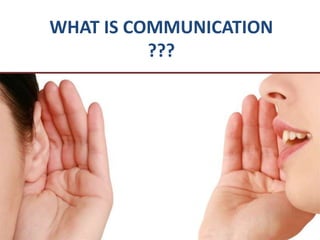
WHAT IS COMMUNICATION
???
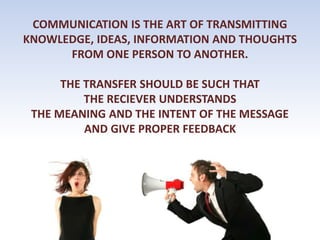
COMMUNICATION IS THE ART OF TRANSMITTING
KNOWLEDGE, IDEAS, INFORMATION AND THOUGHTS
FROM ONE PERSON TO ANOTHER.
THE TRANSFER SHOULD BE SUCH THAT
THE RECIEVER UNDERSTANDS
THE MEANING AND THE INTENT OF THE MESSAGE
AND GIVE PROPER FEEDBACK
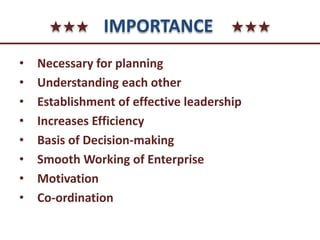
★★★ IMPORTANCE ★★★
• Necessary for planning
• Understanding each other
• Establishment of effective leadership
• Increases Efficiency
• Basis of Decision-making
• Smooth Working of Enterprise
• Motivation
• Co-ordination
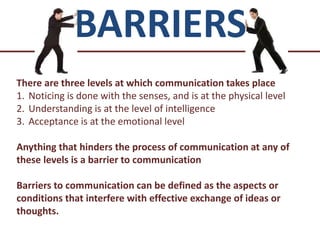
BARRIERS
There are three levels at which communication takes place
1. Noticing is done with the senses, and is at the physical level
2. Understanding is at the level of intelligence
3. Acceptance is at the emotional level
Anything that hinders the process of communication at any of
these levels is a barrier to communication
Barriers to communication can be defined as the aspects or
conditions that interfere with effective exchange of ideas or
thoughts.
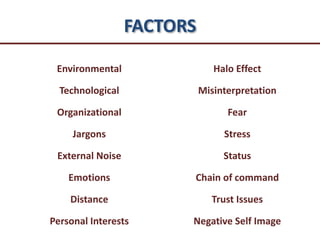
FACTORS
Environmental
Technological
Organizational
Jargons
External Noise
Emotions
Distance
Personal Interests
Halo Effect
Misinterpretation
Fear
Stress
Status
Chain of command
Trust Issues
Negative Self Image
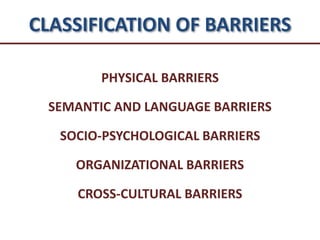
CLASSIFICATION OF BARRIERS
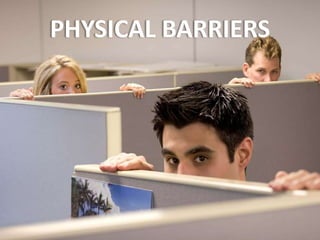
PHYSICAL BARRIERS
SEMANTIC AND LANGUAGE BARRIERS
SOCIO-PSYCHOLOGICAL BARRIERS
ORGANIZATIONAL BARRIERS
CROSS-CULTURAL BARRIERS
PHYSICAL BARRIERS
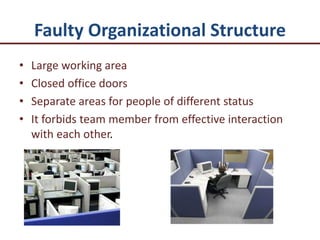
Faulty Organizational Structure
• Large working area
• Closed office doors
• Separate areas for people of different status
• It forbids team member from effective interaction
with each other.
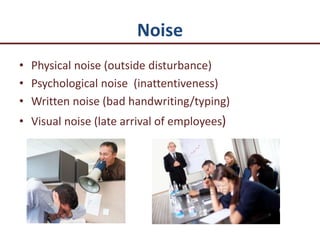
Noise
• Physical noise (outside disturbance)
• Psychological noise (inattentiveness)
• Written noise (bad handwriting/typing)
• Visual noise (late arrival of employees)
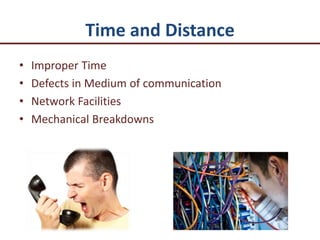
Time and Distance
• Improper Time
• Defects in Medium of communication
• Network Facilities
• Mechanical Breakdowns
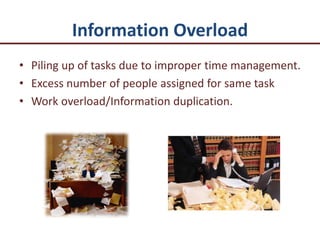
Information Overload
• Piling up of tasks due to improper time management.
• Excess number of people assigned for same task
• Work overload/Information duplication.
SEMANTIC & LANGUAGE
BARRIERS
Those who speak do not know
Those who know do not speak
- Random Japanese Guy
SEMANTICS
• What do you mean by SEMANTICS?
• Why is SEMANTICS required?
• When does SEMANTIC BARRIER arises?
SIMILAR SOUNDING WORDS
These words are known as Homophones
Pronunciation
Spelling
Meaning
Examples:
• pale/pail
• alter/altar
• buy/bye/by
• rain/reign
WORDS HAVE MULTIPLE
PRONUNCIATIONS
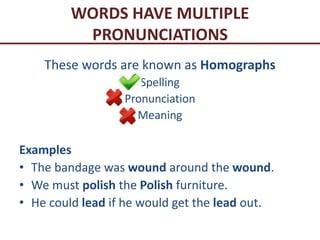
These words are known as Homographs
Spelling
Pronunciation
Meaning
Examples
• The bandage was wound around the wound.
• We must polish the Polish furniture.
• He could lead if he would get the lead out.
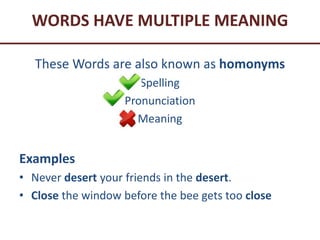
WORDS HAVE MULTIPLE MEANING
These Words are also known as homonyms
Spelling
Pronunciation
Meaning
Examples
• Never desert your friends in the desert.
• Close the window before the bee gets too close
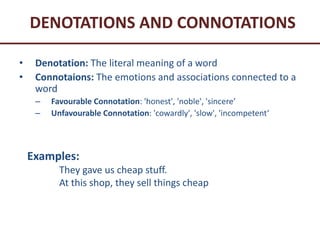
DENOTATIONS AND CONNOTATIONS
• Denotation: The literal meaning of a word
• Connotaions: The emotions and associations connected to a
word
– Favourable Connotation: 'honest', 'noble', 'sincere’
– Unfavourable Connotation: 'cowardly', 'slow', 'incompetent‘
Examples:
They gave us cheap stuff.
At this shop, they sell things cheap
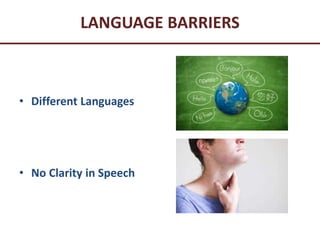
LANGUAGE BARRIERS
• Different Languages
• No Clarity in Speech
LANGUAGE BARRIERS
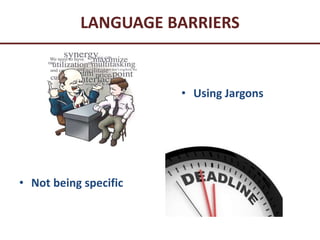
• Using Jargons
• Not being specific
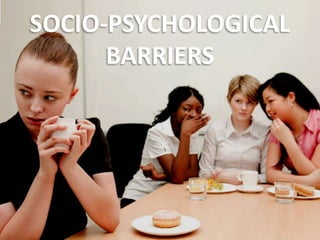
SOCIO-PSYCHOLOGICAL
BARRIERS
What is Pyschological
barrier?
Psychological barriers
can be described as
the cause of distorted
communication
because of human
psychology problems.
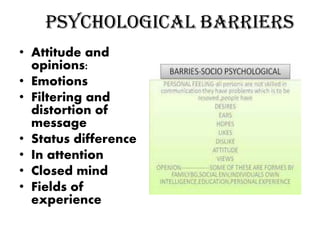
Psychological barriers
• Attitude and
opinions:
• Emotions
• Filtering and
distortion of
message
• Status difference
• In attention
• Closed mind
• Fields of
experience
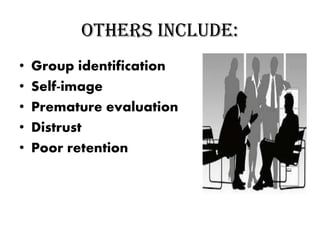
Others include:
• Group identification
• Self-image
• Premature evaluation
• Distrust
• Poor retention
CROSS-CULTURAL BARRIERS
Cross Culture Communication
• Meaning of Cross Culture Communication
• Understanding different cultures facilitates
Cross Culture Communication
• Components of Cross Culture Communication
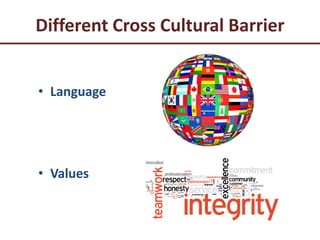
Different Cross Cultural Barrier
• Language
• Values
Different Cross Cultural Barrier
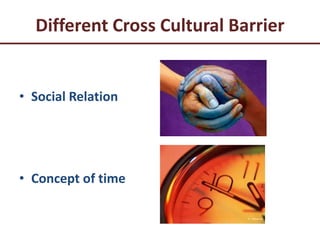
• Social Relation
• Concept of time
Different Cross Cultural Barrier
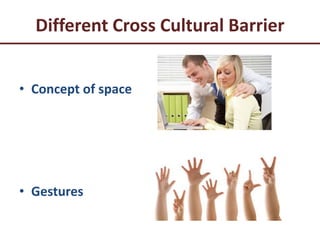
• Concept of space
• Gestures
ORGANISATIONAL
BARRIERS
Organizational barriers
Loss or distortion of messages as they pass from one level to another
Filtering of information according to one’s understanding/interpretation
Messages not read completely or not understood correctly
Deliberate withholding of information from peers perceived as rivals
Information gap if upper level does not know the true state of affairs
….cont
Lack of communication policy
Authoritarian attitude of management
Poorly Defined Authority and Responsibility
Too Many Levels in Organization Structure
Insufficient Communication Training
Overcoming Communication Barriers
Individual Skills
 Active listening
 Select the appropriate channel for the message
 Make a special effort to understand each other's perspective
 Managers should practice MBWA.
Overcoming Communication Barriers
Organizational Actions
 Create a climate of trust and openness
 Develop and use formal information channels in all directions
 Encourage the use of multiple channels including formal and informal
communications
 The organizational structure should fit communication needs.
Ways To Overcome Barriers to
Communication-
• For Physical Barriers-
 Appropriate Seating Arrangement
 Ensure Visibility & Audibility
 Environmental Comfort
 Minimise Visual/Oral Distractions
For Semantic Barriers-
 Use of Simple Language
 Symbols & Charts
 Active Listening/ Constructive feedback
Contd..
• For Socio-Psychological Barriers-
Calling Attention & Motivation
Assistance & Sympathy
For Cross Cultural Barriers-
Understanding of Traditions & Customs
Information of all Sides of Culture
Contd..
• For Organisational Barriers-
Simple Organisational Structure
Avoiding Information Overload
Flexibility in Meeting Targets

Barriers to communication

  • 1.
  • 2.
  • 3.
    COMMUNICATION IS THEART OF TRANSMITTING KNOWLEDGE, IDEAS, INFORMATION AND THOUGHTS FROM ONE PERSON TO ANOTHER. THE TRANSFER SHOULD BE SUCH THAT THE RECIEVER UNDERSTANDS THE MEANING AND THE INTENT OF THE MESSAGE AND GIVE PROPER FEEDBACK
  • 4.
    ★★★ IMPORTANCE ★★★ •Necessary for planning • Understanding each other • Establishment of effective leadership • Increases Efficiency • Basis of Decision-making • Smooth Working of Enterprise • Motivation • Co-ordination
  • 5.
    BARRIERS There are threelevels at which communication takes place 1. Noticing is done with the senses, and is at the physical level 2. Understanding is at the level of intelligence 3. Acceptance is at the emotional level Anything that hinders the process of communication at any of these levels is a barrier to communication Barriers to communication can be defined as the aspects or conditions that interfere with effective exchange of ideas or thoughts.
  • 6.
    FACTORS Environmental Technological Organizational Jargons External Noise Emotions Distance Personal Interests HaloEffect Misinterpretation Fear Stress Status Chain of command Trust Issues Negative Self Image
  • 7.
    CLASSIFICATION OF BARRIERS PHYSICALBARRIERS SEMANTIC AND LANGUAGE BARRIERS SOCIO-PSYCHOLOGICAL BARRIERS ORGANIZATIONAL BARRIERS CROSS-CULTURAL BARRIERS
  • 8.
  • 9.
    Faulty Organizational Structure •Large working area • Closed office doors • Separate areas for people of different status • It forbids team member from effective interaction with each other.
  • 10.
    Noise • Physical noise(outside disturbance) • Psychological noise (inattentiveness) • Written noise (bad handwriting/typing) • Visual noise (late arrival of employees)
  • 11.
    Time and Distance •Improper Time • Defects in Medium of communication • Network Facilities • Mechanical Breakdowns
  • 12.
    Information Overload • Pilingup of tasks due to improper time management. • Excess number of people assigned for same task • Work overload/Information duplication.
  • 13.
    SEMANTIC & LANGUAGE BARRIERS Thosewho speak do not know Those who know do not speak - Random Japanese Guy
  • 14.
    SEMANTICS • What doyou mean by SEMANTICS? • Why is SEMANTICS required? • When does SEMANTIC BARRIER arises?
  • 15.
    SIMILAR SOUNDING WORDS Thesewords are known as Homophones Pronunciation Spelling Meaning Examples: • pale/pail • alter/altar • buy/bye/by • rain/reign
  • 16.
    WORDS HAVE MULTIPLE PRONUNCIATIONS Thesewords are known as Homographs Spelling Pronunciation Meaning Examples • The bandage was wound around the wound. • We must polish the Polish furniture. • He could lead if he would get the lead out.
  • 17.
    WORDS HAVE MULTIPLEMEANING These Words are also known as homonyms Spelling Pronunciation Meaning Examples • Never desert your friends in the desert. • Close the window before the bee gets too close
  • 18.
    DENOTATIONS AND CONNOTATIONS •Denotation: The literal meaning of a word • Connotaions: The emotions and associations connected to a word – Favourable Connotation: 'honest', 'noble', 'sincere’ – Unfavourable Connotation: 'cowardly', 'slow', 'incompetent‘ Examples: They gave us cheap stuff. At this shop, they sell things cheap
  • 19.
    LANGUAGE BARRIERS • DifferentLanguages • No Clarity in Speech
  • 20.
    LANGUAGE BARRIERS • UsingJargons • Not being specific
  • 21.
  • 22.
    What is Pyschological barrier? Psychologicalbarriers can be described as the cause of distorted communication because of human psychology problems.
  • 23.
    Psychological barriers • Attitudeand opinions: • Emotions • Filtering and distortion of message • Status difference • In attention • Closed mind • Fields of experience
  • 24.
    Others include: • Groupidentification • Self-image • Premature evaluation • Distrust • Poor retention
  • 25.
  • 27.
    Cross Culture Communication •Meaning of Cross Culture Communication • Understanding different cultures facilitates Cross Culture Communication • Components of Cross Culture Communication
  • 28.
    Different Cross CulturalBarrier • Language • Values
  • 29.
    Different Cross CulturalBarrier • Social Relation • Concept of time
  • 30.
    Different Cross CulturalBarrier • Concept of space • Gestures
  • 31.
  • 32.
    Organizational barriers Loss ordistortion of messages as they pass from one level to another Filtering of information according to one’s understanding/interpretation Messages not read completely or not understood correctly Deliberate withholding of information from peers perceived as rivals Information gap if upper level does not know the true state of affairs
  • 33.
    ….cont Lack of communicationpolicy Authoritarian attitude of management Poorly Defined Authority and Responsibility Too Many Levels in Organization Structure Insufficient Communication Training
  • 34.
    Overcoming Communication Barriers IndividualSkills  Active listening  Select the appropriate channel for the message  Make a special effort to understand each other's perspective  Managers should practice MBWA.
  • 35.
    Overcoming Communication Barriers OrganizationalActions  Create a climate of trust and openness  Develop and use formal information channels in all directions  Encourage the use of multiple channels including formal and informal communications  The organizational structure should fit communication needs.
  • 37.
    Ways To OvercomeBarriers to Communication- • For Physical Barriers-  Appropriate Seating Arrangement  Ensure Visibility & Audibility  Environmental Comfort  Minimise Visual/Oral Distractions For Semantic Barriers-  Use of Simple Language  Symbols & Charts  Active Listening/ Constructive feedback
  • 38.
    Contd.. • For Socio-PsychologicalBarriers- Calling Attention & Motivation Assistance & Sympathy For Cross Cultural Barriers- Understanding of Traditions & Customs Information of all Sides of Culture
  • 39.
    Contd.. • For OrganisationalBarriers- Simple Organisational Structure Avoiding Information Overload Flexibility in Meeting Targets