TETRA TERPENOIDS &
CAROTENOIDS
INTRODUCTION
• Tetraterpenoids: C40 compounds of terpenoids group
and biosynthetically prepared by tail to tail
condensation of geranyl geraniol. They contain long
sequence of conjugated double bonds.
CAROTENOIDS
• Carotenoids are a prominent group of natural coloring
matters exhibiting purple, red, yellow or orange colors.
• They are present both in plants and animals.
• In plants, they acts as photosynthetic accessory
pigments and in animals as a source of vitamin A and
also as antioxidants.
• Normal vision and actions favoring immune system
• Chemical Test:
• 1. Blue color with SbCl3 in CHCl3 (Carr-Price test)
• 2. Ether/CHCl3 solution of Carotenoid + 85% H2SO4,
Blue color
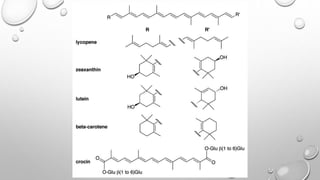
EXAMPLES
1. LUTEIN
2. CROCIN
3. ZEAXANTHINE
4. LYCOPENE
1. LUTEIN
• Chemical formula: C40H56O2
• Yellow carotenoid, Principal pigment of macula of eye
• Yellow fruits like Maize, Orange juice, Honey dew
melon and orange pepper
• Source: Spinach, Peas, Water cress, Pumpkin, chilli
(Capsicum annum, C. minimum), Pot marigold,
Banana, Egg yolk and Green vegetables, Vegetable oil
(mustard, palm)
• Pot marigold (Calendula officinalis, Asteraceae – 80%)
• Tagetes erecta (Asteraceae),
• Tomato (Lycopersicon esculentum, Solanaceae)
• Butternut squash (Cucurbita moschata,
Cucurbitaceae)
• Neutralizes free radicals that can damage eye, prevent
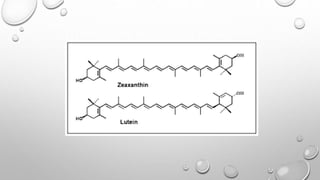
2. ZEAXANTHIN
• Isomer of Lutein, common carotenoid alcohol, animal
derive it from plant diet
• Source: Capsicum, Corn, Saffron, Leafy vegetables
(Spinach, Garden peas), Pot marigold
• Pot marigold (Calendula officinalis -5%),
• Corn (Zea mays)
• Tomato (Lycopersicon esculentum),
• Butternut squash (Cucurbita moschata)
• High dietary intakes lower age related macular
degeneration (Eye health)
3. CROCIN
• Chemical formula: C44H64O24
• Syn: Saffron, Hay saffron, Kesar
• Source: Crocus consists of dried stigmas and upper parts of
styles of plant known as “Crocus sativus”
• Family: Iridaceae
• GS: India (Kashmir), Spain (Principal produced-80%), France,
Greece
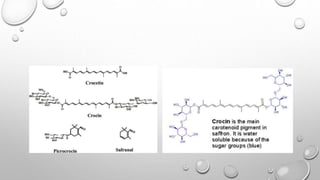
• Constituents: Red coloring matter (Crocin), Crocetin, bitter
principle picrocrocin and traces of volatile oil
• Protoocrocin (Glycoside), during drying splits in to two
molecule, 2 picrocrocin + 1 crocin
• Crocin on hydrolysis crocetin and gentiobiose, Picrocrocin on
hydrolysis Glucose and Safranal
• Crocetin: C20H24O4
• CT:
• Dry stigma + H2SO4 drop, blue, gradually changing to
purple and finally purplish red
• Saffron imparts yellowish orange brown color to water
• Use: Coloring agent (Food dye) and Flavoring agent,
Antispasmodic, Emmenagogue and Stimulant
• Substitutes/Adulterant: Carthamus tinctorius
(Safflower), impart orange color to alcohol (not with
authentic)
• Weight of drug is increased by Glycerin and
Ammonium nitrate and can be detected by determining
4. LYCOPENE
• Non Pro Vitamin A Carotenoid
• Red fruits and particularly tomatoes
• Source: Tomato, Water melon, Red-Pin grape fruit,
• Tomato (Lycopersicon esculentum),
• Spinach (Spinacea oleraceae)
• Potent antioxidant, Free radical scavenging,
Anticancer (oral, pharynx, oesophagus, colorectum,
ovarian, breast, prostate, lung and stomach),
• CVS health (MI)
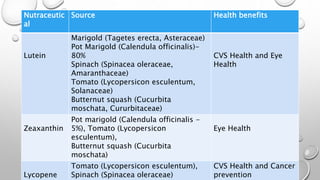
Nutraceutic
al
Source Health benefits
Lutein
Marigold (Tagetes erecta, Asteraceae)
Pot Marigold (Calendula officinalis)- 80%
Spinach (Spinacea oleraceae,
Amaranthaceae)
Tomato (Lycopersicon esculentum,
Solanaceae)
Butternut squash (Cucurbita moschata,
Cururbitaceae)
CVS Health and Eye
Health
Zeaxanthin
Pot marigold (Calendula officinalis -5%),
Tomato (Lycopersicon esculentum),
Butternut squash (Cucurbita moschata)
Eye Health
Lycopene
Tomato (Lycopersicon esculentum),
Spinach (Spinacea oleraceae)
CVS Health and
Cancer prevention
Crocin
dried stigmas and upper parts of styles of
plant known as (Crocus sativus, Iridaceae)
Anti cancer,
Anti-arthritic,
Anti-hypertensive

Carotenoids as Nutraceuticals

  • 1.
  • 2.
    INTRODUCTION • Tetraterpenoids: C40compounds of terpenoids group and biosynthetically prepared by tail to tail condensation of geranyl geraniol. They contain long sequence of conjugated double bonds.
  • 3.
    CAROTENOIDS • Carotenoids area prominent group of natural coloring matters exhibiting purple, red, yellow or orange colors. • They are present both in plants and animals. • In plants, they acts as photosynthetic accessory pigments and in animals as a source of vitamin A and also as antioxidants. • Normal vision and actions favoring immune system • Chemical Test: • 1. Blue color with SbCl3 in CHCl3 (Carr-Price test) • 2. Ether/CHCl3 solution of Carotenoid + 85% H2SO4, Blue color
  • 4.
    EXAMPLES 1. LUTEIN 2. CROCIN 3.ZEAXANTHINE 4. LYCOPENE
  • 6.
    1. LUTEIN • Chemicalformula: C40H56O2 • Yellow carotenoid, Principal pigment of macula of eye • Yellow fruits like Maize, Orange juice, Honey dew melon and orange pepper • Source: Spinach, Peas, Water cress, Pumpkin, chilli (Capsicum annum, C. minimum), Pot marigold, Banana, Egg yolk and Green vegetables, Vegetable oil (mustard, palm) • Pot marigold (Calendula officinalis, Asteraceae – 80%) • Tagetes erecta (Asteraceae), • Tomato (Lycopersicon esculentum, Solanaceae) • Butternut squash (Cucurbita moschata, Cucurbitaceae) • Neutralizes free radicals that can damage eye, prevent
  • 8.
    2. ZEAXANTHIN • Isomerof Lutein, common carotenoid alcohol, animal derive it from plant diet • Source: Capsicum, Corn, Saffron, Leafy vegetables (Spinach, Garden peas), Pot marigold • Pot marigold (Calendula officinalis -5%), • Corn (Zea mays) • Tomato (Lycopersicon esculentum), • Butternut squash (Cucurbita moschata) • High dietary intakes lower age related macular degeneration (Eye health)
  • 9.
    3. CROCIN • Chemicalformula: C44H64O24 • Syn: Saffron, Hay saffron, Kesar • Source: Crocus consists of dried stigmas and upper parts of styles of plant known as “Crocus sativus” • Family: Iridaceae • GS: India (Kashmir), Spain (Principal produced-80%), France, Greece • Constituents: Red coloring matter (Crocin), Crocetin, bitter principle picrocrocin and traces of volatile oil • Protoocrocin (Glycoside), during drying splits in to two molecule, 2 picrocrocin + 1 crocin • Crocin on hydrolysis crocetin and gentiobiose, Picrocrocin on hydrolysis Glucose and Safranal
  • 11.
    • Crocetin: C20H24O4 •CT: • Dry stigma + H2SO4 drop, blue, gradually changing to purple and finally purplish red • Saffron imparts yellowish orange brown color to water • Use: Coloring agent (Food dye) and Flavoring agent, Antispasmodic, Emmenagogue and Stimulant • Substitutes/Adulterant: Carthamus tinctorius (Safflower), impart orange color to alcohol (not with authentic) • Weight of drug is increased by Glycerin and Ammonium nitrate and can be detected by determining
  • 12.
    4. LYCOPENE • NonPro Vitamin A Carotenoid • Red fruits and particularly tomatoes • Source: Tomato, Water melon, Red-Pin grape fruit, • Tomato (Lycopersicon esculentum), • Spinach (Spinacea oleraceae) • Potent antioxidant, Free radical scavenging, Anticancer (oral, pharynx, oesophagus, colorectum, ovarian, breast, prostate, lung and stomach), • CVS health (MI)
  • 13.
    Nutraceutic al Source Health benefits Lutein Marigold(Tagetes erecta, Asteraceae) Pot Marigold (Calendula officinalis)- 80% Spinach (Spinacea oleraceae, Amaranthaceae) Tomato (Lycopersicon esculentum, Solanaceae) Butternut squash (Cucurbita moschata, Cururbitaceae) CVS Health and Eye Health Zeaxanthin Pot marigold (Calendula officinalis -5%), Tomato (Lycopersicon esculentum), Butternut squash (Cucurbita moschata) Eye Health Lycopene Tomato (Lycopersicon esculentum), Spinach (Spinacea oleraceae) CVS Health and Cancer prevention Crocin dried stigmas and upper parts of styles of plant known as (Crocus sativus, Iridaceae) Anti cancer, Anti-arthritic, Anti-hypertensive